
DESCRIPTION
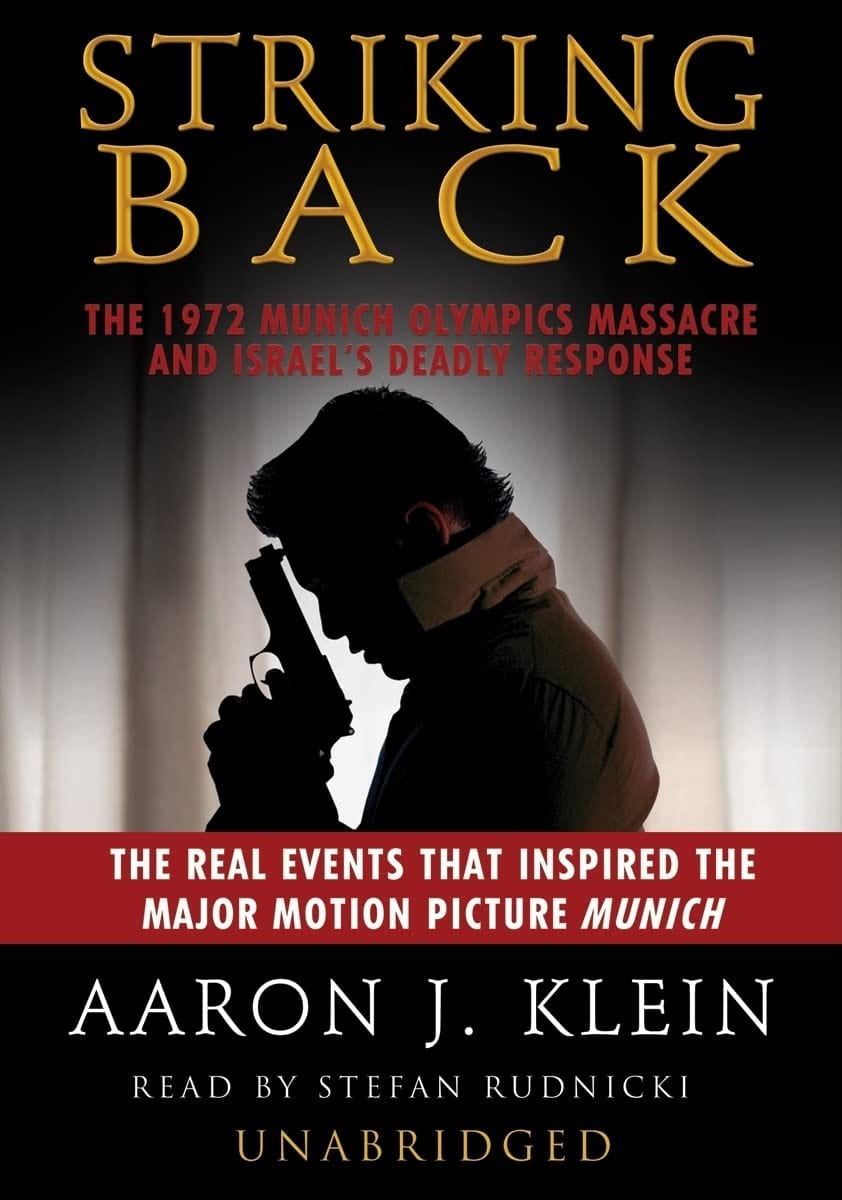
The first full account, based on access to key players who have never before spoken, of the Munich Massacre and the Israeli response–a lethal, top secret, thirty-year-long antiterrorism campaign to track down the killers. 1972. The Munich Olympics. Palestinian members of the Black September group murder eleven Israeli athletes. Nine hundred million people watch the crisis unfold on television, witnessing a tragedy that inaugurates the modern age of terror and remains a scar on the collective conscience of the world. Back in Israel, Prime Minister Golda Meir vows to track down those responsible and, in Menachem Begin’s words, “run these criminals and murderers off the face of the earth.” A secret Mossad unit, code named Caesarea, is mobilized, a list of targets drawn up. Thus begins the Israeli response–a mission that unfolds not over months but over decades. The Mossad has never spoken about this operation. No one has known the real story. Until now. Award-winning journalist Aaron Klein’s incisive and riveting account tells for the first time the full story of Munich and the Israeli counterterrorism operation it spawned. With unprecedented access to Mossad agents and an unparalleled knowledge of Israeli intelligence, Klein peels back the layers of myth and misinformation that have permeated previous books, films, and magazine articles about the “shadow war” against Black September and other terrorist groups. Spycraft, secret diplomacy, and fierce detective work abound in a story with more drama than any fictional thriller. Burning questions are at last answered, including who was killed and who was not, how it was done, which targets were hit and which were missed. Truths are revealed: the degree to which the Mossad targeted nonaffiliated Black September terrorists for assassination, the length and full scope of the operation (far greater than previously suspected), retributive acts against Israel, and much more. Finally, Klein shows that the Israeli response to Munich was not simply about revenge, as is popularly believed. By illuminating the tactical and strategic purposes of the Israeli operation, Striking Back allows us to draw profoundly relevant lessons from one of the most important counterterrorism campaigns in history.
My Summary
Main Ideas, Takeaways & Similarities
Questions
I. What is the problem?
A. How is this problem formulated?
B. Why is this problem important?
C. What is the history of this problem?
D. Which prominent personalities have been interested in this problem?
II. What solutions to the problem are there?
A. What are the conclusions reached?
B. By what argument(s) is the conclusion reached?
C. What facts or assumptions serve as premises?
D. When a prominent personality offers a solution, does he also argue for or against other prominent personalities? Does he raise objections to alternative solutions? Does he consider objections to his own solutions?
III. Evaluation
A. What are the advantages and disadvantages of the alternative formulations to the problem?
B. Has the importance or history of the problem ever been misrepresented?
C. Are the solutions logically related to the premises?
D. Are the facts true? Are the assumptions acceptable? Are the objections answerable?
AI Summary
Highlights
Here is a thorough summary of the book “Striking Back: The 1972 Munich Olympics Massacre and Israel’s Deadly Response” in bullet points:
- Title: Striking Back: The 1972 Munich Olympics Massacre and Israel’s Deadly Response
- Author: Aaron J. Klein
Introduction:
- The book explores the tragic events of the 1972 Munich Olympics, focusing on the terrorist attack by Palestinian group Black September and Israel’s response.
Chapter 1: Prelude to Tragedy
- Background on the Palestinian-Israeli conflict.
- Introduction to Black September and its objectives.
- The decision to target the Israeli Olympic team at the Munich Games.
Chapter 2: The Munich Massacre
- Detailed account of the terrorist attack on the Israeli athletes’ quarters.
- The initial hostage situation and negotiations.
- The tragic outcome, resulting in the deaths of 11 Israeli athletes and coaches.
Chapter 3: Diplomatic Maneuvering
- International response to the Munich massacre.
- Diplomatic efforts to secure the release of the hostages.
- Failures in negotiation and rescue attempts.
Chapter 4: Israel’s Secret Revenge
- Israel’s determination to bring the terrorists to justice.
- The decision to launch Operation Wrath of God.
- Mossad’s mission to track down and eliminate those responsible.
Chapter 5: The Killing Campaign
- Mossad’s covert operations to identify and target Black September members.
- Detailed accounts of assassinations and covert actions.
- The moral and ethical dilemmas faced by Mossad agents.
Chapter 6: The Toll of Vengeance
- The impact of Israel’s revenge campaign on Black September.
- Retaliation by Black September against Israeli targets.
- The cycle of violence and its consequences.
Chapter 7: Fallout and Legacy
- The international response to Israel’s covert operations.
- The long-term implications of the Munich massacre.
- Ongoing tension in the Israeli-Palestinian conflict.
Chapter 8: Reflections and Controversies
- Debates surrounding the morality and effectiveness of Israel’s response.
- The legacy of the Munich Olympics massacre in Olympic security.
- The enduring impact on Israel’s intelligence and security operations.
Chapter 9: Lessons Learned
- The lessons that can be drawn from the Munich tragedy and Israel’s response.
- The ongoing challenges in the Israeli-Palestinian conflict.
- The importance of international cooperation in addressing terrorism.
Conclusion:
- Summarizes the key events and themes explored in the book.
- Reflects on the lasting impact of the Munich Olympics massacre and Israel’s actions.
“Striking Back: The 1972 Munich Olympics Massacre and Israel’s Deadly Response” by Aaron J. Klein provides a detailed account of the Munich massacre, Israel’s pursuit of justice through covert operations, and the broader implications of these events in the context of the Israeli-Palestinian conflict and international terrorism.