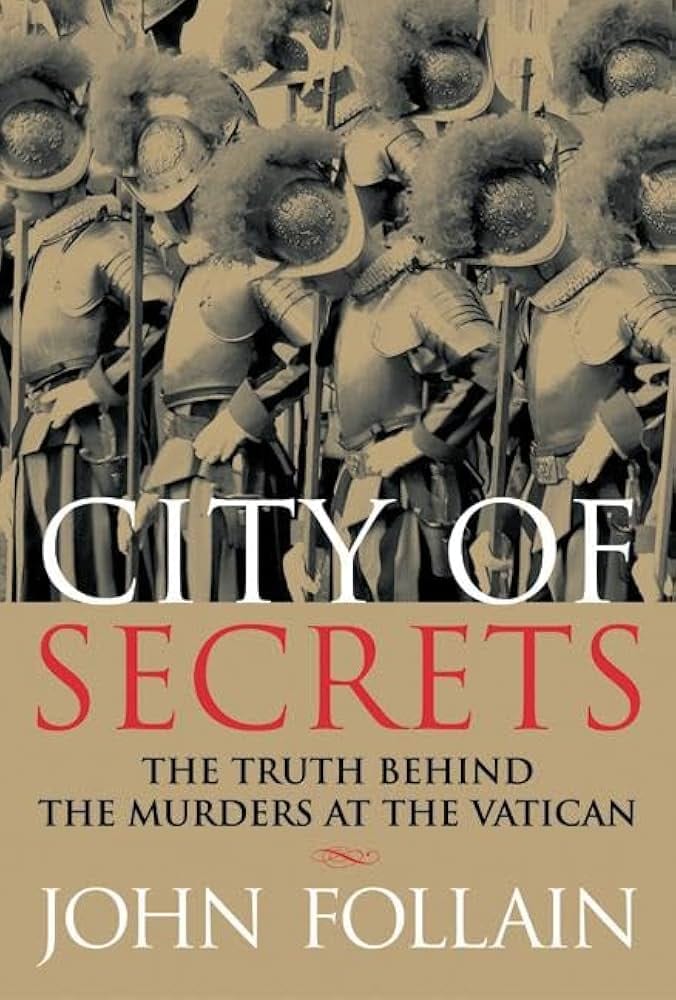

DESCRIPTION
Examines the truth behind the murder of a Swiss Guard, his wife, and a young vice-corporal at the Vatican, revealing a world of corruption, hypocrisy, and injustice that reaches to the highest level of this mysterious autocracy.
My Summary
Main Ideas, Takeaways & Similarities
Questions
I. What is the problem?
A. How is this problem formulated?
B. Why is this problem important?
C. What is the history of this problem?
D. Which prominent personalities have been interested in this problem?
II. What solutions to the problem are there?
A. What are the conclusions reached?
B. By what argument(s) is the conclusion reached?
C. What facts or assumptions serve as premises?
D. When a prominent personality offers a solution, does he also argue for or against other prominent personalities? Does he raise objections to alternative solutions? Does he consider objections to his own solutions?
III. Evaluation
A. What are the advantages and disadvantages of the alternative formulations to the problem?
B. Has the importance or history of the problem ever been misrepresented?
C. Are the solutions logically related to the premises?
D. Are the facts true? Are the assumptions acceptable? Are the objections answerable?
AI Summary
Highlights---
Author: Follain, John
Category: Books
Genre:
- Politics
PATH: PATH
up: - "60.11 Religion"
Here is a thorough summary of the book “City of Secrets: The Truth Behind the Murders at the Vatican” in bullet points:
- Title: City of Secrets: The Truth Behind the Murders at the Vatican
- Author: Daniel A. Silva
Introduction:
- The book delves into the mysterious deaths and murders that have occurred within the Vatican.
- Investigates the Vatican’s history, secrets, and the conspiracy theories surrounding these events.
Chapter 1: The Vatican’s Dark History
- Introduction to the Vatican as a religious and political institution.
- Historical controversies, scandals, and power struggles within the Vatican.
Chapter 2: The Murder of Pope John Paul I
- Detailed account of the sudden death of Pope John Paul I in 1978.
- Conspiracy theories surrounding his death, including claims of foul play.
Chapter 3: The Suspicious Deaths of Bankers
- Examines the mysterious deaths of individuals associated with the Vatican Bank.
- Roberto Calvi’s death and connections to the Vatican’s financial affairs.
- Investigations into money laundering, corruption, and organized crime.
Chapter 4: The Murder of Emanuela Orlandi
- The disappearance of Emanuela Orlandi, a Vatican citizen, in 1983.
- Allegations of Vatican involvement and cover-up in her case.
- Theories and investigations into her fate.
Chapter 5: The Vatican and the Mafia
- Allegations of connections between the Vatican and the Italian Mafia.
- Historical negotiations and controversies involving organized crime.
- The role of the Vatican Bank in potential money laundering.
Chapter 6: Pope John Paul II and Assassination Attempts
- Investigations into assassination attempts on Pope John Paul II.
- The 1981 attempt in St. Peter’s Square and connections to international conspiracies.
- The pope’s survival and recovery.
Chapter 7: The Vatican’s Official Response
- The Vatican’s official stance on the investigated deaths and conspiracy theories.
- Efforts to maintain secrecy and protect the Vatican’s image.
- Criticisms and skepticism regarding the Vatican’s transparency.
Chapter 8: Unsolved Mysteries and Ongoing Controversies
- Summarizes the unresolved mysteries and unanswered questions.
- Ongoing investigations, legal challenges, and public interest in these cases.
- The persistence of conspiracy theories and speculation.
Chapter 9: Conclusions and Implications
- Reflects on the overall themes and findings of the book.
- The lasting impact of the Vatican’s secrecy and controversies.
- The implications for the Vatican’s role in the global community.
“City of Secrets: The Truth Behind the Murders at the Vatican” by Daniel A. Silva explores a series of mysterious deaths and scandals within the Vatican, shedding light on conspiracy theories, controversies, and the complex relationship between the Vatican and the wider world. It raises questions about transparency, accountability, and the Vatican’s historical and contemporary role in global affairs.