Modern Scientific Judgement
Based on modern psychology and neuroscience, the verdict is a split decision. Stoicism is widely considered more “true” regarding acute mental health management and resilience (coping with distress), while Aristotle is considered more “true” regarding human development, social well-being, and holistic flourishing (what makes a life satisfying).
Here is the breakdown of how modern science validates each.
1. Stoicism Wins on: Therapeutic Mechanisms (CBT)
Modern clinical psychology—specifically Cognitive Behavioral Therapy (CBT), the gold standard for treating anxiety and depression—is directly rooted in Stoic philosophy.
- The Science: CBT is based on the premise that it is not events that upset us, but our judgments about them. This is the core Stoic doctrine.
- The Psychological Mechanism:
- Cognitive Reappraisal: Stoicism teaches us to “reframe” impressions. Science confirms that “cognitive reappraisal” (changing how we interpret a situation) significantly reduces the physiological stress response (cortisol levels) and activity in the amygdala (the brain’s fear center).
- Locus of Control: The Stoic “dichotomy of control” (focusing only on what is up to us) mirrors the psychological concept of an “internal locus of control.” Studies consistently show that people with an internal locus of control are more resilient and less prone to learned helplessness than those who focus on external factors.
2. Aristotle Wins on: Human Needs & Environment (Maslow)
Aristotle’s argument that virtue is necessary but not sufficient for happiness is far more scientifically grounded than the Stoic claim that a “sage on the rack” is happy.
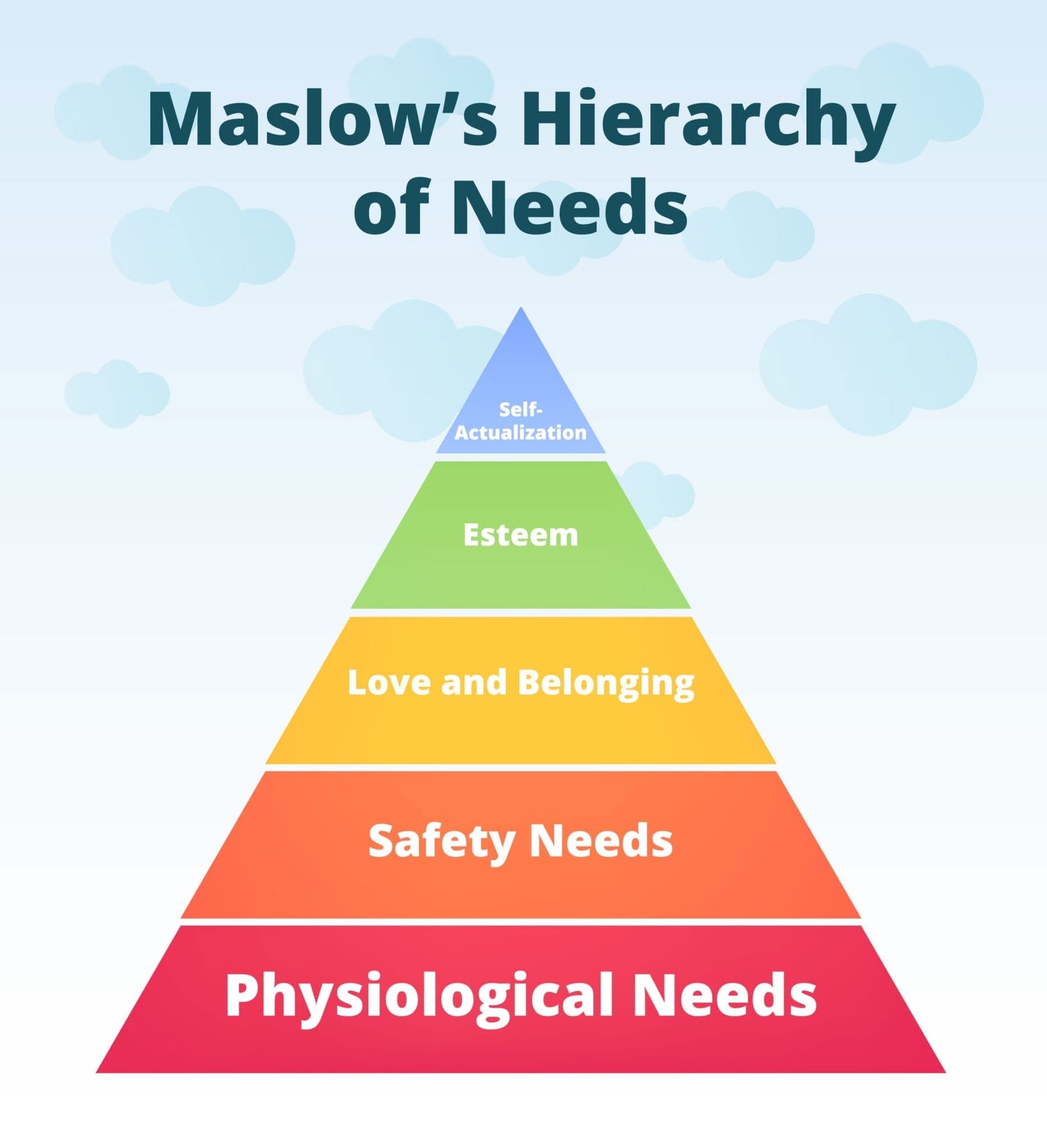
- The Science: Abraham Maslow’s Hierarchy of Needs and modern research on the Social Determinants of Health validate Aristotle.
- The Psychological Mechanism:
- Physiological Foundation: Maslow demonstrated that “higher” needs (self-actualization/virtue) are extremely difficult to pursue if “lower” needs (safety, food, shelter) are unmet.
- Aristotle’s Accuracy: Aristotle argues that happiness requires “external goods” like resources, health, and friends, because “it is impossible or not easy for someone without equipment to do what is noble”. Modern psychology agrees: extreme poverty or chronic pain cognitively impairs the brain (scarcity mindset), making the consistent exercise of “virtue” nearly impossible for the average human brain.
3. Aristotle Wins on: Social Connection (The “Political Animal”)
Aristotle’s claim that humans are biologically “political” (social) animals is one of the most empirically replicated findings in social science.
- The Science: The Harvard Study of Adult Development (the longest study on happiness) found that the single strongest predictor of a long, happy life is not wealth, fame, or class, but social connection.
- The Psychological Mechanism:
- Social Baseline Theory: The human brain expects access to social relationships to regulate metabolic energy. Loneliness triggers the same neural pain networks as physical injury.
- Aristotle’s Accuracy: Aristotle states, “without friends, no one would wish to live, even if he possessed all other goods”. He correctly identifies that we are by nature “more a coupling being than a political one”, meaning our hard-wiring for small-group bonding (family/friends) is our primary survival mechanism.
4. Aristotle Wins on: Habituation (Neuroplasticity)
Aristotle’s theory of how we become good—not by learning rules, but by doing actions until they become second nature—is a perfect description of neuroplasticity.
- The Science: Hebbian Learning (“Neurons that fire together, wire together”).
- The Psychological Mechanism:
- Procedural Memory: Modern neuroscience distinguishes between “declarative memory” (knowing that_courage is good) and “procedural memory” (knowing _how to be courageous).
- Aristotle’s Accuracy: Aristotle argues that “none of the moral virtues are present in us by nature” but we are “completed through habit”. We do not become brave by learning what bravery is, but by doing brave acts until the neural pathway is formed. “By doing just things we become just”.
5. The Verdict on Emotions: A Tie
- Stoicism (Regulation/Reappraisal): Modern psychology supports the Stoic practice of not being enslaved by initial emotional reactions (impulses).
- Aristotle (The Mean): However, modern psychology generally rejects suppression. Aristotle’s goal is not to eliminate anger, but to feel it “at the things one ought, in the way one ought”.
- Winner: Aristotle is generally considered more psychologically healthy for the average person. “Emotional granularity” (feeling the right emotion for the specific context) is linked to better mental health, whereas the popular interpretation of Stoicism (suppressing emotion) is linked to negative health outcomes.
Summary Verdict
| Field | Most “True” Philosophy | Why? |
|---|---|---|
| Clinical Therapy | Stoicism | It provides the tools (CBT) to fix broken thinking and build resilience in crisis. |
| Developmental Psych | Aristotle | It correctly identifies that character is built through habit/neuroplasticity, not just theory. |
| Social Psychology | Aristotle | It correctly identifies that humans are biological creatures who need “external goods” and friendship to function. |
| Positive Psychology | Aristotle | The concept of Flow and Flourishing (PERMA) is essentially Aristotelian Eudaimonia. |
Conclusion: If you are in a crisis, Stoicism is the scientifically superior medicine. If you are building a life, Aristotle is the scientifically superior architect.
Positive Psychology
The convergence between Aristotle’s Nicomachean Ethics and modern Positive Psychology is arguably the strongest link between ancient philosophy and modern science.
Martin Seligman, the “father of positive psychology,” explicitly credits Aristotle with the intellectual foundation of the field. Both systems reject Hedonism (the pursuit of fleeting pleasure) in favor of Eudaimonism (the pursuit of functioning well).
Here is the detailed expansion on how the modern PERMA model maps directly onto Aristotle’s ancient text.
1. PERMA and Aristotelian Virtue
Seligman defines “Flourishing” using the acronym PERMA (Positive Emotion, Engagement, Relationships, Meaning, Accomplishment). Aristotle anticipates every single one of these pillars in the Ethics.
| PERMA Pillar | Aristotelian Concept | Textual Evidence (Aristotle) |
|---|---|---|
| P - Positive Emotion | Pleasure (Hedone) | While Aristotle rejects pleasure as the good, he insists it is a necessary part of the good. He argues that the virtuous life is inherently pleasant because “pleasure completes the activity”. If you hate being virtuous, you aren’t truly virtuous yet; the sign of a good character is that they “delight in” noble actions . |
| E - Engagement (Flow) | Activity (Energeia) | Aristotle defines happiness not as a state or mood, but as “an activity of soul”. This mirrors the psychological state of “Flow” (deep immersion), where one is fully active and unimpeded. Aristotle notes that “unimpeded” activity is the most choiceworthy. |
| R - Relationships | Friendship (Philia) | Modern science says social connection is the #1 predictor of happiness. Aristotle agrees, stating that “without friends, no one would choose to live, even if he possessed all other goods”. He correctly identifies that humans are “political” (social) animals by nature. |
| M - Meaning | The Noble (To Kalon) | Meaning in psychology is defined as serving something bigger than the self. Aristotle argues the best human being “makes use of virtue not in relation to himself but in relation to another”. He frames the highest good as serving the “nobler and more divine” good of the city rather than just the individual. |
| A - Accomplishment | Virtue (Arete) | Accomplishment is the pursuit of mastery. Aristotle’s entire project is about Arete (often translated as virtue, but literally meaning “excellence”). The happy man is one who is “active in accord with complete virtue” in a complete life. |
2. The Concept of “Flow” and Aristotle’s Energeia
Mihaly Csikszentmihalyi’s concept of Flow—the state of optimal experience where skill matches challenge—is almost identical to Aristotle’s description of the relationship between activity and pleasure in Book 10.
- The Mechanism of Flow: Csikszentmihalyi argues that Flow happens when we are so absorbed in an activity that time disappears. Aristotle describes pleasure not as a separate product (like a wage earned after work), but something that supervenes on the activity itself, “like the bloom of youth on those in their prime”.
- Autotelic Activity: Flow activities are “autotelic” (done for their own sake). Aristotle distinguishes between activities done for a result (making a house) and activities chosen for themselves. He argues happiness must be “choiceworthy in itself,” like seeing or contemplating, rather than for a result .
- The Necessity of Focus: Flow requires total concentration. Aristotle notes that “alien pleasures” (distractions) destroy the activity. He gives the example of flute players who cannot pay attention to an argument because they enjoy the flute music more; the alien pleasure (flute) ruins the activity (philosophy) . This is the ancient equivalent of checking your phone breaking a state of Flow.
3. Eudaimonia vs. Hedonia
The most significant contribution of Positive Psychology has been scientifically validating Aristotle’s distinction between Hedonic well-being (feeling good) and Eudaimonic well-being (functioning well).
- The Hedonic Treadmill: Modern studies show that chasing simple pleasures (money, food, leisure) leads to rapid adaptation; we return to a baseline of happiness. Aristotle predicted this, calling the life of mere enjoyment “slavish” and suitable for “fatted cattle”.
- The Eudaimonic Buffer: Modern research shows that “Eudaimonic” activities (volunteering, learning, parenting) are often less pleasant in the moment (high effort) but lead to higher long-term life satisfaction. Aristotle argues that the happy life involves “seriousness” (spoudai) and toil, noting that “to exert ourselves and suffer bad things… for the sake of playing” is foolish .
In summary: Positive Psychology is essentially the empirical verification of Aristotle’s hypothesis: that happiness is not a passive emotion to be chased, but a byproduct of active excellence in a life connected to others.
Aristotle vs. Stoicism: A Comparative Overview
| Feature | Aristotle (Nicomachean Ethics) | Stoicism |
|---|---|---|
| The Highest Good | Happiness (Eudaimonia) via Activity. Happiness is an “activity of soul in accord with virtue” in a complete life. It is not a state of mind, but an active engagement with the world. | Virtue (Arete) Alone. Virtue is the only good. It is necessary and _sufficient_for happiness. Happiness is living in agreement with Nature/Logos. |
| Role of External Goods | Necessary “Equipment.” Happiness requires external goods (wealth, friends, beauty, political power). Lack of these “disfigures” blessedness . A person suffering great misfortunes (like Priam) cannot be called happy. | Indifferents (Adiaphora). External things (health, wealth, reputation) are neither good nor bad. They are “preferred” or “dispreferred,” but they do not affect the happiness of the Sage. |
| Emotions (Passions) | Moderation (The Mean). Passions are not bad in themselves; the goal is to feel them “when one ought and at the things one ought”. The person who feels no pleasure or pain is “insensible” and not human. | Eradication (Apatheia). Passions (fear, lust, distress) are errors of judgment. The goal is to eliminate these irrational movements of the soul entirely. |
| Virtue Definition | The Mean Relative to Us. Virtue is a characteristic marked by choice, residing in a mean between excess and deficiency. It is not a mathematical average but relative to the individual’s condition. | Absolute Consistency. Virtue is a state of the commanding faculty (hegemonikon). It is an all-or-nothing state; one cannot be “partially” virtuous (just as a man is drowning whether he is one inch or one mile underwater). |
| Pain and Suffering | An Impediment. Great suffering impedes the activity of happiness. The claim that a person being tortured on the wheel is happy is nonsensical. | Irrelevant to Happiness. The Sage can be happy even on the rack, provided his virtue (rational judgment) remains intact. |
| Social Nature | Political Animal. Humans are by nature political. Living together and sharing thoughts is essential for human happiness, unlike cattle who merely feed together. | Cosmopolitan. Humans are citizens of the world (Cosmopolis). Social duty is rooted in shared rationality, but the Sage is self-sufficient. |
| Friendship | Essential for the Good Life. No one would choose to live without friends, even if they had all other goods. Friends are the greatest external good. | Preferred but not Essential. The Sage prefers to have friends to exercise virtue, but does not need them to be happy/virtuous. |
Key Divergence: The “Priam” Test
The sharpest disagreement between the two philosophies is highlighted by Aristotle in Book 1 regarding King Priam (who lost his family and kingdom).
- Aristotle: Argues that while a virtuous person bears misfortune “nobly” , they cannot be called “blessed” if they encounter “the fortunes of Priam”. Happiness requires a “complete life” and can be ruined by catastrophic chance.
- Stoicism: Would argue that if Priam maintained his virtue and rationality, his happiness remained intact despite the loss of his kingdom and family, because those things are not “the good.”
Most Similar and Dissimilar Aspects
Most Similar
- Teleological Focus (Eudaimonia): Both systems are eudaimonistic, meaning they agree that the ultimate goal of human life is happiness or flourishing. They both reject the idea that money or simple bodily pleasure is the highest good.
- Centrality of Virtue: Both agree that virtue is the primary component of a good life. For Aristotle, it is the dominant factor; for Stoics, it is the only factor.
- Role of Reason: Both define humans by their capacity for reason and argue that the good life involves living in accordance with this rational nature.
Most Dissimilar
- The Sufficiency of Virtue: This is the defining break. Stoics argue virtue is sufficient for happiness (you can be happy while being tortured). Aristotle argues virtue is necessary but insufficient—you also need “equipment” like health and wealth. He explicitly calls the idea that a tortured man can be happy “nonsense”.
- The Status of Emotions: Aristotle seeks to moderate emotions (feeling anger at the right time for the right reason). Stoics seek to eliminate passions entirely, viewing them as errors of reason.
- Vulnerability to Chance: Aristotle admits that happiness is fragile and can be ruined by “Priamic” misfortunes. Stoicism is designed to be invulnerable to chance, asserting that the good man cannot be harmed by external events.