DESCRIPTION
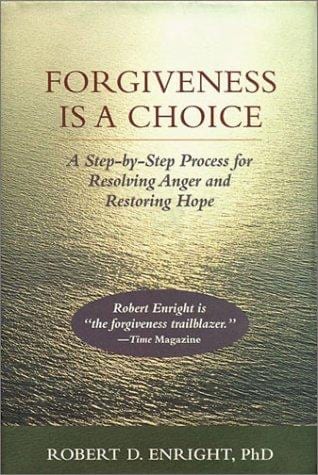
A self-help text for people who have been deeply hurt by another and caught in a vortex of anger, depression and resentment. Robert D. Enright shows how forgiveness can reduce anxiety and depression while increasing self-esteem and hopefulness toward one’s future. The volume demonstrates how forgiveness, approached in the correct manner, benefits the forgiver far more than the forgiven, and seeks to lead the reader on a path that will bring clarity and peace. Enright is careful to distinguish forgiveness from pseudoforgiveness, and to reassure readers that forgiveness does not mean accepting continued abuse or even reconciling with the offender. Rather, by giving the gift of forgiveness, readers are encouraged to confront and let go of their pain in order to regain their lives.
My Summary
Main Ideas, Takeaways & Similarities
Questions
I. What is the problem?
A. How is this problem formulated?
B. Why is this problem important?
C. What is the history of this problem?
D. Which prominent personalities have been interested in this problem?
II. What solutions to the problem are there?
A. What are the conclusions reached?
B. By what argument(s) is the conclusion reached?
C. What facts or assumptions serve as premises?
D. When a prominent personality offers a solution, does he also argue for or against other prominent personalities? Does he raise objections to alternative solutions? Does he consider objections to his own solutions?
III. Evaluation
A. What are the advantages and disadvantages of the alternative formulations to the problem?
B. Has the importance or history of the problem ever been misrepresented?
C. Are the solutions logically related to the premises?
D. Are the facts true? Are the assumptions acceptable? Are the objections answerable?
AI Summary
“Forgiveness Is a Choice: A Step-By-Step Process for Resolving Anger and Restoring Hope” by Robert D. Enright is a self-help book that provides a structured approach to understanding and practicing forgiveness. It offers guidance on how individuals can release anger, heal emotional wounds, and restore hope through forgiveness. Here is a comprehensive summary of the book in bullet points:
- The book introduces forgiveness as a choice that individuals can make to free themselves from the burdens of anger, resentment, and emotional pain.
- Robert D. Enright emphasizes that forgiveness is not the same as condoning or excusing harmful actions but rather a process of letting go of the emotional baggage associated with those actions.
- It presents a step-by-step process for practicing forgiveness, starting with the recognition of one’s own anger and the decision to work toward forgiveness.
- The book discusses the various benefits of forgiveness, including improved mental and physical health, enhanced relationships, and a greater sense of inner peace.
- Enright addresses common misconceptions about forgiveness, such as the idea that forgiveness means forgetting or reconciling with the wrongdoer.
- It explores the role of empathy and understanding in the forgiveness process, emphasizing the importance of acknowledging the pain and suffering caused by the hurtful actions.
- The book provides practical exercises and journaling prompts to help individuals explore their feelings, identify their wounds, and initiate the forgiveness process.
- Enright introduces the concept of “unforgiveness” as a condition characterized by persistent anger and resentment. He discusses the negative consequences of holding onto unforgiveness.
- The book discusses the stages of forgiveness, including uncovering the depth of the wound, deciding to forgive, working through the pain, and ultimately letting go and finding peace.
- Enright provides real-life examples and case studies to illustrate the transformative power of forgiveness and how individuals have successfully applied the forgiveness process.
- It emphasizes the importance of self-compassion and self-forgiveness as essential components of the forgiveness journey.
- The book addresses the challenges of forgiving in difficult situations, such as betrayal, trauma, or abuse, and provides guidance on how to navigate these complex forgiveness processes.
- Enright acknowledges that forgiveness is a personal and individual journey, and it may take time and effort to achieve. He encourages readers to be patient with themselves.
- “Forgiveness Is a Choice” concludes by highlighting the freedom and healing that can be found through the practice of forgiveness and the restoration of hope in one’s life.
Robert D. Enright’s “Forgiveness Is a Choice” offers a structured and compassionate approach to forgiveness. It guides readers through the process of acknowledging their anger, understanding the depth of their emotional wounds, and ultimately choosing to forgive, leading to emotional healing and the restoration of hope.