Zibaldone 2024–2025 journal
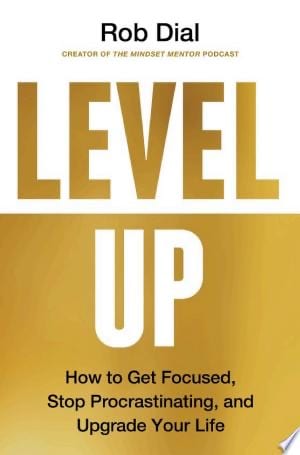
Journal connection: Book-page material related to Level Up.
Source boundary: These are captured journal materials; the integration does not independently verify every clipped claim, quotation, or figure.
PDF++ pages: p. 300 (file not included in this release)
Embedded preview:
Zibaldone 2024-2025.pdf (file not included in this release)
Open the complete Zibaldone page index
Level Up - Rob Dial (Annotated).pdf (file not included in this release)
DESCRIPTION
“Packed with valuable insights, unique lessons, and practical steps, this book will help you break through your procrastination and take immediate action toward your goals.”—Jay Shetty, New York Times bestselling author of Think Like a Monk and 8 Rules of Love Level Up will revolutionize the way you approach your life and your goals. This book from world-renowned high-performance coach and host of The Mindset Mentor podcast, Rob Dial, presents a groundbreaking roadmap to unlock your full potential and transform your life. In it, you will find: A transformative system designed to revolutionize the way you approach your goals, success, and personal motivation. Powerful secrets of highly successful individuals who have mastered the art of focus, defeated their procrastination, and achieved extraordinary results. Cutting-edge research in neuroscience and psychology, unveiling the science behind mental focus and motivation. Tools that empower you to understand and control your mind like never before. This book has cracked the code to peak performance and you will learn how to apply these secrets to your own life. Level Up is not just another self-help book. It is a step-by-step guide that helps you get from where you are now to the life you truly want to be as fast as possible. Whether you’re struggling with distractions, overwhelmed by a chaotic schedule, or simply seeking a path to personal excellence, Level Up is the game-changer you’ve been waiting for.
My Summary
Main Ideas, Takeaways & Similarities
Questions
I. What is the problem?
A. How is this problem formulated?
B. Why is this problem important?
C. What is the history of this problem?
D. Which prominent personalities have been interested in this problem?
II. What solutions to the problem are there?
A. What are the conclusions reached?
B. By what argument(s) is the conclusion reached?
C. What facts or assumptions serve as premises?
D. When a prominent personality offers a solution, does he also argue for or against other prominent personalities? Does he raise objections to alternative solutions? Does he consider objections to his own solutions?
III. Evaluation
A. What are the advantages and disadvantages of the alternative formulations to the problem?
B. Has the importance or history of the problem ever been misrepresented?
C. Are the solutions logically related to the premises?
D. Are the facts true? Are the assumptions acceptable? Are the objections answerable?
AI Summary
Part I: Why You’re Not Taking Action
Chapter 1: Fear — None of It Is Real
Main Idea: Fear is the #1 blocker of action, but most fears are learned, imagined, and rooted in avoiding future pain.
Key Concepts:
- Only two innate fears: falling and loud noises.
- Five major learned fears: fear of failure, rejection, success, being a fraud, and abandonment.
- All fear is either primal or intellectual, and most modern fears are intellectual.
- Fear leads to procrastination and regret due to imagined pain.
- Your brain often creates negative future scenarios, which paralyze action.
Steps/Advice:
- Acknowledge fears as mental projections, not current realities.
- Separate real vs. imagined fears through self-awareness.
- Use fear as a compass — lean into it, not away.
- Push your comfort zone gradually.
- Remember: growth requires uncertainty and discomfort.
- “You must jump knowing the parachute will open.”
Chapter 2: Identity — You Aren’t the Person You Think You Are
Main Idea: Your current identity limits your potential. To change your life, you must change your identity.
Key Concepts:
- Identity is like a video game character you choose to play each day.
- Most people are trapped in an outdated self-image (persona/mask).
- “Personality” is not fixed — it can be redefined at any time.
- Identity → Actions → Results → Reinforce Identity (feedback loop).
- Your story about yourself determines your limits.
Steps/Advice:
- Question the story you tell yourself (e.g., “That’s just how I am”).
- Choose a new character that embraces growth and challenge.
- Align your self-image with the future you want to create.
- Interrupt the identity-action-results loop by changing how you act.
Part II: How to Take Action
Chapter 3: Purpose — Your Internal Compass
Main Idea: Without a clear purpose, motivation and action fade. Purpose gives meaning to effort.
Key Concepts:
- A compelling “why” fuels resilience and clarity.
- Passion is the result of purpose, not the other way around.
- Without purpose, distraction and burnout take over.
Steps/Advice:
- Identify what lights you up — what impact do you want to make?
- Dig deep to find emotional, personal reasons behind your goals.
- Revisit your purpose often to maintain clarity and drive.
Chapter 4: Micro-Actions — How Big Things Get Done
Main Idea: Success is not one big moment but the result of small, consistent micro-actions.
Key Concepts:
- Daily small steps (micro-actions) shape your future.
- Compounding effects turn minor efforts into major results.
- “Complexity is the enemy of execution.”
Steps/Advice:
- Focus on consistency over intensity.
- Design simple daily habits that align with your goals.
- Track progress in small increments.
- Show up daily — don’t wait for motivation.
Chapter 5: The Six-Step Process to Level Up
Main Idea: Every transformation follows a repeatable process: Focus, Work, Persist, Rest, Reward, Repeat.
Key Concepts & Steps:
- Focus — Clarify what you want and block distractions.
- Work — Take intentional action, even if it’s imperfect.
- Persist — Embrace setbacks as part of the process.
- Rest — Recovery is essential to avoid burnout.
- Reward — Reinforce behavior by celebrating progress.
- Repeat — Make this process a lifelong rhythm.
Part III: Staying Consistent
Chapter 6: Self-Talk — The Voice That Drives Everything
Main Idea: Your internal dialogue creates your reality. Negative self-talk keeps you small; empowering talk unlocks potential.
Key Concepts:
- Your mind listens to what you repeatedly tell it.
- Language shapes identity and behavior.
- Most people are trapped in unconscious, negative thought loops.
Steps/Advice:
- Catch and question disempowering thoughts.
- Replace them with intentional, positive affirmations.
- Speak to yourself the way you would a beloved friend or child.
Chapter 7: Environment — Design for Discipline
Main Idea: Your environment either supports or sabotages your habits and progress.
Key Concepts:
- Willpower is weak — environment should reduce friction for good habits.
- Triggers in your physical and digital space influence behavior.
- Community and social reinforcement matter.
Steps/Advice:
- Eliminate distractions and temptations from your surroundings.
- Build systems that make success easy and failure harder.
- Surround yourself with people who support your vision.
Chapter 8: Accountability — The Secret Weapon
Main Idea: You won’t sustain growth alone. Accountability makes you follow through.
Key Concepts:
- Public commitments raise standards.
- Coaches, friends, and systems help overcome inertia.
- Internal accountability (discipline) is stronger when external support exists.
Steps/Advice:
- Declare your goals out loud or in writing.
- Set up regular check-ins with someone.
- Track metrics that reflect progress and keep you honest.
Chapter 9: Mastery — Leveling Up for Life
Main Idea: Mastery isn’t about arrival — it’s about continuous evolution through commitment.
Key Concepts:
- “Leveling up” is a lifelong pursuit, not a one-time event.
- Boredom, setbacks, and plateaus are part of mastery.
- Success is not the goal — becoming the kind of person who shows up daily is.
Steps/Advice:
- Focus on the process, not perfection.
- Recommit to your purpose regularly.
- See yourself as a work in progress — forever improving.
Highlights
I did a lot of soul searching and realized that underneath my behavior was the fear of not being enough. This limiting belief was rooted in my past. (Page 8)
Only later did I understand that I was trying to succeed not for myself, but so that I could finally prove that I was worthy of the love that I never felt from him. (Page 8)
The problem is that most people are looking for that one key that will unlock success, but it doesn’t exist. There is no magic word that will make all your dreams come true. Success is not one big event that changes your life. Success comes from the accumulation of many small actions—what I call micro-actions—that you take every single day. The state of your relationships, the amount of money you have in the bank, and your career trajectory are all a result of the micro-actions you took in the past. That means your future will be determined by the micro-actions you take from here on out. It’s not about being the best; it’s about being better than you were yesterday. You can’t compare yourself to other people. When you go to bed at night, the only thing that matters is that you improved that day. It’s about showing up for yourself through the action you take today. (Page 10)
yesterday is over, and you have a choice between things being hard now and easy later or easy now and hard later. (Page 10)
When you go to the gym, you need to break down your muscles so they can grow back stronger; your brain works the same way. You need to push through (Page 10)
that discomfort and get out of your comfort zone to grow and change. The trick is not giving yourself a choice. (Page 11)
I’ve found taking action comes down to six steps, and if you follow these six steps when pursuing a goal, you will see results. The six steps are: 1. Focus 2. Work 3. Persist 4. Rest 5. Reward 6. Repeat (Page 11)
“Complexity is the enemy of execution,” (Page 12)
Life is pretty simple: either you achieve your goals or you don’t. (Page 12)
Part I Why You’re Not Taking Action (Page 13)
The answer boils down to three main reasons: fear, the story you’re telling yourself, and the lack of a clear purpose. (Page 13)
Chapter 1 Fear None of It Is Real (Page 15)
Which Fears Are Real, and Which Are Imagined? (Page 16)
human beings are born with only two fears: 1. The fear of falling. 2. The fear of loud noises. (Page 16)
If the fear of falling and the fear of loud noises are the only two innate fears that we’re born with, this means that every single other fear is learned. (Page 16)
Over time, I saw patterns develop and realized that people’s inability to take action could be traced back to the same five fears. Almost every fear is a version of one of these fears. 1. FEAR OF FAILURE: This is the fear that you won’t reach your goals. It can lead to your being indecisive and procrastinating. You might even tell people you’re going to fail just to keep expectations low. The fear of failure is also referred to as atychiphobia. 2. FEAR OF REJECTION: This is a fear of people telling you “no” or turning you down. It can be personal (like a relationship) or professional (with your business). It’s a fear of other people’s opinions and judgment. Social anxiety can fall into this category. 3. FEAR OF SUCCESS: This is a fear of getting what you want. It’s often rooted in the fear of change and can lead to self-sabotage. Fear of success has also been referred to as backlash avoidance, and it can alienate you from those you care about most. 4. FEAR OF BEING A FRAUD (imposter syndrome): This is the fear of being exposed as a fraud, or the fear that you aren’t good enough. 5. FEAR OF ABANDONMENT: This is a fear of being left all alone, or that you might do or say something to drive away those you care the most about. This fear is often referred to as autophobia. (Page 17)
We want to fit in and be accepted. We want to feel loved, and ultimately (Page 17)
these fears boil down to our not feeling like we are good enough to be loved. (Page 18)
It starts by learning that all fears can be broken down into two categories: primal fears and intellectual fears. (Page 18)
A brain left to its own devices will almost always go negative. And since the brain can’t tell the difference between primal and intellectual fears, that responsibility falls to you. Becoming more aware of fears is like building a muscle: the more you work it, the better you will get at rooting out those fears. You do that by identifying where fears come from, admitting that they aren’t yours, and releasing them. But there is one trick that can help change your perspective. (Page 19)
Don’t Try to Get Rid of Your Fear—Learn to Embrace It (Page 19)
Who doesn’t want to learn how to overcome their fears? But the answer is, You can’t overcome (Page 19)
something that doesn’t exist. That’s right. Every single one of your fears isn’t real! Don’t believe me? Look over that list of common fears and consider your own. Are any of those fears coming to fruition in this moment? No! (Page 20)
That feeling of fear is a biological reaction to what we’re thinking, not what’s happening. We are making up a future in our mind that does not exist, and that future is almost always negative. It’s a way that we protect ourselves. Will your new business fail in the future? It’s true that not every business is successful, and even those that are often have setbacks; but the point is to focus on the present, not an imagined future. Your new business has not failed today, so there is nothing to be afraid of right now. (Page 20)
Cornell University published a study showing that 85 percent of what we worry about never happens. And of those 15 percent of worries that do occur, 79 percent of the participants handled what occurred better than they expected. Some even learned a lesson. Do the math: 97 percent of our worries never materialize In other words, our worries are baseless and derive from our unfounded pessimistic perception. So, why are we using our mental energy worrying about nothing when we could use it to take action and be productive? (Page 20)
One of my first mentors taught me that very little in life is worse than the pain of regret and the feeling of getting to the end of your life and realizing that you wasted time. (Page 21)
every fear is about the brain trying to avoid future pain. What is the future pain that your fear is trying to get you to avoid? (Page 22)
Fear arises from an image in our brain of future pain. Every fear is about the brain trying to avoid future pain. (Page 22)
is fear of future pain the source of procrastination. (Page 22)
Life is too short to spend it scared, angry, anxious, sad, worried, or bogged down with negative emotions. (Page 23)
It’s your job to make the distinction between real and imagined fear at all costs. You must learn how to become extremely self-aware of what you’re feeling. The closer you look, the more you’ll start to realize that you spend far too much time thinking about what you don’t want, and not nearly enough time thinking about what you do want. But believe it or not, you have the choice. It’s like saying, “I can choose to think about all the amazing things that could happen in the future, or I can choose to think about how I’m not worth it and send myself into a mini-depression. You know what? Mini-depression sounds good! I’m going to go with that one again.” It sounds funny to say it like that, but how often do you choose to think about a negative future? (Page 23)
Fear is designed to help you avoid future pain, but it causes you to imagine pain in your future, which prevents you from taking action. This becomes a self-fulfilling prophecy, because if you don’t take action, future pain is inevitable. I’m not trying to scare you; I’m trying to be honest with you. Everything comes at a cost. Eventually, the result of not taking action will catch up to you—whether it’s not living up to your potential, not (Page 24)
following your heart, not giving your children the opportunities you want for them, or lying in your death bed and realizing that you wasted your life. By the time you realize what’s happened, it might be too late (Page 25)
Eventually, the result of not taking action will catch up to you. (Page 25)
The Advantage of Fear (Page 25)
The one thing you can’t afford to do is wait for fear to go away before you act because that’s never going to happen. (Page 25)
True growth comes from feeling fear and deciding to do the thing you are afraid of anyway. A study published in 2018 conducted by researchers at Yale University found that growth occurs only with uncertainty The brain has no reason to learn when things are predictable and stable. You don’t need to wait until you believe in yourself or for the fear to disappear before you take action. You just have to lean into that fear because that is the only way you’re going to take the action necessary to change your brain and your life. You can’t open the parachute before you jump off the ledge. You must jump knowing that the parachute will open. (Page 26)
Your fears, and that voice inside your head, are showing you exactly what you need to overcome to create the life you want. Every time you feel fear and your instinct is to step back, you must lean forward instead. You don’t have to steamroll ahead, but if you can make a habit of pushing yourself a little bit out of your comfort zone every time you feel fear, you will build your resilience against your fears. Fear is letting you know that you have reached the edge of your comfort zone. It’s a sign of what you need to push past so you can grow. If you do that enough, years from now your comfort zone will be much larger. And one day, you won’t think twice about doing things that might terrify you today. One of my first mentors used to say, “The mind is like a plastic bag: once it expands, it will never (Page 26)
return to its original size.” Your comfort zone is the same way, but you must put in the work. (Page 27)
Fear is letting you know that you have reached the edge of your comfort zone. It’s a sign of what you need to push past so you can grow. (Page 27)
You will do things that others find challenging, simply because you expanded your comfort zone. That is how you set yourself apart from everyone else. If this is important to you, you must look at it as a long game, but the good news is that it can be done, and the choice is yours. “Today I will do what others won’t, so tomorrow I can do what others can’t.” That’s a quote from Hall of Fame wide receiver Jerry Rice, and I think it perfectly encapsulates what you can accomplish once you learn how to push past your comfort zone (Page 27)
If you take the time to think about and analyze your fears, you’ll begin to realize that they are probably all intellectual fears. You are in no real danger right at this moment. What you fear is a future that doesn’t exist. Fear is a powerful force, so you must trust that freedom lives on the other side of the fear that is the boundary of your comfort zone. Instead of being afraid of your fears and allowing them to limit your potential, recognize them for what they are, and use them to grow. (Page 28)
Journal Prompts Write down a list of all your fears, and where you think you learned them. Now, write down the emotional pain you’re anticipating for each of your fears; be honest with yourself about whether a fear is real or imagined. How is fear holding you back from taking the action required to get the life you want? How can you release any fears and take action toward the future that you desire? (Page 28)
List some ways that you can turn fear on its head and use it to your advantage. (Page 29)
Chapter 2 Identity You Aren’t the Person You Think You Are (Page 30)
In order for a seed to grow into a flower, it must completely destroy itself. If you truly want to change, some other part of you needs to die. (Page 31)
Think about how boring it would be to play a video game where you’re a character who sits on the couch all day scrolling through Instagram. Nobody would ever play that video game because it doesn’t have any challenges, yet that’s the character so many people choose to play in life. We’ve all created our own character over the years. Every morning, we wake up and unconsciously decide to play that character. All we know is that character, and not being able to play that character scares us. It’s that character you choose to play—your identity, or who you think you are— that is the second biggest reason after fear why you don’t take action. It (Page 31)
becomes so easy to tell ourselves a story that isn’t true, but our identity, the character we embrace, can easily keep us stuck in our ways so things never change, so that we never make it to the next level. (Page 32)
What if instead of playing that character, you played a character that embraces challenges, and takes the action required to achieve your goals? It will make you smarter. It will make you stronger. And it will make life more fun. When we change our identity, we can change our actions, which can ultimately change the direction of our lives. The problem is that we often make the mistake of thinking we can’t change. (Page 32)
When I discuss identity with clients, they often tell me, “That’s just my personality.” But what is a personality? The word “personality” derives from the Latin word persona, which is a mask people wear when acting onstage That mask is who we think we should be, and it influences the decisions we make. We’ve worn that mask for so long that we often don’t realize who we really are, and we don’t realize that we can take it off at any time. Writer and philosopher Alan Watts said, “You are under no obligation to be the person you were five minutes ago,” which I like to think means we have the power to choose to act a different way, or put on a new persona, any time we want. (Page 32)
Whatever you think you are, you are. Try thinking of your identity as related to actions and results, as in the following figure. Your identity influences your actions, which determine your results, which feed back into your identity. The problem is that most people don’t have an identity that lines up with the future they want to create. And when your identity isn’t lined up with the future you want to create, you will never create that future. It’s a cycle, so the only way to create the future you want is to change your identity. (Page 32)
What’s the Story You Tell Yourself? (Page 33)
It’s important to identify your story because it influences everything you do or don’t do, what you think about yourself, how you feel about everyone else, the importance you place on your past, and the state of your current circumstances. That story you tell yourself is the most powerful thing in the world. And your life won’t change unless that story—your identity— changes. (Page 34)
Your life won’t change unless your identity changes. (Page 34)
Our identity influences our actions, which determine our results, which feed back into our identity. We believe that’s the way we are, so we take actions that line up with that identity, and those actions generate results that reinforce it. (Page 34)
If you want to give yourself a fighting chance, you need to change the story you tell yourself. If you do that and start to see positive results, you can begin to change your identity. Over time, that reduces the resistance (Page 35)
you will encounter when you need to take the actions required to achieve your goals. But if you don’t ever change your story, and you continue telling yourself and others that you can’t lose weight because of your genes, it will make it much harder to lose weight. You will struggle to take the action needed to lose that weight. (Page 36)
You may convince yourself for a little while that you want to get fit and lose weight, but a good indication that you haven’t completely changed your identity yet is when you get a case of the “I deserve its.” That’s when you start to think, I lost thirty pounds, so I deserve a pizza. Then, a few days later, you might think, I deserve to skip the gym. Then, I deserve some ice cream. Through a collection of tiny decisions, it isn’t long before you wake up and realize that you’re back at the same weight as when you started, wondering, How the hell did that happen? (Page 36)
This is normal. It’s part of what’s called the emotional cycle of change, which was developed by Don Kelley and Daryl Conner in the 1970s, and it applies to almost anything you’re trying to do differently In the beginning, you have what’s called uninformed optimism. This is when life seems great because you can’t see the cost. It doesn’t last long and quickly devolves into informed pessimism where doubt sinks in and you understand the difficulties, so you start questioning if the change is worth the effort. It only gets worse until you hit the valley of despair, which is when most people quit because the benefits seem so far away. They then start something new, so they can return to that uninformed optimism stage when everything seems so exciting, only to go through the same cycle and quit when they reach the valley of despair all over again. That’s why it’s so important to push through the valley of despair by taking action. If you ride this wave long enough, it has to go up. (Page 37)
The best way to push through is to change the way you think about your goals. For anyone who wants to lose weight, the goal shouldn’t be to lose weight. The goal must be to change your identity so you believe that you are someone who is fit and healthy. (Page 37)
Your identity influences your actions, which determine your results, and your results will almost always line up with your identity. They not only line up with your identity; they reinforce it and make it stronger. So, if you aren’t getting the results you want, it’s because of your identity. If you don’t have the body, money, relationships, or business you want, it’s because of your identity. It’s time to change that. (Page 39)
Changing Your Identity Begins with the Actions You Take (Page 39)
Take a minute to think about your identity. What’s the mask you’re wearing? Are you the smart kid? The dumb kid? The business-is-hard kid? The one who struggles to succeed? Are you shy or not good enough? After you spend some time ruminating on this, ask yourself one of the most important questions that very few people ask themselves: What were you conditioned to believe during your childhood? (Page 41)
Follow Through with Your Thoughts and Words (Page 43)
If you want to change your identity, then change your actions, but start by turning your attention to your beliefs, thoughts, and words. (Page 43)
Wright knew that when you run a hundred miles, you will be in pain. The trick is to not talk or think about it. Instead, think of what you’re grateful for. So, he would stop every hour and make it a point to say what he was grateful for, and while running, he focused only on the positive. Chadd Wright isn’t the first person to think of this; numerous studies have shown the significant impact positive self-talk can have on athletic performance (Page 43)
When I interviewed the actor Matthew McConaughey on my podcast, he told me how the third spanking he ever got was for saying “I can’t.” That was one thing that his parents never allowed him to say. He told me: “I learned and heard from my parents that ‘can’t’ is a bad word. You get your mouth washed out for saying ‘shit,’ ‘fuck,’ and ‘damn,’ but if you say C-AN-T, whoa, bend over.” (Page 44)
Spend a Day as the Person You Want to Become (Page 44)
Here’s a challenge. Think about your ideal self. Dream big! Create a picture of someone who already has everything you want in life. They have the relationship you want, the amount of money you want, the body you want, the family life you want, the job or business you want, and even all the joy, peace, and happiness you want. They’ve gone out and achieved everything that you want to achieve. Nothing is missing. In your eyes, their life is perfect. (Page 45)
Now, try to describe that person’s typical day in as much detail as possible. When do they wake up? What is their morning routine? What do they eat? How often do they work out? Who do they surround themselves with? What does their career or business look like? How do they talk to themselves? How do they talk to others? How do they treat their friends? How do they treat strangers? Familiarize yourself with every single trait this person has and action they would take. Once you can identify everything, your goal is to start taking the actions that person takes for one entire day. (Page 45)
Throughout the day, you will notice moments when you slip back into your old self. That’s your existing identity trying to lure you back into your comfort zone. Stop yourself. The trick is being able to resist the temptation to do what’s easy. You might get agitated at something that your ideal self wouldn’t, so this is an opportunity to catch yourself and change that behavior. Bring that ideal version of yourself into the present moment and act like that person. This is all about stepping out of your comfort zone and doing things that will challenge you because if it doesn’t challenge you, it doesn’t change you. Try it out and see what it feels like to break out of your identity and put on a different mask, or persona, just for a day. Think of it like a shirt. If you like it, you can keep wearing it, but if you don’t, you can try on a new one the next day. There is no harm in trying. (Page 46)
I’m not a very religious person, but I like to think that when we get to the end of our lives, we will meet that person we could have been had we lived up to our full potential. So, when I come face-to-face with God or whoever might be judging me, I want to have checked off every single item on that checklist that is required to be that perfect version of myself. My goal is to fully realize my potential and to have influenced the world and people around me as much as possible. I want to have been the best possible parent and steward of my money, and to have loved everyone as much as possible. If I ever get to meet that best possible version of myself at the end of my life, I don’t want to be disappointed that I didn’t become that person. Instead, I want to look at that person and realize that I couldn’t have done any more during my time here on Earth to live up to that potential. I want to look at that person and feel like I’m looking at my twin. (Page 46)
“Is what I’m doing right now getting me closer to or taking me farther away from my goals?” (Page 46)
It’s simple. If what you’re doing now is getting you closer to your goals, keep doing it. If it’s not, stop immediately. You can ask yourself this a hundred times a day if you need to, and it will help you shift your identity from the old version of yourself to the new version of yourself, so you can become who you need to become to create the life you want. (Page 46)
Journal Prompts Write down the story you’ve been telling yourself that has been holding you back from where you want to be in life. We want to make sure we pull this out from the root. Identify and then write about where that story came from and how that functions in your life today. Maybe a particular person comes to mind who was a big influence in your life (positive or negative). Or maybe you can think back to a memory or experience from childhood, high school, or early adulthood that made an impact on your life. What are the thoughts, beliefs, and words you need to STOP thinking or saying to accomplish what you want to achieve? What are the thoughts, beliefs, and words you need to START thinking or saying to accomplish what you want to achieve? (Page 47)
Chapter 3 Purpose What Do You Want? (Page 48)
What do you want? It sounds like a simple enough question, but do you have a specific answer? A lot of people know what they don’t want. Some people kind of know what they want, but they aren’t 100 percent sure. How can you expect to get what you want if you don’t know what that is? (Page 49)
super vague. (Page 49)
If you want to make more money, how much more money? How much do you want to add to your bank account? How much do you want to save and invest? If you tell yourself that you want to improve your relationship, how do you go about doing that? How can you gauge what is good or bad (Page 49)
about your current relationship? Where do you want to be in your relationship down the road, and how do you get there? (Page 50)
It’s much more difficult to motivate yourself to work hard to achieve something if you don’t even know what that something is. (Page 50)
What’s Your Reason for Being? (Page 50)
The problem is, most people live their lives without any true passion. (Page 50)
- What do you love? 2. What are you good at? (Page 50)
- What can you get paid to do? 4. What does the world need? (Page 51)
Take some time to brainstorm answers to these questions to help you narrow down your passion and purpose. Write down everything you can think of, big or small. Don’t limit yourself to ideas related to business or work. If you love helping people, reading, eating ice cream, or playing with puppies, they all go on the list. Once you have your answers to all four questions, start looking for things that overlap. When you find something that is in all four categories, that is your ikigai, your reason to live, or your purpose. (Page 51)
- What are you so interested in learning or doing that you would do it for free? (Page 52)
Try channeling your inner child. Don’t hold back; take the time to truly dream. Pretend you wake up tomorrow and receive a notification on your phone from your bank that says you have $500 million in your account. It’s not a mistake. Thanks to an anonymous benefactor, you now have $500 million in the bank. What do you do now? (Page 52)
What’s great about the question “How do I want to spend my time?” is that it cuts through all of that. It takes money out of the equation and forces you to think about what it is that you truly want, which is good because human beings are capable of so much more. (Page 53)
Go back over your answers for the ikigai exercise to create a list of goals, and write them down. Why write them down? Studies have shown that when you write down your goals, you make them tangible, and it becomes more likely that you will follow through and achieve them. (Page 53)
The Seven Layers of “Why” (Page 53)
Writing down your goals may make it more likely that you will follow through, but it doesn’t guarantee anything. The sad reality is people still fall short and never accomplish what they set out to achieve because they don’t understand why they are trying to do something. (Page 54)
If you’re struggling to figure out what it is you want and why—what the emotional reason is behind your goal—“The Seven Layers of ‘Why’” might help you better understand your purpose. Start with the first goal on your list and ask yourself, “Why?” Write down an answer, and then take it deeper by asking “why?” again. Do this seven times and see where you end up. Chances are that you will look at that goal in an entirely different light. (Page 55)
Once you can tap into your purpose, you will start to feel pulled toward your future—you’ll be driven to achieve that goal and no longer will need to worry about motivation. (Page 55)
There is a difference between someone who is motivated and someone who is driven. You can see it in their eyes, hear it in their voice, and feel it through their body language. It’s that feeling that this person will stop at nothing to do what they’re trying to do. (Page 55)
If something is important to you, you will find a way; if something is not important, you will find an excuse. (Page 56)
You need to step into the driver’s seat and say “yes” to the life you want. You are the only one responsible for anything either happening or not happening, and the best way to push yourself to take the action required to make anything happen is by knowing what you specifically want. You are lost without your purpose. When you wake up every morning, you must focus on your purpose and allow it to pull you toward the future you want. (Page 57)
Journal Prompts If you could have ultimate success in your life, what would that mean to you? What would that feel like? Look like? Taste like? Be as detailed as possible. What is your most important future goal? Describe it in specific, vivid detail. What would it feel like to accomplish that goal? If you never had to worry about money, how would you spend your time? (Page 57)
Chapter 4 Visualization The Bridge to Action (Page 58)
reticular activating system (RAS) (Page 59)
When I interviewed Stanford professor and neuroscientist Andrew Huberman on my podcast, he explained how it’s the job of the RAS to filter out most of the world. The chemicals in your brain guide your nervous system and divert resources to seek out and find more of what you tell it to. It is why practicing gratitude can have such a positive effect, because it increases the production of serotonin to make you feel good about other things in your environment. It’s why when you’re at a concert or sporting event, you can walk through crowds of people who are all talking and not hear a word. But if someone calls out your name, your head will spin around because acetylcholine and epinephrine allow you to home in on that piece of information the brain deems important. (Page 60)
Let’s say your identity has been shaped around the idea that you aren’t worthy of success. Instead of asking yourself “Am I going to fail?,” flip the script and ask, “Why do I deserve to be successful?” or “What good can I do with my success?” or “How will my success improve life for my family and me?” (Page 61)
Let’s say that you fear you’re a bad parent. Get your brain thinking the opposite through questions: “What can I do today to improve the lives of my children?” “How am I being there for my kids today?” “How can I lean into my biggest strengths as a parent?” (Page 61)
It’s all about keeping your eyes on the prize and remaining focused on where you want to go so that you will attract that future and be able to recognize all of the opportunities when they present themselves. The questions will change your focus and your focus will dictate how you feel, but you can take that a step further. Like my mother knew before that basketball game, one of the best ways to set your brain to create and feel pulled toward the future you want is through the power of visualization. (Page 61)
Normalizing the Future You Want (Page 62)
Visualization mentally prepares you to execute an action because it tricks your mind into thinking that what you’re trying to do is possible. By tricking your brain into thinking you have the life you want, it makes it easier to take action toward that life. (Page 63)
The future goal is what you visualize, but the fruit you will bear from that accomplishment is what you can normalize. So, if your goal is to run a successful business, you visualize how that accomplishment will unfold and what it feels like. Once you have that success, you normalize what you can do, and that will be unique to you. (Page 64)
No matter what the goal, it’s important to incorporate all five senses into the visualization process to make it a richer experience. (Page 66)
Make visualization a daily habit. Take ten minutes every day to visualize the future you want. If you’ve never done this before, here’s the process that I find helpful: 1. Start by taking six deep breaths. 2. Next, it’s important to bring emotion into the experience so that your brain and body are both present. I’ve done this practice with many different groups of people, and I’ve learned that gratitude is the most potent feeling that you can utilize to help create that sense of heightened emotion. Think of someone or something you love, and then bring all those feelings of happiness and joy to the visualization process. It’s not uncommon for people to get emotional when visualizing their future and feeling immense gratitude as if they already have it. If you can fear the future, you can also feel grateful for it. Learn to train yourself to feel gratitude for a future that hasn’t happened yet. 3. Get crystal clear in your mind exactly what you want and what you plan to both visualize and normalize. 4. Now, imagine that scenario, with lots of sensory detail so it feels like you’re really there. 5. Repeat this process every day to hardwire it into your brain. You will start to notice your feelings change from “I want XYZ” to “I will have XYZ.” When this occurs, you’re being PULLED toward your future. (Page 67)
Learn to train yourself to feel gratitude for a future that hasn’t happened yet. (Page 67)
When you picture the future you want, you will feel attached to those accomplishments. You can feel proud and excited that you built this life. (Page 67)
You Draw Energy from the Future You Imagine (Page 67)
If you notice a feeling of excitement as you practice positive visualization, it’s because you’re envisioning an exciting future. If you are feeling discouraged, that your dream future is unattainable, it’s probably because you’re envisioning all of the negative possibilities the future might hold. You choose what you focus on. (Page 68)
Successful people are able to envision the future they want and not dwell on all of the things that they don’t want to happen, or fear could ruin them. When you learn to turn off or turn down that part of the brain that envisions a negative future, you can then harness the power of visualization to draw energy from what you want to happen by getting clear about what your drives, motivation, and goals are. (Page 69)
Picture how proud you will be when you accomplish your goals. (Page 70)
Journal Prompts What does your ideal future look like? What would you do? When would you do it, and with whom? What will you focus on to set your reticular activating system (RAS) to make sure you find what you’re searching for? What fruit will accomplishing your future goal bear? How can you incorporate all five senses into your visualization process? (Page 70)
Part II How to Take Action (Page 71)
One of my favorite quotes about how to take action comes from James Clear in his book Atomic Habits: “Every action you take is a vote for the person you wish to become.” (Page 71)
Chapter 5 Direction Set Your Internal GPS (Page 73)
You can’t see ten years from now, three months ahead, or even tomorrow. All you can see is today, so you must do what you can to get 1 percent better today. In other words, focus only on those hundred feet that are in the headlights ahead of you. Once you move those hundred feet, there will be another hundred feet, and then another and another. (Page 73)
Stop stressing about the future. Forget about all the success, happiness, joy, and peace you want for yourself in the next ten years, one year, or even the next month. Focus instead on leveling up today. There is no other day except for today, and that’s how you should live because every day is today. You want to live in the headlights and move the needle as much as possible today. (Page 73)
The fact that you haven’t been taking action in the past doesn’t matter. What matters is where you are right now, and where you want to go. (Page 74)
The direction you are heading is more important than the speed you’re going (Page 74)
Goals work the same way, and three components are required to make sure that you achieve them: 1. Direction 2. Action 3. Time (Page 74)
Direction: What’s Your Destination? (Page 75)
Action: Start, Stop, Continue (Page 75)
- What do I need to start doing this week? 2. What do I need to stop doing this week? 3. What do I need to continue doing from last week? (Page 76)
Time: It’s a Long Game (Page 76)
The reality is that changing your life takes time. There is no way around that. You just have to accept it. (Page 76)
Success is about doing the small (sometimes boring) things over and over. (Page 76)
Technology can be great because it makes life easy and convenient, but the downside is that it has trained us to expect instant gratification. Success is one of the few things that you can’t get through instant gratification; it requires consistent action. Nobody expects to go to the gym once and leave with six-pack abs. The body, business, or relationship you want isn’t going to be achieved as quickly as a Google search. They all require delayed gratification, so you must learn patience, or how to be the tortoise and not the hare. (Page 78)
Do you think you’re lazy? You’re not. You’re choosing to be lazy. Do you think you’re a procrastinator? You’re not. You’re choosing to procrastinate. (Page 78)
You know what’s hard? Working to grow your business. You know what’s also hard? Being broke. (Page 78)
Depending on your situation, you might have to give something up. In his book Think and Grow Rich, Napoleon Hill lays out six steps to take to achieve your financial goals. The first is to figure out the exact amount of money you desire, and the second is to figure out what you will have to sacrifice to get it. Although he’s talking specifically about money, sacrifice can apply to any goal you’re trying to achieve because it acknowledges the simple fact that there are trade-offs in life. You don’t have room to do it all. Something will have to go, because when you say “yes” to something, you’re also saying “no” to something else. However, when you’ve found your purpose and spend your time working toward your goals, it’s well worth the sacrifice when you can sit back and watch that lifelong dream come to fruition. (Page 80)
Chapter 6 Distraction The Enemy of Action (Page 81)
Marketing experts say that the average American sees between four thousand and ten thousand advertisements every day They check their phones 344 times every day. That means if you’re awake for sixteen hours, you’re checking your phone every three minutes. (Page 82)
Micro-action step: Put your phone in a drawer or another room for a set period of time. Try starting with thirty minutes and make a point to do this at least once a day for a week. (Page 85)
Micro-action step: Go to your phone’s notification settings and disable any that you don’t need immediately. (Page 87)
Micro-action step: Identify people who might be a distraction to you while you try to get work done and design a system that lets you get time alone without neglecting any necessary obligations. If this is difficult, start small by setting aside thirty minutes, and continue to refine your system until you find one that works for you. (Page 88)
- How can I design my environment so that it is easier for me to take action? 2. How can I design my environment so that it is harder to distract myself from taking action? (Page 89)
clutter can be distracting. I encourage you to keep your workspace clean. (Page 90)
Micro-action step: Spend ten minutes looking at the spaces where you regularly work and spend time and ask yourself what type of actions those spaces encourage. If those actions don’t line up with your goals, try to make modifications to those environments that would help you be more productive. (Page 92)
Micro-action step: Identify a person or a group of people who have goals similar to yours and with whom you want to build a closer relationship. Reach out to them via email or text this week. (Page 94)
Journal Prompts Write down everything that distracts you from taking action or gets in the way of doing what you need to do to get the life you want. Review that list and write down how you can remove as many of those distractions as possible when you need to focus and take action. How can you change and design your workspaces to eliminate distraction and encourage the action you want to take? Who are the five people you spend the most time with? How are they helping or hindering your progress? Think about your personal goals and then research conferences and networking events near you, or even just places where you think people who have similar goals would hang out. Consider how you can incorporate these activities into your schedule. (Page 95)
Chapter 7 One Step at a Time How to Get It All Done (Page 96)
And once you start to feel that momentum, it’s essential to keep it going because stopping and then starting again takes a lot more effort. Momentum is one of the most underrated components of building the life you want, and yours should start the minute you wake up. Remember that motivation follows action, so if you remain consistent, you will generate momentum. (Page 96)
Start the Day with Small Wins (Page 97)
- Never Hit Snooze (Page 97)
From now on, when your alarm goes off in the morning, instead of hitting snooze, get out of bed. That’s your first win of the day. (Page 97)
- Make Your Bed (Page 98)
- Complete Your Morning Routine (Page 98)
- Make Your To-Do List (Page 99)
At the end of your morning routine, take ten minutes to visualize and plan out your day. We are going to do this by making a short to-do list. The operative word here: short. (Page 99)
Pareto Principle, also known as the 80/20 (Page 99)
From now on, every morning, single out the three most important needle-moving tasks. (Page 100)
The number one item on that list is nonnegotiable. (Page 100)
- Don’t Look at Your Phone (Page 100)
Being Productive Versus Being Busy (Page 101)
You need to focus on what you need to do to be productive and move the needle. With everything you do, ask yourself, “Is what I’m doing right now bringing me closer to my goal?” If not, stop. If so, go. (Page 102)
How Much Energy Do You Have? (Page 102)
- Sleep (Page 102)
- Light (Page 103)
Within the first hour you’re awake, get in the habit of going outside, even for just a few minutes. (Page 103)
- Food (Page 103)
It may sound counterintuitive, but when it comes time to focus, don’t underestimate the power of a little bit of hunger. Studies show that intermittent fasting can improve brain function. (Page 104)
- Water (Page 104)
We lose anywhere between sixteen and thirty-two ounces of water every night simply by breathing. Most of us are dehydrated when we wake up in the morning, and dehydration can affect cognitive function and alertness. (Page 104)
The one thing you don’t want to drink first thing in the morning is coffee. Some people can’t imagine not drinking that first cup right away, but stick with me here because studies show that cortisol, your stress hormone, is elevated forty-five minutes after waking up. (Page 105)
Energy Planning (Page 105)
I typically wake up at 6:30 a.m., when the alarm first goes off, and make my bed. I meditate with my wife for twenty minutes, followed by reading or journaling. After I visualize my day and make my three-item to-do list, I journal the answer to one question: “What can I do to make today amazing?” I ask and answer that question every single day because that helps me be intentional. Sometimes what makes my day amazing is getting done the first item of my to-do list. Or it could be playing pickleball with friends when I’m done working because sometimes making the day amazing means doing something fun. At 7:30 a.m., I usually make some coffee and spend time with my wife and our dogs. We’ve become very intentional about spending an hour together before our days get super busy. 8:30 to 9:15 a.m. is my creative time, when I make social media content and come up with ideas for the Mindset Mentor podcast. My team knows that I will not answer any calls or texts during this time. 9:15 a.m. is when I finally check for emails and texts on my phone (which has been in a drawer), three hours after I wake up. I answer any that I need to address, and then I disconnect again, putting the phone back in a drawer. From 9:30 to 10:30 a.m. I work out. This is the period of the day when I have the most physical energy. Some people have more energy for physical activity later in the day, but this works best for me. By 10:30 a.m. I feel empowered. 10:30 a.m. to 2:30 p.m. is when I get my focused work done because this is my high-energy time of the day. These four hours are my sacred time. Once again, I don’t answer any emails or texts during this time because I spend it knocking out my most important tasks, as well as the number one to-do item on the index card in my back pocket. If it doesn’t take long, I can also do items two and three, but some days that firs…
…t item might take a couple of hours, so that is what I prioritize. (Page 106)
2:30 p.m. is when I typically have my first meal of the day, and then until 6:00 p.m. I do all the ancillary things I need to get done that don’t require my most intense focus, such as making Zoom calls and checking in with my team. My energy is not as high during this period, so I make sure that I’ve already taken care of all my priorities. 6:00 p.m. is my nonnegotiable turn-off time. Yes, there are days when I have to work a little bit later, but 95 percent of the time I’m done at 6:00 p.m., and I completely shut off. When I’m done, I’m done. 7:30 p.m. is when I have dinner, and I typically won’t eat again until 2:30 p.m. the following day. My energy level is decreasing, so I usually spend the time until 9:30 hanging out with my wife and friends or reading. 9:30 p.m. is when I start to get ready for bed. By 10:00 p.m. I make sure I’ve written down my goals for the next day and anything I want to improve upon. I believe this is important because it allows these thoughts to seep through my subconscious as I fall asleep. 10:30 p.m. at the latest is lights out, which allows me to get eight hours of sleep. (Page 107)
The Importance of Logging Off (Page 107)
People often overlook the importance of having a specific time when they stop doing work. (Page 107)
Taking breaks from work will actually help you work better. Take weekends off, and you’ll start to realize that you come back on Monday feeling refreshed and you can be more productive. (Page 108)
You don’t want to spend so much time trying to make a living that you forget to make a life. Have some fun. Enjoy your life. (Page 108)
make things easier for yourself by racking up small wins first thing in the morning, boiling your to-do list down to three essential needle-moving tasks, and knocking those out during times of the day when you have the most energy. (Page 109)
Journal Prompts Before going to bed tonight, jot down what you did today. Be honest with yourself about how you spent your time. In what ways do you tend to trick yourself into thinking you’re productive when you’re really just being busy? How can you rearrange your schedule to make sure you’re doing your most important needle-moving activities at times when you have the most energy? (Page 109)
Chapter 8 Focus The Secret to Productivity (Page 110)
The Pomodoro Technique (Page 111)
First, remove all distractions. Put your phone away and use noise-canceling headphones if necessary to help block out the outside world. I like to keep a cup of coffee, tea, or yerba mate next to me, so I can stay alert. Then, clear your mind by doing a brain dump before you begin. That means using a pen and paper to write down all the things floating around in your head so you can release them. It doesn’t matter if they are big or small; write them all down. This way, you won’t be worried about forgetting anything, and you’ll know you can attend to whatever you need to do after the session, but it won’t be on your mind when you’re trying to focus. Keep that notebook handy during all of your work sessions to jot down any more ideas that come to mind, so they won’t pull away your focus or steal time away from what you’re trying to do. And you will have ideas; just make sure to flip the page of the notebook after you’ve jotted down your notes so your notes don’t distract you. You’re basically closing out all the tabs you have open in your brain. This will give you more bandwidth to focus on your task. When it’s time to start work, set your timer for twenty-five minutes. It’s important not to use the timer on your phone because that can be a big distraction. At first, it can be a struggle to hit the twenty-five-minute mark without being distracted, but the more you practice and push through, the more focused you become. Even though your mental muscles may be weak right now, you will build them up and your ability to focus will become stronger as you practice. Eventually, you can build up to thirty minutes, and then thirty-five. Many people do something I call Pomodoro Plus where they work for forty-five minutes and then take ten minutes off. But please, start with twenty-five minutes on and five minutes off until your focus muscles b…
…ecome stronger. (Page 112)
Set the timer for your five-minute break. This break is extremely important; don’t look at your phone or do anything else during it. Instead, try to go outside and let your mind wander. Stare off into the distance. Look at the horizon or skyline; maybe go for a walk. As we learned earlier, sunlight can help with your alertness, so go outside if possible. What’s happening when you take a break is called hippocampal replay The hippocampus, the same part of the brain that stores all your memories when you sleep, will replay the last action you did. And it does so about ten times faster than when you first completed the action. It’s storing away that information, which is why the Pomodoro Technique can be so effective when you’re studying or trying to learn something new, such as an instrument. After five minutes, come back for another twenty-five-minute session of intense focus. (Page 113)
The reason the Pomodoro Technique works so well is because it requires single-tasking, not multitasking. (Page 113)
It takes time (an average of 15 minutes) to reorient to a primary task after a distraction, such as an email. (Page 114)
It might take time before you can focus for a full twenty-five minutes, but just like putting time in at the gym, you will see improvement and results if you stick to it. In his book Deep Work: Rules for Focused Success in a Distracted World, Cal Newport writes about “deliberate practice,” which is “the systematic stretching of your ability for a given skill.”7 This is how you can expand your focus, but go easy on yourself if you struggle on some days. Although on good days I can focus for forty-five minutes, some days I can barely reach that twenty-five-minute mark. Still, I make sure to push myself to complete at least those twenty-five minutes every single time. (Page 114)
Visual Focus (Page 115)
It’s recommended that after every forty-five minutes of intense visual or mental focus, you relax the eyes by widening your gaze for five minutes. (Page 116)
You also want your eyes to be looking up, above nose level, to keep your brain alert Looking down or below nose level means the neurons in the eyes will activate parts of the brain linked with calm and sleepiness. (Page 116)
Lighting (Page 116)
When you work inside, try to get outside as much as possible. During breaks, I always go outside to make sure I can take in those photons from the sun. (Page 117)
When the sun goes down, you want to dim the lights and adopt a different strategy because exposure to bright light at night can have a negative effect on your circadian rhythms, metabolism, and sleep. (Page 118)
Sound (Page 118)
You can make sound work for your focus in one of two ways—by either enhancing or limiting the sounds around you. Everyone’s tolerance for background noise is different, which is why some people like to work at coffee shops and others prefer a quiet library. Your ability to focus with music or background noise also may differ from day to day. (Page 118)
One practice that I’ve found helps me concentrate is listening to a specific type of music—or even the same song. When I need to focus, I listen to the same song on repeat. (Page 118)
Accountability Partner (Page 119)
Finding someone who can help keep you accountable as you take action is a fantastic way to make progress toward achieving your goals. (Page 119)
Movement (Page 120)
Inaction leads to more inaction, and action leads to more action (and motivation follows action), so consider these last two tools—movement and cold water—the ones you use during your SOS moments. (Page 121)
“We know exercise improves our ability to think,” (Page 121)
Cold Water (Page 121)
Additional highlights (from Readwise, not in the list above)
-
- What can you get paid to do? 4. What does the world need? (Page 51)
- Journal Prompts Write down the needle-moving actions you need to complete regularly to significantly increase your productivity. As you test out each of the seven tools discussed in this chapter, describe your experiences in your journal and write about whether each helped you focus and how. Make a list of who might make good accountability buddies for you and how. Brainstorm the kind of arrangements you could make with each person so that they would hold you accountable to your goals. What will you do to incorporate these seven tools into your daily routine? Write down the commitments you can make to yourself, or with your accountability buddy. (Page 122)
- Part III Creating Habits and Making Them Stick (Page 123)
- Chapter 9 Consistency How to Show Up Every Day (Page 124)
- “The reason why you aren’t getting what you want right now is that you aren’t treating your life like a business. You have to learn how to become the CEO of your own life because if things aren’t going the way you want, it’s nobody’s fault but your own.” (Page 124)
- You can either make excuses or get results. (Page 125)
- It doesn’t matter what you’re trying to do, you don’t have to be the smartest, fastest, or most talented (Page 125)
- person to reach your goals. You just have to be the most consistent. (Page 126)
- “I struggle with consistency” is an identity statement. Start paying attention to the words you say, especially when it comes to identity statements like these because as we explored in Part I, your actions will always line up with your identity. You might have struggled with consistency in the past, but it’s not part of your identity now. So, if you’re someone who says “I struggle with consistency,” tell yourself instead, “I struggled with consistency in the past, but I am working to become more consistent every single day.” I’ve struggled to be consistent in the past as well, but that doesn’t mean I have to struggle with it in the present or future. (Page 126)
- The Secret to Discipline (Page 126)
- Here’s a tip: Never negotiate with your own mind! One of the main reasons why people have so much trouble taking action is because they negotiate with their minds and have been letting their mind win for most of their lives. (Page 126)
- Discipline has two components: (1) doing what you say you will do, and (2) doing what you need to do, even when you don’t want to do it. (Page 127)
- Discipline doesn’t come from doing the things you want to do—it comes from doing the things you don’t want to do but know that you should do. (Page 127)
- Mel Robbins wrote The 5 Second Rule about this very concept: if you have to do something, count down from five and then physically move (Page 127)
- I still do this in many different circumstances today, but it’s not nearly as difficult because I’ve trained myself not to negotiate with my mind. I don’t allow myself to stop and think. I just go. It happens almost daily when it’s time to work out because I hate working out. (Page 128)
- Another trick to help you take action is to just get your foot in the door. (Page 128)
- The people who are the most successful are the ones who consistently try to do just a little bit more and be a little bit better. They push themselves past what is possible because there is always another level. If you look at life like that, it doesn’t matter what you’re trying to do; you will transform into a brand-new version of yourself who might be unrecognizable to you now. The hardest part is getting started. (Page 128)
- Another trick is to get in the habit of finishing what you start, even the little things. (Page 128)
- At the gym, doing 1 percent more means running for a few more seconds on the treadmill or pushing for one or two more reps. (Page 129)
- Discipline is one of the most important skills required to achieve success because the more disciplined you are, the more you can take action, which means the more you get done, and the more quickly you change your life. (Page 129)
- Set Yourself Free Through Ritual (Page 130)
- One simple way to become more consistent is by developing rituals. A ritual is a meaningful practice or routine that has a framework and a step-by-step process. It’s intentional, planned, and, when used strategically and repeatedly, will get you closer to your goals. Some people resist rituals because they believe that they are restrictive and dull. People like novelty and want to switch up their routine, which is great to do at times, but most successful people know It sounds counterintuitive at first, but just like we’ve been discussing throughout this book, the road to success is all about putting in some work on the front end that will make the journey easier down the road. Rituals done now create more freedom in the future. rituals create freedom. that (Page 130)
- Focus on creating a ritual for those daily needle-moving activities that you write on your index card. Let’s create a sample ritual to see how you might do this. Suppose that you need to sit down and do two hours of focused work to complete a presentation. You can turn getting ready for your work into a ritual by doing the following actions in this order: 1. Clear your workspace of clutter. 2. Eliminate distractions in your physical space and put your phone away. 3. Set up the proper lighting. 4. Keep your notebook nearby to jot down any unrelated thoughts that come to mind. 5. Put on your noise-canceling headphones. 6. Take six deep breaths. 7. Narrow your vision field by staring at your computer screen for two minutes. (Page 131)
- Micro-Actions Create Macro Results (Page 132)
- In his book The Compound Effect, Darren Hardy writes, “It’s not the big things that add up in the end; it’s the hundreds, thousands, or millions of little things that separate the ordinary from the extraordinary.” (Page 132)
- Huge rewards and radical change come from small, smart choices made consistently over time. (Page 132)
- If you make micro-actions part of your consistent rituals, even for just minutes a day, your life will change over time. You will find yourself in a completely different place. Whether that place is positive or negative depends on the action you take. (Page 134)
- Your life comes down to three to five important actions each day. It’s easy to get overwhelmed when we think about all the things we have to do and don’t know where to start. If you limit yourself to three decisions (at most, five) that turn into three actions, you’re on your way. (Page 134)
- If you cannot do great things, do small things in a great way.” —Napoleon Hill (Page 134)
- It all goes back to that quotation from James Clear (see Part II): “Every action you take is a vote for the person you wish to become.” (Page 135)
- Strive for Consistent Progress, Not Perfection (Page 135)
- Perfectionism is a mask you wear to hide a fear. (Page 136)
- “You know what, I don’t care what anybody else says. I want to do this, and people can judge me if they want.” (Page 137)
- Nobody wants perfectionism. (Page 137)
- Much of life is about taking two, three, four steps forward and then one or two steps back. That doesn’t mean that it’s okay to give up, but mistakes are going to happen. We’re human, so it’s inevitable. What matters is how you respond to messing up. (Page 137)
- You can judge yourself, which can create a downward spiral that demotivates you. Or you can have a meeting with yourself: Admit to messing up, but show yourself some grace, and adjust accordingly, so you can avoid making the same mistake again. (Page 137)
- Consistency is better than perfection. (Page 137)
- Ditch the mask covering up your insecurity because perfectionism is not self-improvement—it’s trying to gain approval by looking perfect. It will hinder your success and limit your progress, and remember, it’s impossible to achieve. There will always be haters, and you will always be judged, so you might as well take your best shot instead of holding yourself back. (Page 138)
- When you lie down every night to sleep, get in the habit of asking yourself, Did I get 1 percent better today? That’s what matters most because if you want your life to change, you must be the one to change it. (Page 138)
- Journal Prompts Take a day or two to observe your behavior while paying close attention to the little things you do—sometimes without even thinking. Remember how you tracked your energy every hour by setting a timer? Try something similar here. This way you can stop to log your actions in smaller increments throughout the day. This can help you become better acquainted with your own tendencies because sometimes, we aren’t aware of how we might be sabotaging our own progress. With a clear grasp of your behavior, take time to journal about these questions: What micro-actions do you need to take daily to bring you closer to your goals? What micro-actions do you take daily that take you further away from your goals? What ways might you excuse or justify those negative micro-actions? How can you replace those negative micro-actions with positive micro-actions in the future? (Page 139)
- Chapter 10 Habits How to Make Taking Action Effortless (Page 140)
- The late Australian actor F. Matthias Alexander is credited with saying, “People do not decide their futures; they decide their habits and their habits decide their future.” If you can take advantage of how the brain creates habits in your everyday life, you will have a new superpower. (Page 142)
- Identifying Your Habits (Page 143)
- “Is this behavior bringing me closer to or sending me further away from my goals?” (Page 143)
- Everything I teach comes down to intention, but the first step to becoming more intentional is better understanding your own tendencies because you might not even realize what bad habits are holding you back. (Page 144)
- Keystone Habits (Page 144)
- One mistake I see people make when they learn about habits is they try to completely overhaul their lives with a bunch of new habits that they assume will help them achieve their goals faster. They try to change so much that they succeed only in sabotaging themselves because the change is too drastic. Their old self resists, and they can’t get any of the new habits to stick. You want to focus on the habits that will be the most life-changing and then make them as easy as possible to perform. Don’t try to implement a bunch all at once; focus on only one. This is what’s called a keystone habit, a term that was first coined by Charles Duhigg in his book The Power of Habit: Why We Do What We Do in Life and Business. (Page 144)
- An arch made of bricks or stones stays together because of that one stone in the middle, the keystone. Without it, the arch would collapse. Habits work the same way. Once you identify and incorporate into your life a strong keystone habit, it can affect many other areas of your life. (Page 144)
- Instead, keep it simple. Focus only on the keystone habit and wake up early until that becomes normal. Try to do it for one hundred days in a row. I suggest this many days because studies show that it takes on average sixty-six to one hundred days to create a habit—sometimes longer and sometimes shorter, depending on the person and the habit. (Page 145)
- Habit Stacking (Page 146)
- Another method for creating habits that stick is called habit stacking, which was popularized by the social scientist and author B. J. Fogg through his Tiny Habits method. The idea is simple: Attach a new habit to the back end of an existing habit. After I do [old habit], I will do [new habit]. (Page 146)
- Fogg developed what he calls the ABC of tiny habits, which is a process that helps make a new habit stick: A. Anchor B. Behavior C. Celebration (Page 147)
- The anchor is the old habit (what you already do), that reminds you to perform the behavior (the new habit), and then you make sure to celebrate when it’s completed. (Page 147)
- Set Your New Standard (Page 147)
- Not properly adjusting your standards now will prevent you from taking the action necessary to follow through on your habits later. (Page 148)
- What if your standard was to make eating fast food and junk food the mental equivalent of eating food off the pavement? You would never consider touching the stuff because it’s below your standards. If you want to change your body, you need to change your standards. (Page 149)
- You live and die by your standards. They have created the life you have now, but they won’t give you the life you want. If you want to reach your true potential, you need to change your standards before you begin to think about habits. (Page 149)
- If you want to achieve greatness and become something special, you have to put in 100 percent and not allow yourself to come up short. That starts with the standards you set because they create personal expectations that you must live up to (Page 150)
- Keep in mind that much of what we’ve discussed throughout this book is connected, and standards are no exception because they are directly linked to your identity and your goals. When you become a new character and change your identity, make sure you set new standards for that identity. When you set a goal to lose a certain amount of weight or make a certain amount of money, you don’t just set the goal; you must become the person whose healthy habits will lead to your achieving that goal by setting that standard for yourself. This takes willpower out of the equation and makes your healthy habits automatic. (Page 150)
- Consistency and hard work are required to achieve your goals because your future success will be the culmination of all the micro-actions you take every day. You don’t have to fight an uphill battle, and you don’t have to force yourself to complete a laundry list of positive things every day. The trick is learning how to make those micro-actions habits, and eventually raise your standards, so you can take advantage of the brain’s natural tendency to create shortcuts and conserve energy. It all starts with doing an audit to identify your own behaviors and habits. Look for ways to replace negative habits with new, positive ones formed by habit stacking, but keep it simple. Don’t shoot for the moon. Start by incorporating one keystone habit into your life. Stick to that for one hundred days and watch the positive ripple effect it will have in all areas of your life. (Page 151)
- Journal Prompts What habits do you currently have that bring you closer to your goals? What habits do you currently have that are taking you further away from your goals? What can you do to make it easier on yourself to eliminate bad habits and create good ones? What is one keystone habit that could potentially make the biggest difference in your life if you implemented it today? What habits can you begin stacking throughout your day? (Page 151)
- Chapter 11 Neuroplasticity The Science of Changing Your Brain (Page 152)
- What’s so beautiful about the brain is that you can mold and change it through repeated action. (Page 153)
- Passive Plasticity (Page 153)
- Dr. Carla Shatz famously said “neurons that fire together wire together” to describe the nervous system’s ability to change in response to experience.2 This means that the more you do something, the more it changes the wiring of your brain. The neurons you use become stronger and the ones you don’t use become weaker, but after roughly the age of twentyfive, these communication lanes close, and the synapses, or space between the neurons, begin to shrink, making it more difficult for the brain to make these passive changes. It’s still possible to change your brain—it just requires more attention and repetition. (Page 154)
- Maladaptive Plasticity (Page 154)
- The second way your brain can change is through maladaptive plasticity, which involves the experience of traumatic events. The brain releases chemicals to become hyperalert as a defense mechanism during a life-anddeath situation. It can even feel like time slows down (called tachypsychia). (Page 154)
- Adaptive Plasticity (Page 155)
- As the saying goes, “Repetition is the mother of skill.” That’s what it takes to build up myelin and change the wiring of your brain. (Page 155)
- The brain undergoes a three-step process over time to support learning, build up myelin, and create new pathways. It first changes chemically, then structurally, and finally functionally. (Page 156)
-
- Chemical Change (Page 156)
-
- Structural Change (Page 156)
-
- Functional Change (Page 157)
- If at least 47 percent of your daily actions are habitual, then nearly half of what you do is repetitive. If almost half of what you do every day is the same as what you did the day before, do you really think your brain will change? The brain always tries to move back to a state of homeostasis, so to change your brain, you need to change your actions and then do those same actions over and over. New learning creates new neural pathways. Consistency is key, so show up every day. (Page 158)
- Neuroplasticity can also help you change your thoughts. There is some science behind the power of positive thinking because it can activate parts of the brain associated with self-processing and reward.8 Positive thinking and optimism can decrease stress and lower cortisol levels.9 Positivity has even been shown to improve cardiovascular health and reduce other health risks.10 The trick is learning how to make it a habit. (Page 158)
-
- Practice gratitude. Incorporate this practice into your morning or nighttime routine. 2. Create positive affirmations. When you create an affirmation, it should meet three criteria: it needs to be true, present tense, and empowering. So instead of saying something like “Money is flowing to me from all (Page 158)
- areas of the universe,” say something like “I am capable of creating the life I want.” Write an affirmation on sticky notes that you can place throughout your home or set it as the background of your phone. You can even make it a habit to say affirmations every morning in the shower, or set an alarm with a reminder if you’re having trouble getting the habit to stick. 3. Don’t forget about your environment. You want to make sure your environment is conducive to positive thoughts. That includes the people you invite into it, who you follow on social media, and the type of content you consume. If you spend the night watching murder mysteries with a group of miserable friends, it’s going to be much harder to stay positive. (Page 159)
- Whether you want to change your thoughts or your actions, deliberate practice is essential. It’s not about sitting down and playing the same guitar solo you’ve been playing forever. It’s about sitting down and trying to play something that’s challenging and outside your comfort zone. You must direct that change and make a conscious effort to improve on something. (Page 159)
- Embrace the Struggle (Page 160)
- If it doesn’t challenge you, it doesn’t change you. (Page 160)
- Sleep: When the Real Change Occurs (Page 161)
- While sleep allows the hippocampus to store and learn what it experienced, something similar occurs when you take a break, as you do during those five minutes in between sessions of the Pomodoro Technique. It’s called hippocampal replay, and it’s not as effective as sleep, but (combined with the repetition of performing the Pomodoro Technique over time) it helps you to store what you’ve learned in the brain to accelerate neuroplasticity and let those changes sink in.13 And you don’t want to get on your phone during rest periods while learning or doing deep, focused work because that can diminish any restorative impact of restful activity. (Page 162)
- What’s More Important: Talent or Skill? (Page 162)
- “Hard work beats talent when talent doesn’t work hard.” (Page 162)
- Journal Prompts What have you done in the past that may have contributed to structural changes in your brain? These could be intentional changes (going to school, pursuing a hobby) or unintentional (a traumatic experience or even a bad habit you’ve fallen into). Pick one of your top goals. How can you use daily deliberate practice to create structural changes in your brain? What skills do you need to develop or dedicate more time to cultivating to achieve that goal? What process will you put in place to accomplish that? (Page 164)
- Chapter 12 Creating a Dopamine Reward System Falling in Love with the Process (Page 165)
- The true secret to achieving your goal is not to celebrate when you accomplish it but to find ways to celebrate the process. (Page 166)
- Most important, action-based goals help you fall in love with the process, so you don’t have to force yourself to change your brain. You’ll want to, thanks to dopamine. (Page 167)
- It’s All About Dopamine (Page 167)
- During my interview on my podcast with Andrew Huberman, he talked extensively about how dopamine is also a subjective molecule. Human beings are clever creatures. One reason why we are at the top of the food chain is that we have learned how to control our own dopamine process. The things that I want more of and that create a feeling of reward for me might not be the same as they are for you, and so we might have two different ways of going about releasing dopamine. There are limitations: you aren’t going to release dopamine by telling yourself you love to work out when you hate it, but you can control dopamine release by celebrating yourself for showing up when you didn’t want to. That will make it more likely you show up tomorrow to work out again. (Page 168)
- What Is a Dopamine Reward? (Page 168)
- The “celebration” part of B. J. Fogg’s ABC process (see Chapter 10) can be as simple as saying, “You’re doing great!” “Keep at it!” “I’m taking the action I didn’t want to take earlier in the day, and I’m proud of myself!” That’s it! Even that small celebration sends a hit of dopamine to your brain, and you will feel good, accomplished, and motivated. That’s the dopamine reward, but the trick is that you must really celebrate and FEEL that sense of accomplishment. You can’t fake it or merely go through the motions. (Page 169)
- Celebrating yourself is a crucial step when creating a dopamine reward system, but it’s also a great way to help you feel better. We pay attention to the negative much too often and beat ourselves up constantly. Instead, we should get in the habit of ignoring the bad and praising the good. We should get in the habit of celebrating ourselves when we do something difficult or make progress. Think of how excited a parent gets when watching their child get a hit in T-ball. Rarely will anybody celebrate themselves as they would a loved one, yet it can have such a positive impact on your life. There are many creative ways you can go about celebrating and motivating yourself throughout the day. (Page 170)
- Former Navy SEAL and elite endurance athlete David Goggins utilizes something that he calls “the mental cookie jar” in his mind when he’s on long runs. If there is ever a moment when he begins to doubt himself, questions whether he’ll be able to finish, or feels like giving up, he reaches is full of reminders of his into his mental cookie accomplishments. Just by reminding himself of everything he’s already done, he’s telling himself how great he is, which is a dopamine reward system that motivates him to keep going. jar, which (Page 170)
- The Power of Action-Based Goals (Page 171)
- Even the simple act of taking action can jumpstart the dopamine release process. Remember that motivation follows action, especially when you start to see positive results, so don’t wait to feel motivated. For example, when you push yourself to go to the gym and begin working out to achieve a new fitness goal, it might be difficult at first. But putting in the effort and beginning to see results releases dopamine and becomes its own reward. It’s motivating. It makes you want to go back. You become motivated through consistency. (Page 172)
- For the time being, don’t worry about the end result. Think about what you want, the actions you need to take, the process that it will require, and then develop a dopamine reward system you can attach to those actions so you can fall in love with the process. It’s important that you fall in love with the process, not just the end result, because that will keep you moving in a consistent path toward your long-term goals. And you will hit those goals if (Page 172)
- you’re taking the right action. The secret to creating a good action-based goal is to focus on today, and make sure that you act in alignment with the type of person you need to become. That means: Attach the reward to the action-based goal of making the calls, not making the sale. Attach the reward to the action-based goal of finishing the workout, not losing weight. Attach the reward to the action-based goal of reading five pages, not finishing the book. Attach the reward to the action-based goal of eating the healthy meal, not the way you look in the mirror. Attach the reward to the action-based goal of practicing for an hour, not winning the championship. Attach the reward to the action-based goal of learning one difficult bar of music, not playing the entire piece. (Page 173)
- Attaching a dopamine reward to the completion of action-based goals is like a superpower that will make it more likely that you show up every day until you have created a new habit. (Page 173)
- Journal Prompts How can you celebrate yourself just for showing up and taking the right action? (Page 173)
- Write down a list of action-based goals that will get you closer to your outcomebased goal that you can then attach a reward system to. What will that reward system be for each action or process? List some ways that you can naturally increase your dopamine levels throughout the day. (Page 174)
- Epilogue (Page 175)
- The other glaring problem I see when people take on self-development is thinking that the journey has an end, that the mirror will stay clean. As I’ve learned during my own self-development journey, it is never over. I hear things all the time like “I can’t wait until I’m past all of my traumas and don’t have to work on myself anymore,” but you can’t think like that. This work is an ongoing process. Enjoy the journey. (Page 176)
- You are the CEO of your own life and the one in control of your own destiny. Go out and make the best of it! (Page 180)
- LEVEL UP FOCUSED WORK PROTOCOL (Page 180)
-
- Focus Get into the zone. 2. Work Engage in the task at hand for twenty-five minutes. 3. Persist Fight through the agitation. 4. Rest Take a five-minute break. 5. Reward Celebrate yourself. 6. Repeat Do it again, and again, and again … (Page 181)