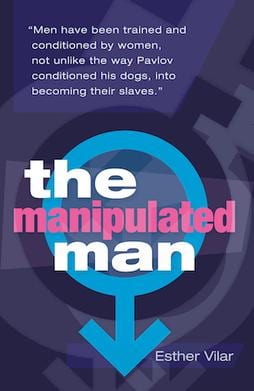

DESCRIPTION
Esther Vilar’s classic polemic about the relationship between the sexes caused a sensation on its first publication. In her introduction to this revised edition, Vilar maintains that very little has changed. A man is a human being who works, while a woman chooses to let a man provide for her and her children in return for carefully dispensed praise and sex. Vilar’s perceptive, thought-provoking and often very funny look at the battle between the sexes has earned her severe criticism and even death threats. But Vilar’s intention is not misogynous: she maintains that only if women and men look at their place in society with honesty, will there be any hope for change.
My Summary
Main Ideas, Takeaways & Similarities
Questions
I. What is the problem?
A. How is this problem formulated?
B. Why is this problem important?
C. What is the history of this problem?
D. Which prominent personalities have been interested in this problem?
II. What solutions to the problem are there?
A. What are the conclusions reached?
B. By what argument(s) is the conclusion reached?
C. What facts or assumptions serve as premises?
D. When a prominent personality offers a solution, does he also argue for or against other prominent personalities? Does he raise objections to alternative solutions? Does he consider objections to his own solutions?
III. Evaluation
A. What are the advantages and disadvantages of the alternative formulations to the problem?
B. Has the importance or history of the problem ever been misrepresented?
C. Are the solutions logically related to the premises?
D. Are the facts true? Are the assumptions acceptable? Are the objections answerable?
AI Summary
Highlights
“The Manipulated Man” is a controversial book by Esther Vilar that presents a provocative perspective on gender roles and relationships. Here is a summary in bullet points:
- Title: The Manipulated Man
- Author: Esther Vilar
Introduction:
- A book that challenges conventional views of gender roles and relationships.
- Asserts that women have historically manipulated men to serve their own interests.
Chapter 1: Women’s Manipulative Power:
- Argues that women use their attractiveness, charm, and emotional manipulation to control men.
- Suggests that society encourages and rewards women for this behavior.
- Claims that men have been conditioned to fulfill women’s desires.
Chapter 2: The Role of Marriage:
- Criticizes the institution of marriage, stating that it often serves women’s interests at the expense of men.
- Argues that marriage traps men into financial obligations and servitude.
- Advocates for men to avoid marriage to protect their freedom.
Chapter 3: Motherhood and Child-Rearing:
- Discusses how women use motherhood as a means of control.
- Claims that women exploit men’s instinct to protect and provide for their offspring.
- Highlights the lack of acknowledgment of fathers’ contributions.
Chapter 4: Economic Exploitation:
- Addresses the economic exploitation of men by women.
- Argues that women benefit from men’s labor, earnings, and societal contributions.
- Contends that women seek financial security from men, leading to dependency.
Chapter 5: Emotionally Vulnerable Men:
- Explores how women manipulate men’s emotions and need for approval.
- Discusses the role of male insecurity and the desire for female validation.
- Suggests that men’s emotional vulnerability is exploited.
Chapter 6: The Liberation of Women:
- Discusses the women’s liberation movement and its impact on gender dynamics.
- Argues that women’s liberation has not resulted in equality but rather increased control.
- Contends that women now have more freedom and power to manipulate men.
Chapter 7: A Man’s Path to Liberation:
- Encourages men to recognize the manipulation and seek personal liberation.
- Suggests that men should prioritize their own happiness and independence.
- Advocates for men to challenge societal expectations and redefine their roles.
Chapter 8: The End of Manipulation:
- Discusses the potential consequences of men’s awakening to manipulation.
- Contemplates whether true equality between the sexes is possible.
- Argues that societal change is needed to address these issues.
Conclusion:
- Summarizes the book’s central argument that women have historically manipulated men.
- Encourages men to question traditional gender roles and expectations.
- Acknowledges the controversial and polarizing nature of the book’s thesis.