DESCRIPTION
Learn how to overcome procrastination and enjoy guilt-free play! One of the most effective programs to combat procrastination, THE NOW HABIT has sold over 100,000 copies, has been translated into 11 languages, and is now revised and updated. Featuring a new introduction and a new section providing strategies to understand and deal with the role technology plays in procrastination today, THE NOW HABIT offers a comprehensive plan to help readers lower their stress and increase their time to enjoy guilt-free play. Dr. Fiore’s techniques will help any busy person start tasks sooner and accomplish them more quickly, without the anxiety brought on by the negative habits of procrastination and perfectionism.
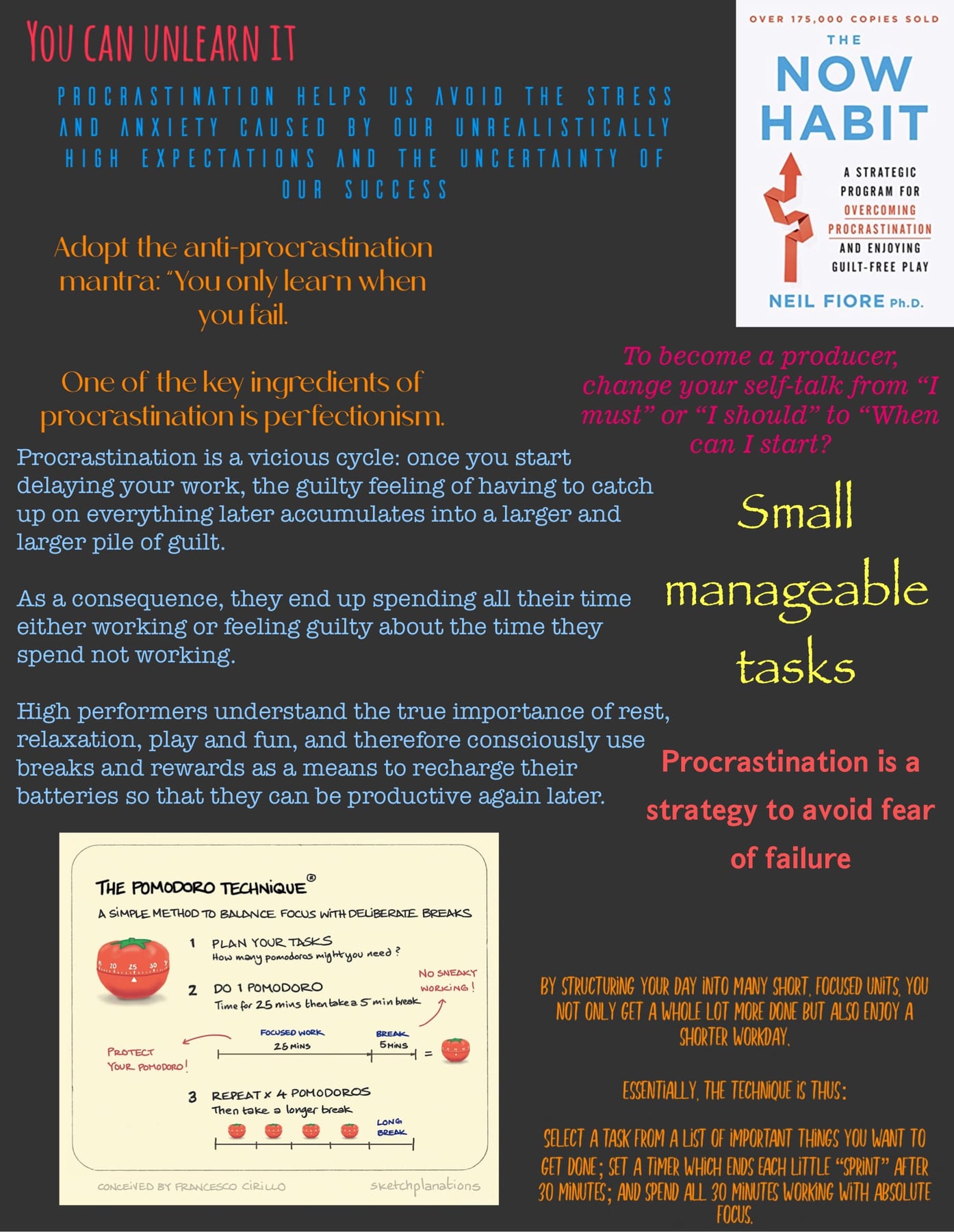
Here is an extensive bullet point summary of the key ideas from the book The Now Habit by Neil Fiore:
What is The Now Habit About
- It focuses on understanding the underlying emotional causes of procrastination and provides strategies to overcome procrastination
- The main premise is that procrastination is not due to laziness but is a coping mechanism for dealing with anxiety and fear of failure
Key Reasons We Procrastinate
- To avoid boredom
- To feel in control and empowered
- To rebel against someone else trying to control us
- To avoid the fear and anxiety associated with tackling difficult tasks
Core Strategies in The Now Habit
- Reframe procrastination not as laziness but as a useful signal to course correct
- Practice “unscheduling” to take pressure off and focus on what matters now
- Worry constructively to tackle the real issues causing anxiety
- Use “persistent starting” to build momentum in small steps
- Build new empowering habits and behaviors to replace procrastination
Unscheduling Technique
- Schedule nothing and do things based on what feels right now
- Focus on present priorities rather than past expectations
- Helps diminish anxiety and pressure associated with tasks
- Allows guilt-free, rejuvenating play time
Worry to Tackle Anxiety
- Use worry constructively to identify issues causing anxiety
- Develop action plans to eliminate the threats behind the worry
- Channel energy into preventative actions instead of dwelling
Persistent Starting
- Commit to start and take one small step only
- Build momentum with repeated small starts
- Prevent getting overwhelmed by focusing on the present start
Strengthening New Habits
- Plan setbacks to reinforce habits e.g. tackle a task you’d typically procrastinate
- Observe warning signs of falling back to old habits
- Consciously choose to apply new strategies instead
Let me know if you need any clarification or have additional questions!
Citations:
[1]
https://www.thesimplicityhabit.com/the-now-habit/
[2]
https://fourminutebooks.com/the-now-habit-summary/
[3]
https://dansilvestre.com/summaries/the-now-habit-summary/
[4]
https://readingraphics.com/book-summary-the-now-habit/
[5]
https://www.blinkist.com/en/books/the-now-habit-en
The Unschedule asks you to aim at starting for just thirty minutes. (Location 1691)
- Understanding Procrastination:
- Dr. Fiore emphasizes that procrastination is not a time management issue but rather a psychological issue rooted in fear and negative self-perceptions.
- The Unschedule:
- The book introduces the concept of the Unschedule, a visual time management tool that helps individuals allocate time for work and leisure. It involves scheduling enjoyable activities first and then allocating time for work around them.
- Overcoming Resistance:
- Dr. Fiore discusses techniques for overcoming resistance to tasks, such as setting a timer for a short work period (e.g., 30 minutes) to get started.
- The Five Unschedule Principles:
- The author outlines five principles for effective use of the Unschedule: guilt-free play, taking time off, specifying when and where you will work, setting aside time for self-care, and focusing on the present.
- The Cycle of Procrastination:
- Dr. Fiore describes the cycle of procrastination, which includes feeling overwhelmed, fearing failure, rebelling against pressure, becoming anxious and guilty, and seeking relief through distractions.
- Negative Self-Talk:
- The book addresses negative self-talk and how it can lead to procrastination. Techniques like cognitive restructuring are introduced to change self-defeating thoughts into positive affirmations.
- Managing Perfectionism:
- Perfectionism often contributes to procrastination. Dr. Fiore provides strategies for managing perfectionism and aiming for “good enough” rather than perfection.
- Priority Setting:
- The book emphasizes the importance of setting clear priorities and distinguishing between “should” and “must” tasks. Must tasks are given top priority.
- The Do-Nothing Approach:
- Dr. Fiore encourages individuals to experiment with the “Do-Nothing” approach, where they schedule time to do nothing, allowing them to recharge and overcome burnout.
- The Flow State:
- Achieving a state of flow, where work becomes enjoyable and effortless, is discussed as an ideal state to combat procrastination.
- Assertiveness Skills:
- Learning assertiveness skills is important for setting boundaries, saying no to additional commitments, and managing time effectively.
- Pleasurable Rewards:
- The book advises using pleasurable rewards as motivators for completing tasks. By associating work with rewards, individuals can increase their motivation.
- Self-Compassion:
- Practicing self-compassion and forgiving yourself for past procrastination is essential for moving forward and creating a more productive future.