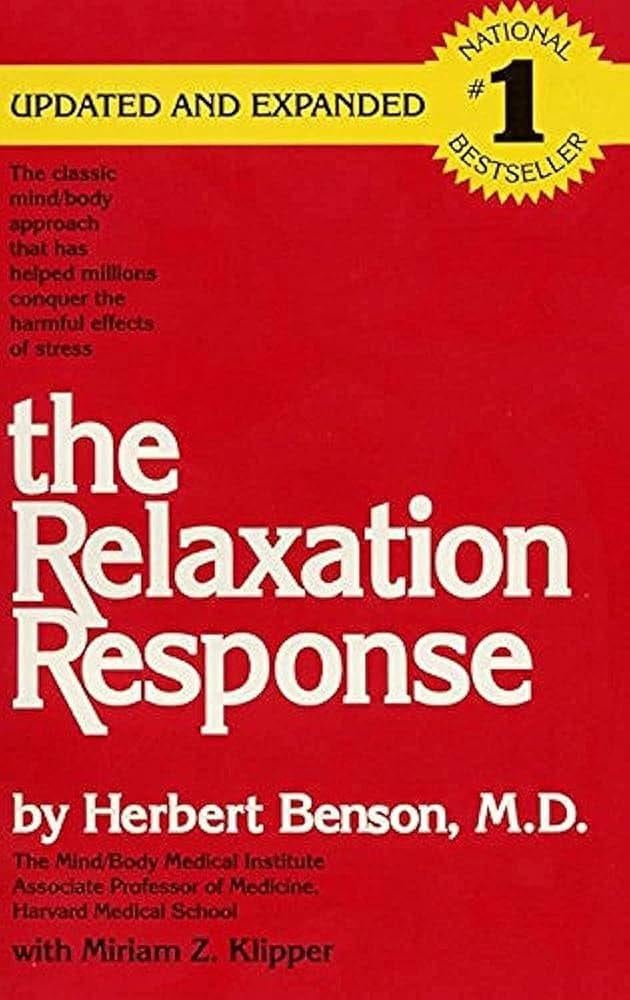

DESCRIPTION
An updated health handbook outlines techniques of concentration designed to reduce physiological stress and presents scientific data indicating the effectiveness of similar systems of relaxation. Reprint.
My Summary
Main Ideas, Takeaways & Similarities
Questions
I. What is the problem?
A. How is this problem formulated?
B. Why is this problem important?
C. What is the history of this problem?
D. Which prominent personalities have been interested in this problem?
II. What solutions to the problem are there?
A. What are the conclusions reached?
B. By what argument(s) is the conclusion reached?
C. What facts or assumptions serve as premises?
D. When a prominent personality offers a solution, does he also argue for or against other prominent personalities? Does he raise objections to alternative solutions? Does he consider objections to his own solutions?
III. Evaluation
A. What are the advantages and disadvantages of the alternative formulations to the problem?
B. Has the importance or history of the problem ever been misrepresented?
C. Are the solutions logically related to the premises?
D. Are the facts true? Are the assumptions acceptable? Are the objections answerable?
AI Summary
Highlights
“The Relaxation Response” by Dr. Herbert Benson is a book that explores a mind-body approach to reducing stress and achieving relaxation. Here’s a comprehensive summary in bullet points:
- Dr. Herbert Benson introduces the “relaxation response” as a natural, physiological state that counteracts the body’s stress response.
- The book explains that the relaxation response is the body’s counterpart to the fight-or-flight response, and it promotes relaxation and healing.
- Dr. Benson emphasizes that anyone can learn to elicit the relaxation response through simple techniques, regardless of their background or beliefs.
- The book presents a step-by-step guide to eliciting the relaxation response, focusing on four primary elements: a quiet environment, a mental device (such as a word or phrase), a passive attitude, and a comfortable position.
- It outlines the technique of progressive muscle relaxation, where individuals systematically tense and then release different muscle groups to promote relaxation.
- The importance of regular practice is stressed, with Dr. Benson recommending 10-20 minutes of practice twice daily.
- The book discusses the physiological benefits of the relaxation response, including reduced heart rate, lowered blood pressure, and decreased oxygen consumption.
- It explores the role of the relaxation response in reducing the symptoms of various stress-related health conditions, such as anxiety, hypertension, and insomnia.
- Dr. Benson emphasizes the importance of personalizing the relaxation response technique to suit individual preferences and lifestyles.
- The book discusses the potential for combining the relaxation response with other mind-body practices like meditation and yoga to enhance overall well-being.
- It addresses common misconceptions about relaxation techniques and clarifies their scientific basis.
- Dr. Benson explores the impact of stress on the body and mind, highlighting the role of chronic stress in contributing to various health problems.
- The book presents case studies and testimonials from individuals who have benefited from practicing the relaxation response.
- It encourages readers to incorporate relaxation practices into their daily routines to manage stress and promote better physical and mental health.
- Dr. Benson discusses the potential for the relaxation response to be integrated into medical care as a complementary approach to conventional treatments.
- The book underscores the importance of self-care and stress management for overall health and well-being.
Overall, “The Relaxation Response” offers a practical and scientifically validated approach to reducing stress and promoting relaxation through simple techniques that can be easily incorporated into daily life. It highlights the profound impact of relaxation on physical and mental health and empowers readers to take an active role in managing their stress and improving their overall quality of life.
“The Relaxation Response” by Dr. Herbert Benson imparts several key teachings and principles related to achieving relaxation and managing stress. Here are some of the central teachings from the book:
- The Relaxation Response:
- The relaxation response is a natural, physiological state that counteracts the body’s stress response.
- It promotes relaxation, reduces stress, and supports physical and mental well-being.
- Eliciting the Response:
- Anyone can learn to elicit the relaxation response through simple techniques.
- Key elements for triggering the response include a quiet environment, a mental device (like a word or phrase), a passive attitude, and a comfortable position.
- Progressive Muscle Relaxation:
- Progressive muscle relaxation is a technique involving the systematic tensing and releasing of different muscle groups to induce relaxation.
- It is a practical method for reducing physical tension and promoting a state of calm.
- Regular Practice:
- Consistent practice is essential for reaping the benefits of the relaxation response.
- Dr. Benson recommends 10-20 minutes of practice twice daily for optimal results.
- Physiological Benefits:
- The book explains the physiological changes associated with the relaxation response, including reduced heart rate, lowered blood pressure, and decreased oxygen consumption.
- These changes contribute to overall relaxation and stress reduction.
- Stress-Related Health Conditions:
- The relaxation response can help alleviate symptoms of various stress-related health conditions, such as anxiety, hypertension, and insomnia.
- It serves as a complementary approach to conventional medical treatments.
- Personalization:
- Readers are encouraged to personalize the relaxation response technique to fit their preferences and lifestyles.
- There is flexibility in choosing a mental device or adapting the practice to individual needs.
- Integration with Other Practices:
- The book discusses the potential for integrating the relaxation response with other mind-body practices like meditation and yoga.
- Combining these practices can enhance overall well-being.
- Impact of Stress:
- Chronic stress is linked to a range of physical and mental health problems.
- The book highlights the role of stress management in preventing and mitigating these issues.
- Case Studies and Testimonials:
- Dr. Benson presents real-life case studies and testimonials from individuals who have experienced the benefits of practicing the relaxation response.
- These examples illustrate the practical application and effectiveness of the technique.
- Incorporating Relaxation into Daily Life:
- Readers are encouraged to incorporate relaxation practices into their daily routines to manage stress and promote better physical and mental health.
- It emphasizes the role of self-care in maintaining overall well-being.
- Complementary to Medical Care:
- The book discusses the potential for the relaxation response to be integrated into medical care as a complementary approach to conventional treatments.
- It underscores the importance of a holistic approach to health.
Overall, “The Relaxation Response” provides a practical and evidence-based approach to achieving relaxation, managing stress, and improving overall health. It empowers individuals to take control of their well-being through simple techniques that can be integrated into daily life.