Open: 7cab486d-d52f-4277-b8f4-d8c5fb773179.gif
Proponents of
Patrick Buchanan
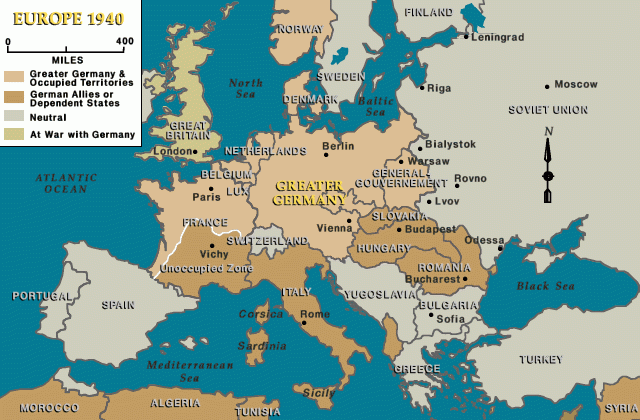
- Buchanan’s main argument is summarized by a quotation from A.N. Wilson, cited deep in the text: “The tragedy of the twentieth century is that in order to defeat Hitler, Churchill believed it was not merely necessary but desirable to ally himself to Stalin” (379). Buchanan believes that Nazism and communism were both bad, but that communism was the greater threat. He accepts Hitler’s repeated insistence that the Third Reich never desired war with the British Empire. From here he concludes that Britain and France should have consigned central and eastern Europe to Hitler, hoping that Germany and Russia would destroy one another in a clash of titans, while the democracies held a defensible line in the west. (link)
- Prime Minister Stanley Baldwin hoped as much too. But his successor, Neville Chamberlain, egged on by Churchill, committed “the greatest blunder in history” by guaranteeing Poland against German attack after Hitler had absorbed the rump Czech state Chamberlain thought he and Hitler had guaranteed at Munich.
- Churchill compounded Chamberlain’s error by refusing to make terms with Hitler after the Battle of Britain proved the Empire could not easily be subdued. Thus hundreds of thousands died needlessly, the Empire was “lost,” and Eastern Europe was doomed to a half-century of domination by barbarous communism. Churchill was wrong, and those who follow his example today create equally ruinous results.
- This argument has been made before and will persist as long as twentieth-century history is studied. Buchanan contends that by 1939, Stalin’s victims already numbered in the millions while Hitler’s as yet numbered only in the hundreds. The Soviet Union founded the Comintern to spread its poison around the globe, while the Fascists considered their ideology unique to their cultures and unsuitable for export. Therefore, the greater danger was clear before the war. Quod erat demonstrandum.
AI Questioning
Did Hitler say that he didn’t want to fight the British and he wanted the British to be strong?
Based on the search results provided, there is no direct quote from Hitler stating that he didn’t want to fight the British or that he wanted Britain to be strong. However, there are some relevant points that provide context on Hitler’s views towards Britain:
-
Hitler initially hoped for a negotiated peace with the UK and did not make preparations for an invasion of Britain until after the Fall of France in 1940 [1].
-
One of Hitler’s primary foreign policy aims in the 1930s had been to establish a military alliance with the United Kingdom. Even after this proved impossible, Hitler still hoped Britain would eventually become a German ally [1].
-
Hitler professed admiration for the British Empire and preferred to see it preserved as a world power, partly because he believed its breakup would benefit other countries like the United States and Japan more than Germany [1].
-
Hitler hoped that a defeated Britain would be excluded from continental affairs but maintain its Empire and become an allied seafaring partner of Germany, similar to how Austria became an ally of Germany after being defeated in 1866 [1].
-
As late as August 1941, Hitler still hoped for “England and Germany [to march] together against America” [1].
While these points suggest Hitler had some preference for an alliance with Britain rather than war, the search results do not contain any direct quotes from Hitler explicitly stating he didn’t want to fight Britain or wanted it to remain strong. The information provided indicates Hitler’s views were more complex and changed over time as the war progressed.
Citations:
[1] https://en.wikipedia.org/wiki/Operation_Sea_Lion
[2] https://encyclopedia.ushmm.org/content/en/article/neville-chamberlain
[3] https://www.iwm.org.uk/history/how-europe-went-to-war-in-1939
[4] https://www.reddit.com/r/IsItBullshit/comments/58d2f2/isitbullshit_a_number_of_winston_churchill_quotes/
[5] https://www.iwm.org.uk/history/how-britain-hoped-to-avoid-war-with-germany-in-the-1930s
[6] https://www.historyhit.com/key-quotes-by-adolf-hitler-about-world-war-two/
[7] https://wargaming.com/en/news/famous_quotes/
[8] https://www.english-heritage.org.uk/visit/places/dover-castle/history-and-stories/fall-of-france/
How did Hitler’s views on Britain evolve over time
Adolf Hitler’s views on Britain evolved significantly over time, reflecting his changing priorities and the geopolitical landscape of Europe before and during World War II.
-
Early Admiration and Desire for Alliance: Initially, Hitler admired the British Empire and sought a form of alliance or understanding with Britain. He respected Britain’s global power and its colonial empire, seeing it as a potential ally against common enemies, particularly the Soviet Union. Hitler’s admiration was partly based on his perception of the British as a kindred Aryan race and his strategic desire to avoid conflict with Britain while expanding Germany’s influence in Europe[5].
-
Appeasement and Misjudgment: During the 1930s, as Britain pursued a policy of appeasement, Hitler believed that Britain might be willing to allow German expansion in Eastern Europe in exchange for peace. The Munich Agreement of 1938, which allowed Germany to annex the Sudetenland, reinforced his belief that Britain would not oppose his territorial ambitions[1][2]. However, this perception was a misjudgment, as Britain eventually declared war on Germany after the invasion of Poland in 1939[4].
-
Shift to Hostility: As World War II progressed, particularly after the fall of France in 1940, Hitler’s views on Britain shifted. He became frustrated with Britain’s refusal to negotiate peace and its continued resistance. Despite his initial hopes for an alliance, he recognized Britain as a significant obstacle to his plans for European domination. This led to the Battle of Britain, where he attempted to subdue the UK through aerial bombardment[4][6].
-
Continued Respect with Strategic Opposition: Despite the hostility, Hitler maintained a certain level of respect for Britain’s military capabilities. He often expressed admiration for British resilience and fighting spirit, even as he sought to defeat them. However, his strategic focus shifted towards the Soviet Union, believing that defeating Russia would force Britain to negotiate[5][6].
Overall, Hitler’s views on Britain were complex and evolved from admiration and a desire for alliance to frustration and strategic opposition as the realities of war unfolded. His initial miscalculations about Britain’s willingness to resist German expansion played a significant role in the eventual conflict between the two nations.
Citations:
[1] https://encyclopedia.ushmm.org/content/en/article/neville-chamberlain
[2] https://www.historyextra.com/period/20th-century/britain-adolf-hitler-dictator-admiration-appeasement-relationship-britain-germany/
[3] http://enroll.nationalww2museum.org/learn/education/for-students/ww2-history/quotations/axis-leaders.html
[4] https://www.iwm.org.uk/history/how-europe-went-to-war-in-1939
[5] https://www.bennionkearny.com/hitler-views-on-britain-and-british-empire/
[6] https://www.historyhit.com/key-quotes-by-adolf-hitler-about-world-war-two/
Why didn’t Britain make peace with Hitler between 1938 and 1940
Between 1938 and 1940, Britain did not make peace with Hitler for several reasons, despite initial attempts at appeasement:
-
Appeasement and Its Limits: Initially, Britain pursued a policy of appeasement, hoping to avoid another devastating war like World War I. This policy, led by Prime Minister Neville Chamberlain, involved making concessions to Germany, such as the Munich Agreement in 1938, which allowed Germany to annex the Sudetenland in Czechoslovakia. However, appeasement failed to prevent further aggression, as Hitler continued to expand German territory, violating agreements and demonstrating that he could not be trusted to keep his promises[1][4][5].
-
Distrust of Hitler: By 1940, Britain had lost trust in Hitler due to his repeated violations of agreements, such as the Munich Agreement, and his aggressive expansionist policies. This lack of trust made British leaders skeptical of any peace offers from Germany, fearing they would be temporary and unreliable[2][6].
-
Strategic Considerations: Britain believed that accepting a peace deal with Germany would not necessarily improve its position. The British government, led by Winston Churchill after May 1940, was committed to a policy of total war against Nazi Germany, partly due to the belief that any peace agreement would be short-lived and would only delay further conflict. Additionally, Britain’s strategic position, including its naval strength and the difficulty of a German invasion, gave it confidence to continue the fight[2][6].
-
Historical Foreign Policy: Britain’s longstanding foreign policy aimed to prevent any single power from dominating continental Europe, which would threaten British security and interests. Hitler’s ambitions to control Europe were seen as a direct threat to this balance of power. Britain was determined to oppose Germany to maintain its influence and prevent a hostile power from dominating Europe[2][7].
-
Internal Political Dynamics: Within Britain, there was significant political debate over how to respond to Nazi Germany. While there were factions advocating for peace, Churchill’s leadership and his ability to outmaneuver those factions ensured that Britain remained committed to fighting Germany[2].
Overall, Britain’s decision not to make peace with Hitler was influenced by a combination of distrust, strategic calculations, historical foreign policy objectives, and internal political dynamics. These factors led Britain to continue its opposition to Nazi Germany despite the challenges it faced during the early years of World War II.
Citations:
[1] https://encyclopedia.ushmm.org/content/en/article/neville-chamberlain
[2] https://www.reddit.com/r/AskHistory/comments/190pvzx/why_didnt_britain_negotiate_after_the_fall_of/
[3] https://www.bennionkearny.com/hitler-views-on-britain-and-british-empire/
[4] https://www.iwm.org.uk/history/how-britain-hoped-to-avoid-war-with-germany-in-the-1930s
[5] https://www.historyextra.com/period/20th-century/britain-adolf-hitler-dictator-admiration-appeasement-relationship-britain-germany/
[6] https://www.reddit.com/r/AskHistorians/comments/14zpv3/during_ww_2_why_didnt_britain_accept_any_of_the/
[7] https://www.iwm.org.uk/history/how-europe-went-to-war-in-1939
What ways did Hitler violate Munich Agreement in 1938?
Adolf Hitler violated the Munich Agreement in several significant ways:
-
Occupation of the Rest of Czechoslovakia: The Munich Agreement, signed on September 30, 1938, allowed Germany to annex the Sudetenland, a region of Czechoslovakia with a significant ethnic German population, in exchange for a pledge of peace from Hitler. However, in March 1939, just six months after the agreement, Hitler violated this promise by occupying the remainder of Czechoslovakia. This action effectively destroyed the Czech state and demonstrated that Hitler’s territorial ambitions extended beyond the German-speaking regions[3][4].
-
Undermining Czechoslovak Sovereignty: The Munich Agreement was intended to address the issue of the Sudetenland through diplomatic means and to prevent further German expansion. By occupying the rest of Czechoslovakia, Hitler disregarded the agreement’s intent and undermined Czechoslovak sovereignty, showing that his assurances of no further territorial demands were not genuine[2][5].
-
Expansion of German Control: The agreement had stipulated that an international commission would decide the future of other disputed areas, but Hitler’s unilateral actions in March 1939 bypassed this process. By taking control of Czechoslovakia, he expanded German influence in Central Europe, further destabilizing the region and violating the spirit of the Munich Agreement[1][4].
These violations highlighted Hitler’s aggressive expansionist policies and contributed to the growing realization among European powers that appeasement would not prevent further German aggression, ultimately leading to the outbreak of World War II.
Citations:
[1] https://www.britannica.com/event/Munich-Agreement
[2] https://en.wikipedia.org/wiki/Occupation_of_Czechoslovakia_%281938%E2%80%931945%29
[3] https://encyclopedia.ushmm.org/content/en/film/agreement-reached-at-munich-conference
[4] https://en.wikipedia.org/wiki/Munich_Agreement
[5] https://encyclopedia.ushmm.org/content/en/timeline-event/holocaust/1933-1938/munich-agreement
[6] https://www.iwm.org.uk/history/how-europe-went-to-war-in-1939
Did Germany drop leaflets in the UK saying they didn’t want war?
Based on the search results provided, there is no clear evidence that Germany dropped leaflets in the UK explicitly stating they didn’t want war. However, some relevant points can be noted:
-
Germany did engage in leaflet propaganda campaigns targeting the UK during World War II. The Nazis dropped various types of propaganda leaflets over Britain from 1939 to 1944[8].
-
The content of these leaflets evolved over time, with early efforts attempting to “reason, threaten and even befriend their enemy across the Channel”[8]. This suggests some leaflets may have contained more conciliatory messages, especially early in the war.
-
One of the earliest German leaflet drops over Britain occurred in February/March 1940, featuring a fake edition of the Evening Standard newspaper with the headline “The Massacre of the RAF”[8]. This doesn’t align with a message of not wanting war.
-
As the war progressed, German propaganda leaflets became increasingly desperate in their messaging[8].
-
The search results don’t provide any specific examples of German leaflets explicitly stating they didn’t want war with Britain.
-
In contrast, there are examples of British leaflets dropped on Germany early in the war that emphasized Britain’s desire for peace and blamed the German leadership for forcing war upon them[1].
While it’s possible some German leaflets may have contained messages about not wanting war, especially early on, the provided search results don’t offer concrete evidence of this. To confirm if such leaflets existed, more specific historical sources on German propaganda efforts targeting Britain would need to be consulted.
Citations:
[1] https://nfknowledge.org/contributions/propaganda-leaflets/
[2] https://libapps.salisbury.edu/nabb-online/exhibits/show/propaganda/racism-and-equality/german-leaflets-in-world-war-i
[3] https://amcmuseum.org/collections/german-propaganda-leaflet/
[4] https://en.wikipedia.org/wiki/Airborne_leaflet_propaganda
[5] https://stephanieseul.com/british-propaganda-directed-at-nazi-germany-1938-1945/
[6] https://grolierclub.omeka.net/exhibits/show/best-read-army/propaganda
[7] https://www.pbs.org/wgbh/americanexperience/features/goebbels-propaganda/
[8] https://www.keymilitary.com/article/collecting-german-air-dropped-leaflets-britain
What Churchill’s only means of winning a war against Germany to carpet bomb and bomb civilian areas until the United States entered the war?
Based on the information provided in the search results, it does not appear that carpet bombing and targeting civilian areas was Churchill’s only strategy for winning the war against Germany before the U.S. entered. While the bombing campaign against Germany was a major part of Britain’s war effort, Churchill pursued other strategies as well:
-
Churchill wanted to take the offensive against Germany where possible, not just through bombing but also by fighting the Italians in North Africa and the Mediterranean. He reinforced British forces in the Middle East in 1940-41.
-
Churchill hoped that bombing would wear down Germany over time, but he recognized in 1942 that bombing alone was not enough and great efforts needed to be made to engage the Germans militarily on land in 1943.
-
While supporting the area bombing of German cities, Churchill still expressed some doubts and qualms about the policy at times. The search results indicate he wanted to use a variety of military means against Germany, not just bombing.
-
Before the U.S. entered the war, Churchill’s main strategy was to “last out” and sustain the fight against Germany. His strength of will in continuing British resistance was key before other allies joined.
-
Churchill also devoted significant military resources to fighting the Germans in the Battle of the Atlantic and Battle of Britain in 1940-41, not just the bombing offensive. Surviving these battles was crucial.
So in summary, while the bombing of Germany, including civilian areas, was a major part of Churchill’s strategy, the evidence suggests it was not his only approach. He aimed to take the offensive against Axis forces on other fronts where possible and to sustain British resistance until the U.S. and other allies could join the fight and help turn the tide. Bombing was an important element but not the entirety of his strategy to win the war.
Citations:
[1] https://www.cam.ac.uk/stories/churchill-at-war
[2] https://www.churchillarchive.com/churchill-as-strategist-in-world-war-two
[3] https://en.wikipedia.org/wiki/The_Blitz
[4] https://teachdemocracy.org/bill-of-rights-in-action/bria-15-3-a-firestorms-the-bombing-of-civilians-in-world-war-ii
[5] https://winstonchurchill.org/publications/finest-hour/finest-hour-137/churchill-proceedings-churchill-and-bombing-policy/
[6] https://en.wikipedia.org/wiki/First_premiership_of_Winston_Churchill
[7] https://www.nationalchurchillmuseum.org/world-war-ii-churchills-finest-hour.html
[8] https://academic.oup.com/book/12160/chapter-abstract/161588663?login=false&redirectedFrom=fulltext
Who and what are the arguments of the people that say that Churchill was wrong to fight a war against Germany, because it was only so Britain could drag the US or Russia into the war? What are the counter arguments as well?
Based on the provided search results, there are a few key arguments made by those who criticize Churchill’s decision to fight Germany in World War II:
-
Patrick Buchanan, in his book “Churchill, Hitler, and the Unnecessary War”, argues that it was a mistake for Britain to fight Germany in both world wars. He claims this was disastrous for the whole world.
-
Buchanan asserts Britain had no quarrel with Germany before 1914, but the rise of the German navy led Britain to ally with Russia and France, creating the conditions that led to war. He argues Britain could have easily ended the naval arms race in 1912 by promising neutrality in a Franco-German war.
-
Buchanan claims Hitler did not want war with Britain and that the harshness of the Treaty of Versailles was exaggerated. He suggests Britain should have let Germany dominate Eastern Europe rather than fight.
-
Some right-wing British historians like Alan Clark, Maurice Cowling and John Charmley argued Britain should never have fought Germany or at least made peace in 1940. However, they saw the U.S., not Germany, as Britain’s main rival.
On the other hand, there are several counterarguments:
-
Most historians believe Germany started WWI and that Buchanan ignores how limited Britain’s options were in 1940. Wheatcroft argues Buchanan exaggerates the harshness of Versailles.
-
John Lukacs compares Buchanan to David Irving, arguing Buchanan uses half-truths to make his case. Lukacs says Buchanan ignores how barbaric Nazi rule was in Eastern Europe.
-
Christopher Hitchens suggests Buchanan’s book is not real history but an allegory warning the modern U.S. not to intervene abroad.
-
The search results emphasize Churchill’s resolve to keep fighting in 1940-41 when defeat seemed imminent. His strategy aimed to preserve the British Empire and ultimately destroy Germany.
-
Churchill saw the war as a moral struggle against Nazism. Even in 1945 he insisted on unconditional German surrender.
So in summary, while some argue Britain should have accommodated rather than fought Hitler, citing the costs of the world wars, mainstream historians defend Churchill’s stance as necessary to stop Nazi aggression and tyranny in Europe, even if his tactics were sometimes flawed. The search results suggest the criticisms of Churchill often have a contemporary political agenda.
Citations:
[1] https://www.nationalchurchillmuseum.org/winston-churchill-and-the-gathering-storm.html
[2] https://en.wikipedia.org/wiki/Churchill,_Hitler_and_the_Unnecessary_War
[3] https://www.churchillarchive.com/churchill-as-strategist-in-world-war-two
[4] https://winstonchurchill.org/publications/finest-hour/finest-hour-137/churchill-proceedings-churchill-and-bombing-policy/
[5] https://www.cam.ac.uk/stories/churchill-at-war
[6] https://www.nationalchurchillmuseum.org/world-war-ii-churchills-finest-hour.html
References For
Darryl Cooper: The True History of the Jonestown Cult, WWII, and How Winston Churchill Ruined Europe - YouTube
Churchill, Hitler, and the Unnecessary War - Wikipedia
References Against
A Polemic Not A History - International Churchill Society
Myths: Fact vs Fiction Archives - International Churchill Society
Reddit - Dive into anything
No, Winston Churchill Was Not the ‘Chief Villain’ of the Second World War | National Review