B5 notebook page
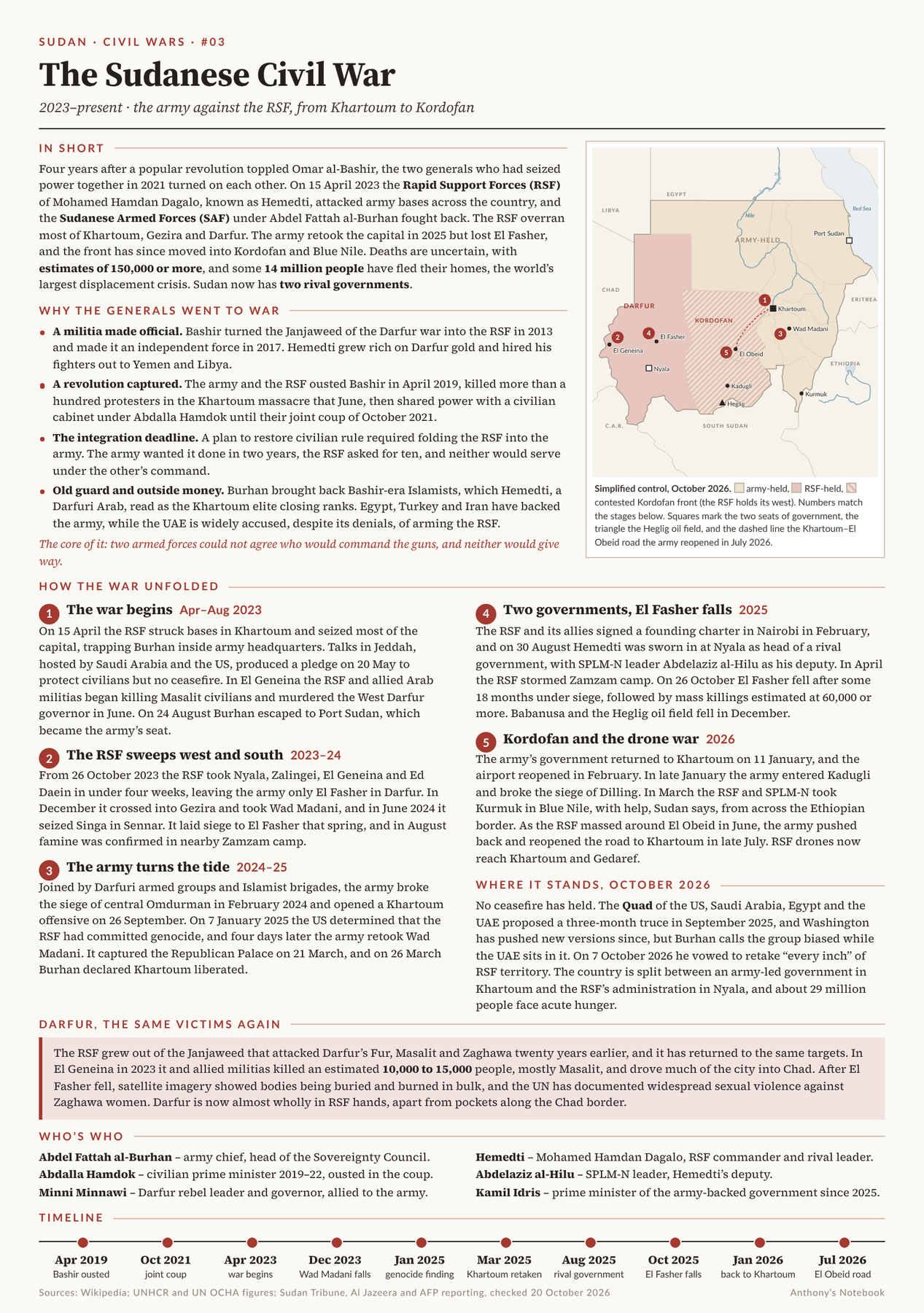
Timeline
- 1821: Northern Sudan conquered by Muhammad Ali of Egypt; though technically under Ottoman rule, the territory was governed as part of largely independent Egypt
- 1896-98: Kitchener launches successful military campaign for control over Sudan
- 1899: Britain and Egypt agree to joint rule, where a governor-general would be appointed by Egypt with British consent
- 1924: Britain begins effectively running Sudan as two separate territories (north and south)
- Early 1940s: Sudan Defence Force repels Italian incursions and helps the British in the invasion of Italian Somaliland
- 1952: Egyptian revolution
- 1955: First Sudanese Civil war breaks out after mutinies by the SDF
- 1956: Sudan becomes independent after Egypt and Britain agree to allow a free vote in the country
- 1969: Col. Gaafar Nimeiry seizes power in a coup, abolishes parliament and bans all parties
- 1971: Sudanese Communist Party launches a coup, but Nimeiry is returned to power after several days
- 1972: Addis Ababa Accord ends the First Sudanese Civil War
- 1983: Second Sudanese Civil War breaks out after a mutiny in the south ; Sudan People’s Liberation Army (SPLA) formed
- 1989: Omar al-Bashir comes to power in a military coup
- 2003: War in Darfur sparked by liberation movements in the region ; government responds with an ethnic cleansing campaign against Darfur’s non-Arabs
- 2005: Nairobi Comprehensive Peace Agreement ends the Second Civil War
- 2011: South Sudan votes to secede
- 2013: RSF forms
- 2019: Ousting of President Omar al-Bashir via popular protests and military coup ; military-civilian government established
- 2021: Military-civilian government overthrown in a coup in October, led by:
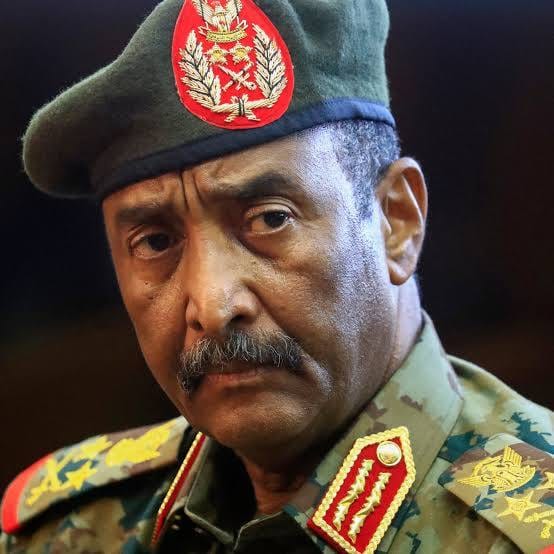
- Gen Abdel Fattah al-Burhan, head of armed forces and de facto president
- His deputy, RSF leader Gen Mohammed Hamdan Dagalo (“Hemedti”)
- 2023: Shooting takes place between the two forces after RSF members had redeployed around the country ; RSF seizes much of Khartoum
- Late-2023: RSF captures state of Gezira ; 250,000 civilians flee
- April 2025: Sudanese Armed Forces reclaims Khartoum
- June 2025: RSF takes control of a north-west strip where Sudan borders Egypt and Libya
- Oct 2025: RSF captures el-Fasher after an 18 month siege
Factions
Rapid Support Forces (RSF)
- Originated in 2003 when al-Bashir mobilised Arab herders - who became known as the “Janjaweed” against black insurgents in Darfur
- Janjaweed
- Core made up of nomads from the Mahamid and Mahariya clans of the Rizeigat ethnic group in northern Darfur
- After Darfur, the Janjaweed were formalised into a paramilitary force called the Border Intelligence Units
- Janjaweed
- RSF established by decree of President Omar al-Bashir in 2013
- Grew to 70,000 men by 2019, making it a de facto infantry
- The command structure is still exclusively Darfurian Arab
- Through gold and mercenary activity, Hemedti was in control of the country’s largest “political budget”
- In 2019, the RSF sent a brigade to Libya to aid Gen Haftar (supported by Egypt)
- Al-Junaid company
- Run by Hemedti’s relatives
- Covers investment, mining, transport, car rental, iron and steel
- Musa Hilal, chief of the Mahamid
- Accused of gross human rights violations in Darfur
- Seen as a serial mutineer
- Engaged in a feud with Hemedti, who was ultimately seen as more dependable by the government
- Feud intensified when gold was discovered in Jebel Amir (North Darfur) in 2012 ; just after 75% of Sudan’s oil was lost to the South breaking away
- Hilal seized Jebel Amir and took over the gold mines - made sales to the government which was eager to sell it on in Dubai
- By 2017, gold sales made up 40% of Sudan’s exports
- Nov 2017 - After Hilal denied the government access to the mines, Hemedti’s RSF attacked the region. Hilal was arrested and the RSF took over
- The RSF has a history connected to ethnic-driven violence. The paramilitary group grew out of the Arab Janjaweed militia that oversaw the genocide of the early 2000s. That carnage left an estimated 300,000 people dead.
Mohammed Dagalo (Hemedti)
- Known as “Hemedti”, meaning “Little Mohammed”, because of his baby-face
- His family is part of the Arabic-speaking Riseigat ethnic group from the borderlands of Sudan and Chad.
- School dropout turned small-time trader
- Mutinied in 2007 due to lack of payment from the government - even tried to cut a deal with the Darfur rebels
- Though his commanders are all from the Mahariya clan, he enlists men from all ethnic groups, including a breakaway faction from the Sudan Liberation Army (SLA)
- Returned to Khartoum after being offered a pay deal and ranks for his officers
- His troops were then put under the National Intelligence Security Service (NISS) and mobilised in a proxy war against Chad in 2008
- After the RSF formed, al-Bashir started calling Hemedti “Himayti” (my protector) and they went on to fight rebels in South Kordofan and Darfur
- Became Sudan’s biggest gold trader and border guard (Chad and Libya) after capturing the Jebel Amir
History of Dagalo’s Rise
His break came in 2003 with the start of an armed rebellion in Darfur against the misrule of the central government in Khartoum. To suppress the insurgency, the government, mostly ethnic Arab themselves, recruited Arab militiamen to form the Janjaweed, the forerunner of the rsf. Hemedti’s uncle, Juma Dagalo, was one of those militiamen, and probably recruited his nephew.
The Janjaweed massacred and burned whole villages home to the Muslim but non-Arab Fur and Masalit (among other indigenous groups). The International Criminal Court subsequently issued indictments for genocide and other crimes against the president, Omar al-Bashir, and local Janjaweed commanders. One such, Ali Kushayb, was found guilty of war crimes last month. Hemedti’s own unit was accused by the African Union of destroying the village of Adwa in November 2004, killing 126 people, including 36 children.
Hemedti excelled in the bloody milieu of the Janjaweed and became an “emir”, a senior commander. Unlike his peers, however, he also had wider ambitions. When he threatened to change sides in 2007 Mr Bashir was forced to take him into the government apparatus. Six years later Mr Bashir turned the Janjaweed militias into the rsf, and put Hemedti, now a brigadier general, in command.
Hemedti: warlord, power-broker and the new sultan of Darfur
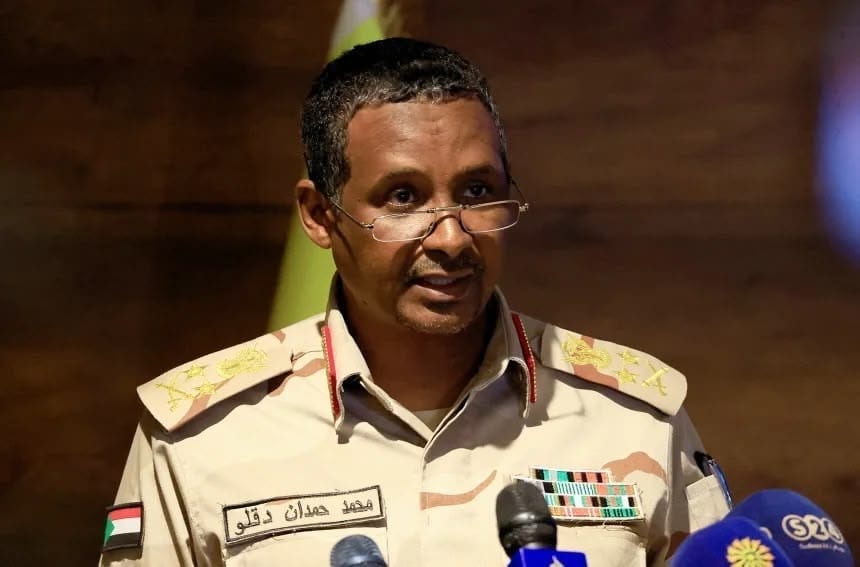
Sudanese Armed Forces (SAF)
- Sudan’s regular state military
- Exhibits Islamist tendencies, but is also the last somewhat cohesive national institution in the country
- Gen Abdel Fattah al-Burhan
- 2015: led a battalion of regular forces sent to join the Saudi-Emirati coalition in Yemen
- 2021: Staged the overthrow of the military-civilian government alongside Hemedti
Supporters
- The UAE was among a handful of countries, alongside Russia, Saudi Arabia, Egypt and China, not to condemn the coup when it took place.
SAF
Egypt
- Shared history
- Sudanese instability affects Egyptian security and resources, mainly Nile water
- Before the SAF and RSF clashes, Egypt and Sudan conducted joint military exercises and coordinated stances on Ethiopia’s Grand Renaissance Dam on the Nile
- Trump famously said Egypt should have blown up the dam. He would later go on to claim this was one of the wars that he ended
- Shifting stances?
- Egypt’s official stance was to maintain neutrality
- Rifts between Egypt and the RSF
- April 2023 RSF video showed the capture of Egyptian soldiers who were later handed over through the Red Cross
- RSF accused Egypt of attacking their positions
- RSF statement accused Egypt of supporting the Sudanese army, “which has been completely hijacked by the Muslim Brotherhood in Sudan.”
- Egypt has, in recent years, appeared to lean towards supporting the SAF, especially as the US (under Biden) determined the RSF had committed genocide
- Domestic impact in Egypt
- Influx of Sudanese migrants and refugees have strained resources and escalated anti-migrant rhetoric
- Fear of border infiltrations as al-Bashir’s government had made Sudan a haven for Islamic groups who fled Egypt after 2013
- Growing rifts between Burhan and Islamist factions
- Egypt and Saudi Arabia are keen on a regime in Khartoum led by the SAF.
- Neighboring Egypt supported Al-Burhan and Hemedti when they launched their coup to remove al-Bashir, even conducting a series of joint military exercises in 2021 and 2022.
Egyptian President Abdel Fattah el-Sisi is a former general who swept into power when he led the 2013 military coup, which removed from office Egypt’s first democratically elected president. Sisi has since cracked down on dissent and civic freedoms. Multiple international organizations, including the UN and the Human Rights Watch, have raised serious concerns over the human rights situation in Egypt.
“A free and democratic Sudan (would) expose all of the problems in Egypt and that doesn’t make it easier for the government there to maintain control,” Ray, the former US diplomat, told CNN.
After the two generals fell out, Cairo made it clear it saw al-Burhan and the SAF as the legitimate power in Sudan. The government has held repeated meetings with al-Burhan’s ministers, providing diplomatic backing. At one of these meetings last month, the Egyptian foreign ministry specifically endorsed the SAF, with a statement expressing Egypt’s “commitment to Sudan’s sovereignty, territorial integrity, and the vital role of its national institutions, particularly the Sudanese Armed Forces.”
Hemedti has in the past accused Egypt of supplying weapons to the SAF and attacking the RSF – allegations Egypt has rejected.
CNN has asked the Egyptian government for a comment.
As its immediate neighbor, Egypt has a multitude of reasons to be interested in Sudan’s future.
“Egypt is involved mainly due to national-security concerns, particularly the implications of Sudan’s instability on the Nile River, Egypt’s lifeline,” al-Anani of Georgetown University said, adding that there is another key motivation for Cairo: “To prevent the emergence of a democratic system in Sudan after al-Bashir’s fall.”
He added, however, that Egypt’s support is limited, because Cairo is “constrained by its heavy economic dependence on the UAE, which provides Sisi’s regime with massive financial assistance.”
There are practical considerations, too.
“Egypt also fears the humanitarian consequences of the war: the influx of tens of thousands of Sudanese refugees has added pressure to an already fragile economy,” al-Anani said, while Ray also pointed to Egypt’s long-running water security issues.
Egypt and Ethiopia have been locked in a conflict over water for more than a decade, ever since Ethiopia announced its intention to build the Grand Ethiopian Renaissance Dam on the Nile. The dam was officially inaugurated in September, amid loud protests from Egypt, which relies on the Nile for some 90% of its freshwater supply.
Sudan, sitting between Ethiopia and Egypt, is a key player in the dispute. “Having Sudan compliant and on their side is a plus (for Egypt) in the competition with Ethiopia,” Ray noted.
Sudan’s bloody conflict is plagued by foreign influence – here is what we know
Saudi Arabia
- Egypt and Saudi Arabia are keen on a regime in Khartoum led by the SAF.
- On the surface, Riyadh maintains neutrality, calling for a Sudanese solution to the conflict and co-sponsoring mediation efforts with the US.
But like Egypt, observers say Saudi Arabia has subtly supported al-Burhan and his SAF, providing him with diplomatic backing.
The country played a prominent role in the evacuation of thousands of people from Sudan, most of them foreigners, in the early weeks of the fighting.
Saudi Arabia has made it clear it sees Sudan as its immediate neighbor and its main effort has been to maintain stability along the Red Sea – a key trade channel central to Saudi Prime Minister and Crown Prince Mohammed bin Salman’s plans for the Saudi economy.
Ray said that like the UAE, Saudi Arabia has a deep economic and strategic interest in Sudan, including making sure it is not overshadowed by its regional rivals.
“There are economic benefits to the Saudis being involved in Africa, both in Northern Africa and in the sub-Saharan (Africa), where they’re also showing up more and more, but I think also they probably look at some of their competitors being there, and it’s as much being able to keep up with the competition as anything else,” Ray said.
Sudan’s bloody conflict is plagued by foreign influence – here is what we know
Iran
- Seems to support the Sudanese army
RSF
UAE
- Took support from an SAF battalion against the Houthis in Yemen in 2015, but also struck a parallel deal with Hemedti, who sent a much larger force of RSF fighters to southern Yemen and to the Saudi-Yemeni border
- Accused of aiding the RSF in genocide by the Sudanese government; ICJ case dismissed because UAE accession to the Genocide Convention included a reservation about the court’s jurisdiction
- Allegedly shipping arms to the RSF through Chad
- Started delivering arms to the faction in 2023; the UAE claimed the cargo had a humanitarian purpose
- US intel claims the UAE has sent increasing supplies to the RSF, including Chinese drones
- Increased flow since spring 2025, including small arms, heavy machine guns, vehicles, artillery, mortars and ammunition
- Increased supply coincides with the RSF losing control of Khartoum
- Allegations corroborated by Libyan, Egyptian and European officials
- Cameron Hudson, former US chief of staff to successive US presidential special envoys for Sudan: “The only thing that is keeping them in this war is the overwhelming amount of military support that they’re receiving from the UAE.”
- The UAE is thought to see the rsf as a bulwark against the Islamists in the SAF.
- Sudan’s military government has frequently accused the United Arab Emirates of arming the RSF, but the Gulf nation denies this. The seven RSF-linked companies that were sanctioned by the US on Tuesday are all based in the UAE.
- The UAE has been repeatedly accused of supplying weapons to Dagalo’s paramilitary RSF.
Experts and human rights campaigners have traced weapons found in Darfur back to the UAE, and under the Biden administration, the United States – a key ally of the UAE – outlined links between a number of companies based in the Gulf nation and the RSF rebels.
The UAE has vehemently denied the allegations, even though an expert panel appointed by the United Nations Security Council said last year they were “credible.”
Several US lawmakers have repeatedly tried to block US arms sales to the UAE over the allegations, and last week the US Senate Foreign Relations Committee called for the RSF to be officially designated as a terrorist organization. In the same statement, the committee said that “foreign backers” including the UAE have “fueled and profited from the conflict.” The committee did not specifically call for the US to stop arms sales to the UAE.
Khalil al-Anani, a professor of politics and visiting researcher at the Center for Contemporary Arab Studies at Georgetown University, told CNN that while the UAE was involved in Sudan “primarily for economic objectives — to control its natural wealth, including agriculture and gold,” there were other reasons too.
He said the UAE “does not want to see a successful democratic transition in Sudan.”
“This fits into its broader regional campaign against the Arab Spring movements; for more than a decade, (the UAE) has been a main sponsor of counter-revolutionary forces across the Arab world,” he said.
The links between the UAE and the RSF militia date back beyond the current conflict. RSF chief Hemedti is well connected in the UAE through some of his family members, who US officials say control a web of companies based in the Gulf state.
The US Department of the Treasury’s Office of Foreign Assets Control (OFAC) has sanctioned several of these companies, saying they were involved in supplying weapons to the RSF and in financing the force by selling gold sourced from mines in RSF-controlled areas to merchants in Dubai.
OFAC said these companies were controlled by Hemedti, his brothers Algoney Hamdan Dagalo Musa and Abdul Rahim Dagalo, or other people closely linked with him.
When announcing the sanctions against Musa, OFAC specifically said he resides in Dubai and is involved in “RSF efforts to procure weapons and other military materiel.”
But a source with knowledge of the situation told CNN that UN experts did find what they believed was credible evidence of the UAE supplying weapons to the RSF, including tracing munitions previously exported to the UAE from Bulgaria in Darfur. This evidence was not included in the April report. CNN has reached out to the UN for comment.
Sudan’s bloody conflict is plagued by foreign influence – here is what we know
Ethiopia
- Has remained in tension with Egypt over the Grand Renaissance Dam
- Offers diplomatic backing to the RSF
Russia
- Has been accused of supporting the RSF through Wagner mercenaries
- A CNN investigation in 2023 found evidence that Russian mercenary group Wagner had been arming the RSF. The militia and the then Wagner leader, Yevgeny Prigozhin, denied this at the time.
- While busy fighting its own war in Ukraine, Russia has also seen Sudan as an opportunity to deepen its influence in Africa.
The US has accused Russia of “playing both sides of the conflict to advance its own selfish political objectives at the expense of Sudanese lives.”
CNN has previously reported that Russian mercenary group Wagner was supplying RSF with missiles through Syria, Libya and the Central African Republic.
The mercenary group for years propped up militant groups and authoritarian regimes in the Sahel in exchange for mineral resources — including huge concessions in Sudan’s gold mining industry.
Wagner’s involvement in Sudan apparently caught the attention of Ukraine too. Kyiv reportedly conducted a series of attacks on the RSF in 2023. A CNN investigation into the attacks concluded that Ukraine was likely behind them, a claim Kyiv declined to confirm or deny.
Russia’s involvement became more complicated after Wagner’s failed mutiny against Russian President Vladimir Putin in 2023 and the subsequent death, in a plane crash, of its leader Yevgeny Prigozhin. The Kremlin has since then attempted to absorb Wagner and its fighters into the Russian military and assert direct control over paramilitary groups that have taken over Wagner operations.
However, while Wagner openly supported Hemedti, the Kremlin has been negotiating with al-Burhan and his forces. Seeking access to the Red Sea, Moscow has been trying to get Sudan’s agreement to build a naval base in Port Sudan.
Sudan’s bloody conflict is plagued by foreign influence – here is what we know
Other Countries Actions
USA
- Sept 2023: Washington imposed sanctions on RSF leaders, accusing them of extrajudicial killings, torture and other human rights abuses
- Nov 2024: Congress adopts a resolution accusing
- Early 2025: Trump’s freezing of USAID forced the closure of almost 80% of Sudan’s emergency food kitchens
- And in his statement, Blinken laid blame for abuses at the door of both parties. “The United States does not support either side of this war, and these actions against Hemedti and the RSF do not signify support or favor for the SAF,” he said. “Both belligerents bear responsibility for the violence and suffering in Sudan and lack the legitimacy to govern a future peaceful Sudan.”
- US Secretary of State Antony Blinken said Tuesday that Hemedti’s RSF and its allied Arab militias had perpetrated “direct attacks against civilians” including the systematic murder of “men and boys – even infants – on an ethnic basis.”
They also “deliberately targeted women and girls from certain ethnic groups for rape and other forms of brutal sexual violence,” Blinken said, adding that the same forces “targeted fleeing civilians, murdering innocent people escaping conflict, and prevented remaining civilians from accessing lifesaving supplies.”
“Based on this information, I have now concluded that members of the RSF and allied militias have committed genocide in Sudan,” he announced.
Genocide is declared once more in Sudan. How did the country get here?
UK
- UK-manufactured small-arms target systems, British-made engines for APCs have been recovered from combat sites after being used by the RSF
- UK government exports arms to the UAE
- Months after UNSC first saw this evidence, the UK government went on to approve further exports of the same type of equipment
- The UAE-manufactured APCs, using British engines, have been used in Libya and Yemen in defiance of UN arms embargos
Non-Arab Sudanese
- Zaghawa, Masalit and Fur
- Predominant in West Darfur
- African farmers with a history of clashes against camel and cattle-herding Arab tribes
- The conflict has progressively simplified into “black” and “Arab” to reflect the polarised actions of the central government in the 90s-00s
Massacres & Violence
Tens of thousands killed in two days in Sudan city, analysts believe
- Having overrun el-Fasher, the rsf embarked on a murderous rampage. Videos circulating online show its fighters executing unarmed men. The World Health Organisation says more than 460 patients and their companions were killed in a single massacre in a maternity hospital. Bodies lying in pools of blood around the city are visible from space. More recent satellite images suggest the corpses are starting to be moved into mass graves. Will anything—or anyone—stop the slaughter in Sudan?
Sexual Assault
- Sudanese activist, Hala Al-Karib, who heads the regional arm of the Strategic Initiative for Women in the Horn of Africa, told CNN that her organization had documented cases of sexual violence and sexual exploitation allegedly committed by fighters from both the SAF and the RSF.
In Darfur, she said, where she has worked for over 20 years, sexual violence has been “used as a tool of terror to force communities to submit to the RSF,” – a pattern seen in previous conflicts that has been replicated by the militia group, she claimed.
“It’s the same method and strategy,” she said of the alleged sexual crimes. “It’s also used for retaliation in their war against SAF and it has ethnic elements to it.”
Al-Karib said that between October and January, her organization had handled cases of at least 10 girls, some as young as 14, who took their own lives after being gang-raped by RSF militia men in Sudan’s Al Jazira state. This had followed the defection of an RSF commander in the area to SAF, she said.
“The RSF has been completely emboldened by impunity, a lack of accountability, and the fact that they were not seriously subjected to any sort of accountability,” she said, welcoming the US sanctions against Hemedti.
Civilians and aid agencies have also borne the brunt of frequent shelling and staged raids by the Sudanese army and the RSF – targeting civilian areas and causing multiple casualties.
Genocide is declared once more in Sudan. How did the country get here?
Images
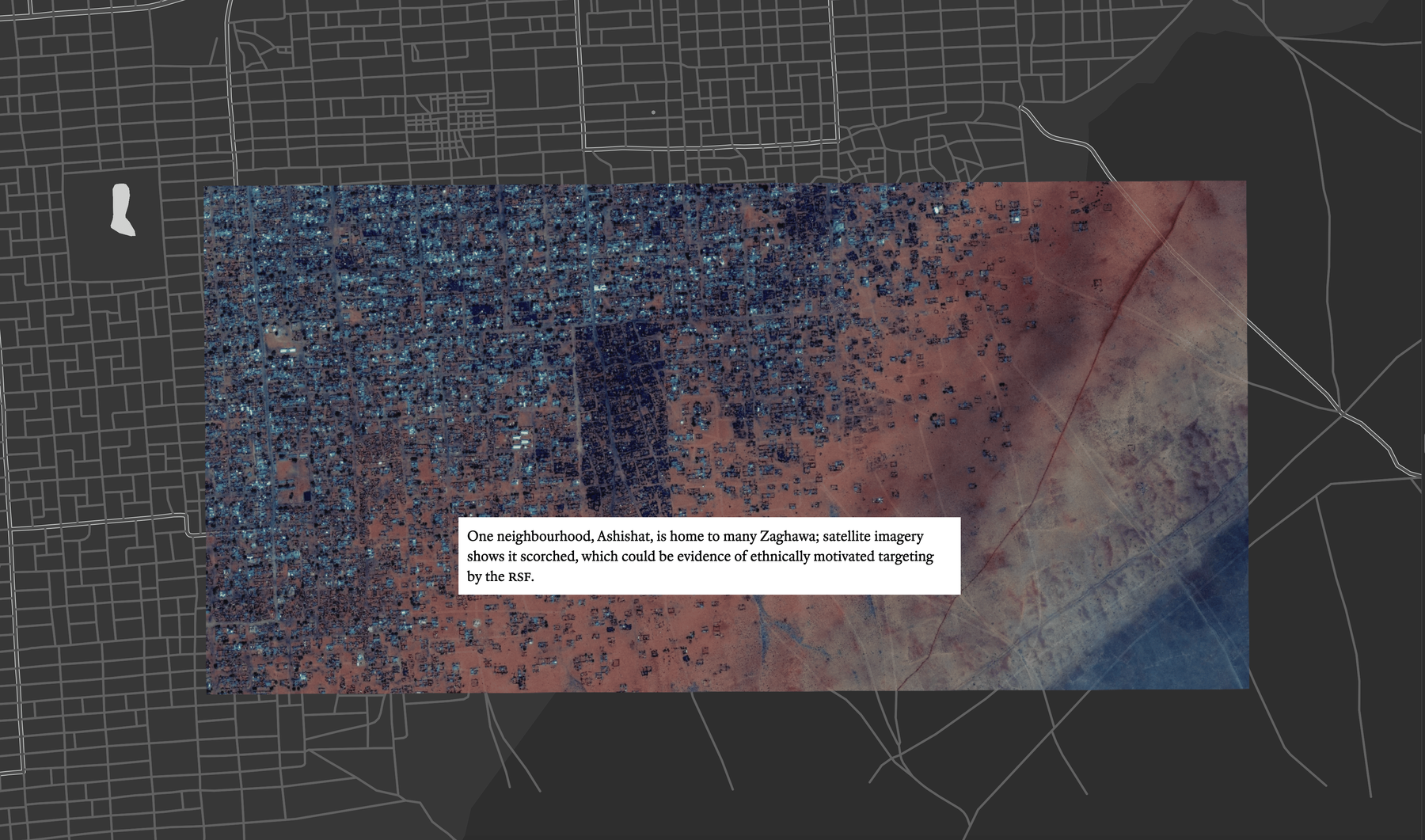
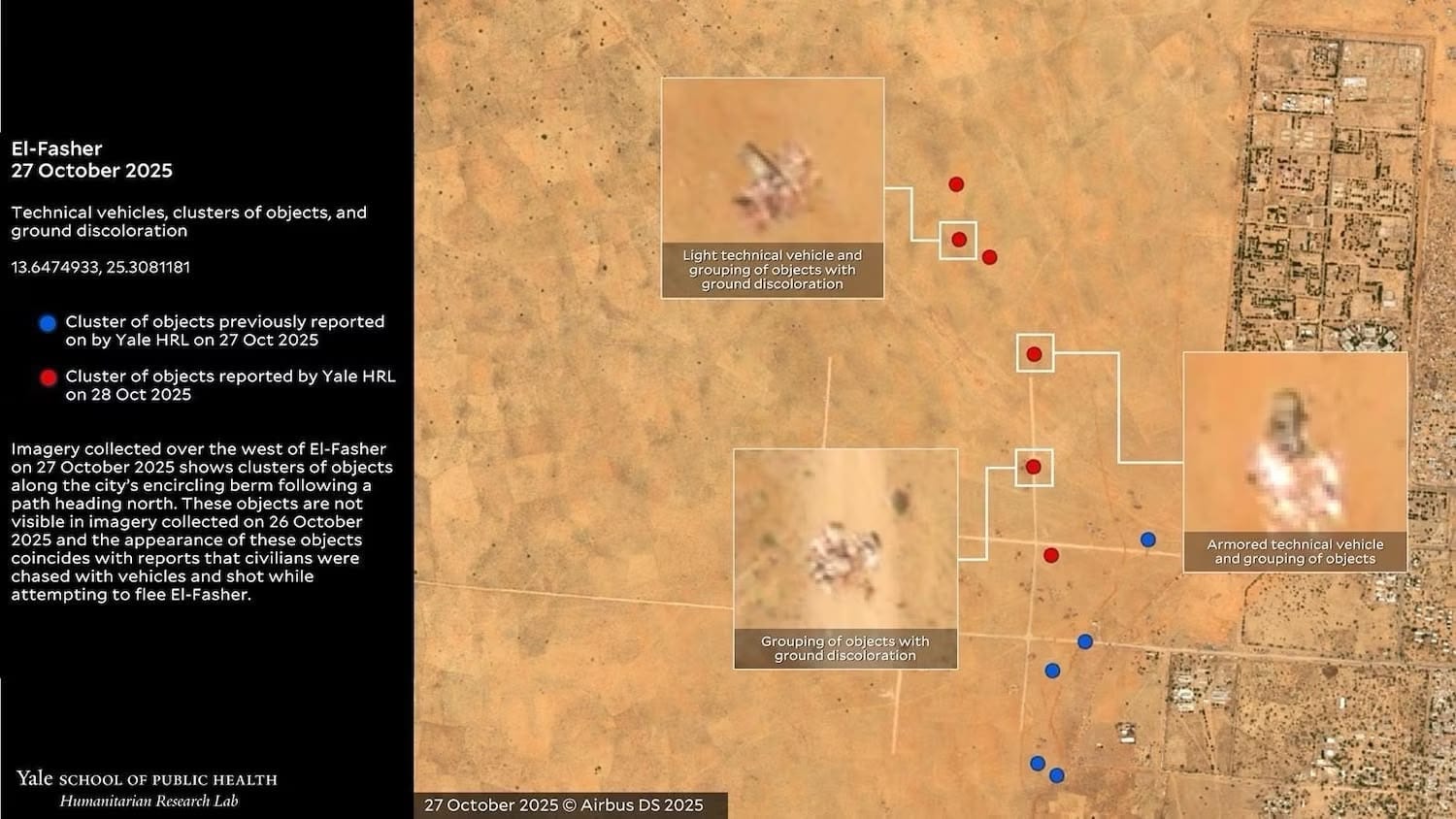
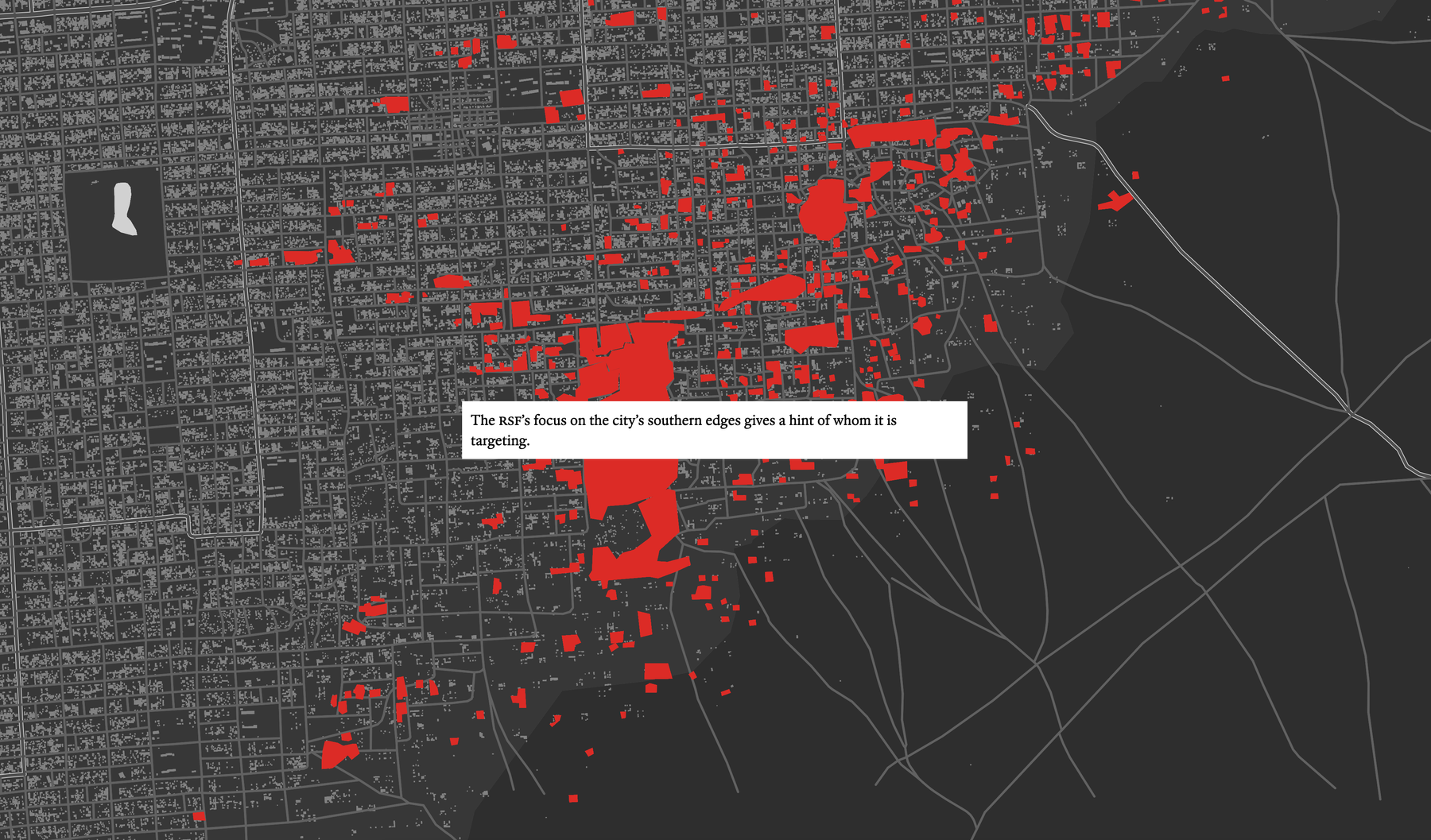
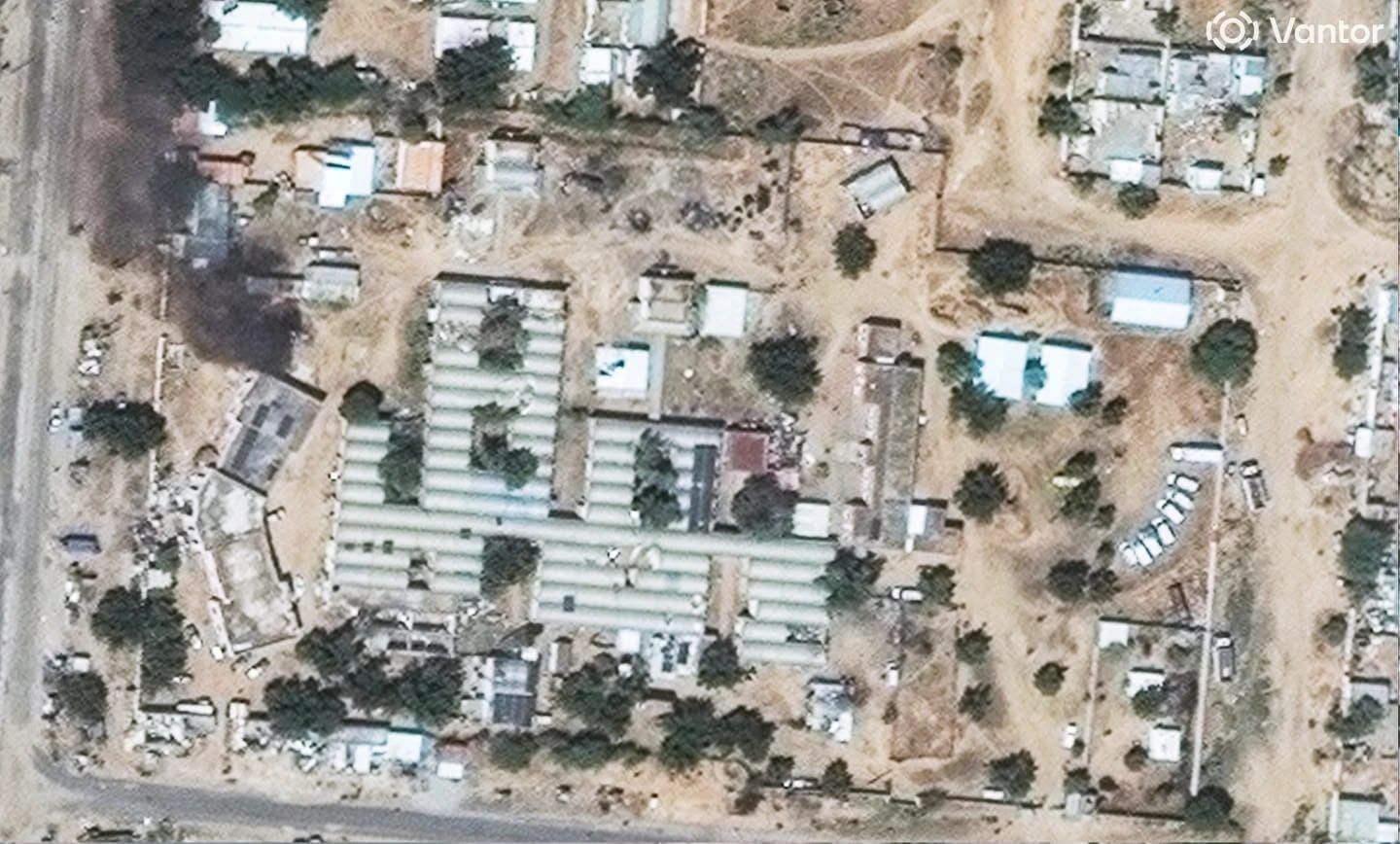
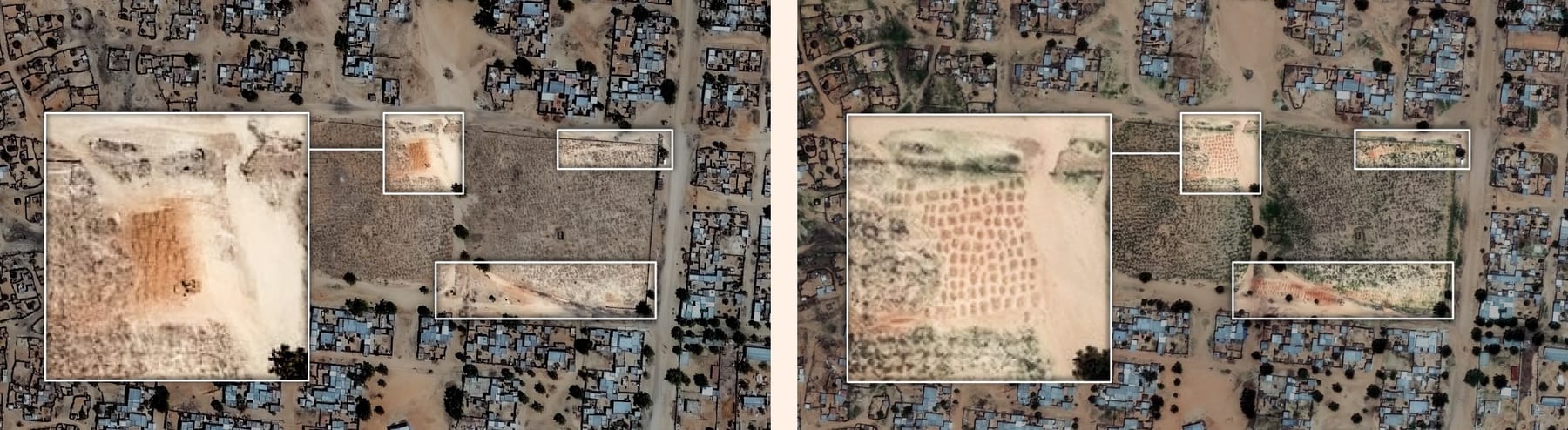
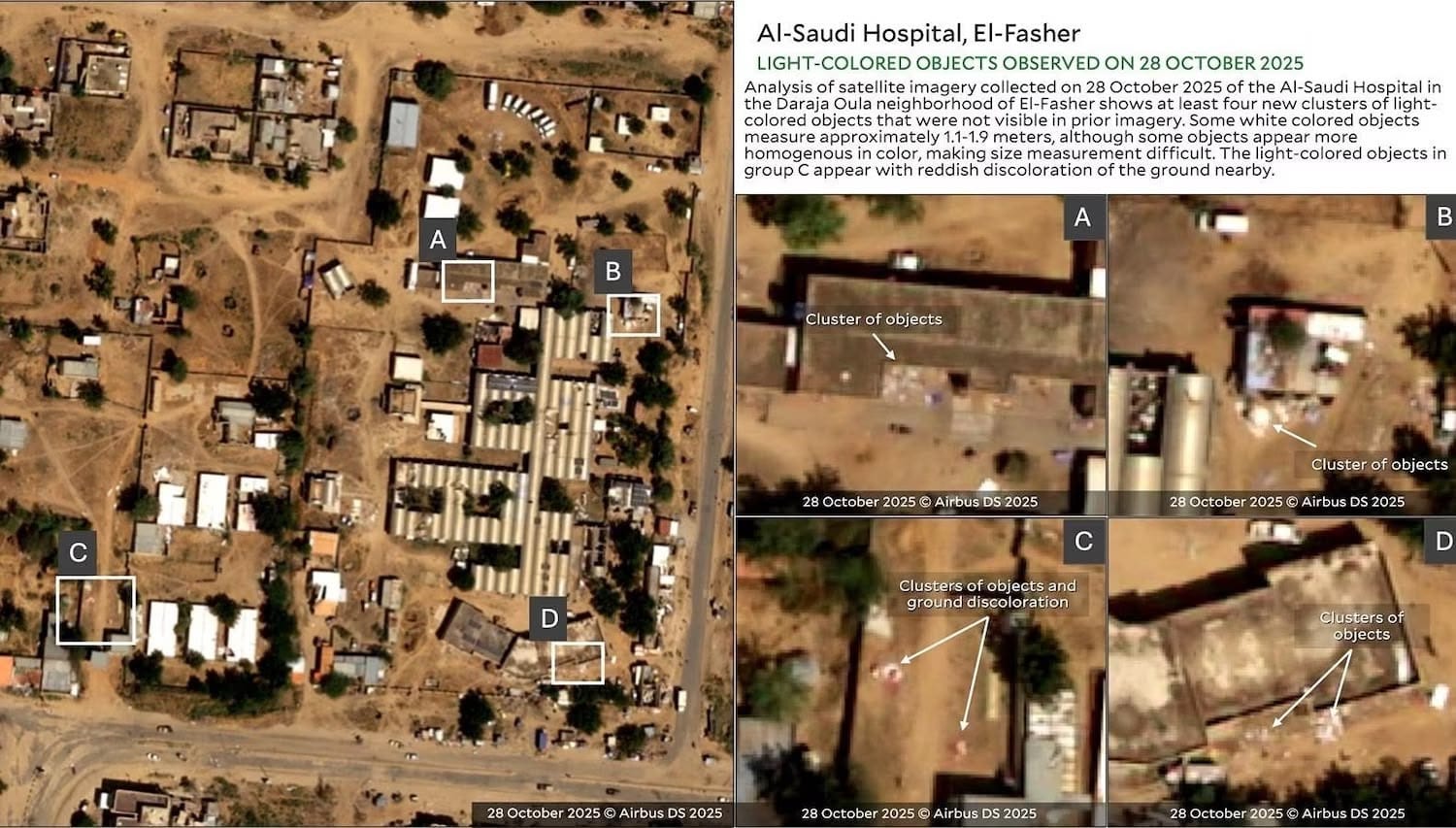
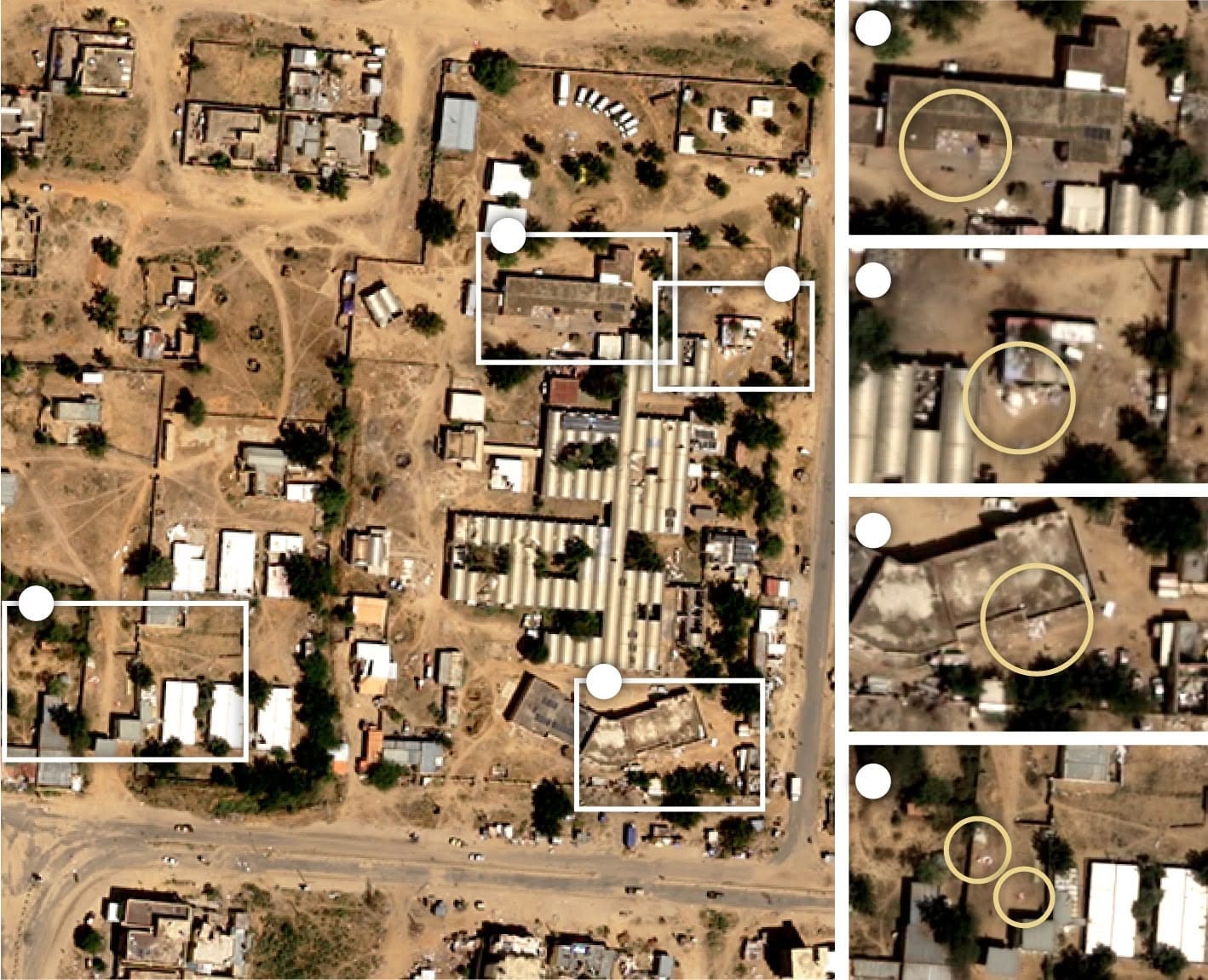
RSF takeover of El Fasher, Oct 2025
- City had been under siege for 18 months
- RSF deliberately forcing displaced civilians eastwards, keeping them within RSF territory and away from humanitarian hubs
- ~2,000 civilians killed according to the Yale School of Public Health Humanitarian Research Lab
- Next day article quotes the research group claiming tens of thousands killed in a two-day window
- North Darfur authorities claim 460 civilians killed in the last functioning hospital in the city
- Sudan Doctors Network claims the RSF “cold bloodedly killed everyone they found inside the Al Saudi Hospital, including patients, their companions, and anyone else present in the wards.”
- Supported by YHL report of a “large piled of [objects believed to be bodies] against a wall at one building at Saudi hospital”
- Army leaders fled the city before it was captured
- Military source confirming the movements
- BBC Verify article placing one particular fighter in multiple execution videos around el-Fasher
Displacement
- Their war, now in its second year, has displaced more than 11 million people within Sudan, while some 3.2 million others have fled to neighboring countries, according to UN figures.
Some of those unable to flee are harbored in Darfur’s Zanzam camp, where famine was declared last month. The camp, home to around half a million displaced people, has also come under RSF bombardment.
Hunger in Darfur has sometimes forced people to eat “grass and peanut shells” to survive, the then WFP regional director for Eastern Africa, Michael Dunford, said last year, amid warnings by the UN that some 26 million Sudanese were facing acute hunger.
Food deliveries to Darfur resumed last August after a key border crossing was reopened by authorities for aid to enter Sudan. But in parts of Darfur, aid organizations are still impeded by restrictions and famine conditions area spreading to additional areas, a UN report said this week.
On Friday, humanitarian group Médecins Sans Frontières, or, Doctors Without Borders (MSF) said it was suspending activities at one of the last operating hospitals in the RSF-controlled south Khartoum, citing recurring attacks from armed fighters.
“The medical needs are overwhelming. Injuries are often horrific. Mass casualty incidents have become almost routine,” MSF’s Emergency Coordinator, Claire San Filippo said in a statement.
Genocide is declared once more in Sudan. How did the country get here?
Peace?
- What could stop the slaughter? Neither party has a pressing reason to make peace. With the dry season ahead, the rsf may decide to build on its momentum in Darfur. It is expected to advance farther into North Kordofan, where it captured the town of Bara—and killed more civilians—on October 25th (see map). Meanwhile the saf“do not see themselves as down and out”, says a well-informed source. Some of its political allies, including hard-line Islamists, look determined to keep fighting. Will anything—or anyone—stop the slaughter in Sudan?
- But there are signs that compromise is possible. In September America, Saudi Arabia, Egypt and the uae issued a statement calling for a ceasefire and a post-war settlement for Sudan involving neither the saf nor the rsf. The countries, known as the Quad, explicitly acknowledged that external military support served to prolong the conflict. Shortly before el-Fasher fell, Massad Boulos, President Donald Trump’s Africa adviser, hosted officials from the three other countries at peace talks in Washington. Delegations from the saf and the rsf, including Mr Dagalo’s brother, were there, too. That was a signal that for the first time both sides might be open to a ceasefire.
The bloodshed in el-Fasher, though humiliating for America’s diplomats, did not completely doom the talks. America is still negotiating with each side separately for a 90-day “humanitarian truce”. Mr Trump has in recent days appeared more exercised by alleged killings of Christians in Nigeria. But he may yet turn his attention to Sudan, perhaps with an eye on a Nobel peace prize.
Much will depend on whether Mr Trump is willing to press allies, above all the uae, to stop backing the belligerents. “Just a tweet condemning the uae’s support for the rsfwould send shockwaves through Abu Dhabi,” says a former American official. So far the Trump administration, like that of Joe Biden before it, looks loth to confront the Emiratis. Yet on November 2nd the uae’s foreign minister reiterated the emirate’s commitment to the Quad statement and regretted his country’s inadequate past support for civilian governance. That suggests an opening to press the uae to align actions with words. Mr Trump’s intervention would not ensure a peace deal. But it may force the warring parties to consider one.
Will anything—or anyone—stop the slaughter in Sudan?
Maps
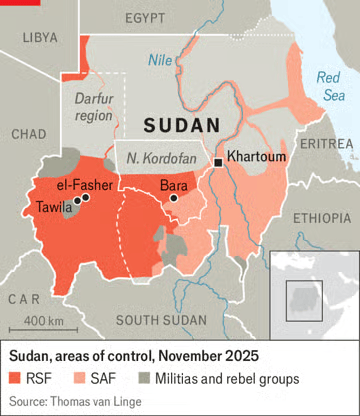
References
Sudan: Ethnic Cleansing in West Darfur | Human Rights Watch
Sudan crisis: The ruthless mercenaries who run the country for gold
Sudan war: A simple guide to what is happening
Sudanese Il-76 reportedly shot down during fighting near Babanusa
Visible from space, Sudan’s bloodied sands expose a massacre of thousands
…Africa in Zotero