Zibaldone 2024–2025 journal
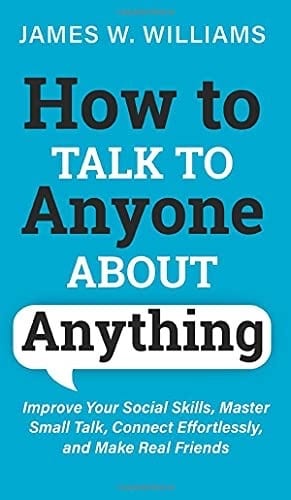
Journal connection: Book-page notes from How to Talk to Anyone About Anything.
Source boundary: These are captured journal materials; the integration does not independently verify every clipped claim, quotation, or figure.
PDF++ pages: p. 301 (file not included in this release)
Embedded preview:
Zibaldone 2024-2025.pdf (file not included in this release)
Open the complete Zibaldone page index
How to Talk to Anyone About Anything- Improve Your Social — James W_ Williams (Annotated).pdf (file not included in this release)
DESCRIPTION
Every chapter within is broken down with easy-to-follow stories and information, laced with quick-fire facts and tips you can put into action right now.
FORM Framework for Small Talk
In How to Talk to Anyone About Anything by James W. Williams, the FORM framework is a simple small-talk structure for keeping conversations moving without sounding random.
FORM = Family, Occupation, Recreation, Motivation
F — Family
Ask light, non-invasive questions about family, background, or where someone is from.
Examples:
- “Are you originally from here?”
- “Do you have family nearby?”
- “How long have you lived in this area?”
Avoid making it too personal too fast. “Family” can be sensitive, so start broad.
O — Occupation
Ask about work, business, school, or what they spend their time doing.
Examples:
- “What kind of work do you do?”
- “How did you get into that?”
- “What’s the most interesting part of your job?”
For business or leadership settings, this is often the easiest entry point.
R — Recreation
Ask about hobbies, interests, weekends, sports, travel, books, shows, or activities.
Examples:
- “What do you usually do outside of work?”
- “Anything you’ve been into lately?”
- “What do you do to unwind?”
This is often where the conversation becomes more natural because people talk about what they enjoy.
M — Motivation
Ask about goals, values, ambitions, reasons, or what drives them.
Examples:
- “What made you choose that path?”
- “What are you working toward right now?”
- “What do you like most about that?”
- “What got you interested in it?”
This is the deeper layer. It moves the conversation from facts to meaning.
How to use it naturally
Don’t run through FORM like a checklist. Use it as a mental map.
A good flow might look like:
“Are you from South Florida originally?”
“What kind of work do you do?”
“What do you like doing outside of work?”
“What got you interested in that?”The most important part is to listen for emotional hooks. When someone says something with energy, curiosity, frustration, pride, or humor, follow that thread instead of forcing the next category.
Better version for your purpose
For interpersonal, small business, and leadership communication, I’d modify it slightly:
Context → Work → Interest → Motivation → Follow-up
Example:
“How do you know everyone here?”
“What kind of work are you focused on lately?”
“What do you enjoy most outside of that?”
“What made that important to you?”
“That’s interesting—how did you get started?”That makes FORM less like “small talk” and more like a path toward rapport.
Overview
The book is a practical guide to developing social skills, building confidence, mastering small talk, and creating meaningful connections. It draws from the author’s personal experiences of overcoming shyness and social anxiety, combined with research-backed communication strategies.
Core Premise
- Social skills are not innate; they can be learned, practiced, and mastered.
- Confidence and charisma are built through consistent effort, not natural talent.
- Communication is the foundation of relationships, career success, and life satisfaction.
Key Sections & Main Ideas
1. Everything Starts with You
- Self-awareness: Develop a clear sense of self — your values, beliefs, strengths, weaknesses, and passions.
- Action exercise: Reflect on questions like “What kind of person do I want to be?” and “What relationships do I want in life?”
- Set values: Align daily choices with your priorities.
- Self-time: Spend quiet, undistracted time understanding yourself (journaling, meditation, reading).
- Get help if needed: Professional guidance is valuable for anxiety, depression, or other obstacles.
2–3. It All Begins with Listening / Further Listening Skills
- Two types of listening: Listening to understand vs. listening to respond.
- Active listening techniques:
- Give full attention (no multitasking, eye contact, face the speaker).
- Don’t interrupt; let them finish before responding.
- Use body language (nod, smile, open posture).
- Repeat or paraphrase key points for clarity.
- Advanced tips: Minimize distractions, suspend judgment, ask clarifying questions.
4. It’s All About Questions
- Purpose of questions: Direction (guide conversation), Clarity (understand details), Understanding (make the other person feel heard).
- Starting conversations: Use open-ended, engaging questions rather than generic “How are you?”
- Examples:
- Networking: “What was your highlight of the week?”
- Dating: “What would be your dream job?”
- Fun settings: “If you could go to any fictional place, where would you go?”
- Avoid: Jumping into overly personal or sensitive topics too early.
- Adapt to context: Match your tone and language to the person’s background and setting.
5. How to Have a Conversation with Anyone
- Step 1 – First Impressions:
- Read the room: assess tone, body language, stress level.
- Manage your own impression: dress appropriately, maintain confident body language, make eye contact.
- Step 2 – Making the First Move:
- Overcome fear by starting with small, low-pressure interactions.
- Use situational openers (comment on surroundings, ask for directions).
- Step 3 – Find the Connection:
- Identify common ground (interests, experiences, environment).
- Mirror tone, posture, and energy to build rapport.
- Step 4 – Addressing Obstacles:
- Learn to handle rejection, shyness, cultural differences, and people with closed body language.
6. Mastering the Art of Small Talk
- Treat small talk as a bridge to deeper conversation.
- Use the FORM framework (Family, Occupation, Recreation, Motivation) to find topics.
- Keep it light, positive, and situationally relevant.
7. Becoming More Charismatic
- Be genuinely interested in others.
- Use storytelling, humor, and enthusiasm.
- Display confidence without arrogance.
8. Building Confidence
- Confidence grows from preparation, practice, and small wins.
- Improve self-image through posture, grooming, and mindset.
- Reframe social mistakes as learning opportunities.
9. Storytelling That Lands
- Good stories have a clear point, structure, and emotional hook.
- Adapt stories to the listener’s interests and attention span.
10. Becoming an Interesting Person
- Continuously learn new things.
- Engage in diverse experiences.
- Have passions you can share with others.
11. Developing Meaningful Relationships
- Follow up after initial meetings.
- Show appreciation and reliability.
- Prioritize quality over quantity in friendships.
Practical Takeaways
- Education, Awareness, Practice are the pillars of social mastery.
- Confidence is built like a muscle — through repeated exposure.
- Listening well is the fastest way to be perceived as charismatic.
- Asking thoughtful, open-ended questions is the most powerful conversational tool.
- First impressions are shaped by body language, tone, and appearance more than words.
- Charisma comes from genuine interest in others, warmth, and confidence.
Highlights
First, your connection to other people is everything. (Page 8)
You can be poor and materially have nothing, but if you’re surrounded by caring people with whom you share a meaningful connection, and you can feel like the wealthiest person on the planet. (Page 8)
Confidence and charisma are skills that can be learned, honed, and practiced. They can even be mastered. (Page 9)
Chapter One – Everything Starts with You (Page 12)
Your sense of self is everything. It defines you. (Page 13)
“Having a well-developed sense of self is hugely beneficial in helping us make choices in life. From something as small as favorite foods to larger concerns like personal values, knowing what comes from our own self versus what comes from others allows us to live authentically.” (Page 13)
When you can learn to authentically be yourself with yourself, you can then begin to authentically be yourself with other people. You know how people say you can only really love others when you learn to love yourself? Well, we’re playing on the same board as that ideology. (Page 13)
Without any ideas of who you are or what you stand for, you’ll find yourself drifting through life. You’ll be uncertain and indecisive. Your life will lack momentum and drive. You’ll feel anxious and unsatisfied, but you won’t be able to put your finger on why because you don’t understand what you want and don’t want. (Page 14)
What kind of person do you want to be? What kind of person are you right now? How would you describe yourself? Do you believe you’ve changed a lot over the years? What things in life are you good at? What things in life are you not so good at? What are you passionate about loving? What are you passionate about hating? What kinds of relationships do you have in your life? What kinds of relationships do you want in your life? How in control of your life do you feel? (Page 15)
Set your values. Discover what matters to you. Make the right choices. Your sense of self will come from this action. (Page 17)
The Summary (Page 18)
Defining your values and beliefs ● Spending time getting to know yourself ● Understanding what makes you, you (Page 18)
Chapter Two – It All Begins with Listening (Page 19)
The Two Types of Listening (Page 19)
Listening to understand Listening to respond (Page 19)
Minimizing distractions, such as not playing with your phone or watching TV ● Make eye contact with someone ● Face the person you’re speaking to ● Don’t multi-task ● Bring yourself back to the present when you find yourself drifting (Page 21)
A great trick I learned to help you keep focus is to concentrate on the center of your palm. You can do it now, and you’ll notice how your attention travels there to the center of your hand. See how it makes your thinking stop and how much more focused you are? Try it in your conversations and see how effective it is. (Page 21)
Repeat back their points for clarity (Page 22)
Paraphrasing what has been said by saying things like, “What I’m hearing is…” or “It sounds like you’re saying…” ● Ask questions like “What do you mean by…” or “Do you mean…” ● Repeat key words back to the person every now and then (Page 23)
Addressing the key point of what they said, again for clarity ● Pause for several seconds that shows that you’re thinking about what they said ● Convey your points in the best way possible (Page 23)
The Summary (Page 23)
Understanding the two types of listening ● Practice listening to understand ● Avoid listening to respond ● Give someone your full attention ● Never interrupt someone ● Listen with your body, not just your ears ● Repeat back key points the other person said ● Respond to the point after everything else (Page 24)
Chapter Three – Further Listening Skills (Page 25)
Putting down and locking your phone ● Switching off the TV ● Turning off your computer monitor ● Not eating or drinking while talking with someone (Page 25)
Being more open-minded ● Notice judgments when they arise ● Become more accepting of other people’s ideas ● Accept imperfections in people (Page 26)
Chapter Four - It’s All About Questions (Page 28)
“At the end of the day, the questions we ask of ourselves determine the type of people that we will become.” — Leo Babauta (Page 28)
Meeting Someone New (Networking, social event, etc.) (Page 31)
Tell me something about yourself? (Page 31)
What was your highlight of this week? (Page 31)
Are you working on anything exciting at the moment? (Page 31)
Have you been here before? (Page 32)
Where did you go to school? ● What was your favorite part of school? ● How did you join this industry? ● Do you think your career path is similar to people like you? ● What’s the biggest obstacle in your career? ● What’s your favorite part of your job? ● Is your day quite varied? ● What does your typical workweek look like? ● What are your plans or aspirations for the future? ● What’s it like working in your office? (Page 32)
Questions to Ask While on a Date ● What do you do in your free time? ● Are you a morning or night person? ● What would be your dream job? ● Who is the most interesting person you’ve met? ● How would your friends describe you? ● What song or artist do you never get tired of? ● What animal do you find the cutest? (Page 32)
What animal do you find most ugly? ● What city would you love to live in? ● What is your greatest accomplishment? ● When was the last time you sang to yourself, and what song? ● What trends have you never been able to understand? ● What “thing” says the most about a person? ● What was the strangest turning point in your life? (Page 33)
The Summary (Page 35)
Ask lots of questions to get to know someone ● Keep the questions open-ended using words like what and how ● Use questions for conversational direction, clarity, or for further understanding ● Have a backlog of go-to questions to remember depending on the situation ● Don’t get too personal or head into sensitive subjects (Page 35)
Chapter Five - How to Have a Conversation with Anyone (Page 36)
“Good conversation can leave you more exhilarated than alcohol; more refreshed than the theater or a concert. It can bring you entertainment and pleasure; it can help you get ahead, solve problems, spark the imagination of others. It can increase your knowledge and education. It can erase misunderstandings, and bring you closer to those you love.” — Dorothy Sarnoff (Page 36)
Step One - First Impressions (Page 36)
Reading the Room (Page 37)
What kind of tone of voice are they using? ● What clothes are they wearing? ● Are they busy? ● Are they at work or relaxing? ● Do they look stressed out? ● Are they smiling? ● How firm is their handshake? ● How on time to meet you are they? ● What is their body language telling you? ● How polite are they? ● What manners do they have? ● What does your gut instinct say about them? (Page 37)
Writing the Room (Page 39)
Step 2 - Making the First Move (Page 40)
Step Three - Find the Connection (Page 42)
The best approach for finding a connection is to find similarities you have with that other person. This means finding common ground on things you’re interested in, whether that’s a hobby, passion, or music taste, or even just commenting and sharing opinions of what is happening in the immediate environment or situation you’re in. An example of the latter would be commenting on the music at a concert you’re at. (Page 42)
The Mastery of Mirroring (Page 43)
Some things to remember to mirror someone properly include: ● Mimicking voice speed and tone ● Copying volume of gestures ● Copying body language, such as posture and leaning ● The inflection on certain words ● Usage of slang ● The energy and excitement for a topic (Page 44)
Step Four - Addressing Obstacles You May Face (Page 44)
Giving someone a compliment about how they are or their physical appearance can be a great way to get them talking. Some statements you can use include: ● I really like your coat. It suits you. ● Damn, I love how hardworking you are. ● Your attention to detail is incredible. ● The way you express yourself is great. (Page 45)
Another way to engage in elicitation is to complain, and as I’m sure you know, human beings love to mutually dislike someone, whether it’s an opposing sports team, the grey weather, or just a mutually shared situation, like having to stay late after work to get a project completed. (Page 46)
As an actionable recap, when it comes to starting a conversation, you’ll want to: ● Read the other person ● Aim to create the first impression you want to give ● Break the ice with a question ● Have a goal in mind for the conversation (Page 46)
● Find similar interests ● Find the connection you share ● Mirror the person you’re speaking to ● Practice talking to unresponsive people (Page 47)
Chapter Six – Mastering the Art of Small Talk (Page 48)
The Core Strategies of Small Talk (Page 48)
The Power of Enthusiasm (Page 49)
Act More Energetic (Page 50)
Highlight How You Feel (Page 50)
Exert Natural Energy (Page 51)
Surround Yourself with the Right People (Page 51)
Discovering Engaging Small-Talk Topics (Page 52)
Talking about the location you’re in (immediate environment) Food, restaurants, and cooking Travel, vacations, holidays, dream destinations Sports Hobbies and passions Art Favorite local places (Page 52)
A beautiful transition away from traditional small talk and into a more interesting topic of conversation that’s open-ended enough for them to answer however they want. If they reply creatively, you know the person is down for actually talking. (Page 53)
You Will Need to Carry the Conversation… At First (Page 54)
The best idea, however, is to have some ideas of how you can positively sign off on a conversation, make your exit, and leave the situation so that the person you were speaking with will remember you and this experience positively. (Page 60)
The Summary (Page 62)
Being energetic and enthusiastic ● Be genuinely yourself regarding your interests ● Become confident with a range of small-talk topics ● Practice ending conversations strongly ● Practice small talk when and where you can ● Act like close friends with strangers ● Have conversational goals with people ● Remember that practice makes perfect! (Page 62)
Chapter Seven – Intricate Ways to Be More Charismatic (Page 63)
Remember People’s Names (Page 66)
Be present when talking to the other person, so you hear their name correctly ● Repeat the person’s name back to them to make sure you heard it properly ● Create an association (i.e., Harry with the round glasses) ● Make a rhyme out of their name ● Ask someone else their name if you forgot (Page 66)
Give, Give, Give (Page 67)
Give genuine compliments if you mean them ● Give someone your full attention ● Don’t expect anything in return ● Be polite with good manners ● Be open and honest with the other person (don’t wear a mask) (Page 68)
The Summary (Page 68)
Remember you belong in any situation you’re in ● Be relatable to people you’re speaking too ● Remember the names of people you speak to ● Let humor come naturally ● Give to people without expecting anything in return (Page 68)
Chapter Eight – How to Be More Confident (Page 69)
The Summary (Page 74)
Act confident to become confident! ● Work on letting go of your limiting beliefs ● Take control of your hand gestures ● Make eye contact ● Slow down your speaking process ● Practice! (Page 75)
Chapter Nine – How to Tell Stories That Land (Page 76)
Writing Your Story Collection (Page 78)
Your job, career, or occupation ● Something that has happened in the last week ● Any plans you’ve got coming up in the future ● Stories about your local area (Page 78)
Stories about the hobbies you do (Page 79)
Do you like silly stories about pets? ● Do you like exciting, unbelievable, reality-is-stranger-than-fiction type stories? ● Do you like wholesome stories? ● Do you like serious stories? ● Do you like informative stories? ● Do you like stories on current affairs? ● Do you like cute, loving stories? (Page 80)
How to Tell a Good Story (Page 80)
Consider the Length (Page 81)
Choosing the Right Details (Page 81)
1:1:1 method (Page 81)
One action ● One sentence summary ● One emotion (Page 81)
Building on Your Stories (Page 82)
Setting the foundations (Page 82)
Introduction (Page 82)
Introduce conflict (Page 82)
The consequences of conflict (Page 83)
Further consequences (Page 83)
MORE CONSEQUENCES (Page 83)
Conclusion (Page 83)
Aftermath (Page 83)
Chapter Ten - Becoming an Interesting Person (Page 87)
“Your life is your canvas, and you are the masterpiece. There are a million ways to be kind, amazing, fabulous, creative, bold, and interesting.” — Kerli (Page 87)
Read More Books (Page 88)
Switch Up Your Routine (Page 89)
One of the best and most simple changes I have made over the last two years is occasionally setting my alarm much earlier than normal, so I get up at silly o’clock in the morning (usually around 5 a.m.) and then walk to the highest point in my city and watch the sunrise. It’s a strange little ritual I do perhaps once a month, and it really does bring so much joy into my life. (Page 89)
Volunteer Your Time (Page 89)
Embrace Fear (Page 90)
Invest Your Time Wisely (Page 90)
Have Interesting Conversations (Page 90)
Try New Hobbies (Page 91)
Chapter Eleven – Developing Meaningful Relationships (Page 93)
In a 2008 study, researchers placed some participants at the top of a hill either alone, alongside a stranger, or standing next to a friend. When asked to grade how steep the hill was, the participants who were next to a friend thought the (Page 95)
hill to be far less steep than those who were standing alone. In other words, when you’re standing with someone you’re connected to, the hard times aren’t so bad. (Page 96)
To recap, some of the elements you’ll want to focus on include: ● Understanding what holds you back ● Remember, you can’t be friends with everyone (Page 96)
● Spend time with one another ● Always be yourself! (Page 97)