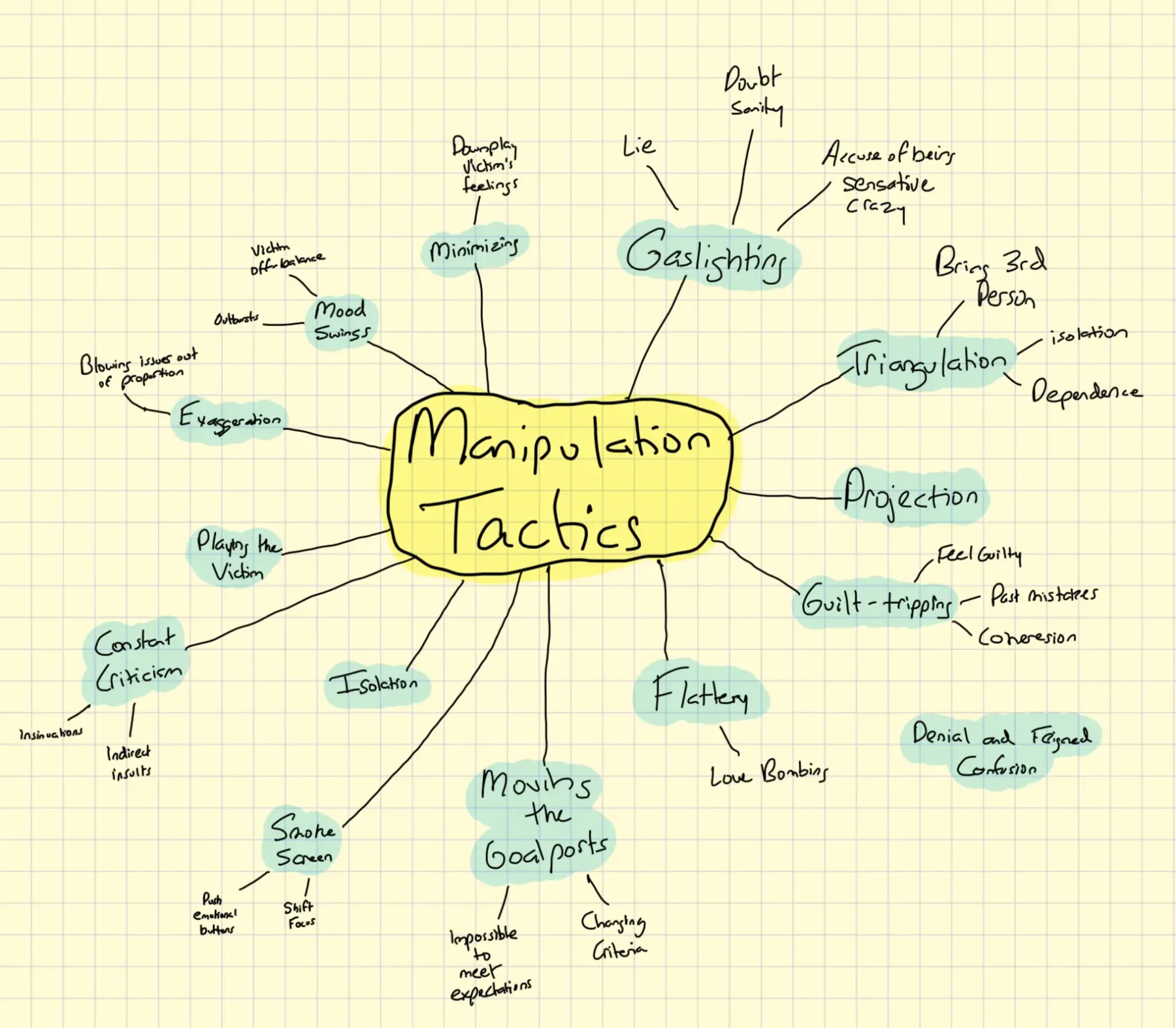
Manipulation tactics are methods used by individuals to control, exploit, or influence others for personal gain. These tactics can be subtle or overt and are often employed in various interpersonal relationships. Below is a comprehensive list of common manipulation tactics, organized and described in detail.
Common Manipulation Tactics
1. Gaslighting
Gaslighting involves making someone question their own reality, memory, or perceptions. The manipulator may deny events, lie about what was said, or accuse the victim of being overly sensitive or crazy, leading the victim to doubt their own sanity[1][2].
2. Triangulation
Triangulation occurs when the manipulator brings a third person into a conflict to reinforce their position and isolate the victim. This can make the victim feel unsupported and more dependent on the manipulator[1][2].
3. Projection
Projection involves attributing one’s own undesirable feelings, motives, or behaviors onto another person. For example, a manipulator who is angry might accuse the victim of being angry instead[1][2].
4. Guilt-Tripping
Guilt-tripping is making someone feel guilty to manipulate their behavior. The manipulator might remind the victim of past mistakes or obligations to coerce them into doing something they don’t want to do[2].
5. Lying
Lying is straightforward deception used to mislead the victim. This can include outright falsehoods, exaggerations, or omissions of crucial information[2].
6. Flattery
Flattery involves excessive compliments and praise to win the victim’s trust and lower their defenses. Once trust is established, the manipulator can exploit the victim more easily[2].
7. ‘Moving the Goalposts’
This tactic involves continuously changing the criteria for success or approval, making it impossible for the victim to meet expectations. This keeps the victim in a state of perpetual striving and insecurity[2].
8. Love Bombing
Love bombing is an overwhelming display of affection and attention to quickly gain the victim’s trust and affection. Once the victim is emotionally invested, the manipulator can begin to exert control[2].
9. Isolation
Isolation is the process of cutting the victim off from friends, family, and other support systems. This increases the victim’s dependence on the manipulator and reduces outside influences that might challenge the manipulator’s control[2].
10. Devaluing and Gaslighting
After initially valuing the victim, the manipulator begins to criticize and devalue them, often using gaslighting techniques to make the victim doubt their worth and judgment[2].
11. Fear or Violence
This involves using threats of harm, either to the victim or themselves, to maintain control. This can include threats of physical violence, self-harm, or other forms of intimidation[2].
12. Denial and Feigned Confusion
Manipulators might deny their actions or pretend not to understand the victim’s concerns. This tactic can make the victim feel confused and question their own perceptions[4].
13. Controlling Your Life
Manipulators may try to control various aspects of the victim’s life, including their decisions, activities, and relationships. This can be done through overt commands or more subtle forms of influence[1].
14. Name-Calling
Using derogatory names and insults to belittle the victim and undermine their self-esteem. This can make the victim more compliant and less likely to challenge the manipulator[1].
15. Using Threats or Coercion
Threatening to harm the victim, themselves, or others to force compliance. This can include threats of physical violence, financial harm, or social repercussions[1].
16. Playing the Victim
Manipulators may portray themselves as the victim to elicit sympathy and manipulate the actual victim into feeling guilty or responsible for their well-being[1].
17. Withholding Information
Deliberately keeping important information from the victim to maintain control and keep them dependent on the manipulator for knowledge and decision-making[1].
Understanding these tactics can help individuals recognize and protect themselves from manipulation in their relationships. If you suspect you are being manipulated, it is important to seek support from trusted friends, family, or a mental health professional.
Citations:
[1] https://www.choosingtherapy.com/manipulation-tactics/
[2] https://psychcentral.com/lib/tactics-manipulators-use-to-win-and-confuse-you
[3] https://www.psychologytoday.com/us/blog/stress-fracture/202205/4-core-tactics-psychological-manipulators
[4] https://www.marriage.com/advice/relationship/examples-of-manipulation-in-relationships/