🎭 Masculinity
⬅️ Hub: Boy Crisis MOC
What masculinity is for — ‘toxic masculinity’ and rites of passage.
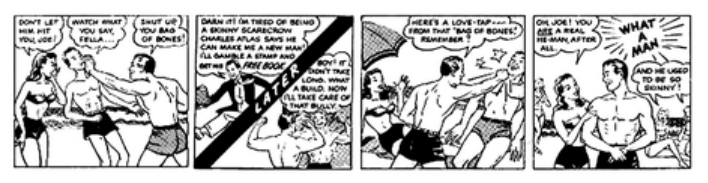
Figure 1-1 — When masculine respectability required retaliation
This 1940s Charles Atlas advertisement makes public humiliation by another man—and the judgment of female spectators—a test of masculinity. Its solution is bodily transformation followed by a punch. Pinker uses it to illustrate a changed social script: readiness to answer insult with force could be sold as respectable self-improvement, whereas the same reaction is now more likely to be read as failed self-control.
Source boundary: one advertisement is evidence of a marketed cultural ideal, not a prevalence estimate and not proof that masculinity itself is violent. Chapter 1, Figure 1-1, PDF p. 57 (file not included in this release)
Masculinity
What Men Are For - Comment Magazine
- Reeves says masculinity is historically defined by generating surplus—more meat, money, labor, or energy than needed for self.
- Modern masculinity should echo this:
“If you’re wondering how to be a man, start by doing something for somebody else.”
- Masculinity Weaponized: In politics, especially among the far-right, masculinity has been used as a cudgel, painting strongman figures as ideal leaders. The left, meanwhile, is often silent or pathologizes masculinity, creating a vacuum for reactionary recruitment.
- Masculinity and Mental Health
- Dr. Barry’s study of 4,000 men found:
- Men who saw masculinity as negative (e.g., makes them violent or emotionally closed) had worse mental health.
- Men who saw masculinity as protective and purposeful (e.g., providers, good dads) had better mental health.
- Strong correlation between positive identity as a man and reduced suicidality.
- Dr. Barry’s study of 4,000 men found:
Of Boys and Men _ Why the Modern Male Is S - Reeves, Richard copy, p.15 (file not included in this release)
The Left tells men, “Be more like your sister.” The Right says, “Be more like your father.” Neither invocation is helpful. What is needed is a positive vision of masculinity that is compatible with gender equality
Of Boys and Men _ Why the Modern Male Is S - Reeves, Richard copy, p.126 (file not included in this release)
Manhood is fragile. Womanhood is more robust because it is more determined by women’s specific role in reproduc-tion. As the feminist anthropologist Sherry Ortner writes, “It is simply a fact that proportionately more of woman’s body space, for a greater percentage of her lifetime … is taken up with the natural processes surrounding the reproduction of the species.” Womanhood is defined more by biology, manhood more by social construction. This is why masculinity tends to be more fragile than femininity. When was the last “crisis of femininity”? That’s right: never.
Of Boys and Men _ Why the Modern Male Is S - Reeves, Richard copy, p.131 (file not included in this release)
The mission of the American Psychological Association is to “benefit society and improve lives.”64 But the association failed against this benchmark with its 2018 guidelines on working with boys and men. The summary of the guidelines states that “traditional masculinity—marked by stoicism, competitiveness, dominance and aggression—is, on the whole, harmful.”65 The APA report also describes the related problem of a “masculinity ideology,” defined as “a particular constellation of standards that have held sway over large segments of the population, including: anti- femininity, achievement, eschewal of the appearance of weakness, and adventure, risk, and violence.”66
Of Boys and Men _ Why the Modern Male Is S - Reeves, Richard copy, p.133 (file not included in this release)
One of the primary functions of human culture is to help young people to become responsible, self-aware adults. Maturity means, among many other things, an ability to calibrate your behavior in a way that renders it appropriate to the circumstances. To be a grown-up means learning how to temper our own natures. We learn to go to the bathroom. We learn not to hit each other when we are upset. We learn not to act on impulse. We learn empathy, restraint, reflection. It takes time, at least a couple of decades. It takes boys a little longer than girls. But most of us manage it in the end. Boys become men, even gentlemen. The boy is still with us, he is just not in charge anymore.
Toxic Masculinity
- Originally meant to describe uninitiated, anti-social males in tribal settings.
- Now broadly and negatively labels all male behaviors, even benign or culturally neutral ones (e.g., “manspreading”).
- Label causes shame, confusion, and emotional suppression among boys and men.
Of Boys and Men _ Why the Modern Male Is S - Reeves, Richard copy, p.137 (file not included in this release)
Harrington points out that the term is almost never defined, even by academics, and is instead used to simply “signal disapproval.”
Of Boys and Men _ Why the Modern Male Is S - Reeves, Richard copy, p.138 (file not included in this release)
Nine in ten men and women describe themselves as either “completely” or “mostly” masculine or feminine.
Of Boys and Men _ Why the Modern Male Is S - Reeves, Richard copy, p.138 (file not included in this release)
Given the survey results just described, it may not be great politics either. Half of American men and almost a third of women (30%) now think that society “punishes men just for acting like men,” according to a survey by the Public Religion Research Institute.23 There is a partisan split, as you might expect.
Of Boys and Men _ Why the Modern Male Is S - Reeves, Richard copy, p.139 (file not included in this release)
Pathologizing masculinity may even undermine support for feminism. Fewer than a third of American women now describe themselves as a feminist.25 In 2018, YouGov polled those women who did not identify as feminist for their views on feminism. Almost half (48%) said that “feminists are too extreme” and that “the current wave of feminism does not represent true feminism” (47%). one in four (24%) said that “feminists are anti-men.”
Of Boys and Men _ Why the Modern Male Is S - Reeves, Richard copy, p.143 (file not included in this release)
most dangerous message of all: men are naturally different than women, but only in ways that are bad.
Rites of Passage
Wes Moore:
“I remember—I thought about this where, when I was younger, I had a chance to go to South Africa, and I stayed—I lived in a township called Langa. And while I was there, my homestay brother was going out for essentially a manhood ceremony.
And what they would do is they would all go out into the bush. On the first day, all the boys were circumcised. And then they would spend the next weeks healing—physically healing—but also learning about their history, learning about what it means to be a Xhosa man, and the history of the Xhosa battles, and who the other Xhosa individuals were, like Nelson Mandela and Thabo Mbeki.
And they’d learn this history. And then after this process of around three weeks, they would then come back to the community, and they would all be dressed in white. They would return back to their neighborhoods, and there would be a huge feast for them.
Because the idea was that a boy left, but then a man has come back. And they understood what that meant. They understood the responsibility of what it meant for their families, the responsibility of what it meant for their communities.”
Of Boys and Men _ Why the Modern Male Is S - Reeves, Richard copy, p.126 (file not included in this release)
In many cultures, rites of initiation—often involving physical duress or risk—have marked the transition from boy to man. As the American poet Leonard Kriegel wrote, “In every age, not just our own, manhood was something that had to be won.”50
Of Boys and Men _ Why the Modern Male Is S - Reeves, Richard copy, p.126 (file not included in this release)
“Manliness is a symbolic script, a cultural construct,” writes the anthropologist David Gilmore.51 “Real men do not simply emerge naturally over time like butterflies from boyish cocoons; they must be assiduously coaxed from their juvenescent shells, shaped and nurtured, counseled and prodded into manhood.”