⬅️ Hub: Psychology Books (MOC) · Parent: 60.21 Psychology

DESCRIPTION
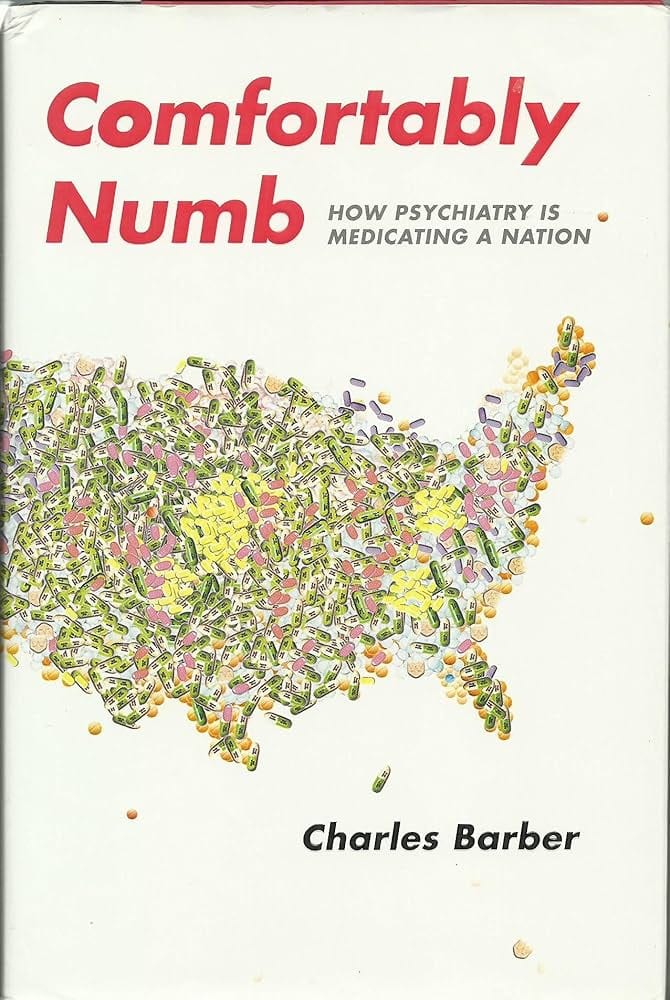
American doctors dispense approximately 230 million antidepressant prescriptions every year, more than any other class of medication. Charles Barber explores this disturbing phenomenon, examining the ways in which pharmaceutical companies first create the need for a drug and then rush to fill it. Most importantly, he convincingly argues that, without an industry to promote them, non-pharmaceutical approaches are tragically overlooked in favor of an instant cure for all emotional difficulties.Compulsively readable and urgently relevant, Comfortably Numb is an unprecedented account of the impact of psychiatric medications on American culture and on Americans themselves.
My Summary
Main Ideas, Takeaways & Similarities
Questions
I. What is the problem?
A. How is this problem formulated?
B. Why is this problem important?
C. What is the history of this problem?
D. Which prominent personalities have been interested in this problem?
II. What solutions to the problem are there?
A. What are the conclusions reached?
B. By what argument(s) is the conclusion reached?
C. What facts or assumptions serve as premises?
D. When a prominent personality offers a solution, does he also argue for or against other prominent personalities? Does he raise objections to alternative solutions? Does he consider objections to his own solutions?
III. Evaluation
A. What are the advantages and disadvantages of the alternative formulations to the problem?
B. Has the importance or history of the problem ever been misrepresented?
C. Are the solutions logically related to the premises?
D. Are the facts true? Are the assumptions acceptable? Are the objections answerable?
AI Summary
“Comfortably Numb: How Psychiatry Is Medicating a Nation” is a book written by Charles Barber, published in 2008. The book critically examines the use of psychiatric medications in the United States and explores the potential overreliance on medication as a solution for mental health issues. Here is a comprehensive summary of the book in bullet points:
- The book delves into the increasing prevalence of psychiatric medications in American society and the role they play in treating mental health disorders.
- Charles Barber argues that there is a growing trend of overmedication and an overreliance on pharmaceutical solutions to address a wide range of mental health issues.
- He explores the history of psychiatric medications and how they have evolved over time, emphasizing the role of pharmaceutical companies in their development and promotion.
- Barber discusses the diagnostic criteria for mental disorders and how the expanding definitions have led to an increase in the number of individuals being prescribed psychiatric drugs.
- The book examines the influence of the pharmaceutical industry on psychiatry, including the marketing of psychiatric medications to doctors and the public.
- Barber raises concerns about the potential for financial incentives and conflicts of interest to influence prescribing practices.
- He discusses the side effects and risks associated with psychiatric medications, including issues such as addiction, withdrawal, and long-term consequences.
- The book explores the experiences of individuals who have been prescribed psychiatric drugs and the impact on their lives, both positive and negative.
- Barber emphasizes the importance of a holistic approach to mental health treatment, including psychotherapy, lifestyle changes, and social support, in addition to medication.
- He advocates for a more balanced and individualized approach to mental health care, rather than a one-size-fits-all reliance on medication.
- Barber discusses the cultural and societal factors that contribute to the growing use of psychiatric medications, including the desire for quick fixes and the stigma surrounding mental health issues.
- The book also explores the ethical considerations of medicating children and adolescents for mental health conditions.
- Barber concludes by calling for a more critical and thoughtful approach to the use of psychiatric medications, with a focus on informed decision-making and a broader perspective on mental health care.
“Comfortably Numb” provides a critical examination of the role of psychiatric medications in American mental health care. Charles Barber raises important questions about the overmedication of society and the need for a more comprehensive and individualized approach to addressing mental health issues.