⬅️ Hub: Psychology Books (MOC) · Parent: 60.21 Psychology

DESCRIPTION
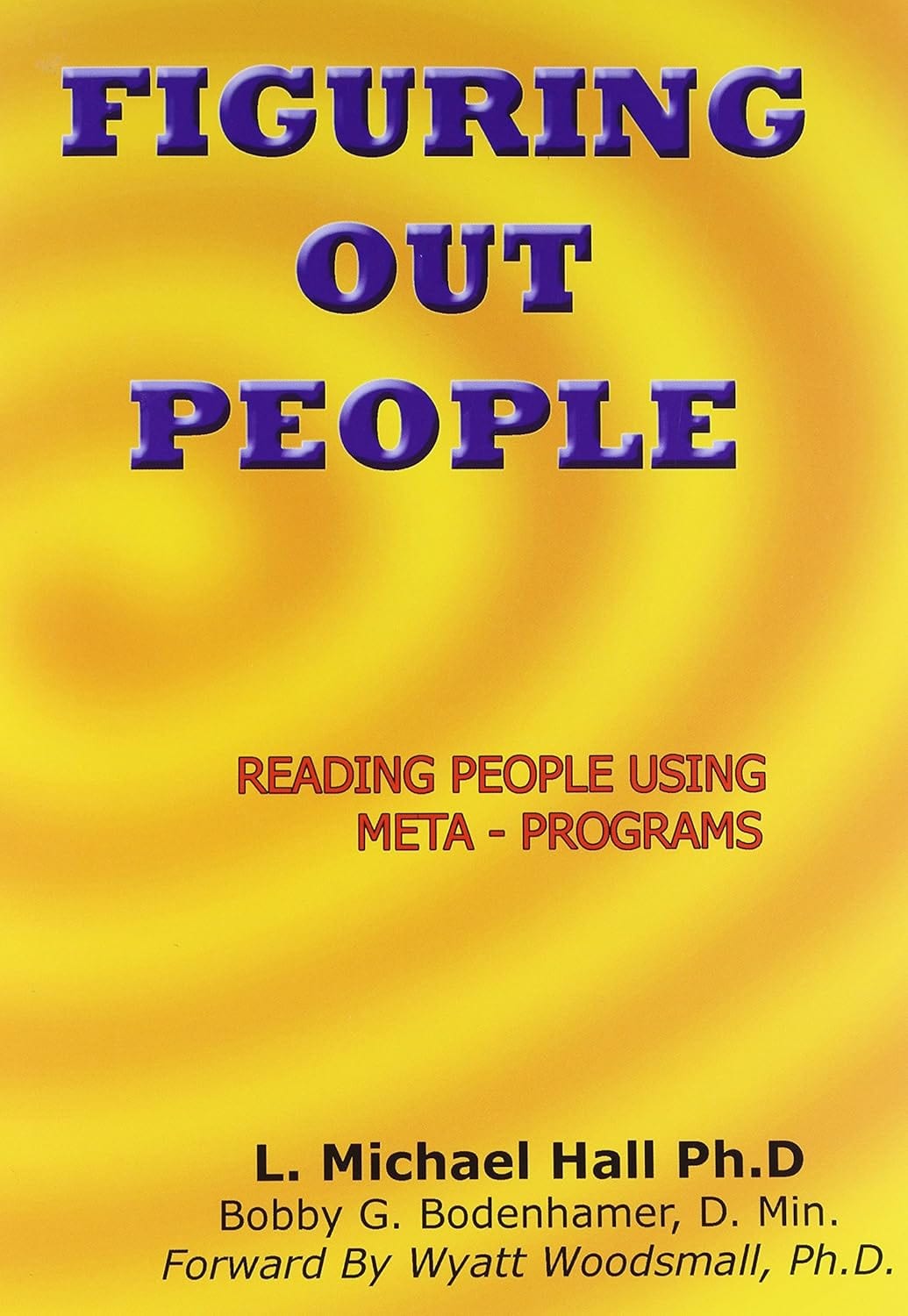
“This book contains all you ever wanted to know about Meta-programs, the tools by which we can evaluate how people function! First it provides an in-depth explanation of the Meta-programming technique, and then furnishes fifty-one examples of Meta-programs. It thus provides clear insight into our own behavior as well as that of other people, challenging us to understand how people operate and how to change our behaviour accordingly in order to communicate with them successfully. An essential addition to any NLP library.”—
My Summary
Main Ideas, Takeaways & Similarities
Questions
I. What is the problem?
A. How is this problem formulated?
B. Why is this problem important?
C. What is the history of this problem?
D. Which prominent personalities have been interested in this problem?
II. What solutions to the problem are there?
A. What are the conclusions reached?
B. By what argument(s) is the conclusion reached?
C. What facts or assumptions serve as premises?
D. When a prominent personality offers a solution, does he also argue for or against other prominent personalities? Does he raise objections to alternative solutions? Does he consider objections to his own solutions?
III. Evaluation
A. What are the advantages and disadvantages of the alternative formulations to the problem?
B. Has the importance or history of the problem ever been misrepresented?
C. Are the solutions logically related to the premises?
D. Are the facts true? Are the assumptions acceptable? Are the objections answerable?
AI Summary
“Figuring Out People: Reading People Using Meta-Programs” is a book written by L. Michael Hall and Bob Bodenhamer. Published in 1997, it provides insights into understanding human behavior and communication through the concept of meta-programs. Here is a comprehensive summary of the book in bullet points:
- The book introduces the concept of meta-programs, which are cognitive filters or programs that shape how individuals perceive and respond to the world around them.
- L. Michael Hall and Bob Bodenhamer explain that meta-programs influence a person’s thought patterns, decision-making, and communication style.
- They emphasize that understanding meta-programs can enhance one’s ability to read people, predict their behavior, and communicate more effectively.
- The book describes various meta-programs, including those related to motivation, decision-making, time orientation, and values.
- It explains how meta-programs can be observed and identified through verbal and non-verbal cues in people’s language, behavior, and body language.
- The authors provide practical examples and exercises to help readers recognize and work with meta-programs in real-life situations.
- They discuss the importance of flexibility in communication, highlighting how adapting to another person’s meta-programs can lead to better rapport and understanding.
- The book explores how meta-programs can impact relationships, teamwork, leadership, and personal development.
- It offers insights into how to use meta-programs for persuasion, negotiation, and conflict resolution.
- The authors stress the ethical considerations of using meta-program knowledge responsibly and respectfully in personal and professional interactions.
- The book addresses the limitations and potential pitfalls of relying too heavily on meta-programs in understanding people, emphasizing the need for a holistic approach to human behavior.
- It concludes by summarizing key concepts and offering guidance on applying the knowledge of meta-programs to improve communication and relationships.
“Figuring Out People” serves as a guide to understanding human behavior through the lens of meta-programs. It provides practical tools and strategies for reading people more effectively, enhancing communication, and building stronger relationships, both personally and professionally.