⬅️ Hub: Psychology Books (MOC) · Parent: 60.21 Psychology
DESCRIPTION
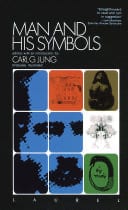
Here, Jung examines the full world of the unconscious, whose language he believed to be the symbols constantly revealed in dreams. Convinced that dreams offer practical advice, sent from the unconscious to the conscious self, Jung felt that self-understanding would lead to a full and productive life. Thus, the reader will gain new insights into himself from this thoughtful volume, which also illustrates symbols throughout history. Completed just before his death by Jung and his associates, it is clearly addressed to the general reader.
My Summary
Main Ideas, Takeaways & Similarities
Questions
I. What is the problem?
A. How is this problem formulated?
B. Why is this problem important?
C. What is the history of this problem?
D. Which prominent personalities have been interested in this problem?
II. What solutions to the problem are there?
A. What are the conclusions reached?
B. By what argument(s) is the conclusion reached?
C. What facts or assumptions serve as premises?
D. When a prominent personality offers a solution, does he also argue for or against other prominent personalities? Does he raise objections to alternative solutions? Does he consider objections to his own solutions?
III. Evaluation
A. What are the advantages and disadvantages of the alternative formulations to the problem?
B. Has the importance or history of the problem ever been misrepresented?
C. Are the solutions logically related to the premises?
D. Are the facts true? Are the assumptions acceptable? Are the objections answerable?
AI Summary
Highlights
“Man and His Symbols” by Carl Jung is a book that explores the symbolic language of the unconscious mind and the importance of symbols in understanding the human psyche. It is designed for a general audience and aims to explain the significance of symbols in dreams, myths, and everyday life. Here is a comprehensive summary in bullet points:
- Title: Man and His Symbols
- Author: Carl Jung
Introduction:
- Introduces the idea that symbols are a universal language of the unconscious mind.
- Expresses the need for a book that makes Jung’s ideas accessible to a wider audience.
- Highlights the role of symbols in dreams and myths.
Chapter 1: Approaching the Unconscious:
- Discusses the importance of exploring the unconscious as a source of personal growth and self-discovery.
- Introduces the concept of the collective unconscious and archetypes.
- Emphasizes the symbolic nature of the unconscious and the need for interpretation.
Chapter 2: Ancient Myths and Modern Man:
- Explores the connection between ancient myths and the psychological experiences of modern individuals.
- Discusses how myths provide insights into the human psyche and the collective unconscious.
- Highlights the role of mythological symbols in dreams and fantasies.
Chapter 3: The Process of Individuation:
- Introduces the concept of individuation as the process of becoming one’s true self.
- Discusses the role of symbols in the journey toward individuation.
- Explores the symbolism of the mandala as a representation of wholeness.
Chapter 4: Symbolism in the Visual Arts:
- Examines the use of symbolism in visual art, particularly in paintings and sculptures.
- Discusses the psychological impact of art and its ability to evoke unconscious reactions.
- Explores the symbolism of specific artworks and their archetypal themes.
Chapter 5: Symbolism in Religion and Alchemy:
- Explores the role of symbolism in religious and alchemical traditions.
- Discusses the psychological significance of religious symbols and rituals.
- Examines the symbolism of the cross, the mandala, and other religious motifs.
Chapter 6: The Process of Individuation in Fairy Tales:
- Analyzes the symbolism and themes in fairy tales.
- Discusses the psychological meaning of common fairy tale elements such as the hero’s journey and transformation.
- Emphasizes the educational and therapeutic value of fairy tales.
Conclusion:
- Summarizes the key concepts and ideas presented in the book.
- Reiterates the importance of understanding and interpreting symbols for personal growth and self-awareness.
- Encourages readers to engage with their own dreams and symbols as a means of exploring the unconscious mind.
Note: “Man and His Symbols” was a collaborative effort, with contributions from several authors. This summary covers the main ideas and themes presented in the book.