⬅️ Hub: Psychology Books (MOC) · Parent: 60.21 Psychology

DESCRIPTION
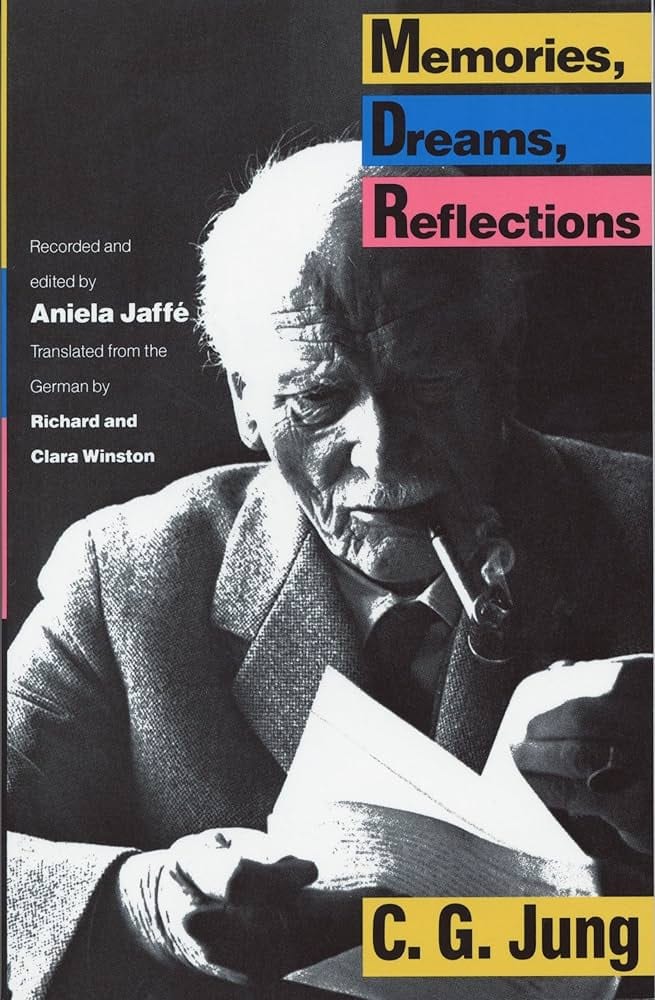
An eye-opening biography of one of the most influential psychiatrists of the modern age, drawing from his lectures, conversations, and own writings. “An important, firsthand document for readers who wish to understand this seminal writer and thinker.” —Booklist In the spring of 1957, when he was eighty-one years old, Carl Gustav Jung undertook the telling of his life story. Memories, Dreams, Reflections is that book, composed of conversations with his colleague and friend Aniela Jaffé, as well as chapters written in his own hand, and other materials. Jung continued to work on the final stages of the manuscript until shortly before his death on June 6, 1961, making this a uniquely comprehensive reflection on a remarkable life. Fully corrected, this edition also includes Jung’s VII Sermones ad Mortuos.
My Summary
Main Ideas, Takeaways & Similarities
Questions
I. What is the problem?
A. How is this problem formulated?
B. Why is this problem important?
C. What is the history of this problem?
D. Which prominent personalities have been interested in this problem?
II. What solutions to the problem are there?
A. What are the conclusions reached?
B. By what argument(s) is the conclusion reached?
C. What facts or assumptions serve as premises?
D. When a prominent personality offers a solution, does he also argue for or against other prominent personalities? Does he raise objections to alternative solutions? Does he consider objections to his own solutions?
III. Evaluation
A. What are the advantages and disadvantages of the alternative formulations to the problem?
B. Has the importance or history of the problem ever been misrepresented?
C. Are the solutions logically related to the premises?
D. Are the facts true? Are the assumptions acceptable? Are the objections answerable?
AI Summary
Highlights
“Memories, Dreams, Reflections” is an autobiographical work by Swiss psychiatrist Carl Jung, recounting his life, inner experiences, and his development of psychological theories. Here is a comprehensive summary in bullet points:
- Title: Memories, Dreams, Reflections
- Author: Carl Jung
Introduction:
- Presents the book as an exploration of Jung’s life and inner world.
- Highlights the importance of introspection and self-discovery.
Chapter 1: Early Life:
- Recounts Jung’s childhood in Switzerland.
- Describes his fascination with the natural world and his early interest in spirituality.
Chapter 2: School Years:
- Discusses Jung’s experiences in school and his intellectual pursuits.
- Describes his fascination with archaeology and mythology.
Chapter 3: Student Years:
- Covers Jung’s university studies in medicine and psychology.
- Introduces his interest in psychiatry and psychoanalysis.
Chapter 4: Psychiatric Activities:
- Details Jung’s early career in psychiatry.
- Discusses his work with psychotic patients and the development of his own therapeutic methods.
Chapter 5: Sigmund Freud:
- Chronicles Jung’s relationship with Sigmund Freud.
- Describes their collaboration and eventual split due to theoretical differences.
Chapter 6: Confrontation with the Unconscious:
- Discusses Jung’s own journey into the depths of his unconscious mind.
- Recounts his experiences of vivid dreams, fantasies, and inner visions.
Chapter 7: Death:
- Explores Jung’s thoughts and experiences related to death.
- Discusses his belief in the continuity of consciousness beyond physical death.
Chapter 8: Encounters with the Unconscious:
- Details Jung’s encounters with symbolic and mythological elements in his own psyche.
- Discusses his understanding of the collective unconscious and archetypes.
Chapter 9: Travels:
- Chronicles Jung’s travels to various places, including North Africa and the United States.
- Discusses the impact of his travels on his psychological insights.
Chapter 10: Late Thoughts:
- Reflects on Jung’s later years and his continued inner exploration.
- Discusses his writings on alchemy, religion, and the psyche.
Chapter 11: Retrospect:
- Offers a retrospective look at Jung’s life and work.
- Emphasizes the importance of self-discovery and individuation.
Conclusion:
- Summarizes the central themes of the book.
- Highlights the significance of Jung’s inner experiences and their influence on his psychological theories.
- Encourages readers to embark on their own journeys of self-discovery and introspection.
Legacy:
- “Memories, Dreams, Reflections” provides profound insights into the life and inner world of Carl Jung, a pioneering figure in psychology and psychoanalysis.
- It offers a unique blend of autobiography and psychological exploration, shedding light on Jung’s personal experiences and the development of his influential theories on the human psyche.