⬅️ Hub: Psychology Books (MOC) · Parent: 60.21 Psychology

DESCRIPTION
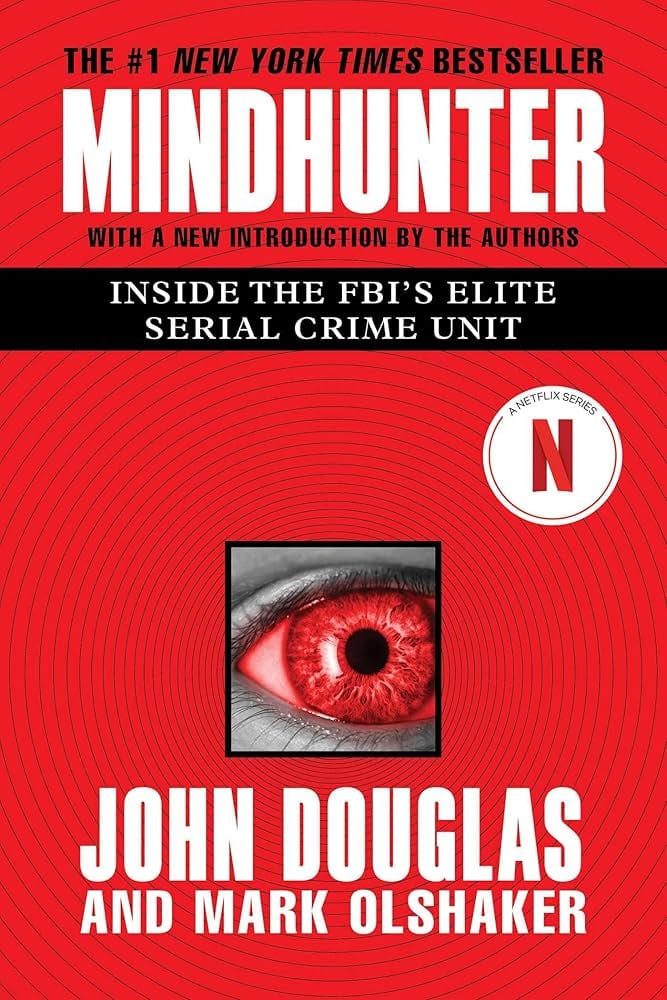
Now a Netflix original series Discover the classic, behind-the-scenes chronicle of John E. Douglas’ twenty-five-year career in the FBI Investigative Support Unit, where he used psychological profiling to delve into the minds of the country’s most notorious serial killers and criminals. In chilling detail, the legendary Mindhunter takes us behind the scenes of some of his most gruesome, fascinating, and challenging cases—and into the darkest recesses of our worst nightmares. During his twenty-five year career with the Investigative Support Unit, Special Agent John Douglas became a legendary figure in law enforcement, pursuing some of the most notorious and sadistic serial killers of our time: the man who hunted prostitutes for sport in the woods of Alaska, the Atlanta child murderer, and Seattle’s Green River killer, the case that nearly cost Douglas his life. As the model for Jack Crawford in The Silence of the Lambs, Douglas has confronted, interviewed, and studied scores of serial killers and assassins, including Charles Manson, Ted Bundy, and Ed Gein, who dressed himself in his victims’ peeled skin. Using his uncanny ability to become both predator and prey, Douglas examines each crime scene, reliving both the killer’s and the victim’s actions in his mind, creating their profiles, describing their habits, and predicting their next moves.
My Summary
Main Ideas, Takeaways & Similarities
Questions
I. What is the problem?
A. How is this problem formulated?
B. Why is this problem important?
C. What is the history of this problem?
D. Which prominent personalities have been interested in this problem?
II. What solutions to the problem are there?
A. What are the conclusions reached?
B. By what argument(s) is the conclusion reached?
C. What facts or assumptions serve as premises?
D. When a prominent personality offers a solution, does he also argue for or against other prominent personalities? Does he raise objections to alternative solutions? Does he consider objections to his own solutions?
III. Evaluation
A. What are the advantages and disadvantages of the alternative formulations to the problem?
B. Has the importance or history of the problem ever been misrepresented?
C. Are the solutions logically related to the premises?
D. Are the facts true? Are the assumptions acceptable? Are the objections answerable?
AI Summary
Highlights
Here is a thorough summary of the book “Mindhunter: Inside the FBI’s Elite Serial Crime Unit” in bullet points:
- Title: Mindhunter: Inside the FBI’s Elite Serial Crime Unit
- Authors: John E. Douglas and Mark Olshaker
Introduction:
- A memoir by John E. Douglas, a former FBI special agent who played a key role in developing criminal profiling and the Behavioral Science Unit (BSU) at the FBI.
- Chronicles his career and the development of profiling techniques to understand and catch serial killers.
Chapter 1: The Birth of Behavioral Science
- Douglas’s early career as an FBI agent in Detroit.
- Introduction to the concept of criminal profiling.
- The formation of the Behavioral Science Unit (BSU) at the FBI.
Chapter 2: Hunting the Hunter
- The development of the “Mindhunter” concept.
- Douglas’s work interviewing serial killers to understand their psychology.
- The importance of building rapport with killers.
Chapter 3: Serial Killers: A Definition
- Defining and categorizing serial killers.
- The different types of serial murderers.
- Case studies and insights into the minds of serial killers.
Chapter 4: Serial Murder and Serial Rape: The Nexus
- Examines the relationship between serial murder and sexual assault.
- The motivations and patterns of serial rapists and killers.
- Profiling techniques used to identify suspects.
Chapter 5: The Son of Sam
- The famous case of David Berkowitz, the “Son of Sam” killer.
- Douglas’s involvement in the investigation and profiling.
- Insights into Berkowitz’s psychological makeup.
Chapter 6: Ritual and Structure
- The role of ritual and organization in serial killings.
- Profiling techniques to identify patterns in behavior.
- Case studies of serial killers who exhibited ritualistic behavior.
Chapter 7: “I Have a Green Light”
- Douglas’s involvement in the Atlanta Child Murders investigation.
- Challenges and complexities of profiling in the case.
- The importance of collaboration with local law enforcement.
Chapter 8: A Question of Stature
- Discussion of serial killers who target specific victim types.
- Profiling based on victim characteristics.
- The challenge of catching killers who vary their victims.
Chapter 9: The Profiler’s Profiled
- Douglas’s encounter with an anonymous threat from a serial rapist.
- The personal toll of working on violent crime cases.
- The impact of the job on the mental health of profilers.
Chapter 10: Deviant Criminal Sexuality
- Examination of sexual deviance and its role in criminal behavior.
- Profiling techniques to understand and capture sexually motivated offenders.
- Case studies of sexual serial killers.
Chapter 11: Black Serial Murderers: Overlooked and Underexposed
- Addresses the underrepresentation of black serial killers in profiling and media.
- Challenges stereotypes and misconceptions about serial killers.
- Case studies of African American serial murderers.
Chapter 12: Inside the Mind of a Criminal
- Discusses the concept of “signature” behavior in serial crimes.
- The role of motive and fantasy in criminal acts.
- Insights into the psychology of offenders.
Chapter 13: Judgment and Retribution
- Douglas’s perspectives on the criminal justice system and the death penalty.
- The debate over capital punishment for serial killers.
- The role of profilers in legal proceedings.
Chapter 14: The Real Monsters
- Reflects on the darkness of the criminal mind and the toll it takes on investigators.
- The importance of understanding and confronting evil.
- The ongoing need for criminal profiling in law enforcement.
Conclusion:
- Summarizes the contributions of John E. Douglas and the BSU to the field of criminal profiling.
- Reflects on the challenges and insights gained from profiling serial killers.
- Encourages further research and understanding of criminal behavior.