⬅️ Hub: Psychology Books (MOC) · Parent: 60.21 Psychology
DESCRIPTION
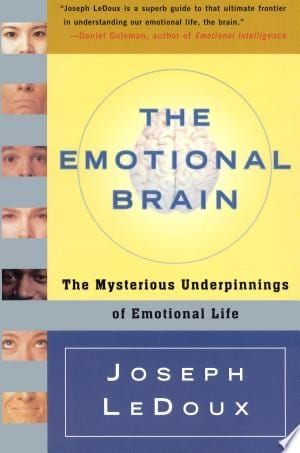
What happens in our brains to make us feel fear, love, hate, anger, joy? Do we control our emotions, or do they control us? Do animals have emotions? How can traumatic experiences in early childhood influence adult behavior, even though we have no conscious memory of them? In The Emotional Brain, Joseph LeDoux investigates the origins of human emotions and explains that many exist as part of complex neural systems that evolved to enable us to survive. One of the principal researchers profiled in Daniel Goleman’s Emotional Intelligence, LeDoux is a leading authority in the field of neural science. In this provocative book, he explores the brain mechanisms underlying our emotions — mechanisms that are only now being revealed.
My Summary
Main Ideas, Takeaways & Similarities
Questions
I. What is the problem?
A. How is this problem formulated?
B. Why is this problem important?
C. What is the history of this problem?
D. Which prominent personalities have been interested in this problem?
II. What solutions to the problem are there?
A. What are the conclusions reached?
B. By what argument(s) is the conclusion reached?
C. What facts or assumptions serve as premises?
D. When a prominent personality offers a solution, does he also argue for or against other prominent personalities? Does he raise objections to alternative solutions? Does he consider objections to his own solutions?
III. Evaluation
A. What are the advantages and disadvantages of the alternative formulations to the problem?
B. Has the importance or history of the problem ever been misrepresented?
C. Are the solutions logically related to the premises?
D. Are the facts true? Are the assumptions acceptable? Are the objections answerable?
AI Summary
Highlights
“The Emotional Brain: The Mysterious Underpinnings of Emotional Life” is a book written by Joseph LeDoux, published in 1996. The book explores the neurobiology of emotions and delves into the complex workings of the human brain in relation to emotional experiences. Here is a comprehensive summary of the book in bullet points:
- The book delves into the nature of emotions and seeks to uncover the neurological and physiological processes that underlie our emotional experiences.
- Joseph LeDoux emphasizes the critical role of the brain in generating and regulating emotions, challenging traditional views that emotions are solely products of the mind or conscious thought.
- LeDoux introduces the concept of the “emotional brain,” which consists of a network of neural structures responsible for processing and generating emotional responses.
- The author discusses the evolutionary significance of emotions, highlighting their adaptive value in promoting survival and guiding behavior.
- He explores the role of the amygdala, a key brain structure, in the processing of emotional stimuli and the generation of emotional responses.
- The book delves into the neural pathways and circuits that transmit information related to emotions, including sensory inputs, to the amygdala and other brain regions.
- LeDoux emphasizes that emotional responses can occur independently of conscious awareness, suggesting that the brain can react to emotional stimuli before they reach our conscious mind.
- The book discusses the concept of “emotional memory” and how emotionally charged events are more likely to be stored in long-term memory.
- LeDoux addresses the impact of traumatic experiences on the brain and the formation of emotional memories that can lead to post-traumatic stress disorder (PTSD).
- He explores the role of genetics and individual differences in emotional processing, highlighting how genetic factors can influence emotional responses.
- The book also discusses the interplay between nature and nurture in shaping emotional development and how early experiences can have a lasting impact on emotional regulation.
- LeDoux examines the neural basis of fear and anxiety, emphasizing the importance of the amygdala in processing threatening stimuli.
- He discusses the implications of his research for understanding and treating emotional disorders, including anxiety, depression, and phobias.
- The book concludes by reflecting on the broader implications of the emotional brain for our understanding of consciousness, self-awareness, and the human experience.
“The Emotional Brain” offers a comprehensive exploration of the neural and physiological basis of emotions. It challenges conventional wisdom about emotions and sheds light on the intricate workings of the brain in generating and regulating our emotional lives.