⬅️ Hub: Psychology Books (MOC) · Parent: 60.21 Psychology

DESCRIPTION
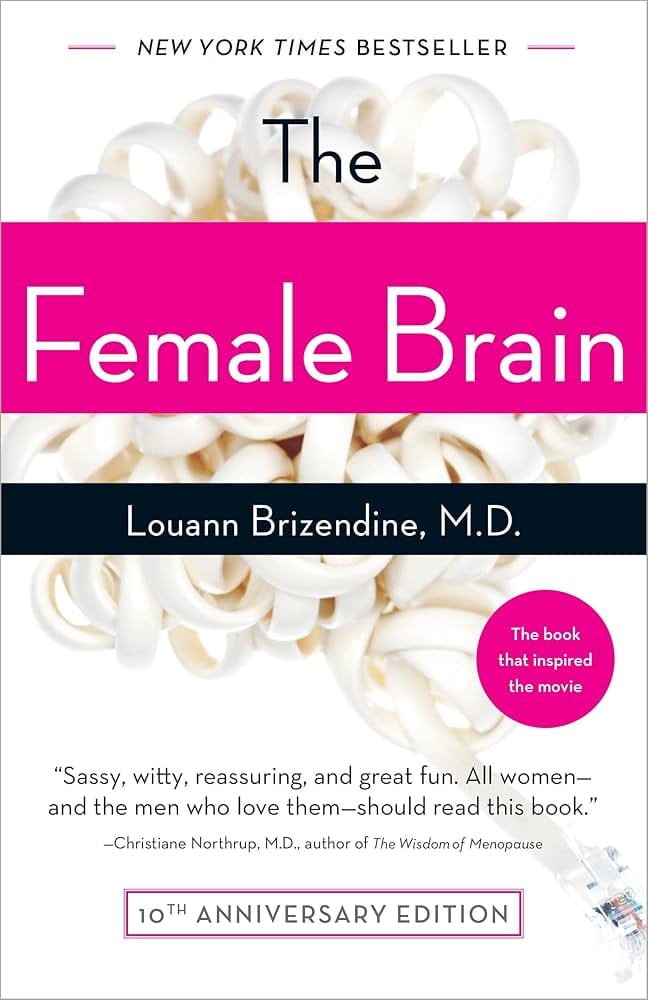
Since Dr. Brizendine wrote The Female Brain ten years ago, the response has been overwhelming. This New York Times bestseller has been translated into more than thirty languages, has sold nearly a million copies between editions, and has most recently inspired a romantic comedy starring Whitney Cummings and Sofia Vergara. And its profound scientific understanding of the nature and experience of the female brain continues to guide women as they pass through life stages, to help men better understand the girls and women in their lives, and to illuminate the delicate emotional machinery of a love relationship. Why are women more verbal than men? Why do women remember details of fights that men can’t remember at all? Why do women tend to form deeper bonds with their female friends than men do with their male counterparts? These and other questions have stumped both sexes throughout the ages. Now, pioneering neuropsychiatrist Louann Brizendine, M.D., brings together the latest findings to show how the unique structure of the female brain determines how women think, what they value, how they communicate, and who they love. While doing research as a medical student at Yale and then as a resident and faculty member at Harvard, Louann Brizendine discovered that almost all of the clinical data in existence on neurology, psychology, and neurobiology focused exclusively on males. In response to the overwhelming need for information on the female mind, Brizendine established the first clinic in the country to study and treat women’s brain function. In The Female Brain, Dr. Brizendine distills all her findings and the latest information from the scientific community in a highly accessible book that educates women about their unique brain/body/behavior. The result: women will come away from this book knowing that they have a lean, mean, communicating machine. Men will develop a serious case of brain envy.
My Summary
Main Ideas, Takeaways & Similarities
Questions
I. What is the problem?
A. How is this problem formulated?
B. Why is this problem important?
C. What is the history of this problem?
D. Which prominent personalities have been interested in this problem?
II. What solutions to the problem are there?
A. What are the conclusions reached?
B. By what argument(s) is the conclusion reached?
C. What facts or assumptions serve as premises?
D. When a prominent personality offers a solution, does he also argue for or against other prominent personalities? Does he raise objections to alternative solutions? Does he consider objections to his own solutions?
III. Evaluation
A. What are the advantages and disadvantages of the alternative formulations to the problem?
B. Has the importance or history of the problem ever been misrepresented?
C. Are the solutions logically related to the premises?
D. Are the facts true? Are the assumptions acceptable? Are the objections answerable?
AI Summary
Highlights
“The Female Brain” by Louann Brizendine is a book that explores the neurological and hormonal differences between the male and female brain. It delves into how these differences impact behavior, emotions, and relationships. Here is a comprehensive summary of the book in bullet points:
- The book discusses the key idea that the female brain is structurally and functionally different from the male brain due to the influence of hormones, particularly estrogen and progesterone.
- Louann Brizendine, a neuropsychiatrist, presents scientific research and her clinical observations to support the notion that the female brain is influenced by hormonal fluctuations throughout the menstrual cycle, pregnancy, childbirth, and menopause.
- It explores the concept of “brain sex,” which refers to the differences in the male and female brain that are present from birth and continue throughout life.
- The book discusses the development of the female brain during prenatal and early postnatal stages, highlighting how sex hormones shape neural pathways and affect behavior.
- Brizendine emphasizes that the female brain is wired for connection and communication, with a larger anterior cingulate cortex and insula, areas associated with empathy and emotional processing.
- It explores the hormonal changes and emotional fluctuations that occur during the menstrual cycle, including the impact on mood, cognition, and behavior.
- The book delves into the neurological and hormonal changes that take place during pregnancy and childbirth, including the maternal brain changes that enhance bonding and caregiving instincts.
- It discusses the challenges of postpartum depression and the impact of hormonal fluctuations on a mother’s emotional well-being.
- “The Female Brain” addresses the complexities of female sexuality, highlighting the interplay between hormones, desire, and relationships.
- Brizendine explores the role of oxytocin, the “bonding hormone,” in promoting social connections, trust, and maternal instincts.
- The book discusses the emotional and neurological changes that occur during menopause, including the challenges and opportunities associated with this life stage.
- It addresses common mental health issues affecting women, such as anxiety, depression, and eating disorders, in the context of brain chemistry and hormonal influences.
- Brizendine offers insights into the challenges and opportunities that come with understanding and harnessing the power of the female brain in various life stages.
- The book concludes by emphasizing the importance of acknowledging and celebrating the unique strengths and capabilities of the female brain while promoting better understanding and support for women’s mental and emotional well-being.
“The Female Brain” by Louann Brizendine provides a scientific exploration of the female brain’s structure and function and how hormonal influences impact women’s behavior, emotions, and relationships throughout their lives. It offers valuable insights into the complexities of the female brain and highlights the significance of hormonal fluctuations in understanding women’s mental and emotional experiences.