⬅️ Hub: Psychology Books (MOC) · Parent: 60.21 Psychology

DESCRIPTION
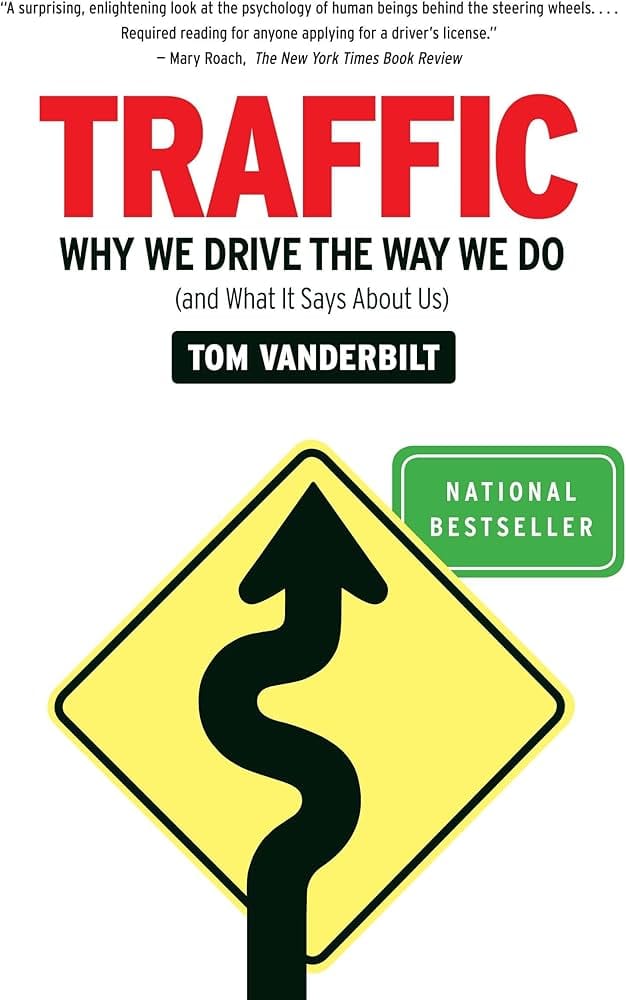
A New York Times Notable Book One of the Best Books of the Year The Washington Post • The Cleveland Plain-Dealer • Rocky Mountain News In this brilliant, lively, and eye-opening investigation, Tom Vanderbilt examines the perceptual limits and cognitive underpinnings that make us worse drivers than we think we are. He demonstrates why plans to protect pedestrians from cars often lead to more accidents. He uncovers who is more likely to honk at whom, and why. He explains why traffic jams form, outlines the unintended consequences of our quest for safety, and even identifies the most common mistake drivers make in parking lots. Traffic is about more than driving: it’s about human nature. It will change the way we see ourselves and the world around us, and it may even make us better drivers.
My Summary
Main Ideas, Takeaways & Similarities
Questions
I. What is the problem?
A. How is this problem formulated?
B. Why is this problem important?
C. What is the history of this problem?
D. Which prominent personalities have been interested in this problem?
II. What solutions to the problem are there?
A. What are the conclusions reached?
B. By what argument(s) is the conclusion reached?
C. What facts or assumptions serve as premises?
D. When a prominent personality offers a solution, does he also argue for or against other prominent personalities? Does he raise objections to alternative solutions? Does he consider objections to his own solutions?
III. Evaluation
A. What are the advantages and disadvantages of the alternative formulations to the problem?
B. Has the importance or history of the problem ever been misrepresented?
C. Are the solutions logically related to the premises?
D. Are the facts true? Are the assumptions acceptable? Are the objections answerable?
AI Summary
Highlights
“Traffic: Why We Drive the Way We Do (and What It Says About Us)” is a book written by Tom Vanderbilt, published in 2008. The book explores the complexities of traffic and driving behaviors, shedding light on the psychology, sociology, and engineering behind our interactions on the road. Here is a comprehensive summary of the book in bullet points:
- The book examines the everyday experience of traffic and driving and delves into the various factors that influence our behavior on the road.
- Tom Vanderbilt explores the psychology of driving, including the impact of cognitive biases, perception, and decision-making on our actions behind the wheel.
- He discusses the concept of “risk compensation,” where individuals may adjust their behavior in response to safety measures, such as seat belts or airbags.
- The book addresses the phenomenon of “road rage” and the emotional aspects of driving, including frustration, impatience, and aggression.
- Vanderbilt explores the history of traffic engineering and the development of traffic signs, signals, and road infrastructure to manage traffic flow and safety.
- He discusses the role of traffic congestion and the implications of “induced demand,” where the expansion of roads can lead to increased traffic rather than alleviating congestion.
- The book examines the impact of urban planning and design on traffic patterns and the concept of “complete streets” that prioritize multiple modes of transportation.
- Vanderbilt explores the social dynamics of driving, including the concept of “bottleneck congestion” and the behavior of drivers in merging situations.
- He addresses the issue of distracted driving and the influence of technology, particularly smartphones, on our attention while driving.
- The book discusses cultural differences in driving behavior and the influence of societal norms and expectations.
- Vanderbilt explores the concept of “traffic waves” and the cascading effects of minor disruptions on highway traffic flow.
- He provides insights into the psychology of parking behavior and the challenges of urban parking management.
- The book touches on the potential future of transportation, including autonomous vehicles and the potential impact on traffic patterns and safety.
- Vanderbilt reflects on the broader societal implications of our driving habits and the need for greater awareness and responsible behavior on the road.
“Traffic” offers a comprehensive and multidisciplinary exploration of the world of driving and traffic. Tom Vanderbilt combines insights from psychology, sociology, engineering, and urban planning to provide readers with a better understanding of the complex factors that shape our behavior on the road. The book highlights the need for improved road design, technology, and individual responsibility to address the challenges of modern traffic.