DESCRIPTION
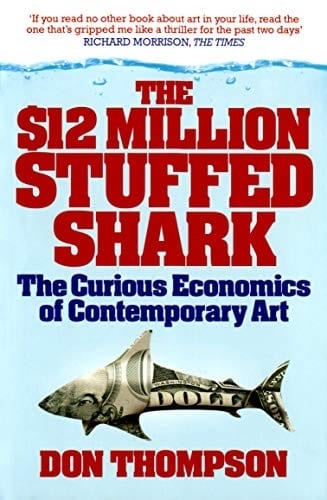
Why would a smart New York investment banker pay twelve million dollars for the decaying, stuffed carcass of a shark? By what alchemy does Jackson Pollock’s drip painting No. 5 1948 sell for $140 million? ‘The $12 Million Dollar Stuffed Shark is the first book to look at the economics of the modern art world, and the marketing strategies that power the market to produce such astronomical prices. Don Thompson talks to auction houses, dealers, and collectors to find out the source of Charles Saatchi’s Midas touch, and how far a gallery like White Cube has contributed to Damien Hirst becoming one of the highest-earning artists in the world.
My Summary
Main Ideas, Takeaways & Similarities
Questions
I. What is the problem?
A. How is this problem formulated?
B. Why is this problem important?
C. What is the history of this problem?
D. Which prominent personalities have been interested in this problem?
II. What solutions to the problem are there?
A. What are the conclusions reached?
B. By what argument(s) is the conclusion reached?
C. What facts or assumptions serve as premises?
D. When a prominent personality offers a solution, does he also argue for or against other prominent personalities? Does he raise objections to alternative solutions? Does he consider objections to his own solutions?
III. Evaluation
A. What are the advantages and disadvantages of the alternative formulations to the problem?
B. Has the importance or history of the problem ever been misrepresented?
C. Are the solutions logically related to the premises?
D. Are the facts true? Are the assumptions acceptable? Are the objections answerable?
AI Summary
Highlights
“The $12 Million Stuffed Shark: The Curious Economics of Contemporary Art” is a book written by Don Thompson, first published in 2008. The book delves into the world of contemporary art and examines the economic forces, players, and factors that shape the art market. Here is a comprehensive summary of the book in bullet points:
- “The $12 Million Stuffed Shark” explores the high-stakes and often enigmatic world of contemporary art, where artworks can command astronomical prices.
- The book delves into the dynamics of the art market, examining the motivations and behaviors of collectors, dealers, and artists.
- Don Thompson discusses the role of auction houses, galleries, and art fairs in facilitating the sale of contemporary art.
- He highlights the influence of branding, marketing, and hype in the valuation of artworks and the creation of art-world celebrities.
- The book explores the speculative nature of the art market and the factors that drive prices, including scarcity, provenance, and cultural trends.
- Thompson discusses the psychology of art collectors and the emotional and social aspects of art acquisition.
- He provides insights into the role of art advisors, consultants, and critics in shaping the art market.
- The book examines the challenges of authenticating artworks and the risks of art fraud and forgery.
- Thompson discusses the impact of globalization on the art market, with collectors and investors from around the world participating in the buying and selling of contemporary art.
- He explores the practices of “flipping” artworks and the role of speculation in the market.
- The book touches on the controversial issues of art market transparency and the potential for price manipulation.
- Thompson provides case studies and examples of artworks that have set record prices at auction.
- He also discusses the implications of the art market’s volatility and the potential for market corrections.
- “The $12 Million Stuffed Shark” concludes by reflecting on the enduring allure of contemporary art and the complex interplay of economics, aesthetics, and culture in the art world.
Don Thompson’s book offers readers a comprehensive look into the intricate and often perplexing economics of contemporary art. It sheds light on the factors that drive the art market, the motivations of collectors and investors, and the impact of globalization on art transactions. “The $12 Million Stuffed Shark” demystifies the art world’s inner workings and invites readers to consider the curious and sometimes puzzling economics of art.