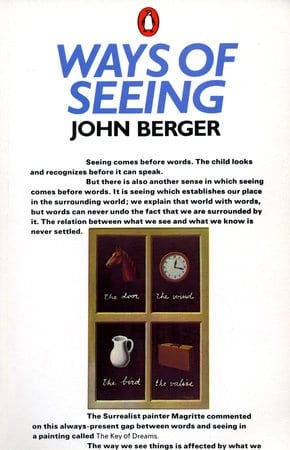
DESCRIPTION
“The relation between what we see and what we know is never settled” — so opens John Berger’s revolutionary million-copy bestseller on how to look at art John Berger’s Ways of Seeing is one of the most stimulating and the most influential books on art in any language. First published in 1972, it was based on the BBC television series about which the Sunday Times critic commented: “This is an eye-opener in more ways than one: by concentrating on how we look at paintings … he will almost certainly change the way you look at pictures.” By now he has.
My Summary
Main Ideas, Takeaways & Similarities
Questions
I. What is the problem?
A. How is this problem formulated?
B. Why is this problem important?
C. What is the history of this problem?
D. Which prominent personalities have been interested in this problem?
II. What solutions to the problem are there?
A. What are the conclusions reached?
B. By what argument(s) is the conclusion reached?
C. What facts or assumptions serve as premises?
D. When a prominent personality offers a solution, does he also argue for or against other prominent personalities? Does he raise objections to alternative solutions? Does he consider objections to his own solutions?
III. Evaluation
A. What are the advantages and disadvantages of the alternative formulations to the problem?
B. Has the importance or history of the problem ever been misrepresented?
C. Are the solutions logically related to the premises?
D. Are the facts true? Are the assumptions acceptable? Are the objections answerable?
AI Summary
Highlights
“Ways of Seeing,” based on the BBC Television series, is a thought-provoking exploration of art, visual culture, and the ways in which we perceive and interpret images. Here is a thorough summary of the book in bullet points:
- The book, adapted from the television series, challenges traditional approaches to art criticism and invites readers to reconsider how they view and interpret images.
- It explores the ways in which our perception of art and visual culture is influenced by historical, cultural, and social contexts.
- The author, John Berger, critiques the conventional “fine art” tradition and the idea of the isolated, privileged artwork, emphasizing the role of context in shaping our understanding of art.
- Berger argues that traditional oil paintings, often displayed in galleries, have been historically associated with power, wealth, and social hierarchy.
- He introduces the concept of “the male gaze,” suggesting that much of art history has been dominated by the perspective of male artists and viewers.
- The book discusses the impact of reproductions and mass media on our experience of art, highlighting how images are circulated and consumed in various forms.
- Berger explores the concept of “publicity images” and their role in shaping our desires, values, and aspirations through advertising and consumer culture.
- He emphasizes that the act of looking at art is an interactive process, and the meaning of an artwork can change when viewed in different contexts or with different perspectives.
- The author challenges the notion of the “original” in art and the idea that an artwork has inherent, fixed meaning, suggesting that meaning is constructed through dialogue and interpretation.
- “Ways of Seeing” includes images to illustrate its points and encourages readers to engage critically with the visual world around them.
- The book invites readers to question established norms in art and visual culture, encouraging a more active and critical approach to viewing and interpreting images.
- It raises important questions about how images influence our understanding of gender, identity, power, and consumerism.
- Berger’s perspective is influenced by Marxist and feminist viewpoints, providing a critical lens through which to analyze art and society.
- “Ways of Seeing” challenges the elitism often associated with art criticism and aims to make art and visual culture more accessible and relevant to a broader audience.
- Overall, the book offers a thought-provoking exploration of the ways in which we see and make meaning from the visual world, encouraging readers to question and critically engage with images and their cultural significance.
“Ways of Seeing” by John Berger imparts several key teachings and insights related to art, visual culture, and the act of seeing. Here are some of the primary teachings from the book:
- The Influence of Context:
- Berger emphasizes the significance of historical, cultural, and social contexts in shaping our perception and interpretation of art.
- The book challenges the idea of the isolated artwork and encourages viewers to consider the broader context in which art exists.
- Critique of Traditional Art:
- Berger critiques the traditional art establishment, particularly the fine art tradition associated with power, wealth, and social hierarchy.
- He questions the elitism of art galleries and the notion of the “fine art” masterpiece.
- The Male Gaze:
- The book introduces the concept of the “male gaze” and highlights how art history has often been dominated by the perspectives of male artists and viewers.
- Berger encourages readers to be aware of the gendered ways in which art has been produced and consumed.
- Reproduction and Mass Media:
- Berger discusses the impact of reproduction and mass media on the dissemination and consumption of images.
- He explores how images are circulated, transformed, and consumed in various forms, including advertisements and popular culture.
- Publicity Images:
- “Ways of Seeing” examines the role of publicity images in shaping desires, values, and aspirations through advertising and consumer culture.
- Berger underscores the power of images in influencing consumer behavior.
- Interactive Viewing:
- The book emphasizes that the act of looking at art is an interactive process.
- It suggests that an artwork’s meaning can change when viewed in different contexts or from various perspectives, and meaning is constructed through dialogue and interpretation.
- Questioning the “Original”:
- Berger challenges the concept of the “original” in art and the idea that an artwork has a fixed, inherent meaning.
- He encourages readers to recognize that meaning is not static but can be fluid and subject to interpretation.
- Visual Critical Thinking:
- The author invites readers to engage critically with the visual world around them.
- Berger encourages viewers to question established norms in art and visual culture, fostering a more active and critical approach to seeing and interpreting images.
- Marxist and Feminist Perspectives:
- Berger’s perspective is influenced by Marxist and feminist viewpoints, offering a critical lens through which to analyze art and society.
- The book raises important questions about gender, identity, power, and consumerism in the context of visual culture.
- Accessibility of Art:
- “Ways of Seeing” aims to make art and visual culture more accessible and relevant to a broader audience.
- It challenges the elitism often associated with art criticism and encourages a democratization of art appreciation.
- Engaging with Images:
- Overall, the book teaches readers to engage actively and thoughtfully with images, recognizing the complexity of the visual world and the role of context, culture, and perspective in the act of seeing.
These teachings encourage readers to adopt a critical and contextual approach to art and visual culture, fostering a deeper understanding of how images shape our perceptions and societal values.