⬅️ Hub: 60.25 Literature
DESCRIPTION
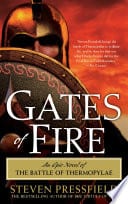
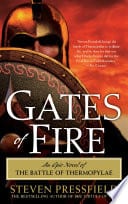
NATIONAL BESTSELLER • In this “powerful, historically accurate novel” (The New Yorker), the sole Spartan survivor recounts the bloody and epic battle of Thermopylae that decimated his fearsome society. “Vivid and exciting … Pressfield gives the reader a perspective no ancient historian offers: a soldier’s-eye view.”—The New York Times Book Review At Thermopylae, a rocky mountain pass in northern Greece, the feared and admired Spartan soldiers stood three hundred strong. Theirs was a suicide mission, to hold the pass against the invading millions of the mighty Persian army. Day after bloody day they withstood the terrible onslaught, buying time for the Greeks to rally their forces. Born into a cult of spiritual courage, physical endurance, and unmatched battle skill, the Spartans would be remembered for the greatest military stand in history—one that would not end until the rocks were awash with blood, leaving only one gravely injured Spartan squire to tell the tale… .
Review
🛠️ Active Reading Workflow
1. Prime (5 min)
- Thesis Prediction:
- Prior Knowledge:
- Questions to Answer:
2. Process (The “During” Loop)
Mark: T (Thesis), R (Reason), E (Evidence), D (Def), O (Objection).
- [ ] Q→A: Convert headings to questions; notes = answers.
- [ ] Feynman Check: Explain dense sections in 1-2 sentences.
- [ ] Originality: One original analogy/example per concept.
3. Review & Consolidate (Post-Session)
- [ ] Recall Dump: (Close book, list claims/terms).
- [ ] 3-2-1: 3 takeaways · 2 questions · 1 application.
- [ ] High-Yield Flashcards: (Definition, Claim → Reason, Objection).
🏛️ Analytical Deep-Dive (Adler/Paul-Elder)
| Element | Summary / Notes |
|---|---|
| Unity | The book in one sentence. |
| Problem | The central question the author is solving. |
| Propositions | Main claims in my own words. |
| Logic | Premises → Conclusion. |
| Criticism | Is the author uninformed, misinformed, or illogical? |
Counter-Argument (Steelman):
🚀 Application & Quality Gates
- The Experiment: [Define one behavior change].
- Gate 1: I can explain this in 3 mins without notes. [ ]
- Gate 2: I have at least one original counter-argument. [ ]
- Gate 3: Notes are <10% of original text length. [ ]
🖋️ Scratchpad
Unfiltered thoughts, argument trees, or “what if” scenarios.
AI Summary
Gates of Fire by Steven Pressfield is more than just a historical novel about the Battle of Thermopylae; it’s a deep dive into the Spartan ethos, the psychology of fear, and the concept of arete (excellence).
Here is a breakdown of the main ideas, core Spartan concepts, and the timeline of the Greco-Persian Wars to ground your notes.
Main Ideas and Philosophies
1. The Mastery of Fear
The central theme is that courage is not the absence of fear, but the mastery of it. Pressfield introduces the term phobologia, the study of fear. The Spartans believed fear was a physical entity that could be managed through discipline, humor, and collective brotherhood.
2. Arete (Excellence/Virtue)
For a Spartan, arete wasn’t about individual glory; it was about fulfilling one’s potential for the sake of the polis (city-state). It required a total surrender of the “self” to the “whole.”
3. The “Agoge” and the Shield
The Spartan upbringing (the Agoge) was designed to strip away individual ego. The most important piece of equipment was the Aspis (shield). A soldier carried his helmet and breastplate for his own protection, but he carried his shield for the protection of the entire line. To lose one’s shield was the ultimate disgrace because it endangered the collective.
4. Laconism
The Spartans were famous for their “Laconic” wit—short, dry, and devastatingly punchy speech. This wasn’t just a stylistic choice; it reflected their disdain for the flowery, often deceptive rhetoric of other Greeks (like the Athenians).
Key Spartan Concepts
| Term | Meaning | Application in the Book |
|---|---|---|
| Syssitia | The common mess/dining hall. | Where the “peer” relationship was forged through shared meals. |
| Phalanx | The tactical formation. | A wall of shields where every man depended on the man to his right. |
| Molon Labe | ”Come and take them.” | King Leonidas’s defiant response to Xerxes’ demand for their arms. |
| Kryptia | The Spartan “secret police.” | Mentioned as part of the harsh training and state security. |
Timeline of the Greco-Persian Wars
While the book focuses on the specific year 480 BCE, understanding the broader context helps the notes “stick.”
The First Invasion (492–490 BCE)
- 490 BCE – Battle of Marathon: The Athenians (without the Spartans, who were delayed by a religious festival) defeat Darius I’s Persian forces. This set the stage for the “grudge match” 10 years later.
The Second Invasion (480–479 BCE)
- Spring 480 BCE: Xerxes I begins his march from Sardis, crossing the Hellespont with a massive land army and fleet.
- August 480 BCE – The Battle of Thermopylae: * Day 1-2: The Greeks (led by 300 Spartans and several thousand allies) hold the narrow pass against the Persian “Immortals.”
- Day 3: Ephialtes betrays the Greeks by showing the Persians a mountain path. Leonidas stays behind with the 300 Spartans and 700 Thespians to cover the retreat of the main army. All are killed.
- September 480 BCE – Battle of Salamis: A decisive naval victory for the Greeks, led by the Athenian Themistocles, which destroys much of the Persian fleet.
- August 479 BCE – Battle of Plataea: The final land battle. A massive combined Greek force (including the full Spartan army) defeats the remaining Persians, effectively ending the invasion.
Critical Analysis for your Notes
When reviewing these notes in Obsidian, you might want to reflect on the contrast between the Spartan “Wall of Steel” and the Persian “Lash.” Pressfield argues that the Spartans fought for each other out of love and duty, while the Persians fought because they were driven by the whips of their officers.