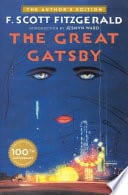
DESCRIPTION
The only edition of the beloved classic that is authorized by Fitzgerald’s family and from his lifelong publisher. This edition is the enduring original text, updated with the author’s own revisions, a foreword by his granddaughter, and with a new introduction by National Book Award winner Jesmyn Ward. The Great Gatsby, F. Scott Fitzgerald’s third book, stands as the supreme achievement of his career. First published by Scribner in 1925, this quintessential novel of the Jazz Age has been acclaimed by generations of readers. The story of the mysteriously wealthy Jay Gatsby and his love for the beautiful Daisy Buchanan is an exquisitely crafted tale of America in the 1920s.
Review
Handwrite First
Use this section with the book and notes closed. The goal is retrieval, not polish.
1. Before Reading
Prime your mind before reading.
- Prediction:
- Question I want answered:
- What I already think about this topic:
- What I expect to disagree with:
2. Closed-Book Recall Dump
Close the book and notes. Reconstruct what you read from memory.
-
Main points I remember:
-
Key examples, evidence, stories, or cases I remember:
-
Terms, people, dates, or concepts I remember:
-
What feels fuzzy or incomplete:
3. Core Argument From Memory
- The book/section in one sentence:
- Main claim:
- Problem the author is responding to:
- Why the author thinks this is true:
- Best evidence/example I remember:
- Conclusion the author wants the reader to accept:
4. Argument Map From Memory
5. Feynman Check
Explain the idea simply, as if teaching it to someone unfamiliar with the topic.
- Simple explanation:
- Analogy or concrete example:
- Where someone might misunderstand this:
6. Pushback From Memory
- Strongest objection or weakness:
- What evidence would weaken the author’s argument?
- What a rival thinker/book might say:
- My current judgment:
7. Personal Takeaway
- What changed, clarified, or challenged my thinking?
- What am I less certain about now?
- One way I could apply this:
- One question I need to keep investigating:
Type Into Obsidian
Use this section after handwriting. The goal is long-term storage, search, linking, and spaced review.
1. Correction After Checking Notes
Reopen the book/notes. Compare them against your handwritten recall.
- I forgot:
- I misunderstood:
- I overemphasized:
- I underemphasized:
- This needs review:
2. Clean Core Argument
- The book/section in one sentence:
- Main claim:
- Problem the author is responding to:
- Why the author thinks this is true:
- Best evidence/example:
- Conclusion the author wants the reader to accept:
3. What Actually Matters?
- Most important idea:
- Best quote or passage:
- Term/concept worth remembering:
- Most useful example:
- Most surprising point:
- One sentence I want to remember:
4. Connections
- Connects to:
- [[]]
- [[]]
- [[]]
- Supports:
- [[]]
- Challenges:
- [[]]
- Reminds me of:
- [[]]
- Possible future note:
- [[]]
5. Clean Pushback
- Strongest objection or weakness:
- What evidence would weaken the author’s argument?
- What the author might say in response:
- What a rival thinker/book would say:
- My current judgment:
Retrieval Questions
Answer these without looking during future reviews.
Basic Recall
- What is the author’s main thesis?
- What problem is the author responding to?
- What are the 3–5 main claims?
- What are the key terms or concepts?
- What is the best example or piece of evidence?
Argument Reconstruction
- How does the author move from evidence to conclusion?
- What assumptions does the argument depend on?
- What would the argument look like in premise-conclusion form?
- What does the author want the reader to reject?
Comparison
- How does this book/section compare with [[]]?
- How does this support or challenge [[]]?
- Which thinker would agree with this?
- Which thinker would disagree with this?
Criticism
- What is the strongest objection?
- What evidence would weaken the argument?
- What does the author ignore, minimize, or assume?
- Is the author’s conclusion stronger than the evidence allows?
Synthesis
- How does this change my larger framework?
- Where does this fit in the broader historical/philosophical debate?
- What question should I ask next?
- What would I write about using this idea?
Flashcards / Atomic Recall
Use only for facts, definitions, distinctions, names, dates, and compact claims.
- Q:
- A:
- Q:
- A:
- Q:
- A:
Retention Check
24 Hours Later
- I can explain the main argument without notes.
- I remember the best example or evidence.
- I can define the key concept.
- I can state one objection.
24-hour recall notes:
- What I remembered:
- What I forgot:
- What needs another review:
1 Week Later
- I can summarize this in 5 sentences.
- I can reconstruct the argument.
- I can connect it to another book, thinker, or historical period.
- I can state whether I agree, disagree, or remain undecided.
1-week recall notes:
- What I remembered:
- What I forgot:
- New connection:
- Revised judgment:
1 Month Later
- I still remember the core argument.
- I can explain why this matters.
- I know whether this changed my larger framework.
- I know whether this is worth rereading, citing, or building into a permanent note.
1-month recall notes:
- What endured:
- What disappeared:
- What this changed:
- Next action:
Scratchpad
Unfiltered thoughts, questions, comparisons, argument trees, future writing ideas, or possible links.
Simplified rule
Handwrite
Use handwriting for:
- Before-reading predictions
- Closed-book recall dump
- Core argument from memory
- Argument map from memory
- Feynman explanation
- Initial pushback
- Personal takeaway
- Confusion list
These are the sections where the benefit comes from struggling to reconstruct the idea.
Type in Obsidian
Use Obsidian for:
- Corrections after checking notes
- Clean one-sentence thesis
- Clean argument summary
- Important quotes
- Key concepts
- Links to other notes
- Retrieval questions
- Flashcards
- Retention checks
- Review logs
- Scratchpad for future essays or synthesis
These are the sections where the benefit comes from searchability, linking, spaced review, and long-term organization.
Best workflow
Use this order:
1. Handwrite from memory.
2. Check the book/notes.
3. Type only the corrected, useful version into Obsidian.
4. Create retrieval questions.
5. Review those questions later without looking.
Do not type all your handwritten notes into Obsidian. That turns the system into transcription work. Only transfer what is worth preserving, linking, or reviewing.
Notes
Author: F. Scott Fitzgerald (1925) Narrator: Nick Carraway Structure: Nine chapters
Recurring Symbols to Track
These threads run across the whole novel and shift meaning as the story develops. Keep them in mind chapter to chapter.
- The green light: unattainable hope (Ch. 1), diminished reality once attained (Ch. 5), universal human longing (Ch. 9)
- The eyes of Dr. T.J. Eckleburg: a blind, absent god presiding over moral crises in the valley of ashes
- The valley of ashes: the moral and human wreckage beneath the pursuit of wealth
- Color palette: green (hope), gray/ashes (death and decay), gold and white (wealth and Daisy’s false purity)
Chapter 1
Summary: Nick Carraway, a Midwesterner newly settled in the fictional West Egg on Long Island, introduces himself and his modest rented house beside a mysterious mansion. He drives to fashionable East Egg to dine with his cousin Daisy Buchanan and her wealthy, arrogant husband Tom, where he meets the golfer Jordan Baker and learns Tom is having an affair. The chapter ends with Nick glimpsing his neighbor Gatsby alone in the dark, reaching toward a distant green light across the water.
Themes: Class stratification (old-money East Egg versus new-money West Egg), the hollowness of the wealthy, and the unreliability of surfaces. Nick establishes himself as a reserved, “honest” observer, a claim the reader is invited to test.
Symbolism: The green light at the end of Daisy’s dock is introduced as the novel’s central emblem of longing, desire fixed on something distant and just out of reach. The geographic split of the two Eggs symbolizes the divide between inherited aristocracy and self-made wealth.
Purpose: Fitzgerald sets the frame. He plants Gatsby as an enigma before we truly meet him, contrasts the careless glamour of the Buchanans with Nick’s Midwestern moderation, and ends on the green light to make yearning the emotional engine of the book.
Chapter 2
Summary: Tom takes Nick through the bleak valley of ashes, watched over by the faded billboard eyes of Dr. T.J. Eckleburg, and introduces him to his mistress, Myrtle Wilson, wife of a struggling garage owner. They travel to a small apartment in New York for a drunken party, which ends with Tom breaking Myrtle’s nose after she taunts him by chanting Daisy’s name.
Themes: Moral decay hidden beneath prosperity, and the exploitation baked into the class system. Tom’s affair shows how the rich indulge their appetites without consequence.
Symbolism: The valley of ashes, the gray industrial wasteland between West Egg and New York, represents the moral and social rot underlying the pursuit of wealth and the human cost the elite discard. The eyes of Dr. T.J. Eckleburg loom like a blind, absent god watching over a spiritually empty world.
Purpose: To puncture the glamour of Chapter 1. By dragging Nick and the reader through the ashes and into a squalid, violent party, Fitzgerald exposes the ugliness that funds and accompanies the beautiful life.
Chapter 3
Summary: Nick attends one of Gatsby’s famously extravagant summer parties. Wild rumors circulate about the host, that he killed a man, that he was a German spy. Nick unknowingly strikes up a conversation with Gatsby himself, who is oddly reserved and formal. Gatsby pulls Jordan aside for a private talk, and Nick reflects on his daily life and his growing interest in Jordan.
Themes: Illusion versus reality, and the performance of identity. The party is spectacle, and Gatsby the man is nothing like the myth surrounding him.
Symbolism: The parties symbolize the excess and rootlessness of the Jazz Age, lavish and crowded yet strangely impersonal, with guests who arrive uninvited and know nothing real about their host. The books in Gatsby’s library that are real but uncut (never read) hint that his whole persona is an elaborate, convincing stage set.
Purpose: To introduce Gatsby in person and immediately complicate the rumors. The gap between the legend and the quiet, watchful man creates the mystery the middle chapters will unravel.
Chapter 4
Summary: Gatsby drives Nick to lunch, spinning a grandiose and partly invented account of his past. Nick meets the gambler Meyer Wolfsheim, said to have fixed the 1919 World Series. Afterward Jordan reveals the real story: Gatsby and Daisy were in love in Louisville years earlier, and Gatsby has bought his mansion and thrown all those parties hoping to draw Daisy back. He wants Nick to arrange a reunion.
Themes: The American Dream and self-invention, and the entanglement of wealth with crime. Gatsby’s fabricated autobiography shows the Dream as both aspirational and fraudulent.
Symbolism: Wolfsheim and his human-molar cufflinks symbolize the criminal underworld (bootlegging, the fixed 1919 World Series) that actually bankrolls Gatsby’s dream, beauty financed by corruption. Gatsby’s absurd car and war medal function as props in his self-mythology.
Purpose: To reveal Gatsby’s motive. Jordan’s backstory reframes everything: the mansion, the parties, and the wealth all exist for one purpose, to win Daisy back. The novel pivots from mystery to love story.
Chapter 5
Summary: Nick hosts an awkward tea so Gatsby and Daisy can meet again after five years. The initial tension gives way to rekindled feeling. Gatsby proudly shows them through his mansion, and Daisy weeps over his collection of beautiful shirts. Their romance is reignited.
Themes: The collision of dream and reality, and the impossibility of recapturing the past. The reunion is the moment Gatsby’s five-year fantasy meets the actual woman.
Symbolism: The green light loses its magic here. Once Daisy is beside him, Gatsby admits it is just a light again, a quiet illustration of how an attained dream can never match the dreaming. Daisy weeping into Gatsby’s shirts shows how his longing has been displaced onto material splendor.
Purpose: The emotional peak of hope. Fitzgerald lets Gatsby’s dream seem briefly real so its later collapse lands harder. It is also the hinge of the book: everything before builds toward this reunion, and everything after is decline.
Chapter 6
Summary: The truth about Gatsby emerges: he was born James Gatz, a poor farm boy from North Dakota, and reinvented himself under the wing of the wealthy yachtsman Dan Cody. Tom, now suspicious, attends a party with Daisy, who finds the crowd distasteful. Gatsby insists to Nick that he can recreate the past exactly as it was.
Themes: Reinvention and its limits, and the seductive lie at the heart of the American Dream. The Dream that made “Jay Gatsby” also cut him off from any authentic self.
Symbolism: James Gatz becoming Jay Gatsby is the novel’s clearest emblem of self-creation and its cost. Gatsby’s insistence that you can repeat the past (“Why of course you can!”) crystallizes his tragic flaw: he wants not just Daisy but the erasure of the intervening years.
Purpose: To supply the origin story that grounds the tragedy and to introduce Tom’s suspicion. The failed party, which Daisy dislikes, signals that Gatsby’s world cannot actually contain her.
Chapter 7
Summary: On a sweltering day, the group gathers and tensions boil over into a confrontation at the Plaza Hotel, where Tom exposes Gatsby’s fortune as built on bootlegging, and Daisy proves unable to deny she ever loved Tom. Driving home in Gatsby’s car, Daisy strikes and kills Myrtle Wilson. Gatsby resolves to take the blame to protect Daisy.
Themes: The clash of old and new money, the fragility of illusion under pressure, and carelessness and consequence. The class system reasserts itself brutally.
Symbolism: The oppressive heat mirrors the mounting tension toward the breaking point. The car becomes an instrument of death, symbolizing the recklessness of the rich. The eyes of Eckleburg reappear over the valley of ashes as Myrtle dies, reinforcing the sense of a watching but indifferent moral order.
Purpose: The climax. Tom dismantles Gatsby’s facade at the Plaza, Daisy’s inability to renounce Tom shatters the dream, and Myrtle’s death sets the tragic machinery in motion. Fitzgerald also exposes the Buchanans’ defining trait: they smash things and retreat into their money.
Chapter 8
Summary: Gatsby confides the full history of his love for Daisy to Nick. Meanwhile George Wilson, convinced the driver of the car was Myrtle’s killer and lover, traces the car to Gatsby, shoots him in his swimming pool, and then kills himself.
Themes: The death of the dream, and innocence versus corruption. Gatsby’s devotion is genuine, which makes his end feel like the death of hope itself.
Symbolism: Gatsby’s swimming pool, used for the first time all summer as autumn arrives, marks the end of his season of hope; the dream dies just as he finally pauses to enjoy his wealth. Wilson’s grief-driven pilgrimage under Eckleburg’s eyes ties the god imagery to misdirected justice.
Purpose: To deliver the tragedy and its cruel irony: Gatsby dies for a crime he did not commit, protecting a woman who has already abandoned him and will not even call. Fitzgerald lets the reader feel the full waste of it.
Chapter 9
Summary: In the aftermath, Nick arranges Gatsby’s funeral, which almost no one attends despite the hundreds who once flocked to his parties; only Gatsby’s father and one former guest show up. Disillusioned with the East, Nick prepares to return to the Midwest and closes with his famous meditation on the green light, the corruption of the American Dream, and being borne “against the current” back into the past.
Themes: Disillusionment, the corruption and ultimate emptiness of the American Dream, and the human compulsion to strive against time. Nick’s moral reckoning drives him back West.
Symbolism: The near-empty funeral starkly contrasts the crowded parties, symbolizing the hollowness of the world Gatsby chased. The closing image of the green light and the boats “borne back ceaselessly into the past” universalizes Gatsby’s yearning into the human condition: we all row forward while the current pulls us backward.
Purpose: To pass judgment and elevate the story into myth. Nick’s retreat condemns the East’s careless amorality, and Fitzgerald’s final meditation reframes Gatsby’s failure as a distinctly American tragedy, the Dream as something beautiful, corrupt, and forever receding.
Cross-Chapter Threads
Motifs Worth Tracing Across the Whole Book
- The green light shifts meaning as it moves from unattainable hope (Ch. 1) to diminished reality (Ch. 5) to universal symbol (Ch. 9).
- Eckleburg’s eyes recur at each moral crisis in the valley of ashes (Ch. 2, Ch. 7, Ch. 8).
- The color palette runs throughout: green for hope, gray and ashes for death, gold and white for wealth and Daisy’s false purity.
- The narrative arc pivots on Chapter 5: everything before it builds toward the Gatsby-Daisy reunion, and everything after it is decline.