Zibaldone 2024–2025 journal
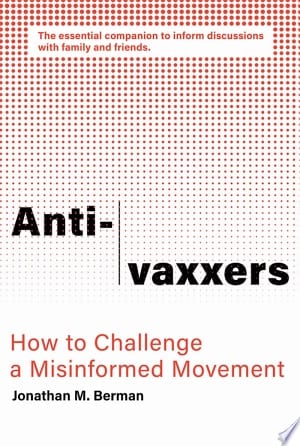
Journal connection: Book-page material related to Anti-vaxxers.
Source boundary: These are captured journal materials; the integration does not independently verify every clipped claim, quotation, or figure.
PDF++ pages: p. 300 (file not included in this release)
Embedded preview:
Zibaldone 2024-2025.pdf (file not included in this release)
Open the complete Zibaldone page index
Anti-vaxxers - How to Challenge a Misinformed Movement — Jonathan M_ Berman (Annotated).pdf (file not included in this release)
DESCRIPTION
A “clear and insightful” takedown of the anti-vaccination movement, from its 19th-century antecedents to modern-day Facebook activists—with strategies for refuting false claims of friends and family (Financial Times) Vaccines are a documented success story, one of the most successful public health interventions in history. Yet there is a vocal anti-vaccination movement, featuring celebrity activists (including Kennedy scion Robert F. Kennedy Jr. and actress Jenny McCarthy) and the propagation of anti-vax claims through books, documentaries, and social media. In Anti-Vaxxers, Jonathan Berman explores the phenomenon of the anti-vaccination movement, recounting its history from its nineteenth-century antecedents to today’s activism, examining its claims, and suggesting a strategy for countering them. After providing background information on vaccines and how they work, Berman describes resistance to Britain’s Vaccination Act of 1853, showing that the arguments anticipate those made by today’s anti-vaxxers. He discusses the development of new vaccines in the twentieth century, including those protecting against polio and MMR (measles, mumps, rubella), and the debunked paper that linked the MMR vaccine to autism; the CDC conspiracy theory promoted in the documentary Vaxxed; recommendations for an alternative vaccination schedule; Kennedy’s misinformed campaign against thimerosal; and the much-abused religious exemption to vaccination. Anti-vaxxers have changed their minds, but rarely because someone has given them a list of facts. Berman argues that anti-vaccination activism is tied closely to how people see themselves as parents and community members. Effective pro-vaccination efforts should emphasize these cultural aspects rather than battling social media posts.
AI Summary
Overview
Jonathan M. Berman’s book examines the history, psychology, and social dynamics of vaccine hesitancy and opposition, from the first smallpox inoculations to modern anti-vaccine activism. It combines historical accounts, public health data, and case studies to show both the limited but real dangers posed by concentrated anti-vaccine communities, and effective strategies for addressing vaccine hesitancy.
1. Origins and Development of the Anti-Vaccine Movement
- Not a modern phenomenon: While many trace today’s movement to Andrew Wakefield’s 1998 fraudulent paper linking MMR vaccines to autism, organized opposition has existed since the first smallpox vaccine in the early 19th century.
- Historical harm: Opposition led to preventable deaths (smallpox, measles, polio), shortages due to manufacturer bankruptcies, and social divisions.
- Motivations: Fear of side effects, bodily autonomy concerns, conspiracy theories about “Big Pharma,” cultural resistance to outside intervention, and a parenting-based group identity.
2. Strategies for Changing Minds
- Reactive strategies (arguing, mocking online) are least effective and can entrench views.
- Information-deficit strategies (fact sheets, websites) can help the undecided but rarely work on entrenched opponents.
- Community-based strategies are most effective—leveraging trusted local leaders, showing vaccination as a community norm, and aligning it with shared values.
3. Scope of the Problem
- Overall vaccination rates in the U.S. remain high (>90% for most childhood vaccines as of 2016), with lower rates for boosters in the second year of life.
- The bigger risk is local enclaves with high exemption rates, which have caused measles outbreaks in Minnesota’s Somali-American community, California’s “Disneyland outbreak,” Orthodox Jewish neighborhoods in New York, and Clark County, Washington.
- International example: Ukraine’s drop from 95% MMR coverage in 2008 to 31% in 2016—partly fueled by Russian-backed misinformation—led to massive measles outbreaks.
4. Understanding Vaccines
- Immune system: Two branches—innate (general defense) and adaptive (specific memory). Vaccines train the adaptive system to recognize and neutralize pathogens quickly.
- How vaccines work: Use inactivated pathogens, weakened forms, or related harmless organisms to produce immunity without causing disease. This enables rapid antibody production upon exposure.
- Herd immunity: Once enough people are immune, disease spread is halted, protecting those who cannot be vaccinated.
5. The World Before Vaccines
- High mortality and disease burden: In 18th-century England, life expectancy was ~35 years; smallpox killed or disfigured about 20% of the population.
- Variolation: An early method using material from smallpox lesions to induce mild infection, practiced in Asia and later introduced to Europe, carried risks but offered protection.
- Scientific context: Germ theory was still centuries away; science lacked standardized methods, making medical innovation slow to spread.
6. The First Vaccine and Early Opposition
- Pre-Jenner experiments: Farmers like Benjamin Jesty used cowpox to protect against smallpox decades before Edward Jenner, but lacked systematic study.
- Jenner’s breakthrough (1796): Demonstrated cowpox’s protective effect, promoted vaccination via influential connections, and replaced variolation after the British Vaccination Act of 1840.
- Early resistance: Concerns about bodily purity, unnatural interference, and state overreach echo modern anti-vaccine rhetoric.
7. Positive Effects of Vaccination on Civilization
- Smallpox eradication: Declared eliminated in 1980, ending a disease that plagued humanity for millennia.
- Reduction of deadly diseases: Whooping cough, measles, and polio have become rare in vaccinated populations.
- Public health infrastructure: The 1840 Vaccination Act in the UK established a public vaccination service, an early example of organized preventive health care.
- Herd immunity benefits: Protects the vulnerable (infants, immunocompromised) and reduces overall disease burden, improving life expectancy and economic productivity.
8. Modern Anti-Vaccine Themes
- Misinformation amplified by social media and foreign disinformation campaigns.
- Tactics include emotional appeals, framing as a battle over parental rights, and promoting “alternative” remedies for profit.
- Legislative battles over exemption laws show the tension between personal freedom and public health responsibility.
9. Key Lessons
- Anti-vaccine movements thrive in information vacuums and isolated communities.
- Culturally competent engagement and trusted messengers are critical to restoring vaccine uptake.
- Vaccination history demonstrates that progress in public health depends on sustained education, accessibility, and community trust.
Condensed Timeline of Vaccination History & Opposition
Pre-1700s – Early disease prevention concepts
- Folk practices in Asia and Africa attempt to confer immunity, often based on empirical observation rather than germ theory.
~1500s–1600s – Variolation emerges - China/India: Ground smallpox scabs or pustule fluid inhaled or scratched into skin to induce mild infection and later immunity.
- Opposition: Limited, but risks included spreading full smallpox to others.
1714 – Variolation introduced to Europe - Popularized in England by Lady Mary Wortley Montagu after observing the practice in the Ottoman Empire.
1774 – First recorded cowpox vaccination - Benjamin Jesty: Inoculates family with cowpox using a darning needle.
- Opposition: Immediate local backlash over safety and “polluting” the body.
1796 – Edward Jenner’s systematic vaccination - Demonstrates cowpox protects against smallpox, publishes findings, and gains aristocratic support.
- Opposition: Pamphlets liken vaccination to foreign invasion; fears about unnatural interference.
1840 – British Vaccination Act - Outlaws variolation, provides free vaccination.
- Positive impact: Establishes public vaccination service.
- Opposition: Intensifies after 1853 Act makes infant vaccination mandatory, sparking organized anti-vaccine leagues.
Mid-1800s–Early 1900s - Vaccination spreads globally; scientific method, germ theory, and public health infrastructure mature.
- Resistance framed as civil liberties issue; some religious and “natural order” objections.
1950s–1960s – Polio vaccine era - Near-eradication of polio in developed nations.
- Opposition: Isolated safety scares, but broad acceptance due to visible disease threat.
1970s–1980s – Modern safety controversies - Scare over DTP vaccine (diphtheria, tetanus, pertussis) safety leads to lawsuits, manufacturer exits, and lower coverage in some countries.
1998 – Wakefield MMR-autism fraud - Lancet publishes (later retracted) study claiming MMR causes autism.
- Impact: Media amplification triggers global anti-vaccine resurgence.
2000s – Social media era - Online misinformation networks, “alternative” health markets, and foreign disinformation campaigns accelerate spread of anti-vaccine rhetoric.
2010–2019 – Localized outbreaks - Minnesota Somali-American measles outbreak (2017)
- California “Disneyland” outbreak (2014–2015)
- New York Orthodox Jewish community measles outbreak (2019).
- Response: Targeted community engagement, tightening of exemption laws.
1980–Present – Eradication & ongoing efforts - Smallpox: Declared eradicated 1980.
- Polio: Reduced to low double-digit wild cases globally, but not fully eradicated.
- Continued work on measles, malaria, and HIV.
Highlights
Although many attribute the modern anti- vaccine movement to Andrew Wakefield, and his 1998 paper purporting to link the measles, mumps, and rubella vaccine to the development of a kind of late- onset autism, opposition to vaccination is not new. Since the first smallpox vaccine was invented at the turn of the nineteenth century, there has been opposition to vaccination (Page 14)
This opposition has caused real harm over time, including deaths from outbreaks of smallpox, measles, and polio; bank ruptcy of vaccine manufacturers leading to shortages; and per sonal heartbreak as divisions sown by anti- vaccine activists have damaged family relationships and friendships. (Page 15)
Three broad strategies have been used to sway people from anti- vaccine beliefs. I refer to these as reactive, information deficit, and community- based strategies. A reactive strategy of engaging directly with anti- vaccine advocates on the internet and mocking them or arguing with them is the least effective. Not only are vocal online anti- vaccine advocates not representa tive of the average person with vaccine doubts, but this strategy can backfire, resulting in more entrenched views and damaged family relationships. (Page 16)
Community- based strategies, which I believe to be most effective, are strategies based on showing those with doubts that others in their community are vaccinating their children; that their peers in their mosque, synagogue, church, or temple who are also good parents have vaccinated their children; and that vaccination is an expectation of any good parent. Community based strategies have been used in the wake of measles outbreaks exacerbated by anti- vaccine activism and resulted in significant increases in vaccine uptake. These strategies take into consider ation the self- identity and values of those who are being targeted by anti- vaccine rhetoric. (Page 17)
1 Is There Even a Problem? (Page 20)
As of 2016 vaccine coverage in the United States exceeded targets for vaccination with diphtheria, tetanus, and pertussis (DTaP); poliovirus; measles, mumps, and rubella (MMR); hae mophilus influenzae B (Hib); hepatitis B (HepB); varicella; pneumococcal conjugate (PCV); hepatitis A (HepA); and rotavirus Coverage did not statistically change from 2012 to 2016. For most of these vaccines, coverage was above targets of 90 percent, but for vaccines that required boosters during the second year of life, coverage was somewhat lower. The best predictors of vac cine coverage were not membership in anti- vaccine groups but access to medical care as determined by private insurance cover age, race, and socioeconomic status. (Page 20)
This disparity between belief and behavior has been termed the intention- behavior gap or the value- action gap. Many of us experience such gaps in our daily lives. (Page 21)
The way that Gardasil was introduced by Merck & Co. Inc. may have played a role in this controversy as well as in reporting in the media that did not properly place the data and the opposition to the vaccine in context Merck enacted a lobbying campaign in state legislatures to make Gardasil mandatory for young girls. The campaign produced a very negative public reaction By comparison, the HepB vaccine, which similarly treats a sexually transmitted infection that can cause cancers, was introduced without much controversy and added to the routine childhood immunization schedule in the 1990s. The way that vaccines are introduced— as well as the cultural competency of those introducing them— to communities plays a very impor tant role in preventing vaccine hesitancy. (Page 22)
As early as 2010, anti- vaccine activists were speaking to the Somali- American community in Minnesota In April through August 2017, there was a measles outbreak in Minnesota, the largest in thirty years, with seventy- nine cases, most of them Somali- American children. This outbreak had the potential to be far worse because measles- vaccination rates, while overall high, were much lower in some groups, such as private schools, where the vaccination coverage averaged only 83 percent. (Page 22)
In another example, in 2014 through 2015, a measles out break occurred in California that spread to over one hundred children, 45 percent of whom were unvaccinated In the news media, this became known as the Disneyland outbreak. In California, vaccination rates had dropped from above 95 percent to about 92 percent in the prior decade, an effect attributed to anti vaccine activism. Following the outbreak, several public health measures were taken A law, SB- 277, made it more difficult to obtain nonmedical vaccine exemptions for children entering public school, and the University of California system refused to accept unvaccinated freshmen. As a result, childhood vaccina tion rates have risen to above pre- 2004 levels. However, some counties still lag behind others in vaccination rates because there is still a cohort of children who were never vaccinated under the previous, rather lax criteria. (Page 23)
In 2019 an outbreak spread to over a thousand cases, a num ber much higher than the number of cases in the United States in any previous year since measles was declared eliminated in the country in 2000.17 The outbreak began in an Orthodox Jewish community in New York when an unvaccinated child returned from Israel carrying the virus. In Washington State, (Page 23)
where Clark County saw seventy- three cases of measles, the state government passed House Bill 1638, which eliminated personal and philosophical- belief vaccine exemptions in the state but still allowed religious exemptions We will see in a later chapter that religious exemptions are rarely based on the teachings of any religion and often invite parents to lie. In Rockland County, New York, a law banning unvaccinated minors from public spaces was passed19; however, this ban was placed on hold As part of the outbreak, a US cruise ship, operated by the Church of Scientology, was quarantined due to measles risk21 but later cleared. (Page 24)
This drop in vaccination rates may have been caused in part by Russia- backed Twitter accounts that sought to spread misinformation about vaccines24 and to create false equivalency between pro- and anti- vaccine arguments. (Page 24)
Some Texas schools have vaccine- exemption rates as high as 40 percent. If a measles infection spread in this population, the risk would be not just to children with nonmedical vaccine exemptions but especially to immunocompromised children; the unvaccinated children’s infant siblings, who are far more vulnerable to hospitalization and death due to measles infec tion; the elderly; and those with acquired immunodeficiencies, such as those undergoing treatment for cancer and those with AIDS. In an interview, Hotez worried that these enclaves might become the sites of future outbreaks. (Page 25)
2Understanding Vaccines (Page 28)
Immune function in the body has two “branches”: the innate and adaptive immune systems. Often both work together to fight an infection. The innate immune system responds gener ally to invasion and to bacteria, viruses, and parasites and does not need to be pre- exposed to a disease. The adaptive immune system recognizes particular bacteria, viruses, and parasites and generates an active response to their presence. (Page 29)
The adaptive immune system is what is made use of by vac cination. This system recognizes infections that the body has already encountered and mounts a rapid defense against them, preventing illnesses from reestablishing infection once elimi nated. The cell types of the adaptive immune system are subdi vided into T and B cells. (Page 29)
Vaccines operate by placing in the body immune- generating structures that are not capable of causing disease on their own. These might be fragments of dead viruses or bacteria, a modified form of an organism that is less virulent, or a related organism that cannot infect humans. These create memory B cells, but do not create the disease. On first exposure to a pathogen, the immune system might take a week to ramp up production of antibodies. On a later exposure, its response will be more rapid and more specific, ramping up production of antibodies within hours. To someone who has been immunized, exposure to a dis ease such as smallpox has a lower chance of the disease progress ing to symptoms because antibodies will be rapidly produced and the invader defeated. (Page 30)
phenomenon called herd immunity occurs when a large enough portion of a population is protected from a disease. (Page 31)
3The World before Vaccines (Page 32)
Upon a general calculation, threescore persons in every hundred have the small- pox. Of these threescore, twenty die of it in the most favourable season of life, and as many more wear the disagreeable remains of it in their faces so long as they live. Thus, a fifth part of mankind either die or are disfigured by this distemper. — Voltaire1 (Page 32)
The life expectancy at birth in England in 1750 was approximately thirty- five years This low life expectancy was exacerbated by what is today an unthinkable infant- mortality rate. So- called puerperal fever a postchildbirth infection often spread by physicians, took many lives, and preeclampsia, hemorrhage, and cephalopelvic dispro portion were not understood, or well treated, making birth a (Page 32)
significant risk for the mother, as well as the child. A life without major infectious illness was a luxurious rarity. (Page 33)
The first disease to be vaccinated against, and one of the first diseases to be investigated with an early version of the sci entific method, was smallpox. (Page 33)
There has not been a case of smallpox since the 1970s, and the only known samples exist in secure government research labs in the United States and Russia. The disease was declared eliminated on May 8, 1980. Diseases such as whooping cough and measles are now so rare as to be considered remarkable, and millions of dollars are spent every year researching ways to com bat diseases such as malaria and HIV. (Page 34)
Variolation usually caused mild smallpox symptoms followed by a recov ery. It is believed that the first variolation occurred in China or India, through a process of insufflation, whereby ground smallpox scabs or pustule fluid was inhaled through the nose (Page 34)
The practice did not make it into European medicine until 1714, although it was known by European physicians before that and commonly believed to be a folkloric treatment. (Page 35)
Indeed the term science has had meanings that have shifted and changed through the centuries and probably still have not settled. In 1834 William Whewell was the first to use the term scientist by analogy to terms such as artist, to describe those who practice science. The Baconian method was first proposed in Francis Bacon’s book Novum Organum in 1620. This was a landmark in the develop ment of scientific reasoning for several reasons. It is one of the first times a systematic method for acquiring knowledge about the world based only on observed facts, rather than inference, was proposed. The structure of observation followed by hypoth esis, followed by further observation is still important to the way that science is conducted today, although induction has been (Page 35)
convincingly argued against as a sole means of acquiring scien tific knowledge. In the seventeenth century, Newton, Leibniz, and Galileo were revolutionizing science. Descartes suggested a mechanical universe, and John Locke’s writings influenced many to see knowledge as produced by human experience, rather than metaphysical inference. Antonie van Leeuwenhoek had used optics to discover that coexisting with the world we see and interact with there is another microscopic world full of what he called animalcules (tiny animals), which we now know were single- celled organisms. Yet the germ theory of disease would not gain acceptance for hundreds more years. Voltaire wrote about how those who practiced inoculation were viewed. (Page 36)
It is inadvertently affirmed in the Christian countries of Europe that the English are fools and madmen. Fools, because they give their children the small- pox to prevent their catching it; and madmen, because they wantonly communicate a certain and dreadful distemper to their children, merely to prevent an uncertain evil (Page 36)
4The First Vaccine (Page 38)
In science credit goes to the man who convinces the world, not the man to whom the idea first occurs. — Francis Galton (Page 38)
For most of the modern era of medicine, we have considered viruses to be nonliving. A virus is a fragment of genetic material called RNA, or DNA encapsulated by a coat of protein, which may sometimes be modified by fats or sugars. Of the things that most scientists agree are characteristic of living things, viruses only exhibit a few. They do not metabolize, grow, or generally respond to stimulus. They do reproduce, but only by infecting cells and hijacking their machinery, which normally replicates RNA and DNA and produces proteins. Viruses evolve, like living things, but because they are obligate parasites with no indepen dent lifecycle, they are viewed as living. (Page 38)
Another reason that Fewster is not credited with the discovery of vaccination is that although he made the initial observation and reported it, he did not undertake in a systematic way to test it. (Page 40)
Indeed, as many as six people before Jenner, who is most often credited with the discovery of vaccination, made this observa tion. Although we think of scientific discoveries as belonging to individuals, it is often the case that attributing appropriate credit is messy and difficult. Jenner was the first to popular ize the discovery and is therefore given credit for it. For many discoveries, credit is hotly debated, as in the cases of Rosalind Franklin, whose contributions to the discovery of the structure of DNA were not recognized until after her death (Page 40)
The stage was set for Jenner’s work on vaccines by a number of figures and discoveries that occurred in the seventeenth cen tury. Lady Mary Wortley Montagu is credited with introducing the practice of variolation to England. Although she cannot be said to have discovered variolation, she traveled to what is now Turkey and wrote to a friend about variolation being used in the Ottoman court. Upon returning to England, Lady Montagu introduced variolation to the royal physician, who then experi mented on six prisoners in 1721, on the promise of a full par don. This experiment was observed by members of the Royal Society. Later he experimented on six orphans in London, and finally on the children of the princess of Wales. (Page 41)
The first recorded intentional vaccination with cowpox occurred two decades before Jenner’s work. Benjamin Jesty, a farmer, used cowpox to vaccinate his family. In 1774 smallpox was noted near his farm. He used a darning needle, exposed to pus from an infected cow, to scratch his wife and children. Their wounds became inflamed, but all survived. Later, in 1789, his children were inoculated with smallpox but did not display a reaction. (Page 41)
Remarkably, this first recorded instance of vaccination also marked the first recorded instance of opposition to vaccination, although in this case the reasoning behind the opposition was likely sound. With no medical training or equipment, Jesty had used a darning needle to infect his family with pus from a cow’s diseased udder, an experiment resulting in an alarming infec tion. This was also the first instance of what would become a running theme in history: revulsion and visceral horror at the mere notion polluting one’s body with alien materials. Concerns about safety and fear of taking foreign material into the body often still characterize anti- vaccination rhetoric two hundred and fifty years after Jesty’s “bold” experiment. (Page 42)
Edward Jenner was credited with the discovery of vaccination because he was the first to systematically test the idea that exposure to cowpox would prevent later smallpox infection. (Page 42)
The distinguishing feature that Jenner brought to vaccination was a systematic attempt to collect individual anecdotes. This is more scientific than a single, unreported experiment, as Ben jamin Jesty tried on his family. Happening at the dawn of the scientific era, vaccination grew up at the same time that science did. Jenner also relied on human experimentation in a way that would not be permitted today. He learned the scientific method as “Why think— why not try the experiment?”6 After assuring himself that the folk wisdom of cowpox preventing later infection by smallpox was true, he did the experiment. In May 1796, Sarah Nelmes, a dairymaid, was infected with cowpox in a scratch on her hand. Jenner then found a healthy boy of about eight years old to experiment on. (Page 43)
As vaccination gained traction, so did opposition to it. Pam phlets were distributed opposing vaccination and comparing it to opposing Napoleon’s army. Vaccination was framed as a for eign assault on traditional order. However, this early opposition was recognized as hyperbolic and rejected by the medical com munity. Jenner shrewdly began an influence campaign. He met with the king, the prince, and finally the queen of the United Kingdom, using their approval to speed adoption among the aristocracy, from whom it spread to their tenants. Jenner made a political decision to ally himself with establishment forces in order to speed the adoption of vaccination. (Page 45)
Adoption of vaccination was not immediate in the medical community, but by 1840 it had supplanted variolation, which was outlawed in England with the British Vaccination Act of 1840. In part this was triggered by the news of an 1837 outbreak of smallpox carried by fur traders into the American West. More than 17,000 people died (possibly double this number), many (Page 45)
of them Native Americans. A full accounting was never made because at some point the bodies could no longer be counted. Over the following century, the act of 1840 and a series of laws passed in 1853, 1867, 1871, 1873, 1889, 1898, and 1907 laid out UK policy regarding vaccines. The act of 1840 provided optional free vaccination in addition to outlawing variolation Importantly, this created a public vaccination service, which survived for decades. The act of 1853 triggered the first formal, organized opposition to vaccination. (Page 46)
5The First Anti- vaccine Movements (Page 48)
Because the Vaccination Act of 1853 required mandatory vac cination for all infants over four months old, it raised issues of civil liberties and numerous civic and religious concerns— about bearing the costs of vaccination for the poor about placing material from cows into humans, about preserving the integrity of the body, and about disrupting the “natural order.” Those who believed in the power of vaccination to improve human health and well- being and in the right of the state to impose vaccination found themselves in a war of both information and culture. (Page 48)
Gibbs attacked the Vaccination Act of 1853 on several fronts, complaining that it was an intrusion on personal rights, that it was written to benefit the medical trade, that it treated the populous as too stupid to make their own health decisions, that it mandated a practice that was not universally accepted among physicians, and that it had failed in some individual cases The similarity of his pamphlet’s arguments to those made by modern vaccine opponents is striking. Gibbs went on to make a much weaker argument in the light of modern scientific knowledge. He argued that the fundamental nature of human biology (and therefore of disease) changed intermittently and that scientific studies of disease were therefore useless. He argued that vaccina tion, regardless of its protective effects against smallpox might have “influence generally upon the constitution. … Does it lower the vital resistance and predispose the system to receive or does it introduce it to other forms of disease?” His complaint that vaccination benefited the medical trade may have been related to his own occupation as in hydropathy a kind of quack medicine that involved treatment by bathing in, drinking, or injecting water and applying it to various parts of the body. Given the hygiene practices of the era, promoting bathing was, perhaps, not the worst idea that he had, but it was not an effective means of preventing smallpox infection. A similar tension exists today. Science- based medicine exerts a monopoly on the treatment of disease, and at its periphery “alternative” practitioners market non- evidence- based approaches to health care. (Page 50)
To understand the reaction to the Vaccination Act of 1853, we need to consider it in its political context. John Locke’s writings on natural rights were still influential at the time. Locke proposed that what he called “natural rights,” as distinct from legal rights, were rights belonging to every human that could not be altered by human laws. Locke identified these as life, liberty, and property. An alternative view, also circulating at the time, was pro posed by Jean- Jacques Rousseau in The Social Contract. Rousseau proposed that the right of people to be governed should come from agreement between the government and the governed, rather than from divine mandate. Everyone ought to give up the same rights to government and assume the same duties. Thomas Hobbes supported this line of thought, arguing that if humans are born with the natural rights to take any actions, those rights lead to a “war against all” to compete for resources and safety. There fore, humans must give up most rights in order to live among other humans. (Page 52)
Snow, famously used statistics in 1854 to study the Broad Street cholera outbreak, which killed thirty- one thousand Londoners. By treating the water with chlorine and removing the handle of the water pump that was the source of the infection, he ended the epidemic. This work convincingly showed that cholera is waterborne and not caused by miasma and was chronicled in the 2006 book The Ghost Map by Steven Johnson. (Page 56)
According to one history of the era, Bodily Matters: The AntiVaccination Movement in England, 1853– 1907,17 many Victorians looked on anti- vaccine activists as fringe cranks, lumping it with other contemporary movements. Indeed, anti- vaccine activists found support in trade unions, among religious nonconformists, and among alternative medical practitioners. Vaccination took on a decidedly anti- establishment character. (Page 61)
In 1879 William Tebb, a prominent British anti- vaccine activ ist, visited New York City. Soon after, the Anti- Vaccination Society of America was founded, quickly followed by the New England Anti– Compulsory Vaccination League and the Anti- Vaccination League of New York City These groups were successful in repealing compulsory vaccination laws in a number of states. In 1905 the US Supreme Court ruled on Jacobson v. Massachusetts over a five- dollar fine imposed on a pastor who refused to vaccinate. The court ruled that states may restrict individual liberties if great dangers to the safety of the general public are present A concession was made, however: although states could punish those who refuse to vaccinate with fines or imprisonment, they could not forcibly vaccinate. The ruling also required that a medical exemp tion be made available for those who for whatever reason were medically unfit to be vaccinated. An analogy was made to periods of wartime, when individual liberties may be reduced in order to protect the larger community. This case marked an establishment of a legal balance between the rights of an individual and those of the collective. (Page 62)
6Vaccine Pioneers (Page 64)
Louis Pasteur developed the first theory of micro organisms as playing a role in metabolic processes and in 1858 published these results. He discovered that microorganisms were the cause of spoilage in food and drink and that heating (pas teurization) could be used to prevent the transmission of dis ease by infected milk. Joseph Lister became aware of this work and began experimenting with the use of solutions of phenol to prevent the spread of gangrene in wounds and developed meth ods of chemically sterilizing surgical instruments that greatly reduced the rate of infection. These discoveries helped the germ theory of disease displace other ideas about the causes of disease, such as the miasma theory. Under the germ theory of disease, many diseases are caused by microorganisms. (Page 64)
The development of sterilization and the realization that microorganisms were responsible for causing many diseases also led to improvements in the ways that vaccines were transmitted, stored, and administered. (Page 64)
In 1850 glycerol had been used as a means of storing vaccine matter, called lymph, for longer peri ods of time while still remaining effective, but the discovery was (Page 64)
not widely disseminated or used until later in the nineteenth century In the early twentieth century, it was discovered that this effect also reduced the bacterial count within the lymph thus making it safer and less likely to produce unintended infections in patients. (Page 65)
Later Pasteur developed the second effective vaccine in history, (Page 65)
which protected against anthrax. He had earlier shown that anthrax is caused by a bacterium (Page 66)
In 1885 he had the first successful human test of a vaccine he had developed against rabies, again using a method of attenua tion. Attenuation of vaccines by various means continues to be used in various forms to this day. (Page 66)
7The Twentieth- century Anti- vaccine Movement (Page 68)
In the early twentieth century there was a lull in anti- vaccine activity. The legal parameters of vaccination became settled at the end of the nineteenth century by amendment in Britain, and a Supreme Court case in the United States. These laws allowed objectors to opt out of vaccination, but not necessarily to partici pate in public schools if unvaccinated. Anti- vaccine activists and public health officials had reached an uneasy detente. (Page 68)
In 1921 Mahatma Gandhi, the leader of the Indian independence movement and a prolific writer, published A Guide to Health, outlining his views on disease. Gandhi wrote that he believed that smallpox is not a contagious disease but, rather, is caused by “the blood getting impure owing to some disorder of the bowels; and the poison that accumulates in the system is expelled in the form of small- pox.” (Page 68)
However, by 1930 Gandhi may have changed his mind, at least partially. After a smallpox outbreak in which he saw several children die after their parents did not have them vaccinated, in deference to Gandhi’s views, he is reported to have said, “I can’t sleep. These kiddies are fading away like little buds. I feel the weight of their deaths on my shoulders. I prevailed upon their parents not to get them vaccinated. Now the children are pass ing away. It may be, I am afraid, the result of my ignorance and obstinacy; and so I feel very unhappy,” and although he himself did not believe in vaccination, he would not stand in the way of parents who wanted to have their children vaccinated (Page 69)
In the early twentieth century, polio was reaching its peak as a recurring scourge. Parents were fearful of allowing their children to play outside in the summer, unaware of how polio was trans mitted and having seen its debilitating effects. Polio could pro duce paralysis and death. In the 1930s two teams had worked to develop vaccines, with disastrous results. John Kolmer of Temple University had developed a vaccine through attenuation of live polio virus by passage in rhesus macaques Kolmer’s vaccine was tested in ten thousand children. Jeremiah Milbank and Maurice Brodie worked on another version of the polio vaccine, this one using virus that had been inactivated by formaldehyde. This vac cine was also tested in thousands of children in the same year. Brodie’s vaccine didn’t produce evidence of effectiveness but did produce allergic reactions. Between the two vaccines, six chil dren died and ten were paralyzed. (Page 70)
Following these tragic deaths, justified public outrage has been argued to have set back the search for a cure by two decades The anti- vivisectionist movement exaggerated the degree of human experimentation being done and framed the experiments as the testing of vaccines on orphans, though Kolmer had sought par ents’ permission and Brodie had tested the vaccine on himself. (Page 70)
Jonas Salk used virus grown in culture and then killed with forma lin. Another form of polio vaccine, under development by Albert Sabin, used attenuated virus. This virus was grown in nonhuman cultured cells under conditions that introduced mutations. (Page 70)
Eventually the government capitulated, hoping to mollify the APVDC and allay public fears by setting up a compensation pro gram. The result was the Vaccine Damage Payments Act of 1979. Despite this success, the APVDC took much of the blame for the 1979 pertussis epidemic that followed. Starting in 1979 and continuing into the early 1980s, an outbreak of pertussis occurred Following this outbreak, immunization rates recovered and even surpassed pre- 1974 levels, reaching roughly 95 percent. (Page 74)
The National Childhood Vaccine Injury Act (NCVIA) of 1986 was the US Congress’s response to this risk to vaccine availabil ity. The act’s intent was both to create a system for monitoring possible unknown reactions from vaccines and to allow patients who met certain criteria to receive compensation without threatening the supply of vaccines necessary to maintain pub lic health. The act recognized that the private manufacture of vaccines, which were necessary for public health, required legal protections. When manufacture is unprofitable, corporations lose interest. (Page 76)
One of the more notable outcomes of this act was the estab lishment of the National Vaccine Injury Compensation Program (VICP) in 1988 to compensate those whose children were injured by routine childhood vaccinations. Although the concerns about the DTP vaccine turned out to be unfounded, occasionally adverse reactions do occur with some vaccines. The VICP pro vides a list of such reactions, and patients who experience these events within a specified time frame may ask for compensation. (Page 76)
Starting in 2008, this lowered standard of evidence came into play in several cases in subsequent years, allowing compensa tion for a variety of ailments with no biologically plausible link to vaccination, such as chronic fatigue syndrome, fibromyalgia, and multiple sclerosis One well- publicized case was that of Hannah Poling who at nineteen months received vaccines for diphtheria, tetanus, acellular pertussis, Hib, MMR, varicella, and polio. Several months later she developed symptoms of a (Page 77)
developmental delay and was diagnosed with encephalopathy caused by a mitochondrial- enzyme deficit. The Polings won compensation through the VICP, despite an absence of biologi cal plausibility, or scientific evidence of causation. They held a press conference announcing the legal ruling, and the Centers for Disease Control and Prevention (CDC) responded, pointing out that the ruling was not proof of a link between vaccines and autism. Nevertheless, this case has been used by anti- vaccine activists to suggest that a link between vaccinations and autism has been proven in a court of law. (Page 78)
Those who are not health- care workers may also report to VAERs, and there is no requirement that events reported to VAERS be factually associated with vaccination. This has been exploited. Following the discredited 1998 Lancet article attempt ing to draw a link between the MMR vaccine and autism, the number of reports of autism through VAERS spiked Those making those reports disproportionately associated the vaccine with autism, many citing personal websites as sources of information. A 2006 study showed that over time, the number of VAERS reports related to litigation was increasing and that a disproportionate fraction of these reports were filed by lawyers seeking litigation To demonstrate that associations made by using this data were of dubious value, James Laidler submitted a VAERS report claiming that following influenza vaccination, he had turned into the comics character the Hulk He was asked to withdraw the report and did. (Page 79)
8Autism (Page 82)
Currently 1 to 2 percent of children are diagnosed as being somewhere on the autism spectrum. In the past, the number of children diagnosed was lower. The change is mostly likely due to an improved definition and a better understanding of autism; greater access to resources for parents of autistic children, leading more to seek diagnosis; and wider access to medical care. Although no one was diagnosed with autism in the 1750s, autistic people were born at the time; there simply was no appropriate label. (Page 82)
Why hasn’t a single autism gene been found? Some traits, such as height, are so- called polygenic traits. This means that in humans, the variation in more than one gene can lead to the final height of an individual. There are not just tall and short humans, there is a spectrum of heights centered around a mean, or an average height, with most individuals being close to aver age and fewer individuals being far taller or far shorter than average. Some genetic factors, such as the presence of a Y chro mosome, have a large influence on height, while other genetic factors have smaller contributions. Although a person with a Y chromosome and an X chromosome is, on average, likely to be taller than a person with two X chromosomes, there are many examples of those with Y and X chromosomes who are shorter than others with two X chromosomes. So, except in rare cases, it is not possible to know the precise combination of genetic varia tions that a person has based solely on knowing that person’s (Page 84)
height Likewise there is not a single gene that causes autism, and it is not possible to predict someone’s genes just from the presence of autistic behaviors. (Page 85)
The complex set of behavioral traits to which we assign the term autism spectrum disorder has a complex set of genes that con tribute to the final observed trait. We only know some of them, but work is ongoing to discover the others. Most likely there is a contribution from the variability of hundreds of genes The goals of this work are to discover new means of improving the quality of life for people on the autism spectrum, to offer earlier diagnosis, to provide improved educational resources, and to develop an understanding of the genes that influence the devel opment of ASD so that potential parents might be provided bet ter genetic counseling. Because the diagnosis of autism is based on behavior and because behavior can have many causes, we will never have a single cause that explains all cases. (Page 85)
9The Anti- vaccine Movement, 1998– Present (Page 88)
If a single event can be said to be the trigger for the modern anti- vaccine movement, it is the publication in 1998 of “Ileal Lymphoid- Nodular Hyperplasia, Non- specific Colitis, and Perva sive Developmental Disorder in Children,” a research journal article in the Lancet. The primary author of this study was Andrew Wakefield. The paper claimed that there was a link between the MMR vaccine offered in England at that time and the develop ment of a new kind of autistic regression, where otherwise healthy children started to regress in development. Later investigation showed that other scientists were unable to replicate Wakefield’s results, and the investigative journalist Brian Deer showed that the paper was a significant case of scientific fraud. The paper was retracted in 2010. (Page 88)
In the press the next day, alarm ing headlines suggested that the Lancet article should provoke immediate action. The front page of the Guardian reported, “Alert over Child Jabs.” In the following years, MMR immuni zation fell from 91.5 percent of children by the age of two to a low of only 79 percent in 2004. (Page 93)
The same month, the British Medical Journal published an editorial with similar conclusions Although hundreds of thousands of children were vaccinated annually, there was no epidemiological reason to associate MMR with autism. The World Health Organization had reviewed the biological and epidemiological plausibility of such an association finding that there was little evidence to implicate measles as a cause of inflammatory bowel disease and that “current scientific data do not permit a causal link to be drawn between the measles virus and [chronic inflam matory bowel disease].” (Page 95)
In June 1999 the Lancet published a study of 498 cases of autism Notably the presence of autism as diagnosed by the International Classification of Diseases was used as a criterion for inclusion in the study, and not whether a participant’s parents had paid the investigators to help build a legal case. The investi gators found that there was no association between the time of vaccination and the onset of symptoms of autism, a finding that dealt a blow to Wakefield’s MMR- vaccination hypothesis. (Page 96)
A retrospective study of over 500,000 children found no increased risk of developing autism symptoms in the months following vaccination and no link between children with autism and hospitalizations for inflammatory bowel disease Incidence of bowel symptoms and incidence of developmental regression did not change from before the time that the MMR vaccine was introduced to after. (Page 96)
A 2014 meta- analysis studied the combined out comes of available high- quality studies and found no relation ship between vaccination and autism, vaccination and autism spectrum disorder, autism and MMR, autism and thimerosal, and autism and mercury. (Page 97)
In 2002 the BBC aired an episode of Panorama titled “How Safe Is MMR?” The Sun and the Daily Mail argued for individual vaccines for measles, mumps, and rubella a practice that can increase the period during which children are vulnerable to infection. Many news outlets attempted to provide ”balance” when discussing vaccination;36 however, although balance is a journalistic virtue when reporting on disputes, adding balance to a scientific question often elevates an extreme minority position, such as Wake field’s, to a disproportionate position of false equivalence. This is frequently called false balance. (Page 97)
Kirstie Alley tweeted against SB- 277, and a variety of other celebrities issued anti- vaccine tweets, including Selma Blair, game show host and former real estate developer Donald Trump, Erin Brockovich, and Bill Maher. (Page 98)
News media tend to emphasize negative stories or use negative frames when reporting stories Humans are also apt to see studies that find health risks as more trustworthy than those that show low or no risk As a result, news is biased toward reporting negative stories, those that portray institutions or individuals as villains, and those that present opportunities for the media to serve its role as a watchdog. This can in turn lead to greater availability of information suggesting risk, which may in turn increase a person’s perception of the likelihood of a dangerous event taking place Since the news is, by definition, new, stories that upend the status quo will naturally be more appealing to report than those that reinforce it. (Page 101)
10Vaxxed (Page 106)
Vaxxed is a film that fails to be an objective presentation of facts, if it ever strived to be that. It starts with a conclusion held to be true by its principals and then works backward to build a story that, through ideological cherry picking, seems to support that conclusion. (Page 106)
In 2009 the authors of the article “Denialism: What Is It, and How Should Scientists Respond?” sought to define science denial as constituted by five features that are shared in part or in total by denial The first is relying on conspiracy theories to explain a scientific consensus. The second is using fake experts— people who pretend to have specific expertise but whose views go against established knowledge; together with this is attempting to dis credit established experts. The third is cherry- picking data, or selecting only isolated papers that go against the dominant con sensus. The fourth is demanding that science deliver impossible results, by being always perfect, or testing impossible questions. The fifth is using faulty logic. Vaxxed meets all of these criteria. (Page 106)
By cherry- picking a single study, relying on conspiracy theo ries to explain the scientific consensus, relying on faulty logic, denying real experts, putting forward fake experts, and creating impossible expectations for what results research should deliver in terms of certainty, Vaxxed matches all of the criteria for sci ence denial. (Page 115)
11Too Many, Too Soon (Page 116)
Sears may object to being included in the same category as those who are actively anti- vaccine, since The Vaccine Book stops short of recommending against vaccination altogether. However, the book is dangerous in a subtler way. It borrows arguments from the anti- vaccine movement and, rather than pointing par ents to good literature and the body of scientific work related to vaccines, lends those arguments the credibility of a friendly faced physician and promotes an “alternative” schedule with serious downsides and no upsides. It allows parents to feel as though they’ve made a rational, well- researched choice (not like those anti- vaccine people). (Page 117)
Regardless of the precise mechanism, or mechanisms, of action, we now have over 90 years of empirical data regarding the use of aluminum- containing compounds in vaccines. Empir ically we know that it works and is safe. Specifically, the safety of each vaccine that contains aluminum (or any other ingredient) is heavily tested before being approved. The amount of alumi num per dose of vaccine in the United States is about 0.85 to 0.125 mg/dose (Page 118)
For an example of the negative effects of delaying a vaccine, experts recommend that flu shots begin at six months. Not only do flu shots reduce the rate of infection, they reduce the severity of flu. Those who are infected and become sick are less likely to die or be hospitalized In 2017 in the United States there were over 80,000 flu deaths, including 180 babies, children, and teenagers This is an unusually high number. Even during the 2009 flu pandemic, nearly 60,000,000 infections led to fewer deaths. Although the number of cases of flu that lead to infant death each year are low, hospitalizations of children with flu are rarely recognized and are in the tens of thousands each year To take measles as another example, not only will children be vulnerable to infections with measles or hepatitis B, they will be able to pass measles to infant siblings, who are even more vulnerable to infection. (Page 119)
The Vaccine Book also repeats claims about mercury in thi merosal, as well as claims that MMR vaccine may be linked to (Page 122)
These recommendations are considered by the Advisory Committee on Immunization Practices, which considers several factors. These factors include safety at a given age, the severity of the disease prevented by the vaccine, the infection rate in an unvaccinated population, and potential complications that might arise from application of the vaccine. The recommenda tions are then set by the CDC, with approval by the American Academy of Pediatrics, American Academy of Family Physicians, and the American College of Obstetricians and Gynecologists Sears goes against these recommendations on the basis of conjecture and misinterpretation of the literature. (Page 125)
12Deadly Immunity (Page 126)
In 2005 the attorney Robert F. Kennedy Jr. wrote an article for Rolling Stone and Salon, “Deadly Immunity,” which was later retracted by Salon but only after five corrections and six years. The piece focused on a meeting held in 2000 by the CDC at a Georgia conference center to discuss the suggestion of a risk asso ciated with using thimerosal in vaccines. Kennedy mischaracter ized it as a secret meeting, where scientists met to wring their hands over data proving the danger of thimerosal, and mined decontextualized quotes from transcripts to paint scientists and public health officials as trying to pull the wool over the eyes of the public in order to protect the interests of the pharmaceuti cal industry. Scientists, in his view, were conducting studies on thimerosal only to show that it doesn’t work He touted studies by the anti- vaccine physician Mark Geier, who marketed a dangerous bogus autism treatment that subjected children with autism to a drug that modifies hormone levels. He also marketed possibly dangerous, and definitely unnecessary, chelation, and was stripped of his medical license in 2011 (see chapter 13). (Page 126)
“Deadly Immunity” claimed that the meeting was a secret— transcripts were embargoed by the CDC; however, they were scheduled to be made public later that month. The article also claimed that much of the meeting was spent asserting a link between thimerosal and autism, and subsequently discussing how to cover up data— but that is not true. The transcript shows that the majority of participants thought that the evidence was very weak, and no discussion of how to cover it up occurred Indeed, it was clear that Kennedy mined the transcript of the meeting for quotes to make it sound like the opposite of what had actually occurred had occurred. Indeed the article even claimed that the Institute of Medicine had been paid by the CDC to cover up a thimerosal- autism link but did not present true evidence to support that claim (Page 127)
In 2014 Kennedy published the ironically titled book Thi merosal: Let the Science Speak, which took great pains to twist science in favor of the hypothesis that thimerosal in vaccines was dangerous. This is an odd argument to make given that thi merosal is only present in one current US vaccine, a flu vaccine manufactured by Noventis, which is not given to children aged four and under— well after parents and clinicians have usually noticed signs of autism. Although thimerosal is still in use in several vaccines outside of the United States, there simply isn’t evidence to suggest a link between thimerosal and autism or any other neurological disorder. (Page 128)
Methyl mercury, the form mostly found in fish, for example, can be absorbed through the gut and converted into the inorganic form once in the brain. Inorganic mercury can be outgassed by dental amalgams and inhaled. When evalu ating the safety of something such as the mercury in thimerosal, we need to be careful to consider the form it is in (ethylmer cury), as well as dose pharmacokinetics. Pharmacokinetics is the branch of science that studies how substances move in the body once administered, what tissues they are distributed to, how rap idly they are cleared from the body, and how they are metab olized. (Page 129)
For example, ethylmercury clears from the body about three times as rapidly as methylmercury. Pharmakokinetics gives a means to understand measures such as dose (the amount of thimerosal), the time a substance takes to break down, the rate at which it is eliminated from the body, and the rate at which it can enter other compartments, such as by passing the blood brain barrier. (Page 129)
In 1999 an FDA investigation, which compared rates of cumu lative ethylmercury exposure from vaccination in children in the first two years of life to guidelines for methylmercury exposure, found that the exposure to ethylmercury exceeded Environmental Protection Agency (EPA) guidelines for methylmercury Rare hypersensitivity reactions occurred with thimerosal and at (Page 129)
extreme doses (about 1,000 times greater than early childhood exposure) were associated with neurological and renal problems Although it was unclear that thimerosal posed an actual risk, an abundance of caution won out, and vaccine manufacturers were encouraged to phase out multidose vials in favor of single- dose vials not containing thimerosal. Controversy followed this deci sion. On the one hand, anti- vaccine activists viewed it as vindica tion that thimerosal was indeed dangerous. On the other hand, those who made the decision were criticized for acting too quickly and without actual evidence of risk. (Page 130)
In 2003 Clarkson et al. published a review article which argued that thimerosal is quickly cleared from infants’ blood in the stool and does not accumulate to unsafe levels. (Page 130)
Regardless, despite no evidence of harm, the FDA recom mended removal of thimerosal and started working with vaccine manufacturers to reduce levels or find alternatives As work continued to safely reduce levels, research continued to study the question of harm. In 2001 a literature review showed no evidence of harm outside of rare acute hypersensitivity In the same year, thimerosal was eliminated from newly manufactured (Page 130)
childhood vaccines, and by 2003 the remaining vaccines had expired and were no longer usable. In 2004 a flu vaccine using thimerosal in multidose vials was recommended for children six months through twenty- three months of age, although single dose vials are available and common. (Page 131)
Research continued into the safety of the additive. In 2003 two major studies were released. One, which used data from over one hundred thousand infants, showed no consistent statistical link between thimerosal exposure, and neurodevelopmental disorders Another looked at the rates of autism diagnosis in Sweden and Denmark, where thimerosal was eliminated from vaccines in the early 1990s, and found no link. (Page 131)
At the time, many in the anti- vaccine movement were attributing a rise in autism diagno ses to the presence of thimerosal in vaccines; however, the rise in autism diagnosis occurred regardless of thimerosal’s presence In 2004 the Institute of Medicine (now the National Academy of Medicine) reviewed over two hundred scientific studies that looked for a link between vaccines and autism The review concluded that there was not sufficient evidence to support either a causal link between vaccination, or thimerosal- containing vac cines, and autism. Other studies continued to examine the question, despite the lack of rigorous scientific evidence of a risk and continued to show no consistent link between early exposure to thimerosal in vaccines and developmental disorders. (Page 131)
In February 2017 Kennedy, standing beside actor Robert De Niro, held a press conference and launched a “challenge,” where he offered $100,000 to anyone who could “provide a study show ing that it is safe to inject mercury into babies.” While the chal lenge was effective in generating media coverage, it was unlikely to produce any serious submissions. The challenge was issued by people with “skin in the game,” with an ideological commit ment against thimerosal. Kennedy’s past has demonstrated his willingness to play loose with the rules of scientific evidence. There is every indication that the challenge was not made in good faith. Moreover, a single study could not prove anything. Outside of mathematics, science does not prove or disprove, it only lends evidence for or against propositions. Proving a nega tive, that something does not cause any kind of harm, is espe cially difficult. (Page 132)
Kennedy has continued to make news with a series of arti cles, a book, and various stunts; it is not clear what his goal is. Since thimerosal was almost completely removed from vaccines two decades ago, there are much more significant environmen tal sources of heavy- metal exposure. As the Flint water crisis showed, aged infrastructure often used lead pipes, and sites of former gas stations may still be contaminated with lead. Some populations still receive significant bioaccumulated mercury from fish. Vulnerable populations would stand to benefit greatly from highly visible activists working against actual significant sources of heavy metal exposure. (Page 133)
13 Ineffective “Alternatives” to Vaccination (Page 134)
One such alternative proposed by anti- vaccination advo cates are pox parties. Pox parties are conceptually similar to variolation in that they can introduce real immunity but differ ent in that they result in the development of a full- blown case of the disease. (Page 134)
Another vaccine alternative proposed on anti- vaccine websites are probiotics. (Page 137)
there is no evidence to suggest that probiotics can prevent infections by any of the diseases that are prevented by vaccination, and there likely isn’t an additional benefit to tak ing probiotics when a person is not expecting to begin a course of antibiotics. (Page 137)
Several websites suggest taking vitamins as an alternative to vaccination. This is based on a fundamental misunderstanding of how vitamins work. A vitamin is an organic molecule, that an organism needs for its normal function, but which it cannot syn thesize. (Page 137)
Essential oils, or oils containing volatile compounds from plants that have strong odors, have been marketed as a means of preventing or treating disease or as a way to “detoxify” after vaccination. (Page 138)
A variety of other quack regimens and treatments have been marketed as alternatives to vaccination, including various diets, chiropractic, and fermented cod- liver oil. None has met the standards of evidence necessary to be considered valid medical treatments. These treatments may cause no harm; however, they are often used as replacements for real medical treatment. (Page 139)
Some have argued that placebo effects ought to be included in medicine because they can be truly effective. Many of the accoutrements of medicine— such as white coats, scientific looking instruments, and the trained- professional demeanor of doctors— are designed for just this purpose— to create a sense of meaning in medical encounters However, the placebo effect in medicine also opens ethical questions, both because it can mean lying to patients and because sham treatments can have real risks. Acupuncture carries a real risk of infection or organ punc ture; infants have died or been paralyzed after “spinal adjust ments” by chiropractors; Miracle Mineral Solution carries the risk of poisoning; and any placebo given in lieu of a nonplacebo treatment may not be as effective as the nonplacebo treatment, making it less preferable. (Page 141)
One of the side effects of the anti- vaccine movement is the marketing of “autism cures,” which are often expensive and generally either discredited or unproven or even dangerous. (Page 142)
Mark and David Greier marketed the “Lupron protocol,” which claimed to treat autism. Lupron is a drug that mimics a hormone called gonadotropin- releasing hormone, or GnRH. GnRH is part of an axis that controls the production of the sex hormones tes tosterone and estradiol. Over time, the application of Lupron causes decreased sensitivity to GnRH and decreased production of these sex hormones. Lupron has been used to delay puberty in young transgender people21 in order to prevent the development of secondary sexual characteristics that can make living in another social role more difficult. It may be used to delay preco cious puberty (the onset of puberty before age eight in girls and nine in boys)22 and has been used in patients with paraphilias or pedophilia to “chemically castrate” them by reducing levels of sex hormones Paraphilia comes in various forms, and is sexual arousal related to unusual fantasies, people, or objects. (Page 142)
One problem with discussing autism cures at all is that many do not see autism as something that needs to be cured. An example sometimes given for why people with autism do not like the idea of cures comes from Iceland. In Iceland, Down syndrome has nearly been eliminated due to prenatal screening and selective abortion While it’s certainly reasonable for parents to want to have healthy children, disability- rights advocates often see such practices as denying the value of the life of a per son with a disability such as Down syndrome. Many disability advocates would prefer that rather than directing effort to cure autism, effort be expended to make quality- of- life improvements for people with autism. (Page 146)
Another “autism cure” that has been marketed among anti vaccine parents with autistic children is the “Miracle Mineral Solution” (MMS) MMS is promoted by Archbishop Jim Humble, founder of the Genesis II Church of Health and Healing. Humble describes himself as a billion- year- old god from another galaxy MMS is marketed as a cure for a wide variety of ailments including autism, AIDS, and various forms of cancer, with several different “protocols” to be used, depending on the ailment suffered. MMS is in fact chlorine dioxide, used industrially to bleach flour and wood pulp. (Page 147)
Another therapy marketed to the parents of autistic children is hyperbaric oxygen therapy (HBOT). This therapy was first proposed in a paper in the Elsevier journal Medical Hypotheses. (Page 147)
The Upledger Institute, named after John Upledger, promotes craniosacral therapy for the treatment of autism Upledger was an osteopath who developed craniosacral therapy based on the unproved and unlikely belief that the sutures of the skull move in rhythms due to the movement of blood or cerebrospinal fluid. (Page 150)
14 Social Media, “Fake News,” and the Spread of Information (Page 154)
In 1835 the New York Sun boosted its circulation by publishing a series of fake- news stories describing bizarre and incredible life discovered on the moon In May 2019 a fake- news story spread online in which Nancy Pelosi, Speaker of the House of Representatives, had been slowed down to make her appear to be drunk and have slurred speech. While previous changes in dominant forms of commu nication have elicited fears, never before have individuals had the power to reach as many people as established news sources have had. Most US adults now get at least some of their news through social media (Page 155)
significant. In the lead- up to the 2016 US election, fake- news articles were read an estimated 760 million times and shared 38 million times. (Page 155)
False stories reached more people, jumped from more users, had greater success going viral, and were 70 percent more likely to be retweeted than were true sto ries. (Page 155)
This is a concern because 80 percent of internet users search for health information online. (Page 155)
About one- quarter of these websites aspire to claims of authority by imitating those of official organizations or by citing dubious literature, and many frame vaccination as a “debate” occurring within the medical community and offer “unbiased” information. (Page 156)
these websites often portray themselves as boldly presenting the truth amid a culture of lies, cover- ups, and appeals to the naturalistic fallacy. (Page 156)
The social network Facebook also serves as an incubator of anti- vaccine beliefs, hosting many anti- vaccine groups. Some state their purpose outright; others attempt to appear moder ate by presenting a false equivalence and offering seemingly neutral information. These groups include the Vaccination Re education Discussion Forum with 121,000 members, the Vaccine Education Network: Natural Health Anti- Vaxx Community with 32,000 members, and Vaccine Injury Stories with 22,000 mem bers, as well as Vaccine Haters, Vaccine Research Society, Vaccines Exposed, United against Vaccines, Vaccines— The Lies, Vaccine/ Immunization Common Sense, Parents against Vaccination, Vac cine Danger, Educate before You Vaccinate, Vaccine Abolition Society, Parents Questioning Vaccines, Pet Parents against Vac cination & Over Vaccination, Vaccine Truth Movement, and The Vaccine Gamble— all with thousands or tens of thousands of fol lowers. The anti- vaccine page Stop Mandatory Vaccination has been liked 117,000 times, the Vaccination Information Network (VINE) has been liked 148,000 times, and The Truth about Vac cines has been like 138,000 times. These webpages share personal testimonials and memes intended to discourage vaccination. In March 2019, in the midst of a US measles outbreak, Facebook pledged to address anti- vaccine content on its platform, but progress has been slow22 and, rather than banning anti- vaccine groups, will likely take the form of automated links to better sources where anti- vaccine content is shared and links to better content for users searching the platform for accurate information. (Page 158)
Memes (discrete units of knowledge, gossip, jokes and so on) are to culture what genes are to life. Just as biological evolution is driven by the survival of the fittest genes in the gene pool, cultural evolution may be driven by the most successful memes. (Richard Dawkins, according to Merriam- Webster)23 (Page 159)
Social networks fundamentally extend the human ability to gossip. (Page 161)
Cultural cognition is a hypothesis that may help explain some of this disparity. This hypothesis states (in summary) that we assess risks not based on accumulated facts and knowledge but, rather, in line with our cultural preconceptions and biases. (Page 162)
Some have suggested that cultural cognition may be only one of several factors that go into risk evaluation. Regardless, there are a number of cognitive biases that make group membership and personal relationships important determinants of how human beings perceive information. (Page 162)
selective perception. (Page 163)
As human beings we have difficulty assessing our own level of knowledge and competence. This has been termed the Dunning Kruger effect. (Page 163)
Dunning and Kruger’s work has been widely misrepresented as meaning that the less competent one is, the more competent one believes oneself to be, which is not quite accurate; their work showed a positive correlation between per ceived ability and actual score. (Page 163)
phenomena have included regression to the mean which is a statistical tendency of groups selected for one trait to be average on other traits, and the possibility that both high and low performers have a similar capacity to assess their abilities, but only a few high performers exist. This makes it difficult for low performers to see examples of high performance against which to judge themselves (Page 164)
Assessment of bias in others is another area of human perception prone to biases43 that may in some way explain how anti- vaccine information is perceived online. We tend to see ourselves as being less affected by cognitive biases than others are. (Page 164)
In some ways we can build protections against these kinds of biases into how we function in our lives. For example, Robert’s Rules of Order— the set of rules for parliamentary procedure that govern most proceedings in government, business, academia, and nonprofits— specifically ban calling into question the motivations of another member of a deliberative body Reasoning that “Person X is a scientist, so they’re motivated by big- pharma money” is an example of how this kind of biased reasoning might act in vaccine discussions. The reverse is of course also true. Vaccine advocates engaging in online discussion may pre sume bad faith, where none exists, on the part of the vaccine hesitant. (Page 164)
15Escalation of Commitment (Page 170)
When people become committed to courses of action, they rarely rationally reevaluate their commitments to action at each step and rarely step back when confronted by a mistake. (Page 170)
Several hypotheses may partially explain these human behav iors. One is that when people make decisions, they simply do not like to admit that they were wrong. Another is that people tend to double down on investments they view as moral imperatives because they want to see themselves as moral Another is that we value self- consistency and will pursue behavior that allows us to see ourselves as consistent, even if that behavior is not necessarily rational Those who identify strongly with a group will also more strongly escalate commitment to a group’s decision when it fails hence our commitments to belonging in groups can also influence us to overcommit resources to failing ideas. (Page 171)
sunk- cost fallacy (Page 171)
Belonging to groups can also make us more committed to the decisions of those groups, and make us take up more polarized positions than those we would have been inclined to without the group’s influence Social media, although it has exposed us to more viewpoints than ever before, also allows us to become more entrenched in our viewpoints. (Page 171)
group polarization. We may express stronger views to be perceived in a positive light by the group. In this social- comparison model, we are constantly seek ing to achieve group harmony and status within a social group. (Page 171)
groups allow us to share information, in ways that are biased. When a group discussion occurs, the group is more likely to bring up arguments favoring one viewpoint. If those arguments are novel, we add them to our internal model of the issue and formulate a viewpoint that is influenced to include more arguments in one direction. Individuals with less entrenched views may be driven away from groups as their views become more extreme. (Page 172)
16Religion and Vaccine Hesitancy (Page 174)
Parents with frequent attendance at religious services are less likely to vaccinate against HPV, while Catholic parents are more likely than nonaffiliated parents to have vaccinated. (Page 176)
In the past decade, measles outbreaks have been reported in several countries with sizable Muslim populations, includ ing Pakistan, Malaysia, Nepal, Cameroon, Nigeria, South Sudan, Guinea, and Egypt In 2009 the swine flu, H1N1, was classified as a pandemic with an unusually virulent strain, especially among the elderly. Concurrent to the height of the outbreak, the Saudi government prepared for the 2009 (1430 AH) hajj season Since the hajj involved the movement of approximately 2.5 million people, the possibility of influenza being transmitted was high. Among National Guard workers assigned to the hajj, only 46.8 percent accepted vaccination (Page 176)
A significant challenge to views on vaccination in some Muslim- majority countries came in 2011, when it came to light that Dr. Shakil Afridi had aided US intelligence agencies in track ing down Osama bin Laden by leading a HepB- vaccination campaign that collected DNA When news came out about this campaign, public health officials were horrified There was already opposition to vaccination efforts in the region due to conspiracy theories about vaccination being used to sterilize the local population. Only three countries still have polio transmis sion, Afghanistan, Pakistan, and Nigeria, all targets for polio eradication efforts. Taliban commanders in Northern Waziristan have spoken out against polio vaccination. (Page 177)
Following these revelations, in 2012 nine polio- vaccine work ers, mostly women, were murdered, shot by men on motorcycles most likely as a consequence of the fake polio- vaccination campaign. Then in 2013 nine more polio- vaccine workers were killed in Nigeria, mostly women, shot in the back of the head Nigeria had a history of vaccine opposition. In 2003 an eleven- month ban was placed on polio vaccination after a Muslim scholar feared that polio vaccination might be a US plot16 and that the vaccines might be contaminated with “antifertility drugs, contaminated with certain viruses that cause HIV/ AIDS, contaminated with Simian virus that are likely to cause (Page 177)
cancer.”17 In 2016 fourteen people were killed in an explosion near a polio center, mostly police officers protecting the center, and later that year seven vaccine workers were killed in an attack. In early 2018 a mother- daughter vaccination team was murdered in Pakistan, and in 2018 two more vaccine workers were murdered in Pakistan The mistrust engendered by the use of a polio- vaccination campaign as a front has likely slowed the efforts to eradicate polio worldwide. In 2018 there were thirty three cases of wild polio virus and seventy- five cases of circulat ing vaccine- derived polio virus. (Page 178)
In August 2018 the Indonesian Ulema Council declared the MMR vaccine to be haram (forbidden by Islamic law), leading to concerns that religiously conservative Indonesians may eschew vaccination, as well as a rush to develop an MMR vaccine that did not contain incidental porcine products Conversely, a number of gatherings of Muslim scholars have determined that vaccination is acceptable in Islam and that porcine gelatin in some vaccines is acceptable. Meanwhile an outbreak of measles is ongoing in Indonesia as of 2018. (Page 178)
Overall nearly every major religion in the world is either neu tral to vaccination, holding no specific position on it, or actively encourages its members to become vaccinated. This hasn’t stopped some parents from using religious exemptions as a means of avoiding vaccination, sometimes by lying about their religious beliefs or affiliation In 2002 a law was struck down in Arkansas that would have required parents to be affiliated with a specific organized religion to obtain a religious exemption, and states do not punish parents who falsify either their religious affiliation or the beliefs of their religion in order to avoid vaccination. (Page 182)
17Big Pharma (Page 184)
The enemy is clearly delineated: he is a perfect model of malice, a kind of amoral superman— sinister, ubiquitous, powerful, cruel, sen sual, luxury- loving. Unlike the rest of us, the enemy is not caught in the toils of the vast mechanism of history, himself a victim of his past, his desires, his limitations. He wills, indeed he manufactures, the mechanism of history, or tries to deflect the normal course of history in an evil way. He makes crises, starts runs on banks, causes depressions, manufactures disasters, and then enjoys and profits from the misery he has produced. The paranoid’s interpretation of history is distinctly personal: decisive events are not taken as part of the stream of history, but as the consequences of someone’s will. — Richard Hofstadter, The Paranoid Style in American Politics1 (Page 184)
Big Pharma refers to dozens of companies, researchers, regula tors, physicians, and scientists involved with the production of drugs and biologics, such as vaccines. Many big- pharma com panies have given the public good reason to dislike and distrust them. One example involves the EpiPen, a device that automati cally injects an appropriate dose of epinephrine to those suffering from life- threatening allergies. For them, this device is necessary and life- saving. It was developed by Sheldon Kaplan in the 1970s as the ComboPen which was to replace a previous autoinjector pen that had a stainless steel barrel. The EpiPen debuted in 1980 and was acquired by Mylan in 2007. Between 2007 and 2016, the price of an EpiPen rose more than 400 percent an increase possibly endangering the lives of those who could no longer afford them. The decision to raise the price of this device could not be justified as increased manufacturing or development costs because the device had been developed forty years prior and manufacturing costs had not increased 400 percent. (Page 185)
The legitimate reasons for people’s dislike of pharmaceutical companies are often muddied by conspiracy theories. Like many conspiracy theories, they involve a belief that a small number of people are working in secret against the public good, a belief that most people are unaware of what’s really happening and only conspiracy theorists know the truth, and a set of way of handling evidence that spins disconfirmatory evidence into conspiracy beliefs The conflicting, complex, and shifting motivations and incentives of lobbyists, physicians, scientists, regulators, and politicians are simplified to villainous greed. Although it’s tempting to dismiss such conspiracies outright because conspiracy theo rists tend to be wrong about everything, there have historically been actual conspiracies. So it is worthwhile both to address why people believe in conspiracy theories, even after the absence of confirmatory evidence becomes overwhelming, and to exam ine the evidence put forward for those conspiracy theories in particular. (Page 189)
One explanation for such conspiracy- minded behavior is an overabundance of fundamental attribution bias (FAB) FAB is a phenomenon where people are willing to attribute to themselves a complex set of motivations and situational reasons for behav ior, and attribute the same behavior in others to fundamental characteristics of those people. An example would be saying, “Steve is bad at managing his finances,” rather than “Steve made several bad investments because he got bad advice.” Or saying, “Lucy is a poor driver,” rather than “Lucy was in a rush that day because her spouse was in labor at the hospital.” This kind of bias applies to pharmaceutical companies because when something goes poorly, such as the recall of Vioxx, it is easy to attribute the negative behavior to fundamental traits of the company, rather than to the individual circumstances of that case. (Page 189)
Another explanation for conspiracy- minded thinking is that those feeling they lack control in their lives seek frameworks of belief that are coherent and internally resilient to outside challenges. To a conspiracist, someone debunking Big Pharma as conspiracy theory must a part of the conspiracy In a 2008 report, J. A. Whitson and A. D. Galinsky showed that participants who felt they lacked control were more likely to perceive a conspiracy In that way the conspiracy theory is less likely to be accurate but is protected from challenge. Those who believe in conspiracy theories are more susceptible to conjunction errors Those are mistakes in thinking in which it is believed that multiple events are more probable than are those events on their own Conspiracy believers are also likely to attribute intent where none exists (Page 190)
The philosopher of science Karl Popper wrote about conspira cies theories in his essay “The Conspiracy Theory of Society,” comparing conspiracy belief to theistic religious belief. While in a religious belief, stochastic phenomena, such as the weather, are attributed to supernatural intervention by gods, in conspiracy theories, the stochastic outcomes of complex systems are attributed to sinister and powerful groups and individuals Although Popper acknowledged that conspiracies exist, he pointed out that human designs rarely ever go according to plan. (Page 190)
In The Paranoid Style in American Politics, Richard Hofstadter suggested that those with conspiracy beliefs are prone to collect evidence, not to determine the truth, but to protect themselves from it. It is an acknowledged truth of pharmacology that all drugs have side effects, and that sometimes these side effects are painful, unpleasant, or deadly. (Page 191)
Out of nearly $1 trillion in annual revenues only about $20 billion are revenues from vaccines likely the net profit from these vaccines is much less when costs of production, research, taxes, and so forth are taken into account. These profits, are small compared to the potential profits from sales of drugs to treat someone hospitalized for a preventable disease. (Page 192)
18Anti- vaccine Activism in 2018 and 2019 (Page 198)
The year 2018 saw a 30 percent increase in measles cases worldwide from nineteen cases per million to twenty- five cases per million, attributed by health professionals to the effects of the anti- vaccine movement That same year also saw over one hundred thousand measles- related deaths worldwide. While 95 percent coverage is believed to be required to prevent outbreaks, global coverage has stalled at 85 percent and is lower in some regions. Figure 18.1 shows how measles cases in 2018 and early 2019 have increased compared with previous years. (Page 198)
Outbreaks are most likely to occur when vaccination levels fall below that necessary for herd immunity. When enough members of a population are immune to a disease, the probabil ity of a person who is not immune coming into contact with a person who is infectious goes down (Page 201)
Recent data has also suggested a change in the political ideol ogy of anti- vaccine activists. A 2018 internet survey including questions about political polarization and intent to vaccinate found a weak correlation between conservative beliefs and lack of intent to vaccinate This contrasts with prior studies that have shown no link between political affiliation and intent to vaccinate. (Page 204)
19Vaccine Advocates (Page 206)
Then assembles youth’s fairest flower to see your play, and listens to the revelation. Then every gentle mind sucks melancholy nourish ment for itself from out your work; then one while this, and one while that, is stirred up; each one sees what he carries in his heart. — Johann Wolfgang von Goethe, Faust, part 1 (Page 206)
While many organizations and individuals make use of these factual and community strategies for vaccine advocacy, there is also a reactive strategy used in a great deal of science communica tion related to vaccines. This strategy involves the social sham ing of anti- vaccine activists through sharing of memes, online mockery, and long- winded rebuttals to anti- vaccine messaging and media (see chapter 14). While these strategies are enjoy able, funny, or make us feel good in relation to targets within the anti- vaccine movement, they are not particularly evidence based and in some cases may do more harm than good. Reac tive approaches carry with them the possibility of further polar izing the vaccine hesitant and turning them into anti- vaccine activists. (Page 208)
A reactive strategy can be prone to what’s known as the backfire effect, which occurs when someone with a prior set of beliefs is exposed to new, contradictory information. Something funny happens: they become more set in their original belief, or (Page 208)
at least they hold on to their favored but erroneous views. (Page 209)
Engaging directly in reactive corrections on the internet also quickly runs into the problem of the so- called Gish Gallop. The Gish Gallop is named for the creationist Duane Gish, who was known for producing a series of weak arguments and false state ments in rapid succession. When opponents responded, they would be left unable to address every point because it can take longer to refute every point than was allotted for rebuttal. An example run into frequently is “200 evidence- based reasons NOT to Vaccinate,” a long list of cherry- picked article titles circulated to frighten readers into not vaccinating. Because the list is presented without the context of a broader view of the field, or professional interpretation, refuting each reason becomes a long, drawn- out, tedious exercise, or else the anti- vaccine activist declares victory. (Page 209)
The difficulty in implementing a factual strategy is com pounded by the difficulty in demarking evidence- based infor mation from counterfactual writing that takes a similar format. A parent searching for information on vaccination will not necessarily be first directed to trustworthy sources. A search on Amazon’s online shopping portal makes no distinction between anti- vaccine books and reliable sources of information Factual information presented without the PR campaign of counterfactual information can become lost or more difficult to access. (Page 210)
Likewise, just as social media can be used by anti- vaccine activists to spread misinformation, it has the same potential to spread good information. Facebook and Twitter users can post photographs of themselves getting the flu shot— showing their followers what they are doing— as was done for the Australian “I Immunize” campaign. Parents can show their community members photographs of themselves getting their children vac cinated. Using a factual approach, social- media users can share fact sheets during flu season, as well as positive factual informa tion about vaccines. (Page 211)
Vaccination occupies a unique space as one of the most effec tive technologies ever developed to fight disease, as well as the only technology to ever eliminate a disease entirely. Vaccina tion conveys both individual and collective benefits, and carries very modest individual and collective risks. Individuals assessing those benefits and risks for themselves and their children deserve to do so with the best possible information available. Each per son reading this book has a voice that can be used to help spread good information, to help set a good example for their friends and neighbors, and to help make the world a healthier place. (Page 215)
20Who Are They? (Page 216)
A 2017 study looked at who made up anti- vaccine activists. Sociologists Naomi Smith and Tim Graham studied six large anti- vaccine groups on Facebook. Because the Facebook applica tion programming interface does not provide demographic data, genders were estimated based on user’s given names Smith and Graham found that on average the ratio of men to women users was 1:3 and that the gender ratio was even more skewed for the most active users in these groups Analysis of common topics discussed within these groups showed that common themes were activism, governance, media/censorship/cover up, (Page 216)
vaccination as genocide, Zika virus/Gates Foundation, moral transgressions, vaccine injury, food as medicine, and chemtrail/ agriculture. These topics suggested that anti- vaccine activists view vaccination as a kind of institutional oppression and use Facebook to express moral outrage at the conspiracy of media and powerful interests that perpetuate vaccination. (Page 217)
2015 pew survey looking at the vaccine hesitant suggested, however, that men were slightly more likely than women to say they believe that the MMR vaccine is unsafe (11 percent versus 8 percent) The survey also found similar rates of doubt for Republicans, Democrats, and Independents but higher rates for those with a less than high school education. If the general population of those with vaccine doubt has more men than women, why are the most active anti- vaccine activists women? One would expect that the leadership of anti- vaccine activists might reflect the composition of the vaccine hesitant. (Page 217)
The most likely explanation for this disparity I can find is that in the United States women still spend more time on childcare than men do and according to the US Department of Labor, “Mothers make approximately 80 percent of health care decisions for their children.”6 Mothers, being more involved in health decisions for children, might be more likely to seek out information from anti- vaccine sources. (Page 217)
Geographic distribution of anti- vaccination rhetoric is not uniform. An analysis of anti- vaccine tweets was able to find demographic characteristics that explained some of the geo graphic clustering of the tweets. California, Connecticut, Mas sachusetts, New York, and Pennsylvania had a higher volume of anti- vaccine tweets than you would expect based solely on population. (Page 217)
The undervaccinated do not necessarily represent the same population as anti- vaccine activists. According to a 2004 study, undervaccinated children “tended to be black, to have a younger mother who was not married and did not have a college degree, to live in a household near the poverty level, and to live in a cen tral city,” while unvaccinated children “tended to be white, to have a mother who was married and had a college degree, to live in a household with an annual income exceeding 75,000 dol lars, and to have parents who expressed concerns regarding the safety of vaccines and indicated that medical doctors have little influence over vaccination decisions for their children.”8 Undervaccinated children are likely to be children whose parents want them to receive health care but cannot afford it, whereas unvac cinated children are likely to be children of parents with vaccine doubt. Indeed, the strongest predictors of vaccine exemptions in California are median household income, higher percentage of white race in the population, and private schools. (Page 218)
Rather than being low- information parents, these are parents who are, if anything, less selective in choosing the sources they get information from. Rather than using information arrived at through the scientific method, they have also incorporated information from websites, alternative health practitioners, and religious leaders. (Page 219)
21The Anti- vaccine Parent (Page 220)
We have looked at cognitive effects, such as biased assimilation, the credibility heuris tic, selective perception, the Dunning- Kruger effect, and backfire effects. We have also looked at how the availability of misin formation can lead people astray. We have examined at length the arguments made by major figures in the anti- vaccine move ment, such as Andrew Wakefield, Robert F. Kennedy Jr., Robert Sears, and the Geiers. We have examined the demographics and religious beliefs of anti- vaccine activists and their historical pre decessors. What does this all add up to? Let’s paint a portrait of typical anti- vaccine parents, based on what we’ve learned them. This exercise isn’t intended to set up straw men that will be easy for us to knock down, but rather to give us a concrete image of those to whom we can direct messaging. (Page 220)
Anti- vaccine parents are deeply concerned with being good parents. They are college educated and usually members of the middle class. They have read multiple parenting books and perhaps belong to parenting groups in their neighborhood or (Page 220)
online. They have made decisions, in conjunction with discus sions with their peers, about what kinds of parents to be. Breast or bottle feed? Public or private school? They may see them selves as “crunchy” parents, who are interested in “attachment” or “natural” parenting (Page 221)
Moral foundations theory is a theory from social psychology meant to explain the variations in how people respond to moral arguments It posits that moral arguments tend to be based on certain foundations: concerns about care or harm, about fairness, about loyalty, about authority, and about purity. Some research indicates that these concerns respond best to arguments premised on harm or fairness and that conservatives tend also to respond to arguments based on authority, loyalty, and purity. (Page 221)
People we know are more trustworthy than people we don’t know. Statistics are less convincing than stories. Establishment authorities, such as physicians and federal agencies, engender distrust. Chemicals and substances with long and unpronounceable names can be frightening. We fear that putting things that are not natural into our bodies will make us impure. How we view ourselves and how we appear to our peers informs what we view as good parenting. (Page 223)
22What Changes Minds about Vaccines? (Page 224)
Parents build support networks with other parents with similar ideas about parent ing. They seek information about vaccination and are directed to sources of information that seem to indicate that vaccines are unsafe. They feel they have done their research. Then some thing happens to change their views. They interact with a kind stranger who answers their questions. They connect with some one who was blinded by measles or paralyzed by polio. Their family suffers an illness, and they see how vulnerable they are. This leads them to do more research, seeking sources of informa tion outside of those that confirm what they already believe. (Page 227)
We can take a few lessons from this. People change their own minds; we can’t do it for them. We can hope to inspire our neigh bors to do more and better research by being kind and support ive to and good role models for them. We can’t hope to change their minds by making fun of them or forcing information down their throats. Doing your own research isn’t a bad thing, so long as you use good sources. Each of these parents prided themselves on questioning the status quo and doing their own independent research. That research led them to anti- vaccine misinformation, (Page 227)
but it also led them away from it. Being skeptical and question ing authority are admirable qualities. However, searching out information must be coupled with searching out good informa tion. Helping people learn which sources are reliable will always be better than just presenting them with facts. The anti- vaccine community will often drop support for those who leave it. As good neighbors and friends, we should accept the burden of being a larger part of someone’s social support network when that happens. Shunning has been an effective and painful tool of social control for centuries. Building trust and acting with kind ness are important tools in the fight for public health. We don’t all have medical degrees or posts in the government that allow us to speak from positions from authority, but we do have positions in the lives of others that allow us to speak to them as peers, neighbors, and members of the same communities. (Page 228)
Revisiting Jim and Jenny, we now know that the key to engag ing them on vaccines is to treat them with respect and kindness. We can show them that we share many of the same values, that we attend the same mosque, that we have made many of the same parenting choices. We can show that our own children are healthy and relate that we have rewarded them for behaving well during a pediatrician visit to be vaccinated. We can answer Jim and Jenny’s questions and patiently point them to sources they may not have considered. (Page 228)
Conclusions (Page 230)
When public health workers soon eliminate polio and the suffering it inflicted becomes a memory we can learn about only in books and videos, it will become still harder to convince (Page 230)
parents and patients of the importance of vaccination. The very presence of those who oppose vaccination are in that way a testament the effectiveness of vaccines. Just as the first anti vaccine movements arose in the decades following the reduc tion of smallpox to a rare disease, the healthier we become, the harder we will need to work to preserve that health, as well as the advancements we’ve made. (Page 231)
The anti- vaccine movements of the nineteenth, twentieth, and twenty- first centuries have been motivated at their hearts by the desire to be a good parent and do what’s best for one’s chil dren. This desire has been twisted by misinformation distributed by alternative health practitioners seeking to break up evidence’s monopoly on health care, civil libertarians who fear government overreach, lawyers intent on raiding the coffers of government, pharmaceutical companies and clients, unscrupulous doctors (Page 231)
willing to lie in order to sell sham treatments, and conspiracy theorists spinning vast and imaginary webs of deceit. (Page 232)