
DESCRIPTION
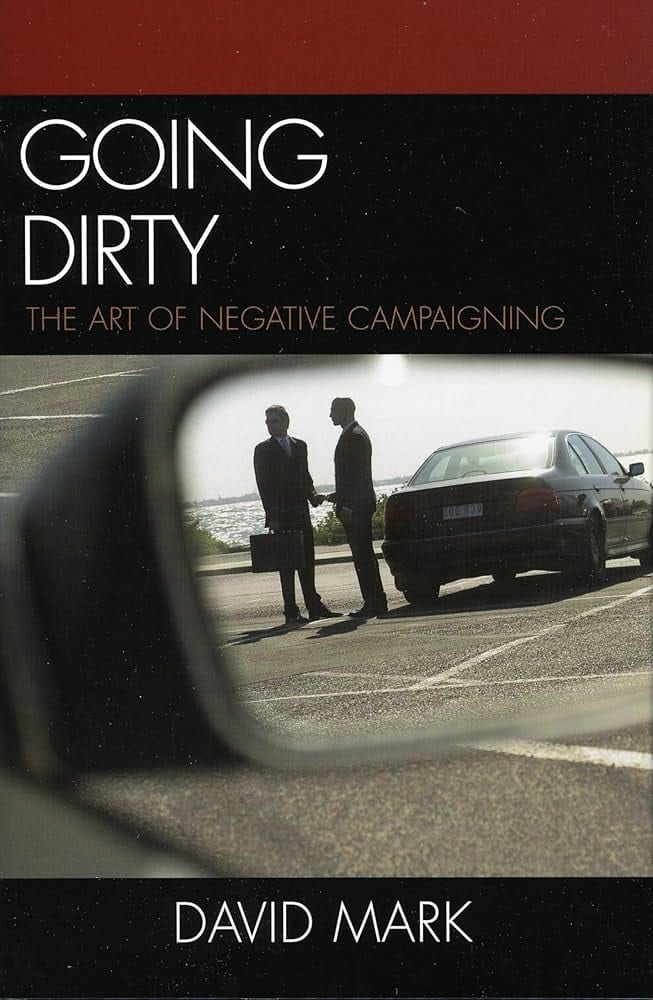
Going Dirty is a history of negative campaigning in American politics and an examination of how candidates and political consultants have employed this often-controversial technique. The book includes case studies on notable races throughout the television era in which new negative campaign strategies were introduced, or existing tactics were refined and amplified upon. Strategies have included labeling opponents from non-traditional political backgrounds as dumb or lightweight, an approach that got upended when a veteran actor and rookie candidate named Ronald Reagan won the California governorship in 1966, setting him on a path to the White House. The negative tone of campaigns has also been ratcheted up dramatically since the terrorist attacks of September 11, 2001: Campaign commercials now routinely run pictures of international villains and suggest, sometimes overtly, at other times more subtly, that political opponents are less than resolute in prosecuting the war on terror. The book also outlines a series of races in which negative campaigning has backfired, because the charges were not credible or the candidate on the attack did not understand the political sentiments of the local electorate they were trying to persuade. The effect of newer technologies on negative campaigning is also examined, including blogs and Web video, in addition to tried and true methods like direct mail.
My Summary
Main Ideas, Takeaways & Similarities
Questions
I. What is the problem?
A. How is this problem formulated?
B. Why is this problem important?
C. What is the history of this problem?
D. Which prominent personalities have been interested in this problem?
II. What solutions to the problem are there?
A. What are the conclusions reached?
B. By what argument(s) is the conclusion reached?
C. What facts or assumptions serve as premises?
D. When a prominent personality offers a solution, does he also argue for or against other prominent personalities? Does he raise objections to alternative solutions? Does he consider objections to his own solutions?
III. Evaluation
A. What are the advantages and disadvantages of the alternative formulations to the problem?
B. Has the importance or history of the problem ever been misrepresented?
C. Are the solutions logically related to the premises?
D. Are the facts true? Are the assumptions acceptable? Are the objections answerable?
AI Summary
Highlights
“Going Dirty: The Art of Negative Campaigning” is a book written by David Mark, first published in 1999. The book explores the history, tactics, and consequences of negative campaigning in American politics. Here is a comprehensive summary of the book in bullet points:
- The book delves into the practice of negative campaigning, where political candidates and campaigns use aggressive and often controversial tactics to attack their opponents.
- David Mark examines the historical roots of negative campaigning in American politics, tracing it back to the early days of the republic.
- He discusses the various forms of negative campaigning, including attack ads, character assassination, and smear campaigns.
- The book addresses the impact of negative campaigning on the electoral process and the potential consequences for democracy.
- Mark explores the motivations behind negative campaigning, including the desire to gain a competitive edge, divert attention from one’s own weaknesses, and energize a candidate’s base.
- He provides examples of famous negative campaign ads and strategies used by candidates from both major political parties.
- The book discusses the role of campaign consultants and strategists in shaping negative campaign messages and tactics.
- Mark analyzes the ethical considerations of negative campaigning and the tension between free speech rights and responsible political discourse.
- He explores the psychological and emotional effects of negative campaigning on candidates, voters, and the political climate.
- The book addresses the impact of new media, such as television and the internet, on the dissemination of negative campaign messages.
- Mark discusses the effectiveness of negative campaigning in swaying public opinion and winning elections, as well as its limitations.
- He examines the consequences of negative campaigning for voter turnout, political polarization, and public trust in government.
- The book provides insights into the strategies used by candidates to combat negative attacks and defend their reputations.
- Mark reflects on the potential for negative campaigning to undermine the integrity of the political process and discourage civic engagement.
- He offers recommendations for promoting more constructive and substantive political discourse.
“Going Dirty: The Art of Negative Campaigning” offers a comprehensive exploration of the practice of negative campaigning in American politics. David Mark examines the historical, psychological, and ethical dimensions of negative campaigning and discusses its impact on elections and the political climate. The book raises important questions about the role of negative campaigning in democracy and its consequences for the electoral process.