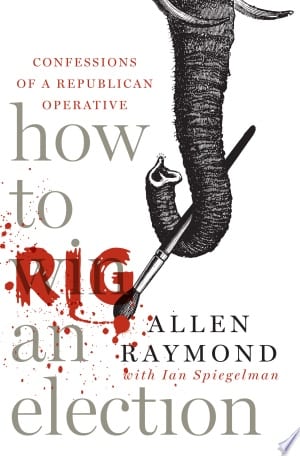
DESCRIPTION
An insider’s account of the Republican election machine reveals the practices of libel, spin, and misrepresentation that have affected campaign outcomes throughout the past decade, and traces how the author landed in federal prison for fraud.
My Summary
Main Ideas, Takeaways & Similarities
Questions
I. What is the problem?
A. How is this problem formulated?
B. Why is this problem important?
C. What is the history of this problem?
D. Which prominent personalities have been interested in this problem?
II. What solutions to the problem are there?
A. What are the conclusions reached?
B. By what argument(s) is the conclusion reached?
C. What facts or assumptions serve as premises?
D. When a prominent personality offers a solution, does he also argue for or against other prominent personalities? Does he raise objections to alternative solutions? Does he consider objections to his own solutions?
III. Evaluation
A. What are the advantages and disadvantages of the alternative formulations to the problem?
B. Has the importance or history of the problem ever been misrepresented?
C. Are the solutions logically related to the premises?
D. Are the facts true? Are the assumptions acceptable? Are the objections answerable?
AI Summary
Highlights
“How to Rig an Election: Confessions of a Republican Operative” by Allen Raymond is a memoir that provides insights into the world of political campaigning and election tactics. The author, a former Republican operative, shares his experiences and confessions related to election strategies. Here’s a comprehensive summary in bullet points:
- Title: How to Rig an Election: Confessions of a Republican Operative
- Author: Allen Raymond
Introduction:
- Allen Raymond, a former Republican campaign operative, offers a candid account of his experiences in political campaigns.
- The book provides an insider’s perspective on the often controversial and ethically challenging aspects of election tactics.
Chapter 1: The Political Operative’s World:
- Introduces the world of political operatives and campaign consultants.
- Describes the competitive and high-stakes nature of political campaigns.
Chapter 2: The Art of Opposition Research:
- Discusses the role of opposition research in political campaigns.
- Reveals the strategies and methods used to gather damaging information about political opponents.
Chapter 3: Dirty Tricks and Voter Suppression:
- Explores the use of dirty tricks and voter suppression tactics in campaigns.
- Discusses instances of voter intimidation and voter disenfranchisement.
Chapter 4: Robocalls and Smear Campaigns:
- Describes the use of robocalls and smear campaigns to tarnish the reputation of political opponents.
- Highlights the impact of negative advertising on public opinion.
Chapter 5: The Ethics of Campaigning:
- Reflects on the ethical dilemmas faced by political operatives.
- Examines the tension between winning at all costs and maintaining ethical standards.
Chapter 6: The Legal Consequences:
- Details the legal consequences faced by Allen Raymond and others involved in election-related misconduct.
- Discusses Raymond’s conviction and imprisonment for his role in a phone-jamming scandal.
Chapter 7: Lessons Learned:
- Reflects on the lessons Allen Raymond learned from his experiences.
- Emphasizes the importance of integrity and ethical conduct in politics.
Chapter 8: The Future of Campaigning:
- Discusses the changing landscape of political campaigning, including the role of technology and social media.
- Offers insights into the evolving strategies and tactics employed in modern campaigns.
Conclusion:
- Summarizes the key themes and lessons of the book.
- Encourages readers to consider the ethical implications of campaign tactics.
Legacy:
- “How to Rig an Election” sheds light on the often secretive and controversial aspects of political campaigns.
- It raises questions about the ethical boundaries of campaign tactics and the need for transparency and accountability in the political process.
- The book serves as a cautionary tale and a call for ethical conduct in the world of political campaigning.