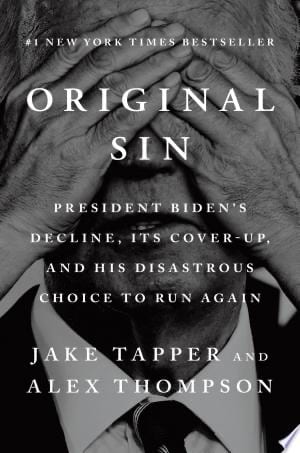
DESCRIPTION
THE INSTANT #1 NEW YORK TIMES BESTSELLER “Superbly reported … Reads like a Shakespearean drama on steroids.” — Los Angeles Times “Explosive.” —The New York Times “[The] most significant book to date about Biden’s cognitive decline.” — The Atlantic “Destined to stand alongside classics like Theodore White’s The Making of the President 1960 and even Carl Bernstein and Bob Woodward’s All the President’s Men as one of the great books about American electoral politics.” — Richard Aldous, Persuasion From two of America’s most respected journalists comes an unflinching and explosive reckoning with one of the most fateful decisions in American political history: Joe Biden’s run for reelection despite evidence of his serious decline—amid desperate efforts to hide the extent of that deterioration. In Greek tragedy, the protagonist’s effort to avoid his fate is what seals his fate. In 2024, American politics became a Greek tragedy. Joe Biden launched his successful 2020 bid for the White House with the stated goal of saving the nation from a second Trump presidential term. He, his family, and his senior aides were so convinced that only he could beat Trump again, they lied to themselves, allies, and the public about his condition and limitations. At his debate with Trump on June 27, 2024, the consequences of that deception were exposed to the world. It was shocking and upsetting. Now the full, unsettling truth is being told for the first time. Jake Tapper and Alex Thompson take us behind closed doors and into private conversations between the heaviest of hitters, revealing how big the problem was and how many people knew about it. From White House staffers at the highest to lowest levels, to leaders of Congress and the Cabinet, from governors to donors and Hollywood players, the truth is finally being told. What you will learn makes President Biden’s decision to run for reelection seem shockingly narcissistic, self-delusional, and reckless—a desperate bet that went bust—and part of a larger act of extended public deception that has few precedents. The story the authors tell raises fundamental issues of accountability and responsibility that will continue for decades. The irony is biting: In the name of defeating what they called an existential threat to democracy, Biden and his inner circle ensured it, tossing aside his implicit promise to serve for only one term, denying the existence of health issues the nation had been watching for years, dooming the Democrats to defeat. The decision to run again, the Original Sin of this president, led to a campaign of denial and gaslighting, leading directly to Donald Trump’s return to power and all that has happened as a consequence. Rarely does hubris meet nemesis more explosively. Wherever you stand on the political spectrum, Original Sin is essential reading.
My Summary
Main Ideas, Takeaways & Similarities
Questions
I. What is the problem?
A. How is this problem formulated?
B. Why is this problem important?
C. What is the history of this problem?
D. Which prominent personalities have been interested in this problem?
II. What solutions to the problem are there?
A. What are the conclusions reached?
B. By what argument(s) is the conclusion reached?
C. What facts or assumptions serve as premises?
D. When a prominent personality offers a solution, does he also argue for or against other prominent personalities? Does he raise objections to alternative solutions? Does he consider objections to his own solutions?
III. Evaluation
A. What are the advantages and disadvantages of the alternative formulations to the problem?
B. Has the importance or history of the problem ever been misrepresented?
C. Are the solutions logically related to the premises?
D. Are the facts true? Are the assumptions acceptable? Are the objections answerable?
AI Summary
Highlights
They told me I was everything; ’tis a lie, I am not ague-proof. —King Lear, William Shakespeare (Location 67)
George Orwell once wrote that “we are all capable of believing things which we know to be untrue, and then, when we are finally proved wrong, impudently twisting the facts so as to show that we were right. Intellectually, it is possible to carry on this process for an indefinite time: the only check on it is that sooner or later a false belief bumps up against solid reality, usually on a battlefield.” (Location 90)
He was writing about World War II, but he could have been writing about any time, any era. “The Germans and the Japanese lost the war quite largely because their rulers were unable to see facts which were plain to any dispassionate eye,” Orwell went on. “To see what is in front of one’s nose needs a constant struggle.” (Location 94)
The disconnect between Biden’s optimism and the unhappy reality of poll results was a constant throughout his administration. Many insiders sensed that his inner circle shielded him from bad news. (Location 107)
No one thought that the Harris campaign had been without error. But for the most knowledgeable Democratic officials and donors, and for top members of the Harris campaign, there was no question about the father of this election calamity: It was Joe Biden. Harris, loyal to Biden to a fault, might never say such a thing. But plenty of people around her would. (Location 123)
“And it’s all Biden,” Plouffe said. Referring to Biden’s decision to run for reelection, then wait more than three weeks to bow out, Plouffe added: “He totally fucked us.” (Location 130)
While Biden on a day-in, day-out basis could certainly make decisions and assert wisdom and act as president, there were several significant issues that complicated his presidency: a limit to the hours in which he could reliably function and an increasing number of moments where he seemed to freeze up, lose his train of thought, forget the names of top aides, or momentarily not remember friends he’d known for decades. Not to mention impairments to his ability to communicate—ones unrelated to his lifelong stutter. (Location 140)
Would that candidate have been able to do 1.5 percentage points better in Michigan, 1.8 points better in Pennsylvania, and 0.9 points better in Wisconsin? (Location 184)
“If Biden had decided in 2023 to drop out, we would have had a robust primary,” Plouffe said. “Whitmer, Pritzker, Newsom, Buttigieg, Harris, and Klobuchar would have run. Warnock and Shapiro would have kicked the tires of it. Maybe Mark Cuban or a businessperson of some sort. Twenty percent of governors and thirty percent of senators would have thought about it. We would have been eminently stronger.” (Location 186)
The Biden team also argued that if he didn’t run, Vice President Harris would likely be the nominee, and they had little confidence in her abilities. (Location 198)
Obama had never directly told Biden not to run, but he had encouraged his VP—still deeply grieving the loss of his son Beau—to focus on himself as a person. Plouffe had cautioned against a run—Clinton and Senator Bernie Sanders were way too popular—and Obama political director David Simas had presented Biden with polling that showed the improbability of a victory. “The president was not encouraging” is how Biden had put it. (Location 203)
He did, and many felt his was a presidency of accomplishment. Reviving the economy after COVID, getting vaccines into arms. A historic infrastructure bill. Boosting semiconductor manufacturing in the US. A bipartisan gun safety package. (Location 208)
But the hours during which he can perform are limited. Since at least 2022, he has had moments where he cannot recall the names of top aides whom he sees every day. He can sometimes seem incoherent. He is increasingly prone to losing his train of thought, occasionally speaking so softly that he cannot be understood, even if he’s talking directly into a microphone. (Location 220)
“Get up!” he wrote in his first memoir, Promises to Keep. “To me this is the first principle of life, the foundational principle, and a lesson you can’t learn at the feet of any wise man: Get up! The art of living is simply getting up after you’ve been knocked down.” (Location 234)
“Champ, it’s not how many times you get knocked down,” Biden Sr. would tell his son. “It’s how quickly you get up.” “Get up!” Biden wrote, “has echoed throughout my life.” Get up! (Location 240)
The president was fond of using the formal family motto, of giving “my word as a Biden,” but they had another, more private saying: “Never call a fat person fat.” It wasn’t just about politesse; it was about ignoring ugly facts. (Location 279)
“The Bidens’ greatest strength is living in their own reality,” this person told us. “And Biden himself is gifted at creating it: Beau isn’t going to die. Hunter’s sobriety is stable. Joe always tells the truth. Joe cares more about his family than his own ambition. They stick to the narrative and repeat it.” (Location 282)
During an eight-day, grueling bus tour in Iowa in December 2019, Biden gave his aides pause. While doing prep, he struggled to remember the name of longtime aide Mike Donilon. “You know, you know,” he said, groping for it. His aides side-eyed one another—Donilon had worked with Biden since 1981. (Location 294)
Those close to him say that the first signs he was deteriorating emerged after the death of his beloved son Beau in 2015. (Location 309)
Others close to Biden noticed it too. “Beau’s death aged him significantly,” said a longtime Biden confidant. “His shoulders looked smaller. His face looked more gaunt. In his eyes, you could just see it.” Biden’s torment was compounded by his younger son, Hunter, spiraling into crack cocaine addiction. His and Jill’s daughter, Ashley, also battled addiction. (Location 318)
He seemed to be losing both of his sons at the same time. (Location 323)
Publicly acknowledging Beau’s illness would make it a reality. It was them against the world. (Location 342)
Obama thought that too many leaders of Biden’s 2020 campaign team were hangers-on and not world-class political consultants. In 2019, he expressed worry about their steering Biden’s campaign. “He’s my friend,” Obama said at the time. “I love him; I don’t want him to be humiliated.” (Location 369)
Many top Democrats, including Obama, believed that Sanders, a democratic socialist, could not beat Trump and would hurt Democrats downballot. (Location 377)
It was terrible to admit, but Biden’s own aides would say that while the COVID-19 pandemic was one of the worst things to happen to the world, it was one of the best things to happen to Biden’s presidential hopes. They doubted Biden could have otherwise kept up the pace of campaigning through November. (Location 393)
Longtime aide Annie Tomasini and Jill’s top aide, Anthony Bernal, moved to Wilmington. (Location 398)
During the COVID lockdown, they loaded a written Q&A into a prompter ahead of a local interview—a (Location 402)
In 2007, he called his primary opponent, Barack Obama, “the first mainstream African American who is articulate and bright and clean and a nice-looking guy. I mean, that’s a storybook, man.” (Location 448)
This leader recalled meeting with the president again maybe a year later. He seemed even more rambling. “[Secretary of State] Tony Blinken had to remind him to talk about the crucial issue the meeting was meant to be about.” “I didn’t think he should run for reelection; he was clearly not at the top of his game,” the leader said. (Location 457)
The president’s deterioration, the argument goes, was less discernible to those who saw him consistently and up close than to those who saw him only occasionally. Reporters, donors, and Democratic lawmakers who met with him only intermittently were increasingly alarmed, while top aides dismissively tossed out a “He’s fine.” (Location 462)
But many of these same aides and advisers made accommodations to help the aging president appear at his best, becoming accomplices—knowingly or not—in what would be, by 2024, a cover-up. (Location 466)
Pelosi saw it as strategy—Klain’s strategy. She admired Klain but knew he also liked being considered a hero by the Progressive Caucus. She didn’t like to be surprised, and she had been surprised. (Location 503)
Klain had become one of the most powerful chiefs of staff in modern history. Republicans taunted Biden by calling Klain “the prime minister,” but people inside the White House sometimes quietly called him that too. He steered and staffed the White House in a way that seemed contrary to Biden’s centrist reputation. Klain would say he was merely trying to enact the bold progressive agenda that the president had campaigned on. (Location 527)
The president ended the war, as promised, but thirteen US servicemembers and hundreds of Afghans were killed in the chaos as the Taliban recaptured power. He never communicated adequate regret, never fired anyone, and would react defensively when the issue was brought up. The topic could easily trigger his temper at his own aides. (Location 541)
His approval ratings sank into the low forties, then by the following summer the thirties, and never recovered. (Location 544)
The confrontation exemplified part of a larger change that aides had noticed in Jill Biden since 2016, when she was Second Lady. In the past, she had been a reluctant political spouse. When Biden was considering running for president in 2003, she walked through a planning meeting in a bathing suit with No scrawled on her stomach. As Biden weighed a run in 2015 after Beau’s death, she was overwhelmed by grief and couldn’t muster any enthusiasm for the idea. (Location 556)
As a three-year-old in the car accident that killed his mother and sister, Hunter had suffered a fractured skull—an injury that could have lifelong effects. He had emerged as a bottomless source of disappointment, gossip, and shame but still beloved by his family. (Location 568)
Instead, Hunter spiraled more wildly than ever before. In the four years after Beau’s death, Hunter had gone through a bitter divorce, fathered a child he didn’t want to acknowledge, shuffled in and out of rehab facilities, experimented with sobriety methods including yoga retreats and ingesting toad secretions, and carried on a made-for-tabloids affair with his recently deceased brother’s widow in which he introduced her to crack cocaine. (Location 573)
As Jill’s power rose, so did Bernal’s. Biden aides would say that she was one of the most powerful First Ladies in history, and as a result, he became one of the most influential people in the White House. (Location 596)
“loyalty police.” (Location 602)
As we researched this book, it was difficult to find many Bernal defenders among those who have known him longest. He had allies among aides he had mentored but more detractors who resented his internal machinations. He freely trash-talked senior, mid-level, and junior aides. (Location 605)
The relationship took a more dysfunctional turn in 2015. Michelle Obama had become close with Hunter’s then-wife, Kathleen Buhle. As Hunter began to spiral into addiction and infidelity, Michelle stood in solidarity with her friend, while the Bidens reflexively rallied around Hunter. When salacious details about Kathleen’s divorce filing hit Page Six in early 2017, Biden was angrier at Kathleen for the details having been made public than he was at Hunter for his sleazy behavior. The Bidens slowly began exiling Hunter’s estranged wife. And Michelle privately resented them for doing so. (Location 640)
Bernal and Tomasini took on some of these roles. They had all-time access to the living quarters, with their White House badges reading “Res”—uncommon for such aides. (Location 660)
“It was strange. In my head, I was like, I see you all the time. But he sometimes would look at you like he’d never seen you before,” the aide recalled. White House staff “treated him as very delicate.” (Location 663)
Bruce Reed was the real domestic policy adviser, Mike Donilon was the actual political director, Steve Ricchetti controlled Legislative Affairs, and Klain controlled a bit of everything. (Location 673)
“Five people were running the country, and Joe Biden was at best a senior member of the board,” said one person familiar with the internal dynamic. A cabinet secretary expressed a similar sentiment about the Politburo. “I’ve never seen a situation like this before, with so few people having so much power. They would make huge economic decisions without calling [Treasury] Secretary Yellen.” (Location 677)
In 2017, when then-President Trump was seventy-one, Democrats in Congress introduced resolutions and legislation essentially pushing Trump to undergo a psychiatric evaluation, given his erratic behavior. (Location 688)
In July 2024, Congresswoman Kay Granger, the first Republican woman to represent Texas in the House, cast her last vote in Congress at eighty-one years old and was then secretly placed in an assisted-living facility for patients with dementia. She (or her family) continued to collect her congressional paycheck; her constituents were not officially informed, and members of Congress who knew about it kept quiet. (Location 717)
Nikki Haley said: “The Senate is the most privileged nursing home in the country…. You have to know when to leave.” (Location 724)
Jerry Brown bluntly put it to a Los Angeles TV newsman when reflecting on Biden’s decision to not drop out sooner: “Politics is addictive. It’s exciting. It’s a kind of psychic cocaine…. People don’t want to just go back to their former boring lives.” (Location 726)
1996, seven years before his death, Thurmond was, at ninety-three, referring to the Mexicans who attacked the Alamo as “Russians.” Many who met him questioned his basic competence and cognition. (Location 734)
November 2020, Senator Dianne Feinstein, an eighty-seven-year-old California Democrat, asked Twitter CEO Jack Dorsey the same question twice in a row at a public hearing. During that period, Senate Minority Leader Chuck Schumer, a New York Democrat, tried several times to encourage Feinstein to retire on her own terms, but she never did. She even seemed to forget that the conversations had happened. (Location 737)
Michigan Congressman John Conyers, Mississippi Senator Thad Cochran, West Virginia Senator Robert Byrd—the list of addled lawmakers, former and current, goes on and on. Why? Welcome to a system where power is distributed by seniority. And where spouses, children, staffers, and lobbyists invest deeply in the life and success of an individual politician, then grow reluctant to give it all up. (Location 740)
In George Washington’s first years in office, he became so sick that it affected his eyesight and hearing. After Woodrow Wilson suffered a stroke in September 1919, his doctor, wife, and secretary maneuvered for over a year to conceal the damage from everyone, including his own cabinet. (Location 744)
Newly elected president, John F. Kennedy in 1960 told a reporter that he did not suffer from Addison’s disease—a lie. As the Cuban Missile Crisis unfolded, Kennedy was taking many drugs to help manage his various ailments. We still don’t know when Ronald Reagan’s Alzheimer’s truly began. (Location 747)
Biden spoke at the Royal Castle in Warsaw, Poland. “For God’s sake, this man cannot remain in power,” he said, speaking of Putin. After talking to Ron Klain, senior White House aides rushed to walk back the comment, which seemed a clear call for regime change. (Location 756)
Baker noted in his story, this was just one of many accommodations that the White House made for the aging president. Biden had given only 38 interviews at that point in his presidency, compared with 116 for Trump, 198 for Obama, 71 for Bush, and 75 for Clinton. (Location 773)
The third was the president’s obsessive need to prep for either interviews or press conferences, a demand for data and time and details. “He would demand hours and hours and hours of prep for one interview,” a second senior White House official said. “You had to blow up the schedule for half a day…. Often, the feeling was ‘We don’t have time for this.’ ” (Location 781)
Everything got shorter: speeches, paragraphs, even sentences. The vocabulary shrank. (Location 802)
He often talked about his stutter as something he had overcome. It was in the past. (Location 814)
White House staff called the various departments and agencies to figure out what they were going to ask the president so that answers could be prepared. The conversations were largely scripted, even after the press had left the room. (Location 817)
Some cabinet secretaries felt that, in fact, Biden relied on the cards more heavily when reporters were absent. (Location 819)
David Axelrod, a former White House adviser to President Obama, was not getting used to it. On the contrary, he was growing increasingly worried about what he was seeing from afar. (Location 830)
Biden seemed mad at both Axelrod and Plouffe after they advised him in the summer of 2015 not to run, but after Axelrod made some nice comments about Biden to a reporter in 2018, Biden reached out and asked him to swing by the house he was renting in Virginia. (Location 838)
But for Axelrod, this wasn’t political; it was actuarial. Biden was old—he looked it, seemed it. And the problem was only getting worse. (Location 865)
Under Biden, Democrats came through the midterms better than ever before in the twenty-first century. Why wouldn’t he run for reelection? the Politburo asked. He deserved it. (Location 889)
But no Democrats in the White House or leaders on Capitol Hill raised any doubts, either privately with the president or publicly, about Biden’s second run. The week after the midterms, House Speaker Nancy Pelosi encouraged him to do so on ABC News. “He has accomplished so much,” she said. (Location 895)
A week after the midterms, Trump announced he was going to run for president in a meandering and subdued speech. That made Biden and his team even more confident. Trump was an existential threat, but he looked politically weak. The court cases against him were brewing. Throughout 2023, Biden and Mike Donilon expressed confidence that Trump would wind up in prison. (Location 898)
House Speaker Nancy Pelosi, eighty-two, opted to relinquish her leadership role, handing over her gavel to New York Congressman Hakeem Jeffries, forty-two. Others in House Democratic leadership followed her lead. Majority Leader Steny Hoyer, eighty-three, and Majority Whip Jim Clyburn, eighty-two, gave the reins to Massachusetts Congresswoman Katherine Clark, fifty-nine, and California Congressman Pete Aguilar, forty-three. It’s never fun for leaders to cede power, and it cannot be claimed that the publicly seamless transition was entirely joyful or without mixed emotions behind the scenes. That said, the prospect of these three willingly transferring power they had worked decades to accrue—for the sake of what was considered best for their party and the country—was remarkable because of how sadly rare it is in Washington, DC. (Location 911)
Anzalone was stunned. They weren’t going to assess his strengths versus his vulnerabilities? His polling numbers, after all, were atrocious. The pollster, who had been with Biden since the 1980s and was willing to raise uncomfortable questions, increasingly found himself ostracized by the White House. (Location 954)
Whenever the idea of Kamala Harris running came up, Bernal and others senior staffers reacted dismissively. Please. She can’t win. (Location 959)
Biden had already pledged to pick a woman, but by the summer, many of Biden’s top aides and confidants, including Ron Klain, Louisiana Congressman Cedric Richmond, and South Carolina Congressman Jim Clyburn, were pushing Biden to pick a Black woman. (Location 969)
Harris sensed the Biden team’s distrust and wanted to avoid giving them any reason to question her loyalty. She even tried to deploy her husband, Doug Emhoff, to try some rapprochement with Jill that later included going to a spinning class at SoulCycle together, but the chill never fully thawed. (Location 987)
To the Biden team, Harris was a regular headache. She often shied away from politically tough assignments when Biden had accepted such assignments as vice president. She even turned down seemingly simple asks, such as headlining DC’s Gridiron Club dinner. (Location 989)
She had considerable turnover, as her aides tired of what they called her “prosecuting the staff” style. And her cautious nature could reach the point of parody. (Location 991)
Biden aides noted that the politically safe ground of the National Space Council appeared difficult for Harris. The vice president’s aides internally mixed up astrology and astronomy, then drew mocking public headlines by using child actors for a video about space. (Location 995)
Many on the Biden team felt that Harris didn’t put in the work and was also just not a very nice person. Several quietly expressed buyer’s remorse: They should have picked Whitmer. (Location 998)
While the White House refused to acknowledge the authenticity of Hunter’s laptop, Biden’s team quietly had the DNC obtain a copy of the hard drive. The campaign needed to be politically prepared, and Biden needed to be personally prepared. (Location 1009)
It was a situation unique in the history of the republic: Two candidates who both claimed to be running again for the sake of protecting the country from the other also had very real reason to run for the purpose of protecting themselves. (Location 1030)
When the issue was Biden’s age and ability, you’d better not bring it up in front of Dr. B or Bernal, her prized pupil. (Location 1062)
The numbers were undeniable. From January 1, 2023, to April 27, Biden had only four public events before 10:00 a.m., twelve full weekends with no public events, and only twelve public events after 6:00 p.m., most of which were off camera. “The White House is basically hiding Biden as he auditions for another term,” Alex wrote. The White House denied the story. Jen O’Malley Dillon gave a one-word statement: “False.” The White House press team publicly labeled Alex a peddler of fake news. (Location 1176)
The Biden team chose Julie Chávez Rodríguez as campaign manager, but she had never run a campaign before. It was largely an honorary title, as she lacked real authority to make decisions. The campaign was controlled by the Politburo and other senior aides that often made decisions slowly by committee. (Location 1192)
Biden had trouble taping even mundane video remarks without flubbing lines. (Location 1198)
In April 2024, the campaign held a staged town hall in a high school gym to film a campaign commercial. The campaign was trying to make it look like the president was out there taking off-the-cuff questions from voters in public. But the event was closed to reporters, and the campaign had the full list of questions that people would ask. Biden took these prepared questions for about ninety minutes while the campaign cameras rolled. Other campaigns have staged such events for ads, but even in such a controlled and scripted setting, Biden had trouble. The campaign ultimately decided that the footage wasn’t usable. Some said the problem was that the advance team had failed and the gym’s lighting was terrible. Others admitted that there was a deeper, far less fixable problem: Biden. (Location 1210)
Sometimes Biden would stop speaking and start shaking hands, as if the event were over, only to then start speaking again. (Location 1231)
On June 20, 2023, Biden attended a fundraiser with Governor Gavin Newsom in Kentfield, California, that went awry. He casually called Chinese President Xi Jinping a dictator, sparking outrage in China just after Secretary of State Blinken had flown to Beijing to cool down tensions. And attendees were shaken by Biden’s meandering remarks. (Location 1232)
“I remember leaving that fundraiser thinking, Fuck,” one attendee said. “We got so desensitized to how bad it had gotten.” (Location 1235)
Even the photo lines became hypercontrolled. Instead of taking pictures with fifty or one hundred donors, Biden, at the insistence of his aides, usually took only twenty or twenty-five photos. (Location 1240)
One donor who witnessed it all explained their tortured calculus: “We weren’t going to change that he was running, and no one wanted to be on the outside in case he did win. So no one said anything. No one wanted to hear it, and if you said anything, you got your head chopped off.” (Location 1246)
Aides tried to figure out shorter walking paths to the stage and the mic. The less walking, the better. They became more insistent that any steps to the stage have handrails. The visual briefings became more detailed so that Biden knew every step. (Location 1252)
He started wearing tennis shoes more often, including a pair of all-black HOKAs. He began taking the shorter stairs onto Air Force One, as he had stumbled on the longer ones. (Location 1254)
Aides put more pressure on speechwriters to make his speeches shorter and reduce the amount of time he had to spend standing at the podium. (Location 1255)
Accommodations such as teleprompters and note cards became lifelines. When he tried to ad-lib, it sometimes looked as if it took him a minute to form a cogent thought. Biden resisted and bristled at some of these cognitive aids. He thought he didn’t need them. (Location 1258)
Playwrights sometimes refer to the principle of Chekhov’s gun, attributed to Russian dramatist Anton Chekhov: “One must never place a loaded rifle on the stage if it isn’t going to go off. It’s wrong to make promises you don’t mean to keep.” In the narrative of Joe Biden and his decline, Chekhov’s gun is Special Counsel Robert Hur, appointed in 2023. (Location 1261)
these recordings would become key evidence in Hur’s investigation into Biden’s mishandling of classified information—an investigation that would, perhaps more than anything else, bring to light Biden’s deterioration and the degree to which his team attempted to hide it from the public. (Location 1274)
The first tape Hur listened to featured Biden talking to Zwonitzer and his sister Val, saying, “I just found all the classified stuff downstairs.” It was recorded in McLean, Virginia, in 2017. When Biden was no longer vice president. To Hur, Biden was clearly acknowledging that he knowingly possessed classified materials. Discussing them with others. On tape. (Location 1352)
Hur and his team listened to every one of the Zwonitzer tapes. Repeatedly, Biden referred to classified materials that he seemed to share with his ghostwriter. Beyond how damning they were, the tapes revealed something else important to the case. Biden sounded very old and quite diminished. In 2017. (Location 1361)
Top aides point to Hunter Biden’s plea deal falling apart—and the very real fears that he would go to prison—as an inflection point, like the months following Beau’s death, where the president suddenly and steeply declined. (Location 1374)
The Biden campaign and White House operatives now had a modus operandi for attacking any journalists who covered any questions about the president’s age, enlisting a corps of social media influencers, progressive reporters, and Democratic operatives to besmirch as unprofessional and biased those in the news media investigating this line of inquiry. (Location 1398)
The goal was to shame journalists and create a disincentive structure for those curious about the president’s condition. (Location 1406)
“When there were negative news stories about Biden’s age, both the campaign and White House reached out repeatedly and insistently urging me and others to go negative on the news outlets and reporters,” one Democratic operative explained to us. “They wanted us to shame them on social media—point out how they got the facts wrong, how their takes were biased, and how they weren’t holding Trump to the same standards. It was a full-blown freak-out whenever these stories dropped.” (Location 1409)
Every conversation with a Biden official went like this: “He’s exactly the same person he always was. Age is not an issue. He’s incredibly sharp in meetings. There are no accommodations being made for him because of his age.” (Location 1418)
Two days later, when the White House press secretary was asked about the president repeating the same story mere minutes apart, Karine Jean-Pierre said, “The president was making very clear why he decided to run.” She added that “he was speaking from his heart” and doing so “in an incredibly passionate way.” (Location 1437)
Months of Biden’s internal schedule in late 2023 and 2024—also known as “the Block”—show how Biden’s staff would try to lighten the president’s day. On October 3, 2023, for instance, Biden had prep and meetings with officials from 9:00 a.m. to noon, then lunch from 12:15 to 1:15 p.m. The rest of his day was “Desk Time” from 1:30 to 2:15 p.m., then “POTUS Time” from 2:15 to 4:15 p.m. And then he ended his day with dinner at 4:30 p.m. “POTUS Time” could mean many different things. At times, it was a stand-in for something that Biden’s aides wanted only a few to know about. Other times, it was just to carve out a chunk of the schedule for the president. (Location 1441)
When Biden was in Washington, many of his days would end with his going to the residence by around 5:15 p.m. He would take calls, but he rarely came back down. (Location 1447)
In July 2023, shamed into action by New York Times columnist Maureen Dowd, President and First Lady Biden finally acknowledged one of their grandchildren existed. She was already four years old. A DNA test in 2019 had proven Hunter was the father of Lunden Roberts’s baby girl. (Location 1449)
Hunter denied this reality. Even after the DNA test, he told people that he believed it could have been tampered with by the Republican-dominated state of Arkansas where Roberts was living. (Location 1451)
When the First Lady wrote a children’s book in 2020 about her husband, she dedicated it to six grandchildren, naming each one and excluding Navy. During Christmas season in 2021 and 2022, Jill hung six stockings for every grandchild—except Navy. (Location 1457)
His voice was so quiet throughout the interview that the FBI agents kept moving the microphones closer and closer to him. Biden was just shy of eighty-one and seemed every day of it. (Location 1480)
For months now, Ari Emanuel—CEO of Endeavor, a talent and entertainment company, and a major Democratic donor—hadn’t been able to believe what he was watching. President Joe Biden was quite obviously deteriorating before the nation’s eyes, and Democrats seemed to be in complete denial about it. Emanuel would call governors and encourage them to run. He would talk to his brother Rahm, a former Obama chief of staff and then an ambassador to Japan. He would discuss it with anyone who would listen. (Location 1559)
Emanuel was incensed. What the fuck are we doing? he asked. The first party to put a younger candidate before the voters, if we give him enough time, we can win. Emanuel knew Trump well, having been his agent for almost a decade. (Location 1569)
If they waited too long, the inevitable moment when Biden bowed out would saddle the Democratic Party with Vice President Harris as the nominee, and she was even less popular than Biden. (Location 1586)
Neither California Governor Gavin Newsom nor Kentucky Governor Andy Beshear was willing to take the plunge. (Location 1588)
Sullivan passed on Warner’s thoughts to Biden, who followed up. But Biden seemed oblivious to concerns that Warner thought were rather obvious. The president was clearly not up to speed on this. Warner wondered how much of this was related to the president’s aging issues, which he felt were becoming visibly apparent to anyone watching. (Location 1601)
In 2020, 34 percent of voters had thought Biden too old to be president. In 2023, that figure shot up to 71 percent. In 2020, 45 percent of voters had thought that Biden lacked the mental sharpness to be president. In 2023, that percentage grew to 62 percent. (Location 1608)
David Axelrod hoped someone in the White House would come to their senses and convince Biden and his family that this just wasn’t tenable. There was still time for viable Democratic candidates to throw their hats into the ring, though practically speaking, only a few hopefuls could launch a race so quickly—Harris, Klobuchar, Pritzker, Whitmer, Newsom, and Buttigieg. (Location 1610)
Biden wasn’t just projecting as old—he was projecting as out of touch. In June 2023, the White House launched a campaign taking credit for how “Bidenomics” was working. At a time when Pew had the president with a 35 percent approval rating, 62 percent disapproval; in a month when 65 percent of those surveyed thought that inflation was a very big problem; in an era when seven out of ten Americans were worried that the economy was getting worse, Biden was taking a victory lap, branding with his name an economy that people hated. (Location 1612)
In response to Axelrod’s 2023 post, Biden called Axelrod a “prick”—a private insult until someone leaked it to Jonathan Martin of Politico. (Location 1635)
During their brief encounter, Biden told Morehouse a story involving him and Kerry that Morehouse knew had never happened. Morehouse worried about what he saw in Biden’s eyes: It reminded him of his ailing mother. He remembered talking to his sister, telling her of his concerns about their mom. After sitting with their mother, his sister would say that Mom was fine. Morehouse would ask how long she’d sat with her. “Half an hour,” his sister would say. “That’s not long enough,” Morehouse would reply. “It’s on a loop. After an hour, the loop runs out and she begins repeating herself, because short-term memory is the first to go.” (Location 1647)
However, in December 2023, at the White House Christmas Party for members of Congress, Smith was stunned by what he encountered. Interacting with guests and standing in the photo line, Biden seemed completely out of it. Other partygoers were similarly alarmed when they noticed that the First Lady was taking the lead in delivering remarks to the crowd, while Biden stayed wedded to a script. He can’t even do holiday party remarks? (Location 1662)
By the end of 2023, Biden seemed to have become significantly feebler. Some commentators spoke up—David Ignatius of The Washington Post, comedian Bill Maher who warned of “Ruth Bader Biden”—but very few Democrats were willing to say anything publicly about it. Minnesota Congressman Dean Phillips was a rare exception. (Location 1667)
Phillips announced his campaign on October 27. He was about to learn just how far the Democratic Party’s commitment to democracy would reach. Back in 2016, when Bernie Sanders would complain about the extent to which the process was rigged, with the DNC making it difficult to challenge Hillary Clinton, Phillips thought he was just being a sore loser. (Location 1706)
Every White House pressures its party establishment to make things harder for potential challengers, but members of the Biden team acknowledged that they tested and pushed those boundaries. (Location 1715)
Not even Congressman Jim Clyburn or DNC Chair Jaime Harrison—both of South Carolina—had asked for their state to be first. Clyburn admitted later that the White House did it to protect Biden from “embarrassment.” (Location 1719)
Biden framed his decision as about lifting underrepresented Black voices and suggested that anyone who questioned it—including Phillips—was undermining Black voters, even racist. That claim was undercut by the fact that he called for the calendar change to be for only one presidential cycle—the one he was running in—and the calendar would be revisited in 2028. Internally at the White House and the DNC, aides privately admitted that the main motivation was helping Joe Biden, not uplifting Black voters. The DNC also made clear that there would be no party-sanctioned debates, challengers notwithstanding. It was machine-style politics to ensure that Biden would be the nominee, even as millions of Democratic voters were making plain their serious concerns about his ability to do the job. Most Democratic would-be rivals were deterred. Robert F. Kennedy Jr. and Marianne Williamson challenged Biden but struggled to gain traction. (Location 1720)
Phillips would tell people that he ran to force a debate with the president. A debate, he maintained, would expose to the world that this man—while decent and a good president in the past—could not compete for the highest office in the land. He was not up for another term. (Location 1729)
As for White House staffers who had regular contact with the president, they seemed, at this point in his presidency, to split into three basic groups. (Location 1760)
The Politburo made up the first group, its members having convinced themselves that the areas that caused people alarm were merely “performative” parts of the president’s job. (Location 1761)
There was a second group of staffers who believed that the president’s decision-making was solid but also acknowledged that, yes, his communications were a problem. The president should be able to speak clearly and cohesively, off the cuff, to inspire confidence and convince others of the correctness of his views. Such “performative” parts of the job were neither superficial nor unimportant. They were, in this age, integral to presidential leadership. The second group took the concerns seriously. (Location 1766)
There was also a third group: those who were concerned that the president was in serious decline. They were angry, feeling that the Politburo was doing the country and the president a deep disservice by pretending this wasn’t happening. (Location 1770)
This was yet another area where Biden’s diminishment may have had a real impact. For new House Speaker Mike Johnson, a Louisiana Republican, the Ukraine meeting marked the first time—other than a quick meet and greet after Johnson’s election in October 2023—that he had been at a meeting with Biden. Though he was sitting directly across from the president, he found it difficult to hear him. It was disconcerting. But he also knew that anything he said about it would be discounted by Democrats as partisan sniping. (Location 1798)
Senior campaign staff were outraged when they heard about this arrangement. Four million dollars to work from February until November? The most highly paid person after him was the campaign chair, O’Malley Dillon, who was paid a fraction of that—$300,000, plus a $100,000 bonus after Biden won the nomination. (Location 1823)
The opportunity being offered wasn’t what it had been in the past. CBS Sports didn’t want to air an interview with the president at all, preferring ratings-friendly content, and the offer to the White House was for a fifteen-minute taped interview, only three minutes of which would air during the pregame. The rest would go to CBS Evening News and CBS Mornings. If one did not know all the machinations going on behind the scenes, it looked as though the White House was forgoing an opportunity for exposure because advisers knew that the president wasn’t capable of an exchange. Without question, Biden’s capacity to communicate was worrisomely diminished, and the White House was putting him out for serious news interviews less and less. But there was another reason to refuse the opportunity. The White House knew that Special Counsel Robert Hur’s report on Biden’s mishandling of classified information was going to drop any minute. It knew that the pregame offer would therefore turn into a fifteen-minute interview about the Hur report before a massive audience. And there was no way the White House was going to let that happen. (Location 1833)
In February 2024, the president and his loyalists took their denial of his deterioration to a new level. That was when the White House declared war on its own Justice Department over the issue. (Location 1844)
Points one and two would seem to be contradictory. The explanation could be found in point three: The prosecutors believed that a jury would see Biden “as a sympathetic, well-meaning, elderly man with a poor memory.” (Location 1869)
Painting a portrait of a man in decline, the report noted that Biden’s memory in the Zwonitzer tapes, in the spring of 2017, had “significant limitations.” Biden’s recorded conversations from that time were described as “often painfully slow, with Mr. Biden struggling to remember events and straining at times to read and relay his own notebook entries.” (Location 1872)
Hur noted these moments and explained that while he would have to prove at any potential trial that Biden kept these documents knowing he was breaking the law, he expected that the president’s attorneys “would emphasize these limitations in his recall.” The case just wasn’t winnable, Hur concluded. “While he is and must be accountable for his actions—he is, after all, the president of the United States—based on our direct observations of him, Mr. Biden is someone for whom many jurors will want to search for reasonable doubt. It would be difficult to convince a jury they should convict him—by then a former president who will be at least well into his eighties—of a serious felony that requires a mental state of willfulness.” (Location 1883)
Primarily, Bauer and Siskel objected to the “multiple denigrating statements about President Biden’s memory,” which painted a picture of a president with “a failing memory in a general sense, an allegation that has no law enforcement purpose.” The “pejorative judgment” that Biden had poor powers of recollection was “uncalled for and unfounded.” (Location 1895)
The White House communications strategy was to slime Hur as an unprofessional right-wing hack, and Garland as weak—and essentially fired. (Location 1956)
MSNBC anchor Ari Melber devoted a segment to the question of whether Hur was succumbing to “ageism.” One New Republic writer raised the stakes for fellow journalists, saying, “Any news org that puts Biden’s memory in the headline is actively rewarding Hur’s bad faith and giving the Trump campaign what they want.” (Location 1970)
To Garland allies, this was basically Biden publicly firing Garland, his exit date to come after the November election. The cause? He had behaved ethically. (Location 1977)
Throughout the Justice Department, career attorneys saw this declaration as a sign that Biden was coming after Garland for behaving with allegiance to the law, not to a politician. Having lived through four years of Trump, four years of a president improperly meddling in investigations, they were distressed. (Location 1978)
And now they were seeing the president who had pledged to restore the Justice Department’s independence instead using the news media to put pressure on it. (Location 1980)
Beyond that, the special counsel’s assessments of Biden’s mien were accurate. Kind, even. In fact, some senior White House officials who at first thought Hur was wrong to include such descriptions in his report acknowledged that what he said was true. But this was an opportunity for the White House to flex some muscle when it came to judgments about Biden’s demeanor. Everyone watched the fierceness, the ruthlessness, from the West Wing. (Location 1990)
Most news media coverage thus did not acknowledge the president’s long, rambling answers; the troubling lapses of memory; and the disruptions in his thought process. Most did not point out that Biden’s accusation about Hur bringing up Beau’s death was false. (Location 2001)
Hur had no doubt assumed that he would just go back to Gibson Dunn once he finished his stint investigating that “undersecretary of the Interior.” But after the report came out, Hur had been roundly vilified by the Biden administration, Democratic officials, and Democratic allies in progressive media circles. It was not unlike how the political right had treated James Comey and Robert Mueller. Law firms and corporate legal teams got the message. Hur spent several months looking for work. (Location 2011)
Biden’s physical deterioration—most apparent in his halting walk—had become so severe that there were internal discussions about putting the president in a wheelchair, but they couldn’t do so until after the election. Given Biden’s age, Doc O’Connor also privately said that if he had another bad fall, a wheelchair might be necessary for what could be a difficult recovery. (Location 2018)
They had also boxed themselves in with their own public insistence that Biden had not lost a step and was as sharp as ever. Finally doing a test would be an admission that there were reasons for concern. And even if Biden did do a test, his aides believed that his critics would still not be satisfied. There was also the risk of the unknown, of what such a test might reveal. (Location 2031)
“Access dropped off considerably in 2024, and I didn’t interact with him as much,” said Cabinet Secretary Number One. “I didn’t get an explanation.” Instead, the secretary would brief other senior White House aides, who then briefed the president. Cabinet Secretary Number One thought it strange and asked if it was a way of filtering out particular information so that his closest aides could brief him in the way they preferred. (Location 2040)
“Yes, the president is ‘making the decisions,’ but if the inner circle is shaping them in such a way, is it really a decision? Are they leading him to something?” Cabinet Secretary Number One wondered. (Location 2043)
“I think the people around him had their own agenda, and they didn’t want more people around him,” Cabinet Secretary Number Two said. “Not because they were protecting him but because they didn’t want people giving him contradictory information.” (Location 2047)
third cabinet secretary observed that—with the general exceptions of those in the national security portfolio, such as Secretary of State Antony Blinken and Defense Secretary Lloyd Austin—from October 2023 on, “the cabinet was kept at bay.” (Location 2051)
“That was a weird period,” Cabinet Secretary Number Three told us of 2023–2024. “For months, we didn’t have access to him. There was clearly a deliberate strategy by the White House to have him meet with as few people as necessary.” At one rare meeting during that time, Cabinet Secretary Number Three was shocked by how the president was acting. He seemed “disoriented” and “out of it,” his mouth agape. (Location 2053)
But in the scrum, Congressman Mike Quigley, who hadn’t been this close to Biden since they were in Dublin almost a year before, put his hand on the president’s back. He could feel his ribs, and his spine. It was like touching Mr. Burns from The Simpsons. The president’s voice was soft and breathy. His eyes were darting from side to side. It again disconcertingly reminded Quigley of his late father. (Location 2083)
Katzenberg saw Biden’s communications struggles and thought he could fix them. He even enlisted the help of his show-biz friend Steven Spielberg. They worked on lighting, and a better microphone to amplify his voice when he would oddly speak in barely a whisper. Biden didn’t always like getting notes on his delivery but would listen to someone like Spielberg. The famous director would also coach the president before speeches like the State of the Union. Katzenberg hoped that voters’ age concerns about Biden could be assuaged with a little Hollywood magic. (Location 2138)
They’re not hearing a fucking thing you’re saying, one of the pollsters thought. You’re in Fantasyland. You’re saying the economy’s great, and voters are like, “On what planet?” (Location 2165)
A candidate just didn’t get a whole lot out of debating Trump, Ricchetti believed. Even if you were beating his ass, you would lose part of your soul in that debate. Trump was such a pathological liar that it was hard for anyone to maintain the nature of what they imagined themselves to be. Trump always took you down with him. (Location 2202)
Some of Bates’s colleagues believed that Biden’s inner circle took advantage of his loyalty and told him to deny things they knew were true. He, along with most of the press team, rarely met with the president and didn’t have firsthand knowledge of the president’s wherewithal. They relied on senior staff for answers. Still, risking his own credibility, Bates willingly became the White House’s tip of the spear when it came to fighting off any reporting on Biden’s acuity. (Location 2242)
The president of France took it all in. Guests overheard Macron say that he was “gêné” on Biden’s behalf. Embarrassed. (A French press aide reflexively denied to us that he said this.) One aide to a European leader said his boss had been watching this happen for some time. At the United Nations General Assembly in September 2022, the aide saw Biden before he went to speak. “He had to be guided and told where to go,” the aide recalled. “ ‘Go left, go right, watch out for your feet.’ ” (Location 2267)
Some close to the president would tie his stages of deterioration to moments involving intense stress. They would point to two moments in particular: The first was when Hunter’s plea deal fell apart in July 2023 and the risk that he could be sentenced to prison became very real. Then came the second in 2024, when Hunter was put on trial. (Location 2282)
Hunter’s team called Biden’s granddaughter to the stand, only to see her humiliated. (Location 2289)
But Biden aides felt that Hunter manipulated his father’s blind love for his own aims. The president struggled to say no to Hunter. Aides felt that he had tragically become Hunter’s chief enabler—part of the reason why the family was now gathered in the courthouse. (Location 2293)
To ensure that she could be in court for as many days as possible, the First Lady left the D-Day commemoration events early to fly to Wilmington and then back to Paris a day later—an exhausting round trip, mostly taxpayer-funded. (Location 2301)
After Beau’s death, Hunter began having an affair with Beau’s widow, Hallie, hiding it from Kathleen, to whom he was still married. Hunter introduced Hallie to crack; she, too, became addicted. Hunter also had a relationship with a young stripper and designer whom he would have shop for his daughters, since they were around the same age. (Location 2311)
For the rematch in 2024, everyone involved with the campaign knew that beating Trump would be difficult—and would require a record-breaking amount of money. Jeffrey Katzenberg led the charge. He worked on a spectacularly successful March fundraiser, held at Radio City Music Hall and headlined by three Democratic presidents—Bill Clinton, Barack Obama, and Joe Biden. It raised $26 million, the most ever at a single event for a Democratic presidential candidate. (Location 2373)
Katzenberg had learned over the years that there was a cadence in terms of how many times they could ask folks for money. He knew they could get a bite at the apple in the summer and then one last one on the other side of Labor Day. (Location 2378)
The president appeared severely diminished, as if he’d aged a decade since Clooney last saw him in December 2022. He was taking tiny steps and had an aide guiding him by his arm. (Location 2405)
“It was like watching someone who was not alive,” a Hollywood VIP recalled. “It was startling. And we all looked at each other. It was so awful.” (Location 2407)
It was obvious to many standing there that the president did not know who George Clooney was. “It was not okay,” recalled the Hollywood VIP who had witnessed this moment. “That thing, the moment where you recognize someone you know—especially a famous person who’s doing a fucking fundraiser for you—it was delayed. It was uncomfortable.” (Location 2415)
Obama was there for the fundraiser, and he didn’t know what to make of how his former running mate was acting. At one point, in a small group of a few dozen top donors, Biden began speaking—barely audibly—and trailed off incoherently. Obama had to jump in and preside. At other moments during photos, Obama would hop in and finish sentences for him. (Location 2426)
But Obama came to realize that scheduling was not the fundamental problem. (Location 2433)
Favreau had reason to wonder. He’d had two personal meetings with Biden in the previous two years, and two wildly divergent experiences. (Location 2438)
Some attendees later expressed concern about how Biden seemed onstage. The event was just half an hour or so, and the questions were friendly. Many in the audience were surprised by the president’s apparent diminishment, his quiet and frail presentation, his inability to develop a strong, convincing sales pitch. Some of his answers were downright confusing. (Location 2461)
When the event ended, the three men stood. Kimmel and Obama began to walk offstage, but Biden walked to the edge and stared blankly into the crowd. Obama walked back and grabbed Biden’s arm, then guided him backstage. He later explained that he just wanted to get the hell out of there, but he didn’t want to leave Biden alone up on the stage. Biden folks insisted that the president was just basking in the glow of a supportive audience, and they called clips of the very real moment “cheap fakes,” a term for video content that has been deceptively edited or taken out of its full context. But even some supporters present in the arena wondered what was going on. (Location 2464)
Kuster had already reached the conclusion that there was no scenario in which Biden would make it through this campaign. She turned to Brownley. “We can’t go out there and campaign for ‘four more years,’ ” she said. “That’s just not tenable.” (Location 2475)
Sometimes the president would call him and forget why he’d called. Sometimes he rambled. Sometimes he forgot names. Schumer publicly insisted he wasn’t concerned about Biden’s acuity, but privately he conceded he was worried about the optics. Biden talked sluggishly—his voice was not just slower but oddly quieter, like that of Schumer’s mother, who had Parkinson’s. His gait was slower too. Schumer was concerned about the president’s electability. (Location 2479)
Another guest at the table recalled Schumer saying that “if things go south at the debate, me, Barack, Nancy, and Hakeem have a plan B,” though Schumer later would deny it. (Location 2487)
It was a fair question. After all, as one senior administration official recalled, there was a plan from day one of the administration to crack down on the southern border, to send US Border Patrol agents and immigration adjudicators to deal with undocumented immigrants, to build more facilities so that they could be processed and either deported or sent to the proper place as soon as possible. But that plan disappeared, the official told us, and immigrants were instead released into the country immediately pending immigration hearings months or even years later. What had happened? One cabinet secretary believed that Biden’s limitations had given his aides more power to steer the administration. “If you had a twenty-years-younger Joe Biden, I think he would have been more on top of the issues and what was going on,” the cabinet secretary said. When Bennet went back to his Senate office, he told his staffers: “We’re in trouble.” (Location 2511)
Once they began, Ron Klain was disappointed with the president. He’d been assured that Biden had been reviewing his prep materials before he arrived at Camp David, but he hadn’t. He was rusty and exhausted when he arrived, essentially sleeping that whole first day. And even after that taking lots of naps. (Location 2521)
Most of the more intense prep sessions occurred with just a few people. Klain, Steve Ricchetti, and Bruce Reed often conducted prep sessions with Biden at his cabin. Biden usually had open time in the afternoons, during which he often dozed off in his quarters in Aspen Lodge. (Location 2524)
Biden’s performance ranged from bad to passable. With Anita Dunn playing CNN’s Dana Bash, Ben LaBolt playing Jake, and Bob Bauer playing Trump, the Biden team tried to prod and prick Biden on every topic. Katzenberg attended a few sessions to advise Biden on his optics. Spielberg video-called into a few of the prep sessions too. (Location 2527)
Biden’s answers were serviceable but not great. His voice was hard to hear, his delivery was halting, and his answers were all over the place. Advisers also told him his mouth was agape when he wasn’t speaking and urged him to close it. His voice got raspier as the week went on, to the point that aides couldn’t hear him during mock sessions. Biden kept asking for more cough drops. (Location 2529)
Senior Democrats who had done work for Biden in 2024 later told us that they had watched the debate and wondered: Just who the hell is running the country? (Location 2700)
Reiner, an outspoken Democrat and fundraiser, was terrified of another Trump presidency. And Democrats needed someone who could go head-to-head with Trump. Not someone who just stood there fumbling around, he felt. The world had been watching Biden for many months, even a year, as his capacity dwindled. Reiner became angry. Soon he was venting, standing, full of fury. He seemed to be looking at Emhoff. Daggers. “We’re going to lose our fucking democracy because of you!” Reiner yelled. Because of me? Emhoff thought. (Location 2717)
After the debate, a number of Democrats surrounded Jeffries, worried. “What just happened is not acceptable,” one of them said. “Something has to be done.” They wondered, “Did he have a bad illness, or was there some sort of physiological thing that was temporary?” Some believed that there was no way Biden could stay in the race after what they’d just seen. “Calm is an intentional decision,” Jeffries told them, repeating one of his mantras. They would process it all and come up with a plan. (Location 2734)
“I got the point that you’re making about a one-and-a-half-hour debate tonight. I’m talking about three and a half years of performance in work that has been historic.” Many Biden aides cheered her defense. After the interview, Harris was visibly angry with Cooper. He had been asking the questions the nation had been wondering, but she took it personally. This motherfucker doesn’t treat me like the damn vice president of the United States, she said to colleagues. I thought we were better than that. (Location 2753)
Minutes into the debate, Biden was facing a crisis of confidence among his own staff. Inside the White House and at campaign headquarters, some aides were defiant, others were panicking, and many were feeling fury. “Is he okay?” “Devastated.” “The realization of the worst-case scenario.” (Location 2773)
The campaign staff had done an admirable job of keeping the crowd excited, shouting out “Four more years! Four more years!” as the Bidens entered the room. Jill walked ahead of her husband to the stage and immediately grabbed the microphone from the DJ so that she could speak first. With the campaign in crisis and her husband in deep trouble, she was putting her hands on the wheel. “Joe, you did such a great job!” she said, sounding like a kindergarten teacher commending a student. “You answered every question! You knew all the facts!” she continued, piling on the infantile praise. (“This, to the guy who controls the nuclear codes,” quipped columnist Maureen Dowd, who had covered Biden for decades, and whom the family read religiously.) (Location 2787)
“It’s kind of a DEFCON 1 moment,” David Plouffe told MSNBC anchor Rachel Maddow. “And the way I think about it is, sadly, is it really pains me to say this: They’re three years apart; they seemed about thirty years apart tonight.” (Location 2797)
No such line was ever said in any John Wayne movie. The fabricated quote—to attack Trump as a liar, no less—was a perfect encapsulation of the Biden campaign at that moment. However much Trump was a “lying, dog-faced pony soldier,” there was at that moment in American history no lie more widely discussed than the one that millions of Americans now realized they’d been told for months, if not years: the lie that Joe Biden was perfectly fine and up to the task of being president for four more years. (Location 2814)
“One of the great lessons from 2024,” Plouffe would later tell us, is that “never again can we as a party suggest to people that what they’re seeing is not true.” (Location 2818)
David Axelrod wasn’t sitting there thinking, I told you so. He was worried. Sad for Biden. Angry at Biden. Absolutely convinced that Biden could not go forward. And Axelrod would be mad at the president and his family and his team for a long time. (Location 2851)
“They did such a disservice to Joe Biden and to the country,” Axelrod later said. “The family as well. I don’t understand how you could see him in the condition he’s in and think, Yeah, you oughta go [run for president again]. To do that to someone you love?” (Location 2858)
Bill Daley shook his head. He had always thought that would be what people saw when Biden finally hit the debate stage. It’s why he wanted this exposed earlier in the process, on a debate stage with Gavin Newsom or Andy Beshear or JB Pritzker. It’s why he thought the Biden team nuts for agreeing to debate Trump at all. But now it was too late. None of the Democratic officials now sounding the alarm had been willing to say anything when it counted. (Location 2861)
They acknowledged to their subordinates that it had been a bad debate but said nothing more. But Biden’s aides felt like they were being gaslit by their own bosses. “Senior leadership has given us nothing. To act like it’s business as usual is delusional,” a White House official told Alex at the time. (Location 2870)
That Klain was focused on the progressives was not a surprise. Some of Biden’s senior advisers saw that as Klain’s go-to move—always running to the left, even if that meant running away from discussions about serious border security enforcement during his time as chief of staff. (Location 2892)
Instead, the Associated Press reported that Biden family members continued to think “he’s the best person to beat the Republican presumptive nominee. They also believe he is capable of doing the job of president for another four years.” Among the most vocal family members were Jill and Hunter. “The family questioned how he was prepared for the debate by staff and wondered if they could have done something better,” sources told the AP. (Location 2918)
“Democrats are jumping out of the window,” Brown said. “What are you thinking?” She did not need to provide any further context. “Well, I’m pissed off at the Founding Fathers,” Emanuel said. “They had the start date of thirty-five; they just didn’t give us the end date.” Emanuel had been obsessed with this train wreck he’d seen coming for a year or more and was ready to discuss it. “Here’s what Biden did,” Emanuel said. “He, uh, said he was gonna run for one term and he’s doing it to restore democracy…. He now runs for a second term: first bit of malarkey, as he would say.” Emanuel noted that Biden’s “cohorts have told us that he’s healthy for over a year.” Pointedly, he added, “I had a father who died at ninety-two, but at eighty-one I took away his car.” “I promised myself I wasn’t going to swear,” Emanuel said, struggling to contain himself. “We’re in a—this is a pickle…. If this is, as Biden says, the fight for our democracy…he gave us a bunch of malarkey and I’m really pissed. We all should be really pissed,” Emanuel continued. “I mean I cannot believe we’re in this situation.” Finally, the famously profane Emanuel couldn’t hold it in any longer: “We’re in Fuck City.” (Location 2924)
He told Warner and any other Democrats: “Certainly, call the White House or the campaign if you’re concerned, but don’t go public right now.” The air needed to clear, Schumer thought. The polling needed to come in. And the ugly reality of how bad it was had to set in for Biden. But it was going to take a little time. And if people called for Biden to step down, he’d get his Irish up, Schumer would say. (Location 2960)
The Biden folks called Schumer’s office and asked if there were any senators in particular who needed reassuring. Who should they call? Schumer’s team told them to go down the list of Democratic senators. To start at the top alphabetically and call every single one of them. It was that bad. (Location 2969)
Others sure were pushing. In an op-ed titled “To Serve His Country, President Biden Should Leave the Race,” the editorial board of The New York Times made their case that day: “The clearest path for Democrats to defeat a candidate defined by his lies is to deal truthfully with the American public: acknowledge that Mr. Biden can’t continue his race, and create a process to select someone more capable to stand in his place to defeat Mr. Trump in November.” (Location 2981)
Still, Biden did little to reassure attendees. Murphy and his wife got up to give their quick remarks to rally the crowd. They spoke without notes but then Biden appeared flanked by conspicuously large teleprompters that worried attendees. He rambled and his voice was barely audible. During a Q&A session, Biden would start answering the question but then lose the thread. He couldn’t finish his thoughts. A Biden aide later said that the president just looked like he needed to go home. (Location 3011)
During one of President Biden’s post-debate trips, a campaign adviser discussed plans with him on Air Force One. What are we doing here? the adviser thought as the president spoke. This guy can’t form a fucking sentence. The president seemed so tired and weak. (Location 3016)
Man, this is really rough, the adviser thought. If I had a conversation like this with someone who wasn’t the president, I would be worried about his health. And here he is, the sitting president of the United States. (Location 3022)
The adviser later brought this all up with others on the campaign. “We can’t live in this purgatory,” the adviser said. “We can’t stay in this situation where we’re pretending everything is fine and it’s not.” For one thing, the campaign was running out of money. (Location 3023)
As Barack Obama prepared to phone the president that day, he understood that his relationship with Biden had become so emotionally fraught, any advice he gave risked sparking the opposite reaction from Biden and his team. Obama’s North Star in these conversations was to preserve his ability to serve as a sounding board. He wanted to be a source of support and wisdom, someone Biden could call to discuss whatever tough decision he would make. Obama wouldn’t suggest that Biden take one course of action or another; he knew that Biden still harbored resentment toward him over his nonsupport of Biden’s plans to run for president against Hillary Clinton in 2016. Long before the debate, whenever donors and pols had raised the question of whether Biden should run for reelection, Obama had demurred. “He’s still pissed at me about Hillary,” Obama would say. (Location 3035)
First Lady Biden appeared on the cover of Vogue alongside the quote “We will decide our future.” The August cover story had been in the works for months, though not only did her team not attempt to delay the article going up early online, the First Lady provided an updated post-debate note of defiance: that they “will not let those 90 minutes define the four years he’s been president. We will continue to fight.” It struck many longtime Biden aides as tone-deaf. It was her third Vogue cover in four years. It was a beautiful image but a terrible look, aides felt. (Location 3048)
And that was the whole of it. He couldn’t do what folks were calling on him to do to prove his acuity. (Location 3069)
“I represent the heart of a congressional district once represented by Lyndon Johnson,” Doggett wrote. “Under very different circumstances, he made the painful decision to withdraw. President Biden should do the same.” The first domino had fallen. (Location 3078)
House Conference Chair Pete Aguilar began getting texts from other House Democrats. The sentiment of many: I share Lloyd’s position but don’t want to be the next one. (Location 3081)
Former Chief of Staff Ron Klain was calling congressional Democrats to help shore up support for the president. He was told over and over by members of Congress that they had not seen the president in more than a year, so they had no idea what was true or not. Klain took this as evidence that the current White House team was isolating the president—to his detriment. The White House would later explain away the dearth of 2023 and 2024 meetings with congressional Democrats as the result of three things: Republican control of the House, which meant no legislative agendas to craft; campaign busyness; and the need to limit Biden’s schedule on account of his depleted energy. Some also admitted that they were hiding what was happening to the president as much as they could. (Location 3098)
The Obama/Pelosi position would be viewed by the Harris camp as skepticism of Harris’s political abilities. (Location 3117)
It had become evident, Warner believed, that Vice President Harris would have to be the nominee, not least because the most loyal Democratic voters were African Americans, particularly African American women. The senior Democratic African American constituency in Congress was making that very clear. (Location 3125)
After the debate, Moulton had approached an irreverent colleague on the floor of the House. “What did you think of that performance?” he asked him. “We need to sub in someone with more energy,” the other congressman said sardonically. “Like Bill Pascrell.” Pascrell, an eighty-seven-year-old New Jersey Democrat, was sickly and just weeks away from death. It was a dark joke, but Democrats were in a dark place. (Location 3138)
There began to arise real concerns that the money was going to dry up. Behind the scenes, donors were sounding the alarm, venting, screaming. Many felt they had been lied to. (Location 3191)
“I know what my eyes and my ears and my heart tell me,” he wrote. “I’ve been asleep at the wheel and it’s time to wake the fuck up…. Our president’s debate performance has been characterized in many ways; disappointing, upsetting, terrifying…but for me it was simply game-changing.” Lindelof proposed a “DEMbargo”—no money to any elected Democratic official until Biden left the ticket. (Location 3193)
The president finally called Chuck Schumer on July 3. Schumer doled out the same advice he’d been giving. “Mr. President, you’ve gotta get out there,” he said. “You’ve got to be in unscripted situations where people can see that you can respond just the way you did at the State of the Union. People need to see that the debate was a one-off, and the only way you can do that is getting out there and proving it to the public—not to me, not to senators, but to the whole public.” Schumer felt that he was offering Biden the chance to get out there and show he was okay, since no one was certain whether this debate was a one-off. Schumer was starting to worry, though; maybe the reason why Biden wasn’t taking his advice was simply because he couldn’t. (Location 3204)
Beyond the president saying he was proud to be the “first Black woman” in an interview designed to prove his abilities, the radio host later revealed that the Biden campaign had given her a list of eight questions to ask him. In the Biden campaign’s efforts to demonstrate to the world that the president was sharp as a tack, it felt the need to feed questions to the hosts for a prerecorded call-in radio segment with a sympathetic interviewer. (Location 3218)
Adam Smith was watching the White House and the Biden campaign dig in. He became convinced that the only way to get Biden to leave the ticket would be to aggressively and publicly force him out. He called White House Chief of Staff Jeff Zients and told him he was going to publicly call for Biden to step aside. “Give us a few days,” Zients said. Smith gave him until Monday. (Location 3224)
Jayapal initially estimated that about 60 percent of the ninety-seven-member CPC was “ridin’ with Biden,” including two of its most famous members, Sanders and New York Congresswoman Alexandria Ocasio-Cortez. But as the days went on without Biden putting to rest people’s fears about him, that backing began to erode. (Location 3231)
The pollsters watched, horrified. “You’re still falling further behind,” Stephanopoulos said. “All the pollsters I talk to tell me it’s a toss-up,” Biden said. That wasn’t the perspective of the pollsters, but on the other hand, they never got to talk to the president. Colleagues started reaching out: What polls are you showing the president? Jesus, one of the pollsters thought. If people think this is true, I will have no credibility left. (Location 3272)
Oh no, Speaker Nancy Pelosi thought. That’s just not enough, “giving it your all.” The stakes were so much higher. Since the debate, her phone had been blowing up with calls and texts from House Democrats. She didn’t place calls to her colleagues, but they were constantly reaching out to her, and this Biden answer caused real distress. House Democrats in competitive districts were getting polling back that indicated Biden’s campaign was going to drag dozens of them down with it. This wasn’t about Biden just giving it his all. (Location 3281)
The ABC News interview was twenty-two minutes long. Stephanopoulos later told friends that “it was heartbreaking.” (Location 3294)
“I’ll be honest, Mr. President, I have some concerns,” Shapiro said. The polling Shapiro had seen suggested a rapid erosion of support for the president in must-win Pennsylvania within the previous few days. He didn’t think the campaign sufficiently acknowledged the pain inflation was causing. And while the president needed to prove the debate had been an aberration, for some reason he hadn’t yet done so. The president addressed some of Shapiro’s concerns by noting the plans they were making. But before he could fully respond, Shapiro got a clear signal that the conversation was over. “Alright,” said the First Lady, “we gotta go.” She and her husband stood. Shapiro got up, too, and walked out with them. They headed to the Beast and drove off. They didn’t want to hear the facts on the ground, Shapiro thought. (Location 3304)
Moreover, Smith said, they would all pay a price for pretending this was not the case. “Every day we’re out there defending the indefensible, our own credibility on every other issue is taking a massive blow,” Smith told his colleagues. (Location 3324)
The Biden forces hunkered down in their bunker and launched an aggressive campaign to thwart any possible attacks. About six Senate Democrats were preparing to call for Biden to step down, but the Post article prompted Schumer to tell them not to. The Biden team did a full-court press to stop any apostates. That week was particularly tough for Mark Warner. Weighing on his mind was his anger, since 2015, with Republican senators who fumed about Donald Trump privately but dared not say a word publicly. It felt hypocritical for him to stay silent now, as if he were saying, Oh, look, the emperor has perfect clothes on. (Location 3357)
There was a real sense from Black members that a Harris candidacy—and a devastating loss that many seemed to anticipate as a foregone conclusion—would be horrible for people of color. And yet that argument often came with the caveat that the party could not pick any replacement nominee other than Harris. (Location 3373)
Jeffries was coming to his own private conclusion. Something needed to change. Change was the most powerful force in politics. Certainly, if Vice President Harris became the nominee, she would represent change in a way that President Biden never could. He said as much to Ricchetti, but generally kept this view to himself. His job as House leader required a more neutral public position. (Location 3394)
Harris was trying to keep her head down. Her team didn’t want to do anything that would rouse suspicion from Biden, his team, or other Democrats that she was trying to overthrow her boss. She felt it important to be seen as and to be loyal. That quiet posture created its own tensions with the Biden team, however. The Biden campaign had asked her to call members of Congress to help scare up support. Harris said she would call members she had long-standing relationships with but not people she barely knew. All it would take was one congressman misinterpreting Harris’s call as an underhanded maneuver to poach support for herself, they argued. Harris dialing up a bunch of members could make the situation much worse. It was playing with fire. Some on Biden’s team fumed about Harris turning down a request at a time of crisis. (Location 3397)
Ricchetti read it and was furious. Internally, he threatened to shut Clooney down—some of his colleagues thought he sounded like a Mob boss. (Location 3434)
She heard from her fellow House Democrats, many of whom were terrified of what Biden’s flailing candidacy would mean for them, for Democrats, for all the progress they had made as a party and a country. This wasn’t about anything other than that. And the need for Democrats to win. The White House and the House and the Senate. (Location 3459)
Pelosi thought she was serving her fellow House Democrats by being out there like that, in her oblique but effective way, providing them with the cover they needed to make the decisions they wanted to. She was in a unique position: unafraid, undeterred, and someone who genuinely loved Biden and had for decades. She had nothing to lose. But the party—and the country—had a lot to lose. (Location 3474)
Inside the White House, the president and his aides were furious at Pelosi’s comment. The Politburo felt that the momentum of this whole thing was finally shifting in Biden’s favor. They thought they were rounding the corner until that moment. (Location 3477)
Caucus Chair Pete Aguilar thought Pelosi was creating a permission structure. With House Democratic leaders assuming a position of neutrality, House Democrats needed direction, and she was opening the door to Biden’s exit. (Location 3482)
“Steve,” Aguilar asked, “has anyone walked into the Oval and told him we could lose everything?” “We know people feel that way,” Ricchetti said. “No, no, no, Steve,” Aguilar continued, getting a bit frustrated. “Has anyone walked into the Oval and told him it could all go down?” “No,” Ricchetti conceded. “I would have some big concerns about who he’s talking to,” Aguilar said. Later that night, when Aguilar gave a readout of this call to Leader Jeffries and Whip Clark, they were floored. No one had told the president that there were serious concerns about a Democratic wipeout? Aguilar wondered if Biden was being told the truth about anything. Discussing the insanity of the situation with a House Democrat, Aguilar remarked that “folks like Ricchetti and Donilon—they’re living the first line of their obituaries right now. People don’t give that up.” (Location 3487)
Obama had never been a fan of some of Biden’s top aides. (Location 3581)
That night—a full two weeks after the debate—Biden finally held a press conference. The occasion was the end of the NATO Summit, during which he had accidentally introduced Ukrainian President Zelensky as “President Putin,” though he corrected himself. (Location 3583)
What led Himes to come to this conclusion? The debate, combined with the realization that the Democrats had so lowered the bar that when Biden strung four sentences together in a cogent way, they all celebrated. (Location 3604)
Some of this was the influence of Anthony Bernal, who had taken on a bigger role in designing the rallies. Even his detractors acknowledged that he had a gift for staging events. (Location 3625)
And she was right. President Biden saw her as a close friend and a professional partner with whom he had accomplished a great deal. Her opposition to his continuance in the race stung so sharply because of their closeness. And, to him, Pelosi’s position seemed like a quick conversion to the side of the chattering class by someone who had once been an ally. (Location 3639)
In the late hours of July 12, sliding into the next day, South Carolina Congressman Jim Clyburn found himself at a Manhattan meeting with big Democratic donors. They didn’t just want Biden out of the race—they wanted his running mate out too. (Location 3649)
“If Joe Biden were to get out of the race and Democrats were to then bypass Kamala Harris, what would be the impact on Black turnout? Y’all think you can come up with a polling question to get me that answer?” (Location 3657)
Throughout the call, Biden was defensive and angry in a way that many members of the CPC had never seen before. He insisted that he was the real progressive in the room. He challenged Jayapal quite directly. He suggested that progressives on the call had not been sufficiently aggressive in their focus on how America’s wealthy were gaming the system. (Location 3674)
Biden’s tone was one of annoyance—Kuster later likened him to the irascible old man played by Clint Eastwood in Gran Torino. “The polling data hasn’t changed at all,” Biden said, “In fact, it shows me up in some polls.” The comment made many on the call wonder how much information was being kept from the president. Trump had been leading Biden in the polls for ten months, almost without interruption, and that lead had expanded since the debate. (Location 3703)
They looked out at the marshlands together, Biden alluding to his effort, decades before, to secure for Cape Henlopen State Park hundreds of those acres. “This is one of the great things about what we do,” Schumer said. “I can go to any corner of New York State and find something I’ve done that made it better. It makes me proud. I know you must have done ten times more in a smaller state.” (Location 3766)
“All of us have big egos in politics, but we go into it for different motivations,” he said. “Some motivations are bad. Some people want to make money out of it, some want power, some want to lord themselves over other people. But some go into it for good reasons. They want to make the world a better place and build a legacy. I know you’re that kind of politician.” (Location 3774)
They stood. On their way out, Biden put his hands on Schumer’s shoulders. “You have bigger balls than anyone I’ve ever met,” Biden told him. (Location 3793)
Looking at that photo, Biden campaign aides couldn’t help but think of how this would help Trump politically. “Fuck!” more than a few said. (Location 3799)
The relentless coverage of the president’s performance—compounded by his inability to do anything to change people’s impressions—took a toll. State by state, congressional district by congressional district, voters were punishing the Democratic Party with their disapproval. (Location 3890)
Mike Donilon was the only one who shared polling numbers with the president, but some advisers worried that this information was first filtered through a Donilon spin machine that churned out the rosiest views. Zients wanted the president to hear directly from the pollsters. (Location 3892)
The general sentiment from the trio was this: We don’t see a path, but it’s your call. (Location 3926)
“You were out of line for what you did,” he told Garin. “If I were campaign manager, I would fire the pollsters. You’re supposed to tell us how to win, not that we can’t. Donilon has been looking at the data and has come to a different conclusion.” (Location 3932)
Donilon said, none of their pollsters thought the president could win. He disagreed. They thought it was definitive; Donilon didn’t. He talked about the opportunities they had in front of them: the convention, another debate, a major advertising campaign. (Location 3942)
Ricchetti discussed what they were hearing and the political dynamic on the Hill: The Congressional Black Caucus was still with Biden, and progressives like Bernie Sanders and AOC were still on board. But by their estimates roughly two-thirds of the House and Senate Democrats were pushing him to drop out. The insider political momentum was spinning out of control. (Location 3944)
Another key part of the Biden calculus: This was only July, and he still had time to recoup his losses. The narrative was going to change with the Democratic convention—the delegates were still with him—and then he would have a billion and a half dollars spent on his behalf to present his theory of the case and the substance of his argument. He had been a successful president. He felt that in his bones. Donilon and Ricchetti agreed: He could fight through this. He would, without question, secure the nomination, and then they could reshape the narrative. By Labor Day, they would be back within the margin of error. (Location 3951)
The Republican Speaker of the House, Mike Johnson of Louisiana, was the next guest. Asked if the president had ever seemed, in private interactions, cognitively impaired, Johnson said yes. “I didn’t want to come out and talk about personal interactions with the president, because I have been concerned about…this projection of weakness on the world stage at a very dangerous time,” Johnson explained. “But now that the cat is out of the bag, you can hear from the Republican Speaker to affirm what everyone else has known and seen. They—the Democrats have been involved in a big cover-up here. They have been trying to prevent the people from seeing what all of us in close proximity have seen.” (Location 3972)
Jill fumed with resentment about all the Democrats who she considered friends now pushing Biden out. She knew she had blundered in the aftermath of the debate with her belittling praise. She was only trying to help her husband in his moment of need. In the end, she told Biden: “This is your decision. This is for you to decide.” (Location 3991)
Great, Harris and her team said. They prepared a statement in which she said that she would work hard to “earn” the nomination. Obviously, they didn’t want any competition or any sort of challenge. The convention wasn’t even a month away; there was no time for that. (Location 4018)
Harris hit the phones. Her team had put together a call sheet. She would need to touch base with Bill and Hillary Clinton, Barack and Michelle Obama, Jim Clyburn, Nancy Pelosi, Chuck Schumer, and Hakeem Jeffries. (Location 4030)
Harris called her pastor, Amos Brown. She called Obama, who said he didn’t want to put his finger on the scale, given the possibility of others running. He thought it important that this not look like a coronation. Obama hadn’t endorsed during the primaries in 2016 or in 2020 either, wanting to remain neutral in case the party needed a unifying statesman at the end of a divisive contest. Obama also thought Harris would look stronger if there were some sort of process from which she emerged. (Location 4033)
Harris raised the prospect that they call the other Democrats who might at that moment be contemplating running themselves. Phone each one, tell them she was running, tell them she intended to earn the nomination, and say she’d love to have their support. Put them on the spot. (Location 4042)
the end of the day, all the major would-be Democratic candidates were on board except Pritzker and Whitmer. (Location 4050)
Pritzker made some calls to other possible candidates, just to feel it out. Was anyone going to challenge Harris? He certainly wasn’t going to be the only one. Nope, they told him, one after the other. (Location 4051)
The shortest presidential primary in modern history was over. (Location 4057)
Plouffe didn’t know her well, but he’d dealt with her through the years and liked her. He also thought that she’d been handed a terrible situation. Her prospects of winning, he felt, were remote. But they were at least not zero, so better than Biden’s. He talked to his family. This was going to be a 107-day sprint to save the country from Trump. He would be gone from home for much of it. (Location 4067)
For instance, looking back to when then-Senator Obama officially launched his campaign for president in February 2007, Jake recalled him seeming annoyed and listless as he campaigned throughout that year. It took the candidate and the campaign until that fall to really get cooking and more than a year to work out all his policy positions, to air dirty laundry, and to distance himself from anyone unsavory—anyone or anything the campaign would rather not have to address in October 2008. (Location 4092)
Then, of course, he had to introduce himself to the voters. Not just once but twice. Even after he emerged triumphant from the 2008 Democratic primaries and caucuses after a high-pitched battle with Senator Hillary Clinton that captured the attention of millions of Americans, he then had to do it all over again for the lower-information voters who hadn’t been watching, who didn’t know that he’d been a community organizer in Chicago or that he’d been partly raised in Hawaii by his white Kansan grandparents. (Location 4096)
She had a solid run from the time of her announcement up through her one debate with Trump, which she handily won. She had limitations as a candidate, though. She had not spent the previous four years doing the reps, engaging in tough interviews, and mixing it up with voters who might be inclined to view a fancy San Franciscan skeptically. She never did the work of erasing the far-left positions she’d taken to win the nomination in 2020. (Location 4103)
Top strategists would discuss it with her, but beyond Harris’s loyalty to Biden, there were questions about what she could say to appeal to those up-for-grab voters—Never Trump Republicans, independents, disaffected Democrats—without alienating the essential Democratic base. (Location 4111)
First off, the issue that she truly and most strongly disagreed with the president on behind closed doors was Israel’s war against Hamas in Gaza. And that was too politically fraught to bring to the fore. (Location 4113)
That would be, the Harris campaign decided, the last time she would do a public event with the president before the election. (Location 4179)
Meanwhile, the White House passed along messages saying that the president had seen Clinton and Obama and others out on the campaign trail and wanted to be out there too. He didn’t seem to understand what a liability he had become. (Location 4189)
“What are we going to do about this?” Harris asked her team. Biden had stepped all over her speech and saved Trump from a spiraling news cycle. (Location 4209)
“Other presidents have pardoned family members, but in doing so, none have taken the occasion as an opportunity to malign the public servants at the Department of Justice based solely on false accusations,” Weiss wrote. (Location 4249)
There were some in the White House who agreed. Many people worked for Biden because they believed he was committed to the judicial norms that Trump had broken. Why didn’t Biden focus solely on the pardon as a father? they wondered. The pardon and Biden’s behavior after the debate had some of the president’s own aides making uncomfortable comparisons between Biden and Trump. (Location 4251)
One person from Biden’s orbit asked, “I feel anger at Jill. How do you not recognize that the person you live with is in decline?” One former Biden campaign senior aide reflected that “there shouldn’t be revisionist history—the entire party apparatus supported him running again. What pains many of us is wondering how anyone who was spending time with him could think he was capable of serving another four years…. It had to be obvious for quite a while that there was no chance he would be able to serve out a full term.” (Location 4264)
Cox wrote that “we should be reminded of the corrupt influence of great power, especially when the power is in the hands of someone who is willing to resort to any tactics, however wrong, to retain and increase his power. Perhaps it is inescapable that modern government vests extraordinary power in the President and puts around him a large circle of men and women whose personal status and satisfaction depends entirely upon pleasing that one man.” (Location 4291)
What if a president is unable to discharge their duties but doesn’t recognize that fact? The Twenty-Fifth Amendment also provides an opportunity for the vice president and a majority of the cabinet to send a written declaration stating as much to the president pro tempore of the Senate and the Speaker of the House, paving the way for the VP to take charge. Such a move would require an inordinate amount of courage by politicians. (Location 4301)
The US Constitution does not require politicians to be self-aware, or brave, or selfless. (Location 4313)
Congress could legally require the president’s physician to certify to Congress that the commander in chief is physically and cognitively fit to serve. “Currently, the yearly letter from the president’s doctor is basically a tradition,” Reiner says, adding that some White House physicians have provided very detailed presidential health summaries for the public, while others, such as those in the first Trump administration, “provide very little granular detail.” As of now, Reiner notes, the information released to the public is only the data that the White House permits to be made public. “But a law could require the president’s doctor to provide a fulsome report, potentially at the penalty of perjury.” (Location 4333)