
DESCRIPTION
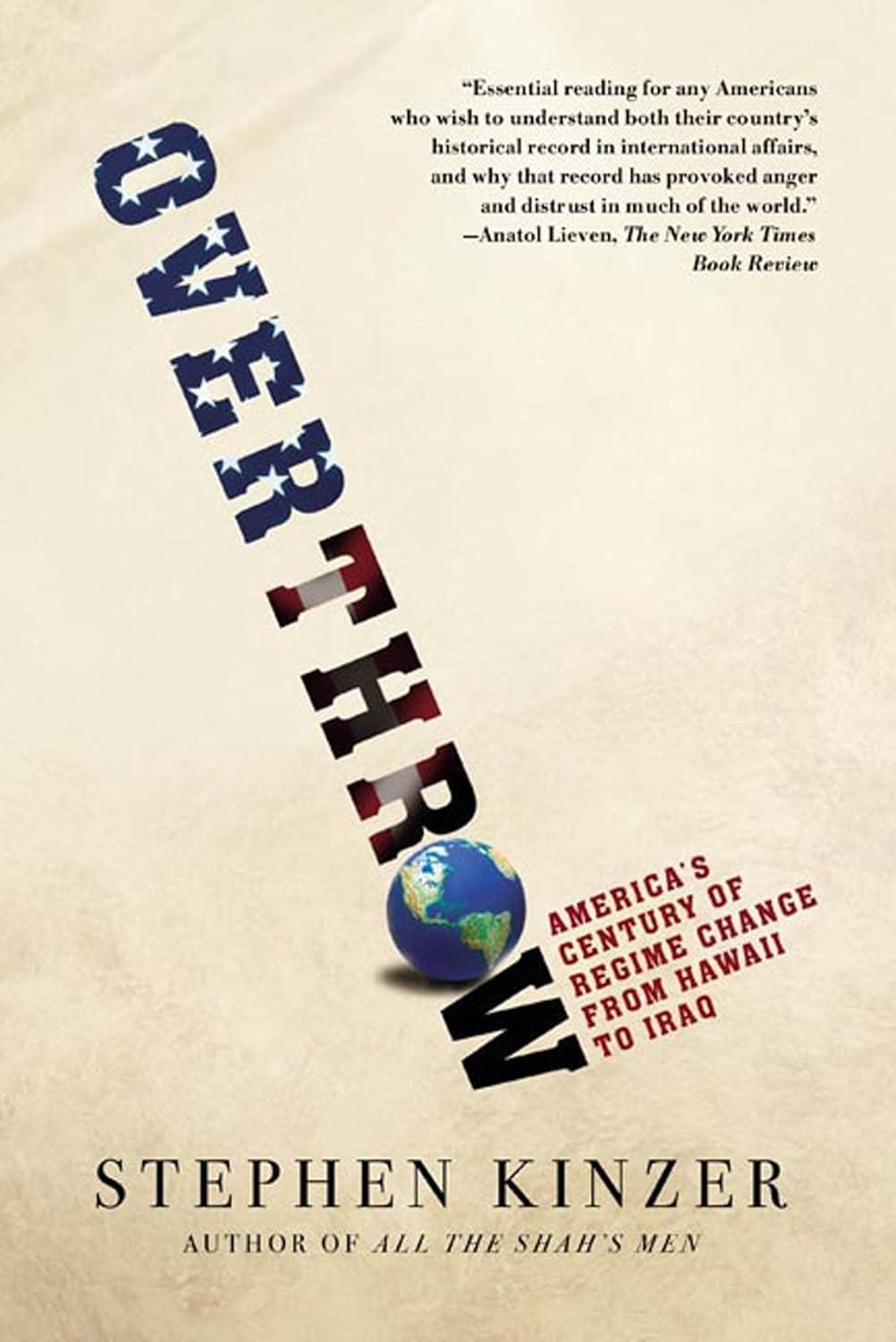
An award-winning author tells the stories of the audacious American politicians, military commanders, and business executives who took it upon themselves to depose monarchs, presidents, and prime ministers of other countries with disastrous long-term consequences.
My Summary
Main Ideas, Takeaways & Similarities
Questions
I. What is the problem?
A. How is this problem formulated?
B. Why is this problem important?
C. What is the history of this problem?
D. Which prominent personalities have been interested in this problem?
II. What solutions to the problem are there?
A. What are the conclusions reached?
B. By what argument(s) is the conclusion reached?
C. What facts or assumptions serve as premises?
D. When a prominent personality offers a solution, does he also argue for or against other prominent personalities? Does he raise objections to alternative solutions? Does he consider objections to his own solutions?
III. Evaluation
A. What are the advantages and disadvantages of the alternative formulations to the problem?
B. Has the importance or history of the problem ever been misrepresented?
C. Are the solutions logically related to the premises?
D. Are the facts true? Are the assumptions acceptable? Are the objections answerable?
AI Summary
Highlights
“Overthrow: America’s Century of Regime Change from Hawaii to Iraq” is a book written by Stephen Kinzer, published in 2006. The book examines the history of United States involvement in regime change operations in various countries over the course of the 20th century. Here is a comprehensive summary of the book in bullet points:
- The book explores the history of U.S. intervention in foreign countries to bring about regime changes that aligned with American interests.
- Stephen Kinzer argues that the United States has been involved in covert or overt regime change operations in numerous countries, often to protect economic interests or geopolitical objectives.
- It begins with the overthrow of the Hawaiian monarchy in 1893, which allowed the United States to establish control over Hawaii and its resources.
- The book covers a wide range of countries where U.S. involvement in regime change occurred, including Cuba, the Philippines, Iran, Guatemala, Vietnam, Chile, and Iraq, among others.
- Kinzer discusses the motivations behind these interventions, which often included protecting American business interests, ensuring access to resources, or containing the spread of communism during the Cold War.
- The book highlights the use of covert operations, such as the CIA’s role in orchestrating coups and supporting anti-government movements.
- It examines the consequences of these interventions, including political instability, human rights abuses, and anti-American sentiment in the affected countries.
- Kinzer argues that many of these regime changes had long-term negative consequences, such as the eventual rise of authoritarian regimes and anti-American movements.
- The book also addresses the role of influential figures in shaping U.S. foreign policy, including government officials, corporate leaders, and intelligence operatives.
- It discusses the ethical and moral dilemmas associated with U.S. involvement in regime change operations, particularly when it comes to supporting authoritarian leaders or undermining democratically elected governments.
- Kinzer examines the impact of public opinion and activism on U.S. foreign policy decisions, highlighting instances where public opposition influenced the course of action.
- The book raises questions about the effectiveness and wisdom of U.S. intervention in other countries’ political affairs and the potential blowback from such actions.
- It concludes by emphasizing the need for a more ethical and principled approach to U.S. foreign policy and a greater awareness of the historical context of regime change operations.
“Overthrow” provides a comprehensive historical analysis of U.S. involvement in regime change operations over the 20th century. It offers insights into the motivations, methods, and consequences of these interventions and raises important questions about the role of the United States in shaping the political destinies of other nations.