📓 In your handwritten notebooks
- March 21 – June 9 2026, pp. 184 — *The Origins of Woke — Hanania* → open PDF p200 (file not included in this release)
Index: Personal Journal
DESCRIPTION
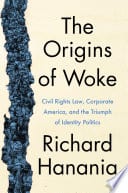
Richard Hanania has emerged as one of the most talked-about writers in the nation, and in this book, he puts forward a stunning new theory about the culture war that could turn our debates upside down. Richard Hanania has come out of nowhere to become one of the best-known writers in the nation in the last few years. In this book, he directs his attention to the culture war that has driven society apart and presents a stunning new theory about what is going on. In a nation nearly-evenly split between conservatives and liberals, the left dominates nearly all major institutions, including universities, the government, and corporate America. Hanania argues that this is as much a legal requirement as it is an issue of one side triumphing in the marketplace of ideas. Culture has its own independent force, but the state has, since the 1960s, been putting its thumb on the scale. This book answers many of the puzzling questions about modern society, such as: • Why does more and more of life seem like a competition to see who is the most oppressed? • Who is really behind the sudden proliferation of woke ideas? • How did ideas that seem so intellectually bankrupt achieve hegemony over elite culture? • Which laws and regulations have helped the left rise to power everywhere? • How did workplaces come to be the main enforcers of political ideology? • When and how did Pakistanis, Samoans, and Koreans all become the same “race” (AAPI)? • Why did America become so obsessed with inequalities based on race but not religion? For those angry about wokeness and what it has done to American institutions, this book offers concrete suggestions regarding policies that can move us back to being a country that emphasizes merit, individual liberty, and color-blind governance.
The Origins of Woke_ Civil Rights Law, Cor - Richard Hanania.pdf (file not included in this release)
The Origins of Woke - Richard Hanania PDF Extracted
Handwritten journal source
Consolidated source: PDF pp. 199–200 (file not included in this release)
Source boundary: These are handwritten source pages. Use the scan for exact wording; verify quotations and factual claims before reuse.
Embedded preview:
March 21-June 9 2026.pdf (file not included in this release)
Open the journal routing table
Executive Summary
Richard Hanania’s The Origins of Woke: Civil Rights Law, Corporate America, and the Triumph of Identity Politics argues that wokeness is not primarily the product of postmodern theory, campus radicalism, or abstract “cultural Marxism,” but the downstream institutional result of American civil rights law. His central claim is that since the 1960s, courts, federal agencies, executive orders, and litigation incentives have pressured corporations, universities, contractors, and government-funded institutions to organize themselves around race-consciousness, sex-consciousness, disparate-impact liability, speech regulation, harassment prevention, and bureaucratic compliance. In his account, modern DEI, HR expansion, speech policing, affirmative action, and institutional ideological conformity are not accidental cultural developments; they are rational institutional adaptations to legal risk.
The book’s significance is that it reframes the anti-woke debate away from “bad ideas won in the marketplace of ideas” and toward legal-political incentives. Hanania argues that conservatives and anti-woke liberals misunderstand the problem when they focus only on campus activists, corporate virtue signaling, or elite ideology. His claim is more structural: the state has created a system in which institutions are punished for ignoring group disparities and rewarded for expanding compliance bureaucracies. The solution, therefore, is not only better arguments or alternative media, but legal reform aimed at affirmative action mandates, disparate impact doctrine, harassment law, Title IX enforcement, and federal civil-rights bureaucracy.
Competing causal model — Cofnas versus Hanania
Nathan Cofnas agrees that civil-rights law reinforces DEI but denies that law is the primary cause. His model begins with an equality thesis: if elites believe races and sexes have the same innate distributions of important psychological traits, then persistent disparities seem to require an environmental injustice. Lawyers, administrators, and managers interpret institutions through that premise; legal reform will therefore be reversed unless elite beliefs change. Hanania reverses the arrow: legal liability, disparate impact, harassment doctrine, and compliance bureaucracies train institutions into “woke” practice.
These are not cleanly exclusive explanations. Beliefs influence legal interpretation; law changes incentives and selects personnel; institutions then reproduce the beliefs. Neither author supplies a decisive research design isolating the primary cause. Cofnas also goes further than the science supports when he treats a substantially genetic explanation of racial IQ gaps as settled. The most useful vault model is therefore a feedback loop, not a one-cause verdict: elite moral beliefs ↔ civil-rights doctrine ↔ compliance organizations ↔ hiring and socialization. → Nathan Cofnas > His theory of “wokism”
Key Concepts
Wokeness as Law
Hanania defines wokeness through three pillars:
- Disparities equal discrimination: Unequal outcomes between protected groups are treated as presumptive evidence of discrimination.
- Speech restrictions: Speech that challenges the discrimination explanation, or that creates offense around protected categories, becomes institutionally risky.
- HR/DEI bureaucracy: Institutions create permanent bureaucracies to manage legal exposure, enforce norms, and document compliance.
Wokeness as Civil Rights Law
“Long before wokeness was a cultural phenomenon, it was law.” — p. 16
The book’s core move is to connect each pillar to legal doctrine: disparate impact, hostile work environment, affirmative action, Title IX enforcement, and civil-rights litigation incentives.
Disparate Impact
Disparate impact is the doctrine that a formally neutral policy may be unlawful if it produces unequal outcomes across protected groups. Hanania treats this as one of the major legal engines of wokeness because it makes almost every institutional practice potentially suspect if outcomes differ by race or sex.
For Hanania, disparate impact converts inequality of result into a regulatory problem. Institutions then preemptively modify hiring, testing, promotion, discipline, admissions, and evaluation systems to avoid liability.
Affirmative Action as Regulatory Mandate
Hanania argues that affirmative action is often misunderstood as voluntary corporate ideology. In his account, federal contractors and government-related institutions have long been pushed into affirmative-action structures by executive orders and compliance agencies, especially through Executive Order 11246 and the Office of Federal Contract Compliance Programs.
Hostile Work Environment
The doctrine of hostile work environment transforms certain forms of workplace speech or conduct into potential civil-rights violations if they are connected to protected categories and judged sufficiently severe or pervasive. Hanania argues that the vagueness of the standard incentivizes institutions to over-police speech.
Civil Rights Law as a Self-Financing System
Hanania emphasizes that civil-rights law is enforced not only by government agencies but also by private lawsuits, fee-shifting statutes, punitive damages, and settlement incentives. This creates a decentralized enforcement regime in which plaintiffs’ lawyers, HR departments, DEI consultants, compliance officers, and bureaucrats reinforce one another.
The Myth of the Marketplace of Ideas
Hanania rejects the claim that woke ideas simply defeated liberal, conservative, or classical liberal ideas in open debate. He argues that institutions adopted woke premises because law and compliance incentives made alternative institutional behavior costly.
The Marketplace of Ideas Is Overrated
“The marketplace of ideas is somewhat overrated.” — p. 9
Institutional Homogenization
The book argues that civil-rights law produces sameness across institutions. Even organizations with different internal cultures converge on the same HR, DEI, compliance, and speech-policing practices because they face the same legal incentives.
The Invisible Hand of the State
Hanania adapts economic language to argue that government action indirectly shapes private institutions while allowing those institutions to appear as if they are acting independently.
The State as Invisible Hand
“The state has been the ‘invisible hand’ molding and shaping institutions toward the collection of values that we now identify with the far left.” — p. 14
Key Terms
- Wokeness: For Hanania, an institutional ideology built around disparities-as-discrimination, speech restrictions, and HR/DEI enforcement.
- Protected class: A category such as race, color, religion, sex, national origin, and later sexual orientation or gender identity in some legal contexts, around which anti-discrimination law is organized.
- Disparate impact: A legal theory under which facially neutral policies may be unlawful if they produce unequal outcomes for protected groups.
- Disparate treatment: Intentional discrimination against an individual or group based on protected status.
- Affirmative action: Race- or sex-conscious institutional action designed to increase representation of designated groups.
- Hostile work environment: A legal concept under harassment law in which speech or conduct connected to protected status may create liability if it makes the workplace abusive or discriminatory.
- Title VII: The part of the Civil Rights Act of 1964 governing employment discrimination.
- Title VI: The part of the Civil Rights Act of 1964 barring discrimination in federally funded programs.
- Title IX: The 1972 law barring sex discrimination in federally funded education programs.
- OFCCP: Office of Federal Contract Compliance Programs, the Department of Labor office enforcing federal contractor affirmative-action and nondiscrimination obligations.
- EEOC: Equal Employment Opportunity Commission, the federal agency enforcing employment discrimination law.
- OCR: Office for Civil Rights, especially within the Department of Education, central to Title IX and education-related civil-rights enforcement.
- DEI: Diversity, Equity, and Inclusion; for Hanania, the institutional form taken by civil-rights compliance and identity-conscious administration.
- Soft quotas: Informal or indirect numerical targets that avoid explicit quota language but pressure institutions toward representational balancing.
- Diversity rationale: The argument, central to affirmative-action jurisprudence, that racial preferences are permissible because diversity itself has educational or institutional benefits.
- Political salience: The degree to which an issue becomes important to voters, activists, media, and politicians.
- Path dependency: The idea that early institutional choices create later constraints and incentives that are difficult to reverse.
Introduction
Main Ideas
Hanania opens by arguing that most critics misunderstand wokeness because they focus on its visible cultural style: safe spaces, microaggressions, pronoun disputes, DEI trainings, and corporate political statements. He argues that these are surface manifestations of a deeper legal regime. In his account, the assumptions behind wokeness have been embedded in American law for decades, especially through civil-rights enforcement around race, sex, and protected categories.
He presents the book as explicitly political. It is not merely descriptive history; it is a legal and strategic guide for anti-woke reformers. He argues that any serious anti-woke movement must understand civil-rights law the way a climate activist must understand energy policy. Complaining about corporate wokeness while ignoring the legal incentives behind it is, in his view, strategically incoherent.
[!quote] Anti-Wokeness and Civil Rights Law
“For so many public intellectuals and politicians to be anti-woke but indifferent to civil rights law struck me as similar to worrying about global warming but not bothering to know anything about energy policy.” — p. 8
Hanania also distinguishes between cultural momentum and legal causation. He does not claim law explains everything, but he argues it explains why large institutions converge on similar ideological practices. Corporations, universities, and government-funded entities act similarly because they face similar regulatory pressures.
Chapter 1: How to Understand Wokeness
What Is Wokeness?
Hanania defines wokeness as a three-part structure: disparities equal discrimination, speech restrictions, and HR bureaucracy. He argues that the first two define woke ideology, while the third explains how it is enforced institutionally.
His definition is narrower than simply “left-wing politics.” A person who thinks discrimination explains disparities but does not support speech restriction is, in his terminology, a liberal rather than woke. Likewise, someone who supports speech restrictions for religious reasons is not woke but a religious censor. Wokeness is specifically the combination of group-disparity politics, speech regulation, and bureaucratic enforcement.
He argues that these pillars map onto legal developments:
- Disparate impact doctrine makes unequal outcomes legally suspicious.
- Harassment law makes speech connected to race or sex legally risky.
- Civil-rights compliance encourages HR and DEI expansion.
- Title IX turns sex discrimination law into a tool for regulating educational institutions and student conduct.
The Myth of the Marketplace of Ideas
Hanania rejects intellectual histories that attribute wokeness mainly to Marx, Foucault, Marcuse, the Frankfurt School, postmodernism, or Protestant guilt. He argues that such theories overstate the role of intellectuals and understate the role of state power.
His claim is not that ideas are irrelevant, but that they become dominant inside institutions because incentives favor them. He compares this to other regimes where official ideology spreads because people learn which beliefs are safe to express.
Government Mandates First
“The government mandates came first, and the ideology later.” — p. 16
He argues that civil-rights law succeeded precisely because it was indirect. Rather than openly banning dissent, it nudged institutions toward race-consciousness, sex-consciousness, and speech regulation while using the language of nondiscrimination.
Important Phenomena Can Have Trivial Causes
Hanania argues that intellectuals often assume large cultural phenomena must have profound philosophical causes. He rejects that assumption. Wokeness, in his account, is better understood as a logrolled cultural settlement created through litigation, bureaucracy, interest-group pressure, elite guilt, riot-driven crisis management, and institutional risk aversion.
He uses the example of diversity to show how a relatively ad hoc judicial compromise became an institutional ideology. According to Hanania, “diversity” did not arise as a deep philosophical concept but as a post-Bakke legal rationale for preserving race-conscious admissions while avoiding explicit quotas.
Politics and Culture Are Not Separate
Hanania criticizes the popular conservative slogan that “politics is downstream from culture.” He argues that in a modern administrative state, politics and culture mutually reinforce each other. Government schools, federal funding, workplace regulation, litigation incentives, and administrative enforcement shape cultural norms.
The point is not that politics fully determines culture, but that treating culture as separate from law is analytically weak. Hanania argues that civil-rights law has placed the state’s “thumb on the scale” in favor of identity-conscious institutional culture.
Overview
The chapter ends by framing the book as both history and practical political strategy. Hanania says his project is to show how the United States moved from the ostensibly color-blind text of the Civil Rights Act to a regime of institutional race- and sex-consciousness.
He also provides a table summarizing the main legal doctrines underpinning wokeness: affirmative action in contracting and government employment, disparate impact in the private sector, disparate impact in federally funded programs, anti-harassment law, and Title IX regulation.
Chapter 2: Lies, Damned Lies, and Civil Rights Law
Main Ideas
Chapter 2 argues that the key innovations in civil-rights law came after the Civil Rights Act itself. Hanania claims Congress originally aimed to prohibit intentional discrimination, especially the Jim Crow system, but later courts and agencies transformed civil-rights law into a machinery of social engineering.
The chapter focuses on four legal innovations:
- Federally mandated affirmative action
- Disparate impact
- Harassment law
- Title IX as educational regulation
Hanania argues that these doctrines are vague enough to give government and plaintiffs broad discretion, but concrete enough to force institutions to become obsessed with race and sex.
Affirmative Action for Contractors
Hanania traces affirmative action in federal contracting through executive orders. He notes that presidents used contracting power to impose obligations on private firms that do business with the federal government.
Key developments include:
- Roosevelt’s wartime nondiscrimination order.
- Kennedy’s Executive Order 10925, which introduced the command to “take affirmative action.”
- Johnson’s Executive Order 11246, which became central to the federal contractor affirmative-action regime.
- The later expansion of protected categories, including sex, sexual orientation, and gender identity.
Hanania emphasizes that large parts of corporate America are affected because federal contracting reaches a major share of the economy. In his view, this creates mandatory race- and sex-consciousness in institutions that may appear private but operate under federal compliance pressure.
Disparate Impact: Everything Is Illegal
Hanania treats disparate impact as perhaps the most important legal doctrine in the book. Under this doctrine, a neutral practice can be treated as discriminatory if it produces unequal outcomes.
His critique has several parts:
- Almost every selection mechanism creates unequal outcomes somewhere.
- Employers cannot easily know in advance which practices will be challenged.
- The doctrine encourages institutions to abandon meritocratic screens if those screens produce racial or sex disparities.
- Because intent is unnecessary, institutions become liable not for conscious wrongdoing but for statistical imbalance.
Hanania argues that this leads to preemptive risk management: employers alter tests, credentials, discipline policies, and hiring systems to avoid disparate-impact exposure.
Harassment Law
Hanania argues that harassment law effectively makes institutions responsible for policing speech. The problem, in his account, is vagueness. Because employers cannot know exactly what a court or agency will later classify as a hostile environment, they adopt broad “zero tolerance” policies.
This produces workplace speech codes. Employers are incentivized to suppress offensive, controversial, or identity-related speech long before it becomes legally actionable.
Title IX: Sports and Sexuality
Hanania argues that Title IX began as a ban on sex discrimination in federally funded education but became a mechanism for regulating athletics, sexual misconduct procedures, campus bureaucracy, and eventually gender identity conflicts.
He treats Title IX as an example of how simple statutory language can become an expansive administrative project. In his telling, the law went from nondiscrimination to detailed social regulation.
The Skeleton Key of the Left
Hanania calls disparate impact and related doctrines a “skeleton key” because they can be applied to nearly any institution and any disparity. If outcomes differ, bureaucrats, lawyers, or activists can demand reform.
His argument is that these doctrines allow progressive bureaucratic power to expand without requiring explicit democratic approval for every new policy. The same legal theory can be used in employment, education, policing, school discipline, contracting, athletics, and admissions.
Chapter 3: The Standardization of the American Workplace and University
Main Ideas
Chapter 3 explains how vague civil-rights requirements produce institutional sameness. Hanania argues that corporations and universities develop similar HR, DEI, compliance, and legal-risk systems because they face the same federal doctrines and lawsuit incentives.
Civil Rights Law Is Vague
Hanania contrasts a strong state that clearly mandates quotas with the American model, which formally prohibits quotas while pressuring institutions toward race- and sex-conscious outcomes. This ambiguity is central to his critique.
Because civil-rights law often does not clearly say what is allowed, institutions overcompensate. They hire lawyers, compliance officers, HR professionals, and DEI staff to interpret risk.
A Self-Financing System
Hanania argues that civil-rights enforcement is self-financing because private lawsuits and attorney-fee rules incentivize plaintiffs and lawyers to bring claims. He points to fee-shifting rules and Supreme Court doctrine that make defendants bear heavy costs even when they win.
The asymmetry matters: plaintiffs may recover fees if successful, while defendants often cannot. This encourages settlement, risk avoidance, and institutional compliance expansion.
The “Best Practices” Doctrine
Hanania argues that legal ambiguity creates an industry of “best practices.” Institutions imitate one another because following widely accepted HR or DEI procedures helps demonstrate seriousness to courts and agencies.
The result is not genuine diversity of institutional culture but compliance mimicry. Universities and corporations converge on the same training programs, grievance procedures, reporting systems, diversity statements, and official language.
Bureaucratic Bloat and Institutional Homogenization
Hanania sees HR and DEI growth as rational responses to civil-rights risk. Institutions expand bureaucracies to:
- Track demographic data.
- Investigate complaints.
- Conduct trainings.
- Produce compliance documentation.
- Manage internal speech.
- Signal conformity to regulators and courts.
The larger argument is that civil-rights law does not merely punish discrimination; it creates a permanent class of institutional managers whose professional incentives favor continued expansion of identity-conscious administration.
Division of Labor
Hanania argues that legal risk changes the internal division of labor inside institutions. Instead of managers directly exercising judgment over hiring, promotion, discipline, and workplace culture, authority shifts to HR, compliance, legal departments, and DEI offices.
This moves institutions away from decentralized judgment and toward bureaucratic procedure.
Chapter 4: Government as the Creator of New Races and Genders
Main Ideas
Chapter 4 argues that the state does not merely recognize identities; it creates, stabilizes, and incentivizes them. Hanania argues that federal racial and ethnic categories helped produce modern identity blocs such as Hispanic, Asian American Pacific Islander, and other official minorities.
Inventing American Races
Hanania argues that American racial categories were partly bureaucratic creations. Government agencies needed categories for enforcement, statistics, affirmative action, and civil-rights monitoring. Once created, those categories became socially real because institutions were required to use them.
He emphasizes the arbitrariness of the categories. Some groups receive minority designation; others do not. Some groups with high average socioeconomic status are treated as protected minorities, while some disadvantaged white ethnic groups are not.
The Rise of Hispanics, Latinos, Asians, and Pacific Islanders
Hanania argues that terms like “Hispanic” rose dramatically as government categories became embedded in law, statistics, journalism, activism, and institutional policy. The state’s categories shaped how people understood themselves politically.
He notes that activists from groups excluded from official minority status challenged the arbitrariness of the system. If discrimination justifies recognition, then the government’s refusal to collect certain data makes it difficult for excluded groups to prove discrimination.
The Two-Front War on Tradition and Sexuality
Hanania argues that civil-rights law attacks traditional sex roles from two directions:
- It pressures institutions to treat male-female differences as presumptively caused by discrimination.
- It increasingly incorporates sexual orientation and gender identity into anti-discrimination frameworks.
He sees contradictions here. Feminist civil-rights theory often assumes gender differences are socially constructed, while transgender-rights discourse often treats gender identity as innate and immutable. Hanania argues that legal systems do not require philosophical consistency; they can enforce incompatible premises in different contexts.
Official Minorities as a Source of Expanding Government Power
Hanania argues that every official protected category creates a new basis for regulation, litigation, data collection, representation claims, and bureaucratic expansion. The government gains power by defining groups, measuring disparities, and intervening to correct them.
His broader claim is that identity categories become politically useful once the state attaches legal privileges, protections, or compliance duties to them.
Chapter 5: Social Engineering as a Cause of Stagnation, Ennui, and Social Strife
Main Ideas
Chapter 5 argues that civil-rights social engineering damages meritocracy, institutional creativity, workplace morale, and social trust. Hanania’s claim is not merely that wokeness is annoying or aesthetically unpleasant, but that it imposes real costs on productivity, innovation, personal relations, and political peace.
The War on Merit
Hanania argues that if group disparities are treated as presumptive evidence of discrimination, then meritocratic standards become suspect whenever they produce unequal outcomes. Standardized testing, credentialing, disciplinary rules, hiring screens, and performance metrics all come under pressure.
The result, in his account, is a shift from excellence and competence toward representational parity.
Cultural Diversity and the Rise of the Miserable Workplace
Hanania argues that modern diversity ideology often makes workplaces less comfortable by increasing suspicion, grievance, and self-censorship. He distinguishes between ordinary pluralism and legally managed diversity. The latter requires constant monitoring of speech, jokes, relationships, and interpersonal conduct.
The End of Creative Destruction in Personnel Management and Institution-Building
Hanania argues that legal risk reduces experimentation in personnel management. If hiring, firing, testing, promotion, discipline, and workplace culture are all civil-rights risks, institutions become more cautious and standardized.
This weakens institutional competition. Firms and universities become less distinctive because deviation from compliance norms creates liability.
Civil Rights Law Is Why We Hate Each Other
Hanania argues that civil-rights law heightens intergroup conflict because it trains people to interpret inequality as oppression and interpersonal friction as discrimination. Rather than reducing racial and sex consciousness, civil-rights law embeds it in everyday institutional life.
The Right That Ate All Others
Hanania argues that anti-discrimination has become a dominant legal-moral right that overrides other values: free speech, freedom of association, meritocracy, institutional autonomy, and procedural fairness.
In his account, once anti-discrimination is interpreted expansively, nearly every other liberty can be subordinated to it.
Chapter 6: Republicans and Civil Rights Law
Main Ideas
Chapter 6 asks why Republicans did not dismantle or substantially reform the civil-rights legal regime despite decades of conservative electoral success. Hanania argues that Republicans often won elections while losing institutional and cultural battles because they failed to understand or prioritize civil-rights law.
The New Right and the Establishment Can Unite on Civil Rights Law
Hanania argues that both establishment conservatives and the New Right have reasons to oppose civil-rights excesses. Establishment conservatives can frame reform as color-blindness, individual rights, and free markets. The New Right can frame it as a fight against woke institutional power.
This is one of the book’s strategic claims: civil-rights reform could unite otherwise divided factions of the right.
Three Eras
Hanania divides Republican engagement with civil-rights law into three broad periods.
Bipartisan Cartel, 1964–1980
In this period, Republicans often accepted or helped expand civil-rights innovations. Hanania argues that elite consensus, centralized media, and the immaturity of the conservative policy movement prevented serious resistance.
Conservative Legal Movement, 1980–2000
Hanania argues that Reagan-era conservatives had more awareness of the problem, but were constrained by bureaucratic resistance, elite pressure, and lack of sustained political will. Reagan considered action against affirmative-action requirements, but the effort failed.
Post-2000 Retreat
Hanania argues that Republicans increasingly abandoned civil-rights reform, even as woke institutional power intensified. Instead of targeting the legal roots, conservatives focused on symbolic culture-war grievances.
The Time for Action
Hanania argues that current conditions are more favorable to reform than in past decades:
- More conservative judges.
- Greater public backlash against wokeness.
- Fragmented media.
- More anti-woke activists and institutions.
- Greater awareness of DEI and institutional speech policing.
His conclusion is that Republicans should stop treating wokeness as only a cultural problem and start targeting the legal infrastructure that sustains it.
Chapter 7: What Is to Be Done?
Main Ideas
Chapter 7 provides Hanania’s reform agenda. He argues that anti-woke politics must raise the salience of civil-rights law and pursue concrete legal changes through executive action, litigation, administrative reinterpretation, state policy, and eventually legislation.
Political Salience
Hanania argues that civil-rights law remains politically under-discussed because its mechanisms are technical. Voters understand controversies over Dr. Seuss, pronouns, or DEI trainings more easily than disparate impact or OFCCP rules.
His strategic recommendation is to make the legal roots of wokeness politically visible.
Start with the Low-Hanging Fruit
Hanania recommends beginning with reforms that are administratively possible and politically defensible, especially:
- Reversing affirmative-action mandates in federal contracting.
- Reinterpreting disparate impact rules.
- Limiting Title IX overreach.
- Narrowing hostile-environment doctrine.
- Pressuring agencies to enforce anti-discrimination law symmetrically, including discrimination against whites, men, and Asians.
Going on the Offensive
Hanania argues that anti-woke reformers should not merely defend institutions from left-wing overreach. They should use law against explicit race- and sex-based discrimination by woke institutions.
This is strategically important because it changes institutional incentives. If affirmative action itself becomes a liability risk, institutions may retreat from race-conscious programs.
Getting Water from the Ocean
Hanania argues that conservatives often think they lack power, but they have neglected tools already available to them: executive orders, agency appointments, litigation, federal contracting rules, state legislation, and judicial doctrine.
His point is that anti-woke politics should become technically sophisticated rather than purely rhetorical.
Conclusion: Unleashing American Freedom and Creativity
Is Wokeness Inevitable, or a Paper Tiger?
Hanania argues that wokeness appears culturally invincible because it is institutionally entrenched, but it may be more fragile than it looks if its legal supports are removed. He predicts that institutions may continue woke practices briefly even after reform, but over time HR and DEI bureaucracies would shrink if legal incentives change.
Imagining a Non-Woke America, and World
Hanania imagines a society with more institutional pluralism, more experimentation, less speech policing, less bureaucratic risk management, and more openness to meritocratic standards. He does not claim that reversing civil-rights excesses would instantly transform culture, but he argues that it would create conditions for new institutions to emerge outside the woke compliance regime.
Federal Laws, Executive Orders, Agencies, and Court Cases Mentioned
Federal Laws
Civil Rights Act of 1964
Reason mentioned: This is the foundational statute of the book. Hanania argues that its text targeted discrimination, especially intentional Jim Crow-style exclusion, but later courts and agencies transformed it into a broader system of social engineering.
Relevant titles:
- Title VII: Employment discrimination.
- Title VI: Discrimination in federally funded programs.
- Section 706(k): Attorney-fee provision in Title VII cases.
Civil Rights Act of 1991
Reason mentioned: Hanania argues that this law increased litigation incentives by allowing punitive damages and strengthening the legal consequences of discrimination claims. He treats it as a major accelerator of institutional risk aversion.
Civil Rights Attorney’s Fees Award Act of 1976
Reason mentioned: Hanania argues that fee-shifting provisions helped create a self-financing civil-rights enforcement system by incentivizing private litigation.
Title IX of the Education Amendments of 1972
Reason mentioned: Hanania treats Title IX as a major example of statutory expansion. What began as a sex-discrimination rule in federally funded education became, in his view, a mechanism for regulating athletics, sexual misconduct procedures, campus speech, gender identity, and institutional bureaucracy.
Americans with Disabilities Act
Reason mentioned: It appears as part of Hanania’s broader argument about civil-rights litigation incentives, especially attorney fees and compliance-driven lawsuits.
Executive Orders
Executive Order 10925
Reason mentioned: Kennedy’s order introduced the phrase “take affirmative action” into federal contracting.
Executive Order 11246
Reason mentioned: Johnson’s order became the basis of the modern federal contractor affirmative-action regime. Hanania treats this as one of the central mechanisms by which the federal government imposed race- and sex-consciousness on major employers.
Executive Order 11478
Reason mentioned: Hanania connects this to affirmative action and equal opportunity in federal employment.
Agencies and Offices
EEOC — Equal Employment Opportunity Commission
Reason mentioned: Central agency enforcing employment discrimination law. Hanania treats it as a major source of expansive interpretation and enforcement.
OFCCP — Office of Federal Contract Compliance Programs
Reason mentioned: Enforces federal contractor compliance, especially affirmative-action obligations.
OCR — Office for Civil Rights
Reason mentioned: Especially important in education and Title IX enforcement. Hanania treats OCR as a central actor in university bureaucratization.
Department of Labor
Reason mentioned: Houses OFCCP and plays a major role in contractor regulation.
Department of Education
Reason mentioned: Through OCR, it pressures schools and universities on Title IX, harassment, discipline, and civil-rights compliance.
Court Cases
Griggs v. Duke Power Co. (1971)
Reason mentioned: Central case establishing disparate impact under Title VII. Hanania treats it as one of the most important legal turning points because it allowed neutral employment practices to be challenged based on unequal outcomes.
University of California Regents v. Bakke (1978)
Reason mentioned: Central affirmative-action case. Hanania argues that Justice Powell’s diversity rationale became the ideological foundation for later institutional diversity policies, despite its allegedly ad hoc and incoherent character.
Gratz v. Bollinger (2003)
Reason mentioned: Affirmative-action case involving undergraduate admissions. Hanania uses it to discuss the Court’s distinction between illegal quotas and permissible race-conscious admissions.
Grutter v. Bollinger (2003)
Reason mentioned: Affirmative-action case involving law school admissions. Hanania treats it as confirmation of the diversity rationale.
Christiansburg Garment Co. v. EEOC (1978)
Reason mentioned: Hanania argues that this case created asymmetry in attorney-fee recovery, making civil-rights litigation more favorable to plaintiffs than defendants.
Skaff v. Meridien North America Beverly Hills, LLC (2007)
Reason mentioned: Used as an example of how civil-rights litigation can generate attorney-fee incentives even when cases settle.
Alexander v. Sandoval (2001)
Reason mentioned: Relevant to whether private parties can sue to enforce disparate-impact regulations under Title VI. Hanania treats the area as legally questionable but still influential through executive enforcement.
Bostock v. Clayton County (2020)
Reason mentioned: The Supreme Court case holding that Title VII’s ban on sex discrimination covers sexual orientation and gender identity. Hanania references it as part of the legal expansion of protected categories.
Critical Analysis
Strengths
Hanania’s strongest contribution is his institutional analysis. He forces readers to examine the legal incentives behind corporate and university behavior rather than treating every DEI initiative or HR policy as spontaneous ideological enthusiasm. This is analytically useful even for readers who disagree with his politics.
The book is also strong in showing how vague legal standards encourage overcompliance. Institutions often do not need to be explicitly ordered to suppress speech or alter hiring standards; they only need to face enough uncertainty and potential liability.
His critique of the “marketplace of ideas” explanation is also important. Many anti-woke arguments over-focus on intellectual genealogy while under-explaining why the same norms appear across corporations, universities, government agencies, nonprofits, and professional associations. Hanania’s incentive-based explanation is more concrete.
Weaknesses and Limitations
The book’s main weakness is that it sometimes risks over-causation. Civil-rights law clearly matters, but wokeness also grew through elite moral competition, social media dynamics, activist networks, university ideology, demographic change, secularization, polarization, and broader shifts in status culture. Hanania acknowledges culture has independent momentum, but the book’s argumentative force depends on making law the central explanatory variable.
A second limitation is that Hanania often treats disparate outcomes skepticism as more obvious than it is. He is right that disparities do not automatically prove discrimination, but the reverse also does not follow: showing that disparities can have non-discriminatory causes does not prove discrimination is marginal or unimportant in any specific case.
Third, the book’s treatment of civil-rights law is intentionally adversarial. It gives less sustained attention to the original moral and historical reasons civil-rights enforcement became aggressive: entrenched racial exclusion, informal discrimination, evasive compliance, and the difficulty of proving intent. A fuller account would weigh both the abuses of expansive doctrine and the problem of under-enforcement in a society where discrimination can be subtle.
Fourth, Hanania’s policy agenda is more developed legally than socially. He argues that reform would eventually reduce institutional wokeness, but the path from legal change to cultural change is probabilistic, not guaranteed. Institutions may retain DEI commitments for reputational, ideological, market, or internal political reasons even without strong legal pressure.
Methodology
Hanania’s method combines:
- Legal history.
- Institutional analysis.
- Political strategy.
- Conservative/libertarian critique.
- Case-law interpretation.
- Administrative-state analysis.
The methodology is effective when explaining legal incentives. It is less complete when explaining why large numbers of elites came to find woke ideas morally attractive. His framework explains institutional adoption better than individual belief formation.
Biases and Omissions
The book is openly political and anti-woke. This is not hidden; Hanania explicitly presents the work as a political book. The bias matters because he tends to interpret legal ambiguity and bureaucratic expansion primarily as social-engineering mechanisms rather than as attempts, however flawed, to solve real discrimination problems.
Notable omissions or underdeveloped areas:
- More sustained engagement with pro-civil-rights legal scholarship.
- Stronger empirical comparison between institutions more and less exposed to federal civil-rights pressure.
- More discussion of discrimination that persists without explicit discriminatory intent.
- More attention to market incentives for corporate progressivism independent of law.
- More consideration of how anti-discrimination law might be narrowed without reviving exclusionary practices.
Questions for Reflection
- Is Hanania correct that wokeness is better understood as a legal-institutional regime than as an ideology born in universities?
- Does disparate impact doctrine necessarily undermine meritocracy, or can it reveal institutional practices that are formally neutral but unjust in practice?
- How should a liberal society balance anti-discrimination law against freedom of speech, freedom of association, and institutional autonomy?
- If civil-rights law helped create modern DEI and HR bureaucracy, would repealing or narrowing those laws actually reduce institutional wokeness, or has the ideology become self-sustaining?
- Is the “diversity rationale” for affirmative action intellectually coherent, or is Hanania right that it is a legal compromise retrofitted into an ideology?
- What would a genuinely color-blind and sex-neutral legal regime look like, and would it be politically or morally adequate after the history of American discrimination?
- Does Hanania’s framework explain only the American case, or can it be extended to other Western countries with different legal systems but similar woke cultural trends?
Highlights
Introduction
Highlight(yellow) - Location 83
Since the 1980s, firms have been all but required to police the speech of their employees to prevent them from saying things that might offend women and non-whites, and since 1991 the most litigious among those workers have been able to receive punitive damages in lawsuits, whether or not they suffered career consequences. Opponents of wokeness sometimes say that “facts don’t care about your feelings.” But the federal judiciary does.
Highlight(yellow) - Location 90
The conceptual similarities between principles of civil rights law and wokeness are easy enough to explain, but the burdens that the law imposes on employers and workers tend to have indirect and complicated effects on how institutions operate and on the larger culture.
Highlight(yellow) - Location 96
executive order mandating that all large government contractors adopt affirmative action programs.
Chapter 1: How to Understand Wokeness
Highlight(yellow) - Location 140
Conservative politicians and activists are not alone in being unable to see the connections between culture and law. Whichever side they’re on, most knowledgeable observers consider the radical cultural shift of the last few decades to be something that has occurred independently of who actually wins elections or sits atop the government. Following Lyndon Johnson’s landslide victory in the wake of the Kennedy assassination, between 1968 and 2016—a span of two generations—Republicans won eight of thirteen presidential elections. Even when Democrats did come into office, it tended to be with relatively conservative candidates. Jimmy Carter’s most lasting domestic influence was arguably the deregulation of industry, while Bill Clinton signed welfare reform, famously triangulated on social issues, and declared that “the era of big government is over.”
Highlight(yellow) - Location 166
Republicans have become the less educated party, making them less likely to make direct connections between their cultural concerns and government policy, even when the two are related.
Highlight(yellow) - Location 171
With few exceptions, there has been a general inability or unwillingness to accept the fact that what we call wokeness has been facilitated and encouraged by concrete actions undertaken by the federal government. Not only that, but race-and sex-consciousness are embedded in almost everything that Washington does, and it forces the rest of the country to behave similarly through how it regulates businesses, state and local governments, universities, and other institutions.
Highlight(yellow) - What Is Wokeness? > Location 211
Title IX,
Highlight(yellow) - What Is Wokeness? > Location 212
students. The Civil Rights Act of 1991,
Highlight(yellow) - What Is Wokeness? > Location 214
And because all of this has been inherently ambiguous about exactly what is or isn’t allowed, we have seen the rise of the human resources profession, along with its more recent offshoot, the diversity, equity, and inclusion (DEI) industry, in order to track and enforce the rules.
Highlight(yellow) - What Is Wokeness? > Location 220
With a few exceptions, like the Civil Rights Act of 1991, a bureaucratic and legal elite made most of the major decisions regarding what discrimination actually meant, whether the state should be in the business of regulating dating and humor in the workplace, and whether and how major institutions classify people according to ancestry.
Highlight(yellow) - The Myth of the Marketplace of Ideas > Location 252
The Diversity Myth, originally published in 1995, David Sacks and Peter Thiel saw the switch from the classics to so-called multicultural education at Stanford as a microcosm of what was happening to higher education and the rest of society.
Highlight(yellow) - The Myth of the Marketplace of Ideas > Location 263
A historical perspective, however, provides many reasons to doubt theories that blame any particular philosophy or religion for what has happened.
Highlight(yellow) - The Myth of the Marketplace of Ideas > Location 264
Wokeness resembles civil rights law more than it does Protestantism or the writings of any postmodern philosopher,
Highlight(yellow) - The Myth of the Marketplace of Ideas > Location 282
Long before wokeness was a cultural phenomenon, it was law. Just because the post–civil rights regime in the US has been less overtly authoritarian than other official state ideologies does not mean it has not been effective in reshaping society. The secret to its success is in its hidden, indirect nature. Rather than having a government that loudly and boldly proclaims a certain set of beliefs and then goes and locks up dissenters, civil rights law involves constantly nudging institutions in the direction of being obsessed with identity and suppressing speech, all while it speaks in the language of freedom and nondiscrimination.
Highlight(yellow) - The Myth of the Marketplace of Ideas > Location 298
From there, politicians and government bureaucrats in institutions like the Equal Employment Opportunity Commission (EEOC) and the Department of Labor, usually under pressure to produce tangible results, undertook a long-term project to get around the plain text of the law and ultimately try to achieve equality of outcome, first for blacks and later for other minorities and women.
Highlight(yellow) - The Myth of the Marketplace of Ideas > Location 320
clearest example of an intellectual concept being used as a post-hoc justification for a political compromise that was historically contingent can be seen in the rise of the idea of “diversity.”
Highlight(yellow) - The Myth of the Marketplace of Ideas > Location 345
Before the Civil Rights Act, the entirety of the civil rights lobby was united in consistently calling for racially neutral anti-discrimination laws. 13 Soon, however, there was a realization among elite institutions that, under a color-blind system of college admissions, there might not be many more blacks in positions of power and authority than there were before the Civil Rights Act.
Highlight(yellow) - The Myth of the Marketplace of Ideas > Location 351
In The Civil Rights Era: Origins and Development of National Policy, 1960–1972, Hugh Davis Graham convincingly argues that—in contrast to the pleasant-sounding conventional wisdom that violence usually hurts a cause—it was inner-city riots that originally convinced policymakers in Washington to go beyond color-blindness and adopt policies like affirmative action and minority set-asides in order to buy social peace.
Highlight(yellow) - The Myth of the Marketplace of Ideas > Location 365
Instead of policies with clear justifications, guidance, and goals, the law comes to act as a sort of ethical scold that is responsive to mass panics and evolving ideas about nondiscrimination and equality that can be easily incorporated into the current system without gaining approval through the democratic process.
Highlight(yellow) - The Myth of the Marketplace of Ideas > Location 369
anchoring affirmative action in the rationale of “diversity” required the creation of a new and largely incoherent official ideology that has been used to justify crusades against “inequity” and constant management of the thoughts and behaviors of students and faculty.
Highlight(yellow) - The Myth of the Marketplace of Ideas > Location 389
Wokeness is rooted in neither a blank-slate view of human nature nor genetic determinism. It can force individuals to adopt one perspective on one issue and the opposite on another,
Highlight(yellow) - The Myth of the Marketplace of Ideas > Location 401
larger narrative that American society is built to advantage whites, given that there are people of over a dozen non-European ethnic backgrounds that have a higher annual income than the white population.
Highlight(yellow) - Important Phenomena Can Have Trivial Causes > Location 419
whole project of seeking a grand philosophical explanation for wokeness relies on a conceptual mistake, likely rooted in the need of intellectuals to exaggerate their importance.
Highlight(yellow) - Important Phenomena Can Have Trivial Causes > Location 423
emerged from a combination of factors such as interest group lobbying, mass emotional sentiment, and bureaucrats seeking to increase their power.
Highlight(yellow) - Important Phenomena Can Have Trivial Causes > Location 430
wokeness-as-law perspective can help one understand all of this and much else.
Highlight(yellow) - Important Phenomena Can Have Trivial Causes > Location 436
If, however, this book is correct, and wokeness should be understood as a matter of government power, then the political entrepreneur is more important than the essayist. That is, unless the latter can produce work that serves as a catalyst for effective activism, as this book aspires to do.
Highlight(yellow) - Important Phenomena Can Have Trivial Causes > Location 448
A sample of 999 university job listings in 2021 found that 34 percent of those at elite schools required a “diversity statement,” and 78 percent mentioned “diversity.”
Highlight(yellow) - Politics and Culture Are Not Separate > Location 482
“Culture versus politics” is a false dichotomy. At the state, local, and national levels, government spent about 47 percent of GDP in 2020, and it regulates the workplace in an endless number of ways, both obvious and subtle.
Highlight(yellow) - Politics and Culture Are Not Separate > Location 484
Most children attend government schools five days a week for at least twelve years, and many spend more waking hours with state employees than with their own parents.
Highlight(yellow) - Politics and Culture Are Not Separate > Location 506
The Civil Rights Act of 1991 was the last piece of legislation that made a major difference in the kinds of trade-offs institutions face when deciding how to police speech and behavior, and its signing roughly corresponds with the rise of political correctness as a dominant force in American culture. In addition to showing that the basics of wokeness have been baked into the legal system for decades, this book argues that the regulatory regime we live under has provided the suprastructure through which broader cultural changes have taken place.
Highlight(yellow) - Overview > Location 599
Wokeness in its current form was not explicitly created at the top and forced on every firm; rather, anti-discrimination laws as invented and interpreted by bureaucrats, lawyers, and judges created incentives that had the practical effect of stamping out diversity across institutions, which have been shaped within a particular cultural and legal environment.
Chapter 2: Lies, Damned Lies, and Civil Rights Law
Highlight(yellow) - Location 619
In an attempt to kill the bill, Rep. Smith proposed including sex as a protected category.
Highlight(yellow) - Location 636
This is the story of civil rights law. It is likely that few, if any, members of Congress at the time would have believed that the bill signed by President Johnson would ultimately force police departments to lower their physical fitness standards to accommodate women, much less make employers subscribe to theories about the malleability and subjectivity of gender that had yet to be invented. What is called civil rights law today has little to do with the values and beliefs of American society in 1964. The debate that culminated in the CRA was about the misfortunes of black people in the South, and even that resulted in a compromise that mandated equal treatment in the private and public sectors.
Highlight(yellow) - Location 646
When President Johnson signed the Civil Rights Act, he only mentioned discrimination based on race and color.
Highlight(yellow) - Location 675
Even when a participant in an argument appears to lose a debate based on the “plain text” of holy writ, they can always appeal to the “spirit” of a relevant doctrine.
Highlight(yellow) - Location 692
It would be surprising if the rise of television did not play a role, as it both nationalized politics and provided footage that increased sympathy for the plight of black southerners.
Highlight(yellow) - Location 701
Nathan Glazer, soon after Congress prohibited discrimination based on race, color, religion, or national origin, “we then began an extensive effort to record the race, color, and (some) national origins of just about every student and employee and recipient of government benefits or services in the nation; to require public and private employers to undertake action to benefit given groups; and school systems to assign their children on the basis of their race, color, and (some) national origins.” 13 This is not what the country signed up for, and it certainly did not believe that government had been given a mandate to regulate humor and dating, nor reach into the subconscious thoughts and desires of its citizenry to cure them of their hidden biases.
Highlight(yellow) - Location 707
This chapter addresses the four great innovations in civil rights law: federally mandated affirmative action, disparate impact, harassment law, and Title IX as a tool to regulate education.
Highlight(aqua) - Location 708
Ultimately, these doctrines have led to arbitrary government power. Their requirements are tangible enough to force institutions to be obsessed with race and sex, while either being vague enough to rarely give clear guidance regarding what is allowed or forbidden, or, in the case of Title IX, micromanaging the professional and personal lives of students and those employed by schools and universities. In the case of disparate impact, the doctrine makes practically everything potentially illegal. It gives government discretion as to what to go after, making it the skeleton key of the identity-obsessed left.
Highlight(yellow) - Affirmative Action for Contractors > Location 722
EO 10925
Highlight(yellow) - Affirmative Action for Contractors > Location 725
EO 11246,
Highlight(yellow) - Affirmative Action for Contractors > Location 726
In 1967, Johnson added “sex” to its prohibited categories, and Obama included “sexual orientation” and “gender identity” in 2014.
Highlight(yellow) - Affirmative Action for Contractors > Location 745
Today, about a quarter of the American workforce is employed by a government contractor. 18 It is important to note that, pursuant to EO 11478 of 1969, affirmative action also exists within the federal government itself, which employs another 6 percent of the workforce.
Highlight(yellow) - Affirmative Action for Contractors > Location 748
Under affirmative action guidelines as applied to government contractors, it is no exaggeration to say that businesses are forced to be obsessed with race and sex. Long before people noticed that identity-related issues had consumed American universities, something resembling modern wokeness had already been forced on big business.
Highlight(yellow) - Affirmative Action for Contractors > Location 755
The employer is required to participate in a detailed process of identity-based classification and analysis. Middle managers for construction companies and retail store owners become social scientists.
Highlight(yellow) - Affirmative Action for Contractors > Location 775
Every aspect of employers’ analysis is reviewable by government bureaucrats. For the same reason that a contractor can always get around affirmative action requirements, the government can always find grounds to apply pressure on a business. From the contractor’s perspective, all they can know for certain is that they must go through the motions, and that hiring and promoting more minorities and women will be less likely to get them in trouble.
Highlight(yellow) - Affirmative Action for Contractors > Location 778
At the same time, businesses are told that “quotas are expressly forbidden.” Incredibly, we are to believe that placement goals as they are intended to be used “do not create set-asides for specific groups, nor are they intended to achieve proportional representation or equal results.”
Highlight(yellow) - Affirmative Action for Contractors > Location 781
Quite simply, businesses need to classify their employees, and in many cases engage in reverse discrimination, though they are prohibited from being too explicit about it.
Highlight(yellow) - Affirmative Action for Contractors > Location 789
Places of business must broadcast this doublethink to the world, announcing themselves as “equal opportunity employers,” which means that decisions are made without discriminating based on protected categories. No reader should make the mistake of believing that the detailed and dense nature of Labor Department regulations means that they are logically coherent or adhere to basic principles of the rule of law. Rather, they make a soft quota system politically and legally palatable while giving regulators arbitrary power over business as they pretend to restrain themselves.
Highlight(yellow) - Affirmative Action for Contractors > Location 801
Government contract compliance serves this purpose when it forces the private sector to express agreement with and act on the basis of left-wing beliefs about the ubiquity of discrimination and its role in causing group disparities.
Highlight(yellow) - Affirmative Action for Contractors > Location 810
individuals who run private institutions are forced to be obsessed with race and sex, but in the name of nondiscrimination.
Highlight(yellow) - Disparate Impact: Everything Is Illegal > Location 825
The act itself never defines “discrimination.”
Highlight(yellow) - Disparate Impact: Everything Is Illegal > Location 826
members of Congress foresaw the possibility that Title VII could be used to push for a disparate impact standard or equality of outcomes,
Highlight(yellow) - Disparate Impact: Everything Is Illegal > Location 838
The most harmful interpretation of the Civil Rights Act, however, would ultimately be the disparate impact standard.
Highlight(yellow) - Disparate Impact: Everything Is Illegal > Location 889
Justice Blackmun signed on to the 5–2 decision authorizing reverse discrimination even though, in his concurrence, he agreed with the dissent that “the Congress that passed Title VII probably thought it was adopting a principle of nondiscrimination that would apply to blacks and whites alike.” Nonetheless, he decided that allowing preferences in favor of blacks—
Highlight(yellow) - Disparate Impact: Everything Is Illegal > Location 917
Gail Heriot, a law professor and a member of the US Commission on Civil Rights (USCCR), has offered to donate $ 10,000 to the charity of choice of anyone who can find a single employment criterion that does not have a disparate impact on some group. 36 She hasn’t had to pay up, and never will, since we find group differences with regard to practically any trait, behavior, or exam subject to measurement. It is no exaggeration to say, in her words, that disparate impact “makes almost everything presumptively illegal.”
Highlight(yellow) - Harassment Law > Location 928
business owners must have their own speech restricted, and also police their employees under federal law.
Highlight(yellow) - Harassment Law > Location 978
An anti-harassment training program that said “you can only make off-color jokes if others have not also made off-color jokes” creates an impossible standard, one that requires workers to monitor not only their own speech but everyone else’s to even begin to know what is allowed or prohibited. The only reasonable approach is to ban any actions, words, or behaviors that might offend anyone.
Highlight(yellow) - Title IX: Sports and Sexuality > Location 1011
As women made rapid gains in education, Title IX began to bizarrely focus more and more on sports, an area in which men have always shown more interest.
Highlight(yellow) - Title IX: Sports and Sexuality > Location 1045
Just as civil rights law in employment imposes soft quotas to get around the fact that some groups have more productive workers than others, so too colleges and universities have had to deal with the hard fact that men are more interested in athletics by cutting male sports and padding their numbers of female athletes through methods such as including on lists those who never attend practices or games and double-or triple-counting participants.
Highlight(yellow) - Title IX: Sports and Sexuality > Location 1070
The Obama administration ushered in grievance procedures to address incidents in which one student had allegedly committed an offense against another. In 2011, OCR released a “Dear Colleague” letter that forbade universities from requiring “clear and convincing” proof of sexual misconduct before punishing a student, imposing a watered-down “preponderance of the evidence” standard instead. 56
Highlight(yellow) - Title IX: Sports and Sexuality > Location 1074
A White House task force created a model survey that defined “sexual violence” as including everything from unwanted remarks about a person’s physical appearance to rape.
Highlight(yellow) - Title IX: Sports and Sexuality > Location 1078
The Obama-era regulations also resulted in kangaroo courts in which convictions of men accused of sexual assault were all but assured, even for alleged conduct that was by all accounts legal.
Highlight(yellow) - Title IX: Sports and Sexuality > Location 1080
Melnick notes that “no word is repeated more frequently in OCR guidance documents than ‘training.’”
Highlight(yellow) - Title IX: Sports and Sexuality > Location 1086
A specialized bureaucracy has been needed in order to address these issues. The Obama administration recommended that schools employ a full-time Title IX coordinator who could act independently, reporting not to an administrative body but directly to “senior leadership, such as the district superintendent or the college or university president.”
Highlight(yellow) - Title IX: Sports and Sexuality > Location 1102
Title IX was also used by the Obama administration to enforce trans ideology, requiring schools to let children use bathrooms and locker rooms consistent with their “gender identity” rather than their biological sex.
Highlight(yellow) - The Skeleton Key of the Left > Location 1142
The Supreme Court has explicitly rejected for over three decades the idea that one can have different standards for discrimination against “protected” and “unprotected” groups, yet that is precisely what we find.
Highlight(yellow) - The Skeleton Key of the Left > Location 1166
the Asian American population has grown in recent decades, universities have faced a new dilemma. What to do about a minority group that overperforms on admissions criteria? They responded similarly to how they have responded when faced with underperforming minorities: with unofficial quotas that they justified on other grounds.
Highlight(yellow) - The Skeleton Key of the Left > Location 1176
Up to this point, affirmative action jurisprudence has given liberal institutions and supporters of identity politics the best of all worlds. They can use quotas to achieve balance, as long as they do not say that they are using quotas, thereby staying within the letter of the law while also obscuring what they are doing to avoid the uncomfortable truths and political backlash that would present themselves if they made racial discrimination explicit. This is primarily the fault of moderate rather than liberal judges, as the latter have shown themselves willing to uphold explicit quotas. While the current system of mandatory but implicit discrimination has proved to be ideal for those on the identity-obsessed left, it wasn’t designed by them. It is the result of a compromise arrived at to please moderates who are too timid to support either color-blindness or explicit discrimination against whites, Asians, and men.
Highlight(yellow) - The Skeleton Key of the Left > Location 1205
Under the standards of disparate impact and anti-harassment, the EEOC has gone after private businesses for using criminal background checks; word-of-mouth hiring; and enforcing different dress codes for male and female cocktail servers.
Highlight(yellow) - The Skeleton Key of the Left > Location 1212
If it seems that our culture has built an elaborate ranking system of races, genders, and “traumas,” it is because our legal system did it first.
Highlight(yellow) - The Skeleton Key of the Left > Location 1264
The distinctions between wokeness as culture and wokeness as law begin to break down when we think about the interaction between the two. An American employer is a private actor but also someone whose ideas about his role in society and professional obligations are shaped by the government regulations he lives under. A bureaucrat in the OFCCP is a government agent but also an active participant in shaping the cultures of corporations. Drawing the line between law and culture becomes even more difficult when we consider the bureaucracies that have grown within private institutions in response to civil rights law. A Title IX coordinator who believes that the United States is a white supremacist patriarchy is not only a symbol of the ideological extremism of the American university but a product of federal regulations.
Highlight(yellow) - The Skeleton Key of the Left > Location 1269
Two of the central tenets of wokeness identified in the first chapter—disparities are caused by discrimination, and speech must be restricted to help overcome those disparities—are not listed as official state doctrine in any legal textbook. In practice, for over half a century, employers and educational establishments have been forced to act as if they are. The third pillar of wokeness, that is, the new bureaucratic class that has risen in order to enforce the doctrines of the faith, is the subject of the next chapter.
Chapter 3: The Standardization of the American Workplace and University
Highlight(yellow) - Location 1280
As of 2020, Ohio State University employed 132 administrators with “diversity” or “equity” in their job titles at the cost of $ 13.4 million. 2 What has
Highlight(yellow) - Location 1287
The university simply did not have the administrative capabilities to comply with new mandates coming from Washington, which required painstaking record keeping to prove that the institution was not discriminating against women and minorities.
Highlight(yellow) - Location 1290
universities were once again struggling with the federal government, this time over its micromanaging of athletics under Title IX.
Highlight(yellow) - Location 1298
Civil rights law has led to an expansive human resources industry in the private and public sectors for three reasons. First, the law is vague: while it requires soft quotas and speech restrictions to a certain degree, an employer can never be sure just which aspects of hiring, promotion, and firing must take into account race, sex, and other protected identities, and precisely how; exactly which speech is banned; and what a firm’s obligations are in monitoring workers and enforcing speech codes.
Highlight(yellow) - Location 1301
None of this would matter all that much if civil rights law wasn’t also self-financing, the second reason for the existence of a robust human resources industry. Unlike in other areas of law, successful litigants can get attorney’s fees for lawsuits. The practice of awarding punitive damages, codified in the CRA of 1991, has further contributed to an incentive problem in which employers face penalties for running afoul of the law that are disproportionate to the tangible harms caused. Finally, there is the “best practices” doctrine, through which an institution can defend itself by showing that it is behaving in accordance with industry norms. Employers must pay attention not only to what judges and bureaucrats think but to the things that other corporations are doing to address discrimination. This creates an arms race, which helps explain why practices that once seemed absurd can become common.
Highlight(yellow) - Civil Rights Law Is Vague > Location 1345
vagueness wrapped in jargon is the great trick of civil rights law. This is particularly true with regard to the concept of harassment. Judges and bureaucrats could have had a standard that said “don’t do anything racist or sexist.” That would be an arbitrary standard, but adding more words has the effect of only making the rule look more exact and precise, while in effect doing no such thing. Not to “discriminate” under Title VII now means not to engage in sexual harassment, which in the words of the Supreme Court means avoiding conduct that is “sufficiently severe or pervasive ‘to alter the conditions of [the victim’s] employment and create an abusive working environment.’”
Highlight(yellow) - Civil Rights Law Is Vague > Location 1353
saying, “I’ll know it when I see it.” The practitioners of civil rights law have done the same thing: those with an interest in and ideological commitment to applying the broadest possible definitions of terms like “discrimination” set the rules for the rest of us.
Highlight(yellow) - Civil Rights Law Is Vague > Location 1364
In their 1998 paper “The Strength of a Weak State: The Rights Revolution and the Rise of Human Resources Management Divisions,” the sociologists Frank Dobbin and John Sutton show how across various areas of law, the American government regulates in an indirect way, which paradoxically leads to more bureaucracy.
Highlight(yellow) - A Self-Financing System > Location 1376
Decades-old federal statutes create massive penalties for violations of civil rights law,
Highlight(yellow) - A Self-Financing System > Location 1410
A January 2019 report revealed that 99 percent of Fortune 500 companies had made payments to at least one plaintiff in a harassment or discrimination lawsuit since 2000.14
Highlight(yellow) - A Self-Financing System > Location 1448
Under the Obama administration, it was normal practice for the Justice Department to reach settlements with corporations that required them to pay money to left-wing activist groups, therefore providing funding to the administration’s political allies without having to go through Congress.
Highlight(yellow) - A Self-Financing System > Location 1454
Today, one might say that the main business of the federal courts is social engineering.
Highlight(yellow) - A Self-Financing System > Location 1458
In the mid-1970s, there were only about five thousand EEOC charges of discrimination a year. By 2010, there were close to one hundred thousand, a number that has dropped to around sixty to seventy thousand in the last few years.
Highlight(yellow) - A Self-Financing System > Location 1470
From the early 1990s up to 2019, civil rights cases represented between 10 and 16 percent of all civil cases filed in federal court.
Highlight(yellow) - A Self-Financing System > Location 1499
Civil rights law is now a pillar of the identity left, as it funds a plaintiffs’ bar that profits from imposing costs on alleged violators, in addition to liberal organizations more generally.
Highlight(yellow) - A Self-Financing System > Location 1501
The fact that around 10–20 percent of all civil cases filed in federal court in recent years relate to discrimination of some kind should lead even those unconcerned with the implications for economic growth or freedom of association to realize that society might be overinvesting in fighting this particular harm. Of all the issues our legal system could be addressing, it is interesting that so much effort and attention is now directed at a kind of private cause of action that was not even recognized as part of the legal system until recent decades. Not that long ago, a fundamental principle of Anglo-American legal thought was that the remedy to discrimination practiced by a private party was to take one’s business or labor elsewhere.
Highlight(yellow) - The “Best Practices” Doctrine > Location 1545
Civil rights law creates protection for an employee against suffering retaliation for making an accusation of discrimination, but no protection for those falsely accused. This provides yet another example of how granting rights to a “protected” individual often involves violating those of one who is “unprotected.”
Highlight(yellow) - The “Best Practices” Doctrine > Location 1570
“Woke capital,” which often refers to corporations taking left-wing stances on identity-related issues, is a natural response to a system that rewards this kind of virtue signaling.
Highlight(yellow) - Bureaucratic Bloat and Institutional Homogenization > Location 1581
Even if the direct costs of lawsuits and settlement are manageable for major firms, the legal and bureaucratic structures that have been built based on civil rights law can cost a great deal in terms of larger payrolls, actions taken to avoid bad press that can draw the attention of bureaucrats and trial lawyers, and less control over hiring and promotions.
Highlight(yellow) - Bureaucratic Bloat and Institutional Homogenization > Location 1585
Private businesses are not imagining things when they take precautions against lawsuits by restricting employee speech, enacting diversity and sexual harassment training, and engaging in explicit—but not too explicit—reverse discrimination.
Highlight(yellow) - Bureaucratic Bloat and Institutional Homogenization > Location 1596
This great standardization in employment and hiring came about as firms sought to safeguard themselves against charges of arbitrary bias.
Highlight(yellow) - Bureaucratic Bloat and Institutional Homogenization > Location 1600
Civil rights law meanwhile works as a kind of “force multiplier” for disgruntled employees, enabling them to make certain kinds of complaints, and allowing them to change institutions from the inside. 42 The same company that might not think twice about disciplining workers for making unfounded or exaggerated claims about other aspects of its business can have its hands tied if the allegations being made contain even a hint of a charge of racism or sexism. As mentioned before, civil rights law bans “retaliation” against an employee even if the underlying complaint is ultimately without merit.
Highlight(yellow) - Bureaucratic Bloat and Institutional Homogenization > Location 1648
number of K–12 teachers in the US increased by 8 percent from 2000 to 2017, the number of administrators increased by 75 percent.
Highlight(yellow) - Bureaucratic Bloat and Institutional Homogenization > Location 1650
In the 1980s, administrative costs per student increased by 46 percent. 51 Even by the early 1990s, leading universities had slightly more administrators than teachers or researchers, and the gap has widened since. 52 Looking at just full-time staff, between 1993 and 2007 the rate of new jobs for administrators grew at about four times the rate as for those working on research, teaching, or providing student services.
Highlight(yellow) - Division of Labor > Location 1698
While wokeness as a cultural phenomenon does not have a single cause, the fight against it must narrow its focus. One must ask what a political movement can realistically do and how it can be most effective. With that framework in mind, the natural point of attack is civil rights law. In the US, the government does not have the power to dismantle the human resources and DEI professions through brute force. What opponents of wokeness can do, however, is fight broad and vague standards of “discrimination” through courts, legislatures, and the executive branch and at the federal and state levels. That also means concentrating on the class that has made it its specialty to manage human relations. To act otherwise is to get upset at the state of modern architecture and ignore architects to focus on the critics who praise their work or the system they are a part of.
Highlight(yellow) - Division of Labor > Location 1706
Seeing wokeness as a kind of “class warfare” is generally correct, but the class in question is not capitalists, corporations, rich people, or managers more generally but the managers of human relations. That
Chapter 4: Government as the Creator of New Races and Genders
Highlight(yellow) - Location 1761
One only has to look at how we think and talk about race in the United States to clear up any doubts as to whether government classification can have a major influence on the larger culture. Activist organizations are formed on the basis of government classification, and individuals who work for these groups are sincere in their attachment to their larger pan-ethnic communities, no matter how imagined. The government itself, and major private institutions living under its system of record keeping, measure progress based on statistics reflecting everything from standardized test scores to the suicide rates of designated categories of individuals. Public policy and mass culture have both been shaped by decisions made decades ago by bureaucrats who in many cases gave little thought to what they were doing.
Highlight(yellow) - Inventing American Races > Location 1817
The story of how the United States got to the point of having, for practically all official purposes, four or five “races” and a binary choice for ethnicity reflects the importance of lobbying, interest group politics, and historical contingency more than it does either anthropology or a good faith effort to address historical discrimination. The modern history of racial classification can be traced back to the 1950s. 12 President Dwight Eisenhower followed Franklin Roosevelt and Harry Truman in signing an executive order outlawing discrimination based on race or national origin in government contracting. In 1956, the executive branch required contractors to count only “Negros” and “other minorities,” with the option to engage in more fine-grained analysis. Under pressure from activists and members of Congress, “Spanish Americans” would soon be added. Not until the Kennedy administration did the government start to count Native Americans and “Orientals.” Nonetheless, already in 1966 the EEOC required sixty thousand employers, those with one hundred employees or more, to list the gender and racial makeup of their workforce, with the latter based on categories we would recognize today.
Highlight(yellow) - Inventing American Races > Location 1827
He writes that rather than “protecting abstract Americans from the harm of discrimination, the form explicitly created whites and blacks, who were hired in each firm in varying proportions.”
Highlight(yellow) - Inventing American Races > Location 1849
Our modern theories of racial categorization were never natural or inevitable. UC Berkeley sociologist G. Cristina Mora writes that, before the civil rights era, there had been a “consistent empirical finding” that “Mexican Americans, Puerto Ricans, and Cuban Americans overwhelmingly considered themselves to be separate groups. They ‘didn’t really identify’ with one another, and they ‘didn’t really know what Hispanic meant!’”
Highlight(yellow) - Inventing American Races > Location 1906
Creation of the Hispanic category, and its failure to completely prevent assimilation into the American mainstream, can be seen as a reflection of the limits of government social engineering. At the same time, the fact that this category has so much influence on the way powerful institutions operate despite its artificiality raises some disturbing questions. Congress has a Congressional Hispanic Caucus, the government makes institutions keep track of how many members of this “ethnicity” are employed in different kinds of jobs, and grants and status markers are awarded based on the assumption that the category is real. The fact that even a quarter of people of Latin American descent call themselves “Hispanic” is a testament to the power of government classification, given how completely fabricated the label is. It would be as if a substantial number of Americans of Italian and French descent came to call themselves “Romance Americans,” based on the languages that their ancestors spoke. Back in the 1950s, such an outcome would probably have looked not much less likely than the emergence of Hispanics.
Highlight(yellow) - The Two-Front War on Tradition and Sexuality > Location 2030
The idea that the Civil Rights Act would ban employment discrimination based on sex started out as an attempt by a southern segregationist to kill the bill. The proposed amendment to Title VII nonetheless passed, with many voting for it in good faith, although the entire process initially led to confusion among government officials responsible for enforcement. Those who were earnest supporters of the amendment hoped that it would tackle sex segregation—by which was meant men and women being placed in different jobs. 48 In less than a decade, however, the federal bureaucracy would be going beyond even what congressional supporters of civil rights protections for women had intended. Ultimately, the ban on sex discrimination would lead to the government declaring war on gender stereotypes, micromanaging sexual relations, and even inserting new theories of gender and sexuality into public policy.
Highlight(yellow) - The Two-Front War on Tradition and Sexuality > Location 2112
While this is clearly “age discrimination”—another monstrosity created by civil rights law—the argument raises the question of how a practice that prefers certain women over others can be a form of sex discrimination. A norm that one cannot prefer certain women for jobs because of their youth or beauty does nothing to create equality between the sexes but is consistent with an understanding of civil rights law as a way for academic theories seeking social transformation to be forced onto private institutions.
Highlight(yellow) - The Two-Front War on Tradition and Sexuality > Location 2124
When policy is made by activists and bureaucrats, however, it naturally becomes tilted toward the interests and aesthetic preferences of a small minority.
Highlight(yellow) - The Two-Front War on Tradition and Sexuality > Location 2155
As discussed in the next chapter, while anti-discrimination laws might have made the workplace a less fun and interesting place, it is unclear to what extent they have remade the culture more generally. Nonetheless, Americans spend a lot of time at school and work, and taking away their ability to build unique subcultures is a major cost to happiness and well-being, even if human nature is resilient enough for things to mostly go back to normal when individuals clock out. It is worth remembering that even a small decline in the birth rate should be taken seriously as a major problem, as stopping families being formed is a much greater sin than allowing certain forms of workplace inequality to continue to exist.
Highlight(yellow) - The Two-Front War on Tradition and Sexuality > Location 2163
Yet in 2020, the Supreme Court ruled that private businesses had to embrace gender theory due to a law signed in 1964. At the time of the decision, more than half of American states had no employment protections based on gender identity, and attempts to create them at the federal level had failed for decades. 64 To be uncomfortable with a man in a dress is now illegal in the American workplace.
Highlight(yellow) - Official Minorities as a Source of Expanding Government Power > Location 2199
Like broad racial identities, the idea of a sexless workplace—but one supportive of LGBT and whatever letters might be added in the future—is now taken for granted in American culture. There is no reason to suspect that this is what the majority of the population wants, and even if it did, a free country normally allows those with minority preferences to live as they see fit. The trend in recent decades has been to get government completely out of the bedroom, as seen in court cases knocking down restrictions on pornography and homosexual behavior. Yet sexual harassment law—made by courts and administrators and justified by appeals to egalitarianism rather than social conservatism—stands out as a glaring exception. Here, there is no form of intersex interaction that is too small to escape the potential concern of government. Businesses find themselves having to adopt policies that are less tolerant of flirtation and other forms of organic, healthy interactions between men and women, meaning that government has in effect legalized all sexual behavior that goes on behind closed doors, while also carving out an exception for when two individuals work together—in which case it has problematized every step in the process to get to that point.
Chapter 5: Social Engineering as a Cause of Stagnation, Ennui, and Social Strife
Highlight(yellow) - Location 2257
In broad terms, modern civil rights law has at least four major effects on American society: the war on merit, restrictions on the cultural pluralism that is necessary for human happiness, ending creative destruction in personnel management, and widespread social strife as reflected in our culture wars.
Highlight(yellow) - Location 2263
Civil rights law has effectively ended freedom of association as the default assumption in American private life, and it reaches down to regulate nearly all forms of interpersonal relations. There is no reason to expect the downstream effects of such a revolutionary change to be constrained to one area of human existence. One cannot make a comprehensive list of all the things that can go wrong in a centrally planned economy, because the theory the system being analyzed relies upon fundamentally contradicts sound economic principles. Likewise, the idea that the federal government can regulate personal relationships is so contrary to human nature, and reflects such a misunderstanding of the organic ways in which cultures and norms develop, that it should be unsurprising to learn that the post-1964 regime has had dire and wide-reaching consequences.
Highlight(yellow) - Location 2275
Bigots, like other people, care more about their own personal comfort and financial interests than they do about hurting others. This is true even under the most extreme circumstances. 3 A Nazi Party report from 1937 complained that “large parts of the population, and even of the Party community, do not bother … even about the most basic demand, namely not to buy from the Jew.” 4 The political leadership in the Third Reich was not immune to this desire for needed goods and services at reasonable prices, as Hitler himself decorated the Berghof with drapery from a Jewish textile-manufacturing firm. The civil rights regime—which holds that government must interfere in free markets to prevent private-sector discrimination and thus create equal opportunity—rests on fundamental misunderstandings of both economics and human nature. There is no way for a government to operate under such an assumption without going to war against important principles such as merit, freedom, and cultural pluralism.
Highlight(yellow) - The War on Merit > Location 2365
At the risk of oversimplification, we may divide American governance into four eras. From the Founding to the presidency of Andrew Jackson, there was the era of elite rule. Then came the spoils system, which was ended, albeit imperfectly, with the Pendleton Civil Service Reform Act of 1883 and the formation of the Civil Service Commission. The era of meritocratic hiring lasted just under a century. Since 1978, when the Civil Service Commission was abolished, if not earlier, we have been living in the racial spoils era, where government maintains impersonal standards but seeks to distribute jobs across various official categories.
Highlight(yellow) - Cultural Diversity and the Rise of the Miserable Workplace > Location 2448
One of the main benefits of living in a free society is the ability that individuals have to opt in to or out of various kinds of cultures, and this goes beyond racial and religious communities. People have different preferences regarding whether they seek environments that encourage, for example, extraversion or reservedness, hierarchy or egalitarianism, or a reliance on rationality or instinct.
Highlight(yellow) - Cultural Diversity and the Rise of the Miserable Workplace > Location 2453
the legal default is to allow workplaces to set their own cultures on most things.
Highlight(yellow) - Cultural Diversity and the Rise of the Miserable Workplace > Location 2459
The best research on what makes people happy supports the idea that we should allow more freedom in how individuals arrange their work lives. 34 In general, people are happiest when they are outdoors and moving. They are less happy when doing chores, commuting, or working. More passive forms of leisure like watching TV, reading, and sleeping are less conducive to human happiness than one would expect. In a study that relied on real-world data in which people entered their mood and what they were doing into their phones throughout their day, out of forty activities studied, work came in second-to-last place in how happy it made individuals, ahead of only “sick in bed.” For most people, work is a source of misery, perhaps by some measures the main source of misery in life, given how much time we spend working and how little we spend lying sick in bed. One exception, however, is when people are working with friends, which can make something that is normally miserable into a source of joy and happiness.
Highlight(yellow) - Cultural Diversity and the Rise of the Miserable Workplace > Location 2467
In the name of equality between groups, civil rights law has sought to “depersonalize” the American workplace. Yet research indicates that it is the exact opposite of what we should be doing. Government should not declare a moratorium on the “pursuit of happiness” for forty hours a week. Civil rights law is not like safety, environmental, or health regulations.
Highlight(yellow) - Cultural Diversity and the Rise of the Miserable Workplace > Location 2523
Opposition to affirmative action is therefore about as mainstream a position as one can find. Yet color-blindness or gender-blindness, whether in terms of speech or practice, is illegal for major employers. Americans who talk about politics are used to being able to debate questions such as the causes of group differences and how much public policy should seek to equalize outcomes between different races. In the workplace, however, the practical impact of civil rights law can be to create an environment in which only the left-wing position is permitted, and any employer who thinks otherwise is opening himself up to legal liability.
Highlight(yellow) - The End of Creative Destruction in Personnel Management and Institution-Building > Location 2577
The problem with social engineering goes even deeper than the fact that there is nothing inherently illegitimate about allowing individuals to indulge in certain forms of taste-based discrimination.
Highlight(yellow) - The End of Creative Destruction in Personnel Management and Institution-Building > Location 2598
This is why the standardization of the American workplace that resulted from civil rights law has likely had such disastrous effects on productivity. A series of practices, such as structured interviews, the deemphasizing of tests, and HR departments managing social relations did not emerge necessarily because they reflected the best ways to run a business. Rather, they emerged as a compromise between market pressures that reward productivity and aggregate human preferences, on the one hand, and arbitrary government fiats aimed at achieving demographic parity while hiding what they are doing, on the other.
Highlight(yellow) - The End of Creative Destruction in Personnel Management and Institution-Building > Location 2614
Government is not wise enough to know the best ways to produce manufactured goods and get them to the consumer. Why do we believe that it has the wisdom to regulate no less complicated issues related to friendship, humor, and romance?
Highlight(yellow) - Civil Rights Law Is Why We Hate Each Other > Location 2661
The United States is experiencing historically high levels of “affective polarization,” the term political scientists use to describe the phenomenon of different political factions disliking one another. A 2020 study found that out of twelve developed countries, the US had both the highest level of affective polarization and the greatest increase over the past thirty years. 45 Various theories have emerged about why we hate each other so much, with the most convincing having their roots in a more fragmented media landscape and the growing trend of individuals becoming more likely to collapse various forms of identity along a single dimension.
Highlight(yellow) - Civil Rights Law Is Why We Hate Each Other > Location 2677
Yet the election of 1964 was the last we would have without the cultural cleavages that are recognizable to us today. 48 Very quickly, it became clear that there was a large gap between what the Civil Rights Act of 1964 promised and how it would be interpreted. In less than a decade, the federal government would be forcing school busing, looking for discrimination through the lens of disparate impact, and mandating “goals” and “timetables,” while still claiming to forbid quotas. The broad reinterpretation of the CRA was not the only thing that shifted the country to the right. Political elites claimed to have new solutions to old problems surrounding issues like discrimination and crime, yet when they took federal action consistent with their theories, social indicators appeared to get worse. The mid-1960s saw the start of explosions in crime, drug use, and illegitimacy, with numbers today having come down from their peak in some of these areas but still looking unfavorable relative to America before the Johnson administration. The American people responded to increasing crime and disorder, along with the bait and switch of civil rights law, by giving Republicans the presidency in five out of the next six presidential elections beginning in 1968, with the only Democratic interruption being one term in the aftermath of Watergate.
Highlight(yellow) - Civil Rights Law Is Why We Hate Each Other > Location 2687
If we are going to look for polarization as caused by one or a small number of factors, civil rights law is a good place to start. Political scientists have reached something of a consensus: American politics are driven by racial and cultural attitudes, which are, as a general matter, better predictors of political and partisan affiliation than economic circumstances or views on other topics.
Highlight(yellow) - Civil Rights Law Is Why We Hate Each Other > Location 2751
Thomas Sowell’s study of affirmative action across the world shows racial preferences to consistently be a source of intergroup tensions.
Highlight(yellow) - Civil Rights Law Is Why We Hate Each Other > Location 2758
While slavery and Jim Crow were evils that government needed to take strong action to stamp out, there is little reason to believe that government can eliminate disparate outcomes. That entirely predictable failure then angers both those who were promised results and those who never bought into the social engineering project.
Highlight(yellow) - The Right That Ate All Others > Location 2762
Strenuous social engineering and a complex web of lies have fundamentally transformed American society. Critics of civil rights law have wisely pointed out that a system of preferences and quotas hurts all of us because it puts less competent people in positions of power and influence. Yet they generally underestimate the damage, since the science on the predictive validity of tests that measure general intelligence is not very well known. It is the strengths of such tests—the fact that they provide clear, consistent, and unambiguous rankings of ability—that make them suspect under civil rights law.
Highlight(yellow) - The Right That Ate All Others > Location 2768
American conservatives and liberals are like a couple that is always fighting about surface-level issues while burying the true sources of their disagreements, which leads to growing contempt for each another.
Highlight(yellow) - The Right That Ate All Others > Location 2785
The system is not only based on lies. It is also based on meta-lies: that is, lies about lies. Proponents of civil rights law are not only being dishonest when they, for example, say that they support affirmative action but not quotas, or that they are seeking a critical mass of a minority group for diversity purposes instead of racial balance based on census categories. The system also lies when it claims its original lies are necessary for social peace, or even that certain policies actually have a purpose instead of being the result of bureaucratic inertia and the efforts of a small and unrepresentative number of activists within and outside government. For the sake of progress and overall societal health, the premises that underlie this entire regime must be brought out of the shadows and rejected in the political and legal arenas.
Chapter 6: Republicans and Civil Rights Law
Highlight(yellow) - Location 2807
Reagan and those around him did more to push back on civil rights law than any other president since the 1960s, but disagreements within his cabinet and resistance in Congress prevented him from taking decisive action. The administration of George H. W. Bush spoke out against “quotas” but capitulated to a Democratic Congress and signed the Civil Rights Acts of 1991 while actively supporting the Americans with Disabilities Act (ADA). His son would sign a bill in 2008 expanding the definition of “disability” under the ADA.
Highlight(yellow) - Location 2827
The economist Robin Hanson asks us to imagine political debate as a tug-of-war, with each side pulling on one side of the rope. If one wants to have an unusually high level of influence, the best strategy is to pull the rope sideways—that is, take a position not clearly aligned with either side of the political spectrum. 1 The argument for the effectiveness of this approach seems to be consistent with the idea of the “Secret Congress” theory. 2 While Republicans and Democrats strenuously debate high-profile issues and find it difficult to compromise on them when voters and activists are actually paying attention, below the surface much in Washington keeps getting done. Understanding this should encourage activists to seek to depoliticize their issue of concern in most cases. One is in a better position to successfully advocate for a position if one arranges to have it seen as an issue of “good governance,” “health,” or “safety” rather than as a litmus test of the right or left. Often it is better to not have one’s pet cause be given much attention at all, because the second a policy program is exposed to the light of our contentious politics, polarization begins to play a major role in shaping the debate surrounding it, which can be fatal in a system like ours with a large number of veto points.
Chapter 7: What Is to Be Done?
Highlight(yellow) - Political Salience > Location 3418
Chris Caldwell writes that over the last several decades, “Republicans, loyal to the pre-1964 constitution, could not acknowledge (or even see) that the only way back to the free country of their ideals was through the repeal of the civil rights laws.” 4 Yet this is not exactly right, at least if by “laws” he means “legislation.” It is true that criticizing the Civil Rights Act, as it was passed in 1964, remains unthinkable for nearly all Republicans. Yet every extension of the nondiscrimination principle beyond color-blindness—affirmative action, the threat to free speech that comes from regulations against sexual harassment, the soft quotas that are the natural consequences of the disparate impact doctrine, and so on—has been fiercely criticized by at least some conservative thinkers and Republican politicians for over half a century now. While there once were Republican politicians who refused to oppose, or who even supported, these doctrines, ideological sorting across parties has meant that there are now fewer of them.
Highlight(yellow) - Start with the Low-Hanging Fruit > Location 3601
The four fundamental pillars of wokeness as law—affirmative action, disparate impact, harassment law, and Title IX—can to a large extent be handled through the executive branch and the courts alone. A president who wanted to do so could end mandatory affirmative action in government employment and among government contractors practically overnight. This would be of no small impact; OFCCP regulations cover 25 percent of the American workforce, and another 6 percent works for the federal government. 13 Two strokes of the pen could therefore change the major regulations under which a third of American workers live. This is a great deal of power to put in the hands of one individual, and may be seen as inconsistent with the principle of separation of powers. But it is important to note that this is the way affirmative action among government contractors and in the federal bureaucracy became mandatory. Clarifications on Executive Order 11246 and Executive Order 11478 that got rid of affirmative action policies would relinquish government power that had been illegitimately taken in the first place.
Highlight(yellow) - Going on the Offensive > Location 3735
There is thus a philosophically elegant, perhaps irrefutable, libertarian case for getting rid of all anti-discrimination laws. Perhaps its logic might break down in a society with strong social taboos against mixing between groups, as in the Jim Crow South and caste-based India. Yet in modern America, discrimination is culturally taboo, and those who want to favor whites or men while doing business are likely to face huge costs in terms of public relations and consumer sentiment, plus the aforementioned costs resulting from the discrimination itself.
Highlight(yellow) - Going on the Offensive > Location 3758
Given this reality, the best option is to call for a return to the original meaning of the Civil Rights Act of 1964, which would involve government simultaneously taking a harder line against anti-white (and in some cases anti-Asian) and anti-male discrimination, while narrowing the definition of discrimination as applied to women and minorities. Current practice is so far removed from the law as written and originally interpreted that such a suggestion may seem like a radical innovation. But this is clearly the direction to move in, as it is consistent both with sound legal reasoning and public opinion.
Highlight(yellow) - Getting Water from the Ocean > Location 3930
It is important to realize that there is no free marketplace of ideas as long as civil rights law remains what it is. Institutions are only allowed to have certain official positions about the causes of group disparities and are forced to be race-and sex-conscious as they suppress speech and micromanage social relations. I have argued that an anti-wokeness agenda would be politically popular. Even if it wasn’t, however, the battle would still be worth fighting, as freedom of speech and freedom of conscience are necessary to protect other values. And as long as we have “civil rights” as currently defined, all other rights are either in abeyance or at the very least in a much weaker state than they should be.
Conclusion: Unleashing American Freedom and Creativity
Highlight(yellow) - Is Wokeness Inevitable, or a Paper Tiger? > Location 4012
France provides a counterexample to the American model of the management of race and gender issues. Its laws generally ban the state from collecting data on the race, religion, and ethnicity of individuals. 7 This means that, much to the chagrin of some American liberals, France cannot have disparate impact standards, state-enforced affirmative action, or even programs targeted at a group with a particular ancestry. It is perhaps not a coincidence that in a country that bans the kind of data collection necessary to enforce woke policies, we see much more resistance to wokeness as a cultural force among the political elite. In late 2020, the French education minister warned that “there’s a battle to wage against an intellectual matrix from American universities.”