📓 In your handwritten notebooks
- March 21 – June 9 2026, pp. 140 — *Woke Army — Nomani* → open PDF p152 (file not included in this release)
Index: Personal Journal
DESCRIPTION
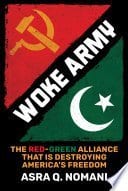
From California to the West Bank, former Wall Street Journal reporter Asra Q. Nomani spans the globe, investigating a hidden network of keyboard warriors who hide behind fake identities and pseudonymous Twitter and Facebook accounts. These digital trolls launch virulent attacks against Muslim reformers and others who challenge their divisive attempts to destroy American freedoms. In Woke Army, the author moves from being hunted by this network to being the hunter. The book uncovers the real identities of the network’s members, chronicles their secret operations, and reveals their impact on American public debate, from policing to education in our K–12 schools. In doing so, Nomani uncovers an unholy alliance between radical Muslims, who preach jihad against Western freedoms, and far left activists whose divisive ideology turns all of society’s issues into a race war. The shock troops of this dangerous “red-green alliance” work in tandem, using harassment, threats, and bullying to silence critics, and labeling those who speak out as “Islamophobic” or “racist.” A must-read for anyone who fears for America’s freedoms, Woke Army reveals what can happen when activism, radicalism, and the dark web collide.
Timeline of Events Described in the Book
| Year / Date | Event | Significance in Nomani’s Argument |
|---|---|---|
| 1858–1947 | British rule in India | Establishes Nomani’s postcolonial family background while rejecting anti-white grievance ideology. |
| 1928 | Muslim Brotherhood founded in Egypt | Foundational Islamist movement in the book’s genealogy. |
| 1943 | Bengal famine | Part of Nomani’s family history under British rule. |
| August 14, 1947 | Indian independence | Symbol of anti-colonial freedom in Nomani’s family memory. |
| 1965 | Nomani born in Bombay | Biographical starting point. |
| Late 1960s–1970s | Nomani’s family immigrates to the United States | Establishes immigrant gratitude and assimilation theme. |
| 1973 | Derrick Bell publishes Race, Racism, and American Law | Nomani’s starting point for CRT’s later influence. |
| 1979 | Iranian Revolution | Background to theocratic control and compulsory-veiling politics. |
| 1995 | MPAC launches website | Early Muslim institutional use of the internet. |
| 2001 | 9/11 attacks | Central turning point in debates over Islam, jihadism, and civil rights. |
| 2002 | Daniel Pearl murdered in Pakistan | Personal turning point for Nomani and evidence of jihadist reality. |
| 2002 | Raids and investigation around organizations at 500 Grove Street | Supports her claim of an American Islamist institutional base. |
| 2004 | Nomani begins facing intense attacks from Muslim critics | Beginning of her sustained conflict with the Honor Brigade. |
| 2005 | Women’s mosque-reform activism and attacks on reformers | Shows conservative Muslim resistance to women’s equality. |
| 2007 | CAIR and related activists expand anti-Islamophobia campaigns | Islamophobia becomes a central political frame. |
| 2009 | LoonWatch launched | Key node in anonymous online disinformation campaign. |
| 2010 | Ground Zero mosque / Park51 controversy | Major test case for Islamophobia framing. |
| 2010 | Moscow metro bombing and other jihadist attacks | Evidence, in Nomani’s view, that jihadist ideology remained active. |
| 2011 | Congressional hearings on Muslim radicalization | Reformers are attacked as traitors or “House Muslims.” |
| 2011 | Center for American Progress publishes Fear, Inc. | Liberal institutional adoption of anti-Islamophobia narrative. |
| 2013 | Boston Marathon bombing | Revives debate over radicalization and Islamist influence. |
| 2014 | Brandeis withdraws honorary degree from Ayaan Hirsi Ali | Deplatforming case study. |
| 2014 | Ferguson protests | Muslim activists link their agenda to anti-police and anti-racist politics. |
| January 2015 | Charlie Hebdo attack | Demonstrates lethal stakes of blasphemy politics. |
| February 2015 | Chapel Hill murders | Nomani’s case study in contested motive and narrative framing. |
| August 2015 | Hizb ut-Tahrir America meeting | Example of open Islamist governance advocacy in America. |
| 2016 | Trump elected president | Catalyst for Resistance politics and alliance formation. |
| January 2017 | Women’s March | Central symbolic moment for red-green coalition. |
| 2017 | Travel-ban protests and anti-Islamophobia mobilization | Muslim advocacy groups gain renewed national visibility. |
| 2018 | Kavanaugh confirmation protests | Sarsour and Women’s March activism continue into Democratic politics. |
| 2018–2019 | Tlaib, Omar, AOC, and Justice Democrats rise | Anti-Israel and intersectional politics enter Congress. |
| 2019 | Subpoenas seek identities of LoonWatch writers | Nomani’s unmasking effort reaches legal stage. |
| 2019 | Woke Muslims adopt CRT vocabulary | Ideological fusion of Honor Brigade and Woke Army. |
| May 25, 2020 | George Floyd killed | Catalyst for mass protests and what Nomani calls an American Intifada. |
| June 2020 | TJ admissions fight begins | Nomani becomes education activist against equity-based admissions. |
| September 2020 | Coalition for TJ rally | Parent resistance becomes a model of civic courage. |
| 2021 | Biden administration begins | Nomani argues network influence returns to federal power. |
| September 2022 | Mahsa Amini dies after morality-police detention | Final symbol of Islamist repression and women’s resistance. |
| 2022 | Woman. Life. Freedom protests | Moral culmination of Nomani’s argument. |
Summary
Executive Summary
Asra Q. Nomani’s central argument is that a “red-green alliance” has developed in the United States and the West: a coalition between Islamist or Islamist-adjacent Muslim organizations and the radical left’s identity-politics ecosystem. She calls this coalition the Woke Army. In her framing, this alliance uses the language of civil rights, anti-racism, intersectionality, Islamophobia, and social justice to suppress criticism of Islamist ideology, marginalize Muslim reformers, normalize anti-Israel politics, and capture institutions ranging from media and universities to school boards and Democratic Party politics.
Nomani’s book is both memoir and investigative polemic. It traces her personal history as an Indian-born Muslim immigrant, journalist, feminist reformer, and mother; her conflict with conservative Muslim online networks after advocating women’s rights in Islam; her effort to identify anonymous online attackers; and her later activism against race-based admissions changes at Thomas Jefferson High School for Science and Technology in Virginia. She presents these stories as parts of one larger pattern: a networked strategy of reputational warfare, disinformation, and institutional infiltration.
The book’s significance lies less in offering a neutral academic history than in mapping a dissident Muslim reformer’s interpretation of two overlapping movements: Islamist activism in the West and post-2010 American identity politics. Its strongest sections are the granular narrative accounts of online pseudonyms, activist organizations, ideological messaging, and institutional alliances. Its weakest feature is its highly adversarial framing: many individuals and groups are treated primarily through the lens of threat, and some claims would require independent corroboration before being accepted as settled fact.
[!quote] Core Battle Cry
“Woman. Life. Freedom.” — Page 7
Letter to the Reader
Main Ideas
- Nomani opens with the death of Mahsa Amini, the Iranian woman whose arrest by Iran’s morality police became a symbol of resistance to compulsory veiling and theocratic control.
- She argues that Amini’s death was not caused only by Iranian security forces but also by a broader intellectual and activist network that defends, excuses, minimizes, or obscures Islamist repression.
- The phrase Woke Army is introduced as Nomani’s label for that network.
- The letter frames the book as a guide based on “lived expertise” from 2002 to 2022: the period from the murder of Daniel Pearl and Nomani’s first major encounter with Islamist intimidation to the Iranian protest slogan Woman. Life. Freedom.
Analytical Function
The letter establishes the book’s moral frame. Nomani does not begin with American school politics or online harassment; she begins with Iranian women and theocratic coercion. This allows her to argue that Western discourse about Islam, Islamophobia, and anti-racism has real consequences for women living under Islamist regimes.
Cast of Characters
Main Ideas
- Nomani defines the Woke Army as an organized, well-funded network of Muslim radicals and leftist activists.
- She presents critical race theory as a form of cultural Marxism that creates a new hierarchy of victim and oppressor identities.
- The section lists people and organizations she sees as central to the network: Muslim academics, CAIR figures, donor organizations, left-wing groups, Muslim advocacy groups, writers, activists, politicians, and anonymous or pseudonymous bloggers.
- CAIR, LoonWatch, MuslimMatters, MPower Change, ReThink Media, Open Society Foundations, Proteus Fund, Students for Justice in Palestine, Black Lives Matter, and the Southern Poverty Law Center are among the recurring institutions in her network map.
Analytical Function
This section functions like an adversarial dramatis personae. It tells the reader that the book will not be a general cultural essay but a network analysis organized around named figures, organizational affiliations, funding streams, media platforms, and ideological coalitions.
Preface
Main Ideas
- Nomani grounds her critique in her own family history: British colonialism in India, her parents’ immigrant experience, poverty in the United States, and her Muslim upbringing in West Virginia.
- She argues that one can acknowledge colonialism, racism, and injustice without adopting racial grievance politics or blaming white people collectively.
- She identifies herself with liberal American values: freedom of speech, secular governance, women’s autonomy, pluralism, assimilation, and meritocracy.
- She rejects both anti-Muslim bigotry and denial of Islamist violence.
- The murder of Daniel Pearl and the rise of online attacks against Muslim reformers are presented as personal turning points.
- She describes the book as the product of a multiyear investigation involving interviews, subpoenas, documents, legal filings, transcripts, video, audio, and literary/linguistic forensics.
- The Honor Brigade is introduced as Nomani’s label for Muslim activists who defend the “honor” of Islam by branding dissenters as Islamophobes, racists, or traitors.
Methodological Claim
Nomani says she used traditional reporting, cyber-investigative methods, litigation, subpoenas, and public records. The book’s self-presentation is therefore investigative, but its tone is openly prosecutorial.
Key Argument
Nomani argues that the Honor Brigade later merged with broader left-wing race politics after the death of George Floyd, using critical race theory, intersectionality, and anti-racist language to embed Islamist concerns inside progressive politics.
Chapter 1 — Establishing Legitimacy in the “Resistance”
Main Ideas
- The chapter begins after Donald Trump’s 2016 election, when Hussam Ayloush of CAIR Southern California posted an Arab Spring slogan about overthrowing a regime.
- Nomani treats the post-2016 Resistance as the political opening through which CAIR-linked and Islamist-adjacent activists gained legitimacy inside Democratic and progressive circles.
- She focuses on Linda Sarsour and the Women’s March as a case study in how Islamist-aligned activists allegedly entered mainstream feminist politics.
- The chapter reconstructs the formation of the Women’s March after Teresa Shook’s Facebook post and the later roles of Bob Bland, Vanessa Wruble, Tamika Mallory, Carmen Perez, and Sarsour.
- Nomani argues that intersectionality became a disciplinary tool: white and Jewish women could be accused of centering themselves, while Muslim and anti-Israel activists could frame their politics as anti-racist feminist leadership.
- The chapter closes by portraying the Women’s March as the symbolic birth of an alliance between illiberal Islamists and liberal Democrats.
Supporting Evidence Used by the Author
- Social media posts after Trump’s election.
- Women’s March origin story and leadership disputes.
- Reported anti-Jewish comments and tensions inside the Women’s March.
- Sarsour’s public activism, anti-Israel politics, and past comments about Ayaan Hirsi Ali.
- The adoption of intersectional rhetoric by progressive organizations and activists.
Key Concepts
- Resistance: The anti-Trump protest ecosystem that created openings for new activist coalitions.
- Intersectionality as gatekeeping: Nomani’s claim that intersectionality was used less as an analytic tool than as a weapon for determining who could lead and who had to defer.
- Narrative capture: The process by which activists define a public conflict in moral terms favorable to themselves.
Chapter 2 — Building a Base at 500 Grove Street
Main Ideas
- Nomani begins with a brief history of Islam, emphasizing that Islam once had traditions of rationalism, science, tolerance, and ijtihad, but that later political and theological movements hardened into more authoritarian forms.
- She contrasts rationalist Islamic traditions with orthodox and revivalist movements, including Wahhabism, Salafism, and Muslim Brotherhood ideology.
- The chapter centers on 500 Grove Street in Herndon, Virginia, described as a hub for Islamic organizations, charities, and companies investigated after 9/11 for alleged links to terror financing and Islamist networks.
- Nomani portrays the address as a symbolic birthplace of the modern American Islamist organizational ecosystem.
- The chapter traces the spread of Muslim Brotherhood-linked institutions and ideological influence in the United States.
Supporting Evidence Used by the Author
- Historical sketches of Islamic theological movements.
- Organizational histories around Northern Virginia.
- References to post-9/11 raids and terrorism-financing investigations.
- Discussion of Wahhabi and Brotherhood influence on American Muslim institutions.
Key Concepts
- Ijtihad: Independent reasoning in Islamic jurisprudence; for Nomani, a symbol of reformist possibility.
- Islamism: Political Islam; the view that Islam should shape governance, law, and public policy.
- Muslim Brotherhood network: A transnational ideological and organizational tradition that Nomani sees as foundational to later American Muslim activism.
Chapter 3 — Parallel Ideological Movement Emerging
Main Ideas
- The chapter shifts from Islamist networks to the American left, especially critical race theory and its development from legal academia into broader culture.
- Nomani discusses Derrick Bell, Harvard Law School, critical legal studies, and later concepts such as systemic racism, whiteness, white privilege, implicit bias, microaggressions, and intersectionality.
- She argues that this ideological movement supplied Muslim activists with a language for recoding religious and political disputes as racial oppression.
- The chapter then returns to Nomani’s personal experience in Muslim reform activism, including her advocacy for women-led prayer and gender equality in mosques.
- She describes threats and online hostility from conservative Muslim opponents, including a threat involving the phrase zabihah, which means ritual slaughter.
- The chapter links campus radicalism, anti-Israel activism, identity politics, and online intimidation into a single emerging pattern.
Supporting Evidence Used by the Author
- Historical discussion of critical race theory.
- Harvard Law and campus examples.
- Activist course descriptions and anti-Israel campus rhetoric.
- Nomani’s own cyber-investigation into a threat against her.
Key Concepts
- Critical race theory: In Nomani’s framing, a totalizing ideology that interprets society through racial hierarchy and power.
- Cultural Marxism: Her polemical label for ideological frameworks that treat culture, identity, and institutions as vehicles of domination.
- Cyber jihad: Her term for online threats, harassment, and intimidation against Muslim reformers.
Chapter 4 — Silencing Reformers with Disinformation
Main Ideas
- Nomani argues that the internet gave a younger generation of Islamist or conservative Muslim activists new tools for anonymous attack.
- She describes sock puppets and pseudonymous bloggers who targeted Muslim reformers, especially those advocating women’s rights, sexual honesty, interfaith openness, and reformist interpretations of Islam.
- The chapter connects personal attacks on reformers to broader international efforts to define criticism of Islam as Islamophobia or defamation of religion.
- She discusses the Organization of Islamic Cooperation’s efforts around anti-defamation norms and how Western activists adopted anti-Islamophobia language into civil-rights discourse.
- The chapter also examines MuslimMatters, AlMaghrib Institute, and Salafi networks as part of the online ecosystem.
Supporting Evidence Used by the Author
- Blog posts and pseudonymous online attacks.
- Examples of sexual shaming and character assassination against reformist Muslims.
- International anti-defamation campaigns.
- Organizational and biographical details about Salafi-oriented institutions and writers.
Key Concepts
- Sock puppet: A false online identity used to conceal the real speaker and manipulate discourse.
- Disinformation: Not simply error, but the deliberate use of distortion, false framing, and reputational attack.
- Islamophobia discourse: In Nomani’s view, a legitimate concern about anti-Muslim bigotry that can also be weaponized to suppress criticism of Islamism.
Chapter 5 — Weaponizing “Islamophobia”
Main Ideas
- Nomani argues that by the late 2000s, CAIR and allied organizations were turning Islamophobia into a central political weapon.
- The chapter introduces figures such as Muhammad Tauseef Akbar at CAIR Chicago and examines how CAIR, Muslim activists, and allied media framed critics as anti-Muslim bigots.
- Nomani describes clashes involving Muslim reformers, Ayaan Hirsi Ali, Zuhdi Jasser, and others who criticized Islamist ideology.
- She argues that reformers were not merely debated but delegitimized as tools of anti-Muslim forces.
- The chapter also introduces ReThink Media as a communications infrastructure that helped progressive and Muslim advocacy organizations coordinate messaging.
Supporting Evidence Used by the Author
- CAIR biographies and public statements.
- Media appearances and debates.
- Controversies involving Ayaan Hirsi Ali and Islamic blasphemy norms.
- The emergence of communication networks funded by progressive philanthropy.
Key Concepts
- Weaponized Islamophobia: The use of anti-bigotry language to avoid substantive debate over Islamist ideology, jihadism, antisemitism, or women’s rights.
- Echo chamber: Coordinated repetition of claims across allied organizations, blogs, media contacts, and activist networks.
- Honor defense: The defense of Islam’s reputation through attacks on internal critics.
Chapter 6 — Launching a Disinformation Website
Main Ideas
- The chapter traces the creation of LoonWatch, a website that anonymously attacked critics of Islam and labeled them “loons,” racists, anti-Muslim bigots, or Islamophobes.
- Nomani examines domain registration, writing patterns, pseudonyms, and links between anonymous accounts and known activists.
- She presents LoonWatch as a propaganda and disinformation operation that targeted reformers, ex-Muslims, critics of jihadism, and supporters of Israel.
- The chapter includes her conflict with Yasir Qadhi after debates over Muslim women’s freedom to marry.
- Nomani argues that LoonWatch’s influence expanded when Muslim Brotherhood-linked websites and other platforms amplified its content.
Supporting Evidence Used by the Author
- Domain registration details.
- Linguistic forensics: grammar, repeated errors, stylistic clues, and writing patterns.
- Debates involving Nomani and conservative Muslim scholars.
- Cross-posting and amplification by Islamist-linked websites.
Key Concepts
- Literary / linguistic forensics: Analysis of writing patterns to connect anonymous texts to authors.
- Character assassination: Strategic reputational destruction rather than substantive argument.
- Anonymous propaganda: The use of hidden authorship to avoid accountability while shaping public perception.
Chapter 7 — Living with the Reality of Jihadis
Main Ideas
- Nomani argues that while activists were working to cast criticism of Islam as Islamophobia, jihadist violence continued globally.
- The chapter references attacks by the Caucasus Emirate, Tehrik-i-Taliban Pakistan, and other Islamist groups.
- She insists that most Muslims are peaceful but that denying the existence of a violent Islamist strain is dishonest and dangerous.
- She also connects the debate to media theory and anti-Western information politics, including the idea of a new information order challenging Western dominance.
- The chapter returns to public debates with activists such as Linda Sarsour and Wajahat Ali, emphasizing the difficulty of discussing jihadist ideology without being accused of bigotry.
Supporting Evidence Used by the Author
- Jihadist attacks in 2010 and surrounding years.
- Public debates and media engagements.
- Disputes over whether and how to name Islamic extremism.
- Examples of online misrepresentation after debates.
Key Concepts
- Jihadism: Violent political-religious extremism justified through Islamic language and symbols.
- Deflection: Shifting discussion away from jihadist ideology toward Western racism, imperialism, or Islamophobia.
- Moral evasion: The refusal to identify specific religious or ideological motivations behind violence.
Chapter 8 — Exploiting the Ground Zero Mosque
Main Ideas
- The proposed Islamic center near Ground Zero, also known as Park51, becomes a major case study in narrative warfare.
- Nomani presents Imam Feisal Abdul Rauf as a Sufi/interfaith figure but argues that the controversy was used by activists to frame critics as Islamophobes.
- She acknowledges that some opposition was crude or bigoted, but she argues that legitimate concerns about radicalization, foreign influence, and integration were also dismissed as hate.
- The chapter shows how the term Islamophobia was broadened to include many forms of criticism or concern.
- LoonWatch and CAIR-linked voices are presented as exploiting the controversy to strengthen their public legitimacy.
Supporting Evidence Used by the Author
- Public debate over Park51.
- Media confrontations involving Pamela Geller, Ahmed Rehab, and others.
- LoonWatch writings about the controversy.
- Public statements framing Muslim opposition and mosque criticism.
Key Concepts
- Park51 / Ground Zero Mosque: The proposed Islamic center near the World Trade Center site.
- Fitna: Conflict or internal strife; Nomani uses it to describe intense intra-Muslim and public conflict.
- Lowered bar for Islamophobia: Nomani’s claim that legitimate debate became increasingly stigmatized.
Chapter 9 — Battling for the Narrative: One-Two Punch
Main Ideas
- The chapter describes a two-front narrative battle during the Obama years: mainstream media debates over Islam and online attacks against reformers or critics.
- Nomani discusses Reza Aslan, Robert Spencer, Ahmed Rehab, CAIR, and LoonWatch as part of the struggle to define whether Islam itself, Islamism, or Western prejudice was the central issue.
- She recounts debates over airport profiling and threat assessment, arguing that her nuanced position was flattened into accusations of bigotry.
- The chapter also examines intra-Muslim arguments over who counts as a “moderate Muslim” and how reformers were denigrated as traitors or hypocrites.
Supporting Evidence Used by the Author
- ABC News and public debates.
- LoonWatch commentary.
- Emails and public comments about media strategy.
- Nomani’s Intelligence Squared debate experience.
Key Concepts
- One-two punch: Public media framing plus online reputational attack.
- Moderate Muslim dispute: A fight over whether moderation means loyalty to Western expectations or genuine reform against extremism.
- Threat assessment vs. profiling: Nomani’s attempted distinction between strategic security screening and discriminatory harassment.
Chapter 10 — Discrediting “House Muslims”
Main Ideas
- Nomani argues that Muslim reformers and dissenters were labeled as “House Muslims,” traitors, Uncle Toms, or tools of white power.
- The chapter covers the 2011 congressional hearings on Muslim radicalization and attacks on witnesses such as Zuhdi Jasser and others.
- She portrays CAIR and its allies as undermining Muslims who acknowledged radicalization problems inside some communities.
- The chapter also follows the increasing use of Ferguson and Black Lives Matter rhetoric by Muslim activists, arguing that Muslim advocacy groups attached their causes to anti-police and anti-racist movements.
- Nomani highlights liberal atheists and critics such as Sam Harris, Bill Maher, Christopher Hitchens, and Richard Dawkins as figures willing to challenge Islamist ideas despite progressive discomfort.
Supporting Evidence Used by the Author
- LoonWatch awards and posts.
- CAIR statements around congressional hearings.
- Media coverage and activist writings after Ferguson.
- Public criticism of Muslim reformers and secular critics.
Key Concepts
- House Muslim: A delegitimizing slur used against Muslims accused of serving anti-Muslim power structures.
- Deflection and denial: Nomani’s description of activist responses to jihadist ideology.
- Liberal anti-Islamism: Secular liberal criticism of Islamic theocracy and jihadism.
Chapter 11 — Building a Propaganda Machine
Main Ideas
- The chapter examines the construction of an anti-Islamophobia media apparatus, especially around the Center for American Progress report Fear, Inc.
- Nomani argues that liberal institutions adopted and amplified the target lists and framing already used by LoonWatch and Islamist-aligned activists.
- She describes a growing echo chamber connecting LoonWatch, IslamophobiaToday, StopIslamophobia.com, ReThink Media, progressive philanthropy, and Democratic-aligned policy organizations.
- George Soros’s Open Society Foundations and related funding streams are discussed as part of the infrastructure supporting rights-based counterterrorism advocacy.
- The chapter also introduces Dream Defenders and other left-wing organizations that connected Palestinian activism, anti-police activism, and anti-imperialism.
Supporting Evidence Used by the Author
- The Fear, Inc. report and its targets.
- Cross-posting between websites.
- Grant funding and philanthropic initiatives.
- Activist biographies and organizational networks.
Key Concepts
- Propaganda machine: A coordinated ecosystem of reports, websites, media contacts, and activists that repeats a common frame.
- Rights-based counterterrorism: Advocacy against counterterror policies seen as disproportionately targeting Muslims.
- Anti-Islamophobia industry: Nomani’s label for the nonprofit, media, and academic infrastructure built around the concept.
Chapter 12 — Hunting Masked Keyboard Warriors
Main Ideas
- The Boston Marathon bombing becomes a catalyst for renewed debate over radicalization.
- Nomani praises Ruslan Tsarnaev for acknowledging the role of radical Islamic influence, contrasting him with organizations that denied ideological causes.
- The chapter recounts Omid Safi’s public criticism of Nomani after her Washington Post writing about the bombers.
- Nomani documents a wave of online attacks by academics, Muslim activists, and anonymous accounts.
- She intensifies her effort to identify pseudonymous LoonWatch authors, focusing especially on Javad Hashmi and his alleged aliases.
- The chapter portrays elite academic institutions as enabling reputational laundering when anonymous attackers later rebrand as scholars of ethics, theology, or human rights.
Supporting Evidence Used by the Author
- Public statements after the Boston Marathon bombing.
- Religion News Service commentary.
- Twitter attacks and blog posts.
- IP address evidence, Disqus accounts, and writing-pattern analysis.
- Harvard Divinity School materials about Hashmi.
Key Concepts
- Masked keyboard warriors: Anonymous online operatives who attack reputations while shielding their own identities.
- Reputational laundering: Moving from pseudonymous attack work into respectable academic or institutional roles.
- Radicalization debate: Conflict over whether ideology, grievance, mental illness, foreign policy, or social alienation best explains terrorism.
Chapter 13 — Going After Ayaan Hirsi Ali
Main Ideas
- Nomani examines the campaign against Ayaan Hirsi Ali after Brandeis University announced an honorary degree for her in 2014.
- She argues that activists successfully pressured Brandeis to withdraw the honor by framing Ali as an extreme Islamophobe rather than as a survivor and critic of misogyny in Muslim societies.
- The chapter expands into other anti-Israel and anti-Islamophobia campaigns, including controversies over ads criticizing antisemitism in Islamic texts.
- Nomani also discusses Sarsour’s rise as a public figure and the way Palestinian activism became fused with Ferguson-era anti-racist activism.
- The chapter contrasts Muslim reformers and secular critics with activists who, in Nomani’s view, protected orthodoxy by attacking dissenters.
Supporting Evidence Used by the Author
- Brandeis controversy and Change.org petition.
- CAIR comments on Hirsi Ali.
- LoonWatch articles and related posts.
- Ferguson-era activist writing.
- Criticism of Sam Harris, Bill Maher, Hitchens, Dawkins, and others.
Key Concepts
- Deplatforming: Institutional withdrawal of honors or speaking opportunities under activist pressure.
- Survivor vs. Islamophobe frame: Competing interpretations of Hirsi Ali’s public role.
- Palestine-Ferguson linkage: The activist move to interpret Palestinian politics and American policing through a common oppression framework.
Chapter 14 — Killing Charlie Hebdo
Main Ideas
- The chapter begins with the January 2015 Islamist attack on Charlie Hebdo in Paris.
- Nomani argues that the attack exposed the danger of treating blasphemy, offense, and criticism of Islam as equivalent to hate.
- She criticizes President Obama’s reluctance to name Islamic extremism and discusses the ISIS murder of Jordanian pilot Muath al-Kasasbeh as evidence of explicitly Islamic symbolic framing.
- The chapter then turns to the 2015 Chapel Hill murders of three Muslim students, arguing that activists prematurely framed the killings as Islamophobic hate despite evidence of a parking dispute and the killer’s broader instability.
- Nomani presents the episode as another example of narrative discipline: events that fit the Islamophobia frame are amplified, while evidence that complicates the frame is minimized.
Supporting Evidence Used by the Author
- Charlie Hebdo murders.
- ISIS propaganda and religious symbolism.
- White House counterterror summit.
- Chapel Hill murder case and public comments by officials and Muslim leaders.
- Georgetown and anti-Islamophobia events after Charlie Hebdo.
Key Concepts
- Blasphemy politics: Pressure to punish or silence offensive speech about religion.
- Narrative asymmetry: Rapid assignment of motive when an event supports the preferred frame; caution or avoidance when it does not.
- Je suis / Je ne suis pas Charlie: Competing solidarity frames after the attack.
Chapter 15 — Waging Character Assassination
Main Ideas
- Nomani defines character assassination as a core tactic of the Woke Army and Honor Brigade.
- The chapter covers the 2015 controversy over the film American Sniper at the University of Michigan and the tension between offense claims and free expression.
- Nomani recounts her own planned talk at Duke and the efforts by campus Muslim groups and Omid Safi’s prior writing to delegitimize her as allied with Islamophobes.
- She argues that event organizers often capitulate because they fear conflict and accusations of bigotry.
- The chapter also describes a Brooklyn Academy of Music event on Islamophobia involving Nomani, Linda Sarsour, Wajahat Ali, and others, followed by alleged misreporting by MuslimGirl.com.
Supporting Evidence Used by the Author
- University of Michigan film controversy.
- Duke Muslim Students Association objections.
- Omid Safi’s open letter.
- BAM Islamophobia event and subsequent online coverage.
Key Concepts
- AstroTurf outrage: Manufactured or coordinated outrage presented as spontaneous grassroots concern.
- Free speech vs. offense: Institutional conflict between open debate and protection from perceived harm.
- Event cancellation pressure: A soft censorship mechanism that works through reputational risk.
Chapter 16 — Mounting a Muslim Reform Resistance
Main Ideas
- This is the book’s longest chapter and functions as a counter-history of Muslim reform activism.
- Nomani opens with Hizb ut-Tahrir America and the symbolism of the black flag, presenting Islamist governance movements as active inside the United States.
- She then describes efforts by reformist Muslims to build a resistance against Islamist ideology, misogyny, antisemitism, and extremism.
- The chapter covers the Muslim Reform Movement, its principles, and the challenges reformers faced from established Muslim organizations.
- Nomani argues that the left-Islamist alliance accelerated through the 2016 election cycle, Hillary Clinton-aligned networks, MoveOn, MPower Change, Linda Sarsour, and Open Society/Proteus funding.
- She discusses the 2017 Women’s March, Black Lives Matter-linked rhetoric, anti-Trump activism, and the rise of intersectionality as electoral strategy.
- The chapter also explores debates over the hijab, World Hijab Day, and the tension between Western celebration of the hijab and women resisting compulsory veiling in Muslim-majority countries.
Supporting Evidence Used by the Author
- Hizb ut-Tahrir America meeting.
- Muslim Reform Movement documents and activism.
- MPower Change funding and campaign activities.
- Women’s March organizing and rhetoric.
- World Hijab Day and Free from Hijab activism.
- Islamic Society of North America conference materials and conservative gender norms.
Key Concepts
- Muslim Reform Movement: A reformist network emphasizing secular governance, women’s rights, freedom of conscience, and opposition to extremism.
- Hijab politics: The conflict between hijab as personal expression, Islamist symbol, feminist symbol, and instrument of compulsion.
- Electoral intersectionality: Using identity coalitions to mobilize voters and reframe political priorities.
Chapter 17 — Fighting a Political Campaign
Main Ideas
- The chapter focuses on Linda Sarsour’s activism during the Brett Kavanaugh confirmation fight and the continued branding of Sarsour as a progressive icon.
- Nomani links Sarsour’s visibility to corporate and cultural platforms, including Ben & Jerry’s Pecan Resist campaign.
- The chapter juxtaposes American progressive politics with Muslim Brotherhood developments abroad, including Yusuf al-Qaradawi’s resignation from the International Union of Muslim Scholars.
- Nomani also describes the growing internal collapse of the original Women’s March coalition as founders and local leaders criticized antisemitism, centralized control, and ideological capture.
- The chapter ends by suggesting that older progressives and original organizers no longer had a place in the left-Islamist nexus.
Supporting Evidence Used by the Author
- Kavanaugh protest activity.
- Women’s March branding and corporate partnerships.
- Qaradawi and Muslim Brotherhood-linked developments.
- Women’s March leadership disputes and resignations.
Key Concepts
- Field marshal: Nomani’s language for high-visibility activist figures who translate ideology into mobilization.
- Brand activism: Corporate adoption of activist symbolism for marketing and political positioning.
- Coalitional fracture: Internal breakdown when identity coalitions encounter antisemitism, hierarchy, or ideological exclusion.
Chapter 18 — Recognizing New Field Marshals
Main Ideas
- The chapter tracks the 2018–2019 rise of new progressive politicians and operatives, including Rashida Tlaib, Ilhan Omar, Alexandria Ocasio-Cortez, Saikat Chakrabarti, and Justice Democrats.
- Nomani argues that these figures brought anti-Israel and anti-establishment politics into the Democratic mainstream.
- She examines controversies over Omar’s remarks about Israel, money, and American Jewish politics, treating them as evidence of persistent antisemitic frames inside the movement.
- The chapter covers activist access to congressional offices, Students for Justice in Palestine-linked figures, American Muslims for Palestine, and former CAIR interns or affiliates.
- It also discusses the 2019 Sri Lanka Easter attacks and Nomani’s claim that Muslim organizations responded by emphasizing Islamophobia rather than confronting Islamist violence.
- The chapter ends with examples from Islamic Society of North America and school-curriculum disputes that connect anti-Israel activism, Muslim institutional politics, and education.
Supporting Evidence Used by the Author
- 2018 election results.
- Justice Democrats and congressional staffing.
- Omar and Tlaib controversies.
- Activist meetings and organizational affiliations.
- Muslim conferences and anti-Islamophobia rallies.
- Curriculum examples involving Palestine and Israel.
Key Concepts
- Squad politics: The entry of anti-Israel, anti-establishment, and intersectional rhetoric into Congress.
- Antisemitic trope: Recurrent claims about Jewish money, hypnotic power, or hidden control.
- Institutional mainstreaming: The movement from campus activism and nonprofits into congressional politics.
Chapter 19 — Unmasking
Main Ideas
- Nomani describes the legal phase of her investigation, in which subpoenas sought to identify anonymous LoonWatch authors.
- The chapter focuses on the trail leading back, in her account, toward CAIR-linked figures and pseudonymous writers such as Amir Saheb and Javad Hashmi.
- Nomani argues that anonymous online attackers were not marginal trolls but people with professional careers in consulting, academia, medicine, or advocacy.
- The chapter presents unmasking as a moral duty: resisting intimidation requires refusing to remain a bystander.
- It closes by suggesting that online harassment can be challenged if victims use legal, investigative, and public tools.
Supporting Evidence Used by the Author
- Lawsuit and subpoenas.
- Internet service provider notices.
- Employment and biographical details of alleged anonymous writers.
- Connections among pseudonyms, blogs, and organizations.
Key Concepts
- Unmasking: Identifying hidden authors behind anonymous campaigns.
- Upstander: Someone who actively resists bullying rather than passively observing it.
- Platform accountability: The unresolved problem of anonymous disinformation remaining online.
Chapter 20 — Facing a Woke Army
Main Ideas
- The chapter argues that by 2019, Muslim activists had fully adopted the vocabulary of critical race theory.
- Nomani gives examples of Muslims describing themselves as white passing and attaching Islamophobia to other identity-politics concepts, including transphobia.
- She profiles Javad Hashmi’s public academic persona and contrasts it with his alleged anonymous history attacking reformers.
- The chapter suggests that the same people who once attacked progressive Muslims could reappear in respectable spaces using woke language.
- Nomani frames this as the final fusion of Honor Brigade tactics with Woke Army ideology.
Supporting Evidence Used by the Author
- Young adult literature and author talks.
- Public uses of “white passing” and Islamophobia language.
- Javad Hashmi’s Harvard-related profile and public remarks.
Key Concepts
- White passing: A critical-race-theory-derived identity category used for light-skinned people who may be perceived as white.
- Ideological fusion: The joining of Islamist grievance politics with progressive identity politics.
- Respectability shield: Prestigious institutions protecting activists from scrutiny.
Chapter 21 — Exploding into an American Intifada
Main Ideas
- The chapter begins with George Floyd’s death and the mass protests and riots that followed.
- Nomani describes the post-Floyd moment as the Woke Army’s national explosion: anti-police activism, Black Lives Matter, Antifa, and Muslim organizations converged in a broader anti-American narrative.
- She argues that Muslim organizations used the moment to attach themselves to anti-racist politics while avoiding discussion of slavery, racism, or hierarchy within Islamic history.
- The chapter also links American unrest to anti-Israel activism and antisemitic incidents or rhetoric during 2020.
- Nomani presents the period as an American Intifada: a domestic uprising framed as racial justice but, in her view, infused with revolutionary, anti-Israel, and anti-Western politics.
Supporting Evidence Used by the Author
- George Floyd timeline.
- Statements by Muslim leaders and organizations.
- Protest activity and unrest.
- Anti-Israel and antisemitic rhetoric in popular culture and activist spaces.
- Black Lives Matter and Antifa-related framing.
Key Concepts
- American Intifada: Nomani’s metaphor for post-George Floyd unrest and revolutionary activism in the United States.
- Anti-black racism discourse: The post-2020 institutional language adopted by religious and advocacy groups.
- Revolutionary convergence: The merger of anti-police, anti-capitalist, anti-Israel, and anti-Western causes.
Chapter 22 — Waging a War on America’s Children
Main Ideas
- Nomani shifts from national activism to education politics in Virginia.
- She focuses on Atif Qarni, former Virginia Secretary of Education, and Abrar Omeish, Fairfax County School Board member, as examples of Muslim activists entering education governance.
- The chapter centers on Thomas Jefferson High School for Science and Technology, where changes to admissions policy became a flashpoint.
- Nomani argues that activists sought to replace merit-based admissions with race-conscious or outcome-driven systems intended to alter demographic results.
- She presents herself as an “accidental activist” defending meritocracy, immigrant Asian families, and academic excellence against ideological equity politics.
- The chapter concludes that the Woke Army no longer needed fringe platforms because its ideas had entered mainstream media, school systems, and the Biden administration.
Supporting Evidence Used by the Author
- Virginia education officials and school board politics.
- TJ admissions controversy.
- Parent activism and demographic disputes.
- Media coverage of school equity politics.
Key Concepts
- Meritocracy: Selection based on achievement and competitive standards.
- Equity vs. equality: Nomani treats equity as outcome engineering and equality as equal treatment under fair rules.
- School capture: The use of school boards and curriculum policy to institutionalize ideology.
Chapter 23 — Courage is Contagious
Main Ideas
- The chapter narrates the parent-led resistance around Thomas Jefferson High School.
- Nomani highlights immigrant parents from China, India, South Korea, and elsewhere who defended the admissions exam and merit-based standards.
- She casts the Coalition for TJ as a model for civic resistance to the Woke Army.
- The chapter argues that moral courage spreads: when one person speaks up, others who were silent become willing to act.
- It also returns to unresolved concerns about LoonWatch, Javad Hashmi, and the persistence of online disinformation.
Supporting Evidence Used by the Author
- TJ rallies and parent speeches.
- Coalition for TJ activism.
- Continuing online presence of past smear campaigns.
- Examples of immigrant families framing meritocracy as central to the American promise.
Key Concepts
- Accidental activist: A parent or citizen drawn into public conflict by institutional overreach.
- Moral courage: Willingness to risk social, reputational, or professional costs to defend principles.
- Vigilance: The ongoing civic responsibility to defend freedom and institutions.
[!quote] Civic Vigilance
“The eternal price of freedom is vigilance.” — Page 477
Chapter 24 — Woman. Life. Freedom.
Main Ideas
- The final chapter returns to Mahsa Amini and the 2022 Iranian uprising.
- Nomani narrates Amini’s arrest by the Gasht-e Ershad, or Guidance Patrol, and her death after being detained over alleged dress-code violations.
- The chapter connects Iranian women’s resistance to Nomani’s broader critique of Western progressives who defend or romanticize hijab politics while ignoring women punished for resisting compulsory veiling.
- She criticizes figures such as Reza Aslan and Hoda Katebi for blaming Western imperialism while minimizing the role of Iran’s Islamist regime and religious coercion.
- The book ends by identifying Iranian women as the clearest moral counterexample to Western activist narratives that obscure Islamist repression.
Supporting Evidence Used by the Author
- Mahsa Amini’s arrest and death.
- Iranian protest slogan Woman. Life. Freedom.
- Western debates over the hijab and Iranian regime.
- Criticism of progressive commentators who shift blame to imperialism.
Key Concepts
- Compulsory hijab: State-enforced veiling, presented by Nomani as a core symbol of Islamist control over women.
- Woman. Life. Freedom.: The Iranian protest slogan that represents human dignity, bodily autonomy, and anti-theocratic resistance.
- Moral clarity: Nomani’s preferred antidote to what she sees as Western ideological confusion.
Gratitude
Main Ideas
- Nomani thanks her family, friends, allies, and fellow activists.
- She emphasizes the importance of support networks for those who endure public harassment or political conflict.
- The gratitude section reinforces one of the book’s recurring themes: resistance is not solitary; it depends on community.
About the Author
Main Ideas
- Nomani is presented as a former Wall Street Journal reporter, cofounder of the Pearl Project, cofounder of the Muslim Reform Movement, cofounder of Coalition for TJ, and senior fellow at the Independent Women’s Network.
- The biography ties together the book’s three major identities: journalist, Muslim reformer, and education activist.
Key Concepts Across the Book
Woke Army
Nomani’s umbrella term for a coalition of left-wing activists, Muslim radicals, academics, journalists, nonprofit organizations, online influencers, and political figures. She argues that this network uses moral language about justice and inclusion to enforce ideological conformity and suppress dissent.
Red-Green Alliance
The book’s central coalition concept. Red refers to socialist, Marxist, or far-left politics; green refers to Islamism or Muslim political activism. Nomani argues that the two movements are philosophically incompatible in some respects but tactically aligned against America, Israel, secular liberalism, meritocracy, and free speech.
Honor Brigade
Nomani’s term for Muslim activists and organizations that defend the reputation or “honor” of Islam by attacking critics, reformers, ex-Muslims, feminists, and anti-Islamist voices. The Honor Brigade is a subset of the Woke Army.
Islamism
Political Islam: the idea that Islam should shape the laws, institutions, and governance of society. Nomani distinguishes Islam as a faith from Islamism as a political project, though she argues that many Western institutions fail to maintain this distinction.
Critical Race Theory
Nomani treats CRT as the ideological engine of the Woke Army. She argues that it recasts social life into oppressor/oppressed categories and allows Muslim activists to frame Islam as a racialized minority identity rather than a religion or political ideology subject to critique.
Intersectionality
In academic usage, intersectionality analyzes overlapping forms of disadvantage. In Nomani’s critique, it becomes a tool for coalition management and moral blackmail: those with the highest victim-status claims gain authority, while dissenters can be silenced as privileged or harmful.
Islamophobia
Nomani accepts that anti-Muslim prejudice exists, but argues that the term has been broadened to include legitimate criticism of Islamism, jihadist ideology, antisemitism, misogyny, or conservative Islamic doctrine.
Character Assassination
A central tactic in the book: destroying a target’s reputation through labels, insinuations, petitions, online mobs, and guilt by association rather than engaging arguments directly.
Disinformation
Nomani uses this term for deliberate distortion: false claims, pseudonymous smears, misleading narratives, selective evidence, and coordinated messaging.
Meritocracy
The principle that educational or professional advancement should be based on demonstrated achievement. Nomani defends meritocracy in the TJ controversy and treats equity-based admissions as a threat to immigrant families and academic standards.
Key Terms
- 500 Grove Street: Herndon, Virginia address associated in the book with Muslim Brotherhood-linked institutions and post-9/11 investigations.
- AlMaghrib Institute: Salafi-oriented educational organization discussed as part of conservative Muslim online networks.
- American Intifada: Nomani’s phrase for post-George Floyd unrest and revolutionary activism in the United States.
- Antifa: Far-left anti-fascist movement; in the book, part of street-level Woke Army militancy.
- AstroTurf outrage: Coordinated activism disguised as spontaneous grassroots anger.
- CAIR: Council on American-Islamic Relations; one of the book’s primary institutional targets.
- Colorblindness: In CRT debates, the idea that law or society should treat people without regard to race; Nomani tends to defend equal treatment against race-conscious equity.
- Critical legal studies: Legal-academic movement that influenced CRT.
- Cyber jihad: Nomani’s phrase for online intimidation and harassment by Islamist or Islamist-sympathetic actors.
- Defamation of religion: International campaign concept aimed at restricting speech deemed insulting to religion.
- Equity: In the book, outcome-based redistribution or demographic engineering; contrasted with equal treatment.
- Fitna: Arabic term for internal conflict or strife.
- Gasht-e Ershad: Iran’s morality police / Guidance Patrol.
- Hadith: Reports of the Prophet Muhammad’s sayings and actions.
- Hijab politics: Disputes over veiling as faith, identity, compulsion, resistance, or political symbol.
- Ijtihad: Independent reasoning in Islamic thought.
- Islamophobia industry: Nomani’s label for nonprofits, academics, and media campaigns built around anti-Islamophobia advocacy.
- Jihadism: Violent political-religious extremism justified in Islamic terms.
- Kharijites: Early Islamic extremist sect referenced as historical analogy.
- LoonWatch: Anonymous website that attacked people it labeled anti-Muslim bigots or Islamophobes.
- Muslim Brotherhood: Islamist movement founded in Egypt in 1928; a major ideological reference point in Nomani’s account.
- Muslim Reform Movement: Reformist organization opposing Islamism, misogyny, and theocracy.
- Mutazalites: Early Islamic rationalists associated with reason and theological debate.
- Park51: Proposed Islamic center near Ground Zero.
- Salafism: Conservative Sunni movement seeking to emulate the earliest Muslims.
- Shahada: Islamic proclamation of faith.
- Sharia: Islamic law; discussed by Nomani in relation to governance, gender, and legal authority.
- Sock puppet: False online identity used to manipulate conversation.
- Takfir: Declaring another Muslim an unbeliever; related vocabulary appears in the book’s discussions of intra-Muslim conflict.
- Wahhabism: Strict Saudi-linked Islamic reform movement associated with legalism and doctrinal rigidity.
- White passing: Identity-politics term for people perceived as white despite minority ancestry or identity.
Critical Analysis
Strengths
- First-person access: Nomani writes as a Muslim reformer who personally experienced the conflicts she describes. This gives the book strong insider testimony on the pressure faced by dissident Muslims.
- Network orientation: The book’s most useful contribution is its attempt to map relationships among activists, nonprofits, funders, websites, political figures, and media narratives.
- Attention to online anonymity: The focus on pseudonyms, sock puppets, IP evidence, writing patterns, and anonymous blogs is valuable because online reputational warfare is often ignored in conventional political histories.
- Integration of Islamism and domestic politics: Nomani highlights an important question: how did post-9/11 Muslim advocacy become integrated into broader American progressive politics?
- Defense of Muslim reformers: The book foregrounds Muslims who oppose theocracy, antisemitism, misogyny, and jihadist apologetics, complicating simplistic Muslim-vs.-anti-Muslim binaries.
Weaknesses and Limits
- Polemical framing: The language is often prosecutorial. Terms like Woke Army, Honor Brigade, propaganda machine, and American Intifada are analytically vivid but also morally loaded.
- Coalitional overreach: The book sometimes risks treating tactical alliances, shared rhetoric, funding overlap, and ideological agreement as the same thing. Those are related but distinct evidentiary categories.
- Verification burden: Many claims about motives, coordination, pseudonyms, and hidden influence require independent verification before being treated as established fact.
- Limited charitable reconstruction: Opposing actors are rarely presented in their strongest possible terms. The book is more effective as a dissident indictment than as a balanced intellectual history.
- Conceptual compression: CRT, socialism, Islamism, DEI, anti-Zionism, Antifa, BLM, and progressive feminism are often bundled together. That captures perceived convergence but can flatten important differences among movements.
- Selection bias: Because the narrative is built around adversarial encounters, it emphasizes the most extreme or damaging examples and may understate mundane, moderate, or internally divided realities inside the organizations discussed.
Overall Evaluation
The book is best read as an investigative-polemical memoir by a Muslim reformer and education activist. It is valuable for understanding how anti-Islamophobia discourse, online attack culture, progressive philanthropy, campus politics, anti-Israel activism, and school-equity politics can appear from the perspective of someone targeted by those forces. It should not be treated as a neutral academic synthesis. The strongest use of the book is as a source of claims, leads, names, organizations, and interpretive arguments that can be checked against primary documents and alternative accounts.
Questions for Reflection
- When does a campaign against bigotry become a tool for suppressing legitimate criticism of religion, ideology, or political movements?
- How should liberal societies distinguish between anti-Muslim prejudice and criticism of Islamism?
- Does intersectionality function mainly as an analytic framework, a coalition-building strategy, or a moral hierarchy in the cases Nomani describes?
- What evidentiary standard should be required before accusing organizations of coordinated disinformation rather than shared ideology or opportunistic alignment?
- How should institutions respond when speakers are accused of bigotry by activist groups: cancel, investigate, debate, or proceed with contextual framing?
- Is meritocracy a neutral principle, a historically biased system, or a necessary defense against political manipulation of standards?
- How does the Iranian slogan Woman. Life. Freedom. challenge Western narratives that frame the hijab primarily as empowerment or minority identity?
Connections
Works and Intellectual Traditions Mentioned or Implied
- Derrick Bell — Race, Racism, and American Law: Foundational text in Nomani’s account of CRT’s rise.
- Kimberlé Crenshaw — intersectionality: Key theoretical framework used by activists in the book.
- Critical legal studies: Legal-academic precursor to CRT.
- Critical race theory: Central ideological target of the book.
- Marxism / cultural Marxism: Nomani’s framing for left-wing identity politics.
- Muslim Brotherhood ideology: Core Islamist tradition in the book’s genealogy.
- Wahhabism and Salafism: Conservative Islamic movements discussed as ideological sources.
- Sufism: Referenced in the Ground Zero mosque discussion as a more mystical and adaptable Islamic tradition.
- Black Lives Matter: Presented as a major partner in the broader Woke Army ecosystem.
- Antifa: Presented as street-level radical activism aligned with the broader movement.
- Students for Justice in Palestine: Recurring campus anti-Israel organization.
- Women’s March: Central case study in intersectional coalition politics.
- Justice Democrats: Vehicle for progressive electoral insurgency.
- Coalition for TJ: Parent-led meritocracy movement co-founded by Nomani.
- Muslim Reform Movement: Reformist Muslim counter-movement opposing Islamism and theocracy.
Thinkers, Activists, and Public Figures
- Asra Q. Nomani — author, Muslim reformer, journalist, education activist.
- Mahsa Amini — symbol of resistance to compulsory hijab and Iranian theocracy.
- Ayaan Hirsi Ali — critic of Islam, survivor of FGM, target of activist campaigns.
- Linda Sarsour — Women’s March leader and major figure in Nomani’s red-green alliance thesis.
- Hussam Ayloush — CAIR figure used to open the post-2016 Resistance narrative.
- Nihad Awad — CAIR cofounder.
- Zahra Billoo — CAIR leader.
- Ahmed Rehab — CAIR Chicago figure.
- Javad Hashmi — alleged pseudonymous LoonWatch figure and later academic.
- Yasir Qadhi — conservative Muslim scholar and MuslimMatters figure.
- Reza Aslan — public intellectual criticized by Nomani.
- Wajahat Ali — writer and media figure criticized by Nomani.
- Omid Safi — academic critic of Nomani.
- John Esposito — Georgetown scholar of Islam.
- Hatem Bazian — Berkeley academic and Students for Justice in Palestine cofounder.
- Ilhan Omar and Rashida Tlaib — congressional figures in Nomani’s discussion of anti-Israel politics.
- Alexandria Ocasio-Cortez and Saikat Chakrabarti — Justice Democrats / progressive insurgency figures.
- Sam Harris, Bill Maher, Christopher Hitchens, Richard Dawkins — secular liberal critics of Islamism referenced as counterweights to progressive reluctance.
- Derrick Bell and Kimberlé Crenshaw — major intellectual sources of the CRT/intersectionality framework.
Historical Movements and Events
- British colonial rule in India.
- Indian independence.
- Iranian Revolution and compulsory-veiling politics.
- 9/11 and the War on Terror.
- Daniel Pearl murder investigation.
- Ground Zero mosque controversy.
- Ferguson protests.
- Charlie Hebdo attack.
- Boston Marathon bombing.
- Women’s March.
- Trump-era Resistance.
- George Floyd protests.
- Thomas Jefferson High School admissions controversy.
- Mahsa Amini protests in Iran.
Final Synthesis
Nomani’s book argues that the central political danger of the last two decades is not merely Islamic extremism or left-wing identity politics in isolation, but their strategic convergence. In her account, Islamist activists learned to speak the language of American civil rights, while progressive activists accepted Muslim grievance narratives without adequately distinguishing between Muslims as people and Islamism as ideology. This convergence produced a politics that, in Nomani’s view, protects religious orthodoxy, excuses antisemitism, punishes reformers, undermines meritocracy, and weakens free speech.
The book’s final moral contrast is between Western activists who treat hijab politics as identity performance and Iranian women who risk their lives against state-enforced religious control. For Nomani, the answer to the Woke Army is not passivity but moral courage, public speech, institutional scrutiny, and reform from within Muslim communities and American civil society.
Highlights
Cast of Characters
Highlight(yellow) - Page 11 · Location 182
Woke Army adherents exploit the ideas in “critical race theory,” a philosophy that is at its heart a form of cultural Marxism—whereby slavish adherence to orthodoxy and ideology, however dangerous or stifling, is equated with “justice.”
Preface
Highlight(yellow) - Page 19 · Location 386
puppy named Lily despite a religious edit that angels will not visit a home with a dog inside.
Chapter 1: Establishing Legitimacy in the “Resistance”
Highlight(yellow) - Page 34 · Location 651
Mallory responded bluntly, “We can’t center Jewish voices too much because Black Lives Matter might have an issue with it.”
Highlight(yellow) - Page 36 · Location 685
Albert Cahn, an attorney at CAIR New York, told the Daily News the hoax shouldn’t “detract” from the “numerous” reports of “Islamophobia” coming from the Muslim community.
Highlight(yellow) - Page 38 · Location 730
Muslim reformers who actually embraced interpretations of Islam compatible with modernity were still vilified within Muslim circles.
Highlight(yellow) - Page 39 · Location 739
On the morning of the march, Teresa Shook, the woman in Hawaii who had initially conceived of a march, only got one minute of stage time.
Highlight(yellow) - Page 42 · Location 801
Linda Sarsour had done it. With the Women’s March, she had embedded herself in the American feminist movement, bringing with her fellow Muslim radicals. The new era of “intersectionalism” was born. It was an unholy alliance between illiberal Islamists and liberal Democrats.
Chapter 2: Building a Base at 500 Grove Street
Highlight(yellow) - Page 43 · Location 820
For many radical Muslims, like future al-Qaeda leader Osama bin Laden, the defeat of the Ottoman Empire on October 29, 1914, marked the dawn of an era of “humiliation” for Muslims. By
Highlight(yellow) - Page 44 · Location 828
In Egypt in 1928, Hassan al-Banna founded the Muslim Brotherhood with the goal of creating an Islamic caliphate. In India in 1941, Muslim scholar Abul A’la Maududi established Jamaat-e-Islami with ambitions to establish a caliphate in South Asia. In 1953, Palestinian scholar Taqi al-Din al-Nabhani founded Hizb ut-Tahrir to create a global caliphate.
Highlight(yellow) - Page 45 · Location 850
Edward Said, gave Islamists the language they needed to advance their cause in a book he published, Orientalism.
Highlight(yellow) - Page 46 · Location 880
Ismail al-Faruqi,
Highlight(yellow) - Page 47 · Location 894
American-Arab Anti-Discrimination Committee.
Highlight(yellow) - Page 47 · Location 899
founder of the Islamic Studies program in the Department of Religion at Temple University.
Highlight(yellow) - Page 48 · Location 904
his lecture, titled “Islamic Ideals in North America,” he said Muslim immigrants to the West had two duties: calling non-Muslims to Islam and transforming the North American reality so that it conforms to Islamic standards.
Highlight(yellow) - Page 49 · Location 926
International Institute of Islamic Thought—
Highlight(yellow) - Page 49 · Location 938
Nestled among dairy farms and rolling fields, the Muslim Brothers were hiding in plain view. They established a spider’s web of organizations, using the International Institute of Islamic Thought to press their agenda of their founders for “the Islamization of thought” in not only the US but the world.
Highlight(yellow) - Page 50 · Location 944
Sami Al-Arian,
Highlight(yellow) - Page 50 · Location 947
al-Barzinji
Highlight(yellow) - Page 52 · Location 984
The next year, the Muslim Brothers met in Lugano, Switzerland. They circulated a document, dated 1982, called “The Project,” outlining a twelve-point plan for building mosques, opening Islamic schools, and adopting “the Palestinian cause as part of a worldwide Islamic plan… by means of jihad.” The Brothers understood that Yousef al-Qaradawi, a rising star in their global network, had written the document.
Highlight(yellow) - Page 55 · Location 1042
In 1993, a small group of Muslims met in Philadelphia. The FBI recorded the meeting. They agreed they would refer to the new anti-Israel group, Hamas, as “Samah.” Inside, Holy Land Foundation CEO Shukri Abu Baker warned the group. “Please don’t mention the name Samah in an explicit manner. We agree on saying it as ‘Sister Samah.’” When someone accidentally mentioned Hamas, Baker interrupted the meeting and said, “Didn’t we say not to mention that term?” The man fixed his statement and continued, “Is it against the movement.…” A man joked about using the word “Samah.” He said, “What movement?” Another man, identified by the government as “Gawad,” responded, “Hamas…, the Samah Movement,” the crowd breaking into laughter. “… I mean Samah.” A young Palestinian, Nehad Awad Hammad—later adopting the name of Nihad Awad—spelled out his vision for spreading the Hamas mission, saying, “If there is a political issue, a Samah’s input, for instance, about this or that, we inform people to contact their representatives….”
Highlight(yellow) - Page 56 · Location 1059
support of the Hamas movement
Highlight(yellow) - Page 56 · Location 1060
Awad and other leaders of the Islamic Association for Palestine—including the president, Omar Ahmad, and Awad’s convert friend, Cary “Ibrahim” Hooper—founded the Council on American-Islamic Relations, or CAIR.
Highlight(yellow) - Page 56 · Location 1068
For forty years, the Muslim Brothers had enjoyed virtually unfettered expansion in the West. They were the institutions in the “Civilization-Jihadist Process,” established to exploit Western civil liberties, the culture of political correctness, and later, the new influence of the radical ideology of “critical race theory” to expand their influence.
Highlight(yellow) - Page 58 · Location 1103
Route 7 “Wahhabi Corridor,”
Highlight(yellow) - Page 58 · Location 1106
Two of the 9/ 11 hijackers had even lived in an apartment complex, Skyline Towers, off Route 7, praying at Dar Al-Hijrah Islamic Center, a block off Route 7, where the mosque leadership had hired Yemeni American preacher Anwar al-Awlaki to be their imam. After the 9/ 11 attacks, al-Awlaki abandoned the strip malls that line Route 7 and returned to his native Yemen where he joined al-Qaeda.
Chapter 3: Parallel Ideological Movement Emerging
Highlight(yellow) - Page 60 · Location 1125
Through the 1950s, 1960s, and 1970s, Marxist theory had taken root in America in many communities.
Highlight(yellow) - Page 60 · Location 1140
Two of Bell’s Harvard Law students would carry the mantle decades later for the revolution that Bell envisioned. They were Kimberlé Crenshaw and Mari Matsuda.
Highlight(yellow) - Page 61 · Location 1144
Richard Delgado and Neil Gotanda.
Highlight(yellow) - Page 61 · Location 1153
She later wrote that “critical race theory” was “made up as a name,” adding, “Sometimes you gotta fake it until you make it.”
Highlight(yellow) - Page 61 · Location 1161
By their own acknowledgment, the movement tapped the principles of Marxism, along with several other inspirations: “critical theory”; “critical legal studies,” which argues that the law is corrupt and part of a larger institution of society designed to keep the establishment of existing power and white elite; “feminist jurisprudence,” which teaches that the entire system is stacked against women with patriarchal inequity, promoting only men; “postcolonial theory”; and “postmodernism,” a belief that the entire system from philosophy to government is corrupt.
Highlight(yellow) - Page 62 · Location 1169
“Critical race theory” could not exist were it subject to the scientific method of any of the natural sciences or even softer sciences such as economics. “Critical race theory” starts with a hypothesis that institutional racism is responsible for all ills of disadvantaged minorities, explains all contrary findings as further evidence of racism, and discourages skepticism and criticism by questioning the motives and morals of its critics—branding them racists.
Highlight(yellow) - Page 63 · Location 1178
Classic liberalism says that you have to prove your theory, but “critical race theory” is like a self-perpetuating, self-confirming ideology promoted by a cult that says anyone who doesn’t believe in it is heretical. They found they were able to overwhelm intellectual people with their allegations of being “racist.” It’s like a religious orthodoxy.
Highlight(yellow) - Page 64 · Location 1203
Hatem Bazian,
Highlight(yellow) - Page 64 · Location 1208
student arm of the Palestinian Liberation Organization,
Highlight(yellow) - Page 64 · Location 1211
Bazian fomented anti-Semitism
Highlight(yellow) - Page 65 · Location 1227
Bazian was to meet an unexpected ally who would help him leverage the new ideas of “critical race theory” to his obsession: destroying the state of Israel.
Highlight(yellow) - Page 65 · Location 1231
Judith Butler
Highlight(yellow) - Page 65 · Location 1236
She popularized words like “trope,” “problematic,” and “heteronormative.” Importantly, for Bazian, she was a Jew who was a vocal critic of Israel.
Highlight(yellow) - Page 66 · Location 1245
Students for Justice in Palestine,
Highlight(yellow) - Page 68 · Location 1297
Hashmi came from privilege, enjoying entitlements like most people in America never enjoyed. And yet he attacked the West. The headline on Hashmi’s article read: “A Fake Peace for Palestine.” He called Palestinian leader Yasser Arafat an “Uncle Tom” for negotiating a peace settlement with Israel. It was a slur in the black community. It would be a smear he would return to using.
Highlight(yellow) - Page 69 · Location 1312
Bazian was successfully inculcating this young generation of students with his fiery brand of activism, and they were learning a dark art in the new internet age: being keyboard warriors.
Highlight(yellow) - Page 70 · Location 1319
ElectronicIntifada.com,
Highlight(yellow) - Page 71 · Location 1338
Al-Arian and his Muslim friends had convinced the Bush administration to ditch something used in national security cases called “secret evidence,” so that defendants could know all the evidence against them.
Highlight(yellow) - Page 71 · Location 1345
Al-Arian and his Muslim colleagues readied the morning of the scheduled ceremony to enter the White House, but the ceremony never happened. It was scheduled for the afternoon of September 11, 2001.
Highlight(yellow) - Page 72 · Location 1358
Wajahat Ali,
Highlight(yellow) - Page 72 · Location 1366
Four days later, just one week after the 9/ 11 attacks, student Wajahat Ali was among about 120 students who stormed the office of the UC Berkeley student newspaper, the Daily Californian, demanding an apology for a cartoon by Darrin Bell, a UC Berkeley graduate and the first black cartoonist to be syndicated nationally.
Highlight(yellow) - Page 73 · Location 1392
The student senate of the Associated Students of the University of California approved a bill demanding an apology and mandatory sensitivity training for the newspaper’s staff.
Highlight(yellow) - Page 73 · Location 1395
Sajid Khan, a leader with the Muslim Students Association and a student senator, was a co-author of a bill, alleging a “direct correlation” between the cartoon and attacks on Muslims. No such attacks were reported on the Berkeley campus, however, while the FBI’s official hate crimes statistics reported eight times the number of attacks on Jews as on Muslims.
Highlight(yellow) - Page 74 · Location 1402
The data on bias incidents and hate crimes reveals that there was an increase of anti-Muslim bias, but it was infinitely less than discrimination against African Americans or Jews. Muslim leaders consciously fanned the flames of this fear, however, in order to increase their power in the Muslim community and national politics.
Highlight(yellow) - Page 74 · Location 1415
Students for Justice in Palestine, hosted a three-day event, “Intifada 2001: Understanding the Palestinian Quest for Justice,” the next week, staged to mark the one-year anniversary of the intifada by Palestinians against Israel.
Highlight(yellow) - Page 76 · Location 1446
April 2002,
Highlight(yellow) - Page 76 · Location 1449
Police arrested some seventy-nine members of Students for Justice in Palestine as they attempted to disturb Holocaust Remembrance Day by American Jewish students.
Highlight(yellow) - Page 79 · Location 1507
Campus Watch, to document academic criticism of Israel.
Highlight(yellow) - Page 81 · Location 1546
Study of Islam and Democracy Inc.,
Highlight(yellow) - Page 83 · Location 1565
Aziz Poonawalla.
Highlight(yellow) - Page 83 · Location 1570
Khaled Beydoun,
Highlight(yellow) - Page 84 · Location 1584
Beydoun said: “So I was in law school at this time, examining critical race theory in a range of questions that were grappling with the experience of African Americans, Latinx populations, Native Americans, the struggle of LGBTQ communities, the importance of gender in how it interacts with the law. And I was finding that there was a dearth, if not a complete nonexistence of literature examining what was happening with Muslim Americans in real-time.”
Highlight(yellow) - Page 84 · Location 1588
He saw a void, and he stepped in. “I was very much, I think, maybe one of the first, if not the first, Muslim American critical race theorists,” he said, “that, you know, really tried to merge the canon of critical race theory with what was happening with Muslim Americans and how Islam was also being demonized as a religion in real-time during the war on terror, but also well before the war on terror moment.”
Highlight(yellow) - Page 85 · Location 1612
Open Society’s “Racial Justice Initiative,”
Highlight(yellow) - Page 86 · Location 1621
Derrick Bell, Patricia Williams, Richard Delgado, Kimberlé Crenshaw, Mari Matsuda, Camara Phyllis Jones (an epidemiologist who pushed the idea of racism as a “public health crisis”), and—their newest initiate—Khaled Beydoun.
Highlight(yellow) - Page 89 · Location 1690
Established in 1999 by former staffers of the now-defunct American Muslim Council, it had spent twenty years as a gateway for Islamist leaders in America. A more accurate name would have been the “Center to Promote Political Islam.” Seven years earlier, its founder, Radwan Masmoudi, a Tunisian American engineer, had hosted the leader of Tunisia’s Islamist political party, Al-Nahda, a man identified by Egyptian media as the leader of the Muslim Brotherhood overseas. The Center for the Study of Islam and Democracy Inc. also supported the Muslim Brotherhood in Egypt.
Chapter 4: Silencing Reformers with Disinformation
Highlight(yellow) - Page 91 · Location 1723
The Honor Brigade’s operations against American Muslim reformers began in earnest with the new weapons of the internet.
Highlight(yellow) - Page 92 · Location 1754
attacking progressive Muslims.
Highlight(yellow) - Page 93 · Location 1769
While CAIR and other leaders from the alphabet soup of Muslim organizations born out of 500 Grove Street stuck to their regressive ideals, a band of progressive American Muslims was emerging with a vision to integrate in the US without importing the sexism, homophobia, anti-Semitism, and orthodoxy of Islamist movements.
Highlight(green) - Page 93 · Location 1773
Ahmed Nassef, who had just launched an edgy new website, Muslim WakeUp. It promoted progressive interpretations of Islam. Nassef was creative and courageous.
Highlight(green) - Page 94 · Location 1784
The followers included Omid Safi, an Islamic studies professor at Colgate University in Hamilton, New York, and editor of an anthology, Progressive Muslims. In October 2004, they incorporated a new organization, Progressive Muslim Union.
Highlight(green) - Page 95 · Location 1801
Egyptian feminist writer Mona Eltahawy; Canadian Pakistani journalist and activist Raheel Raza; Canadian Pakistani writer and activist Tarek Fatah; American Muslim convert Michael “Muhammad” Knight; black convert and scholar Amina Wadud; Republican Muslim advocate Muhammad Ali Hasan; and Hasan’s mother, Seeme Gull Hasan.
Highlight(yellow) - Page 96 · Location 1821
He blasted the Muslim “pro-regressives” as an “outsourced Zionist job.”
Highlight(yellow) - Page 99 · Location 1887
“Alhamdulillah” [praise be to God],” he wrote, the Progressive Muslim Union of North America collapsed. So did Muslim WakeUp. (But the vision resurrected in a new 501( c)( 3) organization, Muslims for Progressive Values, established in 2007.)
Highlight(yellow) - Page 101 · Location 1934
That year, Islamists in America were in danger of their cover being blown. They were under multiple FBI and US Customs Service investigations for allegedly financing terrorist organizations in Israel and hiding money. One of the cases would end years later with guilty verdicts on all charges against the Holy Land Foundation and five of its officers, including a sixty-five-year sentence for Ghassan Elashi, the founder of CAIR’s Dallas chapter, for funneling over $ 12 million from the Holy Land Foundation, headquartered at 500 Grove Street in Herndon, Virginia, to the Palestinian militant group Hamas.
Highlight(yellow) - Page 101 · Location 1939
FBI issued a letter in April 2009 to the US House Subcommittee on Terrorism, Technology, and Homeland Security and said that it suspended contact with CAIR because of evidence
Highlight(yellow) - Page 101 · Location 1941
introduced during the Holy Land Foundation trial, demonstrating that CAIR and its founders were part of a group set up by the Muslim Brotherhood to support Hamas.
Highlight(yellow) - Page 102 · Location 1947
The meeting included Jamal Barzinji and other key Muslim Brothers from the founding of the labyrinth of organizations housed at 500 Grove Street. “The new strategy was that if we want as American Muslims to survive, we must engage in interfaith dialogue,” recalled Muhammad Shafiq, one of the original cofounders, in a video posted by the International Institute of Islamic Thought. Islamic studies wouldn’t be enough. Muslims had to lead interfaith efforts in academic institutions.
Highlight(yellow) - Page 103 · Location 1973
Omar Barghouti,
Highlight(yellow) - Page 104 · Location 1983
The petition’s signatories included groups seeking the “return” of Palestinians from around the world to lands, including Israel, in an effort to outnumber the Israeli Jews. They included Al-Awda: The Palestinian Right to Return Coalition, based in Coral Springs, Florida.
Highlight(yellow) - Page 104 · Location 1987
That fall 2005, Islamists had the grievance they needed to win sympathy with their “woke” allies. Danish newspaper Jyllands-Posten published twelve cartoons of the Muslim prophet Muhammad to make a free speech point.
Highlight(yellow) - Page 106 · Location 2016
Inspired to act fast, the leaders signed a “Ten-Year Program of Action” that included an influence operations campaign to “protect and defend the true image of Islam” and “combat defamation of Islam.” They also committed to “encourage dialogue among civilizations and religions.” The ten-year plan called on the Organization of Islamic Cooperation to “emphasize the responsibility of the international community, including all governments, to ensure respect for all religions and combat their defamation.” A new website popped up: Islamophobia.com.
Highlight(yellow) - Page 106 · Location 2026
Muslim leaders were leveraging identity politics to play a very dangerous game and split Muslims from the American majority by convincing them that they were hated by others and needed to band together with the downtrodden against a racist and hate-filled Christian and white nationalist majority. The “Islamophobia” term was also part of a broader effort to delegitimize criticism of Islam by pathologizing criticism as a “phobia.” Arguments based in fear and prejudice do not need to be answered but can be dismissed as irrational and bigoted.
Highlight(yellow) - Page 106 · Location 2031
The Organization of Islamic Cooperation also sought to get the United Nations to adopt an international resolution to “counter Islamophobia” and call upon states to “enact laws to counter it, including deterrent punishment.” They were seeking the kinds of blasphemy laws that nations such as Afghanistan, Pakistan, Saudi Arabia, and Iran enforced, criminalizing speech that offended Muslims.
Highlight(yellow) - Page 107 · Location 2042
At their headquarters in Jeddah, Saudi Arabia, staffers at Organization of Islamic Cooperation started a tally of offenders, including alleged offenses by the cartoonists at a satire magazine, Charlie Hebdo, based in Paris.
Highlight(yellow) - Page 108 · Location 2064
But something unique has hamstrung our progress: our knee-jerk inclination to be something that one FBI agent calls being “a couch jihadi,” leveling grievance after grievance against the West in a thinly veiled effort to avoid discussing the real crisis of extremism in our communities.
Highlight(yellow) - Page 109 · Location 2077
Muslim leaders heard the cue to make a big deal about “Islamophobia” in the West, but they needed money to fund their efforts. That spring, Sheikh Hamdan bin Rashid Al Maktoum of the United Arab Emirates
Highlight(yellow) - Page 109 · Location 2084
raise $ 50 million for a PR and advocacy campaign, pushing the “Islamophobia” criticism of the West.
Highlight(yellow) - Page 109 · Location 2086
Hamdan had already generously supported CAIR through his Al Maktoum Charity Foundation. Right after the 9/ 11 attacks, the Al Maktoum Foundation had taken a nearly $ 1 million stake in CAIR’s headquarters on New Jersey Avenue SE, in Washington, DC, just three blocks from the US Capitol. The foundation shared CAIR’s anti-Israel position. It had faced criticism as being anti-Israel, and it had held telethons to support families of Palestinian suicide bombers and other so-called “martyrs.”
Highlight(yellow) - Page 112 · Location 2131
There was something that CAIR officials wanted to hide behind their multimillion-dollar PR campaign: the actual radicalization of Muslims across the United States from their base in Northern Virginia to Texas.
Highlight(yellow) - Page 113 · Location 2150
Yasir Qadhi
Highlight(yellow) - Page 113 · Location 2154
Aafia Siddiqui,
Highlight(yellow) - Page 114 · Location 2170
AlMaghrib Institute,
Highlight(yellow) - Page 114 · Location 2172
“Underwear Bomber,”
Highlight(yellow) - Page 115 · Location 2192
MuslimMatters.org.
Highlight(yellow) - Page 115 · Location 2204
Sam Ahmad Zamanian,
Highlight(yellow) - Page 116 · Location 2223
Shahed Amanullah,
Chapter 5: Weaponizing “Islamophobia”
Highlight(yellow) - Page 122 · Location 2348
The CAIR community had developed its own “Good Housekeeping Seal of Approval” for Muslims and non-Muslims. The ones who didn’t pass muster came under relentless attack.
Highlight(yellow) - Page 122 · Location 2350
In 2004, entrepreneur Shahed Amanullah and medical physicist Aziz Poonawalla had created the “Brass Crescent Awards” to publicly arbitrate some of these evaluations. In 2007, they recognized an emerging attorney-columnist, Glenn Greenwald, with an award for his “Unclaimed Territory” column series in Salon magazine as “Best Non-Muslim Blog,” a category that asked, “Which blog writen [sic] by a non-Muslim is most respectful of Islam and seeks genuine dialogue with Muslims?”
Highlight(yellow) - Page 123 · Location 2365
Esam Omeish,
Highlight(yellow) - Page 124 · Location 2377
Omeish joined the board of directors at Dar Al-Hijrah Islamic Center, and in 2000 he voted to recommend the board hire Anwar al-Awlaki for the job of imam at the mosque.
Highlight(yellow) - Page 126 · Location 2420
The St. Petersburg Times had published an article with a photo of CAIR cofounder Nihad Awad speaking at a rally while standing near a flag of the Shia militant organization, Hezbollah. With a mutual hate of Israel, Hezbollah had common ground with the Sunni militant group, Hamas.
Highlight(yellow) - Page 127 · Location 2443
Muslims exercised something that could be called “Muslim fragility,” they were coddled.
Highlight(yellow) - Page 128 · Location 2473
Tragedy struck on November 2, 2004, when a Dutch Moroccan Muslim, Mohammed Bouyeri, twenty-six, shot and killed her friend, the writer and film director Theo van Gogh, as retribution for the work he had done with her in making a short film, Submission, which dealt with the treatment of women in Muslim societies. Bouyeri cut van Gogh’s throat with a large knife, attempting to cut off his head. He left a letter pinned to van Gogh’s body, with a death threat to Ali. For two years, Ali lived in hiding.
Highlight(yellow) - Page 129 · Location 2481
At the Islamic Center of Johnstown, imam and mosque president Fouad ElBayly told a local reporter that Ali deserved the death sentence for her blasphemy and should be tried and judged in an Islamic nation.
Highlight(yellow) - Page 129 · Location 2488
Wajahat Ali,
Highlight(yellow) - Page 130 · Location 2505
In the summer of 2008, Muslim tech entrepreneur Shahed Amanullah heard about a historical fiction novel, The Jewel of Medina, set to be published that year by Random House about the life of Aisha, the youngest wife of the prophet Muhammad. Amanullah sent out an alert to his network. It did the trick. Within weeks, the book was dead.
Highlight(yellow) - Page 134 · Location 2583
The effort to undermine Gartenstein-Ross would go more covert. Later, “Ilisha” at LoonWatch republished a Salon column by writer Glenn Greenwald smearing Gartenstein-Ross as part of the “sham ‘terrorism expert’ industry.”
Highlight(yellow) - Page 135 · Location 2605
After President Obama’s election, an Open Society official sent a memo from Muslim Advocates to John Podesta, a key player in Obama’s presidential campaign. The memo outlined a list of recommendations for overhauling America’s national security policies.
Highlight(yellow) - Page 136 · Location 2609
Starting in late 2008, after Obama’s victory, Soros funded a “field-wide Communications Hub” providing some $ 20 million over the next eight years to Muslim groups, liberal allies, and media outlets, including Media Matters, a propaganda machine run by a former conservative turned Democratic operative, David Brock. The theme of the campaign: Muslims are under attack in the West.
Highlight(yellow) - Page 136 · Location 2613
ReThink Media Inc.,
Highlight(yellow) - Page 137 · Location 2634
Chaudary drafted daily talking points for liberal allies to repeat, most importantly: Muslims were victims. This narrative fed into liberal sympathies for minorities as victims, including defense of “terrorism suspects.” The Honor Brigade teamed up with other Soros-funded groups, including Black Lives Matter and MoveOn.org, to promote a victimhood narrative in a “brown-black” alliance.
Chapter 6: Launching a Disinformation Website
Highlight(yellow) - Page 138 · Location 2646
“Zuhair Thomas”
Highlight(yellow) - Page 138 · Location 2660
What they had in mind was no joke. Research proves that the more lies are believed the more they are repeated. The act of dehumanizing enemies through character assassination also serves an important purpose of denying opponents any moral authority or claim to decency, respect, and civility. The campaign called for LoonWatch operatives to disseminate negative disinformation about Muslim reformers, critics of Islamic extremism, and others in ways that could not be tracked back to their real identities, employers, or organizational affiliations. The goal was to discredit Muslim reformers and shift the discussion away from Islamic extremism. The project’s messages were designed to convince Americans that it was more important to discuss the impact of “Islamophobia” on Muslims as victims than to focus on Islamic extremism and the threat of Islamism. They wanted to usurp the attention shown to Jews and blacks in America. A central goal of the LoonWatch operation was to “expose” Muslim reformers and their allies, especially if they supported the state of Israel, in part by alleging they were tools of the Zionist movement.
Highlight(yellow) - Page 140 · Location 2683
Muhammad Tauseef Akbar,
Highlight(yellow) - Page 140 · Location 2692
They had been groomed by their fiery Palestinian American, anti-Israel activist, and university lecturer, Hatem Bazian, in the days after the 9/ 11 attacks. Hashmi confided to a friend, Ify Okoye, that he had helped start the new LoonWatch operation, writing hit pieces against everyone from Muslim reformers to politicians as “Danios.”
Highlight(yellow) - Page 142 · Location 2721
Purveyors use open and covert strategies to undermine the credibility of a target’s reputation, using false accusations, spreading rumors, and manipulating information.
Highlight(yellow) - Page 142 · Location 2727
From time to time, “Admin” posted updates on LoonWatch. Most websites have an administrator who runs the website behind the scenes. And @Guest would publish articles by a stable of writers, including law professor Khaled Beydoun, lawyer-writer-activist Wajahat Ali, writer-author Reza Aslan, and lawyer-activist-ally Glenn Greenwald, all pushing the thesis of “anti-Muslim racism” and “Islamophobia,” borrowing from the rhetorical tricks of “critical race theory.”
Highlight(yellow) - Page 149 · Location 2873
Following the 9/ 11 attacks on America, the Council on American-Islamic Relations—touting itself as the largest Muslim civil rights organization in the United States—had created a secret network of Muslim academics, professionals, writers, and activists, which joined forces with progressive and liberal non-Muslims, many of them unsuspecting do-gooders, to target anyone who might raise questions about extremism in Islam. What they doled out again and again on LoonWatch were their grievances against the West: US soldiers raping Afghan prisoners with dogs. (They didn’t.) Muslim reformers funded by the government of Israel. (They weren’t.) Much of their tenor, defensiveness, and aggressiveness actually fueled more misunderstanding, polarization, and hurt. And that was their plan.
Highlight(yellow) - Page 151 · Location 2898
At 2: 10 p.m., on April 26, 2009, CAIR’s Muhammad Tauseef Akbar registered SpencerWatch.com at GoDaddy
Chapter 7: Living with the Reality of Jihadis
Highlight(yellow) - Page 169 · Location 3266
The Islamophobia Observatory made a series of recommendations “to address Islamophobia in the West,” including the idea that nations in the West “should prohibit by law, publishing or uttering of matters that grossly abuse or insult matters held sacred by any religion or stereotype its followers.”
Highlight(yellow) - Page 170 · Location 3283
Shahed Amanullah
Highlight(yellow) - Page 171 · Location 3294
At a conference in Tehran on “soft warfare,” Mowlana said Iranian officials and organizations don’t have “enough knowledge” about the tactics of the West, using companies, academia, and the media “to put into practice its policies in the world.”
Highlight(yellow) - Page 171 · Location 3306
Turkey’s emerging leader, Recep Tayyip Erdoğan, was learning how to exercise “soft power” in the West.
Highlight(yellow) - Page 172 · Location 3311
George Mason University launched the Ali Vural Ak Center for Global Islamic Studies with Ahmet Tekelioglu, a Turkish academic, leading the center.
Highlight(yellow) - Page 172 · Location 3323
The campaign to censor debate on Islam was working. That spring, the producers of South Park, the bitingly satirical animated TV show, announced they would modify programming that some Muslims thought concerned “Islamophobia.” In response, Robert Spencer and Pamela Geller announced an initiative for May 20, “Draw Muhammad Day.”
Chapter 8: Exploiting the Ground Zero Mosque
Highlight(yellow) - Page 178 · Location 3432
“Ground Zero mosque.”
Highlight(yellow) - Page 178 · Location 3432
Years earlier, at a retreat on the bucolic banks of the Hudson River, Imam Rauf had led women and men in prayer in parallel sections divided by gender, unlike typical Muslim prayer arrangements. Imam Rauf wouldn’t go on record supporting parallel prayer lines for women and men. “It wouldn’t be politically expedient,” he said.
Highlight(yellow) - Page 178 · Location 3438
The MASJID Manhattan was known in the Muslim community as “the Salafi mosque,” embracing the rigid interpretation of Islam parallel to Wahhabism.
Highlight(yellow) - Page 179 · Location 3452
Imam Feisal Abdul Rauf
Highlight(yellow) - Page 179 · Location 3460
American Sufi Muslim Association,
Highlight(yellow) - Page 183 · Location 3525
The bar for “Islamophobia” has been lowered to the point that even legitimate criticism of certain antiquated views that are incompatible with Western culture—not to mention the infiltration of mosques and prisons by radical Islamists in the pay of foreign powers—is wrongly dismissed as bigotry versus a healthy concern with fostering pluralism in the context of an open society.
Chapter 9: Battling for the Narrative: One-Two Punch
Highlight(yellow) - Page 188 · Location 3640
cross-fertilization with real media outlets, known as “cross-posting” in the jargon of new media rules, these fake websites won themselves the appearance of credibility and original content.
Highlight(yellow) - Page 193 · Location 3739
Meanwhile, the fight between CAIR leaders and their arch critics—notably Robert Spencer—devolved deeply into mudslinging, with LoonWatch playing a central role. This got very little attention in the mainstream media, but it highlighted several issues.
Chapter 10: Discrediting “House Muslims”
Highlight(yellow) - Page 200 · Location 3862
In this new age, disinformation is rewarded.
Highlight(yellow) - Page 204 · Location 3951
This approach earned SPLC grant money. That year, the Foundation to Promote Open Society, based in New York City, one of the two major grantmaking foundations funded by billionaire George Soros, gave SPLC $ 25,000 to “support” the “Table to Combat Anti-Muslim Sentiment.”
Highlight(yellow) - Page 210 · Location 4077
I argued what the data revealed: “We understand really clearly that religiosity does influence terrorism.”
Chapter 11: Building a Propaganda Machine
Highlight(yellow) - Page 216 · Location 4193
Faiz Shakir,
Highlight(yellow) - Page 216 · Location 4195
In the late summer of 2011, the Center for American Progress, a liberal sidekick of the Democratic Party, dropped a blockbuster report called Fear Inc., and it went after most of the men and women that LoonWatch had put on its hit list years earlier.
Highlight(yellow) - Page 216 · Location 4198
How had a liberal activist group created by John Podesta, a former Clinton administration official and a Democratic operative, become a platform for the Honor Brigade? Billionaire George Soros’s Open Society Foundations had given $ 225,000 to the Center for American Progress to do “opposition research” in an “Examining Anti-Muslim Bigotry Project.”
Highlight(yellow) - Page 218 · Location 4245
In early October 2011, Chicago freelance writer Anya Cordell published an article at TheRoot.com, a website operated at the time by the Washington Post, “Hate speech against Muslims incites violence.”
Highlight(yellow) - Page 219 · Location 4265
As Occupy Wall Street protests took off that year, anti-Israel activism also became interwoven with the protest of agitators. The month before, Jewish Women for Justice in Israel/ Palestine organized an “Occupy Boston, not Palestine” march. Then, Young, Jewish, and Proud, the youth chapter of Jewish Voice for Peace, called on young Jews to “occupy Jewish institutions” that “actively obstruct human rights for Palestinians,” including the American Israel Public Affairs Committee (AIPAC),
Highlight(yellow) - Page 221 · Location 4303
Turkish American Young Turks host Cenk Uygur earned special comments as “another perennial favorite of ours at LoonWatch” with “much material in exposing the fallacies of right-wing loons.”
Highlight(yellow) - Page 224 · Location 4364
The NYPD was under attack by Linda Sarsour and other activists trying to curtail their surveillance capabilities.
Highlight(yellow) - Page 225 · Location 4381
According to publicly leaked documents from his philanthropy, Open Society Foundations, Soros spent at least $ 750,000 to challenge a supposedly disproportionate counterterror focus on Muslims in a new initiative, “Rights-Based Counterterrorism.” The project including hiring Rabia Chaudry, an attorney, as a fellow. She was supposed to represent Arabs, Middle Easterners, Muslims, and South Asians, a community that earned the clunky acronym “AMEMSA.”
Highlight(yellow) - Page 225 · Location 4387
New York University School of Law’s Brennan Center for Justice received at least $ 112,000 from George Soros and his Open Society Foundations to challenge the “anti-mosque movement” and “fight against Sharia and foreign law bans.”
Highlight(yellow) - Page 226 · Location 4397
Islamists long had a close relationship with Marxists. For the “new paradigm” to take place, Marxism had to establish firmer roots in the capitalist West. Billionaire George Soros pumped money into supporting their cause, both on race and economics, establishing in 2010 the Institute for New Economic Thinking based in New York with Soros as a cofounder.
Highlight(yellow) - Page 227 · Location 4408
Their talking points were now well-tested, as they said the same thing many different ways, blaming “the structural racism” that is “embedded in police departments and penal systems nationwide,” the country’s “institutional racism,” racism as a “salient core of the US’ history and present,” “American racism” that is “interwoven into the country’s narrative, codified in its law and entrenched in its institutions,” its “authors and gatekeepers… still largely white.” Ironically, Zimmerman was Hispanic not white. Quick with their simplicity, Sarsour and Beydoun asserted whites “seldom experience racism,” but they used the opportunity to extend the grievance of racism to Muslims. A “racism-free utopia” was a delusion, they wrote, with “citizenship to this colour-blind state” denied to “African Americans, Muslim Americans and Latinos” because of a “virtue of a triumvirate of suspicions: crime, terrorism and illegal immigration.”
Highlight(yellow) - Page 228 · Location 4423
Ahmad Abuznaid
Highlight(yellow) - Page 229 · Location 4451
Marc Lamont Hill.
Chapter 14: Killing Charlie Hebdo
Highlight(yellow) - Page 267 · Location 5150
In the West, character assassination against critics of Muslim supremacy is only one tactic of attack. CAIR and its LoonWatch allies chased Robert Spencer from speaking engagement to speaking engagement to lobby event planners, Catholic archdiocese, and others to cancel the appearances of “an Islamophobe,” usually with success.
Highlight(yellow) - Page 268 · Location 5173
The next week, I wrote a widely circulated essay for the Outlook section of the Washington Post titled “Meet the Honor Brigade: Silencing the Debate on Islam,” about a group of academics, bloggers, community leaders, politicians, and others who attack anyone they believe criticizes any aspect of Islamic theology.
Highlight(yellow) - Page 269 · Location 5197
For months, President Barack Obama had been repeating the mantra of the Organization of Islamic Cooperation, CAIR, and the misguided American Muslims in his administration. He had made a point of saying the Islamic State was “not Islamic.” Even allies in Europe weren’t making that mistake. Obama had said “whatever ideology” fueled the group’s barbarity. And later, at the National Prayer Breakfast, the president said Americans need to get off their “high horse” about religious extremism, invoking the Crusades, the Catholic Inquisition, and US slavery. He kept trying to argue that the Islamic State wasn’t religiously inspired.
Highlight(yellow) - Page 270 · Location 5211
CAIR had issued a statement advocating for “separating the brutal actions of ISIS from the faith of Islam,” but the Islamic State squarely planted itself within Islam, with fighters as mu’mineen, or “believers,” a Qur’anic concept (23:
Highlight(yellow) - Page 272 · Location 5244
Center for American Progress released a second version of its “Islamophobia” report, this one called Fear, Inc. 2.0, financed by funding earmarked by George Soros’s Open Society. Wajahat Ali had moved on to hosting a show on Qatar’s propaganda network, Al Jazeera America.
Highlight(yellow) - Page 272 · Location 5249
As the Islamic State rose, the White House sponsored a summit on “countering violent extremism,” without mentioning Islam. Muslim special-interest groups convinced President Obama to avoid mentioning Islamic extremism for fear of “offending” the very Muslim governments whose ideology supported extremism. The West’s response to the threat of Islamic extremism had been a failure.
Highlight(yellow) - Page 279 · Location 5371
At the inaugural “Conversation on Islamophobia,” a new man on the scene in America held court. He was Al Jazeera host Mehdi Hasan, newly based at the Qatar propaganda channel’s Washington, DC, offices. Born in 1979 in the UK, to parents from India, he enjoyed an exclusive educational path, graduating from the University of Oxford in 2000. From the minority Shia sect of Islam, he held regressive views, once calling non-Muslims “cattle,” later only saying his comments were “ill-judged.” Rising in British media to a position at the BBC, he got a job as a host on Al Jazeera in May 2012. The next year, putting on his trademark snarky, feisty front, he helped his team win a debate at the Oxford Union that Islam is a “religion of peace.” He’d just moved to the United States, and he had arrived just in time for the next stage in the fight. Donald Trump was running for president of the United States. And they needed someone to challenge him without mercy.
Chapter 15: Waging Character Assassination
Highlight(yellow) - Page 283 · Location 5459
Meanwhile, the Duke School of Law began offering course No. 504, “Critical Race Theory,” with a “heavy focus” on “storytelling,” “interest convergence theory,” the “social construction of race,” the “black-white paradigm,” the “myth of the model minority,” “intersectionality,” “essentialism,” “working identity,” “covering whiteness” and “white privilege,” “colorblindness,” “microaggressions,” and “implicit bias.”
Chapter 16: Mounting a Muslim Reform Resistance
Highlight(yellow) - Page 286 · Location 5513
Jesse Morton,
Highlight(yellow) - Page 286 · Location 5516
Revolution Muslim,
Highlight(yellow) - Page 286 · Location 5523
Morton and his friends at Revolution Muslim followed cleric Abdullah Faisal. The US government alleged they used the organization’s websites to “encourage Muslims to support Usama bin Laden, Anwar Al-Awlaki, al-Qaida, the Taliban, and other Muslims engaged in or espousing jihad.
Highlight(yellow) - Page 289 · Location 5573
Alex Kronheimer, cofounder of Unity Production Foundation, was on stage, too. A convert to Islam, he had stumbled upon a lucrative operation: making positive films about Muslims and Islam.
Highlight(yellow) - Page 292 · Location 5627
Within hours, the Islamic State issued a statement taking credit for the Bataclan attack titled “A Statement on the Blessed Onslaught in Paris against the Crusader Nation of France.” On cue, CAIR called a press conference to deny the Islam in Islamic State.
Highlight(yellow) - Page 292 · Location 5641
News rang out about another attack days later on Wednesday, December 2, 2015. A husband-and-wife team had murdered fourteen people and wounded at least seventeen people at a holiday party at a social services center in San Bernardino, California. They had pledged their allegiance to ISIS. Within hours, Linda Sarsour dispatched orders to fellow activists on a private listserv. “Stay coordinated,” she warned. “Join the larger chorus for gun control.” She reminded readers that there had just been a shooting of a Planned Parenthood clinic.
Highlight(yellow) - Page 293 · Location 5655
Soros paid ReThink Media to do media spin for CAIR, speculating the killers were motivated by work, rage, and mental illness, even though they left a manifesto attributing their murder to their allegiance to ISIS and its murderous interpretation of Islam.
Highlight(yellow) - Page 295 · Location 5688
Muslim Reform Movement, with three principles: peace, human rights, and secular governance.
Highlight(yellow) - Page 296 · Location 5720
headscarf is a symbol of rape culture, telling women and girls that we have to cover our hair to avoid losing our “honor.”
Highlight(yellow) - Page 303 · Location 5847
By now, Muslim activists had figured out how to appropriate the language of “critical race theory” for their own agenda. “Implicit bias” was one catch-22 term of art used to assume racism in societal dynamics where there wasn’t obvious racism, so that no matter how you looked at a situation, you could conclude
Highlight(yellow) - Page 309 · Location 5973
The hysteria around a “Muslim ban” was irresponsible and dangerous, acting as soft propaganda for extremists, fomenting hate, anger, and, potentially, violence against the US. It was a strategic campaign, fomented by Democrat and Democrat-leaning nonprofits, activists, and politicians, most of whom Muslim reformers had battled for years, as they systematically shifted the conversation away from Islamic terrorism to “Islamophobia.”
Highlight(yellow) - Page 313 · Location 6044
Cenk Uygur—
Highlight(yellow) - Page 314 · Location 6071
Wa’el Alzayat.
Highlight(yellow) - Page 319 · Location 6168
Nancy Fraser
Highlight(yellow) - Page 324 · Location 6267
The Honor Brigade was obsessed with slapping the “Islamopobia” label everywhere.
Highlight(yellow) - Page 326 · Location 6294
In Washington, DC, Georgetown University’s controversial Bridge Initiative at the Prince Alwaleed bin Talal Center for Muslim-Christian Understanding announced that a “collective of scholars” had published a “groundbreaking syllabus” at the Center for Muslim-Christian Understanding called “Islamophobia Is Racism.” The syllabus provided a reading list of 130 books, articles and essays, and multimedia products.
Highlight(yellow) - Page 326 · Location 6300
“In so doing,” the Bridge Initiative said, “the authors seek to convey the process by which Islamophobia functions as not only religious-based discrimination, but discrimination animated by racism as well. The syllabus underscores the institutionalized and structural nature of Islamophobia racism, which begets long-term and systematic inequalities, stigmatization and exclusion.” It was right out of “critical race theory.”
Highlight(yellow) - Page 327 · Location 6319
She continued, “Different strands of critical race theory can help us understand these two narratives. One strand examines the role of unconscious cognitive biases in the production of stereotypes, such as the stereotype of the ‘Muslim terrorist.’”
Highlight(yellow) - Page 328 · Location 6333
“Finally,” he told the crowd, “we all have to carry each other’s water. Hate has gone intersectional. The forces of anti-Muslim bigotry also have their targets on women, LGBT, black communities, Latinos, and the undocumented. That means love must go intersectional and be just as audacious and replace miserliness with generosity. Muslims are stepping up for black lives, climate change, living wages, women’s rights, and so forth. It has to be reciprocal, and it is.”
Highlight(yellow) - Page 329 · Location 6355
A Soros favorite, Muslim Advocates, received $ 100,000 to provide legal services to “survivors of hate crimes and school bullying.”
Highlight(yellow) - Page 337 · Location 6508
“We cannot win if we do not organize across communities, issues, and movements,” she told the Quartz reporter. “Intersectionality is a term introduced to us by Dr. Kimberley [sic] Crenshaw, and now the implementation of her vision is the key to winning elections in 2018 and long-term, systemic changes.”
Highlight(yellow) - Page 337 · Location 6513
This change was filled with its own rhetorical gobbledygook and preconceived notions. In January 2018, the oddly named Critical Race Studies Education Association issued a call for papers with the theme “Land and Knowledge: Indigeneity, Survivance and Healing.” It asked “researchers, activists, educators, practitioners, community members, and youth” to “situate” their work within the “historical and current sociopolitical realities of colonization being endemic in society and its connections to anti-indigeneity, anti-blackness, anti-brownness, anti-immigration, anti-LGTBQ and anti-dis/ ability rhetoric.” It wanted work that explains how education works to “disrupt and/ or maintain various types of oppression,” including “racialization, patriarchy, heteronormativity, ableism, islamophobia, linguicism, capitalism, nationalism, and other forms of systematic oppression rampant in society.”
Highlight(yellow) - Page 338 · Location 6523
The agenda was trickling down to K-12 students.
Chapter 18: Recognizing New Field Marshals
Highlight(yellow) - Page 369 · Location 7117
What the Honor Brigade had done was create a narrative in the world that Muslim women were authentically Muslim if they wore a headscarf. Even CAIR officials described themselves as the “hijab legal defense fund.” They won a victory in early 2019 when the international boxing federation changed its rule to allow women boxers to wear headscarves.
Highlight(yellow) - Page 370 · Location 7134
Later, after reading Weiss’s commentary, Omar apologized for not “disavowing the anti-Semitic trope I unknowingly used.”
Highlight(yellow) - Page 370 · Location 7135
But then, days later, she had a series of exchanges about Israel on Twitter with liberal attorney-turned-writer Glenn Greenwald, who had raised funds for CAIR, as a keynote speaker at CAIR fundraisers.
Highlight(yellow) - Page 372 · Location 7168
The New York Post ran a cover story with the headline “Omar slammed yet again for anti-Semitic tweets.”
Highlight(yellow) - Page 373 · Location 7193
The Honor Brigade presented a rich paradox because US practitioners such as Sarsour and Omar were happy enough to align themselves with liberal causes such as feminism and transgender rights—even though such stances would never be tolerated in Muslim countries and in fact contradicted their own religiously conservative interpretations of Islam and their thinly veiled support for Islamist governance. Being gay in many Muslim nations is a capital offense. Indeed, while happy to march for women’s rights in the US, they have little to say about the lack of such rights in Muslim countries. And it’s interesting to note their political alliance and the American progressives who—save for the Honor Brigade’s claim to victimology—have zero tolerance for religious governance.
Highlight(yellow) - Page 375 · Location 7226
The Honor Brigade had a tried-and-true solution to turn the tables on this debate: call out the critics of Representative Omar for “Islamophobia.”
Highlight(yellow) - Page 394 · Location 7588
For months, Al Jazeera reporter Simon Boazman interviewed key players in the Honor Brigade to produce a project for Al Jazeera Investigations on “Islamophobia Inc.” It was dripping of contempt for America, painting a portrait of an America at war with Muslims and trying to link “Islamophobia” with violence against Muslims—while for decades refusing to acknowledge the link between hateful rhetoric among Muslims, including from Qatar, and violence.
Chapter 19: Unmasking
Highlight(yellow) - Page 402 · Location 7729
Now, K-12 education, reaching youths from kindergarten through twelfth grade, was one of the next frontiers for the Woke Army, including the Honor Brigade, not just in the US but worldwide.
Highlight(yellow) - Page 402 · Location 7731
In September, the journal Whiteness and Education published the article “Reading Islamophobia in education policy through a lens of critical race theory: a study of the ‘funding freeze’ for private Islamic schools in Australia,” with “whiteness as property” as a keyword. The paper said it “draws on critical race theory to explore the reproduction
Chapter 21: Exploding into an American Intifada
Highlight(yellow) - Page 433 · Location 8324
Palestinian activists churned out artwork, cartoons, articles, and protest signs connecting their cause to George Floyd’s killing. Drawing for Mondoweiss, Palestinian artist Carlos Latuff drew a cartoon of a young black man rising out of a map of the United States, with a white police officer’s gun pointed at his head, and he gives a fist bump to a young Palestinian man with a keffiyeh scarf around his neck, a T-shirt emblazoned in the colors of the Palestinian flag, with an angry Israeli security official’s rifle at his neck. The Jewish star sat on the police officer’s helmet. Students for Justice in Palestine in Chicago quickly shared the cartoon on its Facebook page.
Highlight(yellow) - Page 435 · Location 8360
Now, he wrote with Baird: “Islamists are using the Floyd tragedy to advance an intersectionalist worldview which imagines the U.S. and Israel as the common enemy of all oppressed people,” they wrote. “In doing so, pro-Palestinian activists whitewash the normalization of anti-black hate within their own communities, while simultaneously paying lip service to the cause of racial justice and equality. Such transparently exploitative motives do lasting damage to the black civil rights movement and racial reconciliation.”
Highlight(yellow) - Page 435 · Location 8366
By late June, black leaders started coming to the same conclusion, and Palestinian leaders started warning their rank and file to tone down their parallels between the Palestinian and black causes.
Highlight(yellow) - Page 438 · Location 8418
A couple days later, the “activism” erupted again on the streets, this time in a “Day of Rage” organized by the controversial Palestinian group, Al-Awda, based in Coral Springs, Florida, which demands a “right of return” of Palestinians to Israel, linking their grievances to Black Lives Matter. In Brooklyn, with Palestinian flags flapping all around, one protester yelled, “The United States of America and all of its puppet governments will be no more!”
Highlight(yellow) - Page 441 · Location 8478
Two weeks after Floyd’s death, rapper Ice Cube tweeted a mural, “Freedom for Humanity,” painted on a wall in the East End of London, illustrating elderly white bankers, several with oversized noses, playing the game of Monopoly on the backs of people of color. The mural creator, MEAR ONE, mocked the “older white Jewish folks” who “had an issue with me portraying their beloved rothschild or warburg etc. as the demons they are.” Former British Labour Party leader Jeremy Corbyn initially supported the mural. Ice Cube, too, dug in his heels when critics called him anti-Semitic, sharing a photo of the statue of King David on Mount Zion in Jerusalem with the message, “WE ARE THE CHOSEN PEOPLE.” Comedian Chelsea Handler, star Madonna, and actors Jameela Jamil and Jessica Chastain approvingly shared videos of Louis Farrakhan, well known for his anti-Semitism.
Chapter 22: Waging a War on America’s Children
Highlight(yellow) - Page 448 · Location 8620
Over the years, Islamists had exploited “critical race theory” to racialize any criticism of Islam or Muslims as “Islamophobia” and press their grievances.
Highlight(yellow) - Page 449 · Location 8638
The Southern Poverty Law Center, or SPLC, which had defamed Muslim reformer Maajid Nawaz as an “anti-Muslim extremist” and paid him a $ 3.3 million settlement, was churning out curriculum, coined “Teaching Tolerance,” pushing “critical race theory” in K-12 schools. And now Muslim organizations were getting in on the racket. Out of Northern California, Islamic Networks Group started pumping a new curriculum to schools steeped in “critical race theory.”