⬅️ Social Issues MOC · Parent: 60.3 Politics · Related: Feminism · Core concepts: Total Fertility Rate · Completed Fertility · Tempo Effect · Population Momentum
Purpose of this MOC
A research hub for fertility levels, historical change, causes, policy responses, country cases, public opinion, and demographic projections. The note distinguishes period fertility from completed family size, and associations from demonstrated causes. Large study summaries remain preserved below in collapsed callouts.
Navigate this MOC
Start here
- Overview — factors associated with higher and lower fertility, projections, and replacement-level cautions
- Core conclusions — the shortest synthesis of the evidence collected here
- Data and projections — current maps, global forecasts, and the long-run timeline
- U.S. fertility decline in historical perspective — the two-century U.S. decline and the temporary baby-boom reversal
- Historical context — the U.S. chronology, Greece, Rome, and marriage timing before modern contraception
- Drivers of fertility change — education, child investment, and economic insecurity
- Policy responses — childcare, leave, cash transfers, housing, assisted reproduction, and country results
- Pronatalist Messaging, Fertility Education, and Birth Rates — whether slogans, advertising, or public education change birth timing or completed family size
- Related mechanisms and correlations — child labor, contraception, human development, and graduate education
- Public opinion and desired family size — whether low fertility reflects preferences or unrealized intentions
- Research library — long-form summaries of major papers and official statistical reports
- References — external links and additional reading
Navigate by question
Research briefs
- Darby Saxbe on fatherhood, care, and low fertility — cultural and family-policy framing from a source interview; use the demographic research below for rates and causal estimates
- Claudia Goldin — The Downside of Fertility — women’s autonomy, matching, unequal care work, and “greedy jobs”
- Dettling and Kearney — Can Housing Policy Raise Birth Rates — federally backed mortgages, earlier family formation, and the Baby Boom
- CDC — Births Provisional Data for 2024 — the latest U.S. birth, age, race, cesarean, and preterm patterns
- Kalwij — Family policy expenditure in Western Europe — family allowances versus leave and childcare subsidies
- Sobotka Matysiak and Brzozowska — Policy responses to low fertility — comparative review of pronatalist and family-support policy
- Pronatalist Messaging, Fertility Education, and Birth Rates — RCTs, Singapore, Hungary, Russia, family-planning media, and the tempo-versus-quantum problem
Core conclusions
- Fertility decline is multi-causal. Modernization, later partnership, reproductive control, expensive housing, economic insecurity, intensive parenting, education, gender-role mismatch, and delayed childbearing interact differently across societies.
- Low period fertility is not identical to low completed fertility. Postponed births can depress the annual total fertility rate, although repeated delay can also reduce eventual family size.
- Replacement fertility is not universally 2.1. It varies mainly with mortality conditions and the sex ratio at birth.
- Many people have fewer children than they say they want. The gap between desired and realized fertility makes partnership, housing, childcare, employment security, health, and time central to the problem.
- Historically, expanded mortgage access raised births in a favorable supply environment. A study of FHA- and VA-backed lending during the Baby Boom estimates about 314 additional births in the following year for every 1,000 additional mortgages, but the authors caution that demand subsidies may raise prices rather than ownership where housing supply is constrained.
- Policy can affect fertility at the margin but has not supplied a reliable return to replacement. Affordable childcare and meaningful paid leave generally have stronger evidence than one-time bonuses, while effects depend heavily on design and institutional context.
- Pronatalist messaging changes knowledge and attitudes more readily than completed family size. Fertility education has not shown a robust overall effect on births, and national campaigns are normally too entangled with benefits, restrictions, and social change to isolate a large messaging effect.
- Family policy should not be judged only by births. Reduced child poverty, better health, parental autonomy, maternal employment, paternal involvement, and child well-being are valuable outcomes even without a demographic reversal.
- Global population decline is delayed by momentum. Fertility can fall below replacement long before population peaks because large younger cohorts continue moving through reproductive ages.
Local source documents
| Document | Use in this MOC |
|---|---|
| OECD — Society at a Glance 2024 (file not included in this release) | OECD fertility trends, causes, and family-policy evidence |
| UNFPA — Policy Responses to Low Fertility (file not included in this release) | Comparative review of policy effectiveness |
| Kalwij — Family Policy Expenditure and Fertility (file not included in this release) | Western European policy analysis |
| Claudia Goldin — The Downside of Fertility (file not included in this release) | Gender, work, partnership, and fertility mismatch |
| Dettling and Kearney — Can Housing Policy Raise Birth Rates? (file not included in this release) | FHA/VA mortgage access, earlier family formation, and Baby Boom fertility |
| The Surprising Global Variation in Replacement Fertility (file not included in this release) | Why replacement fertility is not universally 2.1 |
| The Quantity–Quality Fertility–Education Trade-off (file not included in this release) | Child investment, education, and family size |
| Hazan and Berdugo — Child Labor, Fertility, and Economic Growth (file not included in this release) | Child labor, human capital, and demographic transition |
| Global Birth Rate Decline and Sub-Replacement Fertility.pdf (file not included in this release) | Consolidated background report |
Overview
Factors associated with increased fertility
Evidence and associations
- The mother’s preference of family size, which influences that of the children through early adulthood.
- Likewise, the extended family influences fertility intentions, with an increased number of nephews and nieces increasing the preferred number of children.
- Social pressure from kin and friends to have another child.
- Social support. A study from West Germany found that both men receiving no support at all and receiving support from many different people have a lower probability of intending to have another child than those with a moderate degree of support. The negative effect of support from many different people is probably related to coordination problems.
- Happiness, with happier people tending to want more children.
- A secure housing situation.
- Religiosity.
- Social pressure: Women have an increased probability to have another child when there is social pressure from parents, relatives, and friends to do so. For example, fertility increases during the one to two years after a sibling or a co-worker has a child.
- Homophily: an increased fertility is seen in people with a tendency to seek acquaintance among those with common characteristics.
- Patriarchy: Male-dominated families generally have more children.
- Nuclear family households have higher fertility than cooperative living arrangements, according to studies both from the Western World.
- Illegalization of abortion temporarily increased birth rates in communist Romania for a few years, but this was followed by a later decline due to an increased use of illegal abortion.
- Assisted reproduction technology (ART). One study from Denmark projects an increase in fertility, as a result of ART, that could increase the 1975 birth cohort by 5%. In addition, ART seems to challenge the biological limits of successful childbearing.
- Immigration sometimes increases fertility rates of a country because of the births to the immigrant groups. However, over succeeding generations, migrant fertility often converges to that of their new country. The religiosity factor above, however, provides for various systematic exceptions to that rule.
Factors associated with decreased fertility
Evidence synthesis
Fertility decline is not caused by one universal factor. The importance of each factor varies across countries, generations, socioeconomic groups, and stages of development. Many observed relationships are correlations rather than proven causal effects. Period fertility rates can also fall because births are postponed, even when lifetime family size changes less dramatically. (1)(2)(3)(4)
1. Economic development and modernization
- Industrialization, urbanization, lower child mortality, mass education, social insurance, and the shift from agricultural to knowledge-based economies have historically accompanied fertility decline.
- Children become less economically productive for the household and more expensive to educate and support.
- Parents increasingly emphasize the “quality” of each child—education, housing, health, activities, and parental attention—rather than having a larger number of children.
- Higher earnings can increase the resources available for children, but they also increase the income and career opportunities sacrificed during childbearing. Rising income alone therefore does not have a simple or universally negative effect. (2)(4)(5)
2. The financial and opportunity costs of children
- High housing prices, childcare expenses, educational costs, medical expenses, and income lost during parental leave can discourage or postpone childbearing.
- The relevant cost is not only money. Parenthood also requires time, career compromises, reduced leisure, and a long-term commitment that may appear incompatible with other goals.
- In recent surveys, housing costs, insecure employment, the general cost of parenthood, and anxiety about the future are repeatedly reported as barriers to having the desired number of children. (2)(3)
3. Economic insecurity
- Unemployment, temporary employment, unpredictable work schedules, low wages, and uncertainty about future income commonly delay marriage, household formation, and first births.
- A temporary economic shock may merely postpone births, but repeated postponement can eventually reduce completed fertility when couples run out of reproductive time or revise their desired family size downward.
- In contemporary high-income societies, secure employment by both partners may support fertility more effectively than the traditional single-earner model. (2)(3)(16)
4. Changes in values and attitudes
- Parenthood has become less socially compulsory as childlessness, cohabitation, remaining single, and nontraditional life courses have become more accepted.
- Greater emphasis on autonomy, self-realization, education, career development, leisure, and personal identity outside the family can increase the perceived cost of parenthood.
- Secularization and weakening religious or kinship pressure may reduce norms favoring early marriage and large families.
- These developments do not mean that most people have rejected parenthood. Many people still report wanting children but expect to have fewer than they desire because of economic, partnership, health, or institutional barriers. (2)(3)(6)
5. Education
- Longer education usually postpones full-time employment, marriage, partnership formation, and first births.
- Education also improves knowledge of contraception and increases the economic opportunities that may be interrupted by childbearing.
- In lower-income countries, women’s education is strongly associated with later marriage, lower unintended fertility, improved child survival, and smaller family size.
- In high-income countries, the relationship is less uniform. Highly educated women often begin childbearing later, but some recover postponed births and may ultimately have as many or more children than less-educated women where employment and parenthood are compatible.
- The evidence therefore does not support the claim that education invariably causes lower completed fertility in every setting. (2)(4)(7)
6. Women’s employment and the gender division of labor
- Historically, women’s employment was negatively associated with fertility because paid work and motherhood were difficult to combine.
- Across contemporary OECD countries, the relationship has often reversed: countries with higher female employment can have comparatively higher fertility when childcare, parental leave, predictable work, and paternal involvement reduce the conflict between work and family.
- Very low fertility may be especially likely where women achieve equality in education and employment but remain responsible for most childcare, housework, and career sacrifice.
- The more accurate factor is therefore not simply “women working,” but the degree of compatibility between employment, parenthood, and an equitable division of unpaid labor. (2)(5)
7. Contraception and reproductive control
- Reliable contraception allows people to prevent unintended pregnancies, postpone births, and exercise greater control over final family size.
- Historical expansions of contraceptive access produced measurable declines in unintended and completed fertility and enabled women to delay marriage, education, and career decisions.
- Contraception is an enabling mechanism rather than a complete explanation: it allows preferences and economic circumstances to influence fertility more precisely. It does not by itself explain why desired family size has declined or why many intended births are never realized. (8)
8. Government population-control programs
- Antinatalist campaigns, sterilization programs, birth quotas, and China’s one-child policy contributed to fertility decline in several countries.
- Their independent effect is difficult to isolate because fertility was often already falling because of urbanization, education, mortality decline, and voluntary family planning.
- China’s fertility, for example, had fallen substantially before the strict one-child policy began; the policy accelerated or reinforced a transition already underway rather than creating it from nothing. (9)
9. Later and less stable partnerships
- Most births still occur within stable partnerships, even in societies where marriage is less dominant.
- Later marriage, reduced partnering, relationship instability, divorce, and difficulty finding a suitable partner reduce the amount of time available for childbearing.
- Disagreement between partners over whether or when to have children can prevent one partner’s fertility intentions from being realized.
- Recent evidence increasingly identifies the absence of a stable or suitable partner as a major explanation for delayed parenthood and involuntary childlessness. (3)(10)
10. Delayed childbearing and biological age
- Delaying the first birth shortens the remaining reproductive window for second or third children.
- Female fecundity declines progressively with age, with a more consequential decline after approximately age 35; miscarriage and chromosomal risks also increase.
- Male fertility declines more gradually, but increasing paternal age can lengthen time to pregnancy and contribute to infertility.
- Assisted reproductive technology can recover some births but cannot fully eliminate age-related biological limits.
- Annual fertility rates may initially fall partly because births have been postponed rather than permanently abandoned, a distinction known as the Tempo Effect. (11)
11. Pensions and reduced dependence on children
- In agricultural societies without formal retirement systems, children can provide labor, financial support, and care in old age.
- Public pensions, private savings, and modern financial institutions reduce the need to have several children as protection against poverty in later life.
- Quasi-experimental studies in countries such as Namibia and Brazil support an old-age-security mechanism, although its importance varies and should not be treated as the primary explanation for very low fertility in every developed country. (15)
12. Infertility and reproductive health
- The World Health Organization estimates that roughly one in six adults experiences infertility during their lifetime.
- Infertility affects individual couples substantially, although it explains only part of national fertility decline because many people are postponing or avoiding births for nonmedical reasons.
- Age-related infertility is particularly relevant because delayed partnership and delayed first births expose more couples to declining fecundity before their intended families are complete. (11)(12)
13. Obesity, pollution, and other health factors
- Obesity is associated with ovulatory dysfunction, reduced natural fecundity, poorer semen parameters, pregnancy loss, and reduced success in some fertility treatments.
- Systematic reviews find evidence that exposure to fine particulates, nitrogen oxides, secondhand smoke, and certain occupational pollutants may reduce fecundability, although study quality and results vary by pollutant.
- Declining sperm counts and environmental reproductive risks remain important research topics, but current evidence does not establish them as the principal cause of the large worldwide decline in birth rates. Social and behavioral factors remain necessary to explain the scale and timing of the decline. (13)(14)
Overall conclusion
Fertility decline generally emerges from the interaction of modernization, reproductive control, later partnership, delayed childbearing, higher expectations for parenting, economic insecurity, expensive housing, changing values, and the difficulty of combining employment with family life. Biological infertility and environmental health risks contribute, but they cannot independently explain the broad historical pattern.The strongest current interpretation is not that modern adults simply “do not want children.” Some people genuinely prefer smaller families or childlessness, while many others encounter a gap between the number of children they desire and the number they are economically, socially, relationally, or biologically able to have. (2)(3)(4)(5)
Sources
- Wikipedia — Fertility Factor: Factors Associated with Decreased Fertility
- OECD — Fertility Trends Across the OECD: Underlying Drivers and the Role for Policy, 2024
- UNFPA — State of World Population 2025: The Real Fertility Crisis
- Balbo, Billari and Mills — Fertility in Advanced Societies: A Review of Research
- Doepke et al. — The Economics of Fertility: A New Era
- Lesthaeghe — The Second Demographic Transition: A Concise Overview
- Becker, Cinnirella and Woessmann — Does Women’s Education Affect Fertility?
- Bailey — “Momma’s Got the Pill”: How Contraceptive Access Shaped U.S. Childbearing
- Feng, Cai and Gu — Population, Policy, and Politics: How Will History Judge China’s One-Child Policy?
- Thomson et al. — The Changing Interrelationship Between Partnership Dynamics and Fertility Trends in Europe and the United States
- American Society for Reproductive Medicine — Optimizing Natural Fertility
- World Health Organization — Infertility Prevalence Estimates, 1990–2021
- Siegel et al. — Indoor and Outdoor Air Pollution and Couple Fecundability: A Systematic Review
- American Society for Reproductive Medicine — Obesity and Reproduction
- Rossi and Godard — The Old-Age Security Motive for Fertility: Evidence from Social Pensions in Namibia
- Yu and Sun — Couples’ Paid Work, State-Level Unemployment, and First Births in the United States
Global fertility and population projections
Updated projections
The global total fertility rate is continuing to decline, but projections differ considerably depending on the model and its assumptions about fertility, mortality, migration, education, and future social development.
Global fertility
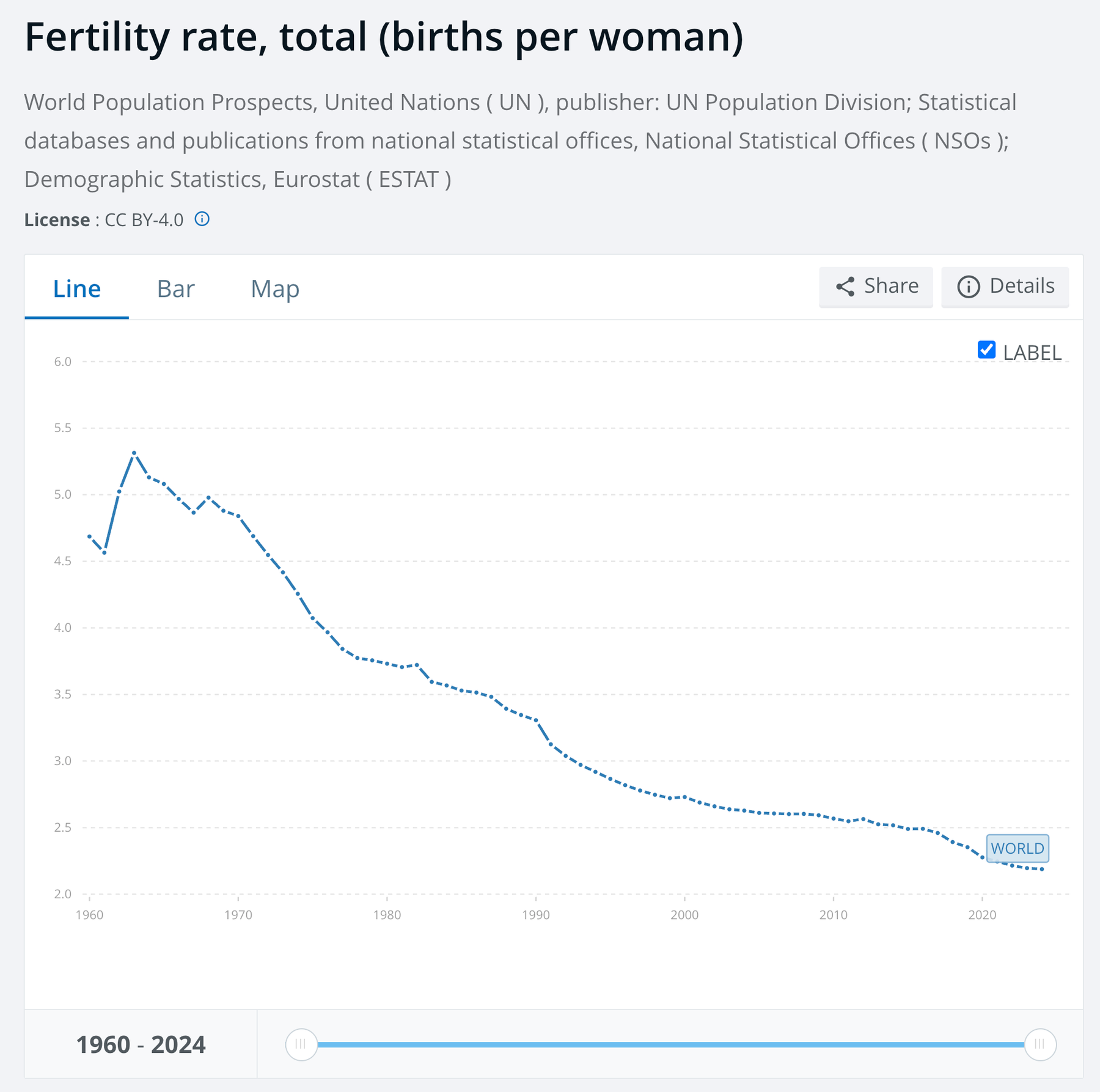
- The United Nations estimates that the global total fertility rate was approximately 2.25 births per woman in 2024, down from 3.31 in 1990.
- Under the UN’s medium projection, global fertility is expected to reach approximately 2.1 births per woman in the late 2040s and fall below that level thereafter.
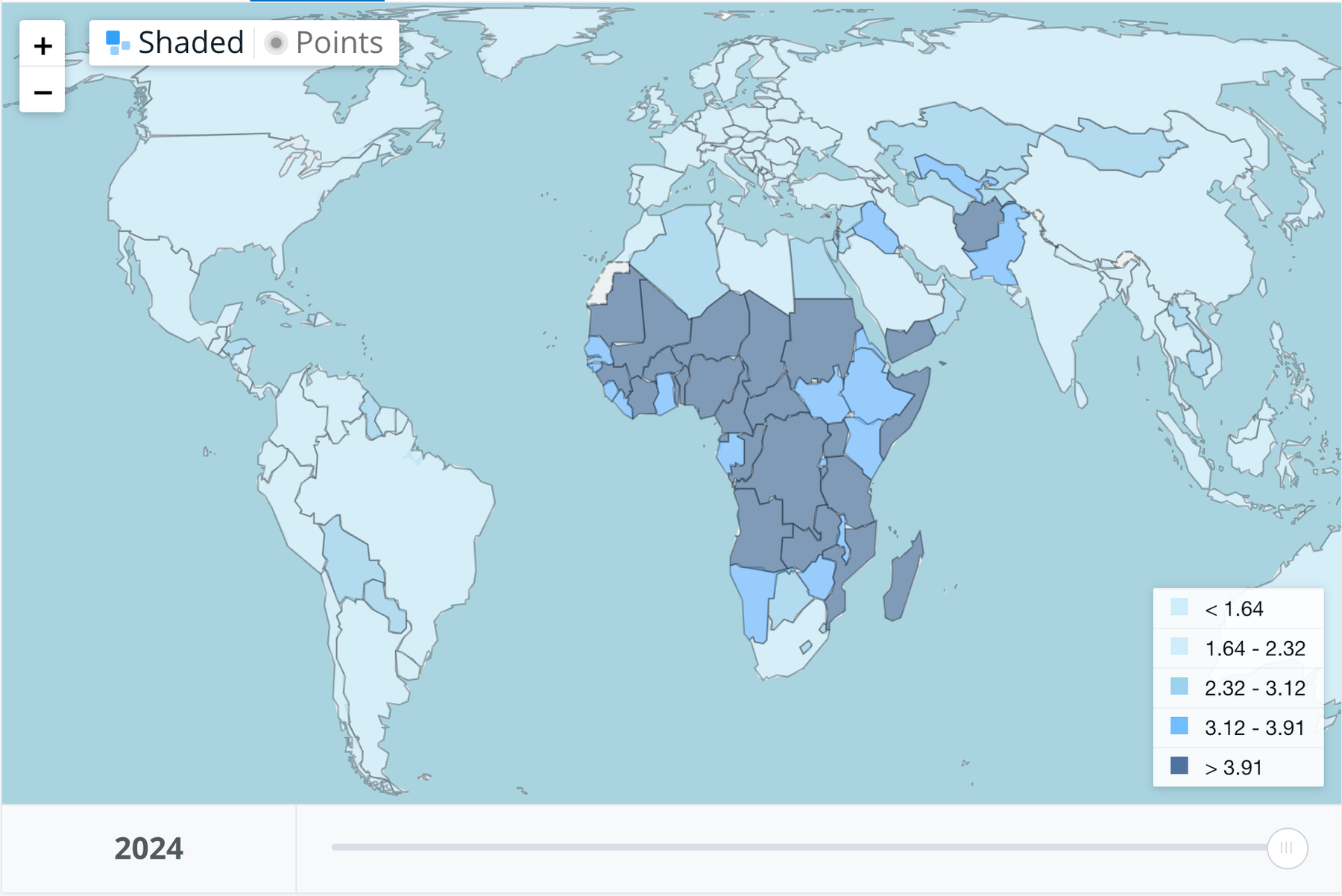
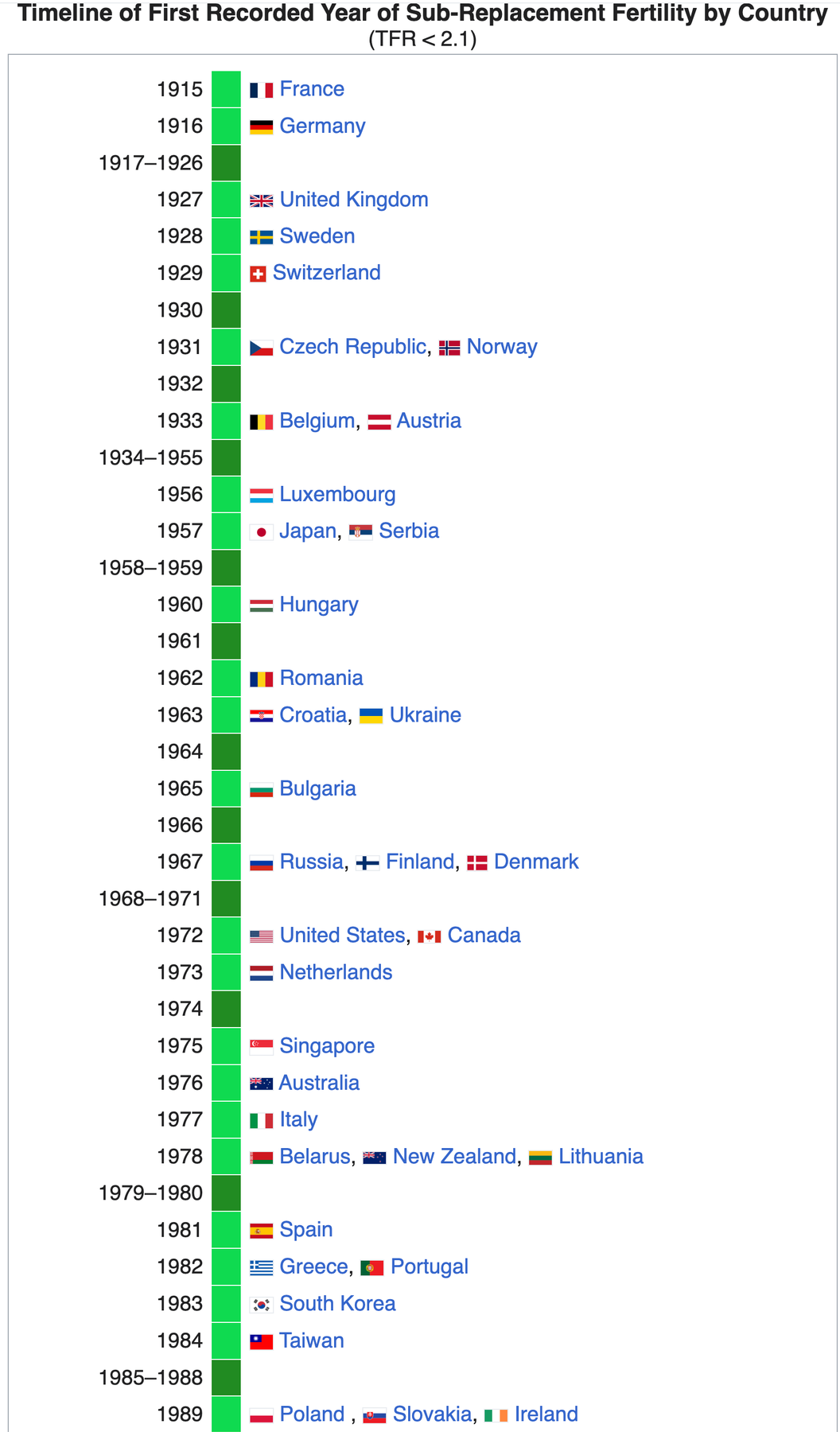
- More than half of all countries and territories already have fertility below approximately 2.1 births per woman, although the global average remains above this level because several populous countries—particularly in sub-Saharan Africa—continue to have comparatively high fertility.
- A 2024 Lancet study from the IHME forecasts a substantially faster decline: a global fertility rate of 1.83 in 2050 and 1.59 in 2100.
- The IHME study projects that 155 of 204 countries and territories—76%—will be below replacement fertility by 2050, increasing to 198 of 204—97%—by 2100.
United Nations population projection
- The UN estimates that the world population reached approximately 8.2 billion in 2024.
- Under the central projection in World Population Prospects 2024, the population is projected to reach approximately 9.6 billion in 2050.
- It is then expected to peak at approximately 10.3 billion in the mid-2080s before declining slightly to around 10.2 billion in 2100.
- The UN estimates an approximately 80% probability that the global population will peak before 2100.
- This replaces the UN’s older projection that the population would continue growing to approximately 10.9 billion in 2100.
IIASA and Wittgenstein Centre projection
- The latest IIASA and Wittgenstein Centre population projections were incorporated into the Shared Socioeconomic Pathways database version 3.2, released in May 2025.
- Under SSP2, the “middle-of-the-road” scenario, the world population is projected to peak at approximately 10.13 billion around 2080 and decline to approximately 9.88 billion in 2100.
- This supersedes the older Wittgenstein Centre projection that expected a peak of approximately 9.4 billion in 2070 and a decline to roughly 8.9–9.0 billion in 2100.
Lancet/IHME lower-population scenario
- A separate 2020 Lancet study projected a considerably lower trajectory, with the world population peaking at 9.73 billion in 2064 and declining to 8.79 billion in 2100.
- Its uncertainty interval was wide: the study estimated a possible 2100 population between approximately 6.83 and 11.8 billion.
- These population totals come from the 2020 study and should not be presented as though they were produced by the newer 2024 IHME fertility paper.
- The 2024 study updates global fertility forecasts but does not provide a directly equivalent replacement for the complete 2020 population projection.
Overall interpretation
- Major demographic models now generally expect the global population to peak during the second half of the twenty-first century, but they disagree about the timing and size of that peak.
- Among the major projections discussed here, the estimated peak ranges from approximately 9.7 to 10.3 billion, occurring sometime between the mid-2060s and mid-2080s.
- Their estimates for the population in 2100 range from approximately 8.8 to 10.2 billion.
- The disagreement is not primarily about whether fertility is declining. It concerns how rapidly fertility will decline, whether fertility will eventually stabilize or recover, how mortality and longevity will change, and how migration will redistribute population among countries.
- A global fertility rate falling below 2.1 does not immediately produce global population decline. Because of population momentum, the world can continue growing for decades while large generations of young people move through their reproductive years.
Sources
- United Nations — World Population Prospects 2024
- United Nations — Population: current global figures and projections
- UN DESA — World Population Prospects 2024 Data Portal
- Bhattacharjee et al. — “Global Fertility in 204 Countries and Territories, 1950–2021, with Forecasts to 2100,” The Lancet, 2024
- Vollset et al. — “Fertility, Mortality, Migration, and Population Scenarios for 195 Countries and Territories,” The Lancet, 2020
- IIASA — Updated Population and Human-Capital Projections to 2100
- IIASA — Shared Socioeconomic Pathways v3.2, May 2025
Replacement fertility varies by mortality conditions
Espenshade, Guzman, and Westoff, p. 575 (file not included in this release)
It is frequently assumed by the general public and also by some population experts that the value of replacement-level fertility is everywhere an average of 2.1 lifetime births per woman. Nothing could be farther from the truth. The global variation in replacement fertility is substantial, ranging by almost 1.4 live births from less than 2.1 to nearly 3.5. This range is due almost entirely to cross-country differences in mortality, concentrated in the less developed world. Policy makers need to be sensitive to own-country replacement rates. Failure to do so could result in fertility levels that are below replacement and lead to long-run population decline. For example, the current replacement total fertility rate for the East Africa region is 2.94. Lowering fertility to 2.10 would, under current mortality conditions, result in a regional birthrate 29 percent below replacement.
Data and projections
2024 global fertility map


Timeline
Historical context
U.S. fertility decline in historical perspective
The crude birth rate is the best measure for displaying the full period because the Census study provides estimates extending back to 1800. It measures annual live births per 1,000 people, not children per woman.
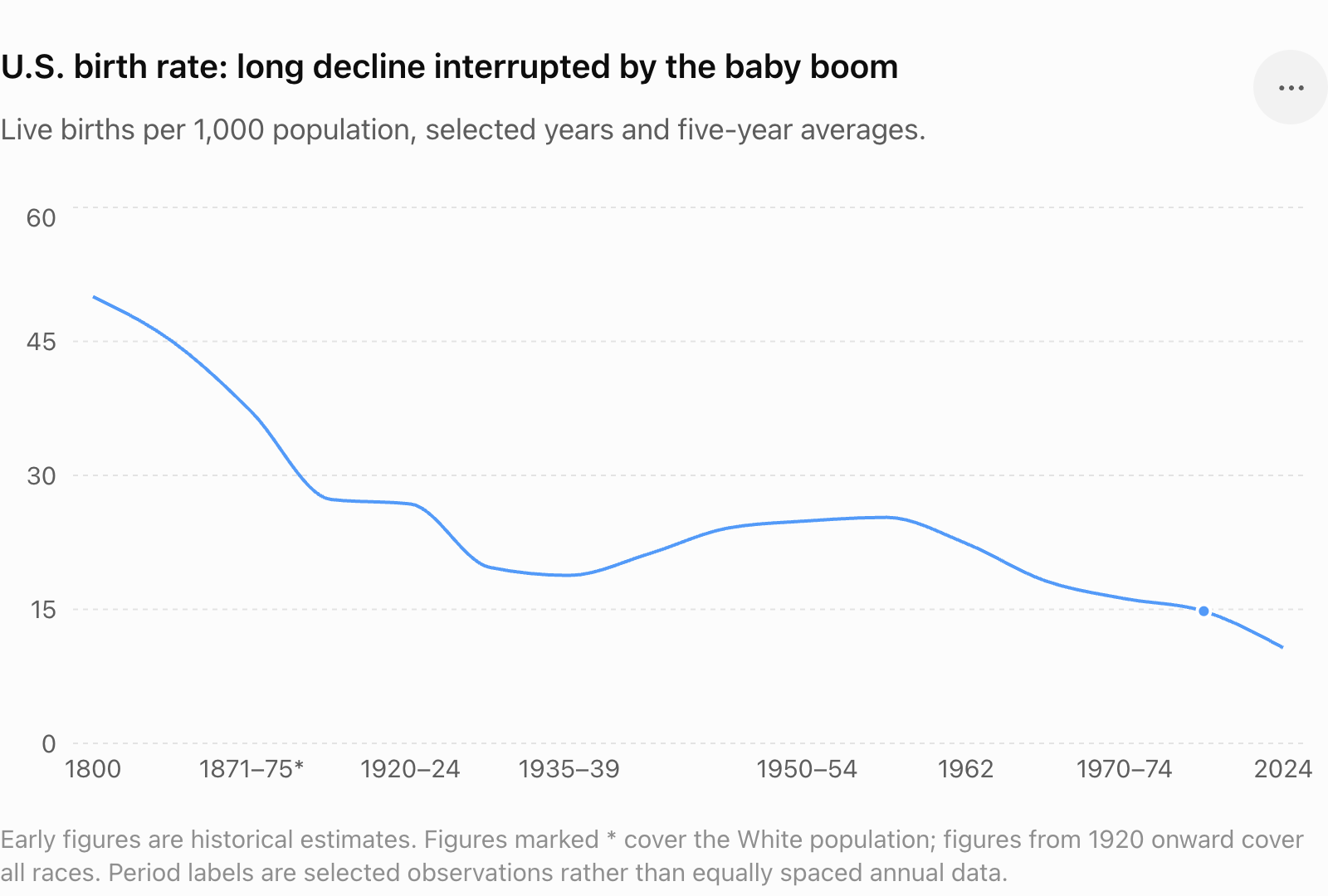
| Year or period | Births per 1,000 people | Historical phase |
|---|---|---|
| 1800 | ≈50.0 | Early high-fertility society |
| 1850s | ≈45.0 | Long decline underway |
| 1871–1875* | 37.1 | Nineteenth-century decline |
| 1901–1905* | 27.3 | Continued demographic transition |
| 1920–1924 | 26.8 | Pre-Depression |
| 1930–1934 | 19.7 | Great Depression |
| 1935–1939 | 18.8 | Prewar low |
| 1940–1944 | 21.2 | Wartime recovery |
| 1945–1949 | 24.1 | Early baby boom |
| 1950–1954 | 24.9 | Baby boom |
| 1957 | 25.3 | Postwar peak |
| 1962 | 22.4 | Decline already resumed |
| 1965–1969 | 18.2 | Accelerating decline |
| 1970–1974 | 16.2 | Below pre-boom level |
| 1975 | 14.8 | Post-boom low |
| 2024 | 10.7 | Current low-fertility era |
The 1871–1875 and 1901–1905 figures cover the White population because equivalent national historical figures were unavailable. From 1920 onward, the table uses figures for all races. The 1800 and 1850s numbers are historical estimates rather than complete vital-registration counts. (Census Bureau)
What the numbers show
1. The major historical movement preceded the baby boom.
The estimated birth rate fell from roughly 50 in 1800 to 19.7 in 1930–1934, a decline of approximately 61%. The Census Bureau therefore described declining fertility from the early republic through the Great Depression as the dominant long-term trend. (Census Bureau)
2. The baby boom was a substantial but temporary reversal.
The birth rate rose from 18.8 in 1935–1939 to 25.3 in 1957, an increase of roughly 35% from the prewar low. The total fertility rate—children per woman—also reached its postwar peak in 1957 at approximately 3.77. (CDC)
3. The reversal began before the major second-wave feminist victories of the late 1960s and 1970s.
The crude birth rate peaked in 1957, fell to 24.6 in 1958, and reached 22.4 by 1962. Contemporary government analysis documented a declining trend after 1957. (CDC)
4. The post-1957 decline returned fertility to the earlier trajectory.
From 1957 to 1975, the crude birth rate fell approximately 42%, from 25.3 to 14.8. By 2024 it was 10.7, approximately 58% below the 1957 peak. (CDC)
Main interpretation
The postwar baby boom was not the normal, timeless condition of American society. It was a roughly 15-to-20-year upward interruption within a fertility decline extending across approximately two centuries. Feminism, contraception, changing marriage patterns, women’s employment, education, economics, and cultural change may all have affected the later speed and form of the decline, but the chronology rules out the simple claim that second-wave feminism originally created the American fertility decline. The decline was already generations old and had resumed by 1958. The numbers establish this chronology; they do not by themselves assign a complete causal weight to any one factor.
Greek historian Polybius largely blamed the decline of the Hellenistic world on low fertility rates,writing in his work The Histories
In our time all Greece was visited by a dearth of children and generally a decay of population, owing to which the cities were denuded of inhabitants, and a failure of productiveness resulted, though there were no long-continued wars or serious pestilences among us… For this evil grew upon us rapidly, and without attracting attention, by our men becoming perverted to a passion for show and money and the pleasures of an idle life, and accordingly either not marrying at all, or, if they did marry, refusing to rear the children that were born, or at most one or two out of a great number, for the sake of leaving them well off or bringing them up in extravagant luxury.
Polybius (2012). Evelyn S. Shuckburgh (ed.). The Histories of Polybius: Translated from the Text of F. Hultsch
Marriage Timing Functioned as Population Control
Before reliable modern contraception, birth rates were strongly regulated by when—and whether—people married. In north-western Europe, women commonly married around ages 24½–26½, births outside marriage were uncommon, and 10–15 percent of women—and sometimes as many as 25 percent—never married. This shortened or eliminated the reproductive period for a substantial portion of women. When marriage ages declined in later eighteenth-century England, fertility could rise sharply, although growing family planning caused some women to stop childbearing earlier. See Late Marriage and Fertility in Early Modern Europe
Roman Empire
Emperor Augustus commented on the low birthrates of the Roman elite
We liberate slaves chiefly for the purpose of making out of them as many citizens as possible. We give our allies a share in the government that our numbers may increase; yet you, Romans of the original stock, including Quintii, Valerii, Iulii, are eager that your families and names at once shall perish with you.
Upon the establishment of the Roman Empire, Emperor Augustus would introduce legislation to increase the birthrates of the Roman nobility.
Encyclopedia Britannica | Britannica
Drivers of fertility change
The Genetic Origins of Tribalism, Race & Political Ideology Nicholas Wade > Why birth rates are falling (Coleman’s theory)
Transclude of the-genetic-origins-of-tribalism,-race--and--political-ideology--nicholas-wade#why-birth-rates-are-falling-colemans-theory
Education
Longer education frequently delays partnership and first births; the relationship with completed fertility varies by country and by how compatible employment is with parenthood. See Factors associated with decreased fertility.
Quantity–quality trade-off
People are more likely in modern society to invest strongly in the needs of their children, such as offering them the best education, shelter (a room only for the child), travel, cultural activities etc. In the past, when child mortality was high, people had more children, but invested less in them. Today, parents usually experience much less doubt about whether the child will live to adulthood, and so are more likely to strongly invest in that child. But strongly investing in each child makes it irrational to have a large numbers of children—this is a “quantity vs. quality trade-off”—with education as the most important such qualitative investment.
quantity-quality-fertility-education-trade-off.pdf (file not included in this release)
Economic insecurity and decline
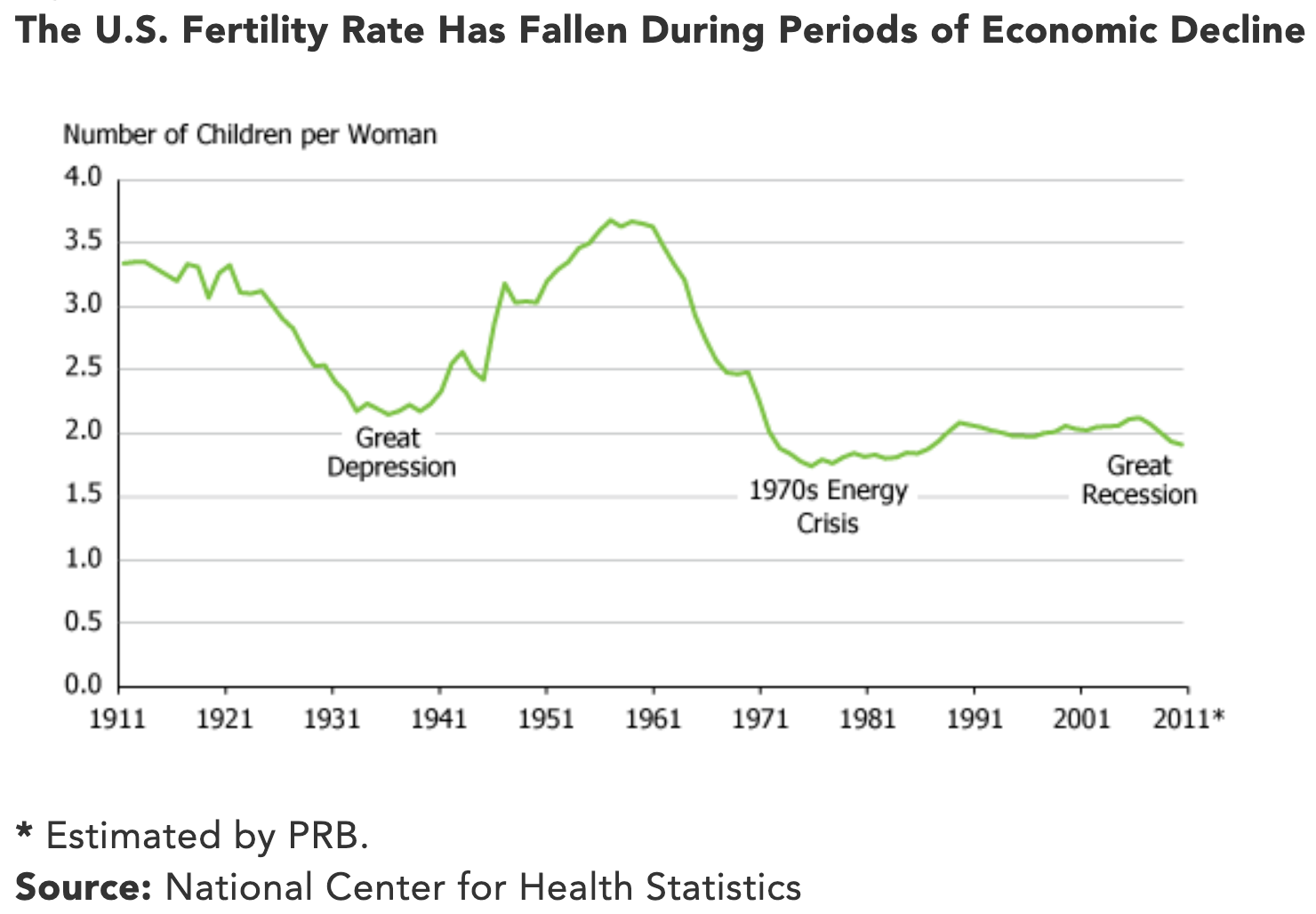
Fact Sheet: The Decline in U.S. Fertility
Homeownership, mortgage access, and the Baby Boom
New York Times framing — Sabrina Tavernise, September 28, 2026
In Could Homeownership Reverse the Decline in Birthrates?, Tavernise presents the historical study as evidence that homeownership can provide the financial and emotional security people seek before having children. She connects the finding to contemporary barriers facing young buyers and asks whether easier mortgage access could help reverse today’s low birth rate.
That contemporary interpretation goes beyond the study’s directly estimated result. The paper identifies the effect of FHA- and VA-backed mortgage issuance in the mid-twentieth-century United States, not a universal effect of homeownership or the likely effect of a new mortgage subsidy today. The article itself preserves this caveat: economist Phillip Levine calls the historical evidence strong but says its modern applicability is unknown, while Kearney warns that demand-side assistance could raise prices where housing supply is constrained.
The underlying paper is NBER Working Paper 33446. Its September 2026 revision is titled Can Housing Policy Raise Birth Rates? Lessons from Federal Mortgage Programs During the Baby Boom; it was previously circulated as Did the Modern Mortgage Set the Stage for the U.S. Baby Boom?
- The FHA program began in 1934 and the VA guarantee program in 1944. Both reduced down-payment barriers and helped establish the long-term, fixed-rate mortgage.
- Using newly digitized state-year loan and birth records plus an instrumental-variables strategy intended to isolate supply-driven mortgage availability, the authors estimate about 314 additional births in the following year per 1,000 additional government-backed mortgages.
- Their back-of-the-envelope calculation implies that FHA and VA lending raised annual births by roughly 5–10 percent relative to the early 1930s and explains about 10 percent of the increase in annual births during the Baby Boom. Mortgages were therefore a contributing cause, not the only cause.
- Births shifted toward women in their early twenties rather than teenagers, and the paper reports earlier first births as well as higher-order births. State-cohort patterns are also consistent with earlier marriage and higher completed fertility among White women exposed to more lending.
- The main causal estimate concerns births in the following year. The claim about higher completed fertility rests on supplementary cohort and age-pattern evidence, so it is stronger than a pure timing correlation but not identical to the main state-year IV estimate.
- The authors find no discernible effect on births to Nonwhite women, consistent with the programs’ documented racial discrimination. Black women participated in the broader Baby Boom, but the paper does not attribute their increase in childbearing to FHA/VA lending.
- The historical setting was unusually favorable to a demand-side intervention because new single-family housing supply expanded alongside mortgage demand. The study does not establish that a similar policy would raise homeownership or births under today’s supply constraints.
- This is an NBER working paper circulated for discussion, not a peer-reviewed journal article or a finding approved by the NBER Board of Directors.
Open the full research summary · Open the official September 2026 NBER PDF (file not included in this release)
Policy responses
OECD baseline — Society at a Glance 2024 (file not included in this release)
918d8db3-en, p.16 (file not included in this release)
918d8db3-en, p.17 (file not included in this release)
Does pronatalist messaging or fertility education raise birth rates
Not very well when used by itself. The strongest direct studies show that fertility education can improve knowledge without producing a detectable overall change in childbearing intentions or births. A 2026 Singapore randomized trial of 778 married couples found higher fertility awareness after screening or education interventions but no significant difference at six months in intended age at first birth, attempts to conceive, pregnancy, or the other reported secondary outcomes. A Japanese randomized trial likewise increased knowledge and anxiety; its two-year follow-up found no significant overall increase in childbirth, although a partnered subgroup showed evidence consistent with accelerating some births into the first year.
This makes the distinction between tempo and quantum essential:
- a tempo effect changes when an already-planned birth occurs;
- a quantum effect changes how many children a person ultimately has.
Singapore’s decades of pronatalist advertising, family incentives, housing measures, childcare policy, and baby bonuses produced temporary fluctuations but no durable return to replacement fertility. Russia, Poland, and Hungary likewise combine traditional-family rhetoric with large material programs; the combined policies have had limited success reversing demographic decline, and their design makes the independent effect of messaging impossible to isolate.
Messaging may still affect fertility knowledge, family attitudes, national identity, or political support for family policy. The evidence is much weaker for the further causal step from those outcomes to additional completed births. The practical barriers—partner availability, housing, childcare, work schedules, career costs, income insecurity, unequal care work, and delayed childbearing—usually remain in place after a campaign.
There is suggestive asymmetry with campaigns promoting contraception and smaller families: a 2021 meta-analysis found small positive effects of mass-media campaigns on family-planning behavior. That is not a direct comparison of completed fertility, however. Avoiding a birth may require one behavioral change, whereas producing an additional birth requires overcoming a long chain of relational, economic, health, and care-work constraints.
Verdict
Governments appear better able to help people have children they already want than to persuade people to want an additional child. Affordable childcare, well-designed leave, predictable work, and sustained family support have stronger evidence than slogans or education alone, although even comprehensive packages have not reliably restored very-low-fertility societies to replacement.
For the full evidence review, country cases, limitations, claim ledger, and sources, see Pronatalist Messaging, Fertility Education, and Birth Rates.
Do family-support policies raise fertility
Partially, but no country has found a reliable formula for restoring fertility to replacement level and keeping it there.
The evidence supports three different conclusions:
- Paid leave, childcare and family benefits improve family welfare, child health, maternal employment and gender equality.
- Well-designed policies can produce a measurable increase in births compared with what would otherwise have occurred.
- The increase is usually too small or temporary to reverse a broad national fertility decline.
By 2024, every OECD country except Israel remained below the approximate replacement rate of 2.1 children per woman. The OECD average was about 1.46. Even countries with extensive parental leave, subsidized childcare and family allowances have generally remained below replacement. (OECD)
Results by policy type
| Policy | Typical fertility result | Overall assessment |
|---|---|---|
| Affordable, widely available childcare | Usually positive, particularly for second and subsequent births | Strongest evidence among family policies |
| Generous paid parental leave | Often positive when the reform is substantial and well-paid | Helpful, but marginal extensions may do little |
| Leave reserved for fathers | May encourage additional births by sharing care more equally | Promising but mixed evidence |
| Cash payments and “baby bonuses” | Small or temporary increase; often changes timing more than completed family size | Weak as a stand-alone strategy |
| Child tax benefits | Modest and uneven effects, often concentrated among particular income groups | Supplementary rather than transformative |
| Housing assistance | Potentially important where housing is a major barrier | Increasingly emphasized, but causal evidence is less developed |
| Fertility-treatment subsidies | Some increase among older women and people facing infertility | Useful for a defined population, not a national solution |
| Very long maternal leave | May delay return to employment and reinforce the motherhood penalty | Can become counterproductive if poorly designed |
A systematic review of 35 experimental and quasi-experimental studies found that childcare expansions tended to increase completed fertility, while larger cash transfers generally produced temporary effects. It also found newer evidence that substantial parental-leave expansions can raise fertility, although the results depend strongly on policy design and who qualifies. (Wiley Online Library)
1. Early childhood care appears to work better than cash bonuses
Affordable childcare reduces one of the largest continuing costs of parenthood: the conflict between working and caring for a young child.
The policy is especially relevant to couples considering a second or third child. Parents already know how difficult care arrangements are after their first child, so reliable childcare can directly affect whether they continue having children.
A major German reform expanded public childcare for children under three. Researchers found a significant positive fertility effect, particularly on additional births rather than merely on whether previously childless couples became parents. They also concluded that the effect was not simply caused by parents moving births earlier or relocating to areas with better childcare. (OUP Academic)
The broader research literature therefore considers childcare one of the more credible ways to increase the number of children people eventually have. Its effects are still generally modest, however. Childcare cannot compensate completely for unstable relationships, expensive housing, insecure jobs or changing preferences about parenthood.
2. Paid leave can raise fertility, but the details matter
Paid parental leave is more likely to influence fertility when it:
- replaces a meaningful percentage of income;
- protects the parent’s job;
- is available to a broad share of workers;
- is predictable and administratively accessible;
- connects smoothly to affordable childcare;
- encourages fathers as well as mothers to participate.
A 2022 systematic review found that substantial increases in leave duration or compensation generally increased future fertility, while small extensions—such as adding only a few weeks to an already established program—often had no detectable effect. (Nature)
The OECD similarly concludes that the effect varies substantially by country. Quebec’s 2006 parental-insurance reform, which increased income replacement and maximum benefits, produced a substantial rise in births relative to the expected counterfactual. By contrast, several Norwegian expansions of already generous leave produced only marginal or statistically insignificant fertility effects. (OECD)
This suggests diminishing returns. Introducing meaningful paid leave where little exists may matter considerably. Adding several more weeks in a country that already provides long, well-paid leave may change little.
3. Sweden shows the difference between birth timing and family size
Sweden introduced what became known as the “speed premium.” Parents who had another child within a specified interval could preserve the parental-leave benefit calculated from their earlier earnings.
The reform clearly caused parents to have their next child sooner. It is therefore strong evidence that policy can alter reproductive behavior. (Demographic Research)
But it illustrates an important methodological problem:
A policy can raise the annual fertility rate by moving births forward without substantially increasing the number of children people have over their lifetimes.
Suppose parents already intended to have two children but planned to wait four years between them. A policy encouraging them to wait only two years temporarily raises the annual fertility rate, even though the couple still ends with two children.
Researchers therefore distinguish:
- tempo effects: changing when births happen;
- quantum effects: changing how many children are ultimately born.
For reversing population decline, the second effect matters more.
4. Father-specific leave may help, but evidence remains mixed
In Iceland, Norway and Sweden, couples in which fathers used parental leave were often more likely to have another child. One possible explanation is that fathers who participate early continue doing more childcare, reducing the burden placed on mothers. (Demographic Research)
But it is difficult to separate cause and selection. Fathers who take leave may already belong to more stable, egalitarian or family-oriented couples.
Some causal evaluations have found little effect. Extended father quotas in Norway did not significantly increase subsequent fertility, while the introduction of short paternity leave in Spain was associated with delayed subsequent births. The OECD therefore treats father-specific leave as beneficial for gender equality and family well-being but not as a guaranteed fertility intervention. (OECD)
Country evidence
France: relatively successful for decades, but not immune
France developed one of the more comprehensive combinations of:
- parental leave;
- subsidized childcare;
- preschool provision;
- child allowances;
- tax benefits for families;
- assistance for larger families.
For years, France maintained one of Europe’s higher fertility rates, reaching approximately 2.0 children per woman around 2010. This was frequently presented as evidence that coherent family policy could keep fertility close to replacement.
The decline eventually resumed. France’s TFR fell to 1.62 in 2024, its lowest level since the period around the First World War and substantially below its 2010 level. (Insee)
Verdict: France may have kept fertility higher than it otherwise would have been, but it did not permanently prevent decline.
Nordic countries: strong family support, falling fertility
Denmark, Norway and Sweden combine:
- paid leave;
- father-specific leave;
- universal or heavily subsidized childcare;
- high female employment;
- comparatively egalitarian household norms.
These countries sustained relatively high fertility for substantial periods. But fertility fell sharply during the 2010s despite their family-policy systems. By 2022–23, many countries previously considered high-fertility success stories had fallen toward the OECD average. (OECD)
This does not prove the policies failed. Their fertility might have fallen even further without them. It does show that extensive family support is not sufficient by itself.
Germany: meaningful improvement, but no return to replacement
Germany historically had limited childcare for young children, long maternal-care periods and a system that made employment and motherhood difficult to combine. It subsequently expanded childcare and introduced earnings-related parental benefits.
Causal studies found that childcare expansion increased fertility, especially additional births. Germany’s national fertility rate also recovered from its lowest levels for a period. But it remained well below replacement and later weakened again. (OUP Academic)
Verdict: A credible example of policy improving fertility at the margin, not of solving sub-replacement fertility.
Quebec: a relatively strong parental-leave result
Quebec created a separate parental-insurance system in 2006 with:
- broader eligibility;
- higher benefit ceilings;
- stronger income replacement;
- leave specifically reserved for fathers.
Research cited by the OECD found that the reform substantially increased births relative to the rest of Canada and increased women’s labor supply. Quebec also achieved far higher parental-leave participation among fathers than the rest of Canada. (OECD)
Quebec nevertheless remains below replacement. Its experience suggests that generous, accessible leave can produce a real effect, but not necessarily a large enough one to reverse national demographic conditions.
Poland: cash benefits reduced poverty but did not raise fertility
Poland introduced the Family 500+ program in 2016, initially paying PLN 500 per month for second and subsequent children, with means-tested support for first children. It was later universalized and increased to PLN 800.
The benefit substantially reduced child poverty, but the OECD concluded that it failed to raise fertility rates. It also reduced maternal labor-force participation by an estimated two to three percentage points, particularly among less-educated women and women in smaller towns. (OECD)
The program illustrates a recurrent problem with unconditional cash payments: they reduce the direct financial cost of children but may not solve childcare access, housing, work schedules or the long-term career costs of motherhood.
Hungary: an increase followed by renewed decline
Hungary created an extensive pronatalist system involving:
- tax exemptions;
- subsidized housing and mortgages;
- loans forgiven when children are born;
- family allowances;
- support favoring married couples and larger families.
Hungary’s TFR rose from very low levels during the 2010s, reaching approximately the OECD average. This initially appeared to be one of the stronger recent pronatalist results. (OECD)
The increase did not establish a permanent reversal. Hungary’s official statistical agency estimated that TFR fell from 1.51 in 2023 to 1.38 in 2024, while births fell by 9.1 percent. (Central Statistical Office)
Verdict: A substantial but incomplete and apparently fragile recovery.
South Korea: the clearest case of spending without reversal
South Korea greatly expanded childcare, parental benefits, child allowances, housing measures and other fertility programs. Yet fertility continued falling, reaching 0.72 in 2023 before a small increase to approximately 0.75 in 2024. (국가데이터처)
The OECD concludes that Korean family policies have not made employment and motherhood genuinely compatible. Problems include:
- long and inflexible working hours;
- low parental-leave use;
- gaps in eligibility;
- workplace discrimination;
- inadequate protection for people who take leave;
- shortages or quality problems in preferred childcare;
- high housing and education costs;
- an employment and family system strongly organized around marriage. (OECD)
The 2024 rise is notable, but one year of improvement from an extremely low level is not evidence of a durable reversal.
Why policy effects are limited
They reduce some costs, not every cost
Governments can subsidize daycare or replace income during leave. They cannot easily create:
- stable relationships;
- suitable partners;
- affordable housing near employment;
- predictable working hours;
- confidence about the future;
- grandparents or extended family nearby;
- a less competitive educational system;
- a lower perceived standard for “good parenting.”
Fertility decisions are therefore affected by the complete expected burden of parenthood, not just the cash price of diapers or several months of lost wages.
The first child and additional children have different causes
Childcare and parental leave often have more effect on second or third births than on first births.
A couple considering another child is primarily asking:
Can we manage one more child?
A person considering a first child may instead be asking:
Do I have a partner? Can we marry or establish a stable household? Can we afford a home? Am I willing to reorganize my life around parenthood?
Family policy is more capable of addressing the first question than the second.
Temporary incentives may only move births forward
Parents may respond to an announced benefit by having a child sooner. This raises the annual TFR briefly, followed by fewer births later because some of those births would have occurred anyway.
This is why early policy evaluations can exaggerate success.
Policies may reward existing parents more than create new ones
A payment for every child gives substantial support to families who were already planning to have children. That may be desirable as social policy, but much of the spending is not changing behavior.
The relevant policy question is not:
Did recipients have children?
It is:
How many additional children were born because of the policy?
That counterfactual is difficult to measure.
Inconsistent policies undermine confidence
People make fertility decisions over decades. A temporary baby bonus or frequently changing tax benefit may not materially change their long-term expectations.
A coherent system provides continuous support:
Pregnancy and birth → adequately paid leave → reliable childcare → preschool and school → predictable work arrangements.
A gap anywhere in that sequence can become the decisive barrier.
Best-supported policy package
The current evidence favors an enabling package, rather than a simple financial reward for giving birth:
- Affordable, high-quality childcare, available when paid leave ends and compatible with normal working hours.
- Adequately paid and job-protected parental leave, with substantial eligibility and a portion reserved for each parent.
- Moderate rather than excessively long leave, so that mothers are not pushed out of employment for several years.
- Predictable and flexible work, including protection against career penalties for parents.
- Affordable family-sized housing, particularly in high-employment metropolitan areas.
- Support for partnership and household formation, indirectly through employment and housing stability.
- Child allowances and tax benefits as supplements, not substitutes for services.
- Accessible infertility treatment, especially as first births occur at later ages.
The OECD’s broader conclusion is that countries should pursue these policies because they help people have the children they want and improve family well-being—but should simultaneously prepare for a lower-fertility future through productivity growth, immigration, longer working lives and pension reform. (OECD)
Overall policy verdict
Family policies can soften fertility decline, produce modest increases and prevent fertility from falling as far as it otherwise might. They have not demonstrated the ability to restore very-low-fertility societies sustainably to replacement level.
The strongest policies remove practical obstacles to parenthood. They do not “purchase” births. Their realistic objective is to narrow the gap between the number of children people say they want and the number they are ultimately able to have.
They should also be judged on outcomes beyond fertility. A childcare or leave program may be successful because it reduces child poverty, protects infant health, raises maternal employment or allows fathers to participate in childcare—even when the national fertility rate remains low.
Related mechanisms and correlations
Child labor — Hazan and Berdugo source paper (file not included in this release)
Contraception
Europe the continent with the lowest fertility
Human Development Index
The Human Development Index (HDI) is a composite statistic of life expectancy, education, and per capita income indicators, which are used to rank countries into four tiers of human development.
There is a strong inverse correlation between the HDI and the fertility rate of the population: the higher the HDI, the lower the fertility rate.
The inverse relationship between income and fertility has been termed a demographic-economic “paradox” by the notion that greater means would enable the production of more offspring as suggested by the influential Thomas Malthus.
Graduate education and fertility
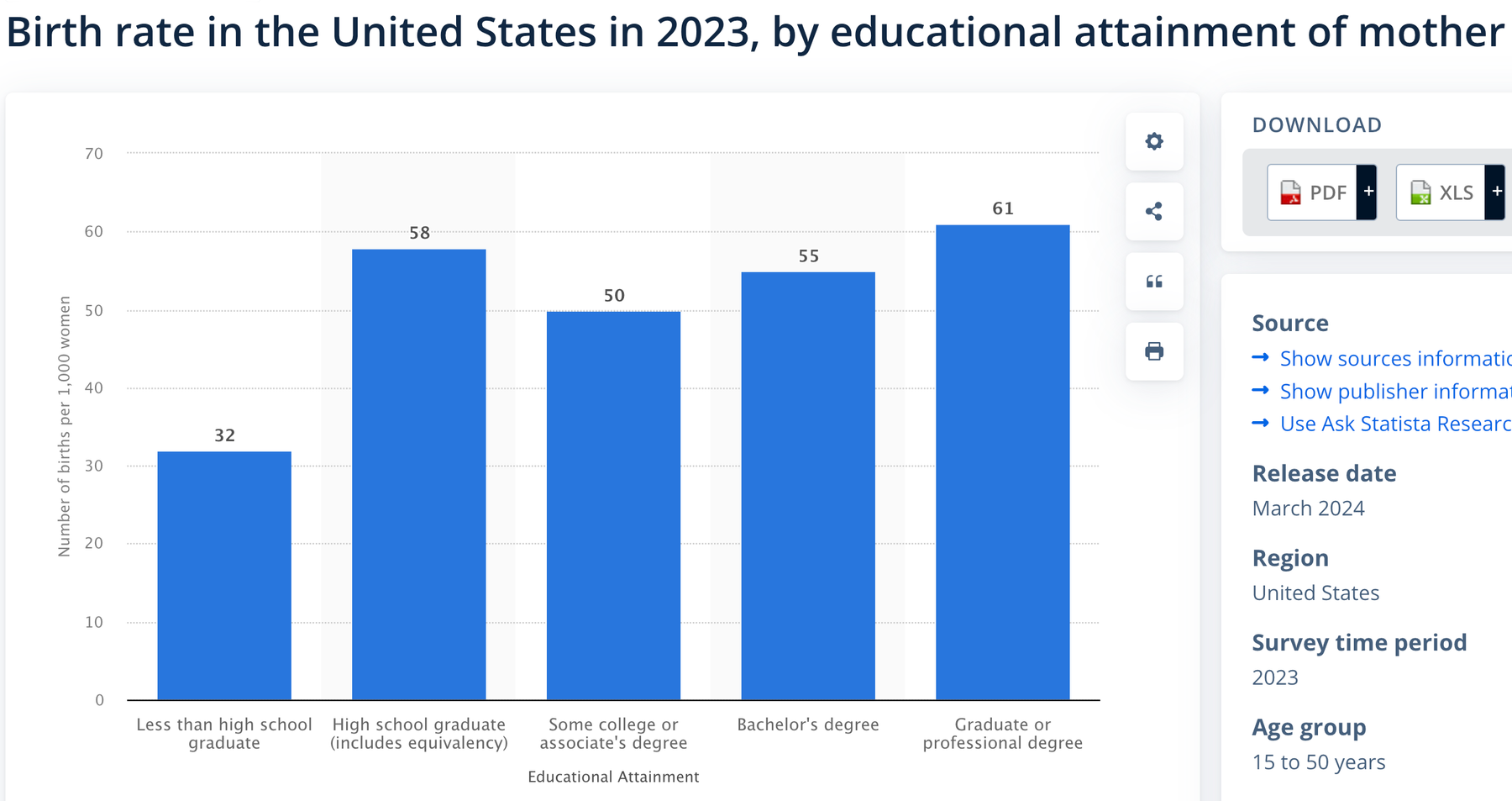
U.S. Census
Birth rate by educational attainment of mother U.S. 2023| Statista
Public opinion and desired family size
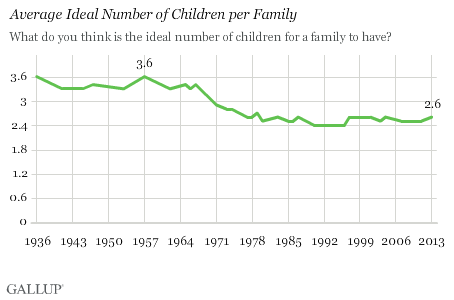
Desire for Children Still Norm in U.S.
Research library
Dettling and Kearney — Can Housing Policy Raise Birth Rates
Lisa J. Dettling and Melissa Schettini Kearney — Can Housing Policy Raise Birth Rates? Lessons from Federal Mortgage Programs During the Baby Boom
Source: NBER Working Paper No. 33446, February 2025, revised September 2026
Earlier title: Did the Modern Mortgage Set the Stage for the U.S. Baby Boom?
DOI: 10.3386/w33446
Official PDF: w33446.pdf (file not included in this release)w33446.pdf (file not included in this release)
Research question
The paper asks whether a large expansion in access to home finance can raise aggregate birth rates. It studies the introduction of federally backed mortgages during the Baby Boom rather than inferring the answer from a present-day correlation between homeownership and fertility.
Historical intervention
Before the modern mortgage, home loans often required down payments exceeding half of a home’s value. The Federal Housing Administration’s mortgage-insurance program, introduced in 1934, and the Veterans Administration’s loan-guarantee program, introduced in 1944, expanded access to low-down-payment, long-term, fixed-rate loans.
Previous research has shown that these programs substantially increased homeownership, especially among younger households. In the period examined here, homeownership among adults of childbearing age rose from roughly 20 percent in 1940 to nearly 50 percent in 1960. The fertility reversal began in the mid-1930s, before the United States entered World War II, so the paper treats mortgage expansion as one possible contributor to a multi-decade Baby Boom rather than merely a postwar event.
Data and identification
The authors digitized state-by-year counts of FHA and VA mortgages from agency annual reports and combined them with state-year birth counts from historical Vital Statistics publications. Their baseline regressions relate mortgages issued in one year to births in the next year, approximately aligning lending with the year of conception, while including state and year fixed effects and controls for population and income.
Realized loan issuance can reflect both supply and demand: couples planning a child might seek mortgages, or favorable local conditions might raise both lending and births. To address this, the paper uses an instrumental-variables design that combines national changes in the profitability of federally backed loans with cross-state differences in lenders’ capacity to issue them. The design is intended to isolate supply-side variation in mortgage availability rather than family demand for credit.
Main result
The preferred IV estimate is that 1,000 additional government-backed mortgages issued in a state-year produced about 314 additional births in the following year. The corresponding ordinary-least-squares estimates are similar, at roughly 304–319 additional births per 1,000 loans depending on program and specification.
A back-of-the-envelope calculation implies:
- about 115,000 additional births per year on average from 1935 through 1957;
- about 200,000 additional births per year during the 1950s, when loan issuance was highest;
- an annual increase of roughly 5–10 percent relative to the early 1930s;
- about 10 percent of the increase in annual births during the Baby Boom.
These estimates make mortgage access a meaningful contributing cause, not a complete explanation for the Baby Boom.
Timing, marriage, and completed fertility
The paper finds that additional mortgage issuance shifted births toward younger adult women, especially ages 20–24, without increasing the share born to teenagers. It reports similar evidence for first births and higher-order births. These patterns are consistent with earlier homeownership facilitating earlier marriage and earlier entry into parenthood.
Descriptive state-cohort comparisons also show that greater cumulative FHA/VA lending was associated with earlier marriage and larger increases in children ever born among White women whose childbearing years were exposed to the programs. The paper interprets this evidence as suggesting that the policy affected not only the timing of births but ultimately completed fertility.
The evidentiary distinction matters: the main IV design identifies a short-run effect on births in the following year, while the completed-fertility conclusion comes from supplementary cohort comparisons and the shift toward earlier family formation. The latter is consistent with a lasting increase in family size but is not the same estimate as the main annual-birth result.
Racial exclusion and unequal effects
FHA and VA lending operated within a housing system that overtly discriminated by race and reinforced residential segregation. The study finds positive effects on births to White women but no discernible effect on births to Nonwhite women in either the OLS or IV estimates.
This null result does not mean that Black women did not participate in the Baby Boom. It means that the paper finds no evidence that the federally backed mortgage programs caused their increase in births. The difference between groups is consistent with unequal access to the programs and strengthens the authors’ interpretation that mortgage availability—rather than a general state-level Baby Boom trend—drove the estimated White-birth effect.
What the study establishes
The study provides evidence that, in this historical setting:
- expanding access to low-down-payment, government-backed mortgages increased births;
- the effect was associated with earlier family formation rather than teenage childbearing;
- mortgage finance can be one economic channel connecting material security to fertility;
- discriminatory access produced unequal demographic effects.
What it does not establish
The study does not show that:
- homeownership is the only or dominant cause of the Baby Boom;
- every additional mortgage produces a birth at the individual household level;
- homeownership universally increases fertility across periods, countries, or social groups;
- the same effect size would occur under current housing, labor-market, gender, or family conditions;
- mortgage subsidies will improve affordability when new housing supply cannot expand;
- modern mortgage assistance would restore U.S. fertility to replacement level.
The paper also remains an NBER working paper: it is circulated for discussion and has not undergone journal peer review or approval by the NBER Board of Directors.
Present-day policy relevance
The authors argue that today’s simultaneous decline in young-adult homeownership and fertility makes the historical result relevant. But they explicitly identify a crucial difference. In the mid-twentieth century, mortgage demand was met by a large expansion in newly built single-family housing, so prices did not rise enough to erase the affordability gain. In a supply-constrained market, a demand subsidy can instead capitalize into higher home prices and fail to expand ownership.
The most defensible modern inference is therefore conditional:
Policies that genuinely expand attainable homeownership for young adults may support earlier family formation and raise births, but mortgage assistance alone need not do so if housing supply cannot respond.
New York Times interpretation
Sabrina Tavernise’s September 28, 2026 article, Could Homeownership Reverse the Decline in Birthrates?, translates the paper into a contemporary affordability story. It emphasizes ownership as a source of emotional and financial security and contrasts the historical mortgage expansion with present barriers facing first-time buyers.
That is a plausible interpretation, not the paper’s directly tested contemporary result. The article appropriately notes the uncertainty: Phillip Levine says the historical empirical work appears strong but cannot tell us whether the same intervention would work today, and Kearney points to constrained supply and the risk that mortgage assistance would raise home prices.
Bottom line
The revised paper offers unusually strong historical evidence that a large, supply-driven expansion of government-backed mortgage credit raised births during the Baby Boom. Its causal estimate is specific to mid-century FHA and VA lending, and its racially unequal effects reflect who could actually access those programs. The paper strengthens the case that housing security can matter for fertility, while leaving the size—and even the direction—of a comparable present-day policy effect dependent on housing supply and institutional context.
Sources
Claudia Goldin — The Downside of Fertility
Claudia Goldin — The Downside of Fertility
Source: Claudia Goldin, NBER Working Paper No. 34268, 2025
Central Argument
Goldin argues that the worldwide decline in fertility is partly explained by a mismatch between women’s increased autonomy and the slower transformation of men’s roles, workplace institutions, and household expectations.
Modern women have substantially greater control over:
- education;
- employment and careers;
- marriage and partnership;
- contraception and the timing of births;
- whether to have children at all.
These changes have improved women’s freedom and economic opportunities. However, pursuing higher education, establishing a career, maintaining employment, and raising children cannot easily be done by one person without substantial cooperation from a partner and support from institutions.
The “downside” in the paper’s title does not mean that fertility or women’s autonomy is inherently harmful. It refers to the risk women face when having children makes their careers and economic independence dependent on whether their male partners will reliably share childcare and household responsibilities.
The Matching Problem
Goldin describes fertility as partly involving a matching and commitment problem between men and women.
A career-oriented woman considering children must evaluate whether her partner is likely to:
- share childcare consistently;
- perform a meaningful portion of household labor;
- modify his working hours when children need care;
- accept some career sacrifice himself;
- remain dependable after the child is born.
The woman cannot know with certainty whether a prospective partner will fulfill these expectations. A man may promise to be an equal parent but return to traditional gender roles after the birth.
When dependable and cooperative partners are common—or can credibly signal their commitment—women can more easily combine education, careers, and children. When the probability of finding such a partner is low, women may:
- delay marriage;
- be more selective about partners;
- postpone the first birth;
- have only one child;
- remain childless;
- choose a career rather than accept a highly unequal family arrangement.
Goldin’s argument is therefore not simply that women’s education or employment lowers fertility. It is that fertility declines when women’s opportunities expand faster than the institutions and gender roles necessary to make parenthood compatible with those opportunities.
Why Men and Women May Want Different Arrangements
Traditional household arrangements often benefit men more than women:
- men retain uninterrupted careers;
- women perform more childcare and housework;
- women take flexible or lower-paying jobs;
- women absorb most of the long-term earnings loss associated with children.
Women with valuable education and professional opportunities have more to lose from this arrangement. As women gain alternatives to traditional marriage, they become less willing to accept an unequal division of labor.
Men may eventually adapt because they benefit from women’s earnings and from forming stable households. Goldin argues, however, that this adjustment can be slow—particularly where traditional norms remain strong.
“Greedy Jobs” and the Child Penalty
The mismatch is reinforced by what Goldin elsewhere calls “greedy jobs”: occupations that disproportionately reward workers who can provide long, inflexible, or unpredictable hours.
When a child becomes sick, needs transportation, or requires attention during normal working hours, one parent must interrupt work. In heterosexual couples, that parent is still disproportionately the mother.
Even highly educated women therefore experience a substantial motherhood or child penalty in earnings and career advancement. Families often respond by allowing the higher-earning or more inflexible worker—usually the man—to remain in the demanding job while the woman moves into more flexible employment.
This may be economically rational after children arrive, but the expectation of that outcome can discourage women from having children in the first place.
The United States
Goldin emphasizes that low fertility in wealthy countries is not a new phenomenon. U.S. fertility fell sharply after the baby boom and has generally remained near or below replacement for approximately fifty years.
Several developments increased women’s autonomy during this period:
- widespread access to reliable contraception;
- later marriage;
- rising college attendance;
- expanding professional opportunities;
- greater control over whether and when to have children.
These changes increased the opportunity cost of early or poorly supported motherhood. Women could now choose education and careers rather than being compelled into early marriage and repeated childbearing.
Goldin uses historical college-educated women as an extreme illustration. Among women who attended college in the early twentieth century, career and family were often mutually exclusive: very large shares never married or remained childless. Modern women face a less absolute choice, but the same conflict can reappear when employment and family remain difficult to combine.
Goldin also distinguishes the total fertility rate, which measures fertility using current age-specific birth rates, from completed cohort fertility, which records how many children a generation of women ultimately had. Delayed births can depress the annual total fertility rate even when some births eventually occur at older ages.
Two Groups of Developed Countries
Goldin compares two broad groups of wealthy countries.
Group 1 — more continuous economic and social development:
- Denmark;
- France;
- Germany;
- Sweden;
- United Kingdom;
- United States.
Group 2 — later and more rapid modernization:
- Greece;
- Italy;
- Japan;
- Portugal;
- South Korea;
- Spain.
Both groups have experienced sub-replacement fertility. However, the second group generally experienced deeper declines, with South Korea representing the most extreme case.
Goldin’s proposed explanation is that rapid economic development can change women’s opportunities much faster than it changes family norms.
In one or two generations:
- families move from rural to urban economies;
- women become highly educated;
- professional employment becomes available;
- family incomes and aspirations increase;
- traditional expectations about wives and mothers remain comparatively intact.
This produces a sharp conflict between a modern labor market and a traditional household system.
Countries that modernized more gradually had additional time for men’s behavior, childcare systems, workplace practices, and social expectations to adjust. Their fertility still declined, but the mismatch may be less severe.
Household Labor and Fertility
Goldin presents a cross-country relationship between fertility and the gender division of unpaid labor.
Countries in which women perform substantially more housework and care work than men tend to have lower fertility. In the twelve-country comparison, the total fertility rate in 2019 was negatively associated with the difference between women’s and men’s daily hours of unpaid household labor.
This supports the paper’s theory, but it should be interpreted carefully:
- the relationship is descriptive;
- it does not by itself prove that unequal housework causes low fertility;
- other differences between the countries may affect both gender roles and fertility;
- the direction of causation may operate in more than one way.
The figure is best treated as evidence consistent with Goldin’s mismatch hypothesis rather than a definitive causal test.
Why Fertility Has Fallen Especially Far in East Asia and Southern Europe
Goldin’s framework is particularly relevant to Japan, South Korea, Italy, Spain, Portugal, and Greece.
These countries combine several conditions:
- rapid economic modernization;
- high female education;
- demanding professional labor markets;
- strong expectations of intensive motherhood;
- unequal household labor;
- limited confidence that fathers will assume equal responsibility;
- relatively traditional expectations surrounding marriage and childbearing.
Under these conditions, women may perceive marriage and motherhood as requiring a substantial loss of autonomy. Some respond not by bargaining for a slightly different arrangement, but by avoiding marriage or childbearing altogether.
The result can be high childlessness and extremely low fertility even in affluent, technologically advanced societies.
Fertility Preferences Versus Fertility Outcomes
Goldin does not assume that every person wants two or more children. Some adults genuinely prefer:
- no children;
- one child;
- a life centered on other goals.
Consequently, even eliminating every gender mismatch would not necessarily restore fertility to the replacement level of approximately 2.1.
Her normative objective is narrower:
People should be able to have the number of children they actually desire, given their resources and the support available from partners, employers, communities, and government.
The relevant problem is the gap between desired fertility and realized fertility. Mismatch matters when people want children but do not have them because the expected personal, economic, or career risks are too high.
Implications for Policy
Goldin does not offer a detailed pronatalist policy program. Her framework nevertheless implies that cash bonuses alone are unlikely to solve the problem.
More relevant interventions would reduce the risk and career cost attached to parenthood:
- affordable and reliable childcare;
- workplace flexibility without large earnings penalties;
- less dependence on extremely long or unpredictable working hours;
- parental leave that men actually use;
- stronger norms of paternal participation;
- community support for parents;
- institutions that make men’s commitments to shared parenting more credible.
The paper suggests that fertility may rise at the margin when men become more dependable co-parents and when institutions reduce the amount that women must sacrifice to have children.
Goldin is cautious, however, about predicting that these changes would return fertility to replacement. They may instead produce a smaller but socially important outcome: bringing actual family size closer to the family size people prefer.
Why the Fertility Debate Has Become More Prominent
Goldin asks why low fertility is receiving so much political attention now when wealthy countries have experienced it for decades.
She identifies several possible reasons:
- South Korea and other countries have recently reached historically unprecedented lows;
- population aging is becoming more visible;
- governments are concerned about future workers and taxpayers;
- restrictions on immigration make natural population growth more politically important;
- fertility is being used in arguments about religion, family values, and community;
- some political movements connect low fertility to opposition to gender equality.
Goldin warns that trying to reverse women’s autonomy or reimpose traditional gender roles would probably reduce fertility further. Women who can avoid an unequal arrangement are unlikely to respond to greater inequality by becoming more willing to marry and have children.
Main Contribution
The paper’s central contribution is to shift the question from:
“Why do economically successful societies have fewer children?”
to:
“Why have women’s economic and reproductive opportunities changed faster than men’s behavior and the institutions surrounding parenthood?”
Goldin does not deny the importance of housing, childcare expenses, education costs, contraception, delayed marriage, or economic uncertainty. She proposes that many of these factors operate through a deeper coordination problem:
Children require long-term cooperation, but women cannot be certain that partners, employers, and institutions will provide the support on which successful career-and-family combinations depend.
Analytical Limitations
- The paper presents a broad historical and comparative theory rather than one decisive causal experiment.
- The cross-country evidence is consistent with the mismatch argument but cannot isolate it from all competing explanations.
- The two country groups simplify substantial differences within Europe, Asia, and North America.
- Household-labor measures may reflect fertility, family policy, culture, labor markets, and selection simultaneously.
- Fertility decisions also depend on housing, income, health, partnership availability, childcare costs, values, and desired family size.
- The paper is an NBER working paper and should be treated as an evolving scholarly argument rather than a settled academic consensus.
Bottom Line
Goldin’s argument is not that women’s liberation caused a social failure or that women should surrender autonomy to increase fertility.
Her argument is that female autonomy exposes the costs of family institutions that still rely on women to perform most unpaid care work and absorb most career losses.
When women have no alternatives, they may accept those costs and have children. When education, employment, and reproductive control give them alternatives, many refuse the arrangement, delay childbearing, reduce family size, or remain childless.
Fertility is therefore likely to remain especially low where:
- women possess modern educational and career opportunities;
- workplaces remain hostile to caregiving;
- men retain traditional expectations;
- women cannot confidently identify or depend on equal co-parents;
- public and community support does not compensate for the mismatch.
The most plausible response is not to reverse women’s autonomy, but to complete the social transition by making employment, fatherhood, motherhood, and shared caregiving more compatible.
Sources
6. Claudia Goldin — The Downside of Fertility, NBER Working Paper 34268
7. Federal Reserve Bank of Kansas City — Official Presentation Slides
8. Hoover Institution — Why So Few Births? Interview and Transcript
9. Claudia Goldin, Harvard University — Publication Page
10. DOI — 10.3386/w34268
CDC — Births Provisional Data for 2024
CDC — Births: Provisional Data for 2024
Authors: Brady E. Hamilton, Joyce A. Martin, and Michelle J. K. Osterman
Institution: National Center for Health Statistics, Centers for Disease Control and Prevention
Publication: Vital Statistics Rapid Release, Report No. 38, April 2025
Source: Official CDC reportCentral Finding
The United States recorded a small increase in births and fertility rates in 2024, but the change was too small to represent a clear reversal of the country’s long-term fertility decline.
The provisional number of births increased from 3,596,017 in 2023 to 3,622,673 in 2024, an increase of approximately 1%. The general fertility rate increased by less than 1%, from 54.5 to 54.6 births per 1,000 women ages 15–44. The total fertility rate increased by less than 1%, from 1,621.0 to 1,626.5 births per 1,000 women, equivalent to approximately 1.63 expected lifetime births per woman if the age-specific birth rates observed in 2024 remained constant. (1)
Despite the small increase, the total fertility rate remained substantially below the approximate replacement level of 2.1 births per woman. U.S. fertility has generally been below replacement since 1971 and continuously below replacement since 2007. (1)
What the Total Fertility Rate Means
The report expresses the total fertility rate as births per 1,000 women:
- 1,626.5 births per 1,000 women = approximately 1.6265 births per woman
- Replacement level = approximately 2,100 births per 1,000 women, or 2.1 births per woman
The 2024 rate was therefore approximately 22.5% below replacement level.
The total fertility rate is a period measure, not a prediction of how many children today’s women will actually have. It estimates how many children a hypothetical group of women would have if they experienced the age-specific birth rates recorded in 2024 throughout their reproductive lives.
This distinction matters because postponing births can lower the annual total fertility rate even when some of those births eventually occur at older ages. The report does not calculate completed lifetime fertility for any birth cohort. (1)
The Long-Term Pattern
The first figure in the report shows that both the number of births and the general fertility rate have declined substantially since the mid-2000s.
The number of births fell by an average of approximately 2% annually from 2015 through 2020 and has fluctuated since 2020. The general fertility rate declined by an average of approximately 2% annually from 2014 through 2020 and has also fluctuated since then. (1)
The 2024 increase should therefore be interpreted as a small one-year movement within a much longer decline—not yet as evidence of a sustained fertility recovery.
The fact that the number of births increased by approximately 1% while the general fertility rate increased by only 0.1 birth per 1,000 women also indicates that part of the increase in births may reflect changes in the size or composition of the female population, rather than a major change in individual childbearing behavior.
The Continuing Shift Toward Later Childbearing
The clearest age-related pattern is that birth rates continued to fall among teenagers and women in their early twenties while rising among women in their late twenties, thirties, and early forties. (1)
Age of mother 2023 rate 2024 rate Change 15–19 13.1 12.7 −3% 20–24 57.7 56.7 −2% 25–29 91.0 91.4 Less than +1% 30–34 94.3 95.4 +1% 35–39 54.3 55.0 +1% 40–44 12.5 12.8 +2% 45–49 1.1 1.1 No change Rates are births per 1,000 women in each age group.
This pattern is consistent with the continuing postponement of childbearing:
- fewer births during the teenage years and early twenties;
- relatively stable births during the late twenties;
- more births during the thirties and early forties.
The report does not determine whether women are merely having children later or whether postponement will ultimately result in fewer lifetime births. Both processes can occur simultaneously.
Teen Births Reached Another Record Low
The birth rate for teenagers ages 15–19 fell to 12.7 births per 1,000 females, another record low. There were 137,020 births to teenagers in 2024, approximately 3% fewer than in 2023. (1)
The teenage birth rate has declined:
- 69% since 2007, when the rate was 41.5;
- 79% since 1991, when the rate reached its most recent peak of 61.8.
Within the teenage population:
- the rate for ages 15–17 fell 4%, from 5.5 to 5.3;
- the rate for ages 18–19 fell 3%, from 24.6 to 23.9.
Both were record lows.
The report documents the decline but does not evaluate its causes. It does not separate the effects of contraception, reduced sexual activity, sex education, abortion, changing marriage patterns, economic conditions, or cultural change.
Births Among Women Ages 20–24
The birth rate for women ages 20–24 declined to 56.7 births per 1,000 women, another record low. This rate has fallen approximately 46% since 2007. (1)
The continuing decline among women in their early twenties is demographically important because it contributes to:
- later average ages at first birth;
- shorter remaining reproductive windows;
- possible reductions in second and third births;
- lower annual total fertility rates.
However, the report does not identify birth order and therefore cannot show how much of the decline represents delayed first births rather than reductions in subsequent births.
Births Increasing at Older Ages
Birth rates rose among women ages 25–44:
- Ages 25–29: 91.4 births per 1,000, up less than 1%.
- Ages 30–34: 95.4, up 1%.
- Ages 35–39: 55.0, up 1%.
- Ages 40–44: 12.8, up 2%.
The rate for women ages 40–44 has risen almost continuously since 1985. The number of births to women in this group increased approximately 4% from 2023 to 2024. (1)
Women ages 30–34 now have the highest birth rate of any five-year age group. This reflects the long-term movement of American childbearing away from the early twenties and toward the late twenties and thirties.
Births and Fertility by Race and Hispanic Origin
Changes between 2023 and 2024 differed across maternal race and Hispanic-origin groups. (1)
Number of births:
- Asian mothers: +5%
- Hispanic mothers: +4%
- Native Hawaiian and Other Pacific Islander mothers: essentially unchanged
- White mothers: declined by less than 1%
- American Indian and Alaska Native mothers: −3%
- Black mothers: −4%
General fertility rates in 2024:
Maternal race or Hispanic origin Births per 1,000 women ages 15–44 Native Hawaiian and Other Pacific Islander 72.2 Hispanic 66.1 White, non-Hispanic 51.7 Black, non-Hispanic 51.4 Asian, non-Hispanic 49.4 American Indian and Alaska Native, non-Hispanic 46.6 From 2023 to 2024, general fertility rates:
- increased 3% for Asian women;
- increased 2% for Hispanic women;
- were unchanged for White women;
- were essentially unchanged for Native Hawaiian and Other Pacific Islander women;
- declined 3% for American Indian and Alaska Native women;
- declined 4% for Black women.
These aggregate differences should not be interpreted as innate racial differences in fertility preferences or behavior. The report does not control for age structure, nativity, immigration, income, education, marital status, geography, or other demographic characteristics that differ among these populations.
Cesarean Delivery
The overall cesarean delivery rate increased from 32.3% in 2023 to 32.4% in 2024. The rate had generally declined from 32.9% in 2009 to 31.7% in 2019 but has increased in almost every year since 2020. The 2024 rate was the highest recorded since 2013. (1)
The report also measures low-risk cesarean delivery, defined as a cesarean among a woman having her first birth when the pregnancy involves:
- one fetus;
- a head-first presentation;
- at least 37 completed weeks of gestation.
The national low-risk cesarean rate remained unchanged at 26.6%, its highest level since 2013.
Cesarean Delivery by Race and Hispanic Origin
The 2024 total cesarean rates were:
Maternal race or Hispanic origin Cesarean rate Black, non-Hispanic 37.5% Asian, non-Hispanic 34.4% Native Hawaiian and Other Pacific Islander, non-Hispanic 33.3% Hispanic 32.2% White, non-Hispanic 31.1% American Indian and Alaska Native, non-Hispanic 29.9% The rate increased significantly for:
- Black mothers: 37.0% to 37.5%;
- Hispanic mothers: 32.0% to 32.2%.
The low-risk cesarean rate for Black mothers increased from 30.8% to 31.5%, the highest low-risk rate among the reported groups. (1)
The report identifies these disparities but does not test their causes. It does not determine how much is explained by maternal health, hospital practices, access to prenatal care, physician decision-making, socioeconomic conditions, geographic distribution, or differences in obstetric risk.
Preterm Birth
The national preterm birth rate was 10.41%, unchanged from 2023. Preterm birth is defined as delivery before 37 completed weeks of gestation. (1)
The overall pattern since 2007 has been:
- an 8% decline from 2007 to 2014;
- a 7% increase from 2014 to 2019;
- a 1% decline in 2020;
- a 4% increase in 2021;
- relative stability from 2021 through 2024.
The unchanged overall rate conceals opposing movements within the preterm categories:
- Early preterm births, before 34 weeks, declined from 2.76% to 2.72%.
- Late preterm births, at 34–36 weeks, increased from 7.64% to 7.69%.
The late-preterm rates recorded in 2021, 2023, and 2024 were the highest reported since at least 2007.
Preterm Birth by Race and Hispanic Origin
The 2024 preterm birth rates were:
Maternal race or Hispanic origin Preterm birth rate Black, non-Hispanic 14.86% American Indian and Alaska Native, non-Hispanic 12.59% Native Hawaiian and Other Pacific Islander, non-Hispanic 12.50% Hispanic 10.07% White, non-Hispanic 9.49% Asian, non-Hispanic 9.16% The rate for Black mothers increased significantly from 14.65% to 14.86%. Changes for the other reported groups were not statistically significant. (1)
Black mothers therefore experienced a preterm rate approximately 57% higher than the rate for White mothers and approximately 62% higher than the rate for Asian mothers.
The report describes these disparities but does not provide a causal explanation.
State-Level Variation
Table 4 presents births, cesarean rates, low-risk cesarean rates, and preterm-birth rates for every state, the District of Columbia, and available territories. (1)
The table shows substantial geographic variation. Among the states and District of Columbia:
- total cesarean rates ranged from approximately 23.3% in Alaska to 37.9% in Mississippi;
- preterm-birth rates ranged from approximately 7.93% in New Hampshire to 15.01% in Mississippi;
- Mississippi, Louisiana, West Virginia, Alabama, and Arkansas were among the states with the highest preterm rates;
- several New England and Western states recorded comparatively low preterm rates.
Puerto Rico had a cesarean delivery rate of 49.8%, considerably above every state, although territorial results should be compared cautiously because health systems and population characteristics differ.
State-level variation may reflect differences in:
- population health;
- poverty and insurance coverage;
- maternal age and risk profiles;
- hospital and physician practices;
- rural access to obstetric care;
- race and ethnicity;
- smoking, obesity, and chronic illness;
- state reporting and population composition.
These are possible explanations, not conclusions tested by this report.
Methodology
The findings are based on birth-certificate records collected through the National Vital Statistics System. The 2024 provisional file included 99.92% of registered births received and processed by February 4, 2025. (1)
Comparisons were made with final 2023 data and earlier years. Unless otherwise stated, reported differences were statistically significant at the 0.05 level.
Race and Hispanic origin are recorded separately on birth certificates:
- Hispanic mothers may be of any race.
- Race-specific categories in the tables refer to non-Hispanic mothers reporting a single race.
Birth and fertility rates use Census Bureau population estimates and projections for denominators.
Important Limitations
The 2024 figures are provisional. The underlying national birth file is continuously updated as states send new and corrected records. Final 2024 figures may differ slightly from those in this report.
This report does not study the causes of low fertility. It contains no direct analysis of:
- housing costs;
- inflation;
- childcare expenses;
- paid parental leave;
- marriage or cohabitation;
- desired family size;
- contraception or abortion;
- immigration and nativity;
- education;
- employment;
- religiosity;
- political attitudes;
- intended versus unintended pregnancies.
Annual fertility is not completed fertility. A low total fertility rate may partly reflect delayed births, but delay can also lead to permanently fewer births when intended children are not recovered at older ages.
Race and Hispanic-origin results are unadjusted. Differences should not be interpreted as causal effects of race or ethnicity.
The health indicators are descriptive. The report documents cesarean and preterm rates but does not determine whether individual procedures were medically necessary or identify why outcomes differed among populations.
Overall Interpretation
The 2024 data show three simultaneous developments:
- A small national increase: Births and fertility rates rose slightly after several years of fluctuation.
- A continued age shift: Birth rates declined among teenagers and women ages 20–24 while rising among women ages 25–44.
- Persistent maternal and infant-health concerns: Cesarean delivery increased slightly, preterm birth remained elevated, and substantial racial and geographic disparities continued.
The increase in births does not yet demonstrate a fertility recovery. The total fertility rate rose only from approximately 1.621 to 1.627, remained about 22.5% below replacement, and continued a pattern in which Americans increasingly have children later in life.
The report’s strongest demographic conclusion is therefore:
U.S. fertility stabilized slightly in 2024, but remained historically low and substantially below replacement, with childbearing continuing to move away from the teenage years and early twenties and toward the thirties and early forties.
Sources
4. Hamilton, Martin, and Osterman — Births: Provisional Data for 2024, CDC/NCHS
5. CDC/NCHS — Provisional Natality Dashboard
6. CDC WONDER — Natality Data
7. Osterman et al. — Births: Final Data for 2023
Kalwij — Family policy expenditure in Western Europe
Adriaan Kalwij — The Impact of Family Policy Expenditure on Fertility in Western Europe
Author: Adriaan Kalwij
Journal: Demography, Volume 47, Issue 2, 2010, pp. 503–519
DOI: 10.1353/dem.0.0104Central Research Question
The study asks whether increased government expenditure on family policy affected:
- whether women became mothers;
- when they had their first child;
- whether mothers had additional children;
- the number of children women ultimately had.
Kalwij compares three broad forms of family support:
- Family allowances: cash or income support paid to households with children.
- Maternity and parental-leave benefits: income replacement that allows employed parents to temporarily leave work after childbirth.
- Childcare subsidies: government support for daycare, home-help services, and other formal care arrangements.
The paper’s central distinction is between policies that reduce the direct financial cost of children and policies that reduce the opportunity cost of children.
- Direct costs include food, clothing, housing, and other expenditures.
- Opportunity costs include lost earnings, interrupted careers, reduced promotion opportunities, and the difficulty of combining employment with childcare.
Main Argument
Kalwij argues that the opportunity cost of parenthood became increasingly important as women entered higher education and paid employment.
A cash allowance may make a child somewhat less expensive, but it does not necessarily solve the practical conflict between:
- maintaining employment;
- protecting career advancement;
- caring for an infant;
- arranging reliable childcare;
- having additional children.
Parental leave and subsidized childcare address this conflict more directly. The study therefore predicts that these employment-compatible policies should have stronger fertility effects than ordinary family allowances.
Data
The individual-level data come from the 2004 European Social Survey, conducted in 2004–2005.
The analysis includes 5,256 women born between 1965 and 1984. These birth cohorts were selected so that the author could model their fertility behavior from age 15 during the period covered by the expenditure data, 1980–2003.
The 16 countries were:
- Austria;
- Belgium;
- Denmark;
- Finland;
- France;
- Germany;
- Greece;
- Ireland;
- Italy;
- the Netherlands;
- Norway;
- Portugal;
- Spain;
- Sweden;
- Switzerland;
- the United Kingdom.
National family-policy expenditures were obtained primarily from the OECD Social Expenditure Database.
The author constructed approximate measures of:
- average family allowance per child;
- average maternity and parental-leave benefits per infant born to an employed woman;
- average childcare subsidy per young child of an employed woman.
These are national average policy measures. The study does not observe the exact benefit received by each individual woman.
Research Method
Kalwij estimates a statistical model of the timing of conception and birth.
The model separately analyzes:
- the probability of a first birth;
- the probability of a subsequent birth among women who already have children.
This distinction matters because a policy can affect different stages of family formation:
- parental leave may make a woman more willing to have her first child;
- childcare may make it easier for an existing mother to have a second or third child;
- a cash payment may change neither decision significantly.
The study also distinguishes between:
- birth timing: having a child earlier or later;
- completed fertility: the total number of children ultimately born.
A policy that merely causes parents to move an already-planned birth forward can temporarily increase the annual fertility rate without increasing completed family size.
Statistical Controls
The model attempts to separate family-policy effects from broader national conditions by controlling for:
- GDP per capita;
- national unemployment;
- total social expenditure;
- women’s employment rate;
- educational attainment;
- whether a woman was still enrolled in education;
- national total fertility rate;
- crude birth rate;
- country-specific differences;
- long-term time trends;
- unobserved differences among women.
Including the national fertility rate and crude birth rate is particularly important because governments may increase family benefits in response to falling fertility.
Without accounting for that possibility, researchers might mistakenly conclude that benefits caused higher fertility when policy spending was actually responding to a preexisting fertility decline.
Main Result 1 — Family Allowances Had No Significant Fertility Effect
Once the model included the broader demographic controls, increased family allowances had no statistically significant effect on:
- the probability of a first birth;
- the probability of subsequent births;
- the timing of motherhood;
- completed fertility.
A simulated 10% increase in family allowance per child produced no statistically significant change in either childlessness or average family size.
This is important because simpler models that omitted controls for the national birth rate and fertility rate produced a positive association between family allowances and fertility.
Kalwij argues that some earlier findings attributing higher fertility to cash allowances may therefore have reflected:
- governments expanding benefits after fertility declined;
- omitted differences between countries;
- broader economic or demographic conditions;
- correlation rather than a genuine policy effect.
The paper’s interpretation is that family allowances reduce the direct cost of children but do relatively little to reduce:
- career interruption;
- lost earnings;
- employment insecurity;
- the daily caregiving burden.
This does not mean that family allowances are socially useless. They may reduce child poverty, support consumption, and improve children’s welfare. The paper’s narrower conclusion is that they did not produce a detectable fertility response in this model.
Main Result 2 — Parental-Leave Benefits Encouraged Entry into Parenthood
Maternity and parental-leave benefits had a statistically significant positive relationship with the probability of a first birth.
They did not have a significant positive effect on subsequent births.
In the study’s simulation, a 10% increase in maternity and parental-leave benefits:
- caused women to enter motherhood earlier;
- reduced childlessness by approximately 3.2% at ages 36–40;
- did not significantly increase completed fertility.
In common terms, better-paid leave appeared to make some women more willing or able to have a first child, but it did not clearly cause mothers to have larger families.
One possible interpretation offered by the author is that parental leave protects a woman’s employment when she has her first child. After returning to work, however, her improved career prospects may increase the opportunity cost of leaving employment again for a second child.
This explanation is speculative rather than directly tested by the study.
Main Result 3 — Childcare Subsidies Encouraged Additional Births
Childcare subsidies showed the opposite pattern from parental-leave benefits.
They had no statistically significant effect on whether a woman had a first child, but they had a significant positive effect on subsequent births.
In the study’s simulation, a 10% increase in childcare subsidies:
- had no significant effect on the proportion of women who became mothers;
- increased the number of children among women who had already become mothers;
- increased completed fertility by approximately 0.4%.
This suggests that childcare support may matter most after the first child has revealed the practical difficulty of combining employment with family responsibilities.
A childless woman may not make her first-birth decision primarily on the basis of childcare subsidies. A mother considering a second or third child already knows:
- how much care an infant requires;
- whether formal childcare is available;
- whether she can return to work;
- whether another child would make employment unmanageable.
Affordable childcare may therefore have a stronger effect on decisions about additional children than on entry into motherhood.
Comparison of the Three Policies
Policy First-birth effect Subsequent-birth effect Estimated completed-fertility effect Family allowance No significant effect No significant effect No significant effect Maternity and parental leave Positive effect No significant effect No significant effect Childcare subsidies No significant effect Positive effect Small positive effect The results suggest that different policies address different stages of family formation:
- Leave benefits help women cross the threshold into parenthood.
- Childcare subsidies help existing mothers have additional children.
- Cash allowances alone do not substantially change either decision.
Size of the Effects
The estimated effect of an individual 10% policy expansion was relatively small.
Under the model’s baseline prediction:
- approximately 88.3% of women had become mothers by ages 36–40;
- the average number of children was approximately 1.72 per woman;
- mothers had approximately 1.94 children on average.
A 10% increase in childcare subsidies raised average completed fertility by only around 0.006 children per woman, corresponding to approximately 0.4%.
A 10% increase in parental-leave benefits affected the probability of becoming a mother but did not significantly raise the average number of children per woman by ages 36–40.
The paper therefore does not show that small policy expansions can restore national fertility to replacement level.
Simulation of the Actual 1980–2003 Policy Expansion
Western European family-policy expenditure increased substantially during the period studied.
On average between 1980 and 2003:
- family allowance per child increased by approximately 26%;
- maternity and parental-leave benefits per infant of an employed woman increased by approximately 76%;
- childcare subsidies per young child of an employed woman increased by approximately 158%.
The author simulated the combined effect of these observed expenditure increases while holding other modeled conditions constant.
The simulation estimated that the combined policy expansion:
- increased the probability of having children by ages 36–40 from approximately 88.3% to 90.5%;
- reduced the remaining childlessness rate from approximately 11.7% to 9.5%;
- represented an approximately 19% reduction in childlessness;
- increased average fertility from approximately 1.718 to 1.861 children per woman;
- represented an approximately 8.3% increase in completed fertility.
These are simulated counterfactual results, not a direct count of births proven to have been caused by the policies.
The result means that the model predicts fertility would have been approximately 8.3% lower if family-policy expenditure had remained at its 1980 level while all other measured conditions developed as observed.
What Drove the Combined Result?
The results do not imply that all three policy categories contributed equally.
- The increase in family allowances had no independently significant fertility effect.
- Expanded maternity and parental leave primarily reduced childlessness.
- Expanded childcare primarily increased second and higher-order births.
The estimated combined fertility response was therefore driven mainly by the large expansion of leave benefits and childcare subsidies.
The Study’s Policy Interpretation
The paper’s most important conclusion is that policies are more likely to influence fertility when they make employment and parenthood compatible.
The effective policies do not merely pay parents for having children. They reduce specific risks created by parenthood:
- losing employment;
- losing income immediately after childbirth;
- interrupting a career;
- being unable to obtain childcare;
- being forced to leave paid work;
- facing an unmanageable conflict between work and family.
This supports an enabling rather than purely financial approach to fertility policy:
Family policy is more likely to affect births when it changes whether adults can realistically combine children with the lives, employment, and careers they already have.
Relationship to Women’s Employment
The findings challenge the simple claim that female employment necessarily reduces fertility.
Employment can reduce fertility when:
- jobs are inflexible;
- parental leave is unavailable;
- childcare is unaffordable;
- mothers bear most of the caregiving burden;
- leaving employment carries a large long-term penalty.
But employment and fertility can become more compatible when public policy reduces these conflicts.
The relevant issue is therefore not merely whether women work. It is whether institutions allow women to remain employed while having and raising children.
Why Parental Leave and Childcare Have Different Effects
The paper implies a sequence across the family life cycle:
Before the first child
The central concern may be whether childbirth will cause a woman to lose her employment or income. Paid and protected leave addresses this risk.
After the first child
The central concern becomes how to provide daily care while maintaining employment. Childcare services address this continuing burden.
This helps explain why leave benefits were associated with first births while childcare subsidies were associated with additional births.
Important Limitations
1. The study is observational
Countries did not randomly receive different family policies. The estimates come from relationships between individual fertility histories and national expenditure over time.
The model includes extensive controls, but it cannot eliminate every possible source of confounding.
2. Policy expenditure is not the same as policy design
Two countries can spend similar amounts while providing very different:
- eligibility rules;
- benefit replacement rates;
- leave durations;
- childcare quality;
- opening hours;
- waiting lists;
- job protections;
- access for fathers.
Total expenditure alone cannot capture these institutional differences.
3. Individual benefit receipt was not observed
The author assigns women the average subsidy they could expect under the national policy system. The study does not know:
- whether a particular woman qualified;
- whether she took parental leave;
- whether she obtained childcare;
- how much her household actually received.
4. Employment and partnership histories were unavailable
The model does not contain complete information about:
- women’s employment histories;
- earnings histories;
- marital or cohabitation histories;
- partners’ education and employment;
- division of childcare between parents.
These variables could influence both policy eligibility and fertility decisions.
5. “Completed fertility” is approximated
The principal simulations follow fertility through ages 36–40. Some women have children after age 40, so this is not literally final lifetime fertility for every woman.
6. The policy environment is historical
The data cover 1980–2003 and the paper was published in 2010. The results should not automatically be generalized to:
- present-day Europe;
- the United States;
- East Asia;
- developing countries;
- countries already providing very generous benefits.
Marginal expansions may have different effects where leave and childcare systems are already extensive.
7. Large cumulative results come from a simulation
The estimated 19% reduction in childlessness and 8.3% increase in fertility are based on applying the model to the large cumulative spending increases observed over more than two decades.
They should not be interpreted as direct experimental estimates showing exactly how many births the policies caused.
What the Paper Does Not Establish
The paper does not demonstrate that:
- family policies can restore fertility to the replacement level of approximately 2.1;
- every parental-leave expansion raises fertility;
- every childcare program has the same effect;
- cash benefits never affect fertility;
- women’s employment itself causes fertility decline;
- the 1980–2003 spending expansion explains all differences between Nordic, continental, and Southern European fertility.
Its more limited conclusion is that, within this particular model and historical sample, employment-compatible policies produced more positive fertility responses than ordinary family allowances.
Bottom Line
The paper finds that the form of family support matters more than expenditure alone.
Cash allowances that reduce the direct financial cost of children showed no significant effect on birth timing or completed fertility after appropriate demographic controls were included.
Maternity and parental-leave benefits were associated with:
- earlier entry into motherhood;
- fewer women remaining childless;
- no clear increase in the number of children among mothers.
Childcare subsidies were associated with:
- little change in whether women became mothers;
- more second and subsequent births;
- a small increase in completed fertility.
The study therefore supports the proposition that:
Policies that reduce the career and employment costs of parenthood are more likely to produce fertility responses than policies that merely transfer cash to families.
The effects of modest policy changes were small, but the model estimates that the large cumulative expansion of leave and childcare support in Western Europe between 1980 and 2003 substantially reduced childlessness and raised fertility relative to what it otherwise would have been.
This is evidence that policy can influence fertility at the margin. It is not evidence that family policy alone can permanently reverse sub-replacement fertility.
Sources
Sobotka Matysiak and Brzozowska — Policy responses to low fertility
Sobotka, Matysiak, and Brzozowska — Policy Responses to Low Fertility: How Effective Are They?
Authors: Tomáš Sobotka, Anna Matysiak, and Zuzanna Brzozowska
Institution: UNFPA
Publication: Working Paper No. 1, May 2019; final corrections February 2020
Scope: Review of family policies and fertility evidence, primarily covering Europe, East Asia, North America, Australia, New Zealand, and IsraelCentral Research Question
The report asks whether governments can halt or reverse low fertility through policies such as:
- public childcare;
- paid maternity and parental leave;
- father-specific leave;
- child allowances and tax benefits;
- one-time birth payments;
- flexible employment;
- subsidized assisted reproduction;
- comprehensive family-policy packages.
Its main conclusion is:
Government policy can influence fertility, but no single policy reliably restores fertility to replacement level.
Policies often produce visible short-term increases in the period total fertility rate, particularly by causing people to have already-planned children sooner. Their effects on completed family size are usually smaller, slower, and more difficult to prove.
The report finds the strongest evidence for policies that reduce the conflict between employment and parenthood, especially:
- accessible and affordable childcare;
- adequately paid and job-protected leave;
- continuity between the end of leave and the start of childcare;
- employment flexibility for both mothers and fathers;
- policies promoting a more equal division of caregiving.
One-time payments and cash bonuses may raise births temporarily, but they usually have limited effects on the number of children people ultimately have.
The Nature of Contemporary Low Fertility
At the time of the report, approximately half of the global population lived in countries with a period fertility rate below the approximate replacement threshold of 2.1 births per woman.
The authors distinguish between:
- Moderately low fertility: completed family size closer to 1.7–2.0 children per woman.
- Very low fertility: total fertility below approximately 1.5.
- Lowest-low or ultra-low fertility: total fertility below approximately 1.3.
The lowest fertility was concentrated in:
- East Asia;
- Southern Europe;
- parts of Central and Eastern Europe;
- parts of South-eastern Europe.
The authors stress that extremely low fertility usually does not mean that people ideally want only one child. Surveys in very-low-fertility countries commonly showed an intended family size around or above two children.
Very low fertility therefore frequently indicates an aspiration–achievement gap:
People want more children than they ultimately have.
This gap was often particularly large among highly educated women who faced strong conflicts between professional careers and family responsibilities.
Major Causes of Very Low Fertility Identified by the Report
Economic and employment insecurity
Stable employment, sufficient income, and adequate housing are widely treated as preconditions for parenthood.
Unemployment, temporary contracts, low wages, and uncertainty about future employment can:
- delay leaving the parental home;
- delay partnership formation;
- postpone marriage;
- postpone first births;
- reduce intentions to have children.
The report argues that economic insecurity was especially important among younger adults in Southern Europe and during the Great Recession.
Conflict between career and family
As women entered higher education and paid employment, traditional family arrangements became increasingly difficult to sustain.
Inflexible work schedules, career penalties, long hours, and inadequate childcare make children particularly costly for women who want to remain employed.
The problem is especially severe where:
- employers expect uninterrupted careers;
- workers must be constantly available;
- parental leave damages promotion prospects;
- formal childcare is scarce;
- mothers are expected to assume primary responsibility for children.
Gender inequality inside the household
Women continued to perform substantially more childcare and housework than men, even where women’s labor-force participation had become normal.
The report follows the gender-equity interpretation associated with Peter McDonald:
Fertility may become extremely low when women receive broadly equal opportunities in education and employment but remain unequal within marriage and the household.
Under this arrangement, having children sharply reduces women’s economic opportunities without imposing an equivalent cost on men.
The report contrasts:
- Nordic and some Western European countries, which expanded childcare and encouraged fathers’ participation;
- Southern European and East Asian countries, where household labor remained more strongly gendered.
Intensive parenting
Parents increasingly believe that successful childrearing requires major investments of:
- time;
- supervision;
- education;
- extracurricular activities;
- housing;
- emotional attention.
These rising standards increase the perceived cost of each child and can encourage parents to concentrate their resources on one child rather than have several.
The effect is especially strong in highly competitive educational systems such as those in East Asia.
Housing costs
Expensive or inadequate housing can delay:
- residential independence;
- marriage;
- first births;
- transitions to larger families.
The report argues that pronatalist payments directed toward second or third births may be poorly targeted where the primary barrier is that young adults cannot afford housing necessary to form their first household.
Rapid family change and persistent traditional expectations
Marriage has become later, less universal, and less stable. Cohabitation, divorce, single parenthood, and nonmarital births have become more common.
Policies may nevertheless remain designed around:
- married heterosexual couples;
- male-breadwinner households;
- mothers with uninterrupted formal employment histories;
- traditional divisions of paid and unpaid work.
This mismatch can exclude large parts of the population from support.
Why Policy Effects Are Difficult to Measure
Period fertility can be misleading
The conventional total fertility rate measures the birth rates observed in one calendar year.
It can rise because people:
- have children earlier;
- shorten the interval between children;
- respond before a benefit expires;
- recover births postponed during a recession.
A temporary rise in period fertility does not necessarily mean that women will have more children over their lifetimes.
The report therefore distinguishes:
- Tempo effect: policy changes when births occur.
- Quantum effect: policy changes how many children are ultimately born.
Policies frequently have substantial tempo effects but much smaller quantum effects.
Policies are introduced as packages
A country rarely changes only one policy at a time. Governments may simultaneously modify:
- childcare;
- parental leave;
- taxation;
- employment law;
- housing support;
- child allowances.
Researchers therefore have difficulty isolating the effect of one measure from the broader institutional package.
Governments respond to fertility
A statistical association between generous benefits and low fertility may exist because governments introduced benefits after fertility had already fallen.
This problem of reverse causation makes it difficult to infer that policy caused the subsequent fertility trend.
Context matters
The same policy can produce different results depending on:
- labor-market institutions;
- gender norms;
- childcare availability;
- housing conditions;
- eligibility rules;
- policy credibility;
- public expectations;
- the economic cycle.
A policy that works in Sweden cannot automatically be transplanted to Italy, South Korea, or the United States with the same result.
Findings by Policy Type
Policy Report’s assessment of fertility effects Public childcare Most consistently positive evidence, including effects on completed fertility and additional births Paid parental leave Necessary for work–family reconciliation, but direct fertility evidence is mixed Father-specific leave Increases fathers’ leave participation; fertility evidence remains limited and partly correlational Cash allowances and tax benefits Usually small positive effects, often concentrated among lower-income groups One-time baby bonuses Frequently change birth timing; long-term effects are usually small Employment flexibility Potentially important, especially when flexibility is available to fathers as well as mothers Assisted reproduction Small positive effect on national fertility Comprehensive policy packages More credible and durable than isolated measures Coercive birth policies Ethically unacceptable and often produce temporary or unintended effects Public Childcare
The report identifies accessible childcare as the family policy with the most consistent positive relationship with fertility.
Effective childcare must be:
- High quality, so parents trust that it benefits rather than harms their children.
- Available for children of different ages, particularly children under three.
- Compatible with working hours, including full-time and nonstandard schedules.
- Affordable, so returning to employment remains financially worthwhile.
- Available when parental leave ends, preventing a care gap.
Research summarized in the paper estimated that:
- a 10-percentage-point increase in childcare enrollment across OECD countries could increase tempo-adjusted fertility by approximately 0.08 children per woman;
- a 10% increase in childcare subsidies in Western Europe could increase completed fertility by approximately 0.4%;
- expanding childcare coverage for children ages 0–2 from approximately 10% to 50% could have a particularly large effect among highly educated women.
The report treats the last estimate cautiously because it comes from a model rather than a national policy experiment.
Norway
Norway expanded childcare enrollment among children ages one to five from very low levels in the 1970s to approximately 91% by 2016.
A simulation cited by the report estimated that women born from 1957 to 1962 might have had only approximately 1.5 children by age 35 if childcare availability had remained near zero. Their actual fertility exceeded two children per woman.
The model estimated that each 10-percentage-point increase in childcare availability increased fertility by approximately 0.10–0.12 children per woman.
The largest effects were on second and third births.
This does not mean childcare alone produced Norway’s entire fertility outcome. The estimate came from a statistical simulation, and Norway also had supportive leave policies, relatively egalitarian gender relations, and favorable labor-market institutions.
Maternity and Parental Leave
Paid leave serves several purposes:
- protects the employment relationship;
- replaces income after childbirth;
- gives mothers time to recover;
- allows parents to care for infants;
- bridges the interval before formal childcare begins.
The report finds mixed fertility effects.
More generous and better-paid leave can encourage births, but very long leave may:
- reduce earnings;
- weaken career progression;
- depreciate skills;
- reinforce mothers’ responsibility for care;
- make employers reluctant to hire women of childbearing age.
Research reviewed in the report estimated that:
- adding 100 days of fully paid leave might increase tempo-adjusted fertility by approximately 0.06;
- a 10% increase in maternity and parental-leave benefits could reduce childlessness by approximately 3.2%;
- the same increase did not produce a detectable increase in completed fertility.
The report therefore does not identify one universally optimal leave duration.
The preferred design is:
- adequately paid;
- job protected;
- flexible in duration and use;
- compatible with part-time work;
- available to both parents;
- connected directly to accessible childcare.
Sweden’s “Speed Premium”
Sweden allowed parents to retain the parental-leave benefit calculated from their earlier earnings if they had another child within a specified interval.
The qualifying interval was initially 24 months and was extended to 30 months in 1986.
Period fertility rose from approximately 1.61 in 1983 to 2.14 in 1990.
Much of this rise resulted from parents:
- having second children sooner;
- shortening birth intervals;
- concentrating births into a narrower period.
Fertility then fell rapidly during the 1990s.
The Swedish case demonstrates why a rise in the annual fertility rate should not automatically be interpreted as an increase in lifetime family size.
The speed premium was successful at changing the spacing of births. Its long-term effect on completed family size was much less pronounced.
Estonia
Estonia introduced earnings-related parental leave in 2004, replacing a long but poorly paid system with a benefit initially equal to the parent’s prior salary.
The paid-leave period was later expanded, and childcare enrollment also increased.
Period fertility rose from approximately 1.37 in 2003 to 1.72 in 2010.
However:
- tempo- and parity-adjusted fertility increased only slightly;
- cohort fertility broadly stabilized rather than rising substantially;
- part of the apparent increase reflected birth timing and economic recovery.
The authors conclude that Estonia’s policy expansion probably helped stop the decline in completed fertility, but its contribution to a durable fertility increase was modest.
Leave Reserved for Fathers
Simply allowing fathers to use a family entitlement generally produced little participation when the leave could be transferred to mothers.
More effective systems reserve a portion of leave for each parent on a:
“Use it or lose it” basis.
These quotas substantially increased fathers’ leave use in Nordic countries.
Studies summarized by the report found that fathers who took leave:
- remained more involved in childcare;
- were sometimes more likely to have a second child with their partner;
- sometimes had the second child sooner.
However, the authors warn of a selection problem:
Men who take parental leave may already be more family-oriented and more committed to equal parenting.
The evidence therefore does not establish conclusively that father-specific leave itself causes higher fertility.
Its broader value for gender equality, child development, and fathers’ relationships with children remains significant even when the fertility effect is uncertain.
Financial Incentives and Baby Bonuses
Financial support can take the form of:
- monthly child allowances;
- refundable tax credits;
- tax deductions;
- birth grants;
- one-time baby bonuses;
- housing-related payments.
The report finds that regular cash transfers often have a small positive association with period fertility.
Effects are usually largest among:
- lower-income households;
- people without stable employment;
- less-educated parents;
- families for whom the payment represents a meaningful share of income.
Financial transfers generally have limited effects because even generous payments cover only a small portion of:
- the lifetime financial cost of children;
- lost earnings;
- career interruption;
- childcare responsibilities;
- housing needs.
Universal monetary incentives may produce larger effects, but they are expensive because governments pay many families who would have had children without the incentive.
One-time payments are especially likely to create:
- births brought forward in time;
- temporary baby booms;
- declines after the program ends;
- uncertainty if governments repeatedly introduce and cancel them.
Russia’s “Maternity Capital”
Russia introduced a substantial benefit in 2007 for women having a second or subsequent child.
The benefit could be used for:
- housing;
- mortgage repayment;
- education;
- the mother’s pension.
Russia’s period fertility rate rose from approximately 1.28 in 2006 to 1.79 in 2016.
The report concludes that:
- a large part of the increase reflected earlier births and shorter birth intervals;
- tempo-adjusted fertility also increased;
- the strongest effect was on second and third births;
- the program may have halted or slightly reversed the decline in cohort fertility;
- studies produced widely different estimates.
Estimates reviewed in the paper ranged from:
- an increase of approximately 0.04 in the total fertility rate;
- to an increase of approximately 0.15 children in average family size;
- to findings that the main effect was timing rather than completed fertility.
The Russian case therefore illustrates both the potential and the uncertainty surrounding large financial incentives.
Labor-Market Conditions
The report argues that conventional family policy cannot compensate fully for an insecure or family-hostile labor market.
Fertility is lower where young adults face:
- unemployment;
- repeated temporary contracts;
- unstable schedules;
- long working hours;
- weak social protection;
- difficulty returning to employment after leave.
Part-time employment can assist parents, but only when part-time jobs provide:
- reasonable hourly pay;
- job protection;
- social insurance;
- training;
- a route back to full-time employment.
Otherwise, part-time work can create a permanent low-pay track primarily occupied by mothers.
Flexible hours may be more useful than simply reducing women’s working time. The authors emphasize that men’s working hours matter as well.
Long hours among fathers can:
- prevent them from performing childcare;
- shift the care burden to mothers;
- push mothers out of employment;
- reduce couples’ willingness to have another child.
One study reviewed in the paper estimated completed fertility among highly educated women at approximately:
- 1.8 children where men worked an average of 38 hours per week;
- 1.45 children where men worked an average of 45 hours.
This is an observational cross-country estimate and should not be treated as proof that reducing the average workweek by seven hours would mechanically produce that fertility increase.
Japan and South Korea
Japan and South Korea expanded:
- childcare;
- parental leave;
- family benefits;
- efforts to reduce working hours;
- programs encouraging fathers’ participation.
The fertility results remained weak.
In Japan, the period fertility rate recovered from approximately 1.26 in 2005 to 1.43 in 2018, while cohort fertility and childlessness appeared to stabilize.
The report suggests that policies may have prevented a deeper decline, but fertility remained extremely low.
In South Korea, policy expansion had produced no perceptible improvement by the time of the report, and the TFR fell to approximately 0.98 in 2018.
The authors argue that these policies failed to address several underlying conditions:
- extremely long and inflexible working hours;
- unequal household labor;
- patriarchal family expectations;
- unstable employment among young adults;
- expensive and intensely competitive education;
- heavy parental investment in each child;
- weak leave eligibility among irregular workers.
The East Asian cases support one of the report’s main conclusions:
Family benefits cannot overcome institutions and social norms that make parenthood fundamentally incompatible with women’s employment and personal autonomy.
Assisted Reproduction
Governments can influence assisted reproduction through:
- subsidies;
- insurance coverage;
- eligibility rules;
- age limits;
- treatment limits;
- regulation of available procedures.
Assisted reproduction contributes visibly to births in some countries, but its net effect is smaller than the raw number of treatment-assisted births suggests.
Some people who receive treatment would eventually have conceived without it, while multiple births may temporarily inflate the number of births associated with treatment.
The report cites an estimated net contribution of assisted reproduction to completed fertility in Denmark of approximately 0.036–0.057 children per woman.
A hypothetical model estimated that universal treatment after three years of infertility could raise TFR by approximately 0.08.
Assisted reproduction is therefore:
- highly important to affected individuals;
- capable of producing a small aggregate fertility increase;
- unable by itself to reverse very low national fertility.
Historical Pronatalist Policies in State-Socialist Europe
State-socialist governments used combinations of:
- paid leave;
- childcare;
- housing preferences;
- loans;
- financial benefits;
- abortion restrictions.
These policies frequently produced large short-term fluctuations in births.
Romania
Severe abortion restrictions introduced in 1966 produced an immediate birth surge.
Fertility subsequently fell again despite continued restrictions as people adapted through:
- illegal abortion;
- contraception;
- postponement;
- other methods of avoiding unwanted births.
The policy violated reproductive rights and created serious social and health consequences.
It is an example of why coercive pronatalism cannot be evaluated merely by counting the immediate increase in births.
East Germany
A broad family-policy expansion in 1976 included:
- paid leave;
- reduced working hours;
- extended maternity provisions;
- family support.
Period and adjusted fertility increased, while completed cohort fertility rose slightly from approximately 1.79 to 1.83 among the most affected cohorts.
This represents a possible long-term effect, but it was modest compared with the much larger temporary change in the annual TFR.
Comprehensive Family-Policy Packages
The report argues that isolated interventions are less effective than packages that provide continuous support throughout early family life.
A coherent sequence should operate as:
Employment and household formation → childbirth → adequately paid leave → accessible childcare → preschool and school-age care → flexible employment
A failure at any point can undermine the entire package.
For example:
- generous leave has limited value if no childcare is available when it ends;
- childcare has limited value if workplaces penalize parents for using it;
- cash payments have limited value when housing is unaffordable;
- father quotas have limited value when employers expect men not to take leave.
Sweden
Sweden developed a package centered on:
- gender equality;
- earnings-related parental leave;
- father-specific entitlements;
- extensive public childcare;
- reduced working time for parents;
- flexible employment.
Its policies were not designed solely to increase births. They were also intended to support:
- women’s employment;
- child development;
- gender equality;
- household income.
France
France developed a somewhat different package centered on:
- child and family well-being;
- cash allowances;
- tax support;
- housing assistance;
- diverse childcare arrangements;
- support for larger families.
Sweden and France both maintained fertility above many neighboring countries for long periods, but the report does not claim their policies proved a direct causal route back to replacement fertility.
Germany
Western Germany historically supported a male-breadwinner system through:
- long, poorly paid leave;
- limited childcare;
- tax incentives favoring single-earner marriages;
- childcare hours incompatible with full-time employment.
Beginning in the 2000s, Germany shifted toward:
- earnings-related parental leave;
- father-specific incentives;
- childcare expansion;
- legal childcare entitlements;
- more flexible combinations of work and leave.
Fathers’ leave participation increased, childcare expanded, and fertility rose moderately during 2013–2016.
The report cautions that immigration and other factors also contributed. The policy reforms appeared particularly helpful to highly educated women having children at older ages.
Conditions for Successful Family Policy
Stability and predictability
Fertility decisions involve commitments lasting decades. Families may distrust benefits that governments repeatedly:
- introduce;
- modify;
- means-test;
- reduce;
- cancel.
Temporary programs may encourage people to move births forward before eligibility disappears rather than increase completed family size.
Policy coherence
Different components must work together.
A flexible leave policy will have limited effect where:
- childcare remains unavailable;
- the labor market permits only rigid full-time work;
- employers penalize caregivers;
- household labor remains highly unequal.
The fit between policies may be more important than the absolute amount of money spent.
Targeting actual obstacles
Policies aimed at third births may have little effect where many adults cannot:
- afford independent housing;
- find stable partners;
- establish secure employment;
- have a first child.
Effective policy should address barriers at the life stage where they occur.
Inclusiveness
Policies should reflect contemporary family diversity, including:
- married and unmarried couples;
- single parents;
- same-sex couples;
- blended families;
- irregular and part-time workers;
- economically disadvantaged households.
Restricting benefits to married couples or continuously employed workers excludes many people who face the greatest barriers to parenthood.
Reproductive rights
The report adopts an explicit rights-based position:
Government should help people realize their own reproductive intentions, not compel them to produce a state-selected number of children.
Policies should protect individuals’ ability to decide freely and responsibly:
- whether to have children;
- how many to have;
- when to have them;
- how to space them.
Coercive restrictions on contraception, abortion, marriage, or childlessness are rejected.
What the Report Considers the Best Policy Approach
The authors favor a broad enabling package rather than narrow pronatalism:
- High-quality childcare beginning when paid leave ends.
- Childcare hours compatible with parents’ employment.
- Paid and job-protected leave with meaningful income replacement.
- Nontransferable leave for each parent.
- Flexible work for mothers and fathers.
- Stable jobs and protection for irregular workers.
- Financial support for low-income families.
- Assistance with housing and household formation.
- Support for diverse families.
- Accessible infertility treatment.
- Long-term policy stability.
- Protection of reproductive rights and individual choice.
Main Limitations
The report is a selective review, not a systematic meta-analysis.
The authors select policy interventions and country examples with reasonably strong data or substantial research coverage.
Much of the evidence is observational.
Countries were not randomly assigned childcare, leave, or cash benefits. Unmeasured cultural and economic conditions can affect both policy and fertility.
The evidence is historically bounded.
The paper was completed in 2019 and corrected in early 2020. Its country statistics and policy descriptions should not be treated as current.
Cross-country correlations do not prove causation.
Countries spending more on families often had higher fertility, but they also differed in employment, gender norms, migration, housing, religion, and welfare institutions.
Completed fertility takes decades to observe.
Researchers can identify immediate changes in births more readily than determine whether a policy permanently changed lifetime family size.
Policy success has multiple meanings.
A policy may be valuable even without increasing fertility because it:
- reduces child poverty;
- improves child development;
- protects maternal employment;
- improves gender equality;
- supports parental choice;
- reduces involuntary childlessness.
What the Report Does Not Establish
The report does not show that:
- any single policy can restore fertility to 2.1;
- higher family spending automatically raises fertility;
- cash payments never have an effect;
- parental leave always increases births;
- childcare alone explains Nordic or French fertility;
- gender equality automatically produces fertility recovery;
- short-term fertility increases represent permanent changes;
- coercive policies are justified by demographic concerns.
Bottom Line
The report concludes that family policy can make a measurable difference, particularly by preventing fertility from falling as far as it otherwise might.
The strongest and most consistent intervention is accessible, high-quality childcare, especially when:
- it covers children under age three;
- it begins when parental leave ends;
- it is affordable;
- it accommodates full-time employment.
Paid parental leave is an essential part of the package, but its direct fertility effects are mixed and depend heavily on payment, duration, flexibility, eligibility, and connection to childcare.
Financial incentives can produce small increases, especially among lower-income families, but frequently move births forward rather than increase completed family size.
Policies perform poorly when they leave the underlying social system unchanged—particularly:
- insecure employment;
- unaffordable housing;
- extreme work hours;
- unequal household labor;
- intensive educational pressure;
- exclusion of nontraditional families.
The report’s most defensible conclusion is:
Governments cannot reliably purchase a return to replacement fertility, but they can reduce the economic, professional, and institutional barriers that prevent people from having the children they already want.
The realistic objective is therefore not to compel births or promise a permanent demographic reversal. It is to narrow the gap between desired and realized fertility while improving the well-being, security, and autonomy of parents and children.
Sources
Handwritten Notebook Pages
Source
Open Birth Rate notebook pages — start at notebook p. 186 (file not included in this release).
References
Fertility factor (demography)
Does the U.S. Have a Fertility Crisis?
Could Homeownership Reverse the Decline in Birthrates? — Sabrina Tavernise, The New York Times
Can Housing Policy Raise Birth Rates? — Dettling and Kearney, NBER Working Paper 33446
Global Birth Rate Decline and Sub-Replacement Fertility.pdf (file not included in this release)