
DESCRIPTION
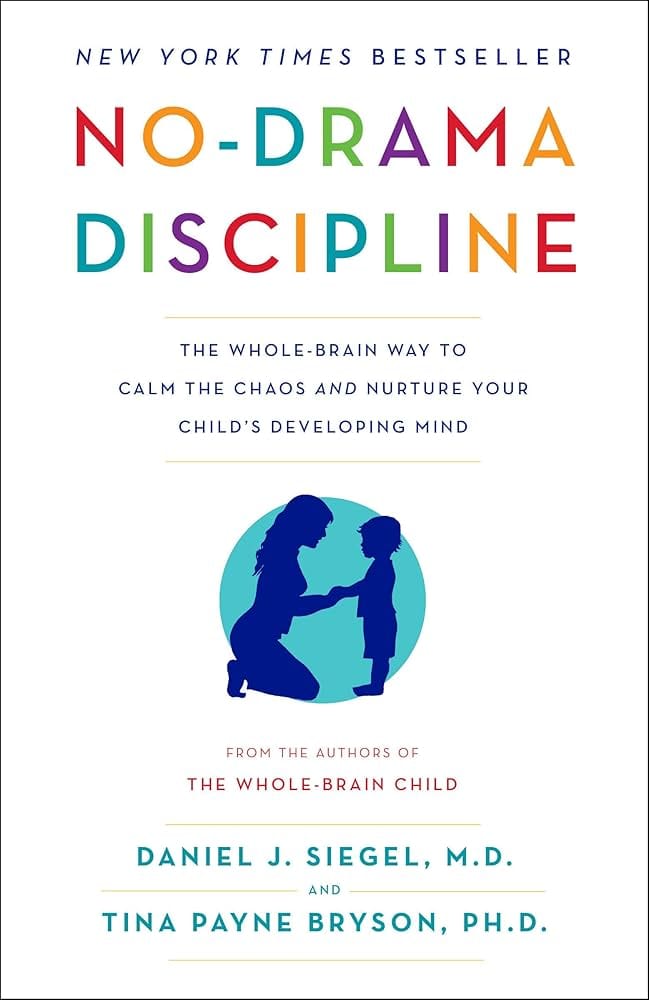
NEW YORK TIMES BESTSELLER • The pioneering experts behind The Whole-Brain Child and The Yes Brain tackle the ultimate parenting challenge: discipline. “A lot of fascinating insights … an eye-opener worth reading.”—Parents Highlighting the fascinating link between a child’s neurological development and the way a parent reacts to misbehavior, No-Drama Discipline provides an effective, compassionate road map for dealing with tantrums, tensions, and tears—without causing a scene. Defining the true meaning of the “d” word (to instruct, not to shout or reprimand), the authors explain how to reach your child, redirect emotions, and turn a meltdown into an opportunity for growth. By doing so, the cycle of negative behavior (and punishment) is essentially brought to a halt, as problem solving becomes a win/win situation. Inside this sanity-saving guide you’ll discover • strategies that help parents identify their own discipline philosophy—and master the best methods to communicate the lessons they are trying to impart • facts on child brain development—and what kind of discipline is most appropriate and constructive at all ages and stages • the way to calmly and lovingly connect with a child—no matter how extreme the behavior—while still setting clear and consistent limits • tips for navigating your child through a tantrum to achieve insight, empathy, and repair • twenty discipline mistakes even the best parents make—and how to stay focused on the principles of whole-brain parenting and discipline techniques Complete with candid stories and playful illustrations that bring the authors’ suggestions to life, No-Drama Discipline shows you how to work with your child’s developing mind, peacefully resolve conflicts, and inspire happiness and strengthen resilience in everyone in the family. Praise for No-Drama Discipline “With lucid, engaging prose accompanied by cartoon illustrations, Siegel and Bryson help parents teach and communicate more effectively.”—Publishers Weekly “Wow! This book grabbed me from the very first page and did not let go.”—Lawrence J. Cohen, Ph.D., author of The Opposite of Worry
My Summary
Main Ideas, Takeaways & Similarities
Questions
I. What is the problem?
A. How is this problem formulated?
B. Why is this problem important?
C. What is the history of this problem?
D. Which prominent personalities have been interested in this problem?
II. What solutions to the problem are there?
A. What are the conclusions reached?
B. By what argument(s) is the conclusion reached?
C. What facts or assumptions serve as premises?
D. When a prominent personality offers a solution, does he also argue for or against other prominent personalities? Does he raise objections to alternative solutions? Does he consider objections to his own solutions?
III. Evaluation
A. What are the advantages and disadvantages of the alternative formulations to the problem?
B. Has the importance or history of the problem ever been misrepresented?
C. Are the solutions logically related to the premises?
D. Are the facts true? Are the assumptions acceptable? Are the objections answerable?
AI Summary
Highlights
No Drama Discipline
Author: Daniel J. Siegel
Category: Books
Genre: Parenting
- Our Discipline Approach in a Nutshell
- You are an important person in the life of our child or children. You’re helping determine who they’re becoming by shaping their hearts, their character, and even the structures of their brains! Because we share this incredible privilege and responsibility of teaching them how to make good choices and how to be kind, successful human beings, we want to also share with you how we handle behavioral challenges, in hopes that we can work together to give our children a consistent, eʃective experience when it comes to discipline.
- Here are the eight basic principles that guide us:
- Discipline is essential. We believe that loving our kids and giving them what they need includes setting clear and consistent boundaries and holding high expectations for them—all of which helps them achieve success in relationships and other areas of their lives.
- Effective discipline depends on a loving, respectful relationship between adult and child. Discipline should never include threats or humiliation, cause physical pain, scare children, or make them feel that the adult is the enemy. Discipline should feel safe and loving to everyone involved.
- The goal of discipline is to teach. We use discipline moments to build skills so kids can handle themselves better now and make better decisions in the future. There are usually better ways to teach than giving immediate consequences. Instead of punishment, we encourage cooperation from our kids by helping them think about their actions, and by being creative and playful. We set limits by having a conversation to help develop awareness and skills that lead to better behavior both today and tomorrow.
- The first step in discipline is to pay attention to kids’ emotions. When children misbehave, it’s usually the result of not handling big feelings well and not yet having the skills to make good choices. So being attentive to the emotional experience behind a behavior is just as important as the behavior itself. In fact, science shows that addressing kids’ emotional needs is actually the most eʃective approach to changing behavior over time, as well as developing their brains in ways that allow them to handle themselves better as they grow up.
- When children are upset or throwing a fit, that’s when they need us most. We need to show them we are there for them, and that we’ll be there for them at their absolute worst. This is how we build trust and a feeling of overall safety.
- Sometimes we need to wait until children are ready to learn. If kids are upset or out of control, that’s the worst time to try to teach them. Those big emotions are evidence that our children need us. Our first job is to help them calm down, so they can regain control and handle themselves well.
- The way we help them be ready to learn is to connect with them. Before we redirect their behavior, we connect and comfort. Just like we soothe them when they are physically hurt, we do the same when they’re emotionally upset. We do this by validating their feelings and by giving them lots of nurturing empathy. Before we teach, we connect.
- After connecting, we redirect. Once they’ve felt that connection with us, kids will be more ready to learn, so we can effectively redirect them and talk with them about their behavior. What do we hope to accomplish when we redirect and set limits? We want our kids to gain insight into themselves, empathy for others, and the ability to make things right when they make mistakes.
- For us, discipline comes down to one simple phrase: Connect and redirect. Our first response should always be to offer soothing connection; then we can redirect behaviors. Even when we say no to children’s behavior, we always want to say yes to their emotions, and to the way they experience things.
Core Principles
- Discipline should be about teaching, not punishment. The goal is to gain cooperation in the moment and build skills for better future behavior.
- Use the “Connect and Redirect” approach. First connect with the child emotionally to help them calm down, then redirect them to more appropriate behavior. Connection through empathy allows teaching to be more effective.
- See misbehavior as an opportunity for brain development. A child’s brain, especially the “upstairs brain” for advanced functions like emotional regulation, is still developing. Discipline experiences can help shape and integrate the brain in positive ways.
Understanding the Child’s Brain
- The brain has plasticity and changes based on experiences. Positive discipline experiences can physically shape and integrate the brain in beneficial ways.
- Children have an underdeveloped “upstairs brain.” This part controls emotional regulation, empathy, and advanced thinking. The “downstairs brain” for basic functions like fear is more developed.
- Consider the child’s developmental stage. What may look like defiance could just be the limits of their brain development at that age. Adjust expectations accordingly.
Strategies for Effective Discipline
- Pause before reacting. Reflect on: Why the child acted that way, what lesson you want to teach, and how best to teach it. This shifts you out of autopilot.
- Proactively avoid problems with the H.A.L.T approach. Is the child Hungry, Angry, Lonely or Tired? Meeting those needs can prevent misbehavior.
- Use minimal persuasive words. Reduce language and ask reflective questions to engage the child’s “upstairs brain” in problem-solving.
- Involve the child in finding solutions. Have them practice better behaviors and make amends directly related to the issue.
- Focus on teaching, not punishing. Allow children to experience natural consequences, then guide them to develop insight, empathy and positive behaviors.
- Maintain consistency but also flexibility. Be consistent in your parenting principles but have flexibility in specific responses based on context.
The overall emphasis is on nurturing connection, empathy and integration of the child’s brain through positive, teaching-oriented discipline strategies. This builds skills for life rather than just short-term compliance.
- Introduction
- Discipline should be about teaching and building skills, not punishment. The Latin root of “discipline” means “to teach”.
- The two main goals of discipline are 1) gaining immediate cooperation and 2) building skills and strengthening the brain for better behavior in the future.
- Setting clear, consistent boundaries and having high expectations is loving and necessary, not mean. Kids need structure.
- The most effective discipline strategy is “Connect and Redirect” - first connect with the child emotionally to help them calm down, then redirect them to more appropriate behavior.
- Connection isn’t permissive. You can be empathetic and loving while still setting firm limits.
- No-Drama Discipline takes ordinary parenting moments and uses them as opportunities to teach. It doesn’t require tons of extra time.
- When parents combine clear limits with empathy, everyone wins. It leads to less drama, better behavior, and stronger skills in the child.
- Connecting with a child’s emotions helps them calm down faster so they can learn from the situation. Yelling escalates things.
- No-Drama Discipline helps kids develop self-control, empathy, insight, and morality. It builds a strong internal compass.
- No parent is perfect, but repair and modeling how to fix mistakes also teaches valuable lessons. The goal is connection, not perfection.
- Chapter 1: ReThinking Discipline
- Parents often react to misbehavior on autopilot rather than being intentional and working from a clear set of principles and strategies. It’s important to be responsive rather than reactive.
- Before responding to misbehavior, ask yourself: 1) Why did my child act this way? 2) What lesson do I want to teach? 3) How can I best teach this lesson? This helps shift out of autopilot mode.
- Discipline should take into account a child’s age, unique needs, and the context of the situation. One-size-fits-all approaches are not effective.
- Misbehavior is often the result of a child not being able to handle a situation rather than willful defiance. Distinguish between “can’t” and “won’t.”
- The authors advise against spanking, as it teaches the wrong lessons, can be confusing for a child’s attachment, and activates the reactive “downstairs brain” rather than the thinking “upstairs brain.”
- Time-outs are also not recommended as the primary discipline strategy. They make children feel isolated, don’t help them learn to handle situations better, and don’t meet their need for connection when dysregulated.
- More effective alternatives include problem-solving together, making amends directly related to the misbehavior, and taking a “time-in” with parental support to calm down.
- Parents should reflect on whether their current discipline approach is intentional, effective in teaching lessons, and fosters a positive relationship. The goal is to be more responsive and less reactive over time.
- Chapter 2: Your Brain on Discipline
- The chapter introduces three foundational discoveries about the brain, called the “Brain C’s”, that are important for effective discipline with less drama.
- Brain C #1: The brain is changing. A child’s brain, especially the upstairs brain responsible for sophisticated thinking, is still developing and not fully formed until the mid-twenties. This impacts a child’s decision making, emotional regulation, empathy, and morality. Parents need to adjust expectations accordingly.
- The right temporal parietal junction (TPJ) in the upstairs brain plays a key role in empathy and considering others’ perspectives. Children with still-developing upstairs brains often struggle with this.
- When disciplining, parents need to consider the child’s developmental stage and work to understand their point of view. Clear boundaries are still needed as the child’s “external upstairs brain.”
- Brain C #2: The brain is changeable (neuroplasticity). The physical architecture of the brain changes based on experiences, especially during childhood and adolescence.
- The experiences parents provide and the way they interact with children shapes brain development at the neuronal level. “Neurons that fire together wire together.”
- Parents must be intentional about the experiences they give children, as everything impacts their brain development and how they view themselves and the world. Repeated experiences strengthen neural connections.
- Chapter 3: From Tantrum to Tranquility: Connection Is The Key
- Connection should be the first response when disciplining children, before redirecting or teaching. This allows the child to move from a reactive to a receptive state.
- The story of Michael and his sons illustrates how connecting first, by comforting his upset 5-year-old son, enabled the boy to then be ready to listen and learn from the discipline.
- Proactive parenting can help avoid meltdowns and misbehavior in the first place. This means watching for warning signs that trouble is brewing and intervening early to redirect.
- Before reacting to misbehavior, parents can HALT and ask if the child is Hungry, Angry, Lonely or Tired. Meeting those needs proactively can prevent problems.
- Connection has 3 main benefits when disciplining:
- Short-term, it moves the child from reactivity to receptivity so they can listen and learn
- Long-term, it builds the brain and integrates different regions
- Relationally, it maintains and strengthens the parent-child relationship
- When kids are dysregulated, connection helps calm their nervous system and allows them to “feel felt” - soothing their distress and isolation.
- The brain functions best when it is integrated, with different regions working together in a coordinated way. Connection facilitates this integration.
- The “river of well-being” represents an integrated brain state that is calm, balanced and adaptable. The two banks represent chaos and rigidity - undesirable states that children enter when upset and dysregulated.
- Chapter 4: No-Drama Connection in Action
Connection Principle #1: Turn Down the Shark Music
- “Shark music” refers to negative thoughts or fears playing in our minds that cause us to react instead of responding intentionally to our child’s behavior.
- It makes us parent from a place of fear, anxiety, and past experiences rather than being present in the moment.
- We must recognize when “shark music” is playing and consciously shift our mindset to respond calmly and rationally.
- Overreacting or catastrophizing based on fears about the future or past experiences is an example of “shark music.”
- Denial and making constant excuses for a child’s behavior is another form of “shark music” preventing us from properly addressing issues.
Setting the Stage for Connection
- Avoid looking for one-size-fits-all discipline techniques. Maintain “response flexibility” based on the situation and child’s temperament.
- Response flexibility creates a pause to consider different responses instead of automatically reacting.
- It allows us to be our “wisest self” and give the child what they need in that moment through connection.
- Sometimes this means taking a moment to calm down before responding.
- Other times it means allowing natural consequences or taking a firmer stance.
- The goal is to respond intentionally and meet the needs of that particular child in that particular moment.
Connection in Action Example
- An example story illustrates connecting with a 6-year-old son who broke rules by taking an iPad without permission.
- The parents sat with him, allowed him to express his feelings, and validated his interests before addressing the rules.
- This emotional attunement and connection made the redirection about rules more effective.
- The son felt understood, loved, and the lesson was internalized through connection rather than harsh discipline.
- Chapter 5: 1-2-3- Discipline: Redirecting for Today, and for Tomorrow
1-2-3 Discipline: Redirecting for Today and Tomorrow
- Discipline should be about teaching, not punishment. The goal is to help children learn from their mistakes and develop self-discipline.
- Follow two key principles when redirecting children:
- Wait until the child is ready and receptive before trying to teach the lesson. Don’t address it when emotions are still high.
- Be consistent in upholding rules and expectations, but avoid being rigid. Have flexibility based on context.
- Aim for three desired outcomes when redirecting:
- Develop insight by helping the child reflect on their own feelings/experiences
- Build empathy by considering how their actions impacted others
- Facilitate integration/repair by having the child take action to make things right
- Use reflective dialogues and open-ended questions to engage the child’s “upstairs brain” and develop mindsight (insight into self and empathy for others).
- Allow children to experience natural consequences of their actions (like feeling guilty) as teaching moments, rather than imposing punishments.
- Collaborate with children, have them practice positive behaviors, and guide them in problem-solving, rather than simply demanding compliance.
- Maintain consistency in your parenting philosophy, but have flexibility in your specific responses based on the situation.
- The ultimate goal is to teach children internal self-discipline by developing their brain’s ability for insight, empathy, and ethical decision-making.
- Chapter 6: Addressing Behavior: As Simple as R-E-D-I-R-E-C-T
Keeping Calm and Connecting
- When disciplining a child, it’s important to stay calm and avoid reacting in the heat of the moment
- Connect with the child first by acknowledging their feelings and desires before addressing the behavior
- Don’t dismiss or minimize the child’s emotions, even if they seem unwarranted
R-E-D-I-R-E-C-T Strategies
- Reduce Words: Keep disciplinary interactions brief and avoid long lectures that children will tune out
- Embrace Emotions: Help children understand that feelings are valid, but actions resulting from those feelings may not be okay
- Describe, Don’t Preach: Describe the problematic behavior objectively without judgment or moralizing
- Involve Your Child: Have a collaborative discussion about the behavior and appropriate alternatives
- Reframe a No into a Conditional Yes: Say yes to the child’s desire, but no to the specific behavior
- Emphasize the Positive: Focus on the behavior you want to see rather than criticizing the negative behavior
- Creatively Approach the Situation: Use playful, engaging techniques to redirect behavior
- Teach Mindsight Tools: Help children develop self-awareness and emotional regulation skills
Key Points
- Disciplining is an opportunity to teach important life skills, not just address a single behavior
- Maintain a warm, nurturing relationship while still setting firm boundaries
- Tailor strategies to the child’s age, temperament, and developmental stage
- Conclusion: On Magic Wands, Being Human, Reconnection, and Change: Four Messages of Hope
Four Messages of Hope
There Is No Magic Wand
- Sometimes, despite your best efforts, your child will remain upset during a disciplinary interaction
- It’s okay if you can’t “fix” the situation immediately - just be present and let them work through their emotions
- Separating briefly can be helpful if your child needs space to calm down
Your Kids Benefit Even When You Mess Up
- No parent is perfect - we all make mistakes in how we respond to our kids
- When you mess up, it provides valuable learning opportunities for your child:
- Dealing with difficult situations and regulating emotions
- Seeing you model apologies and repair
- Understanding that actions affect others’ emotions
- Realizing that imperfection is normal
You Can Always Reconnect
- Conflicts and ruptures in the parent-child relationship are inevitable
- It’s crucial to repair the rupture and reconnect as soon as possible
- This reinforces that the relationship matters more than the conflict
- Reconnecting models an important skill for future relationships
It’s Never Too Late to Make a Positive Change
- You can change your discipline approach at any age - yours or your child’s
- Responding with connection instead of punishment strengthens positive brain circuitry
- Commit to disciplining in a calmer, more nurturing way that develops emotional intelligence
- You won’t be perfect, but every positive step benefits your child’s success and happiness
- Our Discipline Approach in a Nutshell: No-Drama Discipline — Daniel J Siegel [Siegel, Daniel J] — 2014 — Random House Publishing Group — 9780345548047 — a56b33f1bd86346ffc92366a7a460d7d — Anna’s Archive pages 321 - 323.pdf
- Refrigerator Sheet No-Drama Discipline — Daniel J Siegel [Siegel, Daniel J] — 2014 — Random House Publishing Group — 9780345548047 — a56b33f1bd86346ffc92366a7a460d7d — Anna’s Archive pages 310 - 312.pdf
- Twelve Discipline Mistakes Parents Make No-Drama Discipline — Daniel J Siegel [Siegel, Daniel J] — 2014 — Random House Publishing Group — 9780345548047 — a56b33f1bd86346ffc92366a7a460d7d — Anna’s Archive pages 324 - 332.pdf
- Workbook Daniel J Siegel, Tina Payne Bryson - No-Drama Discipline Workbook_ Exercises, Activities, and Practical Strategies to Calm The Chaos and Nurture Developing Minds-PESI Publishing & Media (2016).pdf