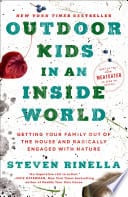

DESCRIPTION
NEW YORK TIMES BESTSELLER • “An imperative call to action” (Nick Offerman) to get children off their screens and into nature, with tips for bonding activities that teach the importance of outside time and build tough, curious, competent kids—from the host of the Netflix series and podcast MeatEater “A revelation for families struggling to get kids to GO OUTSIDE, or to just stop using the darn smartphone.”—Michaeleen Doucleff, PhD, New York Times bestselling author of Hunt, Gather, Parent In the era of screens and devices, the average American spends 90 percent of their time indoors, and children are no exception. Not only does this phenomenon have consequences for kids’ physical and mental health, it jeopardizes their ability to understand and engage with anything beyond the built environment. Thankfully, with the right mind-set, families can find beauty, meaning, and connection in a life lived outdoors. Here, outdoors expert Steven Rinella shares the parenting wisdom he has garnered as a father whose family has lived amid the biggest cities and wildest corners of America. Throughout, he offers practical advice for getting kids radically engaged with nature in a muddy, thrilling, hands-on way, with the ultimate goal of helping them see their own place within the natural ecosystem. No matter their location—rural, suburban, or urban—caregivers and kids will bond over activities such as: • Camping to conquer fears, build tolerance for dirt and discomfort, and savor the timeless pleasure of swapping stories around a campfire. • Growing a vegetable garden to develop a capacity to nurture and an appreciation for hard work. • Fishing local lakes and rivers to learn the value of patience while grappling with the possibility of failure. • Hunting for sustainably managed wild game to face the realities of life, death, and what it really takes to obtain our food. Living an outdoor lifestyle fosters in kids an insatiable curiosity about the world around them, confidence and self-sufficiency, and, most important, a lifelong sense of stewardship of the natural world. This book helps families connect with nature—and one another—as a joyful part of everyday life.
My Summary
Main Ideas, Takeaways & Similarities
Questions
I. What is the problem?
A. How is this problem formulated?
B. Why is this problem important?
C. What is the history of this problem?
D. Which prominent personalities have been interested in this problem?
II. What solutions to the problem are there?
A. What are the conclusions reached?
B. By what argument(s) is the conclusion reached?
C. What facts or assumptions serve as premises?
D. When a prominent personality offers a solution, does he also argue for or against other prominent personalities? Does he raise objections to alternative solutions? Does he consider objections to his own solutions?
III. Evaluation
A. What are the advantages and disadvantages of the alternative formulations to the problem?
B. Has the importance or history of the problem ever been misrepresented?
C. Are the solutions logically related to the premises?
D. Are the facts true? Are the assumptions acceptable? Are the objections answerable?
AI Summary
In today’s technology-driven society, it’s more important than ever to get kids outside and engaged with nature. In his book “Outdoor Kids in an Inside World”, Steven Rinella shares insights and advice for parents looking to foster a deep connection between their children and the natural world. Here are some of the key takeaways:
Thinking Native
- Kids have an innate tendency to seek connections with nature and other forms of life (biophilia). Nurture this by letting them relate to nature as a peer.
- Your attitude is more important than your acreage. Demonstrate enthusiasm for the natural world around you and your kids will absorb that value.
- Engaging with nature needs to become a regular practice. Be willing to assume the role of a tour guide as you explore together.
Sleeping Under the Stars
- Camping trips, even in the backyard, provide opportunities to be okay with some discomfort and mayhem. This builds resilience.
- Involve your kids in the planning and packing. Discuss the purpose of each item you bring.
- Adjust your pace and expectations to your kids’ experience. Focus on having fun and accumulating adventures together.
The Foraging Habit
- Teach kids where food really comes from by involving them in the procurement, from garden to plate.
- Be matter-of-fact about creepy-crawlies like worms and insects. Squeamishness is a learned trait.
- Grow things your kids actually want to eat. Let them experience both the rewards of a successful harvest and the lessons of failure and neglect.
Think Like a Fish
- Fishing is an incredible relationship-building and mentoring tool. Involve your kids in the whole process, from planning to catching to cooking.
- Be understanding when they get bored or frustrated. Teach them to work through delayed gratification.
- Success isn’t just about the number of fish caught. Focus on making the time as enjoyable and engaging as possible.
Hunting: The Deep End of the Pool
- Hunting forces an extreme hands-on engagement with nature that requires education and ethical considerations. Reflect deeply on the matter of life and death.
- Let kids reckon with failure and struggle against impatience. These are valuable life lessons.
Home Is Where the Habit Is
- Incorporate your outdoor activities into daily life, from the dinner table conversations to the artwork on the fridge.
- Curate a collection of books and resources about nature, from local birds to faraway landscapes.
- The greatest gift we can give our kids is an assurance they will rise to the occasion of the future, with an eagerness to embrace the natural world each day.
By making nature a joyful, integral part of our kids’ lives from a young age, we can raise a generation ready to radically engage with the environment and preserve our planet for the future. The effort is worth it.
Highlights
Outdoor Kids in an Inside World Getting Your Family Out of the House and Radically Engaged With Nature
Author: Steven Rinella
Category: Books
Genre: Parenting
- Idea of Yellow Stone, only driving it, connection to nature and analogy to Disney World and if you could only look at the rides
- See nature as a peer.
- “Two hours a week of time spent in nature, in whatever increments are available, has been shown to radically improve people’s outlook, with adult participants in a large-scale study in England self-reporting improvements in both physical health and emotional well-being. Other studies have shown immune-boosting effects, improved cognitive and motor skills development in young kids, and even reductions in crime rates across communities with improved access to green space.”
- When you’re exploring your place in nature, remember that your attitude is more important than your acreage.
- engaging with nature isn’t something you can just do once or twice and then walk away. It needs to become a practice, a discipline. You need to be willing—and, hopefully, excited—to assume the role of a tour guide as you demonstrate engagement with nature to your kids.
- “Enjoy this. Right now, at their age, it’s all physical. Later, parenting becomes mental. That’s a lot tougher.”
- adult as the “decisive element” whose “daily mood makes the weather” for the child.
- Idea of teaching your kids to learn how to be comfortable with being uncomfortable. Similar to emotions being subordinate to your goals. Resilience
- Lev Vygotsky, pioneer in study of child development, idea of “scaffolding”
- Growth mindset—Dont give up when they fail, hold core belief that they can practice a task and improve instead of thinking a failure is an indictment of their abilities.
- Gardening is something kids like as it isn’t pointless and they get to see the food grow and get the eat the results
- I really can’t stress this enough: A major part of the entire premise of this book is getting your kids involved in the process. It’s a shift that turns an outing or activity from a chore for you into an adventure for them. Though they may not often admit as much, kids actually like being given responsibility, in no small part because they like to feel that they’re on the same level as those pesky adults who won’t stop bossing them around. Include them in the process. It changes the entire context.
- The greatest gift that we parents can get from our kids, really, is an assurance that they’ll rise to the occasion of the future. That they’ll find the strength to tackle their problems head-on. Their readiness to pull that off will not be something that they can articulate directly to us. Instead, we’ll have to be satisfied with whatever assurances we can garner from their behavior and actions. One of the greatest disservices that we can do to them is to spoil their native enthusiasm for the natural world in which they live. The planet’s salvation will not be delivered by a generation that is disheartened and apathetic. It will come from folks who step outside of their home in the morning with an eagerness to be embraced by the sun and the wind and the rain.
How the hell are we ever going to get everyone out of the house? For parents, it’s a question that never dies. It doesn’t matter which town or city you live in. It doesn’t matter if you’ve got four kids or one. It doesn’t matter how old they are. If you’re a parent or caregiver who’s drawn to the title of this book, you most likely live with the knowledge that nature is important to kids. Just as likely, you feel strained and anxious about how to create impactful experiences for them in the outdoors. Every day, it seems, there’s some new obstacle. At first it’s the annoyance of changing diapers and feeding a baby while away from the helpful tools of home. Then it’s working around nap times and coordinating the needs of children of different ages. The five-year-old is raring to go, but if her baby brother misses another nap, he’s going to be a nightmare for the rest of the day. The complications evolve over time, until you eventually land where my wife, Katie, and I find ourselves today as we raise three kids between the ages of seven and eleven: locked in a series of clashes with the kids over our insistence that outdoor time is more important than screen time. (Page 0)
There’s a wonderful term for the instinct that drives this ritual: “biophilia.” The word was popularized by the American biologist E. O. Wilson. The biophilia hypothesis suggests that humans possess an innate tendency to seek connections with nature and with other forms of life. Kids are especially prone to biophilia. (Page 0)
Just take a kid down to a pond, or let her peek into a bird’s nest, or help him flip a big rock or a rotting log, and watch what happens. The connection to the life that they discover within or beneath is usually immediate and all-consuming. This is perhaps the most exciting discovery that I’ve made about my kids, and it’s the answer that was lurking beneath those rocks at the Fish Shack. (Page 0)
Fear prevents engagement; lack of engagement builds into a habit of avoidance; and pretty soon it’s just your family stuck inside four walls, where perhaps the biggest obstacle of all—technology—abounds. (Page 0)
This idea that the world is perpetually going to hell seems hard-wired into our psyche. There’s a thought, often misattributed to Socrates, that Garson O’Toole (aka the Quote Investigator) traced to the 1907 dissertation of an otherwise unknown Cambridge student named Kenneth John Friedman. It laments the intergenerational discord in ancient Greece, thousands of years ago, where elders saw the young becoming “tyrants,” marked by “luxury, bad manners, contempt for authority, disrespect to elders, and a love for chatter in place of exercise.” (Page 0)
Richard Louv’s 2005 Last Child in the Woods, which warned of “nature deficit disorder.” (Page 0)
Two hours a week of time spent in nature, in whatever increments are available, has been shown to radically improve people’s outlook, with adult participants in a large-scale study in England self-reporting improvements in both physical health and emotional well-being. Other studies have shown immune-boosting effects, improved cognitive and motor skills development in young kids, and even reductions in crime rates across communities with improved access to green space. (Page 0)
Until the moment I became a father, I never felt truly and absolutely responsible for anyone. Becoming a parent is an epiphany: You’re up! As part of my responsibilities to my children, I knew that I was wholly responsible for teaching them everything I knew about being a human who feels at home in nature. (Page 0)
CHAPTER 1 THINKING NATIVE (Page 3)
When I say looking up at nature, I’m referring to a more contemporary perspective that regards nature as being more pure or beautiful than ourselves. This perspective holds that nature is somehow diminished through human involvement, even when that involvement is responsible and well-meaning. In environmental circles, this perspective is often described as preservationism. It’s easily understandable if you consider the juxtaposition between a preservationist and a conservationist. A conservationist seeks to answer the question “How can we use nature responsibly and sustainably?” A preservationist asks, “How can we protect nature from any use at all?” (Page 6)
Think of those millions of tourists who visit Yellowstone National Park every year, just a ninety-minute drive from my house. Many of them never even leave their cars or the parking lots. There they are, visiting some of the most stunning displays of the natural world on earth, and they do so only by looking through the glass of a windshield or standing behind some sign that warns of the dangers posed by wildlife or bubbling geysers. Sure, grown-ups can easily understand the logic behind enforcing passive observation of these natural wonders. If hordes of people were allowed to trample everything in Yellowstone, the magic of the place would be diminished. But kids don’t necessarily enjoy that level of insight, and I can’t help but wonder about the sense of displacement and alienation that we create in our children by cordoning them off from nature. Imagine for a moment if Disneyland took the same approach. Imagine that the rides are there only to be looked at and never ridden. (Page 7)
If we want our kids to feel a true and pragmatic sense of stewardship for the environment, we need to let them relate to it as a peer, as something that they’re entwined with through symbiotic connections. (Page 7)
The title of this chapter, “Thinking Native,” is meant as a prescription for how you and your family can begin to see nature eye-to-eye. (Page 7)
“native” here in the way that a biologist would, to denote a species that normally lives and thrives in a particular ecosystem. (Page 8)
Gaia theory, (Page 8)
theory holds that the living and nonliving components of the earth have evolved together as a single self-regulating system. (Page 8)
If it wasn’t for life on earth, all of the oxygen would combine with other gases or minerals in the planet’s crust and wouldn’t be present in the atmosphere to support life. Thus, we see that life is necessary for life. (Page 8)
our kids need to understand that they are not above, outside, or apart from their physical environment—they are completely intertwined with it, and it with them. (Page 9)
Tags: pink
You don’t need to be in the wilderness of Alaska or on an Iowa farm. Your yard is perfect. A friend’s yard is perfect. A neighbor’s woodlot will work. The local park is great. (Page 9)
When you’re exploring your place in nature, remember that your attitude is more important than your acreage. (Page 10)
Tags: pink
When you allow yourself to become enthusiastic about the natural world around you, your enthusiasm will be infectious to your children. It won’t all be a picnic. Your kids may roll their eyes at you, or worse. The whining and fighting during that two-hour car ride to the lake may make you want to bag the whole trip. No matter what, though, stick with it. I have faith that you’ll eventually find, or reconnect with, the addictive qualities of nature. (Page 10)
engaging with nature isn’t something you can just do once or twice and then walk away. It needs to become a practice, a discipline. You need to be willing—and, hopefully, excited—to assume the role of a tour guide as you demonstrate engagement with nature to your kids. (Page 10)
Tags: pink
“Enjoy this. Right now, at their age, it’s all physical. Later, parenting becomes mental. That’s a lot tougher.” (Page 11)
Tags: pink
Whenever we shield our kids from unpredictable relatives, or block their access to particular websites, or exclude them from arguments about family financial matters, we are, in essence, limiting which connections they make. We are controlling and customizing their reality. It’s hard work, but we often don’t perceive it as such. (Page 14)
And of course, we don’t just inhibit connections. We also foster them. Intentionally, we build bridges to link our kids with the things that we ourselves regard as socially and culturally valuable. By planning Halloween costumes for neighborhood trick-or-treating, for instance, we are fostering connections to community and cultural tradition. We teach our kids to root for local sports teams as a way to connect with their school or hometown. We introduce kids to Sunday school in order to develop their connections with friends and peers of a similar faith. (Page 15)
we prioritize engaging with nature for ourselves, and bring them along, they’ll absorb that value as well. (Page 15)
But in all honesty, I do still suffer guilt for not having taken greater precautions to protect my son from Lyme disease. We were lax about insect repellent that day and I hadn’t tucked his pants legs into his socks to prevent ticks from crawling out of the grass and up his legs. I didn’t check him thoroughly when we got home. That goes for myself, too. In many ways, I let him down that day, because I figured I’d done this a million times without issue, but those are always the situations where you get hit. (Page 17)
In my view, the only thing worse than getting into trouble with nature is avoiding it altogether. (Page 18)
Tags: pink
CHAPTER 2 WHY WE SLEEP UNDER THE STARS (Page 26)
When we got home, I spent some time thinking about how the kids’ perspectives on the trip were so wildly different from my own. They were focused on having fun and accumulating adventures, whereas I had fallen into the trap of focusing specifically on grown-up measures of success such as arrival and departure times and how orderly we kept our campsite. (Page 33)
Israeli teacher and psychologist Haim Ginott is probably the thinker to credit with introducing, in the 1960s, an approach to interacting with children that asks adults to take a moment to comprehend the enormous power that they have over kids. He described the adult as the “decisive element” whose “daily mood makes the weather” for the child. (Page 33)
Tags: pink
one of my failures as a parent is that I tend to let my personal demands for order spill over into my children’s experiences in nature. (Page 34)
Yet somehow, no matter what, I think that everyone in my family comes away from camping trips with the sense that we just pulled something off that was well worth doing, and that we ought to do it again soon. (Page 34)
I want my kids to learn how to be comfortable with being uncomfortable. (Page 34)
Tags: pink
You can be the kind of person who complains and turns moody, or you can be the kind of person who rises to the occasion and meets the challenge with grace and humor. (Page 35)
Tags: pink
I’ve been around a lot of people who have this ability; none of them developed it without practice. (Page 35)
Tags: pink
I want my kids to build up a tolerance for discomfort that will serve them in innumerable areas of their lives—whether they’re stuck in an airport, stalking a deer, struggling through a difficult project, or dealing with the types of painful losses that none of us can escape. (Page 35)
Tags: pink
If your kids are among the fortunate ones for whom deprivation is not a constant, putting them in situations in which they have to improvise or go without demonstrates that there can be an elasticity to the circumstances in which we live our lives. They can learn to be comfortable with the fact that nothing in life is guaranteed, and take in the truth that we can definitely get by with far less than our culture has convinced us we need. Likewise, camping presents us parents with an opportunity to be okay with an occasional dollop of mayhem and the improvisation that inevitably ensues. (Page 36)
For beginning campers, car camping is by far the easiest entry point to a night or two in the wild. Because you’ll be basing your camp right next to your vehicle, it’s possible to bring along every last thing you need—including luxuries like air mattresses and pillows and the toys, games, and stuffed animals that will make the trip feel more like home. (Page 40)
As you’re preparing for the trip, enlist your kids to help you organize gear and pack it up, taking the time to talk about why you’re taking each thing before you add it to the bag or box. Start as early as you like. If you’re planning a trip with other families, which can be a great way to start out, get everyone involved. Camping trips are special events, and you should savor the anticipation. (Page 40)
Every kid is different and will tune in to different activities with varying levels of enthusiasm. And sometimes they just need to tune out and do their own thing. In a large group or as a small family unit, a well-planned camping trip (in cooperative weather) gives everyone, adult and child alike, some space to relax and play in whatever way feels most inviting to them. String up a couple of hammocks, set parameters around camp to let kids know how far it’s okay to roam, then deputize older ones to watch over younger ones as appropriate. Then you can stretch out and enjoy. (Page 41)
Here’s another radical suggestion: Take advantage of the downtime that seems so hard to come by during our everyday lives by simply talking to one another. Discuss some of the adventures you’re looking forward to when the weather improves. Make up your own ghost stories. Have a joke-telling contest. Share a memory from when you were a kid. Talk about the animals who might be huddled in dry places trying to avoid the rain—and what kinds of run-ins you might expect when the sun comes out. (Page 43)
Sensationalized news stories and scaremongering parents aside, the truth is that animal attacks are extremely rare. (Page 43)
Out of the millions upon millions of people who go camping and hiking each year, the number of people who get mauled by bears, mountain lions, and alligators is extremely low, with only a handful of fatalities nationwide. On average, black bears kill just one person per year in North America, while brown and grizzly bears account for only a few deaths annually. Deadly mountain lion attacks are even less frequent—over the past century, a little more than one hundred people have been attacked by cougars, but only twenty-seven of the victims died. Rattlesnake, spider, and scorpion bites are more common occurrences—but again, deaths are very rare, even for children. Out of the roughly seven thousand people who are bitten by rattlesnakes each year, only five die. Your child is much more likely to get bitten by someone’s pet dog running down a trail off-leash than to be dragged off by a cougar or zapped by a rattler or black widow. For additional perspective, consider that all of my own kids’ emergency room visits have been caused by backyard swing sets, scooters, living room couches, staircases, and Legos. A wild animal has yet to make that list. (Page 43)
Research what critters might be roaming the area where you’ll be camping. Get your kids involved in this research with you. Local field guides or a call to the regional headquarters of your state’s fish and wildlife agency are both great places to start. (Page 44)
might help to remember that while the big things get all the attention, it’s usually the little things that you really need to worry about. A bad sunburn can keep a child up crying all night long, and a twisted ankle can ruin an entire trip—which is why I always work with my kids on spatial awareness, including awareness of the ground beneath their feet. Some kids will scratch mosquito bites until they’re covered in scabs. If your child has an allergy to bee or wasp stings, you had better remember to pack the Epi-Pen. A tick hidden under a child’s hair that goes unnoticed for too long could transmit debilitating diseases that require antibiotic medication— (Page 45)
(The chance of disease transmission is low if a tick is removed before twenty-four hours have passed, so check your kids regularly and thoroughly.) (Page 45)
An application of insect repellent that contains no more than 30 percent DEET will help you avoid a lot of these troubles with biting bugs. Some parents are leery of anything but natural bug repellent, but that stuff really doesn’t cut it. If I were you, I’d be more worried about insect-borne pathogens than isolated, short-term exposures to effective insect repellent. (Page 45)
Bugs, bears, or snakes don’t worry me nearly as much as water. When my kids are playing in or around fast-moving or deep water, it’s with a full measure of caution and supervision on my part. (Page 45)
always have a snug-fitting life jacket on when we’re in our boat or canoe. Even if you’re not boating, it’s not unreasonable to put life jackets on very young children or kids who can’t swim if they’re playing near water. Whenever we’re at the beach or fishing from shore on a lake or river, I don’t let my kids wander out of my sight, and if the surf is high, they’re never more than an arm’s length from an adult. (Page 45)
After a car camping trip or two, you might be ready to graduate into backpacking with your kids. You’ll quickly get a sense of your family’s readiness for backpacking just by taking a few hikes, whether that’s during a car camping weekend or as a separate day trip. (Page 46)
Before hitting the trail, get prepared. You want to have all the essentials while minimizing weight. Gradually, start training your kids to carry a little weight in their backpacks. Have them tote a water bottle, snacks, and a jacket so that they start to understand the concepts of preparedness and self-sufficiency. (Page 46)
Make sure you aren’t skimping on your kids’ footwear and apparel. You can’t expect them to enjoy hiking if their feet are blistered or wet and cold. They need a decent pair of trail shoes or hiking boots, durable clothes that dry quickly, and a rain jacket or a poncho. No matter what the weather, always bring an extra layer. Try to time your outing to coincide with a good forecast, but prepare for bad weather anyway. (Page 46)
Resist the urge to get way ahead and yell at them to keep up if they’re dawdling or falling behind. Try to remember that they’re the reason you’re out there—that their experience comes first. Adjust your pace to hike with them and set goals together for reaching certain landmarks or distances. One neat trick I’ve grudgingly accepted to keep my kids motivated on the trail is allowing them to track their step count on a fitness watch or smartphone. And I’m not above using the occasional bribe to keep them going. We always confiscate the bulk of our kids’ Halloween candy and then use it throughout the year as a well-timed motivator. Look for every opportunity to break up the monotony by pointing out anything that might pique their interest, like cloud formations, wildlife, or lightning-scarred trees. (Page 47)
Over the years, I have stressed the importance of animal tracks so heavily that my kids know to protect them from getting trampled underfoot until I have a chance to inspect them. (Page 47)
encourage kids to keep an eye out for special totems they can bring home to display in their bedroom—and try not to get frustrated if they pick up every other rock or feather or flower along the trail. Discouraging their curiosity is a big mistake. Plan for plenty of snack and drink breaks, and during those breaks, give them the freedom to climb a tree or a rock formation if that’s what they want to do. Resist the urge to stand nearby when they’re climbing a tree. Don’t intrude on their space when they’re building a fort. At first, it might be stressful to let them strike off by themselves, even for a short time. But for their sake, give it a shot. This kind of play is their business. Keep watch from a distance if you must. (Page 48)
What I don’t want to do is teach my kids that fire is something to be feared, especially when making and managing a fire is such an important wilderness skill. Even for household safety, I’d rather my kids understood fire well—what makes it, what puts it out, and what it feels like to get burned—than to have an irrational fear of it or ascribe magical powers to it. (Page 49)
2015 study led by Mariana Brussoni of the Child and Family Research Institute in Vancouver, British Columbia. Her team systematically reviewed the literature on “risky outdoor play” and found overall positive effects on healthy child development. And that wasn’t just in terms of physical exercise: They found “social health” benefits as well, along with a lower incidence of aggression and injuries among children engaging in those activities. (Page 49)
Always keep campfires small and manageable and have a water source, a shovel, and a pile of dirt or sand nearby. That way you’ll be prepared to extinguish any flames that threaten to get out of control. And teach children to always make sure all campfires are completely dead before you leave a campsite. (Page 50)
CHAPTER 3 THE FORAGING HABIT (Page 53)
handful of walking routes that we’d use every day when it was time to get the kids outside for some exercise. (Page 53)
One of the ways that I battled the onset of route fatigue was by making it a habit to point out every wild edible that we encountered along our path. I’m talking about wild nuts, fruits, mushrooms, berries, leafy greens, herbs, onions, and so on. Before I really started focusing on this, I honestly had no idea just how much of that stuff is out there on the urban landscape. (Page 54)
But I do think it’s important to recognize how frighteningly simple it could be for our kids to conclude that their earthly existence is managed outside of their view, in a hidden world manipulated only through a network of dials, keys, and levers. (Page 56)
In the first half of the twentieth century, the conservationist Aldo Leopold had already warned of two “spiritual dangers” that come from not owning a farm: “One is the danger of supposing that breakfast comes from the grocery, and the other that heat comes from the furnace.” (Page 56)
Tags: pink
only 1.3 percent of the American workforce is engaged in the agricultural industry. Less than two centuries ago, that number was 70 percent. (Page 56)
Tags: pink
For many of us, the disconnectedness between us and the sources of our food is cause for serious unease. It’s as though we’ve willfully discarded our physical link to what is arguably our most fundamental human need. (Page 56)
Tags: pink
If you imagine food acquisition as an A-to-Z process, buying produce at a farmer’s market and bringing it home to cook is at best only half of the story. Completing the process requires that your child be the active agent of procurement. It requires that the hand removing the food from the earth is their own. (Page 57)
Foraging is one of four food-procurement strategies I’ll explore in this book—gardening, hunting, and fishing being the other three—each of which is intended to inspire in our kids a radical engagement with nature centered around sustenance and self-sufficiency. (Page 58)
Tags: pink
I’m always surprised by how game kids are to try foraged foods, especially in small quantities. (Page 60)
When I tell my kids that something is safe, or safe to eat, they trust me. Developing the trust of your kids is vital, and with that trust comes major responsibility. (Page 61)
you’ll see that I argue in favor of concentrating your efforts on growing things your kids actually want to eat—think carrots and raspberries rather than arugula and brussels sprouts. In the foraging realm, that equates to going after wild berries. (Page 67)
me, it was one of those crystalline moments when you’re forced to recognize that someday your kids will be gone from home, and they’ll live far away, and they’ll have days when they’re too busy to even think about you. When those days inevitably come, you hope, as a parent, that certain indelible experiences are locked away inside of your own brain as well as the brains of your children. (Page 73)
CHAPTER 4 TENDING THE SOIL (Page 74)
occurred to me that his understanding of the garden was completely different than mine. It wasn’t a place where we were losing our battle to grow squash. It was a place where we were winning our battle to grow worms. (Page 77)
I could see how someone might find the whole thing macabre, especially the act of dumping the limp carcasses into a little pile in the bushes, but I never divulged to my kids that such a sentiment would be ordinary. I find that squeamishness is mostly a learned trait. (Page 77)
The surest way to make your kids fear worms and other creepy-crawly things is to demonstrate those feelings yourself. Instead I have always chosen to be entirely matter-of-fact about slugs, larvae, moths, and worms, an attitude that I picked up from my own parents. They are natural components of the elegant task of growing food in the dirt. (Page 77)
Beyond the notion that there’s nothing gross about a worm, there are countless lessons that our kids can learn from gardening. These include patience, the value of hard work, and the taste of real food. In my mind, though, there are two basic lessons that stand out above all else: Through our actions, we have the power to make things thrive. Neglect is deadly. (Page 78)
A pioneer in the study of child development named Lev Vygotsky had a name for the deliberately hands-off teaching approach with which I tend to struggle. He called it “scaffolding,” a teaching technique in which the caregiver, teacher, or mentor gently provides the tools the child needs in order to practice emerging skills. More recent research by the psychologist Carol Dweck suggests that allowing children repeated chances to work through failure promotes what’s called a “growth mindset”—a teachable set of assumptions about what it takes to succeed. Children (and adults) with growth mindsets don’t give up when they fail or encounter setbacks, because they hold the core belief that they can practice a task and improve. In contrast, children with “fixed” mindsets see their skills—and fates—as immutable, so every failure or bump in the road becomes an indictment of their abilities. People in the latter category are far more likely to give up when faced with challenges. (Page 79)
If your kids are anything like mine, you’ll struggle to make gardening relevant to them unless you grow stuff that they want to eat. (Page 82)
One of the reasons that I encourage our kids to give away vegetables is that I’m eager to offset the inherent selfishness of gardening. (Page 85)
But I also know, firsthand, the frustrations that come from doing inane, pointless tasks. When it comes to working with their hands, I’d rather my kids focus their efforts in the places where they will realize the value of their labor. As it did for me, gardening fits their sensibilities. (Page 89)
CHAPTER 5 THINK LIKE A FISH (Page 92)
Fishing—and I’m going to use that term very broadly throughout the rest of this chapter, so that it includes things like clam digging and crayfish trapping—is an incredible relationship-building and mentoring tool. In addition to being a great excuse to get out in nature, it presents nearly endless opportunities not just to talk about hard things (or even sometimes to talk about nothing and just be together in companionable silence) but also to practice doing hard things, from planning ahead to waiting patiently to managing disappointment to following the rules when you’re tempted to cheat. Fishing and related aquatic activities allow you to engage, hands-on and heart-forward, alongside your children in exploring what makes life alive. Through the harvesting process, you also get a relatively bloodless glimpse of what happens when life ends. (Page 96)
Typically, though, there are better approaches than simply relying on luck. If you want satisfying fishing experiences, both you and your children will need to become invested in the process. I really can’t stress this enough: A major part of the entire premise of this book is getting your kids involved in the process. It’s a shift that turns an outing or activity from a chore for you into an adventure for them. Though they may not often admit as much, kids actually like being given responsibility, in no small part because they like to feel that they’re on the same level as those pesky adults who won’t stop bossing them around. Include them in the process. It changes the entire context. (Page 101)
There’s no denying that when the fishing is slow, children can lose their focus in a hurry or get bored. It’s pretty much inevitable, so try to be understanding and coach them through the frustration. Just as with failure, delayed gratification has its merits. I can’t think of any kind of paying work that doesn’t involve some degree of boredom, and teaching kids how to work through their own frustration during these times can only benefit you when you’re stuck inside on a rainy day. (Page 105)
And remember, always, that success shouldn’t be measured solely by the number of fish caught. Instead, keep in mind the real goal of making your children’s time in the outdoors as enjoyable and engaging as possible. (Page 105)
CHAPTER 6 HUNTING: THE DEEP END OF THE POOL (Page 117)
There are many recommendations within this book that I make wholeheartedly, with zero reservations. I see not even a glimpse of downside to getting your kids involved with gardening or foraging or exploring the traditions of the indigenous cultures that occupied their home habitat ahead of them. Those things will enrich their lives, period. But hunting forces an extreme, hands-on level of engagement with nature that requires high levels of education and a lot of ethical considerations. If we are taking it seriously, and we must, it forces us to reflect on our past, present, and future. It is a matter of life and death, literally. Within that richness lies its beauty, and also its dilemma. (Page 120)
of the beauties of hunting and fishing is that they force kids to reckon with failure and to struggle against their own impatience. I look for ways to accentuate those facets of their experience. (Page 135)
CHAPTER 7 HOME (Page 145)
Take mealtimes. Hectic work and school schedules mean that dinnertime is often the first opportunity of the day for me to have any sort of real conversation with my kids. Naturally, these conversations usually start out with how everyone’s day went and what’s going on tomorrow. But the food we’re cooking and eating is a reliable way to eventually turn our attention to the outdoors. Other than the occasional pizza night or birthday party, dinners at our home always showcase ingredients that we’ve sourced for ourselves through hunting, fishing, gardening, or foraging. Acknowledging these ingredients by bringing them into the conversation is a routine that we can all participate in. The conversation will often drift from there in unexpected but welcome directions. We might end up discussing the ants that are raiding our strawberry patch or the minnows that we used for fishing bait at Grandma’s house. (Page 148)
When children see an ingredient’s journey from the field or farm all the way to the table, they enjoy a sense of ownership over their food that is otherwise hard to achieve. James has learned to fry the squirrels and rabbits that he gets with his air rifle. He proudly declares that his own homemade squirrel dishes are his favorite food. Rather than taking this as a condemnation of my own cooking, I’m excited to see this blossoming of self-reliance and pride. You can get a similar impact on a smaller scale just by helping your kids cook with some herbs that they grew on your porch. Even some food that is purchased from a local farmer’s market or vegetable stand can get your kids talking about life outside the immediate confines of your home. Go out and buy some locally produced potatoes. Get the spuds when they’re as dirty as possible. Help your kids with the job of scrubbing, peeling, shredding, and frying them up as homemade hash browns. Follow that up next week with a bag of the mass-produced frozen variety from the grocery store. Use the contrast between these two experiences as a way of discussing our industrialized agricultural systems in a way that goes deeper than simply condemning corporate agriculture. Our children will inherit a global responsibility to feed more than seven billion human beings, many of whom live far away from productive lands. Ignoring the subjects of industrial agriculture and prepackaged foods in our conversations with our kids is both naïve and shortsighted. (Page 149)
we have two small “art carts.” These moveable art stations are loaded down with a hodgepodge of markers, watercolor paints, colored pencils, fabric scraps, craft glue, recycled bits of packaging paper, beads, popsicle sticks, and other items. (Page 152)
If you imagine your children’s artwork as a way for your kids to speak to the world, you can think of books as a way for the world to speak back to them. We keep a fairly well-rounded collection of children’s books in our home, on subjects ranging from manners to puberty to geography. But I have always placed a strong emphasis on books about nature, and these have generally been very well accepted by my kids. In my estimation, the most important book that we own is Bird Songs Bible, which Katie purchased for me as a birthday present the year that James was born. It’s a large-format coffee-table book with detailed paintings of birds and information on habits and range. It has a built-in speaker and audio library containing hundreds of bird songs that can be called up by number. (Page 154)
There’s an immediate value in teaching your kids about local bird species and widely distributed animals such as opossums, because it gives them an avenue into understanding their immediate surroundings. It informs the encounters that they’re likely to have as they look out the window, walk in the park, or go on a weekend camping trip. But books can also inspire kids to consider aspects of nature that are far removed in terms of space and time. (Page 156)
The greatest gift that we parents can get from our kids, really, is an assurance that they’ll rise to the occasion of the future. That they’ll find the strength to tackle their problems head-on. Their readiness to pull that off will not be something that they can articulate directly to us. Instead, we’ll have to be satisfied with whatever assurances we can garner from their behavior and actions. One of the greatest disservices that we can do to them is to spoil their native enthusiasm for the natural world in which they live. The planet’s salvation will not be delivered by a generation that is disheartened and apathetic. It will come from folks who step outside of their home in the morning with an eagerness to be embraced by the sun and the wind and the rain. (Page 160)
Tags: pink