Distilled Knowledge
Source contribution
Markham centers the parent’s self-regulation, the relationship as the medium of influence, and coaching rather than punitive control. The durable contribution is not “never discipline”; it is that correction works differently when the adult remains regulated, preserves connection, and sets limits without humiliation.
- A parent’s nervous system and behavior model the regulation being taught.
- Connection before correction increases receptivity but should not erase the correction.
- Emotion coaching names and tolerates feelings while maintaining behavioral boundaries.
- Repair after failure matters more than an impossible standard of perpetual calm.
- Independence grows when the child is invited to solve problems and assume responsibility within a reliable relationship.
Routes into permanent notes
- Secure Attachment and Growing Autonomy Are Complements is the refined concept.
- Childhood argument map tests connection-centered parenting against permissiveness and overaccommodation objections.
- Parenting records the provisional synthesis.
Evidence boundary
This is a practical parenting book, not a systematic review. Claims about developmental effects and discipline should be checked against age-specific research; distinguish calm authority from permissiveness and ideals from feasible practice under stress.
DESCRIPTION
Offers practical, easy-to-apply ideas to help parents regulate themselves and their own emotions in order to foster a better connection with their children to help them learn emotional intelligence, empathy, and responsibility.
- Being able to control your own emotions and guide the emotions of the child in a way that will benefit them and not stunt them. Instead of being an enforcer, you’re a loving guide to your child in the world.
AI Summary
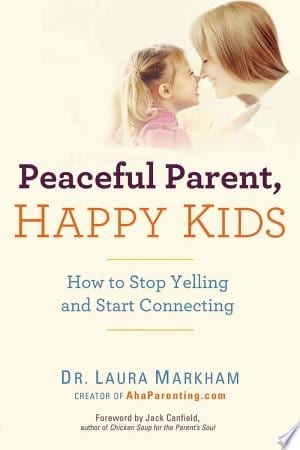
“Peaceful Parent, Happy Kids: How to Stop Yelling and Start Connecting” by Dr. Laura Markham focuses on fostering strong, loving connections between parents and their children as the foundation for effective parenting. Here are the main ideas presented in the book:
- Emotional Regulation: Dr. Markham emphasizes the importance of parents regulating their own emotions and responses. The premise is that children learn how to manage their emotions by observing their parents. If parents react to stress and frustration with calmness and empathy, their children are more likely to adopt these responses.
- Connection Before Correction: A key theme of the book is the concept that connecting with your child on an emotional level is crucial before any attempts at correcting their behavior. This connection helps children feel loved and understood, making them more receptive to guidance and discipline.
- Empathetic Communication: The book advocates for using empathy to communicate with children. Understanding and acknowledging children’s feelings and perspectives can help diffuse conflicts, build trust, and foster a deeper parent-child relationship.
- No Harsh Discipline: Dr. Markham argues against the use of harsh disciplinary methods, such as yelling or physical punishment. She suggests these methods can damage the parent-child relationship and lead to more behavioral problems. Instead, she advocates for setting limits with empathy.
- Fostering Independence: Encouraging independence in children is highlighted as a way to build their confidence and problem-solving skills. The book suggests ways to empower children to make choices and take responsibility for their actions within a supportive framework.
- Quality Time: Spending quality, focused time with children is essential for maintaining a strong connection. The book offers strategies for integrating meaningful interactions into daily routines.
- Positive Reinforcement: Dr. Markham encourages the use of positive reinforcement to motivate children. Recognizing and celebrating children’s efforts and achievements can promote positive behaviors and self-esteem.
- Modeling Desired Behavior: Parents are encouraged to model the behavior they wish to see in their children. This includes showing respect, listening actively, and demonstrating empathy in interactions both with children and others.
“Peaceful Parent, Happy Kids” provides a comprehensive approach to parenting that prioritizes emotional connection and communication. Dr. Markham’s strategies are designed to help parents cultivate a peaceful home environment, improve their relationships with their children, and guide their children’s behavior in positive ways.
The three “big ideas” in “Peaceful Parent, Happy Kids” by Dr. Laura Markham are:
- Regulating Yourself: This idea emphasizes the importance of parents managing their own emotions and reactions. By staying calm and regulated, parents can more effectively guide and support their children without resorting to yelling or punishment[1].
- Fostering Connection: This concept focuses on building a strong, loving relationship between parent and child. A secure connection makes children feel safe and supported, encouraging positive behavior and emotional development[1].
- Coaching, Not Controlling: Instead of trying to control children’s behavior through punishment or strict rules, this idea suggests coaching them to understand their emotions and actions. It involves guiding children towards making better choices and developing self-regulation skills[1].
MAIN IDEAS, TAKEAWAYS & SIMILARITIES
The Three Main Points
- Regulating Yourself
- Fostering Connection
- Family Rituals
- Punishment diminishes connect
- Special Time (scheduled)
- Labeling emotions - Rapport building techniques
- Coaching, not controlling
- Routines
- Say the behavior is bad, not they are bad
- Empathy: Listening, no pressure to solve, mirroring, acknowledging, reflecting
- Tears and laughter help discharge anxiety and emotion
- Loving Guidance
- Save “No” for emergences
- Babyproof and supervise; let them explore and learn
- Connection before correction
- Targeted support
- Secure attachment creates independence naturally
- Children want to cooperate. Defiance is a sign you need more connection.
- 5-to-1 ratio
- BUT HOW DO I GET MY CHILD TO LISTEN TO ME?! (Page 105)
- Tantrum
- Patiently sit, stay close, acknowledge the emotions and welcome the tears. They are expressing emotion and experience
- Allowing feelings does not mean allowing actions based on those feelings.
- Feeling bad makes kids act bad
- MEETING YOUR CHILD’S DEEPEST NEEDS (Page 145)
- Action Guides SEVEN STEPS TO NURTURE EMOTIONAL INTELLIGENCE IN YOUR CHILD (Page 151)
- Compassionate Limits
- Intervene in a playful way
- Let them cry
- Look in their eyes on their level
- “I won’t let you”
- PLAYING WITH YOUR CHILD: GAMES FOR EMOTIONAL INTELLIGENCE (Page 163)
- METHOD:
- Label their want
- Label their emotion
- Say the behavior is not something to do
- Redirect ; Distract ; Do something similar that is a good alternative
- how do you set effective limits? (Page 209)
- WEAN YOURSELF OFF CONSEQUENCES: TWELVE TERRIFIC ALTERNATIVES (Page 214)
- Three Rs to Making Amends:
- Reflect: Help child narrate what happened
- Repair: Empower them to repair it
- Responsibility: Offer observations, notice the choices she’s making through the day
- Caffolding
- Routines and Habits
- Expectations for behavior
- Modeling
- Offering tools and strategies
- Sequencing
- Support in emotional regulation
- Reminders
- Encouragement
- ENCOURAGING MASTERY (Page 256)
Peaceful Parent, Happy Kids Wor - Laura Markham.pdf (file not included in this release)
FOREWORD (Page 14)
- Like most of us, their parents were good people who were limited by their own upbringings, who often forgot they were raising children, not flowers—or who simply never learned how to be good parents. (Page 15)
- The parents who succeed seem to have a secret. They’re more peaceful, calmer, but they also stay more connected—to their kids and to their own inner wisdom. They aren’t just more patient—they seem more present and joyful with their children. This, of course, produces better-behaved kids—so there’s less need to work at being patient through clenched teeth. When their kid accidentally mows down the flowers, they already remember that what’s most important is how they’re raising their children, not how beautiful or impressive their flower garden is. (Page 15)
INTRODUCTION Secrets of Peaceful Parents (Page 17)
- They talk to their children differently. They talk to themselves differently. They’re approaching the whole experience of parenting from a new perspective. (Page 17)
Three Big Ideas. (Page 18)
- Regulating Yourself (Page 18)
- Parenting isn’t about what our child does, but about how we respond. (Page 18)
- Staying calm enough to respond constructively to all that childish behavior—and the stormy emotions behind it—requires that we grow, too. If we can use those times when our buttons get pushed to reflect, not just react, we can notice when we lose equilibrium and steer ourselves back on track. (Page 18)
- an adult’s peaceful presence has a more powerful influence on a child than yelling ever could. Your own emotional regulation—a fancy way of saying your ability to stay calm—allows you to treat the people in your life, including the little people, calmly, respectfully, and responsibly. That’s what produces children who are emotionally regulated, respectful and responsible. (Page 18)
- Fostering Connection (Page 18)
- Children thrive when they feel connected and understood. (Page 18)
- Children need to feel deeply connected to their parents or they don’t feel entirely safe, and their brains don’t work well to regulate their emotions and follow parental guidance. So focusing first on connection produces children who are not only happier, but easier. (Page 19)
- Coaching, Not Controlling (Page 19)
- What raises great kids is coaching them—to handle their emotions, manage their behavior, and develop mastery—rather than controlling for immediate compliance. Thoughtful parents know that what they do today either helps or hinders the person their child is becoming. They “emotion-coach” so that their child develops the emotional intelligence essential to managing feelings and making wise choices. They use empathic limits rather than punishment—even just time-outs and consequences—to coach their child’s development of self-discipline, rather than simply forcing their child into obedience. (Page 19)
- They’re guided by core values so they don’t compromise on respectful relating or family time, but they also don’t sweat the small stuff. (Page 19)
What’s Different About This Book (Page 19)
- We focus on your daily interactions with your child, which fall into three basic categories, each of which is explored in its own chapter. Here’s a preview: (Page 20)
- Emotion coaching. (Page 20)
- Loving guidance. (Page 20)
- Instead of threatening (“ One, two, three …”), or manipulating, we’ll get to the root of your child’s behavior—the feelings underneath it. (Page 21)
- nurture your child’s emotional intelligence, (Page 21)
- Supporting mastery. (Page 21)
- protect your child’s natural curiosity and support his emerging passions while encouraging the confidence and resilience he needs to succeed in life. (Page 21)
- Peaceful parents find it much easier to be calm and patient. Why? Because this kind of parenting creates a better parent-child relationship, which produces better-behaved children—and parents who enjoy their child more. Peaceful parents have actually found a way to put the joy back into parenting. (Page 22)
You Can Be a More Peaceful Parent (Page 22)
Note: At what time in the development of a child is it productive to find the underlying emotions and when are they too small to understand and process that type of parenting? When is it better to punish and when is it better to understand and help them find a solution to their problem?
The Embrace of Great Love (Page 24)
PART ONE REGULATING YOURSELF (Page 25)
1 Peaceful Parents Raise Happy Kids (Page 26)
- Over and over, studies show that parents who respond with warm, respectful attunement to the unique needs of their individual child, setting limits supportively and coaching their child’s emotions constructively, raise terrific kids. Sensible, but hard. (Page 26)
Your Number One Responsibility as a Parent (Page 28)
Mindfulness: Allowing an emotion to take hold and pass without acting on it.—Benedict Carey1 (Page 28)
- That’s why your first responsibility in parenting is being mindful of your own inner state. (Page 29)
- Don’t get me wrong—mindfulness doesn’t mean you don’t feel anger. Being mindful means that you pay attention to what you’re feeling, but don’t act on it. Anger is part of all relationships. Acting on it mindlessly, with words or actions, is what compromises our parenting. (Page 29)
- Usually, in parenting and in life, the best response to upsetting emotions is to reflect, not react. In other words, don’t take action while you’re triggered. (Page 30)
Breaking the Cycle: Healing Your Own Wounds (Page 30)
- children don’t need perfection from their parents. All we need to do is to avoid harming them, and to offer them the “ordinary devotion” that has always been required of parents. (Page 30)
- The wonderful news is that being parents gives us a map for where those scars are, and a chance to dig deep and heal ourselves. Our children have an uncanny ability to show us our wounded places, to draw out our fears and angers. Better than the best Zen master or therapist, our children give us the perfect opportunity to grow and heal. Most parents say that loving their children has transformed them: made them more patient, more compassionate, more selfless. (Page 31)
- how can you heal your own childhood issues, and become the parent you want for your children? (Page 32)
- Parent consciously. Whenever we get “triggered,” we’ve stumbled on something that needs healing. Seriously. Any time your child pushes your buttons, he’s showing you an unresolved issue from your own childhood. (Page 32)
- Break the cycle. Use your inner pause button. Close your mouth, even in midsentence. Don’t be embarrassed; you’re modeling good anger management. Save your embarrassment for when you have a tantrum. (Page 32)
- Understand how emotions work. Anger is a message that something isn’t working in our lives. The problem is that it’s also a biological state that doesn’t help us find the best solutions. When we’re in the grip of the chemical reactions that make us “angry,” we do and say things we would never choose to do otherwise. When your body and emotions are in fight-or-flight mode, your child always looks like the enemy. Take a breath and wait until you calm down before you make any decisions or take any actions. (Page 32)
- Hit the reset button on your own “story.” (Page 33)
- De-stress. Develop a repertoire of habits that help you de-stress: regular exercise, yoga, a hot bath, meditation. Can’t find the time? Involve the whole family. Put on music and dance together, go for a walk, put everyone to bed with books early on Friday night for a quiet, relaxing evening and catching up on your sleep. Prioritize slowing down and you’ll find ways to do it. (Page 33)
- Get support in working through old issues. (Page 34)
How to Manage Your Anger (Page 34)
- Take five. Instead, give yourself a time-out and come back when you’re able to be calm. If your child is old enough to be left for a moment, you can go into the bathroom, splash water on your face, and do some deep breathing. (Page 36)
- use this time to calm yourself, not to work yourself into a further frenzy about how right you are. (Page 36)
- Help your body discharge anger. (Page 36)
- Change your thoughts so you can change your feelings. (Page 37)
- Listen to your anger, rather than acting on it. (Page 37)
- Remember that “expressing” your anger to another person can reinforce and escalate it. What works is to calm down, and then find a constructive way to address whatever is making us angry so that the situation is resolved, and our anger stops being triggered. (Page 38)
- Wait before disciplining. (Page 38)
- Avoid physical force, no matter what. (Page 39)
- Avoid threats. (Page 39)
- Monitor your tone and word choice. Research shows that the more calmly we speak, the more calm we feel, and the more calmly others respond to us. (Page 39)
- Consider that you’re part of the problem. (Page 39)
- Still angry? Look for the underlying feelings. (Page 40)
- Choose your battles. Every negative interaction with your child uses up valuable relationship capital. Focus on what matters, such as the way your child treats other humans. In the larger scheme of things, her jacket on the floor may drive you crazy, but it probably isn’t worth putting your relationship bank account in the red. (Page 40)
- If you frequently struggle with your anger, seek counseling. (Page 40)
How to Stop Yelling at Your Child (Page 41)
- Commit yourself. Research shows that when we consciously, verbally “commit” ourselves to a course of action, we’re likely to achieve it, especially if we work at it daily. (Page 42)
- Make the commitment to your family. There is a catch, though. You have to commit yourself to someone else. Specifically, you have to commit to your child that you intend to stop yelling, because your child is really the only person who will be there to keep you honest. (Page 42)
- Stop, drop, and breathe every time you notice yourself raising your voice, or about to raise your voice. (Page 43)
- Stop talking as soon as you notice yourself losing your temper. Close your mouth. (Page 43)
- Drop it. Really. Let it go for the moment. It’s not an emergency. (Page 43)
- Breathe deeply ten times. Shake out your hands. (Page 44)
- Remind yourself: You’re the grown-up and your child is learning from everything you do, right now. Look at your child and say, “I’m working hard to stay calm. I don’t want to yell. Let me calm down, and then we’ll try a do-over, okay?” (Page 44)
- Do whatever works for you to calm your body’s fight-or-flight response—more deep breaths, say a mantra, splash cold water on your face, (Page 44)
- Try a do-over. (Page 44)
- Wondering how your child will learn if you don’t raise your voice? When kids are scared, they go into fight-or-flight. The learning centers of the brain shut down. Your child can’t learn when you yell. It’s always more effective to intervene calmly and compassionately. Besides, when you yell, you lose credibility with your child. Kids become less open to your influence. (Page 45)
- Wondering if maybe you’re letting your kid off too easy? He’s hurting, and his “misbehavior” is an SOS that he needs your help. He’s acting out because he has big feelings he can’t yet understand and articulate verbally. Of course you set limits and redirect behavior. But your guidance never needs to be mean or scary. You want your child to follow your guidance because he loves you and would never want to disappoint you, not because you scare him. (Page 45)
A THREE-MINUTE PROCESS TO SHIFT YOURSELF FROM UPSET TO PEACE (Page 46)
Minute One: What’s the Thought That’s Upsetting You?
- Say it silently to yourself. It might be something like “He’s disrespecting my authority… . I have to nip this in the bud” or “He’s just manipulating me!”
- Consider that this thought that’s driving your upset almost certainly comes from fear. That means it isn’t as true as the interpretation of the situation that comes from love.
Minute Two: Realize There Is Always Another Side to Every Story
- Consider that your parents no doubt had this thought about you once or twice, and you came out okay. Your child will, too.
- Consider the situation from your child’s perspective. For instance, “He’s showing me how upset he is… . He’s allowed to have his feelings.”
- Consider how your upsetting thought makes you treat your child. If you let go of that thought, how would you respond to your child?
Minute Three: Help Your Body Release the Feelings
- Tap the acupuncture point on the edge of your hand (the karate chop point) while you breathe deeply.
- Say to yourself while tapping: “Although I’m upset, I’m safe. I can calm myself and heal this situation.”
- If you find yourself yawning, that’s great—your body is releasing. The more you practice this, the more quickly your body will calm.
Now, return to your child, and start over from a place of love. Sound hard? It is, because when we’re angry we’re swamped with attack hormones. But when we open our perspective a bit, we get to the root of the attitude that triggers the yelling, and we change it. Every thought comes from fear or from love. Choose love. (Page 47)
When Your Child Melts Down: How to Keep Your Cool (Page 48)
- Children get upset often, because of their inexperience and cognitive immaturity. It’s our ability to stay calm when they’re upset that helps them develop the neural pathways to calm themselves. (Page 48)
- Acknowledge your own feelings. (Page 49)
- Remind yourself that it isn’t an emergency. (Page 49)
- Remind yourself that expressing feelings is a good thing. Even if you can’t say a wholehearted yes! when your child starts to melt down, try to move from your automatic no! to a warmhearted okay, just the way you do at other times when your child needs you. (Page 50)
- Take the pressure off. You don’t have to fix your child or the situation. All you have to do is stay present. Your child doesn’t even need the red cup, or whatever he’s crying for; he needs your loving acceptance of him, complete with all his tangled-up feelings. His disappointment, rage, grief? They’re all okay, and they will all pass without you doing a thing except loving him. (Page 50)
- Take a deep breath and choose love. Every choice we make, at its core, is a move toward either love or fear. Let your caring for your child give you the courage to choose love. (Page 50)
- Tolerate the emotion without taking action. (Page 50)
- Keep it simple. Your child needs you to witness her outpouring of emotion and let her know that she is still lovable, despite all these yucky feelings. Explanations, negotiations, remorse, recriminations, advice, analysis of why she’s so upset, or attempts to “comfort” her (“ There, there, you don’t have to cry, that’s enough.”) will all shut down this natural emotive process. Don’t force her to express herself in words; she’s doesn’t have access to the rational brain when she’s so upset. Of course, you want to “teach”—but that needs to wait. Your child can’t learn until she’s calm. You don’t have to say much. Your calm, loving tone is what matters. Maybe:
- You are safe. I am right here.
- I hear you. Everybody needs to cry sometimes.
- You’re telling me to go away, so I will move back a little bit, but I won’t leave you alone with these scary feelings.
- When you’re ready, I’m right here to hug you. (Page 51)
- Find a way to process your own feelings. (Page 51)
You Can Nurture Yourself While Raising Your Child (Page 52)
- bThe real job is keeping your cup full so you have plenty of joy and presence to share with your child. Kids love our joyful presence and become happier and more cooperative. (Page 52)
- Sacrificing yourself on the Altar of Parenthood. That’s when we forget to give ourselves the attention we need. It isn’t good for us to feel deprived. It kills our natural joy. And it isn’t good for our kids, who end up with a resentful, negative, impatient parent. (Page 53)
- Ultimately, you’re the one responsible for how you spend the short life you’ve been given. On your deathbed, there won’t be anyone else to blame if you’ve been unhappy. (Page 53)
- Make it a habit to tune in to yourself as often as possible throughout your day. (Page 54)
- Every time you notice you’re getting resentful or irritable, stop. Ask yourself, “What do I need right now to stay in balance?” Then, give it to yourself—whether your child is there or not. (Page 54)
- Notice the challenging times of day and find ways to nurture yourself through them. (Page 54)
- Soak in the beauty and joy of every moment you can. (Page 54)
WHEN YOU’RE FEELING OVERWHELMED (Page 55)
- Focus on what matters. Are your kids fed? Have you hugged them and told them how much you adore them? Kids sense when we’re stressed and disconnected, and act out, so often a hug reels them back to their best selves, too. (Page 55)
- Find support. (Page 55)
- Support yourself. (Page 55)
- When you lose it, use it. (Page 55)
- Take a do-over. (Page 55)
- Appreciate your child. (Page 55)
- Never walk away emotionally. (Page 56)
- Just keep choosing love. (Page 56)
Ten Rules to Raise Terrific Kids (Page 56)
- The most important parenting skill: Manage yourself. (Page 57)
Note: Do more research on this
- The most important parenting commitment: Be your child’s advocate and don’t give up on him. (Page 57)
- The most important parenting secret: Discipline, despite all the books written on it, doesn’t work. (Page 57)
- Instead of punishment, guide kindly and set limits on behavior but always empathize with feelings, including the feelings your child has about the limits you set. Both empathy and guidance/ limits are essential; neither by itself is successful. (Page 57)
- What kids need that no one tells you: a safe place to express feelings while you “listen.” (Page 58)
- if you want a child who can manage his emotions, he first needs to know he has a safe place (your arms) to cry and rage where he won’t be shushed. (Page 58)
- What your child wishes you understood: She’s just a kid, trying as hard as she can. (Page 58)
- Expect age-appropriate behavior, not perfection, and keep your priorities straight. (Page 58)
- The most useful mantra: Don’t take it personally. (Page 58)
- What you need to remember when times get hard: All misbehavior comes from basic needs that aren’t met. (Page 59)
- Meet their needs for sleep, nutrition, chill-out time, cuddling, connection, fun, mastery, and safety. Let kids know in advance the behavior you expect. Give them “scaffolding”—teaching, little by little—so they can manage what’s expected of them. Children want to be successful. (Page 59)
- The best parenting expert? Your child. (Page 59)
- The only constant? Change. (Page 59)
- What matters most: Stay connected and never withdraw your love, even for a moment. (Page 59)
PART TWO FOSTERING CONNECTION (Page 60)
2 The Essential Ingredient for Peaceful Parents, Happy Kids (Page 61)
- security of knowing that someone is on his side, watching out for him, is what allows a child to risk bumps, scrapes, and disappointment—in other words, to learn, grow, and develop resilience. (Page 61)
Why Connection Is the Secret to Happy Parenting (Page 62)
- that rewarding bond is our payoff for all the hard work. (Page 62)
- The moments that make our hearts melt make all the very real sacrifices worthwhile. And our children need to know that we take joy in them or they don’t see themselves as worth loving. (Page 62)
- your ability to enjoy your child may be the most important factor in his development. (Page 62)
Connection as Your Child Grows (Page 63)
BABIES (0–13 MONTHS): WIRING THE BRAIN (Page 63)
- So your interactions with your infant over his first year will determine a great deal about how his brain and nervous system are wired for the rest of his life. (Page 63)
- Your loving touch regulates his stress and growth hormones. (Page 63)
- Prioritizing your connection with your baby makes caring for her easier, because it makes for a contented baby who grows into a secure, happy, cooperative child. Soothing is essential to all infants, whose brains develop the capacity to regulate negative emotion directly from the experience of being soothed. (Page 65)
- attachment parenting (Page 65)
- So let’s redefine attachment parenting. It’s simply responding to your baby’s emotional as well as physical needs, which in infancy usually include staying in close physical proximity to the parent. (Page 66)
TODDLERS (13–36 MONTHS): BUILDING SECURE ATTACHMENT (Page 69)
- still relies heavily on you to help him regulate himself emotionally. (Page 69)
- While she’s playing, she’ll regularly look up at you for reassurance. (Page 70)
- What happens at home will always be much more important than what happens in daycare, because your child’s attachment to you is so dominant in his psyche. (Page 71)
- if your little one is in daycare more than twenty hours a week, those hours will certainly have an impact on your child’s development. (Page 71)
- babies are designed to be in close contact with a primary adult. (Page 71)
- Parents should know, however, that two-year-olds who spend the most time in childcare tend to have the most behavior problems. (Page 72)
- quality of the care matters tremendously. (Page 72)
PRESCHOOLERS (3–5 YEARS): DEVELOPING INDEPENDENCE (Page 72)
- No. The young toddlers who didn’t seem to notice the parent leaving the room were not the children who grew up to be independent. (Page 74)
- When we “push” children into emotional independence, research shows, they become more needy. Sometimes they get overinvolved with their peer group and fixate on other children as attachment objects. (Page 74)
- Independence is rooted in secure attachment—knowing that Mom and Dad are there when needed. (Page 75)
ELEMENTARY SCHOOLERS (6–9 YEARS): FOUNDATION FOR THE TEEN YEARS (Page 75)
- Kids naturally turn to the peer group for companionship and to media for clues about social “norms.” The danger is when they don’t feel firmly anchored to their parents as their North Star and begin to orient around their peer group or media values. If we don’t cement a close connection before our children hit middle school, they turn elsewhere for bonding and guidance. Sadly, by the time we realize we’re losing our child to the peer group, it’s hard to get their attention. (Page 76)
- Develop family rituals that foster connection. Family meetings. Sunday morning brunches. Saturday lunch dates with Dad on the way to weekly grocery shopping. Apple-picking trips every September, or making costumes together before Halloween. Whatever works for your family, turn these connection opportunities into routines, so that everyone looks forward to them and they happen reliably. (Page 76)
- Resist the impulse to say yes to one more playdate so you can get more done. Instead, spend some downtime just hanging out with your child. Now is when you lay the foundation for a great relationship later. (Page 77)
- Take your cues about independence from your child. Maturity doesn’t come in a straight line; small regressions are normal. Remember that after periods of independence that require “grown-up” behavior, such as sleepovers, your kid’s “baby self” will come out for extra attention from you. Instead of shaming her into “acting her age,” meet those needs by reconnecting with her on a visceral level. (Page 77)
Connection Basics (Page 77)
- I often see families reach crisis points as their children reach specific ages. This happens first around thirteen months, when babies become toddlers and begin having tantrums. At this point, some parents look for positive strategies that allow them to keep their toddler safe and offer guidance, while convincing him that they’re on his side. Those families are on the road to a win/ win relationship; as long as they keep listening, resist punishing, and attend to any rifts, they’ll stay close to their child for life. (Page 78)
- So punishment diminishes your influence and erodes your closeness with your child, which becomes more apparent as your child gets older and less dependent on you. (Page 79)
HOW TO CONNECT MORE DEEPLY WITH YOUR CHILD (Page 79)
- Quality time is a myth, because there’s no switch to turn on closeness. (Page 79)
- We earn our children’s trust with our daily behavior: following through on the promise we make to play a game with him, picking him up on time, understanding even when he isn’t at his best. (Page 80)
- Because so much of our time with our children is about managing the tasks of daily life, it’s important to be sure that your routines are filled with fun, giggling, and warmth, rather than just moving your child through the schedule. Play is one of the most reliable ways to smooth the tensions and build trust with your child. (Page 80)
HOW DO YOU KNOW WHEN YOUR RELATIONSHIP WITH YOUR CHILD NEEDS WORK? (Page 82)
- The most obvious sign that your relationship with your child needs some repair work is defiance. (Page 82)
- they want to feel good about their relationship with us, so they actually want to cooperate. When they don’t, it’s usually a signal of disconnection. (Page 82)
CONNECTING WITH A DIFFICULT CHILD (Page 84)
- When he wanted to spit on her, she took him outside for a spitting contest with her, again transforming his aggression into connection. (Page 85)
Action Guides YOUR CHILD’S EMOTIONAL BANK ACCOUNT (Page 86)
- part of our job description to set limits with our children, deny their unreasonable requests, and correct their behavior. Sometimes we’re skillful enough that our child doesn’t even perceive those interactions as negative—but that’s rare. (Page 86)
- Challenges signal that your relationship account is in the red. How many loving connections have you had with your child in the past two days? (Page 87)
- What can you do to refill your relationship account with your child? Think of two things you can do today. (Page 87)
- Consider what contributed to your being overdrawn. What can you do in the future to make sure you keep your account with your child in the green? Write down five things. (Page 87)
WHAT’S SO SPECIAL ABOUT SPECIAL TIME? (Page 87)
- Gives the child the essential—but unfortunately so often elusive—experience of the parent’s full, attentive, loving attention, without which he can’t thrive. (Page 88)
- Reconnects (Page 88)
- Gives children a regular, safe opportunity to “unpack” all those sad, scared feelings they’ve been stuffing in their (figurative) emotional backpacks, which will otherwise spill out as contrary behavior. (Page 88)
preventive maintenance How do you do it? (Page 89)
- Announce that you want to have Special Time with each child for fifteen minutes, as many days in the week as you can. Call it by the most special name there is, your child’s name—for example, “Lauren Time.” (Page 89)
- Choose a time when any other children are being looked after by someone else (unless they are old enough to stay reliably occupied with something even while they sense their sibling getting something they’d like to have for themselves). (Page 89)
- Set a timer for fifteen minutes, with your child. Turn off all phones so you can’t hear incoming calls. (Page 89)
- Say, “Today you get to decide what we will do with our ‘Jonah Time.’ Tomorrow I get to decide. We’ll alternate. So now I am all yours for fifteen minutes. What would you like to do?” (Page 89)
- Give your child 100 percent of your attention with no agenda and no distractions. Just follow his lead. If he wants to play with his blocks, don’t rush in to tell him how to build the tower. Instead, enjoy watching your child explore, play, create. (Page 89)
- make it fun. Resist the urge to judge or evaluate your child. Don’t suggest your own ideas unless she asks. (Page 90)
- If she wants to do something that she isn’t usually allowed to do, consider whether there’s a way to do it safely since you’re there to help her. (Page 90)
since these desires will no longer be forbidden fruit after your child has a chance to indulge her curiosity and experience them, she’s less likely to try them behind your back. (Page 90)
- When it’s your turn to decide what to do, initiate games to build emotional intelligence and bonding. Quiet talking and cuddling is okay once in a while, but your goal is to help your child release pent-up anxiety—another word for fear—and the most direct path is laughter. That usually means roughhousing in a way that gets your child giggling. (Page 91)
- Check “Playing with Your Child: Games for Emotional Intelligence” in Chapter 3 for ideas. (Page 91)
- End Special Time when the timer buzzes. (Page 91)
- Be aware that often your child’s emotions will bubble up during Special Time, especially at the end. That doesn’t mean she’s a bottomless pit. It means she feels safer with you after this time together, so all those feelings she’s been lugging around are now coming up to be processed. (Page 92)
DAILY HABITS TO STRENGTHEN AND SWEETEN YOUR RELATIONSHIP WITH YOUR CHILD (Page 92)
Develop small rituals that reconnect you with your child throughout your day, especially around separations. (Page 93)
- five-minute snuggle with each child first thing every morning to reconnect and ease the transition into the day, (Page 93)
Give your child a short emotional refueling before you move into a situation that she’ll perceive as a disconnection—bedtime, daycare, even shopping or making dinner. (Page 93)
Twelve hugs a day. “We need four hugs a day for survival. We need eight hugs a day for maintenance. We need twelve hugs a day for growth.” (Page 93)
Turn off technology when you interact with your child. (Page 94)
Evenings are family time. (Page 94)
Special Time. Every day, ten to twenty minutes with each child, individually, and longer on weekends. Alternate doing what your child wants and doing what you want, and on your days to choose, resist the urge to structure the time with activities. Instead, roughhouse to help your child giggle out his anxieties and bond with you. (Page 94)
When you physically reconnect, consciously refocus your attention on your child. (Page 94)
Attune to your child’s mood. (Page 95)
Connect on their level. (Page 95)
- Start with a hug hello, make eye contact, and then stay in their space physically until you’ve re-established a warm connection. (Page 95)
Don’t let little rifts build up. (Page 95)
- Choosing to withdraw (except temporarily, strategically) when your child seems intent on driving you away is always a mistake. Every difficulty is an opportunity to get closer, as you extend understanding and your child feels truly seen, heard, and accepted. (Page 95)
Remember the 5-to-1 ratio. Scientists have found a way to predict which couples will end up divorcing: those who don’t ensure that they have at least five positive interactions for every negative one. Maintaining this 5-to-1 ratio is probably effective insurance in every relationship, including between parents and children. If you notice a strained interaction with your child, that’s your reminder to find five opportunities to connect in the very near future. (Page 96)
USE CONNECTION TO GET YOUR CHILD OUT THE DOOR IN THE MORNING (Page 96)
- Reframe your idea of the morning routine. (Page 96)
- Get everyone to bed as early as possible. (Page 96)
- Get yourself to bed earlier. (Page 97)
- Build in extra time. (Page 97)
- Prepare the night before. (Page 97)
- Make sure you get five minutes of relaxed snuggle time with each child as they wake up. (Page 97)
- Use connection routines to make transitions easier. (Page 98)
- Keep the routine as simple as possible. (Page 98)
- Realize that children need your help to move through the routine. (Page 98)
- Offer choices. (Page 99)
- Play it out. Sometime on the weekend, grab a mom and baby stuffed animal. Have them act out the morning routine. (Page 99)
- Ruthlessly prioritize. (Page 99)
USE CONNECTION TO MAKE BEDTIME EASIER (Page 100)
- parents, bedtime is the time they finally get to separate from their children and have a little time to themselves. To children, bedtime is the time they’re forced to separate from their parents and lie in the dark by themselves. (Page 100)
- Make a chart with pictures of your child doing each evening task, complete with times, so you can transform from traffic cop to partner, helping your child move happily through the routine. (Page 100)
- Don’t do anything else during the bedtime routine so that you can focus on moving it along rather than getting distracted by phone calls or emails. (Page 101)
- Remember that bedtime brings up all children’s separation anxiety. Include a “separation” game like Hide-and-Seek or the Bye-Bye Game (discussed in Chapter 3) every evening to help your child giggle out some of that anxiety. But remember that kids also need a chance to calm down physically, so no rambunctious roughhousing in the hour before sleep. (Page 101)
- Banish electronic screens, which artificially depress the sleep hormone melatonin, for at least an hour before bedtime. (Page 101)
- Give each child ten minutes of private quality time after lights-out for a snuggle and check-in. (Page 101)
- Do whatever you need to do to stay calm. Losing your temper at bedtime will just trigger more separation anxiety and make things harder. (Page 101)
TEN WAYS TO BECOME A BRILLIANT LISTENER (Page 102)
BUT HOW DO I GET MY CHILD TO LISTEN TO ME?! (Page 105)
- Don’t start talking until you have your child’s attention. Get down on your child’s level and touch him lightly. Look him in the eye. Wait until he looks up. Then start talking. (Page 105)
- make sure you have his attention by asking, “Can I tell you something?” (Page 105)
- Don’t repeat yourself. (Page 105)
- Go back to step one. (Page 105)
- Use fewer words. (Page 106)
- See it from his point of view. (Page 106)
- Engage cooperation. No one wants to listen to someone who’s barking orders. Keep your tone warm and give choices. “It’s bath time. Do you want to go now or in five minutes? Okay, five minutes with no fuss? Let’s shake on it.” (Page 106)
- Soothe, don’t inflame. (Page 106)
- Set up routines. (Page 107)
- Model attentive listening. (Page 107)
WHEN YOUR CHILD JUST SHUTS DOWN (Page 107)
- She’s embarrassed to tell you about what happened. (Page 107)
- She’s worried about how you’ll respond. (Page 108)
- The emotions feel so crummy to her that she doesn’t want to feel them, (Page 108)
- Don’t make her talk. (Page 108)
- Get her giggling. (Page 108)
- Use Special Time. (Page 109)
- Earn her trust. (Page 109)
- Find your compassion. (Page 109)
PART THREE COACHING, NOT CONTROLLING (Page 111)
3 Raising a Child Who Can Manage Himself: Emotion Coaching (Page 114)
most of our interactions with our child are emotional exchanges of one sort or another. The way we as parents respond to our child’s feelings shapes his relationship with emotions—his own and others’—for the rest of his life. (Page 114)
Emotional Intelligence as Your Child Grows (Page 117)
BABIES (0–13 MONTHS): A BEDROCK OF TRUST (Page 117)
- primary developmental task for an infant is learning to trust. (Page 117)
- infants pick up anxiety (which is a form of fear, or lack of trust) from their parents. (Page 117)
- Babies’ stress hormones shoot up in response to angry voices—including those on TV—even while they’re asleep. Our calm voice, loving eye contact, and secure hold as we care for our baby gives her the message that the world is a safe place where she can relax and trust. (Page 117)
- provide our little one with the reassurance, as constantly as possible, that he’s safe. (Page 118)
- Soothing your baby not only helps her learn to self-soothe, it helps her become a more calm, friendly, happy person, not just as a child but throughout life. Many studies show that babies who receive above-average levels of affection, attention, and soothing from their parents grow into adults who are more relaxed, emotionally regulated, and happier. Not surprisingly, they’re even able to better regulate their weight. (Page 122)
TODDLERS (13–36 MONTHS): UNCONDITIONAL LOVE (Page 123)
- Why are the toddler years such a challenge emotionally? Because job one for the toddler is asserting himself. Your toddler needs to feel that he has an impact on the world and some control over his experience. This developing sense of power is a good thing. It’s what allows him to eventually take responsibility for himself. (Page 123)
- These parents adore their child and are doing the best they can to teach her responsible rules. But the assumption that we have to withdraw our love to get our toddler to do what we want is a dangerous one. When we repeatedly break our connection with our child, whether in the name of discipline or independence, it undermines the close relationship we’ve worked so hard to build. (Page 124)
- The toddler can’t be blamed for wondering if the universe is friendly only when he does what it wants. He may well conclude that being himself is not acceptable. He can’t yet control most of his behavior, and he can’t really distinguish between his emotions (his “self”) and his behavior, so even if you’re careful to say, “It’s bad to hit” instead of “You’re a bad boy!” the distinction is lost on him. He interprets our attempts at discipline as a message that if he wants to be loved by the masters of the universe (his parents), he needs to repress certain emotions and pretend to be good. (Page 124)
- nature has designed babies and toddlers with a fail-safe to discharge the physiological residue of their fears and frustrations: tantrums. (Page 125)
- parents who patiently sit with their tantrumming toddler are helping him learn to self-soothe and manage his emotions. But too many parents make an all-too-understandable mistake. They assume tantrums are within their toddler’s control, that he’s “throwing” a tantrum to manipulate them and get his way. (Page 125)
- When young children feel abandoned, it triggers anxiety that may temporarily stop the tantrum, but it creates deep insecurity. (Page 126)
- When he has a tantrum, they hold him or stay close, acknowledging his anger and welcoming the tears behind it. Rather than seeing tantrums as undesirable behavior, these wise parents understand that their little one is telling them about his experience. From their loving acceptance, he learns that even the most challenging feelings are bearable. They sweep over us, we tolerate them, they dissipate. These emotions are just part of the big world the toddler is learning so much about every day; there are even names for them: (Page 126)
- letting your toddler act on all his feelings would be reneging on your responsibility to guide him. Allowing feelings does not necessarily mean allowing actions based on those feelings. (Page 127)
- When we say toddlers need civilizing, what we mean is that they need our help to develop the inner ability to manage their strong emotions so they can follow essential rules and get along well with others. How we respond to their messy emotions and wild behavior determines whether they build that kind of brain. Punishment and disconnection create more upset and less self-regulation. By contrast, empathic guidance helps our toddler develop a brain that can regulate itself emotionally within a few short years. This increased ability to calm his own fear and rage reactions gives him more access to the natural empathy that’s been there all along. (Page 128)
PRESCHOOLERS (3–5 YEARS): EMPATHY (Page 128)
- It’s the flowering of empathy we see in children who have themselves been treated with empathy. His working model of relationships is one in which people notice and accept each other’s feelings, in which relationships can be repaired and wrongs righted. He’s beginning to be able to embody both sides of that relationship. (Page 130)
ELEMENTARY SCHOOLERS (6–9 YEARS): EMOTIONAL SELF-AWARENESS (Page 131)
- Unfortunately, rather than seeing off-track behavior as a cry for help, most parents discipline with “consequences” and other punishment. They miss the opportunity to help their child process the fears and unmet needs that drive “bad” behavior and build EQ. (Page 132)
- For parents who pay attention, the elementary school years—when children are still very connected to parents—are the perfect time to help children master the world of emotions. (Page 132)
- help their child problem-solve by listening, reflecting, and helping him brainstorm options. (Page 133)
Emotion Coaching Basics (Page 133)
HOW CHILDREN DEVELOP EMOTIONAL INTELLIGENCE (Page 133)
- hardest part of helping your child learn to regulate her emotions? (Page 134)
EMPATHY, THE FOUNDATION OF EQ (Page 134)
- it’s essential to your ability to understand your child and connect with her. (Page 134)
- Empathy is often defined as seeing things from the other person’s point of view. (Page 135)
- How do children develop empathy? It happens naturally, as part of healthy emotional development, as long as children experience empathy from their caretakers. (Page 135)
- Every time you rise above your own feelings to see things from your child’s point of view, that’s empathy. (Page 136)
- powerful? Imagine empathy as a mirror that you hold up to your child. (Page 136)
What Empathy Isn’t (Page 136)
- Permissiveness. (Page 136)
- Solving the problem. (Page 136)
- Agreeing. (Page 137)
- Probing. (Page 137)
- Analyzing. (Page 137)
- Catastrophizing. (Page 137)
- Arguing with the feeling. (Page 138)
- Trying to cheer her up. (Page 138)
What Empathy Is (Page 138)
- Listening and accepting without the pressure to solve anything. (Page 138)
- Mirroring, acknowledging, and reflecting. (Page 138)
- Honoring healthy boundaries. (Page 139)
YOUR CHILD’S EMOTIONAL BACKPACK (Page 139)
- since young children’s rational brains aren’t yet fully online, they can’t use them to feel safer. Instead, your child uses you. Your warm presence makes him feel safe enough to experience his tears and fears. (Page 140)
- your child usually can’t tell you why she’s upset. She’s not very experienced with emotions yet, so she doesn’t know how to ask for your help. All she knows is that she feels out of sorts and irritable. Luckily, that’s your signal, because feeling bad makes kids act bad, or “act out.” (Page 140)
- Since both tears and laughter help us discharge anxiety and emotion, help your child to play when she can, and cry when she has to. In other words, regular doses of play—especially play that touches on whatever issues are up for your child developmentally—will help your child work through the normal fears and frustrations that accompany developmentally appropriate tasks. You can also respond playfully to “off-track” behavior that signals disconnection. For instance, when your child looks right at you and breaks a minor rule, try grabbing him for some affectionate roughhousing, playfully rekindling your connection with him. (Page 141)
- But before you can correct, you have to connect. (Page 141)
UNDERSTANDING ANGER (Page 143)
- One of the most important messages we can give our children about emotion is that anger is a universal human feeling that can be managed and controlled. (Page 143)
- You can help your child with her anger by remembering that an angry child is showing you that she’s scared, disconnected, and hurting inside. Your job is to acknowledge both the anger and the emotions underneath it. Once children have a chance to feel the vulnerable feelings they’ve been avoiding, they no longer need the anger as a defense, and it melts away. (Page 143)
- When children live in a home where anger is handled in a healthy way, they generally learn to manage their anger constructively. That means: (Page 144)
- Controlling aggressive impulses. (Page 144)
- Acknowledging the more threatening feelings under the anger. (Page 144)
- Constructive problem solving. (Page 144)
- by the time children are six, the brain should have developed to the point where the thinking centers can override the emergency messages of the lower brain centers. (Page 145)
MEETING YOUR CHILD’S DEEPEST NEEDS (Page 145)
- To know that their parents adore them, love to care for them, and care about their happiness. (Worthiness, security, self-esteem)
- To feel truly seen, known, accepted, and appreciated—even the “shameful” parts like anger, jealousy, pettiness, and greed. (Unconditional love)
- To stay connected with each parent through regular relaxed, playful, unstructured, affirming time together. (Intimacy, belonging)
- To work through challenging daily emotions. (Emotional wholeness, self-acceptance)
- To master new skills. (Mastery, independence, confidence)
- To act from one’s own motivations to impact the world. (Self-determination, power) (Page 145)
- To make a contribution. (Value, meaning) (Page 146)
- fact, all “misbehavior” is an SOS from your child, alerting you to unmet needs or tangled feelings. If you listen to your child and let her know you’re taking her needs seriously, you’ll see her relaxing, not feeling like she has to fight with you to get her needs met. She’ll feel the way we all feel when our needs are filled: comfortable, happy, open, appreciative. That’s when kids are ready to cooperate. (Page 146)
- But when we meet children’s deeper needs to be seen, appreciated, and connected, they’re happier and more cooperative, so they can manage their disappointment when we say no to the fleeting desires they think will make them happy. (Page 147)
EQ COACHING WITH A DIFFICULT CHILD (Page 147)
- Notice that they never left her alone to cry. Instead, they announced their plan to leave and then helped their daughter through her fearful reaction. (Page 150)
- When we give anxious children a chance to work through the past terror stored in their bodies, we help them move toward more courage and freedom in all aspects of their lives. (Page 150)
Action Guides SEVEN STEPS TO NURTURE EMOTIONAL INTELLIGENCE IN YOUR CHILD (Page 151)
- Acknowledge your child’s perspective and empathize. (Page 151)
- Allow expression of emotion, even while limiting actions. (Page 151)
- Respond to the needs and feelings behind problem behavior. (Page 152)
- When a desire can’t be granted, acknowledge it and grant it through “wish fulfillment.” (Page 152)
- Giving your child his wish in imagination releases some of the urgency behind it so that he’s more open to alternatives. (Page 152)
- Tell the story so your child understands his emotional experience. (Page 152)
- So the first step in emotion coaching is always to empathize with our child’s feelings. But we then need to help her bring in the left, or logic-based, side of her brain as well. That helps her make sense of what’s happening, so she doesn’t feel simply at the mercy of emotions sweeping through her. To do that, name feelings (“ You are so disappointed”), and tell stories: “Yes, that’s right… . When we went to the dentist you were scared at first and refused to open your mouth… . But you held my hand and were very brave and the dentist said you are doing a great job brushing!” (Page 153)
- Teach problem solving. (Page 153)
- resist the urge to solve the problem for them; that gives your child the message that you don’t have confidence in his ability to handle it himself. “You’re so disappointed that Chloe can’t come over because she’s sick. You were really looking forward to playing with her. When you’re ready, maybe we can work together to come up with ideas of something else to do that sounds like fun.” (Page 153)
- Play it out. (Page 153)
EMOTION-COACHING YOUR CHILD THROUGH A MELTDOWN (Page 154)
- Choose a scheduled meltdown. (Page 154)
- Regulate your own feelings so you can welcome your child’s big emotions and help him vent. (Page 155)
- Set a compassionate limit. (Page 155)
- Set whatever limits are necessary to keep everyone safe, while acknowledging the anger. “You are really angry, but no hitting… . I will keep us both safe.” (Page 155)
- If he’s angry instead of crying, help him surface his fears by lovingly confronting his defiance. (Page 155)
- If your child gets angry, stay connected. Never send a child away to “calm down” by himself. (Page 156)
- Hold him if you can do so without getting hurt. (Page 156)
- If you know what’s going on, acknowledge it: (Page 156)
- Create safety. (Page 156)
- Try not to talk much during the meltdown, because it moves your child from his heart to his head and dries up the tears. (Page 156)
- You definitely don’t want to analyze him, evaluate him, or calm him down. In fact, you want to help him reach that hurting place inside, so you compassionately remind him of whatever triggered his upset: “You really wanted __… . I’m so sorry.” (Page 156)
- If he yells at you to go away, say, “I will step back a little, to right here. But I won’t leave you alone with these big, scary feelings. I’m right here and you’re safe.” (Page 157)
- Ignore any rudeness during a meltdown; don’t take it personally, and resist the urge to retaliate. (Page 157)
- Remember that your child may be reliving something scary or painful. (Page 157)
- Keep breathing and stay calm. (Page 158)
- Honor his grief. (Page 158)
- Afterward, reassure your child of your love. (Page 159)
- Help your child make sense of the experience. (Page 159)
- Wait to teach. (Page 160)
- While your child is vulnerable after the meltdown is not the time to have a discussion about his transgression. If you feel you must teach, wait until after your child is calm to remind him about appropriate behavior, preferably with a light touch that acknowledges he already knows the rule: (Page 160)
- Expect to see more meltdowns for a few weeks, now that he trusts your safe presence. If you can’t take time at the moment he launches into a tantrum, tell him, “I love you, but I can’t listen now, sweetie. I will listen to all your feelings after dinner.” Just make sure to keep your promise to give him his scheduled meltdown. (Page 160)
- Yes, it’s a lot of work for you. But once you realize that you don’t have to fix anything, it gets easier. Notice that what you provided was safety and connection. Your child did the hard work of releasing his emotions so he could heal and move on. You’ll have to breathe your way through it each time, and probably repeat a little mantra to keep yourself calm. (Page 160)
WHEN YOUR CHILD ACTS OUT BUT CAN’T CRY: BUILDING SAFETY (Page 161)
-
When you see your son trying to hit the dog, intervene in a playful way. (Page 162)
-
Play while he can. being playful defuses the tension. (Page 162)
-
Let him cry when he has to. (Page 162)
-
Set a compassionate limit. Stop and put him next to you on the couch or the rug, look him in the eye, and say compassionately and seriously, “Okay, sweetie, no more playing … I won’t let you hurt the dog.” Almost certainly, you will have built up enough of a sense of safety that your child will begin crying. Then you can support him as described in the previous Action Guide. (Page 163)
PLAYING WITH YOUR CHILD: GAMES FOR EMOTIONAL INTELLIGENCE (Page 163)
- Wrestle, pillow-fight, let your child try to push you over. (Page 165)
- Chase your child. (Page 165)
- Be a bumbling monster. (Page 165)
- The Bye-Bye Game. (Page 165)
- The “I Need You” Game. (Page 166)
- The Fix Game. (Page 166)
- “Are you out of hugs?!” (Page 167)
- When your child has fears of any kind. (Page 167)
- When your child is reluctant about potty learning. (Page 167)
- When your child goes through a stage of whining a lot. (Page 168)
- express confidence that your child can use her “strong” voice and offer your assistance to help her find it by making it into a game: “Hey, where did your strong voice go? It was here a minute ago. I LOVE your strong voice! I’ll help you find it. Help me look. Is it under the chair? No … In the toy box? No … HEY! You found it!! That was your strong voice!! Yay! I love your strong voice! Now, tell me again what you need, in your strong voice.” (Page 168)
- When you and your child seem to be having a lot of power struggles. All children need a chance to feel powerful and to experiment with defiance; you’d rather this be a game than over something that matters. Try “I bet you can’t push me over” or “Oh no, don’t do that!” (“ Whatever you do, don’t get off the couch! Oh no, now I have to give you twenty kisses! Okay, your turn to give me an order.”) (Page 168)
- When your child is getting overexcited or too revved up. “You have so much energy right now. Do you want to spin around? Come over here (or outside) with me where it’s safe to spin around, and I’ll spot you.” Find a safe place where no other kids or parents are there to further stimulate him, and let him spin around, or jump up and down, or run in circles around you—whatever he chooses. (Page 169)
- When your kids are fighting a lot. When tempers are calm, say, “Would you two please fight with each other now?” When they begin to fight, pretend to be a TV commentator. (Page 169)
- To help a child who’s coping with a challenging issue, like the start of school, or playground struggles, or being sick. Have one stuffed animal be the parent, and one be the child, and act out the situation. Using stuffed animals removes it one step from reality so most kids find it more comfortable, but some children like to actually act the situation out themselves (as opposed to using the proxy of dolls or stuffed animals). “Let’s pretend we’re in the sandbox and I want your truck but you don’t want to share,” or “Let’s pretend you’re the teacher and I’m the student,” or “Let’s pretend you’re the doctor and I’m sick.” Playing out these situations that cause so much stress for kids helps them feel more in control of their own emotions and lets them be the powerful one in a situation where they might have felt powerless and humiliated in real life. (Page 169)
4 Raising a Child Who Wants to Behave Dare Not to Discipline (Page 172)
- you should never punish. No spanking, no time-outs, no yelling, no parent-contrived consequences. (Page 173)
- The only reason kids give up what they want, to do what you want, is that they trust you and wouldn’t want to disappoint you. (Page 173)
- If your most important goal is obedience, then you won’t mind using fear and force to ensure it. If, on the other hand, you want to raise a child who does the right thing whether you’re there or not, then you need to think longer term. Instead of threatening and punishing, thinking long-term means teaching the right behavior, strengthening your connection so your child wants to meet your expectations, and then helping him with his emotions so he has the ability to behave well. (Page 173)
The Dirty Little Secret About Discipline and Punishment (Page 174)
- studies show that punishment creates more bad behavior. Not just that children who behave badly get punished more, but that children who get punished more will behave badly more often over time. (Page 174)
- I’m not advocating permissive parenting, or just letting children do whatever they want. (Page 176)
- Your goal in disciplining your child is actually to help him develop self-discipline, meaning to assume responsibility for his actions, including making amends and avoiding a repeat, whether the authority figure is present or not. (Page 179)
- Loving guidance increases our influence with our child. (Page 180)
- Loving guidance helps children feel safe, When we set limits in an empathic, loving way, we help our child feel safe. (Page 180)
- Loving guidance gives children the support they need to understand and regulate their own emotions, so they can behave as their best self without being pulled off-track by the pressure of deep feelings. (Page 180)
- Loving guidance strengthens our bond with our child. (Page 180)
- Loving guidance strengthens our empathy for our child. (Page 181)
- Loving guidance builds self-esteem. (Page 181)
- Loving guidance creates a more peaceful home, (Page 181)
Guidance as Your Child Grows (Page 182)
BABIES (0–13 MONTHS): EMPATHIC REDIRECTION (Page 182)
- Should your baby start learning the meaning of the word no? Sure, for emergencies. But your baby’s job is to explore; that’s how babies learn and build smart brains. (Page 182)
- the answer is to babyproof and supervise your child, rather than to punish transgressions. (Page 182)
- increasing evidence that moods in infancy lay the groundwork for mood tendencies later in life. A baby who spends a lot of time unhappy will develop a brain neurologically primed for unhappiness. (Page 182)
- minimize our baby’s frustration when we set limits. Having a comforting adult to hear her, soothe her, and help her “switch gears” is essential: “I know, you want that light, but the light is hot. Yes, you’re mad… . I hear you… . When you feel better, we can go find the doggie and pet her.” (Page 183)
TODDLERS (13–36 MONTHS): SIDESTEPPING POWER STRUGGLES (Page 183)
- Let her say no whenever you can do so without compromise to safety, health, or other people’s rights. (Page 183)
- If you can remember that his brain isn’t fully wired yet, so his cerebral cortex can’t exert much control over his upsetting emotions, you’ll find it a lot easier to see things from your toddler’s perspective. (Page 184)
- “You are crying. You really wish you could have that, but that’s not for babies.” (Page 184)
- He will cry harder for a few moments (as we all do when we feel understood and the floodgates open), but then he’ll be able to let it go and move on to other things. (Page 184)
- Empathic limits! (Page 184)
- redirect (Page 185)
- Because we’re calm and kind as we set our limit, (Page 186)
- Because we don’t make her wrong, (Page 186)
- Because we didn’t take it personally, (Page 186)
- Because we soothe her distress, (Page 186)
- Because we set a limit, (Page 186)
PRESCHOOLERS (3–5 YEARS): LEARNING SELF-MANAGEMENT (Page 187)
- He’s curious. (Page 187)
- He’s busy, and he doesn’t understand why your agenda is important. (Page 187)
- We help our children create positive life habits by working with them, over and over, to brush their teeth, hang up their jacket, and put their toys away. That’s just part of the parents’ job description, best accepted with grace, like doing the laundry. Try expressing your requests as an invitation to play: “Climb on my back for a bucking bronco ride to the bath, cowboy!” No preschooler can resist a good game, even if it eventually leads to the bathtub or someplace else he might rather avoid. (Page 187)
- She feels disconnected from us, either temporarily or persistently. (Page 187)
- That’s why the single best thing you can do for your preschooler is to prioritize reconnecting with her when you’re reunited at the end of the day. Special Time and happy roughhousing help kids discharge the feelings they’ve been storing up, reconnect, and regulate themselves. The parent functions almost as an external regulating system, giving the child a safe haven to process the complicated feelings that would otherwise push him to choose misbehavior. (Page 188)
- His brain is still developing. (Page 188)
ELEMENTARY SCHOOLERS (6–9 YEARS): DEVELOPING POSITIVE HABITS (Page 189)
- They need repeated reminders to do simple things. (Page 189)
- They worry about peer interactions and take it out on us. Some of these issues come from their increasingly complex social worlds. (Page 189)
- Many of our conflicts with school-age kids can be solved with more structure and more hands-on interaction. Pointing to the chart on the wall reminds your six-year-old that he has to brush his teeth and put his lunch in his backpack before he heads for school. A consistent daily routine of a snack and homework as soon as he gets home helps your seven-year-old learn to sit himself down to tackle an unpleasant task. Working with your eight-year-old every Saturday morning to pick up her room while you have a nice chat helps her solidify the habit. (Page 190)
- Three Rs of Making Amends: Reflection, Repair, and Responsibility (Page 190)
- Instead of parent-prescribed consequences, empower child-chosen initiatives in which your child takes responsibility for something he’s done that has caused damage. (Page 190)
Setting Limits with Empathy: The Basics THE SWEET SPOT BETWEEN STRICT AND PERMISSIVE (Page 190)
- developed four descriptions of the parenting approaches most parents use. (Page 190)
- Authoritarian. (Page 191)
- Permissive. (Page 191)
- Neglectful. (Page 192)
- Authoritative. (Page 193)
- best-adjusted kids. (Page 193)
- parents offer their children lots of love and support, like the permissive parents. But they also hold high expectations, like the authoritarian parents. Age-appropriate expectations, of course—they aren’t expecting a three-year-old to clean up her room by herself. But they may well be working with that three-year-old to help her clean up, over and over and over, so that by six she really can clean up her room herself. These parents are involved—even demanding. They expect family dinners, lots of discussion straight through high school, good grades, responsible behavior. But they also offer their children complete support to learn how to achieve these expectations. Importantly, these parents aren’t controlling like the authoritarian parents. They listen to the child’s side of things, they make compromises, and they cede control where possible. Their kids, not surprisingly, stay close to them—they often describe one of their parents as the person they would most trust to talk to about a problem. These kids usually do well in school, and they’re also the ones that teachers describe as responsible and well liked, simply nice kids who are a pleasure to have around. (Page 193)
SHOULD YOU SPANK YOUR CHILD? (Page 196)
- scientific consensus of hundreds of studies shows that corporal punishment during childhood is associated with negative behaviors in adults, even when the adult says that the spanking did not affect them badly. (Page 197)
IS YELLING THE NEW SPANKING? (Page 198)
- Imagine they are your primary source of love and self-confidence and information about the world, that you have nowhere else to turn. Now take those feelings and magnify them by a factor of a thousand. That’s something like what happens inside your child when you lose your temper at her. (Page 199)
TRANSFORM YOUR TIME-OUTS TO TIME-INS (Page 200)
- Time-outs don’t actually work to create better behavior. Here’s why: (Page 200)
- Children need our help to learn to calm themselves. (Page 200)
- Time-outs make children feel bad about themselves. (Page 201)
- Time-outs create a power struggle (Page 201)
- You’re breaking your child’s trust in you by triggering his fear of abandonment. (Page 201)
- Because you have to harden your heart to your child’s distress during the time-out, time-outs erode your empathy for your child. (Page 201)
- With time-in, we see our child’s “bad” behavior as a cry for our help. We step in to reconnect and help our child with the emotion or need that’s driving his behavior. (Page 202)
- Grab your cranky, belligerent little one and find yourselves a cozy corner. Snuggle up. Make it a game and laugh if you can. But if your child continues to act out those miserable feelings that are upsetting him, recognize that the most healing thing you can offer him at the moment is a chance to cry and get those feelings off his chest. Set whatever limits are necessary as compassionately as you can: “I won’t let you throw that cup, sweetie.” When he bursts into tears, welcome them and stay close. You’ll find that your child is very different after a good cry. (Page 202)
- And yes, if her behavior was inappropriate, you’ll want to discuss it after she’s calmed down. (Page 202)
- Notice you’re not scolding. You’re reviewing what happened and describing an alternative behavior—one that you model, so your child has lots of opportunity to learn it. (Page 203)
THE TRUTH ABOUT CONSEQUENCES (Page 203)
Throw the word consequence entirely out of your vocabulary and replace it with the term problem solving. (Page 203)
- you’ll find constant opportunities to ask questions that invite her to reflect and learn. Just remember to focus on problem solving rather than blame. (Page 205)
DOES POSITIVE PARENTING WORK WITH A DIFFICULT CHILD? (Page 206)
Action Guides (Page 207)
- Kids raised from birth on to feel safe expressing their emotions, who feel their parents are on their side, aren’t perfect. They’re easier to parent, though, because they’re better at managing their emotions, and therefore their behavior. They’re more willing to accept our guidance. (Page 207)
HOW TO SET EMPATHIC LIMITS (Page 208)
- Setting limits is an essential part of parenting. Limits keep our children safe and healthy and support them in learning social norms so that they can function happily in society. And if we set limits empathically, kids are more likely to internalize the ability to set limits for themselves, which is otherwise known as self-discipline. (Page 208)
- how do you set effective limits? (Page 209)
- Start with a strong, supportive connection with your child so he knows you’re on his side and wants to please you. (Page 210)
- Don’t start talking until you’re connected. Look your child in the eye. Touch him to get his attention. (Page 210)
- Join with her as you set the limit. “This looks like so much fun … but I’m afraid someone’s going to get hurt here.” (Page 210)
- Set the limit calmly, kindly, and with genuine empathy. “Ouch! I don’t yell at you, so please don’t yell at me. You must be really upset to use that tone of voice. What’s the matter, sweetie?” (Page 210)
- Acknowledge her point of view as you set the limit. “It’s hard to stop playing and come inside. But now it’s time for your bath.” (Page 210)
- Help your child feel less “pushed around” by offering a choice. “Do you want to come in now, or in five minutes?” (Page 210)
- Get agreement so your child “owns” the limit. “Okay, five minutes, but no fuss in five minutes, right? Let’s shake on it.” (Page 210)
- Follow through, pleasantly. (Page 211)
- Keep joining and empathizing. “You’re having so much fun out here! But now it’s time for your bath.” (Page 211)
- Limit the negotiations. “I know it’s hard to stop playing, but we agreed five minutes and no fuss. It’s been five minutes. Let’s go.” (Page 211)
- Don’t expect him to like it. (Page 211)
- You can empathize with his unhappiness without changing your limit. “I hear that you hate coming inside when some of the other kids get to stay out later. That must be hard. But you need a bath tonight and I want to be sure we get time for a story before bed.” (Page 211)
- When you can’t grant a wish in reality, grant it in fantasy. “I bet when you grow up you’ll stay up and play outside all night every single night, won’t you?” (Page 211)
- If your child cries or rages at your limit, listen to her feelings. Once children feel heard, they’re much more cooperative. “You wish you could have candy… . Now you’re crying… . I’m right here, sweetie, with a hug when you’re ready.” (Page 212)
- Respond to the need or feeling that’s driving the behavior. (Page 212)
- Resist the temptation to be punitive in any way. (Page 212)
- Criticism makes it more likely that our child will rebel against our rules. (Page 212)
- When your child defies you, focus on the relationship, rather than on discipline. (Page 212)
- When all else fails, try a hug. (Page 212)
HOW TO HELP KIDS WHO TEST THE LIMITS (Page 213)
- He really wants something, (Page 213)
- Being as consistent as possible with rules that are most important to us.
- Empathizing.
- Giving him his wish in fantasy: “I bet you’d like to gobble up the entire cake right now, wouldn’t you?”
- Helping him distract himself, which is a critical skill for impulse control: “You really want that dessert. But your body needs healthy food first. Let’s find something healthy AND delicious to snack on while we make dinner together. And do you want to help me wash the lettuce?” (Page 213)
- He has feelings he needs help to manage (Page 214)
- Being aware of triggers that usually set him off and intervening before he loses it. “Let’s move your project onto the kitchen table, where it’s safe from your very curious little brother.”
- Noticing the small signals that he’s out of sorts, and helping him off-load his big feelings with giggling or connection before they come crashing out in a total meltdown.
- Spending fifteen minutes of unstructured Special Time with him every day, so he’s more emotionally resilient when things inevitably go wrong. (Page 214)
- He has needs he can’t express that aren’t being met. (Page 214)
- An active child needs a small trampoline, or a mattress in the basement.
- A child who’s easily overstimulated needs plenty of downtime.
- Every child who has a sibling needs daily private time to bond with each parent. (Page 214)
WEAN YOURSELF OFF CONSEQUENCES: TWELVE TERRIFIC ALTERNATIVES (Page 214)
-
Let your child solve it. (Page 215)
-
Partner for win/ win solutions. (Page 215)
-
Invite cooperation with your phrasing. (Page 216)
- “Do you want to brush your teeth now, or after you put your PJs on?” You’re extending your child the respect of giving him some control, at the same time that you retain the responsibility of making the decisions you need to as his parent. Only offer options you can live with, of course. (Page 216)
- “You may brush your teeth now.” Almost sounds like a privilege, doesn’t it? This is a command, but a respectful one. Works especially well with kids who get overwhelmed by choices. (Page 216)
-
Offer mastery. (Page 216)
- “What else do you need to do before we leave?” If she looks blank, tick off the short list: (Page 216)
-
Ask for a do-over. (Page 216)
- This is a great way to interrupt things when you’re headed down a bad road. (Page 216)
-
Make it a game. (Page 217)
-
Divert the oppositional energy with physical, playful reconnection. (Page 217)
-
Give her what she wants with a wish. (Page 217)
-
Give her what she wants for real. (Page 217)
-
Put your child in charge. “You don’t want to get in your car seat? That’s okay, we have time. You get in when you’re ready. I’ll read my book while I wait.” (Page 218)
-
Engage the rational brain. (Page 218)
- telling the story: (Page 218)
-
Get to the root of the problem. (Page 218)
HOW TO INTERVENE IN THE HEAT OF THE MOMENT (Page 219)
- Keep everyone safe physically. (Page 219)
- Keep everyone safe emotionally so that learning can happen, by modeling emotional regulation. (Page 220)
- Limit the behavior and provide guidance for what needs to happen. (Page 220)
- Help your child work through her emotions so she can manage her behavior. (Page 220)
EMPOWERING KIDS TO MAKE AMENDS WITH THE THREE RS: REFLECTION, REPAIR, AND RESPONSIBILITY (Page 221)
three Rs of making amends: (Page 221)
- Reflect. When you ask open-ended questions and help your child “narrate” what happened, her rational brain gains understanding. This gives her more control over her emotions and behavior in the future. (Page 221)
- Repair. (Page 221)
- When your child damages a relationship, empower him to repair it. (Page 221)
- Can he get an ice pack for his sister? Draw her a picture? This should not feel like a punishment, but a way to repair a valued relationship that was inadvertently damaged. Young children usually prefer this to a coerced apology, which feels humiliating rather than empowering. (Page 221)
- Responsibility. Offer observations as he goes through his day to help him notice the choices he’s making and the results: (Page 222)
PREVENTIVE MAINTENANCE (Page 222)
- Special Time. Special Time is your most important tool to stay connected and help your child express his emotions. (Page 223)
- Routines. Minimize your job as head cop. (Page 223)
- Set only the limits you really need to set. Saying no too often convinces him you aren’t on his side. (Page 223)
- See problem behavior as a cry for help. (Page 223)
- Connection before correction. (Page 223)
WHAT IF YOUR CHILD CROSSES THE LINE? (Page 224)
5 Raising a Child Who Achieves with Joy and Self-Esteem Mastery Coaching (Page 229)
- self-esteem begins with unconditional love, which convinces us on a deep level that we have intrinsic worth as people regardless of what we accomplish. But as children grow, their self-esteem is built on real accomplishment. (Page 231)
- three basic guidelines that provide an antidote to these impulses and save us from our own anxieties: (Page 232)
- Unconditional love. (Page 232)
- Respect. (Page 233)
- We respect our child’s natural process of exploration and discovering for himself, rather than feeling we must rush in to teach and rescue. We respect her play, daydreaming, and other interests as her essential work, rather than interrupting her or directing her play. (Page 233)
- Scaffolding. (Page 233)
- own inner structure to become successful at a given behavior. It includes the following:
- Routines and habits (“ We always put things back in their place as soon as we’re done with them.”)
- Expectations for behavior (“ In our family, we think anything worth doing is worth doing well.”)
- Modeling (“ See, if you push it here, it opens!”)
- A safe environment (babyproofing) (Page 234)
- own inner structure to become successful at a given behavior. It includes the following:
Building Mastery as Your Child Grows BABIES
(0–13 MONTHS): THE BUDDING SCIENTIST (Page 235)
- What can parents do instead of baby DVDs and flash cards to give their child’s learning a boost and lay the foundation for mastery? (Page 238)
- Babyproof to minimize saying no. (Page 239)
- Respectfully observe. (Page 239)
- Don’t rush to teach. Instead, let your child learn by experimenting. (Page 239)
- Respond with targeted support. (Page 239)
- Help your baby develop his emerging safety sense. (Page 239)
- Never interrupt a happily engaged baby. (Page 240)
TODDLERS (13–36 MONTHS): DO IT MYSELF: DEVELOPING RESPONSE-ABILITY (Page 240)
- Unconditional Love (Page 241)
- every time we choose to use our physical advantage to control our toddler, we create a less cooperative child. (Page 241)
- development of internal discipline by staying connected with unconditional love while we set limits. (Page 241)
- Respect (Page 241)
- Respect means that when we can cede control, we do. (Page 241)
- Scaffolding (Page 241)
- Modeling. (Page 241)
- Offering tools and strategies. (Page 242)
- Sequencing. (Page 242)
- Support in emotional regulation. (Page 242)
- Reminders. (Page 242)
- Encouragement. (Page 242)
- Toddlers don’t need 24/ 7 engagement. Learning to focus on their own work near us but without interacting with us is an important developmental task, one that we encourage by noticing when they’re engaged with something and moving ourselves out of the interaction for short periods. (Page 243)
PRESCHOOLERS (3–5 YEARS): SELF-MASTERY THROUGH PROBLEM SOLVING (Page 244)
- how parents of preschoolers can use scaffolding tools to support their preschooler as an emerging problem solver. (Page 246)
- Modeling. “I’m trying to figure out what this key goes to. Want to help me try it in the front and back doors?” (Page 246)
- Offering tools and strategies. “When two people share one piece of cake, how can we make it fair? How about Jenna divides it in two, and Jacob picks who gets which piece?” (Page 246)
- Sequencing. “When we get to pre-K, I’ll read you a story. Then we’ll find your friend Christopher, and you can play in the block corner with him when I say good-bye.” (Page 247)
- Support in emotional regulation. “You’re so frustrated with that. Here, I’ll hold this side for you, so you can push that side into place.” (Page 247)
- Reminders. “We always clean up our own messes. Come, let’s get the paper towels and I’ll help you.” (Page 247)
- Encouragement. “It can be frustrating to get your shoes on by yourself… . I love how you keep trying and don’t give up!” (Page 247)
ELEMENTARY SCHOOLERS (6–9 YEARS): EXPLORING PASSIONS (Page 249)
-
Modeling. (Page 250)
- terrific time to begin consciously modeling your values for your child as explicitly as possible: (Page 250)
-
Offering tools and strategies. (Page 251)
-
Sequencing. (Page 251)
-
Support in emotional regulation. (Page 251)
-
Reminders. (Page 253)
-
Encouragement. (Page 253)
Mastery Basics (Page 256)
ENCOURAGING MASTERY (Page 256)
- Affirm the value of joy for its own sake. (Page 257)
- Affirm your child’s ability to impact the world. (Page 257)
- Help her build confidence by tackling manageable challenges with you as backup. (Page 257)
- Praise effort, not results. (Page 258)
- Teach self-encouragement. (Page 258)
- Support her in discovering her own passions. (Page 258)
HOW KIDS DEVELOP RESILIENCE (Page 259)
- Appreciate the value of struggle as a learning experience. (Page 259)
- Don’t set your child up for failure. (Page 259)
- Should you step in when you see failure ahead, or let him “learn a lesson”? Always a hard call. Rescuing children can prevent them from learning important lessons. But children who see their parents stand by and let them fail experience that as not being loved. Instead of learning the lesson that they should have practiced that clarinet or read the directions on that science kit, they learn the lesson that they’re not smart enough, talented enough, good enough—and that their parents did not care enough to help them figure it out. (Page 259)
- Support, don’t “rescue.” (Page 260)
- Help your child learn from failure. (Page 260)
- There’s a common misconception that children develop resilience by failing. Actually, children who fail often and don’t see a way out are learning they can’t win. Children develop resilience only when they successfully weather failure, which requires two realizations: “I know what to do to avoid failing next time, and I can do it,” and “No matter what happens, I can handle it!” (Page 260)
- Empathize when your child experiences frustration. (Page 260)
GIVING CONSTRUCTIVE FEEDBACK (Page 261)
-
Conventional praise—“ Good job! … I’m proud of you! … Beautiful painting!”—evaluates our child against standards that we determine. Studies show that children who are frequently praised in this way conclude that someone is constantly evaluating their performance. They become more insecure about expressing their own ideas and opinions, worried about whether they’ll measure up. Instead of taking pride in their own behavior and achievements, they look outside for affirmation. (Page 261)
-
It’s also well established that giving kids rewards robs them of the inherent pleasure of their achievements. For instance, children who receive money for grades no longer enjoy learning but operate in single-minded pursuit of the monetary reward, even to the point of being more likely to cheat. (Page 261)
-
Researchers have repeatedly found that if we tell a child how smart he is to have figured out the puzzle, he’ll shy away from harder puzzles. After all, he doesn’t want to risk your seeing him as anything but smart. (Page 262)
-
Instead of labeling or evaluating our child, what if we simply connected with him, using our empathy, our willingness to be fully present and notice him, our joy in the relationship? What might we say? (Page 262)
- “You really like doing that puzzle… . It’s the first one you took out again today.” (Empathize with his feelings.)
- “You’re trying all the different pieces to see what fits in that spot.” (Notice what he’s doing, which helps him feel seen and valued. In this case, we’re also articulating the strategy we see him using, which helps him be more conscious of what he’s doing, so he can evaluate whether this particular strategy is effective.)
- “I love doing puzzles with you!” (Communicate your enjoyment of sharing a task or project with him.)
- “It’s frustrating, isn’t it? But you’ve almost got it!” (Effective encouragement. By contrast, if we show him, we imply that he can’t figure it out for himself, which lessens his self-confidence.)
- “You did it! You got all the pieces to fit! You must be so proud of yourself!” (We’re mirroring his joy in his accomplishment, but notice we’re not telling him we’re proud of him, which implies that pride in him is something we can also withhold. Instead, we empower him by acknowledging that pride in himself is his, something he can take action to create.) (Page 262)
-
In fact, research shows that when we comment on kids’ efforts—“ You are really working at that”—they do work harder, find more enjoyment in the task, and ask for harder tasks. (Page 264)
-
Praise evaluates: “You’re a good boy for helping me carry in the groceries.”
-
Appreciation is an “I” statement that expresses your truth and empowers your child by letting him know the effect of his actions on you and thanking him: “Thanks for helping me carry in the groceries… . I love having your help when I get home tired after shopping.” (Page 264)
HOW TO AVOID HELICOPTER PARENTING (Page 265)
- Overprotecting (Page 265)
- Clucking anxiously as he climbs that play structure may make you feel better, but it cripples your child’s confidence. Just ask if he’s keeping himself safe, then spot him. Breathe, smile, and exclaim, “Wow, look at you!” If he falls, you’re there to catch him—which is, after all, what allowed him to try. (Page 265)
- Overreacting (Page 266)
- first intervention is always becoming aware of and regulating our own emotions. (Page 266)
- Overcontrolling (Page 266)
- Overscheduling (Page 266)
- Unstructured time gives children the opportunity to imagine, invent, and create. If we keep them too busy with structured activity or screen entertainment, they never hear the stirrings of their own hearts, which might lead them to study the bugs on the sidewalk, make a monster from clay, or organize the neighborhood kids into making a movie. These calls from our heart are what lead us to those passions that make life meaningful, and they’re available to us even beginning in childhood, if we take the time to explore our inner worlds. (Page 266)
- Overtigering (Page 267)
- research shows that children in play-based preschool programs do substantially better academically than those who attend academic preschools. (Page 267)
- Notice that overnurturing isn’t on the list? That’s because there’s no such thing as too much connection, support, and love. Helicoptering comes from fear. Nurturing comes from love. Every choice we make, at core, is a move toward either love or fear. Choose love. (Page 267)
WHAT IF YOU HAVE A CHILD WHO DOESN’T DEVELOP MASTERY NATURALLY? (Page 267)
Action Guides (Page 271)
CREATE A NO-BLAME HOUSEHOLD (Page 271)
- Stop. In midsentence, if necessary. Breathe. Stop fighting against the situation, (Page 271)
- Accept any responsibility you can. (Page 271)
- Find a solution. (Page 272)
DEVELOPING RESPONSIBILITY (Page 272)
- Give your child an opportunity to contribute to the common good. (Page 273)
- Research indicates that kids who help around the house are also more likely to offer help in other situations than kids who simply participate in their own self-care. (Page 273)
- Work with him. (Page 273)
- Make the job fun. Give as much structure and hands-on help as you need to, including sitting with him and helping for the first thirty times he does the task, if necessary. (Page 273)
- Rather than simply giving orders, ask your child to do the thinking. (Page 274)
- “What do you need to do to get ready for bed?” The goal is to keep her focused on the list, evening after evening, until she internalizes it and begins managing her own routine. (Page 274)
- Model responsibility and accountability. (Page 274)
- Your child learns responsibility from your role modeling. (Page 274)
- Hold your child accountable for damaged goods. (Page 274)
- Don’t rush to bail your child out of a difficult situation. (Page 274)
- Never label your child as “irresponsible,” even in your own mind, (Page 275)
- Teach your kids that as Eleanor Roosevelt said, they not only have the right to be an individual, they have an obligation to be one. (Page 275)
DEVELOPING GOOD JUDGMENT (Page 275)
- Practice makes perfect. (Page 275)
- Be clear about his span of control. (Page 276)
- Help your child to think through the possible repercussions of her choices. (Page 276)
- Model decision making. (Page 276)
- Know that it’s okay for your child to make bad decisions. (Page 276)
HOMEWORK WITHOUT TEARS (Page 277)
- Stay informed. “What homework do you have tonight?” should be a daily question. (Page 277)
- Make homework a routine. (Page 278)
- Since active outdoor play increases blood flow to the brain and helps kids learn, you may want to let your child play for an hour to let off steam after school, and then begin homework. Kids who have a hard time making that transition, though, may need to get homework out of the way first. Leaving homework until after dinner when kids are tired sabotages them because it keeps them from focusing easily and doing their best work. (Page 278)
- Be aware that your child will have feelings about homework from time to time that she’ll need your help to process. (Page 278)
- Keep kids close while they work, not in their own rooms. (Page 278)
- Eliminate technology while kids work. (Page 279)
- Offer as much support as necessary without taking over the work. (Page 279)
TRUST YOUR CHILD—AND MOTHER NATURE (Page 279)
- Studies show that people who worry more don’t actually gain insight or solve problems any better. They simply make themselves more unhappy. That’s because although worrying is our mind’s way of trying to protect us, we’re actually negatively programming our subconscious. (Page 280)
- Start noticing every time your mind goes into worry. (Page 280)
- Reassure yourself.
- “Kids need to explore and experiment.”
- “The risk here is very small… . It’s okay for him to fall down.”
- “I don’t have to be perfect. My child will be fine, even though I make mistakes.”
- “It will be okay. He’ll be okay.”
- “He’s acting like a kid because he IS a kid.” (Page 281)
- Reprogram your subconscious. (Page 281)
- Take action. Ask yourself: “What is one thing I can do right now (or today) to make this positive outcome more likely?” (Page 281)