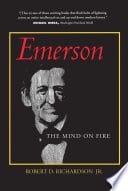
DESCRIPTION
This comprehensive portrait of Emerson draws from newly available material, including correspondence between the Emerson brothers.
My Summary
Main Ideas, Takeaways & Similarities
Questions
I. What is the problem?
A. How is this problem formulated?
B. Why is this problem important?
C. What is the history of this problem?
D. Which prominent personalities have been interested in this problem?
II. What solutions to the problem are there?
A. What are the conclusions reached?
B. By what argument(s) is the conclusion reached?
C. What facts or assumptions serve as premises?
D. When a prominent personality offers a solution, does he also argue for or against other prominent personalities? Does he raise objections to alternative solutions? Does he consider objections to his own solutions?
III. Evaluation
A. What are the advantages and disadvantages of the alternative formulations to the problem?
B. Has the importance or history of the problem ever been misrepresented?
C. Are the solutions logically related to the premises?
D. Are the facts true? Are the assumptions acceptable? Are the objections answerable?
AI Summary
“Emerson: The Mind on Fire” is a biography of the American essayist and philosopher Ralph Waldo Emerson, written by Robert D. Richardson and first published in 1995. The book delves into the life, intellectual development, and impact of Emerson. Here is a comprehensive summary of the book in bullet points:
- “Emerson: The Mind on Fire” provides a detailed and insightful biography of Ralph Waldo Emerson, a central figure in American transcendentalism and literature.
- The book explores Emerson’s early life, including his family background and upbringing in Boston, Massachusetts.
- Richardson delves into Emerson’s education and early career as a Unitarian minister, shedding light on the intellectual and spiritual influences that shaped his thinking.
- The biography traces Emerson’s journey from traditional religious beliefs to his eventual emergence as a transcendentalist thinker and essayist.
- It discusses Emerson’s friendships and associations with other prominent writers and thinkers of his time, including Henry David Thoreau and Margaret Fuller.
- The book highlights Emerson’s pivotal role in the transcendentalist movement and his contributions to American literature through his essays and lectures.
- Richardson explores Emerson’s famous essay “Self-Reliance” and its themes of individualism, nonconformity, and self-trust.
- The biography delves into Emerson’s philosophical and intellectual development, including his exploration of nature, the Oversoul, and the idea of the “transparent eyeball.”
- It discusses Emerson’s travels, including his visits to Europe and encounters with European philosophers and writers.
- The book touches on Emerson’s involvement in social and political issues of his time, including his stance on abolitionism and his critique of conformity.
- Richardson provides insights into Emerson’s personal life, including his family, marriage, and the challenges he faced.
- The biography portrays Emerson as a complex and multifaceted individual, emphasizing his creativity, originality, and influence on American thought.
- It examines the impact of Emerson’s essays and lectures on subsequent generations of writers, thinkers, and reformers.
- “Emerson: The Mind on Fire” concludes by reflecting on Emerson’s enduring significance in American literature and philosophy.
Robert D. Richardson’s biography offers readers a comprehensive and engaging portrait of Ralph Waldo Emerson, one of America’s most influential philosophers and essayists. The book traces Emerson’s intellectual journey, his contributions to transcendentalism, and his enduring legacy in American literature and thought. It provides a deep understanding of the man and his ideas, making it a valuable resource for those interested in the history of American literature and philosophy.