DESCRIPTION
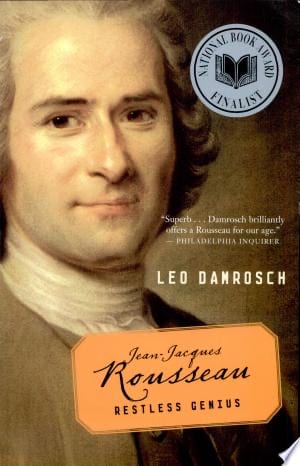
Reconstructs the life of the French literary genius whose writing changed opinions and fueled fierce debate on both sides of the Atlantic during the period of the American and French revolutions.
My Summary
Main Ideas, Takeaways & Similarities
Questions
I. What is the problem?
A. How is this problem formulated?
B. Why is this problem important?
C. What is the history of this problem?
D. Which prominent personalities have been interested in this problem?
II. What solutions to the problem are there?
A. What are the conclusions reached?
B. By what argument(s) is the conclusion reached?
C. What facts or assumptions serve as premises?
D. When a prominent personality offers a solution, does he also argue for or against other prominent personalities? Does he raise objections to alternative solutions? Does he consider objections to his own solutions?
III. Evaluation
A. What are the advantages and disadvantages of the alternative formulations to the problem?
B. Has the importance or history of the problem ever been misrepresented?
C. Are the solutions logically related to the premises?
D. Are the facts true? Are the assumptions acceptable? Are the objections answerable?
AI Summary
“Jean-Jacques Rousseau: Restless Genius” by Leo Damrosch is a biography that explores the life and ideas of the 18th-century French philosopher and writer Jean-Jacques Rousseau. The book delves into his intellectual contributions, personal life, and the impact of his works on the Enlightenment era. Here is a comprehensive summary in bullet points:
- Title: Jean-Jacques Rousseau: Restless Genius
- Author: Leo Damrosch
Introduction:
- Sets the stage for the biography by introducing Jean-Jacques Rousseau as a significant figure of the Enlightenment.
- Highlights Rousseau’s influence on political philosophy, education, and literature.
- Expresses the aim of providing a comprehensive account of his life and ideas.
Part I: Beginnings:
- Explores Rousseau’s early life, including his birth in Geneva in 1712.
- Discusses his tumultuous childhood, marked by the loss of his mother and early exposure to reading.
- Highlights his apprenticeship and journey to France.
Part II: The Bohemian:
- Chronicles Rousseau’s time in Paris as a young man.
- Discusses his bohemian lifestyle, friendships, and early writing endeavors.
- Explores his relationship with Thérèse Levasseur, who would become a significant figure in his life.
Part III: The Discourses:
- Examines Rousseau’s influential writings, particularly his “Discourse on the Arts and Sciences” and “Discourse on the Origin and Basis of Inequality Among Men.”
- Discusses his critique of civilization, the corrupting influence of society, and the idea of the “noble savage.”
- Explores the reception and controversy surrounding these works.
Part IV: Emile and The Social Contract:
- Focuses on Rousseau’s educational treatise “Emile” and his political work “The Social Contract.”
- Discusses his ideas on natural education, the role of the tutor, and the development of the ideal citizen.
- Examines his concept of the “general will” and its implications for political theory.
Part V: Exile and Return:
- Chronicles Rousseau’s period of exile and persecution due to his controversial writings.
- Discusses his travels to various European cities and his encounters with Enlightenment figures.
- Highlights his eventual return to France and reconciliation with his past.
Part VI: Rousseau’s Last Years:
- Examines Rousseau’s later years, marked by continued writing and philosophical reflection.
- Discusses his publications, including “Confessions” and “Reveries of the Solitary Walker.”
- Explores his deteriorating health and the challenges he faced.
Conclusion:
- Summarizes the key events and ideas presented in the biography.
- Reflects on the lasting impact of Rousseau’s writings on philosophy, politics, and literature.
- Highlights his complex personality, contributions to the Enlightenment, and enduring legacy as a restless genius.