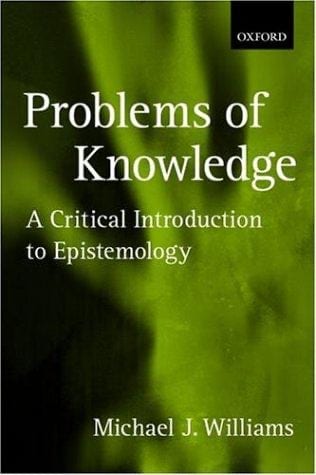
DESCRIPTION
In this introduction to epistemology, Michael Williams explains and criticises traditional philosophical theories of the nature, limits, methods, possibility, and value of knowing.
My Summary
Main Ideas, Takeaways & Similarities
Questions
I. What is the problem?
A. How is this problem formulated?
B. Why is this problem important?
C. What is the history of this problem?
D. Which prominent personalities have been interested in this problem?
II. What solutions to the problem are there?
A. What are the conclusions reached?
B. By what argument(s) is the conclusion reached?
C. What facts or assumptions serve as premises?
D. When a prominent personality offers a solution, does he also argue for or against other prominent personalities? Does he raise objections to alternative solutions? Does he consider objections to his own solutions?
III. Evaluation
A. What are the advantages and disadvantages of the alternative formulations to the problem?
B. Has the importance or history of the problem ever been misrepresented?
C. Are the solutions logically related to the premises?
D. Are the facts true? Are the assumptions acceptable? Are the objections answerable?
AI Summary
Highlights
“Problems of Knowledge: A Critical Introduction to Epistemology” is a book by Michael Williams that delves into the philosophical study of knowledge (epistemology) and its central questions. It explores various theories and concepts related to the nature of knowledge and the challenges it faces. Here’s a comprehensive summary in bullet points:
Title: Problems of Knowledge: A Critical Introduction to Epistemology
Content Overview:
- Introduction to Epistemology:
- Sets the stage for the examination of epistemology as a branch of philosophy.
- Introduces key questions regarding the nature, scope, and limits of knowledge.
- The Nature of Knowledge:
- Defines knowledge and explores the concept of justified true belief (JTB).
- Discusses the Gettier problem, which challenges the adequacy of JTB as a definition of knowledge.
- Empiricism and Rationalism:
- Distinguishes between empiricist and rationalist approaches to knowledge.
- Examines the role of sensory experience and reason in acquiring knowledge.
- Foundationalism and Coherentism:
- Discusses two competing theories of epistemic justification—foundationalism and coherentism.
- Analyzes their strengths and weaknesses in explaining how beliefs are justified.
- Epistemic Relativism:
- Explores the concept of epistemic relativism, which posits that knowledge is relative to individuals or cultures.
- Evaluates the implications of relativism for the objectivity of knowledge.
- Skepticism:
- Examines various forms of skepticism, including Cartesian skepticism and external world skepticism.
- Discusses the challenges skeptics pose to the possibility of knowledge.
- Epistemic Virtue and Luck:
- Introduces the idea of epistemic virtues and the role of intellectual virtues in acquiring knowledge.
- Discusses the role of epistemic luck in shaping our beliefs.
- Naturalized Epistemology:
- Explores the naturalistic approach to epistemology, which seeks to integrate it with empirical sciences.
- Discusses the work of philosophers like W.V.O. Quine and his critique of the analytic-synthetic distinction.
- Social Epistemology:
- Examines social epistemology and the role of communities, testimony, and testimony in knowledge acquisition.
- Discusses the challenges posed by testimony and trust in forming beliefs.
- Conclusion:
- Summarizes the key themes and insights presented in the book.
- Reflects on the ongoing debates and challenges in the field of epistemology.
Legacy:
- “Problems of Knowledge” provides readers with a comprehensive introduction to the philosophical study of knowledge.
- It covers a wide range of topics, theories, and debates in epistemology, making it a valuable resource for students and scholars in the field.
- The book encourages critical thinking about the nature of knowledge and the various problems and puzzles that arise in the quest for understanding it.