📓 In your handwritten notebooks
- March 21 – June 9 2026, pp. 49 — *The Consolation of Philosophy — Boethius* → open PDF p55 (file not included in this release)
Index: Personal Journal
DESCRIPTION
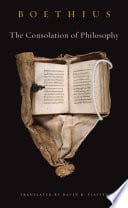
Composed while its author was imprisoned, this book remains one of Western literature’s most eloquent meditations on the transitory nature of earthly belongings, and the superiority of things of the mind. Slavitt’s translation captures Boethius’s energy and passion. Seth Lerer places Boethius’s life and achievement in context in his introduction.
Here’s a thorough summary of The Consolation of Philosophy by Boethius, supported by the text you uploaded and by outside reference works on Boethius and the book’s historical interpretation. The work is a five-book dialogue, written in prison while Boethius awaited execution, between Boethius and the personified figure of Lady Philosophy. It became one of the most widely read and translated texts of the Middle Ages.
- Core idea of the book
- The book is about how a person should respond when worldly success collapses.
- Boethius begins in despair, feeling betrayed by politics, fortune, and justice.
- Lady Philosophy gradually leads him away from grief and self-pity toward a deeper understanding:
- worldly goods are unstable
- true happiness does not come from wealth, status, or fame
- real good is found in wisdom, virtue, and union with the highest good
- God’s providence governs reality even when events look unjust
- divine foreknowledge does not destroy human freedom.
- Historical setting
- Boethius was a high-ranking Roman statesman under the Ostrogothic king Theodoric.
- He had reached extraordinary political success, including seeing his two sons made joint consuls.
- He was then accused of treason, imprisoned at Pavia, and eventually executed.
- The book presents itself as the philosophical self-recovery of a condemned man trying to understand suffering, injustice, fate, and God.
- Form and style
- The text alternates between prose and verse.
- It is not just a philosophical treatise but a dramatic conversation, almost therapeutic in structure.
- Online scholarship often emphasizes that this literary form matters: the book is not only arguing ideas, it is showing the healing of a broken mind.
Book I: Boethius’ despair and Philosophy’s diagnosis
- Boethius opens in grief, lamenting his fall from prosperity into disgrace, imprisonment, and near death.
- Lady Philosophy appears, dismisses the Muses of poetry as sentimental distractions, and takes charge of his recovery.
- Boethius recounts his public service and insists he has been punished for doing right:
- defending justice
- opposing corruption
- protecting the weak
- resisting false accusations.
- He is especially troubled by the moral problem:
- why do the wicked flourish?
- why do the innocent suffer?
- Philosophy diagnoses his sickness as intellectual and spiritual confusion, not merely bad luck.
- Her diagnosis has three parts:
- he has forgotten who he is
- he has forgotten the true end of human life
- he has forgotten how the world is governed.
Main idea of Book I:
Boethius’ suffering is real, but his despair is worsened by confusion. Before Philosophy can answer his questions about justice and evil, she must first restore his mind.
Book II: Fortune is unstable and cannot provide happiness
- Philosophy turns to Fortune, the famous “wheel of fortune” theme.
- Her argument is that Fortune has not betrayed Boethius by changing; change is what Fortune always is.
- Wealth, office, influence, and prestige were never truly his in any permanent sense.
- Fortune’s gifts are loans, not possessions.
- She also reminds him that even now he still has blessings left, including family and the memory of genuine goods.
- The book attacks common false goods:
- wealth cannot satisfy because greed expands with acquisition
- possessions are external and fragile
- power and rank are worthless without virtue
- fame is tiny when measured against time and the vastness of the universe.
- One positive service Fortune does perform: by adversity, she reveals who one’s true friends are.
Main idea of Book II:
The loss of fortune hurts, but it also exposes a basic illusion: people mistakenly treat unstable external things as if they were the basis of a happy life.
Book III: What happiness really is
- This is the philosophical center of the book.
- Philosophy argues that every human being seeks happiness, but most seek it in the wrong places.
- People chase:
- wealth
- honors
- power
- glory
- pleasure
- These are pursued because each seems to promise some aspect of the good:
- self-sufficiency
- respect
- power
- renown
- delight
- But none of them is complete, secure, or capable of fully satisfying the soul.
- True happiness must be:
- complete
- self-sufficient
- not vulnerable to loss
- the highest good.
- Philosophy then argues that the many partial goods point toward one ultimate good.
- That highest good is God.
- Therefore, happiness is found not in external achievement but in participation in the divine good.
- This is why wisdom and virtue matter: they align the soul with what is eternally good rather than temporarily pleasant.
- The book also argues that goodness, unity, and true being belong together: things are better insofar as they participate in the highest good.
Main idea of Book III:
All people want happiness, but only God, the highest good, can provide the complete and lasting fulfillment they actually seek.
Book IV: Why the wicked are not really powerful or happy
- Boethius still struggles with the injustice of the world, so Philosophy addresses the problem of evil more directly.
- She makes several striking claims:
- only the good are truly powerful
- the wicked are actually weak, because they cannot achieve the good they naturally ought to seek
- wicked people become less fully human by abandoning reason and virtue
- vice is itself a punishment
- punishment can actually be a kind of mercy, because it may correct the wrongdoer
- escaping punishment can be worse, because it leaves the soul more corrupted.
- She reframes moral success and failure:
- success in doing evil is not real success
- apparent prosperity can conceal deep misery
- suffering can be corrective or purifying.
- She then explains that what looks like chaos from our limited viewpoint is ordered under divine providence.
- This leads to the distinction between Providence and Fate:
- Providence is God’s simple, unified, eternal ordering of all things
- Fate is the unfolding of that order within time and change.
- From that perspective, all fortune can be called “good” in a broader sense because it serves either reward, discipline, correction, or justice.
Main idea of Book IV:
The wicked are not truly flourishing, and the world is not finally disordered; apparent moral chaos reflects the limits of human vision, not the absence of divine government.
Book V: Chance, providence, and free will
- The final book turns from ethics toward metaphysics.
- Boethius asks whether chance is real and whether God’s foreknowledge destroys freedom.
- Philosophy argues that “chance” does not mean uncaused randomness in an ultimate sense; it means events whose deeper causes are hidden from us.
- The biggest issue is the tension between:
- God knowing all things in advance
- humans acting freely.
- Philosophy’s solution is that God does not know the future the way humans predict future events.
- God exists in an eternal present, outside time.
- Therefore, God sees all events at once rather than “foreseeing” them as future.
- Because divine knowledge is not temporal in the human way, it does not force human choices to happen by necessity.
- The book distinguishes kinds of necessity to protect genuine human freedom while preserving divine omniscience.
- The conclusion reinforces moral responsibility:
- human choices matter
- prayer matters
- virtue matters
- God’s judgment is universal and inescapable.
Main idea of Book V:
God’s perfect knowledge does not cancel human freedom because God sees all things from eternity, not from inside time as humans do.
Key themes across the whole book
- Fortune vs. true good
- External goods are unstable.
- Inner virtue is more secure than social success.
- Philosophy as therapy
- The book is structured like treatment.
- Boethius is not merely taught; he is healed, step by step, from grief, anger, and confusion.
- The problem of evil
- Boethius’ personal catastrophe becomes the starting point for asking why evil exists in a world ruled by God.
- The answer is not that evil disappears, but that evil lacks true power and is ultimately subordinated to providence.
- Happiness
- Real happiness is not emotional comfort or favorable circumstances.
- It is stable possession of the highest good.
- Providence and freedom
- Human beings remain morally responsible.
- Divine knowledge is compatible with free choice.
- Identity
- One of the deepest problems in the book is self-forgetfulness.
- Boethius’ healing begins when he remembers what a human being is and what human life is for.
What online analysis adds
- Reference sources consistently describe the book as a largely Neoplatonic work centered on the claim that wisdom, virtue, and the love of God are the real source of happiness.
- Scholars also emphasize its unusual dialogue form, with prose mixed with poetry, as essential to how the argument works.
- It is widely recognized as one of the most important and influential texts of the Middle Ages, not just as literature but as a bridge transmitting ancient philosophy into medieval thought.
- Modern interpreters often see the book as powerful because it joins abstract philosophy to a concrete human crisis: a man facing ruin, injustice, and death.
Bottom line
- The Consolation of Philosophy is Boethius’ attempt to answer a devastating question: how can a person remain whole when fortune, reputation, power, and justice seem to collapse?
- Its answer is that:
- fortune is unstable and never the basis of true happiness
- virtue is better than success
- evil is real but not ultimately victorious
- providence governs what looks chaotic
- human beings remain free and responsible
- the highest happiness is found only in the highest good, which is God.
Strictly speaking, the Preface does not give a chapter-by-chapter outline of the five books. It mostly discusses scholarship on Boethius and the revised edition. The actual overview of the work’s structure is given in the Introduction and in the book headings that follow.
- Book I: Boethius’ collapse and Philosophy’s diagnosis
- Boethius is presented in prison, overwhelmed by grief, injustice, and self-pity.
- Lady Philosophy appears, dismisses the Muses of Poetry, and begins to treat him.
- Boethius recounts his fall from power, the false charges against him, and the moral disorder he sees in the world.
- Philosophy does not deny his suffering, but says his deeper problem is mental and spiritual confusion.
- Her diagnosis is that he has forgotten:
- who he really is
- the true end toward which the universe moves
- the means by which the world is governed.
- So Book I is basically the identification of the illness before the cure begins.
- Book II: Fortune and the unreliability of worldly goods
- Philosophy begins the healing with gentler remedies.
- She argues that Boethius is suffering because he trusted Fortune, which is by nature unstable.
- Wealth, rank, office, prestige, and external success were never secure possessions.
- Fortune has not “betrayed” him in any unusual way; changeability is what Fortune always is.
- The point is to loosen Boethius from attachment to external things and show that worldly success was never a safe foundation for happiness.
- This book is the critique of false happiness rooted in circumstance.
- Book III: The search for true happiness and the highest good
- Having stripped away false goods, Philosophy asks what human beings are really seeking.
- She argues that everyone seeks happiness, but most people look for it in the wrong places:
- wealth
- honors
- power
- fame
- pleasure.
- These are only fragments or shadows of what people truly want.
- True happiness must be complete, self-sufficient, and secure.
- Philosophy leads Boethius to the conclusion that the highest good is God, and that genuine happiness is found only in participation in that highest good.
- This is the philosophical center of the work: moving from false goods to the true good.
- Book IV: The problem of evil, justice, Fate, and Providence
- Boethius still struggles with the obvious moral problem:
- why do the wicked seem to prosper?
- why do the good suffer?
- Philosophy argues that this appearance is deceptive.
- The good are truly powerful because they possess what they ought to seek; the wicked are actually weak because they fail to attain the good.
- Vice is itself a kind of punishment, and punishment can even benefit the wrongdoer by correcting him.
- Boethius is then led into the distinction between:
- Providence: God’s simple, unified ordering of all things
- Fate: the temporal unfolding of that order in the world.
- What looks like chaos or injustice is really due to human ignorance of the larger divine plan.
- The book ends by claiming that all fortune, properly understood, is either useful or just.
- Boethius still struggles with the obvious moral problem:
- Book V: Chance, free will, and divine foreknowledge
- The final book turns to the hardest intellectual problem left:
- if God knows everything, are human choices really free?
- Philosophy first denies that “chance” is ultimate randomness; it refers to events whose causes are hidden from us.
- She then argues that God’s knowledge is not like human foreknowledge.
- God is eternal, not locked into past-present-future sequence as humans are.
- Because God sees all things in an eternal present, His knowledge does not force events to happen by necessity in the way Boethius fears.
- This allows Boethius to preserve both:
- divine omniscience
- meaningful human freedom and moral responsibility.
- So Book V is the final metaphysical resolution of the work.
Overall arc of the work as the editor describes it
- The final book turns to the hardest intellectual problem left:
- The book moves in a deliberate progression:
- despair
- diagnosis
- critique of false goods
- discovery of true happiness
- explanation of evil and providence
- resolution of freedom and divine knowledge.
- In other words, it is not just a set of abstract arguments.
- It is presented as a healing dialogue, where Philosophy gradually restores Boethius from grief and confusion to intellectual and spiritual clarity.