⬅️ Hub: China · Case list: China - Espionage and IP Theft Cases
DESCRIPTION
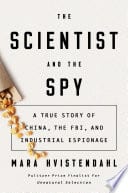
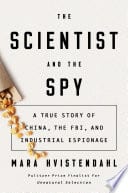
A riveting true story of industrial espionage in which a Chinese-born scientist is pursued by the U.S. government for trying to steal trade secrets, by a finalist for the Pulitzer Prize in nonfiction. In September 2011, sheriff’s deputies in Iowa encountered three ethnic Chinese men near a field where a farmer was growing corn seed under contract with Monsanto. What began as a simple trespassing inquiry mushroomed into a two-year FBI operation in which investigators bugged the men’s rental cars, used a warrant intended for foreign terrorists and spies, and flew surveillance planes over corn country—all in the name of protecting trade secrets of corporate giants Monsanto and DuPont Pioneer. In The Scientist and the Spy, Hvistendahl gives a gripping account of this unusually far-reaching investigation, which pitted a veteran FBI special agent against Florida resident Robert Mo, who after his academic career foundered took a questionable job with the Chinese agricultural company DBN—and became a pawn in a global rivalry. Industrial espionage by Chinese companies lies beneath the United States’ recent trade war with China, and it is one of the top counterintelligence targets of the FBI. But a decade of efforts to stem the problem have been largely ineffective. Through previously unreleased FBI files and her reporting from across the United States and China, Hvistendahl describes a long history of shoddy counterintelligence on China, much of it tinged with racism, and questions the role that corporate influence plays in trade secrets theft cases brought by the U.S. government. The Scientist and the Spy is both an important exploration of the issues at stake and a compelling, involving read.
Main idea
Mara Hvistendahl uses a single, cinematic industrial-espionage case—centered on a Chinese-born scientist caught trying to acquire proprietary U.S. seed technology—to argue that the U.S.–China struggle over innovation is not just about “spies” and “thefts,” but about two clashing systems: China’s state-backed drive to catch up in strategic industries and America’s uneasy attempt to protect knowledge while remaining an open society. The book suggests that the same forces that make the U.S. a scientific superpower (openness, immigration, collaboration, corporate–university ecosystems) also create vulnerabilities—and that U.S. enforcement often blurs into overreach, institutional incentives, and suspicion that can fall disproportionately on Chinese scientists and immigrants. (PenguinRandomhouse.com)
In-depth summary
1) The “cornfield” trigger and the birth of a major FBI case
The narrative kicks off with a scene that sounds almost absurd until you understand the stakes: a Chinese national is discovered in or near Midwestern test fields associated with advanced corn seeds—genetics that are among the most valuable forms of modern intellectual property. What looks like odd trespassing quickly becomes, in the FBI’s eyes, a clue pointing to systematic attempts to obtain elite seed lines that can be reverse-engineered and used to accelerate a competitor’s breeding program. (Vanity Fair)
Hvistendahl follows the FBI’s response as it shifts from routine scrutiny to an unusually ambitious counterintelligence-style operation aimed at identifying a network rather than just a lone actor. In the telling, the case becomes a template for how economic competition, corporate IP protection, and national-security tools can converge around “trade secrets,” especially in sectors that governments treat as strategic. (PenguinRandomhouse.com)
2) Robert Mo and “Operation Purple Maze”
At the center is Robert Mo (a Chinese immigrant working with/for a Chinese agricultural company), portrayed as both participant and pawn: someone operating in the space where corporate ambition, national pride, and state-aligned incentives overlap. The FBI tracks him extensively—surveillance that, per reporting adapted from the book, includes aggressive monitoring methods and even use of authorities typically associated with national security investigations. (Vanity Fair)
The book reconstructs the mechanics of the alleged scheme: acquiring high-value seeds (not merely commodity grain), moving them through channels that minimize detection, and attempting to get genetic material back to China where it can be analyzed and integrated into a domestic program. The “spycraft” here is not microfilm and dead drops but shipping routes, business relationships, lab capabilities, and the practical realities of modern biotech. (Vanity Fair)
The story also emphasizes an uncomfortable asymmetry: even when U.S. authorities successfully catch a key figure, the broader industrial effort in China may continue, because the demand for the technology—and the institutional backing behind acquiring it—doesn’t depend on any one person. (Vanity Fair)
3) The corporate–government alignment behind trade-secret enforcement
A major thread is how closely corporate interests and federal law enforcement can align in trade-secret cases. Seed genetics represent years of R&D and regulatory work; companies treat them as crown jewels, and the government increasingly frames their theft as not only a private harm but a national competitiveness issue. The book’s account highlights the practical reality that companies supply expertise, context, and sometimes pressure—while prosecutors and agents supply coercive tools. (PenguinRandomhouse.com)
This is not written as a simple conspiracy story. Instead, Hvistendahl depicts a system of incentives: corporations want deterrence and protection; agencies want wins and budget justification; politicians want toughness; and all of it plays out in a climate where China’s industrial rise feels existential. (PenguinRandomhouse.com)
4) A longer history: Chinese science in America, suspicion, and surveillance
Hvistendahl widens the aperture beyond the seed case to show that this is not the first time the U.S. has treated Chinese scientists and students as a special category of risk. Reporting around the book describes a Cold War–era FBI program that collected information on large numbers of Chinese scientists and students in the United States—presented as a predecessor to later waves of scrutiny. (Axios)
The point isn’t “nothing is real, it’s all profiling.” It’s that real espionage concerns and institutional bias can coexist, and the policy problem is designing enforcement that addresses the former without amplifying the latter. (Axios)
5) The human cost and the ambiguity of “spy” as a label
One of the book’s most persistent questions is definitional: what counts as “espionage” when the target is commercial know-how and the methods resemble business intelligence, academic collaboration, or ordinary professional networking—until they don’t? Kirkus’s review captures the tone as a cat-and-mouse story that also stresses institutional incompetence and blurred lines in how these cases are pursued. (Kirkus Reviews)
Hvistendahl’s portrait of Robert Mo (and the ecosystem around him) leans into moral ambiguity: he is not presented as a cartoon villain so much as a figure shaped by opportunity, pressure, and the reality that in some environments, “catching up” is treated as a national mission. At the same time, the book doesn’t romanticize theft—it keeps returning to the concrete damage of losing expensive, hard-won innovations. (Vanity Fair)
6) The conclusion: America’s internal contradiction
The arc resolves into a larger argument: China is pulled between copying and genuine innovation, while the United States is pulled between openness and security. The seed case is meant to make that abstract contradiction tangible—showing how quickly the U.S. can reach for heavy tools, how messy attribution can be, and how national strategy, corporate protection, and individual lives collide. (Axios)
Core themes (what the book is “about,” beyond the plot)
- Economic competition as national security: Trade secrets—especially in biotech—become strategic assets, turning corporate IP disputes into geopolitical contests. (Vanity Fair)
- The gray zone between collaboration and theft: Modern science and tech move through people and institutions; that creates both innovation and vulnerability. (Axios)
- Institutional incentives and escalation: Big investigations can reward aggressive tactics even when outcomes are ambiguous or uneven. (Kirkus Reviews)
- Suspicion and identity: The book foregrounds how Chinese immigrants and Chinese-American scientists can become default suspects during periods of heightened fear. (Axios)
Sources (copy/paste into Obsidian)
- Penguin Random House (publisher page): https://www.penguinrandomhouse.com/books/549962/the-scientist-and-the-spy-by-mara-hvistendahl/
- Kirkus Reviews: https://www.kirkusreviews.com/book-reviews/mara-hvistendahl/the-scientist-and-the-spy/
- Vanity Fair (excerpt/adaptation): https://www.vanityfair.com/news/2020/01/how-chinese-immigrant-became-pawn-in-us-technological-cold-war-with-beijing
- Axios (overview of book + FBI program claim): https://www.axios.com/2020/01/13/fbi-spied-chinese-scientists-new-book-reveals
- Goodreads listing: https://www.goodreads.com/en/book/show/46064390-the-scientist-and-the-spy
If you want, tell me whether you prefer a chapter-by-chapter style outline (as best as can be reconstructed from public descriptions) or a tighter thematic brief you can drop into notes.