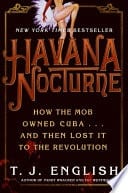
DESCRIPTION
In modern-day Havana, the remnants of the glamorous past are everywhere—old hotel-casinos, vintage American cars & flickering neon signs speak of a bygone era that is widely familiar & often romanticized, but little understood. In Havana Nocturne, T.J. English offers a multifaceted true tale of organized crime, political corruption, roaring nightlife, revolution & international conflict that interweaves the dual stories of the Mob in Havana & the event that would overshadow it, the Cuban Revolution. As the Cuban people labored under a violently repressive regime throughout the 50s, Mob leaders Meyer Lansky & Charles “Lucky” Luciano turned their eye to Havana. To them, Cuba was the ultimate dream, the greatest hope for the future of the US Mob in the post-Prohibition years of intensified government crackdowns. But when it came time to make their move, it was Lansky, the brilliant Jewish mobster, who reigned supreme. Having cultivated strong ties with the Cuban government & in particular the brutal dictator Fulgencio Batista, Lansky brought key mobsters to Havana to put his ambitious business plans in motion. Before long, the Mob, with Batista’s corrupt government in its pocket, owned the biggest luxury hotels & casinos in Havana, launching an unprecedented tourism boom complete with the most lavish entertainment, the world’s biggest celebrities, the most beautiful women & gambling galore. But their dreams collided with those of Fidel Castro, Che Guevara & others who would lead the country’s disenfranchised to overthrow their corrupt government & its foreign partners—an epic cultural battle that English captures in all its sexy, decadent, ugly glory. Bringing together long-buried historical information with English’s own research in Havana—including interviews with the era’s key survivors—Havana Nocturne takes readers back to Cuba in the years when it was a veritable devil’s playground for mob leaders. English deftly weaves together the parallel stories of the Havana Mob—featuring notorious criminals such as Santo Trafficante Jr & Albert Anastasia—& Castro’s 26th of July Movement in a riveting, up-close look at how the Mob nearly attained its biggest dream in Havana—& how Fidel Castro trumped it all with the revolution.
My Summary
Main Ideas, Takeaways & Similarities
Questions
I. What is the problem?
A. How is this problem formulated?
B. Why is this problem important?
C. What is the history of this problem?
D. Which prominent personalities have been interested in this problem?
II. What solutions to the problem are there?
A. What are the conclusions reached?
B. By what argument(s) is the conclusion reached?
C. What facts or assumptions serve as premises?
D. When a prominent personality offers a solution, does he also argue for or against other prominent personalities? Does he raise objections to alternative solutions? Does he consider objections to his own solutions?
III. Evaluation
A. What are the advantages and disadvantages of the alternative formulations to the problem?
B. Has the importance or history of the problem ever been misrepresented?
C. Are the solutions logically related to the premises?
D. Are the facts true? Are the assumptions acceptable? Are the objections answerable?
AI Summary
Highlights
“Havana Nocturne: How the Mob Owned Cuba and Then Lost It to the Revolution” is a book written by T.J. English, published in 2008. The book delves into the history of organized crime in Cuba, particularly the involvement of American mobsters in Havana during the mid-20th century. Here is a comprehensive summary of the book in bullet points:
- The book provides a detailed account of the rise of organized crime in Havana, Cuba, during the 1940s and 1950s, focusing on the period leading up to the Cuban Revolution of 1959.
- T.J. English explores the connections between American mobsters and the corrupt Cuban government under the leadership of President Fulgencio Batista.
- The book highlights Havana’s transformation into a glamorous and hedonistic playground for American tourists, with luxurious hotels, nightclubs, and casinos funded by organized crime.
- English profiles key figures in the Cuban underworld, including Meyer Lansky, Santo Trafficante Jr., and other mobsters who played a significant role in controlling Havana’s illicit activities.
- He discusses the close relationship between American mobsters and Cuban politicians, police, and business elites, which allowed organized crime to thrive in Havana.
- The book delves into the operations of the mafia-controlled casinos and hotels, as well as the illegal drug trade and gambling operations that generated massive profits.
- English describes the atmosphere of Havana during this period, characterized by excess, extravagance, and a thriving nightlife, attracting celebrities and high rollers from around the world.
- He details the efforts of law enforcement agencies, both in the United States and Cuba, to combat organized crime’s influence in Havana.
- The book explores the impact of the Cuban Revolution led by Fidel Castro in 1959, which led to the overthrow of the Batista regime and the expulsion of organized crime from the country.
- English discusses the exodus of American mobsters and the loss of their lucrative enterprises in Havana as a result of the revolution.
- He also examines the aftermath of the revolution and its long-term impact on Cuba, including the nationalization of businesses and the suppression of dissent.
- The book concludes by reflecting on the legacy of organized crime in Havana and the enduring fascination with the city’s glamorous yet turbulent past.
“Havana Nocturne” provides a gripping account of the intersection of organized crime, politics, and culture in Havana during a pivotal period in Cuban history. It sheds light on the symbiotic relationship between American mobsters and the Batista regime while also offering insights into the social and political changes brought about by the Cuban Revolution.