proportion of Christians among Palestine’s Arabs has been declining steadily since 1947, when they were close to 10 percent of the population. Today less than 5 percent of Palestinian Arabs are Christians, and their numbers continue to diminish through emigration to the West (mainly from the West Bank—Bethlehem is now a Muslim-majority town). The proportion of Christians among Israel’s Arab citizens is higher, but given far higher Muslim birthrates and a measure of Christian emigration, the proportion of Christians in Israel’s Arab minority is also declining. So the Christian element in Israel/Palestine is negligible and politically irrelevant. One State, Two States Resolving the Israel Palestine — Prof Benny Morris — 2009 flattened, page 41 (file not included in this release)
main reason Christian Arabs have been leaving the Holy Land has been fear of the Muslims and of future Muslim excesses, which is also the cause of the emigration of Iraq’s Christians). Many Christian Arabs from the 1920s through the 1940s would have been happy had British rule continued indefinitely, and some may have preferred Jewish to Muslim rule following the Mandate.One State, Two States Resolving the Israel Palestine — Prof Benny Morris — 2009 flattened, page 42 (file not included in this release)
Maps for the broader Christian population context
These regional reconstructions provide context for the quotations above. Their geographic scope is wider than Israel and Palestine, and their demographic estimates and causal commentary remain attributable to Izady. They do not independently verify every causal claim in the existing quotations.
Christian communities in 1914
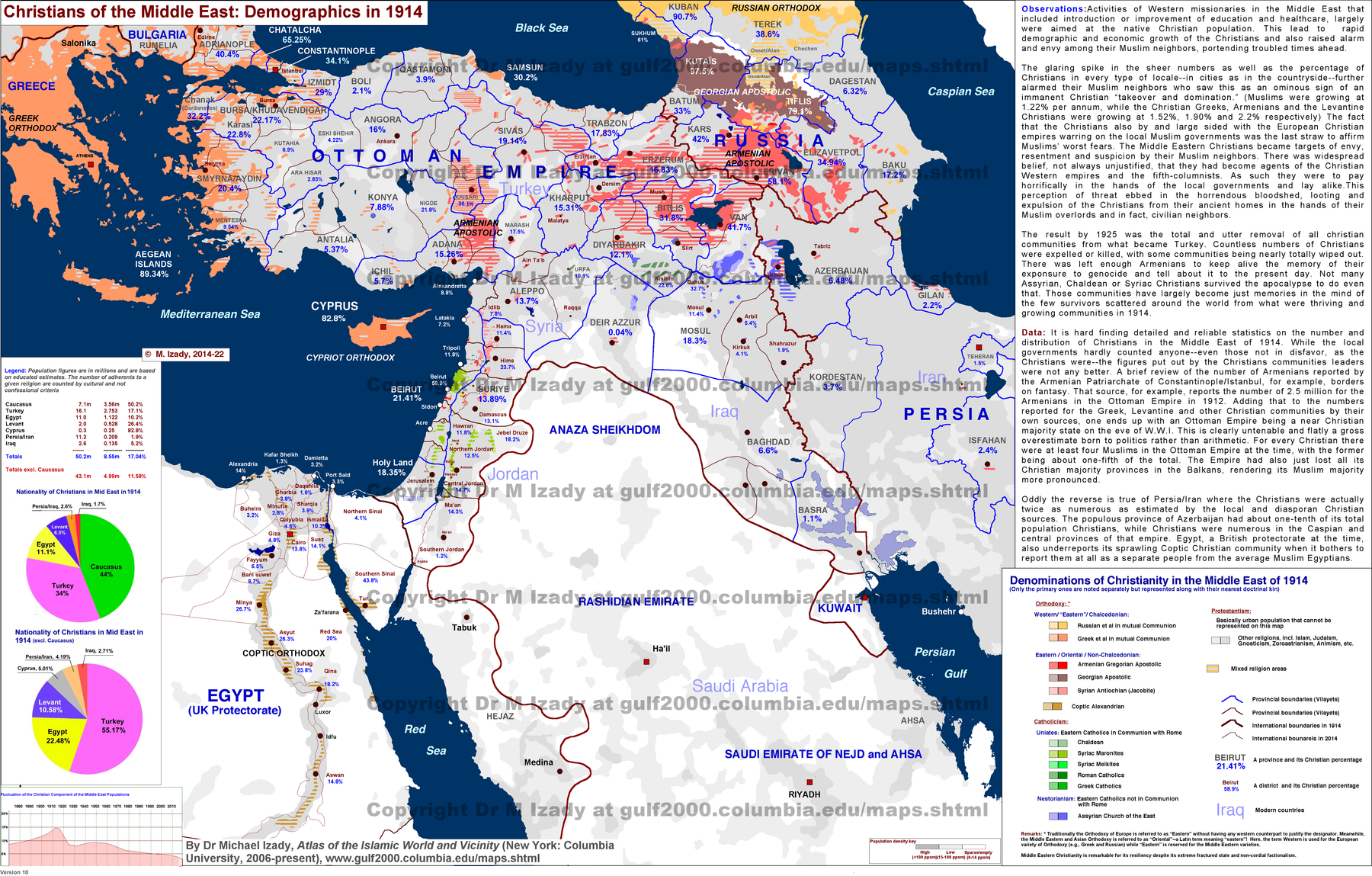
A historical view of Christian communities before the First World War. Compare distributions and denominations while retaining the source’s geographic coverage and definitions.
Map source: Dr. Michael Izady, Gulf/2000, Columbia University. Original map · Collection. Personal reference use; copyright remains with the author.

Christian communities in 2014
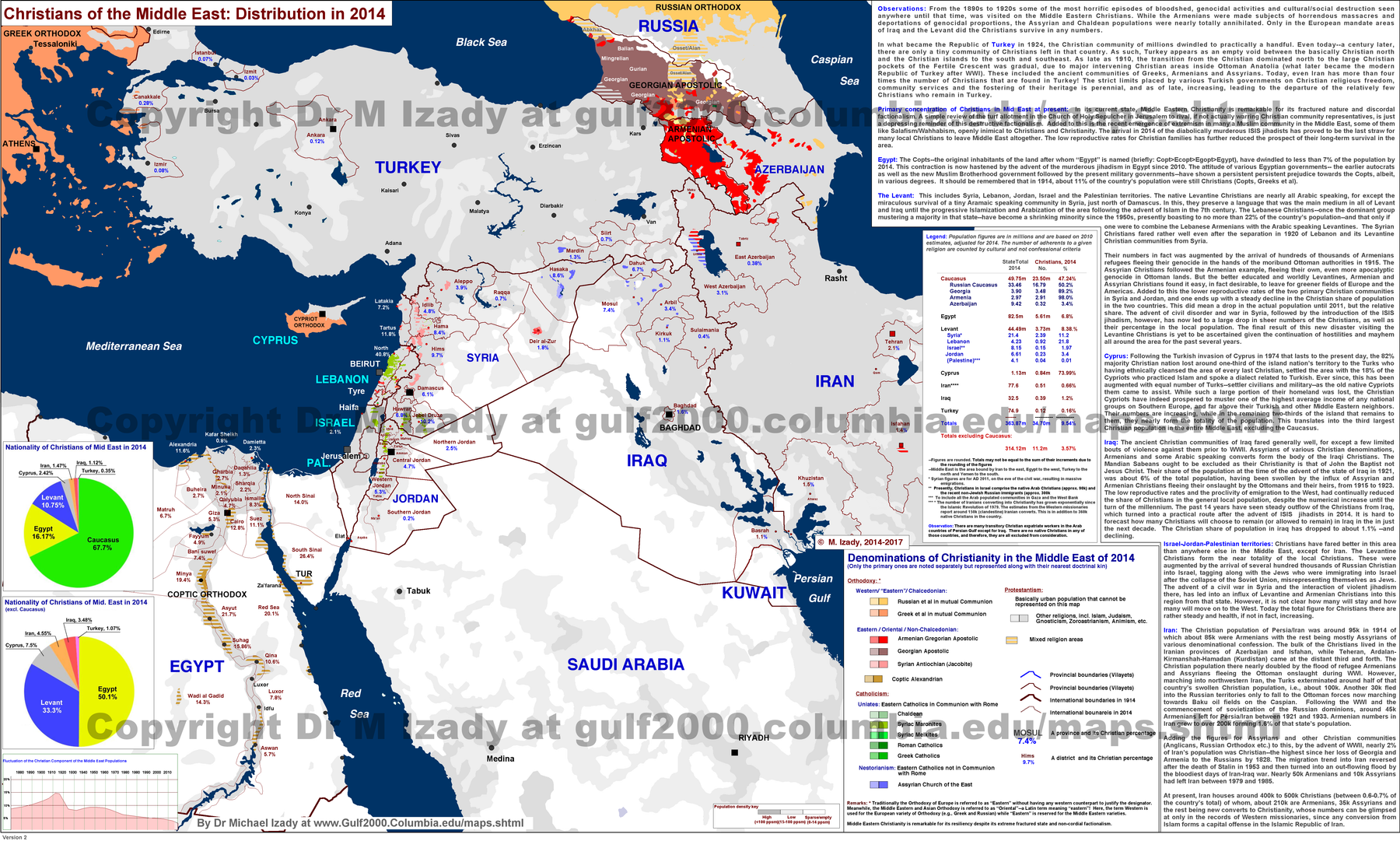
The 2014 companion offers a century-later comparison. It is not current to 2026, and comparing the images does not by itself distinguish genocide, expulsion, emigration, fertility, or boundary effects.
Map source: Dr. Michael Izady, Gulf/2000, Columbia University. Original map · Collection. Personal reference use; copyright remains with the author.
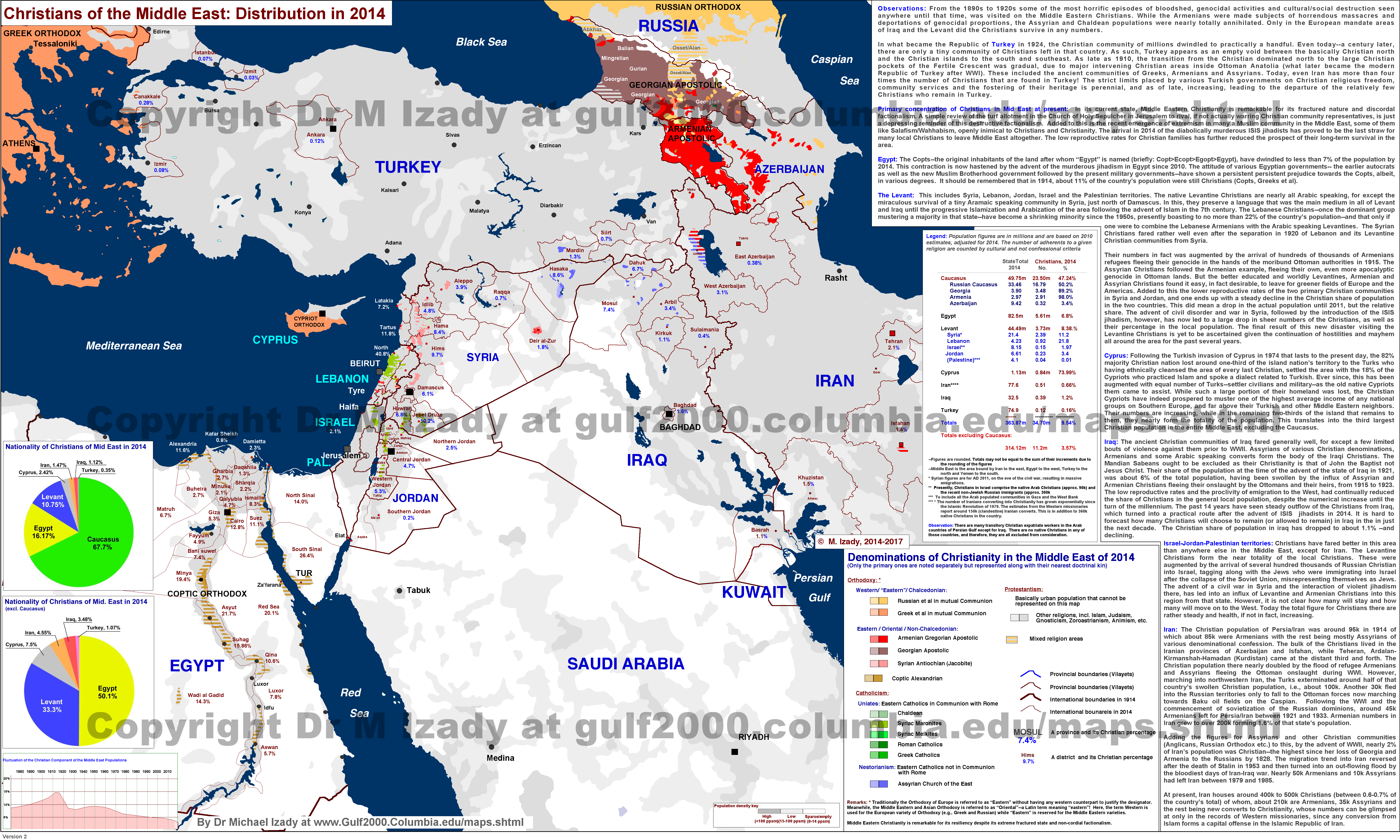
Source and interpretation: Gulf2000 map collection.