⬅️ Hub: 60.17 Influence & Negotiation · Stories: The Art of Seduction - Story Index · Library: 40 Stories
Vault PDF
Open the vault-local PDF (file not included in this release)
The Art of Seduction - Robert Greene.pdf (file not included in this release)
Story audit and source navigation
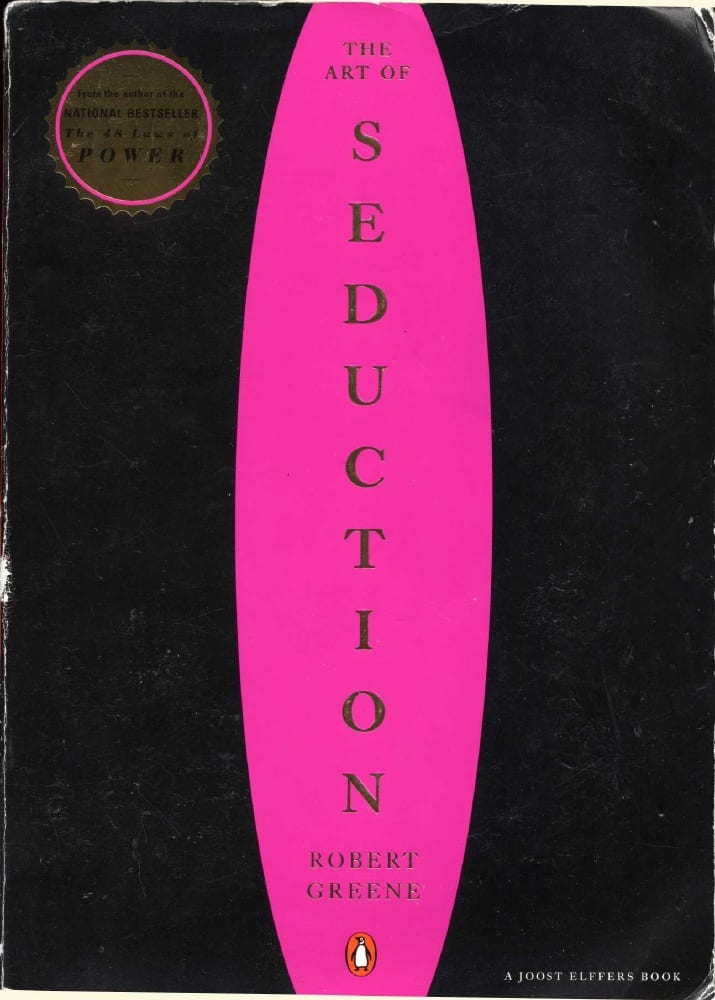
The page-by-page story audit reviewed the complete 496-page PDF and retained 100 reusable records. It added 93 new canonical stories to the theme-first 40 Stories library and merged 7 overlapping accounts into existing stories. Every retained record has an evidence label, concise paraphrase, transferable claim, and collapsed PDF++ links to its exact viewer page(s).
- Part One — The Seductive Character — 44 primary records
- Part Two, chapters 1–8 — Separation: Stirring Interest and Desire — 14 primary records
- Part Two, chapters 9–15 — Lead Astray: Creating Pleasure and Confusion — 14 primary records
- Part Two, chapters 16–20 — The Precipice: Deepening the Effect Through Extreme Measures — 12 primary records
- Part Two, chapters 21–24 — Moving In for the Kill — 9 primary records
- Appendices — Seductive Environments and the Soft Sell — 7 primary records
Critical reading lens
Greene’s central subject is not only romantic attraction. The book studies how attention, fantasy, uncertainty, status, narrative, setting, charisma, media, and group imitation alter judgment. Its historical and literary range makes it useful as a catalogue of influence patterns, but also makes source discipline essential.
Three distinctions keep the book analytically useful:
- Description is not endorsement. A tactic may work while remaining dishonest, coercive, degrading, or institutionally destructive.
- A memorable anecdote is not a verified finding. Greene frequently compresses biographies, memoirs, novels, plays, myths, and contested history into one interpretive arc.
- Intensity is not intimacy. Jealousy, intermittent reward, secrecy, danger, and isolation may strengthen preoccupation while weakening consent, security, and mutual knowledge.
Safety and ethics
Episodes involving abduction, grooming, coercive isolation, violence, age or power imbalance, and emotional abuse are retained so those patterns can be recognized and criticized. They should not be operationalized as relationship advice.
Major through-lines
- Persona is made: Monroe, Valentino, Dietrich, Baker, Chaplin, Byron, and Warhol show public identity as a craft of selection, repetition, and controlled ambiguity.
- The audience completes the message: Antony, Wilde, Kennedy, Bernays, Reagan’s media team, and Reichenbach make observers feel they discovered the conclusion rather than received a pitch.
- Need changes evidence: Rasputin, Saint-Germain, the Diamond Necklace affair, Boursicot, and Mesmer show desire and fear turning ambiguity into apparent proof.
- Private access can become public power: Jiang Qing, Yang Kuei-fei, Villiers, Harriman, Pompadour, and Disraeli reveal how intimacy and gatekeeping interact with institutions.
- Volatility can imitate depth: Josephine and Napoleon, Lawrence and Frieda, Charpillon and Casanova, and the fictional Don Mateo and Conchita illustrate bonds organized by uncertainty rather than trust.
Evidence limits
The audit verifies that each story appears on the linked PDF page(s); it does not certify Greene’s underlying sources. Before using a record as historical evidence, consult the relevant primary source or specialist scholarship—especially for Hsi Shih, Cixi, Potemkin, Rasputin, Casanova’s memoirs, court gossip, and ancient anecdotes.
Questions for review
- Which effects depend on genuine attention, and which depend on concealed control?
- When does a public persona clarify identity, and when does it replace truth with image?
- Which stories explain durable cooperation, and which only explain short-term compliance or obsession?
- What institutional safeguards keep a leader’s private attachment from becoming public policy?
- How would the same scene look when narrated by the person Greene calls the “target” or “victim”?