⬅️ Hub: Psychology Books (MOC) · Parent: 60.21 Psychology
DESCRIPTION
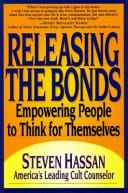
Based on insider knowledge, years of scientific study, and the author’s frequent workshops, the book offers a noncoercive, legal model for helping victims of mind control, showing practical ways to recognize the signs of a destructive relationship and to undo the residual effects of cult involvement.
My Summary
Main Ideas, Takeaways & Similarities
Questions
I. What is the problem?
A. How is this problem formulated?
B. Why is this problem important?
C. What is the history of this problem?
D. Which prominent personalities have been interested in this problem?
II. What solutions to the problem are there?
A. What are the conclusions reached?
B. By what argument(s) is the conclusion reached?
C. What facts or assumptions serve as premises?
D. When a prominent personality offers a solution, does he also argue for or against other prominent personalities? Does he raise objections to alternative solutions? Does he consider objections to his own solutions?
III. Evaluation
A. What are the advantages and disadvantages of the alternative formulations to the problem?
B. Has the importance or history of the problem ever been misrepresented?
C. Are the solutions logically related to the premises?
D. Are the facts true? Are the assumptions acceptable? Are the objections answerable?
AI Summary
Highlights
Author: Hassan, Steven
URL: https://www.amazon.com/gp/product/0967068800/ref=ppx_yo_dt_b_search_asin_title?ie=UTF8&psc=1
Category: Books
Genre:
- Addiction
- Self-Improvement
PATH: PATH
up: - "60.11 Religion"
- "60.17 Influence & Negotiation"
- "60.21 Psychology"
“Releasing The Bonds: Empowering People to Think for Themselves” by Steven Hassan is a book that explores the tactics and psychology of cults and high-control groups while providing guidance on helping individuals break free from their influence. Here is a comprehensive summary in bullet points:
- Title: Releasing The Bonds: Empowering People to Think for Themselves
- Author: Steven Hassan
Introduction:
- Introduces the author’s background as a former cult member and exit counselor.
- Explains the purpose of the book: to empower individuals to break free from the influence of cults and high-control groups.
Chapter 1: The BITE Model of Mind Control:
- Presents the BITE model (Behavior, Information, Thought, and Emotional control) as a framework for understanding mind control tactics used by cults.
- Discusses how cults manipulate members through control over their behavior, information, thoughts, and emotions.
Chapter 2: The Four Components of Mind Control:
- Explores the four components of mind control: behavior control, information control, thought control, and emotional control.
- Provides examples of how each component is used by cults to manipulate members.
Chapter 3: Recognizing Mind Control:
- Offers guidance on how to recognize signs of mind control in individuals and groups.
- Discusses common red flags, such as isolation, information restriction, and undue influence.
- Emphasizes the importance of critical thinking and awareness.
Chapter 4: The Cult of Trump:
- Examines the influence of authoritarian leaders on followers, using the example of former President Donald Trump.
- Discusses how cult-like dynamics can manifest in political movements.
- Encourages critical thinking and independent evaluation of leaders and ideologies.
Chapter 5: A Framework for Recovery:
- Provides a framework for helping individuals recover from the influence of cults.
- Discusses the importance of providing emotional support and a non-judgmental environment.
- Offers advice on helping individuals deprogram from cult beliefs.
Chapter 6: Cognitive Dissonance:
- Explores the concept of cognitive dissonance and its role in maintaining cult beliefs.
- Discusses strategies for helping individuals resolve cognitive dissonance and reconcile conflicting beliefs.
Chapter 7: Family and Friends:
- Offers guidance for family and friends of cult members on how to provide support.
- Discusses the challenges of communicating with loved ones who are still under the influence of a cult.
- Emphasizes the importance of maintaining open lines of communication and patience.
Chapter 8: Legal and Ethical Considerations:
- Discusses legal and ethical considerations when dealing with cults and high-control groups.
- Highlights the importance of respecting individuals’ autonomy and choices.
- Provides information on legal options for intervention when necessary.
Chapter 9: Empowering People to Think for Themselves:
- Emphasizes the importance of empowering individuals to regain control of their lives and beliefs.
- Encourages critical thinking, education, and self-discovery as tools for empowerment.
- Provides resources for further support and information.
Conclusion:
- Summarizes the key principles and advice presented in the book.
- Encourages readers to promote critical thinking, education, and awareness in the face of mind control tactics.
- Highlights the potential for individuals to break free from the bonds of manipulation and regain their autonomy.