📓 In your handwritten notebooks
- March 21 – June 9 2026, pp. 113–114, 128–133 — The Crusades → open PDF p122 (file not included in this release)
Index: Personal Journal
DESCRIPTION
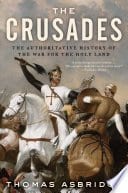
Nine hundred years ago, European history was transformed when the Pope summoned a vast Christian army to seize Jerusalem. For the next two centuries, Christians and Muslims would be locked in deadly combat over possession of a city both revered as a holy place. In this fast-paced narrative history, Thomas Asbridge tells the story of the chillingly brutal wars known as the Crusades. For the first time, Asbridge examines the Crusades from the perspective of both religious groups, unveiling a world of heroes, assassins, poet-warriors, and spiritual visionaries. From Richard the Lionheart to Saladin and from the forests of Lebanon to the deserts of Egypt, The Crusades reveals the horror, passion, and barbaric grandeur of this brutal era and how its events continue to affect world politics today. Thomas Asbridge is the author of The First Crusade: A New History, which was published to wide acclaim. He is a professor of medieval history at the University of London. “Brilliant, authoritative, and accessible, Thomas Asbridge’s The Crusades is a must read.” — Professor John L. Esposito, author of The Future of Islam
Handwritten journal source
Consolidated source: PDF pp. 138–144 (file not included in this release)
Source boundary: These are handwritten source pages. Use the scan for exact wording; verify quotations and factual claims before reuse.
Embedded preview:
March 21-June 9 2026.pdf (file not included in this release)
Open the journal routing table
Q&As
What were the main reasons for the first crusade?
The First Crusade was not caused by one thing. It emerged from a convergence of religious, political, military, and social forces in late eleventh-century Europe.
Main reasons for the First Crusade
1. The papacy wanted to mobilize Christian violence under Church authority
Thomas Asbridge presents the First Crusade as the product of a longer papal reform movement. Reforming popes wanted to strengthen Rome’s authority over Latin Christendom and redirect the violence of Europe’s warrior class toward a sacred cause. Pope Gregory VII had already experimented with the idea of “soldiers of Christ,” but Pope Urban II was the one who successfully turned that idea into a mass holy-war movement.
2. The Byzantine Empire asked the West for military aid
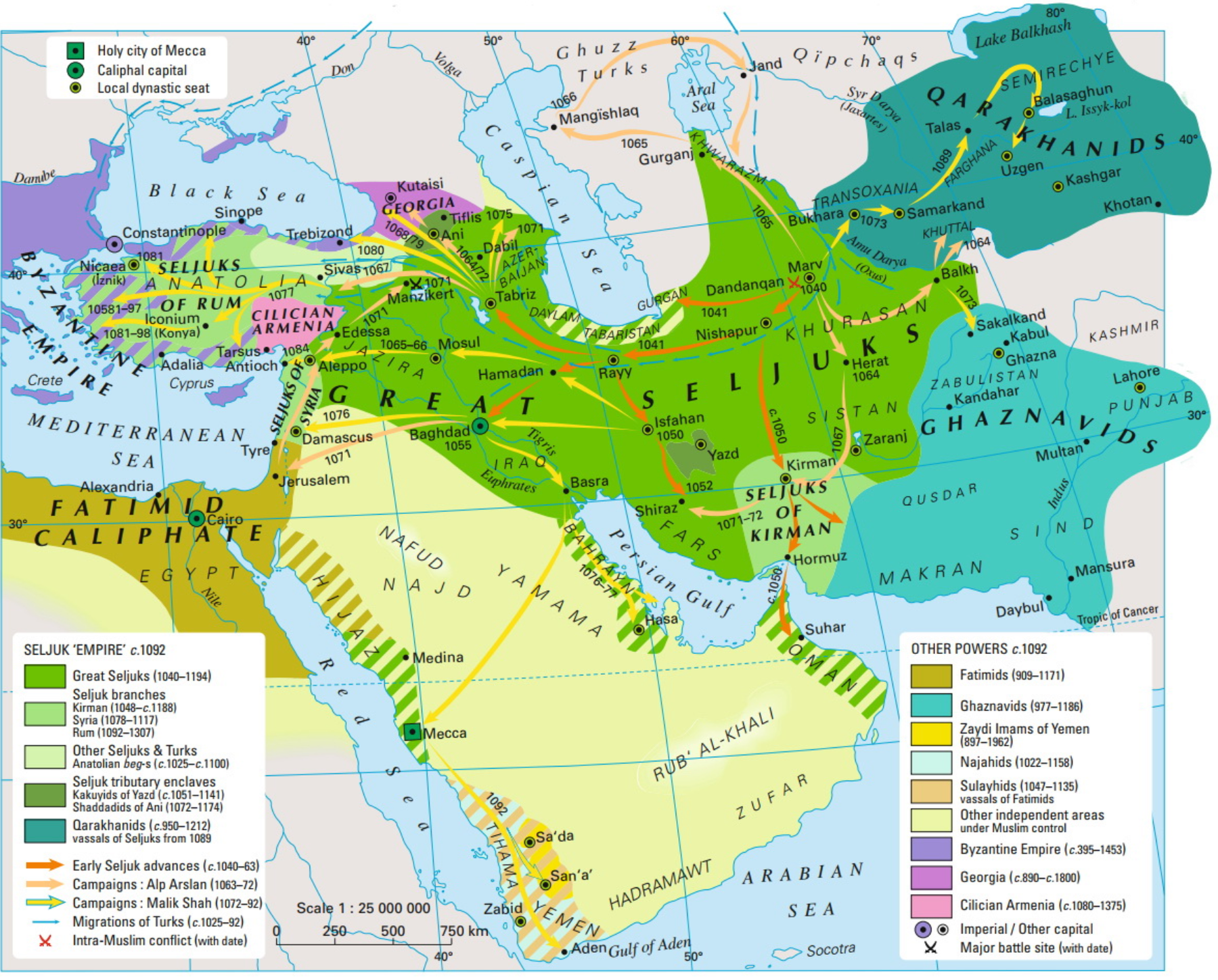
The immediate geopolitical context was the pressure placed on Byzantium by Muslim Turkish expansion in Asia Minor after the Battle of Manzikert in 1071. Emperor Alexios I Komnenos appealed to the West for help. Urban II used this appeal as part of his justification for calling western knights eastward, though the crusade quickly became more than a limited aid mission to Byzantium.
3. Jerusalem and the Holy Land had enormous religious importance
The crusade was framed as a war to recover or liberate the Holy Land, especially Jerusalem, which Christians revered as the site of Christ’s Passion, Crucifixion, burial, and Resurrection. Asbridge emphasizes that the crusades centered on control of territory sacred to both Christians and Muslims, with Jerusalem as the symbolic core.
4. Crusading was presented as armed pilgrimage and penance
One of the most powerful motives was spiritual. Medieval Christians were deeply concerned with sin, judgment, hell, penance, and salvation. Urban’s offer made crusading attractive because it joined pilgrimage, warfare, and penitential cleansing. Asbridge notes that the First Crusade was presented as a form of pilgrimage, and later papal formulations clarified the promise of remission or absolution of sins for those who completed the journey or died on it.
5. Europe had a violent knightly class looking for honor, salvation, and legitimate warfare
Eleventh-century western Europe was full of endemic warfare: feuds, raids, castle wars, vendettas, and aristocratic violence. The Church had long struggled with the problem of Christian warriors committing bloodshed while also seeking salvation. Crusading offered knights a way to use their martial identity in a religiously sanctioned way.
6. The idea of Christian holy war had been developing for centuries
The First Crusade did not appear out of nowhere. Asbridge traces its background to Christian debates about just war, Augustine’s influence, papal reform, the blessing of warfare, and earlier campaigns against Muslims in Spain and Sicily. The crucial innovation was the claim that fighting in this cause was not merely permissible but spiritually meritorious.
7. Social, economic, and familial motives also mattered
Some crusaders hoped for land, lordship, plunder, reputation, or dynastic advancement. But modern historians generally reject the idea that greed alone explains the First Crusade. The journey was expensive, dangerous, and logistically brutal. Many crusaders mortgaged or sold property to go. Material motives existed, but they worked alongside religious conviction, aristocratic honor, family strategy, and the attraction of adventure.
Bottom line
The First Crusade happened because Pope Urban II successfully fused several forces: the papacy’s reforming ambition, Byzantine military need, the sacred status of Jerusalem, medieval fear of sin and damnation, the knightly culture of violence, and the developing theology of holy war. Its appeal was so powerful because it promised warriors that the very activity that endangered their souls—violence—could become a path toward salvation when directed toward the liberation of the Holy Land.
The best map I found for this specific point is World History Encyclopedia’s “Map of the First Crusade, 1096–1099.” It shows the First Crusade route from Constantinople through Asia Minor, including Nicaea, Dorylaeum, Antioch, and Jerusalem. It also shows the Byzantine Empire before Alexios Komnenos, the Byzantine Empire and dependencies around 1100, and the Sultanate of Rum, which makes it useful for visualizing why Byzantium asked the West for help.
Copyable link:
Why Byzantium needed help
By the late eleventh century, the Byzantine Empire was no longer the dominant eastern Mediterranean power it had been in earlier centuries. The major turning point was the Battle of Manzikert in 1071, where the Seljuk Turks defeated the Byzantine army and captured Emperor Romanos IV Diogenes. The battle itself was disastrous, but the larger consequence was even more important: Byzantine authority in Anatolia / Asia Minor began to collapse. Anatolia was not some distant province. It was the empire’s core military and economic recruiting base. Losing control there meant losing soldiers, taxes, food, roads, and strategic depth.
After Manzikert, Turkish groups did not simply conquer Anatolia in one clean campaign. The process was fragmented and opportunistic. Seljuk and Turkmen forces moved into central and western Asia Minor while Byzantine politics descended into civil conflict. This made recovery difficult because Byzantium was fighting both external pressure and internal instability. By the time Alexios I Komnenos came to power in 1081, the empire had lost much of its practical control over the Anatolian interior, while the Seljuk Sultanate of Rum was established with its capital at Nicaea, dangerously close to Constantinople.
That proximity matters. Nicaea was not in Syria or Mesopotamia; it was in northwestern Asia Minor, near the Byzantine capital’s zone of security. A hostile Turkish power based there meant the Byzantines were not merely worried about distant pilgrimage routes or Jerusalem. They were facing a direct strategic threat to the empire’s heartland. This is why the Byzantine appeal to the West was fundamentally a request for military assistance against the Turks in Asia Minor, not originally a plan for a massive Latin conquest of Jerusalem.
Alexios I Komnenos’ actual goal
Alexios did not ask for a huge independent crusading host to carve out Latin principalities in the Near East. He wanted disciplined western military aid, especially knights and mercenaries, to help recover lost Byzantine territory in Asia Minor. Western heavy cavalry had a strong military reputation, and Alexios hoped to integrate that force into Byzantine strategic aims.
This is the key distinction:
What Alexios likely wanted:
A controlled military expedition or mercenary force that would help Byzantium recover Anatolian cities and frontier territory.
What he received:
A massive religiously charged movement of armed pilgrims and aristocratic armies, only partly controllable, whose goals expanded toward Jerusalem and whose leaders often had their own ambitions.
Asbridge notes that the crusaders arrived at Constantinople intending, at least formally, to aid their “Greek brethren,” but the relationship between Byzantium and the crusaders was tense from the beginning. Alexios had to manage large Frankish armies passing through imperial territory, and later Byzantine-crusader relations were shaped by mutual suspicion, conflicting expectations, and disputes over who should control recovered lands.
Why Pope Urban II used the Byzantine appeal
Alexios’ appeal gave Pope Urban II a concrete geopolitical trigger. At the Council of Piacenza in March 1095, envoys from Alexios asked Urban for military help against the Turks. Later that year, at the Council of Clermont in November 1095, Urban transformed the request into something much larger: a penitential holy war framed around aiding eastern Christians and ultimately liberating Jerusalem.
Urban’s genius, politically and rhetorically, was that he fused several motives into one cause:
- Aid eastern Christians under pressure from Muslim Turkish expansion.
- Redirect western knights’ violence into a Church-sanctioned campaign.
- Assert papal leadership over Latin Christendom.
- Turn warfare into penitential pilgrimage, offering spiritual reward.
- Make Jerusalem the symbolic endpoint, which gave the campaign far more emotional and religious power than a limited Byzantine military rescue mission would have had.
This is why the Byzantine appeal was essential but not sufficient. It helped start the chain of events, but Urban reframed it. The crusade was born when a Byzantine military request was converted into a Latin Christian holy war.
Why Asia Minor was the immediate strategic problem
The route of the First Crusade makes this clear. Before the crusaders ever reached Syria or Jerusalem, they had to pass through Byzantine territory and then fight through Turkish-held Asia Minor. The major early targets were Nicaea and Dorylaeum. Nicaea was especially important because it had become a Seljuk capital and sat close to Constantinople. Its recovery in 1097 benefited Byzantium directly.
The World History Encyclopedia map is useful because it visually shows this sequence: the crusaders gather at Constantinople, cross into Asia Minor, help take Nicaea, fight through Anatolia, and only then move toward Antioch and Jerusalem.
Bottom line
The Byzantine appeal was one of the immediate causes of the First Crusade because it gave Urban II a real crisis to answer: the weakening of Byzantium after Manzikert and the Turkish advance into Asia Minor. But Alexios wanted western military support for Byzantine recovery; Urban turned that request into a wider religious movement. The result was that a strategic Byzantine problem became the launching point for a pan-European crusade to the Holy Land.
Reasons for 2nd-9th Crusades
The Rest of the Major Crusades: Main Reasons
| Crusade | Date | Main Reason |
|---|---|---|
| Crusade of 1101 | 1101 | Reinforce the new crusader states after the success of the First Crusade and allow latecomers or failed first-wave crusaders to fulfill crusading vows. |
| Second Crusade | 1147–1149 | Response to the fall of Edessa in 1144, the first crusader state to be lost to Muslim forces. It was meant to restore Christian power in the Levant, but ended disastrously after the failed attack on Damascus. |
| Third Crusade | 1189–1192 | Response to Saladin’s victory at Hattin in 1187 and his capture of Jerusalem. Its purpose was to recover Jerusalem and stabilize what remained of the crusader states. |
| Fourth Crusade | 1202–1204 | Originally intended to attack Muslim power through Egypt, but it was diverted by debt, Venetian interests, and Byzantine dynastic politics, ending in the sack of Constantinople. Asbridge emphasizes that this was not likely a planned anti-Byzantine conspiracy from the beginning, but a chain of pragmatic diversions after the badly structured Venice agreement. |
| Albigensian Crusade | 1209–1229 | Directed not at Muslims, but at the Cathar heresy in southern France. It shows how crusading became a general papal weapon against enemies of the Church, not only a campaign for Jerusalem. |
| Fifth Crusade | 1217–1221 | Attempt to defeat Muslim power by attacking Egypt, especially Damietta, because Egypt was the strategic base of Ayyubid power and a potential bargaining chip for Jerusalem. |
| Sixth Crusade | 1228–1229 | Led by Frederick II, who used diplomacy rather than major battle. The goal remained the recovery of Jerusalem, which he temporarily secured through treaty. |
| Barons’ Crusade | 1239–1241 | Aimed to defend and expand the fragile gains made after Frederick II’s treaty and exploit divisions within the Muslim world. |
| Seventh Crusade | 1248–1254 | Led by Louis IX of France after Jerusalem was lost again in 1244. Like the Fifth Crusade, it targeted Egypt as the key to recovering the Holy Land. |
| Eighth Crusade | 1270 | Also led by Louis IX, but directed at Tunis. The logic was partly strategic and partly missionary/diplomatic: pressure North Africa, possibly convert or ally with Tunis, and eventually aid the Holy Land. It failed after Louis died of illness. |
| Ninth Crusade | 1271–1272 | Led by Prince Edward of England, later Edward I. It was a last serious attempt to support the collapsing crusader states against the rising power of the Mamluks. |
| Later crusading efforts | late 1200s onward | Mostly defensive or aspirational efforts to recover lost territory after the fall of Acre in 1291. Crusading also expanded into other theaters: Iberia, the Baltic, heretical movements, and political enemies of the papacy. |
The pattern
The later crusades were mostly driven by five recurring motives:
- Recover lost Christian territory, especially Jerusalem.
- Defend the crusader states in Syria and Palestine.
- Respond to major Muslim victories, especially Edessa in 1144, Hattin/Jerusalem in 1187, and Jerusalem’s final loss in 1244.
- Attack Egypt, because crusaders increasingly realized that Egypt was the strategic center of Muslim power in the eastern Mediterranean.
- Expand papal authority, as crusading became a broader tool against heretics, rival Christians, and political enemies, not only Muslims in the Holy Land.
The basic arc is this: the First Crusade created Latin Christian states in the Levant; the later crusades were attempts to preserve, recover, or avenge those gains as Muslim powers became more organized and militarily effective.
Chapter 1: Holy War, Holy Land
Chapter Objective
- This chapter explains how the First Crusade began, why Pope Urban II’s call at Clermont in 1095 was so powerful, and how a loosely connected religious appeal became a mass military movement. It also shows that the crusade was not just spontaneous fanaticism: it was shaped by papal ambition, Byzantine needs, religious belief, aristocratic leadership, and practical military adaptation. In the broader argument of the book, this chapter establishes the origins, ideology, and initial momentum of crusading before the long struggle in the Levant fully unfolds.
Pope Urban and the Idea of Crusading
- Asbridge presents Pope Urban II as neither accidental nor naive. Urban launched the crusade at a moment when the papacy was recovering from political weakness, and he saw the Byzantine request for aid as an opportunity to do several things at once:
- aid eastern Christians
- improve relations with Byzantium
- expand papal authority
- redirect knightly violence away from western Europe
- The chapter argues that the First Crusade emerged from the meeting of two developments:
- Alexius I Comnenus’ appeal for military help against the Turks
- Urban’s own developing vision of a large-scale armed pilgrimage to the East
- Urban prepared carefully before Clermont:
- he toured France
- cultivated support in monasteries
- prepared key allies such as Adhémar of Le Puy and Raymond of Toulouse
- The main point is that Urban recognized the potential scale of the movement and intentionally built support for it.
The Sermon at Clermont
- At Clermont, Urban fused two goals into one:
- defend eastern Christendom, especially Byzantium
- recover Jerusalem, the holiest city in Christian imagination
- Asbridge stresses that Urban needed to create not just legitimacy, but emotional urgency. Since there was no single recent atrocity to rally Europe, he did this by demonizing Muslims as savage oppressors of Christians and desecrators of holy places. The chapter emphasizes that these claims were largely propagandistic distortions, but they were politically effective.
- Urban’s most powerful appeal, however, was spiritual:
- he offered participants remission of sins
- he transformed warfare into a kind of penitential pilgrimage
- he made violence in this case seem not merely permissible, but holy
- This is one of the chapter’s central ideas: Urban’s real innovation was to join pilgrimage, penance, and warfare into a single redemptive act.
- Asbridge is careful to note an important nuance:
- crusading did become anti-Muslim in practice
- but originally the core idea was defense or recovery of sacred Christian territory, not yet an all-encompassing doctrine of civilizational war with Islam
- The chapter also notes that the very word “crusade” did not yet exist. Participants thought more in terms of journey or pilgrimage, which shows how new and still-developing the idea really was.
The Call of the Cross
- After Clermont, the movement spread across Europe with astonishing force.
- Asbridge shows that recruitment happened through:
- formal church channels
- public preaching
- kinship and noble networks
- unsanctioned popular preachers such as Peter the Hermit
- Peter the Hermit serves as a vivid example of mass mobilization from below:
- he inspired thousands, especially poorer followers
- his movement became the People’s Crusade
- this early wave was undisciplined and ended in disaster
- some participants also massacred Rhineland Jews, showing how crusading zeal could quickly turn inward against other perceived enemies of Christ
- Asbridge argues that the wider response was extraordinary:
- perhaps 60,000 to 100,000 people joined
- including knights, infantry, women, and children
- He rejects the old simplification that crusaders were mostly greedy younger sons seeking land. Instead, he emphasizes:
- the crusade was extremely expensive
- many sold or mortgaged property
- documentary evidence shows genuine devotional motivation, fear, sacrifice, and preparation for possible death
- The chapter gives strong portraits of the major princes:
- Raymond of Toulouse as wealthy, senior, and politically important
- Bohemond of Taranto as militarily gifted, ambitious, and opportunistic
- Godfrey of Bouillon as serious and eventually deeply committed
- Tancred and Baldwin as rising figures who would shape later developments
- The ritual of taking the cross symbolized both identity and obligation. It marked the crusader outwardly and legally, while also reinforcing that this was understood as a sacred vow.
Byzantium
- This section shows that the First Crusade initially depended on Greco-Frankish cooperation, even though later memory often exaggerates the hostility from the start.
- Asbridge argues that Byzantium was still the great eastern center of Christian civilization, and Constantinople overwhelmed western crusaders with its scale, wealth, relics, and imperial prestige.
- Alexius I saw the crusade as a useful instrument:
- he wanted western manpower
- but he wanted it under imperial control
- his aim was to recover strategically vital Byzantine territory, not to march all the way to Jerusalem himself
- This created a deep mismatch:
- many crusaders expected the emperor to lead the whole Christian enterprise
- Alexius intended to use them selectively for Byzantine interests
- Alexius compelled most crusader princes to swear oaths that any formerly Byzantine land they conquered would be returned to the empire. He also rewarded them lavishly, mixing intimidation with diplomacy.
- The chapter’s key insight here is that early crusade-Byzantine relations were not simply betrayal and hatred. They involved real cooperation, but they were built on different expectations, which would later prove explosive.
The Siege of Nicaea
- The crusaders’ first major target in Asia Minor was Nicaea, important both because it threatened Constantinople and because Alexius wanted it back.
- Asbridge uses the siege to show that the crusaders were not merely reckless fanatics:
- they used blockade and assault methods together
- they improvised engines and mining operations
- they endured counterattacks and psychological warfare
- A good example of the brutality of the campaign is the exchange of mutilated corpses and severed heads between besiegers and defenders, which illustrates how siege warfare in this world relied as much on terror and morale as on direct combat.
- The decisive moment came when Alexius’ forces transported ships overland to cut Nicaea off from lake access. That move broke the city’s resistance and forced surrender.
- Nicaea represents the high point of Byzantine-crusader cooperation:
- the emperor provided critical aid
- the crusaders gained victory
- both sides still appeared able to work together
Across Asia Minor
- Once beyond the emperor’s close supervision, the crusaders faced a major problem: how to function without a single commander.
- Asbridge stresses that the army’s survival depended on collective leadership:
- councils of princes
- shared discussion
- common funds
- flexible coordination rather than a strict unified command structure
- This is a major chapter argument: the First Crusade succeeded in part because it learned how to operate as a coalition army, despite internal differences in language, background, and ambition.
The Battle of Dorylaeum
- At Dorylaeum, the Seljuq ruler Kilij Arslan tried to exploit the crusaders’ division into two forces by ambushing the leading army.
- The Turks’ style of warfare shocked the Franks:
- fast-moving horse archers
- circling attacks
- relentless missile fire
- The turning point was that Bohemond and Robert managed not to rout. Instead, they held formation long enough for reinforcements to arrive.
- Asbridge uses this battle to demonstrate:
- crusader adaptability
- the importance of aristocratic leadership and morale
- the fact that the Seljuqs failed to break crusader cohesion even with tactics unfamiliar to western knights
- The result did not destroy Turkish power entirely, but it broke their resistance enough to open the road across Anatolia.
Contacts and Conquests
- After Dorylaeum, the crusaders faced less battlefield danger and more environmental attrition:
- thirst
- hunger
- disease
- animal losses that crippled logistics and cavalry effectiveness
- One memorable detail is that some dying men and beasts, after desperate thirst, reportedly drank too much when water was finally found and died from that excess as well. Asbridge uses this to show how close to collapse the expedition sometimes came.
- The crusaders improved their position by forming links with Armenian Christians in Cilicia and nearby regions. These alliances provided:
- supplies
- local support
- routes for reinforcements
- Baldwin of Boulogne then broke from the main army and pursued his own ambition in the east. He maneuvered into Edessa, where after a symbolic adoption ritual with the Armenian ruler Thoros, Baldwin effectively took power and established the county of Edessa, the first crusader state.
- This example shows an important tension already visible in chapter 1:
- crusading was driven by devotion
- but it also created opportunities for personal advancement, conquest, and state-building
Key Concepts for
Holy War, Holy Land
- Crusading as armed pilgrimage
- The chapter’s central concept. Urban fused warfare with pilgrimage and penance, making military action itself spiritually redemptive.
- Remission of sins / indulgence
- Participation in the expedition was linked to spiritual cleansing, though official and popular understandings of this reward were not always the same.
- Holy war
- Not merely a just war, but a conflict presented as directly endorsed by God.
- Papal monarchy and reform
- Urban used the crusade to strengthen the papacy’s authority beyond Italy and across Latin Christendom.
- Greco-Frankish cooperation
- Early crusading depended heavily on Byzantine support, despite later tensions.
- Coalition warfare
- The crusade survived not because of one commanding genius, but because disparate leaders created working mechanisms for joint decision-making.
- Devotion and ambition
- Asbridge insists both were present: genuine spiritual zeal coexisted with aristocratic competition and territorial opportunity.
Questions for Reflection for
Holy War, Holy Land
- How did Urban II make an act of killing seem spiritually redemptive to Latin Christians who had traditionally been taught that violence was sinful?
- To what extent was the First Crusade driven more by religious devotion than by political opportunity or personal ambition?
- Why does Asbridge emphasize that early crusading was still an evolving idea, not yet a fixed and fully coherent institution?
- How important was Byzantine cooperation to the crusaders’ early success, and how did differing expectations already plant the seeds of later conflict?
- What does Baldwin’s seizure of Edessa suggest about the relationship between pilgrimage, conquest, and colonization in the First Crusade?
Chapter 2: Syrian Ordeals
Chapter Objective
- This chapter explains why the First Crusade nearly failed in Syria, and how the crusaders’ survival depended on a volatile mix of strategy, endurance, rivalry, brutality, and religious belief. In the broader argument of the book, this chapter serves as the crisis point of the First Crusade: after the momentum described in Chapter 1, the expedition now risks disintegration at Antioch, then is transformed by siege, famine, political struggle, and contested claims of divine favor before the road to Jerusalem reopens.
The city of Antioch
- Asbridge argues that the crusaders did not strictly have to take Antioch in order to reach Jerusalem. In theory they might have bypassed it by truce. Their decision to besiege it therefore reveals something important: they were acting with strategy and long-term planning, not simply rushing blindly toward the Holy City.
- Antioch mattered for several reasons:
- it was a major prize for Byzantium, especially for Alexius I, who hoped to restore imperial control in the region
- it held religious significance for the crusaders, associated with St Peter and one of Christendom’s patriarchates
- it also offered opportunities for personal lordship, especially for figures like Bohemond and Raymond of Toulouse
- Asbridge emphasizes that the crusaders showed evidence of deliberate preparation:
- they secured satellite settlements for supply
- cultivated maritime support
- expected reinforcements
- took control of a viable route into Syria via the Belen Pass
- Antioch’s defenses were formidable:
- massive Roman walls
- mountainous terrain
- a towering citadel
- enough defenders under Yaghi Siyan to hold the city, even if not enough to defeat the crusaders in open battle
- The crusaders’ advantage was that Muslim Syria was politically fragmented. Regional rulers were divided, and no immediate, unified Islamic response came at first. This disunity gave the Franks time to establish the siege.
A war of attrition
- The crusaders quickly recognized that Antioch could not easily be stormed, so they adopted a partial blockade rather than a full encirclement. The city was simply too large and too difficult topographically to seal off completely. The Iron Gate remained open, giving the defenders a crucial line to the outside world.
- Asbridge presents the siege as a grim contest of endurance, not a simple battle:
- both sides fought for morale as much as territory
- mutilation, decapitation, and desecration of corpses were used to terrorize the enemy
- Yaghi Siyan also targeted Antioch’s local Christians, beating the Greek patriarch and killing Christians inside the city to discourage betrayal
- The larger crusader army was actually in the weaker logistical position:
- they consumed nearby resources quickly
- had to forage far from camp
- suffered from cold, rain, hunger, and disease during the winter of 1097–98
- The chapter uses vivid examples to show the extremity of suffering:
- some crusaders were reduced to eating dogs, rats, hides, and seeds found in manure
- desertion spread
- even Peter the Hermit attempted to flee before being dragged back by Tancred
- Clergy interpreted the crisis spiritually. They argued that the expedition had become polluted by sin, and prescribed purificatory acts such as:
- fasting
- prayer
- almsgiving
- religious procession
- The siege turned only when supply improved:
- resources came from Cilicia
- support came from Baldwin at Edessa
- maritime supply flowed through Latakia and St Simeon
- arriving English ships brought food, craftsmen, and materials that helped revive crusader capacity
Antioch, Kerbogha, and the Holy Lance
- The chapter’s next major movement is the crisis created by the Muslim relief effort under Kerbogha. Although the search results do not preserve every page of this section, Asbridge’s argument is clear from the surviving material: the crusaders’ capture of Antioch did not end the ordeal; it plunged them into an even deeper crisis when they themselves became trapped and besieged. This second siege became the setting for one of the crusade’s most famous episodes, the discovery of the Holy Lance.
- The Holy Lance, allegedly discovered by the visionary Peter Bartholomew, became a focal point of morale and interpretation:
- it was treated by many as a sign of divine favor
- it helped frame the crusaders’ survival and victory as miraculous
- it also became politically useful, especially for Raymond of Toulouse
- Asbridge is careful not to reduce the relic simply to fraud. He shows instead that belief in the Lance operated at several levels:
- genuine devotion
- desperate need for hope
- political manipulation
- retrospective mythmaking
- The larger point is that religious conviction was not decorative. It shaped morale, legitimacy, and leadership at moments when the expedition might otherwise have collapsed.
Power struggle after Antioch
- After Kerbogha’s defeat, the crusaders did not move directly to Jerusalem. Instead, they were delayed by a bitter struggle over who would control Antioch.
- Bohemond moved quickly to seize the citadel and pressed for recognition of his right to hold the city, despite earlier promises to Byzantium. Asbridge complicates the usual picture here:
- Bohemond was ambitious, but not simply villainous
- someone had to stay behind to rule and defend Antioch if the crusader gains were to last
- from one angle, Bohemond’s decision can be seen as self-interested but also practically necessary
- Raymond of Toulouse opposed Bohemond and invoked obligations to Byzantium, but Asbridge also refuses to romanticize Raymond:
- Raymond was not purely selfless
- he too sought power, lordship, and leadership
- This is one of the chapter’s key interpretive points: the crusade was sustained by shared devotion, but repeatedly distorted and delayed by elite competition.
Raymond, the Holy Lance, and the politics of sanctity
- Raymond strengthened his political position by aligning himself with Peter Bartholomew and the cult of the Holy Lance. Peter’s visions increasingly proclaimed that God had singled out Raymond as leader of the crusade.
- After the death of Adhémar of Le Puy, this political-religious campaign intensified:
- Peter claimed visitations from Adhémar’s spirit
- Adhémar’s burial in the very hole where the Lance had been found fused the two cults symbolically
- Peter then reported that Adhémar now endorsed both the Lance and Raymond’s authority
- Asbridge treats this as a powerful act of memory manipulation and political theater. Sanctity, relics, visions, and leadership were being woven together to shape the crusade’s future.
Marrat and the collapse of moral restraint
- Raymond then campaigned into the Summaq plateau in an effort to build a territorial base of his own and pressure Bohemond from outside Antioch. One centerpiece of this effort was the capture of Marrat.
- After the town fell, supply failed and hunger again became severe. The result was one of the most horrific episodes of the crusade:
- some starving crusaders cut flesh from dead Muslims
- cooked it
- and ate it
- Asbridge does not hide or soften this episode. He notes that even Frankish witnesses were disgusted by it. At the same time, he also points out its short-term strategic consequence: this atrocity deepened the crusaders’ reputation for terrifying savagery among Syrian Muslims, prompting some local rulers to seek negotiation rather than confrontation.
- This section shows the chapter at its starkest: crusading idealism coexisted with dehumanization, famine, atrocity, and psychological warfare.
Popular pressure and the turn south
- As the princes continued arguing and delaying, ordinary crusaders became increasingly frustrated. Their overriding concern was no longer territorial gain in Syria but the completion of the pilgrimage to Jerusalem.
- At Marrat in January 1099, popular anger turned into direct action:
- poor crusaders demolished the town’s fortifications with their bare hands
- this was effectively an act of civil disobedience against elite strategy
- it signaled that the rank-and-file would no longer tolerate endless delay for princely ambition
- Raymond responded with a symbolic act, marching south barefoot as a penitent pilgrim. The gesture acknowledged that he could not both pursue Syrian conquest and maintain leadership of the crusade.
Arqa and the failure of Raymond’s dominance
- Raymond briefly appeared to become the crusade’s dominant leader, even using payments to secure the support of other princes such as Robert of Normandy and Tancred.
- But Asbridge argues that Raymond undercut himself by committing the crusade to the siege of Arqa in early 1099:
- the siege was strategically unnecessary
- it was tied to his continuing dream of creating a Provençal lordship
- it delayed the march to Jerusalem without producing real gain
- Meanwhile, Peter Bartholomew became an increasingly unstable liability. His visions grew more extreme, and doubts about both him and the Holy Lance spread, especially under criticism from Arnulf of Chocques.
- Peter then underwent a trial by fire to prove the authenticity of his visions and relic. He died soon afterward from the injuries sustained. His death:
- shattered confidence in his prophecies
- weakened belief in the Lance
- dealt a severe blow to Raymond’s authority
- By early May 1099, Raymond had to abandon Arqa and his Lebanese project. The Provençal phase of crusader dominance ended, and the expedition finally resumed its movement toward Jerusalem.
Key Concepts for
Syrian Ordeals
- Attrition siege
- A form of warfare based less on direct assault than on wearing down an enemy through hunger, exhaustion, isolation, and morale collapse.
- Political fragmentation
- Muslim Syria’s internal divisions helped the crusaders survive and advance despite their own weakness.
- Relic politics
- Sacred objects like the Holy Lance could operate simultaneously as devotional symbols, morale boosters, and tools of political legitimacy.
- Charismatic authority
- Figures such as Peter Bartholomew gained influence not through rank, but through visionary claims and perceived access to divine truth.
- Crusader coalition instability
- The expedition was constantly pulled between common sacred purpose and rivalry among princes.
- Popular religious pressure
- Ordinary crusaders were not passive followers; they could pressure or even coerce leaders to return to the expedition’s stated spiritual goal.
- Devotion and brutality
- The chapter repeatedly shows that sincere religious conviction existed alongside acts of extreme violence, atrocity, and opportunism.
Questions for Reflection for
Syrian Ordeals
- Why does Asbridge insist that the siege of Antioch reveals planning and strategy, rather than mere crusading fanaticism?
- How did famine, suffering, and fear reshape the crusaders’ moral world during the Syrian campaign?
- Was the Holy Lance primarily a sincere object of belief, a political instrument, or both?
- In the conflict between Bohemond and Raymond, who appears more justified, and how does Asbridge complicate easy moral judgments about each man?
- What does the episode at Marrat suggest about the relationship between holy war rhetoric and the actual conduct of crusader armies?
Chapter 3: The Sacred City
Chapter Objective
- This chapter explains how the First Crusade completed its central goal: the march to Jerusalem, the siege and capture of the city, and the fragile political settlement that followed. In the broader argument of the book, this chapter is the climax of the First Crusade. It shows that Jerusalem’s conquest was shaped by a fusion of strategic urgency, intense devotion, internal rivalry, and extreme violence, and that victory immediately created the new problem of how to govern and defend the Holy City.
In Heaven and on Earth
- As the final march began, the crusaders were driven by both pilgrimage zeal and strategic necessity.
- They had abandoned thoughts of conquering towns along the way.
- Their new priority was to reach Jerusalem before the Fatimid vizier al-Afdal could fully organize the city’s defense or intercept them with a relief army.
- Diplomatically, the situation had changed:
- the Fatimids had retaken Jerusalem from the Turks in August 1098
- crusader attempts to negotiate some kind of territorial partition failed because the Egyptians refused to surrender the city
- On the march south along the coast, the crusaders benefited from the fear they had created earlier at Antioch and Marrat:
- local Muslim rulers often preferred truces
- some allowed markets for food and supplies
- the Franks encountered little serious resistance on the route through Palestine
- When Jerusalem came into view on 7 June 1099, the emotional release was immense. Asbridge presents this as the culmination of nearly three years and some 2,000 miles of suffering, pilgrimage, and war.
- He also broadens the frame by stressing Jerusalem’s unique religious status:
- for Christians, it was the site of Christ’s Passion and the Holy Sepulchre
- for Muslims, it was the city of Muhammad’s ascent and home to the Haram al-Sharif
- for Jews, it was the city of Abraham, the Temples, and ancient Israelite kingship
- One of the chapter’s key ideas appears here: Jerusalem was almost destined to be fought over because it held absolute sacred significance for multiple traditions at once.
The task ahead
- Once the crusaders arrived, they faced a military problem of daunting scale.
- Jerusalem’s defenses were formidable:
- elevated terrain in the Judean hills
- deep valleys on several sides
- a two-and-a-half-mile wall circuit
- strong gates, towers, dry moats, and major fortresses including the Quadrangular Tower and the Tower of David
- The crusading army was also politically divided.
- Raymond of Toulouse camped to the south-west on Mount Zion
- Godfrey of Bouillon, increasingly the expedition’s dominant figure, led the northern position with support from the two Roberts, Tancred, and Arnulf of Chocques
- Asbridge uses this division to show that even at the very threshold of success, the crusade remained weakened by leadership rivalry.
The siege of Jerusalem
- Although the full middle pages are not preserved in the snippets, the chapter’s logic is clear:
- the crusaders initially lacked the resources for a successful assault
- they struggled especially with shortages of water and siege materials
- they had to improvise, gather timber, and construct engines capable of breaching or overmatching the city’s defenses
- As in earlier chapters, Asbridge emphasizes that the crusaders were not simply irrational fanatics. Their eventual success depended on:
- logistical adaptation
- coordinated engineering
- reorganization of attack positions
- a renewed ability to cooperate under pressure
- The religious dimension remained crucial.
- Jerusalem was not merely a military target
- it was the sacred goal that gave the entire expedition its meaning
- this intensified the emotional and spiritual atmosphere of the siege, lending it an almost apocalyptic tone in crusader thought
- The likely underlying argument of this section is that the conquest of Jerusalem required both practical siegecraft and sustained sacred motivation.
The sack of Jerusalem
- After the city fell on 15 July 1099, the crusaders carried out a massacre that became one of the most infamous episodes in crusading history.
- Asbridge introduces an important nuance:
- some older descriptions of the slaughter were likely exaggerated
- recent evidence suggests the number killed may have been lower than the most famous accounts claim, perhaps not exceeding 3,000, and that many prisoners were taken
- But he does not use that revision to sanitize what happened.
- the killing lasted at least two days
- it was systematic and merciless
- the city was filled with corpses and blood
- the dead later had to be dragged outside and burned in massive heaps because of the stench
- He notes that not everyone was killed:
- Iftikhar ad-Daulah, for example, took refuge in the Tower of David and later negotiated release through Raymond of Toulouse
- The chapter’s most important interpretive point here is that the conquest combined genuine piety and terrible violence.
- the crusaders were not motivated only by bloodlust or greed
- they also sincerely believed they were carrying out God’s will
- thus the day of slaughter ended with the victors going in tears to worship at the Holy Sepulchre
- Asbridge presents this as perhaps the purest example of the crusade’s defining paradox: faith and atrocity fused into one act of sacred warfare.
Aftermath
- The capture of Jerusalem immediately raised a new issue: who would rule the city and in what form.
- Some clergy argued that Jerusalem’s sanctity made secular kingship inappropriate, and preferred an ecclesiastical regime centered on the Church.
- But no strong clerical candidate existed, and the crusader princes still had to think militarily and politically.
- Raymond of Toulouse wanted the crown, but his standing had been declining since Arqa. Instead, on 22 July 1099, Godfrey of Bouillon assumed leadership. He did so under the title “Advocate of the Holy Sepulchre”, a compromise formula that allowed him to rule while presenting himself as protector rather than king of the sacred city.
- Raymond, angered and frustrated again, briefly tried to retain the Tower of David before leaving Jerusalem in resentment.
- This section shows that even after victory, the crusaders could not escape the tension between:
- sacred idealism
- personal ambition
- the practical necessities of state formation
The Battle of Ascalon
- Jerusalem had fallen, but the crusaders’ hold on it was not secure. Al-Afdal was approaching with a Fatimid army to retake the city.
- Godfrey chose a bold strategy:
- instead of waiting to be besieged, he launched a pre-emptive strike
- on 9 August, the crusaders marched out barefoot in penitential fashion, carrying the relic of the True Cross
- Godfrey managed to pull together a final uneasy coalition, including Raymond of Toulouse
- The crusader force was now much smaller than earlier in the expedition:
- perhaps 1,200 knights
- and around 9,000 infantry
- Near Ascalon, captured Egyptian spies revealed the Fatimid deployment. Realizing they were outnumbered about two to one, the crusaders relied on surprise.
- On 12 August 1099, they attacked at dawn and routed the still-unprepared Fatimid camp.
- al-Afdal escaped
- the Franks seized rich booty, including his personal possessions and standard
- Asbridge presents Ascalon as the final military test of the First Crusade. Jerusalem’s conquest would have been precarious without this victory.
The return to Europe
- Even after Ascalon, the crusaders’ leadership rivalry persisted.
- The garrison of Ascalon was reportedly ready to surrender, but wanted to negotiate specifically with Raymond of Toulouse, whose word they trusted after the sack of Jerusalem. Godfrey interfered because he feared Raymond might use the surrender to establish a rival coastal lordship. Negotiations collapsed, and Ascalon remained in Muslim hands.
- Asbridge treats this as a costly failure:
- the crusaders had won a stunning campaign
- yet princely jealousy prevented them from securing one of the most strategically important cities in Palestine
- in later years, Fatimid control of Ascalon would threaten the new kingdom of Jerusalem repeatedly
- After Ascalon, most crusaders believed their vow had been fulfilled and prepared to return home. The First Crusade had succeeded in its immediate aim, but only a small number would remain to build and defend the new Latin polity.
Key Concepts for
The Sacred City
- Sacred geography
- Jerusalem mattered not just politically but cosmologically. Its religious meaning shaped crusader motivation and the city’s wider history of conflict.
- Pilgrimage and conquest
- The chapter shows how the crusaders understood themselves as pilgrims even while carrying out siege warfare and massacre.
- Holy war paradox
- The conquest of Jerusalem joins authentic devotion to extreme violence, revealing the central contradiction of crusading.
- Apocalyptic expectation
- Some crusaders saw the recovery of Jerusalem as part of a larger divine drama involving redemption, sacred history, and the Last Days.
- Legitimacy through humility
- Godfrey’s title, Advocate of the Holy Sepulchre, reflects an attempt to rule the Holy City while respecting its sacred status.
- Victory undermined by rivalry
- Even at the moment of triumph, elite competition limited the crusaders’ strategic gains, especially at Ascalon.
Questions for Reflection for
The Sacred City
- Why does Asbridge emphasize that the final march to Jerusalem was driven by both devotion and strategic urgency, rather than by religion alone?
- How does Jerusalem’s sacred importance to three religions change the way we understand the siege and conquest of 1099?
- In what sense was the sack of Jerusalem both a massacre and an act the crusaders experienced as worship?
- Why was Godfrey’s title “Advocate of the Holy Sepulchre” politically and symbolically important?
- How did the failure to secure Ascalon reveal the limits of crusader unity even after their greatest success?
Chapter 4: Creating the Crusader States
Chapter Objective
- This chapter explains how the crusaders moved from conquest to consolidation after 1099.
- Asbridge’s main point is that victory in the First Crusade did not produce a stable Frankish realm. Instead, the Latins inherited a fragile, under-resourced, disconnected patchwork of territories that could easily have collapsed.
- In the broader argument of the book, this chapter shows that the central problem of crusading after Jerusalem was no longer simply taking holy places, but defending and organizing Outremer. The long history of crusading would now revolve around the survival of these new states.
Protector of the Holy City
- Asbridge begins with Godfrey of Bouillon, whose position in Jerusalem was insecure from the start.
- Godfrey faced three immediate problems:
- too little manpower
- most of Palestine remained unconquered
- Muslim power had been weakened, but not destroyed
- His first priorities were practical:
- expand the Frankish foothold
- secure ports and maritime links with the West
- He attempted this by targeting Arsuf, but failed to capture it in autumn 1099.
- The bigger danger soon came from within:
- Tancred remained a problem
- Bohemond, Baldwin of Boulogne, and Archbishop Daimbert of Pisa all arrived in Jerusalem in December 1099
- each represented a possible alternative center of power, secular or ecclesiastical
- Godfrey survived this crisis by political maneuver:
- he aligned with Daimbert
- supported Daimbert’s patriarchal ambitions
- in return gained backing from the powerful Pisan fleet
- Asbridge uses this episode to show that early Jerusalemite rule rested not on unquestioned legitimacy, but on coalition-building, bargaining, and compromise.
- A concrete example of the cost of that bargain:
- Godfrey granted part of Jerusalem to the patriarch
- and promised the Pisans a quarter in Jaffa
- In Palestine more broadly, Godfrey achieved only modest results:
- coastal towns such as Arsuf, Acre, Caesarea, and Ascalon were pressured into tribute with naval help
- Tancred meanwhile carved out a semi-independent position in Galilee, taking Tiberias
- Before he could strengthen his own position further, Godfrey died in July 1100, probably from disease rather than poisoning. He was buried at the Holy Sepulchre.
God’s Kingdom
- Godfrey’s death reopened the question of what Jerusalem should be:
- a secular monarchy
- or an ecclesiastical state under the patriarch
- Daimbert still imagined Jerusalem as the earthly capital of God’s kingdom, ruled by the Church.
- But Godfrey’s supporters moved quickly:
- they seized the Tower of David
- sent for Baldwin of Boulogne from Edessa
- Asbridge presents Baldwin as exactly the sort of man who could exploit this opening:
- ambitious
- capable
- ruthlessly opportunistic
- Even Baldwin’s chaplain admitted that he mourned his brother’s death less than he rejoiced in the inheritance.
- Baldwin acted efficiently:
- he installed Baldwin of Bourcq as count of Edessa
- marched south
- defeated an intercepting Muslim force near the Dog River
- orchestrated a politically staged entrance into Jerusalem in November 1100
- Daimbert could not block him, and Baldwin was declared ruler of Jerusalem.
- The importance of this transition is central to the chapter:
- Jerusalem did not become a theocracy
- it became a Frankish kingship
- and that decision shaped the future structure of Outremer
The Battle of Harran (1104)
- The chapter then shifts north and shows that the crusader states remained highly unstable.
- In Antioch, Bohemond was captured in 1100 by Anatolian Turks, leaving Tancred as regent. Tancred proved energetic and competent:
- he restored stability
- reconquered Cilicia
- captured Latakia in 1103 after a long siege
- Yet he also behaved self-interestedly:
- he made no serious effort to ransom Bohemond
- others had to gather the vast payment for Bohemond’s release
- when Bohemond returned, Tancred had to surrender power and some conquests
- Bohemond then allied with Baldwin II of Edessa and campaigned east of the Euphrates, aiming to isolate Aleppo and secure Edessa’s southern frontier.
- This led to the Battle of Harran in 1104:
- Frankish forces met a Muslim army led by the rulers of Mosul and Mardin
- Baldwin II and Joscelin of Courtenay overextended
- the Edessene wing was smashed
- Baldwin and Joscelin were captured
- Asbridge treats Harran as a major turning point:
- not just a battlefield loss
- but a psychological reversal
- the myth of Frankish invincibility was broken
- The consequences rippled across the north:
- Byzantines retook Cilicia and Latakia
- towns in the Summaq region expelled Frankish garrisons
- Artah, Antioch’s “shield,” was lost
- The chapter’s logic here is clear: the crusader states were never secure, and one defeat could destabilize the whole northern system.
Later northern rivalries: Antioch and Edessa
- After Harran, internal Frankish rivalry deepened rather than disappeared.
- When Baldwin II was finally released in 1108, he tried to recover Edessa.
- Tancred refused to surrender it easily and demanded subordination, arguing that Edessa had once been dependent on Antioch.
- The result was astonishing:
- two veteran crusader leaders were prepared to fight one another openly
- Baldwin even allied with Muslim forces from Mosul to press his claim
- A battle followed near Tell Bashir, and though Tancred held the field, church intervention forced him to yield Edessa itself.
- Asbridge uses this to underline a major theme:
- the crusader states were bound by a common religion
- but repeatedly fractured by lordship, inheritance, and regional rivalry
Tripoli and the balance of power in Outremer
- The formation of Tripoli emerged from similar instability.
- Raymond of Toulouse had tried to build a northern Lebanese lordship after the First Crusade:
- he captured Tortosa in 1102
- then Jubail
- and built the fortress of Mount Pilgrim outside Tripoli
- But Raymond died in 1105 before taking the city itself.
- This produced a succession struggle:
- William Jordan, Raymond’s nephew
- Bertrand of Toulouse, Raymond’s son
- That dispute quickly expanded into a larger political contest:
- William Jordan aligned with Tancred
- Tancred hoped to pull Tripoli into Antioch’s orbit
- this would have made Antioch the leading power in the Frankish East
- Asbridge explicitly challenges the assumption that Jerusalem was automatically accepted as overlord of all crusader states.
- Each state began as an independent polity
- Jerusalem’s primacy had to be asserted and negotiated, not assumed.
- Baldwin of Jerusalem solved this crisis not through direct war, but through diplomacy:
- he summoned the Frankish rulers to support Bertrand at Tripoli
- turned the situation into a display of wider Frankish unity
- and used the opportunity to strengthen Jerusalem’s supremacy while also improving collective security
Key Concepts for
Creating the Crusader States
- Outremer
- The Latin Christian world established in the Levant after the First Crusade; literally, the land “beyond the sea.”
- Crusader states
- The four main Frankish polities in the East: Jerusalem, Antioch, Edessa, and Tripoli.
- Fragile conquest
- The First Crusade won spectacular cities, but left behind a weak and disconnected territorial base that was hard to defend.
- Ecclesiastical vs secular rule
- A major early debate over whether Jerusalem should be governed by the Church or by a lay prince/king.
- Dynastic and feudal rivalry
- Frankish rulers often fought not only Muslims, but one another over lordship, vassalage, and inheritance.
- Jerusalemite supremacy
- Asbridge argues that Jerusalem’s leadership in Outremer was not automatic; it had to be established politically.
- Psychological warfare and prestige
- Battles like Harran mattered not only materially, but because they reshaped how Muslims, Christians, and local populations judged Frankish strength.
Questions for Reflection for
Creating the Crusader States
- Why does Asbridge argue that the greatest challenge after the First Crusade was not conquest, but survival and consolidation?
- What does the struggle between Daimbert and Baldwin reveal about competing visions of Jerusalem?
- Why was the Battle of Harran so significant beyond the immediate military losses?
- In what ways were the crusader states united by religion but divided by lordship and ambition?
- Why does Asbridge emphasize that Jerusalem’s dominance in Outremer had to be constructed, rather than simply assumed?
Chapter 5: Outremer
Chapter Objective
- This chapter explains how the Latin East survived its first generation of rule after the First Crusade, despite military shocks, fragile leadership, and the constant possibility of collapse.
- Asbridge’s core argument is that the early survival of Outremer depended less on uninterrupted crusading triumph than on a more flexible mixture of:
- military force
- diplomacy
- financial pressure
- alliances
- and the exploitation of Islamic disunity
- In the broader argument of the book, this chapter marks an important shift:
- the First Crusade had created the Latin states
- now the problem was how to preserve them
- and how Christians explained serious defeats within a worldview that claimed holy war was backed by God
Baldwin of Boulogne’s last years
- Before the chapter turns fully to the crisis of 1119, Asbridge looks back to the closing years of Baldwin I, presenting him as one of the central architects of early Frankish survival.
- Baldwin pushed into Transjordan, a harsh but strategically vital zone linking Syria to Egypt and Arabia.
- In 1115 he founded the castle of Montreal (Shobak / Royal Mountain).
- In 1116 he established an outpost at Aqaba on the Red Sea.
- These moves show Baldwin’s larger strategic vision:
- he was not only defending Jerusalem
- he was trying to control trade and movement across the region
- Even in poor health, Baldwin remained aggressive.
- In 1118 he launched a raid into Egypt.
- There he fell gravely ill from the reopening of an old wound.
- He died at al-Arish on 2 April 1118 while trying to return to Palestine.
- Asbridge includes a striking burial detail:
- Baldwin had ordered that his body not be left in Egypt
- so it was opened, salted, embalmed, sewn into a hide, and transported back to Jerusalem for burial beside Godfrey of Bouillon in the Holy Sepulchre
- The chapter uses Baldwin’s career to frame a wider judgment:
- along with Tancred of Antioch, he was one of the most important builders of the early Latin East
- their achievement was not glorious permanence, but holding together an extremely fragile settlement
Outremer
- Asbridge opens the chapter proper by defining Outremer as the Latin Christian world established “beyond the sea” in the Levant.
- He emphasizes that these states survived not because they imposed constant, total war, but because their rulers were often pragmatic:
- they used conquest, but also negotiation
- they extracted tribute
- they made truces
- they worked with indigenous non-Latin populations
- and they sometimes even allied militarily with Muslim neighbors
- This is one of the chapter’s most important themes:
- crusading ideology remained present, especially in ritual purification and the use of relics like the True Cross
- but daily survival required adaptation to Near Eastern realities rather than simple ideological purity
The Field of Blood
- The central event of the chapter is the defeat of Prince Roger of Antioch in 1119.
- Aleppo, now under the Artuqid ruler Il-ghazi, moved onto the offensive after years of paying tribute and tolerating Frankish pressure.
- Roger faced a strategic choice:
- wait for reinforcements from fellow Latins, including Baldwin II
- or strike quickly on his own
- He chose rapid action, just as he had done successfully in 1115, when he had won by surprising Bursuq near Tell Danith. Asbridge notes, however, that this earlier success encouraged a dangerous confidence and set a precedent for rash boldness.
- In June 1119, Roger marched with roughly:
- 700 knights
- 3,000 infantry
- and Turcopoles
- He camped near Sarmada, believing his position secure, but Il-ghazi had already learned his location and sent troops to surround him from multiple directions.
- In the battle itself:
- Roger tried to regain initiative through a mounted charge
- but the left wing broke
- the Frankish army was encircled and destroyed
- Roger died fighting beneath the True Cross, struck in the face and killed without retreat.
- The slaughter was so severe that the site became known as the Field of Blood (Ager Sanguinis).
- Asbridge adds an important corrective:
- although the defeat was catastrophic, Il-ghazi did not immediately try to seize Antioch
- the city’s fortifications were too strong for a quick takeover
- and he lacked both time and manpower for a long siege
- Instead, Il-ghazi focused on recapturing the border zone east of the Belus range, including al-Atharib and Zardana.
The aftermath of the Field of Blood
- Baldwin II quickly came north with forces from Jerusalem and Tripoli to stabilize the situation.
- He fought Il-ghazi near Zardana in August 1119.
- the battle was inconclusive
- but it halted Muslim momentum and helped save Antioch from collapse
- Even so, the territorial damage was real:
- Antioch lost ground
- Shaizar overran much of the Summaq plateau
- only places like Apamea held out
- The deeper importance of the defeat, however, was political and psychological:
- Roger had died childless
- Antioch now faced a succession crisis
- Baldwin II had to step in as regent for the absent Bohemond II, still in Italy and only nine years old
- Asbridge stresses that the Field of Blood was deeply unsettling for Latin Christendom.
- Earlier reverses had occurred, including the 1101 Crusade, Ramla, and Harran
- but this disaster forced Christians to confront a profound theological question:
- if holy war was truly God’s work, how could such a defeat happen?
- The answer given by contemporaries was sin.
- Roger became the scapegoat
- he was accused after death of adultery and usurpation
- defeat was interpreted as divine punishment for Christian corruption
- Asbridge shows that this pattern of explaining military failure through sin would become increasingly important in crusading thought.
Countering Misfortune
- Asbridge then broadens the picture and argues that the panic after 1119 was, in one sense, overstated.
- The Muslim threat did not immediately become a united jihad.
- Il-ghazi died in 1122
- the Muslim Near East remained politically fragmented
- no sustained pan-Islamic offensive followed right away
- This gave the Franks room to recover and even make gains:
- Baldwin II recovered territory in the Summaq
- a strategic foothold was taken at Banyas, guarding the frontier between Jerusalem and Damascus
- in 1142 the kingdom also backed the construction of Kerak, one of the great Transjordanian crusader fortresses
- Still, the crusader states remained unstable.
- Asbridge argues that their problems in the following decades came less from a consistent Muslim offensive than from misfortune inside the Latin world:
- rulers were captured
- rulers died unexpectedly
- succession crises followed
- and civil conflict nearly erupted repeatedly
- One example he gives is Baldwin II’s capture in 1123, which nearly triggered a coup in Palestine before his ransom and return.
- The broader lesson is that Outremer’s danger came from both:
- external military threat
- and its own structural fragility
Main interpretive thread of the chapter
- Across the whole chapter, Asbridge is making a larger argument about early Outremer:
- it survived because Latin rulers were often ruthless but practical
- they balanced violence with accommodation
- and they benefited enormously from Islamic disunity
- At the same time, their ideology still mattered:
- relics like the True Cross
- purification before battle
- and post-defeat explanations centered on sin
- all show that religion shaped how these rulers understood both success and disaster
- The chapter therefore complicates a simple picture of crusading:
- these were not only fanatical holy warriors
- nor were they merely pragmatic colonizers
- they were both at once
Key Concepts for
Outremer
- Outremer
- The Latin Christian states established in the Levant, literally the lands “beyond the sea.”
- Strategic pragmatism
- Early Frankish rulers survived by mixing war with diplomacy, tribute, truces, and alliances.
- Islamic disunity
- A central condition of Frankish survival; Muslim fragmentation repeatedly prevented a decisive, unified counterattack.
- The Field of Blood
- The devastating defeat of Antioch in 1119, which exposed the vulnerability of the crusader states and shook confidence in holy war.
- Sin as explanation for defeat
- A theological framework that interpreted military reverses as divine punishment for Christian wrongdoing.
- Relic warfare
- The use of sacred objects such as the True Cross to sanctify battle, reinforce morale, and interpret conflict spiritually.
- Structural fragility
- Outremer was always vulnerable because it depended on a small ruling elite, uncertain succession, and thin military resources.
Questions for Reflection for
Outremer
- Why does Asbridge argue that the early Latin East survived through pragmatism as much as through crusading zeal?
- In what way did the Field of Blood challenge the ideological confidence created by the First Crusade?
- Why was Islamic disunity so decisive to the survival of Outremer?
- How does the explanation of defeat through sin change the way we understand medieval Christian interpretations of war?
- What does Baldwin I’s policy in Transjordan suggest about the crusader states as both religious projects and strategic frontier polities?
Chapter 6: Crusading Reborn
Chapter Objective
- This chapter explains how the fall of Edessa in 1144 revived large-scale crusading in western Europe and produced the Second Crusade.
- Asbridge’s central argument is that this was not just a military response to crisis in the East. It was also the moment when crusading became more fully systematized, papally articulated, and geographically expandable. At the same time, the chapter shows that a huge surge of religious enthusiasm did not guarantee clarity, coordination, or success.
- In the broader argument of the book, this chapter marks a transition:
- the First Crusade had seemed miraculous and unique
- after Edessa, crusading began to look more like a repeatable institution
- but the Second Crusade also exposed deep tensions between spiritual devotion, papal aims, and the actual needs of Outremer.
Early Twelfth-Century Crusading
- Asbridge begins by explaining that the decades after 1099 did not produce an immediate flood of major crusades.
- Although the First Crusade seemed to prove that God endorsed holy war, many contemporaries still saw it as a singular event, not the start of a regular movement.
- The limited crusading activity before 1144 is explained by wider instability in Europe:
- the papacy was weakened by schism, anti-popes, and political struggle
- Rome itself was unstable
- Germany was divided by rivalry between the Hohenstaufen and Welfs
- England was destabilized by civil war under King Stephen
- This section’s main idea is that crusading ideology had not yet fully solidified. The First Crusade was remembered intensely, but the institutional machinery to repeat it at scale was still underdeveloped.
Launching the Second Crusade
- The fall of Edessa changed everything.
- Asbridge presents Edessa’s loss as a shock that seemed to threaten the survival of the whole Latin East. Frankish and Armenian envoys carried this message to Europe in 1145, arguing that only a new crusade could save the eastern Christians.
- Appeals were directed both to ecclesiastical and secular leaders.
- Pope Eugenius III received them while in political exile from Rome
- Louis VII of France also became a key target of the appeal
- Asbridge gives important context for Louis VII:
- he was not simply a blandly pious ruler
- his early reign had been turbulent
- the burning of a church at Vitry with over 1,000 people inside seems to have left him with a penitential conscience
- this helps explain why he embraced crusading so eagerly after news of Edessa
- Pope Eugenius issued the encyclical Quantum praedecessores in December 1145, then reissued it in 1146 with greater effect.
- This text became the official template for the Second Crusade and, more broadly, a landmark in the development of crusading thought.
Quantum praedecessores and the maturing of crusading
- Asbridge treats Quantum praedecessores as a major milestone because it formalized crusading through an official papal document.
- It did several things at once:
- invoked the precedent of Urban II
- presented an official memory of the First Crusade
- established language and assumptions later popes would repeatedly reuse
- This is one of the chapter’s most important conceptual points:
- crusading was no longer just a sermon-driven eruption like 1095
- it was becoming a more stable papal program, with texts, formulas, and precedents
- Yet Asbridge highlights a serious flaw in the encyclical:
- it was vague about the expedition’s precise target
- Edessa’s fall was emphasized
- but there was no explicit command to retake Edessa
- Zangi was not even clearly named as the enemy
- Instead, crusaders were urged more generally to:
- defend the eastern Church
- free captive Christians
- Asbridge argues that this lack of clarity reflected a real strategic uncertainty in 1145–46, but it also planted the seeds of later confusion over what the crusade was actually supposed to accomplish.
A saint speaks – Bernard of Clairvaux and the Second Crusade
- If Eugenius provided the official document, Bernard of Clairvaux provided the movement’s living voice.
- Asbridge portrays Bernard as the single most important preacher of the Second Crusade:
- influential churchman
- famous orator
- central publicizer of the crusade message
- Bernard’s importance is tied to the rise of the Cistercian order:
- a newer reformist monastic movement emphasizing austerity and simplicity
- it was rapidly expanding across Europe
- Eugenius himself came from this world, which strengthened the Bernard–papacy connection
- Bernard first preached the crusade at Vézelay in Easter 1146.
- Asbridge emphasizes how carefully chosen this setting was:
- religiously resonant
- located in a monastic heartland
- already associated with pilgrimage
- suitable for a mass recruitment spectacle
- The assembly at Vézelay was unprecedented in scale.
- unlike Clermont in 1095, it was not primarily clerical
- it gathered the highest secular nobility of north-western Europe
- Louis VII was present, along with Eleanor of Aquitaine
- The main point of this section is that Bernard transformed a papal letter into a mass emotional movement. He gave the crusade charisma, urgency, and popular reach.
The problem at the heart of the Second Crusade
- Asbridge inserts a broader analytical point here that is crucial to the chapter.
- He argues that there was a structural mismatch between crusading and the actual needs of the crusader states:
- crusades were devotional expeditions of limited duration
- participants had their own motives, vows, and ambitions
- but Outremer needed disciplined, lasting, strategically obedient military support
- This is one of the deepest arguments in the chapter.
- Crusading generated enormous enthusiasm
- but that enthusiasm was often spiritually self-directed
- it did not naturally produce the kind of stable reinforcement the East most needed
A broader rebirth of holy war
- The crusading revival after 1145 spread beyond the Levant.
- Asbridge notes that the wars of the cross were now carried into:
- Iberia
- the Baltic
- This matters because it shows that crusading was becoming more geographically elastic.
- The Second Crusade was not only a mission to help Outremer. It marked the expansion of crusading into a wider Christian framework of sanctified warfare.
Main interpretive thread of the chapter
- Across the chapter, Asbridge is tracing both growth and danger in the rebirth of crusading.
- On one side, the chapter shows major development:
- papal documentation
- charismatic preaching
- royal participation
- expanding theaters of holy war
- On the other side, it shows major weaknesses already built into the enterprise:
- vague goals
- strategic uncertainty
- tension between devotion and practicality
- a mismatch between what crusaders wanted and what Outremer required
- The chapter’s final implied question is whether a crusade larger than 1095, and endorsed by kings and saints, would actually work better. Asbridge’s setup strongly suggests that the answer will be no.
Key Concepts for
Crusading Reborn
- Quantum praedecessores
- Pope Eugenius III’s crusade encyclical, which became a foundational papal model for later crusading proclamations.
- Papal institutionalization of crusading
- The process by which crusading moved from improvised preaching into a more formalized, text-based, repeatable papal enterprise.
- Bernardine charisma
- The way Bernard of Clairvaux’s reputation and eloquence turned an official call to arms into a mass popular movement.
- Devotional expedition
- Asbridge emphasizes that crusades were often spiritually self-directed pilgrim wars, not simply strategic military campaigns.
- Strategic ambiguity
- A defining weakness of the Second Crusade at its launch: the movement had emotional force but lacked a precise and realistic operational aim.
- Expanded theaters of crusade
- The idea that holy war could now be preached not only for the Levant but also in places like Iberia and the Baltic.
Questions for Reflection for
Crusading Reborn
- Why did the decades after the First Crusade not immediately produce a continuous stream of major crusades?
- In what sense did Quantum praedecessores help create crusading as an institution rather than merely repeat a call to arms?
- Why was Bernard of Clairvaux so important to the Second Crusade’s success in recruitment?
- How does Asbridge’s contrast between devotional crusaders and the strategic needs of Outremer complicate the idea of crusading as a coherent military project?
- Why might a crusade with greater enthusiasm, clearer papal backing, and royal participation still be vulnerable to failure?
Chapter 7: Muslim Revival
Chapter Objective
- This chapter explains how the balance of power in the Levant began to shift in the mid-twelfth century as Zangi and especially Nur al-Din helped generate a more forceful Islamic response to the crusader states.
- Asbridge’s main argument is that this “revival” was real, but it was not simple. It was not just a straightforward eruption of pure jihad. Instead, Muslim resurgence emerged through a mixture of:
- political consolidation
- propaganda
- Sunni revival
- strategic pragmatism
- and only gradually, more sustained commitment to holy war against the Franks
- In the broader argument of the book, this chapter is crucial because it shows how the era of mostly fragmented Muslim resistance began to give way to a more dangerous and ideologically energized opposition to Outremer.
Zangi – The Champion of Islam
- Asbridge begins with Zangi’s capture of Edessa in 1144, treating it as a genuine turning point for Islam.
- Zangi’s conquest was important for two reasons:
- strategically, it gave him control of a key frontier city linking Aleppo and Mosul
- symbolically, it appeared to promise that the Franks might finally be driven back from the Levant
- Asbridge stresses that Zangi handled the city in a calculated way:
- there was an initial wave of massacre and enslavement against the Franks
- but surviving eastern Christians were spared
- Armenian and Syriac churches were left standing
- and Edessa’s walls were repaired quickly because Zangi wanted the city to remain useful and defensible
- The chapter highlights the role of Arabic poetry and court propaganda in shaping Zangi’s reputation.
- Poets like Ibn al-Qaysarani celebrated him as a champion of a broader jihad.
- Edessa was presented not as an isolated victory, but as the first step toward recovering Jerusalem and the Syrian coast.
- Yet Asbridge complicates the image of Zangi as a single-minded holy warrior:
- he had used jihadi language before 1144
- but jihad remained only one concern among many
- even after Edessa, he soon returned to fighting fellow Muslims in Iraq
- and contemporaries admitted that his preparations in 1146 might have been aimed at Damascus, not the Franks
- This is one of the chapter’s key interpretive points:
- Zangi was publicized as a mujahid
- but in practice he remained an ambitious ruler seeking supremacy across the Islamic Near East, not a man exclusively devoted to anti-Frankish war.
- His career ended abruptly in September 1146, when he was assassinated during the siege of Qalat Ja‘bar. Asbridge uses the sordid circumstances of his death to underline how unstable and violent Zangid politics still were.
The advent of Nur al-Din
- After Zangi’s death, his lands were divided:
- Saif al-Din took Mosul
- Nur al-Din Mahmud took Aleppo and the Syrian territories
- Asbridge sees this as a significant development:
- Nur al-Din no longer had direct interests in Iraq
- so he was more focused on the Levant
- but he also had fewer resources than his father’s combined realm had possessed
- Nur al-Din’s early position was precarious:
- Syria was chaotic after Zangi’s death
- lieutenants defected
- Damascus regained confidence under Unur
- support for the new emir was uncertain
- He stabilized his rule in dramatic fashion when Joscelin II tried to retake Edessa in late 1146.
- Nur al-Din marched with extreme speed
- forced the Franks out
- then punished the city’s eastern Christian population harshly for collaborating with them
- the result was the effective destruction of Edessa as a living Christian center
- Asbridge shows that this brutal act both:
- secured Nur al-Din’s reputation for strength
- and helped establish his authority in Aleppo
- At the same time, Nur al-Din proved subtler than his father:
- he cultivated cooperation with Damascus
- arranged a marriage alliance
- and used gestures of conciliation alongside force
Countering the Crusade
- This section examines the Muslim response to the Second Crusade.
- Reports from Asia Minor suggested that the German and French crusaders had already suffered terribly from hunger, disease, and Turkish attacks before reaching the Levant. For Nur al-Din and Unur, this was an unexpected relief.
- The major surprise came in 1148, when the crusaders attacked Damascus rather than Aleppo.
- Asbridge argues that this decision was not necessarily irrational:
- Damascus had become more threatening to Jerusalem than before
- and taking it might have transformed Outremer’s long-term security
- During the siege:
- Unur strengthened defenses
- sacred relics and ritual were used to rally the city, including a revered Qur’an associated with Caliph ‘Uthman
- fierce fighting took place in the orchards and suburbs west of the city
- Unur also used diplomacy cleverly:
- he played for time while waiting for Nur al-Din and Saif al-Din
- he may have offered tribute
- and he exploited divisions inside the Frankish coalition by stirring fear over who would control Damascus if it fell
- When the crusaders shifted position to the east of the city, they ended up exposed and short of water. Panic, mistrust, and fear of approaching Muslim forces then triggered a humiliating retreat on 28 July 1148.
- Asbridge’s larger point is that the failure of the Second Crusade had a major effect on the Muslim world:
- Damascus survived
- but its dependence on Nur al-Din deepened
- and anti-Frankish feeling in the city hardened markedly
The county of Edessa dismembered
- The Second Crusade did nothing to restore Edessa.
- Over the following years, the remnants of the county were steadily dismantled by surrounding Muslim powers:
- Nur al-Din
- Ma‘sud of Konya
- and the Artuqids
- Joscelin II tried to survive by becoming subordinate to Aleppo, but once he was captured in 1150, Nur al-Din ignored any pretense of alliance and imprisoned him until death.
- His wife Beatrice sold what remained to the Byzantines, but even they could not defend it.
- With the fall of Tell Bashir in 1151, the first crusader state came to a definitive end.
- This subsection shows that Edessa’s fall was not a temporary setback. It was a permanent structural change in the map of the Latin East.
The Battle of Inab
- Asbridge then turns to Nur al-Din’s 1149 campaign against Antioch.
- He argues that historians often misread this episode as a simple jihad offensive against the Franks.
- In reality, Nur al-Din had more focused strategic goals:
- take Harim, which threatened Aleppo from the west
- isolate and capture Apamea, eliminating the remaining Frankish foothold in the Summaq region
- and clear the way for future operations toward Damascus
- When Prince Raymond of Antioch moved to relieve Inab, he seems to have assumed Nur al-Din had retreated.
- Instead, Nur al-Din reversed course overnight and caught the Franks exposed on 29 June 1149.
- The result was disaster for Antioch:
- the Frankish army was surrounded
- Raymond was killed
- his head was cut off and sent in triumph to Baghdad
- Asbridge draws an important comparison with the Field of Blood in 1119:
- both battles destroyed Antiochene leadership
- but after Inab the principality recovered less successfully than before
- Apamea was lost for good
- Harim fell
- Antioch’s ability to threaten Aleppo was sharply reduced
- Most importantly, Asbridge argues that Inab was not fundamentally about Antioch.
- It was part of Nur al-Din’s larger drive to secure the road south and prepare the ground for control of Damascus.
The Road to Damascus
- This section is one of the chapter’s most important because it shows how Nur al-Din unified Muslim Syria.
- By 1150, Latin Outremer was unusually weak:
- Edessa had collapsed
- Antioch was destabilized
- Tripoli faced succession problems
- Baldwin III was almost drawn into civil war with his mother Melisende in Jerusalem
- Yet Nur al-Din did not launch an all-out assault on the Franks.
- Instead, he pursued Damascus with patience and sophistication:
- propaganda
- diplomatic pressure
- symbolic claims of overlordship
- economic strangulation
- internal subversion through allies such as Ayyub ibn Shadi
- Asbridge emphasizes the contrast with Zangi:
- Zangi had relied heavily on terror
- Nur al-Din sought to win hearts and minds as well as territory
- By 1154, this campaign succeeded:
- food shortages weakened Damascus
- Nur al-Din’s supporters inside the city helped open the way
- the people surrendered
- ruler Abaq was treated leniently and allowed to leave for Homs and later Iraq
- The conquest of Damascus was a major watershed:
- Aleppo and Damascus were united for the first time since the crusades began
- Nur al-Din emerged fully from Zangi’s shadow
- and he now claimed almost all of Muslim Syria
- But Asbridge again complicates the usual story:
- later writers said that after 1154 Nur al-Din “dedicated himself to jihad”
- yet the evidence shows that he actually signed new truces with Jerusalem
- and continued spending much of his energy on consolidating Muslim-held territory instead of attacking the Franks directly
- So the unification of Syria was not immediately followed by a single-minded holy war offensive.
Damascus – “Paradise of the Orient”
- Asbridge includes this section to explain why controlling Damascus mattered so much.
- Damascus was:
- one of the world’s oldest continuously inhabited cities
- a great commercial center
- and a major site of Muslim devotion and memory
- Its Grand Umayyad Mosque symbolized this importance:
- built on the site of an earlier Christian and Roman sacred complex
- richly decorated
- one of the most awe-inspiring religious structures in the Islamic world
- Nur al-Din rebuilt and strengthened the city:
- fortifications were repaired
- the citadel was improved
- commerce revived
- Damascus gradually became the new effective capital of his realm after 1157
- Asbridge uses this to show that Nur al-Din was not only a war leader. He was also a ruler engaged in state-building, urban renewal, and Sunni legitimation.
Challenges
- Even after uniting Syria, Nur al-Din did not face a passive enemy.
- The Franks enjoyed significant recovery in the 1150s:
- Baldwin III captured Ascalon in 1153, severing an important Fatimid foothold in Palestine
- Reynald of Châtillon became prince of Antioch and proved fierce, if unstable
- the Franks also recovered Harim in 1158 after a brief period of success
- Nur al-Din also had to deal with:
- repeated earthquakes damaging Syria
- serious illness in 1157 and again in 1158
- succession fears while he hovered near death
- Asbridge suggests that these crises may have deepened Nur al-Din’s religiosity, though he is careful not to overstate a sudden “conversion” moment.
External threats
- A further major challenge came from Byzantium.
- In the late 1150s, Emperor Manuel Comnenus restored Byzantine influence in the region:
- marriage alliances tied Byzantium more closely to Jerusalem and Antioch
- Manuel humbled Reynald and reasserted imperial grandeur in Antioch
- in 1159, a massive Byzantine-led Christian army seemed poised to strike Aleppo itself
- Nur al-Din responded not with suicidal defiance but with diplomacy:
- he offered a truce
- promised release of thousands of Latin prisoners from the Second Crusade
- and offered cooperation against Manuel’s Anatolian enemies
- Manuel accepted, abandoning the campaign.
- Asbridge treats this as highly revealing:
- Nur al-Din was no rigid ideologue
- he was perfectly willing to negotiate with a Christian empire when strategic necessity required it
- and he still did not treat the Franks as his only or even always his main concern
Trial and Triumph
- This final movement of the chapter begins with a severe shock to Nur al-Din.
- In 1163, while camped in the Bouqia valley, he was surprised by a Frankish attack led by forces from Antioch and Tripoli, reinforced by western pilgrims and Greeks.
- The result was a humiliating defeat:
- his men were scattered
- he fled with only a few survivors
- and, according to one source, escaped barefoot on a hastily mounted beast of burden
- Asbridge treats this moment as psychologically important.
- Nur al-Din reportedly vowed not to rest under a roof until he had avenged both himself and Islam
- here the language of jihad and honor seems to take on greater intensity and personal force
- The search results do not preserve the entire concluding pages of the chapter, but Asbridge’s line of argument is already clear from the surviving text:
- Nur al-Din’s relationship to jihad deepened over time
- yet it never ceased to be intertwined with political utility, dynastic legitimation, and strategic calculation
- He rejects any simplistic reading in which Nur al-Din was either:
- purely cynical
- or purely pious
- Instead, Asbridge concludes that Nur al-Din, like many crusaders on the Christian side, was likely moved by both authentic devotion and political self-interest.
Key Concepts for
Muslim Revival
- Jihad revival
- The growing reactivation of Islamic holy war against the Franks in the mid-twelfth century, especially under the Zangids.
- Zangid legitimation
- Zangi and Nur al-Din used jihad rhetoric, poetry, and caliphal recognition to strengthen the rule of an otherwise upstart Turkish dynasty.
- Strategic pragmatism
- Asbridge repeatedly shows that Muslim leaders, especially Nur al-Din, mixed holy war with truces, diplomacy, propaganda, and inter-Muslim state-building.
- Syrian unification
- The union of Aleppo and Damascus under Nur al-Din in 1154, a key turning point in the balance of power.
- Inab as strategic warfare
- The Battle of Inab was not simply anti-Frankish zeal; it served Nur al-Din’s larger goal of securing Syria and preparing the road to Damascus.
- Hearts and minds politics
- Nur al-Din succeeded not only by force but by shaping public opinion, presenting himself as just, restrained, and protective of Sunni interests.
- Mixed motivation
- A major interpretive framework in the chapter: Nur al-Din should not be seen as either wholly devoted to jihad or purely self-serving, but as a ruler in whom both motives could coexist.
Questions for Reflection for
Muslim Revival
- Why does Asbridge resist the idea that Zangi or Nur al-Din were straightforwardly single-minded jihadi rulers?
- In what ways did the conquest of Damascus matter more than battlefield victories against the Franks?
- How does the chapter show the importance of poetry, propaganda, and public opinion in medieval Islamic politics?
- Why does Asbridge reinterpret the Battle of Inab as part of an inter-Muslim power struggle as much as a Christian-Muslim conflict?
- What does Nur al-Din’s willingness to make truces with Jerusalem and negotiate with Byzantium suggest about the relationship between religion and strategy in this period?
Chapter 8: The Light of Faith
Chapter Objective
- This chapter examines Nur al-Din’s mature career and asks whether he should be understood primarily as a true champion of jihad or as a pragmatic state-builder who used holy war language when it suited broader political goals.
- In the broader argument of the book, the chapter shows how the Muslim revival that began under Zangi became more durable and more dangerous under Nur al-Din, especially through the unification of Syria, intervention in Egypt, and the creation of conditions that would later elevate Saladin. At the same time, Asbridge insists that this revival was not linear or simple; Nur al-Din’s path was shaped by both devotion and calculation.
The Battle of Inab
- Asbridge argues that Nur al-Din’s 1149 campaign is often misunderstood.
- Many assume he was simply pursuing an anti-Frankish holy war.
- Asbridge says his aims were more precise and strategic.
- His real targets were:
- Harim, which threatened Aleppo’s security from the Antiochene frontier
- Apamea, whose survival kept open a Frankish corridor that interfered with communications between Aleppo and Damascus
- When Raymond of Antioch moved to relieve Inab, he made a fatal mistake:
- he assumed Nur al-Din had withdrawn
- camped in an exposed open position
- and was attacked at dawn on 29 June 1149 after Nur al-Din reversed course overnight.
- The result was a crushing Muslim victory:
- Raymond was killed
- his head was cut off and presented to Nur al-Din
- Antioch was left leaderless and badly shaken.
- Asbridge stresses an important nuance:
- Nur al-Din did not press for the full conquest of Antioch
- instead, he accepted tribute, then focused on Harim and Apamea
- this shows that his goal was regional strategic control, not blind expansion.
- The deeper point is that Inab was not just a Christian-Muslim clash.
- It was also part of Nur al-Din’s larger project of clearing the road south toward Damascus.
The Road to Damascus
- This section is one of the chapter’s core arguments.
- After 1149, the Franks were unusually vulnerable:
- the Second Crusade had failed
- Edessa had collapsed
- Antioch was in succession crisis
- Jerusalem itself was strained by conflict between Baldwin III and Melisende.
- Yet Nur al-Din still did not prioritize a direct knockout blow against Outremer.
- Instead, he concentrated on Damascus:
- he used diplomacy
- pressure
- propaganda
- symbolic submission
- economic strangulation
- and internal allies such as Ayyub ibn Shadi.
- Asbridge contrasts him here with Zangi:
- Zangi had leaned heavily on terror
- Nur al-Din worked on hearts and minds as well as military pressure.
- Important examples:
- he chided Abaq of Damascus for paying tribute to the Franks
- ensured his own troops remained disciplined near the city
- gradually won support among Damascenes
- used political infiltration and rumor to weaken the Burid regime from within.
- By 1154, this campaign succeeded:
- food shortages weakened Damascus
- internal unrest grew
- Nur al-Din’s troops entered the city with minimal bloodshed
- Abaq was treated leniently and given Homs rather than being massacred.
- Asbridge’s key point:
- the capture of Damascus was one of Nur al-Din’s greatest achievements
- it united Aleppo and Damascus for the first time since the crusades began
- but it did not produce an immediate all-out jihad against the Franks.
- In fact, after 1154:
- Nur al-Din made fresh truces with Jerusalem
- and continued consolidating Muslim territories elsewhere.
Damascus – “Paradise of the Orient”
- Asbridge includes this section to show why Damascus mattered beyond mere strategy.
- Damascus was:
- one of the oldest continuously inhabited cities in the world
- a major commercial center
- and a city of immense Islamic sacred prestige.
- The Grand Umayyad Mosque symbolized this status:
- monumental
- lavishly decorated
- built on a layered sacred site linking Roman, Christian, and Islamic history.
- Nur al-Din strengthened the city after 1154:
- fortified the citadel
- repaired walls
- stimulated commerce
- and gradually made Damascus the effective capital of his realm after 1157.
- This section shows that Nur al-Din was not only a warlord:
- he was also a ruler engaged in urban renewal, Sunni state-building, and the moral projection of just kingship.
Challenges
- Even after uniting Syria, Nur al-Din did not have an easy field.
- The Franks experienced recovery in the 1150s:
- Baldwin III captured Ascalon in 1153, ending a major Fatimid foothold in Palestine
- Antioch revived under Reynald of Châtillon
- and the Franks even regained Harim in 1158.
- Nur al-Din also suffered serious setbacks not caused by the Franks:
- repeated earthquakes damaged Syrian towns and fortifications
- he was struck by grave illness in 1157 and again in 1158
- succession anxieties and unrest followed while he hovered near death.
- Asbridge notes that these illnesses may have deepened Nur al-Din’s religious outlook:
- he reportedly adopted simpler dress
- and later performed the Hajj in 1161
- But he avoids claiming a simplistic conversion moment.
External threats
- Another major challenge came from Byzantium.
- In the late 1150s, Emperor Manuel Comnenus reasserted Greek influence:
- marriage alliances linked Byzantium more closely with Jerusalem and Antioch
- Manuel humbled Reynald of Châtillon
- and by 1159 appeared poised to strike directly at Aleppo.
- Nur al-Din’s response is one of Asbridge’s best examples of his pragmatism:
- he did not simply embrace battle
- he offered a truce
- promised release of thousands of Latin prisoners from the Second Crusade
- and offered support against Manuel’s Anatolian enemies.
- Manuel accepted.
- Asbridge’s interpretation:
- this proves Nur al-Din was not an inflexible ideologue
- he could negotiate even with a major Christian power when circumstances required it
- and he still treated the Franks as only one element in a much larger regional contest.
Trial and Triumph
- From 1163 onward, Asbridge suggests that Nur al-Din’s sense of mission seems to deepen.
- The turning point was a shocking defeat in the Bouqia valley:
- Frankish forces from Antioch and Tripoli, reinforced by western pilgrims and Greeks, surprised his camp
- his army was nearly annihilated
- Nur al-Din escaped only narrowly and in humiliating fashion.
- The defeat appears to have marked him deeply.
- He reportedly vowed not to rest under a roof until he had avenged both himself and Islam.
- Asbridge’s implication is that this was one moment when the language of jihad became more personalized and urgent for Nur al-Din.
Egypt and the widening of Nur al-Din’s power
- The chapter then shifts to the struggle for Egypt, which becomes crucial to Nur al-Din’s later significance.
- Asbridge stresses that Nur al-Din was initially reluctant to become deeply involved there:
- he feared overextension
- distrusted the Egyptian vizier Shawar
- and worried that a North African commitment would sap Syrian resources.
- He was eventually persuaded by:
- the danger that Amalric of Jerusalem might establish a dominant Frankish position in Egypt
- and by the ambitions of his veteran lieutenant Shirkuh, who was eager for intervention.
- In 1164:
- Shirkuh was sent to restore Shawar
- succeeded initially
- but Shawar then switched sides and invited Amalric to help expel the Syrians
- Amalric and Shawar besieged Shirkuh at Bilbais
- the deadlock ended only when news of Nur al-Din’s successes at Harim and Banyas forced Amalric to withdraw.
- In 1167, Shirkuh returned to Egypt with growing independence, joined by his nephew Yusuf ibn Ayyub—the future Saladin. North Africa had now become a proxy battleground between Muslim Syria and Outremer.
- In 1168, Amalric made a brutal and politically disastrous move:
- he invaded Egypt again
- sacked Bilbais
- but his violence stiffened Egyptian resistance instead of breaking it.
- This pushed Shawar back toward Nur al-Din.
- In 1168–69, Nur al-Din reacted decisively:
- he sent a major army under Shirkuh
- supplied with treasure and multiple trusted commanders
- and again included Yusuf ibn Ayyub.
- Amalric, realizing he was too late and too weak, retreated to Palestine.
- In January 1169:
- Shawar was overthrown and executed
- Shirkuh became vizier
- and in theory Egypt was now open to alignment with Syria against the Franks.
- But Shirkuh died only weeks later, unexpectedly, and this opened the way for Yusuf ibn Ayyub to emerge.
Saladin, Lord of Egypt (1169–74)
- Asbridge is careful here to challenge a familiar myth:
- he says Saladin did not immediately break from Nur al-Din
- early on, there is more evidence of continued cooperation than of instant rebellion.
- Saladin’s first years in Egypt were precarious:
- he was a Sunni Kurdish outsider in a dangerous Shi‘ite Fatimid political culture
- the vizierate was unstable and often lethal
- his survival was far from guaranteed.
- His response was to build a loyal power base:
- he gathered family members from Syria
- relied on Shirkuh’s old military circle, the Asadiyya
- created his own following, the Salahiyya
- and won support from talented administrators such as al-Fadil.
- Asbridge notes that Saladin soon showed the qualities that would define his later rise:
- political subtlety
- a mixture of ruthlessness and restraint
- and ambition beyond anything Shirkuh had displayed.
- By 1174, however, tensions with Nur al-Din were growing:
- financial scrutiny of Egypt intensified
- both sides mobilized
- and a Sunni civil war was becoming possible.
- That crisis was prevented only by Nur al-Din’s death in May 1174. Asbridge ends the chapter by emphasizing both his achievement and his limits:
- he had united Aleppo and Damascus
- revived Sunni power and the language of jihad
- and laid the groundwork for future victories
- yet he died with the Franks still unconquered and Jerusalem still in Christian hands.
Key Concepts for
The Light of Faith
- Pragmatic jihad
- Asbridge’s central interpretive idea: Nur al-Din genuinely promoted jihad, but not as a single, exclusive priority. Holy war was interwoven with diplomacy, state-building, and dynastic ambition.
- Syrian unification
- The union of Aleppo and Damascus under Nur al-Din in 1154, a decisive shift in the regional balance of power.
- Just kingship
- Nur al-Din cultivated the image of a morally serious, restrained, and pious ruler, especially through clemency, public discipline, and urban patronage.
- Strategic frontier warfare
- Campaigns such as Inab were not merely symbolic jihad victories; they were designed to secure routes, neutralize threats, and reshape political geography.
- Egyptian pivot
- The struggle for Egypt transformed the war for the Holy Land by making control of Cairo central to the contest between Syria and Jerusalem.
- Ayyubid emergence
- The rise of Saladin in Egypt under Nur al-Din’s shadow created the next phase of Muslim resurgence, though not yet a clean succession.
- Mixed motivation
- Like crusader leaders on the Christian side, Nur al-Din is presented as a figure driven by both sincere belief and hard political calculation.
Questions for Reflection for
The Light of Faith
- Why does Asbridge resist treating Nur al-Din as either a pure ideologue or a mere opportunist?
- In what sense was the conquest of Damascus more important than victories like Inab?
- How did the struggle for Egypt change the strategic logic of the crusading era?
- Why does Asbridge emphasize that Saladin’s early relationship with Nur al-Din was more cooperative than later legend suggests?
- What does Nur al-Din’s career reveal about the relationship between religious legitimacy, public image, and military power in the medieval Near East?
Chapter 9: The Leper King
Chapter Objective
- This section of Chapter 9 explains how Baldwin IV came to the throne, how his leprosy shaped the politics of Jerusalem, and why the kingdom remained both dangerous and fragile in the late 1170s.
- In the broader argument of the book, these pages show that the Latin East was not yet collapsing automatically under Saladin. Baldwin IV could still rule, inspire, and win. But his illness made the kingdom’s future depend on unstable questions of regency, succession, and court alignment, creating the structural weakness that would matter more and more in the years ahead.
Baldwin IV’s childhood and minority
- Baldwin IV inherited a difficult personal and political position before he even began to rule.
- His father, Amalric, had set aside Agnes of Courtenay before becoming king.
- Baldwin and Sibylla remained legitimate, but Baldwin grew up in a fractured household, with Agnes largely absent and his stepmother Maria Comnena more concerned with her own children.
- One of the most important figures in Baldwin’s upbringing was William of Tyre.
- William served as his tutor.
- He describes Baldwin as intelligent, attractive, quick-witted, fond of study, and especially fond of riding.
- Asbridge uses William’s account to present the most memorable story in this section:
- as a boy, Baldwin played with other noble children who pinched one another to test endurance
- Baldwin showed no pain in one arm
- this led William to realize that part of the prince’s body had gone numb, revealing the first clear signs of leprosy.
- The chapter’s underlying point is that Baldwin’s tragedy was visible early:
- he had the mind and temperament of a king
- but from childhood he was marked by a disease that would steadily undermine his body and the kingdom’s confidence in the future.
Baldwin’s situation under the regency
- During Baldwin’s minority, Raymond III of Tripoli acted as regent.
- Asbridge presents Raymond as:
- cautious
- politically ambitious
- but broadly conciliatory in style
- and willing to avoid direct confrontation with Saladin while Baldwin was still young.
- Raymond’s larger concern was not just day-to-day government, but succession.
- Baldwin’s leprosy worsened sharply around puberty.
- It became increasingly obvious that he could not provide stable long-term rule or continue the royal line.
- Asbridge stresses how serious this problem was in medieval terms:
- leprosy carried heavy social and religious stigma
- it could be read as a sign of divine disfavour
- and contemporaries believed it might be sexually transmissible
- Baldwin was therefore seen as effectively infertile and dynastically compromised.
- This pushed attention toward Sibylla.
- Because she was unlikely to rule in her own right, the urgent question became: who would marry her and thereby shape the future of Jerusalem?
Sibylla and the succession
- Raymond eventually secured a marriage for Sibylla with William of Montferrat.
- William was a prestigious match, related to Louis VII of France and Frederick Barbarossa.
- The marriage was meant to bring both status and political security.
- But the plan quickly collapsed:
- William fell ill and died in 1177
- Sibylla was left pregnant
- she later gave birth to Baldwin V, who became a possible heir to the throne.
- This section reinforces one of the chapter’s main themes:
- every attempt to stabilize the succession produced only a partial or temporary solution.
Baldwin IV’s early reign
- In 1176, Baldwin reached his majority and ended Raymond’s regency.
- Asbridge emphasizes that Baldwin did not behave like a passive invalid.
- He threw himself into rule.
- He reversed Raymond’s policy of diplomatic accommodation.
- He refused to renew the truce with Damascus and led a raid into the Biqa valley, defeating Turan-Shah in a minor engagement.
- Baldwin also shifted the political balance at court:
- Agnes of Courtenay returned to influence
- her brother Joscelin III was made royal seneschal
- and Reynald of Châtillon, recently released from long captivity, re-entered Jerusalemite politics.
- The larger argument here is important:
- Baldwin’s illness did not prevent him from acting decisively
- but the allies he began to rely on would later become deeply controversial and politically divisive.
Saladin’s position and the opening confrontation
- At the same time, Saladin was still consolidating his own power.
- Asbridge notes that in the late 1170s Saladin faced real pressures:
- drought in Syria
- administrative difficulties
- and the need to balance resources across Egypt and Syria.
- He was investing heavily in long-term strength:
- defenses at Alexandria and Damietta
- a great enclosure wall for Cairo and Fustat
- and, crucially, the rebuilding of an Egyptian fleet.
- Asbridge uses this to make a subtle point:
- Baldwin IV was not facing a fully settled or unstoppable Muslim empire
- he was confronting a rival still in the process of strengthening and consolidating itself.
Mont Gisard and its aftermath
- Although the surviving search excerpts here do not preserve the full subsection heading, the pages in this range clearly include the consequences of Mont Gisard.
- Asbridge treats Mont Gisard as a major Frankish success that gave Baldwin political and military momentum.
- But he also shows that this momentum did not last uncontested:
- subsequent Muslim successes disrupted Frankish command
- Baldwin’s constable was killed in one clash
- and Templar Master Odo of St Amand was captured with 270 knights in another.
- These setbacks mattered because they:
- damaged the kingdom’s military leadership
- helped erase some of the humiliation Saladin had suffered earlier
- and signaled that Baldwin’s victories were difficult to convert into durable strategic superiority.
The House of Sorrow
- This subsection explains the frontier strategy that followed Mont Gisard.
- Asbridge pauses to explain how frontiers functioned in the medieval Levant:
- they were usually not fixed modern borders
- but contested zones of overlapping political and military influence
- where the construction of a castle or assertion of control could shift the wider regional balance.
- Baldwin’s next great project was the fortress at Jacob’s Ford, known in Arabic as Bait al-Ahzan, “the House of Sorrow.”
- The site controlled a critical crossing on the Upper Jordan
- gave access to the Terre de Sueth
- and stood only a day’s march from Damascus.
- Baldwin and the Templars invested heavily in the site because they hoped to:
- strengthen northern Palestine
- seize the initiative in the frontier zone
- and place new pressure on Saladin’s hold over Syria.
- Asbridge’s point is that Jacob’s Ford was not just another castle:
- it was an aggressive strategic move meant to tilt the regional balance back toward Jerusalem.
The siege and fall of Jacob’s Ford
- By late August 1179, Saladin decided he had to destroy Jacob’s Ford quickly.
- Baldwin was nearby at Tiberias
- so this became a race between Saladin’s siege operations and Baldwin’s relief march.
- Asbridge reconstructs the siege in unusually vivid detail, combining written testimony with archaeology:
- the Muslims bombarded the fortress with arrows from east and west
- miners tunneled under the north-eastern wall
- the first fire set in the mine failed to collapse the defenses
- Saladin then offered a gold dinar to every man who carried water to extinguish the flames so the tunnel could be enlarged and the effort resumed without delay.
- At dawn on 29 August, Baldwin marched to relieve the fortress.
- At that same moment, Saladin’s enlarged mine was ignited.
- The tunnel collapsed and brought down the wall above.
- Muslim troops stormed through the breach while the Templar garrison made a final desperate stand.
- One vivid image Asbridge preserves:
- the Templar commander charged into the burning breach on horseback in a final act of resistance.
- The fortress fell in a brutal sack.
- Archaeological remains show multiple sword wounds on skeletons found within the site.
- Saladin executed more than half the garrison.
- Baldwin arrived only hours too late, seeing the smoke from the ruined fortress.
- Saladin then razed Jacob’s Ford completely.
- Asbridge presents the fall of the fortress as a major turning point:
- it halted the Frankish attempt to dominate the Upper Jordan frontier
- protected Damascus
- and helped secure Saladin’s union of Egypt and Syria against renewed Latin pressure.
Key Concepts for
The Leper King
- Embodied kingship
- Baldwin’s body mattered politically; his leprosy shaped perceptions of legitimacy, stability, and dynastic continuity.
- Dynastic fragility
- Because Baldwin could not continue the royal line, the kingdom’s future increasingly depended on marriages, regencies, and child heirs.
- Frontier zones
- Power in the Levant often hinged on contested regions rather than fixed borders; castles like Jacob’s Ford could reshape the wider balance of power.
- Strategic momentum
- Victories such as Mont Gisard mattered, but they did not automatically produce long-term security.
- Military engineering
- The siege of Jacob’s Ford shows how mining, fire, and timing could decide the fate of even major frontier fortresses.
- Political capability vs structural weakness
- Baldwin IV could still rule energetically and inspire resistance, but the kingdom remained deeply vulnerable because its institutional future was uncertain.
Questions for Reflection for
The Leper King
- How did Baldwin IV’s leprosy affect the kingdom not just medically, but politically and dynastically?
- Why does Asbridge present Baldwin as both an active ruler and a symbol of Jerusalem’s growing fragility?
- What made Sibylla’s marriage such a central political question in the late 1170s?
- Why was the project at Jacob’s Ford strategically so dangerous for Saladin?
- What does the fall of Jacob’s Ford reveal about the difference between a kingdom capable of winning battles and a kingdom capable of securing its long-term survival?
Chapter 10: A Kingdom Undone
Chapter Objective
- This chapter explains how the kingdom of Jerusalem moved from chronic internal weakness to outright catastrophe in 1187, culminating in the Battle of Hattin and the loss of Jerusalem.
- In the broader argument of the book, this chapter is the decisive turning point of the crusading era in the Levant. Asbridge’s central point is that the collapse was caused by a combination of:
- deep Frankish political division
- poor strategic choices
- Saladin’s growing unity and patience
- and a final campaign in which Muslim power was applied with unusual clarity and momentum.
A kingdom undone
- After the death of Baldwin V in 1186, the kingdom entered a bitter succession crisis.
- Sibylla and Guy of Lusignan moved faster than their rivals:
- they secured the backing of Patriarch Heraclius
- won support from much of the nobility and the Military Orders
- and had themselves crowned queen and king.
- Raymond of Tripoli tried to block them by advancing the rival claim of Humphrey of Toron and Isabella, but Humphrey refused to become the instrument of civil war.
- Asbridge’s core point here is that the kingdom did not face Saladin in a condition of unity.
- Even before the main campaign began, the Franks were already politically broken.
- Guy’s accession intensified distrust because he was seen by many as untested, divisive, and too dependent on his own circle.
- Guy tried to stabilize matters by renewing the truce with Saladin until April 1187 in exchange for a large payment, but this did not heal the kingdom’s internal fractures. His attempt to pressure Raymond of Tripoli instead drove Raymond into an extraordinary act of self-protection: he sought Saladin’s support and admitted Muslim troops into Tiberias and Galilee. Asbridge treats this as a moment of near-treason born out of Frankish disunity.
The spur of Latin aggression
- Asbridge is careful not to portray Saladin’s 1187 offensive as arising from pure ideological momentum alone.
- He argues that recent Frankish aggression also helped spur events.
- In late 1182, the Franks raided near Damascus and Bosra.
- More dramatically, Reynald of Châtillon launched a provocative campaign from Kerak into the Red Sea zone.
- This Red Sea expedition was extraordinary:
- ships were built in sections at Kerak
- carried by camel to the Gulf of Aqaba
- reassembled and launched into waters not traversed by Christian warships for centuries.
- The attack had immense symbolic impact:
- it threatened Muslim merchants and pilgrims
- it alarmed the wider Islamic world
- and, most importantly, it menaced the approaches to Mecca and Medina.
- Later, in 1186–87, Reynald again broke the truce by attacking a Muslim caravan traveling from Cairo to Damascus and then refused restitution. Asbridge notes that this did not by itself “cause” the war, because Saladin was probably preparing for a major offensive anyway, but it gave him an excellent and highly inflammatory casus belli.
To the Horns of Hattin
- In spring 1187, Saladin assembled a huge army drawn from Egypt, Syria, the Jazira, and Diyar Bakr.
- At its core were roughly 12,000 professional cavalry
- supported by tens of thousands more volunteers.
- Asbridge emphasizes that this was not an improvised raid:
- it was a carefully organized campaign
- requiring months of mobilization
- and overseen in part by Saladin’s son al-Afdal.
- Early Muslim moves followed familiar patterns:
- punitive raids in Transjordan
- probes against Tiberias
- and reconnaissance designed to test Frankish reactions.
- One key early blow came at the springs of Cresson on 1 May 1187:
- a small Frankish force of Templars and Hospitallers attacked despite being badly outnumbered
- and was destroyed
- damaging Frankish manpower and boosting Muslim morale before the main battle.
- When Saladin later attacked Tiberias, the Frankish leadership faced the central strategic question of the campaign:
- remain at the well-watered base of Saffuriya
- or march east to relieve the town.
Asbridge frames this as the crucial decision of the chapter. Four years earlier Guy had been mocked for avoiding battle. In 1187, under pressure, he chose aggressive action and marched out on 3 July.
Saladin’s Hattin campaign
- Asbridge presents Saladin’s handling of the campaign as masterful.
- He understood that water would decide the battle.
- He filled in local wells.
- He kept his own troops supplied from Kafr Sabt and from the Jordan valley.
- He ensured that the Franks were drawn into what he had effectively turned into a waterless killing zone.
- The Franks paused briefly at Turan, where a minor spring offered some relief, but Guy chose to keep moving eastward.
- That decision proved fatal:
- Muslim forces blocked the route ahead
- seized the rear at Turan
- and trapped the Christian army on arid ground.
- Asbridge’s larger argument is that Hattin was not simply a clash of courage or numbers.
- It was a campaign of entrapment, won through preparation, terrain, harassment, and logistical control.
The Battle of Hattin
- On 4 July 1187, Saladin tightened the trap.
- He began with a massive arrow assault:
- hundreds of bundles of arrows had been prepared the night before
- Muslim archers saturated the Frankish ranks
- horses and infantry alike broke down under the pressure.
- Raymond of Tripoli then launched a charge north-eastward, but Muslim lines opened to let him through, neutralizing the assault.
- Raymond, Reynald of Sidon, Balian of Ibelin, and a small group escaped
- leaving the main Frankish army increasingly doomed.
- Guy’s remaining troops pulled back toward the Horns of Hattin, where they attempted a final stand around the True Cross and the king’s red tent.
- Asbridge includes one of the chapter’s most dramatic scenes from al-Afdal:
- twice the Franks charged directly toward Saladin’s center
- the sultan himself briefly feared the line might break
- but once the royal tent fell, the battle was finished.
- The consequences were total:
- the True Cross was captured
- Guy was taken prisoner
- Reynald of Châtillon was executed
- and many Templars and Hospitallers were later killed because they were seen as too dangerous to ransom.
- Asbridge treats Hattin as an annihilating defeat, not merely a lost battle.
- It destroyed the military field army of Jerusalem
- and left the kingdom almost without the manpower needed to defend its towns and fortresses.
The Fall of the Cross
- In the aftermath of Hattin, Frankish Palestine unraveled with extraordinary speed.
- One after another, settlements surrendered:
- Tiberias
- Acre
- Beirut
- Sidon
- Haifa
- Caesarea
- Arsuf
- Jaffa
- Ascalon
- Darum
- Gaza
- Ramla
- Lydda.
- Asbridge explains this rapid collapse through two main factors:
- Saladin had enormous troop numbers and capable lieutenants like al-Adil and Keukburi
- but even more important was his policy of clemency and conciliation.
- He repeatedly offered surrender terms that were:
- generous by the standards of the age
- credible because he kept his word
- and therefore persuasive to defenders facing hopeless odds.
- Asbridge’s key insight is that the kingdom was not conquered by massacre alone.
- It was conquered quickly because Saladin combined military superiority with a deliberate policy that encouraged surrender and preserved momentum.
To Jerusalem
- Saladin then faced a strategic choice:
- attack Tyre, the strongest surviving Frankish port
- or turn toward Jerusalem.
- Asbridge notes that some later critics thought bypassing Tyre was a mistake.
- But he argues that Saladin’s choice made sense in context:
- Tyre might have required a long siege
- a delay could fracture the Muslim coalition
- Jerusalem, by contrast, was the supreme ideological prize of jihad.
- On 20 September 1187, Saladin’s army descended on Jerusalem.
- Inside the city:
- Queen Sibylla and Patriarch Heraclius provided some leadership
- but the main burden fell on Balian of Ibelin.
- Balian had originally received safe conduct only to retrieve his family, but he stayed to organize the defense.
- He knighted every noble-born male over sixteen
- and even elevated wealthy townsmen
- while trying to strengthen the walls as best he could.
- Even so, the defense was hopeless against Saladin’s numbers and engines.
- After initial attacks near the Tower of David, the Muslims shifted to the more vulnerable north.
- On 29 September, sappers opened a major breach near the Damascus Gate.
- The city was finished militarily.
Saladin’s intentions in September 1187
- Asbridge directly challenges the simplified legend that Saladin consciously staged a humane contrast with the First Crusade’s massacre of 1099.
- He notes the undeniable fact:
- Jerusalem was not sacked
- terms of surrender were agreed
- and Saladin entered peacefully on 2 October 1187.
- But he argues that the most important contemporary evidence suggests Saladin may originally have intended something harsher.
- Imad al-Din and Saladin’s own letter to the caliph indicate that, by late September, he was prepared to deny mercy and impose harsh subjugation.
- What changed was Balian’s threat:
- if denied terms, the defenders would destroy the city’s Islamic shrines, kill Muslim prisoners, and fight to the end.
- Faced with that prospect, Saladin chose negotiation over bloodshed.
- Asbridge’s conclusion is nuanced:
- Saladin was not saintly
- but neither was he duplicitous or wantonly barbaric
- his restraint was real, though shaped by political and military calculation as much as by compassion.
Jerusalem repossessed
- The surrender terms allowed many Franks to leave upon payment of ransom.
- Balian secured the release of 7,000 Christians for a lump payment.
- Some efforts were made to help the poor.
- Yet many still could not pay and were enslaved after the forty-day limit.
- Asbridge notes that the system was messy in practice:
- corruption and bribery were common
- many slipped away without payment
- and the treasury received only part of what was theoretically owed.
- Still, the larger result mattered more than the administrative chaos:
- the reconquest of Jerusalem became the apogee of Saladin’s career
- it legitimized his unification of Islam
- and it provided the triumphal ideological proof that his long struggle had been worthwhile.
- The date of formal entry, 2 October, was chosen deliberately to echo Muhammad’s Night Journey, reinforcing Saladin’s image as the victorious servant of Islam.
Key Concepts for
A Kingdom Undone
- Dynastic collapse
- The fall of Jerusalem was preceded by a succession crisis that shattered political unity at the top of the kingdom.
- Strategic entrapment
- At Hattin, Saladin won not just by battlefield aggression, but by controlling water, terrain, and movement.
- Momentum warfare
- After Hattin, Saladin understood that rapid follow-up conquest was essential to keep Islamic unity intact.
- Clemency as strategy
- Surrender terms were not merely humane; they were a political weapon that accelerated Frankish collapse.
- Jihad and legitimacy
- The recovery of Jerusalem was the central ideological prize that validated Saladin’s career and the Ayyubid project.
- Myth versus evidence
- Asbridge repeatedly tests heroic legend against contemporary testimony, especially in assessing Saladin’s intentions toward Jerusalem.
Questions for Reflection for
A Kingdom Undone
- Why does Asbridge argue that the fall of Jerusalem in 1187 was caused as much by Frankish division as by Saladin’s strength?
- How did water, terrain, and logistics matter at Hattin as much as courage or numbers?
- Why was Jerusalem, rather than Tyre, the more compelling target for Saladin in autumn 1187?
- In what sense was Saladin’s clemency after Hattin both morally significant and strategically useful?
- How does Asbridge complicate the popular image of Saladin as a uniquely humane conqueror?
Chapter 11: The Sultan of Islam
Chapter Objective
- This chapter explains how Saladin, in the early to mid-1180s, moved from being a powerful but still contested ruler into something closer to the acknowledged leader of Sunni Islam.
- Asbridge’s broader argument is that this transformation was not automatic and not purely religious. Saladin was still deeply engaged in empire building, political maneuver, anti-Zangid campaigns, and image management. The chapter shows that before 1187, his reputation as the great champion of jihad was still open to question. In the larger argument of the book, this chapter prepares the ground for Saladin’s later iconic status by showing how contested, partial, and politically constructed his authority still was before the final showdown with the Franks.
The Drive to Dominate
- Asbridge opens by showing that, despite victories over the Franks in 1179, Saladin spent the early 1180s focused mainly on intra-Muslim politics rather than full-scale holy war.
- In 1180, he agreed to a two-year truce with the Latins.
- This freed him to consolidate Egypt and Damascus and extend authority over Aleppo and Mosul.
- One of his first priorities was to counter Kilij Arslan II, the Seljuq ruler of Anatolia.
- Kilij Arslan’s victory over Byzantium at Myriokephalon (1176) made him a possible rival claimant to Islamic leadership.
- Saladin responded with propaganda, portraying Kilij Arslan as an obstacle to Muslim unity.
- Saladin also neutralized other threats:
- he used diplomacy and pressure to contain Armenian Cilicia
- cultivated ties with the new Abbasid caliph al-Nasir
- and benefited from a series of deaths that weakened rivals in Byzantium and the Zangid world.
- A key turning point came with the death of al-Salih, Nur al-Din’s son, in 1181.
- Asbridge stresses that al-Salih had represented a real rival source of legitimacy.
- Once he died, Saladin’s path to dominating northern Syria became much easier.
- The main idea of this section:
- Saladin’s rise depended not just on battlefield strength, but on timing, dynastic accidents, diplomatic positioning, and propaganda.
Saladin’s campaigns against Aleppo and Mosul (1182–3)
- Saladin used the defection of Keukburi of Harran in 1182 as a pretext for major expansion east of the Euphrates.
- Asbridge shows that these campaigns relied less on spectacular battle than on:
- coercion
- bribery
- threats
- negotiation
- and the careful isolation of enemies.
- He pressured Mosul, but avoided an unnecessarily bloody siege when immediate submission was not forthcoming.
- Instead, he shifted to easier gains:
- Sinjar
- parts of Diyar Bakr
- and alliances that weakened Mosul’s position.
- Saladin also waged a fierce propaganda campaign:
- he accused the Zangids of illegitimate hereditary rule
- painted them as enemies of the caliph
- and even suggested they collaborated with the Franks.
- In 1183, he turned to Aleppo.
- Here again, he preferred pressure and political fracture over costly combat.
- Imad al-Din Zangi secretly negotiated surrender.
- On 12 June 1183, Saladin’s forces entered the citadel.
- Asbridge treats the capture of Aleppo as a major success:
- Muslim Syria was now united under Saladin
- his territorial power stretched from the Nile to the Euphrates
- and he could now present himself as the leading figure of Islam.
- An example of how he managed the aftermath:
- taxes were reduced
- regulations on non-Muslims were introduced
- and measures were taken to encourage Sunni cohesion under Ayyubid rule.
The War Against the Franks
- After securing Aleppo, Saladin needed to show that his rhetoric about jihad had practical meaning.
- Asbridge explains that he therefore turned south against the kingdom of Jerusalem, though still not with full commitment to an all-out invasion.
The changing balance in Frankish Palestine
- This section shifts to the Latin side and shows how political weakness in Jerusalem deepened.
- With Baldwin IV’s health deteriorating, the succession became the central issue.
- A failed marriage plan involving Hugh III of Burgundy forced a new choice for Sibylla.
- Baldwin IV, acting before Raymond of Tripoli and Bohemond III could impose their own preferred candidate, married Sibylla to Guy of Lusignan.
- Asbridge’s main point:
- Guy’s rise was sudden and unstable.
- He became heir designate and possible regent, but without broad confidence in his political or military ability.
- This decision sharpened internal divisions rather than resolving them.
The spur of Latin aggression
- Asbridge argues that Saladin’s renewed attacks on the kingdom were not caused only by ideological zeal.
- They were also responses to Frankish aggression, especially from Reynald of Châtillon.
- The most dramatic example is Reynald’s Red Sea expedition:
- ships were built in sections at Kerak
- transported by camel to the Gulf of Aqaba
- reassembled and launched into the Red Sea.
- This expedition shocked the Muslim world because it:
- threatened trade and pilgrims
- endangered the approaches to Mecca and Medina
- and raised rumors that the Franks intended even to seize Muhammad’s body.
- Saladin’s reaction was deliberately theatrical and brutal:
- the captured raiders were executed publicly
- two were ritually slaughtered near Mecca during the Hajj season
- the punishment reinforced Saladin’s claim to be Islam’s defender.
- This section is important because it shows how Saladin’s image as protector of Islam was strengthened not just by conquest, but by visible retaliation against spectacular Christian provocation.
A rising tide of conflict?
- In 1183, while Baldwin IV was gravely ill, Saladin invaded Galilee.
- Baldwin temporarily transferred executive authority to Guy of Lusignan, giving him the chance to prove himself as regent and commander.
- Guy commanded one of the largest Frankish armies yet assembled:
- about 1,300 knights
- and around 15,000 infantry.
- Asbridge’s judgment of Guy here is nuanced:
- militarily, he behaved competently
- he preserved discipline
- avoided rash battle
- and followed sound defensive strategy.
- Yet politically, this caution damaged him.
- Rivals accused him of cowardice and passivity.
- He failed to win the prestige that a bold victory might have brought.
- This is one of the chapter’s strongest examples of Asbridge’s method:
- what was strategically sensible was politically costly.
Kerak and the succession crisis
- Saladin next besieged Kerak in late 1183, bringing heavy siege equipment.
- The siege coincided with the wedding of Humphrey IV of Toron and Isabella, giving it added political drama.
- Meanwhile, Baldwin IV recovered somewhat and turned against Guy of Lusignan.
- Guy’s regency was revoked.
- Baldwin convened a council to reshape the succession.
- The result was a striking move:
- Baldwin V, Sibylla’s young son by her first husband, was crowned co-ruler in 1183
- effectively bypassing Guy.
- Asbridge underlines the instability of this arrangement:
- one king was crippled by disease
- the other was a small child
- and the realm remained divided over real authority.
- Baldwin IV then personally advanced to relieve Kerak, carried in a litter.
- Saladin withdrew before battle.
- The leper king could thus appear as rescuer, even though the political crisis remained unresolved.
Saladin’s limited offensives in 1183–4
- Asbridge argues that Saladin’s expeditions in 1183 and 1184 were not yet the final drive for Jerusalem.
- Instead, they were:
- probing campaigns
- pressure tactics
- strategically selective operations focused on Galilee and Transjordan.
- These regions mattered because:
- Galilee threatened Damascus
- Transjordan controlled routes linking Egypt, Damascus, commerce, and pilgrimage.
- Asbridge’s conclusion here is very important:
- Saladin was still not fully prioritizing the destruction of Jerusalem.
- His jihad against the Franks was real, but still secondary to broader political consolidation.
Coexistence amid war
- One of the chapter’s most striking pieces of evidence comes from Ibn Jubayr, who passed through the region in 1184.
- He observed that even while armies campaigned and fortresses were besieged:
- Muslim caravans moved through Frankish lands
- Christian merchants moved through Muslim territory
- trade continued despite war.
- Asbridge uses this to complicate any simple picture of total religious war.
- The Levant remained a zone of conflict, but also of practical coexistence and exchange.
Transformation
- The final section turns back to Saladin and asks whether 1185–86 marked a real transformation in his career.
- In 1185, he again campaigned against Mosul, still hoping to impose full submission on Muslim Mesopotamia.
- Then, in December 1185, he fell gravely ill at Harran.
- Asbridge uses this illness as a pivotal moment:
- courtiers feared his death
- rumors spread
- rivals maneuvered
- even succession politics within the Ayyubid family began to surface.
- A vivid example:
- Nasir al-Din, Shirkuh’s son, quietly prepared to seize Damascus
- but Saladin recovered, and Nasir soon died under suspicious circumstances, perhaps poisoned.
- After this brush with death:
- some contemporaries believed Saladin became more genuinely committed to jihad
- he consulted jurists and theologians
- and accepted a compromise with Mosul, gaining acknowledgment of overlordship and troop support for holy war.
- Asbridge ends the chapter with an interpretive question:
- if Saladin had died in 1186, how would history remember him?
- His answer is deliberately challenging:
- up to that point, Saladin had spent far more time fighting Muslims than Franks
- he was undeniably an ambitious empire-builder
- and his reputation as the great liberator of Jerusalem was not yet secured.
- The chapter closes on the idea that his intentions were still debatable, but history would soon give him the chance to settle that debate.
Key Concepts for
The Sultan of Islam
- Empire building versus jihad
- Asbridge’s core framework in this chapter: Saladin’s expansion among Muslim rivals often took precedence over direct war with the Franks.
- Propaganda and legitimacy
- Saladin relied heavily on letters, accusations, and ideological framing to present himself as the rightful champion of Islam.
- Muslim unity
- A central justification for Saladin’s campaigns against Aleppo and Mosul; unity was presented as the necessary precondition for successful holy war.
- Strategic selectivity
- Even when fighting the Franks, Saladin focused on regions like Galilee and Transjordan for their political, economic, and logistical importance.
- Dynastic fragility in Jerusalem
- Baldwin IV’s illness, Guy’s rise, and the elevation of Baldwin V reveal how unstable Frankish leadership had become before 1187.
- Cross-cultural coexistence
- Ibn Jubayr’s testimony shows that commerce and travel could continue across Christian-Muslim frontiers despite open warfare.
- Transformation through mortality
- Saladin’s illness in 1185–86 is presented as a possible turning point that sharpened his religious seriousness and narrowed his political focus.
Questions for Reflection for
The Sultan of Islam
- Why does Asbridge insist that Saladin in the early 1180s was still as much an empire-builder as a holy warrior?
- How did the conquest of Aleppo change Saladin’s claim to be the leading ruler of Islam?
- In what ways did Reynald of Châtillon’s Red Sea expedition help Saladin politically and ideologically, even though it was a hostile act?
- Why was Guy of Lusignan’s cautious defense in 1183 militarily sensible but politically damaging?
- How does Ibn Jubayr’s account complicate the idea that the Levant in the 1180s was defined only by total religious war?
Chapter 12: Holy Warrior
Chapter Objective
- This chapter explains how Saladin moved from being a ruler who had often balanced jihad against empire building to one who, in 1187, committed the full force of the Ayyubid Empire to a decisive war against the kingdom of Jerusalem.
- In the broader argument of the book, this chapter is the culmination of the long Muslim recovery traced through Zangi, Nur al-Din, and Saladin. Asbridge’s main point is that the victory of 1187 was not just the result of battlefield skill. It depended on:
- the partial unification of Islam
- the political fragility of Frankish Palestine
- Saladin’s ability to preserve momentum inside a fragile empire
- and the ideological pressure he had created by promising to wage holy war.
Islam United?
- Asbridge begins by showing that, after recovering from his illness in 1186, Saladin used the year to reorganize the Ayyubid Empire.
- al-Afdal was brought to Damascus as heir.
- Uthman was installed in Egypt under al-Adil’s supervision.
- al-Zahir received Aleppo.
- Taqi al-Din, whose independence had become worrying, was carefully moved out of Egypt and compensated with lands in Syria and Diyar Bakr.
- The purpose of this reshuffle was dynastic as much as political:
- Saladin needed the energy and loyalty of his relatives
- but he also needed to prevent them from becoming semi-independent rivals.
- Asbridge then challenges a common assumption: that by 1186 Saladin ruled a fully unified Muslim world.
- He argues that this unity was real but fragile:
- the empire stretched from the Nile to the Euphrates
- but it was a brittle coalition of territories, client-rulers, family appointees, and negotiated loyalties
- if momentum failed, the whole structure could splinter.
- This is one of the chapter’s key ideas:
- Saladin needed swift success because his empire was not stable enough to endure prolonged stagnation.
- Asbridge also emphasizes that Saladin had long justified expansion as a prelude to jihad.
- By 1186, public preaching, poetry, religious gatherings, and scholarly exhortation had intensified.
- Having used holy war to legitimize empire building, Saladin now had to prove he meant it.
- A telling example comes from Ibn al-Athir’s report of a war council in early 1187, where one emir openly warned that people accused Saladin of fighting Muslims instead of infidels. This pressure helps explain why 1187 became the year of decisive action.
A Kingdom Undone
- Asbridge next turns to the deepening crisis in Frankish Palestine.
- After the death of Baldwin V in 1186, a succession struggle broke out.
- Sibylla and Guy of Lusignan secured coronation.
- Raymond of Tripoli tried to oppose them by backing Humphrey of Toron and Isabella.
- Humphrey refused to press the claim, avoiding open civil war but not ending the division.
- Guy renewed the truce with Saladin until April 1187 to buy time, but the kingdom remained fractured.
- Guy’s position was weakened further because:
- he was personally divisive
- he promoted Poitevin relatives
- and distrust of his rule remained strong.
- The gravest sign of internal collapse came when Raymond of Tripoli, fearing Guy, sought Saladin’s protection.
- Raymond admitted Muslim troops into Tiberias
- and allowed Ayyubid movement through his lands
- an act Asbridge treats as outright treason, born from desperation and disunity.
- Another spur to war came from Reynald of Châtillon, who broke the truce by attacking a Muslim caravan traveling from Cairo to Damascus.
- Asbridge notes that this did not by itself “cause” the war, because Saladin was probably already preparing for major action.
- But it gave him a clear and inflammatory casus belli, and reinforced Reynald’s reputation as Islam’s hated enemy.
- The main point of this section:
- the kingdom of Jerusalem went into the 1187 campaign already compromised by division, mistrust, and reckless provocation.
To the Horns of Hattin
- Saladin assembled an enormous invasion force in spring 1187.
- It drew troops from Egypt, Syria, the Jazira, and Diyar Bakr.
- At its core were about 12,000 professional cavalry
- with roughly 30,000 volunteers in support.
- Asbridge stresses that this was a major logistical achievement.
- A muster point was created in the Hauran
- and the army took months to assemble
- with al-Afdal overseeing part of the process.
- Early stages of the campaign followed familiar patterns:
- punitive operations in Transjordan
- raids near Kerak and Montreal
- a reconnaissance raid that led to the clash at Cresson on 1 May 1187, where a small Frankish force of Templars and Hospitallers was destroyed.
- After Cresson, Guy and Raymond were forced into an uneasy reconciliation.
- Saladin then crossed into Galilee in late June and camped near Kafr Sabt, probing the Frankish response.
- When the Franks remained at Saffuriya, Saladin escalated by attacking Tiberias on 2 July, knowing this would force a decision.
- At the Frankish council of war:
- Raymond of Tripoli argued for restraint, even at the cost of losing Tiberias and his wife’s capture
- Reynald of Châtillon and Gerard of Ridefort urged immediate action
- and Guy, haunted by criticism from earlier years, chose to march.
- This is one of the chapter’s decisive moments:
- Asbridge suggests that Guy’s choice was shaped not only by military reasoning, but by his political need to appear bold.
Saladin’s Hattin Campaign
- Asbridge argues that water was the key to the campaign.
- Saladin deliberately created what he calls, in effect, a waterless killing zone:
- wells were filled in
- Muslim troops were supplied from Kafr Sabt and the Jordan valley
- only the spring at Hattin remained significant, and its approaches were guarded.
- The map on page 10 visually reinforces this strategy:
- it shows Saffuriya, Turan, Kafr Sabt, the Springs of Cresson, Tiberias, the Lake, and the Horns of Hattin
- making clear how Saladin blocked the Frankish eastward advance and then cut off retreat.
- On 3 July, the Franks paused at Turan, whose small spring offered only minimal relief.
- Guy then made the fatal decision to continue eastward.
- Saladin responded by:
- blocking the route ahead with his center
- sending flanking contingents under Keukburi and Taqi al-Din to seize Turan
- trapping the Frankish army on the plateau.
- Near day’s end, Guy might still have attempted a decisive breakout toward water.
- Instead, he camped in a dry, indefensible position.
- Asbridge treats this as the moment the battle was effectively lost:
- the Franks were exhausted, thirsty, and surrounded
- the Muslims went into the night confident and organized.
The Battle of Hattin
- On 4 July 1187, Saladin finished the trap methodically.
- He did not rush immediately into full battle.
- He waited for the heat and thirst to weaken the Franks further.
- Muslim troops set scrub fires, intensifying smoke and misery.
- Some infantry and knights began surrendering before the final assault even began.
- Around noon, Saladin unleashed a massive arrow bombardment.
- He had distributed around 400 bundles of arrows the night before.
- Muslim archers shattered formation, killed horses, and widened gaps in the Frankish line.
- Raymond of Tripoli charged and escaped with a small group, but this did not save the army.
- Guy tried to rally a last stand near the Horns of Hattin, around the True Cross and the royal red tent.
- Asbridge includes al-Afdal’s vivid memory:
- twice the Franks charged toward Saladin’s center
- for a moment Saladin feared they might break through
- but once the royal tent fell, the battle was over.
- The aftermath was catastrophic:
- Guy was captured
- the True Cross was taken
- most leading nobles were prisoners
- thousands were dead or enslaved.
- Saladin personally received Guy and Reynald of Châtillon.
- He gave Guy water, but carefully denied that this gift extended protection to Reynald.
- Reynald, refusing conversion, was executed by Saladin himself.
- The Templars and Hospitallers captured at Hattin were also singled out for execution.
- Asbridge includes Imad al-Din’s grim scene of scholars, Sufis, and ascetics joining in the killing, presenting it as a ritualized destruction of militant unbelief.
- The larger point:
- Hattin was not just a defeat; it was the destruction of the kingdom’s field army and the capture of its holiest war relic.
The Fall of the Cross
- After Hattin, Frankish Palestine unraveled with astonishing speed.
- Tiberias surrendered almost at once.
- Then followed:
- Acre
- Beirut
- Sidon
- Haifa
- Caesarea
- Arsuf
- Jaffa
- Ascalon
- Darum
- Gaza
- Ramla
- Lydda
- and other strongholds.
- Asbridge credits this success partly to:
- Saladin’s troop numbers
- effective lieutenants such as al-Adil and Keukburi
- But above all he emphasizes Saladin’s strategy of clemency.
- Surrender terms were generous
- they were consistently honored
- and this encouraged rapid capitulation rather than desperate resistance.
- Saladin’s honesty became a weapon.
- If defenders could trust that surrender meant life and safe conduct, they often chose submission.
- Asbridge is clear that this policy minimized the cost of conquest and preserved momentum.
- One important unintended result, however, was that thousands of Frankish refugees fled toward Tyre, strengthening the last major coastal refuge.
To Jerusalem
- Saladin then faced a strategic choice between Tyre and Jerusalem.
- Asbridge notes that later critics, including Ibn al-Athir, thought Tyre should have been attacked first.
- But he argues that Saladin made the more realistic choice:
- a long siege at Tyre could stall the campaign and fracture the Muslim coalition
- Jerusalem was the supreme ideological prize of jihad.
- On 20 September 1187, Saladin arrived before Jerusalem.
- Inside the city:
- Queen Sibylla and Patriarch Heraclius provided some leadership
- but the real organizer of defense was Balian of Ibelin.
- Balian had entered under safe conduct only to retrieve his family, but remained to lead resistance.
- He knighted every noble-born male over sixteen
- and thirty wealthy townsmen
- and strengthened the defenses as best he could.
- Saladin’s first assault on the western walls failed.
- He then shifted north, following the logic of the First Crusaders in 1099, and on 29 September Muslim sappers opened a major breach near the Damascus Gate.
Saladin’s intentions in September 1187
- Asbridge devotes special attention to Saladin’s motives here, because this is central to his historical image.
- He argues that the common picture of Saladin deliberately staging a humane contrast to the First Crusade’s massacre is not supported by the best contemporary evidence.
- Instead, both Imad al-Din and Saladin’s own letter to the caliph suggest that:
- Saladin initially intended to sack the city
- kill the men
- and enslave the women and children.
- What changed was Balian’s threat:
- the defenders would destroy Islamic holy places
- kill Muslim prisoners
- and fight to the end unless reasonable terms were granted.
- This forced a negotiation.
- Asbridge’s conclusion is carefully balanced:
- Saladin was not acting as a saintly humanitarian
- but neither was he exceptionally barbaric by the standards of the age
- once terms were agreed, he honored them, and that mattered.
Jerusalem Repossessed
- The surrender terms allowed Christians forty days to ransom themselves:
- 10 dinars for a man
- 5 for a woman
- 1 for a child.
- Balian secured freedom for 7,000 Christians through a lump sum.
- Some attempts were made to aid the poor, but at the end of the period many still could not pay and were enslaved.
- Asbridge notes that administration of the surrender was chaotic:
- corruption was rife
- bribes were taken
- some escaped disguised or hidden
- and less money reached the treasury than expected.
- Once the city was secure, Saladin began the work of Islamic restoration.
- Christian shrines were stripped or closed
- some churches became mosques, madrasas, or convents
- the fate of the Holy Sepulchre was debated, but it was left standing.
- The most important transformations took place on the Haram al-Sharif / Temple Mount:
- the cross atop the Dome of the Rock was torn down
- altars, statues, and Christian furnishings were removed
- rose water and incense were used to purify the sanctuary
- similar cleansing took place in the Aqsa mosque, which had served as the Templars’ headquarters.
- On 9 October, the first Friday prayer was held again at Aqsa.
- The sermon by Ibn al-Zaki praised:
- the purification of the holy places
- Saladin as champion of the faith
- and the continuing duty of jihad.
Saladin’s Achievement
- Asbridge closes by stressing the scale of the achievement.
- In 1187, Saladin won:
- the destruction of the Frankish field army at Hattin
- and the recovery of Jerusalem
- These victories allowed him to refute accusations that he was merely a self-serving empire builder.
- He now stood vindicated as the ruler who had delivered what Nur al-Din had only promised.
- A final symbolic act captures this appropriation of legacy:
- Nur al-Din had commissioned a magnificent pulpit for the Aqsa mosque
- Saladin brought it from Aleppo to Jerusalem
- fulfilling his predecessor’s dream and claiming that lineage for himself.
- Yet the chapter ends with a reminder that triumph brought new peril.
- News of Jerusalem’s fall stirred the West.
- The Third Crusade was coming.
- Saladin would soon face Richard the Lionheart.
Key Concepts for
Holy Warrior
- Fragile Islamic unity
- Saladin’s empire was large, but politically brittle; its cohesion depended on continued success and the management of family and client rulers.
- Jihad as legitimacy
- Saladin had long used the rhetoric of holy war to justify expansion; by 1187 he had to fulfill that promise or risk being exposed as a hypocrite.
- Momentum warfare
- After Hattin, Saladin needed rapid victory to preserve the cohesion of his coalition and prevent political drift within the Ayyubid realm.
- Strategic entrapment
- Hattin was won through logistics, terrain, and the control of water as much as through direct combat.
- Clemency as conquest strategy
- Honored surrender terms accelerated the fall of Frankish Palestine by persuading defenders that resistance was hopeless and unnecessary.
- Purification and repossession
- The reconquest of Jerusalem was understood not only as military victory, but as the cleansing and restoration of sacred Islamic space.
- Myth versus motive
- Asbridge complicates the idealized image of Saladin by showing that his decision to spare Jerusalem was shaped by threat and calculation, not pure humanitarian intention.
Questions for Reflection for
Holy Warrior
- Why does Asbridge insist that Saladin’s Islamic unity in 1187 was powerful but still fundamentally fragile?
- How did Saladin’s earlier use of jihad rhetoric force him toward decisive war in 1187?
- Why was water so central to the outcome at Hattin, and what does that reveal about Saladin’s strengths as a commander?
- In what sense was Saladin’s policy of clemency after Hattin both morally significant and strategically effective?
- How does Asbridge’s account of the surrender of Jerusalem complicate the popular image of Saladin as a uniquely merciful conqueror?
Chapter 13: Called to Crusade
Chapter Objective
- This chapter explains how the shock of Hattin and the fall of Jerusalem in 1187 reawakened large-scale crusading in the Latin West and set the Third Crusade in motion.
- In the broader argument of the book, this chapter serves as the western counterpart to Saladin’s triumph in Chapter 12. Asbridge shows that the Third Crusade did not arise from pure religious zeal alone. It was shaped by:
- genuine devotional outrage
- papal preaching
- royal rivalry
- dynastic politics
- and major advances in finance, logistics, and organization.
- The chapter also introduces Richard the Lionheart as the central western figure of the coming struggle, while showing that even before he reached the Holy Land, the crusade had already been delayed and transformed by European power politics.
The Preaching of the Third Crusade
- Asbridge begins by stressing the scale of the emotional and political shock caused by the disasters of 1187.
- Archbishop Joscius of Tyre carried news westward.
- Pope Urban III allegedly died of grief.
- A fresh call to arms soon followed under Gregory VIII.
- The chapter notes that crusading enthusiasm had been weak for decades after the failure of the Second Crusade.
- Many had interpreted that earlier failure as divine punishment.
- Western monarchs were often too absorbed in local rule, dynastic struggle, and war with one another to commit seriously to the East.
- Asbridge especially emphasizes the effect of Angevin–Capetian rivalry:
- the struggle between Henry II of England and the French crown had repeatedly obstructed crusading
- even genuine appeals from Outremer had often gone unanswered.
- The key point of this opening section:
- only the scale of 1187 was great enough to break the long inertia and force Europe’s rulers into action.
A cause for weeping
- The new papal encyclical Audita Tremendi, issued in October 1187, gave the Third Crusade its formal ideological framework.
- Asbridge shows that the document repeated familiar crusading themes:
- the Holy Land had suffered a terrible catastrophe
- Muslims were described as barbarous desecrators
- Christians were called to mourn, repent, and fight.
- But the encyclical also introduced important new emphases.
- First, Saladin was named directly as the enemy.
- Earlier crusade preaching had usually treated Muslims as a collective menace.
- Now evil was partially personalized in one ruler, making the conflict more vivid and dramatic.
- Second, the encyclical put stronger emphasis on sin.
- God had allowed the disaster as punishment for Christian wrongdoing.
- The Franks in the East were blamed first, but western Christians were implicated as well.
- Third, there was a more explicit call for penitential simplicity:
- crusaders were urged not to go for wealth or glory
- but to travel humbly, without luxury or display.
- Asbridge also notes that the recovery of the True Cross, lost at Hattin, became a major emotional objective of the crusade.
- The chapter’s larger argument here:
- the Third Crusade was preached not just as vengeance, but as repentance, restoration, and recovery of both sacred place and sacred relic.
Spreading the word
- Asbridge shows that crusade preaching had become more organized and centralized than in the age of Urban II.
- Recruitment now involved:
- papal legates
- carefully timed public assemblies
- major Christian festivals
- and coordination between ecclesiastical and secular authorities.
- Examples include:
- Strasbourg at Christmas 1187
- Mainz and Paris at Easter 1188
- the recruitment tour of Archbishop Baldwin of Canterbury, especially through Wales, where he enlisted thousands.
- Asbridge points to a conceptual development:
- by this time crusading had acquired a clearer identity
- documents now increasingly used the term crucesignatus, “one signed by the cross,” foreshadowing the later words crusader and crusade.
- The crusade also entered secular literary culture through troubadour songs.
- These songs emphasized shame, obligation, and feudal loyalty to God.
- One example is Conon de Béthune, who argued that any healthy, wealthy Christian who stayed behind would live in shame.
- Asbridge’s point:
- crusading was now being spread not only through church command, but through aristocratic culture, public performance, and social pressure.
Coeur de Lion
- This section introduces Richard the Lionheart as the most famous coming crusader.
- Asbridge immediately complicates his legendary image.
- Richard was already becoming a legend in his own lifetime.
- Stories celebrated him as a near-mythic warrior.
- Later tales even claimed he killed a lion bare-handed and ate its heart.
- But Asbridge notes the historiographical debate:
- older critics portrayed Richard as a brutal and exploitative ruler
- more recent scholarship, especially John Gillingham, rehabilitated him as educated, politically capable, and militarily gifted
- yet Asbridge hints that even this positive view may sometimes excuse him too easily.
- The main point is not just that Richard was a great warrior, but that from the outset his image was a blend of:
- history
- self-promotion
- and legend-making.
Richard, count of Poitou, duke of Aquitaine
- Asbridge then grounds Richard in his actual political background.
- Richard was:
- born in 1157
- son of Henry II and Eleanor of Aquitaine
- culturally French rather than English
- raised to rule Aquitaine, not originally expected to inherit England.
- Aquitaine shaped him deeply:
- it was wealthy and culturally refined
- but also unruly and violent
- governing it gave Richard valuable military experience, especially in siege warfare and aristocratic politics.
- He also grew up within:
- Angevin family conflict
- rivalry with the French crown
- and inheritance struggles among Henry II’s sons.
- A key turning point came in 1183, when the death of his brother Henry the Younger made Richard the main Angevin heir.
- Asbridge presents Richard as highly capable in this phase:
- he managed rebellion
- defended Aquitaine
- and maneuvered effectively against both his father and Philip Augustus.
- This section matters because it shows that Richard came to crusade not as a blank holy warrior, but as a hardened political and military actor shaped by years of western conflict.
Richard and the crusade
- Asbridge stresses that Richard’s decision to take the cross in November 1187 was, in context, highly unusual.
- It threatened:
- his inheritance
- his political position
- and the balance of power in western Europe.
- Henry II was furious.
- Philip Augustus was alarmed.
- Richard seemed to risk everything by committing himself to the crusade before broader western participation was certain.
- Asbridge suggests several motives may have combined:
- impulsiveness
- authentic religious devotion
- personal ties to Jerusalem and Guy of Lusignan
- desire to surpass his parents and create a path to greatness
- attraction to crusade as the supreme field of knightly achievement.
- The key interpretive point:
- Richard’s choice cannot be reduced to one cause.
- It reflected a mix of piety, ego, ambition, and a warrior’s hunger for renown.
The Taking of the Cross
- Asbridge next shows how the crusade became a political crisis in western Europe.
- At the assembly near Gisors in January 1188, Joscius of Tyre preached a powerful sermon that helped move both Henry II and Philip Augustus to take the cross publicly.
- Their near-simultaneous enlistment mattered because:
- neither could safely leave Europe without the other
- each feared that absence would allow the other to seize advantage at home.
- Asbridge emphasizes that this requirement for synchronized action caused major delays.
- The larger point:
- even when western kings did commit, crusading still had to pass through the filter of dynastic suspicion and statecraft.
Frederick Barbarossa and the German crusade
- Asbridge contrasts the delays in England and France with the more decisive action of Frederick Barbarossa.
- Frederick, now an older and immensely experienced emperor, prepared carefully:
- gathered support
- appointed his heirs and deputies
- accumulated funds
- and led a huge land army east in May 1189.
- His crusade was massive:
- bishops
- counts
- thousands of knights
- and tens of thousands of infantry.
- Asbridge portrays Frederick as disciplined and formidable.
- He also highlights the diplomatic complexity of his journey:
- negotiations with Hungary
- conflict and compromise with Byzantium
- contacts with Kilij Arslan II.
- When Byzantine resistance blocked easy passage, Frederick responded with force and pressure until safe crossing was arranged.
- The significance of this section:
- Frederick showed what a determined, seasoned ruler could do
- and by 1190 he had already brought a major western army to the threshold of the Muslim world.
Delays in England and France
- Asbridge returns to the Angevin and Capetian realms and shows why their departure took so long.
- Even after taking the cross, both monarchies remained trapped in rivalry.
- Richard rebelled again against Henry II, allied with Philip Augustus, and forced his father into humiliating peace in July 1189.
- Henry died two days later, making Richard king.
- Richard then had to secure his new rule:
- reward supporters
- establish his authority
- and manage the danger posed by John.
- Philip, meanwhile, had his own reasons to hesitate, including dynastic insecurity after the death of his wife and newborn twins.
- Asbridge is fair here:
- he notes the delays harmed the crusade
- but he does not simply condemn the kings
- both were taking real risks by going east at all.
Preparations, finances and logistics
- This section is one of the chapter’s strongest demonstrations of Asbridge’s practical focus.
- He shows that the Third Crusade was unusually well organized.
- The central financial instrument was the Saladin Tithe:
- a ten percent levy on movable goods
- backed by the threat of excommunication
- collected with help from the Templars and Hospitallers.
- In England, this tax worked well.
- Henry II amassed a large fund.
- Richard intensified revenue-raising dramatically, even selling offices and lordships.
- Asbridge notes how much this mattered in practice:
- Richard spent extraordinary sums on preparation
- food, shoes, weapons, arrow stocks, and transport were all arranged in detail.
- Philip, by contrast, was less successful with the tithe, because Capetian authority and administrative machinery were weaker.
- Both kings chose sea travel rather than the older overland route.
- This was faster and more professionalized
- but also expensive and risky.
- Richard even issued strict naval discipline regulations:
- murderers could be tied to corpses and thrown overboard
- thieves were publicly humiliated
- violence was harshly punished.
- The chapter’s main point here:
- the Third Crusade was not just emotionally powerful; it was also an increasingly bureaucratic, fiscal, and logistical enterprise.
To the Holy Land
- At last, in 1190, the main crusading monarchs departed.
- Richard and Philip met, agreed to share conquests, and then set out together before separating for the journey south.
- Richard’s force was probably larger and better funded than Philip’s.
- Both ended up in Sicily, where the crusade stalled again for the winter.
- Asbridge shows that even in Sicily, politics continued to shape events:
- Richard intervened in the Sicilian succession dispute
- restored order
- and managed further preparations there.
- Richard also met Joachim of Fiore, whose prophecy that he would take Jerusalem further fed his confidence and sense of destiny.
- Another major issue resolved there was Richard’s broken betrothal to Alice of France.
- He instead chose Berengaria of Navarre
- a match better suited to Angevin political needs
- but deeply humiliating for Philip.
- By spring 1191, the fleets sailed onward.
- Asbridge ends with a sense of transition:
- nearly four years had passed since Hattin
- Europe’s greatest rulers were now finally approaching the East
- and the real contest with Saladin was about to begin.
Key Concepts for
Called to Crusade
- Crusading revival
- The disasters of 1187 revived large-scale western enthusiasm for holy war after decades of relative dormancy.
- Penance and punishment
- The Third Crusade was preached as a response to Christian sin as much as to Muslim aggression.
- Centralized crusade preaching
- Recruitment was now more organized, coordinated, and closely managed by church and secular authorities.
- Royal crusading
- The participation of kings was decisive in mobilizing aristocratic support, but also introduced delay, rivalry, and diplomatic complexity.
- Crusader identity
- The growing use of crucesignatus shows that crusading was becoming a more clearly defined institution and vocation.
- Logistical kingship
- The chapter emphasizes money, taxation, shipping, supply, and planning as crucial to crusading success.
- Legend and monarchy
- Richard’s rise shows how crusading could become a stage for the construction of heroic kingship and political myth.
Questions for Reflection for
Called to Crusade
- Why did the disasters of 1187 succeed in reviving crusading when earlier crises in Outremer had not?
- How does Audita Tremendi show both continuity and change in crusade preaching?
- Why were Henry II, Philip Augustus, and Richard unable to separate crusading from their dynastic rivalries?
- In what ways was Richard’s decision to take the cross both personally risky and politically transformative?
- How does this chapter change the way we think about crusading by emphasizing taxation, logistics, and administration alongside religious enthusiasm?
Chapter 14: The Conqueror Challenged
Chapter Objective
- This chapter shows that Saladin’s capture of Jerusalem in 1187 was not the end of his triumph, but the beginning of a far more difficult phase.
- Thomas Asbridge’s larger argument here is that victory at Hattin and Jerusalem did not make Saladin unassailable. Instead, success exposed the structural weaknesses of his rule: financial strain, fragile political legitimacy, unreliable manpower, and strategic hesitation.
- The chapter also sets up the Third Crusade by explaining how the struggle shifted from Muslim expansion to a grinding contest of endurance centered on Acre, where Saladin’s limits became increasingly visible.
In the Aftermath of Victory
- After taking Jerusalem, Saladin appeared to stand at the height of his power, but Asbridge argues that this was deceptive.
- The conquest created new burdens:
- He had to govern a much larger empire.
- He still had to eliminate the remaining Frankish strongholds.
- He had to prepare for the inevitable western counter-crusade.
- His regime was already under pressure:
- war had exhausted men and money
- the flow of wealth from conquest began to slow
- it became harder to keep armies in the field
- Jerusalem’s recovery also weakened Muslim unity in an ironic way:
- the central jihad objective had been achieved
- so dormant rivalries, jealousies, and suspicions within the Muslim world resurfaced
- Asbridge emphasizes that Saladin’s authority was not naturally secure:
- he was a Kurdish outsider
- he had displaced the Zangids
- he lacked hereditary or divine legitimacy
- so he relied heavily on his image as a defender of Sunni orthodoxy and a mujahid, while also maintaining ties with the Abbasid caliph for legitimacy
- Main point: Jerusalem magnified Saladin’s prestige, but also exposed how unstable the foundations of his power really were.
Driving the Franks into the Sea
- Saladin’s next strategic goal was to finish off the remaining crusader presence before western Europe could respond.
- The key problem was Tyre, which became the chief center of Frankish resistance.
- Tyre was transformed by the arrival of Conrad of Montferrat, who:
- seized command
- stiffened morale
- improved defenses
- brought in support from the Military Orders and Italian maritime powers
- Asbridge presents Conrad as a major disruptive figure:
- ambitious
- politically shrewd
- militarily competent
- Saladin besieged Tyre for over six weeks by land and sea, using catapults and a naval blockade.
- Yet the siege failed:
- the Franks captured Muslim galleys in a surprise naval attack
- Muslim morale dropped
- Saladin’s final assault on 1 January 1188 was repelled
- Asbridge’s judgment is important here:
- Saladin’s failure was partly understandable because his resources and alliances were already fraying
- but it also revealed a deeper weakness: he lacked either the resources or the determination to complete the coastal conquest
- This failure matters because Tyre remained the vital bridgehead that later made renewed Frankish resistance possible.
- Example: Asbridge includes the striking report that Saladin, distressed by the setback, mutilated his horse and rode it through camp as a public sign of anger and frustration.
Sweeping Up Pawns
- After Tyre, Saladin shifted toward easier targets instead of forcing major confrontations.
- In 1188 he captured:
- Latakia
- Jabala
- castles such as Baghras, Trapesac, Saone, and Bourzey
- later Safad, Belvoir, Kerak, and Montreal
- These successes were real, but Asbridge stresses that they came largely because these places were isolated and could not expect relief.
- Saladin avoided more difficult objectives:
- he bypassed major fortresses like Krak des Chevaliers, Marqab, and Safita
- he did not seriously threaten Tripoli or Antioch
- So the campaign maintained momentum, but not decisiveness.
- This section also introduces Baha al-Din ibn Shaddad, who became one of Saladin’s closest advisers and later one of the most important sources for Saladin’s career.
- Main point: Saladin was still winning, but increasingly by mopping up isolated positions, not by solving the deeper strategic problem of surviving the coming crusader response.
The Loss of Focus
- In 1189 Saladin should have turned decisively against the remaining major Christian centers, especially before western reinforcements arrived.
- Instead, Asbridge argues that he became unusually indecisive:
- he wasted time over Beaufort, a relatively minor fortress
- he did not eliminate Tyre
- Another costly mistake was the release of Guy of Lusignan, the defeated king of Jerusalem.
- Saladin may have thought Guy was politically broken or hoped he would divide the Franks against Conrad.
- Instead, Guy recovered enough standing to launch a new offensive.
- This section is important because Asbridge frames Saladin not simply as unlucky, but as making serious strategic misjudgments at exactly the moment when clarity and speed were most needed.
The Great Siege of Acre
Early Encounters
- In late August 1189, Guy of Lusignan marched from Tyre to Acre with a relatively small force.
- This seemed nearly suicidal because Acre was strongly defended and Saladin was nearby.
- The chapter’s map on page 8 helps show why Acre mattered:
- it was a coastal fortress
- connected to the wider Mediterranean world
- with harbors and defensive works that made it both a fortress and a supply hub
- Guy made one sound strategic decision immediately:
- he occupied Mount Toron, giving the Franks a defensible position and a view over the plain
- Saladin then made a major error:
- instead of crushing Guy quickly with a coordinated assault, he hesitated
- he chose caution and delay
- Asbridge argues that this caution was disastrous because Acre was not an inland siege.
- The sea changed everything:
- while Saladin waited, crusader ships poured in men, horses, and supplies
- the Mediterranean became the Franks’ lifeline
- Reinforcements soon arrived from across Europe, including important nobles and eventually Conrad of Montferrat.
- Main point: the siege became possible because Saladin failed to destroy Guy before the Frankish foothold could harden.
The First Battle
- On 4 October 1189, the crusaders launched the first major field battle of the Third Crusade.
- The Franks advanced in disciplined formation, moving slowly and carefully behind infantry and missile troops.
- At first, they nearly broke Saladin’s army:
- a feigned retreat by Taqi al-Din was misread
- Saladin weakened his own center by shifting troops north
- inexperienced troops in the center collapsed
- crusaders reached Saladin’s camp and even his tent
- But the Franks lost discipline at the moment of advantage:
- some turned to plunder
- the Templars overextended themselves
- Saladin rallied effectively:
- he moved personally along the line
- he counterattacked
- the Templars were badly mauled
- Gerard of Ridefort was killed
- Additional pressure from Acre’s garrison and panic among the crusaders turned the battle into a rout.
- Outwardly, this was a Muslim victory, with thousands of Christian casualties.
- Yet Asbridge argues that, in strategic terms, the battle actually hurt Saladin:
- men who fled did not return
- morale and trust within his army declined
- the Franks remained in place
- Most importantly, Saladin failed to destroy the siege.
- Asbridge’s core interpretation:
- the Franks had achieved something militarily extraordinary by establishing and holding a siege in enemy territory while facing a field army
- this was possible because of their maritime lifeline and Saladin’s unwillingness to gamble decisively
- Example: after the battle, Saladin sent Christian corpses floating down the Belus River into the crusader camp, a brutal act meant to intimidate and demoralize.
Hiatus
- Winter 1189 brought a pause in major operations.
- Storms forced Latin ships to withdraw temporarily, and mud made attacks difficult.
- Both sides used the lull to prepare:
- the Franks built siege machinery
- Saladin strengthened Acre’s defenses and reinforced the garrison
- Asbridge notes that Saladin now recognized Acre as the decisive battleground.
- He showed more resolve than earlier, choosing to remain focused on the city.
- This section also shows the strange social texture of prolonged siege warfare:
- occasional fraternization
- shared sounds across the lines
- prostitutes arriving in the crusader camp
- growing familiarity mixed with continued hatred and propaganda
- Main point: the winter pause did not resolve the contest; it hardened both sides for a longer and more brutal struggle.
The Storm of War
The Battle for the Sea
- In spring 1190, the conflict resumed first at sea.
- Conrad of Montferrat led a fleet south to reopen the crusaders’ maritime lifeline.
- Saladin tried to stop them because control of the sea offered perhaps his best chance of starving the besiegers out.
- The naval battle was fierce but indecisive tactically.
- Strategically, however, the Christians won:
- Saladin lost effective control of the sea for the rest of 1190
- Acre’s garrison was pushed toward starvation
- Saladin tried repeatedly to break the blockade:
- some ships got through
- one disguised supply vessel succeeded by posing as Christian, with pigs on deck and crosses displayed
- But these were stopgaps, not a solution.
- Acre survived mainly because the crusaders never took the inner harbor or the Tower of Flies, which controlled the harbor chain.
- Main point: once Saladin lost control of the sea, Acre became a prolonged contest of attrition rather than a siege he could easily relieve.
The Struggle on Land
- Saladin returned troops to Acre in spring 1190, but his efforts were constrained by fear of the approaching German crusade under Frederick Barbarossa.
- This forced him to divide attention and resources:
- strengthen northern defenses
- demolish vulnerable coastal defenses in some places so they could not aid the enemy
- Asbridge stresses that these precautions were logical, but they crippled Saladin’s capacity to act decisively at Acre.
- On land, the crusaders pursued an aggressive siege strategy:
- catapult bombardment
- moat-filling
- scaling and sapping
- construction of giant siege towers
- At one critical moment, Acre seemed close to collapse.
- The crisis was averted by Muslim use of Greek fire, especially an improved incendiary mixture devised by a metalworker from Damascus, which burned the Frankish siege towers.
- This became one of the key tactical stories of the chapter:
- the crusaders brought immense wooden towers up to Acre’s walls
- panic spread among the defenders
- then the towers were set ablaze and destroyed
- Disease, hunger, and psychological warfare also intensified:
- crosses were desecrated
- bodies polluted the river and air
- a desperate crusader attack for food failed badly
- By late summer, the crusader camp had become a place of heavy mortality, especially among important nobles.
- Main point: the land struggle showed both sides trapped in a brutal cycle of engineering, attrition, and exhaustion, with neither able to deliver a decisive blow.
The Fate of the German Crusade
- Barbarossa’s march was initially a major success:
- he crossed into Asia Minor
- defeated resistance
- took Konya
- seemed poised to reach the Levant effectively
- Then the entire expedition was transformed by one event:
- on 10 June 1190, Frederick Barbarossa drowned in the River Saleph
- His death shattered German morale and leadership.
- His son Frederick of Swabia tried to salvage the campaign, but disease, desertion, and death reduced the army drastically before it reached Acre.
- Asbridge’s interpretation is subtle:
- Barbarossa’s death crippled the German crusade
- but the mere threat of his advance had already harmed Saladin by forcing him to divert troops and attention away from Acre
- So even a crusade that arrived weakened still mattered strategically.
- Main point: the Germans changed the war before fully arriving, because their expected arrival constrained Saladin’s freedom of action.
Stalemate
Stalemate
- By the end of the 1190 fighting season, Asbridge gives a balanced verdict.
- In one sense, Saladin had succeeded:
- Acre still held
- the crusaders had failed to storm it
- its garrison survived
- But in the wider sense, he had failed:
- he had not destroyed the besiegers
- he had not regained the initiative
- he lacked the manpower and confidence for a decisive assault
- His illness, manpower shortages, and shaken confidence are all emphasized.
- He again withdrew to a winter encampment, hoping weather and isolation would wear the enemy down.
- This repeated pattern matters in the chapter:
- Saladin repeatedly avoided full commitment at the moment of maximum risk
- each delay helped the crusaders survive and entrench
- Main point: the war had become one of endurance, and Saladin was no longer dictating events in the way he had after Hattin.
Ordeals
- The second winter outside Acre was catastrophic, especially for the crusaders.
- Sea routes closed, food disappeared, and disease spread.
- The Franks endured:
- horseflesh eating
- severe swelling and sickness
- mass death
- collapsing morale
- desertion and apostasy
- Some sources suggest people resorted to eating things too disgusting to name, and Asbridge notes this may hint at cannibalism.
- Yet the Muslims suffered too:
- Acre’s garrison was weakened
- Saladin’s own forces were exhausted, ill-tempered, and undersupplied
- he appealed desperately to the caliph for help
- The contrast matters:
- both sides suffered
- but the crusaders suffered on a particularly horrifying scale
- The chapter ends in a mood of exhaustion, uncertainty, and suspended decision.
- Main point: by this stage, the war around Acre had become less a story of heroic conquest than one of mutual attrition, misery, and survival.
Key Concepts for Chapter 14:
The Conqueror Challenged
- Post-victory fragility
- Great victories can weaken a ruler by exposing the difficulty of governing what has been won.
- Jihad coalition politics
- Saladin’s authority depended on maintaining a broad Islamic coalition that was united more by religious war than by stable loyalty.
- Legitimacy through performance
- Saladin lacked unquestioned hereditary legitimacy, so his authority relied heavily on military success, Sunni orthodoxy, and caliphal recognition.
- Strategic overextension
- Saladin’s empire after Jerusalem was large, but its military and financial base was not strong enough to sustain unlimited campaigns.
- Maritime logistics
- Acre demonstrates how sea access transformed the siege; Christian survival depended on Mediterranean reinforcement and supply.
- Attritional siege warfare
- The siege became a contest of endurance involving famine, disease, engineering, morale, and resupply rather than quick battlefield decision.
- The cost of caution
- Asbridge repeatedly suggests that Saladin’s reluctance to gamble decisively, while understandable, allowed the crusaders to survive and harden their position.
- Strategic stalemate
- Acre became the place where neither side could impose a clean victory, revealing limits in both Muslim and Frankish power.
Questions for Reflection for Chapter 14:
The Conqueror Challenged
- Why does Asbridge treat Jerusalem’s capture not simply as the peak of Saladin’s success, but as the beginning of his decline?
- Was Saladin’s caution at Tyre and Acre prudent leadership under difficult conditions, or a fatal failure of nerve?
- How did the sea reshape the balance of power at Acre compared with inland crusader sieges?
- In what ways did the siege of Acre reveal the difference between winning battles and winning wars?
- Does this chapter change the usual image of Saladin from unstoppable conqueror to ruler constrained by politics, logistics, and human limits?
Chapter 15: The Coming of Kings
Chapter Objective
- This chapter explains how the arrival of Richard I of England and Philip II Augustus of France transformed the Third Crusade at its most critical moment.
- In the broader argument of the book, Thomas Asbridge shows that the crusade’s success at Acre did not emerge automatically from endurance alone. The siege had dragged into stalemate, and it was the resources, leadership, siege technology, and political authority brought by the kings that finally tipped the balance.
- At the same time, the chapter also argues that this revival of crusader fortunes came with new tensions: rivalry between the two monarchs, disputes over the kingdom of Jerusalem, Philip’s withdrawal, and Richard’s ruthless handling of Acre’s Muslim prisoners. The chapter therefore presents Acre’s fall as both a decisive Christian recovery and the start of a new, more intensely personal phase of the crusade under Richard.
Journeying to the Holy Land
- Richard achieved an important success before even reaching Palestine.
- When storms scattered part of his fleet toward Cyprus, ships carrying his sister Joanne and his fiancée Berengaria were mistreated by the island’s ruler, Isaac Comnenus.
- Richard reacted with speed and aggression:
- he launched an immediate assault on Cyprus
- landed at Limassol on 5 May
- defeated Isaac twice
- subdued the island efficiently
- forced Isaac’s surrender on 1 June
- This campaign mattered for several reasons:
- it brought Richard a major early victory
- it delivered a huge influx of wealth and supplies
- it gave the crusaders a crucial staging base
- in the longer term, it helped shape the later history of the crusader states
- Asbridge also notes the political significance of Cyprus:
- Richard taxed the island heavily
- later sold it to the Templars
- During this campaign, Guy of Lusignan sought Richard’s backing in his struggle with Conrad of Montferrat, foreshadowing the political disputes Richard would inherit in the Levant.
- Example:
- Richard married Berengaria at Limassol on 12 May, right in the midst of military operations, a vivid sign of how dynastic politics and crusading warfare overlapped.
The Impact of the Kings
The Arrival of Philip Augustus
- Philip arrived at Acre before Richard, on 20 April 1191, and Asbridge stresses that his contribution is often underestimated.
- Although later tradition tends to place Richard at the center of events, Philip:
- intensified military pressure on Acre
- strengthened the crusader camp’s defenses
- supervised a relentless bombardment campaign
- Philip ordered:
- continuous fire from archers and crossbowmen
- the construction of seven large stone-throwing machines
- reinforcement of the crusader palisade
- His bombardment was so intense that:
- stones rained on Acre day and night
- Saladin was forced back to the front line
- the city’s defenders had to fight both bombardment and the gruesome labor of clearing the moat
- Asbridge suggests that Philip may have come close to taking Acre even before Richard arrived, though he treats claims that Philip deliberately waited for Richard with caution.
- Main point:
- Philip revived the siege first, and his role is essential to understanding Acre’s fall.
The Lionheart at Acre
- Richard’s arrival on 8 June 1191 brought another surge of energy, manpower, money, and prestige.
- Compared to Philip, Richard arrived with:
- more men
- deeper financial reserves
- a larger navy
- a stronger martial reputation
- Even before landing, Richard scored a symbolic and practical success:
- he intercepted and sank a large Muslim supply ship carrying troops, provisions, Greek fire, and even cages of deadly snakes allegedly intended for use against the crusaders
- Yet Asbridge quickly balances Richard’s dramatic entrance with a humbling contrast:
- soon after arriving, Richard was struck by serious illness
- he was confined to his tent
- his teeth, nails, and hair were affected
- Despite this, Richard still shaped events:
- he assessed the siege quickly
- kept pressure on the city
- and, significantly, opened diplomatic contact with Saladin
- Richard’s diplomacy is important because it complicates the stereotype of him as only a blunt warrior:
- he sought a personal meeting with Saladin
- exchanged envoys and gifts
- requested luxuries like fruit and ice
- used diplomacy as a tool of war and intelligence
- Asbridge emphasizes that embassies were also spying missions on both sides.
- Main point:
- Richard brought military power, theatrical confidence, and political sophistication, even while physically weakened.
Rivalry or Unity?
- The arrival of both kings did not erase their rivalry.
- At first they behaved with formal civility:
- Philip greeted Richard personally
- each showed outward respect
- But tensions surfaced quickly.
- Richard flaunted his greater wealth by offering higher pay to knights than Philip:
- this looked like arrogance
- but it also had a practical purpose, swelling Richard’s own military following
- The most divisive issue was the succession to the kingdom of Jerusalem.
- After the deaths of Sibylla and her daughters in 1190:
- Guy of Lusignan’s claim weakened badly
- much of the nobility shifted toward Conrad of Montferrat
- A political solution was engineered:
- Isabella, Sibylla’s half-sister, was forcibly detached from her husband Humphrey of Toron
- she was married to Conrad
- this made Conrad the strongest claimant to the crown
- Richard and Philip backed opposite sides:
- Richard supported Guy
- Philip supported Conrad
- Yet, despite all of this, the rivalry did not destroy the crusade at Acre.
- The two monarchs still cooperated enough to:
- rotate attacks
- defend the trenches
- maintain pressure on the city
- Main point:
- the crusade’s leadership was divided, but not yet broken; practical military necessity temporarily held rivalry in check.
The Crusaders’ Siege Strategy
- Asbridge presents the final phase of Acre’s siege as a highly coordinated, increasingly sophisticated assault.
- The crusaders used:
- sappers to mine under the walls
- frontal assaults where possible
- most importantly, an intense bombardment campaign
- This section highlights a broader historical point:
- Acre marked something like a shift in crusader siege warfare
- Richard and perhaps Philip brought more advanced catapult technology
- the machines could throw heavier stones farther and more accurately
- The crusaders even named their engines:
- the French machine “Bad Neighbour”
- the Muslim counter-engine “Bad Relation”
- a communal Christian engine called “God’s own catapult”
- Richard also brought massive stones from Messina for use in bombardment.
- By late June:
- the walls were shaking
- the garrison was exhausted
- Acre’s defenders were close to collapse
- Saladin tried to relieve pressure through:
- repeated counter-attacks
- raids
- infiltration and kidnapping in the crusader camp
- But these measures failed to stop the momentum of the siege.
- Example:
- Asbridge gives the striking image of Saladin surveying Acre from horseback and weeping at the city’s torment, unable to eat from grief and exhaustion.
- Main point:
- the kings’ arrival translated into a more systematic, technologically powerful, and psychologically crushing siege.
The Fate of Acre
The Assault and Breach
- Around 2 July 1191, the crusaders shifted from bombardment toward direct exploitation of damaged walls.
- The Cursed Tower and nearby sections of wall had been weakened.
- Saladin received messages from Acre’s commanders warning that unless he acted immediately, they would have to negotiate surrender.
- On 3 July, French sappers brought down a stretch of wall.
- In the attack that followed, Aubery Clements, marshal of France, became the symbol of the assault:
- Christian sources portray him climbing the breach heroically
- Muslim sources describe him begging for life before being killed
- The assault did not yet succeed, but it showed how close Acre was to collapse.
- Richard’s sector then achieved the definitive breach:
- although still ill, he was carried to the front on a stretcher
- he personally used a crossbow
- his sappers collapsed another tower on 5 July
- Richard then showed practical ingenuity:
- he offered money for each stone removed from the breach
- the reward increased from two to four gold coins
- this encouraged men to clear the rubble under fire
- By 11 July, a substantial opening had been made.
- Main point:
- Acre was not taken in one sudden heroic rush, but through persistent engineering, bombardment, and paid labor under extreme danger.
Negotiation
- As the walls failed and morale collapsed, the garrison sought terms.
- Negotiations were confused and protracted, but the basic reality was clear:
- the Muslims inside Acre knew they could not hold out much longer
- the crusaders knew they had the advantage
- Saladin still hoped to avoid total disaster:
- he considered a breakout attempt
- but the plan was betrayed by a renegade mamluk
- Richard and Philip therefore bargained from strength.
- Asbridge is careful here:
- he notes that Muslim sources try to distance Saladin from surrender negotiations
- but Christian evidence suggests Saladin did authorize Acre’s leaders to obtain the best terms possible
- Main point:
- Acre’s fall came not simply from brute force, but from the collapse of the garrison’s endurance and the kings’ refusal to settle for weak terms.
Surrender
- On 12 July 1191, Acre surrendered.
- The terms were severe:
- the city and all its contents went to the crusaders
- the garrison’s lives were spared for the moment
- prisoners would be held as hostages until:
- 200,000 gold dinars were paid
- the True Cross was returned
- Frankish prisoners were released
- Asbridge underlines the scale of the victory:
- it was a categorical triumph for Latin Christendom
- The surrender itself was surprisingly orderly:
- hostilities ceased
- the city gates opened
- the Muslim garrison marched out in disciplined submission
- Crusaders were struck by the courage and composure of their defeated foes.
- Asbridge also reminds the reader of the enormous human cost:
- thousands, probably tens of thousands, died in the Acre campaign
- aristocratic losses were especially severe
- Richard and Philip divided the spoils and prisoners between them.
- The aftermath included resentment:
- Richard removed the banner of Leopold of Austria
- some crusaders felt cheated in the division of gains
- But for many crusaders, Acre’s capture meant simple relief:
- rest
- celebration
- release from constant fear
- Main point:
- the fall of Acre was both a military and psychological turning point, achieved by the endurance of the wider crusade but decisively completed by the kings.
The Effect of Acre’s Fall
- Acre’s capture was a major step, but not the end of the crusade.
- Its significance lay in more than simply becoming a base in Palestine.
- The most important strategic result was naval:
- Saladin’s Egyptian fleet had been trapped in Acre’s harbor
- the crusaders captured around seventy ships
- this gave the Franks clear naval supremacy for the rest of the crusade
- Acre also mattered psychologically:
- for the crusaders, it suggested that the disasters of 1187 might be reversible
- for Saladin, it was a profound blow to prestige
- Asbridge emphasizes that Saladin’s loss was not just practical, but reputational:
- he had committed himself to Acre more fully than to most previous sieges
- yet he failed
- his image as the invincible champion of jihad was damaged
- Main point:
- Acre’s fall mattered not only because it changed the map, but because it altered morale, legitimacy, and reputation on both sides.
The One King
Philip’s Departure
- Soon after Acre’s capture, Philip announced that he would leave the Holy Land.
- This was a major turning point.
- Asbridge treats Philip’s motives carefully:
- some sources claim illness
- others accuse cowardice or bad faith
- but the deeper explanation is political
- Philip was a king first and crusader second.
- The death of Philip of Flanders gave him a chance to secure Artois, and he wanted to return to Europe to consolidate his realm.
- His departure was humiliating in public terms:
- many contemporaries condemned it
- most French nobles chose to remain
- But Asbridge insists his contribution should not be dismissed:
- Philip had genuinely advanced the crusade
- he had helped win Acre
- For Richard, Philip’s departure was mostly advantageous:
- Richard now had uncontested leadership
- French forces mostly stayed under Hugh of Burgundy
- Richard quickly moved to solve the Jerusalem succession issue:
- Conrad submitted to arbitration
- Guy would remain king for life
- Conrad would inherit later and keep Tyre, Beirut, and Sidon
- Richard also tried to secure himself politically before Philip returned west:
- Philip swore an oath not to attack Angevin lands while Richard remained on crusade
- Yet Richard was deeply suspicious and immediately sent trusted followers to monitor Philip’s return.
- Main point:
- Philip’s withdrawal left Richard as the dominant figure in the crusade, but also increased the tension between his eastern ambitions and western vulnerabilities.
In Cold Blood
The Diplomatic Crisis
- With sole command, Richard wanted to maintain momentum.
- The crusade needed to move south quickly before the season ended.
- But the terms of Acre’s surrender tied him temporarily to the city:
- the ransom
- the exchange of prisoners
- the return of the True Cross
- Saladin recognized this and seems to have used negotiation as a delaying tactic.
- Richard knew this danger too.
- For Richard:
- delay threatened the entire crusade through stagnation and loss of momentum
- For Saladin:
- delay could help contain the crusaders, even at the cost of risking Muslim prisoners
- An initial extension was agreed in early August, perhaps because Richard still needed to recover all of the Muslim prisoners from Conrad of Montferrat.
- But once that problem was solved, Richard pressed for implementation.
- Saladin then sought to alter the terms, asking for more immediate release of the garrison.
- Richard refused, and negotiations broke down.
- Main point:
- the crisis grew from each side understanding the other’s strategic needs and trying to exploit them.
The Massacre of the Prisoners
- On 20 August 1191, Richard made his decision.
- He marched around 2,700 Muslim prisoners out of Acre and had them executed in full view of Saladin’s nearby forces.
- Asbridge presents this as one of the most controversial moments of Richard’s career.
- The act carried several possible motives:
- retaliation
- military expediency
- refusal to be manipulated by delay
- a blunt message of ruthless resolve
- Muslim observers saw it as treachery and sacrilegious brutality.
- Saladin responded with anger and later ordered the execution of captured crusaders.
- Yet Asbridge also notes that the massacre did not permanently end diplomacy:
- by early September contact between Richard and Saladin resumed
- This is important to Asbridge’s treatment:
- the massacre was horrific
- but contemporaries in the Near East also interpreted it within the brutal logic of war and siege politics
- In the Latin West, Richard’s supporters justified the act by blaming Saladin’s failure to meet the agreement.
- Modern historians differ:
- some see it as barbaric and rash
- others as grim but rational military calculation
- Asbridge refuses to claim certainty:
- Richard may have acted from logic, anger, impatience, or some combination
- Main point:
- the massacre reveals Richard at his most formidable and most troubling: a commander capable of ruthless calculation, but possibly also driven by fury and urgency.
Key Concepts for Chapter 15:
The Coming of Kings
- Royalization of the crusade
- The arrival of Richard and Philip transformed the crusade from a prolonged aristocratic siege into a campaign driven by monarchic leadership, prestige, and resources.
- Siege warfare escalation
- Acre illustrates an intensified form of siegecraft, especially through improved catapult technology, coordinated bombardment, mining, and sustained engineering.
- Leadership as material force
- The kings mattered not only symbolically; they brought money, ships, men, technical capacity, and command authority that changed the balance of war.
- Crusader factionalism
- Internal divisions over Guy, Conrad, and the succession to Jerusalem reveal that the crusade was shaped by dynastic and feudal politics as much as by holy war.
- Strategic momentum
- Richard understood that crusades could fail through delay, disunity, and loss of tempo; this helps explain his urgency after Acre’s fall.
- Prestige and morale
- Acre’s conquest strengthened Latin confidence while inflicting major reputational damage on Saladin as the champion of Islam.
- Diplomacy as warfare
- Negotiation, gift exchange, intelligence gathering, and delay were all part of the military struggle, not alternatives to it.
- Calculated brutality
- Richard’s massacre of the prisoners shows how expediency, terror, honor, and political messaging could intersect in crusading warfare.
Questions for Reflection for Chapter 15:
The Coming of Kings
- Why does Asbridge insist that Philip Augustus’ role at Acre should not be overshadowed by Richard’s legend?
- In what ways did the arrival of kings change the crusade not just militarily, but also politically and psychologically?
- Does Acre show that medieval siege warfare was becoming more technically sophisticated, or simply more concentrated and better funded?
- How far should Richard’s execution of Acre’s prisoners be understood as military necessity, and how far as anger, spectacle, or intimidation?
- Why was Philip’s departure both a humiliation for him and an opportunity for Richard?
Chapter 16: Lionheart
Chapter Objective
- This chapter explains how Richard I of England took sole command of the Third Crusade after Acre and led it south along the Palestinian coast in a campaign that displayed his greatest strengths as a field commander.
- In the broader argument of the book, Thomas Asbridge shows that Richard’s importance did not lie only in charisma or battlefield courage. His real achievement was the combination of strategic adaptability, discipline, logistical planning, and personal leadership that enabled the crusaders to survive the march from Acre to Jaffa and defeat Saladin at Arsuf.
- At the same time, Asbridge qualifies Richard’s legend. The chapter argues that Arsuf was not necessarily the perfectly planned triumph later tradition imagined. Richard’s success was real, but in important respects it was reactive rather than proactive.
The Finest Hour
- With Acre secured, Richard had to decide what to do next.
- He rejected a purely naval strategy because:
- transporting the whole crusading force by sea would be difficult
- failure to secure a southern port would destroy the offensive
- He instead chose a combined coastal advance:
- march south by land
- keep close to the Mediterranean
- use the fleet for supply and support
- The chapter stresses that Richard’s exact strategic aim was deliberately unclear:
- perhaps Jerusalem
- perhaps Ascalon
- perhaps flexibility until he reached Jaffa
- This ambiguity had real advantages:
- it forced Saladin to divide his attention between Jerusalem and Ascalon
- But Asbridge also notes a drawback:
- Richard’s vagueness would later create problems because no settled final objective had yet been imposed on the crusade
- Most importantly, Richard’s immediate tactical goal was not glorious battle, but survival.
- He knew that marching through enemy territory was the most dangerous moment for any medieval army.
- Instead of rushing south, he adopted an extremely careful pace:
- tightly controlled formation
- repeated rest days
- strict maintenance of order
- Asbridge treats this as one of Richard’s greatest military achievements:
- coordinating land and sea movement
- controlling logistics
- preserving morale
- reducing vulnerability
- His fleet carried the bulk of supplies and heavy resources, while smaller vessels moved near shore to support the march.
- The route was chosen to keep the army’s right flank near the sea, limiting the risk of encirclement.
- Yet Asbridge also corrects the heroic legend:
- the march was not perfectly ordered from the start
- Richard initially had trouble getting crusaders to leave Acre at all
- Acre had become a place of comfort and vice:
- good wine
- women
- relief from constant danger
- Richard had to use:
- flattery
- prayer
- bribery
- force
- to gather a workable army
- Main point:
- Richard’s “finest hour” was not merely courage in battle, but the imposition of discipline, supply coordination, and controlled movement on a crusading army prone to disorder.
The March Begins
- The main army left Acre on 22 August 1191.
- Richard ordered women left behind, with limited exceptions for elderly women who served practical camp functions.
- For the first days, resistance was surprisingly light because Saladin was still uncertain about Richard’s intentions.
- The map on page 5 visually reinforces the logic of the route:
- Acre
- Haifa
- Destroit
- Caesarea
- Arsuf
- Jaffa
- all linked by a coastline route protected by the fleet on one side
- Early on, however, the crusaders ran into trouble.
- On 25 August, near the beach south of Acre:
- fog descended
- the French rearguard lost contact
- al-Adil attacked
- baggage was taken
- men and horses were killed
- Richard responded personally:
- rode back at speed
- struck into the attack
- reconnected the rearguard with the main army
- This first encounter exposed weaknesses in the crusaders’ formation.
- After reaching Haifa, Richard reorganized:
- equipment was reduced
- the formation became more structured
- the Templars and Hospitallers were given the van and rear
- dense infantry screened the exposed inland flank
- infantry rotations were introduced so that exhaustion would not destroy the line
- Muslim observers noted how resilient the infantry were:
- arrows stuck in them
- yet they kept marching
- Richard also paced the march carefully:
- frequent rest days
- rationing effort
- coordination with the fleet
- Asbridge argues that Saladin was unsettled by this unexpected pace.
- Instead of dictating events, Saladin was forced into a reactive search for a battlefield and struggled with supply shortages of his own.
- The march was still brutal:
- heat killed some crusaders
- others were too exhausted to continue
- food shortages led men to fight over horseflesh
- Richard intervened again here, ordering compensation for knights who lost horses if the meat went to needy men-at-arms.
- Example:
- the death of Ayas the Tall, one of Saladin’s famed mamluks, gave the crusaders a notable morale boost during the march.
- Main point:
- the march to the south was not effortless mastery, but a campaign of learning, adjustment, and endurance in which Richard repeatedly solved problems as they arose.
The Battle of Arsuf
The Approach to Arsuf
- By early September, Richard was closing on Jaffa, but Saladin could not allow the crusaders to reach it unchallenged.
- The route ahead passed through the Forest of Arsuf and then onto an open plain near the small settlement of Arsuf.
- Richard made another shrewd move before battle:
- on the evening of 4 September, he requested peace talks with al-Adil
- Asbridge argues that this was not sincere negotiation:
- it was meant to mislead Saladin
- buy time
- gather intelligence
- and create confusion
- It worked.
- Saladin, already struggling to gather and position his forces, was again wrong-footed.
- Richard then moved through the forest without serious opposition and rested on 6 September.
- Main point:
- Richard used diplomacy not to make peace, but as an instrument of operational deception.
The Battle of Arsuf
- On 7 September 1191, the crusaders advanced from the Rochetaille in rigorous order.
- The army probably numbered around:
- 15,000 men
- including 1,000–2,000 knights
- Richard deployed:
- Templars in front
- Hospitallers in the rear
- mixed contingents in the center
- Henry of Champagne on the inland flank
- Richard and Hugh of Burgundy as a mobile reserve
- Saladin had assembled a much larger army, perhaps 30,000, and intended to force a decisive confrontation.
- The assault that followed was ferocious:
- arrow storms
- repeated charges
- deafening drums and trumpets
- intense psychological pressure
- Asbridge emphasizes the horror of the barrage:
- arrows fell with the density of winter rain
- crusaders were nearly surrounded
- some lost nerve and threw down weapons
- Richard’s priority throughout was still not open battle, but maintaining formation and reaching the safety of Arsuf’s orchards.
- This is one of the chapter’s most important interpretive points:
- later tradition, especially Ambroise, portrayed Arsuf as a deliberately planned setpiece victory
- but Richard’s own letter suggests his first goal was simply to survive and reach camp
- The crisis came when the Hospitaller rearguard, driven beyond endurance, broke ranks and charged without authorization.
- The charge spread:
- others followed
- the battle became unavoidable
- Richard then reacted instantly:
- he could not stop the attack
- so he committed the rest of the army
- Once the Frankish heavy cavalry charged, the front ranks of Saladin’s army were overrun.
- Saladin attempted to rally and counterattack, but in the end was forced to retreat.
- Main point:
- Arsuf was a real crusader victory, but not necessarily the perfectly choreographed battle imagined by later heroic tradition; it became a battle because Richard’s army could no longer endure passive defense.
The Significance of Arsuf
- Asbridge strongly revises the traditional reading of the battle.
- He argues that:
- Richard may not have wanted a pitched battle that day
- his generalship was reactive
- but his response to crisis was swift, brave, and effective
- So Arsuf was still a major achievement, just of a different kind than legend suggests.
- Richard did not necessarily plan the full battle, but:
- he held the army together under extraordinary pressure
- reacted decisively once battle was forced
- turned a dangerous breakdown into victory
- The material results were limited:
- Saladin’s army was beaten from the field
- but not destroyed
- Muslim manpower losses were not decisive
- The psychological results were far greater:
- Saladin had failed again to halt the crusade
- Muslim morale suffered
- Christian morale rose sharply
- Asbridge especially notes the importance of perception:
- Richard’s prestige soared
- Saladin’s authority was again strained
- The chapter also includes the death of James of Avesnes, one of the crusade’s most respected knights:
- abandoned in battle
- found among the dead
- mourned deeply by the army
- His death reminds the reader that even victory at Arsuf came at real human cost.
- By 10 September, the crusaders reached the ruins of Jaffa, established a defensible base, and stood within striking distance of Jerusalem.
- Main point:
- Arsuf did not end the war, but it gave Richard what he most needed: safe arrival at Jaffa, enhanced authority, and renewed crusader momentum.
Key Concepts for Chapter 16:
Lionheart
- Combined land-sea operations
- Richard’s march depended on close coordination between the army on land and the fleet at sea, showing advanced logistical planning.
- Disciplined fighting march
- The crusaders’ survival depended on maintaining formation, rotating infantry, controlling baggage, and resisting the urge to break ranks.
- Strategic ambiguity
- Richard concealed whether his true objective was Jerusalem or Ascalon, forcing Saladin to disperse his preparations.
- Reactive generalship
- Asbridge’s key interpretive claim is that Richard’s brilliance at Arsuf lay less in preplanned battle design and more in his rapid response to an unfolding crisis.
- Warrior-king leadership
- Richard’s visible presence in the line was militarily necessary; his personal courage helped sustain morale and discipline.
- Psychological warfare and morale
- Both the march and Arsuf were struggles of endurance and confidence as much as physical contests.
- Operational adaptability
- Richard repeatedly adjusted his marching system after early mistakes, showing flexibility rather than rigid perfection.
- Prestige as power
- Arsuf mattered because it strengthened Richard’s authority and weakened Saladin’s already strained aura of invincibility.
Questions for Reflection for Chapter 16:
Lionheart
- Why does Asbridge treat Richard’s march from Acre to Jaffa as one of the best examples of crusader military discipline?
- How does this chapter revise the traditional heroic image of Arsuf as a battle Richard deliberately staged and controlled from start to finish?
- In what ways did logistics matter as much as courage in the success of the crusade’s coastal advance?
- Why was Richard’s deliberate uncertainty over Jerusalem versus Ascalon strategically useful in the short term but potentially dangerous later?
- Does this chapter present Richard primarily as a reckless warrior, a calculating commander, or some combination of both?
Chapter 17: Jerusalem
Chapter Objective
- This chapter explains why the Third Crusade, after its major successes at Acre, Arsuf, and Jaffa, still failed to take Jerusalem.
- In the broader argument of the book, Thomas Asbridge shows that the crusade’s setback did not come from simple military weakness alone. It arose from a combination of strategic disagreement, religious expectations, logistical realities, diplomatic maneuvering, and the growing tension between Richard’s role as crusader and his obligations as king.
- The chapter’s central point is that Richard I repeatedly acted according to sound military logic, but often failed to align that logic with the emotional and religious nature of crusading warfare. This mismatch helped stall the expedition and ultimately fracture its momentum.
Decisions and Deceptions
- After reaching Jaffa in September 1191, Richard seemed well placed to press the crusade forward.
- But a new crisis emerged almost immediately:
- reports arrived that Saladin was demolishing Ascalon
- Geoffrey of Lusignan and William of L’Estang confirmed that the city was indeed being systematically destroyed
- Asbridge presents Saladin’s destruction of Ascalon as a sign of strategic adaptation:
- after the failure to stop Richard in open battle
- Saladin shifted toward a defensive scorched-earth policy
- he aimed to deny the crusaders a usable stronghold from which to threaten either Jerusalem or Egypt
- Richard viewed Ascalon as the next logical target:
- it would preserve the crusade’s coastal strategy
- keep the fleet relevant
- maintain flexibility for future operations
- weaken Saladin’s Egyptian connection
- But here Richard ran into a deeper problem:
- crusading warfare was not governed by military science alone
- it depended on the religious magnetism of Jerusalem
- At the council outside Jaffa in mid-September:
- many crusaders, including Hugh of Burgundy and the French, opposed Richard
- they preferred rebuilding Jaffa and then moving more directly toward Jerusalem
- The result was a serious setback for Richard’s authority:
- he expected obedience as king and commander
- instead, “the loud voice of the people prevailed”
- Asbridge interprets this as a critical failure:
- Richard still did not fully grasp that a crusade was not merely a military campaign
- it was a form of war shaped by devotion, pilgrimage, and sacred expectation
- Once the decision was made to stay at Jaffa:
- momentum was lost
- the army relaxed
- discipline weakened
- prostitutes and luxuries reappeared
- men drifted off, even back to Acre
- Example:
- Richard had to go north in person to pressure absentees into returning, showing how quickly the crusading host could fragment when not driven by a clear sacred objective.
- Main point:
- Richard’s military logic pointed to Ascalon, but the crusade’s spiritual logic pointed to Jerusalem, and he failed to reconcile the two.
On the Road to Jerusalem
- The crusade remained stalled around Jaffa for roughly seven weeks.
- This delay gave Saladin time to extend his scorched-earth policy:
- fortifications on the inland route toward Jerusalem were dismantled
- Only in late October 1191 did the crusaders begin their inland movement.
- Asbridge stresses that this new phase was fundamentally different from earlier crusading advances:
- unlike in 1099, the crusaders now faced a strong Muslim ruler with substantial field forces
- Jerusalem was no isolated objective
- it was protected by a city garrison and backed by mobile resistance
- Richard therefore prioritized:
- securing a logistical chain from the coast inland
- rebuilding ruined strongpoints along the road from Jaffa through Ramla, Latrun, and Beit Nuba
- The diagram on page 5 is useful here because it lays out the inland routes from Jaffa toward Jerusalem, showing the importance of Lydda, Ramla, Latrun, and Beit Nuba as stages on the approach. It visually reinforces Asbridge’s point that Jerusalem could not be attacked meaningfully without rebuilding the road network and supply line first.
- This phase of the campaign consisted less of decisive battle and more of:
- fortification work
- foraging
- repeated skirmishes
- Richard personally threw himself into these encounters.
- In one episode, when Templars on a foraging mission were attacked, he rushed to rescue them with characteristic fury.
- Yet even his own companions worried that he was risking too much.
- Main point:
- the road to Jerusalem was a war of logistics and attrition, not a straight march toward a city.
Talking to the Enemy
- Richard’s strategy in autumn 1191 combined military movement with active diplomacy.
- Asbridge emphasizes that Richard did not treat negotiation as the opposite of war.
- Instead, diplomacy was:
- a tool for intelligence gathering
- a means to buy time
- a possible path to settlement
- and a way to sow division among Muslims
- Saladin likewise saw talks as useful:
- both sides were tired
- both needed information
- both hoped to manipulate the other
- Intelligence became crucial in this phase:
- spies infiltrated both sides
- captured letters revealed shortages in Jerusalem
- Bedouin raiders were employed to kidnap captives for interrogation
- Richard’s most famous and bizarre diplomatic proposal came here:
- he proposed a marriage between al-Adil and his sister Joanne
- under the scheme, al-Adil would rule a shared realm in Palestine
- Jerusalem would be opened to Christians
- the crusade would end
- Asbridge is careful not to overstate how sincere this proposal was.
- But it clearly had diplomatic value:
- it tested Muslim openness
- it complicated relations between Saladin and al-Adil
- it kept negotiations alive
- Richard also pursued a more subtle angle:
- by encouraging Saladin to act as arbitrator, rather than enemy, he tried to reshape the whole basis of the talks
- Meanwhile, Saladin was conducting his own diplomatic game:
- he maintained contact with Conrad of Montferrat
- he hoped to deepen divisions among the Franks
- Main point:
- both Richard and Saladin were using negotiation as a battlefield of strategy, not sentiment, and each was trying to fracture the other side politically.
To Take the Holy City
The Advance to Beit Nuba
- By mid-November 1191, the crusade moved forward from Jaffa to Lydda and Ramla, then eventually to Latrun and Beit Nuba.
- Saladin fell back, leaving the route open in some sense, but the deeper challenge remained:
- could the crusaders actually besiege and hold Jerusalem?
- Winter now became a severe enemy.
- Conditions were dreadful:
- rain
- hail
- freezing weather
- ruined food stocks
- rotting equipment
- dead horses
- Yet the ordinary crusaders remained intensely motivated.
- They felt themselves close to the fulfillment of pilgrimage and vow.
- Asbridge notes that morale among common soldiers was actually high because:
- after so long, they were within reach of Jerusalem
- Main point:
- the rank and file wanted the assault, even as the material conditions made it increasingly dangerous.
The Retreat from Beit Nuba
- Around 10 January 1192, Richard called a council to decide what to do.
- The conclusion was dramatic:
- the crusade would retreat from Beit Nuba
- it would not attempt a siege of Jerusalem
- The official reasoning was that:
- even if Jerusalem were taken, it could not be held
- Saladin still had field forces
- the crusaders lacked manpower for both conquest and occupation
- the supply line back to the coast was too fragile
- Richard has often been praised by historians for this decision as militarily prudent.
- Asbridge partly agrees:
- on balance, the gamble of a winter siege was probably too dangerous
- But he also sharpens the criticism.
- His key question is:
- if Jerusalem was so clearly untenable in January 1192, why did Richard not recognize this much earlier?
- Asbridge suggests that Richard probably advanced toward Jerusalem in late 1191 with little real intention of attacking it directly.
- In that sense, the whole inland movement may have been a feint:
- a display of pressure
- meant to test Saladin’s resolve
- and strengthen diplomacy
- Militarily, this was sensible.
- But crusading was not ordinary warfare.
- By raising hopes and then retreating, Richard inflicted a devastating blow on Christian morale.
- Ambroise’s testimony captures this collapse vividly:
- the army that had marched forward with joy now turned back in misery and bitterness
- The retreat had immediate effects:
- morale collapsed
- Hugh of Burgundy and many French drifted away
- the crusade fragmented further
- Main point:
- Richard may have made the correct military choice, but the way he handled the Jerusalem advance damaged the crusade politically and spiritually.
Regrouping
Rebuilding Ascalon and the Crisis in Acre
- After retreating, Richard moved to Ascalon in January 1192 and set about rebuilding it.
- This was an attempt to recover initiative:
- create a useful southern base
- secure a tangible result from the winter campaign
- prepare for future operations
- The project was immense:
- five months of work
- huge financial cost
- But while Richard was busy there, divisions among the Franks erupted again.
- In February:
- conflict broke out over Acre
- Genoese sailors tried to seize control of the city
- likely with support from Conrad of Montferrat and Hugh of Burgundy
- Richard’s Pisan allies resisted
- Richard confronted Conrad, but no stable solution emerged.
- He then tried to punish Conrad politically by stripping him of revenues, but Asbridge makes clear that this was ineffective.
- Conrad still had:
- Tyre as an independent base
- growing support among the native Frankish nobility
- a stronger local claim than Guy of Lusignan
- Main point:
- Richard could not simply impose his will on the politics of Outremer; Conrad had become too powerful to ignore or crush.
Renewed Negotiations
- At the same time, negotiations with Saladin resumed.
- For a brief period in late March, it seemed that a truce involving even a partition of Jerusalem might be possible.
- Richard then broke off talks in early April.
- Asbridge suggests he may have believed Saladin was weakened:
- Muslim armies were exhausted
- unrest threatened in Mesopotamia
- This seems to have convinced Richard that better terms might be won through renewed military pressure.
- Main point:
- Richard oscillated between diplomacy and force, constantly recalibrating based on shifting perceptions of Saladin’s strength.
Crisis and Transformation
News from the West
- On 15 April 1192, news arrived from Europe that transformed everything:
- Richard’s brother John was maneuvering in England
- William of Longchamp had been overthrown
- Angevin authority was at risk
- This forced Richard to confront his dual identity:
- crusader in the East
- king with urgent duties in the West
- He decided he could probably remain for one more fighting season, but not indefinitely.
- Main point:
- from this point on, every military calculation in the Levant was shadowed by the need to protect the Angevin realm.
Settlement of the Crown
- Richard now accepted that a lasting crusader settlement required political compromise.
- On 16 April, a council decided:
- the kingdom of Jerusalem should go to Conrad of Montferrat
- Guy of Lusignan would be compensated with Cyprus
- This was a major shift.
- Richard had resisted Conrad for months, but now recognized the need for unity.
- The decision had important long-term consequences:
- Cyprus became the base of Lusignan rule in the eastern Mediterranean
- Henry of Champagne was sent to bring Conrad into active cooperation for the war effort.
- Main point:
- Richard’s political flexibility emerged only under pressure, but when it did, it created the possibility of a genuinely united Latin front.
Conrad’s Murder and a New Order
- Just as both Richard and Saladin were reorganizing their plans around Conrad, he was assassinated on 28 April 1192 in Tyre.
- The killers were members of the Assassins.
- But the true instigator remains unknown.
- Asbridge is cautious:
- rumors blamed Richard
- other rumors blamed Saladin
- but neither clearly benefited enough for the accusation to be certain
- The immediate result was renewed danger of Frankish infighting.
- A quick political solution followed:
- Henry of Champagne was chosen as a compromise candidate
- he married Isabella
- he became titular ruler of Frankish Palestine
- This settlement worked in Richard’s favor:
- it finally unified the Frankish forces more effectively
- Henry was likely to cooperate with him
- With morale improved, Ascalon nearing completion, and Darum captured, the crusade seemed ready again for a decisive campaign.
- Yet then more bad news came from Europe:
- Philip Augustus and John were now plotting together
- Angevin authority was under real threat
- The chapter closes with Richard at a moment of acute internal conflict:
- should he continue the crusade
- or return home to defend his kingdom?
- Main point:
- just as the crusade seemed to recover politically, Richard’s western responsibilities returned with renewed force, threatening to pull him out of the struggle entirely.
Key Concepts for Chapter 17:
Jerusalem
- Crusading versus military logic
- Richard often acted according to sound strategic principles, but crusading warfare required attention to religious psychology and pilgrimage goals, not just battlefield logic.
- Sacred target problem
- Jerusalem was not merely a strategic objective; it was the emotional and devotional center of the crusade, making it hard to bypass or treat instrumentally.
- Scorched-earth strategy
- Saladin’s destruction of Ascalon and inland fortresses shows his shift from open confrontation to defensive denial.
- Logistical warfare
- The inland advance depended on rebuilding fortifications, protecting supply lines, and maintaining communications back to Jaffa.
- Diplomacy as strategic manipulation
- Richard’s talks with al-Adil and Saladin’s simultaneous contacts with Conrad show negotiation being used to divide enemies, gain intelligence, and avoid disadvantage.
- Feint and pressure
- Asbridge suggests Richard’s advance toward Jerusalem may have been partly a pressure tactic rather than a wholehearted attempt at immediate conquest.
- Morale fragility
- The retreat from Beit Nuba shows how quickly crusader morale could collapse when sacred hopes were raised and then withdrawn.
- Dual kingship dilemma
- Richard’s position as both crusader leader and Angevin monarch increasingly forced him to divide his attention between East and West.
- Political settlement in Outremer
- The transfer of the Jerusalemite crown to Conrad, then to Henry of Champagne, shows that crusader success depended on internal political consolidation as much as battlefield action.
Questions for Reflection for Chapter 17:
Jerusalem
- Why did Richard’s preference for Ascalon make military sense, yet fail to command the crusading host’s full support?
- Does Asbridge suggest that Richard ever truly intended to storm Jerusalem, or mainly to use the threat of an assault for leverage?
- How did the retreat from Beit Nuba damage the crusade more deeply than an ordinary military withdrawal?
- In what ways were Richard and Saladin alike in their use of diplomacy, deception, and strategic flexibility?
- How does this chapter deepen the tension between Richard as a brilliant field commander and Richard as a ruler increasingly constrained by events in England and France?
Chapter 18: Resolution
Chapter Objective
- This chapter explains how the Third Crusade reached its conclusion in 1192 and why neither Saladin nor Richard the Lionheart achieved a total victory.
- Within the book’s broader argument, the chapter serves as the endgame of the struggle between crusade and jihad, showing that the conflict was decided not by one final triumph, but by exhaustion, failed leadership, defensive survival, negotiation, and compromise.
Ayyubid Strategy in Early 1192
- After the crusaders withdrew from Beit Nuba in January 1192, Saladin gained a brief opportunity to recover from what had been a disastrous period.
- The chapter emphasizes that, by early 1192, Saladin’s position was far weaker than his reputation suggested:
- his treasury was overstretched
- his armies were worn down
- loyalty among Muslim allies could not be guaranteed forever
- communications with Egypt were threatened by Frankish control of Ascalon
- One of Saladin’s major problems was that the Ayyubid war effort was becoming unsustainable. His success had depended on charisma, propaganda, and the religious appeal of jihad, but those forces could not indefinitely replace money, manpower, and political cohesion.
- The chapter also highlights growing family tensions:
- after the death of Saladin’s nephew Taqi al-Din
- Taqi al-Din’s son al-Mansur Muhammad began pressing for inheritance and territory
- this created a dangerous internal distraction at the very moment Saladin needed unity
- Saladin eventually compromised:
- al-Mansur received lands in northern Syria
- al-Adil received rights to Harran and Edessa
- This settlement solved one problem but created another, because al-Afdal, Saladin’s son, became embittered and delayed returning to Palestine, depriving the sultan of manpower.
- In response to financial weakness, troop shortages, and sedition, Saladin refined his strategy:
- he moved away from open battle
- withdrew most soldiers from the field
- relied on defensible positions
- strengthened major fortresses and Jerusalem’s battlements
- The chapter makes clear that this reflected a major strategic shift: Saladin no longer expected outright victory.
- Instead, he aimed to:
- survive the crusade
- avoid decisive confrontation
- use diplomacy
- accept a possible partition of the Holy Land
- Even so, two conditions remained non-negotiable for him:
- Jerusalem must remain under Muslim control
- Ascalon must be dismantled, because it was the gateway to Egypt
- His core strategy became one of defence plus delay: endure until the crusaders, especially Richard, were forced by circumstances to go home.
The Crusaders’ Second Advance on Jerusalem
Indecision
- In June 1192, the crusaders began their second advance on Jerusalem.
- Saladin interpreted this as a grave threat, but the chapter shows that the Christian side was already suffering from internal fractures.
- Richard was deeply torn between:
- his duties in Europe, where John and Philip Augustus threatened his interests
- his crusading vow in the East
- He also doubted the wisdom of attacking Jerusalem:
- the city was difficult to take
- even if taken, it would be hard to hold
- Richard preferred an attack on Egypt, which he believed would strike at the foundations of Saladin’s empire and force a better peace.
- Militarily, this plan made sense, but it clashed with the crusade’s religious purpose, because the emotional and spiritual focus of the army remained fixed on Jerusalem.
- The author stresses Richard’s failure here:
- instead of giving clear leadership
- he hesitated and withdrew into private reflection
- During this hesitation, other crusader leaders, likely led by Hugh of Burgundy, decided to march on Jerusalem even without Richard.
- The army responded with enormous enthusiasm, because the idea of reaching the Holy City had overwhelming emotional force.
- Richard eventually agreed to advance, probably not because he had truly changed his strategy, but because popular pressure forced his hand.
- This moment is presented as a turning point: Richard temporarily lost control of the crusade.
The Threat Posed
- Once the march began, the crusaders moved much faster than before:
- by 9 June they reached Latrun
- by 10 June they were again at Beit Nuba, only about twelve miles from Jerusalem
- Saladin harassed supply lines but did not launch a full-scale attack on the crusaders’ camp.
- Instead, he prepared Jerusalem for siege.
- The offensive then stalled, first because the crusaders waited for reinforcements, and then because their internal disagreements resurfaced.
- A major episode followed when Richard attacked a large Egyptian supply caravan on 24 June:
- he had learned of its movement through spies and informants
- after tracking it for three days, he launched a surprise assault
- the crusaders captured enormous booty, including food, medicines, weapons, luxury goods, and thousands of pack animals
- This was significant for two reasons:
- it deprived Saladin of badly needed supplies
- it gave the crusaders the logistical means to move more resources inland from Jaffa
- The result was genuine alarm in Jerusalem.
- Saladin reacted by:
- poisoning water sources outside the city
- destroying pits and cisterns
- summoning troops from across his territories
- The chapter uses this episode to show how close the crusaders came to creating a truly serious threat, even though their own divisions ultimately prevented them from capitalizing on it.
The Choice
- By early July, Saladin believed a final assault on Jerusalem was imminent.
- On 2 July, he gathered his leading emirs and urged them to remember that they were the army and bulwark of Islam.
- Publicly, the commanders affirmed their willingness to fight to the death.
- Privately, however, Abu’l Haija warned Saladin that unity was fragile:
- many feared a repeat of Acre
- some opposed enduring a siege inside Jerusalem
- tensions between Kurds and Turks threatened to erupt
- Abu’l Haija advised Saladin to withdraw the bulk of his army from Jerusalem while there was still time, leaving only a token garrison.
- This was one of the most dramatic moments in the chapter:
- Saladin, deeply attached to Jerusalem, was torn between symbolic steadfastness and practical survival
- he spent the night in anguish
- he finally decided to leave Jerusalem on 3 July, judging that the risk to Islam as a whole was too great
- Before departing, he prayed in the Aqsa mosque, and the account emphasizes his emotional distress, even tears.
- Then the whole situation suddenly reversed.
- News arrived that the crusaders were in confusion, and on 4 July 1192, they broke camp and retreated.
- Jerusalem was saved not by a climactic battle, but by the collapse of Frankish resolve.
Frankish Failure
- The chapter argues that the crusaders’ retreat resulted above all from Richard’s failure of leadership.
- Once the crusaders reached Beit Nuba, it became obvious that Richard did not truly intend to besiege Jerusalem.
- On 17 June, crusade leaders debated the issue, and even sources favorable to Richard admitted that he strongly opposed a further advance.
- Richard’s arguments were sensible:
- supply lines to the coast were vulnerable
- Jerusalem’s defenses were formidable
- Saladin had good intelligence on crusader movements
- He also seems to have worried greatly about his personal reputation, not only the crusade’s military prospects.
- Richard then pushed again for an Egyptian campaign, even promising substantial forces and money of his own.
- But because he had already allowed the army to march so close to Jerusalem, this proposal now seemed like a betrayal of the crusade’s devotional purpose.
- When Hugh of Burgundy and the French refused to go anywhere except Jerusalem, the crusade reached deadlock.
- Richard’s response was disastrous:
- he effectively resigned as commander-in-chief
- he remained with the army, but would no longer lead it
- The author presents this as a shocking abdication of responsibility.
- A brief burst of momentum followed with the Egyptian caravan attack, but after the crusaders returned to Beit Nuba, the disputes resumed.
- Morale deteriorated badly:
- soldiers grieved that they were so close to the Holy Sepulchre but could not go on
- the French made one last attempt to push forward
- without Richard’s support, it failed
- The army finally retreated in sorrow and discouragement.
- The chapter’s judgment is sharp:
- Richard was right militarily not to attack Jerusalem
- but he failed by not asserting that judgment earlier and decisively
- by allowing the army to come so near the city twice and then retreat twice, he inflicted severe damage on Frankish morale and on the crusade’s chance of success
- This second reversal is portrayed as the nadir of Richard’s crusading career.
Endgame
- By summer 1192, both sides had reached exhaustion.
- Saladin:
- still held Jerusalem
- but his empire was near collapse
- Richard:
- had not suffered a crushing battlefield defeat
- but had squandered the crusade’s momentum through indecision
- Frankish unity also broke apart despite the recent election of Henry of Champagne as titular king of Jerusalem.
- Richard’s hoped-for Egyptian campaign had to be abandoned because he no longer had the manpower or unity needed to carry it out.
- Since neither side could win outright, the only realistic path left was negotiated peace.
Jaffa and the Final Negotiations
- The chapter describes one last dramatic military episode before peace.
- In late July 1192, Saladin attacked Jaffa and came close to taking it.
- Richard, alerted to the crisis, arrived by ship and led a bold relief operation.
- The author highlights Richard’s personal courage:
- he led a fierce counterattack
- held a camp outside Jaffa while badly outnumbered
- on one occasion even rode alone before the Muslim lines in open defiance
- Muslim troops were increasingly reluctant to confront him directly.
- Yet the chapter also shows that Richard’s strength was not only martial.
- He pursued a diplomatic strategy of building contacts with important Ayyubid emirs, including renewed communication with al-Adil.
- He seems to have done much of this openly in order to show Saladin that some Muslim leaders were becoming more interested in mediation than continued struggle.
- However, whatever leverage Richard gained was undermined when he fell seriously ill in mid-August.
- After this, negotiations accelerated and hardened positions softened.
- On 2 September 1192, a three-year truce was agreed:
- Jerusalem remained in Muslim hands
- Christian pilgrims were guaranteed access to the Holy Sepulchre
- the Franks kept the coastal strip from Jaffa to Tyre
- Ascalon’s fortifications were to be demolished again
- The True Cross remained in Ayyubid possession.
- Notably, Saladin and Richard never met face to face, even at the end.
- The treaty was instead formalized through intermediaries, especially al-Adil, and sworn through ritual oaths on both sides.
- After peace:
- several crusader delegations visited Jerusalem as pilgrims
- Richard did not go, perhaps because of illness or because the visit would have been too painful under the circumstances
- on 9 October 1192, he sailed for Europe
- This is the chapter’s final resolution of the war: military stalemate ended in limited compromise, not decisive victory.
The Outcome of the Third Crusade
- The author concludes that neither Saladin nor Richard won outright.
- Richard failed in the crusade’s ultimate objectives:
- he did not retake Jerusalem
- he did not recover the True Cross
- Yet he did achieve major things:
- the Franks retained a foothold on the Palestinian coast
- Cyprus became an important support base for future Frankish survival
- Saladin likewise endured mixed outcomes:
- he suffered humiliations at Acre, Arsuf, and Jaffa
- he could not stop the Frankish reconquest of the coast
- but he did hold Jerusalem
- and the Ayyubid Empire survived
- The deeper conclusion is that both men were formidable, but both were constrained by the limits of war, politics, and fatigue.
The Long Road Ends
- After Richard’s departure, Saladin finally disbanded his armies.
- He returned to Syria and spent the winter in Damascus, but his health soon declined.
- He fell ill in February 1193 and died on 4 March 1193 at age fifty-five.
- He was buried in Damascus, where his tomb remains.
- The chapter then offers a measured assessment of Saladin’s character:
- he was ambitious
- he used propaganda
- he wanted to lead, not merely serve, the cause of jihad
- But the author also insists that Saladin’s religious commitment was genuine.
- His devotion to jihad did not weaken after Jerusalem’s recovery in 1187; rather, it appears to have intensified during the Third Crusade.
- The chapter suggests that Saladin’s greatest achievement may have been the degree of Muslim unity he inspired, which was unusual for the twelfth century.
- A key interpretive question remains unresolved:
- did Saladin serve his own glory
- or the wider interests of Islam
- The author leaves that question partly open, suggesting that perhaps even Saladin himself did not fully know.
Richard the Lionheart’s Later Career
- Richard’s post-crusade story is briefly recounted as a final epilogue.
- On his way home, he was shipwrecked, travelled in disguise, and was captured near Vienna by Duke Leopold of Austria.
- He remained imprisoned for over a year and was released only in February 1194 after a massive ransom.
- The later romantic story of his minstrel Blondel searching for him is dismissed as fiction.
- Richard returned to Europe and spent the rest of his life fighting Philip Augustus.
- He never came back to the Holy Land.
- In 1199, he died from a wound received while besieging Chalus in France.
- The author’s final judgment on Richard is balanced:
- he was a peerless warrior
- and to a large extent saved Outremer
- but he struggled to balance his western kingship with his crusading ambitions
- and, most importantly, he never fully grasped the distinct strategic and spiritual nature of crusading warfare
- For that reason, despite his brilliance, he could not lead the Third Crusade to victory.
Key Concepts for Resolution
- Strategic Attrition
- The idea that victory may come not through conquest, but through endurance, delay, and survival until the enemy’s will or capacity collapses.
- Defence and Diplomacy
- Saladin’s late-war strategy combined fortified defence with renewed negotiation, recognizing that battlefield victory was no longer realistic.
- Crusader Warfare as Devotional Warfare
- The chapter shows that crusading could not be understood in purely strategic terms; the emotional and religious pull of Jerusalem shaped decisions as much as military logic.
- Leadership Failure
- Richard’s greatest weakness in this chapter is not cowardice or lack of tactical brilliance, but indecision, poor command management, and failure to align means with aims.
- Stalemate and Compromise
- The Third Crusade ended not with total victory for either side, but with a negotiated settlement reflecting the exhaustion and limits of both camps.
- Jerusalem as Symbol and Strategic Problem
- Jerusalem was at once the spiritual center of the war and a nearly impossible military objective to hold securely.
- Charisma versus Structure
- Saladin’s authority rested heavily on personal prestige, religious legitimacy, and loyalty networks, but the chapter shows how fragile such systems become under prolonged strain.
Questions for Reflection for Resolution
- Why does the chapter suggest that Richard was right strategically but still a failure as a leader in 1192?
- In what sense did Saladin save Jerusalem by retreating from open battle, rather than by winning a decisive military confrontation?
- How does this chapter show the tension between religious goals and military realism in crusading warfare?
- Does the negotiated truce of 1192 represent a failure, a success, or a necessary compromise for each side?
- When judging Saladin, should historians emphasize his personal ambition, his religious conviction, or his role as a unifier of Islam?
Chapter 19: Rejuvenation
Chapter Objective
- This chapter explains how, after the limited success of the Third Crusade, Latin Christendom began to rethink, reform, and redirect crusading. It shows that the period after 1192 was not one of simple decline, but one of institutional transformation, ideological adjustment, and strategic adaptation.
- In the broader argument of the book, this chapter marks a transition from the age of the early crusades into a new thirteenth-century phase, in which:
- the papacy sought tighter control over holy war
- crusading expanded into new theatres and new purposes
- and the survival of Outremer came to depend as much on trade, castles, and Military Orders as on dramatic campaigns of reconquest.
Transformation in the Latin West
- The author begins by arguing that the failure of the Third Crusade to recover Jerusalem forced western Christendom to reflect on the value and structure of holy war.
- This reconsideration was intensified by broader social and intellectual changes in Latin Europe around 1200:
- urbanisation was increasing
- merchant classes were gaining influence
- and centralised monarchies were becoming stronger, especially in places like France
- More importantly, the religious mentality of the West was changing:
- there was a growing emphasis on inner spirituality
- inward belief and intention began to matter as much as, or more than, outward ritual
- devotion became more personal and internalised
- These developments had important implications for crusading:
- if true repentance mattered more than external acts, then pilgrimage could seem less spiritually necessary
- if God’s grace was present everywhere, then traveling to Jerusalem might not seem indispensable for salvation
- The chapter suggests that this ideological change did not destroy crusading immediately, but it began to undermine some of its older foundations.
- At the same time, western Christendom faced a more urgent challenge: heresy.
- movements like the Cathars posed a direct threat to doctrinal unity
- other new movements, such as the Franciscans and Dominicans, remained orthodox but introduced more active, popular, evangelical styles of religious life
- The Church sought to use these energetic new preachers to support crusade recruitment.
- But this also changed the atmosphere of holy war, because crusading could now be linked not only to defending or conquering territory, but also to conversion, reform, and the suppression of internal enemies.
- The author’s main point is that the thirteenth century created new conditions and new problems, and crusading had to adapt accordingly.
Pope Innocent III
Innocent’s Rise and Historical Opportunity
- The central figure in this transformation is Pope Innocent III, whom the author presents as one of the most energetic and powerful popes of the medieval age.
- Elected in 1198 at only thirty-seven, Innocent brought unusual vigor and ambition to the papacy.
- He was well suited for the role:
- born into Roman aristocracy
- politically connected
- educated in law at Bologna and theology in Paris
- His timing was fortunate.
- The papacy had long been constrained by the Hohenstaufen Empire, but the sudden death of Henry VI in 1197 created a dynastic crisis in Germany.
- This gave Innocent unusual freedom to act on the European stage.
- The chapter uses this context to show that Innocent’s crusading policy emerged not only from piety, but from a moment when papal power seemed newly expandable.
Innocent’s Vision of Papal Authority
- Innocent believed strongly in the pope’s divinely sanctioned supremacy.
- He saw himself not merely as a church leader, but as Christ’s earthly representative, with authority extending over the whole of Latin Christendom and even above kings and emperors.
- He also had a definite purpose for this power: the recovery of Jerusalem.
- The author explains that Innocent interpreted the failure of the Third Crusade through two main ideas:
- Latin Christendom had sinned, so God had withheld victory
- and the practice of crusading itself needed reform
- From this perspective, the solution was twofold:
- Christendom must be purified and disciplined
- and crusading must be better organised and more tightly controlled
- Innocent wanted Europe spiritually reformed:
- heresy uprooted
- political and religious unity imposed under Rome
- Christians guided into more virtuous lives
- He also wanted the mechanics of crusading itself improved:
- too many unsuitable people were taking the cross
- funding was inadequate
- leadership was ineffective
- His solution was straightforward but ambitious: the papacy would take direct control over recruitment, finance, preaching, and leadership.
- The author stresses that Innocent believed a more perfectly regulated crusade would be both:
- more spiritually pure
- and more likely to win divine favor and military success.
Summoning a Crusade
- Innocent issued a new call for crusade on 15 August 1198, hoping to launch a papally directed expedition to recover Jerusalem.
- He then introduced a series of important reforms:
- the crusade indulgence was clarified and strengthened
- crusaders were promised full forgiveness of sins
- but were required to show both external and internal repentance
- A subtle but important theological shift occurred here:
- the spiritual reward of crusading was presented less as something earned by physical suffering itself
- and more as a merciful gift from God for meritorious action
- This became a durable model for later indulgences.
- Innocent also tried to reform crusade finance:
- a tax was levied on ecclesiastical revenues
- donation chests were placed in churches
- and those who financially supported the crusade could receive an indulgence similar to that of participants
- He appointed papal legates to supervise the enterprise and tightly regulated who could preach the crusade.
- He also imposed minimum service requirements so that only those who actually fought for a specified period could fully benefit.
- On paper, this looked like a more rational and disciplined system.
- But the response was weak:
- expected masses of armed recruits did not appear
- donation chests did not fill
- the expedition failed to launch on schedule
- The author argues that Innocent’s model was flawed because it imagined that lay rulers and nobles would simply obey papal direction.
- In reality, crusading had always depended on the active cooperation of secular aristocrats, whose kinship networks, followings, and military leadership were indispensable.
- Innocent did try at first to involve kings like Richard I, but after Richard’s death and amid political instability in England, France, and Germany, royal involvement disappeared.
- Crucially, Innocent did not then seriously build a collaborative alliance with leading nobles.
- The result was a dangerous gap between papal ideals and the actual social machinery of crusading.
The Fourth Crusade
Secular Leadership and Lay Momentum
- The chapter next explains that the Fourth Crusade emerged not from effective papal control, but from the initiative of the laity, especially northern French nobles.
- Momentum only truly developed when major aristocrats took the cross:
- Thibaut III of Champagne
- Louis of Blois
- later Baldwin of Flanders
- These were elite figures with deep crusading family traditions.
- Yet although they recognized papal sanction, they do not seem to have seen themselves as carrying out a crusade under direct Roman management.
- This created a structural tension from the beginning:
- the pope imagined a papal crusade
- the nobles acted more like traditional secular crusade leaders
- The author presents this mismatch as one of the basic causes of what followed.
Diversions to Disaster
- In April 1201, crusader envoys negotiated with Venice for an enormous fleet to transport the army.
- The agreement was deeply flawed:
- it assumed a very large army would gather in one place
- it required a huge upfront cash payment
- and it was made without serious coordination with the papacy
- Sea transport had become more common, but it was expensive and usually depended on royal treasuries.
- Since the Fourth Crusade lacked crown backing, the financial burden quickly became unsustainable.
- Matters worsened when Thibaut of Champagne died in 1201, weakening recruitment.
- By the time the army assembled in Venice in 1202, too few crusaders had arrived and the expedition could not pay what it owed.
- At this point Doge Enrico Dandolo intervened.
- He agreed to postpone the debt
- but only if the crusaders first helped Venice attack its enemy, the Christian city of Zara
- By accepting this bargain, the crusade drifted off course.
- Zara was sacked, and Innocent responded by excommunicating the crusade.
- Yet he later lifted the punishment from the French crusaders after they expressed contrition, while the Venetians remained under censure.
- This weakened papal discipline and allowed the expedition to continue.
- The next and far greater diversion was to Constantinople.
- Officially, the crusaders claimed they were supporting Prince Alexius Angelus, the rightful Byzantine claimant, who promised money and help for a later attack on the Muslim East.
- But the chapter makes clear that Venetian interests were central:
- Venice had longstanding commercial grievances against Byzantium
- Dandolo likely hoped to reshape Byzantine politics in Venice’s favor, if not conquer outright
- Once the crusade reached Constantinople, it lost sight of Jerusalem almost entirely.
- After a succession of political breakdowns, the crusaders launched a full assault.
- On 12 April 1204, they stormed Constantinople and subjected it to a horrifying three-day sack marked by violence, rape, and plunder.
- The city’s treasures and relics were looted, including famous sacred objects.
- Dandolo took the bronze horses later displayed at St Mark’s Basilica in Venice.
- The crusaders never went on to Palestine.
- Instead, they established a new Latin Empire in Constantinople, with Baldwin of Flanders as emperor.
- This was one of the great disasters of crusading history: a crusade intended for Jerusalem had culminated in the conquest of the greatest Christian city in the East.
Causes and Consequences
- The author rejects the idea that the Fourth Crusade had always been a deliberate conspiracy against Byzantium.
- Instead, he argues that the diversion emerged through:
- a badly conceived Venetian transport treaty
- weak planning
- financial crisis
- and a series of opportunistic, cumulative decisions
- There was no fully coherent master plan from the start, but the eventual outcome undeniably served Venetian ambitions and some crusader leaders’ interests.
- For Innocent III, the Fourth Crusade was proof that his grand plan for a papally controlled crusade had failed.
- He explicitly forbade an attack on Constantinople, but his orders were ignored.
- At first, when he heard of the conquest, he briefly welcomed it, imagining that it might reunite East and West under Roman leadership and aid the Holy Land.
- But as details of the sack and the crusaders’ greed emerged, he recoiled in disgust and condemned the outcome.
- The chapter presents the Fourth Crusade as both:
- a moral scandal
- and a devastating revelation of the limits of papal authority.
Controlling the Fire
- After this disaster, Innocent did not abandon crusading.
- The author stresses his pragmatism: instead of giving up, he tried to redirect and contain crusading energy.
- In the following years, he supported crusades in multiple theatres:
- against the Livs in the Baltic
- against the Almohad Moors in Spain
- in defense of Latin Romania
- and against Cathar heretics in southern France in the Albigensian Crusade
- This expansion shows how crusading had become a more flexible weapon of papal policy.
- But it also produced problems:
- the Albigensian campaigns were brutal and compromised by northern French self-interest
- the multiplication of crusading fronts weakened focus on the Holy Land
- The chapter then recounts the strange phenomenon of the Children’s Crusade in 1212:
- groups of young people in France and Germany claimed that their innocence would enable them to succeed where sinful adults had failed
- led by boys such as Stephen of Cloyes and Nicholas of Cologne
- The precise course of these events is uncertain, but their significance is clear:
- they demonstrated that the emotional and popular appeal of crusading remained powerful
- By 1213, Innocent realized that widening crusading’s targets had weakened the Levantine cause.
- He therefore recentred policy on the reconquest of Jerusalem and proclaimed the Fifth Crusade.
- He also renewed his efforts to regulate preaching and recruitment:
- selected clergy were appointed to preach
- model sermons were produced
- administrators oversaw local mobilisation
- The response was significant in places such as Hungary, Germany, Italy, the Low Countries, and England, though weaker in France.
- Innocent also introduced a highly consequential reform in finance:
- more people were encouraged to take the cross
- and those unable to serve could redeem their vow with money and still receive a spiritual reward
- This was meant to widen support and bring in resources, but it set a dangerous precedent.
- The author emphasizes that this logic contributed to the later development of a broader indulgence system, one of the most criticized features of late medieval Catholicism and an important background factor to the Reformation.
- Innocent reinforced these policies again at the Fourth Lateran Council in 1215, renewing taxation for the holy war.
- He died in 1216, before the Fifth Crusade began.
- The chapter’s overall judgment is balanced:
- Innocent reinvigorated crusading
- reshaped its institutional form for the future
- but consistently overestimated how much direct control the papacy could truly exercise.
Outremer in the Thirteenth Century
- The chapter now shifts from the papacy to conditions in the Latin East.
- It argues that survival in Outremer after the Third Crusade depended on adapting to a new political and strategic environment.
- The section opens with James of Vitry, newly elected bishop of Acre, whose journey east in 1216 serves as a narrative bridge into the next phase of Levantine history.
- James had been an influential preacher and reformer.
- When he arrived in Italy for papal confirmation, he found Innocent III dead, his body already stripped by looters.
- The episode serves as a symbolic reminder of the fragility of worldly glory.
- James then sailed to Acre, where he encountered a Near East marked by political instability, fragmentation, and changing power balances.
The Crusader States in the Early Thirteenth Century
The Balance of Power in the Frankish East
- By the early thirteenth century, the crusader states were only remnants of what they had once been.
- The kingdom of Jerusalem had effectively become the kingdom of Acre, confined to a narrow coastal strip from Jaffa to Beirut.
- Tripoli still existed, and Antioch survived, but it was isolated and shrunken.
- The map reproduced on page 16 visually reinforces this fragmentation, showing:
- the Latin kingdom reduced to a coastal corridor
- Antioch disconnected from the southern states
- and Christian positions scattered and precarious rather than continuous
- Political weakness was worsened by repeated succession disputes:
- Henry of Champagne died in an accident
- Aimery of Lusignan and Isabella then died in 1205
- the royal succession became entangled in marriages, minorities, and regencies
- This left local barons with increased influence.
- Two important figures emerged:
- Jean of Ibelin, a powerful Palestinian baron and regent
- John of Brienne, a French knight who married into the royal line and styled himself king
- In the north, succession disputes in Antioch and Tripoli became intertwined with Armenian Cilicia, especially under King Leon I, whose realm became a major regional power.
- The author’s main point is that Christian Outremer was weakened not only by Muslim pressure, but by its own internal quarrels and dynastic instability.
The Fate of the Ayyubid Empire
- The Muslim side was unstable too.
- After Saladin’s death in 1193, the Ayyubid empire fragmented rapidly.
- Saladin had intended a division among his sons, but power soon shifted to his capable brother al-Adil.
- Through political skill, al-Adil outmanoeuvred Saladin’s heirs and eventually became dominant:
- taking Damascus
- controlling Egypt
- and gaining wider supremacy by 1202
- Under al-Adil and his sons:
- Egypt, Damascus, and the Jazira were governed by branches of his family
- Aleppo remained in another line
- An important point in the chapter is that Jerusalem ceased to play a central political role in Ayyubid government.
- It remained spiritually important, but was strategically and economically marginal.
- Likewise, the rhetoric of jihad persisted, but active anti-Frankish holy war largely receded.
- Al-Adil adopted a pragmatic policy:
- he concluded long truces with the Franks
- upheld commercial links, especially with Venice and Pisa
- and focused on other more immediate rivals, including Zangids, Seljuqs, Armenians, and Georgians
- This Muslim pragmatism, combined with Christian weakness, created a period in which neither side pressed hard for decisive conquest.
The Military Orders
- The chapter identifies the Military Orders as one of the essential pillars of Outremer’s survival.
- In an age of shrinking territory, scarce manpower, and chronic factionalism, the Templars, Hospitallers, and increasingly the Teutonic Knights became indispensable.
- The Teutonic Order, formally confirmed in 1199, had begun as a hospital movement during the Third Crusade and developed into a major military institution closely tied to Germany.
- These orders were powerful because they combined several advantages:
- papal support and legal independence
- exemption from local control and tithes
- strong ability to attract land and donations in Europe
- international recruitment networks
- and efficient systems for moving money eastward
- The author notes that by the late twelfth and early thirteenth centuries they had developed sophisticated financial practices, effectively becoming the bankers of Europe and of crusading.
- In military terms they were even more important:
- Templars and Hospitallers could each field around 300 knights and perhaps 2,000 sergeants
- this often amounted to half or more of the Frankish fighting force
- Their discipline was strict and continuous, unlike short-term feudal levies.
- Their rules emphasized:
- obedience
- coordinated action
- harsh punishment for indiscipline
- The chapter also notes drawbacks:
- rivalry between orders
- involvement in other theatres like the Baltic
- and, later, criticism when the holy war faltered despite the wealth they received
- Still, in the early thirteenth century, they were absolutely central to the defense of the Latin East.
Crusader Castles
- The Military Orders were closely tied to the great fortresses of Outremer.
- After 1187, castles became even more important because:
- Frankish territory was reduced
- settlers were fewer
- and exposed frontiers required strong defensive anchors
- No castle was invincible, but castles could:
- dominate territory
- delay invasions
- house garrisons
- support raids and counterattacks
- and serve as administrative centers
- Because castles were expensive and manpower-intensive, only the Military Orders could really sustain them.
- The chapter describes major advances in crusader castle design:
- more elaborate concentric fortification
- rounded towers
- sloping walls
- larger vaulted storage and stable spaces
- This is presented as a golden age of military architecture.
- The best example is Krak des Chevaliers, which James of Vitry visited in 1217.
- The author describes it as one of the most spectacular monuments of the crusading age:
- built on a strong natural position
- massively rebuilt by the Hospitallers in the early thirteenth century
- capable of housing around 2,000 men
- featuring multiple defensive lines, towers, controlled entryways, and exceptionally fine stonework
- The discussion of Krak serves as a vivid example of how the Franks compensated for weakness in numbers by investing in defensive sophistication and architectural excellence.
Commerce and Economy in Outremer
- The chapter’s final major argument is that the true foundation of Outremer’s survival was not warfare alone, but commerce.
- After the Third Crusade, trade became even more central.
- The Franks had long traded with their neighbors, but by the thirteenth century these ties deepened to the point that Muslim powers often preferred to tolerate Frankish coastal enclaves rather than disrupt profitable commerce.
- Frankish control of key ports was critical.
- Wider geopolitical changes also helped:
- the Latin conquest of Constantinople altered trade patterns
- the rise of the Mongols revitalized overland Asian routes
- Egypt gradually lost some of its old commercial primacy
- As a result, the Latin East became a leading center of Levantine trade.
- Outremer benefited from:
- established transport and communication networks
- local production of sugar, silk, cotton, glassware
- and the ability to re-export goods to Europe
- Cities such as Antioch, Tripoli, Beirut, Tyre, and above all Acre prospered.
- Acre became the economic and political capital of Frankish Palestine.
- The chapter gives a rich portrait of Acre:
- a crowded commercial metropolis
- home to royal, military-order, and Italian merchant quarters
- full of markets, workshops, tanneries, and industries
- densely urbanised and increasingly polluted
- James of Vitry, however, saw it as morally corrupt, calling it a kind of second Babylon.
- Acre was also cosmopolitan:
- Old French remained important
- but many western and eastern languages mingled in its streets
- It functioned as:
- the chief entrepôt of the Levant
- a center of pilgrimage
- a producer of devotional objects
- and even an important site of book production
- Goods flowing through Acre included:
- silk, cotton, linen
- sugar
- wine
- dates
- soda ash for industry
- glass
- and eastbound western products such as Flemish woollens and saffron
- The author’s concluding point is clear: international trade was the central pillar supporting Outremer in the thirteenth century.
Key Concepts for Rejuvenation
- Crusading Reformation
- The post-Third-Crusade reworking of holy war through new theology, tighter papal organization, and expanded applications of crusading.
- Papal Monarchy
- Innocent III’s belief that the pope should exercise supreme authority over Christendom, including the direction of holy war.
- Institutionalized Indulgence
- The refinement of the crusade indulgence into a more systematized spiritual reward, increasingly linked to papal authority and even financial contribution.
- Diversion of Holy War
- The way crusading could be pulled away from Jerusalem by debt, politics, and secular interests, as seen most dramatically in the Fourth Crusade.
- Pluralization of Crusading Fronts
- The widening of crusading beyond the Holy Land to Spain, the Baltic, heretics, and papal political enemies.
- Fragmented Sovereignty
- The chronic condition of both Frankish and Ayyubid politics after 1193, marked by succession disputes, regencies, regionalism, and competing local powers.
- Military-Commercial Survival
- The idea that Outremer survived less through major victories than through a combination of fortifications, Military Orders, and long-distance trade.
- Acre as Capital and Entrepôt
- Acre’s role as the political, economic, and cultural heart of the Latin East in the thirteenth century.
Questions for Reflection for Rejuvenation
- Why did the failure of the Third Crusade lead not to the abandonment of crusading, but to its reform and expansion?
- In what ways did Innocent III strengthen crusading, and in what ways did his model of papal control prove unrealistic?
- Was the Fourth Crusade mainly the result of bad planning, opportunism, Venetian manipulation, or deeper structural weaknesses in the crusading movement?
- Why does the chapter suggest that Outremer survived more through trade and institutions than through battlefield success?
- How did the thirteenth century transform crusading from a war focused on Jerusalem into a broader tool of papal governance and Latin Christian identity?
Chapter 20: New Paths
Chapter Objective
- This chapter explains how the Fifth Crusade and Frederick II’s crusade opened up new strategies, new forms of leadership, and new political possibilities in the struggle for the Holy Land, but also exposed the deep weaknesses of thirteenth-century crusading.
- In the book’s broader argument, the chapter shows that crusading after the age of Richard and Saladin no longer followed one straightforward model. Instead:
- the war for Jerusalem became entangled with papal-imperial rivalry
- diplomacy began to rival battlefield conquest as a means of recovery
- and Outremer’s fate became increasingly dependent on fragile Muslim divisions and inconsistent western support.
The Fifth Crusade
Background: Frederick II and the Crusading Horizon
- The chapter opens by introducing Frederick II, whose career would cast a long shadow over the crusading movement.
- Frederick was heir to both:
- the German Hohenstaufen Empire
- and the kingdom of Sicily
- Backed earlier by Innocent III, he had taken the crusading vow and promised not to unite Germany and Sicily permanently under one crown.
- But the author makes clear from the start that this promise was misleading.
- Frederick intended to build a much larger and more unified imperial realm than the papacy had imagined.
- This matters because his vow to crusade was always bound up with his own political ambitions, and his possible arrival hung over the Fifth Crusade as both:
- a source of hope
- and a source of disruption.
The Fifth Crusade
- Under Pope Honorius III, with Frederick still negotiating for advantage in Europe, the Fifth Crusade began without him.
- Early contingents from Austria and Hungary reached Palestine in 1217 and undertook limited, inconclusive operations.
- The main expedition took shape with the arrival of Frisian and German crusaders in 1218, including Oliver of Paderborn.
- Local leaders also joined:
- John of Brienne, king of Jerusalem in claim
- the Military Orders
- the Frankish barons of the Levant
- James of Vitry, bishop of Acre
- Although the formal goal remained Jerusalem, the crusaders chose not to march on Palestine.
- Instead they adopted the strategy long associated with Richard the Lionheart:
- strike Egypt, because Egypt was the source of Ayyubid wealth and power
- then use victory there to recover Jerusalem more easily
- Their target became Damietta, which Oliver of Paderborn called “the key to all Egypt.”
- The crusaders landed in May 1218 and set up camp opposite the city on the west bank of the Nile.
- Damietta was formidable:
- heavily fortified
- protected by multiple walls
- shielded by the river and nearby Lake Mansallah
- The first major problem was the Tower of the Chain, which blocked access upriver.
- After failed attempts with fireships and bombardment, Oliver of Paderborn designed a creative floating siege platform made from two ships and fitted with drawbridges.
- On 24 August 1218, the crusaders captured the tower and cut the chain, securing control of the river.
- This was one of the chapter’s clearest examples of ingenuity and initial crusader momentum.
The Nile Delta
- The map on page 4 helps clarify why the campaign was so difficult:
- Damietta lay in the northeastern Delta near the Mediterranean
- the branching waterways of the Nile created natural obstacles
- routes south toward Mansourah and Cairo were shaped by complex channels and flood patterns
- The image reinforces the chapter’s point that Egypt was not simply another front; it was a landscape where hydrology, terrain, and seasonal flooding could determine the outcome of war as much as armies could.
- At first the Franks seemed well placed.
- Their Egyptian offensive surprised al-Adil, and it coincided with wider distractions in the Ayyubid world.
- But al-Adil died on 31 August 1218, and while the crusaders hoped this might break Muslim resistance, it did not.
- His son al-Kamil was able to assume leadership in Egypt, though questions remained about support from his brothers in Syria and the Jazira.
- The chapter suggests that the death of al-Adil weakened Muslim cohesion, but not enough to produce collapse.
Cardinal Pelagius
- From a strong position in late summer 1218, the Fifth Crusade soon lost momentum.
- One reason was structural:
- because of improved funding and shipping, crusaders could now come and go more easily
- new contingents arrived as others departed
- On paper this seemed efficient, but the author argues it had harmful effects:
- morale suffered as old comrades left
- continuity of command weakened
- trust and cohesion were harder to sustain
- Into this unstable environment came Cardinal Pelagius, papal legate, with forces from France, England, and Italy.
- Pelagius is often portrayed as foolish and overbearing, but the author offers a more measured assessment:
- his dominance developed gradually
- at first he cooperated reasonably well with leaders like John of Brienne
- his ecclesiastical presence helped strengthen morale and religious seriousness
- Thus Pelagius is introduced not simply as a villain, but as a figure whose spiritual leadership had real value, even though his later decisions would be much more questionable.
- The winter of 1218–19 then tested the crusaders severely:
- storms flooded the camp
- scurvy spread
- men starved, weakened, and fell into coma-like illness
- Damietta suffered as well, and al-Kamil even had to leave briefly to suppress a coup in Cairo.
- Yet despite all this hardship, the crusaders could not exploit Muslim weakness decisively.
Deadlock
- The first eight months of 1219 were marked by stalemate.
- The Franks were secure enough not to be overrun, but too weak to take Damietta swiftly or destroy al-Kamil’s field army.
- More men departed in May 1219, worsening the problem.
- Throughout this period, the crusaders kept hoping for the imminent arrival of Frederick II, imagined as the leader of a vast and irresistible army.
- News eventually arrived that he would not come until at least March 1220, and morale sank badly.
- It is in this context that the chapter introduces one of its most memorable episodes:
- Francis of Assisi came to the crusader camp in summer 1219
- crossed to the Muslim side under truce
- and sought to convert al-Kamil
- Francis even proposed a trial by fire to prove Christianity’s truth.
- Al-Kamil politely declined, and Francis returned without success.
- The anecdote is striking because it reveals an alternative vision of engagement with Islam:
- not conquest alone
- but preaching, sanctity, and attempted conversion
- Yet the siege itself continued.
- By September 1219, Damietta’s defenders were on the point of collapse, and al-Kamil made an extraordinary offer:
- in return for lifting the siege
- he would restore Jerusalem and most of Palestine to the Franks
- and perhaps also return the True Cross
- This offer showed clearly that Egypt and Syria mattered more to the Ayyubids than Palestine.
- Many supported accepting the deal:
- John of Brienne
- the Teutonic Order
- and many rank-and-file crusaders
- But Pelagius, backed by the Templars, Hospitallers, and Venetians, rejected it.
- Some genuine strategic concerns existed, especially about the loss of Kerak and Montreal, but the chapter makes clear that the decisive factor was the belief that once Frederick II arrived, the crusade could win even more.
- This was the great missed opportunity of the expedition.
Damietta Falls and Strategy Falters
- In November 1219, after another failed Egyptian attack, Italian crusaders found an undefended weak point and entered Damietta.
- What they found inside was horrific:
- famine
- pestilence
- corpses in the streets
- survivors lying beside the dead
- The city’s long siege had killed tens of thousands.
- The Franks celebrated, seized plunder, and James of Vitry supervised the baptism of surviving Muslim children.
- Yet victory immediately created new problems.
- John of Brienne wanted to claim Damietta.
- Pelagius wanted it held for the papacy and for the still-absent Frederick.
- More fundamentally, the crusaders could not decide what to do next:
- use Damietta as a bargaining chip for Jerusalem
- or march further into Egypt and seek total victory
- Astonishingly, the crusade then spent about a year and a half in and around Damietta, immobilized by indecision.
- The author presents this as one of the most extraordinary failures of command in crusading history.
- While the Franks waited, Pelagius bolstered his refusal to negotiate by appealing to an Arabic prophetic text supposedly predicting victory under a great western king.
- Figures like Oliver of Paderborn and James of Vitry took this seriously, and it fed the expectation that Frederick would still appear and transform the war.
To Grasp Victory
- In 1220, Frederick was finally crowned emperor, renewing hopes for action.
- Reinforcements arrived in 1221, including men under Ludwig of Bavaria, and Pelagius finally ordered an advance south toward Mansourah.
- But the campaign was badly handled from the start:
- it began late
- John of Brienne returned only after it was underway
- and Pelagius seems to have understood little about the Nile Delta terrain or flooding system
- Al-Kamil, by contrast, had chosen his defensive position very carefully.
- His camp near Mansourah was protected by waterways, and the coming Nile flood gave him an enormous natural advantage.
- He again renewed his earlier offer of truce on similar terms.
- Pelagius once more refused, despite warnings from the Military Orders about growing Ayyubid strength.
- John of Brienne advised retreat once the army approached Sharamsah, understanding the danger posed by the approaching flood.
- Pelagius overruled him.
- The crusaders then advanced into a trap:
- they passed the Mahalla Canal without recognizing its significance
- al-Kamil used this and other waterways to block retreat
- reinforcements under al-Ashraf and al-Mu‘azzam arrived
- and the Nile flood began
- The Frankish position became catastrophic:
- ships were hard to control
- fields turned into mud and water
- retreat routes closed
- On 28 August 1221, Pelagius had to surrender.
- The terms were humiliating:
- Damietta was returned immediately
- Muslim prisoners were released
- and the crusaders left Egypt empty-handed
- Having twice been offered Jerusalem through negotiation, they now ended with defeat and disgrace.
- The chapter presents this as a devastating confirmation of how indecision, false hope, and strategic ignorance could destroy even a promising crusade.
Frederick II’s Crusade
After the Fifth Crusade
- The disaster in Egypt triggered heavy criticism:
- Pelagius was blamed for poor leadership
- John of Brienne was blamed for absence and passivity
- but above all Frederick II was blamed for never arriving
- Frederick had again prioritized his own political interests, especially order in Sicily, over timely fulfillment of his vow.
- This was not wholly unusual for a medieval ruler, but in the aftermath of the Fifth Crusade it made him a prime target of criticism.
- At the same time, the papacy saw an opportunity:
- the crusade could be renewed
- and Frederick could perhaps be controlled by keeping him bound to his vow
- Thus the emperor came under growing pressure to act.
Stupor Mundi
- The chapter then offers a portrait of Frederick II.
- He was called stupor mundi, “the wonder of the world,” by admirers, but denounced as monstrous by enemies.
- He ruled both Germany and Sicily, making him the most powerful Christian monarch of his age.
- The author pushes back against overly romantic portrayals of Frederick as a radically modern, enlightened ruler:
- he was familiar with Islam through Sicily
- knew some Arabic
- kept Muslim guards
- had strong intellectual interests, including science and falconry
- But none of this made him uniquely modern.
- Other Christian rulers were also deeply engaged with Muslim culture.
- Nor was he uniformly tolerant:
- he crushed Muslim rebellion in Sicily
- and opposed heresy
- The author also rejects the claim that Frederick was uninterested in crusading.
- Despite his delays, he did possess a real commitment to the cause.
- But that commitment was inseparable from his imperial ideology:
- he believed he was destined to rule widely
- and that recovering Jerusalem was part of his proper role as Christian emperor.
Imperial Crusader, Jerusalemite King
- In 1225, Frederick and the papacy formalized a new agreement at San Germano:
- he would recruit and fund knights
- provide ships
- subsidize the Teutonic Order
- and depart by 15 August 1227
- Excommunication would follow if he failed.
- Frederick accepted partly because he did intend to crusade, but also because this helped him secure support for a crusade tax within his own lands.
- Meanwhile he prepared diplomatically.
- Two important relationships mattered:
- John of Brienne
- al-Kamil
- John of Brienne hoped to use Frederick to strengthen his own royal standing in Jerusalem.
- A marriage was arranged between Frederick and Isabella II, heiress of Jerusalem.
- But as soon as the wedding was completed in 1225, Frederick asserted that he himself now held direct rights to rule the kingdom.
- This effectively sidelined John and transformed the coming crusade.
- Frederick would now lead as:
- crusader
- emperor
- and king of Jerusalem in his own right
- At the same time, Frederick opened negotiations with al-Kamil.
- The Egyptian sultan, threatened by rivalry with his brother al-Mu‘azzam and the rising Khwarizmians, hoped to use Frederick as a counterweight.
- In exchange for aid against his Muslim rivals, he offered to return Jerusalem.
- The two sides established cordial contact through Fakhr al-Din, al-Kamil’s envoy, whom Frederick even knighted.
- By 1227, therefore, Frederick seemed poised to lead a crusade from a position of extraordinary strength:
- immense imperial authority
- a claim to Jerusalemite kingship
- and a promising diplomatic opening with Egypt.
Excommunication and Departure
- In 1227, Frederick’s forces assembled at Brindisi, but disease broke out, perhaps cholera.
- Frederick sailed, then turned back when illness struck him as well.
- His retreat appears to have been genuine; another major figure, Ludwig IV of Thuringia, died from the same sickness.
- Yet the new pope, Gregory IX, was hostile and suspicious.
- Rather than show patience, Gregory enforced the San Germano terms and excommunicated Frederick on 29 September 1227.
- The pope likely expected Frederick to submit and seek absolution.
- Instead, Frederick ignored the censure:
- he sent advance forces under Riccardo Filangeri
- then sailed himself in June 1228
- This meant that when he finally went east, he did so as both:
- the greatest crusading ruler of the age
- and an excommunicate outsider, formally cut off from the Church.
Frederick II in the Near East
- Events had shifted against him even before his arrival.
- Two deaths mattered enormously:
- al-Mu‘azzam died in 1227, weakening Frederick’s leverage over al-Kamil
- Frederick’s wife Isabella II died in 1228, leaving him no longer husband of a reigning queen, but regent for their infant son Conrad
- Frederick nevertheless moved decisively.
- On Cyprus, he asserted Hohenstaufen supremacy and displaced Jean of Ibelin.
- In Palestine, his excommunication caused some friction:
- Patriarch Gerold was hostile
- the Templars and Hospitallers were cool toward him
- But these problems were less serious than the emperor’s lack of overwhelming force.
- Without enough troops for major conquest, Frederick turned to negotiation.
- Marching south to Jaffa in early 1229, he applied military pressure while reopening talks with al-Kamil.
- His methods mixed:
- cultivated discussion of science and philosophy
- arguments about Jerusalem’s symbolic value to Christians
- and veiled threats of war
- In the end, al-Kamil agreed.
- On 18 February 1229, Frederick secured:
- Jerusalem
- Bethlehem
- Nazareth
- and a land corridor linking the Holy City to the coast
- Muslims retained rights at the Haram al-Sharif, under their own qadi, but otherwise left the city.
- The truce was to last ten years.
- The achievement was extraordinary:
- Jerusalem was recovered
- not by battle
- but by diplomacy backed by force
- The author cautions, however, against overstating Frederick’s novelty.
- This was not a rejection of crusading or of military logic.
- Earlier leaders, especially Richard the Lionheart, had also relied heavily on negotiation while keeping up pressure.
- Frederick chose diplomacy not because he was uniquely pacific, but because it was the best available means to his end.
Jerusalem Recovered, But Not Celebrated
- After the treaty, Muslims withdrew from Jerusalem in grief and resentment.
- Frederick entered the city on 17 March 1229.
- He visited the Muslim holy sites and, in the Holy Sepulchre, crowned himself with his own hands.
- He then publicized the event triumphantly, presenting himself in letters as a ruler exalted by God.
- Yet his success was not greeted with broad Christian celebration.
- Patriarch Gerold denounced the settlement:
- it had been made without consulting the native Franks
- it gave too little strategic security
- and Jerusalem remained insufficiently fortified
- Underneath these complaints lay a political fear:
- Frederick might now impose direct autocratic rule over the kingdom
- Before he could attempt that, news reached him that Gregory IX had invaded southern Italy in his absence.
- The pope had effectively used crusade-style spiritual incentives against the emperor himself.
- Frederick therefore compromised with local barons and quickly departed.
- His exit was humiliating:
- he had recovered Jerusalem
- but left deeply disliked
- and was reportedly pelted with refuse by townspeople in Acre
- The chapter’s irony is clear: Frederick achieved one of the greatest diplomatic gains in crusading history, yet failed to turn it into stable authority or widespread goodwill.
A New Horizon
Aftermath and Papal Redirection
- Frederick returned west and eventually made peace with Gregory IX in 1230, securing recognition of the treaty.
- In Palestine, Christians gradually re-entered Jerusalem, and with the Ayyubids still divided, the truce held.
- But new Christian quarrels quickly erupted.
- Frederick sent Riccardo Filangeri in 1231 to assert imperial rights in Cyprus and Palestine.
- Filangeri proved deeply unpopular, and resistance coalesced around Jean of Ibelin.
- Acre even declared itself an independent commune.
- Thus, instead of consolidating Jerusalem, the Franks were distracted by their own factional conflict.
- The chapter then broadens its focus to a major transformation:
- by the late 1230s and 1240s, the papacy had fully embraced using crusades against political enemies within Christendom
- Gregory IX excommunicated Frederick again in 1239.
- Crusades were then preached directly against the emperor, and similar campaigns followed later.
- The author sees this as a major dilution and redirection of the crusading ideal:
- many still thought the true battlefield was in the East
- but Rome increasingly treated crusading as a flexible weapon of policy
- This further weakened Outremer by diverting resources and attention.
The Barons’ Crusade
- The papacy did not entirely abandon the East, but the Levant increasingly became just one front among many.
- Between 1239 and 1241, relatively modest secular expeditions known as the Barons’ Crusade were led by:
- Thibaut IV of Champagne
- Richard of Cornwall
- These campaigns were more successful than one might expect.
- Their success came partly from using Frederick’s style of forceful diplomacy, but above all from exploiting new Ayyubid divisions after al-Kamil’s death in 1238.
- By playing rival Muslim rulers against one another, the crusaders:
- recovered Galilee
- and refortified Ascalon
- Around 1243, the barons of Jerusalem also finally cast off Hohenstaufen rule and shifted the crown toward the royal line of Cyprus, though real power lay with the aristocracy.
- By 1244, Frankish Palestine looked rejuvenated:
- Jerusalem was back in Christian hands
- large areas had been reoccupied
- and it seemed possible that the kingdom might recover lasting strength
- But the author warns that this recovery was largely an illusion:
- Frankish military power was still weak
- support from the West was uncertain
- and all recent gains depended heavily on Ayyubid weakness.
The Bane of Palestine
- That weakness did not last.
- By 1244, al-Salih Ayyub had secured Egypt and sought to reassert control over Syria.
- To do so, he summoned the Khwarizmians, a ferocious band of displaced Turkish mercenaries under Berke Khan.
- They entered Palestine in summer 1244 and, seemingly acting with great autonomy, struck Jerusalem.
- Panic spread:
- thousands of Christians fled toward the coast
- many were cut down by raiders
- only a small fraction reached safety
- Those left in Jerusalem suffered horribly.
- On 11 July 1244, the Khwarizmians stormed the city.
- The chapter describes extreme violence:
- Christians killed in the Holy Sepulchre
- priests slaughtered at the altar
- tombs of earlier Frankish kings desecrated
- The conquest of Jerusalem in 1229 had been diplomatic and fragile; now it was destroyed with savage force.
- Shocked, the Franks formed an alliance with Muslim opponents of al-Salih, including Ismail of Damascus and the emir of Homs.
- Together they marched south and assembled the largest Latin field army seen in the East since the Third Crusade.
- But even here the chapter shows fatal failure.
- The emir of Homs, experienced against the Khwarizmians, advised caution and defensive delay.
- The Latins, overconfident, rejected his advice and attacked on 18 October 1244 at La Forbie.
- The result was catastrophe:
- allied formations broke
- the Damascenes fled
- the Franks and their remaining allies were surrounded
- losses were appalling
- The author explicitly compares this defeat to Hattin:
- it shattered Outremer’s remaining military capacity
- and undid much of the recovery of the previous half century
- Survivors straggled back to Acre in grief and panic.
- Appeals were sent to the pope and to the kings of France and England, warning that without rapid help, the Holy Land would be lost.
- The chapter ends on a deliberately pointed note:
- the losses of 1244 resembled the crisis of 1187
- but the crusading world had changed
- enthusiasm had shifted
- institutions had evolved
- The question left hanging is whether the West could still respond with a great saving crusade as it once had.
Key Concepts for New Paths
- Egyptian Strategy
- The idea that control of Egypt, rather than direct assault on Jerusalem, was the key to recovering the Holy Land.
- Church-led Crusade
- The Fifth Crusade as an important test of the papal dream of centrally directed, ecclesiastically managed holy war.
- Strategic Indecision
- The recurring pattern in which crusader victories, like the fall of Damietta, were squandered through delay, internal division, and false expectations.
- Diplomacy Under Arms
- Frederick II’s method of securing Jerusalem through negotiation backed by credible military pressure, rather than direct conquest.
- Imperial Crusading
- Frederick’s fusion of crusading with Hohenstaufen universal monarchy and his claim to rule Jerusalem as Christian emperor.
- Papal Instrumentalization of Crusade
- The extension of crusading privileges and rhetoric to conflicts against political enemies within Christendom, especially against Frederick himself.
- Fragile Recovery
- The temporary revival of Frankish fortunes in the 1230s and early 1240s, made possible less by Latin strength than by Muslim disunity.
- La Forbie as a Second Hattin
- The devastating defeat of 1244 as a turning point that destroyed the military strength needed to sustain Outremer.
Questions for Reflection for New Paths
- Why did the Fifth Crusade fail even after capturing Damietta and receiving offers that might have restored Jerusalem?
- Was Pelagius mainly responsible for the disaster in Egypt, or was the failure rooted in deeper structural problems of thirteenth-century crusading?
- In what sense was Frederick II’s recovery of Jerusalem both highly successful and fundamentally fragile?
- How did rivalry between papacy and empire reshape the goals and meaning of crusading in this period?
- Why does the chapter suggest that the apparent revival of Frankish Palestine before 1244 was more illusion than durable recovery?
Chapter 22: Lion of Egypt
Chapter Objective
- This chapter explains how the old Ayyubid order in the Near East gave way to a new age dominated by the Mamluks and the Mongols, and how this transformation radically altered the balance of power in the crusading world.
- In the broader argument of the book, this chapter marks a decisive shift away from the world shaped by Saladin and Richard the Lionheart. The old pattern of truce, coexistence, and limited warfare collapsed. In its place emerged a far more violent and uncompromising struggle, led on the Muslim side by Baybars, whose aim was not accommodation with the Franks but their complete eradication from the Levant.
New Powers in the Near East
- The chapter opens by stressing that, for more than fifty years after Saladin’s death, later Ayyubid rulers generally preferred negotiation, coexistence, and trade over sustained anti-Frankish jihad.
- Their rhetoric still invoked jihad, but in practice:
- conflict was often limited
- trade ties with the Franks remained important
- rulers in Cairo, Damascus, and Aleppo were more concerned with internal rivalries than total war
- This balance was shattered by the rise of two new powers:
- the Mamluks
- the Mongols
- These were not merely new dynasties, but new military superpowers whose struggle would reshape the Holy Land.
- The author’s point is that Outremer was now caught between two forces stronger and more dynamic than anything it had faced in decades.
The Rise of the Mamluks
- The Mamluk sultanate emerged in Egypt after the failure of Louis IX’s crusade and the collapse of effective Ayyubid authority.
- A violent internal struggle marked the 1250s:
- the Bahriyya mamluk regiment was driven into exile in 1254
- their commander Aqtay was murdered
- Shajar al-Durr, widow of al-Salih, was executed in 1257
- and the ruthless warlord Qutuz gradually rose to power in Egypt
- In exile, the Bahriyya were led by Baybars.
- The chapter gives a vivid sketch of Baybars:
- born around 1221
- a Kipchak Turk from the Russian steppe
- enslaved as a boy
- trained as a mamluk
- later enrolled in al-Salih’s Bahriyya corps
- Baybars had already fought against Louis IX at Mansourah in 1250 and spent the later 1250s serving unstable Ayyubid rulers in Syria and Palestine.
- During these years he:
- developed as a military commander
- worked closely with Qalawun
- twice tried unsuccessfully to invade Egypt and overthrow Qutuz
- By 1259, Baybars had shown skill, ambition, and hunger for advancement, but had not yet found the opportunity to seize supreme power.
- The chapter suggests that the Mongol invasion would provide that opportunity.
The Mongol Threat
- The chapter then broadens out to explain the rise of the Mongol Empire under Genghis Khan and his successors.
- The Mongols are presented as an unmatched force of conquest:
- extraordinarily mobile
- devastating in war
- convinced they were destined to rule the world
- From the 1220s onward, Mongol expansion affected both Islam and Christendom:
- they crushed rulers in northern Iran
- defeated Georgia and Armenia
- destroyed the Seljuqs of Anatolia
- overran parts of Russia
- and eventually terrorized Poland, Hungary, and eastern Germany
- The chapter emphasizes the confusion this caused in the West.
- At first some Latins imagined the Mongols might be allies, even connecting them to the legend of Prester John.
- Papal and royal envoys tried to communicate with them:
- papal embassies hoped for conversion
- Louis IX sent envoys from Cyprus
- But these contacts produced only demands for submission.
- Despite internal strains later in the century, the Mongols remained a terrifying power.
- Under Möngke Khan, renewed expansion brought Hülegü westward:
- Baghdad fell in 1258
- tens of thousands were killed
- much of Mesopotamia was conquered
- and Hülegü then crossed into Syria
- By 1259, the Mongols stood on the edge of the crusader world and the Muslim Levant.
The Battle of Ayn Jalut
Mongol Advance into Syria
- The coming of the Mongols brought panic to the Muslim Near East.
- Some Christians hoped to benefit:
- King Hethum of Cilician Armenia had already submitted to Mongol overlordship
- Bohemond VI of Antioch and Tripoli allied with Hülegü
- Meanwhile the Ayyubid ruler al-Nasir Yusuf proved incapable of real resistance.
- In 1260, Hülegü took Aleppo, and the city was subjected to a savage sack.
- Bohemond personally participated and gained territorial advantage, including Latakia.
- Damascus soon surrendered as well.
- The map on page 6 helps visualize this moment:
- the Mamluk Sultanate held Egypt and southern Palestine
- the Mongol Ilkhanate dominated the northeast
- remaining Latin territories appeared scattered and vulnerable between these larger powers
- The visual reinforces the chapter’s argument that by 1260 the main strategic contest was no longer simply Frank versus Muslim, but increasingly Mamluk versus Mongol, with the Franks caught between them.
Mamluk Response
- Unlike the faltering Ayyubids, the Mamluks found in the Mongol threat a new source of unity and purpose.
- In November 1259, Qutuz seized full power in Egypt and presented himself as the ruler who would defend Islam.
- Baybars, recognizing that his old Ayyubid patrons were finished, reconciled temporarily with Qutuz and returned to Cairo in March 1260.
- Their mutual hatred remained obvious, but they agreed on one thing:
- the Mongols had to be resisted, not appeased
- When Hülegü sent envoys demanding submission, the Mamluks responded dramatically:
- the envoys were butchered
- their heads were displayed in Cairo
- This was a direct declaration of war.
- Rather than wait in Egypt, Qutuz and Baybars decided to strike north while the Mongol forces in Syria were weakened by Hülegü’s departure east after the death of Möngke.
Ayn Jalut
- The decisive battle took place at Ayn Jalut in Galilee on 3 September 1260.
- The Franks of the kingdom of Jerusalem chose neutrality:
- they did not ally with the Mongols like Bohemond VI
- but they did allow the Mamluks to pass through their territory
- Baybars led the Mamluk vanguard, and together with Qutuz helped shape the battle plan.
- The two armies were roughly equal in size, perhaps 10,000 to 12,000 men each, making the encounter a genuine gamble.
- The Mamluks:
- withstood major Mongol charges
- fought with discipline and courage
- benefited when Muslim troops from Homs on the Mongol side fled
- The result was a historic Mamluk victory:
- the Mongols were surrounded
- Kitbuqa was killed
- and the aura of Mongol invincibility was broken
- The author treats this as an epochal turning point:
- not the total destruction of Mongol power
- but the first great check on their westward advance
- and the moment that secured the future ascendancy of the Mamluks in the Near East.
Baybars Seizes Power
- After Ayn Jalut, Qutuz took control of Damascus and Aleppo, but he disappointed Baybars by failing to reward him with Aleppo.
- On the return journey to Egypt in October 1260, Baybars and fellow conspirators murdered Qutuz during a hunting halt.
- The sources differ in detail, but the essential sequence is clear:
- Baybars approached the sultan under a pretext
- restrained him
- and the conspirators struck him down
- Baybars then moved quickly to secure election as the new sultan.
- Among the mamluk elite, there remained a sense that rulers should be chosen from among capable peers rather than through heredity.
- Baybars asserted that by killing Qutuz he had earned power, and he combined this claim with promises of reward and patronage.
- By bloodshed and persuasion, he became sultan of Egypt.
- This is the chapter’s turning point: Baybars now stood at the head of the power that would reshape the fate of the crusader states.
Baybars and the Mamluk Sultanate
Baybars’ Strategic Vision
- Once in power, Baybars moved rapidly to stabilize Cairo, reward supporters, and place trusted Bahriyya mamluks around him.
- The author emphasizes that Baybars understood the new strategic reality better than his predecessors.
- In earlier generations, Muslim leaders had focused on:
- uniting Islam
- and then contesting the Franks
- After 1260, Baybars saw that the main danger now came from the north and east, where the Mongols might return.
- His aim was therefore to transform the Muslim Near East into a fortress state capable of resisting Mongol attack.
- In this scheme, the Franks were a secondary but dangerous irritant:
- not a major power in themselves
- but potential allies or entry points for Mongol or western intervention
- Baybars’ answer was not coexistence, but neutralization and eventual destruction of the crusader states.
The Protector of Islam
- Baybars’ regime initially faced obvious problems of legitimacy:
- he had helped murder both Turanshah and Qutuz
- the Mamluk state itself was still new and unstable
- But he had major advantages:
- the Ayyubid world was shattered
- Syria and Palestine were ripe for takeover
- and the victory at Ayn Jalut could be used to present him as the savior of Islam
- He actively cultivated this image:
- a monument was erected at Ayn Jalut
- Qutuz’s memory was diminished, even his grave destroyed
- official chroniclers rewrote events to magnify Baybars’ role
- He also developed a strong personal emblem: the lion, shown on coins and public works.
- To reinforce legitimacy, Baybars restored the Sunni Abbasid caliphate in Cairo in 1261.
- A supposed surviving Abbasid was identified, verified by loyal jurists, and proclaimed caliph.
- Baybars then received investiture as sultan and publicly presented himself as:
- defender of the faith
- protector of Sunni orthodoxy
- just ruler
- and champion of jihad
- He also consciously modeled himself on Saladin and al-Salih Ayyub:
- restoring mosques
- patronizing religion
- and linking himself to respected past rulers
- Civil reforms supported this image:
- abolition of war taxes imposed by Qutuz
- judicial display of fairness
- careful gestures toward just rule and proper compensation
- The point is that Baybars did not rely on force alone. He constructed a broad ideological image of himself as the rightful ruler and protector of Islam.
Centralised Power in the Mamluk State
- Baybars also transformed the structure of government.
- Cairo became the unquestioned capital of the Mamluk world.
- The office of sultan acquired an unprecedented degree of centralised, almost despotic authority.
- Unlike many predecessors, Baybars paid close attention to state finance, which gave him the means to fund reform and war.
- Obedience was enforced harshly:
- negligent governors could be hung by their hands
- rebels could be blinded, dismembered, crucified, or otherwise mutilated
- Baybars justified this authoritarianism partly through the constant threat of the Mongols.
- Yet perhaps his most significant administrative achievement was communication.
- He revived and built out the barid, a postal network of mounted couriers, post stations, roads, bridges, pigeon post, and signal fires.
- This let him move information from Damascus to Cairo in a matter of days and respond to threats with unprecedented speed.
- The author stresses that this communication system was a cornerstone of Baybars’ success in ruling a wide Near Eastern empire from Egypt.
- There were weaknesses:
- the system depended heavily on Baybars’ own personal energy and ability
- and his attempt to prepare a hereditary succession by appointing his young son Baraka as co-ruler was uncertain
- Still, by the mid-1260s, Baybars had built a much more centralized state than any Muslim ruler of the crusading era had previously achieved.
Mamluk Diplomacy
- The chapter makes clear that Baybars was not simply a blunt warrior.
- He was also an able diplomat whose foreign policy pursued three aims:
- prevent alliance between the Latin West and the Mongols
- deepen rivalry between the Golden Horde and the Ilkhanate
- secure continued access to slave recruits from the steppe
- He cultivated contacts with:
- Manfred of Sicily
- later Charles of Anjou
- Berke Khan of the Golden Horde
- the Genoese
- and the restored Byzantine emperor Michael VIII
- These ties were practical and interconnected:
- relations with Berke undercut the Ilkhanate
- relations with Genoa helped ensure the transport of Kipchak slave recruits
- broader diplomacy helped isolate both the Mongols of Persia and the Franks
- Baybars emerges here as a far more sophisticated ruler than a mere conqueror: he used diplomacy to support military objectives and regime stability.
Perfecting the Mamluk Military Machine
- Baybars simultaneously turned the Mamluk state into a militarized power built for sustained war.
- Physical defenses were strengthened:
- Alexandria
- Damietta
- Syrian cities like Damascus, Baalbek, and Shaizar
- and especially al-Bira on the Euphrates frontier
- But above all, Baybars invested in the army.
- He expanded mamluk recruitment massively:
- buying thousands of boys, often from Kipchak Turkish or later Caucasian backgrounds
- training them intensely
- freeing them at adulthood to serve as professional troops
- This produced a self-renewing military elite, not a hereditary aristocracy.
- Baybars increased the Mamluk mounted force to around 40,000, including:
- a 4,000-strong royal mamluk regiment
- extensive second-tier forces
- Training was rigorous:
- swordsmanship drilled repeatedly
- horse archery emphasized
- discipline was harsh
- troop reviews were mandatory
- Baybars himself practiced daily when in Cairo, setting a personal example of military professionalism.
- He also invested in:
- siege equipment, especially large trebuchets
- intelligence networks
- scouts and spies
- alliances with Bedouin Arabs for information and support
- The author’s conclusion is emphatic: Baybars created the most formidable Muslim army of the crusading era, a military machine superior in numbers, training, discipline, and siegecraft to anything the Franks had faced before.
The War Against the Franks
Baybars’ Strategy Toward Outremer
- Unlike many Ayyubid rulers, Baybars showed almost no interest in accommodation with the crusader states.
- He wanted the Franks eradicated, not contained.
- His reasoning was strategic:
- if the Latin footholds vanished, western crusades would lose their bridgeheads
- trade would be forced back through Mamluk Egypt
- and the Franks would no longer threaten the Muslim rear in a Mongol crisis
- Through the early 1260s he conducted exploratory raids and limited truces, especially with John of Ibelin at Jaffa, partly to preserve his own supply routes.
- But once the Mongol threat briefly receded after the failed siege of al-Bira, he launched full-scale war in 1265.
A Path of Destruction
- Baybars began with Caesarea in February 1265.
- He used secrecy effectively:
- siege engines were assembled under cover in a tent
- the assault came suddenly
- Caesarea’s lower town fell quickly, the defenders retreated to the citadel, and Baybars deployed:
- heavy stone bombardment
- Greek fire
- a siege tower, on which he himself fought
- By 5 March, the defenders had fled by sea and Baybars ordered the city and citadel destroyed.
- He then moved against Arsuf in March.
- There he encountered stronger defenses, including a moat and keep.
- After initial difficulties, the Mamluks sustained heavy bombardment and forced surrender on 30 April 1265.
- Again, the Franks from Acre were powerless to intervene, even after Hugh of Lusignan arrived from Cyprus with modest reinforcement.
- Baybars had the city destroyed and paraded captives into Cairo with broken crosses around their necks.
- The chapter stresses several features of this first phase:
- speed
- secrecy
- technological superiority
- overwhelming numerical advantage
- and the deliberate policy of destruction rather than occupation for many coastal sites
- Baybars wanted to wipe away the ports that linked Outremer to the West.
Breaking the Franks
- The offensive widened in 1266.
- Qalawun ravaged Tripoli’s hinterland and destroyed minor fortresses.
- Another Mamluk army devastated Cilician Armenia for its alliance with the Mongols.
- Baybars himself ravaged the areas around Acre, Tyre, and Sidon, using scorched-earth tactics.
- He then turned inland toward Safad, the major Templar fortress in Galilee, described as a “lump in Syria’s throat.”
- The siege began in June 1266:
- bombardment
- sapping
- sustained pressure
- The Templars resisted stoutly, but were forced to surrender in July.
- Here the chapter includes one of Baybars’ harshest episodes:
- terms were supposedly granted
- but the garrison was then massacred, around 1,500 Christians being beheaded
- one survivor was sent to Acre to spread terror
- Afterward, Baybars rebuilt and garrisoned Safad as a Mamluk fortress, establishing the second half of his strategy:
- coastal sites were often destroyed
- but major inland fortresses were retained and integrated into Mamluk administration
- By the end of summer 1266, Galilee and much of the Palestinian interior were under Mamluk control.
- Frankish attempts to respond collapsed.
- Hugh of Lusignan’s raid failed badly.
- The Franks increasingly sought truces at any cost.
- Baybars sometimes granted humiliating peace, as with the Hospitallers, but just as often refused and continued terrorizing Acre’s countryside.
- The overall effect was not just conquest, but psychological destruction of Frankish confidence.
The Fate of Antioch
- By 1268, Baybars had crippled many of the Franks’ defenses, weakened Cilicia, and prepared for a symbolic masterstroke.
- He chose Antioch, ruled by Bohemond VI, the Latin prince who had collaborated with the Mongols in 1260.
- Passing by Tripoli, Baybars made directly for Antioch.
- Though Antioch was far weaker than in its great days, it still possessed impressive walls and a population of tens of thousands.
- The defenders trusted those walls and refused terms.
- This proved fatal.
- On 18–19 May 1268, the Mamluks broke in near the citadel and subjected the city to massacre.
- Baybars deliberately locked the gates so that none could escape.
- He later wrote mockingly to Bohemond VI, exulting in the city’s destruction and in the terror it would cause.
- Antioch was stripped of immense plunder and left ruined.
- The principality was essentially destroyed, reduced to a tiny remnant at Latakia.
- The author clearly presents this as one of the great symbolic moments of the late crusading era:
- one of Outremer’s original great states had now fallen beyond recovery.
Chapter Conclusion
- By 1269, Baybars had paused only briefly after an astonishing run of conquests.
- He had:
- exposed Frankish weakness
- demonstrated Mamluk military superiority
- built a centralized state
- and redefined jihad as the complete elimination of Latin presence in the Levant
- He even took time to perform the Hajj, though in secrecy for security reasons.
- The chapter ends with Baybars appearing supremely confident that he could:
- finish off the last Latin settlements
- and resist any renewed Mongol danger
- Yet the final note points westward:
- the catastrophe inflicted on Outremer had been heard in Europe
- and new crusading responses were beginning to take shape
- This ending positions Baybars as both destroyer of the old Frankish Levant and the ruler whose rise provoked one last western effort to save it.
Key Concepts for Lion of Egypt
- Mamluk Militarized State
- A centralized, highly disciplined political and military system built around slave-soldier elites and directed from Cairo.
- Ayn Jalut as Turning Point
- The battle that halted Mongol westward expansion and enabled Mamluk domination of the Near East.
- Legitimation Through Jihad
- Baybars used victory, religious patronage, restored caliphal authority, and propaganda to present himself as Islam’s rightful defender.
- Fortress-State Strategy
- Baybars’ effort to turn the Muslim Near East into a secure, unified military zone capable of resisting Mongols and eliminating Frankish enclaves.
- Communication as Power
- The barid postal and intelligence system as a crucial tool of imperial rule, military responsiveness, and centralization.
- Total War Against Outremer
- Baybars rejected the Ayyubid pattern of accommodation and pursued systematic destruction of Latin ports, castles, and states.
- Psychological Warfare
- Use of terror, public humiliation, massacre, and deliberate symbolic destruction to break Frankish morale.
- Coastal Destruction / Inland Retention
- Baybars’ dual strategy of razing ports that linked the Franks to the West while preserving major inland strongholds for Mamluk control.
Questions for Reflection for Lion of Egypt
- Why did the relatively stable pattern of Ayyubid coexistence with the Franks collapse so quickly once the Mamluks and Mongols emerged?
- In what ways did Baybars build his authority not only through violence, but through legitimacy, religion, administration, and communication?
- Why was Ayn Jalut such a decisive turning point, not just for the Mamluks, but for the entire history of the crusades?
- How did Baybars’ treatment of coastal ports, inland castles, and captives reveal a coherent long-term strategy toward Outremer?
- Does Baybars appear in this chapter primarily as a holy warrior, a state-builder, or a cold strategic realist?
Chapter 23: The Holy Land Reclaimed
Chapter Objective
- This chapter explains how the last mainland crusader strongholds were destroyed and how the long struggle for the Holy Land ended, in practical terms, with the Mamluk reconquest of Outremer.
- In the broader argument of the book, this chapter functions as the culmination of the crusading era in the Levant:
- the Franks are shown at their most fragmented and politically exhausted
- the Mamluks at their most powerful and methodical
- and the West increasingly unable to mount a decisive rescue
- The chapter argues that the fall of Acre in 1291 was not an isolated catastrophe, but the final act in a longer process of Latin decay, Mamluk consolidation, and failed western response.
King Louis’ Second Crusade
- The chapter begins by describing the condition of Outremer at the end of the 1260s.
- Very little remained of the old crusader world:
- the Franks were reduced to a thin coastal strip
- only a few inland castles still stood, including Montfort and Krak des Chevaliers
- central authority had virtually disappeared
- each major city was acting like an independent polity
- Internal rivalry was everywhere:
- disputes over the Jerusalemite throne
- conflict between Venice and Genoa
- petty politics involving the Military Orders
- The conquest of Antioch in 1268 had not restored unity or urgency.
- Meanwhile, Baybars had reduced the Franks to near helplessness, but he still had to watch the Mongols, especially under the new Ilkhan Abaqa, who sought anti-Mamluk alliances with the West.
- When Baybars heard in 1270 that the French were preparing another crusade, he took the threat seriously and hurried back to Cairo to secure Egypt’s defenses.
King Louis’ Second Crusade
- In Rome, Pope Clement IV had become alarmed by Baybars’ campaigns and planned a relatively small, rapid crusade in 1266.
- That plan changed when Louis IX of France decided to join.
- Louis, older and more deeply devout than before, seems to have viewed this as a chance to redeem the failure of Mansourah.
- His public crusading vow in March 1267 gave the expedition greater prestige and scale.
- But the irony, as the author notes, is that Louis’ involvement actually delayed the campaign, and this delay gave Baybars time to finish off Antioch in 1268.
- Louis prepared carefully, as he had in the 1240s.
- Recruitment was less enthusiastic than before, but still substantial.
- The most important new recruit was the future Edward I of England, who agreed to coordinate with Louis.
- Momentum then faltered after Clement IV’s death in 1268, because no new pope was elected until 1271.
- During this papal interregnum:
- urgency faded
- departure was postponed
- and broader strategic direction was lost
- Louis finally sailed in 1270, but his crusade ended in confusion and anticlimax.
- For reasons the author says remain unclear, though perhaps influenced by Charles of Anjou, Louis diverted to Tunis instead of going directly to Palestine.
- Louis seems to have hoped that the ruler of Tunis, Abu Abdallah, would convert and support an attack on Egypt.
- When that did not happen, the crusaders lingered.
- Disease broke out in the summer heat, and Louis himself fell ill.
- He died on 25 August 1270.
- This gave the expedition a tragic and almost absurd quality:
- the king most associated with holy war ended his life far from Jerusalem
- on a campaign that achieved nothing for the Holy Land
- The legend that his final words were “Jerusalem, Jerusalem” captures the poignancy of this failure, even if the actual military result was nil.
- After his death, attempts were made to continue eastward, but storms wrecked part of the fleet.
- Most crusaders returned home.
- Only Edward of England insisted on pressing on to the Levant with a small force.
- The chapter presents Louis’ second crusade as a revealing sign of the times:
- sincere devotion remained
- but strategic clarity, momentum, and effectiveness had badly eroded.
Tightening the Noose
The Impregnable Fortress
- Once Baybars learned of Louis’ death, he was free to resume his own offensives.
- In 1271, he marched north against the remaining Christian fortresses in the southern Ansariyah range.
- His great target was Krak des Chevaliers, the famous Hospitaller stronghold long thought almost impregnable.
- The author emphasizes the symbolic importance of this siege:
- no earlier Muslim ruler had seriously tried to take Krak
- its design represented the height of Frankish military architecture
- Baybars attacked methodically:
- he approached from the only viable side, the south
- concentrated bombardment on the strongest but accessible sector
- and eventually caused part of the outer defenses to collapse
- Yet even after this success, the inner ward remained immensely difficult to storm.
- Rather than waste men and damage the fortress further, Baybars shifted tactics.
- He had a forged letter, supposedly from the Hospitaller master, shown to the defenders, ordering surrender.
- Whether the garrison truly believed the letter or merely used it as a face-saving device, they capitulated on 8 April 1271 and were allowed safe passage.
- Baybars then repaired Krak and made it a Mamluk command center.
- The significance of this episode is twofold:
- Baybars could take even the strongest crusader fortress
- and he was flexible enough to combine brute force with deception to minimize cost
- The castle that had once symbolized Frankish resilience now became a monument to Mamluk supremacy.
The Lord Edward of England
- After Krak, Baybars prepared to strike Tripoli, but this plan was disrupted by the arrival of Edward of England at Acre.
- Baybars moved south to assess the threat.
- He soon realized that Edward had come with only a small contingent, not with a great army capable of changing the war.
- Free to act, Baybars turned instead on Montfort, the headquarters of the Teutonic Order.
- The fortress fell in June 1271 after bombardment and sapping, and was then demolished.
- Edward mounted a brief raid from Acre in July, but it achieved little.
- His men were weakened by heat and unfamiliar conditions.
- The chapter notes that Edward, in Europe, had shown real military ability, but in Palestine he lacked the numbers and opportunity to display it meaningfully.
- Edward did, however, create one real strategic concern:
- the possibility of an Anglo-Mongol alliance
- Upon arrival, he had sent envoys to Abaqa.
- Later in 1271, both Mongols and Edward launched roughly parallel attacks:
- Mongols ravaged northern Syria
- Edward raided near Caesarea
- But neither offensive was sustained or large enough to endanger Baybars seriously.
- Still, the sultan understood the danger in principle.
- This led him to seek security through diplomacy.
- In 1272, he granted the kingdom of Jerusalem a ten-year truce, with small territorial concessions and pilgrim access to Nazareth.
- Yet he did not intend simply to tolerate Edward’s presence.
- Baybars secretly employed an Assassin to murder him.
- The would-be killer infiltrated Acre by pretending to seek baptism, entered Edward’s confidence, and attacked him suddenly.
- Edward survived, perhaps only lightly wounded, and recovered after treatment.
- He left the Near East in September 1272.
- The author’s judgment is measured:
- Edward’s crusade did not alter the balance of power
- but it did slow Baybars’ operations and force him to think more carefully about his northern and diplomatic priorities.
Shifting Focus
- With peace temporarily imposed on the Franks in Palestine and Tripoli, Baybars turned more fully toward the Mongol problem.
- In 1272, Abaqa launched another offensive, and though it was repelled, it confirmed that the Ilkhanid threat remained real.
- Baybars decided not just to defend, but to strike back.
- In the mid-1270s he focused his energy on preparing an ambitious invasion of Asia Minor, then under Ilkhanid influence.
- Before that campaign, however, he dealt with two internal distractions:
- the downfall of his disreputable sufi adviser Khadir al-Mihrani
- and the suppression of the remaining Assassin strongholds, including Masyaf
- In 1277, Baybars invaded Anatolia and won a significant victory at Elbistan.
- He even briefly proclaimed himself sultan of Anatolia.
- But the victory could not be sustained:
- his army was isolated
- another Ilkhanid force was approaching
- and he had to retreat
- This campaign showed both Baybars’ confidence and his limits:
- he could beat Mongol forces
- but could not yet destroy the Ilkhanate on its own territory
- Shortly after returning to Damascus, Baybars fell ill with dysentery and died on 28 July 1277.
- The chapter closes his life by describing him as “scourge of the Franks”:
- he had not fully completed the destruction of Outremer
- but he had inflicted its deepest wounds
- The author’s assessment is especially notable here:
- Baybars combined and surpassed earlier Muslim rulers like Zangi, Nur al-Din, and Saladin
- he was more ruthless than Saladin
- more disciplined and financially aware
- more effective at creating durable unity
- and personally astonishing in energy, campaigning, and relentless commitment
- Baybars, the author suggests, brought Islam closer than ever before to full triumph in the Holy Land.
Tests and Triumphs
Qalawun and the Mamluk Sultanate
- Baybars intended to found a dynasty through his son Baraka, but Baraka proved ineffective.
- A power struggle followed, and Qalawun emerged as sultan by 1279, though full control took time.
- In his early years, Qalawun faced renewed Mongol pressure.
- A major Ilkhanid army invaded Syria in 1281, forcing the Mamluks to gather almost every available regiment.
- Qalawun chose to face them near Homs.
- On 29 October 1281, he won another major victory, echoing Ayn Jalut.
- This success:
- preserved Mamluk supremacy
- checked Mongol ambitions again
- and gave Qalawun the freedom, by the mid-1280s, to turn decisively against the remaining Franks
- The chapter presents this as an important continuity:
- the Mamluks remained strong after Baybars
- and the anti-Frankish project did not die with him.
Turning on Outremer
- By the 1280s, the Franks were still deeply disunited.
- The kingdom of Jerusalem was torn by leadership quarrels.
- Tripoli suffered from conflict between its rulers and the Templars, as well as urban rebellion.
- The Italian merchant powers were again at war, with Genoa increasingly dominant.
- Hopes for western rescue were slim.
- Pope Gregory X had tried in the 1270s to investigate crusading’s failures and organize a great new expedition.
- He sought support from major western kingdoms and planned broad taxation.
- But after his death in 1276, the scheme collapsed.
- This left Outremer increasingly isolated.
- Qalawun exploited the situation.
- In 1285, he attacked Marqab, the Hospitallers’ great Syrian castle, justifying the move by alleged Frankish violations.
- The fortress fell after sapping collapsed one of its towers.
- Like Baybars before him, Qalawun repaired and garrisoned it.
- In 1287, he seized Latakia, reducing still further what remained of the former principality of Antioch.
- Then came the great opportunity.
- After the death of Bohemond VII, Tripoli fell into civil conflict.
- Competing Italian factions even appealed to Qalawun for support.
- Delighted to have such a pretext, and eager to prevent Genoa from creating a powerful new commercial center there, Qalawun prepared an invasion.
- The Templar master William of Beaujeu seems to have understood the danger, but his warnings were largely ignored.
- The Mamluks besieged Tripoli in March 1289.
- After a month of bombardment, the city was stormed and sacked.
- Men were killed, women and children enslaved, and even refugees who fled to the island of St Thomas were hunted down.
- Qalawun then ordered Tripoli razed and rebuilt nearby, perhaps to signal not merely conquest, but the erasure of Frankish memory.
- With Tripoli gone, another crusader state had vanished.
- Qalawun now turned toward the final target: Acre, capital of what remained of Latin Outremer.
1291 – The Siege of Acre
The Road to War
- The fall of Tripoli finally convinced at least some western leaders that catastrophe was close.
- Pope Nicholas IV tried to organize fresh help:
- money for Acre
- ships for defense
- and a new crusade planned for 1293
- Some reinforcements did arrive:
- Otho of Grandson with an English contingent
- around 3,500 Italian crusaders
- later Henry II of Cyprus with knights and infantry
- But these efforts were too small and too late.
- At the same time, western commitment remained compromised:
- James of Aragon, despite papal promises, made his own treaty with the Mamluks
- Qalawun reconciled with Genoa
- Qalawun still wanted a pretext to break the truce with Acre.
- It came in August 1290, when newly arrived Italian crusaders attacked Muslim merchants in the city.
- When the Franks refused to surrender the culprits, Qalawun declared war.
- He died in November 1290 before the campaign began, but his son al-Ashraf Khalil took up the task of finishing what his father had planned.
The Last Battle
- The siege of Acre was prepared with enormous care.
- Khalil understood that Acre was no easy prize:
- heavily fortified
- protected by double walls
- defended by large garrisons and the Military Orders
- Mamluk strategy rested on two principles:
- overwhelming manpower
- and an immense siege train
- Around one hundred ballistic engines were brought in from across the Mamluk world.
- The chapter gives a striking example:
- the great trebuchet “Victorious” had to be hauled from Krak des Chevaliers
- a journey of about a month in harsh weather for a route normally covered in eight days
- On 5 April 1291, Acre was encircled and the siege began.
- The Christians were reinforced by sea, but they remained hopelessly outnumbered.
- Khalil prosecuted the siege with grim method:
- constant bombardment from large and small engines
- coordinated shifts, day and night
- progressive forward movement of the lines
- then sapping once the Mamluks reached the walls
- Possible terms of surrender were apparently discussed.
- Khalil may have offered safe departure with movable goods if the city were yielded intact.
- But the Franks refused, partly from concern over dishonor to King Henry.
- Christian counterattacks failed.
- A notable night sortie by the Templar master William of Beaujeu and Otho of Grandson collapsed in confusion, producing casualties and no real result.
- By 15–16 May, sappers had brought down part of the outer defenses near the Tower of the King.
- Panic spread, and civilians began evacuating.
- Khalil prepared a full assault through the breach toward the inner defenses.
- At dawn on 18 May 1291, the final attack opened:
- war drums thundered
- Greek fire was thrown
- arrows fell like rain
- and thousands of Mamluks surged forward
- They burst through the defenses and entered the city.
- The last Christian resistance collapsed.
- The chapter vividly evokes the terror inside Acre:
- masses of civilians rushing to the docks
- infants trampled
- desperate attempts to flee
- others choosing to stay and die, like the Dominican friars singing in their convent
- William of Beaujeu was mortally wounded.
- The Hospitaller master John of Villiers was severely injured but escaped.
- The patriarch drowned during flight.
- The sack then unfolded in full:
- looting
- slaughter
- chaos at the harbor
- Even after the city fell, resistance continued briefly in the compounds of the Military Orders.
- The Templar citadel held out until 28 May, when it collapsed after undermining.
- The Hospitallers surrendered on promise of safe conduct, but Khalil broke that promise and had them slaughtered.
- The author deliberately links this act to Richard the Lionheart’s massacre of Muslim prisoners at Acre in 1191:
- in Muslim memory, the killing of 1291 was presented as vengeance upon the descendants of those earlier Franks
- The result was final and fatal.
- Acre’s fall shattered the last real center of Latin power in the Levant.
The End of Outremer
- After Acre fell, the rest of the Frankish coastal world collapsed rapidly.
- Within weeks:
- Tyre
- Beirut
- Sidon
- and later Tortosa and Pilgrims’ Castle
were abandoned or evacuated.
- By August 1291, mainland Outremer had ceased to exist.
- For the Franks, this was a catastrophe beyond easy description.
- One survivor wrote of overwhelming sorrow and grief.
- For the Muslims, by contrast, it was the triumphant completion of a centuries-long struggle.
- The final quotation from Abu’l Fida underscores the magnitude of the moment:
- all Palestine was now again in Muslim hands
- a result earlier generations might scarcely have dared hope for
- The chapter closes, therefore, not simply with the fall of one city, but with the effective end of the crusader mainland presence in the Holy Land.
Key Concepts for The Holy Land Reclaimed
- Terminal Fragmentation
- The final condition of Outremer, marked by political disunity, civic independence, merchant rivalry, and the collapse of coherent central authority.
- Failed Western Rescue
- The repeated inability of the Latin West to mount a timely, united, and strategically effective response to Mamluk advances.
- Mamluk Methodical Siege Warfare
- The use of overwhelming manpower, massive siege engines, coordinated bombardment, sapping, and relentless operational discipline.
- Strategic Erasure
- The Mamluk policy not merely of conquest, but of razing Frankish cities and fortresses to eliminate the infrastructure of renewed crusading.
- Crusading Dissipation
- The erosion of crusading energy through delay, diversion, dynastic politics, papal weakness, and conflicting western priorities.
- Acre as Final Bastion
- Acre’s role as the last major urban, political, and military center of Latin Outremer.
- Reciprocal Memory of Violence
- The way earlier acts such as Richard’s 1191 massacre at Acre echoed in later Muslim justifications for reprisals in 1291.
- Holy Land Reclaimed
- The Muslim recovery of Palestine not as a sudden reversal, but as the culmination of decades of Mamluk strategic pressure.
Questions for Reflection for The Holy Land Reclaimed
- Why was the Latin West unable to save Outremer in the late thirteenth century, even when the danger had become unmistakable?
- In what ways did Baybars and Qalawun succeed because of Mamluk strength, and in what ways because of Frankish weakness and western indecision?
- Why does the chapter portray Louis IX’s second crusade as both deeply sincere and strategically futile?
- How did the siege of Acre in 1291 represent the culmination of changes in warfare, politics, and crusading that had been developing for decades?
- What does the final destruction of Outremer suggest about the limits of crusading as a long-term political and military project?
Conclusion: The Legacy of the Crusades
Chapter Objective
- This conclusion explains what the crusades ultimately were, why they ended as they did, what consequences they had in the medieval world, and how their memory was later reshaped and misused in the modern era.
- In the broader argument of the book, this section brings together the central themes of the whole study:
- the crusades were not a simple story of Christian defense or Muslim victimhood
- they were a long, shifting struggle shaped by faith, politics, trade, geography, leadership, and institutional weakness
- and their modern significance lies less in a direct historical continuity than in the later manipulation of their memory.
Causes and Outcomes
- The author begins by stressing that with the fall of Acre and the destruction of the last mainland crusader strongholds, Latin Christendom’s military and political presence in the Levant had ended definitively.
- The Mamluk sultanate was strengthened and validated by this triumph, while in Europe the loss of the Holy Land produced shock, blame, and renewed planning for recovery.
- Yet even though crusading did continue after 1291:
- through new plans
- scattered expeditions
- campaigns in other theatres
- and the survival of some Military Orders
- Jerusalem was never recovered
- The chapter uses this as the starting point for a larger interpretive question: what were the crusades, why did they happen, and what did they leave behind?
To Begin With: Aggression and Defense
- The author rejects the comforting idea that the crusades were purely wars of Christian defense.
- He argues that the crusades were at least as much acts of Christian aggression as defensive wars.
- Islam had indeed expanded violently in earlier centuries, but by 1095 that expansion had long since lost its earlier momentum.
- The First Crusade was not triggered by:
- an overwhelming imminent Muslim threat
- a recent catastrophic loss
- or systematic persecution of pilgrims severe enough to justify such a campaign
- Jerusalem itself had been under Muslim rule for roughly four centuries before the First Crusade.
- The author therefore insists that the crusades cannot be explained simply as an emergency response.
- After 1099, the conflict developed into a long cycle of:
- conquest
- vengeance
- reconquest
- and mutual brutality
- In other words, both Christians and Muslims committed atrocities, and the struggle perpetuated itself through repeated retaliation.
A Conflict Unlike Any Other?
- The chapter then asks whether the crusades were a uniquely distinctive form of war.
- In one sense, they were not wholly unique:
- rulers used holy war ideals for political consolidation
- elites used ideology to justify violence and strengthen authority
- economic interests, kinship, ambition, and social obligation all played major roles
- In this sense, the crusades fit a broader historical pattern in which violence is organized for supposedly higher ends while also serving ruling interests.
- But the author argues that the crusades did have a special character because they were deeply infused with sincere religious meaning.
- This did not mean the wars were uniquely barbaric in comparison with all other wars.
- It did mean that many participants believed their actions mattered spiritually.
- Popes such as Urban II and Innocent III may have pursued power, but they also genuinely believed crusading could guide Christians toward salvation.
- Likewise:
- merchants could seek profit and spiritual reward at once
- rulers like Saladin could pursue ambition and yet develop genuine devotion to jihad and Jerusalem
- This devotional pulse gave the conflict extraordinary staying power.
- The author sees it as one of the main reasons why tens of thousands of Christians and Muslims continued to fight over the Holy Land for two centuries.
Accounting for Victory and Defeat
- One of the major tasks of the conclusion is to explain why the Latins ultimately lost the war for the Holy Land.
- The author argues that historians often overemphasize Muslim revival, jihad, and political unity.
- These mattered, but they were not consistently strong until the rise of the Mamluks.
- Instead, one of the deepest causes of Christian defeat lay in the nature of crusading itself.
- Crusades were not really designed as efficient instruments for the long-term defense of Outremer.
- The crusader states needed:
- stable
- disciplined
- semi-permanent military support
- What they usually received instead were:
- short-lived mass expeditions
- mixed with non-combatants
- led by autonomous rulers with their own agendas
- This mismatch was structural.
- At heart, crusading was a voluntary and personal form of penance.
- Its greatest attraction was not strategic success in the Levant, but individual salvation:
- confessed sins would be remitted
- the soul could escape punishment
- That promise explains why so many took the cross.
- But it also helps explain why crusade armies were so difficult to control.
- Because crusaders were pursuing salvation as individuals, they could not be governed like ordinary armies.
- The author points to leaders such as:
- Raymond of Toulouse
- Richard the Lionheart
- who discovered how unstable and hard to manage crusading hosts could be.
- In the thirteenth century, popes tried to regulate crusading more tightly, but this produced another problem:
- how to systematize crusading without extinguishing the passion that made it powerful
- They never solved this.
- New ideas about professional permanent forces came too late and gained little traction.
- So the central paradox is this:
- crusading’s spiritual energy gave it immense power
- but that same spiritual structure made it ill-suited to the long-term needs of the crusader states.
Did Enthusiasm Decline?
- The author also pushes back against the argument that the crusades failed mainly because enthusiasm collapsed after 1200.
- He calls this too simple.
- It is true that the thirteenth century saw fewer giant expeditions than the twelfth.
- But many smaller crusades still attracted substantial support.
- The more accurate decline was not necessarily in crusading itself, but in sustained western concern for the specific fate of the Holy Land.
- Even then, this concern had always been uneven.
- The great crusades of the twelfth century were usually responses to dramatic shocks like:
- the fall of Edessa
- the disaster of Hattin
- Most of the time, western Christians did not live in constant anxiety about Outremer.
- Local European concerns often took priority:
- dynastic struggle
- famine
- heresy
- political conflict
- This is an important qualification.
- The author is arguing that the Holy Land mattered greatly, but not consistently enough to reorder the whole life of Latin Europe except during moments of acute crisis.
Geography and Distance
- Another major explanatory factor is distance.
- The Levant was simply very far from western Europe, both physically and conceptually.
- For Franks in France, Germany, or England, reaching the Holy Land meant traveling thousands of miles.
- This created obvious difficulties:
- communication was slow
- expeditions were expensive and hard to coordinate
- sustained military support was difficult to maintain
- The author contrasts this with the Spanish Reconquista, where Christian success was helped in part by Iberia’s much greater proximity to the rest of Europe.
- The Military Orders and Mediterranean trade networks reduced some of Outremer’s isolation, but never eliminated it.
- The Franks also failed to cooperate well enough with eastern Christian powers such as:
- Byzantium
- Cilician Armenia
- and they repeatedly crippled themselves through internal conflict.
- So although the crusader states lasted impressively long, they were almost always vulnerable.
- Islam, by contrast, benefited from fighting on something close to home ground, and later from the leadership of men like Nur al-Din, Saladin, and especially Baybars.
Consequences in the Medieval World
The Eastern Mediterranean
- The author next asks what consequences the crusades had in the medieval world.
- He rejects sweeping exaggerations, such as claims that the crusades single-handedly created the Renaissance or permanently radicalized Islam.
- But he does argue that they had important effects, especially in the Mediterranean.
- In the Muslim world, the Frankish threat provided an enemy against which rulers could rally support.
- This helped:
- Nur al-Din and Saladin revive the ideal of jihad
- impose partial unity on the Near East
- and eventually enabled the Mamluks to create a more centralized state
- At the same time, the author argues that the crusades did not radically transform Islam’s basic view of western Christians.
- Old prejudices remained, but there was no sweeping, permanent restructuring of Muslim-Christian relations solely because of the crusades.
- Likewise, the author denies that the crusades caused a broad worsening in Muslim relations with indigenous eastern Christians, except in limited cases and especially later under the more fanatical Mamluks.
- Where the crusades did have a clear transformative effect was in trade.
- Commercial relations between Europe and the Levant expanded dramatically in the twelfth and thirteenth centuries.
- The crusader states played a major role in:
- rerouting Mediterranean commerce
- strengthening Venice, Pisa, and Genoa
- and increasing economic interdependence between Latin and Muslim societies
- The Latin East also created a unique frontier society.
- Outremer was not sealed off from its surroundings.
- The Franks interacted frequently with:
- Muslims
- eastern Christians
- Jews
- Mongols
- and western Europeans of many regional backgrounds
- The result was a distinctive mixed Levantine environment, not because crusader-Muslim contact was totally unprecedented, but because so many different eastern and western influences met there at once.
Western Europe
- In western Europe, the crusades also had significant effects.
- The author is careful here:
- the crusades were not the only route by which Europe absorbed eastern learning
- Iberia was even more important for textual transmission
- Still, Outremer did play a role in opening channels of contact with the East.
- More concrete western consequences are easier to see:
- crusading expeditions removed large numbers of nobles and kin groups from Europe for long periods
- this affected politics, succession, and stability
- the Military Orders became major institutions across Europe
- papal authority grew through crusading
- ideas of kingship, knighthood, and chivalry were reshaped
- devotional life changed through indulgences, vow commutation, and expanded crusade preaching
- The author concludes that, even though most Europeans did not personally go on crusade, few were completely untouched by the movement between 1095 and 1291.
- Participation, taxation, preaching, and the broader idea of a common Latin Christian identity meant the crusades had deep social reach.
The Longer Shadow
Modern Invocations of the Crusades
- The last major section explains how the crusades came to matter in the modern world.
- The author begins with striking examples:
- al-Qaeda’s rhetoric of holy war against “Jews and Crusaders”
- and George W. Bush’s use of the word “crusade” after 9/11
- He immediately clarifies that there is no unbroken line of hostility stretching continuously from the Middle Ages to the present.
- Instead, the crusades matter today largely because their memory has been appropriated, simplified, distorted, and weaponized.
- This is one of the conclusion’s most important arguments.
- The crusades influence the modern world less through direct continuity than through constructed historical imagination.
Terminology and Divergence
- The author points to an important divergence in language.
- In Arabic, the crusades became known as al-hurub al-Salabiyya, the “Cross wars,” a term emphasizing Christian military religion.
- In English, by contrast, “crusade” gradually lost much of its strictly medieval religious meaning and came to mean any forceful effort for a cause.
- Similarly:
- many Muslims view jihad first as an inner spiritual struggle
- while the West often hears only the meaning of violent holy war
- These differences matter because they shaped the modern memory of the crusades in very different directions.
Later Medieval and Early-Modern Perceptions
- In later medieval and early-modern Europe, the crusades became semi-mythic.
- Figures like:
- Godfrey of Bouillon
- Richard the Lionheart
- and even Saladin
were reshaped into legendary figures.
- But with the Reformation and Enlightenment, western intellectuals began condemning the crusades as medieval fanaticism.
- Thinkers like Gibbon and Voltaire treated them as products of a darker, less rational age.
- Meanwhile, in the Muslim world, the crusades were largely forgotten or treated as a long-past struggle in which Islam had triumphed decisively.
- Saladin mattered less than later he would.
- Baybars and Nur al-Din often loomed larger in folklore and admiration.
- Most importantly, there was no widespread early sense in Islam that the crusades had launched a perpetual war with the West.
The Crusades in Western History and Memory
- In the nineteenth century, western attitudes changed again.
- Romanticism revived admiration for the Middle Ages.
- Writers like Sir Walter Scott turned the crusades into grand adventurous narratives.
- At the same time, some European scholars and political thinkers reimagined the crusades in proto-colonial and nationalistic terms.
- The author highlights François Michaud, whose influential history celebrated crusading as a glorious civilizing mission and linked it especially to French national identity.
- Other nations did similar things:
- Belgium adopted Godfrey
- England embraced Richard
- Germany’s Kaiser Wilhelm II indulged crusading fantasies during his visit to the Levant
- By the early twentieth century, such thinking even affected colonial politics:
- French rule in Syria
- British rule in Palestine
- and popular reactions to Allenby’s entry into Jerusalem
- In the West, then, the crusades were gradually detached from their original religious setting and turned into symbols of:
- national glory
- imperial adventure
- or generalized righteous struggle.
Modern Islam and the Crusades
- Muslim re-engagement with the crusades began much later, in the nineteenth century.
- This was partly stimulated by:
- translated European histories
- modern imperial encroachment
- and figures like Kaiser Wilhelm II
- Writers such as Sayyid ‘Ali al-Hariri began framing western imperialism as a new kind of crusade.
- The process accelerated with:
- the post-World War I mandates in the Levant
- widespread reporting of Allenby’s supposed crusading language
- and, above all, the creation of Israel in 1948
- At that point, the crusades became a highly usable historical template in modern Arab and Islamic political thought.
- They could be invoked as a precedent for:
- western aggression
- resistance
- long-term patience
- and eventual Islamic victory
- Jerusalem became central in this construction, even though its practical and devotional status had fluctuated in the Middle Ages more than modern propaganda admits.
The Principles of “Crusade Parallelism”
- The author identifies two main pillars of what he calls “crusade parallelism.”
- First:
- the West is cast as a new crusading force invading the Muslim world
- often fused with Zionism into a “Crusader-Zionist” alliance
- Second:
- Muslims are urged to learn from the medieval struggle
- to unite, fight patiently, and follow the example of heroes like Saladin
- This framework has been applied broadly:
- to the Arab-Israeli conflict
- to Iraq and Afghanistan
- to American troops in Saudi Arabia
- and to many other modern events
- The author argues that this is powerful propaganda because the crusading era is far enough away to be easily reshaped:
- useful facts can be emphasized
- awkward realities can be omitted
- and a morally clear story can be constructed from a much messier past.
Arab Nationalism and Islamism
- The chapter then shows that very different ideologies have used crusade history in similar ways.
- Arab Nationalists, though more secular, used the crusades to talk about:
- western imperialism
- foreign invasion
- and strong leaders like Saladin
- Figures such as:
- Gamal Abdel Nasser
- Hafez al-Asad
- Saddam Hussein
all drew direct symbolic comparisons between themselves and Saladin.
- Islamists, by contrast, interpreted the crusades more explicitly as wars of religion.
- Thinkers such as Sayyid Qutb framed the modern West as inherently crusading.
- These ideas then shaped more radical groups including al-Qaeda.
- In this rhetoric, crusading becomes proof of a timeless western hostility to Islam.
- The author is emphatic that this is historically false, but politically potent.
The Crusades in History
Final Judgment
- The conclusion ends by restating the book’s central warning.
- The crusades have indeed cast a long shadow, but mostly because their memory has been manufactured and manipulated.
- The false narrative says:
- the crusades permanently poisoned relations between Islam and the West
- and created an inevitable civilizational clash
- The author rejects this.
- He insists that the crusades were:
- violent
- often brutal
- religiously charged
- and historically important
- But they did not leave a continuous scar of unbroken hatred from the Middle Ages to today.
- They were largely forgotten for centuries and only later resurrected for ideological purposes.
- That is why understanding the real crusades matters:
- to counter propaganda
- to resist caricature
- and to place these wars where they belong
- The book’s final line of thought is clear: the crusades should be studied seriously, but they must also be kept in the past, not treated as a timeless script for present conflict.
Key Concepts for The Legacy of the Crusades
- Christian Aggression and Mutual Violence
- The crusades were not purely defensive wars; they became reciprocal conflicts marked by conquest, revenge, and brutality on both sides.
- Holy War as Sincere Devotion
- Crusading and jihad were not merely political tools; for many participants they were genuinely tied to salvation, piety, and sacred obligation.
- Structural Weakness of Crusading
- Crusading was poorly designed to sustain and defend Outremer because it centered on voluntary penitential expeditions rather than stable military support.
- Distance and Isolation
- The sheer geographical remoteness of the Levant from western Europe was a major factor in Christian defeat.
- Mediterranean Transformation
- The crusades helped intensify trade, cross-cultural contact, and institutional change across both the eastern Mediterranean and western Europe.
- Manufactured Memory
- The crusades’ modern power comes less from direct continuity than from later reinterpretation, distortion, and ideological reuse.
- Crusade Parallelism
- The modern practice of mapping medieval crusading onto contemporary politics, especially in narratives of western imperialism and Islamic resistance.
- Mythic Saladin
- The modern elevation of Saladin as the central symbol of Islamic resistance, often at the expense of a more accurate medieval memory.
- History as Political Weapon
- The use of crusade history by colonial powers, Arab nationalists, Islamists, and terrorists to legitimize modern agendas.
Questions for Reflection for The Legacy of the Crusades
- Why does the author insist that the crusades were not simply wars of Christian defense, and how does that change their moral interpretation?
- In what sense did the religious structure of crusading itself contribute to Christendom’s ultimate defeat in the Holy Land?
- Why were distance, logistics, and the nature of crusade armies as important as Muslim unity or jihad in explaining Frankish failure?
- How did the crusades reshape the medieval Mediterranean and western Europe without single-handedly causing all later transformations?
- Why does the author regard modern invocations of the crusades as especially dangerous examples of historical distortion and propaganda?