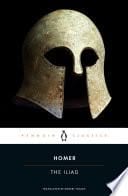
DESCRIPTION
The great war epic of Western literature, in a stunning translation by acclaimed classicist Robert Fagles A Penguin Classic Dating to the ninth century B.C., Homer’s timeless poem still vividly conveys the horror and heroism of men and gods wrestling with towering emotions and battling amidst devastation and destruction, as it moves inexorably to the wrenching, tragic conclusion of the Trojan War. Renowned classicist Bernard Knox observes in his superb introduction that although the violence of the Iliad is grim and relentless, it coexists with both images of civilized life and a poignant yearning for peace. Combining the skills of a poet and scholar, Robert Fagles brings the energy of contemporary language to this enduring heroic epic. He maintains the drive and metric music of Homer’s poetry, and evokes the impact and nuance of the Iliad’s mesmerizing repeated phrases in what Peter Levi calls “an astonishing performance.” For more than seventy years, Penguin has been the leading publisher of classic literature in the English-speaking world. With more than 1,700 titles, Penguin Classics represents a global bookshelf of the best works throughout history and across genres and disciplines. Readers trust the series to provide authoritative texts enhanced by introductions and notes by distinguished scholars and contemporary authors, as well as up-to-date translations by award-winning translators.
Review
🛠️ Active Reading Workflow
1. Prime (5 min)
- Thesis Prediction:
- Prior Knowledge:
- Questions to Answer:
2. Process (The “During” Loop)
Mark: T (Thesis), R (Reason), E (Evidence), D (Def), O (Objection).
- [ ] Q→A: Convert headings to questions; notes = answers.
- [ ] Feynman Check: Explain dense sections in 1-2 sentences.
- [ ] Originality: One original analogy/example per concept.
3. Review & Consolidate (Post-Session)
- [ ] Recall Dump: (Close book, list claims/terms).
- [ ] 3-2-1: 3 takeaways · 2 questions · 1 application.
- [ ] High-Yield Flashcards: (Definition, Claim → Reason, Objection).
🏛️ Analytical Deep-Dive (Adler/Paul-Elder)
| Element | Summary / Notes |
|---|---|
| Unity | The book in one sentence. |
| Problem | The central question the author is solving. |
| Propositions | Main claims in my own words. |
| Logic | Premises → Conclusion. |
| Criticism | Is the author uninformed, misinformed, or illogical? |
Counter-Argument (Steelman):
🚀 Application & Quality Gates
- The Experiment: [Define one behavior change].
- Gate 1: I can explain this in 3 mins without notes. [ ]
- Gate 2: I have at least one original counter-argument. [ ]
- Gate 3: Notes are <10% of original text length. [ ]
🖋️ Scratchpad
Unfiltered thoughts, argument trees, or “what if” scenarios.
AI Summary
Overview
Introduction
Chapter Objective
The objective of this introduction is to situate The Iliad not just as a foundational work of Western literature, but as a complex historical artifact that bridged the gap between an illiterate oral tradition and the dawn of written Greek culture. It intends to explain the “Homeric Question”—how the poem was composed and preserved—while providing a thematic framework for understanding the brutal realities of the Trojan War and the tragic evolution of Achilles.
The Poem and Its History
The title The Iliad translates to “a poem about Ilium” (Troy), yet its true subject is defined in its opening line: the “rage of Peleus’ son Achilles”. The introduction traces the text’s survival through 2,700 years, from the original papyrus rollsof the ancient world to the codex form adopted in the early Christian era, and finally to the printed editions of the Renaissance.
- The Survival of Greek: For nearly a thousand years after the fall of Rome, knowledge of the Greek text was lost in Western Europe, preserved only by the Byzantine Empire until it was reintroduced to Italy in the 14th century.
- The Homeric Question: In the 18th century, scholars like F.A. Wolf sparked a debate over whether Homer was a single individual or a name for a collection of shorter folk songs sewn together by later editors.
The Mainspring of the Plot
“the rage of Achilles—its cause, its course and its disastrous consequences—is the theme of the poem, the mainspring of the plot.” — Page 3
- Oral Tradition and Milman Parry: The 20th-century American scholar Milman Parry revolutionized Homeric studies by proving the poem was the product of an oral tradition. He demonstrated that the recurring epithets(e.g., “swift-footed Achilles,” “strong-greaved Achaeans”) were not merely decorative but functional metrical tools that allowed illiterate bards to improvise thousands of lines within the strict hexameter.
- Transition to Writing: While the poem is rooted in oral improvisation, the author argues that its monumental scale and structural complexity suggest that “Homer” may have used the newly introduced alphabet in the 8th century B.C. to record and refine his masterwork over a lifetime. Evidence for this is found in the “Dual” grammatical forms in Book 9, which were likely an uncorrected remnant of an earlier draft.
The Trojan War
The historicity of the war remains a point of contention. While 19th-century excavations by Heinrich Schliemannuncovered a Bronze Age civilization at Troy and Mycenae, Linear B tablets suggest these were bureaucratic, palace-centered societies rather than the world of “piratical chieftains” described by Homer.
- The Reality of Violence: The introduction emphasizes that the Greeks viewed war as a permanent, inescapable part of the human condition.
- Force as a Character: Following the analysis of Simone Weil, the introduction suggests that the true subject of the poem is “Force”—that which turns a person into a thing (a corpse or a slave).
The Terrible Beauty of War
“Everywhere in Homer’s saga of the rage of Achilles… we are made conscious at one and the same time of war’s ugly brutality and what Yeats called its ‘terrible beauty.’” — Page 29
Pinker’s supplement — Homeric war as “total” in social scope
Pinker reads the epics as depicting warfare that did not stop at opposing fighters: men were killed, portable wealth and livestock were plundered, and women were carried off for sexual and menial labor. Agamemnon’s exterminatory speech and Achilles’ description of his career as “fighting men for their women” make the absence of a modern combatant–civilian boundary especially stark. Pinker’s further point is causal: Homer’s characters lament war’s waste but treat war itself as an inescapable fate imposed by the gods rather than a human institution open to redesign.
Source boundary: this is Pinker’s interpretation of literary evidence, supported in his account by archaeology, ethnography, and history; it is not a casualty census or proof that every episode records an event. Chapter 1, PDF pp. 29–31 (file not included in this release)
The Trojans
Homer’s Troy is depicted as a polis (city-state), a matrix of civilization characterized by social order, family, and religious duty.
- Hector as the “Holder”: Hector (whose name means “Holder”) is the antithesis of Achilles. He is a man made for peace and family who fights only out of a sense of civic obligation.
- The Doom of Civilization: The tragedy of Troy lies in the fact that its refined culture cannot protect it from the superior force of the Achaeans.
The Gods
The Olympian gods represent the “double motivation” of the poem: every significant human action is viewed simultaneously as a personal choice and a divine intervention.
- The Nature of the Olympians: Unlike the humans, the gods are immortal and therefore exempt from the ultimate consequences of their actions. This makes them appear frivolous or even comic in their bickering, whereas human life, being finite, attains a “true dignity” that the gods lack.
- Fate vs. Will: The poem maintains an uneasy balance between Destiny (Moira), the will of Zeus, and individual human responsibility.
Achilles
Achilles is defined by his solipsistic devotion to his own glory (kleos). Having chosen a short life of fame over a long life of obscurity, he views any slight to his honor as a denial of his very existence.
- The Rejection of the Embassy: In Book 9, Achilles rejects Agamemnon’s gifts because they are offered without an apology; to accept them would be to accept a status of subordination.
- The Return to Humanity: Achilles’ trajectory takes him from human warrior to a “beast-like” or “god-like” state of total isolation following the death of Patroclus. He only returns to the human community in Book 24 when he feels pity for Priam, recognizing in the old king the image of his own doomed father.
Key Concepts
- The Homeric Epithet: A standardized descriptive phrase used to fit a name into a specific part of the metrical line.
- The “Homeric Question”: The scholarly debate regarding the single or multiple authorship of the Iliad and Odyssey.
- The Heroic Ideal: A value system where a man’s worth is measured by his prowess in battle and the public recognition (honor) he receives from his peers.
- Double Motivation: The simultaneous explanation of an event as the result of human will and divine intervention.
Key Terms
- Hexameter: The “six-beat” metrical line of Greek epic poetry.
- Atê: A state of “savage madness” or self-delusion that leads to ruin.
- Litai: “Prayers for forgiveness” or supplications that follow Atê to repair damage.
- Polis: The Greek city-state, represented by Troy as a center of civilization.
- Linear B: An early syllabic script used by Mycenaean scribes for palace inventories, unrelated to the later Greek alphabet.
Critical Analysis
The author presents a compelling synthesis of Milman Parry’s oral-formulaic theory with a “Unitarian” view of Homer as a conscious, monumental artist. The strength of the argument lies in its nuanced handling of the transition from oral to written text, using specific grammatical anomalies (like the “dual” in Book 9) as evidence for a single poet’s “second thoughts”. A potential weakness is the necessary speculation regarding the 8th-century B.C. environment; the author admits that the theory of a written “authentic” text is “pure speculation”. However, the literary analysis of Achilles’ psychological journey remains a particularly strong and insightful portion of the chapter.
Questions for Reflection
- How does the “immortality” of the gods actually decrease the stakes of their actions compared to the “mortality” of the human heroes?
- If Achilles had accepted Agamemnon’s gifts in Book 9, would he have remained a “tragic hero,” or would he have merely been a “subject”?
- In what ways does Hector’s role as the “Holder” of the city make his eventual death more significant for the theme of civilization?
- Why is the “Shield of Achilles” described with so many scenes of peace if it is a piece of equipment for war?
Connections
- Milman Parry: Prove the oral-formulaic nature of the poems.
- Simone Weil: Author of L’Iliade ou le Poème de la Force.
- Heinrich Schliemann: The excavator of Troy and Mycenae.
- Thucydides: The Greek historian who accepted the Trojan War as history while critiquing its scale.
- Socrates: Invoked Achilles during his trial to justify choosing death over compromise
Book One: The Rage of Achilles
This summary covers Book One of Homer’s The Iliad (translated by Robert Fagles), titled “The Rage of Achilles.”This opening book establishes the central conflict of the epic: the internal strife among the Achaean leaders and the divine machinery that drives human destiny.
Chapter Objective
The primary objective of Book One is to introduce the “Rage of Achilles”—the “mainspring of the plot” identified in the introduction. It establishes the cause of the quarrel between Agamemnon and Achilles, the resulting withdrawal of Achilles from battle, and the celestial pact between Thetis and Zeus that ensures the Achaeans will suffer for their leader’s arrogance.
Book One: The Rage of Achilles
Main Ideas: The Source of the Conflict
The epic begins in media res with a plague sent by Apollo to devastate the Achaean army. The plague is divine retribution for Agamemnon’s refusal to return Chryseis to her father, Chryses, a priest of Apollo, despite the priest offering a “priceless ransom”.
- Agamemnon’s Hubris: Despite the Achaean army’s plea to respect the priest, Agamemnon brutally dismisses Chryses, threatening him with violence and declaring his intent to keep the girl as a slave and concubine.
- The Prophet’s Revelation: After ten days of death, Achilles summons a muster and calls on the seer Calchas to explain Apollo’s wrath. Calchas reveals the truth only after Achilles vows to protect him from Agamemnon’s anger.
- The Great Quarrel: Agamemnon agrees to return Chryseis to save his people but demands immediate compensation: he will seize another captain’s prize to maintain his “honor”. This leads to a violent verbal exchange where Achilles labels Agamemnon the “most grasping man alive” and a “dog-face”.
The Warning of Achilles “I tell you this, and I swear a mighty oath upon it… someday, I swear, a yearning for Achilles will strike Achaea’s sons and all your armies! But then, Atrides, harrowed as you will be, nothing you do can save you—not when your hordes of fighters drop and die, cut down by the hands of man-killing Hector!” — Page 85
- Divine Intervention: As Achilles considers killing Agamemnon, Athena (sent by Hera) intervenes, seizing him by the hair and commanding him to use words instead of his sword.
- Achilles’ Withdrawal: Achilles dashes his scepter to the ground, swearing to leave the war. Agamemnon carries out his threat, sending heralds to seize Briseis, Achilles’ prize of honor.
Main Ideas: The Divine Pact
Following the seizure of Briseis, a weeping Achilles appeals to his mother, the sea-nymph Thetis.
- The Appeal to Zeus: Achilles asks Thetis to use her past favor with Zeus (when she rescued him from a divine coup) to persuade him to help the Trojans. The goal is to pin the Achaeans against their ships so Agamemnon realizes his “madness” in disgracing the “best of the Achaeans”.
- The Olympian Reaction: Zeus reluctantly agrees, fearing the “shrill abuse” of his wife, Hera, who favors the Achaeans. He seals the pact with a “craggy dark” bow that spreads “giant shock waves” through Olympus.
- The Restoration of Chryseis: Parallel to the domestic drama on Olympus, Odysseus successfully returns Chryseis to her father and performs a grand sacrifice, ending the plague among the men.
The Olympian Order “Obey my orders, for fear the gods, however many Olympus holds, are powerless to protect you when I come to throttle you with my irresistible hands.” — Page 97
- Domestic Peace on Olympus: To avoid a celestial civil war, the crippled smith-god Hephaestus urges Hera to be patient, reminding her of Zeus’s superior strength and serving nectar to the gods until “uncontrollable laughter” breaks the tension.
Key Concepts
- The Heroic Scepter: Introduced as a “mighty force” behind an oath; it symbolizes the “honored customs” and judgments handed down by Zeus.
- Double Motivation: The plague is caused by Agamemnon’s human choice to spurn a priest, yet it is executed through Apollo’s divine arrows.
- Gifts vs. Honor: Agamemnon demands a “prize” (geras) not for its material value, but as a public indicator of his status (timeˉ); Achilles withdraws because the theft of his prize is a total public disgrace.
Key Terms
- Achaeans / Argives / Danaans: The various names used by Homer for the collective Greek forces.
- Smintheus: A title for Apollo, meaning “Lord of the Plague” or “Mouse-god”.
- The Hundred-Hander (Briareus): A giant monster Thetis used to defend Zeus, representing the raw power she holds over the king of gods.
- Nectar: The sweet drink of the gods served on Olympus.
Critical Analysis
Homer’s argument in Book One centers on the idea that personal pride among leaders is more destructive than the enemy’s spear. The narrative effectively uses symmetry: it begins with a priest’s daughter being taken and ends with a priest’s daughter being returned, while a second daughter (Briseis) is taken in between.
- Strengths: The psychological realism of the quarrel is profound; both men have logically consistent (though selfish) grievances. The contrast between the “corpse-fires” in the camp and the “sumptuous feast” on Olympus highlights the tragic indifference of the divine to human suffering.
- Weaknesses: Modern readers may find the “logical leap” of the gods’ intervention—specifically Zeus agreeing to slaughter his own favored troops just to soothe a nymph’s son—to be a jarring display of divine pettiness.
Questions for Reflection
- Is Agamemnon’s demand for a replacement prize legally “just” within the warrior code, even if it is morally “grasping”?
- How does Athena’s physical intervention (pulling Achilles’ hair) change our understanding of his “free will” in that moment?
- Compare the “Rage” of Achilles on earth to the “Rage” of Zeus on Olympus. How do their respective powers limit or expand the consequences of their anger?
Connections
- Thetis: Previously mentioned as the mother of Achilles; her role as a “saviour” of Zeus is detailed here.
- Calchas: The “clearest of seers” who led the ships to Troy.
- Hector: Mentioned by Achilles as the “man-killing” force that will soon devastate the Greeks in his absence.
Book Two: The Great Gathering of Armies
This summary covers Book Two of Homer’s The Iliad (translated by Robert Fagles), titled “The Great Gathering of Armies.” It details the psychological manipulation of Agamemnon by Zeus, the near-collapse of the Achaean war effort, and the massive catalog of forces on both sides.
Chapter Objective
Book Two serves as a bridge between the personal quarrel of Book One and the large-scale military conflict of the epic. It aims to illustrate the divine manipulation of human leaders, the fragility of military morale, and the sheer geopolitical scale of the Trojan War through the famous “Catalogue of Ships”.
Main Ideas: The False Dream and the Test
While the other gods and men sleep, Zeus plots how to honor Achilles by causing the Achaeans to suffer. He sends a “murderous Dream” to Agamemnon, appearing in the form of the wise counselor Nestor, to falsely promise that the Greeks can take Troy “at once, full force”.
- Agamemnon’s Folly: Believing the dream, Agamemnon wakes with racing hopes, unaware that Zeus intends to “plague the Argives and Trojans both”.
- The “Test” of the Troops: Instead of commanding an immediate attack, Agamemnon decides to test his men’s loyalty by telling them to “cut and run” for home. This backfires when the weary troops, “desperate for home,” actually sprint for the ships, nearly ending the war through sheer exhaustion.
- Odysseus’s Intervention: Prompted by Athena, Odysseus uses Agamemnon’s royal scepter to restore order. He treats the kings with “winning words” but uses physical force and insults to silence the common soldiers.
The Divine Deception “He thought he would take the city of Priam then, that very day, the fool. How could he know what work the Father had in mind? The Father, still bent on plaguing the Argives and Trojans both with wounds and groans in the bloody press of battle.” — Page 100
Main Ideas: Thersites and the Restoration of Order
The order is threatened by Thersites, described as the “ugliest man who ever came to Troy,” who represents the voice of the common soldier’s resentment against Agamemnon’s greed.
- The Commoner’s Complaint: Thersites echoes Achilles’ earlier arguments, accusing Agamemnon of sitting in Troy while his shelters are packed with “the lion’s share of bronze” and “plenty of women” provided by the rank and file.
- Odysseus’s Brutality: To prevent a mutiny, Odysseus publicly humiliates Thersites, striking him across the back with the scepter until he bleeds. The Achaeans, despite their low morale, “laughed now, good hearty laughter” at Thersites’ pain, signaling the restoration of Agamemnon’s authority.
- The Omen at Aulis: Odysseus reminds the troops of the prophecy by Calchas involving a snake that devoured eight sparrows and their mother, totaling nine, signifying that they would take Troy in the tenth year.
Main Ideas: The Catalogue of Ships
The book concludes with a massive, formal enumeration of the Achaean and Trojan forces, a section traditional bards used to showcase their memory and the geographic reach of the war.
- Achaean Might: The poet lists over 1,000 ships and numerous contingents, emphasizing that Agamemnon “led by far the largest army”.
- Achilles’ Absence: Even in this grand muster, the poet notes that the Myrmidons are “sporting along the surf” and “yearning for their leader,” as Achilles remains in his ships, raging against Agamemnon.
- The Trojan Assembly: Warned by the messenger Iris, Hector breaks up his own assembly and marshals the Trojans and their allies, who “speak a thousand different tongues”.
The Burden of Memory “The mass of troops I could never tally, never name, not even if I had ten tongues and ten mouths, a tireless voice and the heart inside me bronze, never unless you Muses of Olympus… sing, sing in memory all who gathered under Troy.” — Page 115
Key Concepts
- Divine Deception: Zeus uses a “murderous Dream” to lure Agamemnon into a disastrous decision, showing that gods often work through the subversion of human perception.
- The Fragility of Authority: Agamemnon’s failed “test” reveals that the army is held together by a thin thread of honor and divine mandate, which can easily unravel into a “massed assembly… shaken”.
- Anti-Heroism (Thersites): Thersites serves as a foil to the aristocratic heroes; his “insubordinate” rant provides a rare glimpse into the grievances of the non-elite soldiers.
- Prophetic Signs (The Snake of Aulis): The snake and sparrows omen acts as a monument clear to see, providing the theological justification for the war’s long duration.
Key Terms
- Aulis: The Greek port where the vast armada first gathered and where the omen of the snake occurred.
- Myrmidons: The elite troops of Achilles who refuse to fight while their leader is in a “rage”.
- Scamander Plain: The location outside Troy where the armies draw into position for the first time in the poem.
- The Royal Scepter: A physical symbol of lineage and divine right, tracing back from Hephaestus to Zeus to Agamemnon.
Critical Analysis
Homer’s presentation of Agamemnon in this book highlights a logical leap in leadership: Agamemnon’s decision to “test” his men by telling them to leave is a profound strategic error that nearly ruins the expedition. The strength of the narrative lies in the character of Odysseus, who provides the “winning words” and necessary violence to prevent total collapse.
However, there is a clear aristocratic bias: the poet portrays the only commoner who speaks up, Thersites, as physically grotesque and morally “ugly,” justifying Odysseus’s physical assault on him as a “terrific stroke” for the good of the men. This serves to reinforce the “kingly scepter and royal rights of custom” over “mob rule”.
Questions for Reflection
- Why does Zeus choose to deceive Agamemnon with a dream of Nestor rather than simply commanding the army to move?
- Is Thersites truly “worthless,” or is the poet’s description of his ugliness a way to delegitimize a valid political grievance?
- What does the “Catalogue of Ships” tell us about the geographic identity of the ancient Greek world?
- How does the imagery of “ravening fire” and “swarms of flies” used to describe the massing armies affect your perception of the individual soldier?
Connections
- Nestor: His appearance in Agamemnon’s dream underscores his status as the most trusted advisor.
- Telemachus: Mentioned by Odysseus, linking the events of the Iliad to the personal stakes of the Odyssey.
- Typhoeus: A mythological monster mentioned to illustrate the power and rage of Zeus.
- Sarpedon and Glaucus: Mentioned at the end of the Trojan catalogue, setting them up as major future antagonists.
Book Three: Helen Reviews the Champions
This summary covers Book Three of Homer’s The Iliad (translated by Robert Fagles), titled “Helen Reviews the Champions.” This book shifts the focus from the general muster of the armies to the personal conflict at the heart of the war: the rivalry between Menelaus and Paris over Helen.
Chapter Objective
Book Three intends to narrow the scope of the Trojan War from a clash of civilizations to a personal duel between its primary antagonists. It explores the themes of individual courage versus cowardice, the “terrible beauty” of Helen, and the manipulative role of the gods—specifically Aphrodite—in sustaining human conflict even when peace seems attainable.
Book Three: Helen Reviews the Champions
Main Ideas: The Challenge and the Duel
The book opens with the two armies advancing; the Trojans with “cries and the din of war” and the Achaeans in a “strong silence”. Paris initially steps forward as a challenger but recoils in terror when Menelaus, like a “lion lighting on some handsome carcass,” steps out to meet him.
- Hector’s Rebuke: Hector harshly shames Paris for his cowardice, calling him a “curse to your father” and noting that he has “no pith, no fighting strength” despite his good looks.
- The Proposal of Peace: Paris accepts the criticism and proposes a single combat between himself and Menelaus to decide the fate of Helen and her wealth, allowing the rest of the armies to “seal in blood their binding pacts of friendship” and end the war.
- The Oath and the Sacrifice: Both Agamemnon and Menelaus agree to the truce. Menelaus insists that King Priam himself seal the oath, as “the minds of the younger men are always flighty”.
The Cost of the Quarrel “Look what heavy casualties you have suffered just for me, my violent quarrel, and Paris who brought it on you all. Now we’ll fight—and death to the one marked out for doom and death!” — Page 132
Main Ideas: Helen and the “Teichoscopia”
As the armies prepare for the duel, the narrative shifts to Helen in Troy. This section, known as the Teichoscopia(viewing from the walls), provides a character study of the Greek leaders through the eyes of their former kinswoman.
- The Elders’ Pity: The old men of Troy, watching Helen approach, admit that while she is a “ravishing” beauty with the “terrible beauty” of a goddess, she must be sent away to save Troy from “irresistible sorrow”.
- Helen’s Regret: Helen expresses deep self-loathing to Priam, wishing “grim death” had taken her the day she followed Paris to Troy.
- Identifying the Champions: At Priam’s request, Helen identifies Agamemnon (“regal… majestic”), Odysseus (“the great tactician”), and Ajax (“bulwark of the Achaeans”).
Main Ideas: The Combat and Divine Rescue
The duel between Paris and Menelaus proceeds with high stakes. Menelaus dominates the fight, surviving Paris’s spear throw and then shattering his own sword against Paris’s helmet.
- The Choking of Paris: Menelaus attempts to drag Paris away by his helmet, nearly strangling him with the “braided chin-strap”.
- Aphrodite’s Interference: The goddess Aphrodite intervenes, snapping the chin-strap and whisking Paris away in a “swirl of mist” to his scented bedroom.
- The Forced Reunion: Aphrodite then coerces a reluctant Helen to join Paris in bed. When Helen resists and suggests she should “be a mortal” and “suffer for Paris,” Aphrodite threatens her with “immortal rage” and “withering hate”.
- The Stalemate: The book ends with Paris and Helen in bed while Menelaus stalks the lines “like a wild beast,” unable to find his opponent. Agamemnon declares Menelaus the victor and demands the surrender of Helen.
Key Concepts
- Teichoscopia (Viewing from the Walls): A literary device where Helen identifies the Achaean leaders for Priam, serving to introduce the “champions” to the reader and provide historical context.
- The “Terrible Beauty” of Helen: The concept that Helen’s beauty is so divine and overwhelming that it transcends human blame, yet remains the source of absolute destruction.
- Divine Manipulation: The gods do not just watch the war; they actively subvert human attempts at peace. Aphrodite’s rescue of Paris ensures the war will continue despite the clear outcome of the duel.
Key Terms
- Atrisdes: Refers to the sons of Atreus—Agamemnon and Menelaus.
- Scaean Gates: The main gates of Troy where the elders sit and Helen reviews the champions.
- Pact of Friendship: The formal, blood-sealed treaty intended to end the war through single combat.
- Lacedaemon: The homeland of Helen and Menelaus (Sparta).
Critical Analysis
Homer skillfully uses this chapter to contrast heroic values with erotic impulses. The strength of the narrative lies in its characterization: Hector represents duty, Menelaus represents righteous vengeance, and Paris represents the “soft” gifts of Aphrodite that are useless in battle.
A notable logical leap often discussed by scholars is Priam’s ignorance of the Greek leaders after nine years of siege; however, this is a narrative necessity for the “Helen Reviews the Champions” sequence. The author’s use of the “cicada” simile for the old men of Troy is a particularly strong piece of evidence for the poem’s high literary artistry, contrasting their “vibrant music” with their physical inability to fight.
Questions for Reflection
- Is Paris’s cowardice a personal failing, or is he merely a victim/puppet of Aphrodite’s “irresistible longing”?
- Why does Priam refuse to blame Helen for the war, choosing instead to “hold the gods to blame”?
- How does the “hushed silence” of the armies during the challenge contrast with the “cries and din” of the opening march?
- In the final scene, does Helen’s submission to Paris represent a defeat of her character or the absolute power of divine will?
Connections
- The Iliad Introduction (pp. 3-64): This book provides the first primary source evidence for the themes of “Force” and “The City” discussed in the introduction.
- Yeats: Mentioned by the translator regarding the “terrible beauty” of Helen.
- Phrygia and Maeonia: Lands mentioned by Priam and Helen as part of the wider geopolitical world surrounding Troy.
Helen & Paris
The story of Helen and Paris is the catalyst for the Trojan War, serving as the central conflict between the domestic world of Troy and the warrior culture of the Achaeans. Their relationship is depicted not merely as a romantic affair, but as a complex interplay of divine manipulation, personal regret, and social destruction.
The Origin of the Affair
The union began when Paris, a prince of Troy, traveled to Lacedaemon (Sparta). While there, he was hosted by King Menelaus, but he ultimately “swept up” Helen—Menelaus’s wife and the most beautiful woman in the world—and sailed her away to Troy.
- Divine Favor: Paris’s success was rooted in the “lovely gifts of golden Aphrodite”.
- The Judgment of Paris: Though mentioned only briefly in the Iliad, the goddess Hera’s hatred for Troy stems from the “Judgment of Paris,” where he chose Aphrodite over Hera and Athena in a beauty contest.
- The Breach of Hospitality: Menelaus views Paris’s actions as a profound violation of the host-guest bond, praying to Zeus to crush Paris so that future men will “shrink from wounding the host who showers him with kindness”.
Character Dynamics and Regret
In Troy, the couple’s relationship is strained by the weight of the war their union caused.
- Helen’s Self-Loathing: Helen is portrayed as deeply remorseful, referring to herself as a “bitch” and “vicious” for the misery she has brought upon both armies. She frequently wishes for death rather than having followed Paris.
- Paris’s Lack of Pith: Unlike his brother Hector, Paris is often criticized for lacking “fighting strength” and being “mad for women”. Hector labels him a “prince of beauty” who is a “curse to your father, your city and all your people”.
- The Elders’ Perspective: The old men of Troy admit that Helen’s beauty is “terrible” and goddess-like, yet they still wish for her to go home to prevent further “irresistible sorrow” for their children.
The Duel for Helen
In an attempt to end the nine-year siege, a duel is organized between the two rivals: Menelaus and Paris.
- The Terms: It was agreed that the winner would take Helen and her treasures, while the rest of the armies would part in peace.
- Divine Rescue: Menelaus clearly dominates the fight and is on the verge of strangling Paris when Aphrodite intervenes. She snaps Paris’s chin-strap, wraps him in a “swirl of mist,” and transports him safely to his bedroom in Troy.
- Forced Reunion: Helen initially refuses to join Paris in his room, mocking his cowardice. However, Aphrodite threatens Helen with “immortal rage” and “withering hate,” forcing her to submit and return to his side.
Legacy of the Story
The story of Helen and Paris functions as a “purest mirror” of force in human history. It highlights the fragility of civilization, suggesting that no matter how refined a city like Troy is, it cannot survive once it loses the power to meet the force brought upon it by the consequences of such a “violent quarrel”.
Chapter Six: Hector Returns to Troy
This summary covers Book Six of Homer’s The Iliad (translated by Robert Fagles), titled **“Hector Returns to Troy.” It details the shift from the brutal mechanics of the battlefield to the fragile domesticity of the city, culminating in one of the most famous farewells in Western literature.
Chapter Objective
The objective of Book Six is to humanize the conflict by contrasting the “raw world of tent shelters” with the civilized life of the polis. It serves to illustrate that while the Achaeans fight for individual glory (kleos) and booty, the Trojans—specifically Hector—fight for the survival of their families and their social order. This chapter establishes Hector as the “Holder” of Troy and the antithesis of the solipsistic Achilles.
The Battle Rages and the Rally of Troy
The narrative begins with a series of grisly Achaean successes on the plain, emphasizing the “shattering war cry” of Diomedes and the “rough justice” of Agamemnon, who refuses to allow Menelaus to take a prisoner for ransom, insisting instead on the total annihilation of the Trojans .
- Agamemnon’s Brutality: Agamemnon rebukes his brother for being “soft,” demanding that not even an unborn baby boy in his mother’s belly should escape death.
- Helenus’ Strategic Shift: The seer Helenus recognizes that the Trojan lines are breaking under the “invincible headlong terror” of Diomedes. He commands Hector to leave the field and return to the city to organize a religious appeal to Athena.
Glaucus and Diomedes: The Pact of Friendship
In a remarkable pause in the violence, Glaucus and Diomedes meet in “no man’s land”. Before fighting, they exchange lineages, leading to the discovery of an ancestral bond of xenia (guest-friendship) .
- The Metaphor of Leaves: Glaucus famously compares the lives of men to leaves that are scattered by the wind while new ones burst with spring.
- The Triumph of Tradition: Upon realizing that their grandfathers were guest-friends, they decide to “keep clear of each other’s spears” and trade armor as a public sign of their pact .
The Fragility of Man
“Like the generations of leaves, the lives of mortal men. Now the wind scatters the old leaves across the earth, now the living timber bursts with the new buds and spring comes round again. And so with men: as one generation comes to life, another dies away.” — Page 200
- The Uneven Trade: The poet notes that Zeus “stole Glaucus’ wits away,” as he traded his gold armor for Diomedes’ bronze—the worth of a hundred oxen for just nine .
Hector in the City: The Three Women
Hector’s return to Troy takes him through a series of domestic encounters that highlight different facets of his duty and the city’s desperation .
- Hecuba (The Mother): She meets him with “honeyed, mellow wine,” which Hector refuses, fearing it would “sap my limbs” and make him lose his nerve for war . She carries out the prayer to Athena, which the goddess ultimately refuses.
- Helen (The Sister-in-Law): In the “sumptuous halls” of Paris, Hector finds his brother polishing his gear rather than fighting . Helen expresses deep self-loathing, calling herself a “bitch” and “horror to freeze the heart,” and begs Hector to rest.
- Andromache (The Wife): Hector finally finds his wife at the Scaean Gates. She pleads with him to stay on the ramparts, reminding him that Achilles killed her entire family and that Hector is now her “father… noble mother, a brother too”.
The Farewell at the Scaean Gates
The book reaches its emotional peak as Hector explains his “tragic dilemma”: he knows Troy is doomed and that Andromache will likely be led into slavery, yet he cannot “shrink from battle” due to the standards of martial valor .
- Astyanax’s Fear: In a humanizing moment, their baby son recoils from Hector’s “horsehair crest,” terrified by the “bristling terror” of the helmet. Hector removes the helmet to kiss the boy, praying that he grows to be a “better man than his father” .
- The Comfort of Fate: Hector reassures Andromache that “no man will hurl me down to Death, against my fate,” and that fate is something no one escapes.
The Duty of the Prince
“All this weighs on my mind too, dear woman. But I would die of shame to face the men of Troy and the Trojan women trailing their long robes if I would shrink from battle now, a coward. Nor does the spirit urge me on that way. I’ve learned it all too well. To stand up bravely, always to fight in the front ranks of Trojan soldiers, winning my father great glory, glory for myself.” — Page 210
Key Concepts
- Xenia (Guest-Friendship): A sacred social bond between hosts and guests that persists across generations and can temporarily halt the “killing-fury” of war.
- The Heroic Paradox: Hector’s awareness that his city is destined to fall (“the day will come when sacred Troy must die”) does not lead to despair or surrender, but to a more intense devotion to duty.
- Dual Motivation: The belief that human actions (Hector returning to the city) and divine will (Athena refusing the prayer) occur simultaneously and independently.
Key Terms
- Astyanax: Literally “Lord of the City”; Hector’s son, named because his father was the “lone defense of Troy”.
- Bellerophon: The hero whose story Glaucus tells, illustrating how “murderous signs” (early writing) could be used to send messages of death.
- Chimaera: A “grim monster” with a lion’s head, goat’s body, and snake’s tail slain by Bellerophon.
- Scaean Gates: The primary entrance to Troy and the site of the poem’s most human interactions.
Critical Analysis
The strength of Book Six lies in its structural juxtaposition. By placing the “Pact of Friendship” between Glaucus and Diomedes immediately before Hector’s return to his family, Homer emphasizes that war is an interruption of an older, more humane order. The introduction notes that this scene is the “purest mirror” of force; we see how Force turns people into things, as Hector realizes his wife is already viewed as a future slave by his enemies .
A potential “logical leap” mentioned by scholars is the existence of the “murderous signs” in Bellerophon’s story, which suggests the poet was aware of writing even though his characters inhabit an illiterate, oral world . The most powerful evidence of Homer’s artistry here is the “helmet motif”—Hector must literally set aside the symbols of his violence to embrace his son, a visual metaphor for the incompatibility of war and fatherhood.
Questions for Reflection
- How does the encounter between Glaucus and Diomedes complicate our view of the Achaeans as purely “savage” invaders?
- Why does Athena refuse the Trojan women’s prayer, and what does this suggest about the “Double Motivation” of the gods?
- Compare Hector’s reaction to Helen with his reaction to Andromache. What does this reveal about his internal priorities?
- In what ways does the naming of Astyanax (“Lord of the City”) underscore the tragedy of Troy’s eventual fall?
Connections
- Socrates: Invoked Achilles’ choice in Book Six as a justification for his own death sentence .
- Simone Weil: Her essay L’Iliade ou le Poème de la Force is the primary modern lens for understanding the dehumanizing power of the battle scenes in this chapter.
- The Judgment of Paris: Briefly mentioned as the underlying cause of Hera and Athena’s relentless hatred for the city .
- Heinrich Schliemann: Excavated the historical Troy, providing the physical context for the “sumptuous halls” described in this book .
Book Nine: The Embassy to Achilles
This summary covers Book Nine of Homer’s The Iliad (translated by Robert Fagles), titled “The Embassy to Achilles.” This book is widely considered the psychological and philosophical heart of the epic, as it forces a confrontation between the traditional heroic code and Achilles’ growing isolation.
Chapter Objective
The objective of Book Nine is to detail the Greek army’s moment of total crisis and the failed attempt to bring Achillesback into the war through material bribery . It intends to prove that Achilles’ “rage” has evolved from a simple dispute over a prize into a fundamental rejection of the social contract and the value of glory (kleos) itself .
Greek Despair and Agamemnon’s Crisis
The book opens with the Achaeans struck by “godsent Panic”. Agamemnon, overwhelmed by despair and weeping “like a dark spring,” calls a secret muster and proposes that the Greeks flee for home, admitting that Zeus has “entangled me in madness”.
- Diomedes’ Rebuttal: Diomedes publicly shames the king, stating that while Agamemnon may have the “scepter of power,” he lacks the “heart” for war. He vows that even if everyone else leaves, he and Sthenelus will stay until Troy falls.
- Nestor’s Strategy: The elder statesman Nestor intervenes to stop the infighting, advising Agamemnon to host a feast for the leaders and focus on a plan to appease Achilles.
The Great Ransom: Agamemnon’s Offer
Following Nestor’s advice, Agamemnon publicly admits his atê (blind madness) and lists an astronomical “priceless ransom” to win back Achilles.
- The Materials of Honor: The offer includes seven tripods, ten bars of gold, twenty shining cauldrons, and twelve prize-winning stallions.
- The Human Cost: He promises to return Briseis (swearing he never touched her) and offers the hand of his daughter in marriage, accompanied by seven “well-peopled” cities as a dowry.
- The Hidden Condition: Crucially, Agamemnon ends his offer with an internal demand for submission, which the ambassadors later choose to omit .
The Demand for Submission
“Let him submit to me! … Let him bow down to me! I am the greater king. I am the elder-born, I claim the greater man.” — Page 257
The Embassy and Odysseus’s Plea
Agamemnon dispatches three ambassadors: Odysseus, Ajax, and Phoenix. They find Achilles playing a “silver-studded lyre,” singing of the “famous deeds of fighting men”.
- Odysseus’s Tact: Odysseus delivers a masterful speech, emphasizing the Greek peril—Hector is at the ships, “blazing in all his fury”—and repeating the list of Agamemnon’s gifts .
- The Appeal to Pity: He invokes the memory of Achilles’ father, Peleus, and the advice to “check your overpowering spirit”.
The Rejection: Achilles’ Philosophical Shift
Achilles delivers a long, scorching response that represents his total break from Achaean society.
- The Worthlessness of War: He argues that there is “no thanks” for the man who “battles his enemies’ forces nonstop”. He compares Agamemnon to a man who stays safe while others “bear the brunt of the raw, savage fighting”.
- Rejection of the Bribe: Achilles sees the gifts not as honor, but as a “splinter” from a man who has broken his trust.
The Two Fates of Achilles
“Mother tells me… two fates bear me on to the day of death. If I hold out here and I lay siege to Troy, my journey home is gone, but my glory never dies. If I voyage back to the fatherland I love, my pride, my glory dies… true, but the life that’s left me will be long.” — Page 265
The Plea of Phoenix and the Story of Meleager
The aging Phoenix, who raised Achilles, attempts a more emotional approach.
- The “Prayers” (Litai): He uses an allegory of the Litai, the “daughters of mighty Zeus” who follow after Atê to heal the damage she causes, urging Achilles not to spurn them .
- The Meleager Paradigm: Phoenix tells the story of Meleager, a hero who refused to fight for his city in a rage, only to relent when it was too late to receive the gifts and honors originally promised . He warns Achilles that if he waits until the ships are burning, his “honor will not be the same”.
The Blunt Truth and the Return
Ajax provides the final appeal, characterized by its brevity and frustration. He accuses Achilles of having a “heart of iron” and being “cruel” to his comrades who “honored him most”.
- Achilles’ Compromise: Moved by Ajax but still fueled by rage, Achilles softens his stance slightly: he will not sail tomorrow, but he will not fight until Hector “reaches the Myrmidon ships… gutting the hulls with fire”.
- The Report to Agamemnon: The embassy returns, and Odysseus delivers the grim news: “Achilles has no mind to quench his anger… he rejects you, he rejects your gifts”.
Key Concepts
- The Heroic Dilemma: The choice between a short, glorious life (kleos) and a long, obscure one. Book Nine shows Achilles actively contemplating the latter for the first time.
- Solipsism: The state Achilles enters where his internal sense of injury outweighs the survival of his entire culture .
- Atê and Litai: The theological framework for understanding human error and the necessity of accepting an apology (which Achilles refuses to do) .
- Dual Motivation: The interplay between Agamemnon’s “madness” as a divine plague from Zeus and his own human greed.
Key Terms
- Myrmidons: The elite troops led by Achilles.
- Phthia: Achilles’ homeland, representing the life of peace and longevity he considers returning to.
- Kinsman-Hospitality: The bond Achilles invokes when he welcomes the ambassadors, contrasting it with the “outrage” of Agamemnon.
- Tripods and Cauldrons: Standard units of Bronze Age currency and markers of status offered in the ransom.
Critical Analysis
The strength of the “Embassy” chapter lies in its psychological realism. Each ambassador speaks with a distinct voice: Odysseus with “tactful” logic, Phoenix with “paternal” emotion, and Ajax with “soldierly” bluntness. This multi-angled approach highlights that Achilles’ problem is no longer social, but existential.
A potential weakness in the Achaean argument—noted by scholars—is that Agamemnon offers restitution but never a formal apology . By maintaining his status as the “greater king,” Agamemnon ensures that Achilles sees the gifts as a token of his own subordination rather than a restoration of his honor . The survival of the “Dual” grammatical forms in the Greek text of this book (referring to only two ambassadors) remains a major piece of evidence for the theory that Phoenix was a later addition to an original draft .
Questions for Reflection
- Why does Achilles value the “deeds of fighting men” in song while refusing to perform them in reality?
- If the ambassadors had included Agamemnon’s demand for submission, how would that have changed Achilles’ reaction?
- Compare the story of Meleager to Achilles’ current situation. Is Phoenix’s warning a prophecy or a manipulation?
- How does Achilles’ rejection of the “Two Fates” disrupt the entire value system of the Greek army?
Connections
- Book One: The origin of the quarrel between Agamemnon and Achilles.
- The “Homeric Question”: The presence of the “Dual” forms in this chapter is a primary scholarly argument for a written, refined text .
- Aristotle: His definition of the “beast or god” as one who is “no part of the community” is used by the intro to describe Achilles’ state in this book .
- Peleus: Achilles’ father, whose absence is the emotional core of the pleas from both Odysseus and Phoenix.
Book Sixteen: Patroclus Fights and Dies
This summary covers Book Sixteen of Homer’s The Iliad (translated by Robert Fagles), titled “Patroclus Fights and Dies.” This chapter represents the ultimate turning point of the epic, where the “Rage of Achilles” shifts from a passive withdrawal to an active, lethal pursuit of vengeance.
Chapter Objective
The objective of Book Sixteen is to demonstrate the tragic consequences of Achilles’ prolonged absence and the “double-edged” nature of pity . It intends to show how Patroclus, acting as a surrogate for Achilles, successfully saves the Achaean ships but, by overstepping his bounds, triggers his own death—thereby forcing Achilles to reconcile with Agamemnon to face Hector .
The Plea of Patroclus
The book opens with Patroclus returning to Achilles “weeping warm tears like a dark spring”. He delivers a blistering critique of Achilles’ “unpitying” nature, accusing him of having a heart born of “the gray salt sea” and “sheer hard rocks”.
- The Request for the Armor: Patroclus begs to lead the Myrmidons into battle wearing Achilles’ armor, hoping the Trojans will mistake him for the great runner and “take a breathing space from war”.
- Achilles’ Yielding: Achilles agrees but sets a strict condition: Patroclus must only drive the Trojans from the ships and “not race on to the city”. He fears that if Patroclus wins too much glory, it will diminish Achilles’ own status and provoke the gods.
- The Solipsism of Glory: In a moment of extreme isolation, Achilles wishes that every Trojan and Achaean might die, so that he and Patroclus alone might “bring Troy’s hallowed crown of towers toppling down”.
The Limits of the Mission
“But once you have whipped the enemy from the fleet, you must come back, Patroclus. Even if Zeus the thundering lord of Hera lets you seize your glory, you must not burn for the race to fight the Trojans… you will only make my glory less.” — Page 416
The Aristeia of Patroclus
As the first Achaean ship is set ablaze, Achilles sends his Myrmidons into the fray. Patroclus leads the charge, appearing to the Trojans as the “brilliant Achilles” himself.
- The Breaking of the Siege: The Myrmidons swarm the Trojans “like wasps beside a road,” and Patroclus begins a systematic slaughter of the Trojan captains.
- The Death of Sarpedon: Patroclus meets Sarpedon, the son of Zeus. Their duel is the centerpiece of the battle. Patroclus spears Sarpedon in the chest, and the Trojan hero falls “as an oak or a silver poplar falls”.
- The Divine Conflict: On Olympus, Zeus considers saving his son but is rebuked by Hera, who reminds him that if he violates fate to save Sarpedon, every other god will demand to save their own mortal children . Zeus settles for having Apollo rescue and wash the body for burial in Lycia.
The Overreaching Pursuit
Ignoring Achilles’ warning, Patroclus becomes “frenzied” by his success and drives the Trojans back to the very walls of Troy.
- The Assault on the Walls: Three times Patroclus attempts to scale the “steep jutting tower,” and three times Apollo beats him back, warning that “the city of proud Trojans is not fated to fall to your spear”.
- The Divine Strike: Finally, Apollo intervenes directly. He hits Patroclus from behind with a “mighty palm,” knocking the helmet from his head and shattering his spear. This physical intervention “unmanned” Patroclus, turning him from a hero back into a “thing”.
- The Killing Blow: Disoriented and disarmed, Patroclus is first stabbed by the young Trojan Euphorbus and then finished off by Hector, who plunges a spear into his bowels.
The Last Word of Patroclus
“No, deadly fate in league with Apollo killed me. From the ranks of men, Euphorbus. You came third, and all you could do was finish off my life… you too, you won’t live long yourself, I swear. Already I see them looming up beside you—death and the strong force of fate, to bring you down at the hands of Aeacus’ great royal son, Achilles!” — Page 441
Key Concepts
- Aristeia: The “moment of excellence” where a warrior (Patroclus) dominates the battlefield; here, it is bittersweet as it leads directly to his death.
- Double Motivation: The death of Patroclus is presented as both a human failure (overstepping Achilles’ orders) and a divine necessity (Apollo’s intervention and Zeus’s plan).
- Surrogacy: Patroclus serves as Achilles’ “shadow self.” By wearing the armor, he takes on Achilles’ identity, but he cannot sustain the “godlike” power that comes with it.
- The Pathos of the Body: The chapter ends with a focus on the physical degradation of Patroclus’ body, emphasizing the Homeric view that death is the “extinction of the individual personality”.
Key Terms
- Myrmidons: The elite soldiers of Achilles, described as “deadly as wolves”.
- Phthia: The home Achilles and Patroclus left behind, representing the peace they can never return to.
- Nectar and Ambrosia: Used by the gods to preserve Sarpedon’s body, highlighting the divine care for “the solemn honors owed the dead”.
- Aegis: The “awesome shield of storm” used by Apollo to terrify the Achaeans as Patroclus falls.
Critical Analysis
The author (Homer) presents a masterfully constructed tragedy in Book Sixteen. The strength of the argument lies in the psychological transition of Patroclus: he begins with a “wrenching groan” of pity for his comrades and ends with a “fury” that blinds him to his own mortality.
A potential logical leap occurs when Achilles, the most perceptive character, fails to realize that sending his “dearest friend” in his own armor is a death sentence; however, the Introduction argues this is part of Achilles’ “godlike self-absorption” where he views Patroclus merely as an extension of himself. The Double Motivation of Apollo’s strike is particularly strong evidence of the poem’s theme that “force is what makes the person subjected to it into a thing”.
Questions for Reflection
- Did Achilles truly believe Patroclus would return, or was his “warning” a way to deflect his own guilt for remaining absent?
- How does Zeus’s mourning for Sarpedon change our perception of the gods as “frivolous” or “comic” figures?
- In what ways does Patroclus’ final prophecy to Hector mirror the “Two Fates” Achilles discussed in Book Nine?
- How would the outcome have changed if Patroclus had not worn Achilles’ armor, but had fought as himself?
Connections
- Simone Weil: Her concept of “Force” as the true subject of the Iliad is realized here as Apollo literally “unmans” Patroclus.
- Book Nine: The “Embassy” that Achilles rejected now bears fruit in the death of the one man he loved.
- Thetis: Previously warned Achilles that his death would follow Hector’s; Patroclus’ death makes that outcome inevitable.
- Sarpedon: Represents the highest level of Trojan heroism and the limits of divine protection .
Book Eighteen: The Shield of Achilles
This summary covers Book Eighteen of Homer’s The Iliad (translated by Robert Fagles), titled “The Shield of Achilles.” This book serves as the thematic and emotional climax of the poem, where Achilles finally transitions from a state of static rage to an active, terminal pursuit of his destiny.
Chapter Objective
The objective of Book Eighteen is to depict the transition of Achilles’ grief into a lethal, self-aware commitment to death . It intends to show how the loss of Patroclus reintegrates Achilles into the human experience through suffering, while simultaneously isolating him as a “man of death” . The detailed description of the Shield serves as a cosmic perspective, framing the violence of the war against the broader spectrum of human civilization—both creative and destructive .
The Tidings of Grief and Achilles’ Vow
The book begins as Antilochus brings the “dreaded message” that Patroclus has fallen and Hector has stripped Achilles’ armor. Achilles’ reaction is a violent, visceral display of grief, as he pours “handfuls of sun-burnt ashes” over his head and “marred his handsome face”.
- The Shared Agony: Achilles’ cry is so loud it reaches his mother, Thetis, in the salt-green depths of the sea. She leads a cortege of Nereids to the shore to mourn with him, recognizing that his choice to avenge Patroclus is a choice to hasten his own death.
- The Renunciation of Rage: Achilles formally renounces his anger toward Agamemnon, but only because it has been replaced by a more intense “yearning” for Hector’s blood. He acknowledges that his own death is “hard on the heels of Hector’s,” yet he embraces it to secure undying glory (kleos) .
The Price of Revenge
“Then let me die at once—since it was not my fate to save my dearest friend from death! … I shall go now to find that murderer of a life I loved, Hector. My own death I’ll meet whenever Zeus and the other deathless gods appoint it.” — Page 472
The Shout at the Trench
While Thetis seeks out Hephaestus for new armor, the fighting over Patroclus’ body continues. Iris, sent by Hera, commands Achilles to simply show himself at the trench to terrify the Trojans.
- The Divine Aura: Athena crowns Achilles with a “golden cloud” and a “blazing fire” that erupts from his head.
- The Triple Shout: Without armor, Achilles stands at the trench and shouts three times. The sound, amplified by Athena, causes the Trojans to panic and retreat, allowing the Achaeans to finally rescue the “naked” body of Patroclus.
The Trojan Council: Polydamas vs. Hector
Inside the Trojan camp, a council is held to determine the next move. This section highlights the hubris of Hector as he nears his end .
- Polydamas’ Wisdom: The seer Polydamas advises a retreat within the walls of Troy, warned by the reappearance of Achilles.
- Hector’s Blindness: Hector rejects this advice with “withering” scorn, declaring that he will meet Achilles “face-to-face”. The poet notes that “Athena had swept away their senses” as the Trojans roar their assent to Hector’s doomed plan.
The Lament and the Smith’s Forge
The Achaeans spend the night mourning Patroclus. Achilles vows that he will not bury his friend until he brings “the head and armor of Hector, the proud man who killed you”. Meanwhile, Thetis arrives at the “starry house” of Hephaestus.
- The Debt to Thetis: Hephaestus welcomes Thetis, recalling how she saved him after he was thrown from Olympus by his mother, Hera.
- The Creative Work: Hephaestus agrees to forge a suit of armor that will be “the marvel of all the many men” who see it.
The Shield of Achilles (Ekphrasis)
The book concludes with a masterful description of the Shield, representing the “Architecture of the poem” in microcosm . Hephaestus forges the entire universe upon its surface.
- The Two Cities: The central images are two cities—one at peace, showing a wedding and a legal dispute, and one at war, depicting a siege and a bloody ambush.
- The Cycle of Life: The shield depicts plowing, harvesting, vineyards, and cattle, showing the “creative values of civilized life that war destroys” .
- The Outer Rim: The entire composition is encircled by the “Ocean River,” the boundary of the known world and the line between life and death.
The Balance of Human Existence
“And he forged the Ocean River’s mighty power girdling round the outmost rim of the welded indestructible shield. … Now, when the famous crippled Smith had finished off that grand array of armor… he laid it all at the feet of Achilles’ mother Thetis.” — Page 487
Key Concepts
- Ekphrasis: A vivid, literary description of a visual work of art; the Shield is the most famous example in antiquity.
- The “Two Poles” of Humanity: The Shield represents the dual nature of man: his capacity for social order and law (the wedding/trial) and his capacity for total destruction (the siege) .
- Mortal Dignity: Because Achilles knows his death is coming, his actions possess a “tragic dignity” that the immortal gods lack .
- Solitary Heroism: Achilles’ reappearance at the trench, crowned in fire, marks his move from a member of the community to a “beast-like” or “god-like” solitary figure .
Key Terms
- Ocean River: The mythical river believed to encircle the flat earth.
- Charis: “Grace,” the wife of Hephaestus who welcomes Thetis.
- Tumblers: Acrobat-like dancers depicted on the shield, representing “ordered relations” in society .
- Aegis: Athena’s tasseled shield, which she drapes over Achilles to make him look divine.
Critical Analysis
The author (Homer) uses Book Eighteen to create a thematic pause. By focusing on the construction of the Shield, he provides a “perspective” that makes the subsequent slaughter in the final books meaningful rather than merely gruesome .
The strength of the argument in this chapter is the psychological realism of Achilles’ “second thoughts”—his realization that his own pride led to his friend’s death. A potential logical leap is the sheer complexity of the Shield; it contains moving parts and sounds, which the Introduction suggests is part of the “transcendent” nature of Hephaestus’ divine craftsmanship . The Connection between the “wedding” and the “war” on the shield reinforces the book’s broader argument that civilization and violence are inextricably linked.
Questions for Reflection
- Why is Achilles allowed to terrify an entire army without weapons or armor, using only his shout and a divine aura?
- How does the legal trial depicted on the Shield (a dispute over blood-money) mirror the “quarrel” between Agamemnon and Achilles?
- If Thetis knows Achilles will die, why does she go to such lengths to get him the finest armor possible?
- In the Trojan council, is Hector’s hubris a personal flaw or a result of “Athena sweeping away his senses”?
Connections
- Simone Weil: Her essay on “Force” is epitomized in the Shield’s contrast between the “person” and the “thing” (corpse) .
- Milman Parry: His study of “formulaic language” explains the repeating descriptions of sacrifice and festive life found on the Shield .
- Aristotle: His definition of the “beast or god” is applicable to the fiery, solitary Achilles at the trench .
- Book One: The “will of Zeus” mentioned in the opening lines moves toward its fulfillment as Achilles accepts his doom.
Book Twenty-Two: The Death of Hector
This summary covers Book Twenty-Two of Homer’s The Iliad (translated by Robert Fagles), titled “The Death of Hector.” This book serves as the narrative and thematic climax of the poem, detailing the final confrontation between the two primary champions and the brutal fulfillment of Achilles’ vengeance.
Chapter Objective
The objective of Book Twenty-Two is to resolve the primary conflict of the epic: the duel between Achilles and Hector. It intends to prove that human greatness is ultimately subject to the “strong force of fate” and that even the most civilized protector of the polis (city-state) must eventually be consumed by the “raw world” of violence. This book fits into the broader argument by demonstrating the final, dehumanizing peak of Achilles’ rage.
The Choice and the Chase
The book opens with Hector standing alone outside the Scaean Gates, shackled by his “deadly fate,” while the rest of the Trojan army has fled behind the city walls. Despite the desperate pleas of his parents, Priam and Hecuba, Hector feels he cannot retreat due to the shame of his previous strategic failures.
- The Internal Debate: Hector briefly considers offering a diplomatic solution—returning Helen and all her treasures—but realizes Achilles is past the point of negotiation and would “cut me down” regardless of treaties.
- The Pursuit: As Achilles approaches, Hector’s nerve breaks, and he flees. Achilles chases him three times around the walls of Troy.
- The Divine Scales: Zeus, filled with pity, considers saving Hector but is rebuked by Athena. To decide the outcome, Zeus lifts his golden scales; Hector’s “day of doom” sinks down toward the House of Death, signaling his end.
The Inevitability of Fate
“Zeus lifted out his golden scales at last, then inside them he placed two fates of death that brings long sleep, one for Achilles, one for Hector breaker of horses. Gripping the beam of the scales the Father raised it—and Hector’s day of doom sank down, down to the House of Death.” — Page 547
The Duel and the Death
Athena intervenes directly to stop the chase, assuming the form of Hector’s brother, Deiphobus, to trick Hector into a face-to-face fight.
- The Rejected Pact: Before they fight, Hector asks Achilles for a mutual pact to respect the loser’s body and return it for burial. Achilles, now in a state of “inhuman hatred,” refuses, claiming there are “no binding oaths between men and lions”.
- The Killing Blow: Hector realizes the deception when “Deiphobus” vanishes. Achilles, knowing the armor Hector wears is his own (stripped from Patroclus), finds the one opening at the throat and drives his spear through it.
- The Dying Prophecy: With his final breath, Hector warns Achilles that his own death will follow soon at the hands of Paris and Apollo.
Achilles’ Rejection of Humanity
“Hector, stop! You unforgivable, you… don’t talk to me of pacts. There are no binding oaths between men and lions—wolves and lambs can enjoy no meeting of the minds—they are bent on hating each other to the death.” — Page 550
The Desecration and the Mourning
Following the kill, Achilles strips the armor and the Achaean troops gather to mutilate Hector’s corpse. Achilles then commits a final act of barbarity by lashing Hector’s body to his chariot to drag it through the dust.
- The City’s Grief: From the walls, Priam and Hecuba witness the desecration, their cries echoing the “death of a city”.
- Andromache’s Collapse: Hector’s wife, Andromache, is the last to know. When she finally sees the body being dragged toward the Greek ships, she falls into a faint and laments the doomed future of their son, Astyanax.
Key Concepts
- Psychostasia (Weighing of Souls): The theological framework where divine choice is represented by a mechanical weighing of fates, proving that even the gods must respect the “will of fate”.
- The Solipsism of the Hero: Achilles’ refusal to grant Hector burial rites marks his final departure from the Heroic Ideal of civilized warfare and his descent into a “beast-like” state .
- Double Motivation: The duality of Hector’s death—caused by his own human error/shame and accelerated by Athena’s active deception .
Key Terms
- Scaean Gates: The primary entrance to Troy where the final stand takes place.
- The “Holder”: The literal meaning of Hector’s name, representing his role as the sole shield of the city.
- Astyanax: Hector’s son, whose name means “Lord of the City”; his future suffering symbolizes the complete destruction of the Trojan social order.
- Geras: The prize of honor that was the original cause of the war, now replaced by total annihilation.
Critical Analysis
The argument presented in Book Twenty-Two is exceptionally strong due to its structural symmetry. It begins with Hector’s internal monologue about his “shame” and ends with his public “shame” as his body is dragged through the dirt.
- Strength: The use of similes (the hawk and the dove, the hound and the fawn) effectively frames the duel as a natural, predatory event, reinforcing Simone Weil’s thesis that force turns humans into “things”.
- Logical Leap: A common scholarly critique is the extreme degree of Athena’s deception; her appearing as Deiphobus makes Hector’s death feel like a “mockery” rather than a true test of prowess.
- Bias: The narrative focus shifts toward the end to the perspective of the Trojan women (Hecuba and Andromache), which highlights the pathos of the city over the “glory” of the Achaean victory.
Questions for Reflection
- How does Achilles’ refusal of a burial pact change the reader’s sympathy toward him after his own “grief” in Book 18?
- In what ways does Hector’s flight around the city walls complicate our understanding of his “heroic courage”?
- How does the “golden scales” scene resolve the tension between Zeus’s personal pity and the requirements of fate?
- Why is it significant that Andromache is the last to learn of Hector’s death, and how does her lament frame the future of Troy?
Connections
- Simone Weil: Her concept of “Force” is fully realized in the transformation of Hector from “Lord of the City” to a “naked corpse” being dragged in the dust.
- Socrates: Previously cited Achilles’ choice to die in Book 18; Book 22 shows the brutal reality of that choice .
- Book Six: The farewell between Hector and Andromache is mirrored here by her final, distant view of his desecration.
- Hephaestus: The armor Hector wears was forged by the god and originally belonged to Achilles, creating a visual “double” of the two warriors.
Book Twenty-Four: Achilles and Priam
This summary covers Book Twenty-Four of Homer’s The Iliad (translated by Robert Fagles), titled “Achilles and Priam.” This final book resolves the “rage of Achilles” by transitioning the hero from a state of isolated, godlike fury back into the community of mortal men through the shared experience of grief.
Chapter Objective
Book Twenty-Four serves as the resolution to the entire epic. It intends to prove that even the most extreme “rage” must eventually yield to the common bonds of human mortality and pity . It fits into the book’s broader argument by demonstrating that the “will of Zeus” is fulfilled not only through slaughter but through a restored sense of human dignity and the proper “solemn honors” owed to the dead.
The Divine Intervention and the Message to Achilles
The book opens with Achilles unable to sleep, consumed by grief for Patroclus. He continues to desecrate Hector’s corpse by dragging it around Patroclus’ tomb, but Apollo protects the body from corruption . This sight fills the gods with pity (except for Hera, Athena, and Poseidon), leading Zeus to decree that the body must be ransomed.
- The Message from Zeus: Zeus summons the sea-nymph Thetis and instructs her to tell her son that the gods are “filled with anger” at his treatment of Hector.
- Achilles’ Acquiescence: Achilles accepts the divine command with cold indifference, signaling that while he remains “iron-hearted,” he will respect the will of the gods.
Priam’s Journey and the Guidance of Hermes
Iris is sent to Troy to command Priam to go alone to the Achaean ships with a ransom. Despite Hecuba’s terror that he is walking into his death, Priam insists on going, driven by a father’s desperate need to recover his son .
- The Libation and the Omen: Before departing, Priam and Hecuba offer a libation to Zeus, who sends a “heavy-winged eagle” as a favorable omen .
- The Helper God: Zeus sends Hermes to guide Priam. Disguised as a Myrmidon aide, Hermes ensures Priam passes the sentries and enters the “high-roofed lodge” of Achilles undetected .
The Daring of the King “What daring brought you down to the ships, all alone… to face the man who killed your sons, so many and so brave? You have a heart of iron.” — Page 606
The Meeting: Achilles and Priam
The emotional climax occurs when Priam enters Achilles’ tent and performs the ultimate act of supplication, grasping Achilles’ knees and kissing the “terrible, man-killing hands” that slaughtered his sons .
- The Appeal to the Father: Priam successfully breaks through Achilles’ rage by invoking the memory of Achilles’ own father, Peleus, an old man who also waits for a son who will never return.
- The Shared Mourning: The two men weep together—Priam for Hector, and Achilles for his father and for Patroclus. This shared grief marks Achilles’ “reintegration into society” and his return to human stature.
The Humility of Grief “I have endured what no one on earth has ever done before—I put to my lips the hands of the man who killed my son.” — Page 605
- The Two Urns of Zeus: Achilles explains the human condition using the metaphor of Zeus’s two urns, one of evils and one of blessings. He argues that no mortal life is purely happy; even Peleus, who had “splendid gifts” from the gods, was cursed with a “single son… doomed at birth”.
The Ransom and the Twelve-Day Truce
Achilles orders Hector’s body to be washed and anointed out of Priam’s sight to avoid a fresh flare-up of anger. He then shares a meal with Priam, emphasizing that even the most grieving—like Niobe—must eventually eat and go on with life.
- The Promise of Peace: Achilles grants Priam a twelve-day truce for the funeral of Hector, promising to hold back the Achaean armies until the rites are complete.
- The Escape: Hermes wakes Priam in the middle of the night, warning him that if Agamemnon finds him, he will be held for a “triple ransom.” Priam flees safely back to Troy with Hector’s body .
The Laments and the Burial of Hector
The poem concludes with the mourning of the three women who loved Hector, providing a final perspective on the “death of a city”.
- Andromache’s Lament: She mourns the loss of the city’s “Holder” and prophesies the slavery of the Trojan women and the death of their son, Astyanax .
- Hecuba’s Lament: She marvels at how the gods preserved Hector’s body, looking “fresh as the morning dew” despite the desecration.
- Helen’s Lament: She praises Hector as the only one in Troy who was ever kind to her, never “flinging an insult” in her face .
The Final Line “And so the Trojans buried Hector breaker of horses.” — Page 614
Key Concepts
- Supplication: The ritualized act of humbling oneself to a superior force to ask for mercy. Priam’s supplication is the most extreme example in the epic.
- The Two Urns of Zeus: A philosophical framework explaining that human life is an inevitable mixture of blessing and sorrow, governed by a “will of Zeus” that is often indifferent to individual merit.
- Reintegration: The movement of a hero from “beast or god” back into the “community” of men. Achilles achieves this by recognizing Priam’s humanity .
- Double Motivation: The rescue of Hector’s body is both a result of divine command (Zeus) and human choice (Achilles’ pity for Priam) .
Key Terms
- Niobe: A mythological figure whose children were killed by the gods; used by Achilles as a paradigm for the necessity of eating and living despite grief.
- Smintheus: Another name for Apollo, who protects Hector’s body even in death.
- Hermes “The Helper”: The god assigned to guide Priam, representing the “extraordinary courage” and luck required to survive the “raw world” of the Achaean camp.
Critical Analysis
The Introduction notes that Book Twenty-Four is essential for providing the “magnificent architecture” of the poem a proper ending.
- Strengths: The psychological insight into Achilles’ “self-knowledge” is profound. He anticipates his own potential for violence and warns Priam to stay back, showing a new capacity to “prevent the calamity his violent temper might bring about”.
- Weaknesses: Some critics might view the divine intervention as a “logical leap” that diminishes Achilles’ agency; however, the Introduction argues that the divine and human wills work in “tandem,” and Achilles’ decision to pity Priam remains a “fully formed concept of free and responsible human action”.
- Evidence: The survival of the “dual” forms in Book 9 (noted in the intro) suggests the poem was a “written copy… authentic” and refined, which supports the intricate thematic parallels between the beginning of the poem (Chryses’ failed ransom) and the end (Priam’s successful ransom).
Questions for Reflection
- Why is the shared experience of grief the only thing capable of ending Achilles’ “godlike” isolation?
- In what ways does Priam’s journey through the dark with Hermes mirror a journey to the “House of Death” mentioned in the poem’s opening lines?
- How does Helen’s lament change our final perception of Hector as a “civilized” man versus the “man-killing” warrior Achilles?
- Does the twelve-day truce suggest that war is merely a “surface disturbance” that eventually yields to the natural “rights of the dead”?
Connections
- Simone Weil: Her concept of “Force” is present in the transformation of Priam into a “thing” (suppliant) and the preservation of Hector’s corpse.
- Socrates: Invoked Achilles’ “choice” in his own trial, paralleling Achilles’ acceptance of death in this book.
- Book One: This book is a direct structural parallel to Book 1; both involve a father (Chryses/Priam) seeking a child from a “lord of men” (Agamemnon/Achilles).
- Aristotle: His Politics is cited to explain Achilles as a man who moves from being “like a beast or a god” back to a part of the human community .