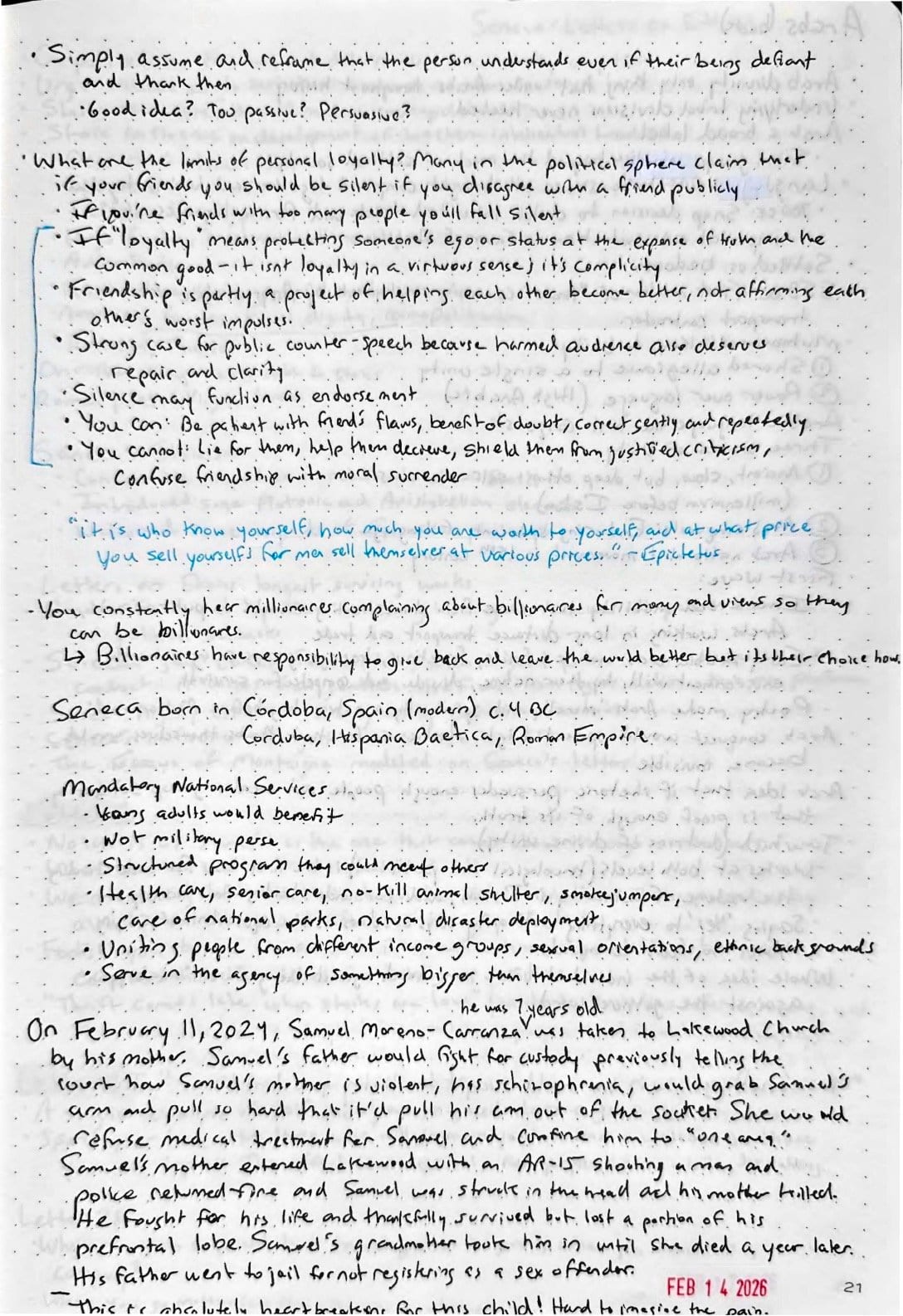
📓 Handwritten journal
Journal connection: A page links the case for national service to personal loyalty, civic formation, shared obligation, and social cohesion.
Source boundary: This is a personal policy sketch, not a settled empirical case for a specific service program.
PDF++ page: p. 27 (file not included in this release)
Embedded preview:
Journal - Feb-March 21 2026.pdf (file not included in this release)
Open the journal index
Pinker’s Chapter 5 supplement — military conscription declined, but that does not decide civic service
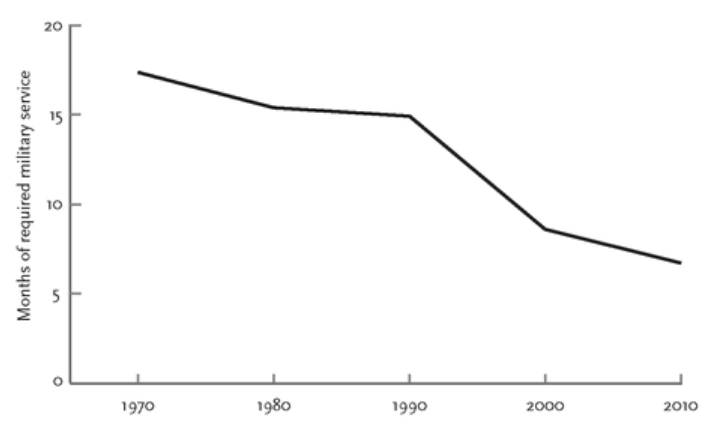
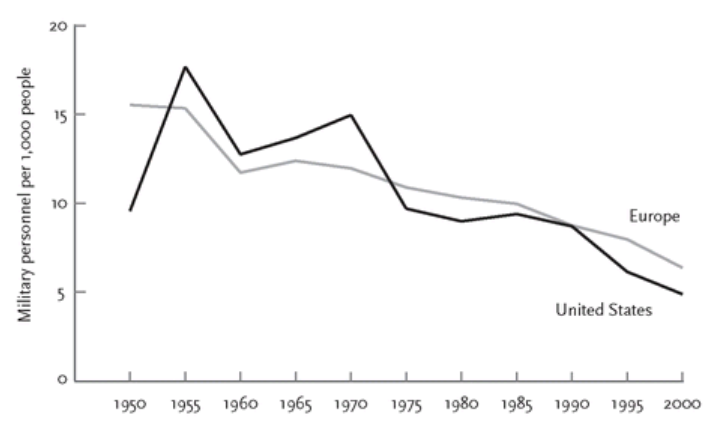
Pinker calls conscription “force squared”: the state compels service and then exposes the conscript to maiming or death. He therefore uses the shortening or abolition of military drafts as one indicator that developed states became less willing to mobilize citizens for war. Across forty-eight long-established states in Payne’s dataset, the share without conscription rose from 19 percent in 1970 to 35 percent in 2000 and 50 percent in 2010; military personnel as a share of population also fell sharply in the United States and Europe after the early Cold War.
Figures 5-19 and 5-20 — Conscription length in forty-eight states, 1970–2010, and military personnel in the United States and Europe, 1950–2000. These are historical indicators, not a current global inventory. They also do not test the journal proposal’s separate claims about civilian national service, civic formation, solidarity, or voluntary alternatives. A decline in military compulsion can count in Pinker’s argument without settling whether a carefully designed nonmilitary service program is legitimate or effective. Chapter 5 synthesis · Conscription as an indicator, PDF pp. 362–363 (file not included in this release) · Figure 5-19, PDF p. 363 (file not included in this release) · Military staffing and Figure 5-20, PDF pp. 364–365 (file not included in this release)