
Zibaldone 2024–2025 journal
Journal connection: Book excerpts and figures collected from The Better Angels of Our Nature.
Source boundary: These are captured journal materials; the integration does not independently verify every clipped claim, quotation, or figure.
PDF++ pages: p. 295 (file not included in this release)
Embedded preview:
Zibaldone 2024-2025.pdf (file not included in this release)
Open the complete Zibaldone page index
Description
Pinker argues that many forms of violence have declined over different historical timescales and asks which political, economic, cultural, and psychological changes made those declines possible. The book combines historical criminology, anthropology, political science, psychology, and quantitative evidence; its central claim is about relative risk and long-run trends, not the disappearance or inevitability of violence.
Annotated vault PDF
- Open the complete book PDF (file not included in this release)
- This is the supplied Penguin edition: 1,262 PDF pages, with a usable text layer. The substantive book runs from the Preface on PDF p. 16 through Chapter 10 on PDF p. 952; notes, references, and index follow.
- The vault copy preserves the source file byte-for-byte, including its existing highlights, underlines, stamps, and ink annotations. PDF++ links below use the PDF viewer page number, not any printed-page number.
- These notes reconstruct and evaluate Pinker’s argument from this edition. They identify his causal claims and qualifications; they do not independently certify every dataset or extend a 2011 evidence base through the present.
- The chapter summaries include vault-local crops of all 114 numbered figures in Chapters 1–10 plus the substantive unnumbered ranked-war table in Chapter 5. Concise captions link to the figure’s PDF viewer page; decorative front matter and annotation graphics are excluded.
Whole-book synthesis
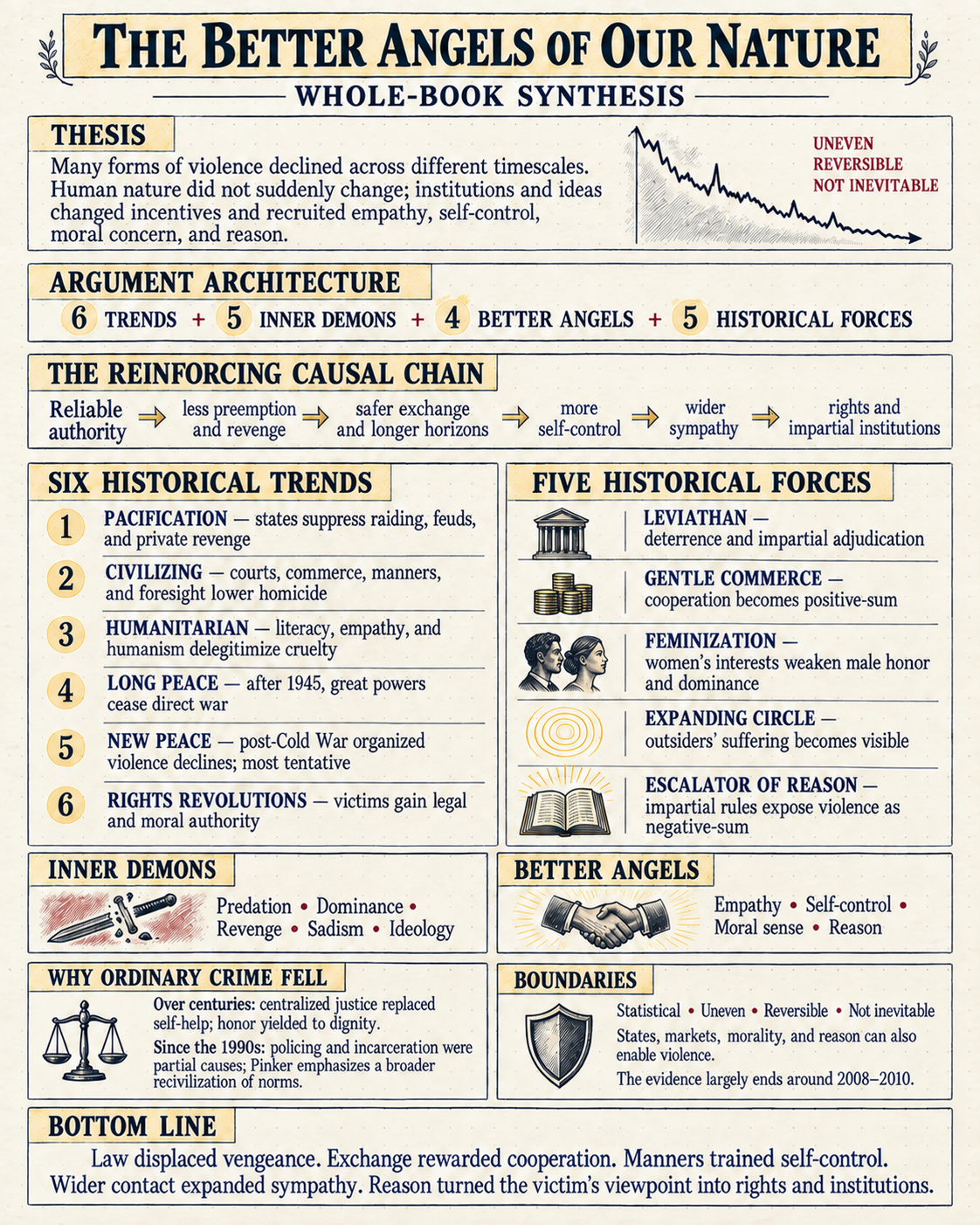
Pinker’s thesis
Violence has not vanished, declined everywhere, or fallen in a straight line. Pinker’s narrower claim is that many forms of violence—war, homicide, judicial cruelty, slavery, persecution, domestic and sexual violence, abuse of children, and cruelty to animals—declined substantially across several timescales. Human nature did not suddenly become peaceful. Institutions and ideas changed the incentives that activate violent motives and increasingly recruited empathy, self-control, moral concern, and reason against them.
The architecture of the argument
Pinker builds the book in three layers:
- Six historical trends establish the phenomenon: the Pacification Process, Civilizing Process, Humanitarian Revolution, Long Peace, New Peace, and Rights Revolutions.
- Five inner demons and four better angels supply the psychology: predation, dominance, revenge, sadism, and ideology compete with empathy, self-control, moral sense, and reason.
- Five historical forces connect history to psychology: the Leviathan, gentle commerce, feminization, cosmopolitanism or the expanding circle, and the escalator of reason change payoffs, habits, sympathies, and rules.
The explanatory chain is therefore not “people became nicer.” It is:
more reliable third-party authority → less need for preemption and revenge → safer exchange and longer time horizons → more interdependence and self-control → wider contact and perspective-taking → broader rights and impartial rules → institutions that further reduce the rewards and legitimacy of violence.
This is a reinforcing sequence, not a law of history. A state can become the greatest killer; commerce can coexist with coercion; morality can sanctify punishment; reason can serve destructive goals. The same human capacities generate peace only under favorable institutional and cultural conditions.
The chronological case
| Trend | Historical movement | Explanatory emphasis |
|---|---|---|
| 1. Pacification Process | From stateless hunting, gathering, and horticultural societies to settled states beginning roughly five millennia ago. | A state monopoly on force suppresses raiding, feuding, preventive attack, and private revenge. |
| 2. Civilizing Process | A large decline in European homicide from the late Middle Ages into the modern period. | State consolidation, courts, commerce, manners, foresight, and self-command replace fragmented rule and honor retaliation. |
| 3. Humanitarian Revolution | From the 17th and 18th centuries, organized opposition to torture, slavery, cruel punishment, persecution, dueling, despotism, and other authorized harms. | Literacy, the Republic of Letters, Enlightenment humanism, empathy with victims, and universal reasoning delegitimize inherited cruelty. |
| 4. Long Peace | After 1945, great powers and developed states cease fighting one another directly with unprecedented consistency. | War loses prestige; democracy, trade, international organizations, stable borders, deterrence, and antiwar norms jointly reduce interstate conflict. |
| 5. New Peace | After the Cold War, declines in civil wars, genocides, autocratic repression, and terrorism in the datasets Pinker reviews. | The end of proxy conflict, democratization, peacekeeping, negotiated settlements, and stronger international norms lower organized violence. Pinker labels this the most tentative trend. |
| 6. Rights Revolutions | After 1948, widening opposition to violence against racial minorities, women, children, gay people, and animals. | The victim’s viewpoint gains legal and moral authority; previously private or normal harms become visible, stigmatized, and punishable. |
The sequence begins with coercive restraint and ends with increasingly internalized and universalized restraint. The Leviathan first raises the external cost of aggression. The Civilizing Process makes restraint part of status and character. The Humanitarian and Rights Revolutions then challenge violence authorized by the state, family, religion, and custom. At the international level, the Long and New Peaces partially reproduce the same logic without a world government through institutions, trade, norms, and third-party intervention. Pinker’s six-trend overview, PDF pp. 19–20 (file not included in this release)
Why ordinary crime fell
Pinker offers two related explanations at different timescales.
Over centuries, homicide fell as centralized justice displaced self-help. When courts and police become credible, people need not advertise toughness, strike preemptively, or avenge an injury to deter the next one. Expanding markets make reputation and cooperation more valuable; elite court culture and later mass etiquette reward foresight, emotional control, and nonviolent conflict resolution. The cultural ideal moves from honor—retaliate or appear weak—to dignity—retain worth without answering every insult. This is the core of the Civilizing Process. European homicide decline, PDF p. 102 (file not included in this release) · Pinker and Elias on the causes, PDF p. 107 (file not included in this release)
For the crime decline beginning in the 1990s, Pinker’s account is deliberately plural. He finds economic cycles and demographic aging too weak as general explanations, treats the ebb of crack-market violence as only part of the pattern, and rejects the legalized-abortion hypothesis because its causal chain and age-cohort timing do not fit. He gives mass incarceration some credit through incapacitation and deterrence but stresses diminishing returns, injustice, and the fact that Canada declined without the same prison boom. He gives more and smarter policing partial credit while treating the precise contribution of “Broken Windows” as unresolved. His deepest explanation is a recivilizing process: renewed intolerance of predation, community campaigns against gang violence, the consolidation of civil-, women’s-, children’s-, and gay-rights norms, more legitimate and predictable sanctions, and renewed cultivation of empathy, responsibility, and self-control. The 1990s recivilization problem, PDF p. 176 (file not included in this release) · Why Pinker ultimately emphasizes changing norms, PDF p. 188 (file not included in this release)
The five principal forces
- The Leviathan: impartial, predictable state authority changes the payoff to attack and revenge. It works through deterrence, adjudication, and legitimacy—not through maximal cruelty.
- Gentle commerce: positive-sum exchange makes other people more useful alive as partners than dead as prey and rewards reliability across social boundaries.
- Feminization: because serious violence is disproportionately male, greater weight for women’s interests, reproductive autonomy, and social influence reduces cultures organized around male honor, dominance, and expendability.
- The expanding circle: literacy, mobility, cities, travel, fiction, journalism, and mass media increase contact with unlike others and make victims’ experience harder to ignore.
- The escalator of reason: evidence and impartial argument expose false beliefs, reveal violence as often negative-sum, and turn sympathy into universal rules and deliberately engineered institutions.
These are not five competing master causes. They act at different levels: states alter incentives; commerce alters interests; changing gender power alters whose preferences matter; cosmopolitanism alters whose suffering is seen; reason turns those shifts into general principles. Five historical forces, PDF pp. 21–22 (file not included in this release)
Source-audit verdict and boundaries
What the PDF confirms—and what the synthesis now qualifies
- The book explicitly presents six trends, five inner demons, four better angels, and five historical forces. That architecture now controls this note rather than an improvised list.
- Pinker repeatedly says the declines are statistical, uneven, reversible, and not predictions. “Relative peace” is more accurate than “peace,” and the New Peace is explicitly tentative.
- The post-1990 crime decline is not attributed to one policy. Pinker treats incarceration and policing as partial causes and places the broadest explanatory weight on a cultural recivilization.
- The evidence base largely ends around 2008–2010. Later wars, homicide reversals, terrorism, and rights developments are not tests Pinker could have included; they require a separate update rather than silent projection.
- The strongest parts of the case are the convergence of many independent downward trends and the insistence on rates, denominators, and victim risk. The most contestable parts are causal attribution from correlations, estimates for prehistory, comparisons across changing definitions and records, and inference from a short post-Cold-War window in a world where rare wars have heavy-tailed consequences.
Bottom line
Pinker’s story is not that history naturally bends toward peace. It is that societies repeatedly built restraints that made violence less necessary, less rewarding, less respectable, and less morally defensible: law displaced vengeance; exchange rewarded cooperation; manners trained self-control; wider contact expanded sympathy; and reason converted the victim’s perspective into rights and institutions. Those achievements are contingent. Understanding how they arose is part of preserving them.
Notebook cards (full B5)
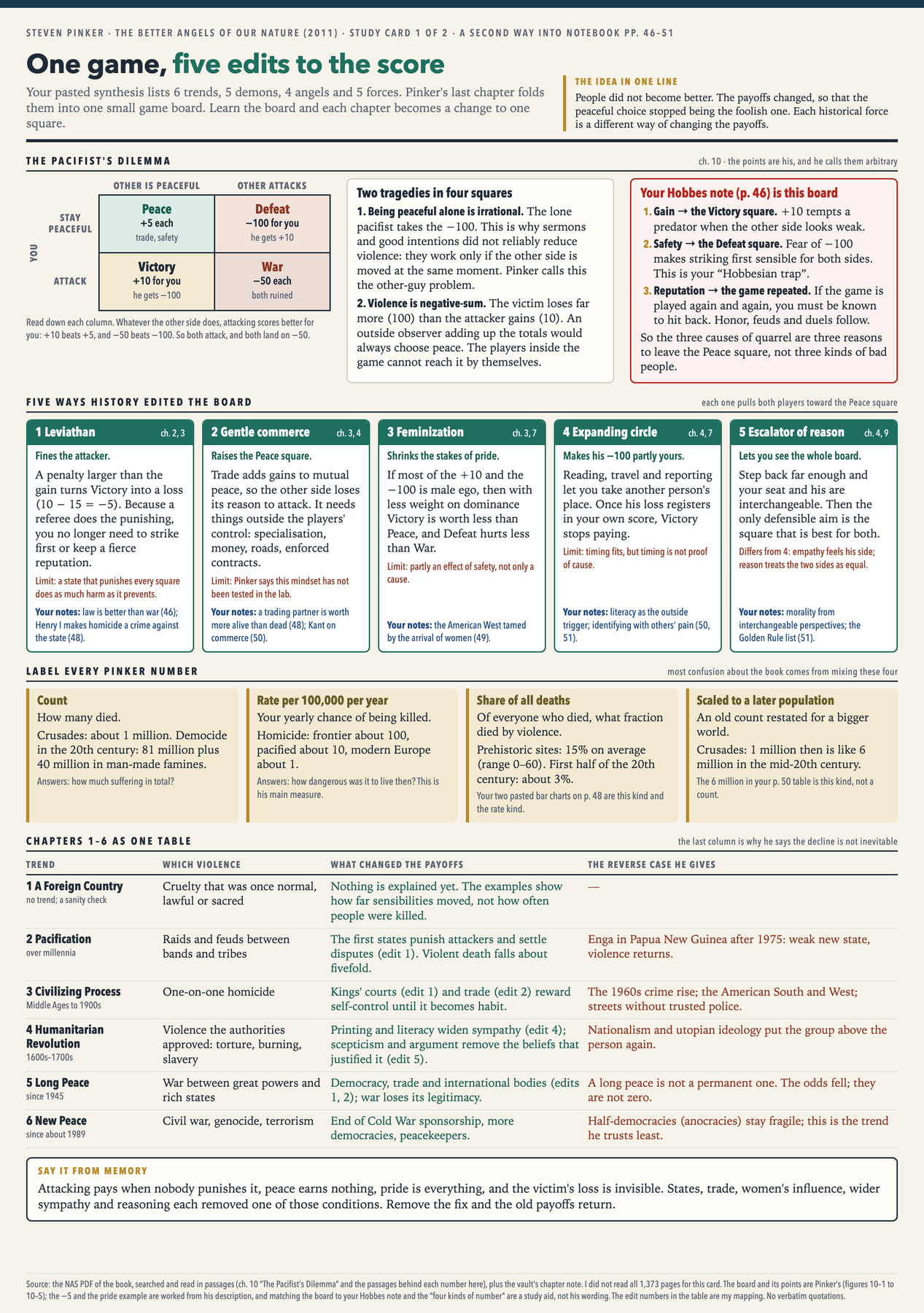
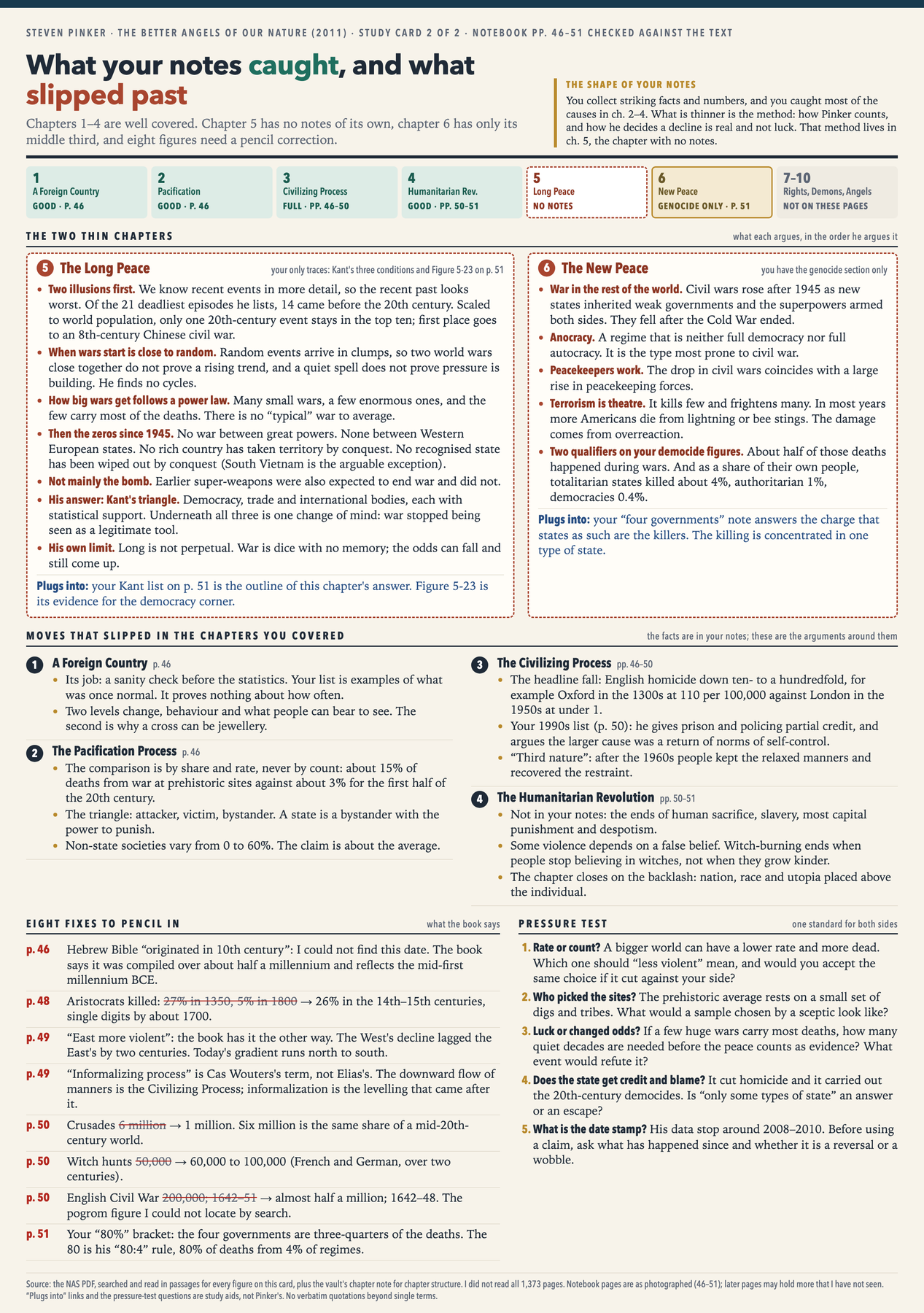

Three notebook cards (full B5), made 13 November 2026. Cards 1 and 2 compare the handwritten notes on paper-notebook pp. 46–51 (three photographed spreads, covering Chapters 1–4 and part of 6) with the book. The synthesis above lists the trends, demons, angels and forces; the cards take a different angle.
- Card 1, one game and five edits: explains the Pacifist’s Dilemma from Chapter 10 as a four-square board, maps Hobbes’s three causes of quarrel onto it, and shows each of the five historical forces as one change to the scores. It also separates the four kinds of number Pinker uses (count, rate, share of deaths, population-scaled) and puts Chapters 1–6 in one table with the reverse case he gives for each.
- Card 2, what the notes missed: coverage by chapter; summaries of the two thin chapters (5 and 6); arguments missing around the facts in Chapters 1–4; eight corrections keyed to notebook pages; and five pressure-test questions.
- Card 3, the whole book on one page: a chapter-order summary in three parts: the six trends with one figure each (Chapters 1–7), the five inner demons and four better angels with one-line definitions (8, 9), and the five forces (10), with Pinker’s stated limits.
Caveats:
- The cards rest on targeted searches and passages of the 1,373-page NAS PDF plus this note’s chapter summaries, not a fresh full read.
- The board and its points are Pinker’s (figures 10–1 to 10–5). Mapping it to the Hobbes note, the “four kinds of number” and the “plugs into” links are study aids, not his wording.
- Two notebook entries could not be checked by search: the date given for the Hebrew Bible and the Jewish pogroms death figure.
- On card 3, Chapters 7–9 come from this note’s summaries, not a fresh read of the PDF, and the short tags on the demons, angels and forces are a condensation, not Pinker’s wording.
- The cards carry no verbatim quotations; check wording against the PDF before quoting.
Card source files: card 1 HTML (file not included in this release) · card 2 HTML (file not included in this release) · card 3 HTML (file not included in this release).
Chapter Summaries
Linked overview
Each entry jumps to a source-grounded chapter treatment with the chapter’s objective, structure, section-by-section argument, concepts, evidence, conclusion, and reflection questions.
- Preface — The explanatory blueprint: Pinker defines the claim as a collection of downward statistical trends, explains why vivid news and rising moral standards conceal them, and previews the book’s six trends, five demons, four angels, and five forces. PDF p. 16 (file not included in this release)
- 1. A Foreign Country: A qualitative “sanity check” recovers the normalized brutality hidden inside familiar history, scripture, entertainment, punishment, and honor before the book turns to quantitative proof. PDF p. 25 (file not included in this release)
- 2. The Pacification Process: Pinker uses Hobbesian incentives, anthropology, and archaeology to argue that early states reduced chronic raiding, feuding, and homicide even though states introduced new forms of exploitation and war. PDF p. 63 (file not included in this release)
- 3. The Civilizing Process: European homicide declines with consolidated authority, commerce, manners, and self-control; the 1960s reversal and 1990s recivilization show that the process can run backward and forward. PDF p. 100 (file not included in this release)
- 4. The Humanitarian Revolution: Enlightenment-era argument, literacy, empathy, and legal reform turn torture, slavery, persecution, cruel punishment, despotism, and aggressive war from accepted institutions into moral problems. PDF p. 194 (file not included in this release)
- 5. The Long Peace: Statistical reasoning corrects historical myopia and shows a post-1945 collapse of great-power war; Pinker weighs nuclear, democratic, liberal, institutional, and normative explanations without reducing the peace to one cause. PDF p. 274 (file not included in this release)
- 6. The New Peace: Pinker argues that post-Cold-War wars, genocides, and terrorism declined in the available data, while directly addressing disputed casualty estimates and what he presents as an uneven “Islamic exception”: conflicts involving Muslim-majority states or Islamic opposition movements remained roughly level while other intrastate conflicts fell. PDF p. 416 (file not included in this release) · Islam and Figure 6-12
- 7. The Rights Revolutions: Civil-, women’s-, children’s-, gay-, and animal-rights movements widen the moral circle and reclassify previously tolerated domination as violence. PDF p. 528 (file not included in this release)
- 8. Inner Demons: Violence is not one hydraulic urge but the output of distinct systems—predation, dominance, revenge, sadism, and ideology—whose triggers and internal logics require different restraints. PDF p. 667 (file not included in this release)
- 9. Better Angels: Empathy, self-control, moral sense, and reason can restrain violence, but each has limits; reason is crucial because it can universalize concern and correct the parochial or punitive tendencies of the others. PDF p. 786 (file not included in this release)
- 10. On Angels' Wings: Pinker joins history and psychology through the Leviathan, commerce, feminization, expanding sympathy, and reason, while rejecting any mystical law of inevitable progress. PDF p. 919 (file not included in this release)
Review
Handwrite First
Use this section with the book and notes closed. The goal is retrieval, not polish.
1. Closed-book recall
- The book’s thesis in one sentence:
- The six historical trends:
- The five inner demons:
- The four better angels:
- The five historical forces:
- The strongest graph, case, or example I remember:
- What remains fuzzy:
2. Reconstruct the causal chain
- Why can anarchy produce violence even among people who prefer peace?
- How does a state change the incentives?
- How can commerce and longer time horizons reinforce restraint?
- How do sympathy and reason become laws and institutions?
- Where can the chain reverse?
3. Feynman check
- Explain the Civilizing Process simply:
- Explain the difference between an inner demon, a better angel, and a historical force:
- Explain why falling violence does not mean violence is gone or progress is guaranteed:
4. Pushback from memory
- Strongest objection to the historical measurements:
- Strongest objection to Pinker’s causal explanation:
- Which trend rests on the shortest or weakest time series?
- What evidence would most change my judgment?
5. Personal takeaway
- What changed or clarified my view of history?
- Which force seems most important?
- Which force seems overstated?
- What should societies preserve if Pinker is broadly right?
Type Into Obsidian
Use this only after checking the PDF and the chapter notes.
1. Correction after checking
- I forgot:
- I misunderstood:
- I overemphasized:
- I underemphasized:
- This still needs verification:
2. Clean argument map
- Claim:
- Evidence:
- Mechanism:
- Hidden assumption:
- Best objection:
- Pinker’s likely response:
- My judgment:
3. Connections
- Connects to: Leviathan · The Enlightenment · Crime · Wars
- Supports:
- Challenges:
- Possible permanent concept note:
Retrieval Questions
Basic recall
- What exactly declines in Pinker’s thesis: totals, rates, individual risk, or all three?
- What are the six trends, in chronological order?
- What are the five demons, four angels, and five forces?
- Why is Chapter 1 a sanity check rather than the proof?
- Why does Pinker call the New Peace tentative?
Argument reconstruction
- How does the Pacifist’s Dilemma differ from the Prisoner’s Dilemma?
- Why can a Leviathan reduce violence while also remaining a possible source of mass violence?
- How does Elias connect state formation, commerce, manners, and homicide?
- What is the difference between the expanding circle and the escalator of reason?
- Why does Pinker reject a single-cause account of the 1990s crime decline?
Comparison and criticism
- How does Pinker’s Hobbesian account compare with Rousseauian or anarchist pictures of pre-state life?
- Does the Humanitarian Revolution depend more on empathy, reason, state formation, or their interaction?
- Do heavy-tailed wars undermine a trend claim, or only make confidence and prediction harder?
- Which comparisons risk mixing unlike definitions, sources, or reporting regimes?
- Which post-2011 developments would be the strongest update to each trend?
Synthesis
- Which of the five forces operates mainly through incentives, which through preferences, and which through moral rules?
- Can a rights revolution reduce one form of violence while increasing state coercion elsewhere?
- What institutional combination best preserves peace without empowering an abusive state?
- What would falsify Pinker’s broad causal synthesis?
Flashcards / Atomic Recall
- Q: Six trends?
- A: Pacification, Civilizing, Humanitarian, Long Peace, New Peace, Rights Revolutions.
- Q: Five inner demons?
- A: Predation, dominance, revenge, sadism, ideology.
- Q: Four better angels?
- A: Empathy, self-control, moral sense, reason.
- Q: Five historical forces?
- A: Leviathan, commerce, feminization, expanding circle, escalator of reason.
- Q: Pinker’s deepest explanation of the 1990s crime decline?
- A: Partial effects from incarceration and policing within a broader recivilizing change in norms, legitimacy, and self-control.
Retention Check
24 hours
- I can state the whole argument without looking.
- I can distinguish the six trends from the five forces.
- I can name one strong piece of evidence and one serious limitation.
1 week
- I can reconstruct the causal chain.
- I can explain why the thesis is not a prediction.
- I can compare Pinker with one rival account.
1 month
- I can explain what endured, what I no longer trust, and what I want to investigate next.
Scratchpad
Notes
Book Argument and Reading Map
Scope and method
- Coverage: Preface and all ten chapters, following the PDF’s substantive section headings.
- Direct links use the vault-local, annotated PDF and its viewer page numbers.
- Paraphrases below report Pinker’s position. “Evidence” identifies what he uses, not an independent replication of every underlying study.
- The book was published in 2011. Claims about the “present” and the New Peace refer to the evidence available then.
Chapter Index
- Preface: The explanatory blueprint
- Chapter 1: A Foreign Country
- Chapter 2: The Pacification Process
- Chapter 3: The Civilizing Process
- Chapter 4: The Humanitarian Revolution
- Chapter 5: The Long Peace
- Chapter 6: The New Peace
- Chapter 7: The Rights Revolutions
- Chapter 8: Inner Demons
- Chapter 9: Better Angels
- Chapter 10: On Angels' Wings
Story and Vignette Index
Scope and source labels
This is a curated extraction of the book’s major narrative scenes—the episodes Pinker uses to make a mechanism, moral change, or evidentiary problem memorable. It does not treat every hypothetical or passing example as a “story,” and it paraphrases rather than reproducing long passages. The labels distinguish historical or archaeological episodes, Pinker’s recollections, accounts he takes from another author, reported experiments, and fictional or scriptural illustrations. They identify the kind of source inside the book; they are not independent verification.
- Chapter 1 — prehistoric bodies, violent fairy tales, and Hamilton’s duel
- Chapter 2 — chimpanzee raids, Andaman Islanders, and life under a state
- Chapter 3 — medieval impulsiveness, Keith Moon, and the Boston Miracle
- Chapter 4 — sacrifice, coerced confessions, public cruelty, and Jean Calas
- Chapter 5 — Richardson, the Thanksgiving turkey, the Cuban crisis, and the Ethical Warrior
- Chapter 6 — peacekeeping, genocide, survival, and terrorist overreach
- Chapter 7 — lynching, Ruby Bridges, sexual assault, Alan Turing, and animal concern
- Chapter 8 — self-deception, Phineas Gage, group identity, and revenge
- Chapter 9 — trust, empathy, delayed gratification, and self-control
- Chapter 10 — Tsutomu Yamaguchi and feminization
Preface: The explanatory blueprint
Chapter Objective and Through Line
Pinker states the claim with three safeguards: violence has declined over many stretches of time, the decline is not smooth, and it is neither complete nor guaranteed. He must first establish the trends because human attention is biased toward vivid recent atrocities, news selects exceptional bloodshed, and higher moral standards make surviving violence feel like evidence of unprecedented depravity. His method is therefore quantitative and comparative: use rates and denominators, compare multiple periods and societies, and ask why otherwise different forms of violence moved broadly in the same direction. Preface opening, PDF p. 16 (file not included in this release)
The Preface also supplies the book’s complete analytic blueprint. Chapters 2–7 document six historical trends; Chapter 8 separates five motives that generate violence; Chapter 9 examines four capacities that restrain it; Chapter 10 proposes five forces that changed the historical balance between them. Pinker rejects a heroic morality play and a mystical law of progress. He seeks exogenous changes in governance, commerce, technology, demographics, knowledge, and ideas that altered how a relatively stable human nature was expressed. Analytic blueprint, PDF pp. 19–22 (file not included in this release)
Chapter Structure at a Glance
- State the counterintuitive empirical claim and its limits.
- Explain why news, memory, activism, and rising standards distort perception.
- Define the task as documenting many trends rather than one universal curve.
- Distinguish proximate psychological mechanisms from exogenous historical causes.
- Preview six trends, five demons, four angels, and five forces.
- Reframe the central question from “Why is there violence?” to “Why is there peace?”
Section-by-Section Argument
The empirical claim and its limits
Pinker opens with a deliberately qualified proposition: several forms of violence have declined over long stretches of time, but the paths are jagged, the gains are incomplete, and none is guaranteed to continue. The claim concerns changes in rates and individual risk across defined populations and periods, not a denial of present suffering or a prediction that the future must be peaceful. The central claim, PDF p. 16 (file not included in this release)
Why progress is hard to see
News disproportionately records violent events, memory overweights vivid recent examples, and peaceful non-events leave no image behind. Moral improvement adds a further paradox: as standards rise, conduct once ignored is newly counted and condemned. Greater awareness of violence can therefore coexist with a real reduction in its prevalence. Perception and moral standards, PDF pp. 17–18 (file not included in this release)
The book’s analytical architecture
The historical chapters document six declines; the psychological chapters distinguish five violence-producing systems from four inhibiting capacities; the final chapter asks which five historical forces shifted their balance. This layered design keeps the explanandum—the declines—separate from proximate mental mechanisms and from the institutional and intellectual changes that activated them. Six trends, five demons, four angels, and five forces, PDF pp. 19–22 (file not included in this release)
From the puzzle of violence to the puzzle of peace
Violence needs no single hidden cause because predation, fear, status, vengeance, sadism, and moral conviction can each generate it. The more revealing question is how societies repeatedly neutralized those motives. Pinker’s answer will look for changes in authority, exchange, gender power, communication, sympathy, and reasoning rather than a recent transformation of human nature.
Key Concepts and Distinctions
- Rate versus count: a large population can contain many violent deaths while exposing each person to a lower risk.
- Trend versus event: a spectacular atrocity may occur within a long decline; a decline does not make the atrocity unimportant.
- Endogenous versus exogenous explanation: a process that merely repeats the outcome is weaker than an identifiable outside change that altered incentives or beliefs.
- Fixed repertoire, changing activation: Pinker focuses on environments engaging different parts of a shared human psychology rather than a recent genetic transformation.
- Description versus prediction: explaining declines through 2010 does not guarantee their continuation.
Essential Evidence and Examples
- Availability bias and the news rule “if it bleeds, it leads” make violent events easier to recall than peaceful non-events. Perceptual bias, PDF p. 17 (file not included in this release)
- Rising revulsion toward violence can create an “amnesia of success”: conduct once ignored now becomes salient precisely because standards improved. Standards and perception, PDF p. 18 (file not included in this release)
- Pinker previews declines across scales from interstate war to spanking, inviting a search for recurrent mechanisms without assuming one cause fits all. Six trends, PDF p. 19 (file not included in this release)
Chapter Conclusion and Significance
The Preface is the control panel for the entire book. It tells the reader what would count as success: not proof that humanity is good, but evidence that identifiable conditions repeatedly shifted violence downward. It also supplies the note’s central discipline—keep empirical trends, psychological mechanisms, historical causes, and moral evaluation separate.
Questions for Reflection
- Which kinds of violence can be compared reliably across centuries, and which cannot?
- Does growing sensitivity to harm systematically make progress harder to perceive?
- What evidence would distinguish a durable decline from a temporary low point?
Chapter 1: A Foreign Country
Chapter Objective and Through Line
Before presenting datasets, Pinker gives the reader a “sanity check.” Familiar cultural inheritances often conceal their violent origins: crosses become jewelry, epics become classics, scripture becomes moral heritage, castles become tourist sites, and public torture becomes costume drama. By recovering what those practices meant to participants and victims, he makes the later statistical claim psychologically plausible. The chapter is evidence of normalization and moral distance, not a representative sample or proof of a trend. Chapter opening, PDF p. 25 (file not included in this release)
The tour moves from prehistory through Greece, the Bible, Rome, Christendom, knighthood, early-modern Europe, and honor cultures. The common thread is not that every society was equally violent. It is that forms of cruelty now requiring explanation were often ordinary, lawful, sacred, entertaining, or honorable. The modern reader’s shock is itself part of the phenomenon Pinker wants to explain: conduct changed, but so did the moral threshold for noticing it.
Chapter Structure at a Glance
- Use prehistoric bodies and archaeology to challenge the image of an innocent pre-state past.
- Read Homeric epic literally as a world of raiding, enslavement, and heroic killing.
- Treat Biblical violence as evidence of Iron Age norms whether or not every event is historical.
- Recover Roman spectacle, crucifixion, martyrdom, and Christian punishment from sanitized memory.
- Contrast romantic chivalry with knightly predation and lethal competition.
- Survey early-modern punishment, entertainment, literature, and domestic brutality.
- End with the decline of dueling and honor as a bridge to the quantitative chapters.
Section-by-Section Argument
Human Prehistory
Ötzi and other ancient remains reveal wounds, weapons, massacres, and interpersonal killing. Pinker uses them cautiously as vivid counterweights to romantic images of prehistory; their rates and representativeness will be addressed in Chapter 2. The point here is that organized and interpersonal violence predate cities, modern weapons, capitalism, and the nation-state. Human prehistory, PDF p. 26 (file not included in this release)
Homeric Greece
The Iliad and Odyssey portray killing, mutilation, sexual enslavement, revenge, and annihilation without the moral framing a modern audience expects. Heroes seek honor and spoils rather than civilian protection or limited war. Pinker treats the epics as windows into an admired warrior ethos, not a casualty census. Homeric Greece, PDF p. 29 (file not included in this release)
The Hebrew Bible
Commands and stories of massacre, slavery, execution, rape, and collective punishment display a moral universe in which group loyalty and divine authority override individual welfare. Pinker’s historical inference does not require accepting every episode as factual: a culture’s revered narratives still reveal which actions its transmitters found intelligible, exemplary, or divinely permissible. The Hebrew Bible, PDF p. 31 (file not included in this release)
The Roman Empire and Early Christendom
Roman public entertainment turned death and degradation into spectacle, while crucifixion made suffering a deliberate technology of rule. Early Christian martyr narratives preserved fascination with torture, and later Christian institutions could redirect that moral drama against heretics. Pinker’s target is not a simple pagan-Christian contrast but the long legitimacy of exemplary pain. Rome and early Christendom, PDF p. 39 (file not included in this release)
Medieval Knights
Chivalric romance obscures a class trained for coercion, feud, raiding, and dominance. “Protection” of women coexisted with treating them as property or prizes, while tournaments and private wars made elite status inseparable from credible violence. The later domestication of nobles is therefore a real behavioral transformation, not merely a change in literary taste. Medieval knights, PDF p. 46 (file not included in this release)
Early Modern Europe
Public executions, mutilation, judicial torture, violent drama, brutal children’s stories, blood sports, and routine domestic force show cruelty woven into punishment and amusement. Pinker emphasizes the historical strangeness of practices later generations edited, sentimentalized, or relegated to fiction. Early-modern Europe, PDF p. 48 (file not included in this release)
Honor in Europe and the Early United States
Dueling translates reputation into a life-or-death asset: refusing a challenge may invite future exploitation, while accepting can be rational inside the code even when both participants would prefer to live. Its disappearance—helped by law, ridicule, changing elite norms, and a shift from honor to dignity—prefigures Pinker’s larger claim that incentives and moral status can change without rewriting human nature. Honor and dueling, PDF p. 51 (file not included in this release)
Figures
Changing sensibilities and normalized violence
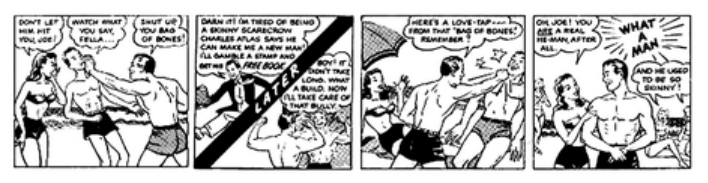
Figure 1-1 — Everyday violence in a bodybuilding ad, 1940s. PDF p. 57 (file not included in this release)

Figure 1-2 — Domestic violence in a coffee ad, 1952. PDF p. 58 (file not included in this release)
Key Concepts and Distinctions
- Sanity check versus proof: examples make a statistical thesis plausible but cannot establish prevalence.
- Normalized violence: harm embedded in legitimate religion, justice, entertainment, family authority, or status competition.
- Cultural memory: later societies preserve symbols while bleaching away their original cruelty.
- Honor versus dignity: honor depends on public reputation and retaliation; dignity is treated as intrinsic and compatible with restraint.
- Conduct versus sensibility: declining tolerance of violence is both an outcome and a driver of declining violent behavior.
Essential Evidence and Examples
- Ötzi’s wounds and blood traces dramatize interpersonal violence in deep prehistory. Ötzi, PDF p. 26 (file not included in this release)
- Homeric warfare joins combat with enslavement and annihilation rather than separating soldiers from civilians. Homeric warfare, PDF p. 29 (file not included in this release)
- The Bible’s violent narratives remain probative of accepted moral categories even where historicity is doubtful. Biblical violence, PDF p. 31 (file not included in this release)
- Dueling shows how a social equilibrium can sustain lethal behavior that becomes absurd after the equilibrium changes. Dueling and honor, PDF p. 51 (file not included in this release)
Chapter 1 Stories and Vignettes
- Ötzi’s cold case. In 1991 hikers found a corpse emerging from a Tyrolean glacier. Rescue workers assumed a recent skiing accident until a copper axe revealed a five-thousand-year-old body; later scans found an arrowhead in his shoulder, while wounds and blood traces suggested a violent final encounter. Pinker uses the forensic reversal—from accident victim to probable homicide victim—as his opening “sanity check” against a peaceful-past intuition. Archaeological reconstruction summarized by Pinker. PDF pp. 26–27 (file not included in this release)
- Lindow Man’s threefold death. The two-thousand-year-old bog body found in England had a fractured skull, a broken neck, and a cut throat. Pinker presents the possibility that he was ritually killed in three ways for three gods, while keeping the interpretation tentative. Archaeological episode and hypothesis. PDF p. 28 (file not included in this release)
- The unsoftened Grimm tales. Pinker retells the older endings of Hansel and Gretel, Cinderella, and Snow White: attempted child abandonment and cannibalism, self-mutilation and blinding, repeated attempted murder, and execution in red-hot shoes. The point is not that fiction measures actual violence, but that children’s entertainment once normalized imagery later editors removed. Literary examples, not historical event reports. PDF pp. 49–50 (file not included in this release)
- Hamilton chooses honor over survival. Although dueling was declining, illegal in New York, and had already killed his son, Alexander Hamilton accepted Aaron Burr’s challenge after refusing to retract an attributed insult. Pinker uses Hamilton’s death to show how a reputation equilibrium can compel an intelligent opponent of dueling to participate anyway. Historical episode. PDF p. 52 (file not included in this release)
Chapter Conclusion and Significance
The chapter establishes the moral distance the rest of the book must explain. It does not show that the present is peaceful by itself; it shows that nostalgia is an unreliable baseline and that violence once occupied legitimate spaces from which it has since been expelled.
Questions for Reflection
- Which examples reveal actual behavioral change, and which reveal only changing representation?
- How should sacred or literary texts be used as evidence about ordinary conduct?
- What present practice might future readers experience as our equivalent of dueling or public torture?
Chapter 2: The Pacification Process
Chapter Objective and Through Line
Pinker tests the Hobbesian proposition that anarchy can generate high violence even without uniquely evil people. In the absence of reliable third-party enforcement, competition, fear, and reputation make predation, preventive attack, and revenge strategically intelligible. The state changes those incentives by raising the cost of attack and replacing private retaliation with adjudication. The logic of violence, PDF p. 64 (file not included in this release)
Archaeological and anthropological comparisons then support a probabilistic claim: nonstate societies vary enormously, but their average rates of violent death are generally higher than those of settled states. Pinker does not portray early states as humane. They tax, conquer, enslave, and sometimes massacre. His narrower claim is that the Leviathan usually suppresses chronic small-scale killing enough to lower the average individual’s risk.
Chapter Structure at a Glance
- Explain competition, fear, and glory as interacting causes of violence.
- Show why preemption and revenge can emerge from strategic insecurity.
- Examine violence among primates and ancestral humans without reducing it to one instinct.
- Distinguish hunter-gatherer, horticultural, agricultural, and state societies.
- Compare violent-death rates across archaeological and ethnographic samples.
- Explain why state formation can be pacifying despite conquest and despotism.
- Preserve the central tradeoff: lower private violence can come with greater organized coercive capacity.
Section-by-Section Argument
The Logic of Violence
Pinker adapts Thomas Hobbes into a strategic model. Predation promises gain; preemption answers uncertainty about another’s intentions; deterrence requires a reputation for retaliation. Each can sustain violence even when fighting is costly. A credible third party changes the game by punishing first movers, protecting potential victims, and allowing disputes to be settled without a personal show of force. Hobbesian logic, PDF p. 64 (file not included in this release)
Violence in Human Ancestors
Comparisons with chimpanzees, bonobos, and archaeological remains suggest that coalitionary aggression and lethal conflict are evolutionarily possible but not hydraulically inevitable. Pinker’s argument requires a repertoire responsive to circumstances: capacities for attack, coalition, restraint, and reconciliation can all be present, with ecology and institutions affecting which are profitable. Human ancestors, PDF p. 70 (file not included in this release)
Kinds of Human Societies
The categories matter because “traditional” societies are not one condition. Mobile hunter-gatherers, settled hunter-gatherers, horticulturalists, pastoralists, chiefdoms, and agricultural states differ in property, hierarchy, population density, and opportunities for organized conflict. Pinker warns against treating a few unusually peaceable groups as representative of the ancestral environment. Kinds of societies, PDF p. 75 (file not included in this release)
Rates of Violence in State and Nonstate Societies
Pinker assembles war-death proportions, annualized rates, skeletal trauma, and homicide estimates. The measurements are heterogeneous and sometimes sparse, but he argues that the gap is too large and recurrent to dismiss: chronic feuding and raiding expose many nonstate populations to risks above those in modern states, including states that fought major wars. The claim depends on rates per population rather than absolute death totals. Comparative rates, PDF p. 84 (file not included in this release)
Civilization and Its Discontents
Early states often pacified by conquest, domination, and harsh punishment. Pinker nonetheless argues that subjects may exchange unpredictable local violence for more predictable centralized coercion. This is not an endorsement of absolute rule: when government becomes predatory, collapses, or lacks legitimacy, the pacifying bargain deteriorates. The chapter therefore establishes state capacity as necessary in many settings but not sufficient for humane order. Civilization and its costs, PDF p. 97 (file not included in this release)
Figures
The logic of violence
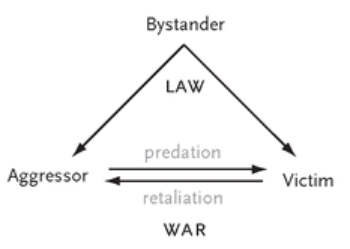
Figure 2-1 — The violence triangle. PDF p. 69 (file not included in this release)
State and nonstate violence
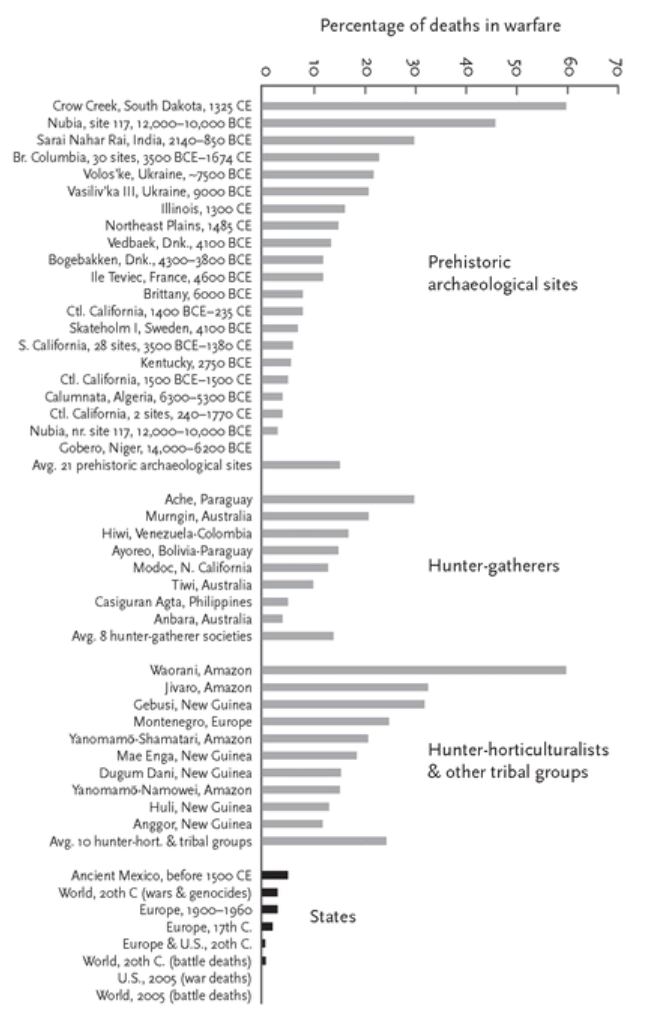
Figure 2-2 — Percentage of deaths in warfare in nonstate and state societies. PDF p. 87 (file not included in this release)
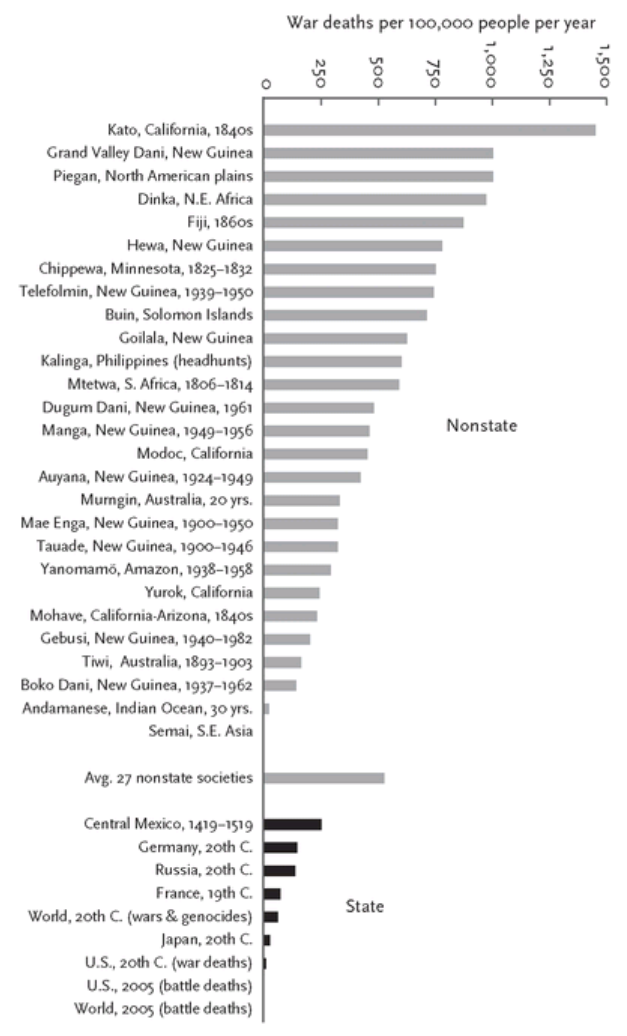
Figure 2-3 — Rate of death in warfare in nonstate and state societies. PDF p. 93 (file not included in this release)
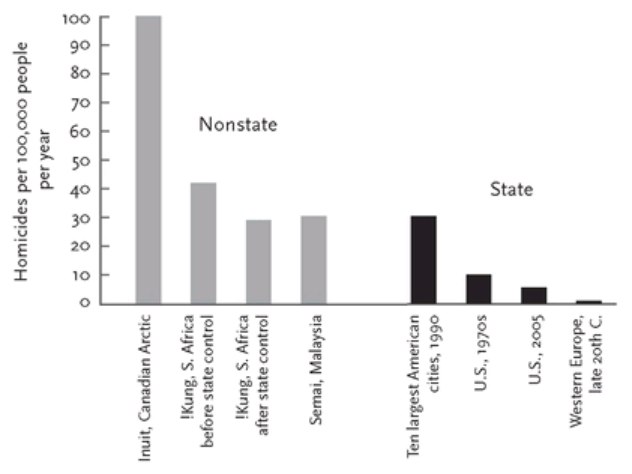
Figure 2-4 — Homicide rates in the least violent nonstate societies compared with state societies. PDF p. 96 (file not included in this release)
Key Concepts and Distinctions
- Hobbesian trap: fear and uncertainty can make preventive violence rational for both sides.
- Security dilemma: defensive preparation by one party appears offensive to another.
- Leviathan: a third party capable of deterring aggression and adjudicating disputes.
- Private versus state violence: suppressing feuds does not automatically constrain conquest, punishment, or tyranny.
- Proportion versus annual rate: the share of people eventually killed and the risk per year answer different questions.
- Variation versus average: peaceful nonstate societies and violent states are compatible with an average pacification effect.
Essential Evidence and Examples
- The “violence triangle” models aggressor, victim, and third party, making clear how a protector can alter incentives. Violence triangle, PDF p. 64 (file not included in this release)
- Archaeological massacres and skeletal trauma supplement ethnography but bring preservation and selection problems. Prehistoric evidence, PDF p. 70 (file not included in this release)
- Cross-society comparisons show a large average state/nonstate gap despite wide variation inside both categories. State and nonstate comparisons, PDF p. 84 (file not included in this release)
- State collapse and weak frontiers act as reverse tests: private violence often rises when adjudication and deterrence disappear. Limits of pacification, PDF p. 97 (file not included in this release)
Chapter 2 Stories and Vignettes
- Jane Goodall’s disturbing discovery. Chimpanzees had once been described as essentially peaceful, but Goodall observed males exploiting numerical superiority against isolated outsiders; Pinker describes coordinated attacks and a community whose males eliminated every male in a neighboring group. The scene introduces coalitionary raiding as a strategic possibility rather than a uniquely modern institution. Reported primatological observations. PDF pp. 71–72 (file not included in this release)
- The Andaman Islanders after the tsunami. When observers flew over the islands after the 2004 tsunami, arrows and spears fired at the helicopter reassured them that the islanders had survived. Two years later, Pinker reports, two fishers drifted ashore and were killed, and the recovery helicopter was also met with arrows. He uses the episode to warn that a low measured death rate in a small, isolated population does not by itself establish a pacific culture. Historical report cited by Pinker. PDF p. 94 (file not included in this release)
- Eating without looking over one’s shoulder. An Auyana man in New Guinea, living under Australian administration, said life improved because he could eat or step outside in the morning without fearing he would be shot. Pinker treats this small first-person observation as the lived counterpart to the statistical pacification effect of government. Reported testimony quoted by Pinker. PDF p. 96 (file not included in this release)
Chapter Conclusion and Significance
The Pacification Process supplies the book’s first causal mechanism: credible third-party authority can make peace individually rational. It also creates a problem for every later chapter—how to keep the state’s pacifying capacity while restraining the state’s own capacity for cruelty and war.
Questions for Reflection
- How much confidence should heterogeneous archaeological and ethnographic estimates receive?
- Does a reduction in total violent risk justify coercive state formation?
- Which institutions make a Leviathan legitimate rather than merely powerful?
Chapter 3: The Civilizing Process
Chapter Objective and Through Line
Pinker moves from the first states to the long decline of interpersonal homicide inside states. European records suggest a tenfold-to-fiftyfold fall from the late Middle Ages to the 20th century. Norbert Elias’s explanation links the consolidation of kingdoms and courts with expanding commerce: rulers suppress private armies and vengeance, longer chains of interdependence reward foresight, and elite standards of self-command diffuse through society. External constraint becomes habit. European homicide decline, PDF p. 102 (file not included in this release)
The chapter then stress-tests the process across class, geography, the United States, the 1960s crime rise, and the 1990s decline. The key lesson is reversibility. Weak or illegitimate authority, honor cultures, violent markets, and a loss of self-control norms can produce decivilization. More effective and legitimate enforcement, community pressure, and renewed norms of responsibility can produce recivilization without restoring every old convention of dress, sexuality, or popular culture.
Chapter Structure at a Glance
- Establish the scale and timing of the European homicide decline.
- Explain it through state consolidation, court society, commerce, and manners.
- Track diffusion from elites to lower classes and from central regions to peripheries.
- Compare world regions and American settlement patterns through state capacity and honor.
- Explain the 1960s–1980s crime rise as a partial decivilizing process.
- Test common explanations for the 1990s decline.
- Combine partial effects from incarceration and policing with a broader recivilizing shift in norms and legitimacy.
Section-by-Section Argument
The European Homicide Decline
Court and municipal records assembled by historical criminologists show medieval homicide rates far above modern Western European rates. The descent is irregular and the sources change, but it appears across multiple regions and methods. Pinker treats homicide as the best long-run indicator because death is more consistently visible than nonfatal crime. Homicide series, PDF p. 102 (file not included in this release)
Explaining the European Homicide Decline
Elias joins political and psychological change. Monarchs disarm nobles, regularize courts, and concentrate taxation and punishment. Court society turns warriors into status competitors who must monitor gesture, speech, appetite, and anger. Commerce and urban life make people dependent on longer chains of strangers, raising the value of patience and reputation. Etiquette is not the cause by itself; it records the internalization of restraint made useful by a new social order. Elias’s explanation, PDF p. 107 (file not included in this release)
Violence and Class
Elite homicide declines before lower-class homicide, consistent with courtly self-control diffusing downward and with governments pacifying centers before margins. As violence becomes stigmatized, it is increasingly concentrated among men with fewer stakes in conventional institutions and in subcultures where toughness still provides protection or status. Pinker treats this concentration as evidence of uneven civilizing conditions, not a biological class difference. Violence and class, PDF p. 129 (file not included in this release)
Violence Around the World
Cross-national homicide differences broadly track effective government, legitimacy, corruption, inequality, and cultural acceptance of retaliation, but no single variable explains every case. Authoritarian “police states” may suppress street crime while inflicting political violence; weak states may possess laws on paper without reliable adjudication. The relevant Leviathan is capable enough to deter and restrained enough to be trusted. Global variation, PDF p. 135 (file not included in this release)
Cross-chapter link — honor and collective humiliation
Chapter 6 applies the honor-culture mechanism at group scale when it discusses Islamist “humiliation” narratives; Chapter 8 later treats dominance and ressentiment as the psychological bridge. This is a proposed mechanism to test, not a trait attributed to all Muslims. → Chapter 6 application · PDF p. 508 (file not included in this release)
Violence in These United States
Regional history acts as a natural comparison. Puritan New England developed denser government and communal institutions; southern and western frontiers remained more dispersed, male-skewed, and honor-oriented. Homicide patterns follow settlement history, state reach, and local norms rather than a uniform national character. Pinker’s treatment of race emphasizes slavery, migration, segregation, illegitimate or hostile policing, concentrated disadvantage, violent markets, and honor—not innate group propensity. United States, PDF p. 143 (file not included in this release)
Decivilization in the 1960s
Homicide rose across the United States, Canada, and parts of Western Europe from the 1960s. Pinker finds age structure and economics insufficient. He argues that a broad revolt against self-restraint and authority weakened informal norms while the certainty of arrest and imprisonment fell; family disruption, violent illicit markets, and the crack trade later intensified the damage in specific communities. This is a controversial cultural explanation, but the cross-national timing leads him to seek more than local policy or poverty. Decivilization, PDF p. 163 (file not included in this release)
Recivilization in the 1990s
The crime decline was broad, large, and unexpected. Pinker reviews and limits common accounts: demographic aging is too small; economic cycles fit poorly; crack’s decline explains only part; legalized abortion has timing and causal problems. Incarceration almost certainly incapacitated some high-rate offenders and deterred some crime, but its timing, Canadian comparison, diminishing returns, and social costs prevent it from being the whole story. Recivilization and rejected single causes, PDF p. 176 (file not included in this release)
Fact-check: Pinker on abortion decisions, later outcomes, and crime (Chapter 3)
Verdict: There is evidence that, in some groups of pregnant adolescents, stronger preexisting school performance and educational goals predict abortion rather than birth. It does not establish that women who continue an unintended pregnancy are generally fatalistic, disorganized, or less disciplined. Nor does it establish Pinker’s suggested reversal of the abortion–crime hypothesis. This is an empirical audit of those claims, not a judgment on abortion’s morality or legality.
Pinker and his citation. Pinker argues that the people ending unintended pregnancies may be more future oriented than those continuing them, cites Ted Joyce (2004), and speculates that abortion might therefore select against future self-control in a birth cohort. He also rejects the claim that legalized abortion explains the 1990s crime decline. Book PDF p. 182 (file not included in this release) · Joyce’s paper. Joyce summarizes earlier studies, including a 1972–74 Ventura County sample in which pregnant teens with better grades, more schooling, and no public assistance were more likely to abort. Those grades and circumstances predated the decision; they are not evidence that abortion caused better grades or that the alternative decision reveals an inferior character.
Educational selection: a limited real pattern. In prospective Add Health data, stronger educational goals predicted termination of an unintended adolescent pregnancy; measured risk behaviors did not predict that decision. Afterward, teen motherhood was associated with less substance use and fewer sexual partners, complicating a general “discipline” story. Gomez-Scott & Cooney (2014). A small UK comparison (19 teens seeking termination, nine receiving antenatal care) found longer and clearer career plans in the former group, but cannot generalize to all women. Bell et al. (2014). National U.S. estimates also show different abortion shares among unintended pregnancies by education and income, which may reflect resources, access, opportunity costs, and preferences, not a measured personality ranking. Finer & Zolna (2016).
The personality claim is unproven. In one prospective U.S. study, a rough measure of conscientiousness before adolescent pregnancy had only a borderline association with abortion in one racial subgroup; the fuller personality inventory was collected years after the pregnancy, so it cannot cleanly identify an earlier trait. Harville et al. (2015). In a German panel, the raw pre-event conscientiousness score was lower in the abortion group than the live-birth group (3.77 versus 3.99), the opposite of Pinker’s proposed direction. But that comparison includes pregnancies with differing intentions, so it is not a direct test of his “unprepared” subset. Huss & Kaiser (2022). Neither result supports a broad moral or psychological classification.
Why a pregnancy continues. Interviews with 33 U.S. women (13 abortions, 20 continuations, three of the latter placed a child for adoption) found that those continuing often weighed support, resources, obstacles, and values; the small recruited sample cannot estimate population shares. Spierling & Shreffler (2018). A Dutch interview study of 109 people after options counseling found deliberation in both outcome groups; its sample was selected for decision difficulty. Brauer et al. (2019). Interviews with 45 teenagers describe different opportunity structures and reasons for seeing parenthood as a disruption or a meaningful addition, not evidence that continuation is simply a fantasy about a baby. Ragins (2017). Access and affordability can also determine whether someone obtains an abortion they wanted; “did not abort” is not always an unconstrained preference. KFF women’s survey (2024). A 2021–22 clinic sample included many people who already had children (56%) or had income below twice the poverty line (73%); it was not nationally representative, and a teen career-planning result should not stand in for all abortion patients. Jones et al. (2023).
Later schooling and welfare do not measure initial character. In the Turnaway Study, 813 people seeking abortion near clinic limits were followed; those denied and giving birth had higher adjusted odds of poverty (3.77) and public assistance (6.26) six months later than recipients, with differences lasting years. This comparison shows that a birth and access constraints can shape later economic outcomes; later assistance is not proof of a preexisting disposition. Foster et al. (2018). Among 280 participants enrolled in education, a related study found no clear adjusted difference in whether they graduated or dropped out over five years, though recipients who graduated more often earned postsecondary degrees. Ralph et al. (2019). A longer Add Health analysis associates abortion of a teen pregnancy with higher adult education and income after matching, but selection and abortion underreporting limit causal inference. Everett & Taylor (2024). Comparing abortion with miscarriage is also tricky: miscarriage among people who might otherwise abort is not socially random. Ashcraft, Fernández-Val & Lang (2013).
Crime is a separate and disputed causal question. Joyce’s cohort comparisons found little consistent evidence that legalization appreciably reduced subsequent crime. Joyce (2004). Donohue and Levitt’s later aggregate analysis estimated about a 20% reduction in crime from 1997 to 2014 attributable to legalized abortion, while Lott and Whitley reported an association in the opposite direction; model choice, timing, confounding, and measurement remain disputed. Donohue & Levitt (2019) · Lott & Whitley (2007). None of these aggregate comparisons measures the hypothetical personality or criminal behavior of people who were never born, or verifies Pinker’s proposed maternal-trait/genetic/environmental pathway.
Safer formulation: In some historical samples, pregnant adolescents with stronger educational prospects or goals were more likely to terminate an unintended pregnancy. Decisions to continue reflect differing values, resources, support, access, and opportunities. Later schooling and public assistance combine prior differences with consequences of childbearing; the evidence does not justify a general character ranking or Pinker’s speculative crime reversal.
Related vault note: Abortion.
More police, data-driven management, foot patrol, focused deterrence, and predictable sanctions receive partial credit. Pinker distinguishes the probable value of more effective policing from confidence in every “Broken Windows” tactic. He ultimately argues that cross-national declines require a change in norms as well: communities, churches, rights movements, courts, and police increasingly stigmatized gang predation, domestic and sexual violence, abuse, and impulsive aggression. The result was a “third nature” in which people could relax superficial propriety while retaining deep norms of nonviolence and self-control. Norms and recivilization, PDF p. 188 (file not included in this release)
Figures
The European homicide decline
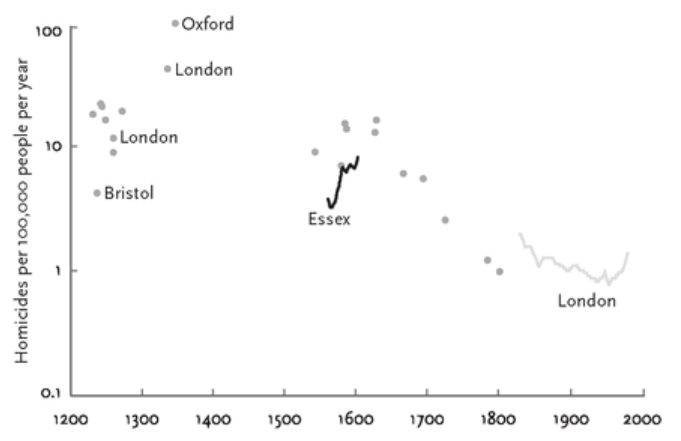
Figure 3-1 — Homicide rates in England, 1200-2000: Gurr’s 1981 estimates. PDF p. 102 (file not included in this release)
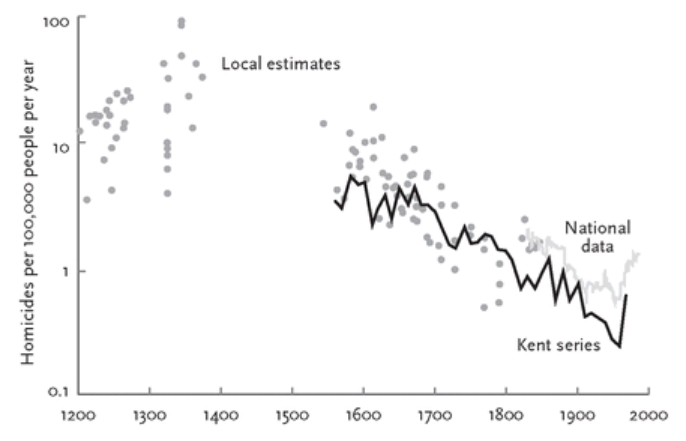
Figure 3-2 — Homicide rates in England, 1200-2000. PDF p. 103 (file not included in this release)
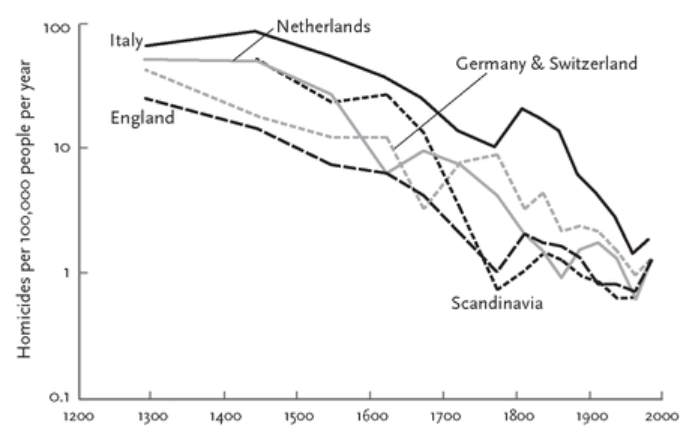
Figure 3-3 — Homicide rates in five Western European regions, 1300-2000. PDF p. 105 (file not included in this release)
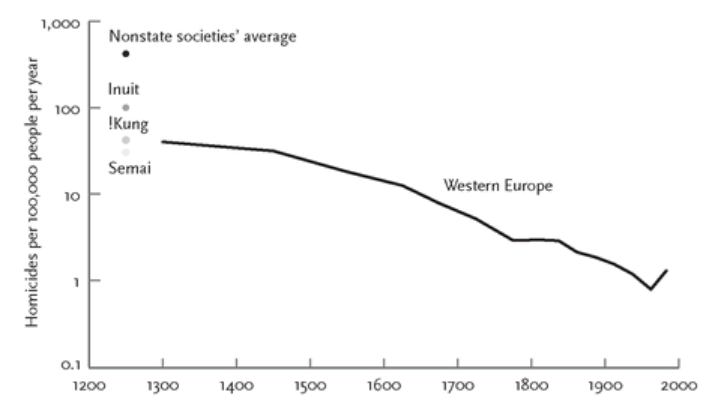
Figure 3-4 — Homicide rates in Western Europe, 1300-2000, and in nonstate societies. PDF p. 106 (file not included in this release)
Explanation and class
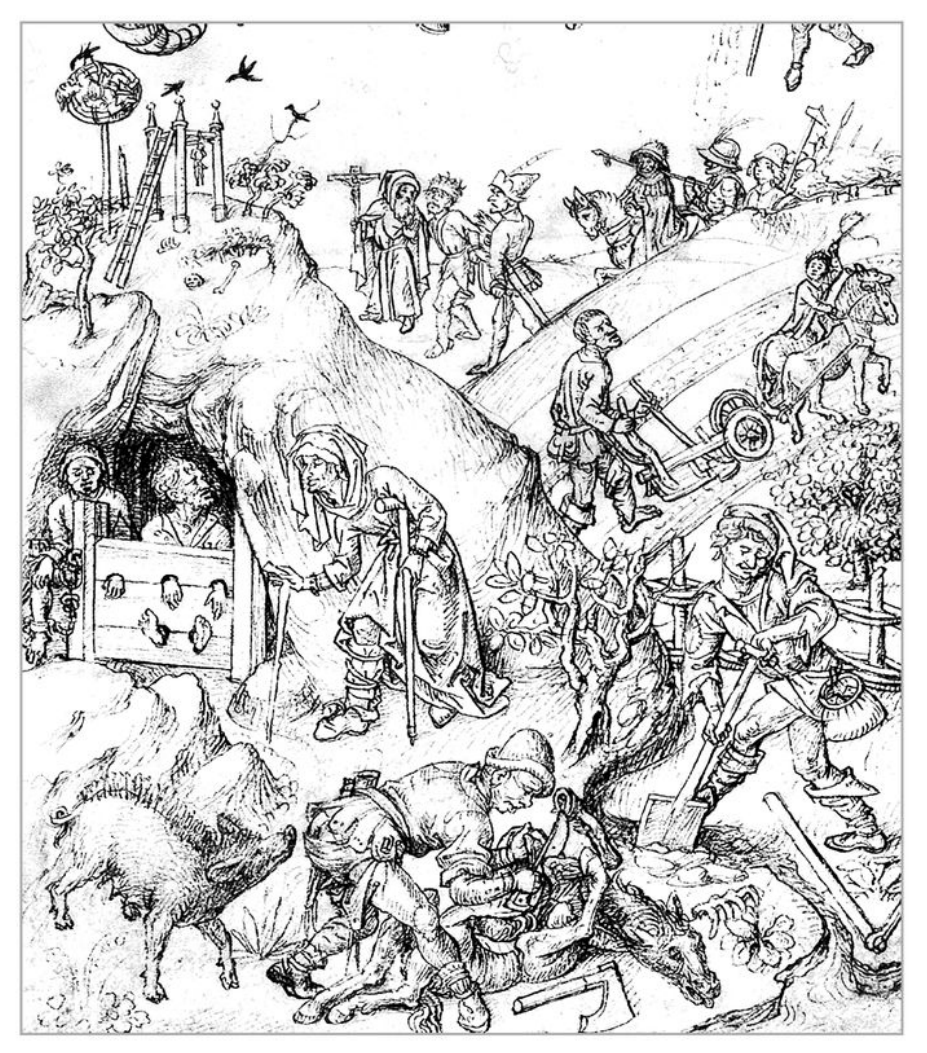
Figure 3-5 — Detail from ‘Saturn,’ The Medieval Housebook, 1475-80. PDF p. 108 (file not included in this release)
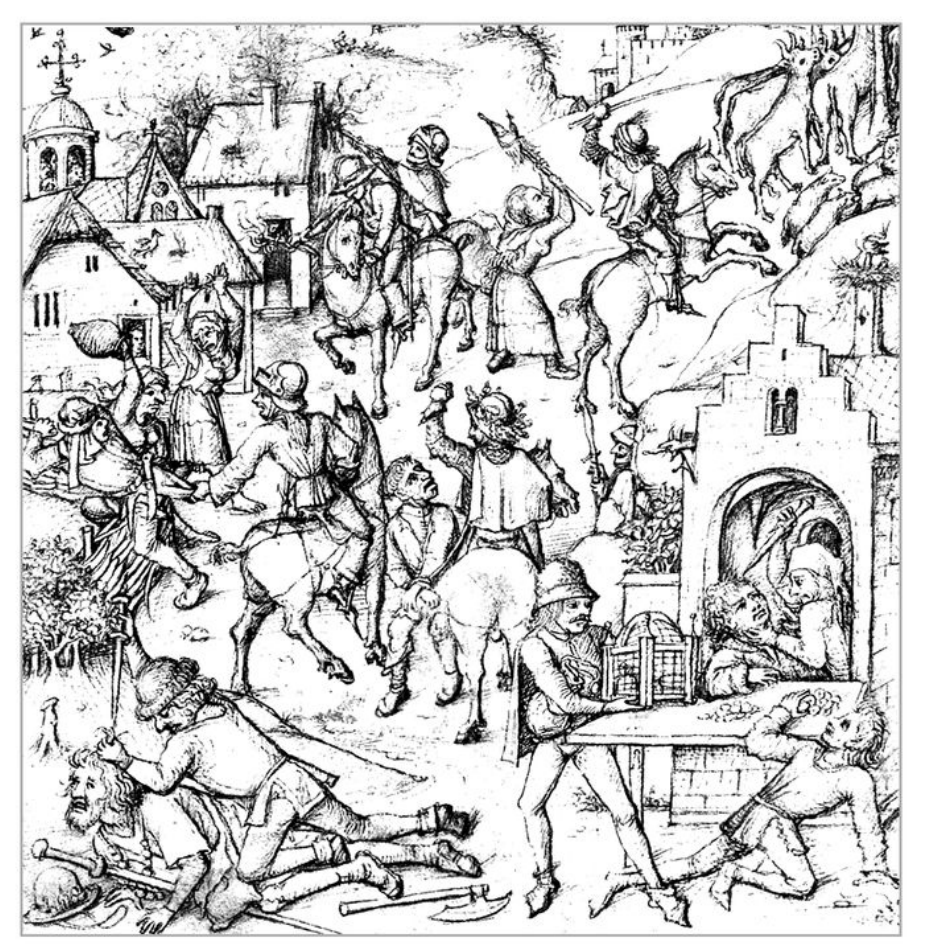
Figure 3-6 — Detail from ‘Mars,’ The Medieval Housebook, 1475-80. PDF p. 110 (file not included in this release)
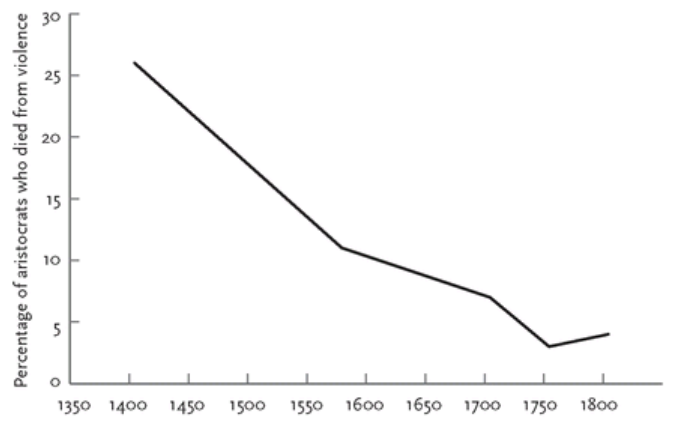
Figure 3-7 — Violent deaths among English male aristocrats, 1330-1829. PDF p. 130 (file not included in this release)
World geography
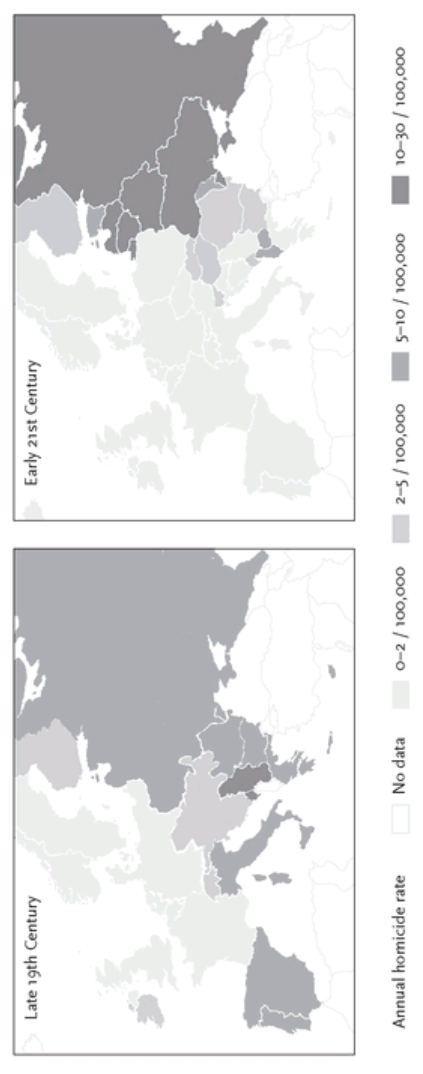
Figure 3-8 — Geography of homicide in Europe, late nineteenth and early twenty-first centuries. PDF p. 136 (file not included in this release)
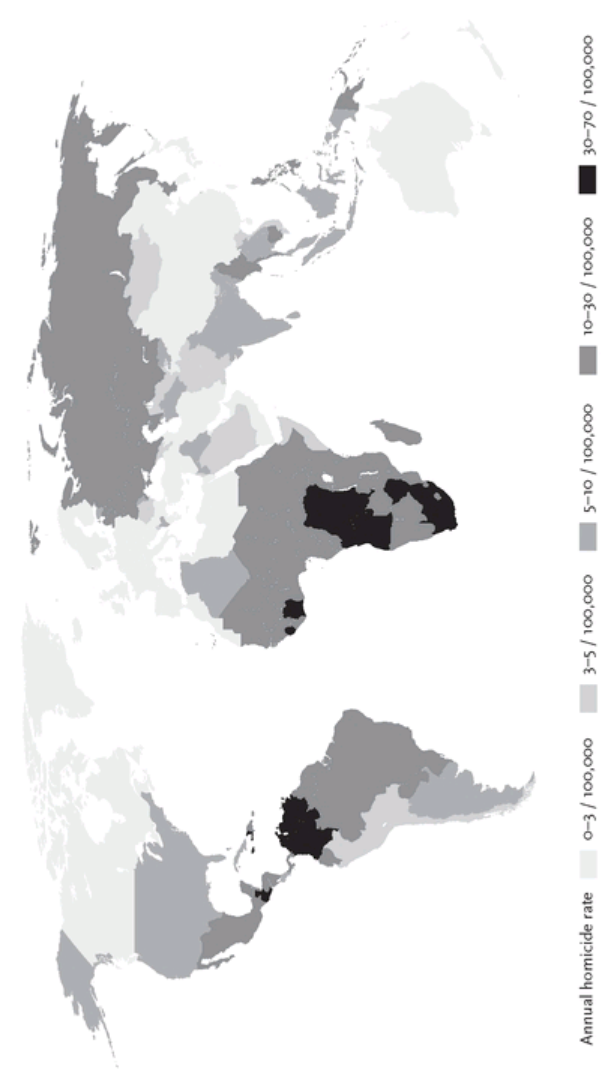
Figure 3-9 — Geography of homicide in the world, 2004. PDF p. 139 (file not included in this release)
The United States
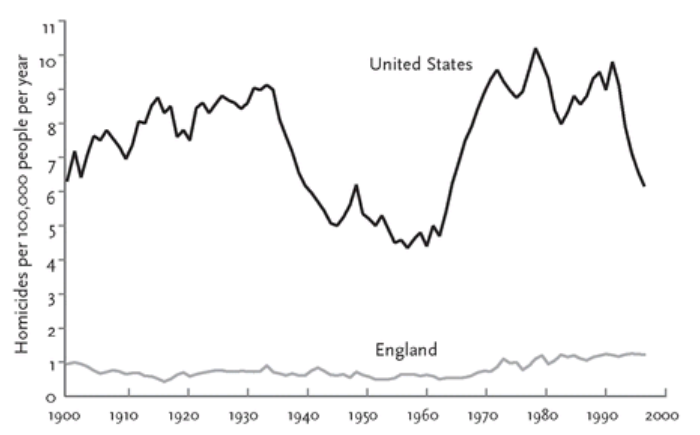
Figure 3-10 — Homicide rates in the United States and England, 1900-2000. PDF p. 144 (file not included in this release)

Figure 3-11 — Geography of homicide in the United States, 2007. PDF p. 146 (file not included in this release)
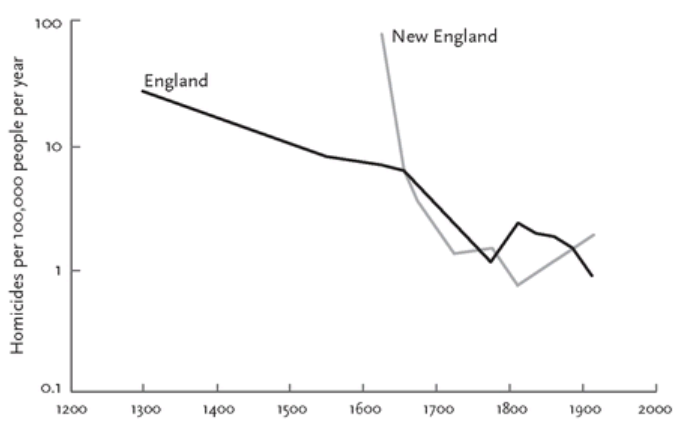
Figure 3-12 — Homicide rates in England, 1300-1925, and New England, 1630-1914. PDF p. 148 (file not included in this release)
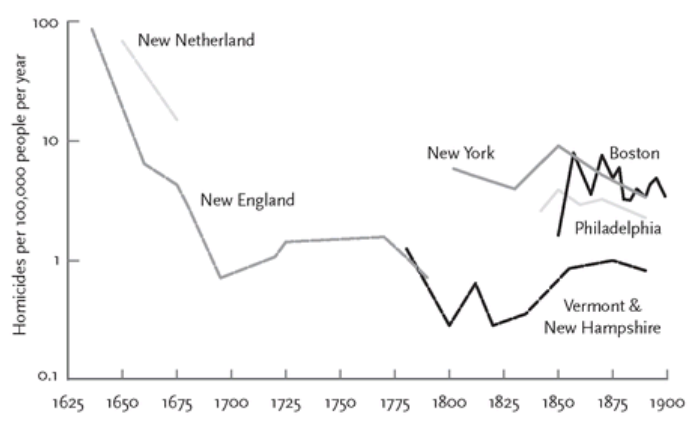
Figure 3-13 — Homicide rates in the northeastern United States, 1636-1900. PDF p. 149 (file not included in this release)
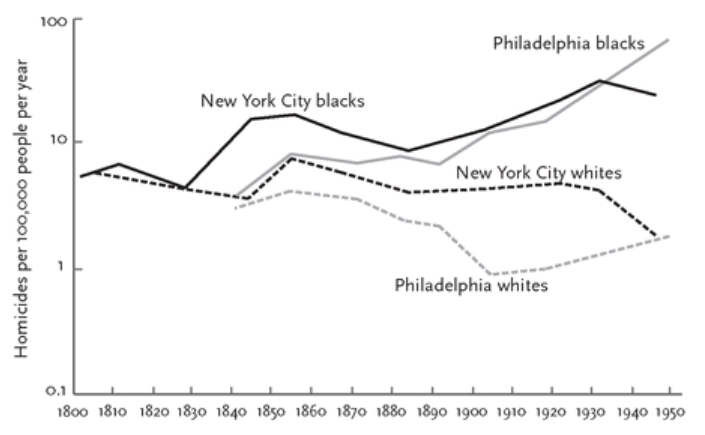
Figure 3-14 — Homicide rates among Black and white residents of New York and Philadelphia, 1797-1952. PDF p. 151 (file not included in this release)
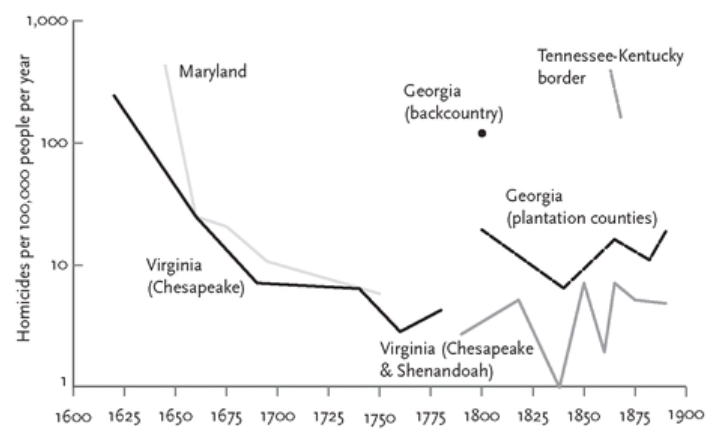
Figure 3-15 — Homicide rates in the southeastern United States, 1620-1900. PDF p. 153 (file not included in this release)
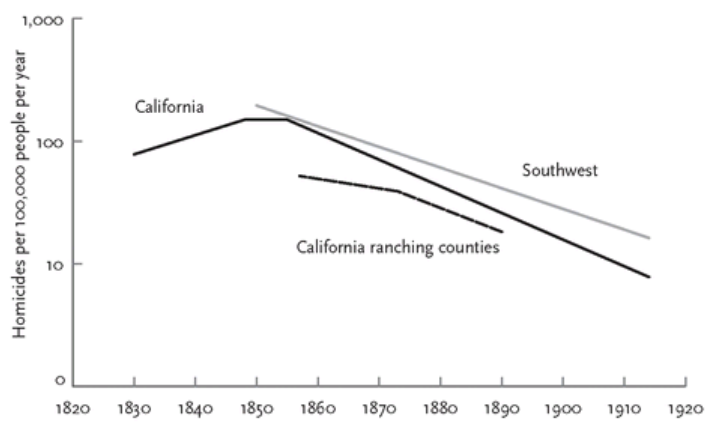
Figure 3-16 — Homicide rates in the southwestern United States and California, 1830-1914. PDF p. 160 (file not included in this release)
Decivilization and recivilization
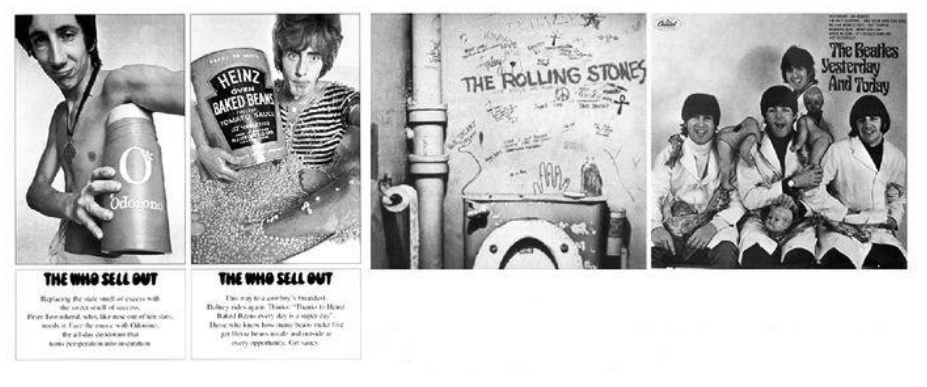
Figure 3-17 — Flouting conventions of cleanliness and propriety in the 1960s. PDF p. 171 (file not included in this release)
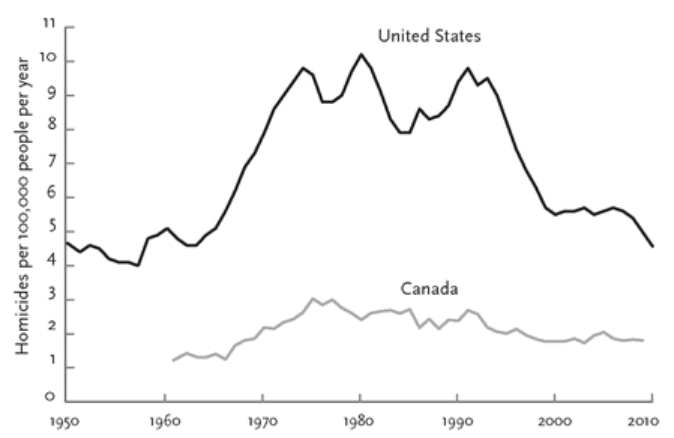
Figure 3-18 — Homicide rates in the United States, 1950-2010, and Canada, 1961-2009. PDF p. 178 (file not included in this release)
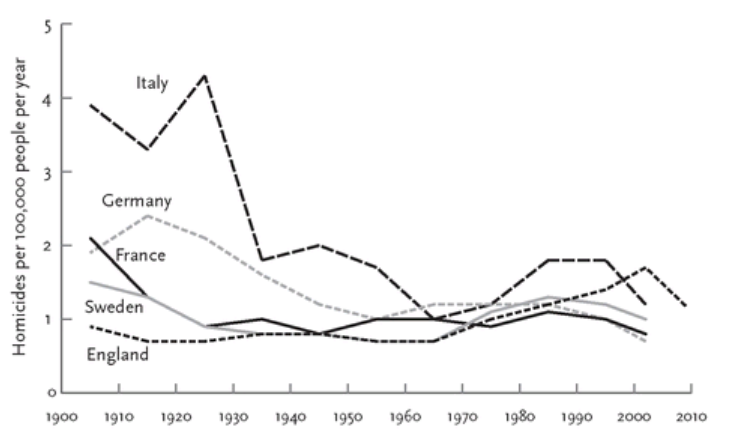
Figure 3-19 — Homicide rates in five Western European countries, 1900-2009. PDF p. 179 (file not included in this release)
Key Concepts and Distinctions
- Civilizing Process: social and institutional changes that make foresight, emotional control, and nonviolent conduct habitual.
- Honor versus dignity: retaliatory reputation versus intrinsic status protected by impartial law.
- External versus internal control: deterrence by authorities versus learned self-restraint.
- Decivilization: a reversal in state effectiveness, legitimacy, interdependence, or restraint norms.
- Recivilization: conscious and emergent efforts to restore predictable order, responsibility, empathy, and self-command.
- Certainty versus severity: prompt, predictable, proportionate sanctions can shape conduct better than rare draconian punishment.
- Surface informality versus deep restraint: unconventional dress or art need not imply real-world aggression.
Essential Evidence and Examples
- Multiple European series converge on a dramatic homicide decline even though medieval records are incomplete. European homicide graphs, PDF pp. 102–107 (file not included in this release)
- Regional U.S. patterns connect frontier weakness and honor culture with persistent violence. American regional history, PDF p. 143 (file not included in this release)
- The 1960s rise across several countries weakens explanations confined to one nation’s policing or economy. 1960s reversal, PDF p. 163 (file not included in this release)
- The Canadian decline limits a prison-centered explanation; New York’s unusually large decline supports some contribution from policing. Competing explanations, PDF pp. 176–188 (file not included in this release)
- Boston’s clergy-community-police coalition illustrates focused deterrence that supplies a face-saving exit from revenge as well as a threat of punishment. Boston recivilization, PDF p. 189 (file not included in this release)
Chapter 3 Stories and Vignettes
- A penny candle and a killing. From a fourteenth-century English record, Pinker recounts a parish chaplain who sent his clerk to buy a candle on credit. When the cobbler refused to hand it over without payment, the chaplain broke into his house and struck him so violently that he died. Pinker uses the disproportion between grievance and response to embody Elias’s claim about weak impulse control and rapid escalation. Historical court-account retold through Barbara Hanawalt. PDF p. 111 (file not included in this release)
- A nose cut off for another person’s adultery. In Nuremberg in 1520, Pinker reports, Hanns von Eyb retaliated for Hanns Rigel’s affair with his wife by cutting off the nose of Rigel’s innocent wife; Rigel was jailed, while von Eyb escaped punishment. The episode makes honor violence simultaneously personal, vicarious, and institutionally capricious. Historical account retold through Valentin Groebner. PDF p. 112 (file not included in this release)
- Keith Moon and the blurred line between rebellion and violence. Pinker moves from theatrical instrument-smashing to Moon’s destruction of hotel rooms, abuse of family members, threats, and the accidental killing of his bodyguard. The vignette supports his argument that the 1960s “decivilizing” style sometimes moved beyond harmless informality into weakened restraint. Biographical example in Pinker’s cultural argument. PDF p. 171 (file not included in this release)
- The Boston Miracle and a face-saving exit. Clergy, community workers, police, and social services confronted high-risk gangs, sometimes through the young men’s mothers and grandmothers, while intervening after grievances to stop revenge. Pinker’s most vivid scene is an Operation Ceasefire meeting where a remorseful former gang member introduced the woman he had paralyzed and she showed the young men her colostomy bag. He uses the episode to join deterrence, empathy, community legitimacy, and a way to retreat without humiliation. Reported program and eyewitness account. PDF pp. 189–191 (file not included in this release)
Chapter Conclusion and Significance
The long homicide decline is Pinker’s clearest bridge from institutions to character: law and commerce do not merely restrain people from outside; over time they reshape status, expectations, and habits. The modern reversal and recovery prevent that story from becoming triumphalist. Civilized restraint is learned, socially supported, and vulnerable to institutional failure or cultural revaluation.
Questions for Reflection
- Does the homicide record support Elias’s particular mechanism, or only the fact of decline?
- How much of the 1990s drop can policy explain before a diffuse norm change must be invoked?
- Can a society preserve informal personal freedom while maintaining a strong “third nature” of nonviolence?
Chapter 4: The Humanitarian Revolution
Chapter Objective and Through Line
Pinker turns from reductions in unauthorized interpersonal violence to the retreat of violence that authorities and communities openly sanctioned. Human sacrifice, witch hunts, persecution, torture, mutilation, public execution, slavery, despotism, and aggressive war did not simply become less frequent; many were reconceived as morally illegitimate. The decisive transition accelerated in the 17th and 18th centuries around the Enlightenment, though Pinker recognizes classical, Renaissance, religious, and non-Western antecedents. Chapter opening, PDF p. 194 (file not included in this release)
The chapter’s causal argument combines the Civilizing Process with an intellectual and emotional revolution. Stronger states reduce local cruelty and create a literate public; printing and transportation form a Republic of Letters; fiction, testimony, and journalism make suffering imaginable; skepticism attacks the factual premises of superstition; humanist reasoning treats individuals rather than souls, dynasties, or sacred orders as the objects of policy. Reformers then translate sensibility and argument into law. The later return of nationalism, racism, and totalitarian ideology shows that the revolution can be reversed.
Chapter Structure at a Glance
- Inventory institutions of cruelty once defended as sacred, just, or entertaining.
- Track their legal and practical abolition over different timelines.
- Show how the victim’s experience became morally relevant.
- Test material explanations such as wealth against the timing of reform.
- Link printing, literacy, novels, travel, and correspondence to wider sympathy.
- Link skepticism, secular argument, and rights to the collapse of superstitious justifications.
- Integrate state formation with Enlightenment critique rather than choosing one cause.
- End with “blood and soil” ideologies as a major countercurrent.
Section-by-Section Argument
Superstitious Killing: Human Sacrifice, Witchcraft, and Blood Libel
Human sacrifice and witch killing become rational inside belief systems in which gods demand blood or hidden agents cause disaster. Their decline therefore requires more than compassion: the causal beliefs authorizing them must lose credibility, and legal systems must demand better evidence. Pinker uses these cases to show knowledge itself acting as a pacifying force. Superstitious killing, PDF p. 201 (file not included in this release)
Violence Against Blasphemers, Heretics, and Apostates
When eternal salvation and divine truth outrank bodily autonomy, coercing belief can appear benevolent. Religious toleration advances when certainty weakens, pluralism makes uniformity impractical, and political order stops depending on doctrinal sameness. Pinker’s argument is historical rather than a claim that every religious actor opposed toleration; particular believers and sects also became reformers. Religious persecution, PDF p. 208 (file not included in this release)
Cruel and Unusual Punishments
Premodern punishment maximized pain, humiliation, symbolism, and spectacle. The shift toward proportion, deterrence, due process, and eventually rehabilitation redefines punishment as an instrument with a public purpose rather than licensed revenge. Thinkers such as Cesare Beccaria make the victim’s body and the social consequences of cruelty part of legal reasoning. Cruel punishment, PDF p. 215 (file not included in this release)
Capital Punishment
Capital statutes, execution rates, eligible offenses, and public spectacle contract at different speeds. The important trend is not a single abolition date but a ratchet: fewer crimes are capital, executions become rarer and less theatrical, and many jurisdictions abandon the penalty in law or practice. Pinker treats this as one measurable expression of declining tolerance for state killing. Capital punishment, PDF p. 221 (file not included in this release)
Slavery
Slavery was nearly universal and deeply profitable to beneficiaries, yet organized abolition turned it into a moral abomination. First-person narratives, religious dissenters, Enlightenment arguments, mass petitioning, and state action interacted. Abolition is central because it demonstrates moral mobilization against an entrenched institution rather than a simple disappearance after it ceased to matter. Slavery and abolition, PDF p. 226 (file not included in this release)
Chapter 6 cross-reference — abolition in Muslim-majority states
Pinker later notes that legal abolition came particularly late in several Muslim-majority states, naming Saudi Arabia (1962) and Mauritania (1980). This is a historical timing claim in his broader argument, not by itself proof that theology caused either slavery or delayed abolition. → full Chapter 6 source audit · PDF p. 508 (file not included in this release)
Despotism and Political Violence
The humanitarian shift limits rulers as well as punishers. Social-contract theory, natural rights, constitutionalism, and representative government challenge the treatment of subjects as instruments of dynastic or sacred authority. The state’s monopoly on force becomes more peaceful only when paired with restraints on arbitrary force. Despotism and political violence, PDF p. 233 (file not included in this release)
Major War
Early-modern Europe remains violent, but war begins to be criticized from the standpoint of ordinary victims and national welfare rather than glory alone. Systematic pacifism, commercial objections, and humanitarian revulsion emerge before war actually disappears. Pinker uses the gap between attitudes and behavior to show moral delegitimation as a possible leading indicator, not proof of immediate success. Major war, PDF p. 238 (file not included in this release)
Whence the Humanitarian Revolution?
No single material cause fits. The humanitarian turn precedes the largest gains from industrial affluence, and religious institutions have mixed records. Pinker seeks a bundle of enabling conditions: pacification, cities, commerce, literacy, a public sphere, skepticism, and new moral arguments. Competing explanations, PDF p. 246 (file not included in this release)
The Rise of Empathy and Regard for Human Life
Longer lives and safer daily conditions can make life feel more valuable, while literature and testimony invite readers to inhabit another person’s suffering. Pinker does not make empathy sufficient—sympathy can be selective—but treats it as an emotional channel through which distant victims enter public concern. Empathy and human life, PDF p. 255 (file not included in this release)
The Republic of Letters and Enlightenment Humanism
Cheaper books, rising literacy, correspondence, salons, science, and travel create a network in which claims can be criticized beyond local authority. Humanism relocates the end of politics in human flourishing. The combination of perspective-taking and argumentative scrutiny makes customary cruelty answerable to standards that outsiders and victims can contest. Republic of Letters, PDF p. 259 (file not included in this release)
Civilization and Enlightenment
Pinker treats Elias and the Enlightenment as complementary. State consolidation and commerce create order, interdependence, and literate elites; Enlightenment criticism constrains the very states that pacification empowered. Civilization supplies behavioral restraint, while humanism widens the set of people protected and attacks officially sanctioned cruelty. Civilization and Enlightenment, PDF p. 267 (file not included in this release)
Blood and Soil
Romantic nationalism, racial essentialism, revolutionary utopianism, and Counter-Enlightenment ideologies restore sacred collective ends above individual welfare. The resulting reversals are crucial to Pinker’s non-teleological account: reason and humanitarianism can advance, lose prestige, and be overwhelmed by identity and ideology. Blood and soil, PDF p. 270 (file not included in this release)
Figures
Punishment and execution
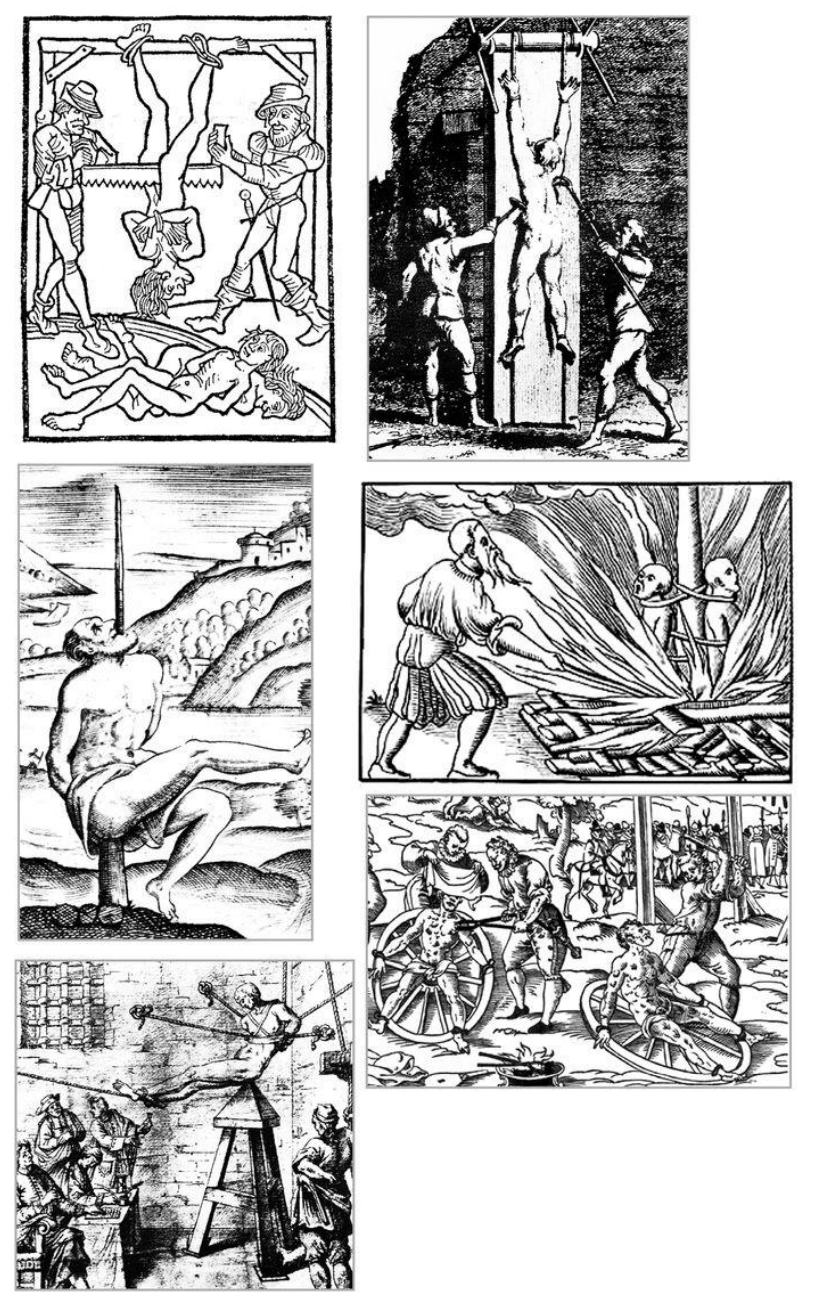
Figure 4-1 — Torture in medieval and early modern Europe. PDF p. 197 (file not included in this release)
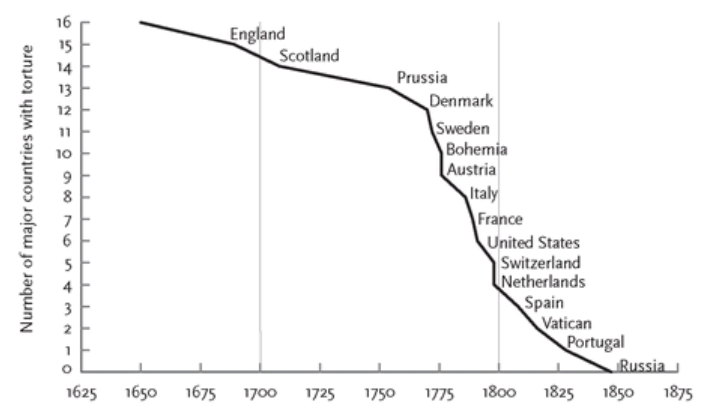
Figure 4-2 — Timeline for the abolition of judicial torture. PDF p. 221 (file not included in this release)
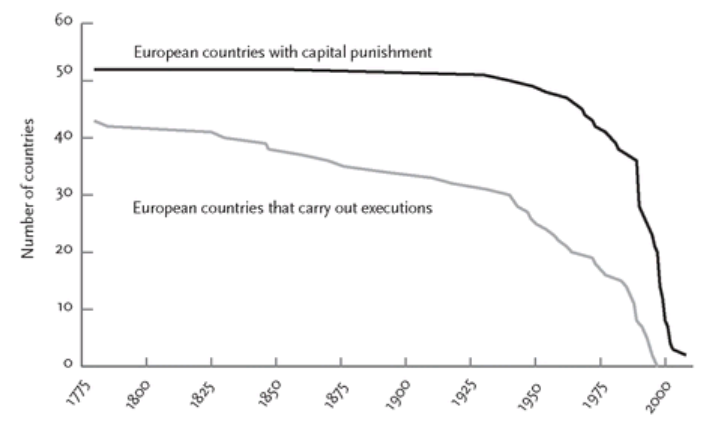
Figure 4-3 — Timeline for the abolition of capital punishment in Europe. PDF p. 223 (file not included in this release)
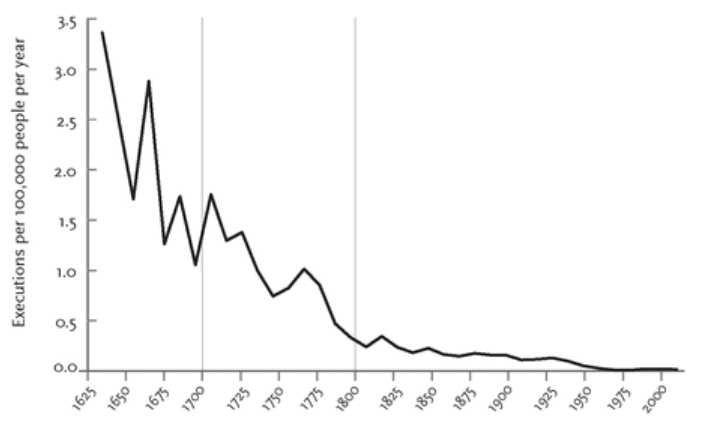
Figure 4-4 — Execution rate in the United States, 1640-2010. PDF p. 223 (file not included in this release)
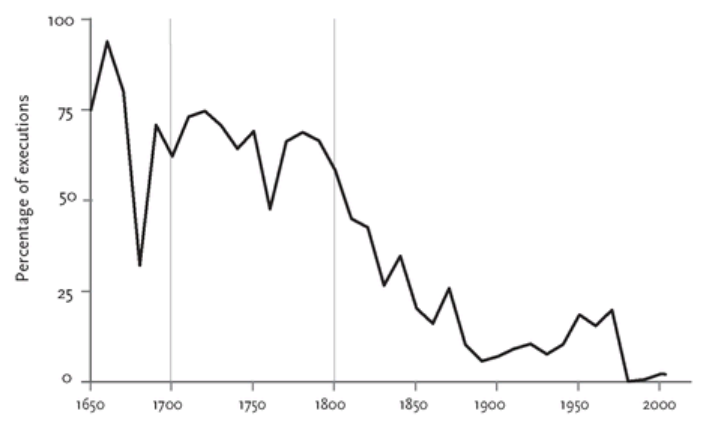
Figure 4-5 — Executions for crimes other than homicide in the United States, 1650-2002. PDF p. 225 (file not included in this release)
Slavery
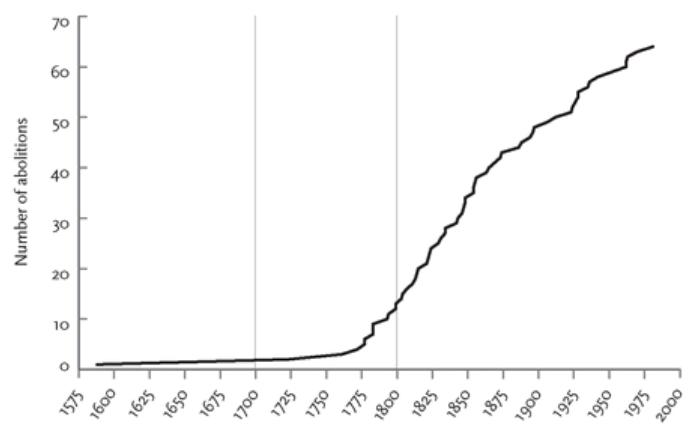
Figure 4-6 — Timeline for the abolition of slavery. PDF p. 231 (file not included in this release)
Material change and the Republic of Letters
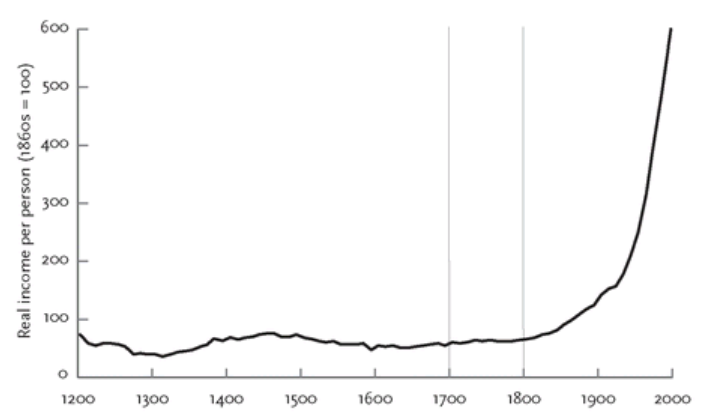
Figure 4-7 — Real income per person in England, 1200-2000. PDF p. 251 (file not included in this release)
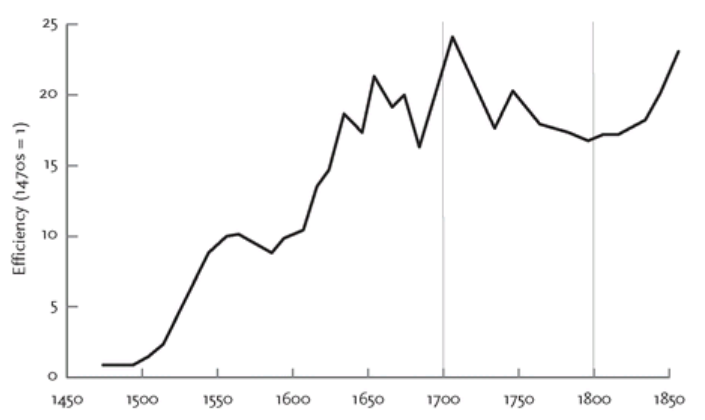
Figure 4-8 — Efficiency in book production in England, 1470s-1860s. PDF p. 252 (file not included in this release)
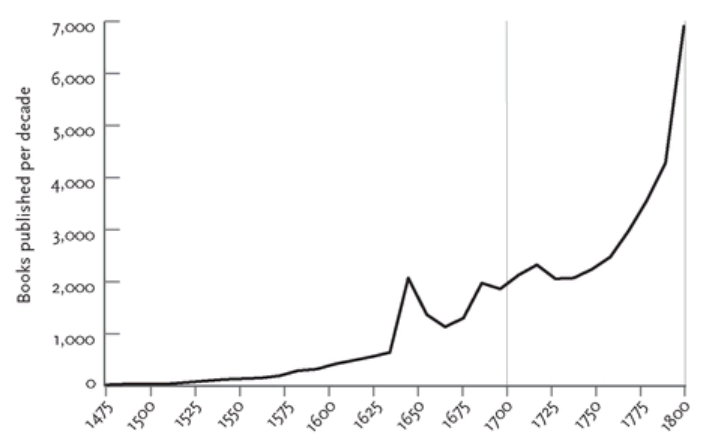
Figure 4-9 — Number of books in English published per decade, 1475-1800. PDF p. 253 (file not included in this release)
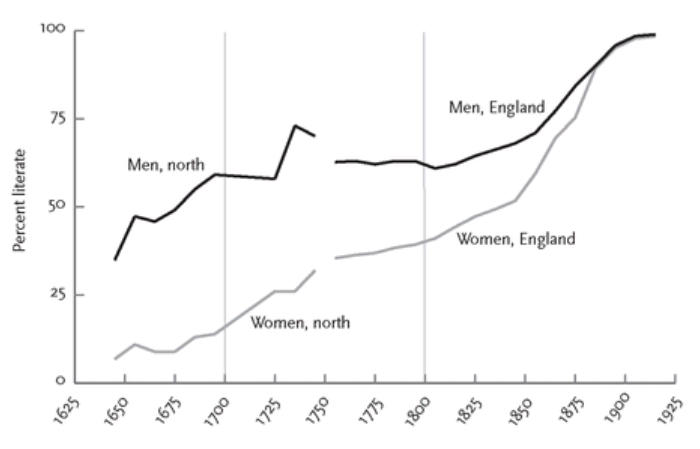
Figure 4-10 — Literacy rate in England, 1625-1925. PDF p. 254 (file not included in this release)
Key Concepts and Distinctions
- Humanitarian Revolution: organized moral and legal rejection of previously authorized cruelty.
- Empathy versus humanism: emotional identification with victims versus a reasoned system that makes individual flourishing the end of institutions.
- Belief-dependent violence: cruelty that becomes intelligible only if supernatural or ideological premises are accepted.
- Moral entrepreneur: a person or movement that names a tolerated harm, publicizes victims, and organizes reform.
- Delegitimation versus disappearance: moral rejection may precede enforcement and behavioral decline.
- Civilization plus critique: the capacity to keep order and the principles that restrain the order-keeper solve different problems.
Essential Evidence and Examples
- Timelines for judicial torture and capital punishment show clustered legal retreat rather than one universal turning point. Torture and punishment, PDF pp. 215–225 (file not included in this release)
- Abolition succeeds against material interests through a coalition of testimony, argument, organization, and state power. Abolition, PDF p. 226 (file not included in this release)
- Book production and literacy rise before or alongside the humanitarian reforms, supporting—but not by chronology alone proving—the Republic of Letters mechanism. Print and literacy, PDF pp. 259–266 (file not included in this release)
- Counter-Enlightenment ideology demonstrates that educated modern societies can redirect advanced institutions toward mass violence. Countercurrent, PDF p. 270 (file not included in this release)
Chapter 4 Stories and Vignettes
- The emperor who replaced people with clay. When a Japanese emperor’s brother died in 2 BCE, members of the entourage were buried alive and remained audible for days. After their cries distressed the emperor and witnesses, the emperor used clay figures rather than living victims at his wife’s funeral five years later. Pinker uses the change as a miniature Humanitarian Revolution: an inherited sacred practice loses legitimacy when observers imaginatively register its victims. Historical episode retold through James Payne. PDF p. 204 (file not included in this release)
- Forced confessions expose torture. Pinker recounts a Milanese judge who killed his own mule, accused and tortured a servant until he confessed, and then abolished torture in his court. In a companion story, the Duke of Brunswick asked a tortured woman whether two supervising Jesuits were warlocks; under another turn of the rack she implicated them too, confronting the priests with the worthlessness of coerced testimony. Historical anecdotes reported through Pinker’s sources. PDF pp. 207–208 (file not included in this release)
- Cruelty as public entertainment. Sixteenth-century Parisians lowered cats into a fire while spectators, including royalty, laughed; Samuel Pepys later watched a man being hanged, drawn, and quartered and then went out for oysters. Pinker pairs the episodes to show not merely harsh law but an emotional baseline in which suffering could be spectacle or background. Historical reports. PDF pp. 215–216 (file not included in this release)
- Jean Calas and the moral force of a witnessed injustice. In 1762 the French Protestant was wrongly accused of killing his son, tortured, broken on the wheel, and finally strangled while maintaining his innocence. Pinker emphasizes that the spectacle moved witnesses and that Voltaire turned the case into an indictment of inherited cruelty—the kind of publicity that helped convert private sympathy into reform. Historical episode. PDF p. 218 (file not included in this release)
Chapter Conclusion and Significance
The Humanitarian Revolution solves the central defect in simple Leviathan theory. Peace requires not only concentrating force but also changing what force may legitimately do. Sympathy makes victims visible; reason challenges the beliefs and privileges that rationalize their suffering; law preserves the resulting moral gains beyond any individual’s feelings.
Questions for Reflection
- Does the timing better support literacy and ideas, state consolidation, or their interaction?
- Which reforms required empathy, and which depended more on abstract rights and institutional design?
- How should colonial conquest and coercive abolition be incorporated into the humanitarian ledger?
Chapter 5: The Long Peace
Chapter Objective and Through Line
Pinker asks whether war became less frequent and deadly despite the world wars and the unprecedented destructive capacity of modern states. The chapter begins with method because war data are treacherous: memorable clusters invite stories, ancient wars are poorly recorded, populations differ, and the distribution of war size is heavy-tailed. Absolute totals, per-capita risk, frequency, duration, and concentration answer different questions. Statistics and narratives, PDF p. 275 (file not included in this release)
His conclusion is two-part. Across centuries, European and great-power war shows meaningful declines but also long periods of randomness and catastrophic reversals. After 1945, however, great powers and developed states stop fighting one another directly, territorial conquest contracts, military mobilization falls, and war loses legitimacy. Nuclear deterrence may contribute, but Pinker gives more weight to democracy, trade, international organizations, stable states and borders, and a postwar humanist revulsion against war.
Chapter Structure at a Glance
- Separate statistical patterns from stories imposed after the fact.
- Model war onset and size as partly stochastic, with power-law tails.
- Reconstruct long trajectories of great-power and European warfare.
- Divide European history into dynastic, sovereign, nationalist, and ideological eras.
- Identify the post-1945 Long Peace in behavior, institutions, and attitudes.
- Test nuclear, democratic, liberal, and Kantian explanations.
- Preserve contingency: a low probability is not impossibility, and a trend is not a forecast.
Section-by-Section Argument
Statistics and Narratives
Narrative history identifies motives and decisions, but it can turn every cluster into an inevitable arc. Statistical history disciplines that impulse by asking whether apparent cycles, escalations, or turning points exceed what random timing could produce. Pinker seeks a division of labor: numbers establish the shape of the problem; narratives explain specific deviations and mechanisms. Statistics and narratives, PDF p. 275 (file not included in this release)
The Statistics of Deadly Quarrels, Part 1: The Timing of Wars
Lewis Fry Richardson’s catalog suggests that war onsets contain substantial randomness and do not reveal dependable cycles. Long peaceful intervals can coexist with constant underlying risk, and clusters need not have one deep cause. This weakens confident predictions from periodic theories and cautions against reading inevitability backward from Sarajevo or 1939. Timing of wars, PDF p. 289 (file not included in this release)
The Statistics of Deadly Quarrels, Part 2: The Magnitude of Wars
War sizes follow a power-law-like distribution: small conflicts are common, immense ones rare, and the rare tail accounts for much suffering. There is no “typical” war from which the largest can be safely extrapolated. A single catastrophe can dominate a century, making short-window trend claims fragile and uncertainty unusually important. Magnitude and power laws, PDF p. 304 (file not included in this release)
The Trajectory of Great-Power and European War
Across longer spans, great powers fight less often, wars generally become shorter, and the share of time occupied by war declines, though lethality and state capacity do not fall monotonically. European conflict also contracts sharply after its mid-20th-century peak. Pinker presents this as a family of indicators rather than one master series. Great-power trajectory, PDF p. 319 (file not included in this release) · European trajectory, PDF p. 326 (file not included in this release)
Dynasties, Religion, and Sovereignty
Consolidated states end some feudal conflict while acquiring the capacity for larger war. Dynastic and religious ambitions then yield gradually to sovereign states and a norm against intervention in internal belief. Pinker does not portray sovereignty as inherently peaceful; it narrows some legitimate causes of war while leaving balance-of-power rivalry intact. Dynasties and religions, PDF p. 331 (file not included in this release) · Age of sovereignty, PDF p. 335 (file not included in this release)
Nationalism, Counter-Enlightenment, and Ideology
Romantic nationalism sacralizes people, soil, and destiny, turning limited state rivalry into mass identification. Fascism, communism, and totalitarian utopianism then combine modern administrative capacity with unlimited moral ends. Pinker treats the two world wars and genocides not as the natural culmination of reason or technology but as contingent eruptions amplified by anti-humanist ideology. Nationalism, PDF p. 339 (file not included in this release) · Ideology and totalitarianism, PDF p. 348 (file not included in this release)
The Long Peace: Numbers, Attitudes, and Events
Since 1945 the great powers do not fight one another directly; developed states largely abandon conquest; conscription and military personnel decline; borders become more stable. Equally important, war changes status—from a normal and often glorious instrument of policy to a failure requiring justification. Memories of catastrophe, antiwar norms, and the delegitimation of conquest alter leaders’ menus of acceptable action. Long Peace indicators, PDF p. 354 (file not included in this release) · Attitudes and events, PDF p. 362 (file not included in this release)
Is the Long Peace a Nuclear Peace?
Nuclear weapons create caution and may reinforce deterrence, but Pinker resists a complete nuclear explanation. Great powers avoided direct conventional war before all possessed secure arsenals, nuclear states still fought nonnuclear wars, accidents and misperceptions make stable deterrence less automatic than theory suggests, and changing attitudes toward war require a broader account. Nuclear peace, PDF p. 379 (file not included in this release)
Is the Long Peace a Democratic Peace?
Established democracies rarely, perhaps never under standard definitions, wage full-scale war against one another. Checks, transparency, shared norms, and audience constraints may matter. Yet democratization can be destabilizing, democracies fight nondemocracies, and democracy alone cannot explain the whole chronology. Democratic peace, PDF p. 394 (file not included in this release)
Is the Long Peace a Liberal Peace?
Trade makes conquest less useful and raises the opportunity cost of war, while market integration encourages reliable exchange. Correlation is not simple causation—peace also enables trade—but the dyadic pattern and wider historical fit give commerce a place in the synthesis. Liberal peace, PDF p. 402 (file not included in this release)
Is the Long Peace a Kantian Peace?
Pinker favors an interacting “Kantian triangle”: democracy, commerce, and international organizations mutually support peaceful expectations, information, mediation, and restraint. None is a world government, but together they supply partial third-party functions and increase the political cost of defection. Kantian peace, PDF p. 407 (file not included in this release)
Figures
Statistical framing and historical myopia
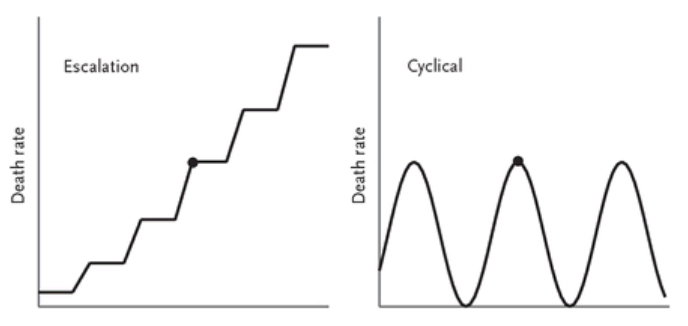
Figure 5-1 — Two pessimistic possibilities for historical trends in war. PDF p. 277 (file not included in this release)
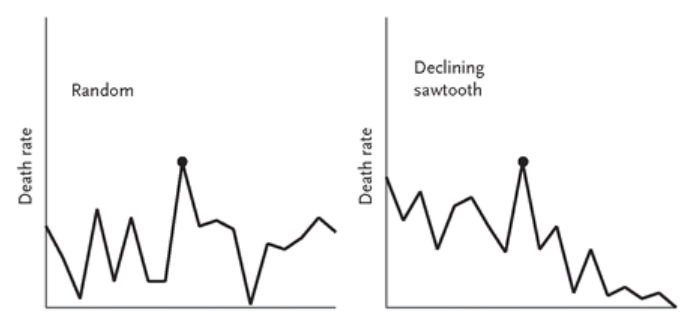
Figure 5-2 — Two less pessimistic possibilities for historical trends in war. PDF p. 278 (file not included in this release)
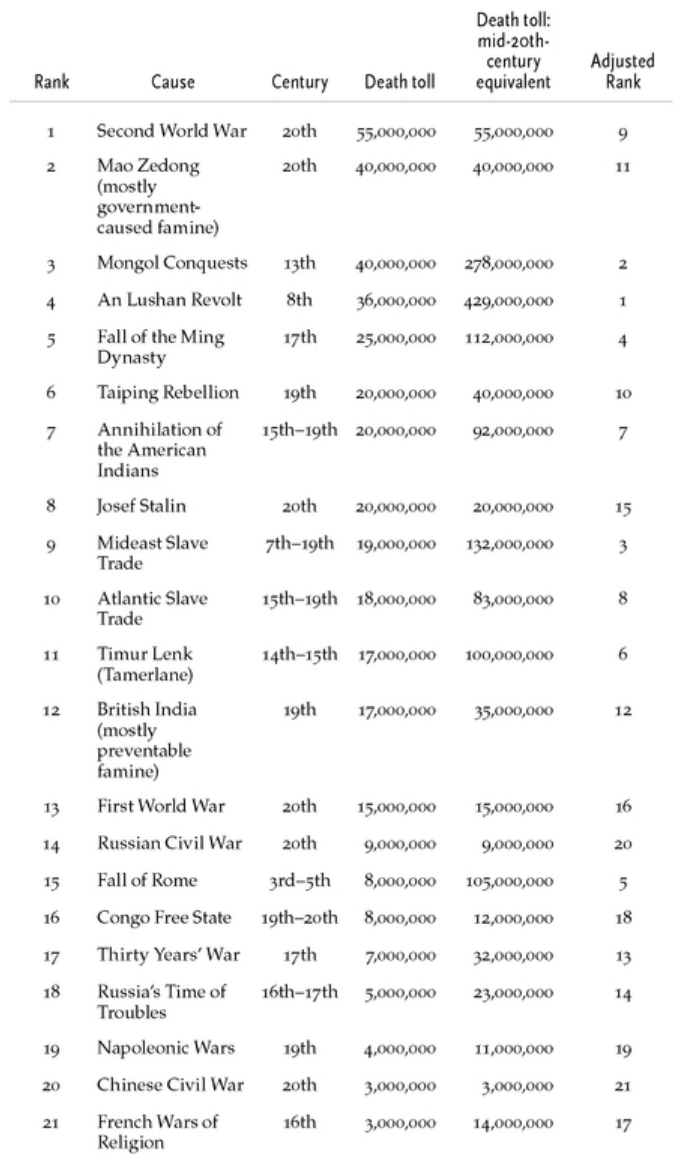
Unnumbered visual — Ranked wars and atrocities by absolute and population-adjusted death toll. PDF p. 282 (file not included in this release)
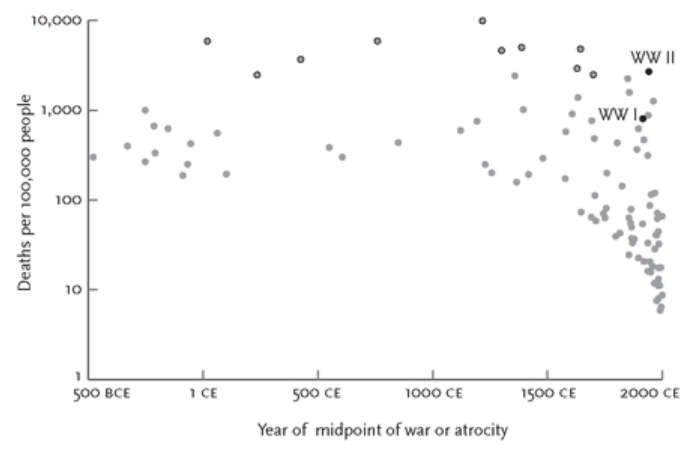
Figure 5-3 — One hundred worst wars and atrocities in human history. PDF p. 285 (file not included in this release)
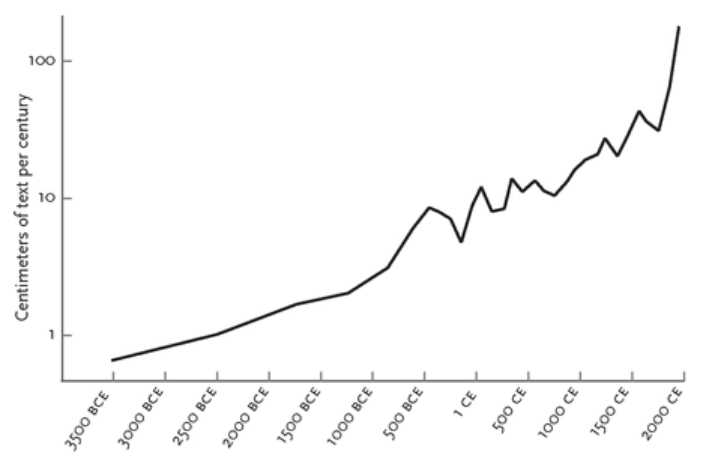
Figure 5-4 — Historical myopia: text per century in a historical almanac. PDF p. 288 (file not included in this release)
Randomness and the magnitude of war

Figure 5-5 — Random and nonrandom patterns. PDF p. 296 (file not included in this release)
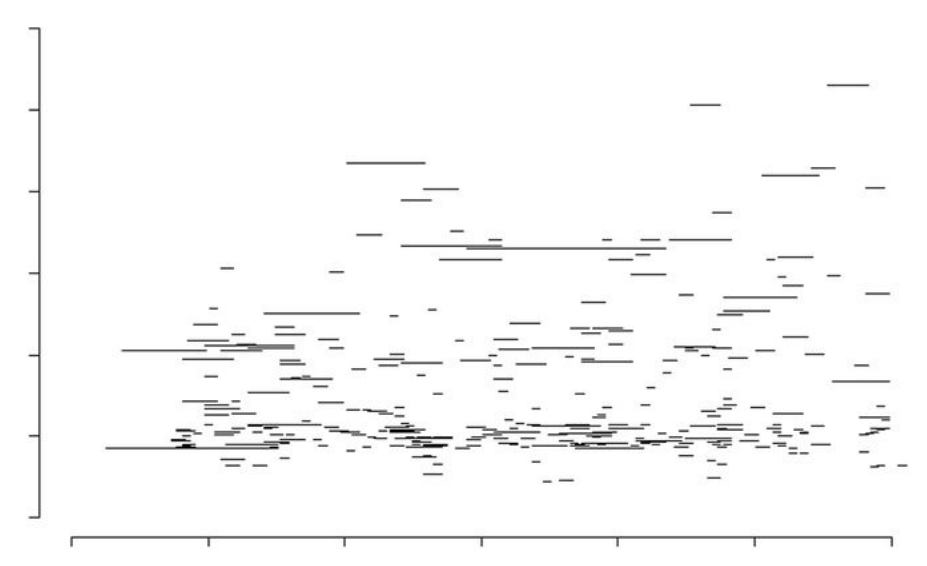
Figure 5-6 — Richardson’s data. PDF p. 296 (file not included in this release)
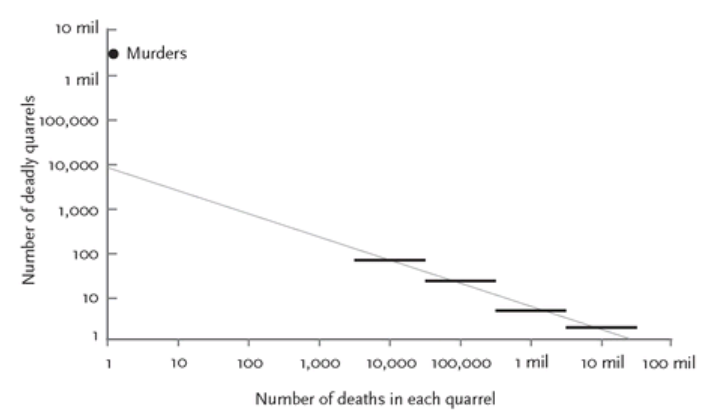
Figure 5-7 — Number of deadly quarrels of different magnitudes, 1820-1952. PDF p. 305 (file not included in this release)
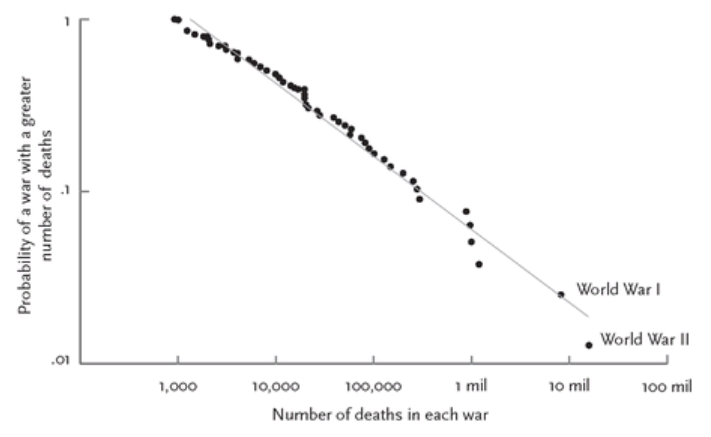
Figure 5-8 — Probabilities of wars of different magnitudes, 1820-1997. PDF p. 306 (file not included in this release)
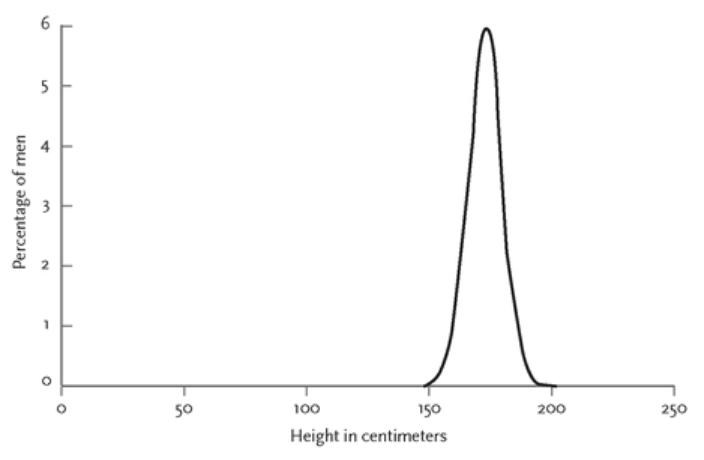
Figure 5-9 — Heights of males: a normal distribution. PDF p. 308 (file not included in this release)
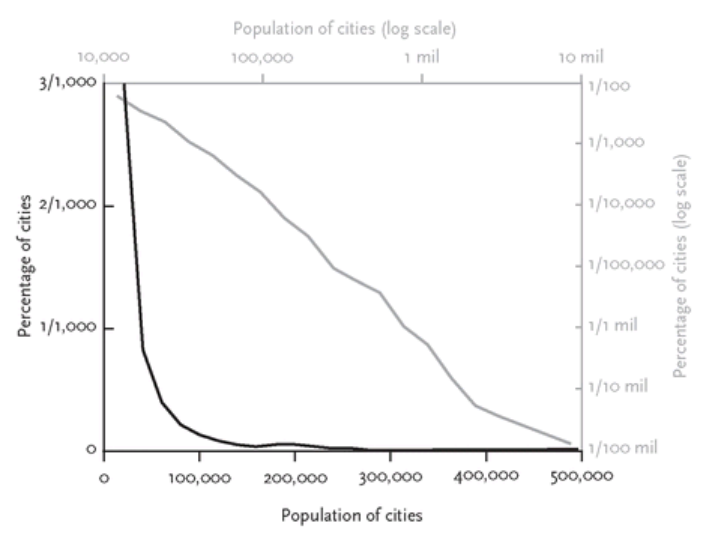
Figure 5-10 — Populations of cities: a power-law distribution. PDF p. 309 (file not included in this release)
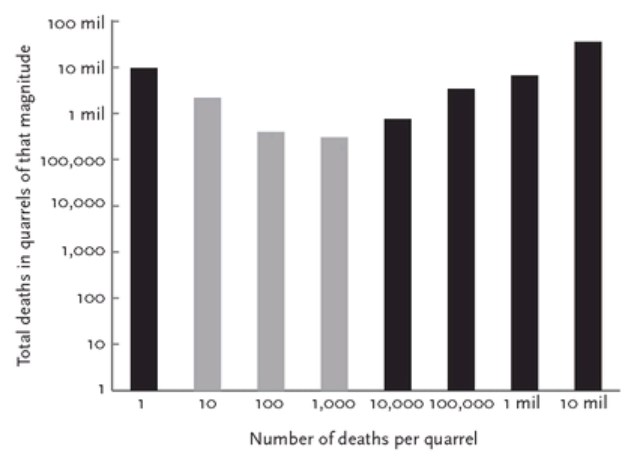
Figure 5-11 — Total deaths from quarrels of different magnitudes. PDF p. 318 (file not included in this release)
The long trajectory of great-power and European war
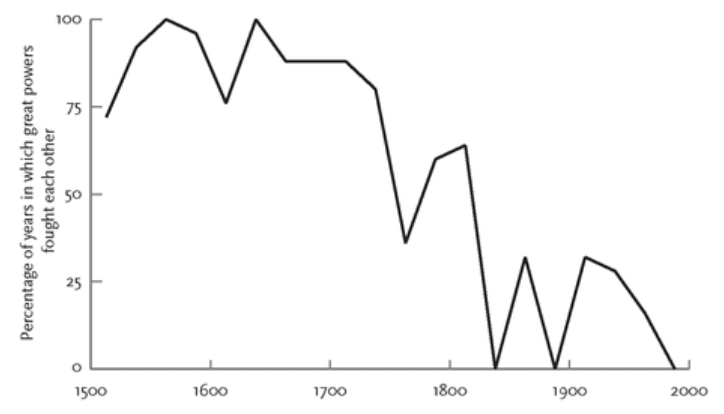
Figure 5-12 — Percentage of years in which the great powers fought one another, 1500-2000. PDF p. 322 (file not included in this release)
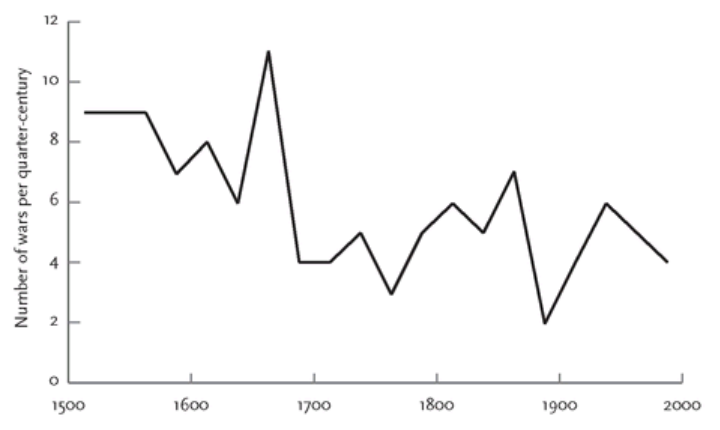
Figure 5-13 — Frequency of wars involving the great powers, 1500-2000. PDF p. 323 (file not included in this release)
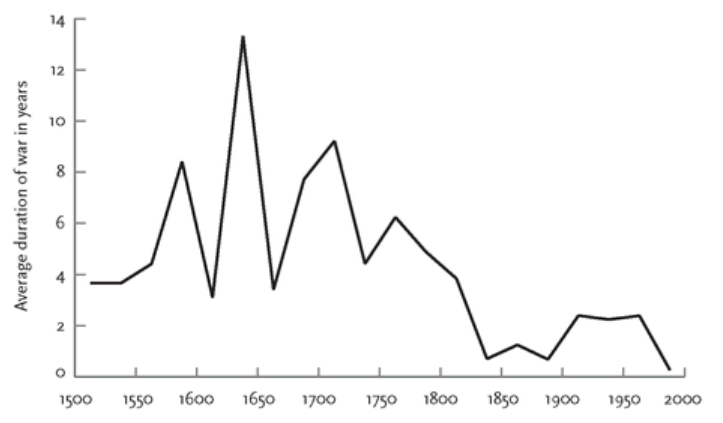
Figure 5-14 — Duration of wars involving the great powers, 1500-2000. PDF p. 324 (file not included in this release)
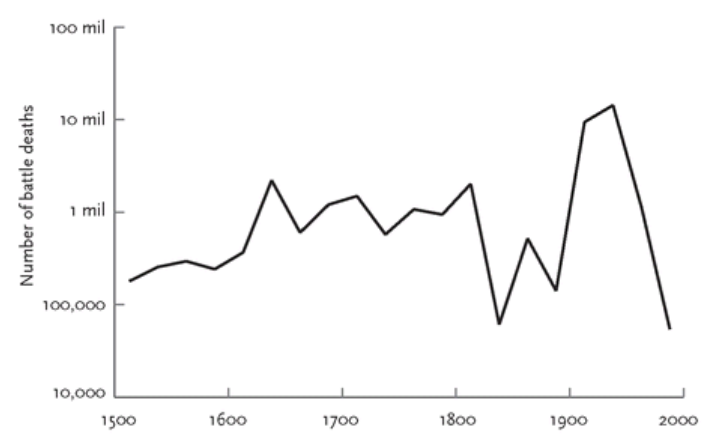
Figure 5-15 — Deaths in wars involving the great powers, 1500-2000. PDF p. 325 (file not included in this release)
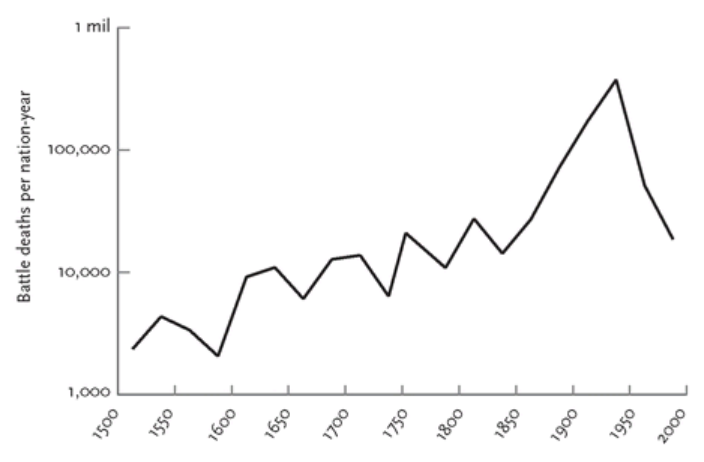
Figure 5-16 — Concentration of deaths in wars involving the great powers, 1500-2000. PDF p. 326 (file not included in this release)
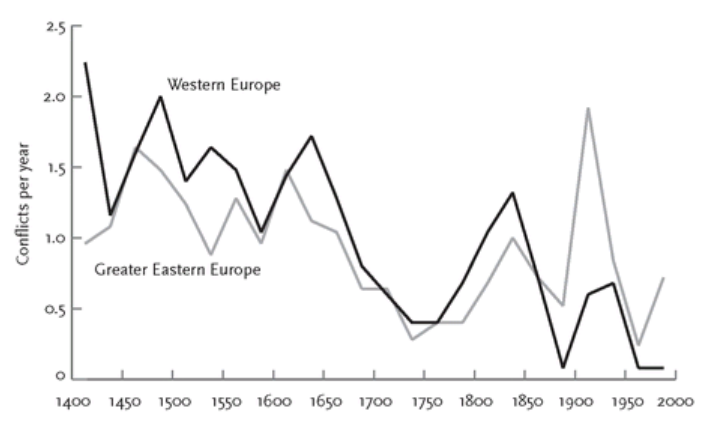
Figure 5-17 — Conflicts per year in greater Europe, 1400-2000. PDF p. 329 (file not included in this release)
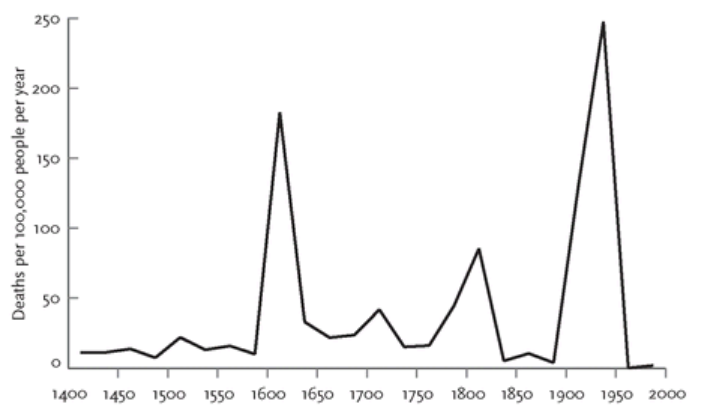
Figure 5-18 — Rate of death in conflicts in greater Europe, 1400-2000. PDF p. 330 (file not included in this release)
Indicators of the Long Peace
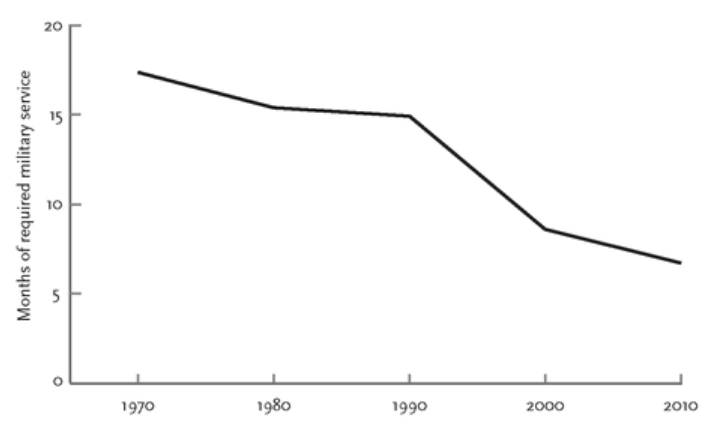
Figure 5-19 — Length of military conscription in forty-eight nations, 1970-2010. PDF p. 363 (file not included in this release)
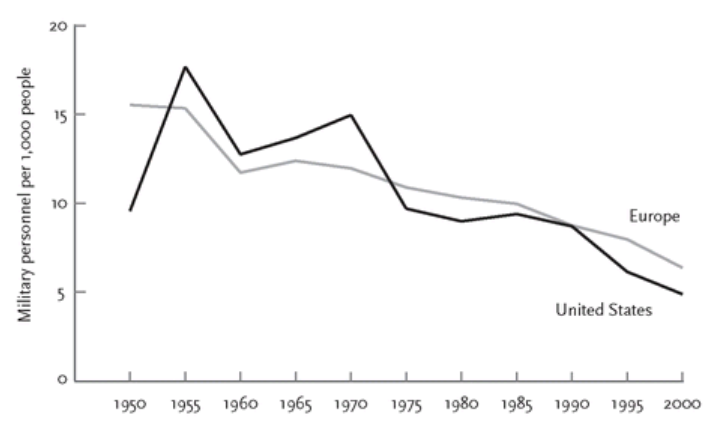
Figure 5-20 — Military personnel in the United States and Europe, 1950-2000. PDF p. 365 (file not included in this release)
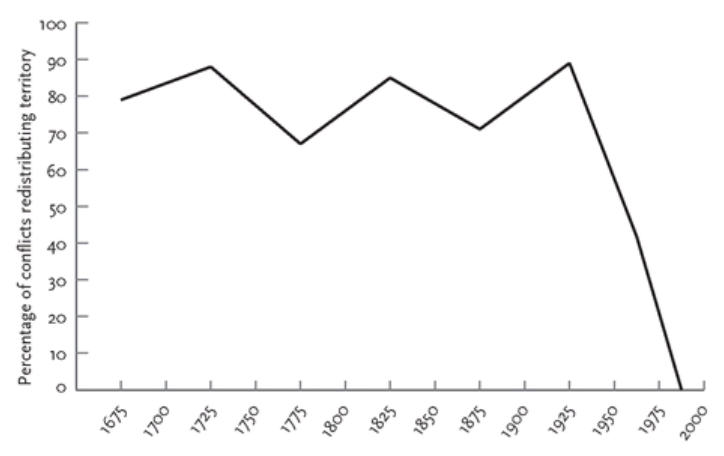
Figure 5-21 — Territorial wars resulting in territorial redistribution, 1651-2000. PDF p. 368 (file not included in this release)
Competing explanations
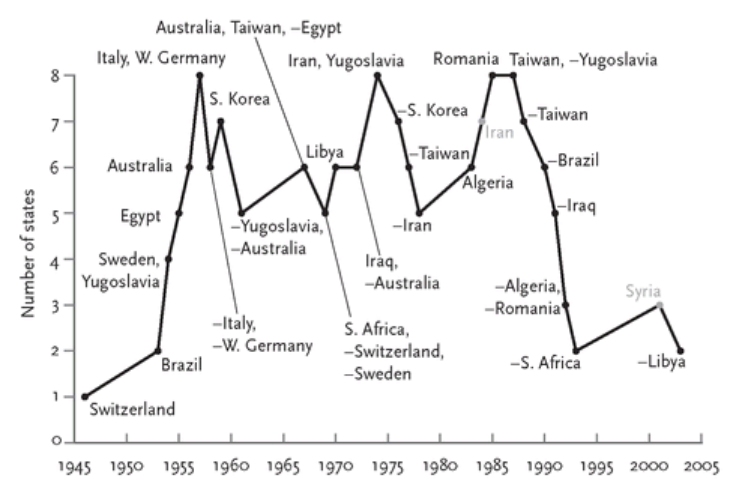
Figure 5-22 — Nonnuclear states that started and stopped exploring nuclear weapons, 1945-2010. PDF p. 387 (file not included in this release)
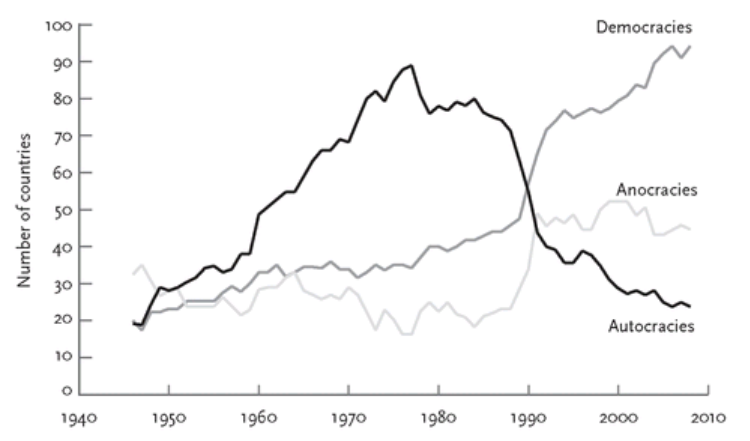
Figure 5-23 — Democracies, autocracies, and anocracies, 1946-2008. PDF p. 396 (file not included in this release)
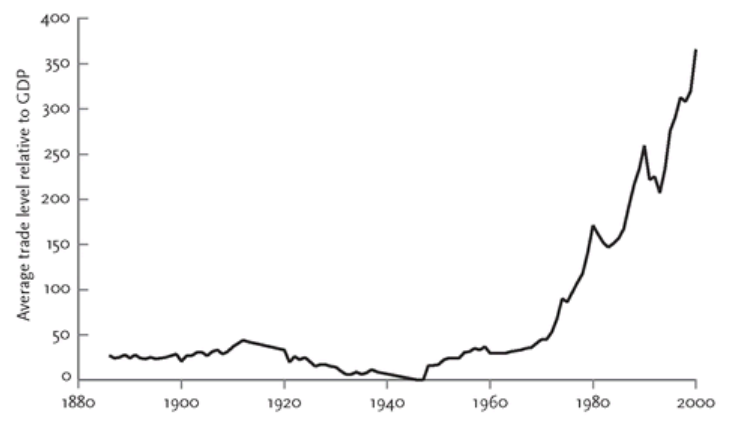
Figure 5-24 — International trade relative to GDP, 1885-2000. PDF p. 405 (file not included in this release)
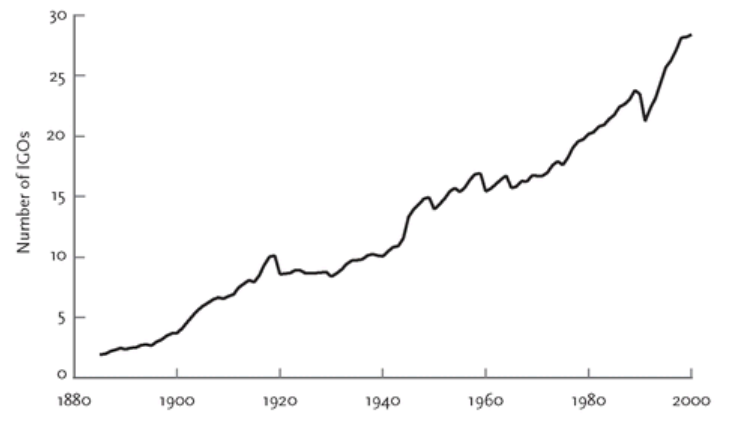
Figure 5-25 — Average shared intergovernmental-organization memberships, 1885-2000. PDF p. 411 (file not included in this release)
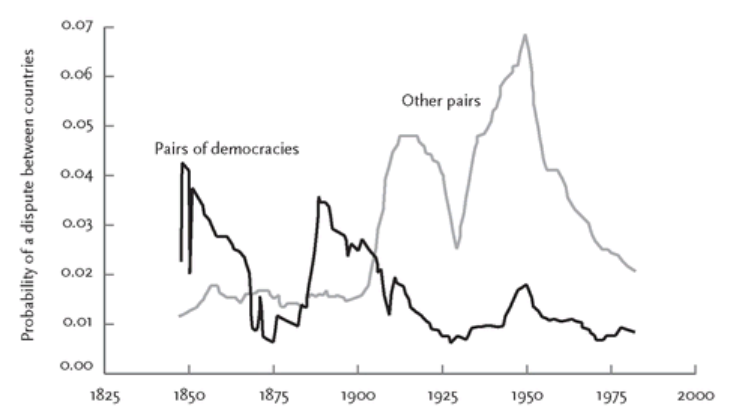
Figure 5-26 — Probability of militarized disputes among pairs of countries, 1825-1992. PDF p. 415 (file not included in this release)
Key Concepts and Distinctions
- Historical myopia: dense knowledge of recent events makes the recent past look uniquely violent.
- Power-law tail: rare giant wars dominate totals and make averages unstable.
- Randomness versus causation: stochastic timing does not mean wars lack causes; it limits deterministic grand narratives.
- Frequency, duration, magnitude, and concentration: distinct dimensions of war that can move differently.
- Long Peace: the post-1945 absence of direct great-power war, not the absence of all armed conflict.
- Democratic, liberal, and Kantian peace: related but separable institutional explanations.
- Normative obsolescence: war can become less thinkable before becoming impossible.
Essential Evidence and Examples
- Richardson’s data undermine simple periodic cycles and reveal the heavy-tailed distribution of conflict size. Richardson, PDF pp. 289–318 (file not included in this release)
- Multiple great-power indicators decline across centuries, while post-1945 avoidance is unusually pronounced. Great-power series, PDF pp. 319–330 (file not included in this release)
- Territorial redistribution, conscription, and military staffing fall along with direct great-power war. Long Peace measures, PDF p. 354 (file not included in this release)
- Nuclear deterrence, democracy, trade, and institutions each fit part of the pattern but none alone fits all of it. Competing explanations, PDF pp. 379–415 (file not included in this release)
Chapter 5 Stories and Vignettes
- Toynbee and Richardson make opposite forecasts. In the early 1950s the celebrated historian Arnold Toynbee read the world wars as an escalating crescendo, while the little-known polymath Lewis Fry Richardson used a dataset of conflicts to leave open a long future without a third world war. Pinker begins the chapter with the irony that the prestigious narrative historian was wrong and the statistically cautious outsider was right. Intellectual-biographical episode framing Pinker’s method. PDF pp. 274–275 (file not included in this release)
- The Thanksgiving turkey. A turkey might interpret 364 uneventful days of feeding as proof of peace with farmers—until the eve of Thanksgiving. Pinker uses the dark joke to state the strongest objection to the Long Peace: a long calm can be an extrapolation trap rather than evidence that the underlying hazard changed. Illustrative fable. PDF p. 277 (file not included in this release)
- Kennedy and Khrushchev untie the knot. During the Cuban Missile Crisis, the two leaders recognized that pride and face-saving could lock them into reciprocal escalation. Khrushchev compared the crisis to pulling tighter on a knotted rope; the settlement let both sides step back through mutual concessions—Soviet missiles out of Cuba, American missiles out of Turkey, and a promise not to invade Cuba. Pinker treats the episode as a conscious escape from honor logic rather than mere luck. Historical episode drawing on Robert Kennedy and Jonathan Glover. PDF pp. 371–372 (file not included in this release)
- “The Hunting Story” and the Ethical Warrior. In the Marine Corps teaching story, young American servicemen describe impoverished Asian villagers as having nothing to live for. An older sergeant offers his knife and asks one of them to climb down and try to kill a villager, then explains that the villagers value their children and lives just as Americans do. Pinker uses the silence that follows as an empathy-expanding lesson in a new military ideal: the warrior as protector of life, including an enemy’s when possible. Institutional teaching story recounted by Robert Humphrey. PDF pp. 375–376 (file not included in this release)
Chapter Conclusion and Significance
The Long Peace is Pinker’s most consequential modern claim and one of the hardest to interpret. Heavy tails make every finite peaceful interval uncertain, yet the simultaneous decline of great-power combat, conquest, mobilization, and war’s prestige is evidence of more than luck alone. The best explanation is cumulative and institutional rather than technological or monocausal.
Questions for Reflection
- How long must a peace last before it counts as a changed probability rather than a lucky run?
- Do nuclear weapons explain leaders’ restraint, or do changed norms explain why nuclear weapons were not used?
- Which side of the Kantian triangle—democracy, trade, or institutions—has the strongest independent evidence?
Chapter 6: The New Peace
Chapter Objective and Through Line
The Long Peace could coexist with intense war outside the developed world, so Pinker widens the lens to civil war, postcolonial conflict, genocide, repression, and terrorism. He argues that organized violence rose during decolonization and Cold War proxy competition but declined after the late 1980s in the datasets available to him. Battle-death rates fell, many civil wars ended through settlement, genocide declined from mid-century peaks, and terrorism remained far less deadly than its psychological prominence suggested. Chapter opening, PDF p. 416 (file not included in this release)
Pinker calls this the New Peace precisely because it is newer, less secure, and harder to measure. The chapter repeatedly defends the trend against exaggerated claims while acknowledging uncertainty in battle deaths, indirect mortality, civilian status, and hidden atrocities. Its causal story emphasizes the end of superpower sponsorship, democratization, stronger states, international norms, negotiated settlements, and peacekeeping. The chapter’s evidentiary endpoint around 2008–2010 must be kept visible when using it today.
Chapter Structure at a Glance
- Extend the inquiry beyond great-power and interstate war.
- Reconstruct the rise and fall of postwar civil and state-based conflict.
- Separate number of conflicts, battle deaths, duration, and indirect mortality.
- Explain why settlements and peacekeeping became more effective after the Cold War.
- Track genocide and democide separately from battlefield deaths.
- Put terrorism’s fear, publicity, and death toll on the same quantitative scale.
- Test whether conflicts involving Muslim-majority countries and Islamist movements form an exception, then compare state practice with Muslim public opinion and political change.
- Audit disputed casualty claims rather than treating all uncertainty as evidence against decline.
Section-by-Section Argument
The Trajectory of War in the Rest of the World
Civil wars and postcolonial conflicts grew after 1945 as new states inherited weak institutions, contested borders, and armed factions, while superpowers subsidized clients and insurgents. The end of the Cold War removed some financing and ideological fuel; democratization and state consolidation reduced others. More conflicts ended by negotiation, and international peacekeeping expanded. Pinker argues that conflict counts and battle-death rates both fell from their peaks, though the timing differs by dataset. War outside the developed world, PDF p. 419 (file not included in this release)
The mechanism is not simply exhaustion. Peacekeepers monitor agreements, separate combatants, reassure vulnerable parties, deter spoilers, and give leaders a face-saving way to comply. International organizations and aid can help, but weak “anocracies”—neither stable democracies nor stable autocracies—remain especially vulnerable because authority and legitimacy are both contested.
The Trajectory of Genocide
Genocide and democide require separate treatment because governments often kill civilians away from battle. Pinker finds the greatest rates around the world wars and mid-century totalitarian regimes, followed by a decline. War, revolutionary ideology, unconstrained executive power, political crisis, and categorical dehumanization raise risk; democracy, accountability, and outside intervention can lower it. He treats mass killing as organized policy, not an eruption of primordial hatred. Genocide and democide, PDF p. 450 (file not included in this release)
Measurement is especially difficult: perpetrators conceal crimes, categories overlap, population denominators shift, and researchers disagree about intentional versus indirect death. Pinker’s defense is comparative rather than exact—reasonable datasets with different assumptions still place the greatest concentrations earlier and show lower rates by the 2000s.
The Trajectory of Terrorism
Terrorism aims at psychological leverage: spectacular attacks make governments and publics overestimate the underlying risk. Pinker separates the strategic importance of terrorism from its body count, which is usually small compared with homicide, war, or state killing. He also warns that overreaction can magnify terrorists’ power by provoking costly wars, repression, polarization, or copycat publicity. Terrorism, PDF p. 481 (file not included in this release)
The trend is uneven and definitions are politically contested. A small number of theaters and events can dominate global totals. Pinker’s substantive claim is therefore not that terrorism ceased, but that it did not overturn the broader post-Cold-War reduction in organized lethal violence in the evidence window he analyzes.
Where Angels Fear to Tread
Pinker confronts objections about civilian casualties, indirect deaths, Iraq and Afghanistan, hidden wars, and claims that modern conflicts kill 90 percent civilians. He argues that some advocacy figures combine incompatible definitions, uncertain excess-mortality estimates, or categories that cannot support a historical comparison. Better epidemiology and public health can lower indirect mortality even when displacement and suffering remain severe. Measurement disputes, PDF p. 504 (file not included in this release)
The section is not permission to substitute a preferred low estimate. Its methodological lesson is to report definitions, uncertainty, time windows, and denominators; distinguish battle deaths, deliberate civilian killing, and indirect mortality; and resist treating a morally urgent estimate as automatically the most accurate one.
Islam and the uneven New Peace
Scope, date, and source boundary
This section reconstructs Pinker’s 2011 argument from evidence that mostly ends between 2006 and 2010. His category “Islamic conflicts” means conflicts involving a Muslim-majority country, an Islamic opposition movement, or both; it does not identify Islam as the cause of every coded conflict. Pinker himself rejects treating 1.3 billion Muslims as a single civilization, distinguishes Islamist movements from Muslim publics, and presents his early-2011 forecast as uncertain. Use this as a historical source argument, not a current measurement or a description of every Muslim, country, or conflict. Pinker’s argument, PDF pp. 506–514 (file not included in this release)
Conflict and regime lag
Pinker’s adverse case begins with a claim that much of the Muslim world appeared to be “sitting out the decline of violence.” For 2008 he reports that 19 of 36 armed conflicts involved a Muslim-majority country or an Islamic insurgency, 30 of 44 organizations on the U.S. State Department list were Muslim groups, and Sunni extremists caused nearly two-thirds of identifiable terrorism deaths. He also cites research associating Muslim-majority states with larger armies and fewer political rights after controls for population, poverty, and oil. These are classifications and cross-national associations, not a single causal test. Conflict and regime comparisons, PDF pp. 506–507 (file not included in this release)
He reports that only about one-quarter of the countries he calls Islamic elected their governments and that many of those elections failed liberal-democratic tests because rulers jailed opponents, excluded parties, suspended legislatures, or cancelled elections. Pinker’s larger mechanism is institutional: democracy, accountable government, open information, and nonviolent political competition reduce several forms of violence, whereas authoritarianism and unstable partial democracy can preserve or redirect it. Democracy and political rights, PDF p. 507 (file not included in this release)
What Figure 6-12 shows—and does not show
Figure 6-12 is Pinker’s crucial qualification. From 1990 to 2006, the number of conflicts coded “Islamic” stayed roughly level while the total number of intrastate conflicts fell. Their share therefore rose—from about 20 to 38 percent in the comparison Pinker cites—not because Islamic conflicts multiplied, but because much of the rest of the world became more peaceful. The graph supports an uneven diffusion of the New Peace; it does not show a unified civilizational war or isolate religion from regime type, state weakness, foreign intervention, geography, or insurgency. Pinker’s interpretation, PDF p. 511 (file not included in this release) · Figure 6-12, PDF p. 512 (file not included in this release)
Pinker accordingly rejects Samuel Huntington’s simple “clash of civilizations” map. Too much violence occurs within and between Muslim-majority societies, and too much occurs wholly outside them, for a single Islam-versus-West fault line to explain the distribution. His unit of analysis also shifts across the passage—countries, regimes, insurgencies, terrorist organizations, and individual attitudes—so those levels should not be collapsed into one claim about Muslims as people. Clash thesis and its limits, PDF pp. 510–511 (file not included in this release)
Punishment, women, slavery, and the Humanitarian Revolution
Pinker argues that many Muslim-majority states also lagged the Humanitarian Revolution. Using the sources in his endnotes, he reports higher retention of capital punishment and examples of stoning, branding, blinding, amputation, and crucifixion; more than 100 million females in the relevant countries subjected to genital cutting; acid attacks and honor killings; late legal abolition of slavery; continued trafficking; and prosecution of witchcraft. These are a mixture of country-level prevalence claims, historical dates, and examples. They establish neither uniformity across Muslim societies nor a specifically religious cause for every practice. Punishment and gendered violence, PDF p. 507 (file not included in this release) · Slavery and witchcraft, PDF p. 508 (file not included in this release)
The female-genital-cutting claim belongs to a wider argument elsewhere in the book. Pinker treats genital cutting, veiling, chaperoning, and sex segregation as culturally sanctioned forms of controlling women’s sexuality; he later locates severe gendered harms across sub-Saharan Africa and South and Southwest Asia and frames legal prohibition as protection of children’s bodily autonomy. That wider geography matters: the book associates the practice with some Muslim communities but does not demonstrate that Islam alone explains it. Gender control, PDF p. 567 (file not included in this release) · Cross-regional harms, PDF p. 575 (file not included in this release) · Children’s bodily autonomy, PDF p. 607 (file not included in this release)
Honor, humiliation, and Islamist mobilization
Pinker draws on Khaled Fattah and K. M. Fierke, and on Jeremy Ginges and Scott Atran, to connect Islamist political violence with an honor-based “discourse of humiliation.” In his summary, memories of the Crusades and colonialism, the existence of Israel, U.S. forces in Arabia, and perceived civilizational underperformance can be narrated as collective insults that demand vengeance. He applies this claim to a radical fringe—naming al-Qaeda, Hamas, Hezbollah, and the Iranian regime—not to Muslims generally. He says these movements can fuse grievance, sacred values, group loyalty, and demonization into moral permission for indiscriminate killing. Sacred values and vicarious humiliation, PDF p. 500 (file not included in this release) · Honor and humiliation, PDF p. 508 (file not included in this release)
Chapter 8 supplies the psychological model behind the passage. Pinker calls the broader pattern ressentiment: a group claims a rightful greatness, interprets lower status as the work of a malicious enemy, and converts humiliation and envy into rage. This is an interpretive mechanism, not something Figure 6-12 measures, and the same chapter applies honor, dominance, revenge, and self-serving historical narratives across many societies. Ressentiment, PDF p. 723 (file not included in this release)
Muslim opinion, Western values, and evidence of change
Pinker then reverses perspective. The 2001–2007 Gallup survey reported in Who Speaks for Islam? covered 35 countries representing about 90 percent of the world’s Muslim population. Majorities in several countries wanted Sharia to be at least a source of legislation, but Pinker warns against treating that answer as a literal policy bundle. He notes that many respondents saw no contradiction between Sharia and democracy, while a large majority opposed giving religious leaders a direct role in writing the constitution. Who Speaks for Islam? · Gallup and Sharia, PDF pp. 511–512 (file not included in this release)
Distrust of the United States, he argues, should not be equated with rejection of “the West” or liberal principles. Respondents cited U.S. support for autocrats in Egypt, Jordan, Kuwait, and Saudi Arabia, the U.S. rejection of Hamas’s election victory, and the 1953 overthrow of Iran’s elected Mossadegh government. France and Germany were viewed more favorably; 20–40 percent admired Western political fairness, human values, liberty, and equality; more than 90 percent supported constitutional free speech; many supported religious freedom and assembly; and substantial majorities of men and women supported women’s voting, employment, equal legal rights, and eligibility for high office. Pinker reports only 7 percent approving 9/11 in the Gallup data. Views of the United States and democracy, PDF p. 512 (file not included in this release) · Liberal and gender-equality attitudes, PDF p. 513 (file not included in this release)
He also presents change over time rather than a fixed civilizational character. Across Jordan, Pakistan, Indonesia, Saudi Arabia, and Bangladesh, endorsement of suicide bombing and attacks on civilians fell sharply between 2005 and 2010, often toward 10 percent. In late 2007, support for al-Qaeda in Pakistan’s North-West Frontier Province reportedly fell from 70 to 4 percent in five months; polling in Afghanistan and Iraq also showed overwhelming rejection of jihadist attacks. Pinker connects the attitudinal turn to—but does not make it the sole cause of—a decline in suicide attacks, alongside the U.S. troop surge, the Mahdi Army ceasefire, and the Sunni Awakening. Falling al-Qaeda appeal, PDF pp. 501–502 (file not included in this release) · Changing attitudes, PDF pp. 503–504 (file not included in this release)
A separate study of 102 grassroots Muslim organizations in North Africa and the Middle East found that from 1985 to 2004 the share endorsing violence fell from 54 to 14 percent, the share committed to nonviolent protest tripled, and the share participating in electoral politics doubled. Pinker attributes liberalizing pressure to satellite news, universities, the internet, global commerce, women’s-rights organizing, and internal demand. His early-2011 reading of the Arab uprisings and his contemporary descriptions of Turkey, Indonesia, and Malaysia are forecasts from the book’s publication moment, not present-day findings. Organizations and liberalizing pressures, PDF p. 513 (file not included in this release) · Forecast and conclusion, PDF p. 514 (file not included in this release)
Historical explanation—and its evidentiary status
Pinker contrasts the scientific and cultural achievements of medieval Islamic civilization with later political repression, low knowledge exchange, and weak separation between mosque and state. Following Bernard Lewis, he points to the filtering of intellectual life through religious authority and resistance to imported institutions and technologies, then links this to his Chapter 4 hypothesis that literacy, cosmopolitanism, and open argument helped Europe’s Humanitarian Revolution. Pinker explicitly presents the causal step as speculation; neither Figure 6-12 nor the Gallup survey establishes it. He also acknowledges that Western Christian societies were once less tolerant and more violent than the Islamic societies of their time. Arab Human Development Report, PDF pp. 508–509 (file not included in this release) · Historical comparison, PDF pp. 509–510 (file not included in this release)
Israel-Palestine: what this argument can and cannot establish
Pinker’s framework is relevant to Hamas because he explicitly discusses its Islamist ideology, suicide terrorism, sacred values, enemy demonization, and humiliation rhetoric. It supports an argument that beliefs, institutions, and strategic culture have causal force and should not be erased by explanations that invoke occupation or material grievance alone. It also supports the possibility of change: he notes declining support for al-Qaeda, the West Bank leadership’s turn away from violence in his evidence window, and growing use of boycotts, civil disobedience, elections, and protest. Hamas and suicide-terror incentives, PDF pp. 499–500 (file not included in this release) · Palestinian tactics, PDF p. 501 (file not included in this release)
It cannot establish that all Palestinians or Muslims share Hamas’s ideology, that religion is the sole cause of the conflict, that every grievance is invented, or that Israeli and Western policy is irrelevant. Pinker himself cites Israel and colonial history as objects of humiliation narratives, while also citing U.S. support for Arab autocrats and rejection of Hamas’s election as reasons for distrust. The defensible debate use is therefore narrower: analyze Hamas’s program and rhetoric directly; treat public opinion as variable and question-specific; compare institutions; and preserve independent moral and legal responsibility for every actor. → Israel-Palestine argument card
Pinker’s source chain
- Conflict and regime comparisons: PRIO/UCDP coding assembled by Halvard Buhaug; Nils Petter Gleditsch; the 2008 U.S. State Department list; James L. Payne; John L. Esposito and Dalia Mogahed; and Frederic L. Pryor. Claims, PDF p. 507 (file not included in this release)
- Rights and historical practice: Payne; Esposito and Mogahed; Amnesty International as summarized by Pinker; the 2002 Arab Human Development Report; and Bernard Lewis. Claims, PDF pp. 507–510 (file not included in this release)
- Honor and humiliation: Fattah and Fierke (2009), Ginges and Atran (2008), with extremist rhetoric summarized through Daniel Goldhagen and John Mueller. Claim, PDF p. 508 (file not included in this release)
- Public opinion and organizational change: Esposito and Mogahed’s Gallup synthesis and Asal, Johnson, and Wilkenfeld’s study of 102 organizations. Attitudes, PDF pp. 511–513 (file not included in this release)
Figures
War beyond the great-power system
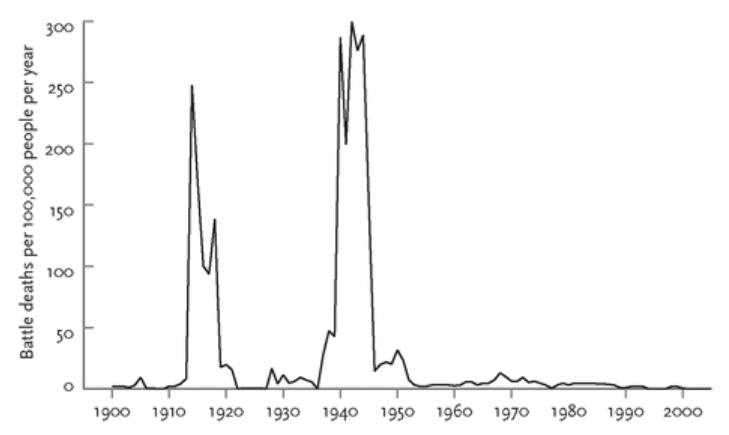
Figure 6-1 — Rate of battle deaths in state-based armed conflicts, 1900-2005. PDF p. 424 (file not included in this release)
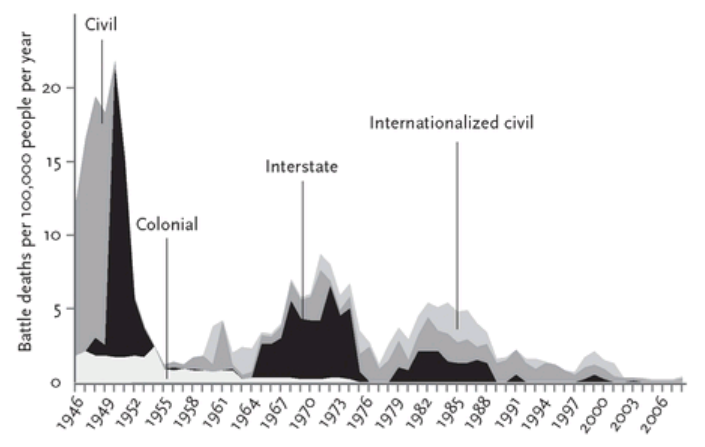
Figure 6-2 — Rate of battle deaths in state-based armed conflicts, 1946-2008. PDF p. 424 (file not included in this release)
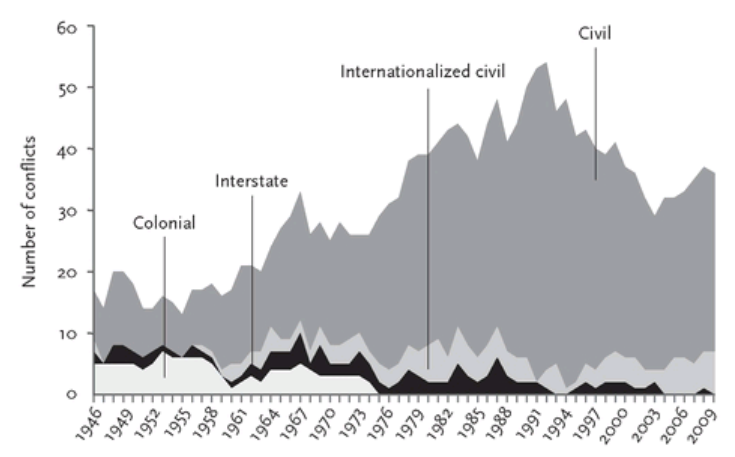
Figure 6-3 — Number of state-based armed conflicts, 1946-2009. PDF p. 427 (file not included in this release)
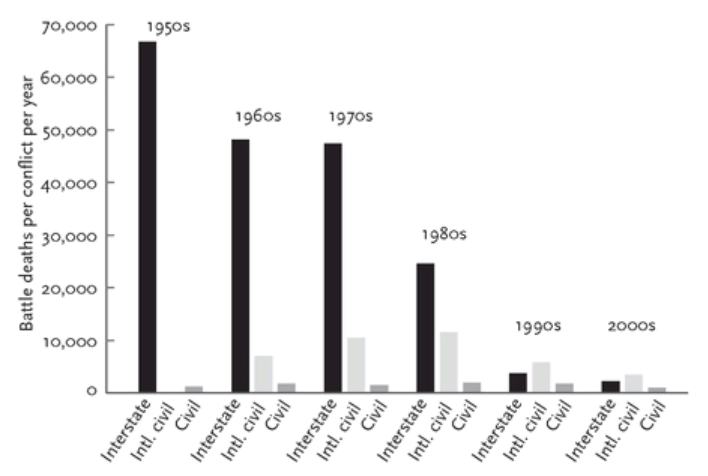
Figure 6-4 — Deadliness of interstate and civil wars, 1950-2005. PDF p. 428 (file not included in this release)
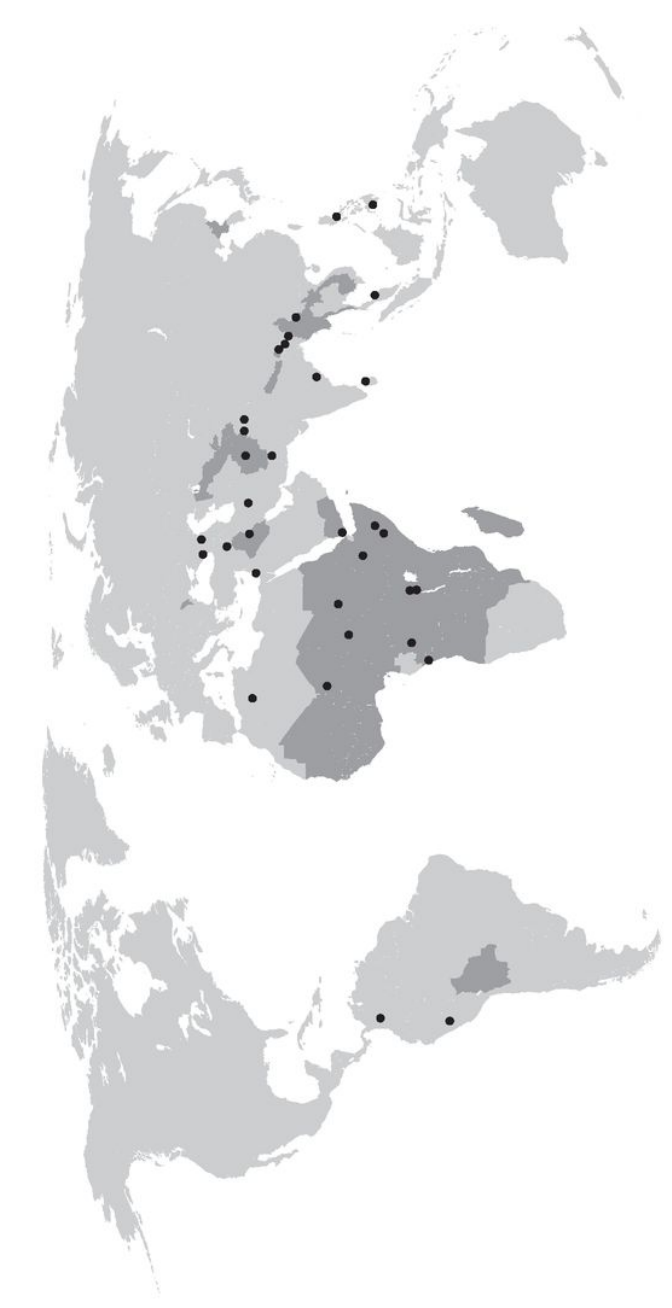
Figure 6-5 — Geography of armed conflict, 2008. PDF p. 431 (file not included in this release)
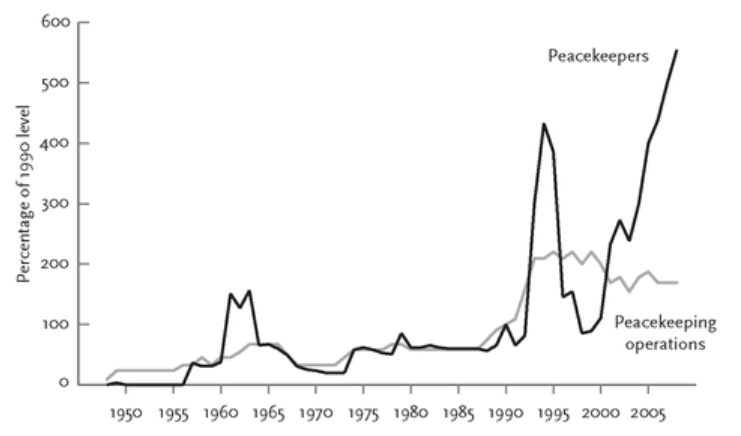
Figure 6-6 — Growth of peacekeeping, 1948-2008. PDF p. 443 (file not included in this release)
Genocide
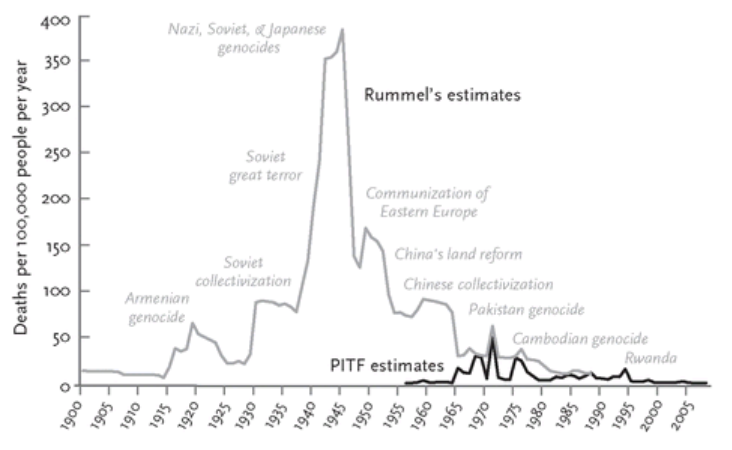
Figure 6-7 — Rate of deaths in genocides, 1900-2008. PDF p. 474 (file not included in this release)
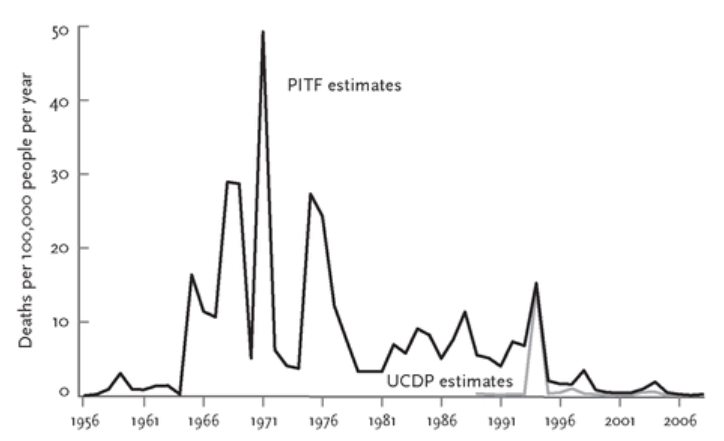
Figure 6-8 — Rate of deaths in genocides, 1956-2008. PDF p. 477 (file not included in this release)
Terrorism
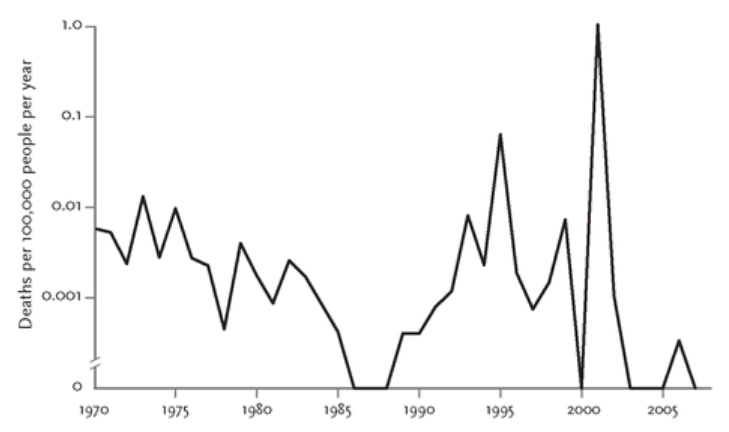
Figure 6-9 — Rate of deaths from terrorism in the United States, 1970-2007. PDF p. 490 (file not included in this release)
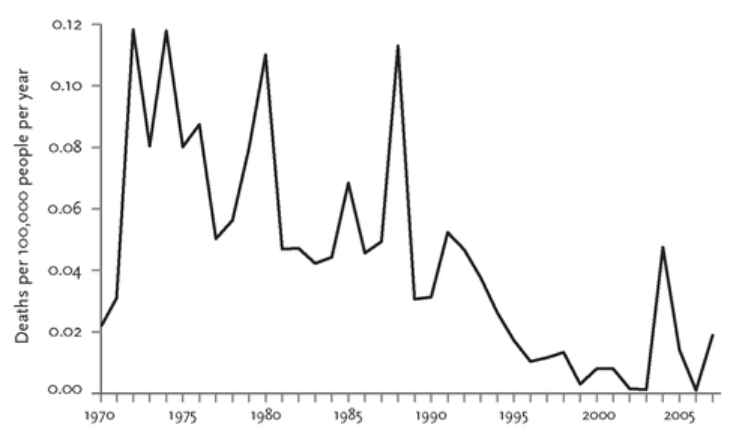
Figure 6-10 — Rate of deaths from terrorism in Western Europe, 1970-2007. PDF p. 492 (file not included in this release)
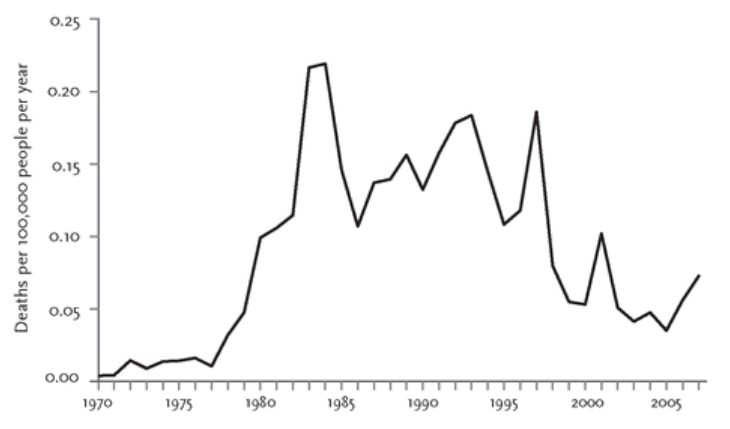
Figure 6-11 — Worldwide terrorism deaths, excluding post-2001 Afghanistan and post-2003 Iraq. PDF p. 492 (file not included in this release)
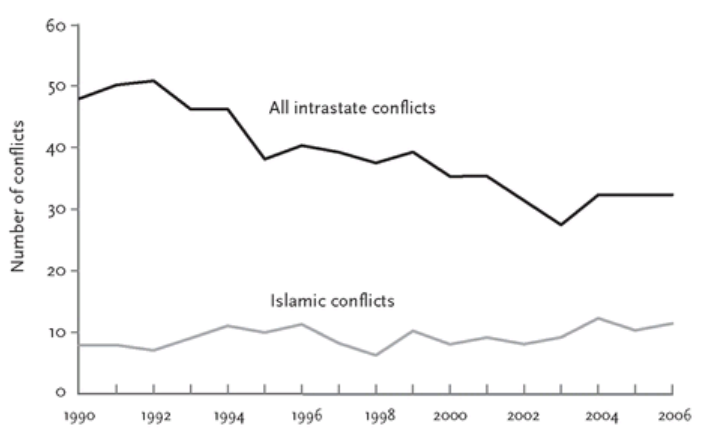
Figure 6-12 — Islamic and world conflicts, 1990-2006. Pinker’s reading is about a changing denominator: the Islamic-conflict series remains roughly level while all intrastate conflicts decline; “Islamic” means a Muslim-majority country, an Islamic opposition movement, or both, not demonstrated religious causation. Interpretation, PDF p. 511 (file not included in this release) · Figure and source, PDF p. 512 (file not included in this release)
Key Concepts and Distinctions
- New Peace: the post-Cold-War decline Pinker observes in organized violence outside the great-power system.
- State-based, nonstate, and one-sided violence: conflict types with different perpetrators and datasets.
- Battle death versus indirect death: immediate violent killing versus mortality from disease, hunger, or infrastructure collapse.
- Genocide, politicide, and democide: overlapping categories of organized killing with different inclusion rules.
- Anocracy: a partially open but unstable regime especially vulnerable to conflict.
- Peacekeeping mechanism: monitoring, reassurance, deterrence, mediation, and face-saving rather than conquest.
- Terrorism as theater: harm designed to exploit attention and provoke reactions beyond the direct casualties.
- Islamic exception (Pinker’s term of argument): Islamic-conflict counts stayed roughly level while other intrastate conflicts fell, raising their proportion without showing that they increased in number.
- Conflict share versus conflict count: a category can become a larger fraction because the denominator shrinks.
- State practice versus public attitudes: authoritarian institutions and illiberal laws can coexist with heterogeneous, partly liberal, and changing opinions among the people they govern.
Essential Evidence and Examples
- Conflict and battle-death series peak at different times but both fall substantially by the 2000s in the datasets Pinker uses. Conflict trends, PDF pp. 419–449 (file not included in this release)
- Expanded peacekeeping correlates with reduced recurrence, and comparative studies attempt to correct for missions being sent to difficult cases. Peacekeeping, PDF p. 441 (file not included in this release)
- Genocide rates fall from the catastrophic mid-century era, while war and unconstrained political power remain major risk conditions. Genocide trends, PDF p. 450 (file not included in this release)
- Terrorism’s salience greatly exceeds the ordinary person’s statistical risk in most Western settings. Terrorism and risk, PDF p. 481 (file not included in this release)
- Pinker’s rebuttal to inflated civilian-share claims demonstrates why definitional consistency matters as much as arithmetic. Casualty accounting, PDF p. 504 (file not included in this release)
- Figure 6-12 shows no increase in the number of Islamic conflicts from 1990–2006; their share rose because other intrastate conflicts declined. Interpretation, PDF p. 511 (file not included in this release)
- Pinker’s Gallup evidence complicates a West-versus-Islam binary: support for Sharia coexisted with support for free speech, democratic participation, women’s equality, and limits on clerical power. Survey discussion, PDF pp. 511–513 (file not included in this release)
- Attitudes and organizational strategies changed: support for jihadist violence fell in several surveys, while a study of 102 Muslim organizations found less endorsement of violence and more nonviolent and electoral activity. Opinion change, PDF pp. 503–504 (file not included in this release) · Organizational change, PDF p. 513 (file not included in this release)
Chapter 6 Stories and Vignettes
Christian Wirth and the Jewish boy — Pinker’s retelling
What Pinker recounts: At a forced-labor compound in occupied Poland, Christian Wirth commanded Jewish prisoners who were worked to death sorting the clothing of murdered Jews; their children had been sent to death camps. Pinker then reproduces Jonathan Glover’s account of one exception: a boy of about ten was given sweets, dressed as a miniature SS man, and placed on a pony beside Wirth on a white horse. The account says that Wirth and the boy rode among the prisoners firing machine guns at close range, killing prisoners including the boy’s mother. PDF pp. 453–454 (file not included in this release)
Why it is here: Pinker introduces this and the preceding Red Guard episode as memories that lodge in the mind because of their cold-blooded contempt rather than their numerical scale. He moves immediately from the scene to “How could people do these things?” and begins his explanation of killing-by-category: stereotyping, moralizing group boundaries, essentializing people, and letting category membership replace individual conduct as the object of punishment. Transition to categorization, PDF p. 454 (file not included in this release)
Source boundary: This is Pinker’s retelling of Jonathan Glover, Humanity: A Moral History of the Twentieth Century (1999), p. 342, identified in Pinker’s endnote 92. The citation records the chain Pinker → Glover; it is not an independent archival verification. The passage does not explain the child’s coercion, understanding, state of mind, or later fate, so none should be inferred here. Endnote 92, PDF p. 1005 (file not included in this release)
- Afonso Dhlakama is “wooed” into peace. A peacekeeper explained that the RENAMO leader valued being treated seriously, attending diplomatic receptions, and no longer being dismissed as an “armed bandit.” Pinker uses the anecdote to show that peacekeeping can change reputational payoffs and give an armed leader a face-saving path into negotiation, not merely threaten him with force. Mission member’s account quoted by Pinker. PDF p. 443 (file not included in this release)
- The old couple and the French glass. In Jonathan Glover’s Cultural Revolution account, Red Guards ransacked an elderly couple’s home; when the man begged them to spare boxes of precious French glass, they beat him, smashed the glass, and left the couple crying. Pinker pairs this with the Wirth story as an image of domination intensified by deliberate mockery. Pinker’s retelling of Glover, cited in endnote 91. PDF p. 453 (file not included in this release)
- Bread beside a dead man in Auschwitz. Pinker recalls meeting a relative by marriage who had survived Auschwitz. The survivor immediately described men taking bread from the hand of a prisoner who had just died and then fighting because one portion seemed microscopically smaller. Pinker’s point is not to condemn the prisoners but to honor the courage required to disclose degradation produced by extreme conditions and trust that a listener will judge the circumstances rather than their character. Pinker’s personal recollection. PDF p. 471 (file not included in this release)
- Terrorist violence that destroys its own cause. Pinker groups the Red Brigades’ murder of Aldo Moro, the FLQ’s murder of Pierre Laporte, and Timothy McVeigh’s Oklahoma City bombing as escalation that repelled sympathizers and strengthened opposition. These are compact narratives for his claim that spectacular cruelty often defeats terrorism’s strategic aims even while inflicting irreversible harm. Historical examples synthesized from terrorism research. PDF pp. 489–490 (file not included in this release)
Chapter Conclusion and Significance
The New Peace extends the thesis into the most unstable and debatable domain. Its value is not a timeless declaration that war is ending, but a documented claim that organized violence can respond to institutions, sponsorship, regime structure, norms, and intervention. Pinker’s Islamic-exception discussion reinforces both sides of that lesson: violent conflict and illiberal institutions can lag a global decline, while public opinion and political strategy can still change. Its weakness is the short and now-dated window, which makes later replication essential.
Questions for Reflection
- Which later events would count as a reversal, and which as expected fluctuation around a lower rate?
- How should indirect deaths be counted without making historical comparison impossible?
- When does peacekeeping create peace, and when is it merely deployed where peace was already becoming possible?
- Does Figure 6-12 identify an Islamic cause, or only an uneven regional and organizational trend requiring further explanation?
- How should apparently conflicting survey answers—support for Sharia alongside support for speech, elections, and women’s equality—be interpreted without forcing respondents into a single ideological category?
Chapter 7: The Rights Revolutions
Chapter Objective and Through Line
Pinker shifts from lethal conflict to widening protection against smaller-scale and formerly private harms. Since the mid-20th century, movements for civil rights, women’s rights, children’s rights, gay rights, and animal welfare have challenged violence tolerated by law, family authority, custom, or indifference. The revolutions share a language of rights, a focus on the victim, and a tendency to spread by analogy: if race does not justify domination, why should sex, age, sexuality, or species automatically do so? Chapter opening, PDF p. 528 (file not included in this release)
The chapter combines attitudes, laws, institutional practices, victimization measures, and behavioral outcomes. Pinker recognizes that reporting can rise when stigma falls, creating the appearance of more harm. He therefore looks for converging measures rather than equating complaints with incidence. He also introduces the “amnesia of success”: once a movement wins against severe harms, it often expands its vocabulary to subtler ones, which can make the underlying progress disappear from collective memory.
Chapter Structure at a Glance
- Treat postwar human rights as a generative framework rather than one isolated reform.
- Track racial terror and pogroms from tolerated collective violence to stigma and prosecution.
- Reframe rape and battering as crimes against women rather than private or proprietary matters.
- Reclassify violence against children from discipline or inevitability into preventable harm.
- Follow the rapid legal and attitudinal retreat from criminalizing homosexuality and tolerating gay-bashing.
- Extend the victim’s perspective beyond humans through animal welfare.
- Explain the revolutions through expanding sympathy, reasoned analogy, organization, law, and generational replacement.
Section-by-Section Argument
Civil Rights and the Decline of Lynching and Racial Pogroms
Lynching and deadly ethnic riots once received public participation, elite toleration, and weak prosecution. Their decline reflects stronger and more impartial enforcement, changing national norms, civil-rights organization, media exposure, and the delegitimation of explicit racial hierarchy. Pinker distinguishes the persistence of prejudice from the collapse of publicly authorized racial killing. Civil rights and racial violence, PDF p. 534 (file not included in this release)
Women’s Rights and the Decline of Rape and Battering
Older law often treated rape as an offense against a father or husband and domestic assault as a private prerogative. Feminist activism centers bodily autonomy and the woman’s account, while marital-rape reform, shelters, crisis services, forensic evidence, and specialized enforcement translate that change into institutions. Pinker uses victimization surveys alongside police data because willingness to report changed dramatically. Rape and battering, PDF p. 550 (file not included in this release)
Cross-chapter link — genital cutting, honor violence, and autonomy
Pinker treats female genital cutting and honor violence as part of the wider history of male control over women’s sexuality and children’s bodies. Chapter 6 places these harms in his discussion of Muslim-majority states; Chapter 7 supplies the broader cross-regional and autonomy framework. → Chapter 6 source audit · PDF p. 567 (file not included in this release) · PDF p. 607 (file not included in this release)
Children’s Rights and the Decline of Infanticide, Spanking, Child Abuse, and Bullying
Children move from property and labor resources toward rights-bearing persons whose suffering counts independently. Infanticide, severe corporal punishment, abuse, and bullying become objects of prevention rather than unavoidable family or peer discipline. The indicators differ in quality, but attitudes, laws, school rules, and several harm measures move toward protection. Children’s rights, PDF p. 577 (file not included in this release)
Gay Rights and the Decline of Gay-Bashing
Legal prohibition and medical pathologizing retreat with remarkable speed in many countries. Visibility, contact, advocacy, judicial decisions, and reasoned extension of privacy and equal protection convert homosexuality from a punishable identity into a protected one. Hate violence remains, but its legitimacy and frequency decline in the series Pinker reviews. Gay rights, PDF p. 619 (file not included in this release)
Animal Rights and the Decline of Cruelty
The expanding circle reaches beings unable to make reciprocal contracts or political claims. Blood sports, entertainment practices, laboratory procedures, hunting, and food production face growing scrutiny. Pinker does not claim animal suffering is solved; the change is that suffering itself increasingly requires justification rather than being dismissed because the victim is nonhuman. Animal rights, PDF p. 630 (file not included in this release)
Roast Turtle
A historical recipe makes normalized animal suffering concrete in the same way Chapter 1 made old human cruelty concrete. The point is moral estrangement: practices can become so unacceptable that descendants have difficulty imagining the sensibility that permitted them. Roast turtle, PDF p. 634 (file not included in this release)
Whence the Rights Revolutions?
Pinker emphasizes a mutually reinforcing bundle: postwar human-rights language, mass education and media, contact with previously stigmatized groups, organized movements, legal reform, women’s rising influence, generational replacement, empathy, and universalizing arguments. Rights “contagion” matters because a justification accepted in one domain becomes difficult to deny in an analogous case. Causes of the rights revolutions, PDF p. 658 (file not included in this release)
From History to Psychology
The rights movements prepare the transition to Chapters 8 and 9. They show moral sense operating in both directions: hierarchy and purity can license violence, while harm and fairness can condemn it. To explain why the balance changes, Pinker must separate the motives that produce aggression from the capacities that widen restraint. From history to psychology, PDF p. 665 (file not included in this release)
Figures
Rights language
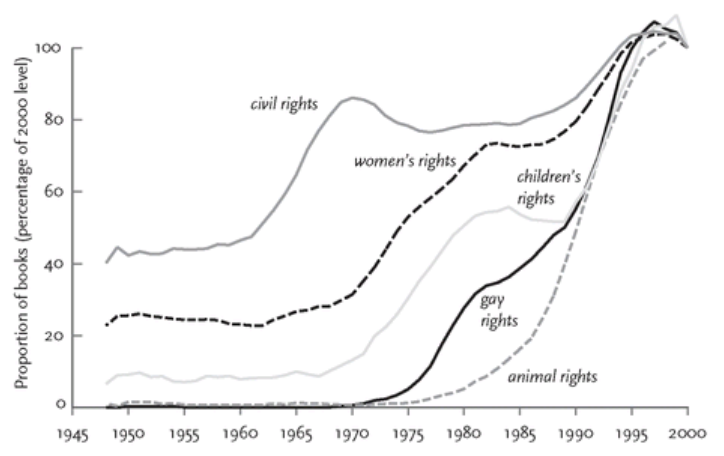
Figure 7-1 — Rights-language frequency in English-language books, 1948-2000. PDF p. 532 (file not included in this release)
Civil rights
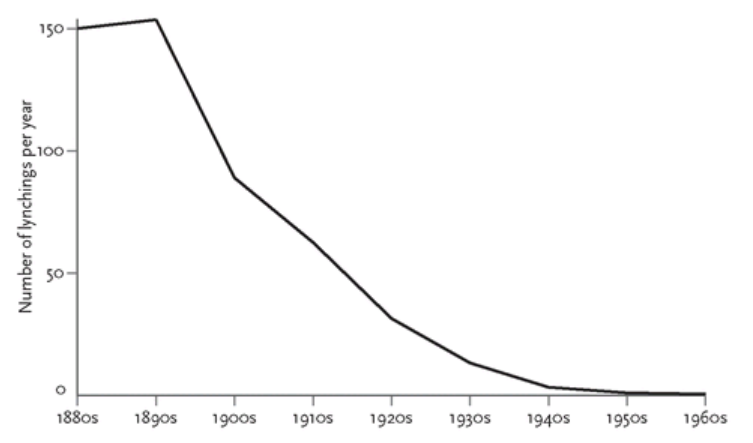
Figure 7-2 — Lynchings in the United States, 1882-1969. PDF p. 537 (file not included in this release)
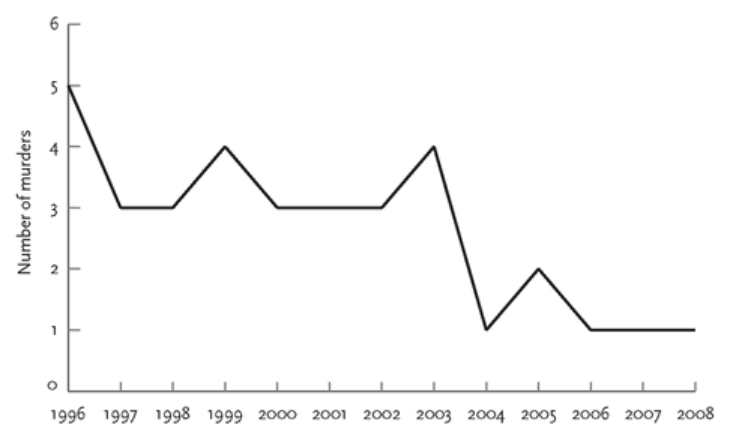
Figure 7-3 — Hate-crime murders of African Americans, 1996-2008. PDF p. 539 (file not included in this release)
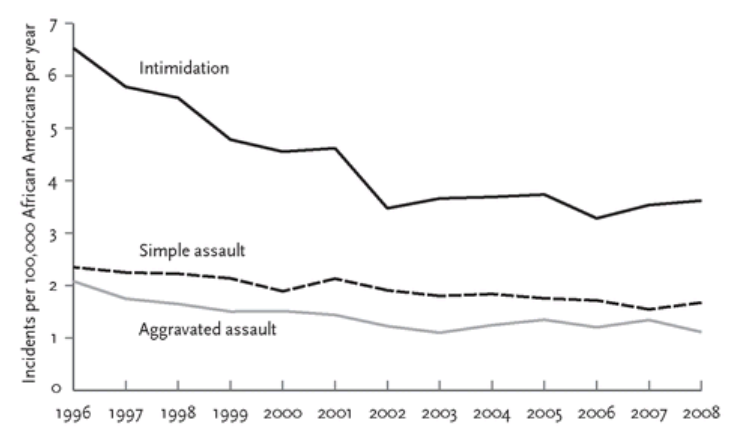
Figure 7-4 — Nonlethal hate crimes against African Americans, 1996-2008. PDF p. 541 (file not included in this release)
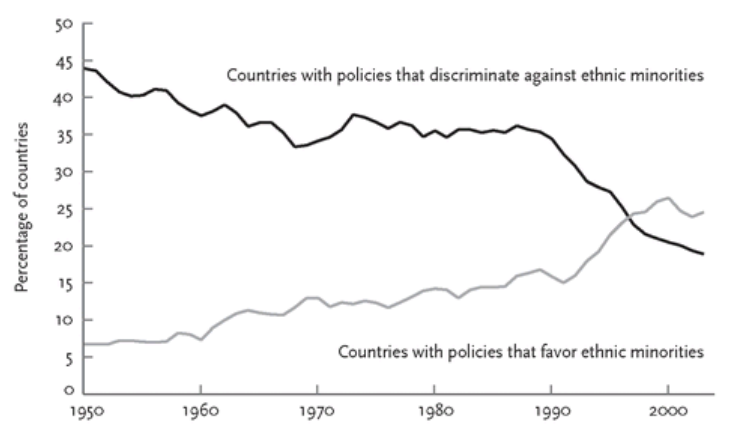
Figure 7-5 — Discriminatory and affirmative-action policies, 1950-2003. PDF p. 545 (file not included in this release)
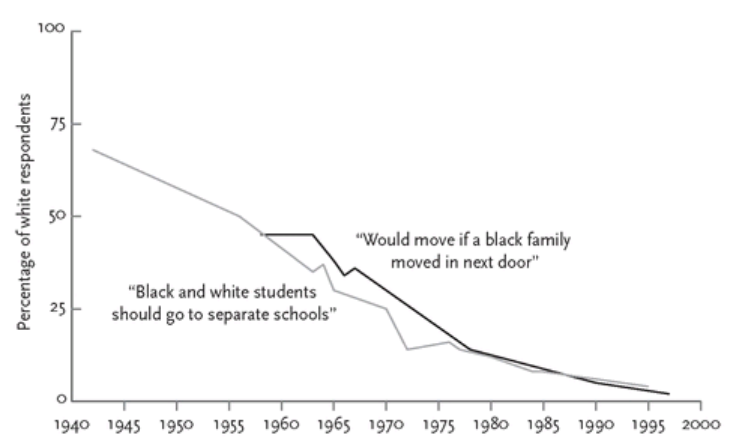
Figure 7-6 — Segregationist attitudes in the United States, 1942-1997. PDF p. 546 (file not included in this release)
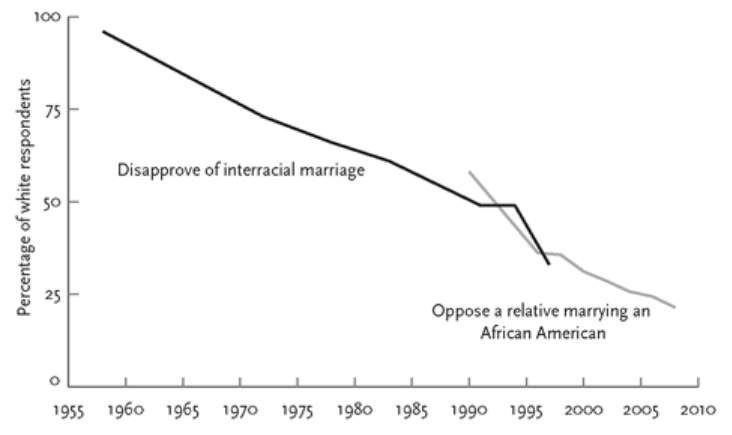
Figure 7-7 — White attitudes toward interracial marriage in the United States, 1958-2008. PDF p. 546 (file not included in this release)
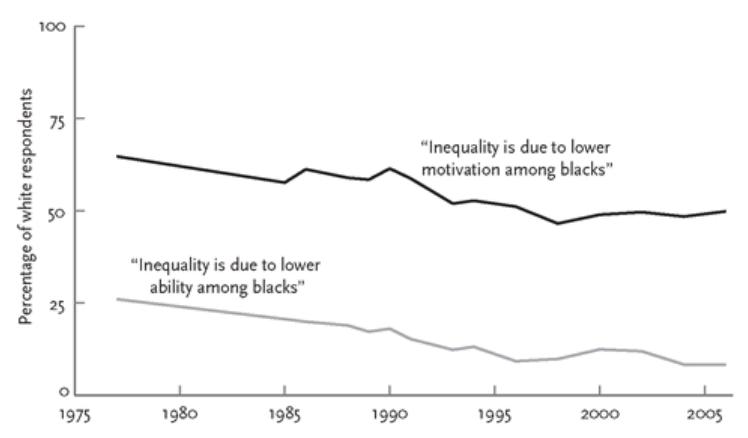
Figure 7-8 — Unfavorable opinions of African Americans, 1977-2006. PDF p. 548 (file not included in this release)
Women’s rights
Figure 7-9 — Rape-prevention and response sticker. PDF p. 558 (file not included in this release)
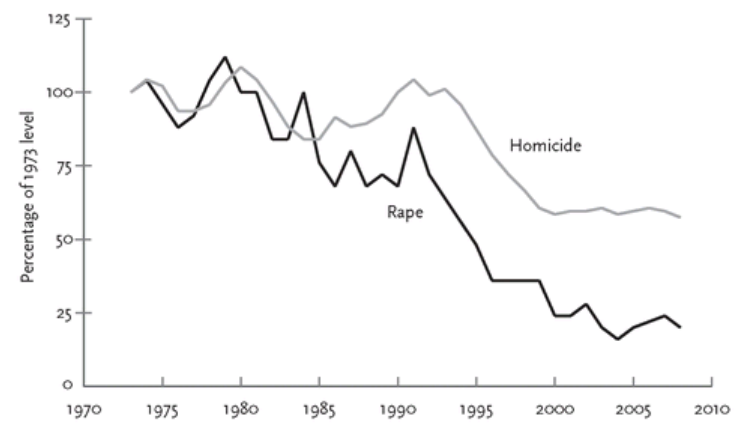
Figure 7-10 — Rape and homicide rates in the United States, 1973-2008. PDF p. 561 (file not included in this release)
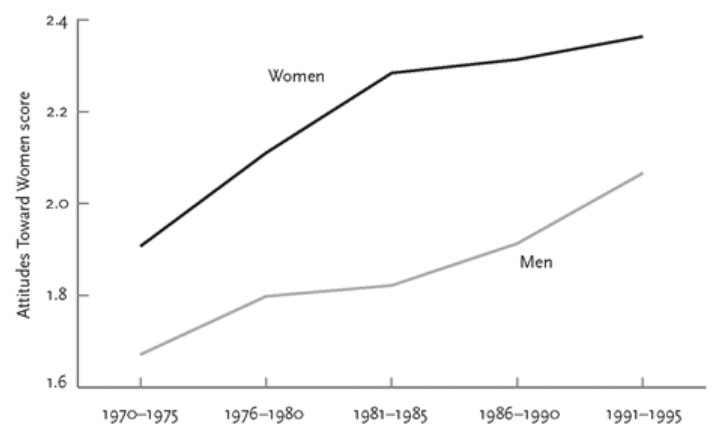
Figure 7-11 — Attitudes toward women in the United States, 1970-1995. PDF p. 563 (file not included in this release)
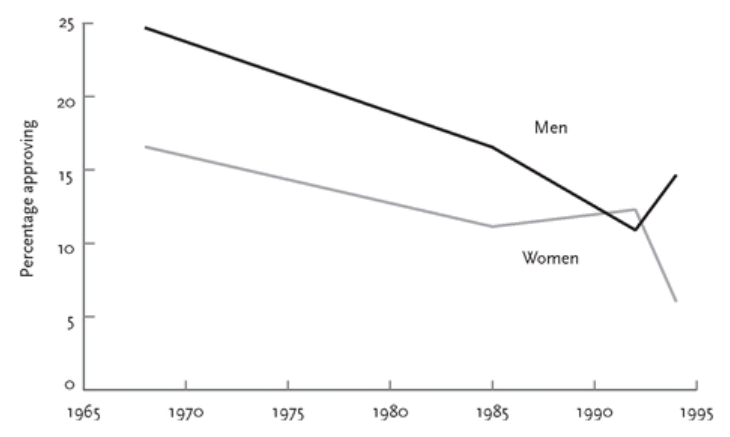
Figure 7-12 — Approval of a husband slapping his wife in the United States, 1968-1994. PDF p. 571 (file not included in this release)
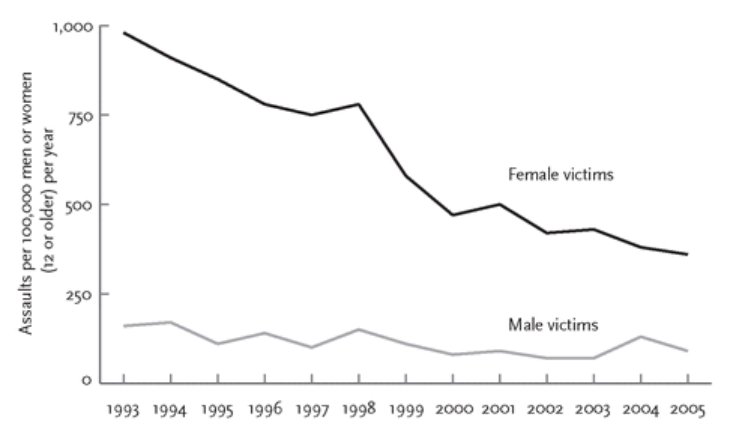
Figure 7-13 — Assaults by intimate partners in the United States, 1993-2005. PDF p. 572 (file not included in this release)
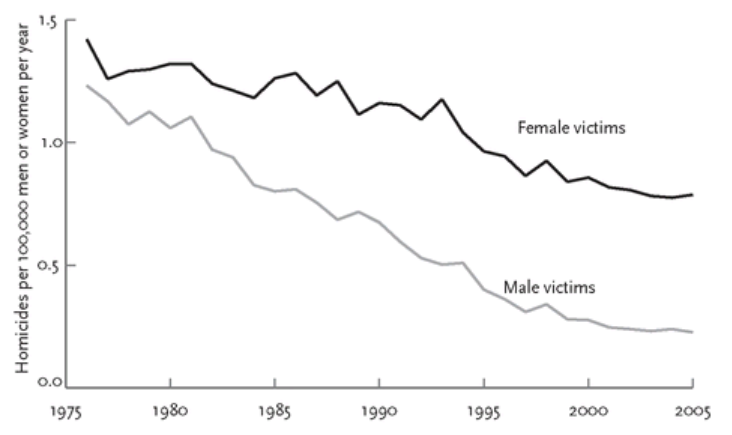
Figure 7-14 — Homicides of intimate partners in the United States, 1976-2005. PDF p. 572 (file not included in this release)
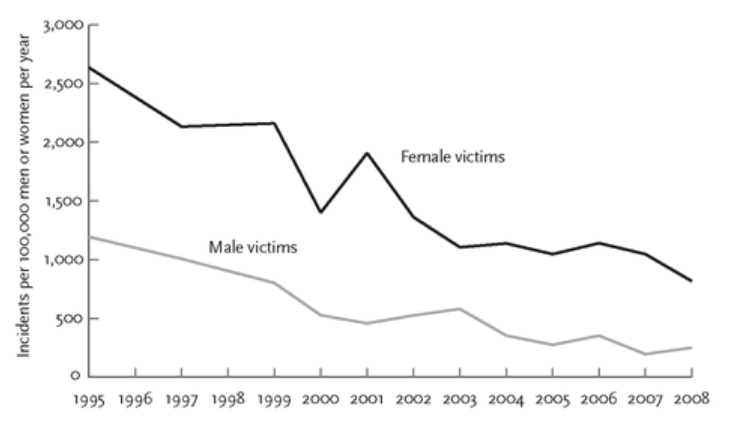
Figure 7-15 — Domestic violence in England and Wales, 1995-2008. PDF p. 574 (file not included in this release)
Children’s rights
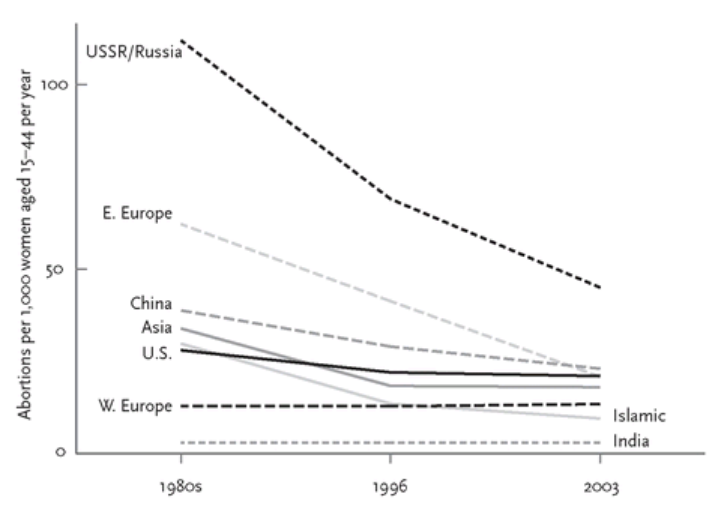
Figure 7-16 — Abortions in the world, 1980-2003. PDF p. 594 (file not included in this release)
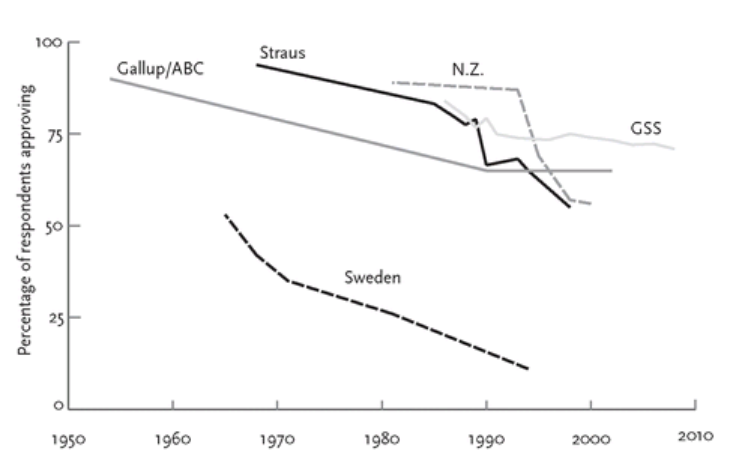
Figure 7-17 — Approval of spanking in the United States, Sweden, and New Zealand, 1954-2008. PDF p. 605 (file not included in this release)
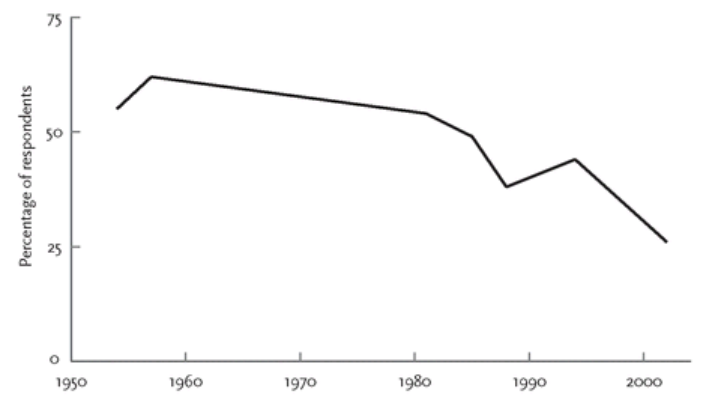
Figure 7-18 — Approval of corporal punishment in U.S. schools, 1954-2002. PDF p. 607 (file not included in this release)
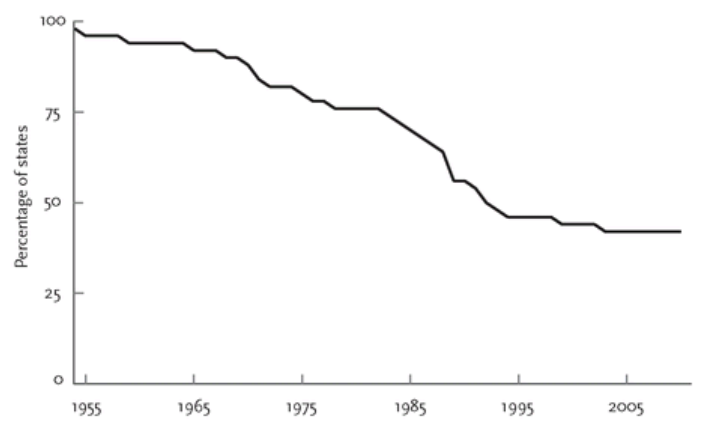
Figure 7-19 — U.S. states allowing corporal punishment in schools, 1954-2010. PDF p. 608 (file not included in this release)
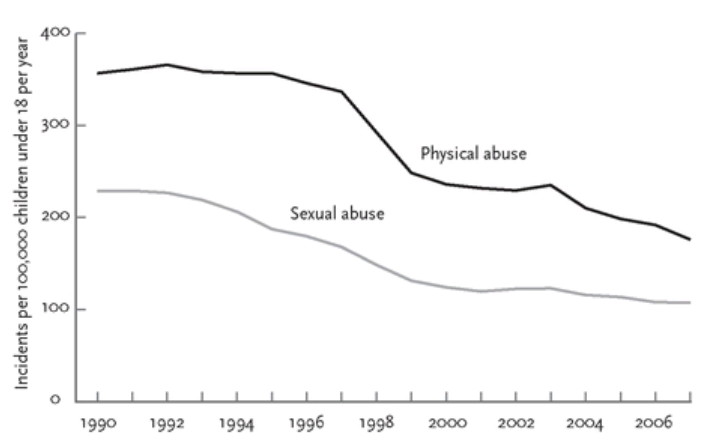
Figure 7-20 — Child abuse in the United States, 1990-2007. PDF p. 610 (file not included in this release)
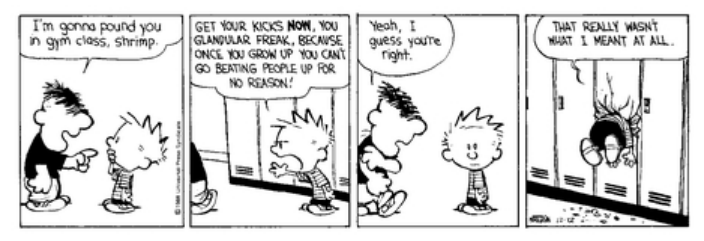
Figure 7-21 — Another form of violence against children. PDF p. 612 (file not included in this release)
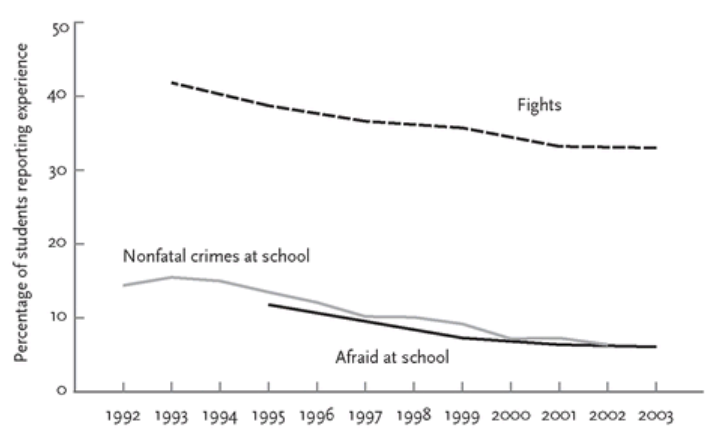
Figure 7-22 — Violence against youths in the United States, 1992-2003. PDF p. 614 (file not included in this release)
Gay rights
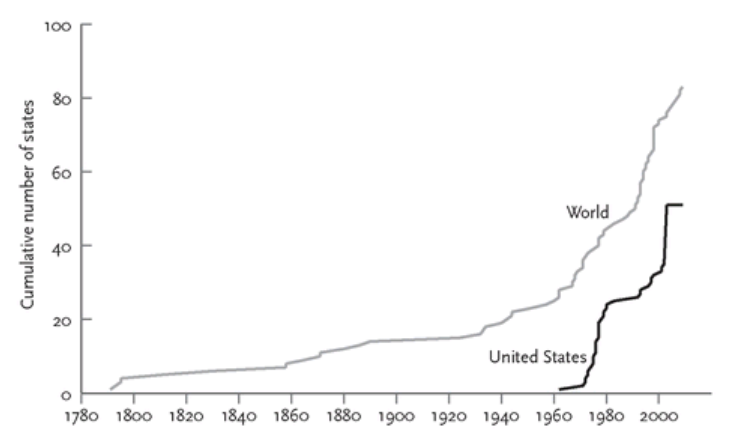
Figure 7-23 — Timeline for the decriminalization of homosexuality in the United States and worldwide. PDF p. 624 (file not included in this release)
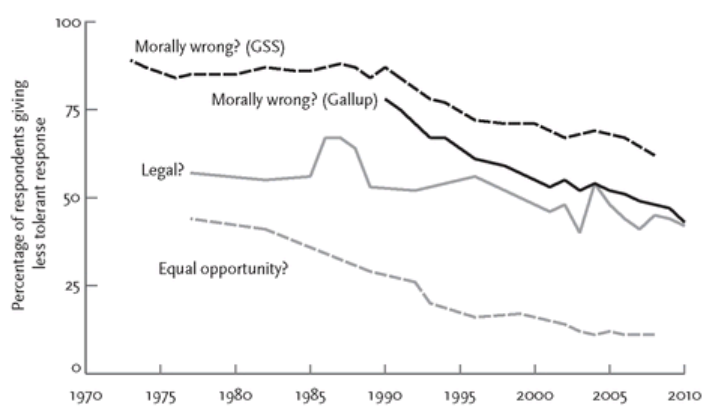
Figure 7-24 — Intolerance of homosexuality in the United States, 1973-2010. PDF p. 626 (file not included in this release)
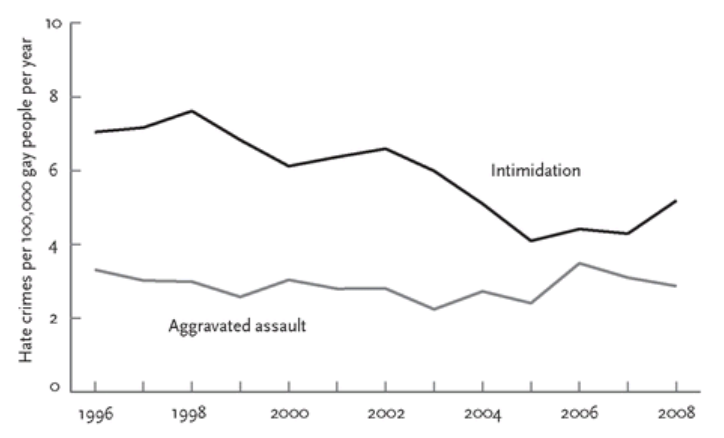
Figure 7-25 — Antigay hate crimes in the United States, 1996-2008. PDF p. 629 (file not included in this release)
Animal rights
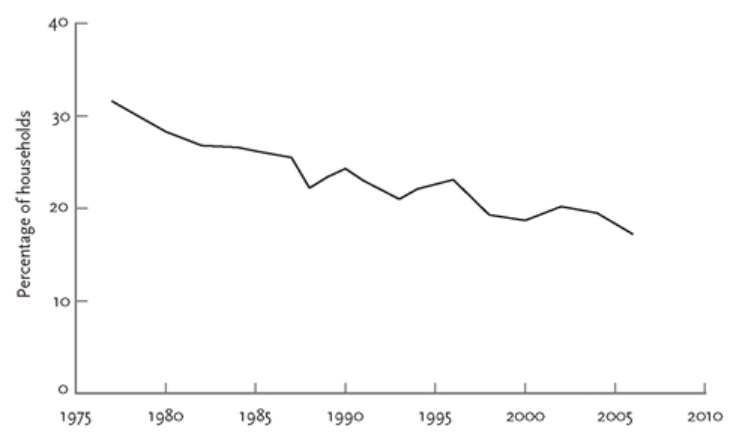
Figure 7-26 — American households with hunters, 1977-2006. PDF p. 648 (file not included in this release)
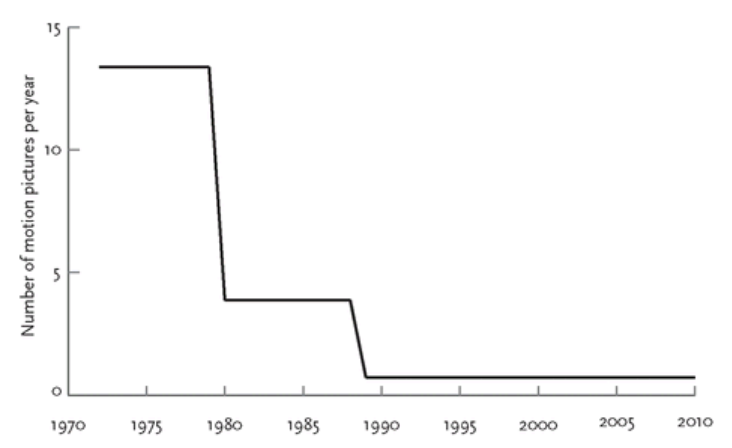
Figure 7-27 — Motion pictures per year in which animals were harmed, 1972-2010. PDF p. 650 (file not included in this release)
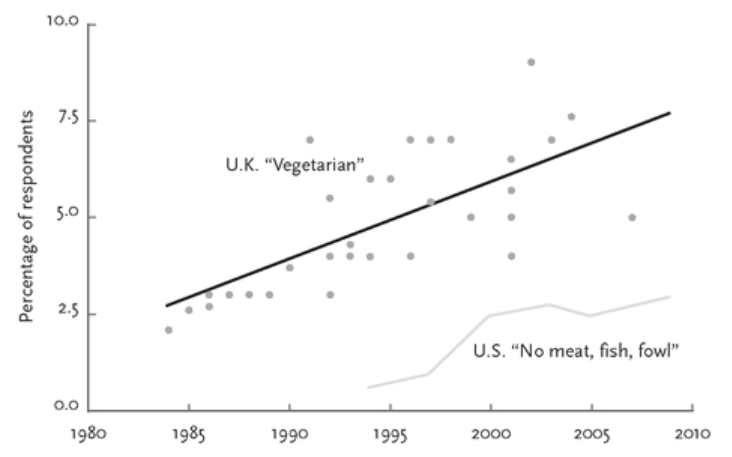
Figure 7-28 — Vegetarianism in the United States and United Kingdom, 1984-2009. PDF p. 653 (file not included in this release)
Key Concepts and Distinctions
- Rights Revolution: a movement that moves a category of victims inside legal and moral protection.
- Moral circle: the set of beings whose interests count for their own sake.
- Private-to-public reclassification: domestic or customary harm becomes a matter for law and collective judgment.
- Incidence versus reporting: more reports can accompany less victimization when shame and institutional barriers fall.
- Rights contagion: successful reasoning in one domain supplies an analogy for another.
- Amnesia of success: later concern with subtler harms obscures the defeat of severe earlier ones.
- Mission creep: expansion of a movement’s category after core victories; it may identify real harm while complicating trend measurement.
Essential Evidence and Examples
- The long collapse of lynching precedes modern hate-crime categories and demonstrates a change in both behavior and legitimacy. Lynching and racial violence, PDF p. 534 (file not included in this release)
- Rape victimization declines more sharply than homicide in the U.S. series Pinker presents, consistent with targeted legal and cultural change. Rape and homicide, PDF p. 550 (file not included in this release)
- Attitudes toward spanking and school corporal punishment shift alongside legal restrictions, though country differences remain large. Corporal punishment, PDF p. 577 (file not included in this release)
- Decriminalization and public acceptance of homosexuality change within decades, making generational and contact effects especially visible. Gay-rights change, PDF p. 619 (file not included in this release)
- Animal welfare demonstrates expansion of concern where reciprocity cannot explain the shift. Animal welfare, PDF p. 630 (file not included in this release)
Chapter 7 Stories and Vignettes
- Pinker’s childhood games of pain. Pinker remembers informal boys’ games—unpadded tackle football, “murderball,” and other contests—in which tolerating pain earned status even when athletic skill did not. He opens the chapter with the memory to make a generational change in norms concrete: conduct once treated as ordinary boyhood could later be reclassified as dangerous or abusive. Pinker’s autobiographical recollection. PDF pp. 528–529 (file not included in this release)
- A photograph becomes “Strange Fruit.” A 1930 photograph of two lynched men moved schoolteacher Abel Meeropol to write a protest poem, which he set to music and Billie Holiday made famous. Pinker then places the cultural landmark beside Emmett Till’s 1955 murder, showing how unforgettable individual cases can crystallize a moral movement even when the aggregate practice has already begun to decline. Historical and cultural episode. PDF pp. 536–537 (file not included in this release)
- Ruby Bridges walks into school. Six-year-old Ruby Bridges entered a New Orleans school between federal marshals while a white crowd jeered and threatened her. Pinker uses John Steinbeck’s eyewitness description and Norman Rockwell’s later painting to show how images of a vulnerable child made segregationist terror morally self-defeating. Historical episode retold through an eyewitness. PDF pp. 540–541 (file not included in this release)
- Three afternoons in a salmon-colored Cadillac. After a high-school boy grabbed and threatened one of Pinker’s graduate students, police assigned an undercover officer to sit with her in a 1978 Cadillac seized in a drug bust until she identified him; prosecutors then pursued the assault with her consent. Pinker offers the anecdote as a contrast with earlier institutional indifference to even severe sexual violence. Pinker’s report about a student; not independently verified in the note. PDF p. 558 (file not included in this release)
- The wagon train leaves the girl behind. An 1846 wagon train found an eight-year-old Native American girl starving, naked, and covered in sores. The men debated taking her, killing her to end her suffering, or leaving her; after a vote they moved on. Two women stayed briefly to comfort her, and a young man later returned and shot her. Pinker uses the remembered scene to show a moral world in which mercy, abandonment, and killing could all be treated as live options before an inviolable right to a child’s life governed the choice. Settler memoir quoted by Pinker; not independently verified in the note. PDF p. 589 (file not included in this release)
- Mary Ellen is protected through the animal-cruelty analogy. In 1874 neighbors reported cuts and bruises on ten-year-old Mary Ellen McCormack, but New York had no law designed to protect a child from an abusive caregiver. A caseworker turned to the animal-protection movement; its founder recognized the analogy with abused horses, hired a lawyer, and used habeas corpus to remove Mary Ellen from the home. Her lawyer then helped found the New York Society for the Prevention of Cruelty to Children. Historical child-protection episode as Pinker recounts it. PDF pp. 602–603 (file not included in this release)
- The state’s treatment of Alan Turing. Pinker recounts Turing’s foundational work in computation, codebreaking, artificial intelligence, and morphogenesis before turning to his 1952 prosecution for sex with a man, loss of clearance, threatened imprisonment, and chemical castration; Pinker attributes Turing’s death by suicide at forty-two to that persecution. The contrast makes state-sponsored homophobia visible as violence against a person whose service the state otherwise celebrated. Historical-biographical episode as Pinker interprets it. PDF pp. 619–620 (file not included in this release)
- Pinker obeys standard practice and kills a rat. As a twenty-year-old laboratory assistant in 1975, Pinker was told to leave a rat overnight in a box where a shock arrived every six seconds unless it pressed a lever. The rat never learned, and Pinker found it cold and convulsing the next morning; it died despite veterinary care. He says he had sensed that the procedure was wrong but complied because it was standard practice and refusal carried little personal risk. Pinker’s autobiographical confession. PDF pp. 630–631 (file not included in this release)
- The president, the fly, and the humane catcher. After Barack Obama swatted a fly during a televised interview, PETA objected and sent the White House a humane insect catcher. Pinker uses the comic scale of the controversy as evidence of how far concern for animal suffering had expanded—not as proof that concern is always proportionate. Contemporary press anecdote. PDF p. 650 (file not included in this release)
Chapter Conclusion and Significance
The Rights Revolutions extend the decline-of-violence thesis from deaths to domination and suffering. They also explain why moral alarm can rise while measured harm falls: expanding protection generates new attention, vocabulary, and reporting. The strongest evidence comes from convergence among attitudes, law, institutions, and victimization rather than any one series.
Questions for Reflection
- How can trend analysis adjust for changing willingness to report violence?
- When is rights contagion principled consistency, and when is it a misleading analogy?
- Does the widening moral circle depend more on personal contact, media, organization, or abstract reason?
Chapter 8: Inner Demons
Chapter Objective and Through Line
Pinker rejects the idea that aggression is one pressure or instinct that accumulates until discharged. Violence is an outcome produced by distinct psychological systems with different triggers, goals, emotions, and neural circuits. Treating all violence as one urge obscures why a robbery, honor killing, revenge attack, torture session, and ideological massacre require different explanations and interventions. Chapter opening, PDF p. 667 (file not included in this release)
The chapter’s five “demons” are not supernatural essences or fixed types of people. Predation uses harm instrumentally; dominance seeks rank or glory; revenge moralizes retaliation; sadism takes pleasure in suffering; ideology authorizes unlimited means for a sacred end. Social conditions determine which system is cued, rewarded, restrained, or given collective legitimacy. That modular view makes historical decline possible without assuming human nature was replaced.
Chapter Structure at a Glance
- Reject romantic innocence and the myth of a single aggressive drive.
- Explain why perpetrators, victims, and observers narrate the same act differently.
- Replace the “pure evil” picture with ordinary motives, biases, and escalation.
- Show that multiple neural systems can generate or regulate aggression.
- Analyze predation, dominance, revenge, sadism, and ideology separately.
- Link each demon to the historical institutions that reduced its opportunities or prestige.
Section-by-Section Argument
The Dark Side
Humans possess capacities for cruelty as well as cooperation, but no constant reservoir of aggression demands an outlet. Violence is conditional and strategic enough to respond to incentives, norms, audiences, and self-control. This makes “letting off steam” a poor general theory and warns that rehearsing rage can strengthen rather than drain aggressive habits. The dark side, PDF p. 668 (file not included in this release)
The Moralization Gap and the Myth of Pure Evil
Victims remember an unprovoked, devastating act; perpetrators remember a justified response, minor injury, misunderstanding, or defense against prior wrong. Self-serving memory and divergent moral accounting create a Moralization Gap that can sustain revenge. The myth of pure evil then imagines villains who harm for harm’s sake, obscuring the offender’s often moralized or instrumental logic. Understanding that logic explains violence; it does not excuse it. Moralization Gap, PDF p. 675 (file not included in this release)
Organs of Violence
Brain systems for fear, rage, reward, status, empathy, inhibition, and moral judgment interact rather than forming a dedicated “violence organ.” Subcortical circuits generate rapid motives; frontal systems can regulate them; learning and context change thresholds. Neuroscience supports the chapter’s pluralism but does not, by itself, explain a centuries-long historical trend. Neural systems, PDF p. 687 (file not included in this release)
Predation
Instrumental violence treats the victim as an obstacle or resource. It may be emotionally cold because its goal lies beyond suffering itself: money, territory, compliance, concealment, or strategic advantage. Predation falls when guardianship, detection, punishment, legitimate opportunity, and positive-sum exchange raise its cost or supply better alternatives. Predation, PDF p. 703 (file not included in this release)
Dominance
Individuals and groups fight for status, authority, prestige, and deterrent reputation. Male coalitions, honor cultures, humiliation, and competitive display can turn symbolic rank into lethal stakes. Strong institutions reduce the payoff to private dominance, while feminism and dignity norms make violent bravado less admirable. Dominance can also scale into nationalism and contests among states. Dominance, PDF p. 710 (file not included in this release)
Cross-chapter link — ressentiment and Islamist humiliation narratives
Pinker later describes ressentiment as a claim to lost collective greatness that turns humiliation into rage, explicitly applying the pattern to parts of the contemporary Islamic world. Chapter 6’s discussion of Islamist “humiliation” narratives is one concrete application; neither passage makes the trait universal to Muslims. → Chapter 6 source audit · PDF p. 723 (file not included in this release)
Revenge
Revenge is a moral emotion as well as a deterrent strategy. It announces that exploitation will be punished and can stabilize cooperation when no neutral authority exists. Yet self-serving bias makes each side experience its retaliation as proportionate and the other’s as escalation. Courts, compensation, apology, truth-and-reconciliation procedures, and face-saving settlement can interrupt the cycle by transferring punishment to a third party. Revenge, PDF p. 730 (file not included in this release)
Sadism
Pleasure in suffering exists but is rarer and less explanatory than popular images of evil suggest. It can develop through conditioning, dehumanization, power, peer audiences, taboo transgression, and escalating participation. Institutions that remove impunity and audiences, monitor custody, and prevent gradual brutalization can therefore matter even when empathy is weak. Sadism, PDF p. 754 (file not included in this release)
Ideology
Ideology combines a sacred end, a theory of causation, a designated enemy, and a moral permission structure. If an unlimited future good is at stake, present victims become obstacles or necessary sacrifices. Totalitarian and millenarian systems magnify violence by coordinating ordinary people, suppressing corrective information, and treating doubt as betrayal. Open criticism and epistemic humility restrain ideology by keeping factual and moral claims revisable. Ideology, PDF p. 766 (file not included in this release)
Pure Evil, Inner Demons, and the Decline of Violence
Historical progress does not require eliminating any motive. It requires changing opportunities, payoffs, audiences, beliefs, and institutions so that predation is risky, dominance is less glorious, revenge is delegated, sadism is exposed, and ideology cannot monopolize truth. The plural psychology maps directly onto the plural historical causes. Synthesis, PDF p. 783 (file not included in this release)
Figures
Organs of violence
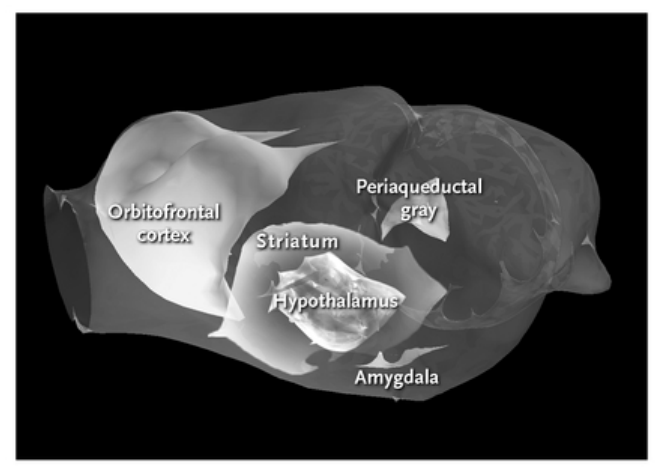
Figure 8-1 — Rat brain structures involved in aggression. PDF p. 689 (file not included in this release)
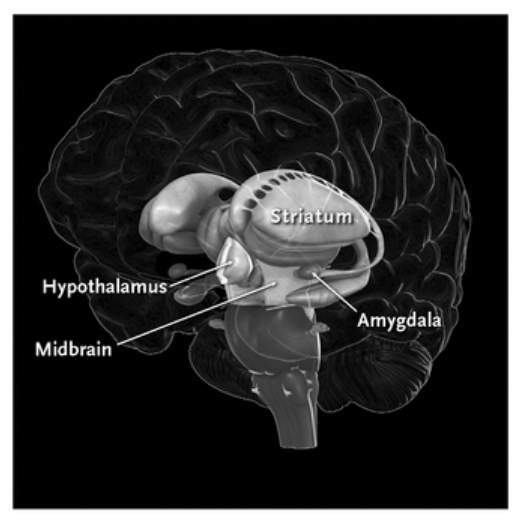
Figure 8-2 — Human subcortical structures involved in aggression. PDF p. 694 (file not included in this release)
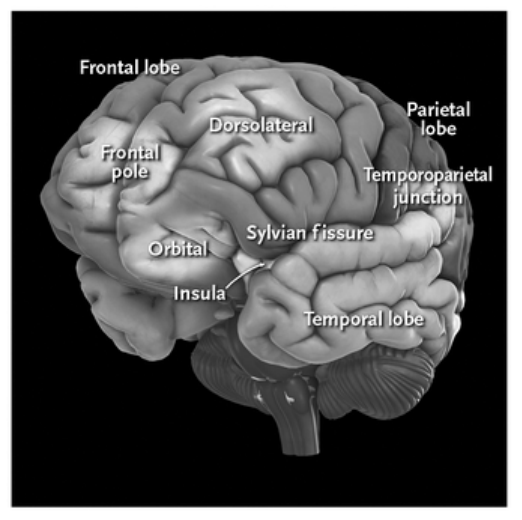
Figure 8-3 — Human cortical regions that regulate aggression. PDF p. 695 (file not included in this release)
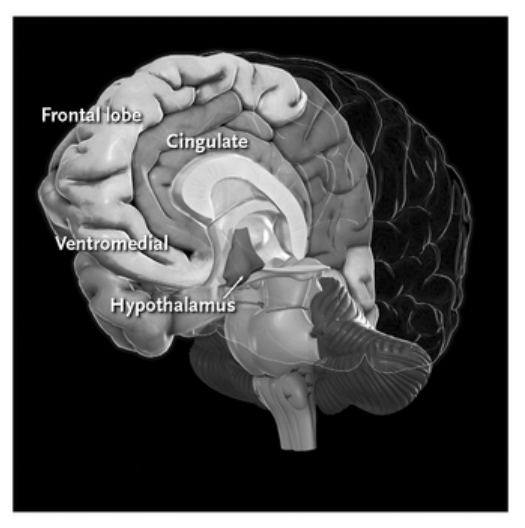
Figure 8-4 — Human brain, medial view. PDF p. 696 (file not included in this release)
Revenge and reconciliation
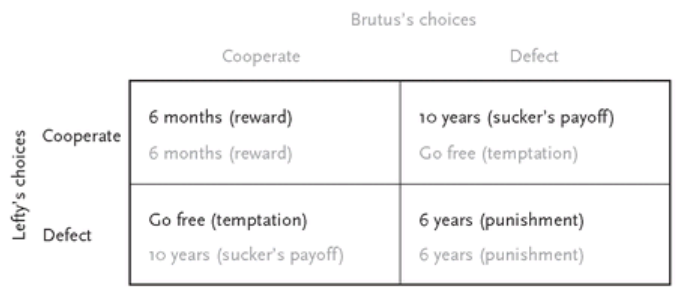
Figure 8-5 — The Prisoner’s Dilemma. PDF p. 735 (file not included in this release)
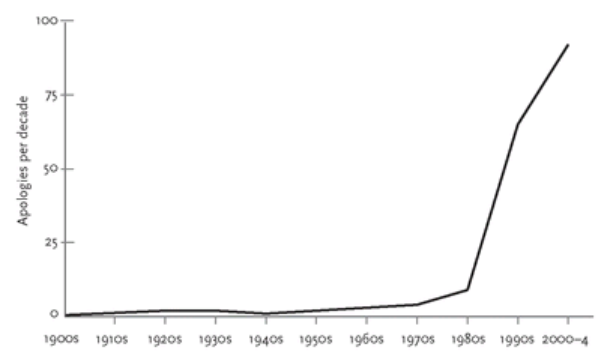
Figure 8-6 — Apologies by political and religious leaders, 1900-2004. PDF p. 750 (file not included in this release)
Key Concepts and Distinctions
- Hydraulic model: the rejected idea that aggression builds up and must be vented.
- Moralization Gap: systematic divergence between a victim’s and perpetrator’s narratives.
- Myth of pure evil: the belief that serious offenders are unlike ordinary humans and harm without intelligible motives.
- Instrumental versus expressive violence: harm used to achieve another end versus harm intertwined with emotion, status, or meaning.
- Moralized violence: aggression experienced as duty, justice, purification, or defense rather than transgression.
- Sacred value: an end insulated from ordinary cost-benefit compromise.
Essential Evidence and Examples
- Experimental and autobiographical comparisons show victims and perpetrators remembering severity, causation, and closure differently. Victim-perpetrator narratives, PDF p. 675 (file not included in this release)
- Honor contests and intergroup dominance share status logic even though their scale differs. Dominance systems, PDF p. 710 (file not included in this release)
- Revenge cycles persist because each retaliation is coded as repayment, not aggression. Revenge and justice, PDF p. 730 (file not included in this release)
- Utopian or sacred ideologies can transform instrumental bureaucratic action into mass moralized killing. Ideological violence, PDF p. 766 (file not included in this release)
Extended source audit — findings worth carrying into other notes
Aggression develops through restraint, not a hydraulic release. Pinker summarizes developmental work in which kicking, biting, hitting, and fighting are common in toddlerhood, peak on average around age two, and then decline. The important developmental question becomes how children learn not to aggress. He also reports high rates of homicidal fantasy in university self-reports; those estimates depend on sampling, definitions, and willingness to disclose and should not be treated as rates of intent or action. Early aggression and violent fantasy, PDF pp. 668–671 (file not included in this release)
Violence is often socially obstructed before it is morally inhibited. Pinker draws on Randall Collins’s descriptions of awkward real fights and “forward panic,” in which fear can turn into a brief rampage once an opponent becomes vulnerable. This is a situational theory, not a diagnosis of every atrocity or episode of police violence. Confrontational tension and forward panic, PDF pp. 672–674 (file not included in this release)
The Moralization Gap has an experimental analogue. People assigned the victim’s perspective in an ambiguous roommate conflict remembered more aggravating details and a longer history; those assigned the perpetrator’s perspective remembered more mitigation. Perspective changed memory relative to a neutral-observer baseline. The result explains divergent sincerity without establishing equal culpability or making independent evidence optional. Victim and perpetrator accounts, PDF pp. 675–680 (file not included in this release)
Wanting and liking are different. Pinker uses reward-circuit research to distinguish dopamine-linked seeking or craving from pleasure itself, which is more closely associated in his account with opioid systems. Instrumental violence can recruit pursuit without requiring enjoyment of suffering. The neuroscience is a 2011 synthesis, not a clinical rule. Seeking, reward, rage, and fear circuits, PDF pp. 687–694 (file not included in this release)
Early brain evidence supports interaction, not a “violence organ.” Amygdala, hypothalamus, midbrain, striatum, orbital and ventromedial cortex, insula, cingulate, dorsolateral cortex, and temporoparietal junction appear in Pinker’s account of threat, reward, inhibition, unfairness, conflict monitoring, and theory of mind. The same structures have many nonviolent functions. Lesion and imaging findings are correlational or case-based unless the design supplies stronger leverage. Figures 8-1 to 8-4 and neural interpretation, PDF pp. 689–703 (file not included in this release)
Psychopathy is not equivalent to sadism or serial murder. Pinker reports historical estimates of psychopathy among men and violent offenders and links it to reduced responsiveness to distress, while stressing that most psychopaths are not serial killers or sadists. The prevalence estimates, diagnostic instruments, and neuroscience are source-dated and should be updated before present clinical use. Predation and psychopathy, PDF pp. 703–707 (file not included in this release)
Overconfidence can make both sides choose a fight they expect to win. In the war game Pinker reports, more confident players performed worse and initiated more unprovoked attacks; historical initiators also lost often enough to challenge a simple rational-choice account. Group discussion can either correct error or amplify it when leaders suppress criticism and receive filtered intelligence. Overconfidence experiment and war, PDF pp. 707–710 (file not included in this release)
Dominance is sensitive to audiences, status, and social categories. Pinker reports that male disputes were more likely to escalate when onlookers were present, argues against the simple “low self-esteem causes violence” story, and treats narcissistic or unstable high self-regard as one possible risk pathway. He explicitly warns against armchair diagnosis. Testosterone is presented through a challenge model—responsive to competition, status, mating, and family context—not as a direct violence chemical. Status, audience, and deterrent reputation, PDF pp. 710–718 (file not included in this release)
Arbitrary groups can acquire moral weight. Tajfel-style minimal groups produced in-group favoritism even from trivial Klee/Kandinsky labels. Pinker’s broader lesson is that overlapping identities can lower the stakes of one category, while collective narcissism and ressentiment can turn lost-status narratives into humiliation and rage. His national and regional applications are interpretive and should not be generalized to whole populations. Minimal groups and layered identity, PDF pp. 718–724 (file not included in this release)
Intergroup peace often depends on own-group policing. In Pinker’s summary of Fearon and Laitin, ethnic violence occurred in only a small fraction of possible neighboring-group pairings. When a community disciplines its own spoiler, the other group can classify an attack as an individual crime rather than a collective first strike. The historical samples and opportunity denominators are limited and are not current regional prevalence estimates. Ethnic coexistence and spoiler control, PDF pp. 724–726 (file not included in this release)
Revenge can support cooperation and also make error self-amplifying. The iterated Prisoner’s Dilemma explains why clear, proportionate retaliation can deter exploitation, while Generous and Contrite Tit for Tat show why forgiveness and acknowledgment of one’s own mistake matter in a noisy world. In the finger-pressure experiment, eight attempts merely to match the last pressure produced about eighteen times the original force. Models illuminate a mechanism; they do not reproduce the asymmetry, history, or institutions of a real conflict. Prisoner’s Dilemma and Tit for Tat, PDF pp. 735–739 (file not included in this release) · Finger-pressure escalation, PDF p. 742 (file not included in this release)
Punishment is not automatically prosocial. Pinker reports public-goods experiments in which participants sometimes paid to punish free riders, but also cross-national “antisocial punishment” in which high contributors were punished. Associations with civic norms and rule of law were correlational and came from selected laboratory samples; they do not rank entire cultures or establish a single cause. Punishment, fairness, and cross-country differences, PDF pp. 743–746 (file not included in this release)
Forgiveness becomes safer when the relationship is valuable and changed intent is credible. Robbers Cave participants reconciled around shared tasks; apologies work better when joined to acknowledgment, restitution, visible emotion, or another costly signal. Figure 8-6 counts public apologies but cannot show sincerity or effect. Long and Brecke’s 21 international and 11 civil-conflict reconciliation events suggest that risky commitments and incomplete-but-public justice can matter, but the small selected observational samples do not establish causation. Forgiveness and shared goals, PDF pp. 746–749 (file not included in this release) · Figure 8-6 and reconciliation comparisons, PDF pp. 750–754 (file not included in this release)
Sadism is presented as uncommon and acquired. Pinker distinguishes serial murder from mass or spree killing, emphasizes its rarity, and rejects a single gene, lesion, or childhood cause. He proposes that repeated brutality can weaken revulsion and strengthen an opponent emotional process until cruelty becomes rewarding. That opponent-process account is a theory of one pathway, not a validated profile of an individual offender or proof that exposure inevitably produces sadism. Contexts and rarity of sadism, PDF pp. 754–758 (file not included in this release) · Inhibitions and the acquisition account, PDF pp. 761–766 (file not included in this release)
Ideology spreads through social organization as well as belief content. Pinker combines group polarization, filtered information, obedience, bystander cues, pluralistic ignorance, enforcement of public conformity, and moral disengagement. Milgram, Darley and Latané, Zimbardo, Asch, and Macy supply different kinds of evidence and should not be collapsed into one causal proof. His five disengagement routes—euphemism, gradualism, diffused responsibility, distancing, and victim derogation—show how ordinary moral self-conceptions can coexist with harm. Later replication, archival, and methodological debates fall outside this 2011 source extraction. Ideology and group dynamics, PDF pp. 766–779 (file not included in this release) · Moral disengagement, PDF pp. 778–783 (file not included in this release)
Chapter 8 Stories and Vignettes
- Catching self-deception in two ledgers. Participants could assign themselves a pleasant photo task or use a randomizer that might give them a tedious math task; most kept the easy job yet rated their choice as fair. When their conscious attention was burdened by holding seven digits in memory, they judged their own choice as harshly as an outsider did. Pinker uses the experiment to argue that self-serving stories may coexist with an obscured internal recognition of the truth. Reported experiment. PDF pp. 679–680 (file not included in this release)
- One conflict, two righteous histories. Pinker places opposed narratives of the Crusades, the American Civil War, the Soviet occupation of Eastern Europe, and the Six-Day War side by side. In each pair, one side’s defense, liberation, or survival is the other side’s persecution, conquest, or tyranny. The vignette set gives the Moralization Gap a historical form: antagonists do not merely tell different lies; they can sincerely organize different facts into incompatible victim stories. Pinker’s comparative framing, not an adjudication of the conflicts. PDF pp. 681–683 (file not included in this release)
- Phineas Gage is “no longer Gage.” A tamping iron driven through Gage’s skull left many basic abilities intact but, according to his physician, transformed his judgment, restraint, and social conduct. Pinker acknowledges later embellishment while using the case to introduce the orbital and ventromedial cortex as regulators of emotion and impulse. Historical medical case with an explicit retelling caution. PDF pp. 695–698 (file not included in this release)
- Nova Scotia’s Christmas tree to Boston. Each year Nova Scotia sends Boston a spruce in memory of Boston’s aid after the 1917 Halifax explosion, though the contemporary participants did not give or receive the original help. Pinker uses his own warm response to the ritual to show how moral emotions attach to group representations, allowing gratitude—and also grievance or dominance—to pass across generations. Public tradition plus Pinker’s personal reflection. PDF pp. 719–720 (file not included in this release)
- The punch in Witness. In Pinker’s chosen film scene, Harrison Ford’s undercover detective lives among pacifist Amish and watches local men bully the family; to the audience’s delight, he finally hits the aggressor. Pinker uses his own pleasure at the fictional retaliation to introduce revenge as emotionally rewarding and potentially deterrent, not simply a pathology. Fictional illustration and autobiographical reaction. PDF p. 734 (file not included in this release)
- Matching force escalates eighteenfold. Two participants alternated pressing on each other’s fingers with what each believed was the same force just received. After eight turns the pressure had risen to about eighteen times the opening level because people underestimated the force they applied by roughly 40 percent. Pinker uses the experiment as a tactile model of revenge between parties who each experience themselves as merely restoring balance. Reported experiment. PDF p. 742 (file not included in this release)
- Robbers Cave repairs the water line. Boys divided into rival summer-camp teams raided and retaliated against one another, at times wielding rocks in socks. When staged emergencies made them restore the camp’s water supply and pull a bus from mud together, hostility eased and cross-team friendships appeared. Classic field experiment as summarized by Pinker; later methodological and ethical debates are outside this extraction. PDF p. 747 (file not included in this release)
- Sadat speaks to the Israeli parliament. Pinker presents Anwar Sadat’s 1977 address as a peace signal that was novel, voluntary, risky, vulnerable, and hard to reverse. Its personal danger made peaceful intent more credible, though the speech alone cannot explain the treaty or everything that followed. Historical reconciliation episode interpreted through Long and Brecke. PDF pp. 750–751 (file not included in this release)
- Milgram’s shock machine follows the room. Expert predictions said only a few pathological participants would reach the maximum; Pinker reports that 65 percent did. Yet obedience fell when the authority was distant, the staged victim was closer, or a nearby confederate refused—and exceeded 90 percent when that partner complied. A 2008 partial replication stopped at 150 volts, with 70 percent reaching that point. Classic laboratory studies as Pinker summarizes them; the later methodological literature is not independently audited here. PDF pp. 768–771 (file not included in this release)
- Eleven minutes of applause. Solzhenitsyn recounts a Moscow party conference where no one dared be first to stop applauding Stalin. A factory director finally sat down after eleven minutes; the room followed, and he was arrested that night and sent to the gulag for ten years. Pinker uses the episode to show how fear can sustain a public consensus that individuals may not privately hold. Historical anecdote retold through Solzhenitsyn; not independently verified in this note. PDF pp. 774–775 (file not included in this release)
Chapter Conclusion and Significance
The chapter replaces “violent people” with a more useful question: which motive is operating, under what trigger, with what audience, and inside which institution? That shift explains why one reform cannot prevent every kind of violence and why successful historical restraints target different mechanisms.
Questions for Reflection
- Which demon best explains ordinary homicide, and which best explains mass killing?
- Can moralization ever restrain violence without creating a new out-group or sacred cause?
- Which institutions reduce revenge while retaining legitimate accountability?
Chapter 9: Better Angels
Chapter Objective and Through Line
Pinker now examines the capacities that can restrain violence: empathy, self-control, moral sense, and reason. None is simply benevolent. Empathy is vivid but narrow; self-control can serve a patient aggressor; morality can condemn harm or sanctify tribal punishment; reason can design peace or optimize domination. Historical progress comes from arranging institutions and ideas so these capacities check one another and favor the victim’s interest. Chapter opening, PDF p. 786 (file not included in this release)
The chapter also considers whether recent biological evolution made people less violent. Pinker leaves limited room for selection but does not need it. The documented changes are too fast, reversible, and institutionally patterned to require a new genome. A broadly stable human repertoire can produce very different outcomes when security, time horizons, education, norms, and opportunities change.
Chapter Structure at a Glance
- Distinguish sympathetic concern from emotional contagion and perspective-taking.
- Explain self-control through future discounting, inhibition, habit, and social stability.
- Evaluate recent genetic evolution without making it the main account.
- Separate moral systems that protect victims from those that authorize violence.
- Present reason as perspective-neutrality, factual correction, and institutional design.
- Show why the angels work best as a system rather than as isolated virtues.
Section-by-Section Argument
Empathy
Pinker distinguishes understanding another mind, feeling a similar emotion, and caring about another’s welfare. First-person narratives and perspective-taking can expand concern, helping explain humanitarian and rights movements. But empathy favors identifiable, similar, nearby people; it can conflict with fairness, exhaust attention, and intensify hostility on behalf of an in-group victim. It is a channel of concern, not a complete ethics. Empathy, PDF p. 789 (file not included in this release)
Self-Control
Violence often trades a large future cost for an immediate reward: status, anger relief, loot, or revenge. Self-control allows a person to simulate later consequences and inhibit the impulse. Longer life expectancy, safer environments, education, stable institutions, and predictable punishment increase the value of the future. This links individual executive control to Elias’s Civilizing Process without treating self-control as a fixed character essence. Self-control, PDF p. 814 (file not included in this release)
Recent Biological Evolution?
Selection may have changed temperament in some populations, particularly if states executed or marginalized chronically violent men. But historical records cannot cleanly separate genetic selection from culture, institutions, nutrition, and development. Pinker regards biological change as possible at the margins and unnecessary for the main explanation, which rests on environmental changes engaging a shared psychology. Biological evolution, PDF p. 840 (file not included in this release)
Morality and Taboo
Moral conviction restrains violence when it emphasizes harm, fairness, and reciprocal rights. It promotes violence when it sacralizes tribe, authority, purity, vengeance, or utopia. Taboos can protect people by making an act unthinkable, but they can also place compromise beyond discussion. Moral progress therefore requires evaluating moral intuitions, not merely strengthening them. Morality and taboo, PDF p. 854 (file not included in this release)
Reason
Reason corrects false causal beliefs, exposes inconsistency, and invites an impartial standpoint in which one’s own interests cannot receive unexplained privilege. Education, abstract thought, open debate, and institutions of knowledge can support liberal and cooperative values. Pinker links the Flynn effect and cognitive reflection to wider perspective while acknowledging that intelligence can be instrumentally recruited by violent ends. Reason’s distinctive contribution is not goodness by itself but the capacity to universalize and criticize every moral impulse, including empathy. Reason, PDF p. 881 (file not included in this release)
How the Better Angels Work Together
Empathy notices a victim; self-control prevents immediate retaliation; moral sense turns restraint into an obligation; reason asks whether the obligation is coherent and impartial. Institutions then stabilize the result so peace does not depend on everyone feeling compassionate at the decisive moment. Conversely, reason without concern can optimize predation, morality without reason can sanctify cruelty, empathy without fairness can become parochial, and self-control without humane ends can make violence more calculated.
Figures
Self-control
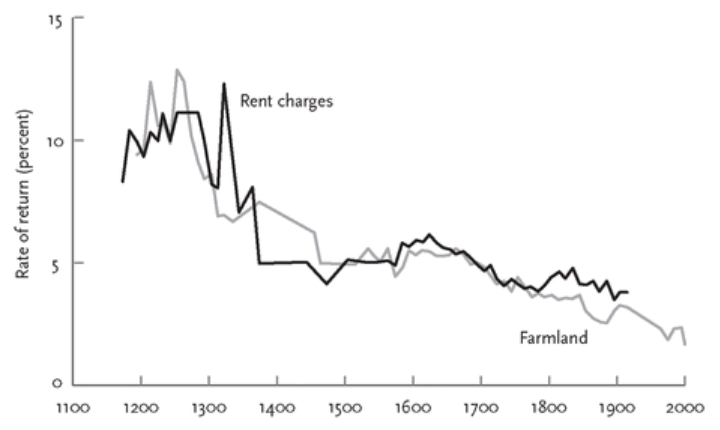
Figure 9-1 — Implicit interest rates in England, 1170-2000. PDF p. 838 (file not included in this release)
Reason
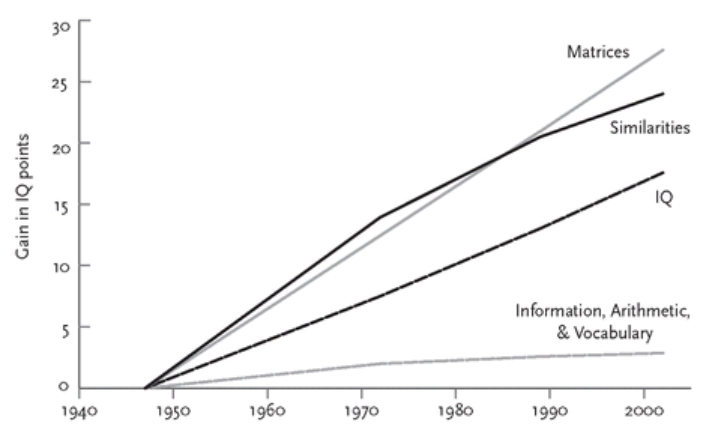
Figure 9-2 — The Flynn effect: rising IQ scores, 1947-2002. PDF p. 894 (file not included in this release)
Key Concepts and Distinctions
- Empathy, sympathy, and perspective-taking: related but nonidentical emotional and cognitive processes.
- Future discounting: devaluing delayed costs and rewards, which makes impulsive violence more attractive.
- Moral foundations: intuitions about harm, fairness, loyalty, authority, and purity that can restrain or authorize violence.
- Taboo: a rule treated as beyond ordinary tradeoff; useful for prohibition but dangerous when attached to punitive causes.
- Interchangeability of perspectives: the rational demand that interests receive justification independent of whose they are.
- Reason as escalator: not automatic improvement, but pressure toward consistency and generalization once argument is open.
Essential Evidence and Examples
- Perspective-taking experiments support a path from narrative exposure to concern, while other studies show empathy’s partiality. Empathy evidence, PDF p. 789 (file not included in this release)
- Historical declines in impulsive homicide align with greater future orientation and self-command, though causal direction is difficult to isolate. Self-control evidence, PDF p. 814 (file not included in this release)
- The moralization of purity, loyalty, and authority helps explain why sincerely moral actors can perpetrate violence. Moralized violence, PDF p. 854 (file not included in this release)
- Rising abstract reasoning and liberal attitudes provide suggestive support for the escalator, not proof that high intelligence guarantees nonviolence. Reason and abstraction, PDF p. 881 (file not included in this release)
Extended source audit — findings worth carrying into other notes
“Empathy” is not one faculty. Pinker separates projection, visual or cognitive perspective-taking, mind-reading or theory of mind, emotional contagion and personal distress, and sympathetic concern. Understanding another mind can aid manipulation; sharing distress can motivate escape rather than help; and the mirror-neuron literature does not identify an “empathy center.” This conceptual separation is more durable than any single neural localization in the chapter’s 2011 synthesis. Meanings of empathy, PDF pp. 789–793 (file not included in this release) · Mirror-neuron claims and limits, PDF pp. 793–795 (file not included in this release)
Perspective-taking can widen concern, but the media claim is bounded. Batson-style experiments in Pinker’s review suggest that adopting one person’s viewpoint can increase concern for that person and sometimes for a represented class. Studies of fiction are thinner: reader differences are often correlational, a few experiments point toward an effect, and stories can also reinforce stereotypes, schadenfreude, or concern for appealing fictional victims. The evidence supports a possible pathway, not a rule that reading makes people humane. Perspective-taking and altruism, PDF pp. 803–809 (file not included in this release) · Fiction and sympathy, PDF pp. 809–811 (file not included in this release)
Empathy can conflict with fairness. In one experiment, participants induced to empathize with an identifiable sick child were more willing to move her ahead of other children awaiting treatment; related public-goods experiments found favoritism toward the salient person. Pinker’s larger claim is that the historical expansion was less a circle of equal feeling than a circle of rights: strangers need protection even when they do not evoke affection. These are reported experiments, not a verdict that compassion is generally harmful. Empathy, favoritism, and fairness, PDF pp. 812–813 (file not included in this release) · From empathy to rights, PDF p. 813 (file not included in this release)
Self-control includes a time horizon and an environment. Pinker distinguishes rational discounting of uncertain future rewards from myopic or hyperbolic discounting, in which preference reverses as temptation becomes imminent. “Odyssean” commitments—removing a temptation, checking a weapon, or binding oneself to a rule—let a cooler present self constrain a later hot state. This makes self-control partly a problem of choice architecture rather than moral essence. Future and myopic discounting, PDF pp. 816–818 (file not included in this release) · Precommitment and reframing, PDF pp. 833–836 (file not included in this release)
The chapter’s ego-depletion evidence is source history, not settled current science. Pinker presents Baumeister’s strength model, including experiments in which resisting food or exerting control was followed by less persistence or more retaliatory hot sauce. The chapter predates the major replication dispute over ego depletion, so the practical lesson—reduce avoidable temptation and design commitments—should not be made to depend on a finite willpower “fuel tank.” Ego-depletion experiments, PDF pp. 827–832 (file not included in this release)
Figure 9-1 is a suggestive historical correlation. Gregory Clark’s estimated English rates of return fall from above 10 percent to roughly 2 percent over the same centuries in which homicide declined. Pinker treats this as consistent with longer time horizons, while acknowledging that interest rates also reflect inflation, income growth, property risk, and other conditions. The graph does not establish that increasing self-control caused the homicide decline. Interest-rate proxy and assumptions, PDF pp. 837–838 (file not included in this release) · Figure 9-1, PDF p. 838 (file not included in this release)
Heritability is not evidence of recent historical selection. Pinker reviews ways aggression, executive function, and their neural substrates can vary partly with genes, but that does not show that population gene frequencies changed during the historical decline of violence. His “Warrior Gene” discussion is a cautionary example: a Maori MAO-A frequency finding was inflated into a behavioral story despite founder effects, cross-population frequencies, and regulatory complexity. Pinker concludes that recent biological evolution is possible in principle but unsupported as the explanation the book needs. Cultural versus biological evolution, PDF pp. 840–850 (file not included in this release) · The “Warrior Gene” case, PDF pp. 851–853 (file not included in this release)
A moral sense can prohibit violence or authorize it. Pinker combines Haidt’s harm, fairness, loyalty, authority, and purity foundations with Fiske’s relational models to explain why conduct can feel obligatory inside one relationship and abhorrent inside another. Moral dumbfounding shows that conviction can outrun articulated reasons, but a psychological taxonomy does not establish which intuition is normatively true. Historical pacification, in his account, often shifts problems from communal, hierarchical, or purity rules toward reciprocal and rational-legal treatment. Moralization and dumbfounding, PDF pp. 854–859 (file not included in this release) · Relational models and moral foundations, PDF pp. 859–867 (file not included in this release)
Sacred values can make material sweeteners backfire. In surveys and hypothetical peace-deal experiments with more than 600 Jewish West Bank settlers, more than 500 Palestinian refugees, and more than 700 Palestinian students, material compensation softened nonabsolutists but increased anger, disgust, and willingness to endorse violence among participants who treated the disputed value as nonnegotiable. Symbolic concessions by the opposing side reduced those reactions, without eliminating the absolutist constituency. This historical experiment is neither current polling nor proof that symbolic recognition can substitute for borders, security, refugees, law, or material implementation. Sacred-value samples and baseline deal, PDF p. 876 (file not included in this release) · Material and symbolic concessions, PDF pp. 877–878 (file not included in this release)
Reason’s pacifying role is consistency, proportionality, and problem reformulation—not goodness by definition. Reason can serve violent ends, but once people exchange reasons for why others should not harm them, the interchangeability of “me” and “you” pressures them toward general rules. Numeracy makes proportional response conceivable, and game-theoretic framing turns war from a contest to win into a jointly dangerous problem that institutions can alter. This is Pinker’s philosophical argument; it does not derive moral ends from logic alone. Proportionality and calibrated force, PDF pp. 886–887 (file not included in this release) · Conflict as an institutional problem, PDF pp. 887–889 (file not included in this release)
The Flynn effect is narrower than “people became generally smarter.” Pinker reports roughly three IQ points per decade in the twentieth-century datasets he reviews, with the largest gains in matrices and similarities and much smaller gains in vocabulary, arithmetic, and information. He therefore interprets the effect mainly as growth in abstract, hypothetical, and classification skills under changing cognitive environments. His proposed “moral Flynn effect”—that these skills helped widen perspective and calibrate punishment—is a hypothesis, not a demonstrated historical causal chain, and Figure 9-2 ends in 2002. Flynn-effect magnitude and distribution, PDF pp. 892–895 (file not included in this release) · Figure 9-2, PDF p. 894 (file not included in this release) · Environmental and abstract-reasoning interpretation, PDF pp. 895–900 (file not included in this release)
Education and nuanced rhetoric are promising correlates, not monocausal levers. Pinker reports cross-lagged country comparisons linking earlier education and intellectual proficiency to later democracy and rule of law; another analysis of 160 countries and 49 civil wars found higher primary enrollment associated with lower next-year civil-war risk. He explicitly notes that schooling can work through state legitimacy, employment, supervision, or peaceful dispute skills—not only intelligence. He also reviews “integrative complexity,” in which rhetoric differentiates perspectives and connects tradeoffs; lower scores preceded some crises that ended in war, but belligerence may simplify rhetoric just as simplified thinking may encourage belligerence. Education, democracy, and causal limits, PDF pp. 910–913 (file not included in this release) · Integrative complexity and conflict, PDF pp. 913–915 (file not included in this release)
Chapter 9 Stories and Vignettes
- Oxytocin in a Trust game. Participants inhaled either oxytocin or a placebo before deciding how much money to entrust to a stranger who could return as much or as little as desired. Pinker reports that the oxytocin group entrusted more, then jokes about unscrupulous car dealers misting showrooms. The experiment serves as a vivid bridge from maternal bonding chemistry to social trust, without making oxytocin a universal morality molecule. Reported experiment. PDF pp. 797–798 (file not included in this release)
- Taking Elaine’s shocks. Participants watched “Elaine” or “Charlie,” an ostensible fellow participant, receive painful shocks and could volunteer to take the person’s place. Those led to feel similar to the victim helped even when they could simply leave; those who felt dissimilar were more willing to help when otherwise forced to keep watching. Pinker uses the design to separate concern for another person from the desire merely to end one’s own distress. Reported experiment using a staged victim. PDF pp. 803–804 (file not included in this release)
- The children and the marshmallows. Walter Mischel offered children one marshmallow immediately or two after waiting; Pinker reports that the children who waited later showed better adjustment and life outcomes. He returns to the scene to emphasize tactics—looking away, singing, covering the sweet, or imagining it as a cloud—that turn self-control from a fixed virtue into a manipulable skill. Reported longitudinal experiments in Pinker’s 2011 synthesis. PDF pp. 822–823 (file not included in this release) · PDF p. 834 (file not included in this release)
- The forbidden donut and the hot sauce. Hungry participants were made to taste but not finish a donut or radish, received a scathing evaluation from another supposed participant, and then prepared that critic a snack. Pinker reports that participants depleted by resisting the donut used 62 percent more hot sauce, turning a comic laboratory setup into an analogue of retaliatory aggression. Reported ego-depletion experiment; extracted as Pinker’s evidence, not reassessed here against later replication literature. PDF pp. 831–832 (file not included in this release)
- Odysseus binds his future self. Odysseus has his sailors tie him to the mast and stop their ears so he can hear the Sirens without steering to destruction. Pinker generalizes the story into “Odyssean” commitments—removing temptations, checking weapons, and precommitting to rules—that let a calmer present self constrain a future impulsive one. Mythic illustration. PDF pp. 833–834 (file not included in this release)
Chapter Conclusion and Significance
“Better angels” are capacities, not saints inside the mind. Their historical effect depends on education, incentives, social trust, legitimate institutions, and criticism. Reason receives a special role because it can expose factual error, arbitrate among conflicting intuitions, and convert episodic concern into rules that protect strangers.
Questions for Reflection
- Can empathy be widened reliably, or must institutions compensate for its partiality?
- When does moral certainty protect the vulnerable, and when does it license coercion?
- Does the escalator of reason describe a causal force or a retrospective pattern in reforms Pinker favors?
Chapter 10: On Angels’ Wings
Chapter Objective and Through Line
The final chapter joins the book’s historical and psychological halves. Pinker first rejects several intuitively appealing forces as inconsistent general explanations: weapon technology, resource competition, affluence, and religion sometimes reduce violence and sometimes intensify it. He then models peace as a Pacifist’s Dilemma: cooperation is jointly best, but unilateral pacifism invites exploitation, while mutual aggression is ruinous. Durable peace requires changing payoffs, expectations, identities, and decision procedures. Chapter opening, PDF p. 919 (file not included in this release)
Five recurrent forces do that work: the Leviathan deters and adjudicates; commerce creates positive-sum interests; feminization reduces the power of male dominance competition; the expanding circle incorporates outsiders’ welfare; the escalator of reason exposes futile cycles and generalizes impartial rules. Pinker ends with gratitude rather than prediction. The trends show what has worked up to the book’s evidence boundary, not what history guarantees next.
Chapter Structure at a Glance
- Restate the declines without converting them into inevitable progress.
- Reject important but inconsistent master explanations.
- Model the strategic problem that makes peace collectively desirable but individually risky.
- Show how each of five forces changes a different component of the dilemma.
- Explain why those forces reinforce one another without forming one grand theory.
- Reflect on modernity, knowledge, gratitude, and stewardship.
Section-by-Section Argument
Important but Inconsistent
More destructive weapons can deter or magnify killing; disarmament can follow peace rather than cause it. Resource scarcity can provoke conflict, but ideology, status, and abundance also generate violence. Wealth correlates poorly with many short-term crime and rights trends, though extreme poverty and weak state capacity raise civil-war risk. Religion can pacify anarchic settings and mobilize reformers, but sacred certainty and parochial authority have also licensed persecution and war. None tracks all six trends consistently enough to be the master cause. Inconsistent explanations, PDF p. 921 (file not included in this release)
The Pacifist’s Dilemma
If both parties remain peaceful, both gain; if one attacks while the other remains peaceful, the aggressor may gain and the pacifist suffers; if both attack, both incur grave costs. Fear of unilateral vulnerability can therefore sustain mutual aggression. Peace-promoting forces work by lowering the reward to attack, raising its cost, improving information, enlarging concern for the other side, or providing a trusted third party. Pacifist’s Dilemma, PDF p. 928 (file not included in this release)
The Leviathan
A capable and impartial state deters predation, removes the need for preventive attack, and transfers revenge to a disinterested authority. Legitimacy matters because people internalize law when enforcement appears predictable and evenhanded. Internationally, organizations, mediators, peacekeepers, and reputational sanctions provide weaker analogues where no world sovereign exists. The Leviathan, PDF p. 931 (file not included in this release)
Gentle Commerce
Trade replaces zero-sum seizure with positive-sum exchange and makes potential enemies valuable as partners. Contract, credit, transport, and reliable law lengthen time horizons and reward perspective-taking. Commerce is not automatically humane, but when exchange is voluntary and institutions restrain plunder, it changes the material payoff to coexistence. Gentle commerce, PDF p. 933 (file not included in this release)
Feminization
Men commit most serious violence and dominate institutions organized around honor, territoriality, and martial glory. Greater female autonomy and influence shift policy and culture toward safety, family investment, and bargaining; balanced sex ratios and reproductive choice can reduce pools of unattached young men vulnerable to gangs, militias, and status competition. Pinker presents this as a population-level tendency, not an essence shared by every woman or denied to every man. Feminization, PDF p. 936 (file not included in this release)
The Expanding Circle
Literacy, fiction, journalism, mobility, cities, and mass media expose people to unfamiliar lives. Perspective-taking can attach emotional weight to the other side’s payoff, making cruelty psychologically costly and reform politically possible. Because empathy remains selective, the expanding circle often needs reason and law to stabilize its gains. The expanding circle, PDF p. 942 (file not included in this release)
The Escalator of Reason
Reason adopts a less parochial standpoint, treats like interests alike, corrects superstitious beliefs, and designs institutions that reduce temptation rather than merely exhorting virtue. Democratic constraints, peacekeeping, reconciliation, nonviolent resistance, predictable criminal justice, and wary diplomatic engagement are examples of “wonkish contraptions” that embody reason in practice. The escalator of reason, PDF p. 944 (file not included in this release)
Reflections
Pinker defends modernity against nostalgia without claiming every modern development is good. Science, literacy, institutions, longer lives, and wider communication create capacities for human flourishing and self-correction. His final stance is gratitude for demonstrated gains plus vigilance about their causes: if the supporting conditions fail, violence can rise again. Final reflections, PDF p. 946 (file not included in this release)
Figures
The Pacifist’s Dilemma and five peace-promoting forces
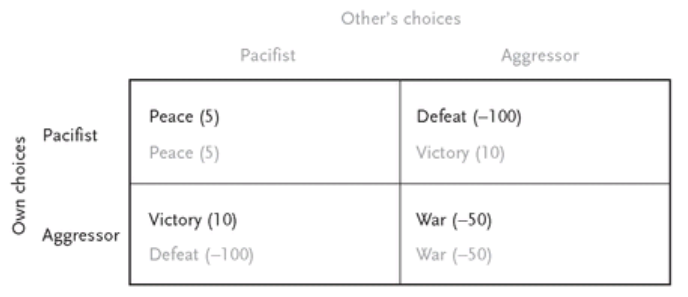
Figure 10-1 — The Pacifist’s Dilemma. PDF p. 929 (file not included in this release)
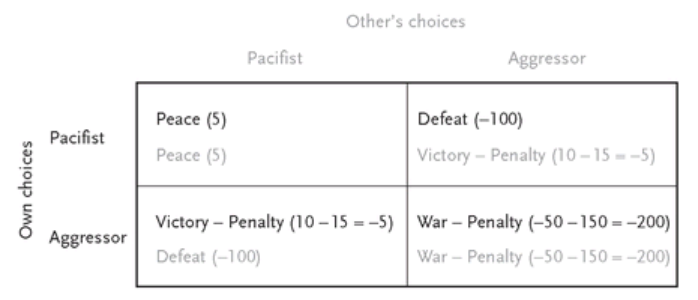
Figure 10-2 — How a Leviathan resolves the Pacifist’s Dilemma. PDF p. 932 (file not included in this release)
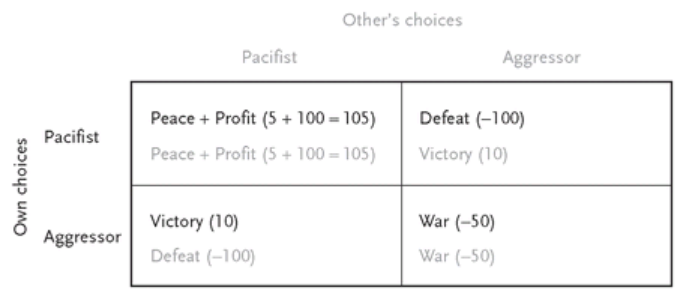
Figure 10-3 — How commerce resolves the Pacifist’s Dilemma. PDF p. 934 (file not included in this release)
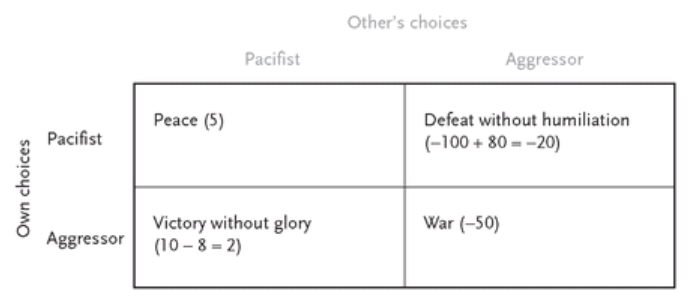
Figure 10-4 — How feminization can resolve the Pacifist’s Dilemma. PDF p. 939 (file not included in this release)
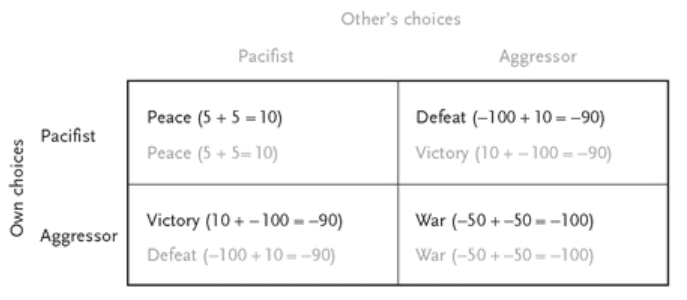
Figure 10-5 — How empathy and reason resolve the Pacifist’s Dilemma. PDF p. 943 (file not included in this release)
Key Concepts and Distinctions
- Pacifist’s Dilemma: the strategic vulnerability that prevents jointly beneficial peace.
- Exogenous force: an institutional, material, or intellectual change that alters the payoffs or activation of psychological motives.
- Positive-sum exchange: cooperation that creates gains unavailable through seizure alone.
- Feminization: the growing authority of women’s interests and weakening of male honor systems.
- Expanding circle versus escalator of reason: emotionally valuing outsiders versus impartially recognizing equivalent interests.
- Institutionalized reason: rules and organizations that preserve restraint without requiring constant virtue.
- Gratitude versus optimism: explaining gains already achieved without forecasting their continuation.
Essential Evidence and Examples
- The six declines do not track weapon lethality, business cycles, or resource abundance consistently. Rejected master explanations, PDF p. 921 (file not included in this release)
- Figures modeling the Pacifist’s Dilemma show how third-party authority, trade, empathy, and reason alter strategic payoffs. Payoff models, PDF pp. 928–945 (file not included in this release)
- Trade, international organizations, and democracy correlate with lower conflict in mutually reinforcing ways rather than as isolated switches. Commerce and institutions, PDF p. 933 (file not included in this release)
- Humanitarian arguments repeatedly generalize from one protected group to another, illustrating reason’s universalizing pressure. Reason and rights, PDF p. 944 (file not included in this release)
Extended source audit — findings worth carrying into other notes
The chapter offers gratitude, not a forecast. Pinker treats the documented declines as achievements to explain, while explicitly refusing to project current crime, war, or terrorism rates indefinitely. The trends depend on social, cultural, and material conditions; if those conditions weaken, the declines can reverse. This is the book’s clearest guardrail against turning a historical thesis into a law of inevitable progress. Gratitude rather than optimism, PDF pp. 919–920 (file not included in this release)
There is no single theory of every form of violence. What the superseded practices share is harm to a victim, not one perpetrator motive: raiding, homicide, slavery, torture, war, persecution, abuse, and cruelty recruit different combinations of predation, dominance, revenge, sadism, and ideology. Pinker’s five forces are recurring mechanisms, not a grand unified cause, and the same force can work differently across scales and periods. Victim unity and causal plurality, PDF pp. 920–921 (file not included in this release)
Weapons are usually endogenous to conflict rather than an independent master cause. Lethality changes who wins, can strengthen deterrence, and can magnify a particular attack, but Pinker finds no simple long-run relation between weapon destructiveness and rates of violent death. Major declines generally preceded disarmament rather than beginning with it. His agency claim is not an endorsement of either side in gun-control policy; it is a warning that access, intent, institutions, fear, and strategic interaction must be separated. Weapon technology and historical trends, PDF pp. 921–923 (file not included in this release)
Neither resource scarcity nor affluence is a reliable master switch. Resource contests matter, but ideology, status, dominance, and extraction-based “resource curses” confound a simple scarcity theory; infrastructure and institutions help determine whether actors trade finished goods or fight over raw materials. Likewise, humanitarian reforms often preceded industrial prosperity, crime did not closely follow business cycles, and extreme poverty’s association with civil war is causally tangled with weak state capacity and war’s destruction of development. Material welfare cannot explain actors willing to sacrifice prosperity for purity, glory, or utopian justice. Resources, power, and positive-sum alternatives, PDF pp. 923–924 (file not included in this release) · Affluence and causal limits, PDF pp. 924–926 (file not included in this release)
Religion is heterogeneous and historically responsive. Pinker argues forcefully that supernatural certainty, sacred values, scripture, and clerical power have often authorized violence and resisted humanitarian reform. He also rejects the claim that religion only poisons: Quakers, liberal Protestants, Black churches, and reconciliation leaders supplied organization and moral language for abolition, civil rights, crime reduction, and post-conflict repair. His synthesis is that “religion” has no single causal sign and that traditions adapt to surrounding intellectual and institutional currents; this is Pinker’s interpretation, not an independent adjudication of every example. Religion and violent authorization, PDF pp. 926–927 (file not included in this release) · Religious pacification and adaptation, PDF pp. 927–928 (file not included in this release)
The Pacifist’s Dilemma is an explanatory picture, not a fitted mathematical model. Its numbers are arbitrary. The point is structural: aggression can be individually tempting whether the other side is peaceful or threatening, even though mutual peace is collectively better and the victim’s loss normally dwarfs the aggressor’s gain. Unilateral pacifism therefore remains vulnerable, while fear, preemption, and self-serving judgments can trap both parties in negative-sum conflict. Credible reciprocal restraint can reverse the cycle, but exhortation alone does not change the incentives. Figure 10-1 and heuristic status, PDF p. 929 (file not included in this release) · Negative-sum violence and unilateral vulnerability, PDF pp. 930–931 (file not included in this release)
A Leviathan pacifies only when force is comparatively impartial and calibrated. A capable third party can penalize aggression, reduce the need for preemption and private revenge, and eventually help make restraint habitual. Reputation, ostracism, international organizations, and peacekeepers can provide weaker forms of the same function. But a state that applies violence indiscriminately can cause as much harm as it prevents; Pinker’s mechanism supports constrained, discriminating enforcement, not unchecked sovereignty. Leviathan mechanism, PDF pp. 931–932 (file not included in this release) · Soft power and the indiscriminate-force boundary, PDF p. 933 (file not included in this release)
Gentle commerce changes the peace payoff, but the causal evidence is incomplete. Transport, finance, records, contracts, specialization, and voluntary exchange can make the other party more valuable as a continuing partner than as a target. Pinker connects this mechanism to historical commerce, trade-conflict associations, economic openness, and gift-exchange networks. He also says the specific psychological proposition—that completing a profitable exchange itself reduces hostility—had not been directly tested in the laboratory, while trade, peace, law, and development co-evolve. Commerce and Figure 10-3, PDF pp. 934–935 (file not included in this release) · Untested commerce mindset, PDF p. 936 (file not included in this release)
“Feminization” is a population-level claim with a serious endogeneity problem. Pinker begins from the large sex difference in serious violence and the disproportionate role of women in pacifist and humanitarian movements, then proposes that greater weight for women’s interests lowers the appeal of martial glory, dominance, retaliation, and risk. He explicitly acknowledges that women leaders are not uniformly pacific and that a female-friendly value system may partly be a luxury of a society already secure from invasion. Household structure, contraception, longevity, labor-saving technology, and the information economy are proposed as more independent sources of change, not proven as a single causal chain. Violence, sex, and political influence, PDF pp. 936–938 (file not included in this release)
Pinker’s comparison to Islamic “Sharia states” is rhetoric, not causal identification. He contrasts women’s position and organized violence in Western European democracies with selected states in Islamic Africa and Asia, then links feminization more broadly to the decline of male honor culture. The passage mixes regime type, law, gender practices, region, and religion; it does not establish which factor causes the violence or describe all Muslim societies. Read it alongside Chapter 6’s changing-opinion evidence and Chapter 7’s wider geography of genital cutting and bodily control rather than as an essence claim about Islam. Gender, honor, and the Islamic comparison, PDF p. 939 (file not included in this release) · Chapter 6 source audit
Sex ratios and youth bulges are risk channels, not destinies. Pinker reviews arguments that sex-selective abortion or infanticide can leave disadvantaged “surplus” men vulnerable to gangs, militarization, repression, or export into war, and that large cohorts of underemployed young men can feed militias and terrorist groups. He then proposes women’s reproductive autonomy as one route to smaller youth bulges. These are aggregate, source-dated associations: they do not diagnose an individual young man, make marriage a cure-all, or isolate demography from employment, policing, education, regime strategy, and war itself. Marriage and violent male competition, PDF pp. 939–940 (file not included in this release) · Sex ratios and “bare branches,” PDF pp. 940–941 (file not included in this release) · Youth bulges and reproductive autonomy, PDF pp. 941–942 (file not included in this release)
The expanding circle is plausible, not proved by chronology. Print, travel, cities, mobility, and mass media increased opportunities to encounter unfamiliar minds; first-person narratives can increase concern for a represented person. But depictions of suffering preceding reform do not by themselves establish causation, and Pinker treats claims about media accelerating civil rights, antiwar opinion, or the fall of communism as suggestive rather than demonstrated. Perspective-taking pathway, PDF pp. 942–943 (file not included in this release) · Chronology and evidence limits, PDF p. 943 (file not included in this release)
Reason is distinct from sympathy because it asks for an impartial rule. The expanding circle imaginatively enters another person’s standpoint; the escalator of reason treats each standpoint as nonspecial from a more detached perspective. Pinker locates its practical force in corrigible knowledge and institutional design: democracy, peacekeeping, reconciliation, nonviolent resistance, crime prevention, sanctions, containment, and engagement can change incentives without waiting for universal affection. He acknowledges that the directional “escalator” can sound Whiggish and rests on a mix of history, correlations, and only limited causal evidence. Sympathy versus impartial reason, PDF p. 944 (file not included in this release) · Institutionalized reason, PDF pp. 945–946 (file not included in this release)
The defense of modernity is comparative, not utopian. Pinker answers romantic nostalgia with the ordinary burdens of premodern life and with historically higher risks of war, homicide, torture, slavery, and cruelty. He does not claim that science, technology, rights, or markets move steadily in one direction, eliminate alienation, or settle every criticism of modern society. The defensible inference is narrower: violence must be included among modernity’s outcomes, and a generalized decline narrative cannot omit the gains in safety, health, knowledge, and connection. Modernity and nostalgia, PDF pp. 946–948 (file not included in this release) · Violence and the comparative record, PDF pp. 948–949 (file not included in this release)
The final moral claim is secular and deliberately modest. Pinker does not infer a cosmic author or guaranteed arc from the downward trends. He argues instead that the strategic structure of conflict and the interchangeability of perspectives are abstract features people can learn to navigate, and that reducing avoidable suffering is a human purpose justifiable to other reasoners. He closes by returning from aggregate graphs to the victims represented by them: statistical literacy should preserve, not anesthetize, moral attention. This is his philosophical conclusion, not a proof that moral realism or secular humanism follows uniquely from the data. Pacifist’s Dilemma and moral realism, PDF pp. 949–950 (file not included in this release) · Human purpose and victims behind the numbers, PDF pp. 951–952 (file not included in this release)
Chapter 10 Stories and Vignettes
- Tsutomu Yamaguchi survives both atomic bombings. After surviving Hiroshima, Yamaguchi fled to Nagasaki and survived the second nuclear attack as well, living until 2010. Pinker opens “Feminization” with Yamaguchi’s proposal that only mothers still nursing babies should govern nuclear-armed states, using the authority of an extraordinary survivor to introduce the broader fact that violence is overwhelmingly male. Historical-biographical episode reported by Pinker. PDF p. 936 (file not included in this release)
- Margaret Thatcher’s handbagged objection. George Shultz recalled telling Thatcher that Ronald Reagan had proposed abolishing nuclear weapons to Mikhail Gorbachev; Thatcher responded by hitting him with her handbag. Pinker uses the comic counterexample to make clear that “feminization” is a population-level claim about interests and values, not a claim that every woman is pacific or every man bellicose. Reported political anecdote; illustrative rather than causal evidence. PDF p. 937 (file not included in this release)
Chapter Conclusion and Significance
Pinker finishes with a conditional theory of progress. Violence declines when institutions suppress opportunism and revenge, exchange rewards cooperation, women and victims gain influence, contact widens concern, and reason makes rules more impartial. No force is sufficient, all can be corrupted, and none guarantees the future. Their value lies in identifying levers that changed the past and can therefore be protected, tested, and improved.
Questions for Reflection
- Which of the five forces is genuinely exogenous, and which may be another product of prior pacification?
- Can commerce remain “gentle” without a Leviathan that restrains coercion and fraud?
- Does Pinker’s final synthesis explain causal variation, or mainly redescribe the trends at a higher level?
Reading Verdict
What the book does especially well
- It forces every discussion of violence to specify which kind, over what period, using which denominator.
- It refuses both biological fatalism and blank-slate optimism: a stable human repertoire can yield radically different outcomes under different institutions.
- It connects large historical change to mechanisms operating at the level of incentives, emotion, status, belief, and law.
- It treats progress as something to explain rather than a mystical destiny, and it repeatedly acknowledges reversals.
- Its “6–5–4–5” structure gives a memorable map for a very large interdisciplinary argument.
What requires the most caution
- Evidence quality is uneven across prehistory, medieval homicide, modern victimization, war, and animal welfare; convergence does not erase measurement differences.
- Long-run description is often stronger than causal identification. State formation, commerce, literacy, empathy, and reason develop together and can be difficult to separate.
- Rare catastrophic wars create heavy-tailed uncertainty; a downward recent rate cannot eliminate enormous tail risk.
- The “New Peace” rests on the shortest window and a pre-2011 cutoff, so it needs the most updating.
- Categories of violence and the geographic evidence base reflect contestable choices; colonial, state, indirect, and structural harms require explicit definitions rather than silent inclusion or exclusion.
Final judgment
The book’s most durable contribution is not the slogan that “the world is peaceful.” It is a disciplined comparative question: what changed the probability, legitimacy, and lived risk of particular forms of violence? Pinker’s broad answer—capable but constrained institutions, positive-sum cooperation, wider moral standing, and reasoned self-correction—is persuasive as a framework even where individual estimates or causal weights remain open to revision.
Highlights
Use this section for new excerpts or annotation-derived insights worth promoting out of the PDF.