Parent: 60.13 Wars · Topic synthesis: Islamic State (ISIS) · Narrative complement: Black Flags - Joby Warrick · War context: Iraq War
What this book adds
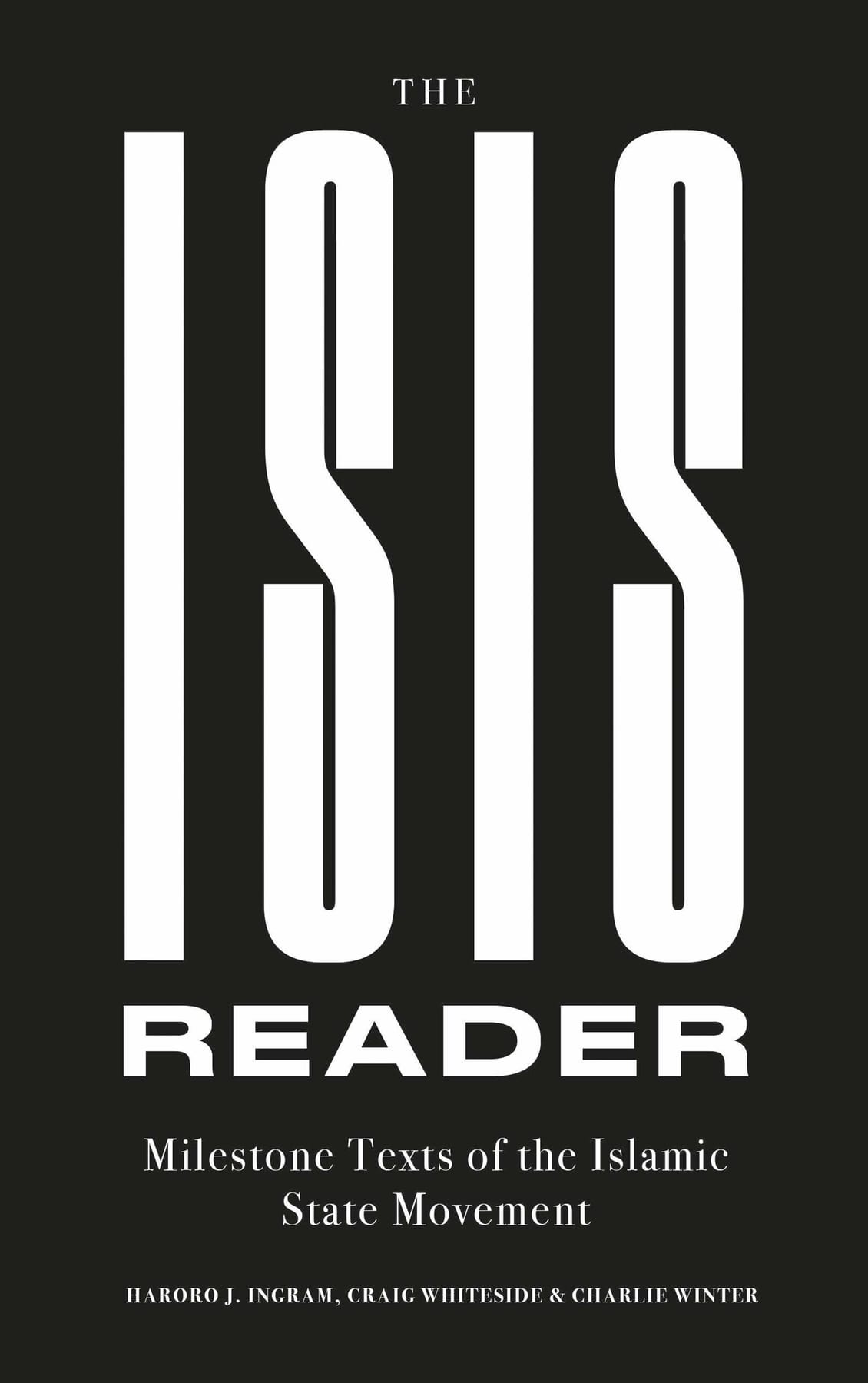
An edited anthology of fifteen milestone speeches and documents from the Zarqawi network through the territorial caliphate’s collapse, each introduced and analyzed by Ingram, Whiteside, and Winter. It provides unusually direct evidence of the movement’s enduring state-building ambition, deliberate sectarian polarization, political competition with other Sunnis, internal adaptation after defeat, and treatment of propaganda as part of war. It does not prove that every stated intention was carried out, that all claims of support or capability were true, or that external states secretly sponsored the group.
How to read and cite this source
The editors present selections, often abridged, rather than a complete archive. Some English texts are the group’s own translations; other passages were translated for the book. The primary material is evidence of what a leader or publication said, while the editors’ framing is a scholarly interpretation, and neither is automatically proof of actual behavior or motives. The clearest example is the 2009–10 Fallujah Memorandum: it falsely attributes attacks on Iraqi civilians to American frame-ups, although the movement claimed many such attacks itself (pp. 107–117). The editors explicitly reject that defense.
The PDF is a 344-page scan. For the substantive chapters, PDF page = printed page + 12. Thus printed p. 107 is PDF p. 119. Page references below are to the printed book, with the chapter table providing PDF locators. The original PDF remains on the NAS at the frontmatter path; this Markdown note is the vault-native guide. The book was published in 2020 and ends its documentary coverage in 2019. For later developments, see the dated sources in Islamic State (ISIS).
| Part and chapter | Printed pages | PDF pages | Main evidentiary use |
|---|---|---|---|
| Introduction | 1–14 | 13–26 | Genealogy, selection rules, strategic framing |
| I.1 The First Speeches (1994, 2004) | 15–36 | 27–48 | Pre-invasion ideology and early mobilization |
| I.2 Zarqawi’s Strategy (2004) | 37–56 | 49–68 | Sectarian provocation, Sunni mobilization |
| II.3 The First Year of the Islamic State (2006–07) | 57–92 | 69–104 | State claim, tribal revolt, internal dispute |
| II.4 Advice to the Leaders (2007) | 93–106 | 105–118 | Leadership, discipline, local perception |
| II.5 The Fallujah Memorandum (2009–10) | 107–148 | 119–160 | Recovery planning and self-serving history |
| III.6 Declaration of ISIS (2013) | 149–160 | 161–172 | Syrian expansion and authority dispute |
| III.7 The Caliphate Rises (2014) | 161–176 | 173–188 | Caliphate claim and legitimacy performance |
| III.8 Global War (2014–15 sources) | 177–198 | 189–210 | External violence and polarization |
| III.9 Women in the Islamic State (2015) | 199–214 | 211–226 | Gender ideal, uncertain authorship |
| III.10 Media Jihad (2016) | 215–234 | 227–246 | Official propaganda doctrine |
| IV.11 Structure of the Caliphate (2016) | 235–248 | 247–260 | Bureaucracy and center–province design |
| IV.12 Defining Success and Failure (2016) | 249–262 | 261–274 | Reframing territorial loss |
| IV.13 Patience (2018) | 263–278 | 275–290 | Survival, purification, cohesion |
| IV.14 A Global Insurgency (2019) | 279–292 | 291–304 | Post-territorial global claim |
| IV.15 The Guerrilla Caliph (2019) | 293–302 | 305–314 | Baghdadi’s authority after Baghuz |
| Conclusion | 303–306 | 315–318 | Editors’ synthesis and source limits |
The argument in one paragraph
The editors view the Islamic State as one evolving movement, not an organization that materialized in 2014. They argue that its leaders blended religious claims with practical political, military, administrative, and informational planning. Its fortunes moved through phases: marginal network, insurgency, attempted Iraqi state, near collapse, renewed expansion across Iraq and Syria, territorial caliphate, then transnational insurgency. It repeatedly treated losses as a test of fidelity and a reason to change methods without relinquishing the state-building project. This continuity is real, but the “same movement” frame must not erase new Iraqi and Syrian personnel, local grievances, changing command relationships, or the decisive opportunities created by wars and political failures (Introduction, pp. 1–11; Conclusion, pp. 303–306).
Part I — origins and founding strategy
1. The First Speeches (1994 and 2004), pp. 15–36
Primary-text evidence. Zarqawi’s 1994 Jordanian courtroom speech rejects democracy and secular monarchical law as religiously illegitimate and presents confrontation with the local regime as a duty. The 2004 speech, issued after the Iraq invasion, appeals to potential recruits through religious obligation, sacrifice, shame, and the claim that Muslims have failed to defend one another. The second text belongs to the period when his network was already using Iraq as a battlefield.
Editors’ analysis. The 1994 text demonstrates Maqdisi’s doctrinal influence and Zarqawi’s focus on overthrowing nearby Arab regimes rather than merely fighting the United States. The 2004 address shows deliberate recruitment and identity-making. The former undermines the claim that the 2003 invasion originated Zarqawi’s anti-democratic revolutionary outlook; the latter shows how the invasion supplied a dramatically more effective recruiting setting. A speech is not, by itself, proof that a fully formed “ISIS” or every later tactic existed in 1994 (especially pp. 19–21, 26–36). See Black Flags - Joby Warrick for narrative detail on the Jordanian prison and Afghan camp.
2. Zarqawi’s Strategy (2004), pp. 37–56
Primary-text evidence. A letter intercepted by coalition forces on 23 January 2004 assesses Iraq’s sectarian and political landscape. Zarqawi describes the Iraqi security forces and Shia political ascendancy as a greater long-term obstacle than a foreign army he expected eventually to leave. He proposes attacks on Shia targets to provoke retaliation, make Sunni civilians feel endangered, draw them toward his movement, and frustrate a state capable of replacing the occupation. He also seeks to coordinate with other militants and build a territorial foothold. Its claim that Americans entered Iraq to create “Greater Israel” is Zarqawi’s conspiracy-laden accusation, not an established explanation of U.S. motives.
Editors’ analysis. The violence was not simply uncontrolled hatred; sectarian cruelty was also a calculated way to induce a Sunni–Shia war and make his small vanguard indispensable. That is an account of strategic intent, not a moral defense or a claim that all Sunni Iraqis accepted his premise. The letter shows how U.S. occupation became a target and opportunity while local Iraqi rivals were already central to the project (especially pp. 49–55). Compare the fact-checking framework in Islamic State (ISIS) and the broader consequences in Iraq War.
Part II — the first “state,” backlash, and survival
3. The First Year of the Islamic State (2006–07), pp. 57–92
The 2006 material depicts the Mujahideen Shura Council, al-Qaeda in Iraq, smaller groups, and claimed tribal allies forming the Islamic State of Iraq (ISI). The editors read the declaration as an attempt to put an Iraqi, state-oriented political face on a movement still heavily driven by AQI veterans. Abu Umar al-Baghdadi’s speeches describe a shura council and assert breadth of support; such claims must be checked against the visible growth of the anti-AQI Sunni Awakening. An internal critic, Saudi judge Abu Sulayman al-Utaybi, attacks ISI leaders for accommodating tribes and for weak command. His complaint exposes genuine factional and governance disputes, but also reflects his own harsher ideological preferences. The group’s “remaining” rhetoric predates the 2014 caliphate and appears as it loses local support. This chapter is especially strong evidence that an Islamic state claim existed in 2006, while the degree of actual sovereignty is another question (especially pp. 59–63, 67–76, 85–91).
4. Advice to the Leaders of the Islamic State (2007), pp. 93–106
Abu Hamza al-Muhajir’s leadership advice emphasizes public perception, discipline, morale, leadership succession, and planning. The editors point out its similarity to other revolutionary movements’ practical guidance beneath the theological language. Particularly important is its warning that leaders should understand local conditions and avoid violence they classify as unjust or strategically counterproductive. This is a selective internal rule, not evidence that ISI rejected terror: its leaders sanctioned enormous violence while contesting which acts were useful or “lawful.” The chapter demonstrates how governance ambitions and image management were internal concerns before 2014 (especially pp. 101–106). Operational instructions in the original are intentionally not reproduced here.
5. The Fallujah Memorandum (December 2009–January 2010), pp. 107–148
This document, by an unidentified author associated with ISI and found on a jihadist forum, is the book’s sharpest window into a weakened movement’s recovery thinking. It expects most U.S. troops to leave, worries about Sunni nationalist and Islamist competitors, seeks their unification under ISI, treats the Sahwa as the main barrier to regaining influence, and proposes changing priorities to undermine Iraqi state institutions. Its political section comes before its military section. The editors stress that the objective remained hegemony over Sunni Iraq and eventual rule, not terrorism as an end in itself (especially pp. 109–10, 116–17, 124–30, 137–45).
The document’s claims are not independent facts
The memorandum denies responsibility for some bombings and suggests Americans staged atrocities to blame ISI. The editors directly reject this account because the organization itself publicly claimed relevant attacks. It also depicts the Sahwa revolt as mere tribal obstinacy while minimizing ISI’s intimidation and killings of tribal leaders. Its acknowledgement of strategic vulnerability is informative; its exculpatory history is unreliable (pp. 107–17, 137–39).
The memorandum does not establish that ISI had already won back popular Sunni support by 2010, nor that its plan alone caused the 2014 outcome. The editors note the absence of a firm implementation timetable and limited evidence that it unified most Sunni dissidents (pp. 124–25, 129–30). Its value is narrower and stronger: ISI was already planning for a post-U.S.-withdrawal power contest before Maliki’s later crises and the Syrian civil war. That qualifies claims that one American president or one later event “created” ISIS.
Part III — expansion and the caliphate
6. Declaration of ISIS (2013), pp. 149–160
Abu Bakr al-Baghdadi announces that ISI and Jabhat al-Nusra are to be joined as the Islamic State of Iraq and al-Sham. He claims ISI created and funded the Syrian branch and kept that link secret for security reasons. This is important contemporary testimony of claimed organizational lineage, but its account of exclusive authority over Nusra was contested by Nusra’s leader and al-Qaeda; a leader’s announcement cannot settle the dispute by fiat. The editors read the speech as an attempt to convert military momentum into an obligation of allegiance and as a branding transition, not a new invention of the movement’s basic project (especially pp. 153–59). See Islamic State (ISIS) for the 2013–14 rupture timeline.
7. The Caliphate Rises (2014), pp. 161–176
After Mosul, the organization declares a caliphate and Baghdadi appears in the city’s al-Nuri Mosque. The speeches call for migration and allegiance while presenting a purportedly functioning state as proof of religious authority. The editors stress the reciprocity between battlefield success and propaganda: real territorial gains made the claim more credible, while images and speeches amplified that success. “Caliphate” is the movement’s claim to legitimacy, not a neutral scholarly or theological endorsement. Its atrocities and coercion remain central to assessing its actual rule (especially pp. 167–74).
8. Global War (2014), pp. 177–198
Al-Adnani’s address and a later magazine article turn coalition intervention into a rationale for violence outside Iraq and Syria. The “greyzone” frame attempts to make coexistence between Muslims and non-Muslims appear impossible, intensifying polarization and pressuring individuals to choose sides. The editors interpret the material as a strategic expansion of the conflict, not spontaneous anger. The chapter establishes official incitement and a theory of polarization; it does not by itself prove central command of any particular attack (especially pp. 190–97).
9. Women in the Islamic State (2015), pp. 199–214
The featured manifesto prescribes a home-centered role, restricted education and work, and limited exceptions. The text circulated among ISIS supporters, but its author is unidentified and attribution to the Khansa’ Brigade’s outreach wing is not equivalent to a verified central leadership order. The editors use it to analyze an idealized social role, not to reconstruct every woman’s life or motive. They also observe that the group later shifted rhetoric as the territorial project collapsed, including greater calls for women to participate in fighting; stated norms and actual practices changed with conditions (especially pp. 199, 209–14). For the stark difference between idealized propaganda and atrocities against captives, see Yazidi Genocide.
10. Media Jihad (2016), pp. 215–234
An official al-Himmah publication tells media workers that propaganda is integral to the war. The editors identify three functions: spread the movement’s ideology, defend its reputation against critics, and intimidate adversaries. Their account highlights messaging about militarism, victimhood, and utopia, while warning against reducing the phenomenon to social media alone. The key causal sequence is action → selective representation → recruitment, intimidation, or acquiescence; propaganda amplifies, but cannot simply substitute for, control on the ground (especially pp. 215, 225–31; Conclusion pp. 303–5).
Part IV — loss of territory and insurgent reversion
11. Structure of the Caliphate (2016), pp. 235–248
An official video displays a caliph, delegated committee, offices, ministries, and provinces. The editors compare this advertised design with captured ISI documents and administrative records: departmental specialization, financial management, provincial replication, and governance practices predated the 2014 territorial peak. The video is a self-presentation; captured records offer the stronger corroboration for specific institutions. This rebuts the idea that ISIS was only a loose terror cell or merely a secular Ba’athist command masquerading as a jihadist group. It does not imply efficient, benign, or fully centralized rule everywhere (especially pp. 235, 240–45).
12. Defining Success and Failure (2016), pp. 249–262
As territory came under pressure, al-Adnani denied that losing cities or leaders constituted defeat; he redefined success as persistence of will and fidelity to the movement’s religious “method.” The editors see a prepared rhetorical and strategic pivot from territorial state to dispersed insurgency. This was useful for cohesion but is not an objective scorecard: loss of land, revenue, manpower, and administrative reach was materially devastating even if the movement survived (especially pp. 256–61).
13. Patience (2018), pp. 263–278
Baghdadi frames hardship as purification and urges patience, commitment, and organizational coherence. The editors contrast this with his triumphalist 2014 speech. Reading the two together reveals a recurring pattern: material victories are used to validate the caliphate, while losses are reinterpreted as a test that may precede revival. This is adaptive persuasion, not evidence that defeats had no practical effect or that a revival was guaranteed (especially pp. 274–77).
14. A Global Insurgency (2019), pp. 279–292
Near the fall of Baghuz, spokesman Abul Hasan al-Muhajir invokes attacks on Muslims and coalition contradictions to recast ISIS’s territorial collapse as part of a wider war against Sunni Islam. The editors treat this as an attempt to keep supporters engaged and claim a geographically dispersed struggle. Claims of impending recovery and universal support are propaganda assertions; the larger lesson is that territorial defeat and organizational extinction are distinct outcomes (especially pp. 287–91).
15. The Guerrilla Caliph (2019), pp. 293–302
After Baghuz, Baghdadi appears on video for only the second time. The editors interpret the performance as an attempt to rebut doubts about his survival and engagement and to present him as the commander of a now-global insurgency, rather than the pulpit-centered “caliph” of 2014. The claim to universal spiritual authority persisted even as the basis for territorial rule collapsed. The video itself cannot establish operational control over every affiliate or attack. The editors also note internal factional disputes and severe leadership losses; resilience should not be romanticized as invulnerability (especially pp. 297–301).
What the book changes in the central ISIS analysis
| Question | What the milestone texts support | Limit |
|---|---|---|
| Did the invasion invent Zarqawi’s ideological program? | No. The 1994 courtroom speech already attacks democracy and secular rule; the independent Afghan and Jordanian lineage is developed in the Introduction and ch. 1. | 1994 rhetoric does not prove a fully specified later ISIS organization. |
| Was Iraq simply a convenient opportunity? | No. The 2004 letter is a theater-specific plan centered on Iraqi sectarian and security politics. | Strong continuity of aspiration coexists with major change in personnel, constituency, and tactics. |
| Did the “state” begin in 2014? | No. It was proclaimed in 2006; governance and departmental structures developed before 2014. | The 2006 “state” had far less effective territorial sovereignty. |
| Did ISI vanish after the Awakening? | No. The 2009–10 memo shows long-range recovery planning amid severe weakness. | A plan is not proof of later success or popular support. |
| Did Maliki or the 2011 withdrawal single-handedly create ISIS? | No. ISI anticipated a power contest before either became the 2012–14 crisis. | Their later policies and the Syrian war remained major enabling causes. |
| Was ISIS primarily a U.S. proxy or U.S.-funded project? | The documents show an independent anti-U.S. political agenda and a desire for economic and organizational autonomy. | Self-description cannot prove a universal negative about covert support; that claim needs separate financial, command, and transfer evidence. |
| Did the caliphate’s fall end the organization? | No. Leadership statements from 2016–19 prepared supporters for insurgent reversion and global affiliates. | Survival is not proof of undiminished capability or inevitable comeback. |
Source-specific cautions and open questions
- The official-source selection is not perfectly uniform. Chapter 5’s author is unidentified; chapter 9’s manifesto attribution is uncertain. Treat these as evidence of circulating movement-associated ideas with more care than a signed Baghdadi speech or an official media release.
- Do not confuse explanation with justification. Showing that sectarian atrocities were strategically chosen does not reduce perpetrators’ responsibility. The book’s primary texts contain propaganda, dehumanization, antisemitic conspiracy claims, and exculpatory falsehoods.
- The book is strongest on the movement’s own framing. It is less direct evidence for the actual preferences of Sunni civilians, the validity of its theological claims, covert state financing, the causal weight of U.S. policy, or post-2019 affiliate operations. Pair it with independent Iraqi testimony, captured administrative records, financial tracing, and the other sources in Islamic State (ISIS).
- Compare with Black Flags - Joby Warrick. Warrick supplies character- and event-driven history; this anthology supplies the movement’s dated texts. Where the accounts differ, record exactly whether the conflict is over stated purpose, independently observed behavior, or later interpretation.
Bibliographic citation
Haroro J. Ingram, Craig Whiteside, and Charlie Winter, The ISIS Reader: Milestone Texts of the Islamic State Movement (London: Hurst & Company, 2020), ISBN 9781787381971. Source: user-provided NAS PDF, path in frontmatter. Citations above use printed pagination; add 12 for PDF page.